












18 Lessons on How to Be Grandparents (Learned the Hard Way)
A guide to how to be grandparents, from newborn visits and the honey jar to the decisions that belong to the baby’s parents.
By Ruth Ellison, Family Editor
Updated · 18 min read
The short answer: Support the baby’s parents without taking over. Ask what help they want, offer a specific task, and follow their rules for visits, feeding, sleep, and photos. Check current newborn safety guidance before providing care. When you disagree, listen before offering advice. A reliable grandparent makes the parents’ job easier while building a relationship with the child.
- Written by our family editor
- Cited 20 sources
- How we review
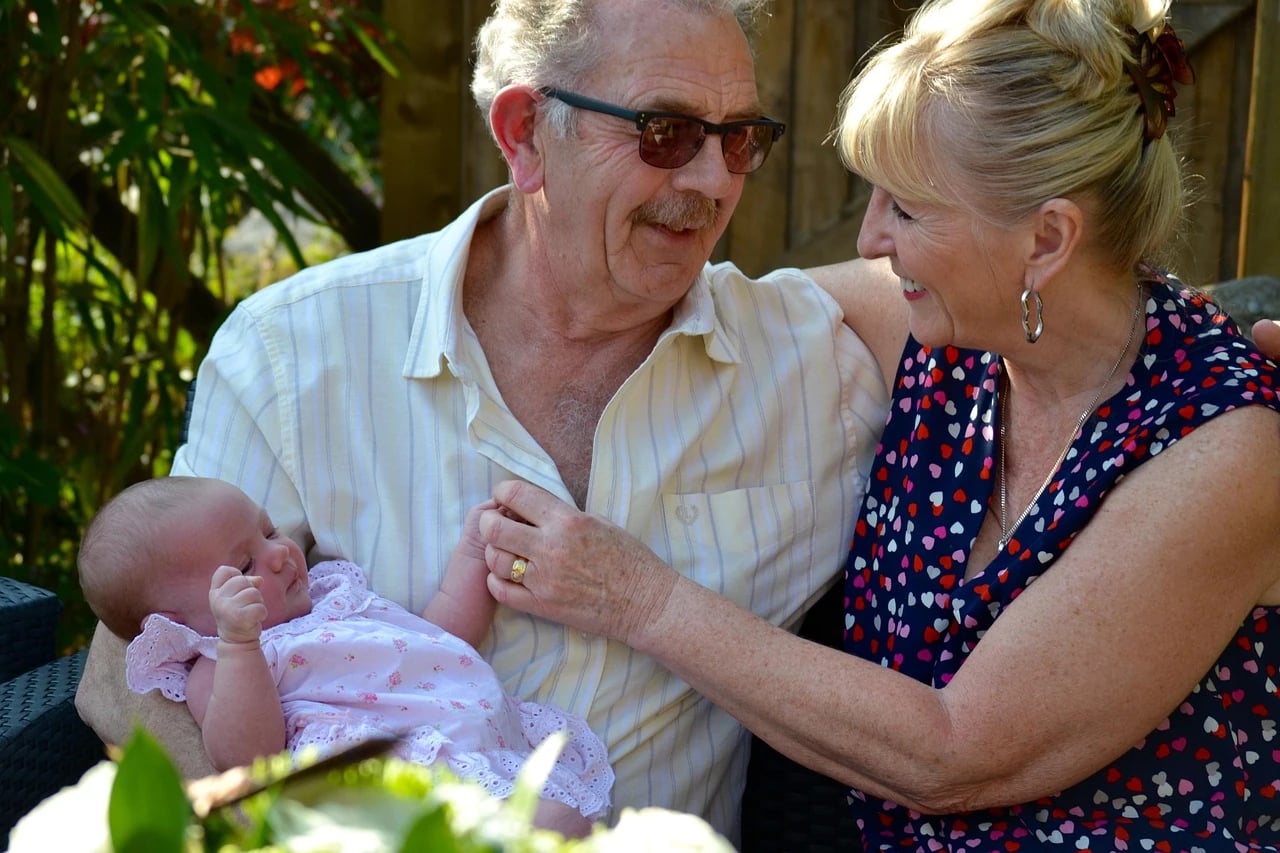
The baby is asleep against your shoulder. There’s a damp patch on your blouse, your arm has gone numb, and you’re afraid to move. Then your daughter reaches over and says it’s time to put her down. You know how you did this years ago. You also know this is her baby.
That little pause, between what you remember and what the parents want, is where much of grandparenting happens. You don’t have to stop loving fiercely. You do have to learn when to ask, when to act, and when to hand the baby back.
18The vaccine checkup before your first visit

You’ve washed the tiny pajamas and cleared an afternoon. Then a message arrives: before visiting, please check your vaccines.
It stings for a moment. You weren’t planning to put the baby at risk. But the request is about protecting a newborn, not judging your love.
The CDC advises family members and caregivers who will be around a newborn to be up to date on vaccines, including Tdap.
Check your record before you promise a visit. If you don’t know what you’ve received, contact your healthcare provider and ask what you need before close contact. Tell the parents when you’ve checked. Don’t ask them to make an exception because you’re family.
There’s another useful question: “Are there any other health precautions you want visitors to follow?” Their answer saves everyone an uncomfortable conversation at the door. It also tells your child something important: you’re willing to prepare for this baby, even when preparation means changing your plans.
17The visitor schedule the new parents set

The visit was meant to be brief. Now the baby is asleep, someone is trying to eat lunch, and you’re still sitting on the couch. Nobody wants to be rude enough to end it.
Cleveland Clinic’s pregnancy guide advises new parents to set clear visitor boundaries. It even suggests a code phrase they can use when a visit needs to end.
You needn’t wait to hear one. Agree on a time to arrive and a time to leave before you go.
When the time comes, get your coat. Don’t make your child explain that they’re tired or prove they still love you. A planned visit gives them room to rest and gives you a better chance of being welcomed back.
You can also ask whether they want a visit or an errand that day. Those are different offers. If they say no to company, you can still leave a meal at the door, if they’ve asked for one. The schedule belongs to them, even when your own calendar is wide open.
16The specific offer that actually gets accepted
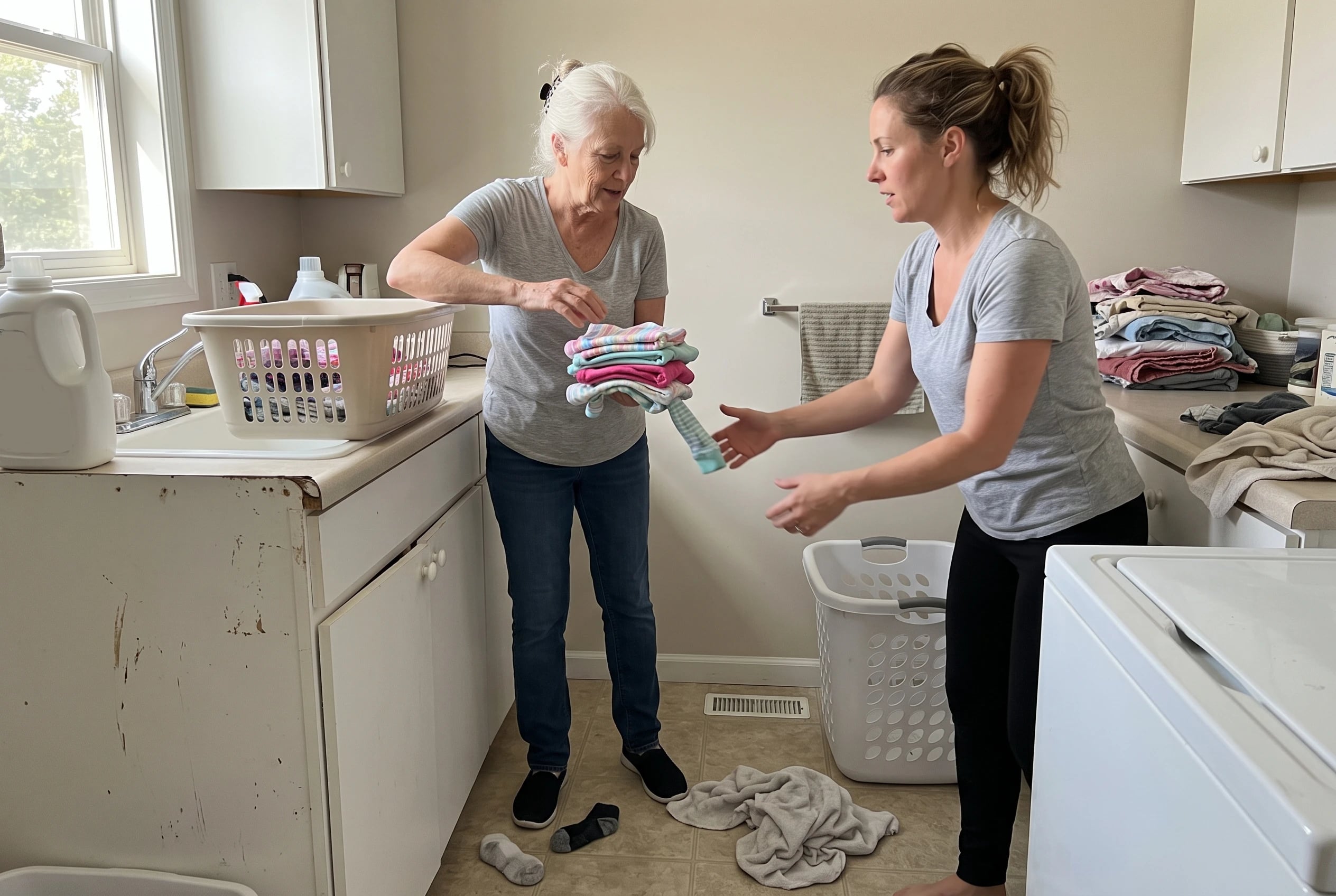
“Let me know if you need anything” sounds kind. It also hands an exhausted parent another job: work out what needs doing, decide whether to ask, and send you instructions.
Try a smaller offer. “I’m going to the store. Send me the items you want, and I’ll leave them at the door.” Or: “I can do a load of laundry while you rest. Would that help?”
The March of Dimes postpartum conversation guide gives supporters concrete examples, including meals and laundry.
The point isn’t to arrive with your own plan and take charge. It’s to offer a task the parents can accept or decline without a long discussion.
If the answer is no, believe it. If they say yes, do the task they accepted. Resist reorganizing the pantry while you’re there. A finished load of laundry, folded where they asked, says more than a grand promise of help that never finds a place on their calendar.
15The crib that looks nothing like yours did

You remember a crib with a bumper around the rails and a blanket tucked near the baby’s feet. The crib waiting in your guest room looks bare by comparison. Bare is the plan.
The American Academy of Pediatrics safe-sleep guidance is clear. Babies sleep on their backs, in their own sleep space, on a flat, firm surface without soft bedding.
The Consumer Product Safety Commission says the bans on padded crib bumpers and inclined infant sleepers over 10 degrees took effect November 12, 2022.
Before a nap at your house, have the parents show you the sleep space they approve. Clear it together. If the baby falls asleep somewhere else, ask them to show you what they want you to do.
The safest response to a rule that feels unfamiliar is to learn it before you’re alone with a sleepy baby.
14The honey jar you have to put away

Here’s a quick pantry test. If you plan to feed the baby at your house, look for the honey jar first. The CDC says children under 12 months must not have honey because of botulism risk.
Next, ask what the parents are feeding now. The CDC’s solid-food guidance says most babies begin solids around 6 months, with no required order for introducing foods.
That doesn’t give anyone else permission to offer the first bite.
You remember the foods your own children liked. The parents know what this baby has been offered, what’s ready in the fridge, and what they want you to serve. Get those instructions before a babysitting afternoon, not while the baby is hungry.
Write down the approved food and where to find it. If what you planned to serve isn’t on the list, ask. A loving spoonful still needs the parents’ yes.
13The photo you ask permission to post
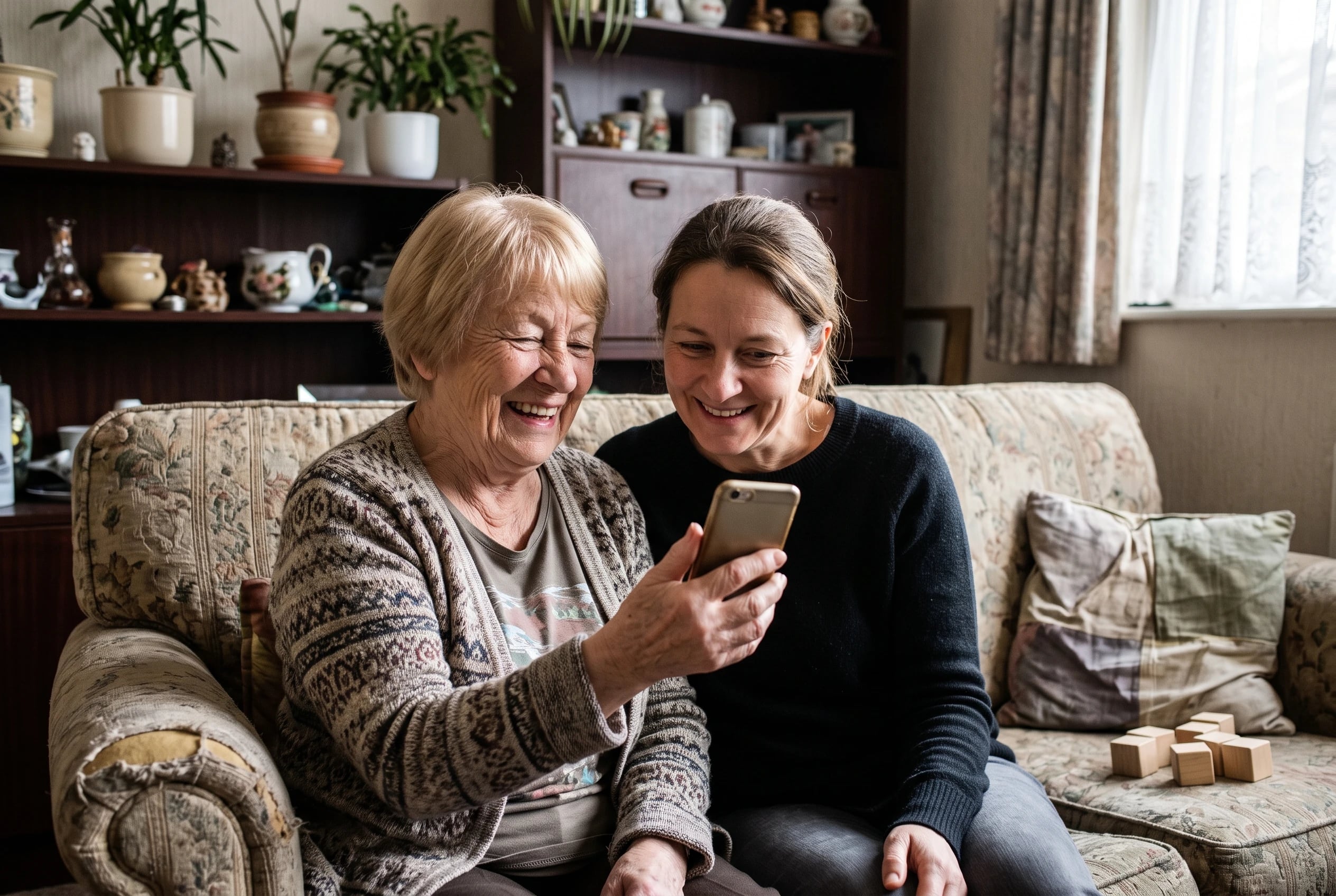
You’ve taken a lovely picture. The baby is looking straight at you, and your friends would be delighted to see it. Do you post it?
Ask the parents first. The American Academy of Pediatrics’ guidance on sharing children’s images asks adults to weigh privacy and the child’s future before posting.
In a 2023 national poll from C.S. Mott Children’s Hospital, 63% of parents worried that shared posts could reveal a child’s location.
Permission to take a picture isn’t permission to publish it. Nor does a yes for one photo cover the next one. Ask whether they want pictures kept off social media, shared only in a family message, or sent to them to post themselves.
Then follow the answer without a speech about how private your account is. If you’ve already posted something they don’t want online, take it down and tell them you did. Trust is built in that small, unglamorous follow-through.
12The average age to be a grandparent

A grandmother who still works full time can feel out of place beside the picture in her head: a woman with endless afternoons and a spare bedroom ready for visits. The numbers tell a broader story.
In AARP’s 2026 national study, the average age at which Americans first become grandparents is 50. The average age of grandparents overall is 68.
Those figures describe different groups, which is why they shouldn’t be treated as a timetable for your life.
Your age doesn’t settle how much time you owe. Your health, work, distance, and the parents’ wishes all belong in that conversation. Tell them what you can reliably do rather than trying to resemble someone else’s grandmother.
11The caregiving load grandmothers carry
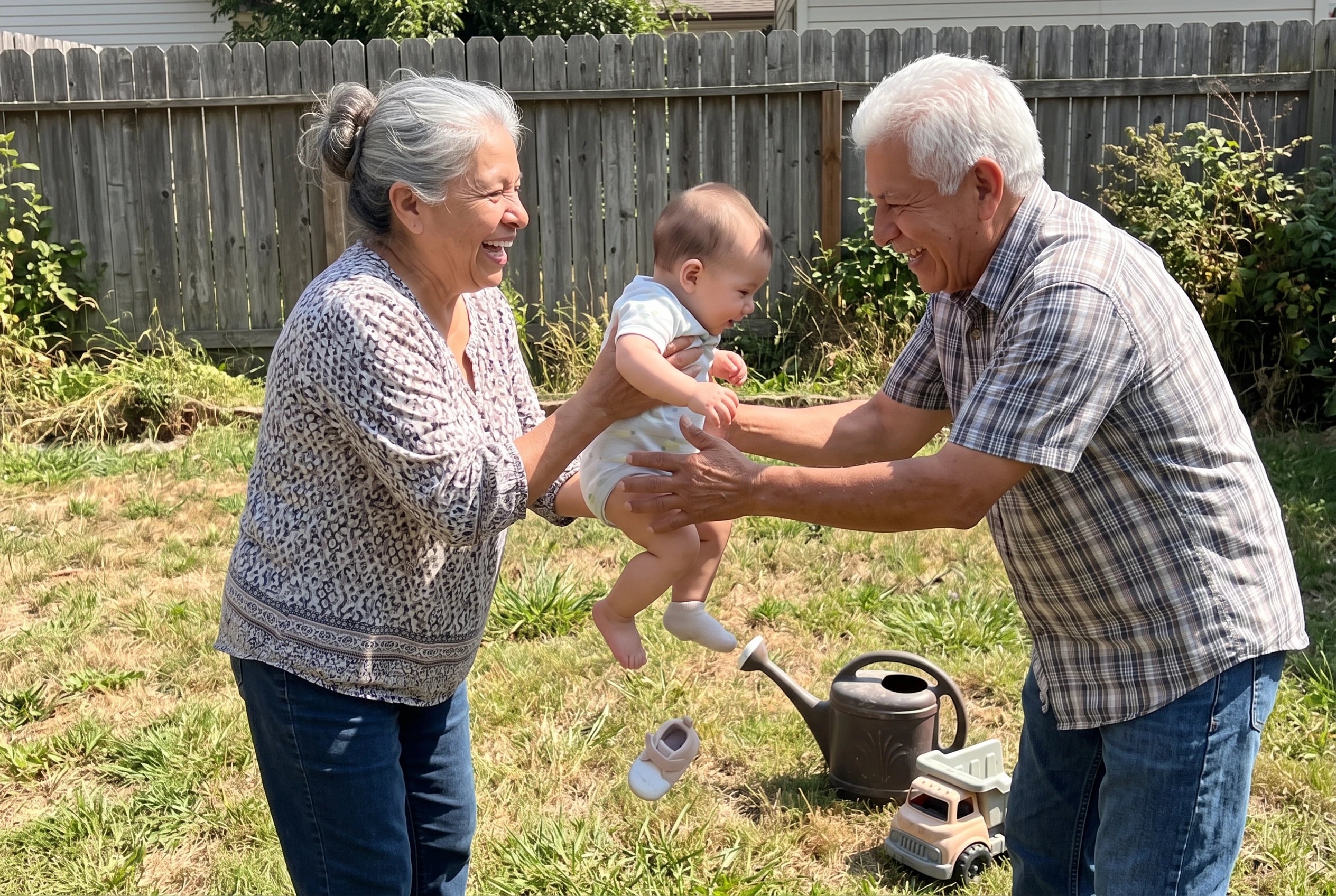
A request to watch the baby sounds simple until it becomes the standing plan for every workday that runs late. Grandmothers have reason to look closely at the workload behind an affectionate request.
In Pew Research Center’s analysis of Census data, 63% of the grandparent caregivers it identified were grandmothers. That figure doesn’t say what you personally owe your family. It does show why “Grandma will handle it” deserves a real conversation.
Ask what care is needed, when it starts, when it ends, and who takes over if you’re sick or away. If you’re sharing care with a partner, divide the actual tasks. Feeding the baby while someone else makes lunch is different from carrying the whole afternoon alone.
Give yourself permission to offer less than the first plan you hear. “I can do Thursday mornings, but I can’t be the emergency plan every weekday” is a complete answer.
A promise you can keep is kinder to your child and to the baby than an unlimited offer made while you’re holding a warm, sleeping newborn.
10The video call that counts as bonding
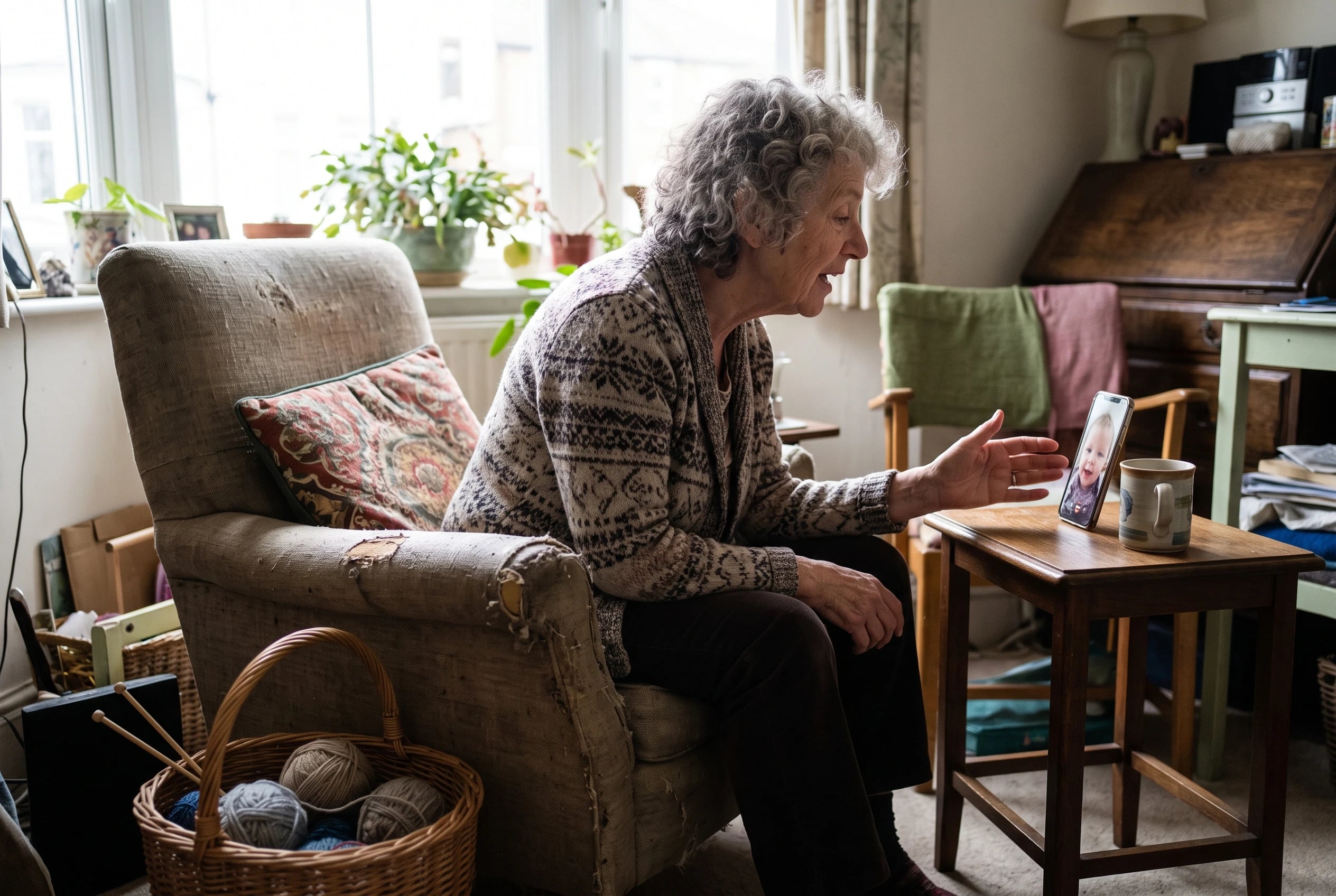
Your grandchild keeps turning the phone toward the ceiling. You sing a line of a song; the baby looks away. It feels like a poor substitute for sitting together.
Stay with the live exchange. The American Academy of Pediatrics treats live video chat as an exception to screen limits for children under 18 months.
A study of toddlers aged 24 to 30 months found they learned new words from live video chat as well as from in-person interaction. They did not learn those words from prerecorded video.
Live means you respond to what the child does. Point to the stuffed animal they’ve pushed into view. Pause when they make a sound. Let the parent end the call when the baby has had enough.
Don’t measure the relationship by how long they stare at you. With a baby, the call has to fit around the parent’s hands and the child’s attention. The reward is a familiar voice that answers back, not a perfect performance for the camera.
9The gift that needs a family plan
You want to give this child something lasting. A check feels plain. An account sounds more thoughtful. Before you set either in motion, ask the parents what they’re already doing and whether they want your contribution there.
Money gifts bring rules along with good intentions. The IRS states that the 2026 annual gift tax exclusion is $19,000 per recipient. Before making a larger gift, check the IRS’s current Form 709 instructions for filing requirements. Don’t treat the exclusion as a target; it’s a tax rule, not a measure of devotion.
If someone mentions moving unused 529 funds to a Roth IRA later, slow down. IRS Publication 590-A describes a lifetime rollover limit of $35,000 for the beneficiary, subject to the annual IRA contribution limit and other requirements. Check the current IRS instructions before acting on that plan.
The family question comes first: “Would you rather I contribute to the plan you’ve chosen, or give something useful now?” That leaves the parents in charge and gives your gift a purpose they actually want.
8The mediation session nobody wants
After an argument, the familiar photos stop arriving. You draft a message, erase it, and draft one that lists everything you’ve done for the family. Put the phone down before you send that version.
If conversations have stalled, consider mediation. The American Bar Association discusses family mediation as a way to reduce conflict and work toward agreements about a child’s relationships. Mediation is a conversation with help and structure, not a promise that everyone will agree.
Start with the smallest honest request: “I’d like us to talk about what happened. Would you consider a mediator?” Avoid using the grandchild to carry messages or asking the other parent to take sides. The child shouldn’t have to manage an adult disagreement.
Before that meeting, write down what you want to understand, not only what you want to receive. There is room to say you miss the child. There also has to be room to hear why the parents pulled back.
See more: 29 Conversations Families Keep Putting Off Until It's Too Late →
7The court ruling behind grandparents’ rights

In 2000, the U.S. Supreme Court decided Troxel v. Granville. It affirmed parents’ fundamental right to direct their children’s upbringing and rejected an overly broad visitation law.
That ruling matters when a parent says no to visits. It does not give you one answer that works in every state. Grandparent visitation and custody laws vary by state, as Justia’s state-by-state survey makes clear.
If access is denied, don’t threaten court action based on something a friend heard. Look up your state’s law and speak with a family-law attorney about your circumstances. You can also ask whether mediation is a sensible first step.
A lawyer can explain what the law says where you live. That conversation is separate from the one you still hope to have with your child.
6The teenager who wants different company
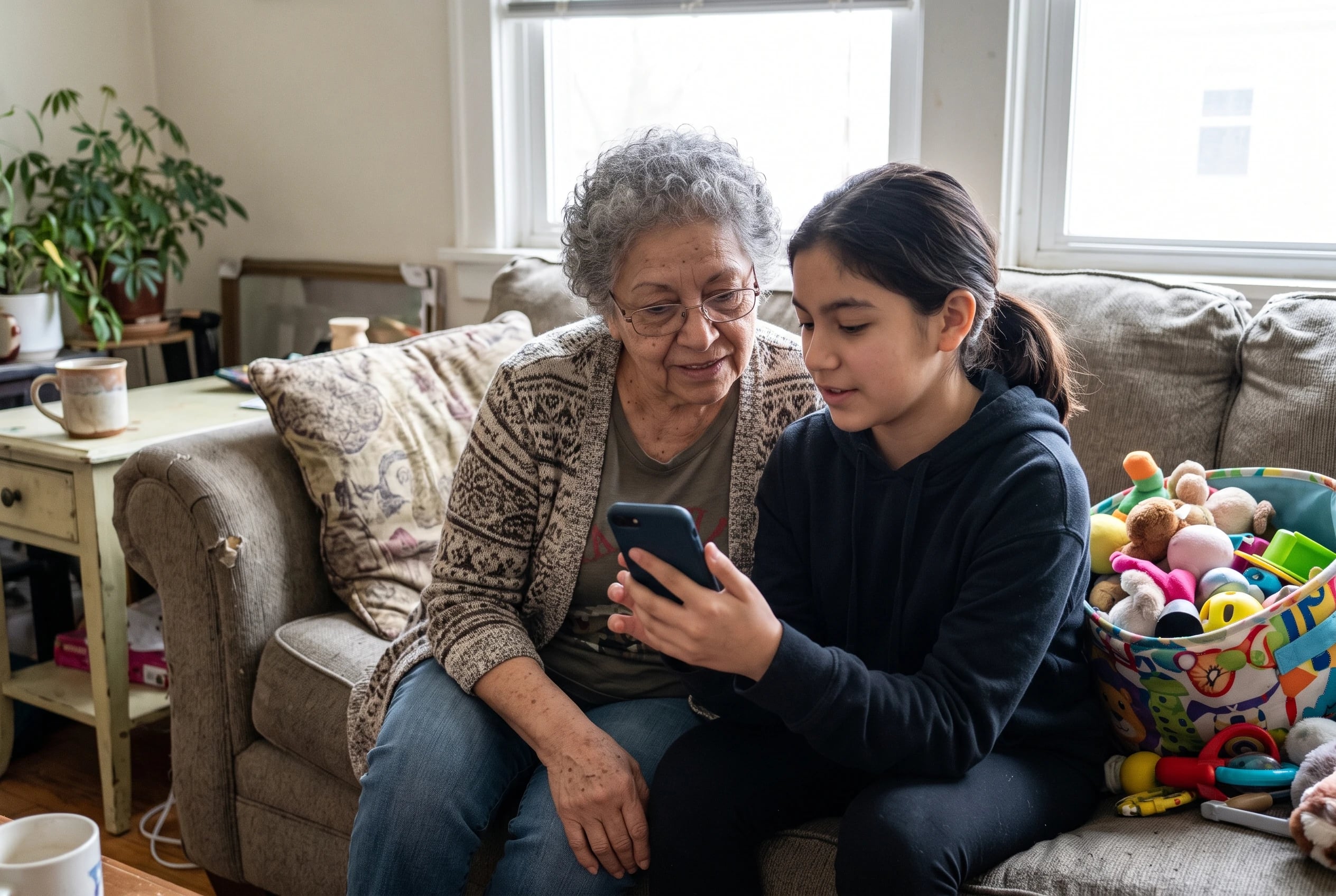
Years from now, the child who begged you to read the same book again could barely look up from a phone. That change doesn’t erase your place in their life. It changes how you ask for their time.
Try asking about something they chose, then listen long enough to learn the answer. If they show you a photo or send you a message, don’t assume it belongs in the family group chat.
The American Academy of Pediatrics’ guidance on teens and media stresses consent and says not to forward their photos without permission.
The same respect starts earlier, with the baby’s parents and their photo rules. By the teen years, you’re asking the young person too.
“I liked seeing that. Is it all right if I share it?” gives them an easy answer. So does “No problem, it stays with me.” They’ll remember that you treated their no as an answer, rather than the start of a debate.
5The screen for a long-distance relationship
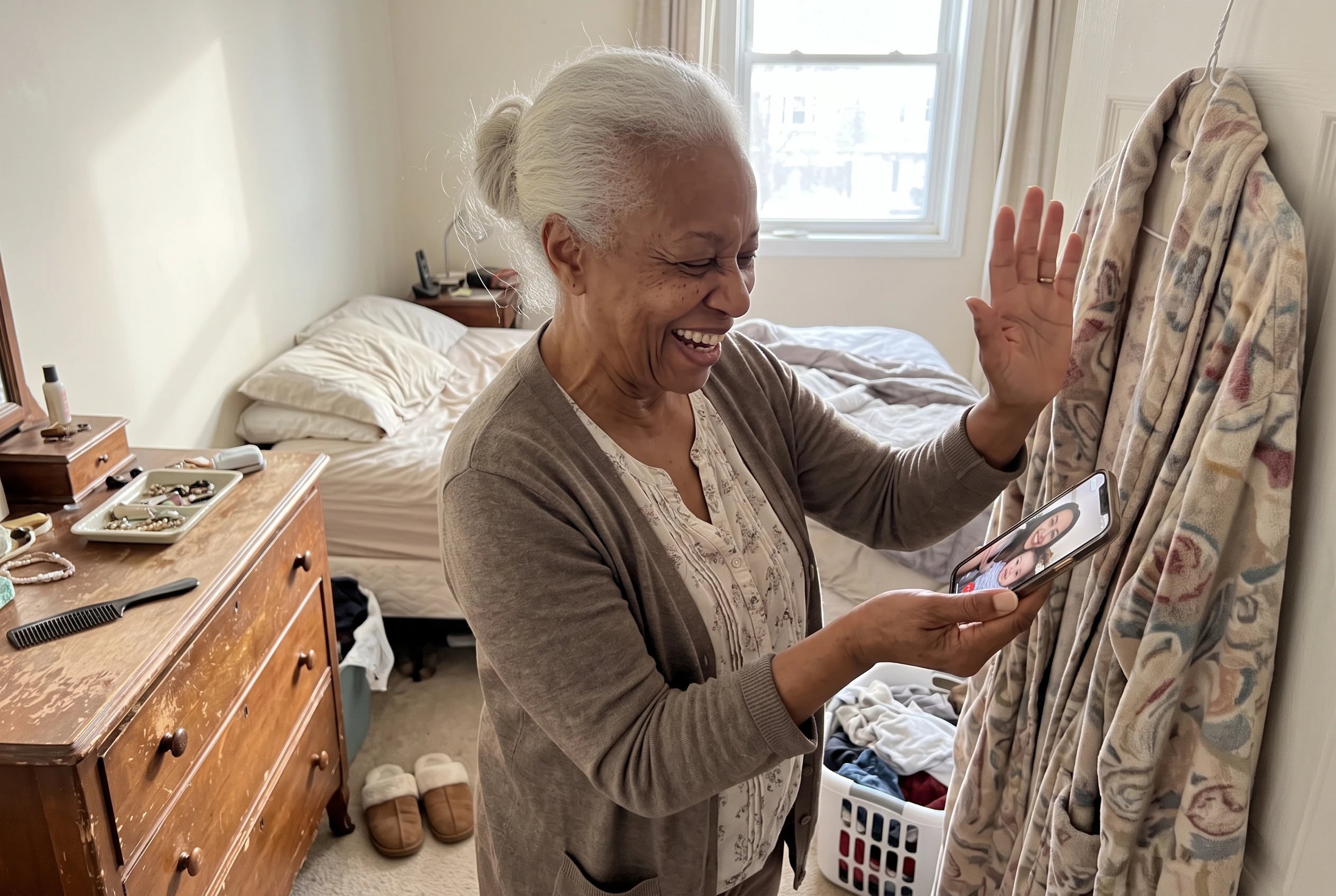
The phone rings while the baby is eating, and the parent has no hand free to hold it. Try another time. A long-distance call works better when it fits the household receiving it.
Ask for a time that suits them, then be ready. Bring a familiar greeting or show the child the bird outside your window. A short exchange still gives them a chance to hear you respond.
For children under 18 months, American Academy of Pediatrics guidance makes an exception to screen avoidance for live video chat that helps families stay connected.
That exception isn’t a reason to put on a video when the baby is restless.
If a parent spends the call holding the device, notice that effort. End when they need their hands back. The distance between your homes doesn’t disappear, but your part of the call needn’t become another task for them.
See more: 24 Things to Do With an Empty Nest →
4The 500 hours on a family calendar
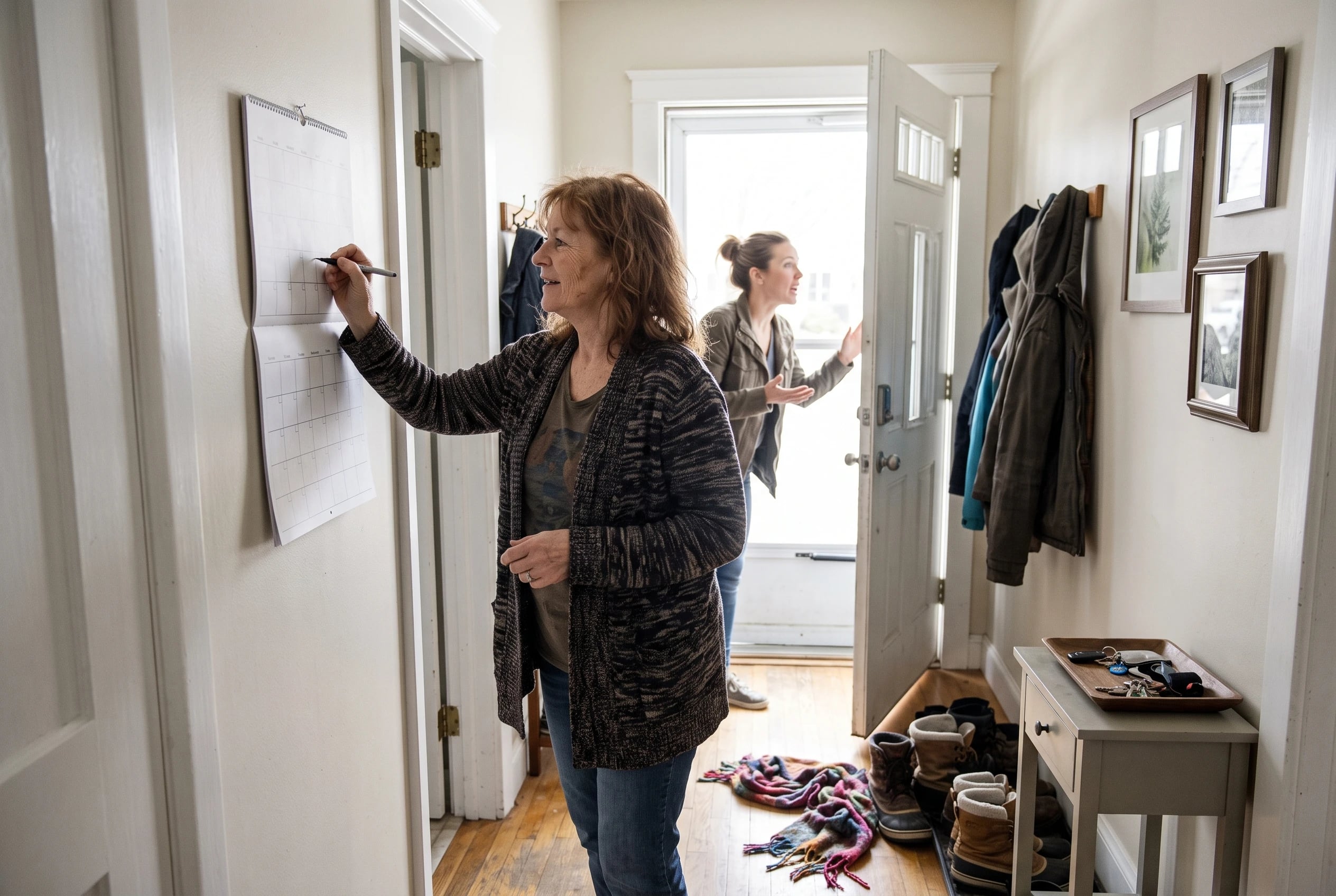
A regular afternoon with your grandchild sounds small when someone describes it over coffee. On a calendar, repeated care takes shape.
AARP’s grandparent data says 45% of grandparents help monthly or more. Among involved grandparents, the average care provided exceeds 500 hours a year. That figure describes an average, not a schedule you should match.
Before you agree to recurring care, open your calendar with the parents. Mark the hours, the pickup plan, and what happens when either household has a change. Talk about whether you’re there to visit, to provide childcare, or to cover a work shift. Those expectations shouldn’t be left inside a cheerful “See you Tuesday.”
You’re allowed to love the baby and guard your own time. Your child also needs to know what they can count on. A clear arrangement gives both households something sturdier than a favor nobody has defined.
3The first newborn visit by their rules

At the front door, you’re carrying flowers and trying not to rush past everyone toward the baby. Take a breath. Your first job is to enter the house the way the parents asked.
Cleveland Clinic’s guide supports scheduled newborn visits and clear visitor boundaries. The CDC’s advice for family and caregivers includes being up to date on vaccines such as Tdap before close contact.
Ask where to wash your hands. Wait to be offered the baby. If the parents say it isn’t a good time to hold them, ask whether you can set down the food you brought or take out the trash. A first visit doesn’t have to include a photograph of you with the newborn to count.
Notice the difference between helping and taking over. “Where would you like this?” respects a household that has changed overnight. “I know where everything should go” makes your child find the energy to correct you. Leave at the agreed time, even if the baby has just opened their eyes.
2The advice you wait to give
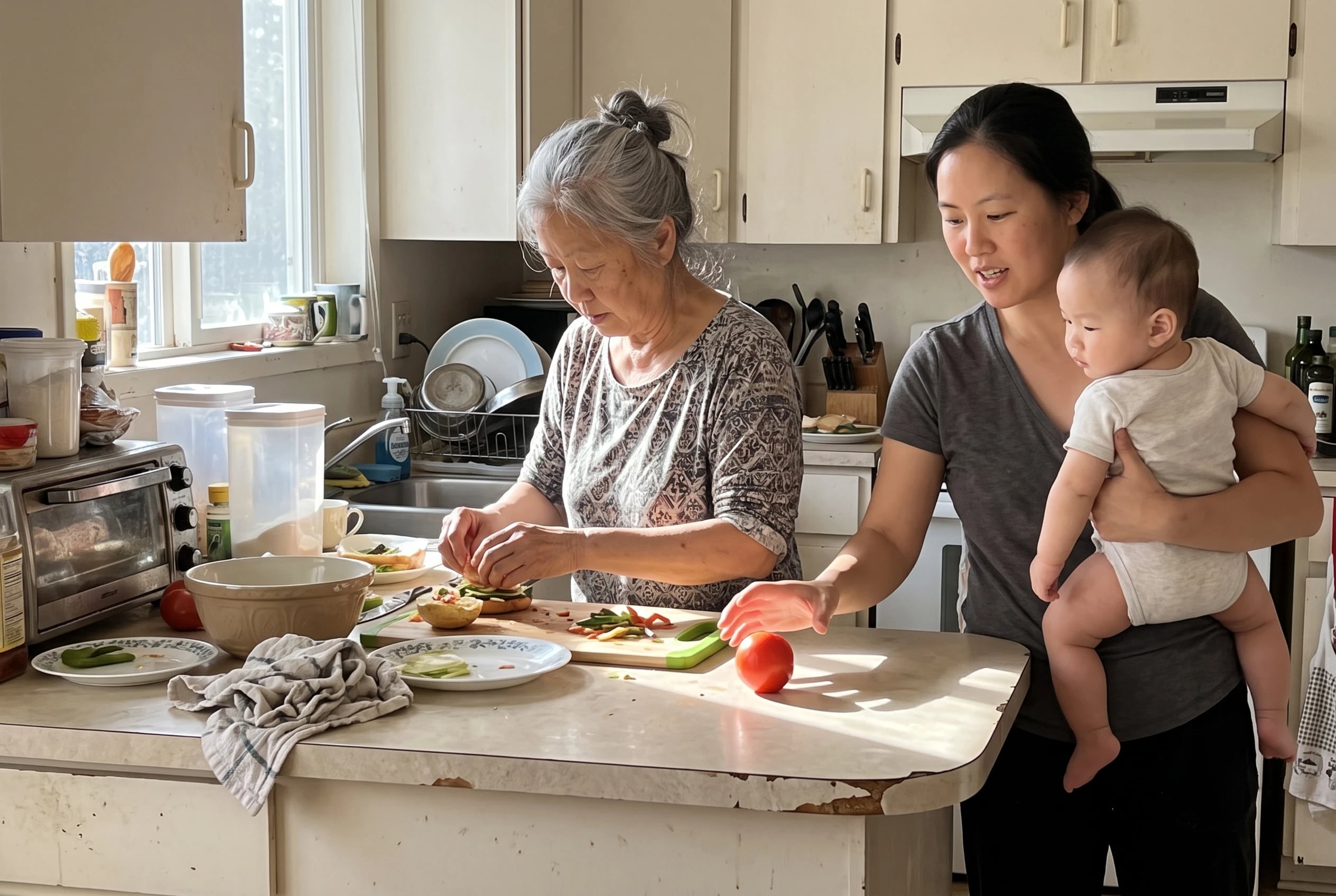
Your child says the baby won’t settle. You have an answer ready. Before saying it, run a quick test: did they ask for an idea, or did they tell you how their day is going?
If they didn’t ask, begin with the day they described. “That sounds exhausting.
Do you want me to make lunch while you hold the baby?” The March of Dimes guide for postpartum supporters favors practical offers and supportive language over a stream of instructions.
You’re still allowed to have knowledge. Keep it available, not on display. “I have a thought if you want one” lets your child choose whether this is an advice conversation.
When they do ask, give the answer you have without turning it into a verdict on their choices. When they don’t, make lunch. The baby’s parents already spend enough of the day making decisions.
1The written plan for how to be grandparents

You’re alone with the baby for the first time. The feeding instructions are on the counter, but the baby is crying and you can’t remember which bottle the parents meant. This is a poor moment to discover that nobody wrote down how to reach them.
Before they leave, ask them to walk you through the routine and leave a clear way to contact them. Check the parts you’d have to handle alone: where the baby sleeps, what to feed them, and what to do if plans change. Repeat anything you’re unsure about while they’re still there.
That preparation follows the same lead as Cleveland Clinic’s guidance on parent-set boundaries.
It also gives you a chance to settle health questions raised by the CDC’s caregiver vaccine guidance before close newborn contact.
Keep the instructions where you’ll use them, not buried in a message thread. If a detail is missing, call rather than guess. If something goes wrong, tell the parents what happened without waiting for them to ask. They need the facts first, even when you badly want to explain yourself.
The bottom line
The same choice runs through the visit, the gift, the photograph, and the nap: do the part you agreed to do, and ask when the plan is unclear.
The prepared version of you has checked the current safety rules, asked about the schedule, and offered help with a clear yes or no attached. She’s still learning what this child and these parents need.
What surprised you most after you held your grandchild for the first time?
Up next
22 Activities for Grandparents and Grandkids
A recipe card, a shoebox of photos and a free scavenger hunt give you ways to fill the next visit without filling your calendar.
Read the list →
Reader quiz
Did you catch the details?
5 questions from this article.
What should you do if you do not know which vaccines you have received?
Questions people also ask
When are grandparents not involved?
Distance and family schedules can limit contact, even when a grandparent wants a relationship. AARP’s data says 45% of grandparents help monthly or more; among involved grandparents, care averages more than 500 hours a year. Those figures don’t tell you why a particular family sees less of one another, so ask about a visit or call that works for both households.
What are some healthy boundaries for grandparents?
Ask before posting photos, as the American Academy of Pediatrics recommends. Follow the parents’ visit schedule and their newborn-care instructions; Cleveland Clinic advises families to set visitor boundaries. For sleep, use the parents’ plan and check the AAP’s current safe-sleep guidance.
Should grandparents ask to see grandchildren?
Yes, especially before a newborn visit. Ask when a visit works and what health precautions the parents want you to take. Cleveland Clinic’s pregnancy guide encourages clear visitor schedules, while the CDC advises caregivers to check that vaccines such as Tdap are up to date.
What is grandparent alienation syndrome?
It isn’t a formally recognized medical or legal condition. If you’ve lost contact with a grandchild, the label won’t tell you what rights you have. Visitation law varies by state, and the Supreme Court’s Troxel v. Granville ruling recognizes parents’ fundamental right to direct their children’s upbringing. The American Bar Association discusses mediation as one path for families in conflict.
What age do most people become grandparents?
The average age at a first grandchild is 50 in AARP’s 2026 national study. That’s an average, not an age by which you’re expected to become a grandparent. The same study puts the average age of grandparents overall at 68.
Did any of these feel familiar?
Know someone who needs this?
 Prime Journal · Free printable
The Family Essentials Checklist
- Your wishes written down and shared with the right person.
- Your medicines and emergency contacts ready when needed.
- Your family plans settled before anyone counts on them.

Free printable: The Family Essentials Checklist. Enter your email and it is yours.
Sources cited in this article
This article links to 20 outside sources, listed here so you can read them yourself.
- CDC advises family members and caregivers www.cdc.gov/vaccines-pregnancy/about/vaccines-family-caregivers.html
- Cleveland Clinic’s pregnancy guide my.clevelandclinic.org/-/scassets/files/org/obgyn/healthy-pregnancy-guide-20…
- March of Dimes postpartum conversation guide www.marchofdimes.org/sites/default/files/2024-04/Postpartum-Conversation-Gui…
- American Academy of Pediatrics safe-sleep guidance www.healthychildren.org/english/ages-stages/baby/sleep/pages/a-parents-guide…
- Consumer Product Safety Commission www.cpsc.gov/Business--Manufacturing/Business-Education/Business-Guidance/Sa…
- CDC says children under 12 months must not have honey cdc.gov/botulism/prevention/index.html
- CDC’s solid-food guidance www.cdc.gov/infant-toddler-nutrition/foods-and-drinks/when-what-and-how-to-i…
- American Academy of Pediatrics’ guidance on sharing children’s images www.healthychildren.org/English/family-life/Media/Pages/Sharenting-5-Questio…
- 2023 national poll from C.S. Mott Children’s Hospital mottpoll.org/reports/sharing-parenting-getting-advice-through-social-media
- AARP’s 2026 national study datastories.aarp.org/social-leisure/relationships/the-essential-role-of-gran…
- Pew Research Center’s analysis of Census data www.pewresearch.org/social-trends/2013/09/04/at-grandmothers-house-we-stay
- American Academy of Pediatrics treats live video chat as an exception www.aap.org/en/patient-care/media-and-children/center-of-excellence-on-socia…
- Study of toddlers aged 24 to 30 months pmc.ncbi.nlm.nih.gov/articles/PMC3962808
- IRS Publication 590-A www.irs.gov/publications/p590a
- American Bar Association discusses family mediation www.americanbar.org/groups/public_interest/child_law/resources/attorneys/gra…
- Troxel v. Granville supreme.justia.com/cases/federal/us/530/57
- Justia’s state-by-state survey www.justia.com/family/child-custody-and-support/grandparent-visitation-custo…
- American Academy of Pediatrics’ guidance on teens and media www.healthychildren.org/English/family-life/Media/Pages/Points-to-Make-With-…
- American Academy of Pediatrics guidance www.healthychildren.org/English/family-life/Media/Pages/infants-and-screen-t…
- AARP’s grandparent data datastories.aarp.org/social-leisure/relationships/the-essential-role-of-gran…
Ruth Ellison
Family Editor
Ruth writes about grown children, grandchildren, ageing parents, and the conversations families put off, in the words of the people involved.
More from Ruth Ellison