





25 Bob Hairstyles for Women Over 60 With Thin Hair
A photo-by-photo guide to fuller-looking lengths, layers, and bangs, with mirror checks and the words to use in the chair.
By Nora Bennett, Style Editor
Updated · 19 min read
The short answer: The strongest bob hairstyles for women over 60 with thin hair keep weight where hair looks sparse. A chin-length blunt cut gives the ends a fuller appearance; restrained layers, a rounded outline, or an angled shape add movement. Wispy or side-swept bangs frame the face without taking a large section from the front. Avoid heavy thinning that leaves the ends see-through.
- Written by our style editor
- Cited 22 sources
- How we review
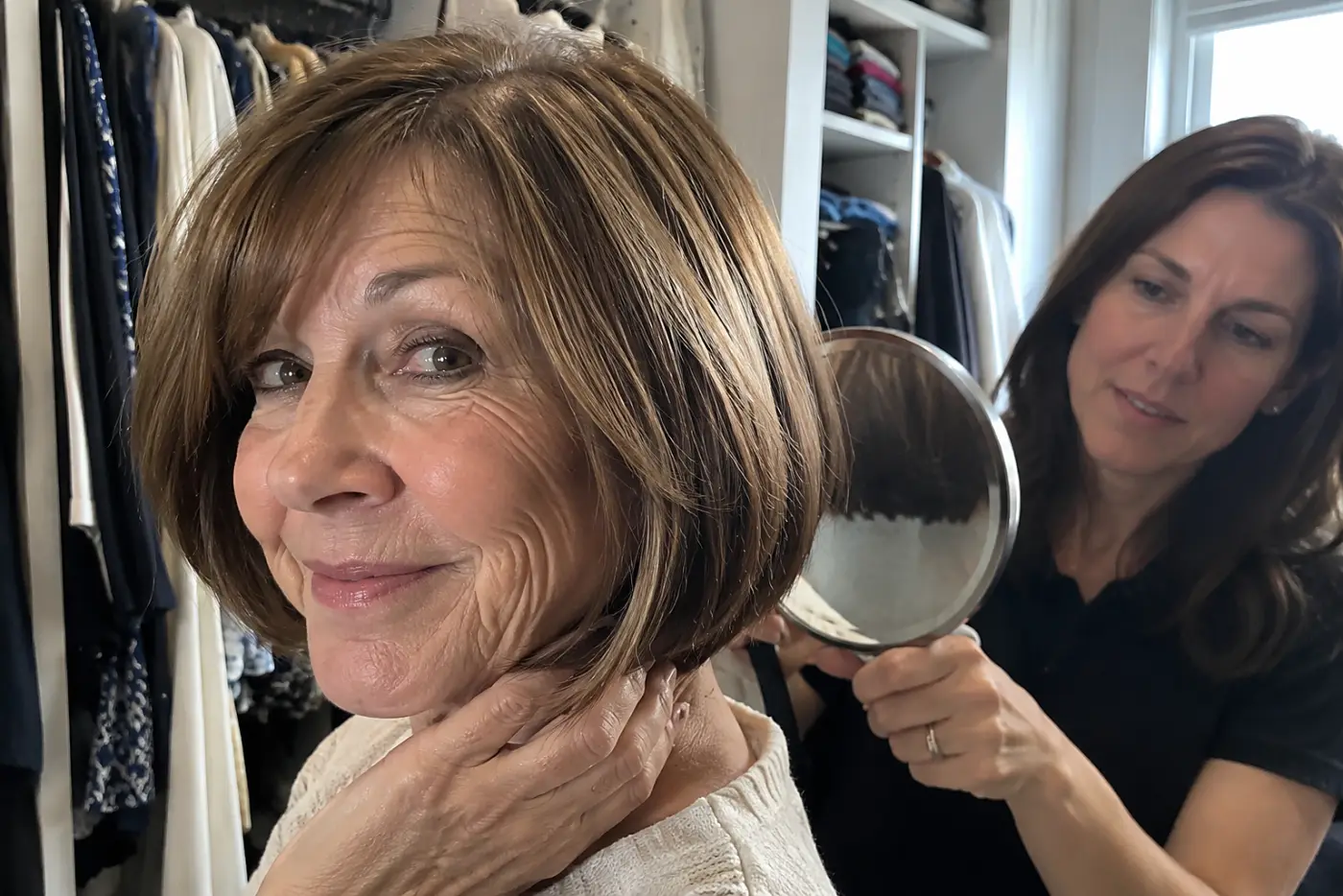
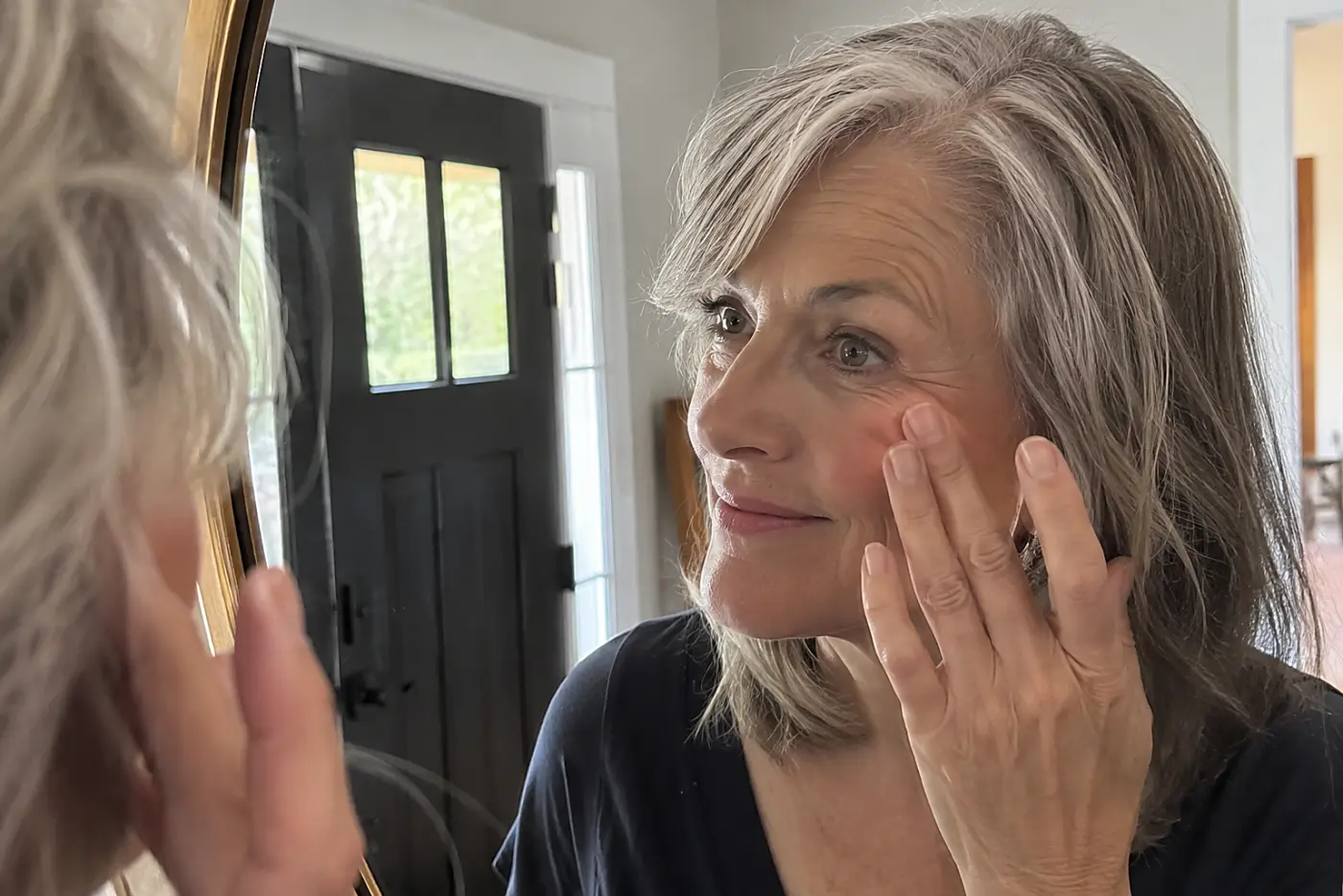
At the salon, the cape is fastened, your hair is combed flat, and the mirror shows every gap near your part. You know what you dislike. Describing the cut you *do* want is harder, especially when a photo hides its back and the stylist reaches for thinning shears.
Start with the edge you see in that mirror. Where should it fall, and how solid should it look? The best answer changes with your hairline, your texture, and how much work you want to do each morning. A haircut name helps, but the cutting line gives the stylist something to work with.
25Classic Chin-Length Bob with Wispy Bangs
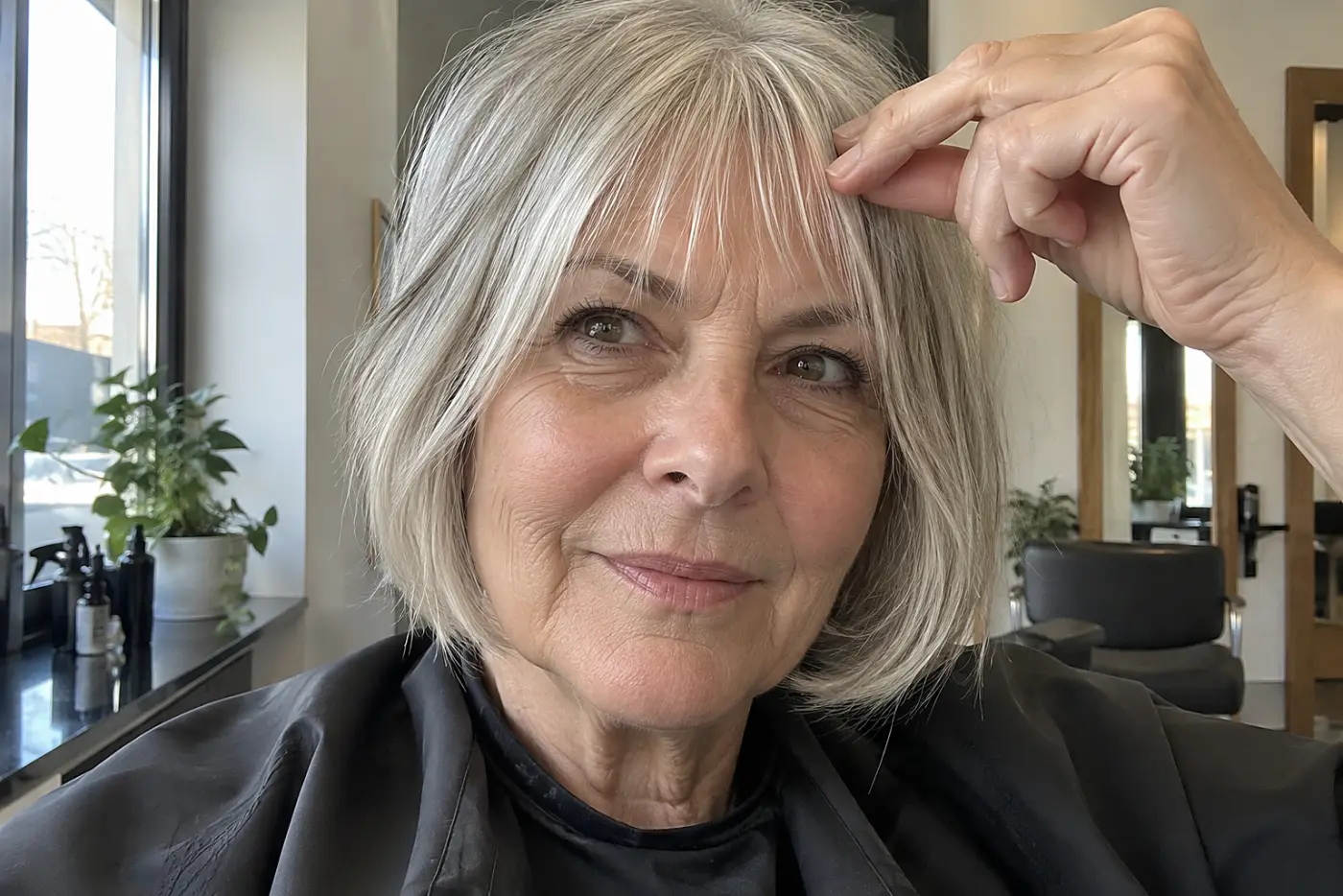
Picture a clear line at your chin, with a few light strands crossing the forehead. The edge does the work here.
AARP recommends a chin-length blunt bob for fine hair because cutting away straggly length makes the bottom look fuller.
Keep the bangs wispy rather than borrowing a thick section from the front. If your part exposes more scalp than you like, try sweeping the fringe across it. Allure’s guide to pumping up fine hair notes that a deep side part and side-swept fringe add lift at the roots.
Point to the place on your jaw where you want the edge to sit. “Chin-length” sounds precise until the stylist asks whether you mean just above or just below it. Settle that while your hair is dry enough to see its natural fall.
24Soft Layered Bob for Everyday Fullness
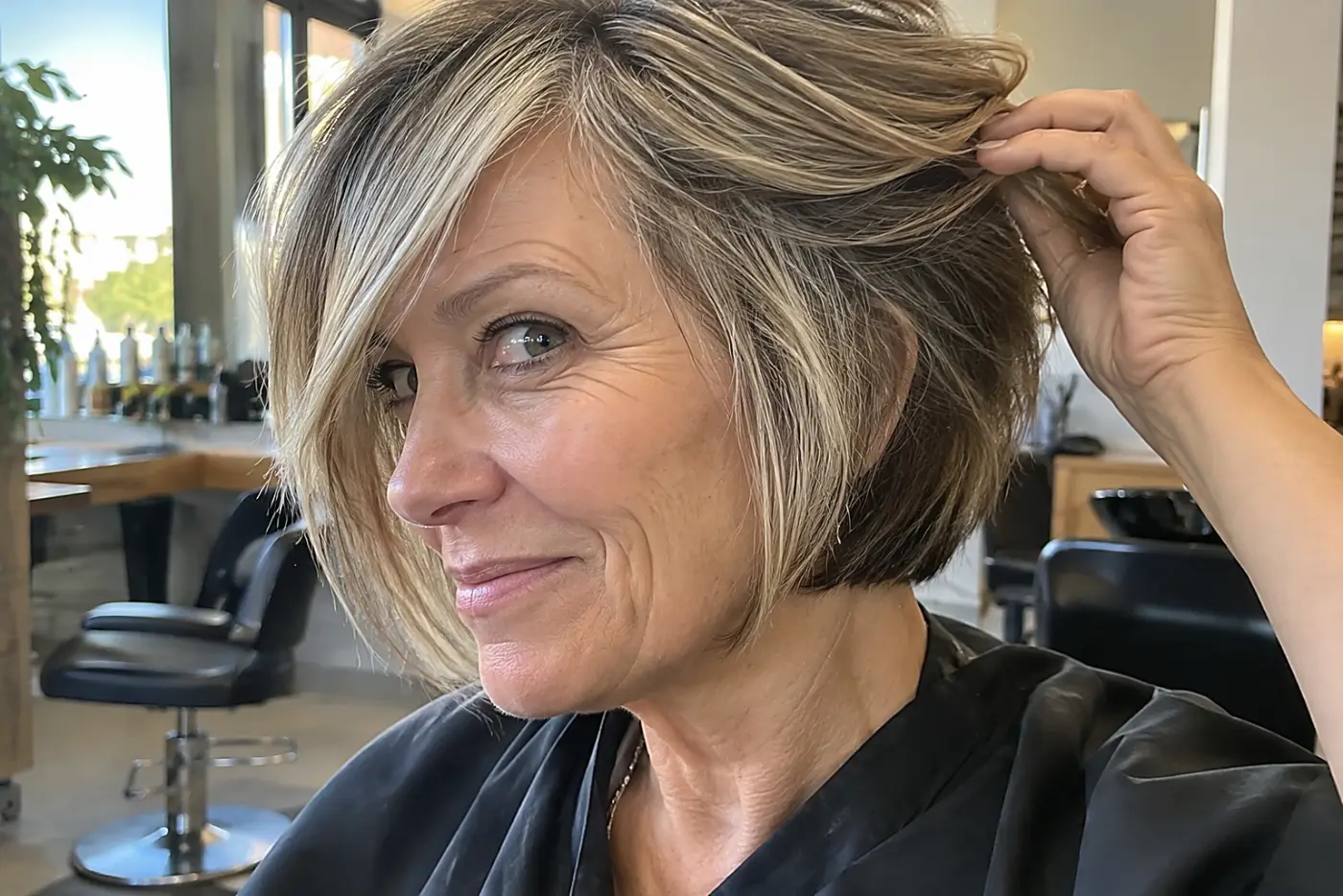
The salon photo shows a bob that moves when its wearer turns her head. You ask for layers. Then, watching hair fall to the floor, you wonder whether too much is coming off.
That concern is worth saying aloud. AARP describes a layered bob as a way to build fullness and movement, particularly in hair with some wave.
Yet layers need a base beneath them. Allure’s guide to haircuts for thin hair cautions against aggressive layering because it takes weight from the ends.
Before cutting starts, have the stylist point out where the shortest layer will land. Look at the hair beneath that point. If little will remain at the bottom, the moving top in the photo comes at a cost you didn’t intend to pay.
The goal is a bob you still recognize from behind. Movement belongs near the surface; the lower outline needs enough hair to read as a shape. When the stylist lifts a section, watch the ends left hanging below it. That view tells you more than the finished photo’s front angle.
23A-Line Bob with Side-Swept Bangs
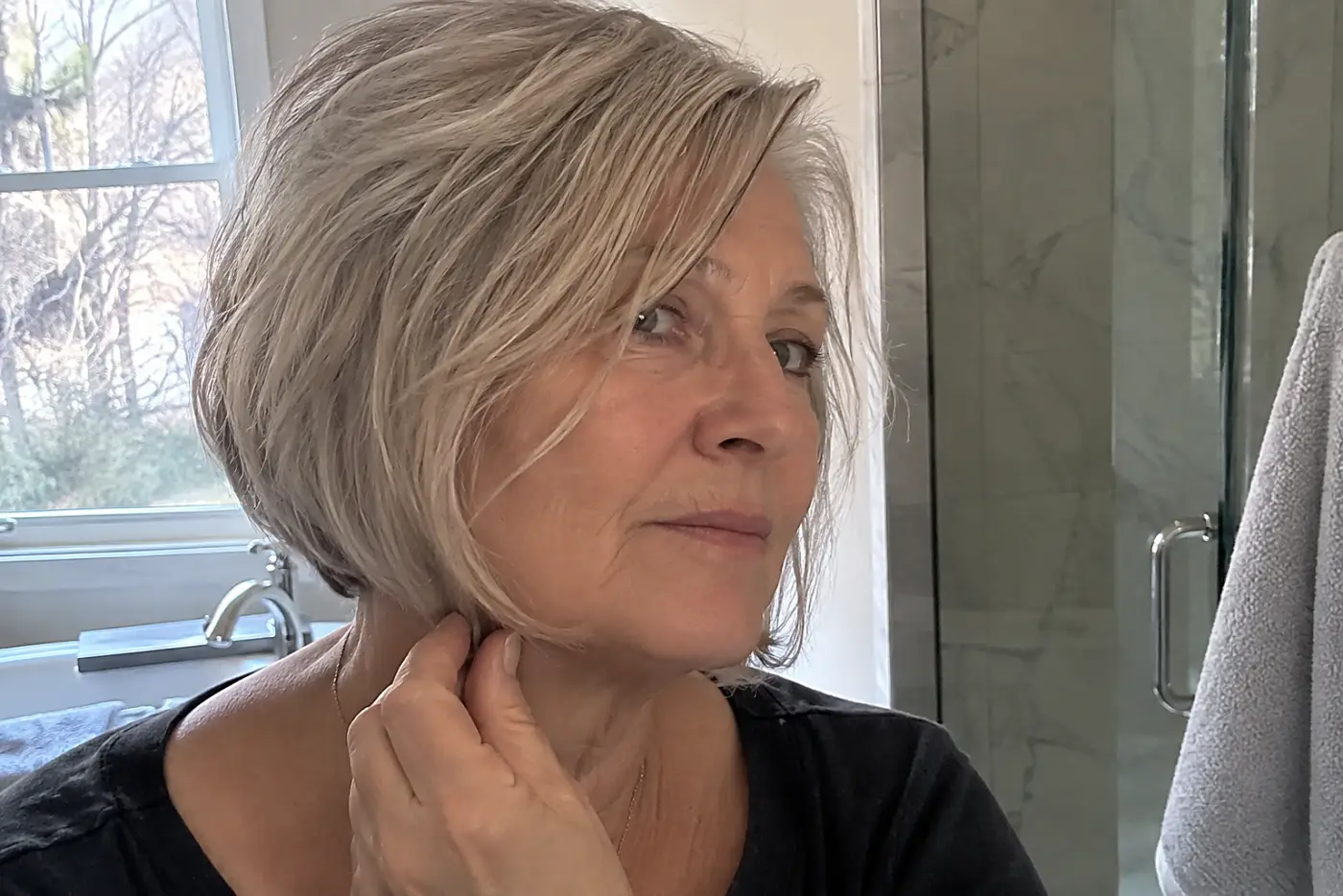
What gives an A-line bob its shape? The slope. As Wikipedia’s bob-cut guide describes it, the hair is shorter behind your head and gradually longer beside your face.
The front pieces give your eyes a line to follow toward the jaw. Side-swept bangs take that line across the forehead.
L’Oréal Paris recommends an angled bob for round faces, but your own preference is the better test. Hold a front section where the proposed length would fall. Does it frame your face, or get in the way?
Look at a side-view photo before settling on the angle. Decide whether you want a small change from back to front or a clearly visible one. That choice changes what you’ll see in shop windows as well as the salon mirror.
22Stacked Graduated Bob for Back Volume
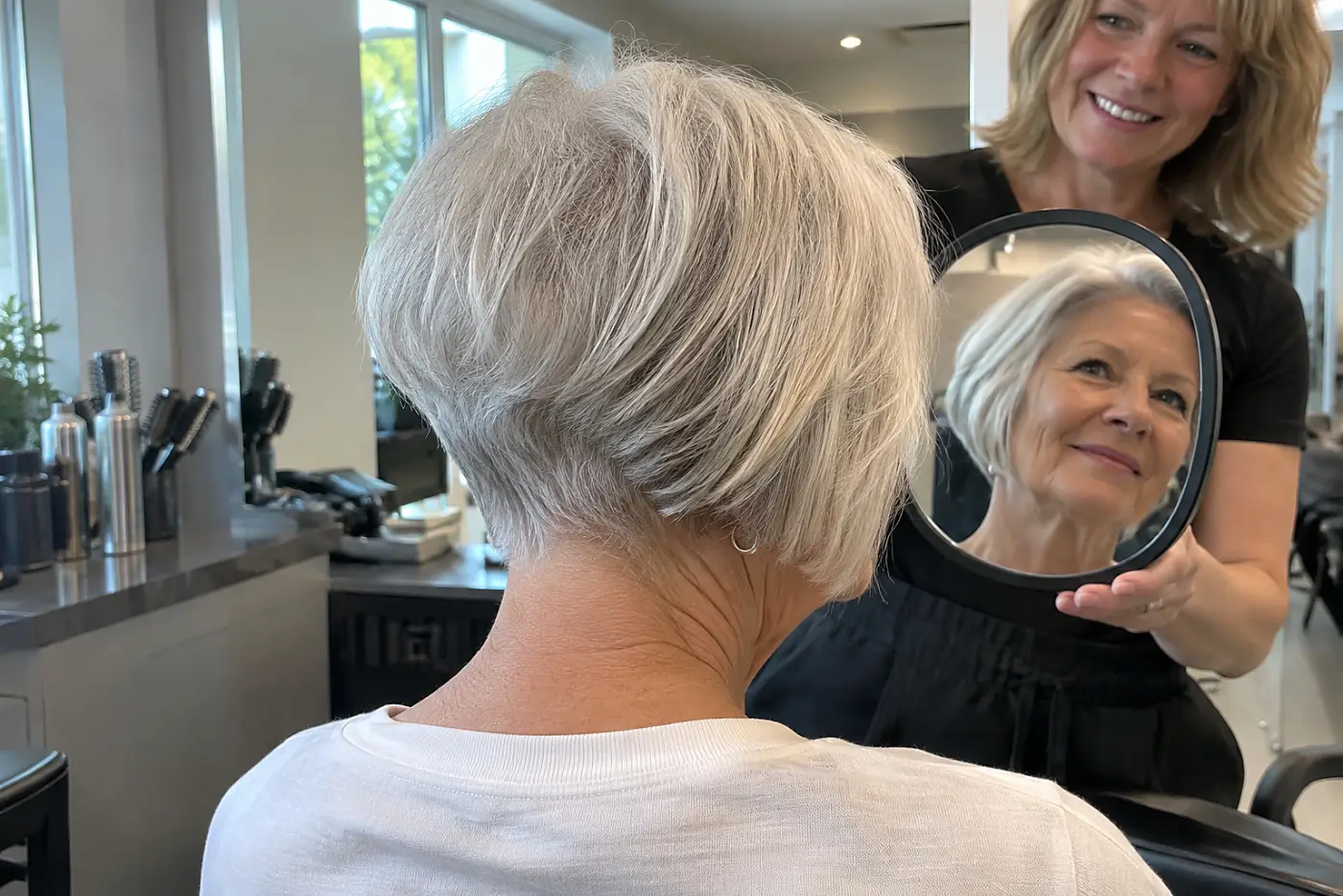
Turn the hand mirror around. If the back of your bob lies flat at the crown but grows heavy at the nape, ask what a stack would change.
“Stacked” means the nape is cut in graduated layers. Those shorter pieces support the hair above, giving the back a rounded outline.
Elle describes that lift as the point of a stacked bob for fine hair. It’s a different approach from cutting short layers all over the head.
Look at the side view before you agree to the graduation. Do you want a small curve or a pronounced rounded back? Decide how close you want the nape to sit, too. That detail determines whether the finished cut feels like your familiar bob or a much shorter haircut.
21Rounded Bob That Curves Around the Jaw
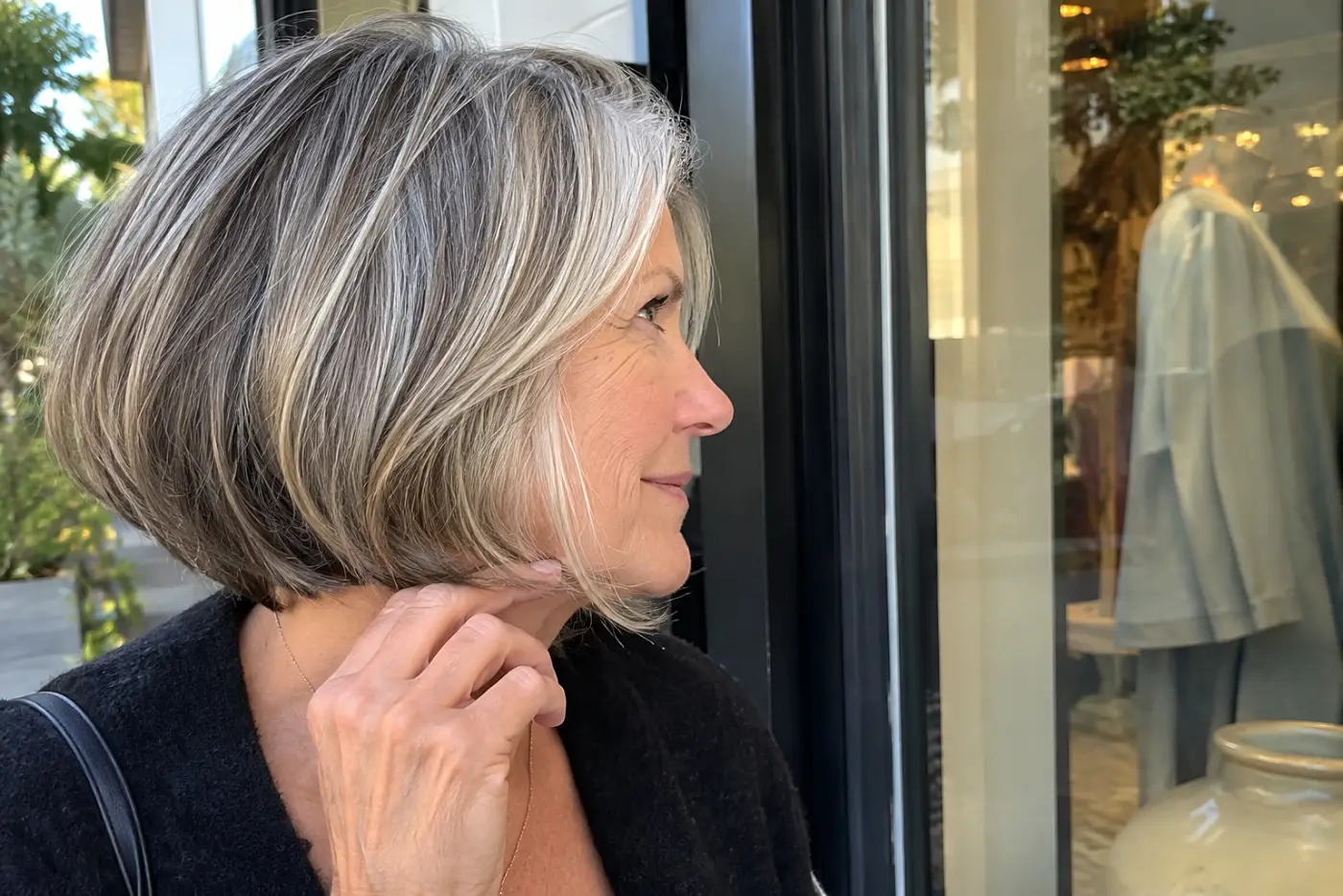
The curved bob has had a moment in Elle’s 2026 trend reporting. In a photo, its edge bends toward the face instead of falling as a straight vertical curtain. The useful part is the shape, whether the trend sticks around or not.
A jaw-skimming curve draws attention to the outline rather than to stray ends. Tell the stylist whether you want the front to turn inward when dry, not only after a salon blowout. Then check how the cut sits when you tuck a side behind your ear.
If you prefer a firmer outline, ask to see a box bob too. L’Oréal Paris describes its blunt, chin-level edge as a way to make fine hair look denser. A curve and a boxy edge give two very different answers to the same mirror.
See more: 29 Ways to Dress for the Body You Have Now Without Giving Up →
20Textured Bob with Face-Framing Layers
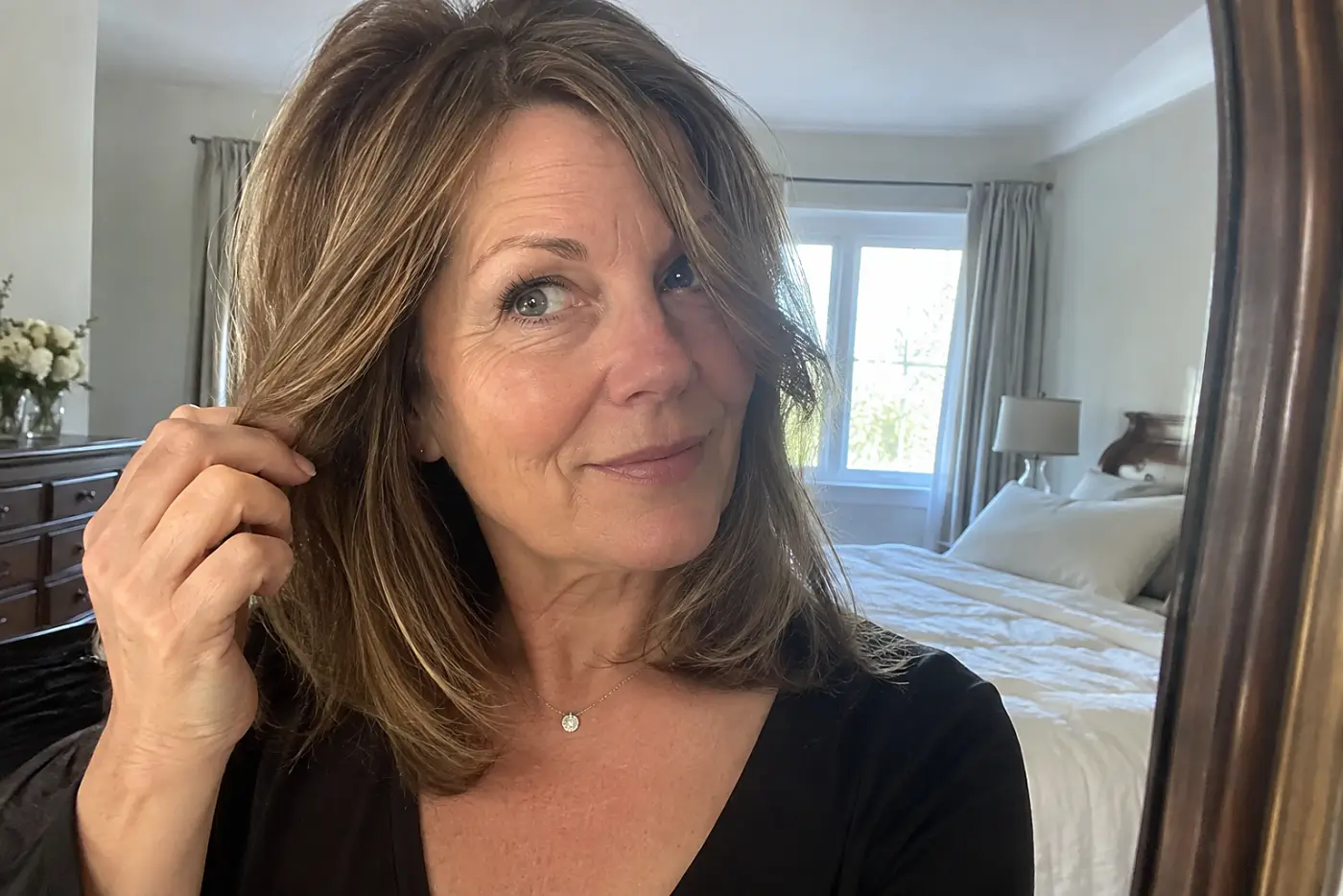
The front of a textured bob needn’t match the back piece for piece. Matrix recommends strategic framing and a few long layers to give fine hair a fuller appearance. The word *few* matters.
Point to the shortest piece beside the face in a photo you like. Will it reach your cheekbone, jaw, or chin? Then look at the lower edge. You want movement around your cheeks without losing the bob’s outline.
Now picture the piece on an ordinary day, with no brush in your hand. If it drops into your eyes every time you lean over the sink, it isn’t doing you a favor.
19Side-Parted Bob for Root Lift
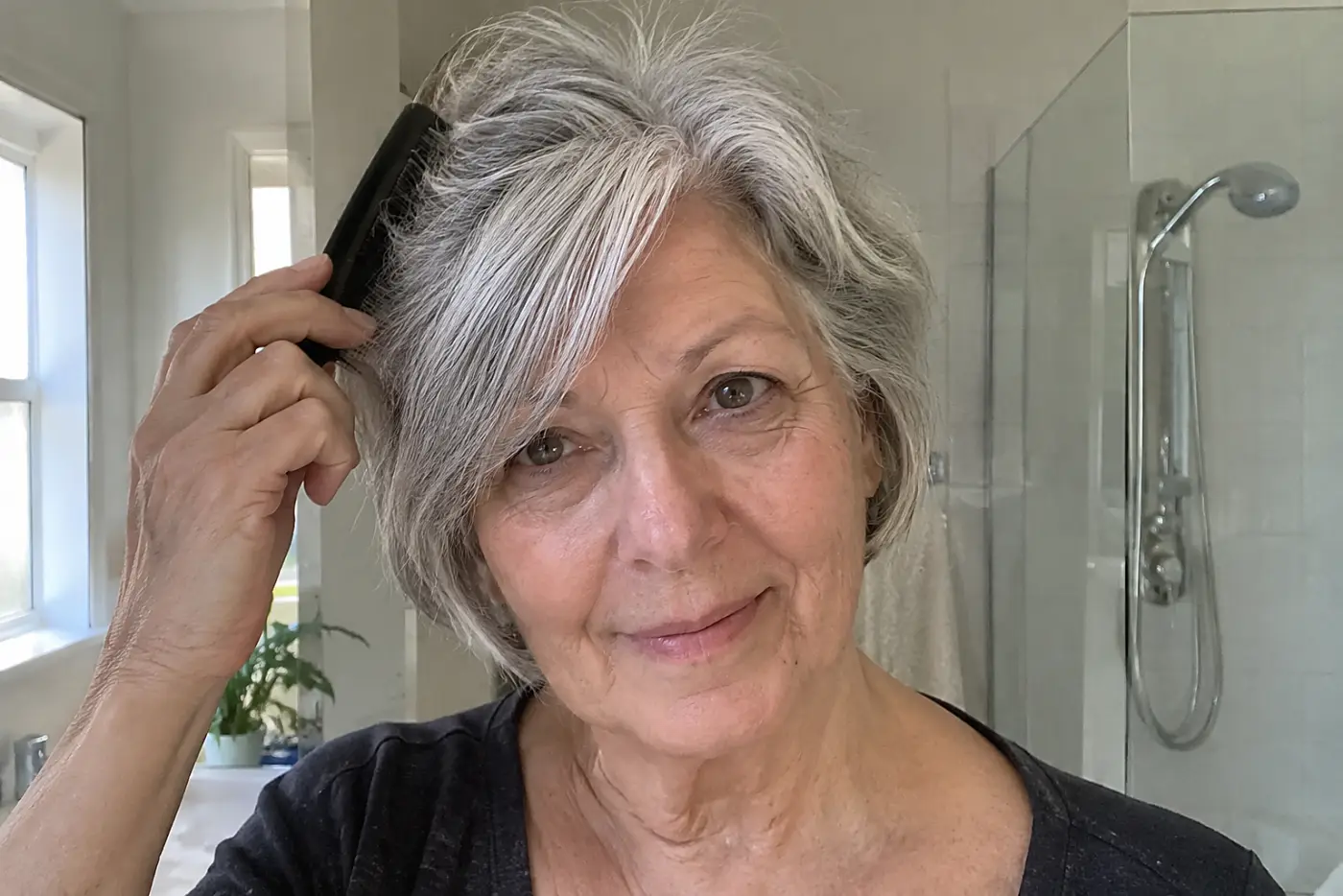
Before changing the cut, change the part.
Stand at your bathroom mirror and move your part farther to one side. Lift the hair with your fingers, let it fall, and look at the crown from both angles.
Allure recommends a deep side part for quick lift on fine, flat hair. You’ll see whether that lift works with the hair you have.
Then check the front. Does the sweep cover the area you wanted covered? Does the heavier side fall into your face? Make the test before choosing bangs that rely on a side part. A good bob should still look like yours once you’ve combed it yourself.
18Blunt Bob with Blunt Ends for Density
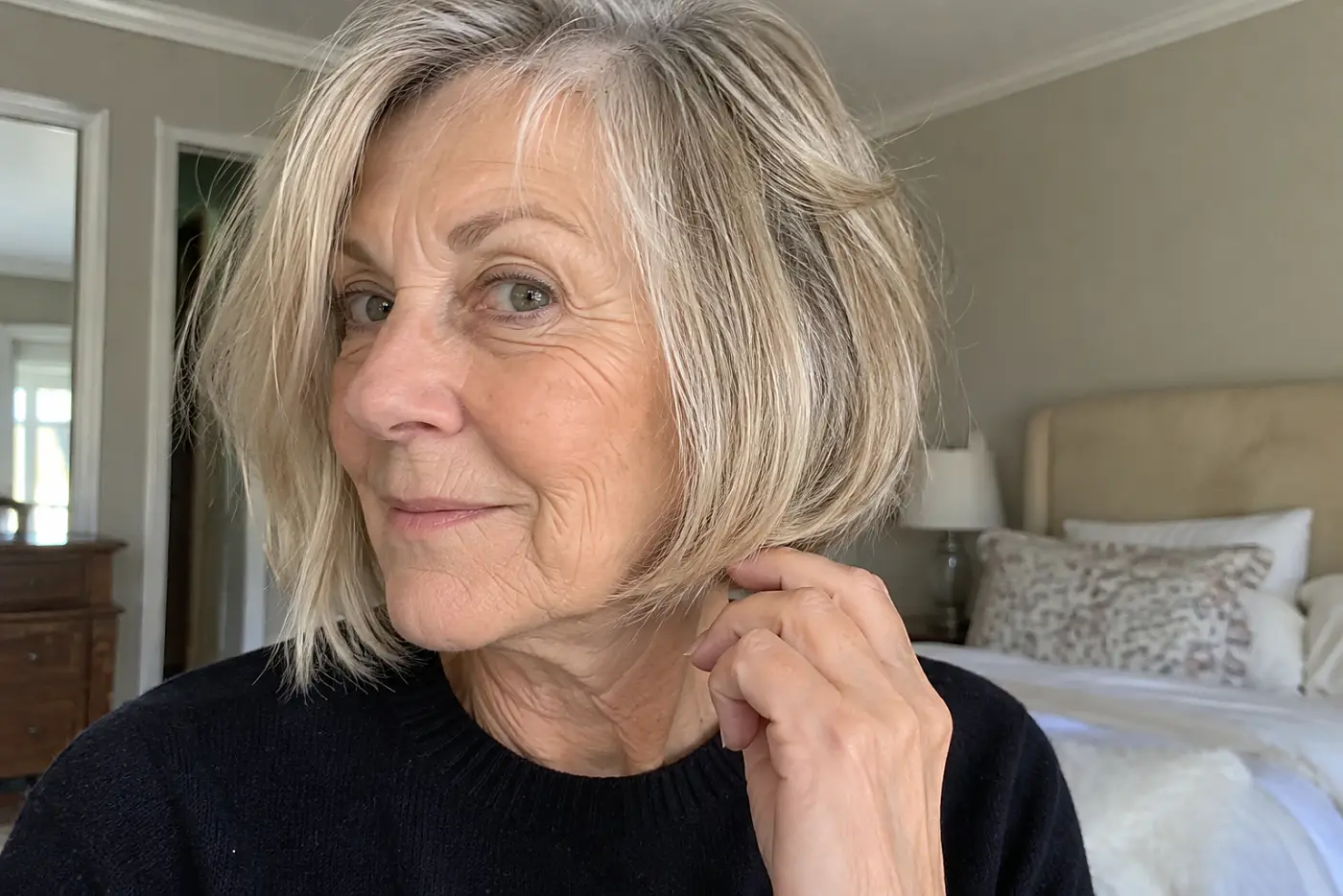
You know the ends that disappear against a dark sweater? Cutting higher until they form a stronger line changes what you see.
With a blunt bob, the hair meets at one lower edge rather than tapering into scattered points. Allure explains why that edge looks thicker on fine hair: more strands reach the same point.
The cut changes the appearance of density; it doesn’t change the amount of hair growing from your scalp.
Notice where your current ends start to look thin against that sweater. A new line above that point means giving up length you’ve held onto for years. The stronger edge is the trade.
17Short Bob with Nape Undercut
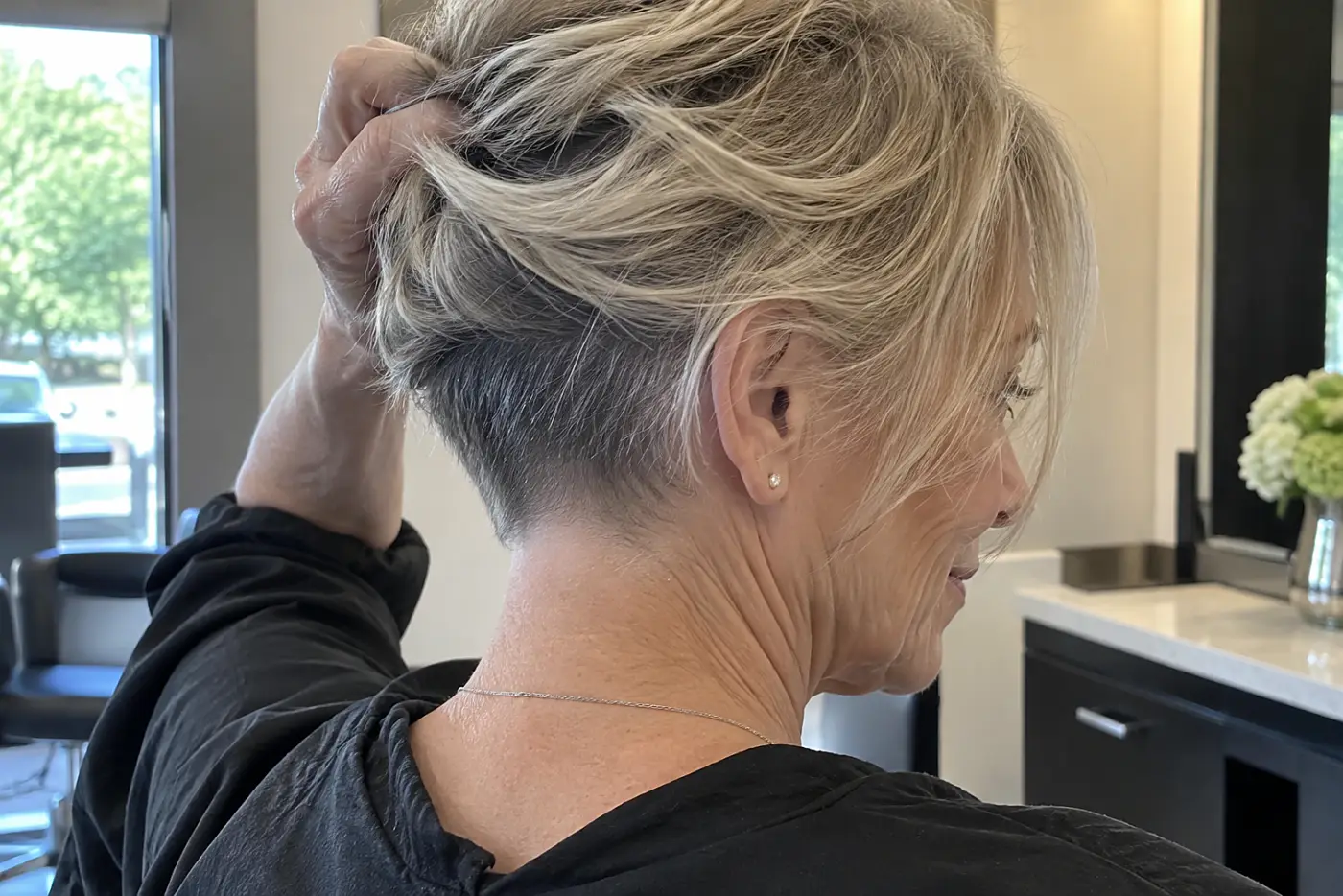
A short bob with an undercut makes sense for a particular mismatch: the hair at your nape feels bulky while the sides look finer. Removing hair where you already have plenty keeps the top longer and visible.
Paul Mitchell’s short-cut guide describes an undercut as removing bulk beneath longer hair. On a wavy or curly bob, a restrained nape undercut leaves the texture above on show, as Wella Professionals notes.
Lift the back of your hair with one hand. Have the stylist show exactly which section would be shortened and where the longer hair would cover it.
If your nape is already sparse, skip this idea. The point is to remove bulk you don’t need, not to take hair from a place you want to look fuller.
16Short Fine Hair Bob with Side-Sweeping Layers
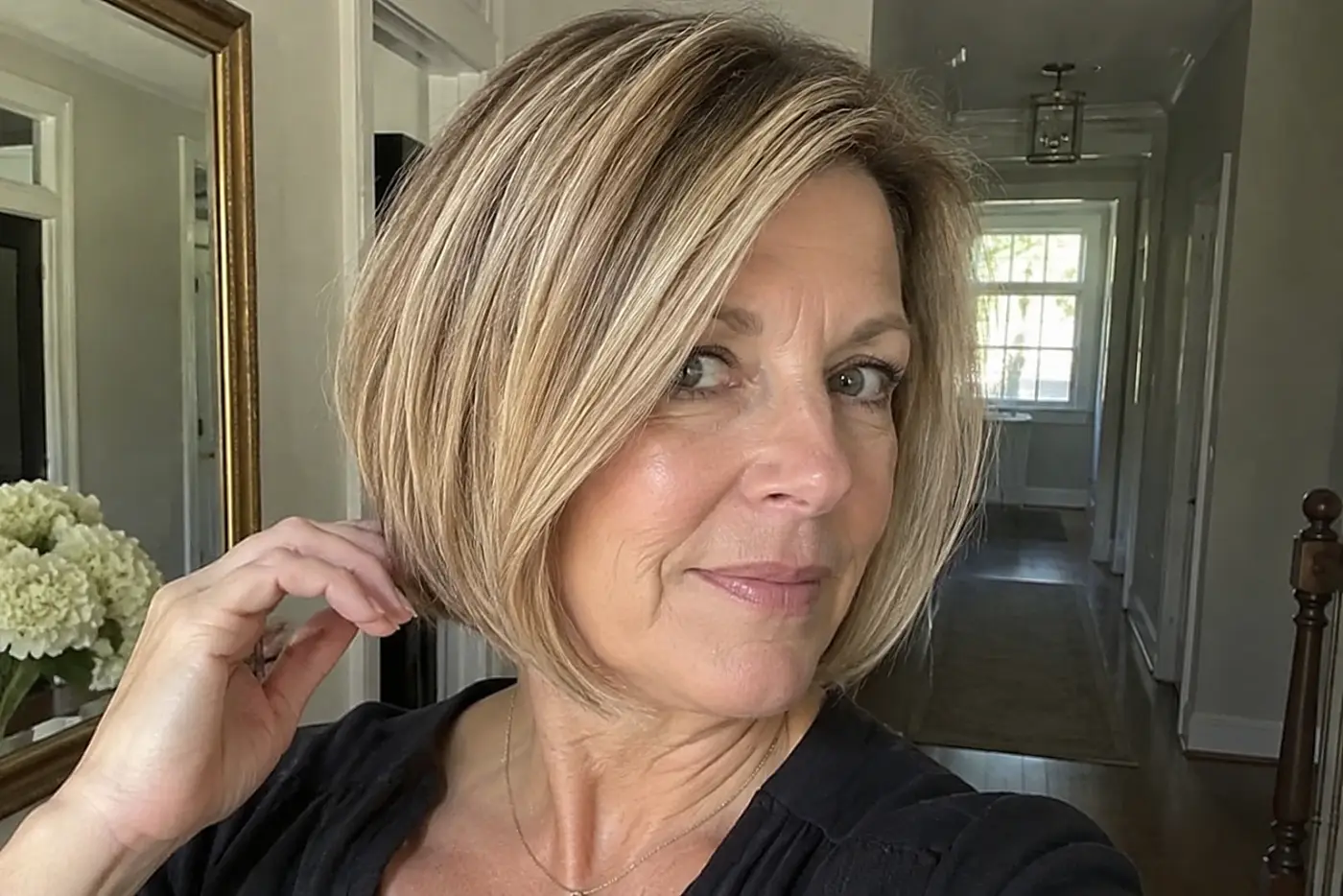
Imagine the cropped bob from the front: an exposed neck, a defined lower edge, and a longer piece crossing toward your cheekbone. That sweep keeps the cut from feeling severe.
AARP points to cheekbone-level side-swept bangs as a partner for short cuts. Allure’s guide to pumping up fine hair also recommends shifting the part for lift at a fine hairline.
Together, those details give the front some direction without asking the whole cut to carry short layers.
Try pulling your hair back at the nape while leaving the front loose. Look straight on, then turn sideways. That quick mirror check shows whether you like the short outline with something left across your forehead.
15Curly or Wavy Bob for Natural Texture
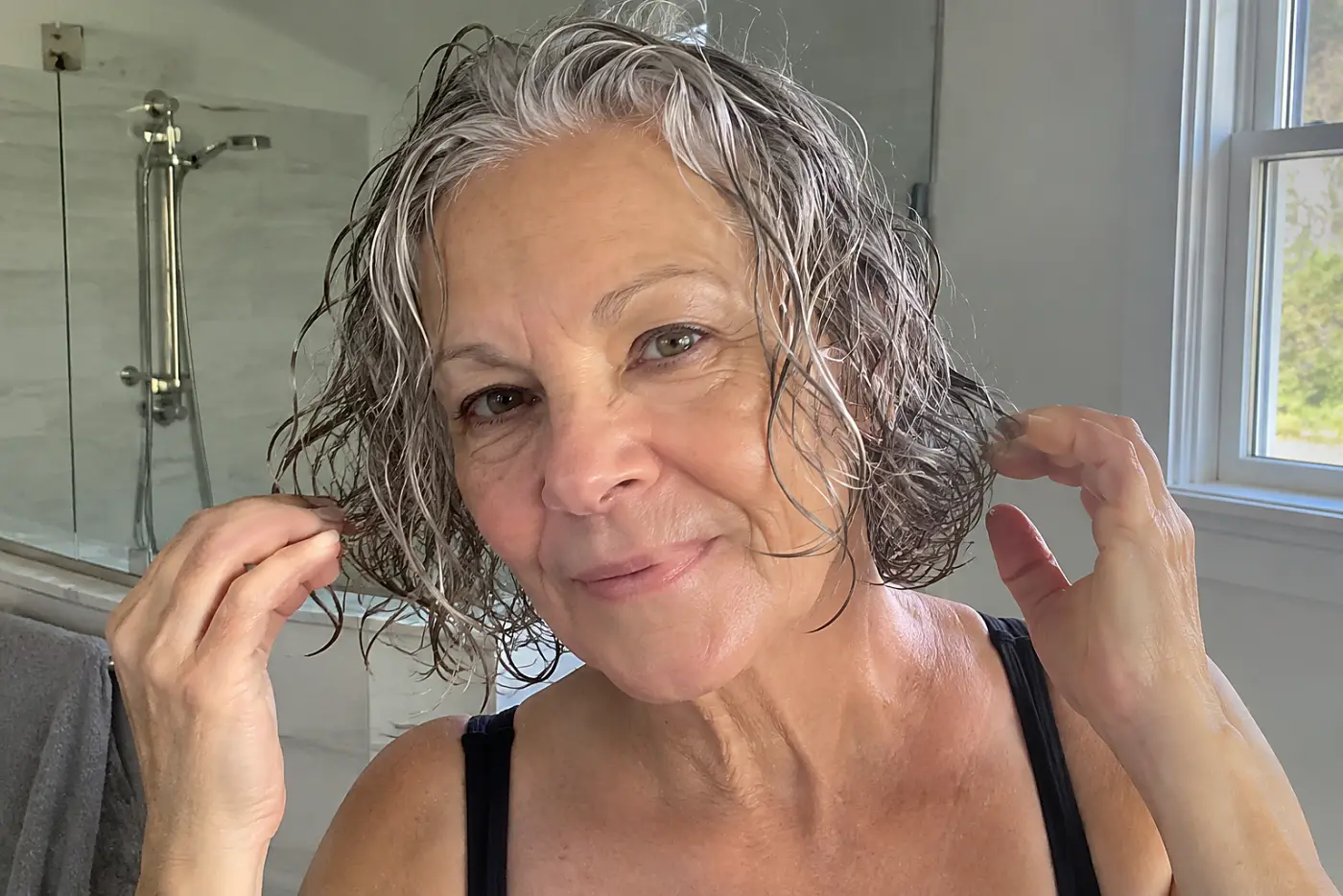
Your waves don’t need to be pressed straight before anyone decides where the bob belongs. Let the stylist see how they sit on a normal wash day.
Vogue’s 2026 texture report favors working a lightweight curl cream through wet hair and letting the natural pattern show.
For a side-parted curly bob, Allure describes leaving the front corner slightly longer on the part side. That detail helps the shape stay balanced when the hair flips over.
Ask for a dry check after styling. Does one side spring higher? Does the front land where you expected? If you use a dryer, the American Academy of Dermatology advises low heat and less heat exposure for thinning hair. Tell the stylist if air-drying is the real plan.
14Gray and Silver Bob Color Blending
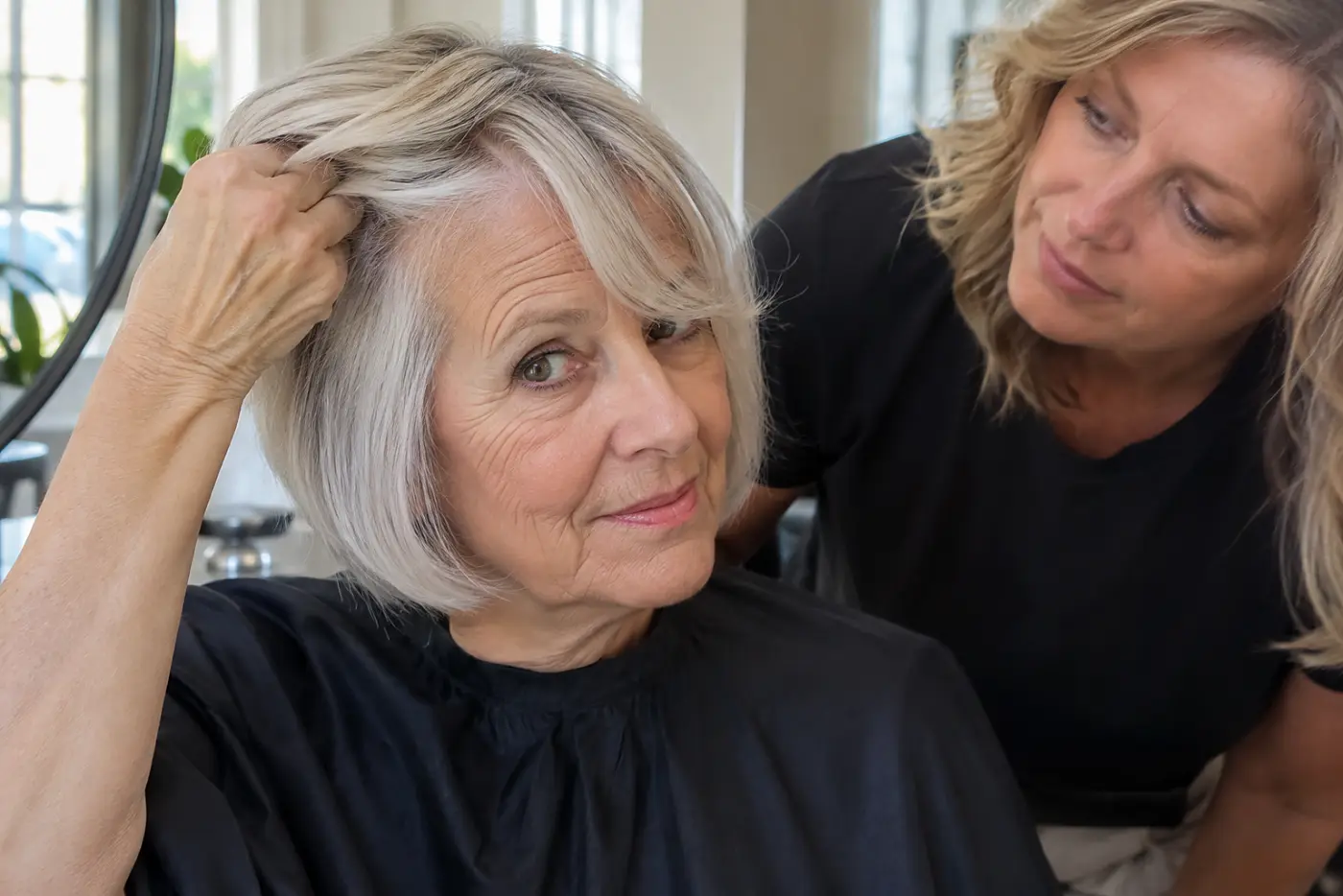
A crisp bob and silver strands belong in the same conversation. If you’re tired of a hard line between colored hair and new gray growth, ask about blending rather than full coverage.
L’Oréal Professionnel’s gray-blending guide gives a rough touch-up window of **10 to 16 weeks**. It says salon gloss lasts about **2 to 3 months**.
Those are service guidelines, not an appointment schedule promised to every head of hair. Ask your colorist what your chosen service will look like as it grows out.
Redken describes demi-permanent color as a lower-upkeep way to blend gray than permanent coverage. Before booking, decide what matters more to you: hiding every silver strand or letting the change at your part look less abrupt.
See more: 29 Outfit Habits That Make You Look Older Than You Are →
13Bob with Curtain Bangs for Softness
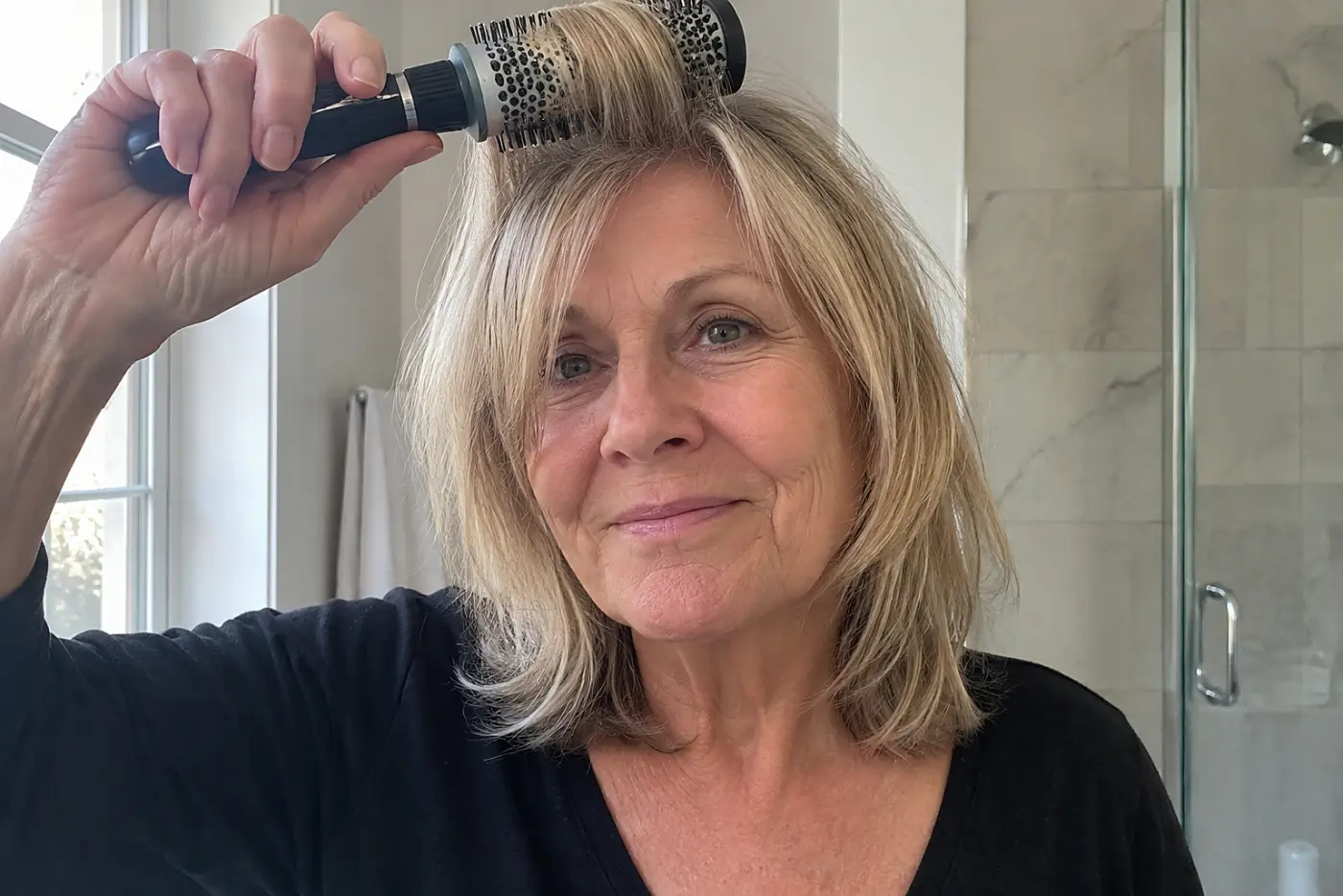
Curtain bangs part near the center and move toward the sides of the face. With a bob, they leave the forehead visible while giving the front an intentional shape.
For natural texture, Allure suggests a small amount of curl product before air-drying. If you prefer a styled finish, Vogue recommends a round brush and blow-dryer to direct the bangs away from the face.
Ask the stylist to show where each side will fall when dry. Then think about your morning. Will you pick up a brush, or will you tuck the pieces behind your ears?
Say that before the bangs are cut. Their length should make sense on the day after the appointment, not only under the salon lights.
12Asymmetrical Bob with Subtle Length Difference
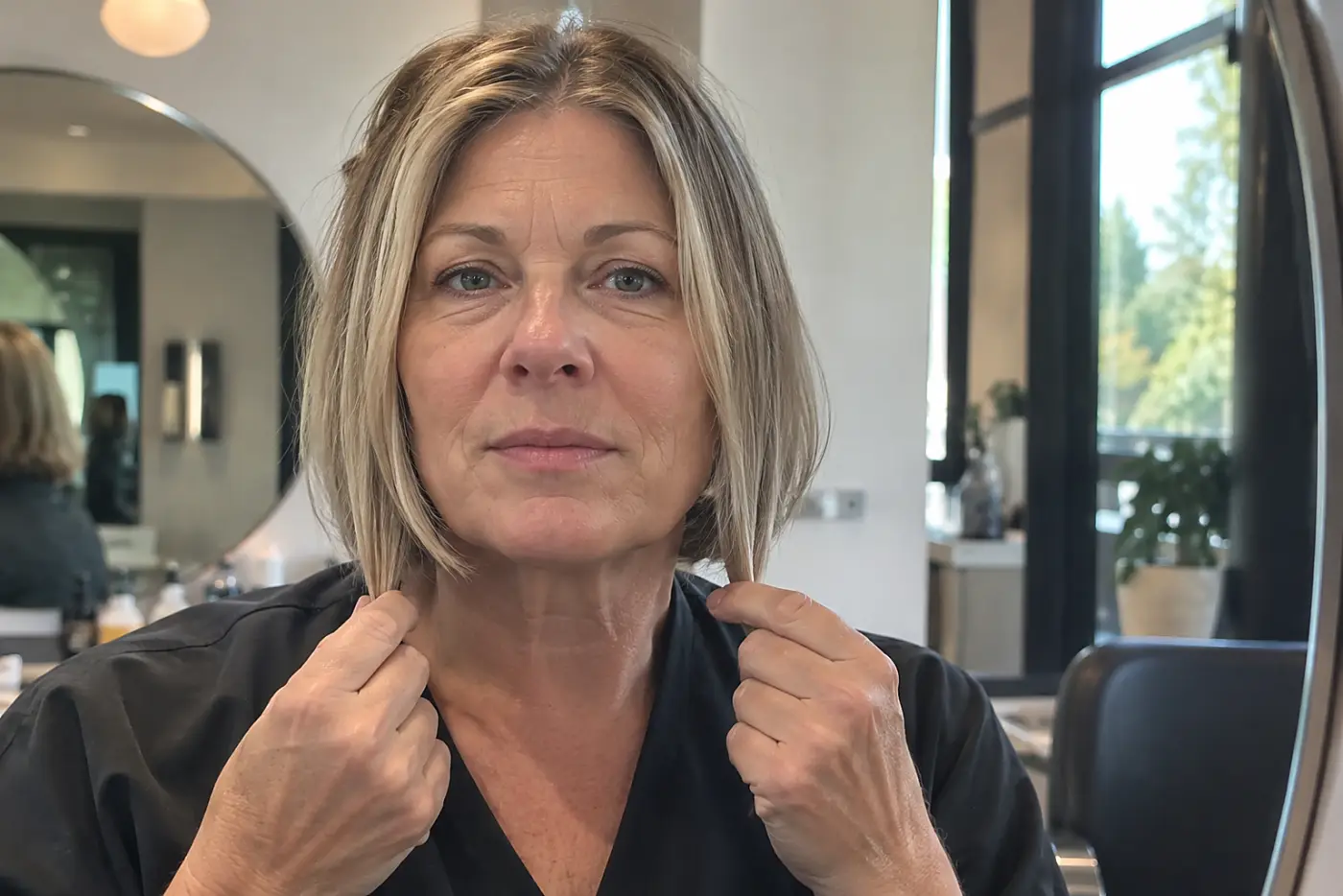
An asymmetrical bob has one side longer than the other. Even a small difference gives the cut a deliberate line, so this is one to discuss while looking straight into the mirror.
City & Guilds describes asymmetric bobs as precision cuts built around accurate lines.
That’s why “just a little uneven” isn’t a useful instruction. Identify which side you want longer and where each front corner should finish.
If you always tuck one side behind your ear, mention it. Look at the shape both tucked and loose. You want the difference to look chosen when you leave the salon, not like one side missed a trim.
11Inverted Bob with Dramatic Back Angle
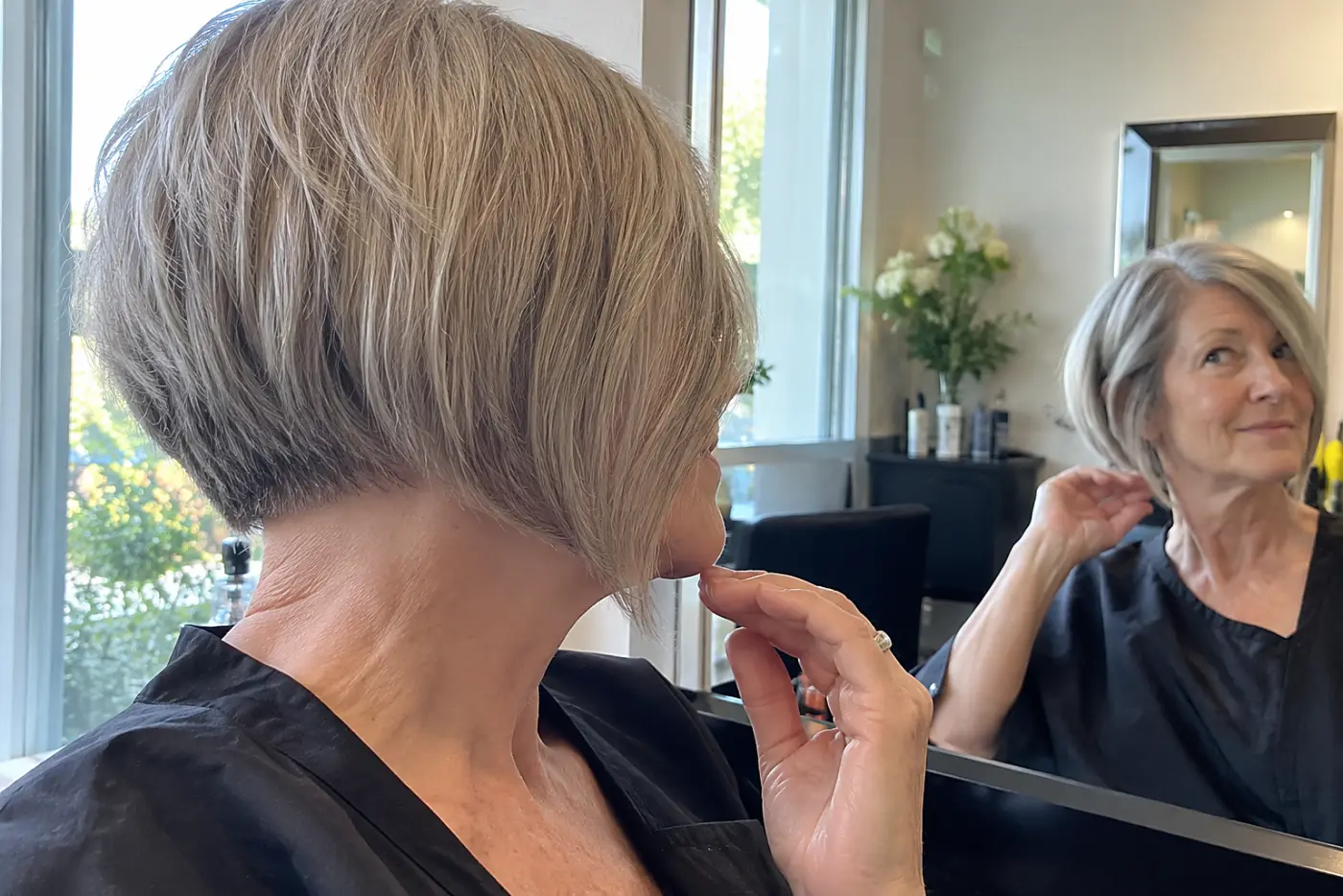
From behind, an inverted bob rises toward the nape. From the side, its line travels down toward longer pieces at the front. A stack of layers at the back gives that slope more shape than a plain A-line.
Cosmopolitan describes the inverted bob as shorter behind and longer around the face, with volume built into the back. The angle is the decision you need to make. A dramatic one puts more of your neck on show and leaves longer front corners to manage.
Find a side-view photo, not a front-only shot. Compare its back length with the hair you have now. If you want height at the back but dislike a strong slope, the rounded stacked bob at #22 gives you a different silhouette.
10Feathered Bob for Illusion of Thickness
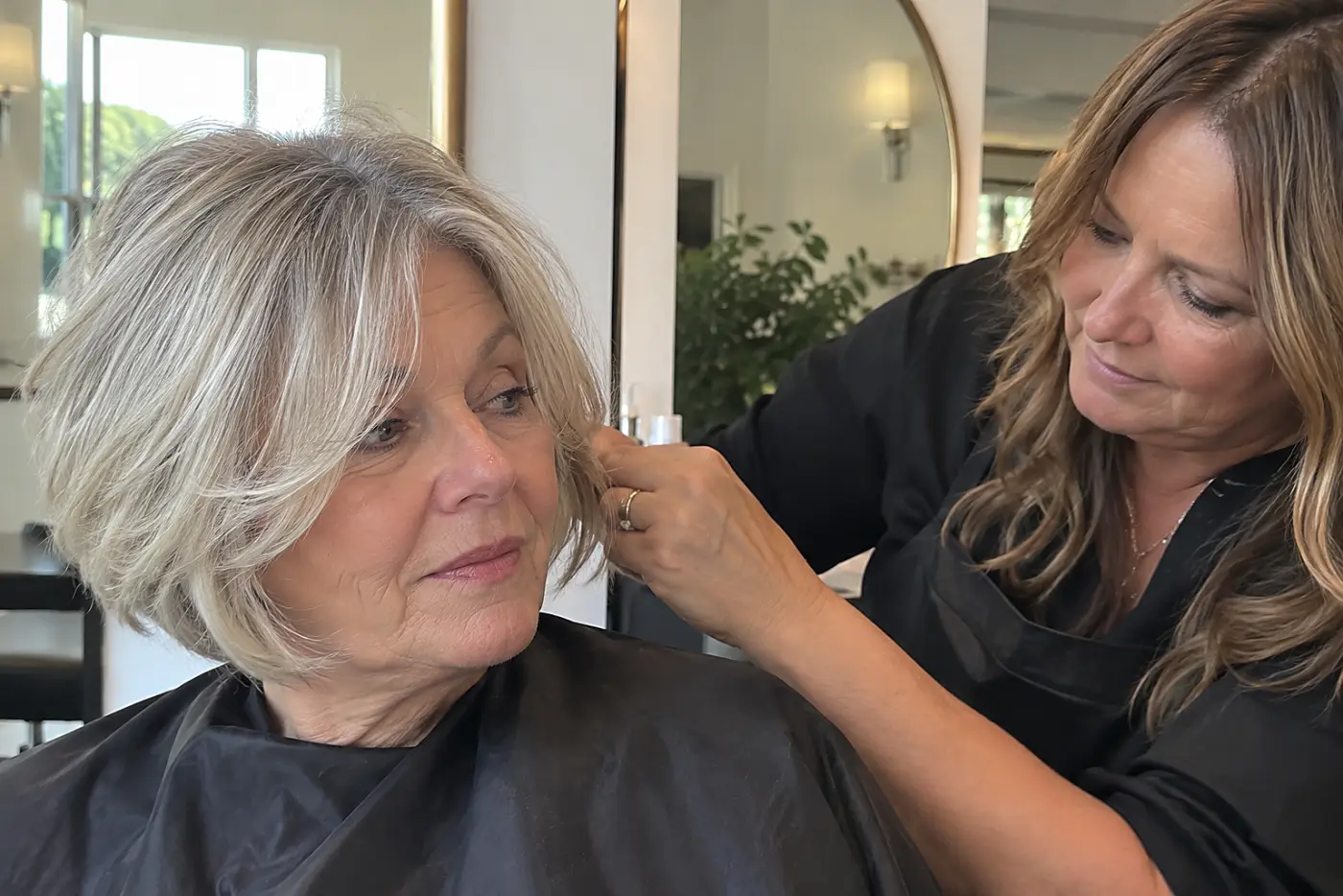
“Feathered” sounds inviting when your bob feels stiff. It also risks leaving thin, flyaway ends if too much hair is cut away.
Identify which part needs movement: the hair beside your face, the top, or the ends. Allure’s guide to layered cuts distinguishes soft texture from heavy step layers that leave thin hair looking see-through. Keep the lower outline intact while easing the sections that feel too solid.
Run your fingers along the ends before the cut. That’s the weight you’re choosing to keep. A feathered finish should give those pieces some movement, not leave so little there that you can see your collar through them.
9Bob with See-Through Fringe
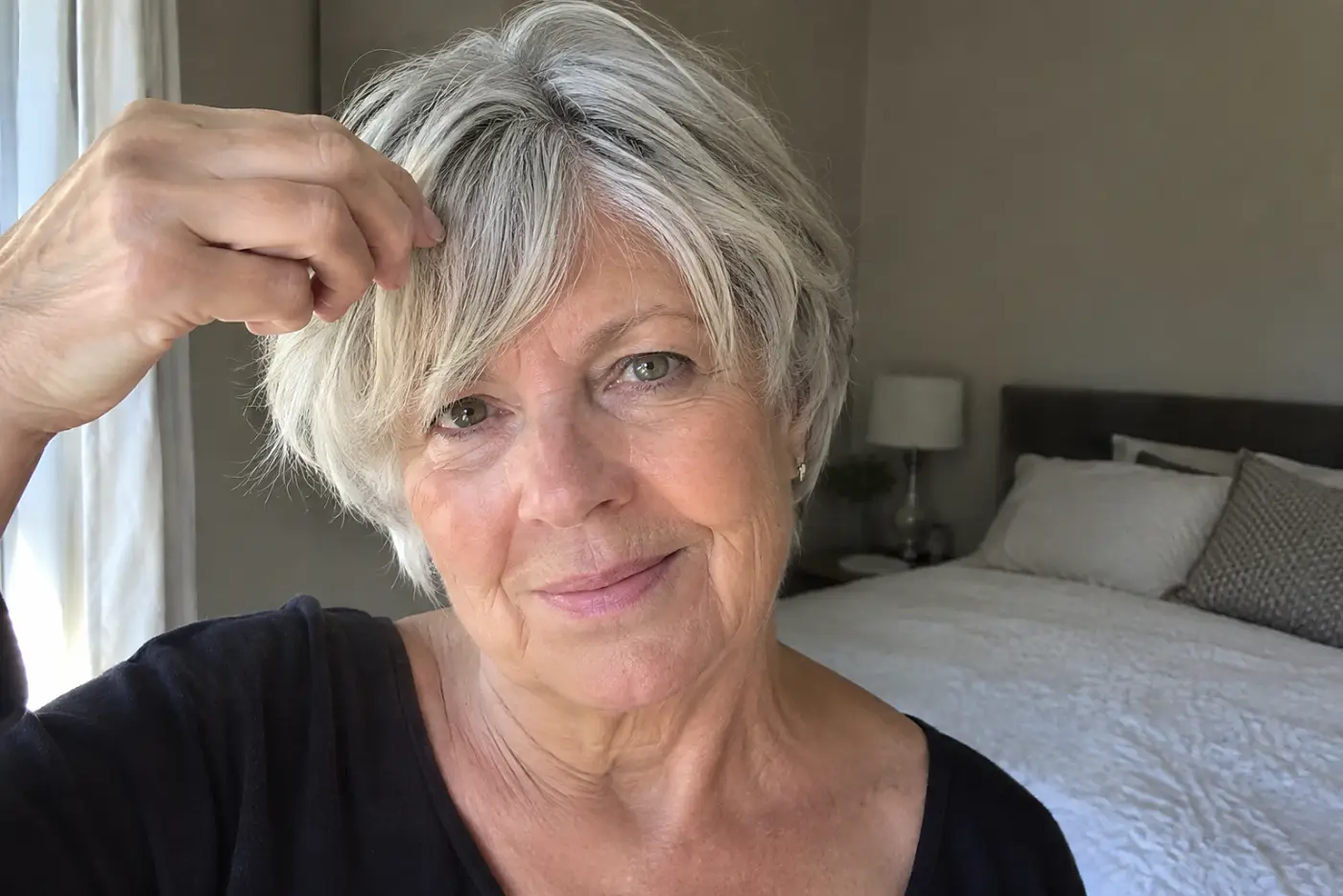
See-through fringe, also called air bangs, starts with a shallow section at the front. It puts a few strands across your forehead without taking a thick wedge of hair from the rest of the bob.
Hair.com defines air bangs by that light, wispy construction. The difference matters if the hair near your temples already looks sparse. Have the stylist section off the proposed fringe so you can see how much hair remains at the sides before cutting.
Would you rather see some forehead, or have the fringe cover it? Answer that question in the chair. “Bangs” alone leaves too much room for a heavier cut than you pictured. A shallow fringe gives you a clear request.
8Collarbone-Length Lob for a Longer Option
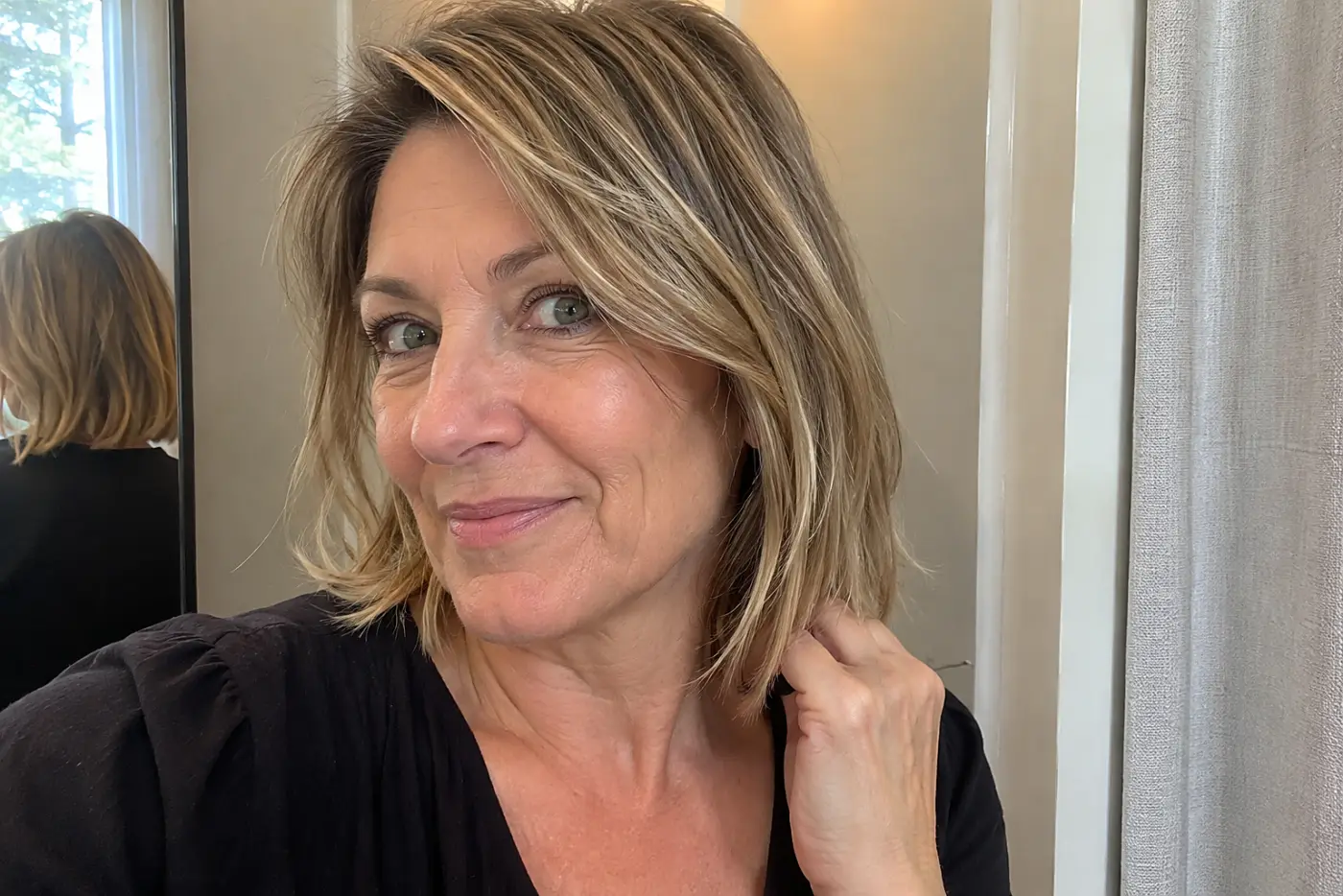
There’s a moment when hair brushes your collarbone and still feels long enough to tuck back. If a chin bob feels like too much change, begin there.
A lob is a long bob at roughly shoulder or collarbone length. Allure’s lob guide advises trims about every **6 to 8 weeks** to keep its line crisp.
Fine ends that grow past the intended edge are the part to watch, not a reason to give up the length you like.
Touch the collarbone in the mirror and show the stylist the exact point you mean. Check whether the front and back will reach it together. A photo of a lob with thick hair tells you little about how its ends will look on yours; the planned cutting line tells you far more.
See more: 25 Spring Outfits for Women Over 60 (and What Makes Them Work) →
7Choppy Bob Without Over-Thinning the Ends
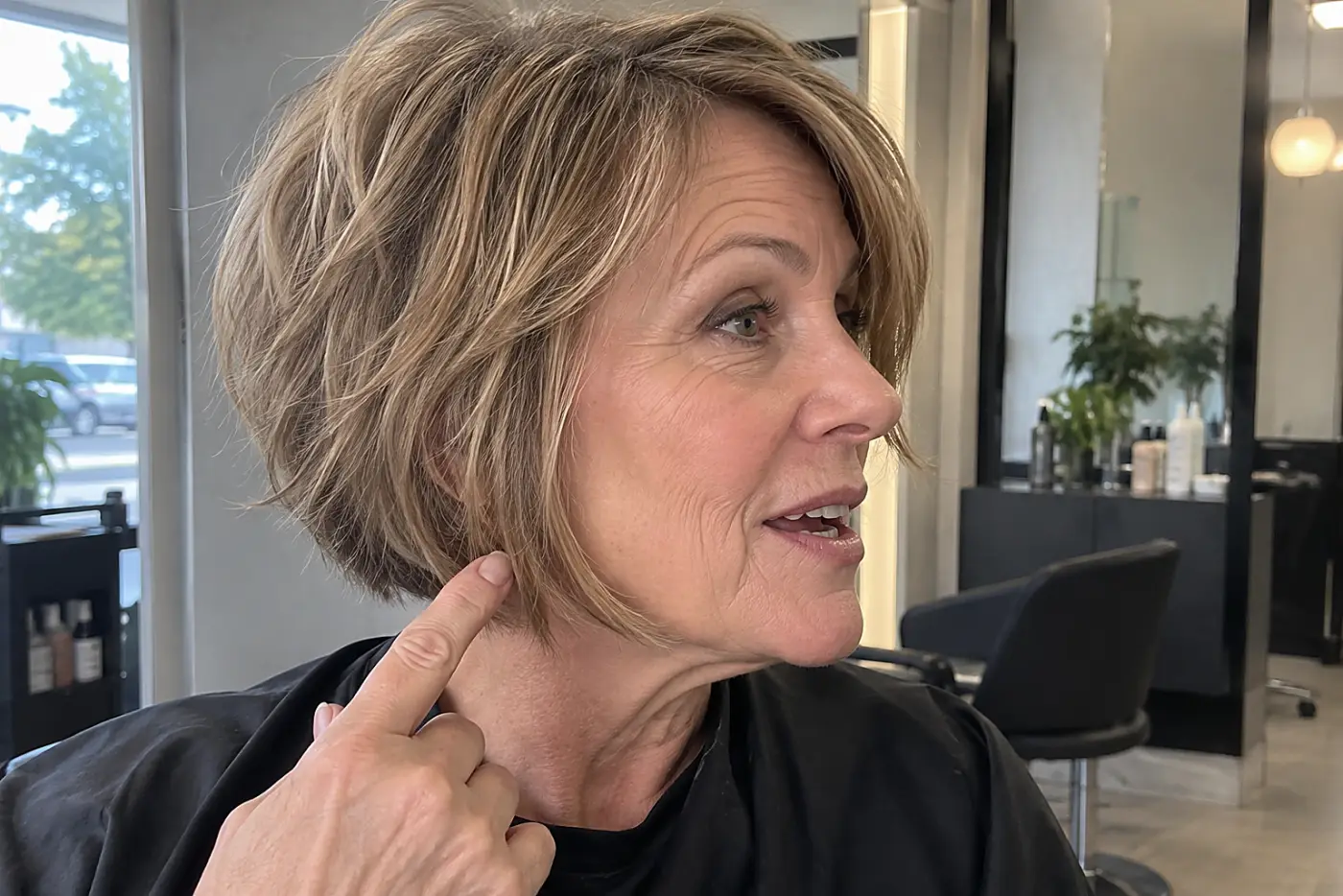
You ask for a choppy bob because you want the pieces to move. Then you see a tool meant to remove weight throughout the cut.
Allure warns that heavy texturizing takes needed density from fine hair. Its layering advice favors softening or notching over a mass of short layers when the ends already look thin.
Notice where the texture sits in your reference photo. Is it at the top, along the sides, or all the way through the bottom? Those are different requests. A choppy surface above a solid edge keeps the broken-up look without asking thin ends to do even less work.
Wait until you’ve seen the basic shape before agreeing to extra texturizing. Movement is easier to judge once the edge is visible. Hair removed from that edge is no longer there to weigh into the decision.
6Medium Shaggy Hairstyle with Soft Crown Layers
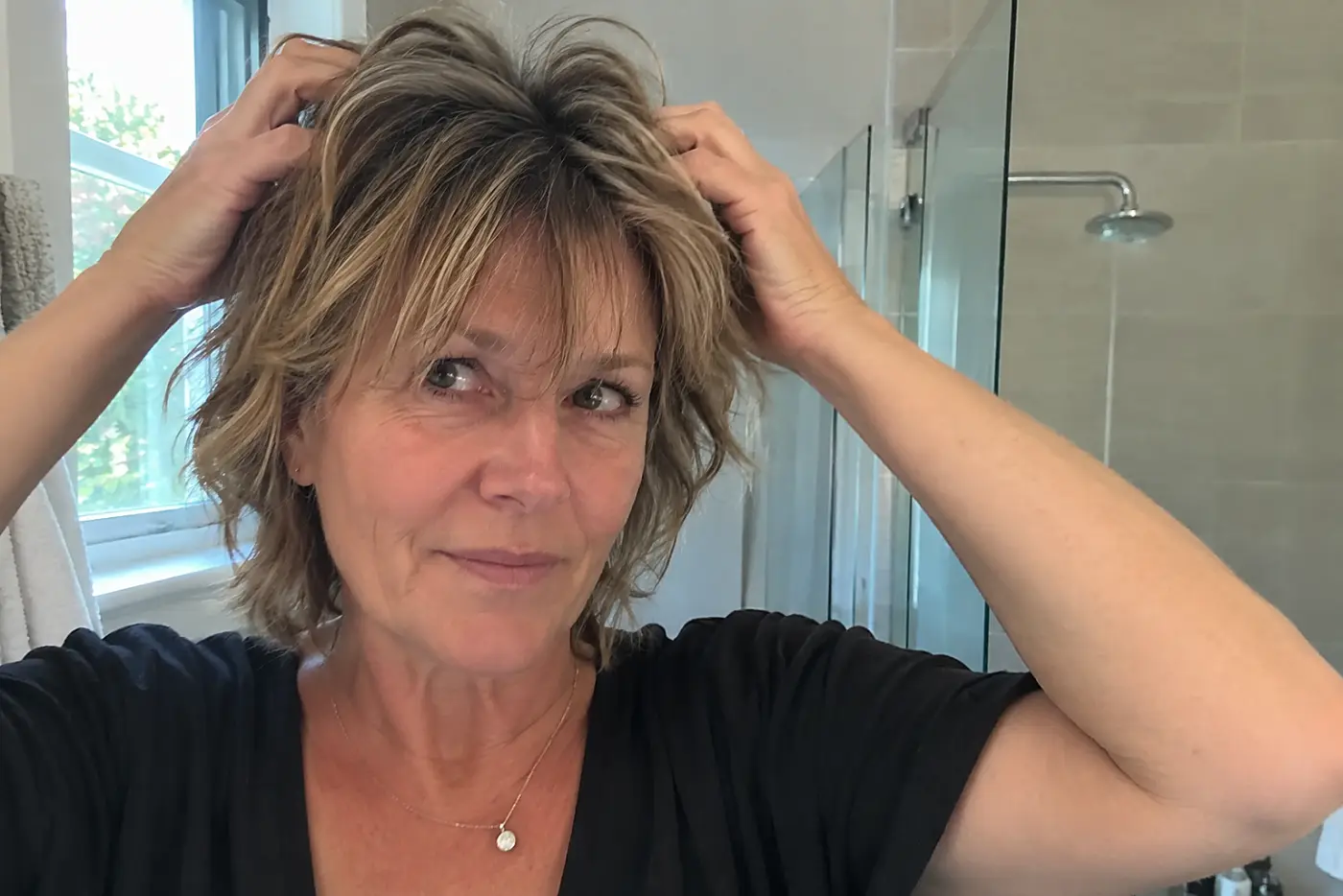
A medium shag keeps the lower hair around mid-neck and puts movement through the crown. That’s a different bet from a long shag: you’re choosing a shorter outline so the top has room to lift.
AARP’s modern shag is softer and piecier than the old heavily layered version. Allure’s guide to thin-hair cuts notes that customized crown layers add lift. The rest of the cut still needs enough hair at the bottom to look intentional.
Check where the shortest crown pieces will end and how they’ll join the sides. Then shake out your hair with your fingers. If the shape only looks right after a blow-dry, keep that in mind before choosing it for everyday wear.
5Long Shaggy Hairstyle with Face-Framing Curtain Layers
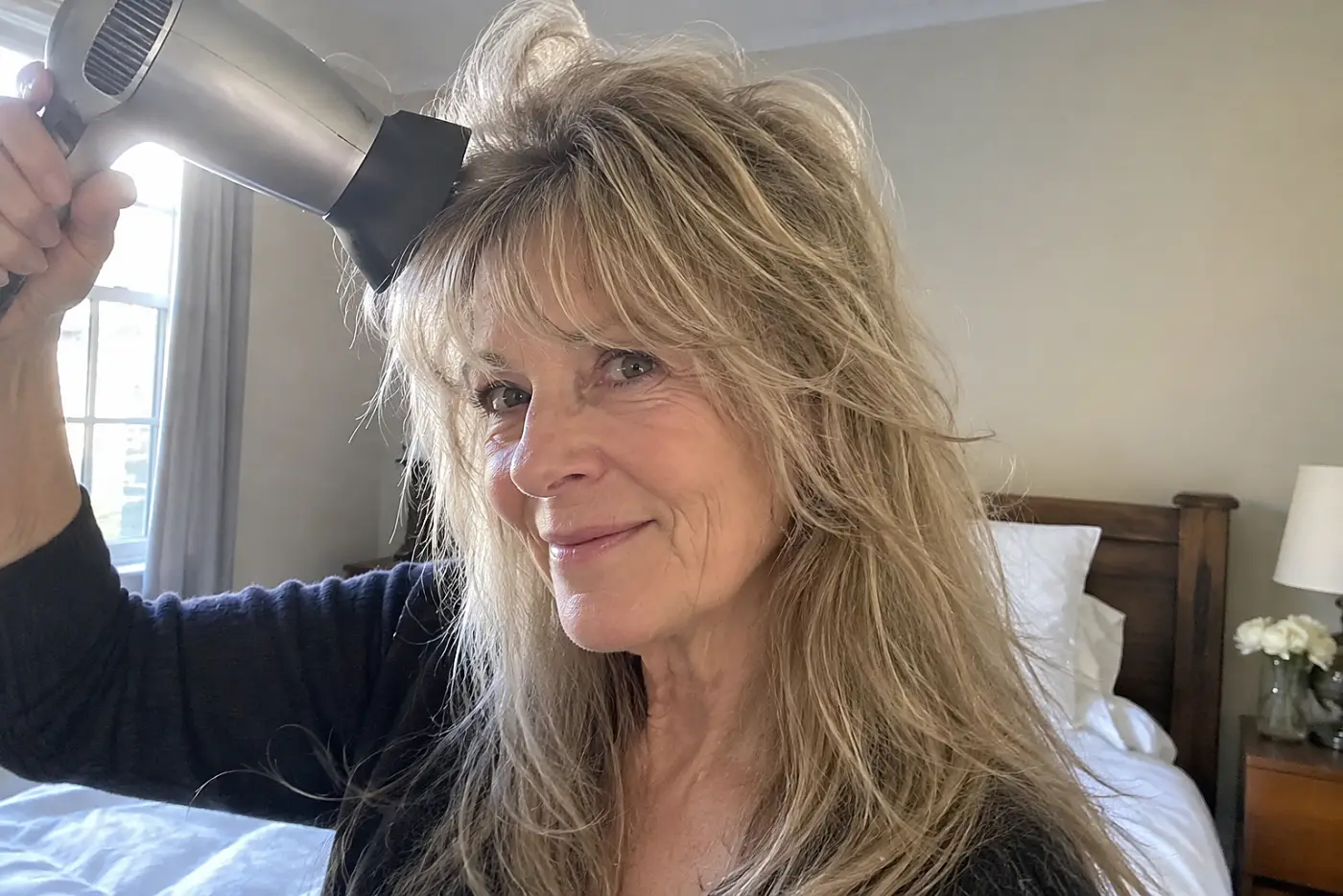
A long shag keeps the length you’re reluctant to lose. The trade-off is styling: fine hair needs texture and movement so the longer shape doesn’t fall flat.
Allure’s shag guide describes a texturizing product and blow-drying for movement on fine-to-medium hair. Curtain layers bring some of that movement forward. Mark where you want the shortest face-framing piece, then look at what remains at the back.
Be honest about the dryer. If you use it regularly, request a demonstration you can repeat. If you don’t, judge the shape on an air-dried day. This is the longer alternative to #6’s mid-neck shag, and it asks more of the hair left below the layers.
4Pixie-Bob Hybrid for Maximum Lift
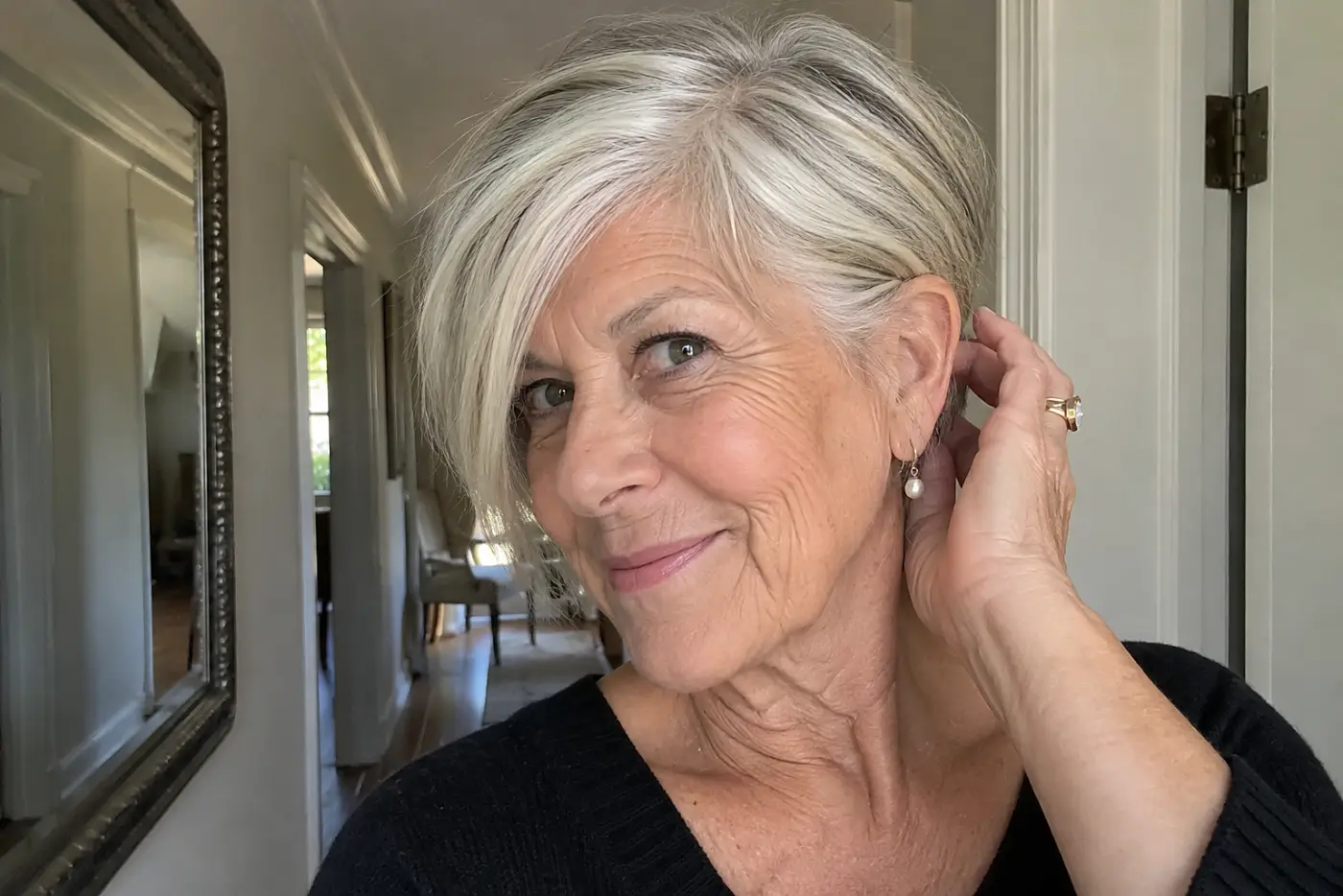
The bixie sits between a pixie and a bob: shorter and lifted, but with enough length and layering to feel soft around the face. Vogue has spotlighted it as a 2026 cut.
That makes it worth a look if a full bob lies flat and a close pixie feels too exposed. Check which pieces would remain long enough to tuck, sweep, or move with your fingers.
Look at the ears and nape in the mirror; those views tell you more about living with a short cut than the crown photo does.
A trend photo shows one styled day. Your question is what the cut will do when you put on your glasses, go outside, and leave the brush in the drawer.
3Bob vs. Lob vs. Pixie-Bob Decision Guide
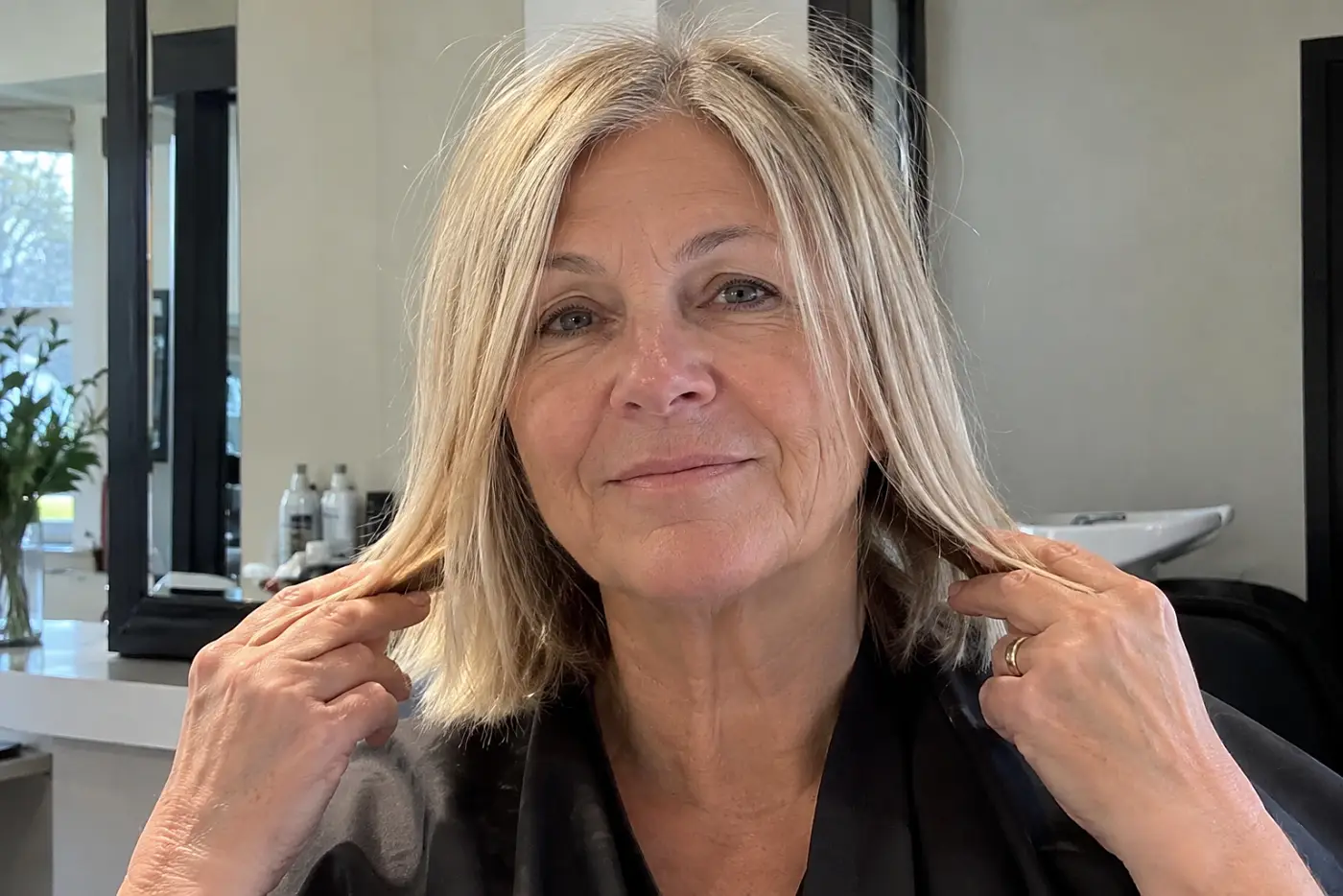
Set aside the style names for a minute. Which part of your current length would you miss most? The answer helps separate these cuts faster than another front-view photo.
A **bob** puts a defined edge near the jaw or neck. A **lob** leaves more hair at the shoulder or collarbone. A **pixie-bob** removes the most length while keeping softness around a shorter shape. Those are choices about what stays, not three names for the same cut.
Compare side and back views before choosing. A jaw-length front photo won’t show how high the nape sits. A collarbone-length photo won’t tell you whether its ends look solid on fine hair. Put your hand at the length you want to keep, then consider the outline from there.
See more: 23 Rules About Dressing Your Age That Are Worth Ignoring →
2Haircut Checklist for Thin Hair After 60
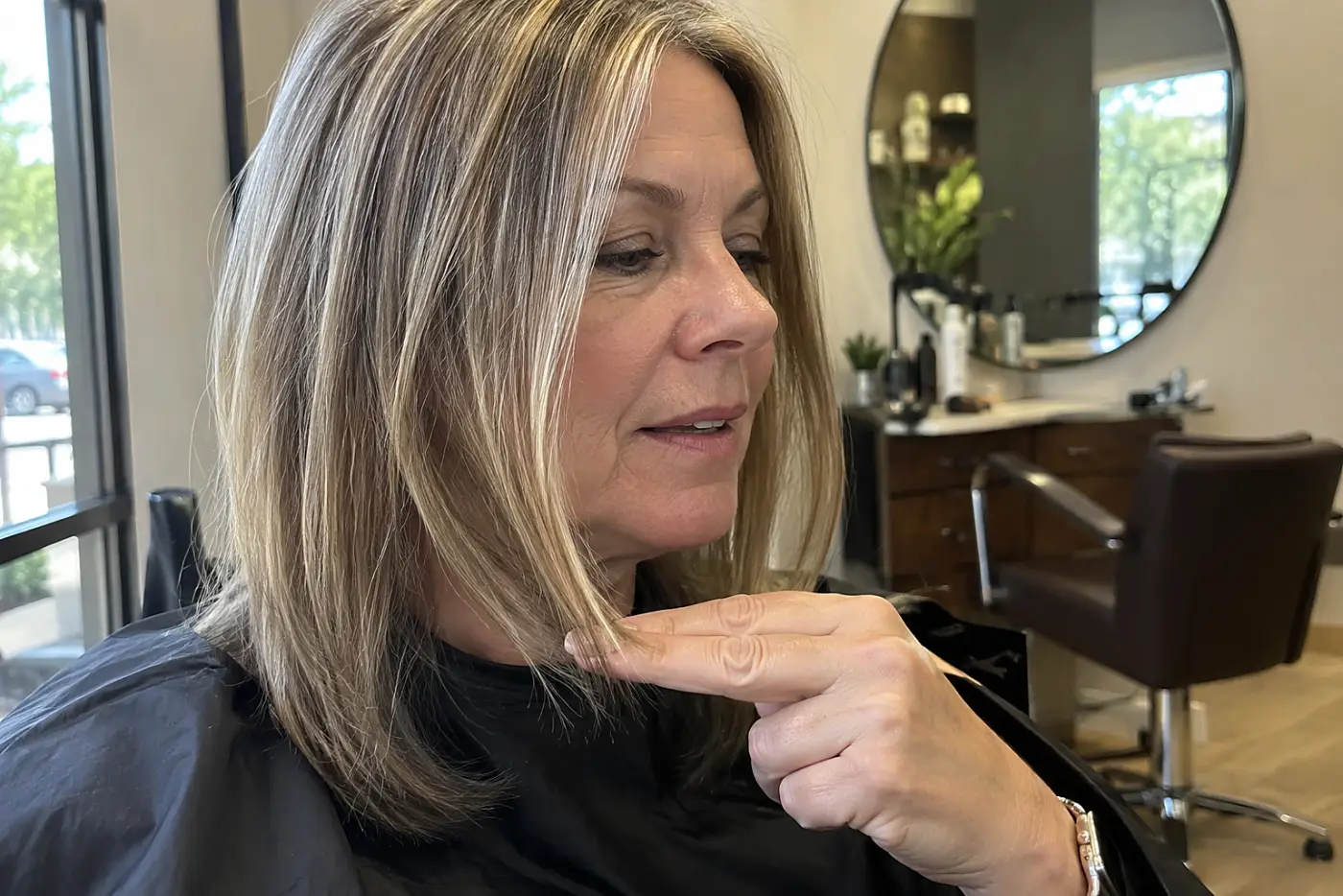
Use this checklist to sort the haircuts for over 60 with thin hair you’ve saved. It’s a way to judge the photos before you settle on one.
1. **Find the lower edge.** Is it at the chin, jaw, neck, or collarbone? AARP recommends a chin-length blunt bob or mid-to-shoulder lob to cut past straggly ends.
2. **Inspect the back.** A stacked cut lifts at the nape. An A-line slopes toward the front. A blunt bob keeps the emphasis on its lower edge.
3. **Look for hidden layers.** A front-facing photo won’t reveal how much hair has been removed behind the ears or at the crown. Find another angle before choosing.
4. **Count the styling work.** Does the photo show a smooth blowout, defined curls, or hair left to air-dry? The American Academy of Dermatology advises low heat and fewer heat passes for thinning hair.
A saved picture earns its place when you know what you like about the cut *and* what the picture leaves out.
1What to Tell Your Stylist for Fine Hair
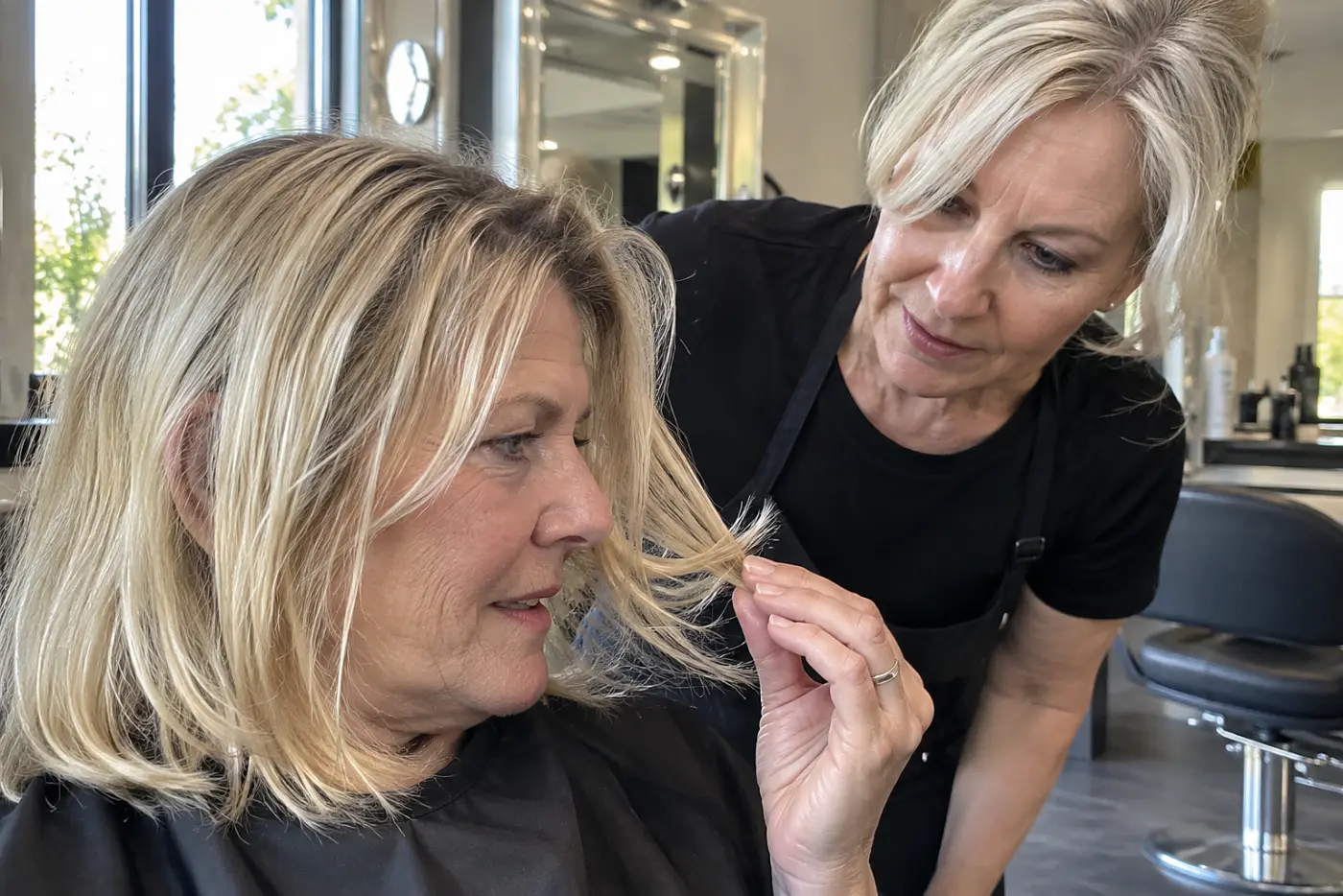
You’re in the chair. Your photo shows a lovely front view, but the stylist needs to know what you want kept, what you’re willing to cut, and what you’ll do at home. Try this:
“I want the bottom of my hair to look strong when it’s dry. I’m open to soft, strategic layers, but I don’t want heavy thinning. Please show me the shortest layer and the new edge before you cut. I wear my hair like this on an ordinary day.”
Then show the photo from every angle you have. Allure’s salon advice stresses reference pictures and an honest account of your styling routine. If the stylist suggests removing more weight, find out where and why.
Allure’s fine-hair cut guide favors a strong perimeter and restrained layers. Its guide to layered cuts describes notching or chipping with scissors instead of over-thinning delicate ends.
You don’t need the technical vocabulary memorized. You need a clear answer before the scissors move: “Will this leave enough hair at the bottom to look full?”
The bottom line
Look past the style name. The line at the bottom, the weight left at the sides, and the way the front falls on a normal day will tell you more than a perfect salon photo.
The prepared version of you has marked a length in the mirror, saved front and back views, and decided whether a brush belongs in your morning. Which part of your last cut looked right in the chair but changed when you styled it yourself?
Up next
20 Best Shampoos for Women Over 60 With Thinning Hair
A plain-English shortlist of shampoos, buildup fixes, and routine tweaks, including a purple-shampoo check for silver hair.
Read the list →
Reader quiz
Did you catch the details?
5 questions from this article.
What should you point to when showing the stylist where you want a chin-length bob to end?
Questions people also ask
Does fine thin hair look better short or long?
Shorter lengths put less attention on stringy ends. AARP recommends a chin-length blunt bob or mid-to-shoulder lob for a fuller look. Keep the length you enjoy, but check where your ends still look solid.
What is the difference between a bob and a lob?
A bob falls around the jaw or neck; a lob is a longer bob at the shoulder or collarbone. Allure advises trims about every 6 to 8 weeks to keep a lob’s line clean. Show your stylist the exact spot you mean rather than relying on the name.
What are some low-maintenance shaggy bob hairstyles for women over 60?
Try a mid-neck shaggy bob with restrained crown layers and your natural wave left visible. AARP describes the modern shag as softer and piecier; Vogue’s 2026 texture coverage favors working with natural movement. Tell the stylist if you air-dry so the cut matches that routine.
What are the trendy short haircuts for 2026?
Vogue has featured the bixie, a pixie-bob hybrid with lift and softness, in its 2026 coverage. Elle has highlighted curved, jaw-skimming bobs. A blunt chin bob is another current-season option if you want a firmer edge.
How short should a bob be for thin hair over 60?
Start by comparing your jaw and collarbone in the mirror. AARP recommends a chin-length blunt bob or mid-to-shoulder lob to remove straggly ends and make fine hair look fuller. The stopping point is where your own ends form a convincing line.
Will layers make my thin hair look thinner?
Too many short layers remove weight from the ends. Allure recommends soft, strategic layers for fine hair rather than aggressive layering. Check where the shortest piece will fall before it’s cut.
Did any of these feel familiar?
Know someone who needs this?
 Prime Journal · Free printable
The Closet Fit and Color Checklist
- A clearer view of colors beside your face.
- Clothes that pass the sitting and walking test.
- Shoes and repairs checked before anything gets replaced.
Free printable: The Closet Fit and Color Checklist. Enter your email and it is yours.
Sources cited in this article
This article links to 22 outside sources, listed here so you can read them yourself.
- AARP recommends a chin-length blunt bob www.aarp.org/entertainment/style-trends/info-2023/how-to-make-thin-hair-look…
- AARP describes a layered bob www.aarp.org/entertainment/beauty-style/hairstyles-for-women-over-50
- Wikipedia’s bob-cut guide en.wikipedia.org/wiki/Bob_cut
- Elle describes that lift www.elle.com/beauty/hair/a73436932/stacked-bob-hairstyles-for-women-over-50
- Elle’s 2026 trend reporting www.elle.com/beauty/hair/a71411938/bob-hairstyles-summer-2026-trends
- Matrix recommends strategic framing and a few long layers www.matrix.com/blog/top-hairstyles-for-fine-thin-hair
- Allure recommends a deep side part www.allure.com/gallery/how-to-part-your-hair
- Allure explains why that edge looks thicker www.allure.com/gallery/best-haircuts-for-thin-hair
- Paul Mitchell’s short-cut guide www.paulmitchell.com/blogs/inspiration/hairstyle-dictionary-short-haircuts-101
- AARP points to cheekbone-level side-swept bangs www.aarp.org/entertainment/style-trends/info-2018/bangs-hair-style.html
- Vogue’s 2026 texture report www.vogue.com/article/hair-trends-2026
- L’Oréal Professionnel’s gray-blending guide us.lorealprofessionnel.com/hair-mag/low-maintenance-color-first-grays
- Allure suggests a small amount of curl product www.allure.com/story/curtain-bangs-trend-hairstyles
- City & Guilds describes asymmetric bobs www.cityandguilds.com/-/media/cityandguilds-site/documents/qualifications-an…
- Cosmopolitan describes the inverted bob www.cosmopolitan.com/style-beauty/beauty/a69987125/inverted-bob
- Allure’s guide to layered cuts www.allure.com/story/step-haircut
- Hair.com defines air bangs www.hair.com/air-bangs.html
- Allure’s lob guide www.allure.com/gallery/best-lob-haircuts
- Allure’s shag guide www.allure.com/gallery/shag-haircut-ideas-trend
- Vogue has spotlighted it as a 2026 cut www.vogue.com/article/the-bixie-summer-2026
- Allure’s salon advice www.allure.com/story/hair-salon-tips
- AARP notes www.aarp.org/entertainment/beauty-style/beauty-trends-women-50-plus
Nora Bennett
Style Editor
Nora writes about hair, clothes and grooming for people who have stopped asking permission: what to keep, what to let go, and what reads as taken care of.
More from Nora Bennett