26 Stunning Long Hairstyles for Women Over 50 to Try in 2026
A few face-framing pieces can change how your long hair moves without taking away the length you love.
By Nora Bennett, Style Editor
Updated · 12 min read
- Written by our style editor
- How we review
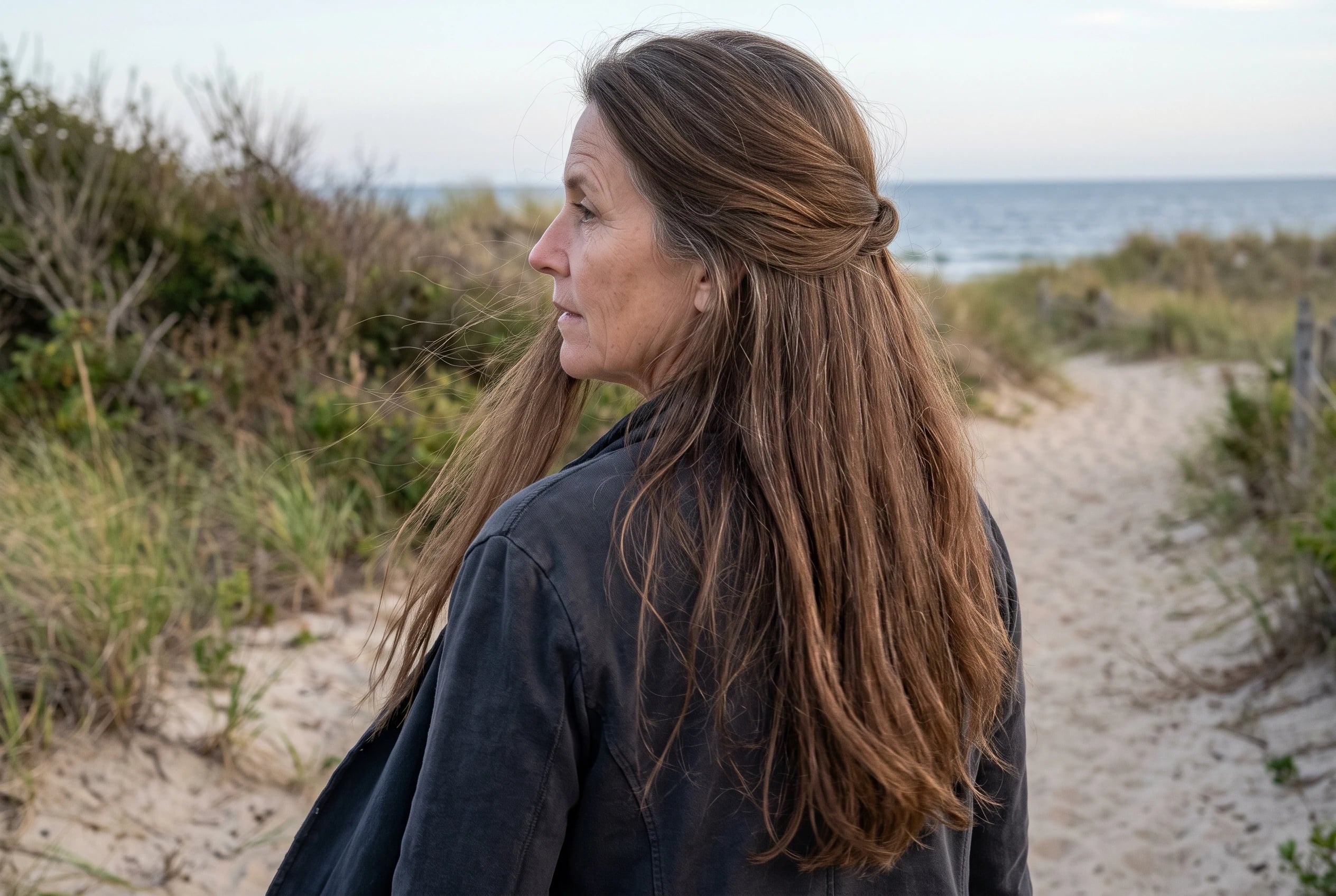
Read to the end: #1 is the cut that keeps full ends while removing hidden bulk, and almost nobody asks for it.
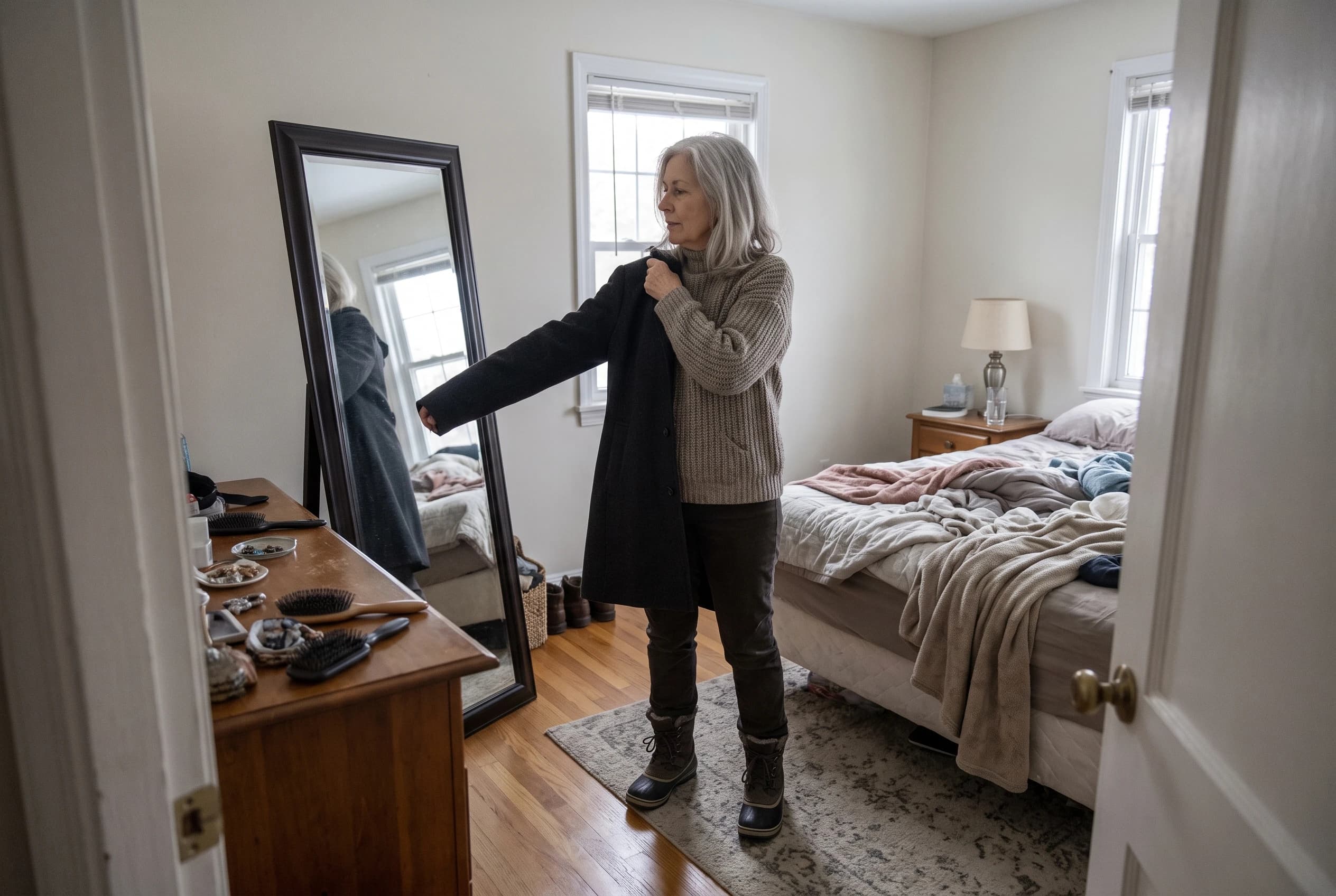
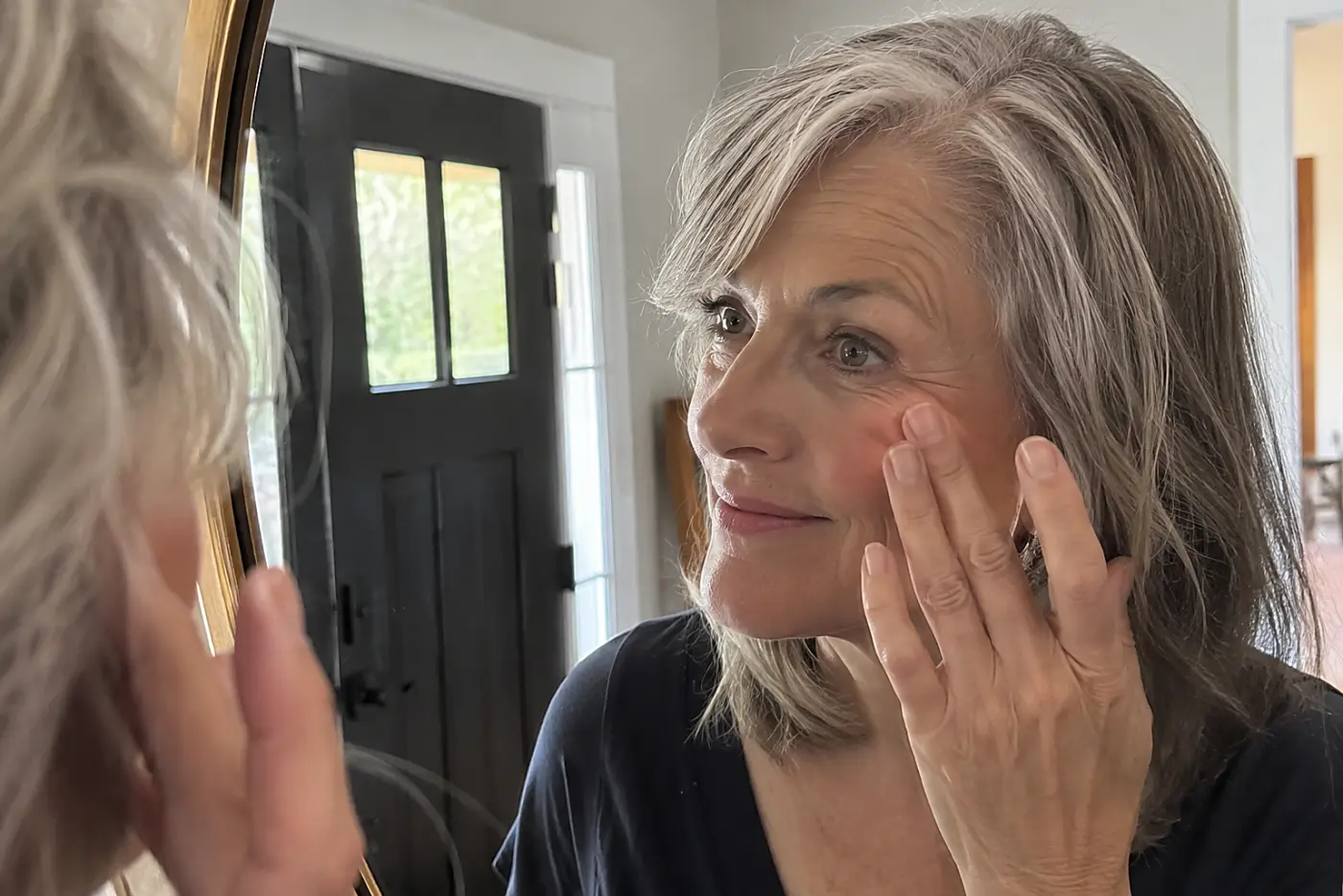
Long hair catches on the collar of your coat as you pull it on. You smooth it down, then notice the bottom still looks heavy in the mirror.
You don't want a bob. You want the length to look chosen, with shape around your face and ends that don't hang in one thick line.
Here are 26 long hairstyles worth a closer look.
26A Low Ponytail With a Side Part
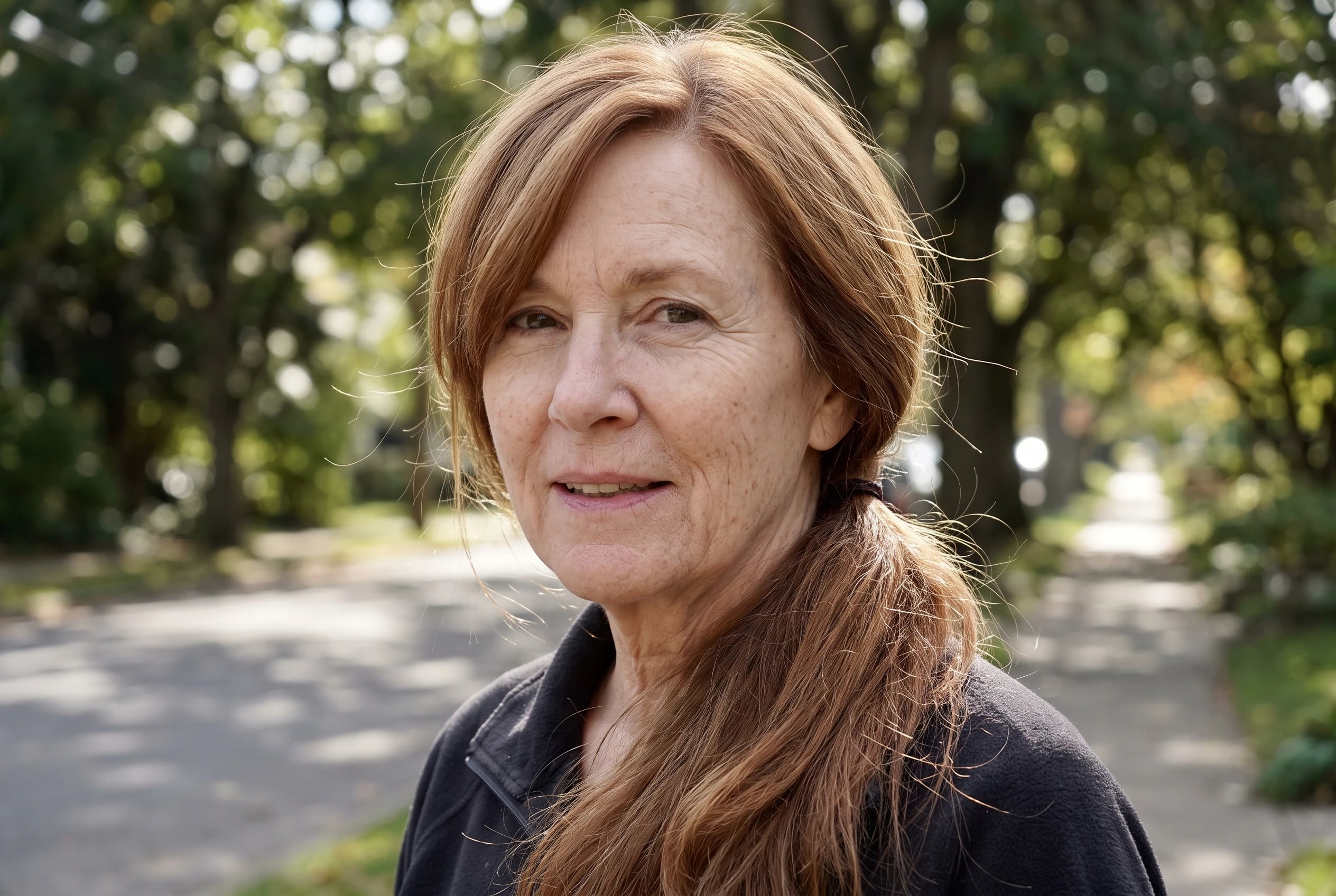
The low ponytail sits at the nape, with a clean side part.
That part gives the front a line to follow. Long hair looks shaped even when it's tied back.
Leave some ease above the ears so the crown doesn't look pulled flat. A ponytail placed at the nape also leaves room for a hat without piling hair underneath it.
Try it with a fabric-covered tie. Check that the ends hang together rather than spreading into wisps.
See more: 27 Low-Maintenance Haircuts for Women Over 60 Who Wear Glasses →
25Long Waves With a Blunt Bottom
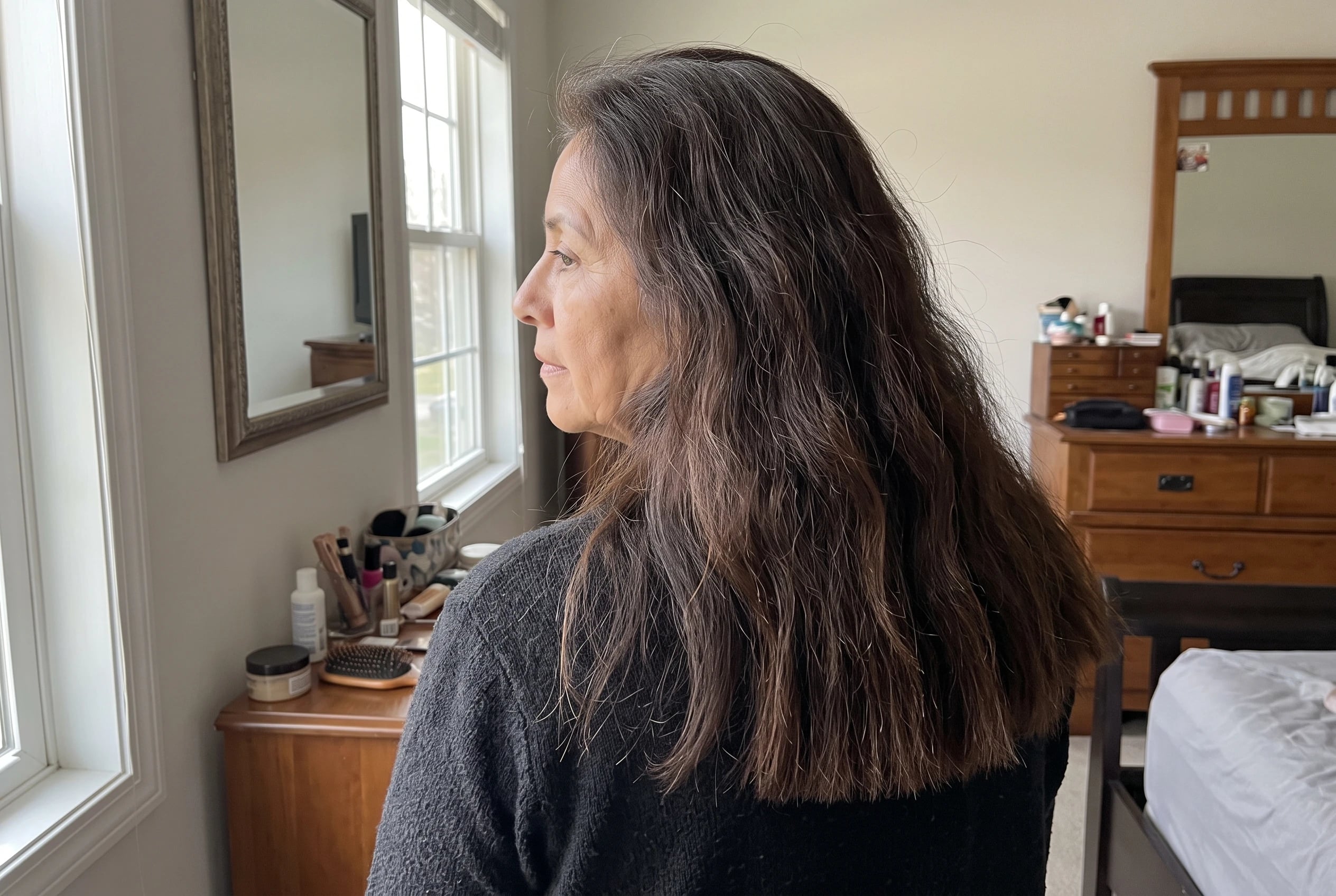
Wide waves fall below the shoulders and finish in a solid line.
The bottom edge matters here. If older layers have left your last few inches thin, waves won't hide them once the hair moves.
A blunt trim gives the length a clear stopping point while the waves keep it from looking stiff. You keep the drama of long hair without dragging a worn-out tail behind it.
Ask your stylist to trim the perimeter first, then leave the interior alone.
24A Loose Half-Up Twist
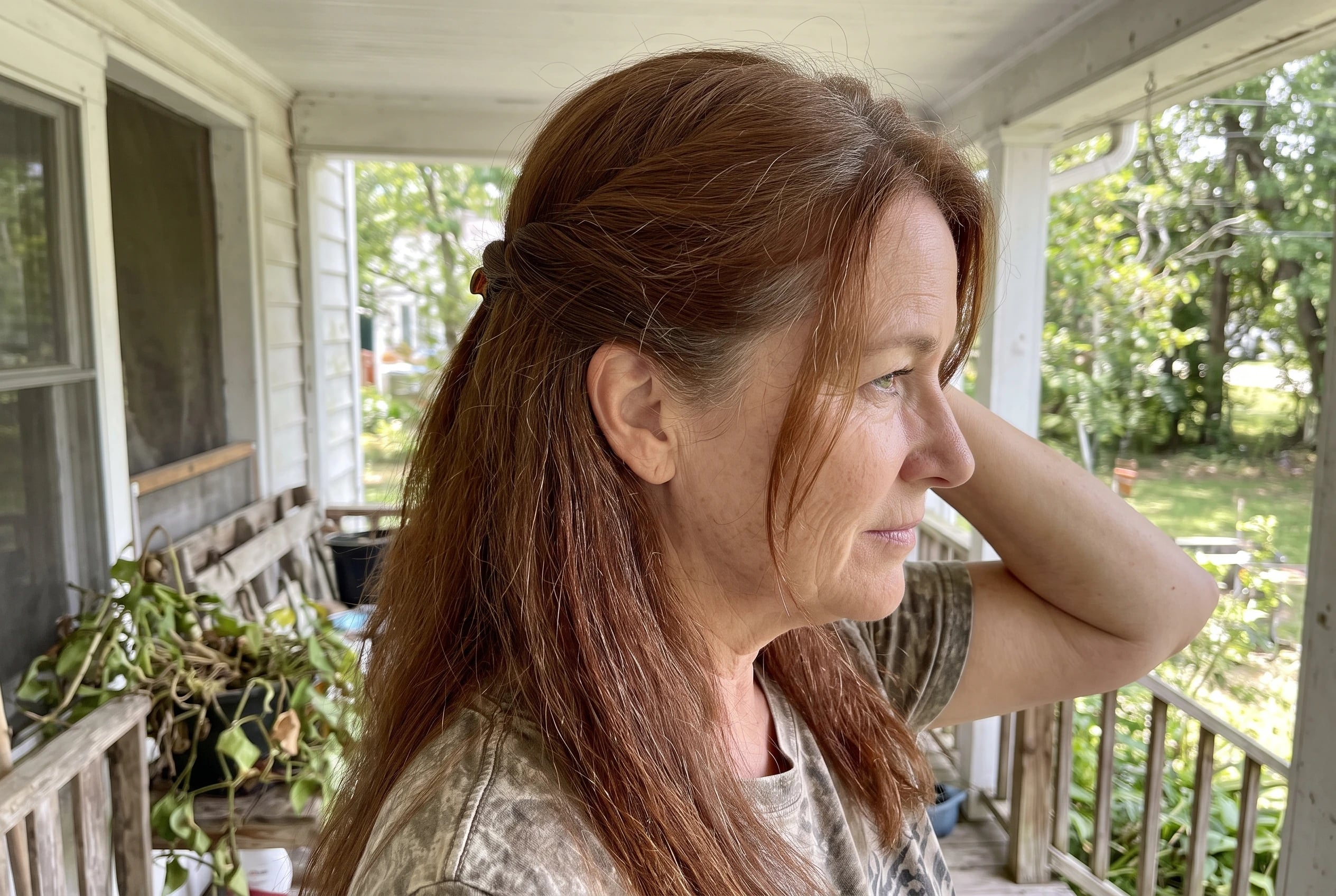
A small twist holds the front back; the rest stays loose.
It clears your face without hiding the length down your back. A twist also needs less tension than a tight half-up ponytail.
The hair at your temples stays relaxed. Unlike a clip that gathers half your hair, two pins leave the back free to move when you turn.
Pin the twist at the back of your head. Leave a little height at the crown.
23Long Silver Hair With Soft Waves
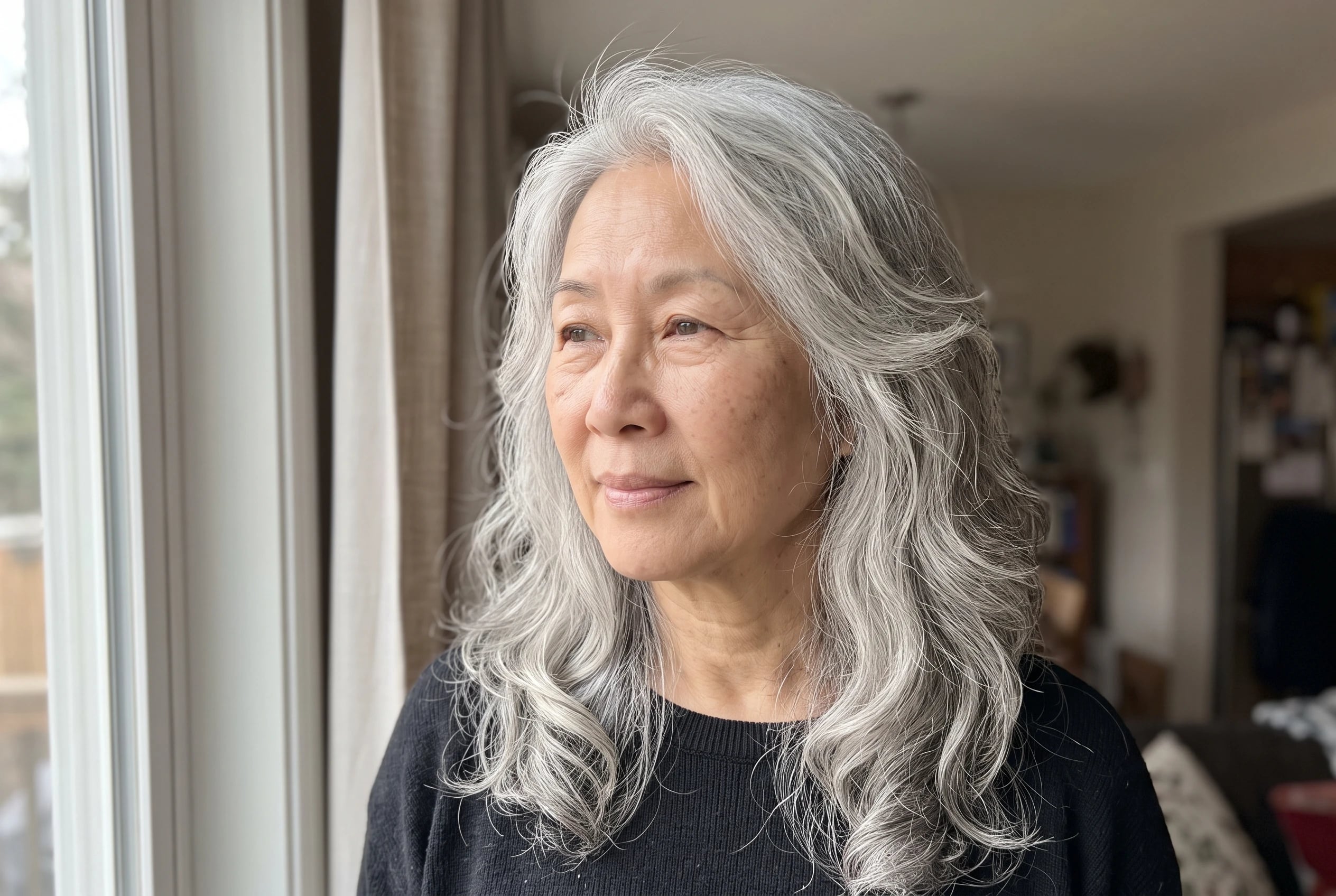
Silver waves run past the shoulders, with light catching each bend.
The color has enough interest without a complicated cut. What makes the look current is the shape: wide, separated waves instead of small, uniform curls.
If your silver hair is finer at the ends, a clean trim gives those waves a stronger outline. Keep the front moving away from your face rather than setting it flat against your cheeks.
Ask for long ends with just enough shaping to release the front.
See more: 12 Best Blushes for Women Over 60, and How to Wear Them →
22A Long Braid Over One Shoulder
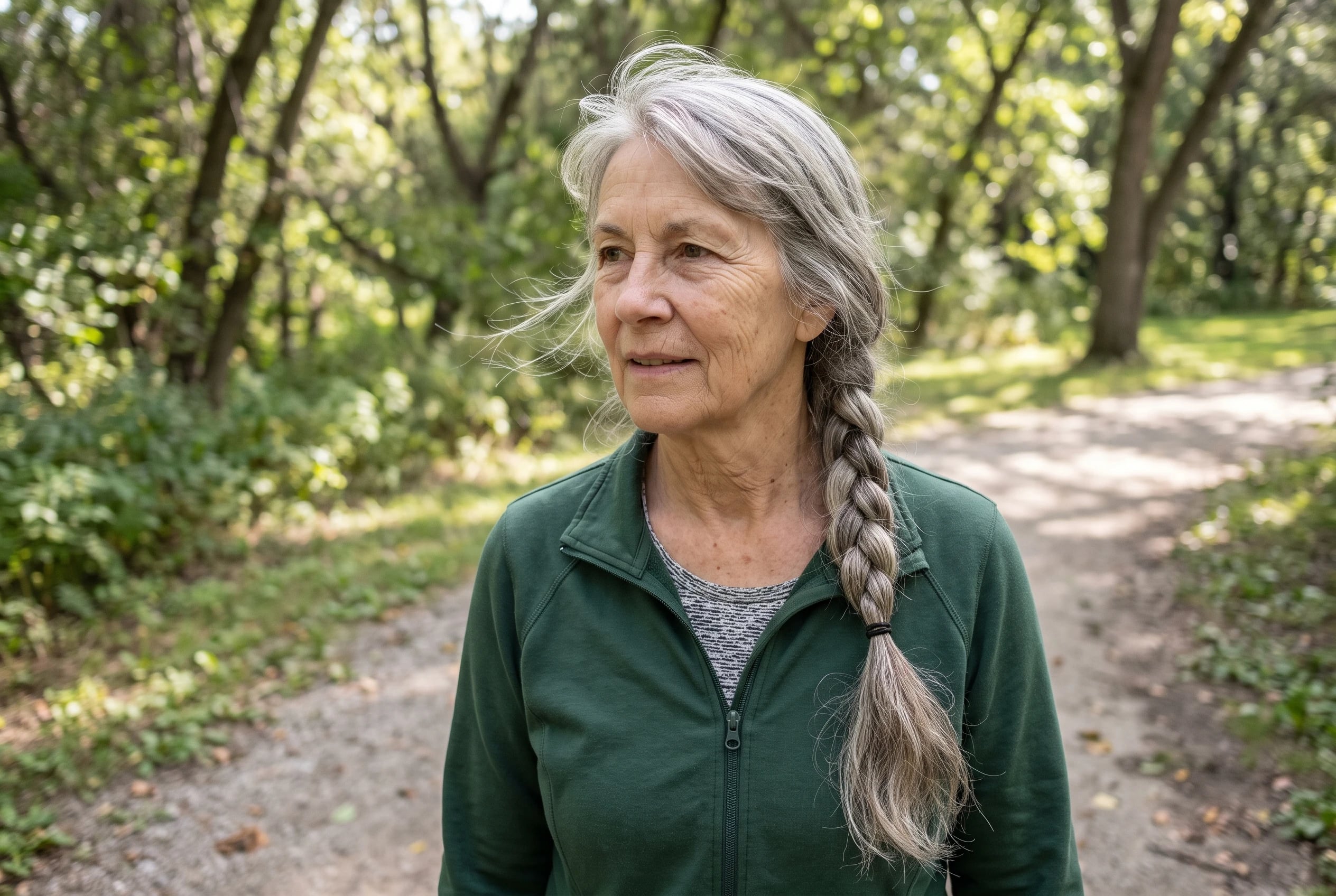
One thick braid rests over a shoulder, with its end still full.
A braid lets you see the length and keeps it off your neck. Start it below the ear so the hair above stays loose.
Pulling every section tight exposes the part lines across your scalp. Leave enough slack for the braid to rest against your sweater instead of pulling at your hairline.
Start the braid below one ear, then ease the sections apart with your fingers.
21Long Layers Around the Collarbone
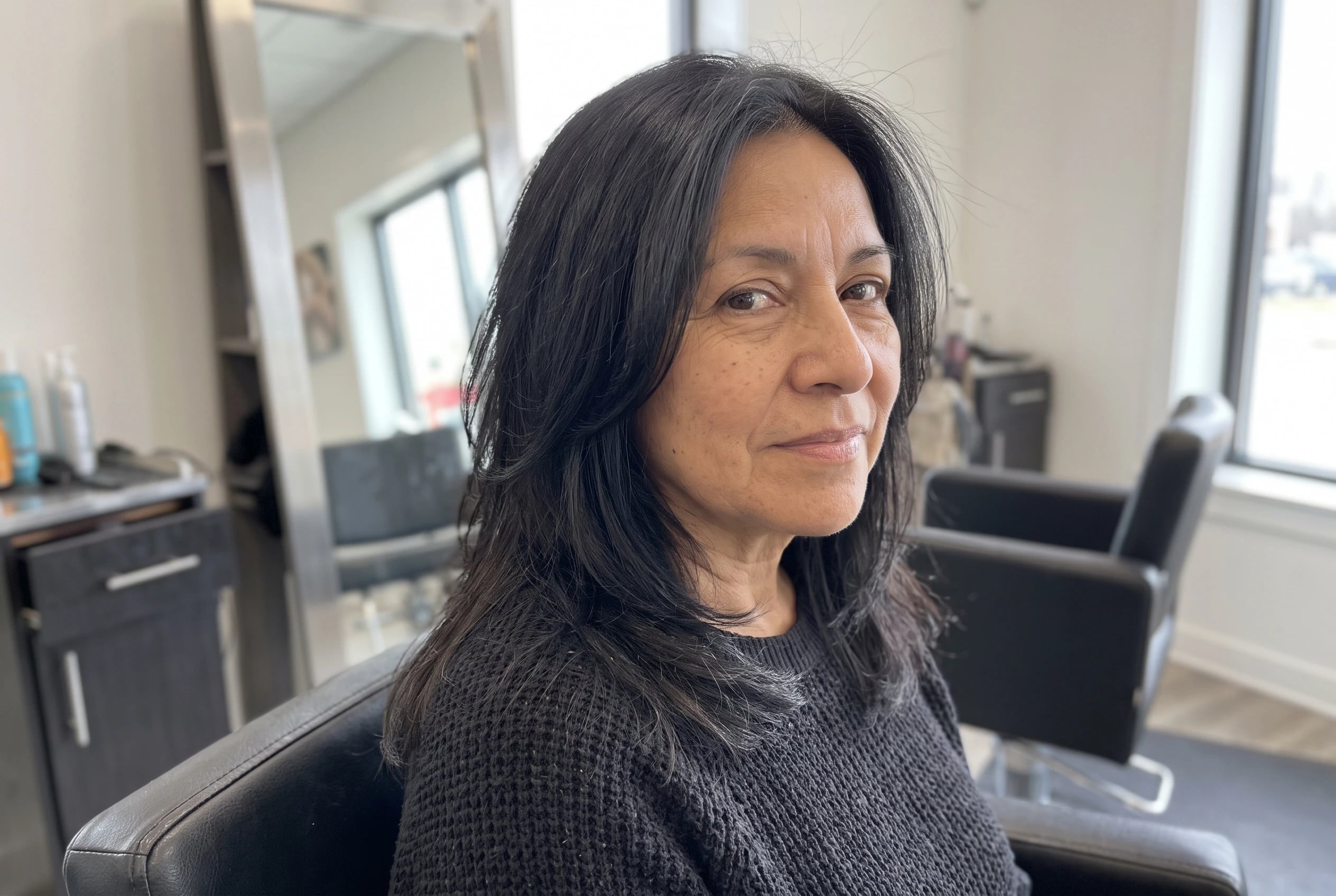
The first layers skim the collarbone; the longest reach the chest.
That gap gives the front room to swing when you turn your head. It also keeps the cut from turning into short hair in front and long hair behind.
The collarbone pieces should join the rest, not end in a sharp shelf. You still see one long hairstyle, just with more movement near your face.
Show your stylist where the shortest front piece should land before any hair is cut.
20A Center Part With Tucked Sides
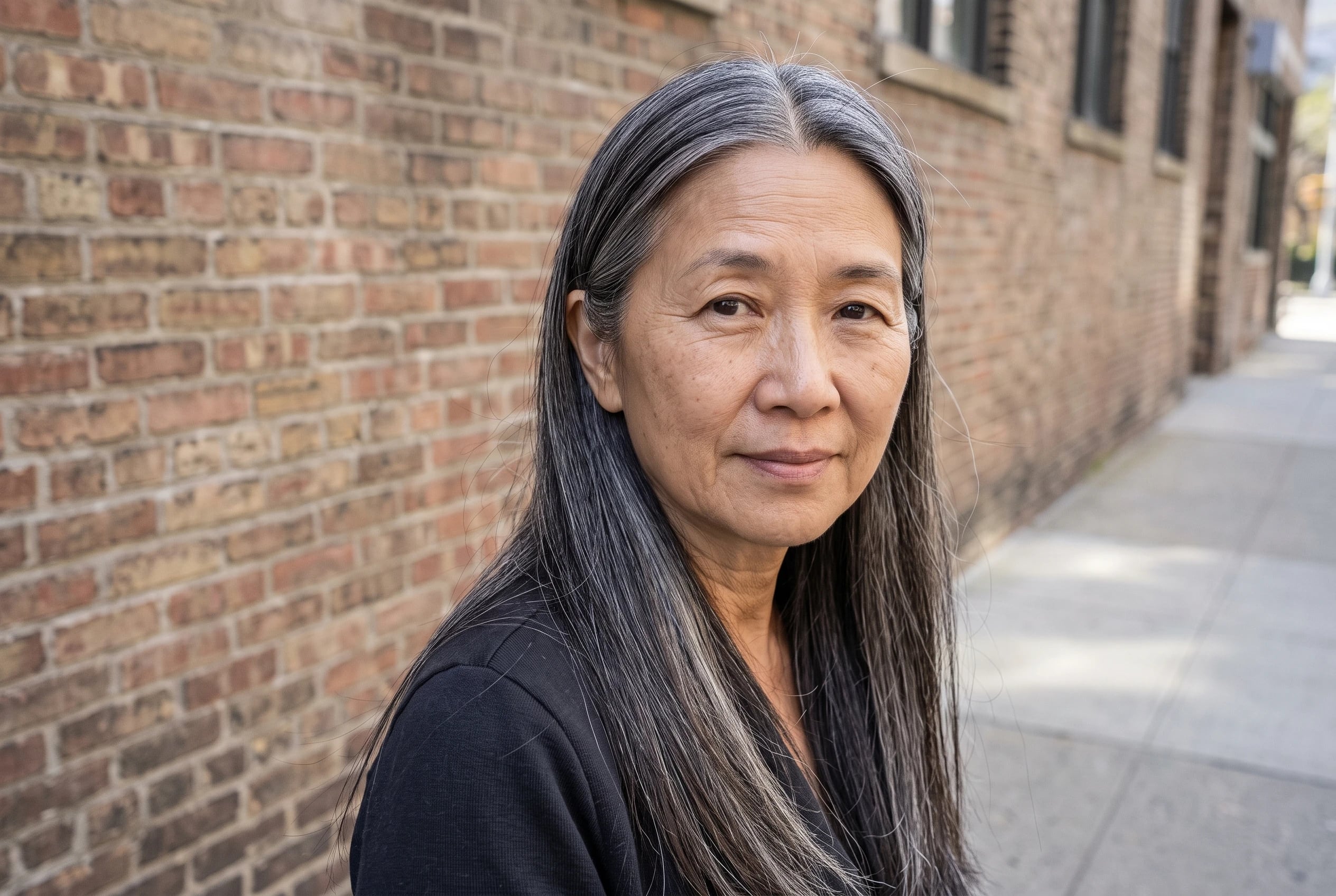
Long, straight hair falls behind both ears from a center part.
The tucked sides open your face while leaving the whole length visible. A center part also makes the outline easy to judge: both sides should fall to a similar length.
If strands slip forward, work a little texture into the roots. Stiff spray isn't needed. The result looks clean without cutting a single inch.
Try the tuck before cutting bangs. See whether you like the open shape.
19A Long Shag With Wispy Bangs
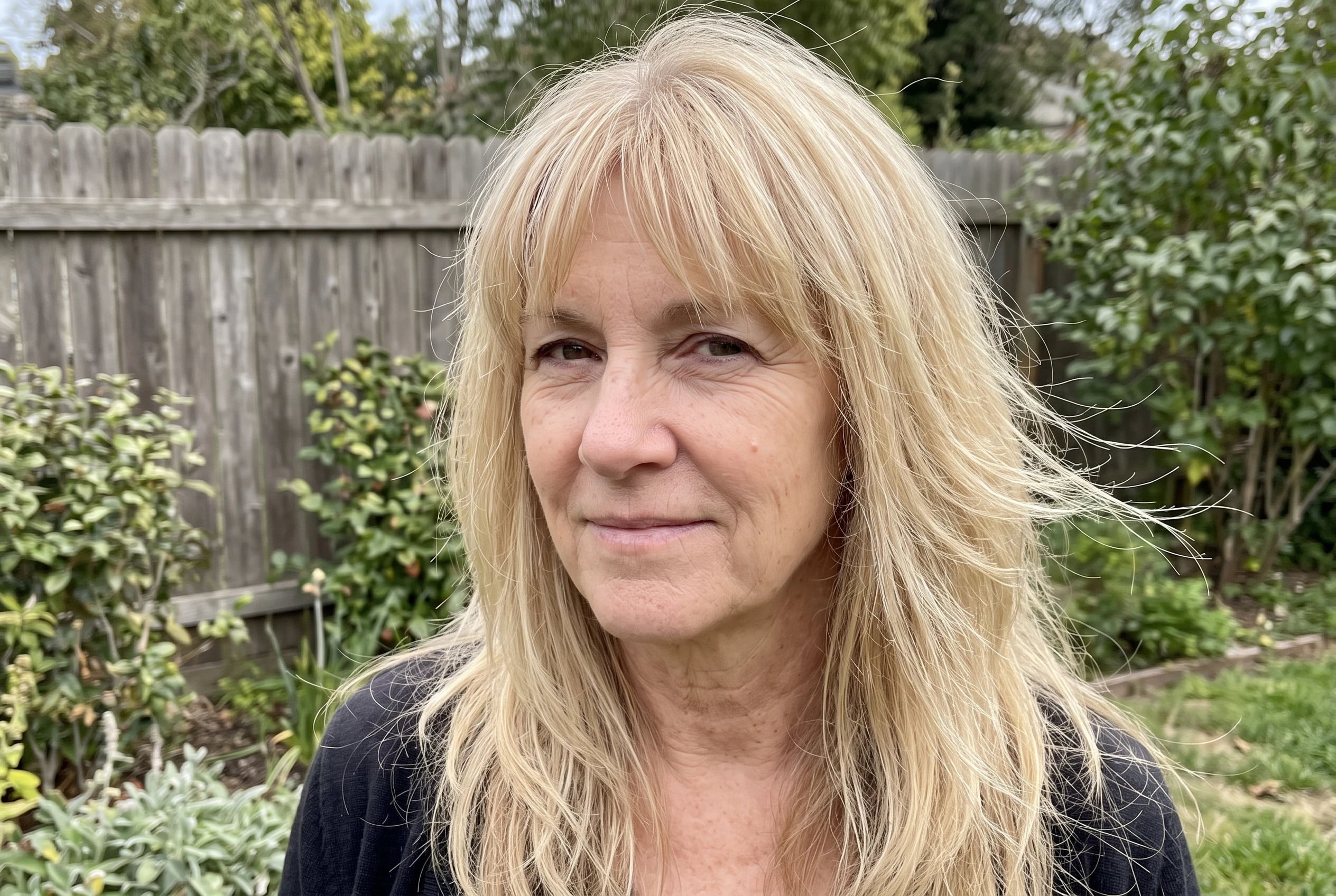
Wispy bangs break across the forehead above loose, uneven layers.
This cut has a 1970s echo, but the ends stay long and substantial. The bangs shouldn't form a thick wall; you want to see some forehead through them.
Layers near the cheekbones give the top movement, while a full bottom stops the cut from looking worn. It needs a bit of texture to show its shape, especially after a wash.
Ask for a long shag with light bangs and a solid perimeter.
See more: 23 Ways to Wear Bohemian Style Over 50 →
18A Low Bun With Loose Lengths
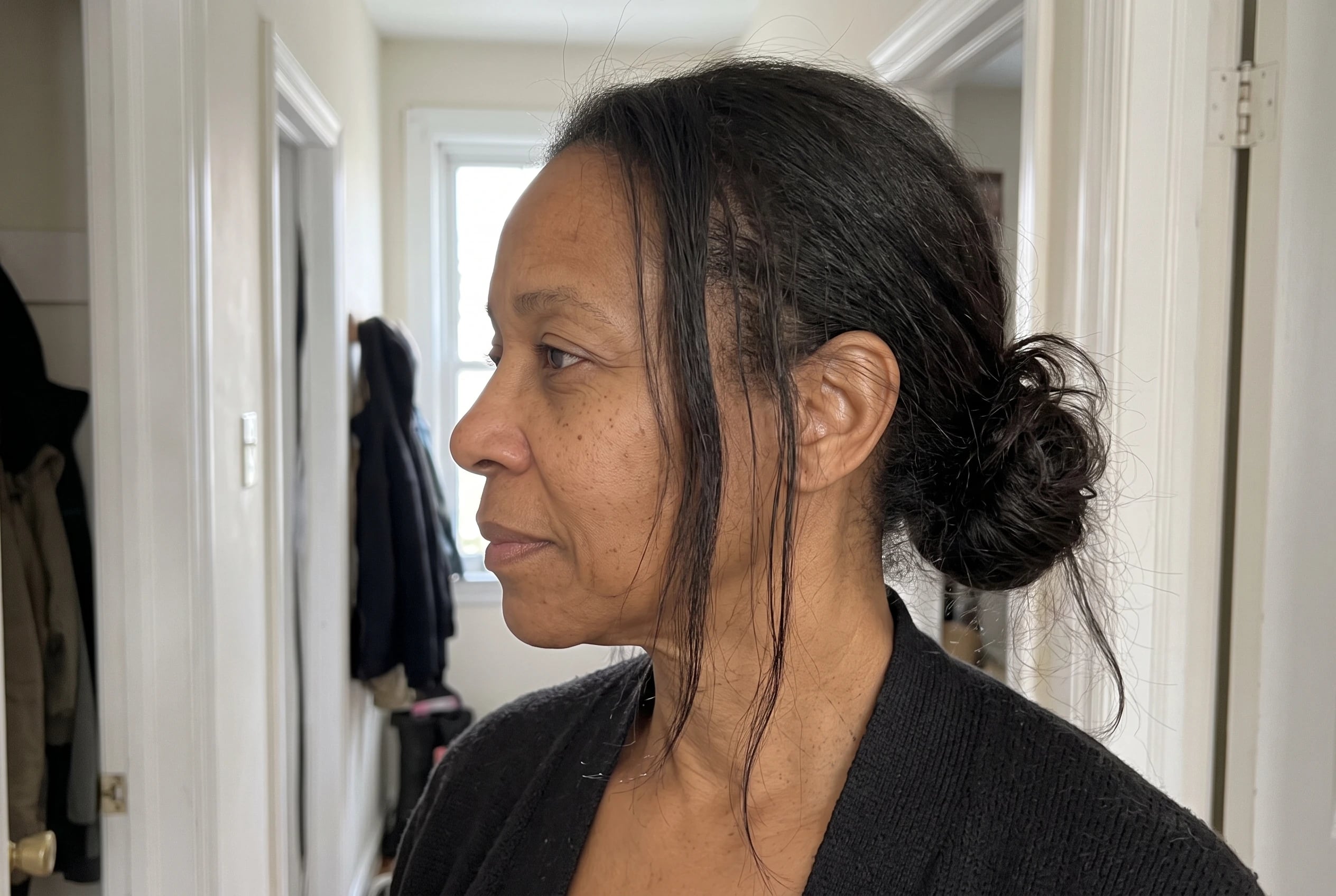
The bun sits low, with two long pieces left free near the face.
Those pieces stop the style from looking severe. Their length matters. Pieces that reach the jaw read as part of your long hair; tiny curls at the temples tell a different story.
The bun itself doesn't need to be neat. Its shape comes from where it sits, close to the nape.
Pull the front pieces out before securing the bun. You'll leave its shape intact.
17Long Curls With Rounded Layers
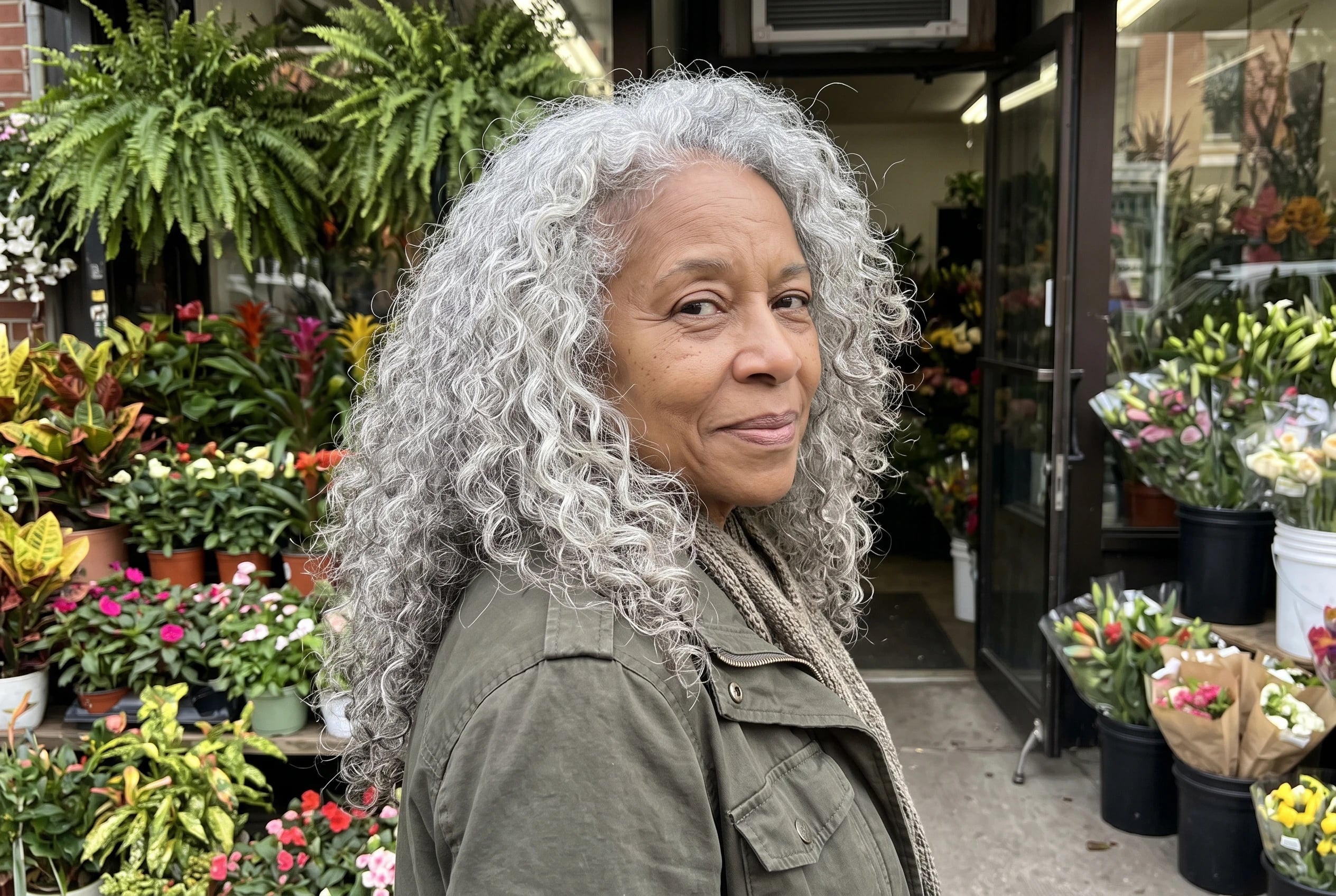
Full curls make a rounded shape from crown to ends.
One-length curls pile weight at the bottom, leaving the top narrow. Rounded layers spread the shape through the whole head without cutting away every long curl.
Look at the hair when it's dry: a curl that seems long while wet springs upward as it dries. Your stylist needs to see that finished length before choosing where the shorter pieces belong.
Ask for curl-by-curl shaping with the longest curls left below your shoulders.
16A Deep Side Part With Waves
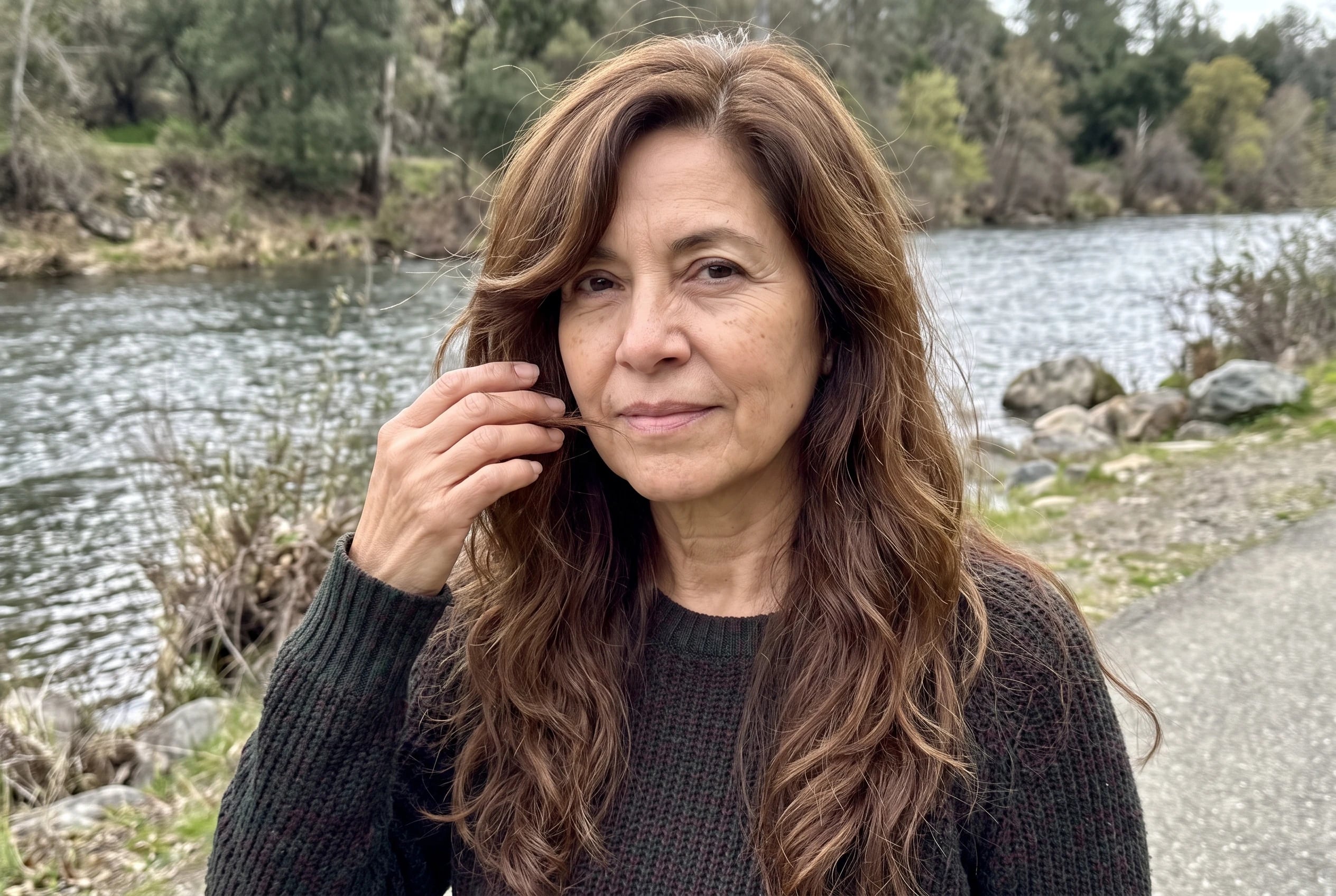
A deep side part lifts one side above long, loose waves.
The shift gives the crown height without teasing. It also changes an old set of waves in seconds, especially when the heavier side crosses your forehead.
Keep the lighter side behind your ear to make the contrast clear. You get a different profile while the bottom length stays exactly where it was.
Move your part while the roots are damp. Dry them in the new direction.
15Long Hair With Curtain Bangs
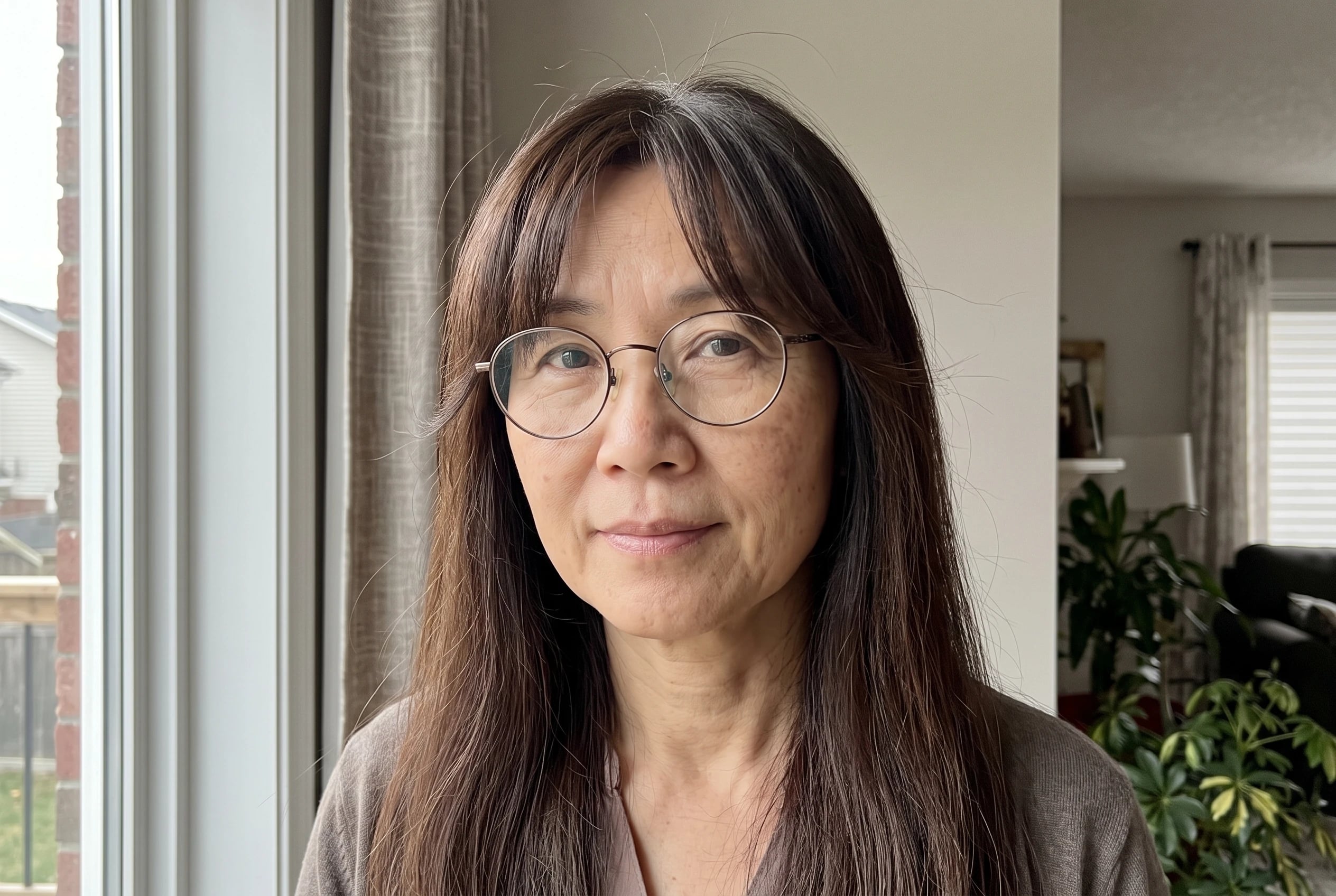
Curtain bangs part in the middle and open into the longer hair.
The shortest pieces sit near the cheekbones rather than straight across your eyes. That's why they work with length: they lead into it.
Bangs that stop too abruptly create two separate cuts, one at the front and one behind. If you wear glasses, check where the pieces fall against the frames before the stylist makes the final trim.
Ask for curtain bangs that blend into the sides when you tuck them back.
14A Loose Fishtail Braid
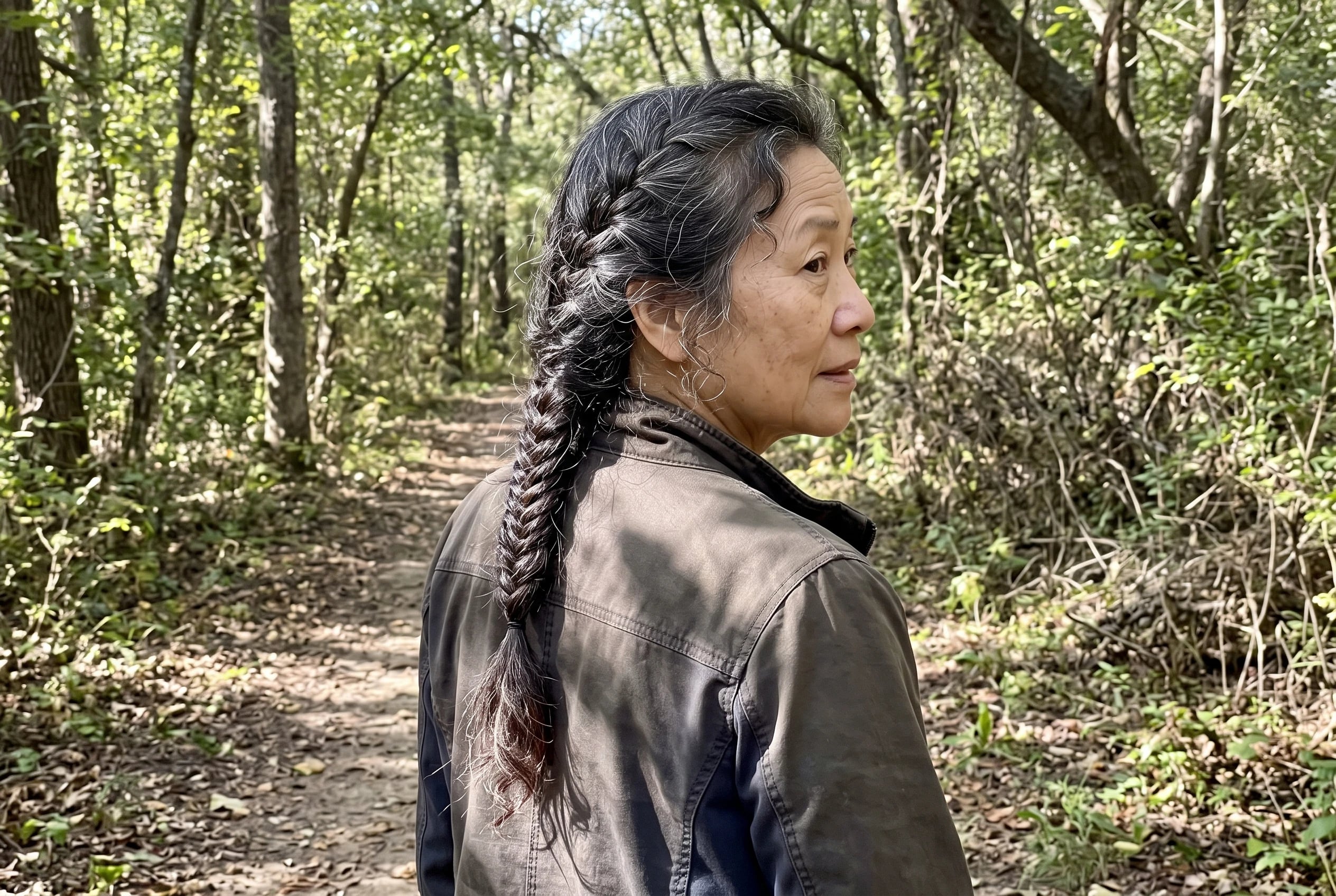
The narrow braid has a woven look and hangs down the back.
Its small sections show off long hair without hiding its length in a bun. A few loose strands keep the crown from looking pulled flat.
Unlike a thick three-strand braid, the fishtail has a finer pattern. That pattern needs enough length below the shoulders to stay visible once the end is tied.
Braid it loosely, then hold the end while you widen each section.
13Long Hair With Invisible Layers
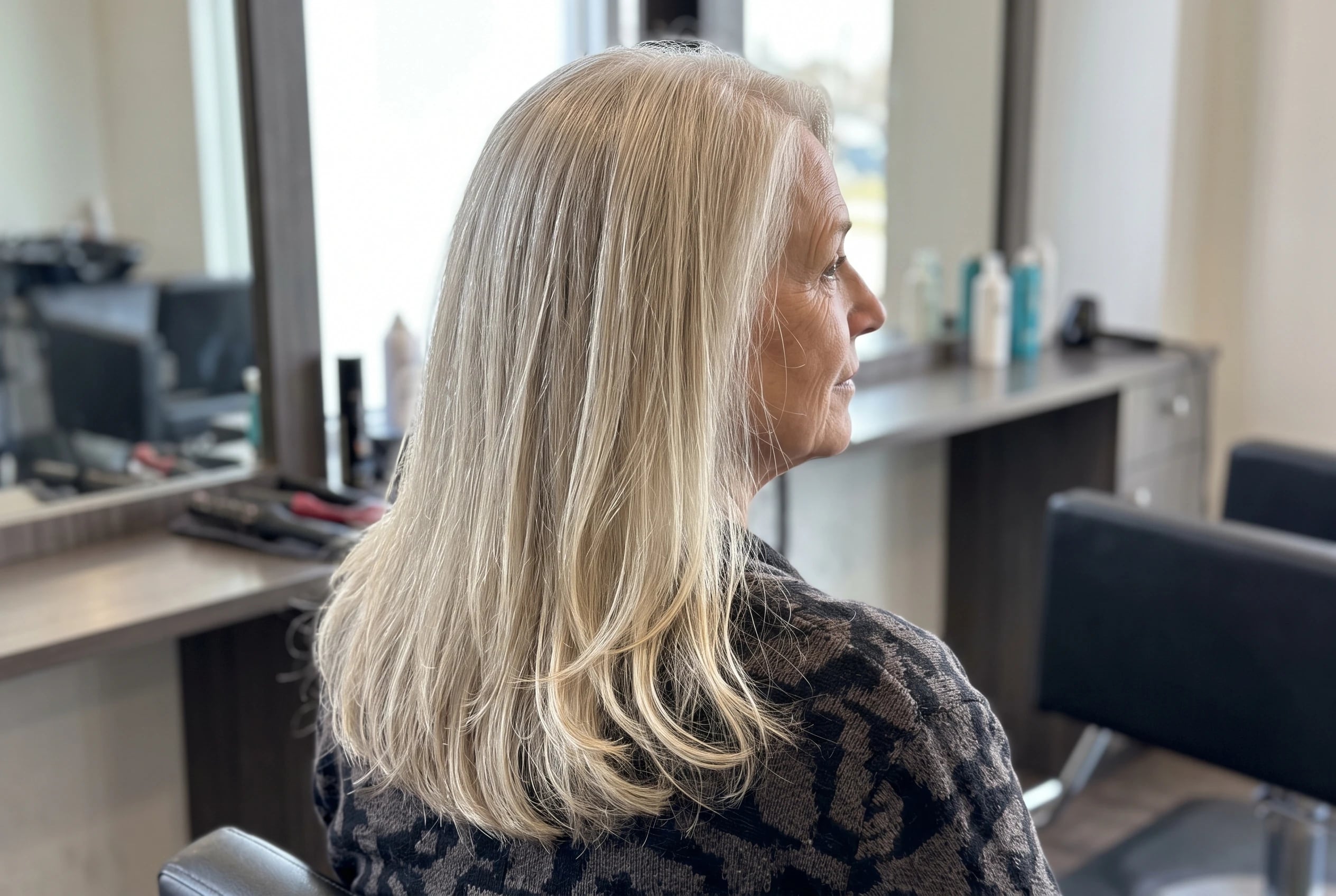
The outline stays long and full, but the middle moves freely.
Invisible layers remove bulk inside the cut without leaving obvious steps on the surface. They suit you if your hair feels heavy, yet you still want a strong bottom edge.
Ask to see how much hair the stylist plans to take out. Overdoing it leaves sparse ends that are hard to disguise. The cut should still look full when you pull it forward.
Tell your stylist you want the outside line kept full, with weight taken only from inside.
12A High Ponytail With Full Ends
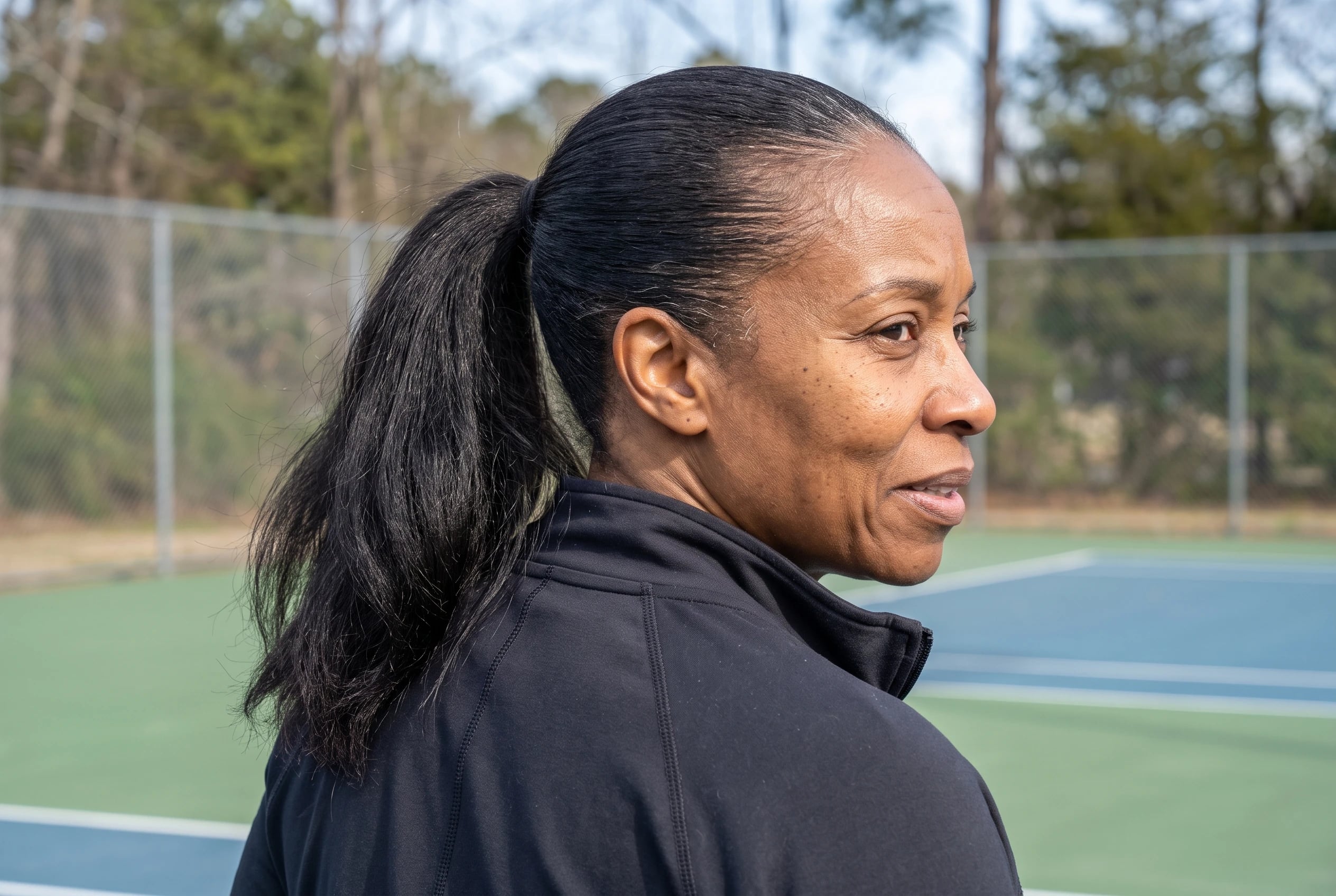
The ponytail rises high and falls in one thick sweep.
Height shows the length from the side. Full ends stop the tail from looking stringy. Keep a little ease at the hairline so the style doesn't pull.
If the ponytail collapses against your head, shift its base toward the crown rather than tightening the tie. The long tail should still move when you walk.
Gather it at the back of the crown and check the profile in a mirror.
11Long Waves With Face-Framing Pieces
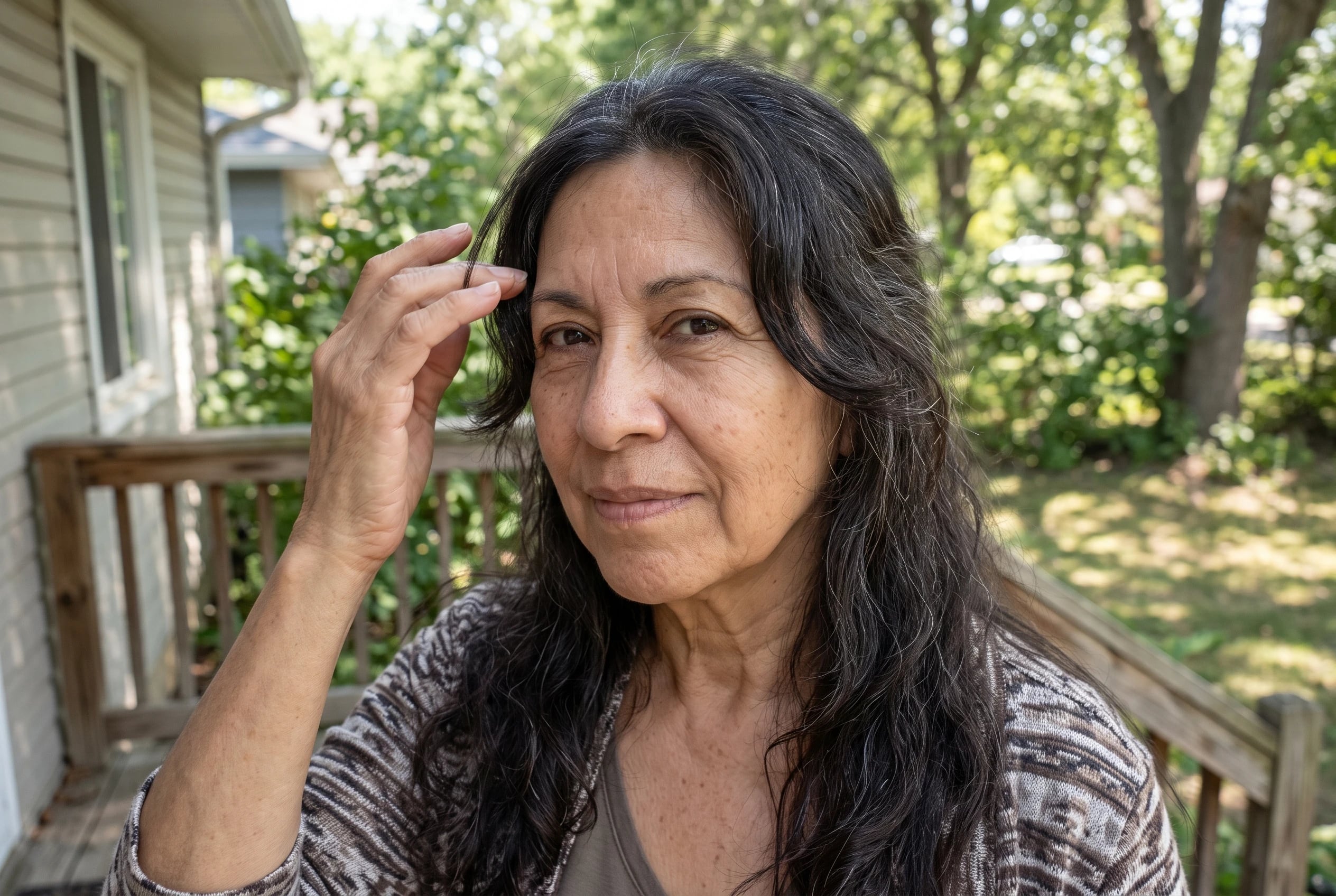
Shorter pieces curve around the cheekbones; long waves continue below.
Those front pieces give your eye somewhere to land before it follows the full length. They also make a plain ponytail look considered when a few strands escape.
The key is connection: the shorter hair should flow into the waves, not sit like a separate fringe. Keep the back long enough to fall past your shoulders without narrowing into a point.
Ask for face-framing pieces cut on dry hair, where you'll wear your part.
10A Side Braid With Loose Roots

The braid falls to one side while the roots stay relaxed.
This is the braid for a windy day when you still want some shape around your face. Tight roots turn it into a different look.
Let the hair cross your neck before you start braiding, rather than pulling from the crown. The loose section stays visible above your shoulder, so the style doesn't look like a rope hanging from your ear.
Leave a little slack above your ears before you secure the end.
9Long Straight Hair With Curved Ends
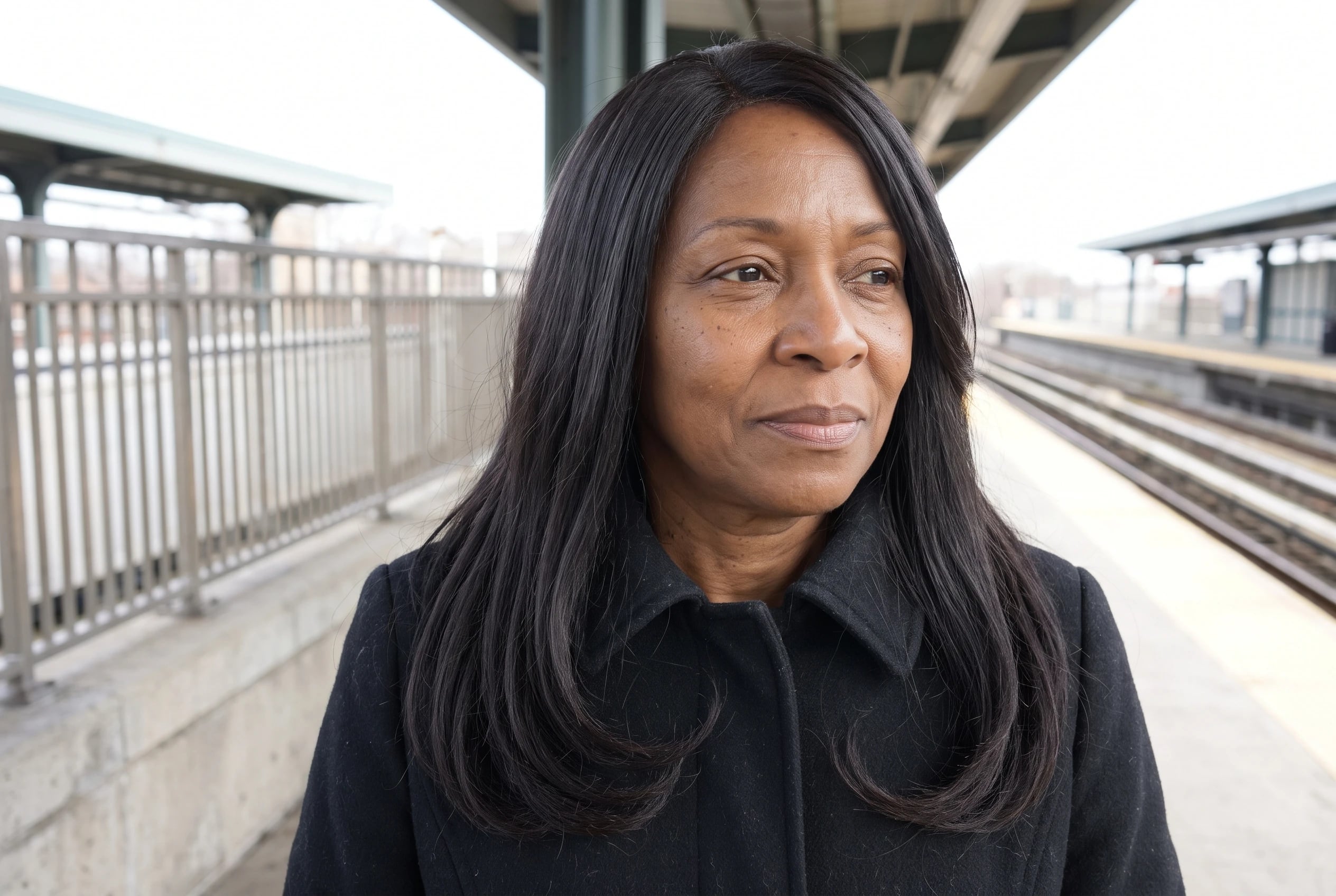
Straight lengths fall past the shoulders, then curve inward at the bottom.
That small bend keeps a long cut from hanging like a curtain. It works best when the ends have enough density to hold a visible line.
You don't need layers all through the back to get movement; the curve does part of that work. If you blow-dry, aim the brush under only for the last few inches.
Ask for a trim that keeps the ends thick, then bend them inward as you dry.
8A Jaw-Length Front Layer
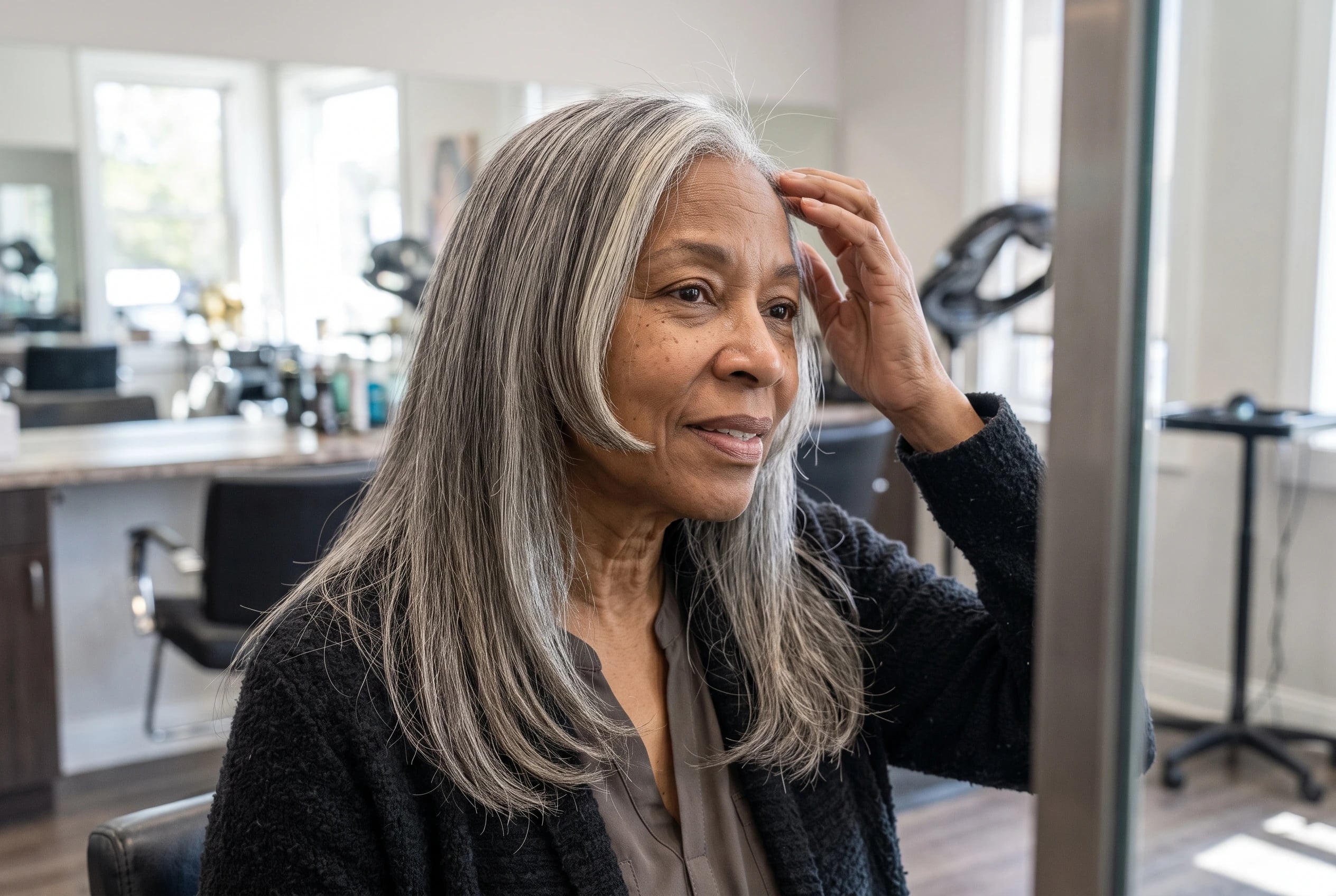
The front layer ends near the jaw; the back stays long.
That contrast gives the face a clear frame without asking you to lose the hair behind it. Keep the front edge soft so it joins the rest.
A sharp jaw-length shelf makes the cut look accidental when the back is worn straight. The shorter piece should still reach behind your ear if that's how you wear it.
Point to your jaw and ask where the layer will fall once dry.
7A Low Chignon With a Long Side Sweep
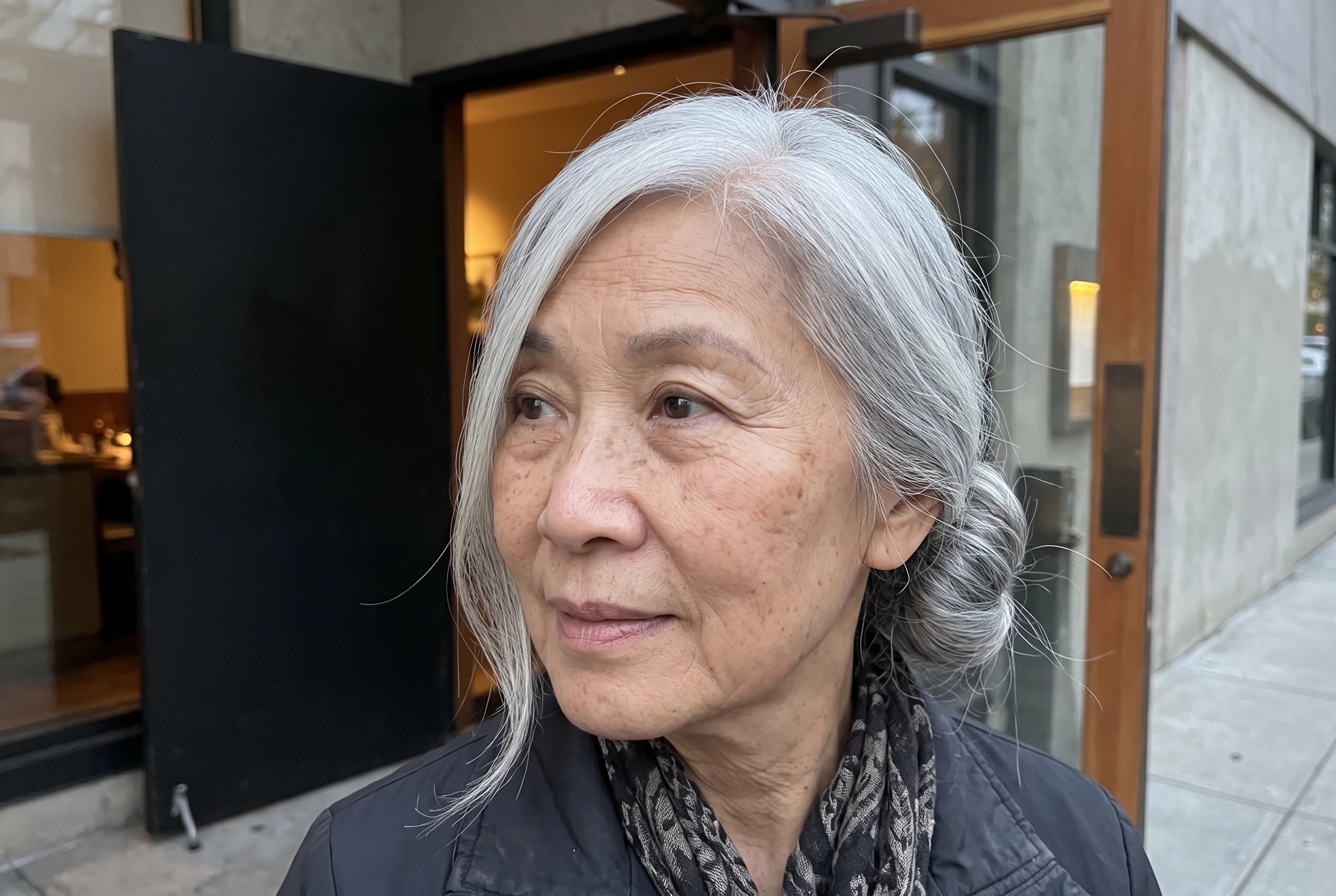
A long side sweep crosses the forehead before joining the chignon.
The tucked hair leaves your neck clear, but the sweep keeps the length present in the picture. It works for an evening out without the hard, sprayed shape of a formal updo.
If the front keeps falling into your eyes, pin it where the hair turns toward the bun. That holds the line without flattening it.
Try the sweep with your natural part before adding pins.
6Long Hair With a Shallow U-Shaped Hemline
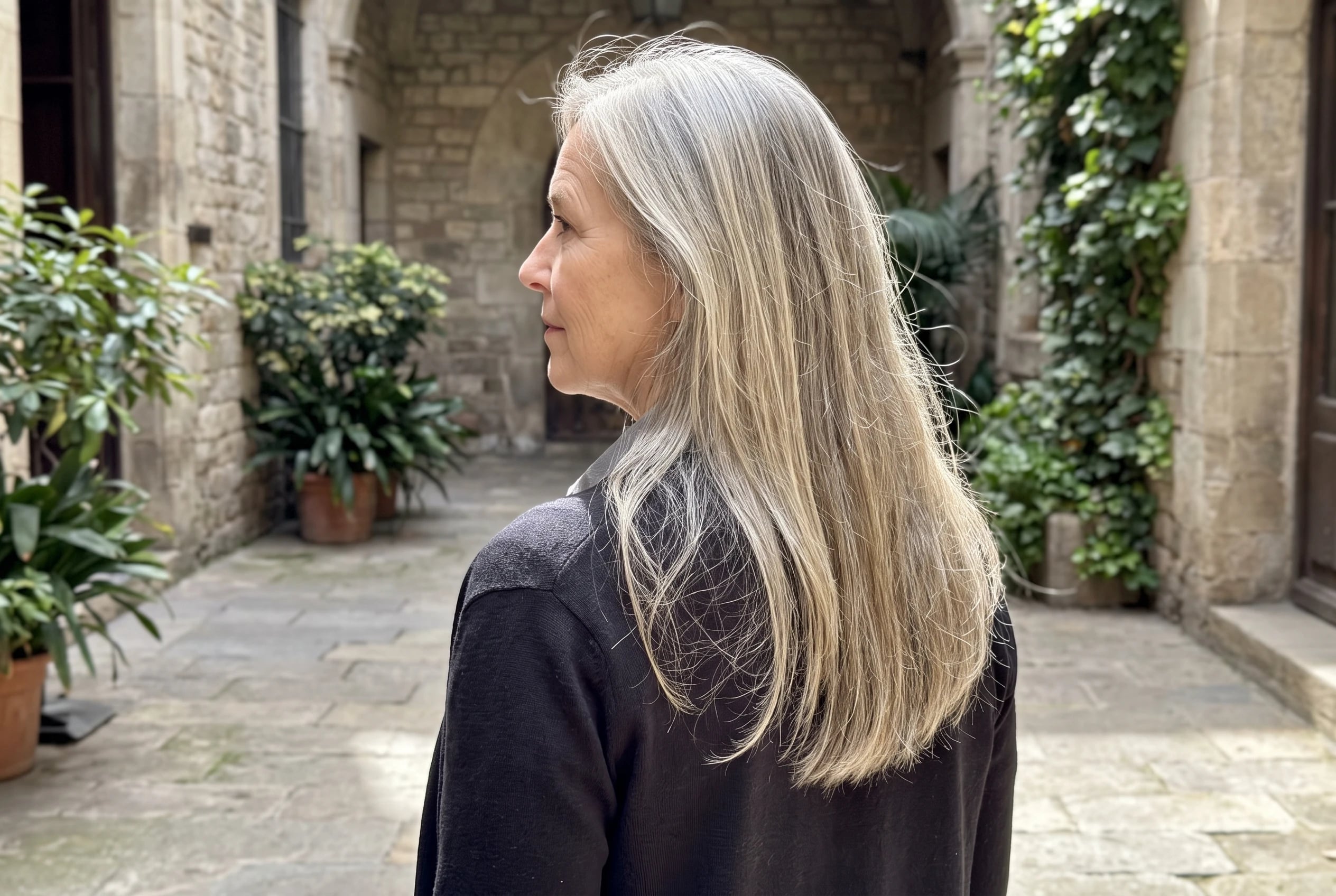
The ends form a shallow U across the back.
That curve keeps length in the center while removing heavy corners at the sides. Make it shallow; a deep U leaves the longest section looking thin.
This shape shows best when your hair falls freely down your back, not pulled over one shoulder. The side lengths should still feel like long hair when you bring them forward.
Ask to see the back in a mirror before the final cut.
5A Half-Up Claw Clip Twist
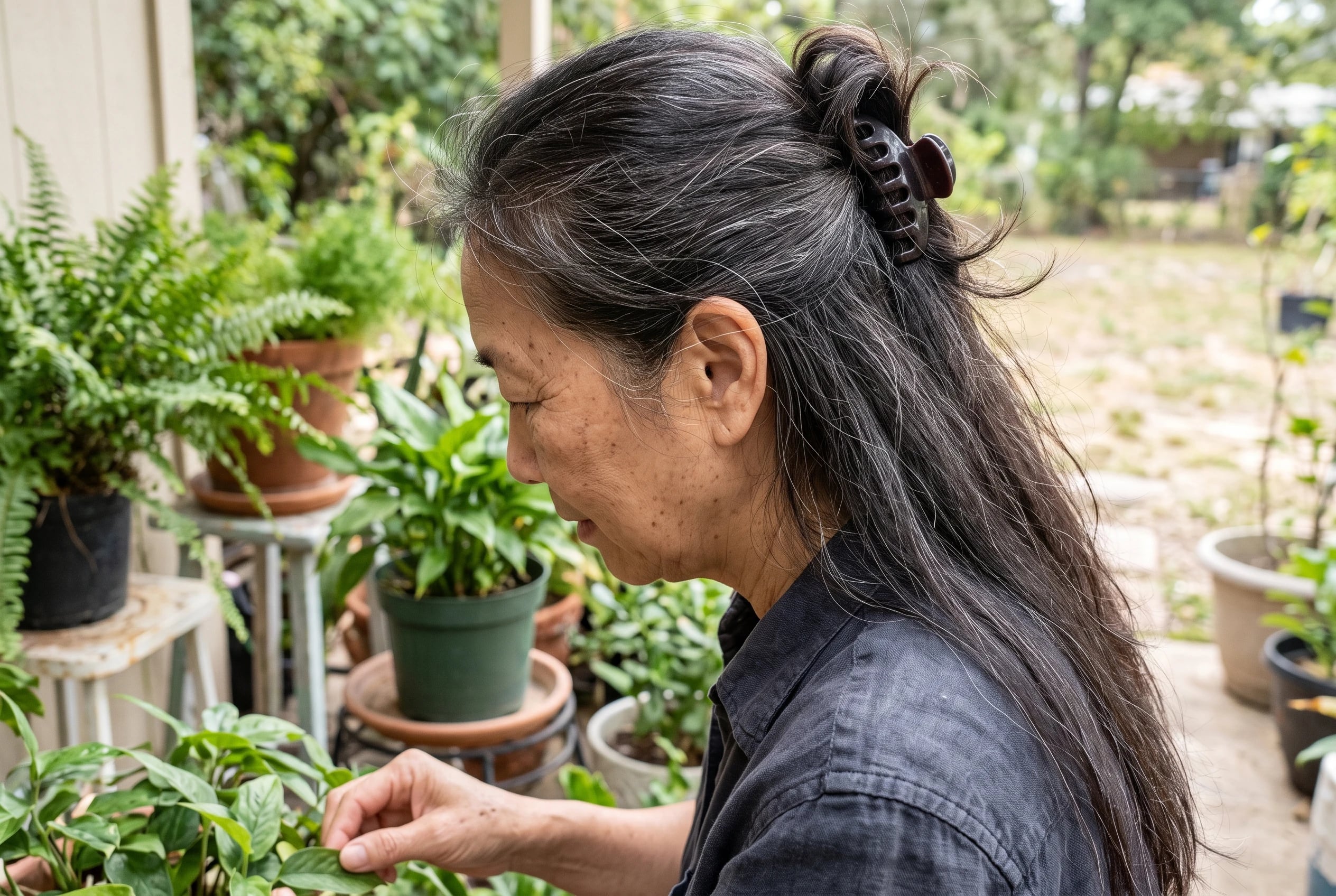
A clip holds the upper half, leaving long hair down the back.
The twist adds height at the crown without tying every strand away. Choose a clip that grips the amount of hair you're lifting; one too small forces a tight, uneven twist.
Let the lower half fall as it wants, whether that's straight, wavy or curly. The look is strongest when you see both parts clearly: hair held up and hair left long.
Twist only the top section, then check that the clip sits comfortably against your head.
4Long Copper Hair With Loose Layers
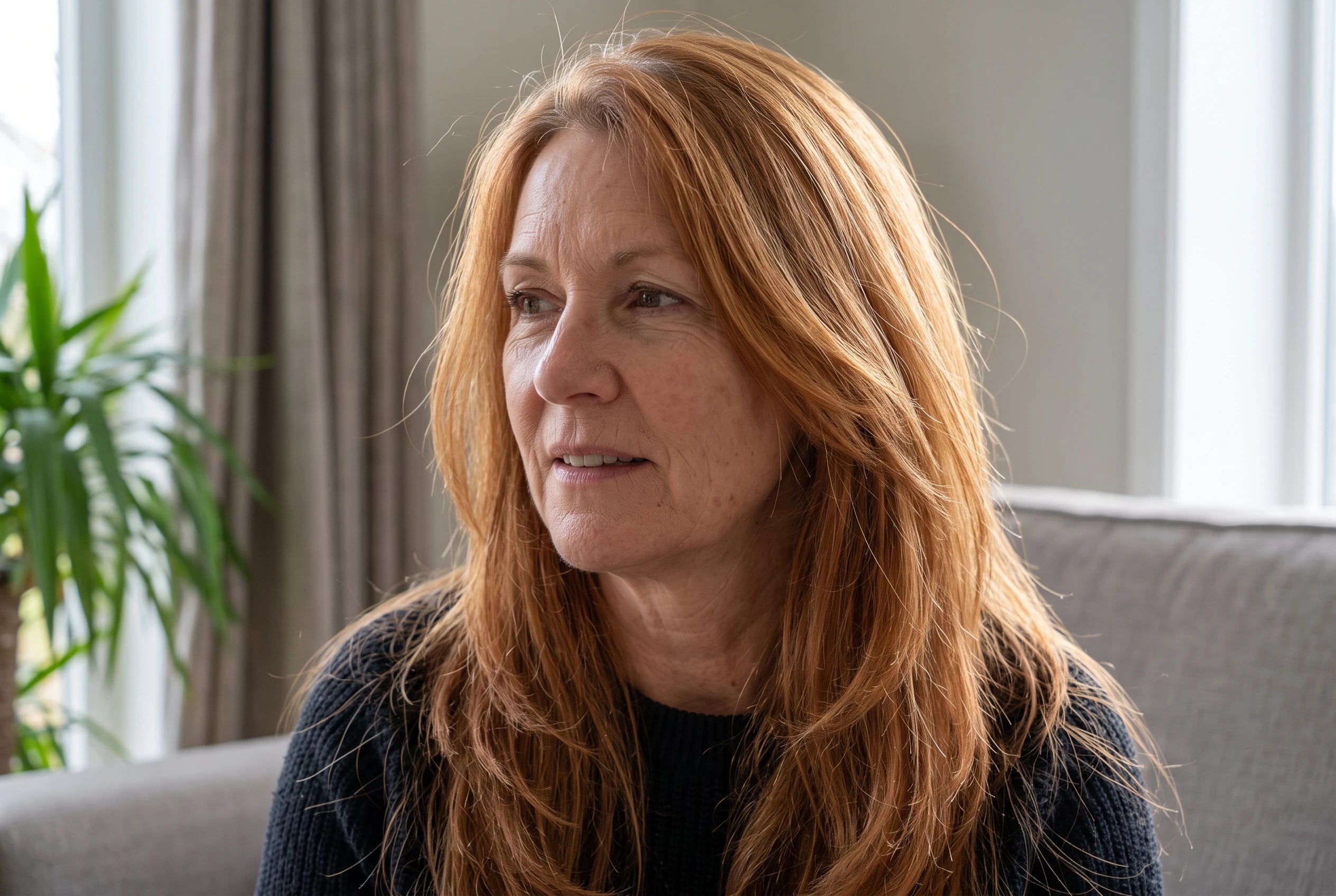
Copper lengths catch the light around the face and fall in loose layers.
The color draws the eye, so the cut needs clean ends. Scattered short layers compete with that strong color and leave the bottom looking thin.
Keep the shortest pieces near the face, where they show the copper when you turn. Length through the back gives the color an uninterrupted line, whether you wear it straight or let it bend.
Keep the layers long enough to tuck behind your ears.
See more: 17 Winter Fashion Trends for Women Over 50 to Look Stylish for 2027 →
3A Low Bubble Ponytail
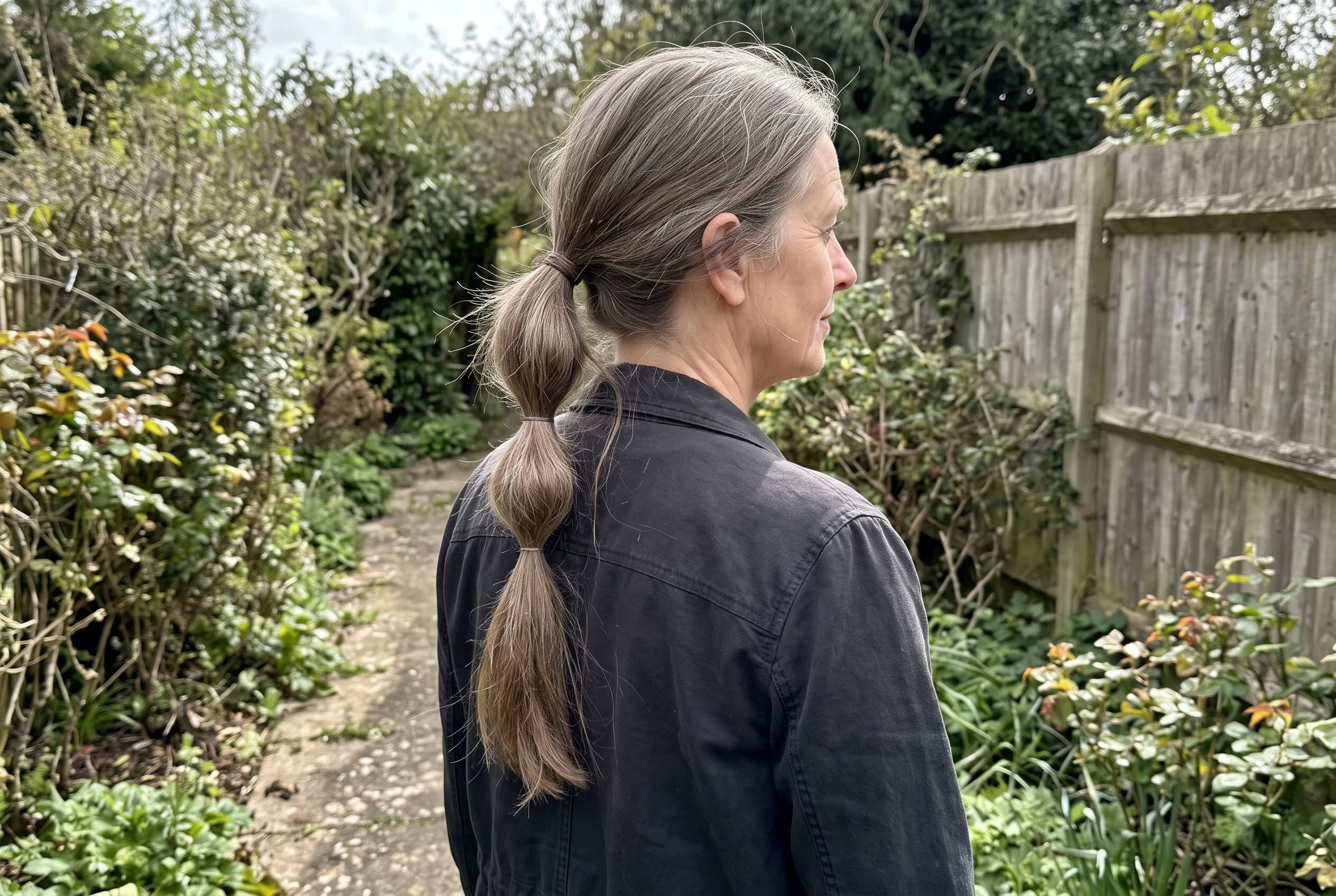
A low ponytail has spaced ties that form rounded sections.
The shape shows off the length without braiding it. Keep the sections wide, not tight little knots; the hair needs room to puff between ties.
If your ends are fine, make the last section shorter so it still looks full. This style also keeps long hair contained under a coat collar, where loose waves get rubbed into tangles.
Start with a loose ponytail, add ties down its length and ease each section outward.
2Long Hair With a Full Fringe
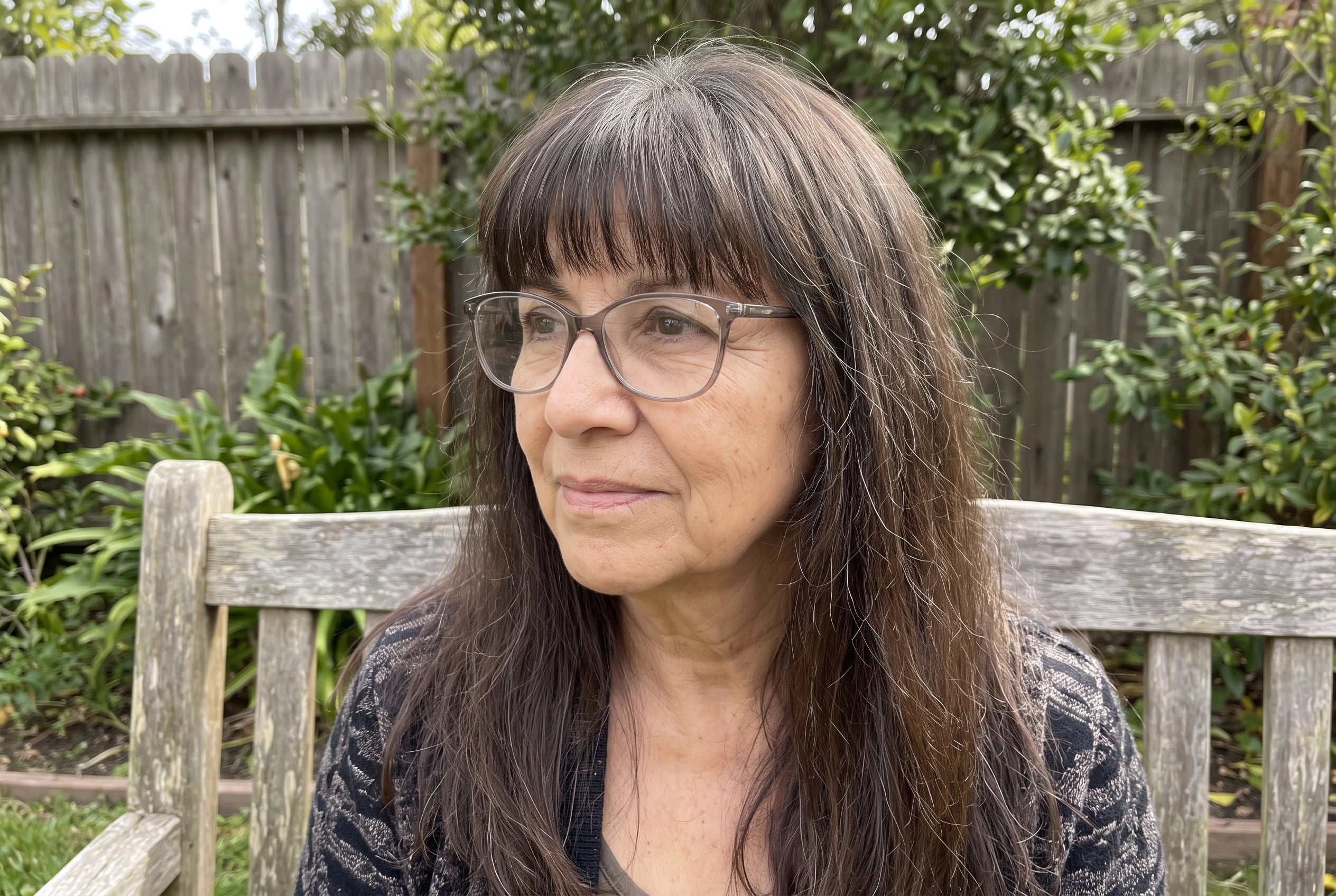
A full fringe sits above the brows; the long hair stays loose.
The strong front line makes the length look deliberate. It needs regular trims to stay out of your eyes, especially if your hair grows forward.
Leave the sides of the fringe long enough to meet the hair beside your face. That connection keeps the front from looking like a separate cap over an otherwise long cut.
Test the fringe length while wearing your everyday glasses.
1Long Hair With Internal Weight Removal
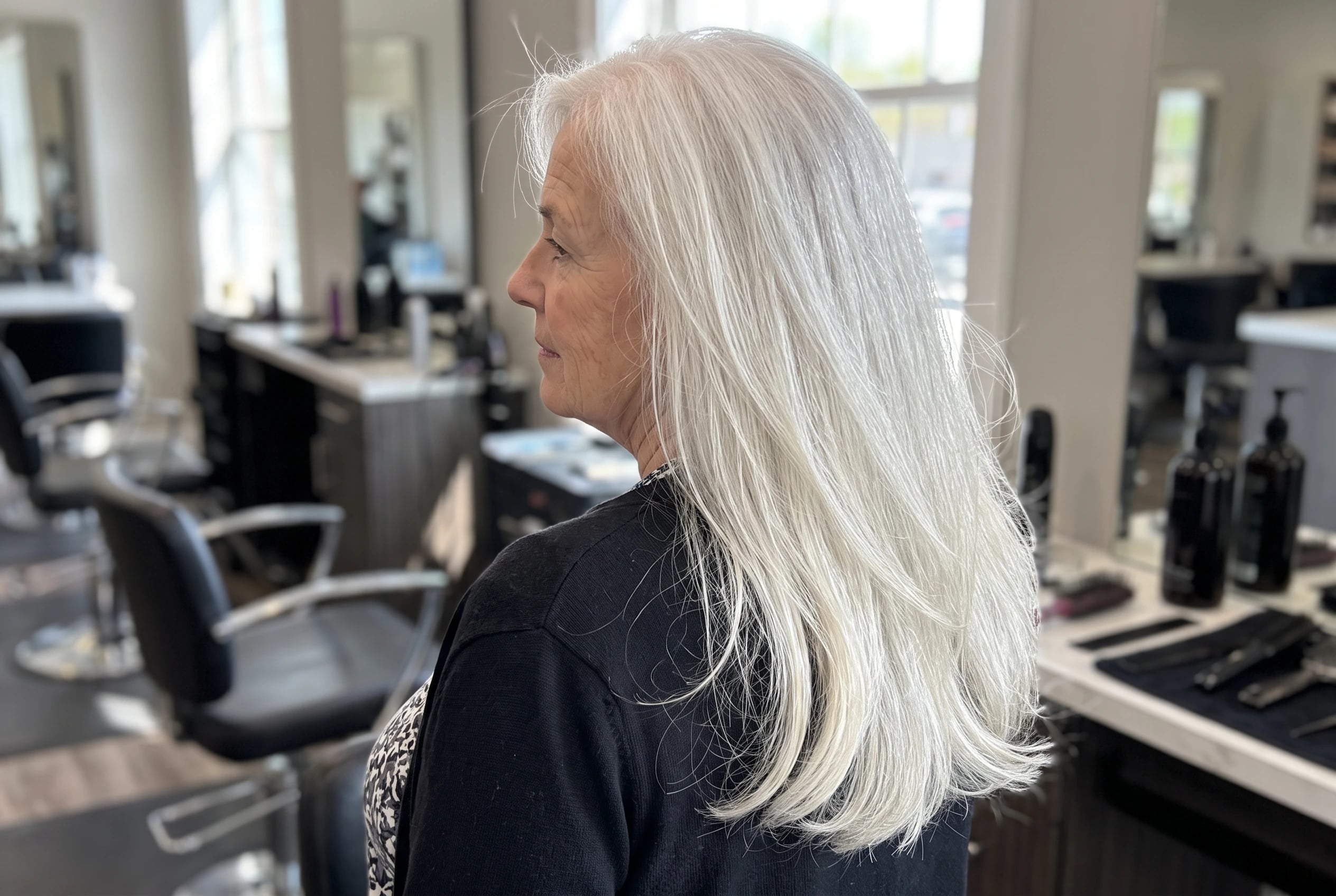
The hair falls past the shoulders, with full ends and an easy swing.
From the outside, this cut looks almost untouched. That's the point. A stylist removes bulk from selected sections inside the hair. The surface still falls in one long line.
You feel the change when you turn your head or tuck the hair into a coat. You won't see choppy layers across the back.
This is a precise request, not permission to thin everything out. Fine ends need protecting. Dense hair through the middle is the place to start.
Ask for internal weight removal while keeping the perimeter full. Check the ends in the mirror before you leave.
The bottom line
All 26 looks keep the length you love. They change where the weight, movement or focus sits.
You already know long hair doesn't need an age limit. You check the ends, then ask for the shape you want. Which one would you try first?
Up next
23 Layered Hairstyles for Women Over 50 to Try
A jaw-length gray bob keeps its bottom edge full, while layers inside give thin hair room to move.
Read the list →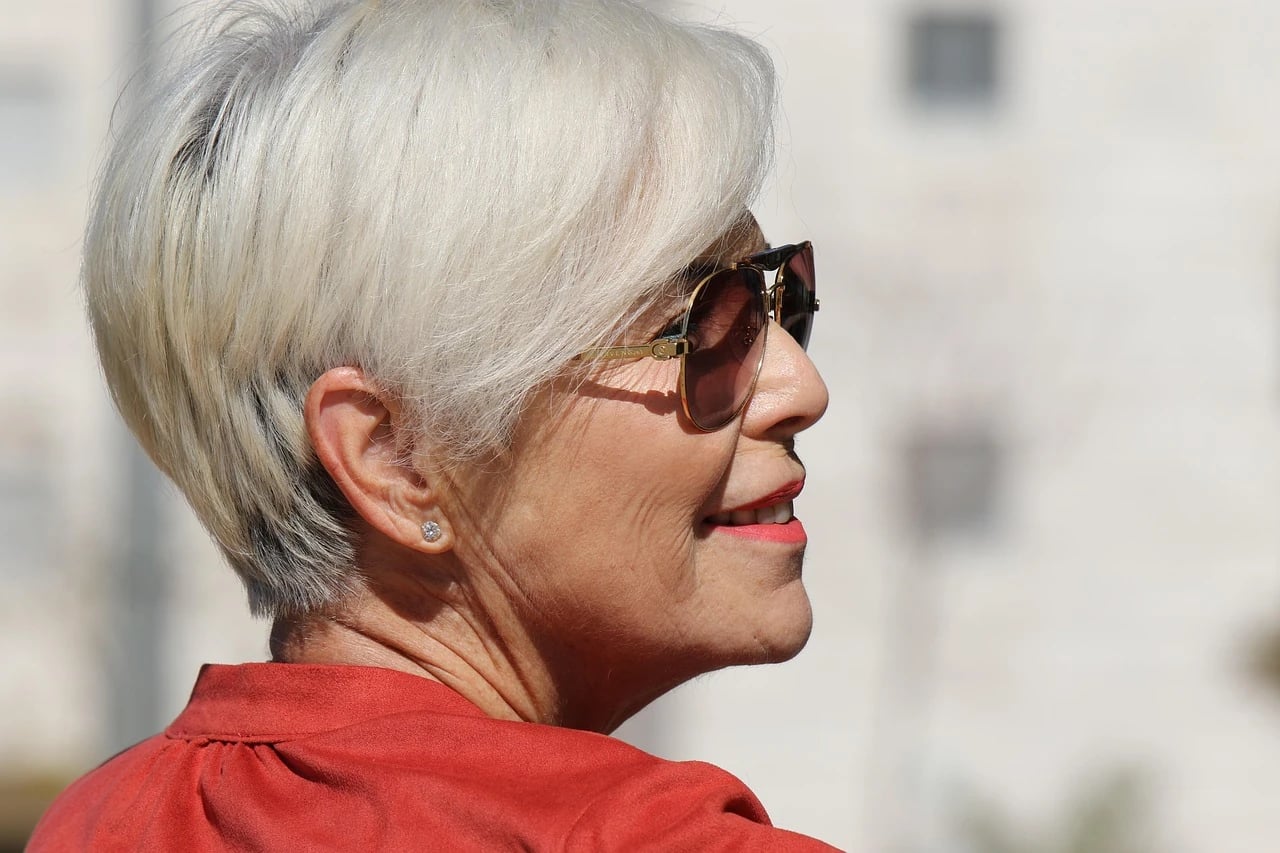
Reader quiz
Did you catch the details?
5 questions from this article. Finish them all to unlock the editor's bonus tip.
What should you leave above your ears so the crown does not look pulled flat?
Did any of these feel familiar?
Know someone who needs this?
 Prime Journal · Free printable
The Closet Fit and Color Checklist
- A clearer view of colors beside your face.
- Clothes that pass the sitting and walking test.
- Shoes and repairs checked before anything gets replaced.
Free printable: The Closet Fit and Color Checklist. Enter your email and it is yours.
Nora Bennett
Style Editor
Nora writes about hair, clothes and grooming for people who have stopped asking permission: what to keep, what to let go, and what reads as taken care of.
More from Nora Bennett