




17 Hairstyles and Habits for Working Out Over 50 That Survive Sweat
Seventeen hairstyles and habits for women over 50 who work out, from the curly pineapple to the French braid, that hold through the sweat and come back without a blow-dryer.

By Irina Byalik, Style Editor
Updated · 20 min read
- Written by our style editor
- Cited 39 sources
- How we review
The habit that matters most here is the last one, and it takes about ten seconds once a month.
The elastic comes off at the end of class with a little snap, and a few hairs come with it, wound around the band like thread on a spool. You look at them a second longer than you used to.
In my experience, that's when active women over 50 start asking better questions about gym hair. Good workout hairstyles have three jobs. They stay up through the sweat. They stop pulling on hair that's finer than it was. And they look like you on the drive home, with no dryer involved.
17The low ponytail with a soft scrunchie
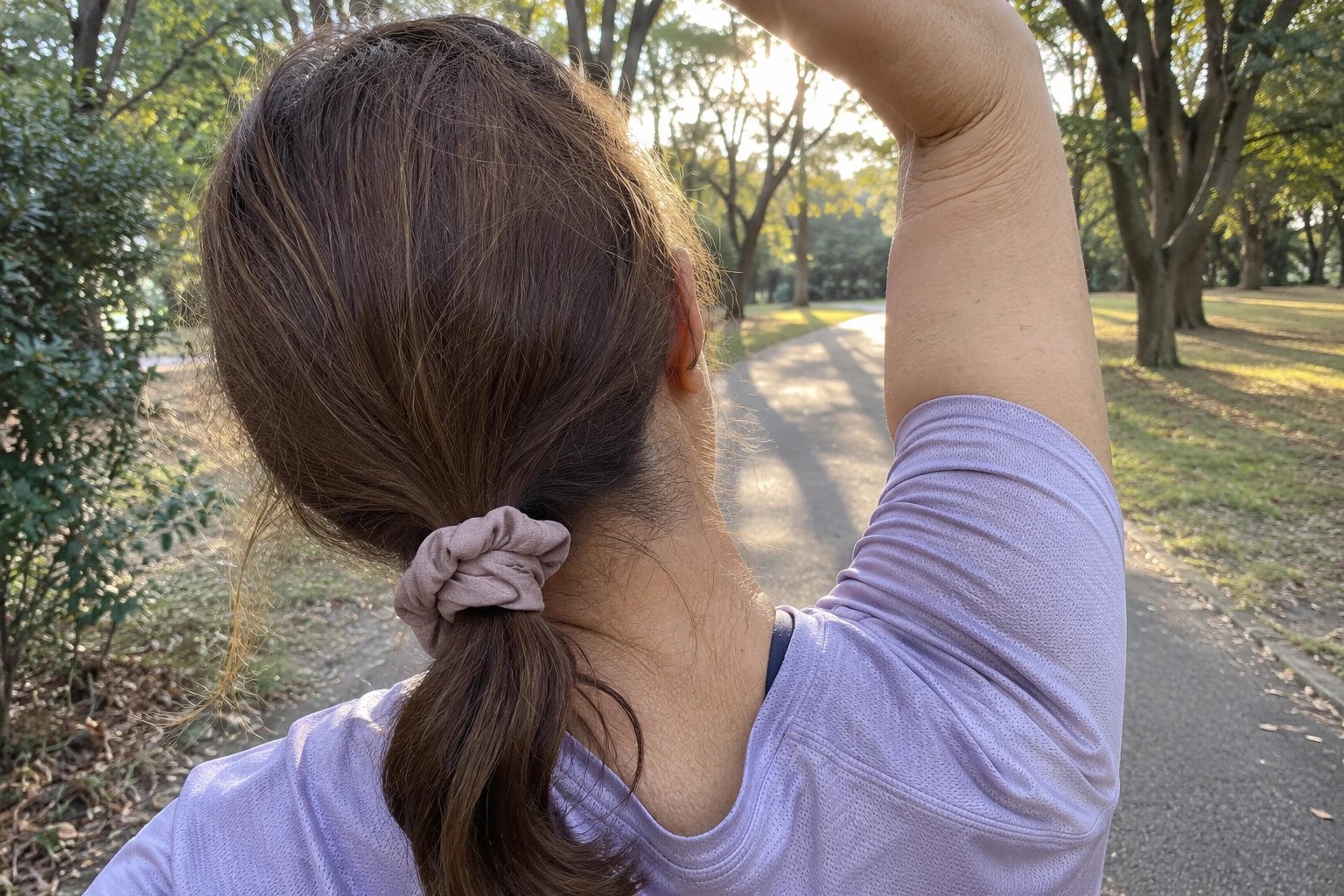
Wear it low and loose, in a fabric-covered tie. Then use the American Academy of Dermatology's whole test, which fits in one line: if your hairstyle feels painful, the style is too tight. If you can feel your temples halfway through a set, it's too tight.
Tight ponytails worn every day can cause traction alopecia, which is hair loss from steady pulling. Dermatologist Dr. Brendan Camp says it shows up most often at the temples. The AAD's fix is a covered band made for hair, not the bare rubber kind from the junk drawer.
You don't have to give the ponytail up. Dr. Sam Ellis, a board-certified dermatologist in Northern California, puts it plainly: a tight style now and then is no big deal. What matters is the same tight pony day after day, because the traction alopecia that frequent pulling causes can be permanent.
If your hair is fine, you probably know the move where a skinny band slips, so you twist it a fourth time. A fat, soft scrunchie holds in two or three wraps, and it was made to be gentle from the start. Rommy Hunt Revson invented the scrunchie in 1986 as a gentler choice than the plastic and metal ties that broke hair. She modeled it on the waistband of her sweatpants and named it after her dog.
16One plain braid down your back

A single three-strand braid, done on dry hair and taken out at night, is one of the gentlest things your hair can wear to the gym. It got a bad name from a rule that was never about it.
The AAD does say to wear braids for no longer than 6 to 8 weeks and to loosen them at the hairline. That limit sits in its advice on long-wear styles, the kind you keep in for weeks. A braid you make at 7 a.m. and undo at bedtime is not what it means.
People who work out a lot seem to know this already. In two Reddit workout threads (one, two), braids come up more than any other style as the one that actually stays put. Hello! magazine picks a braided pony for running and strength training for the same reason.
15The French braid that catches your layers
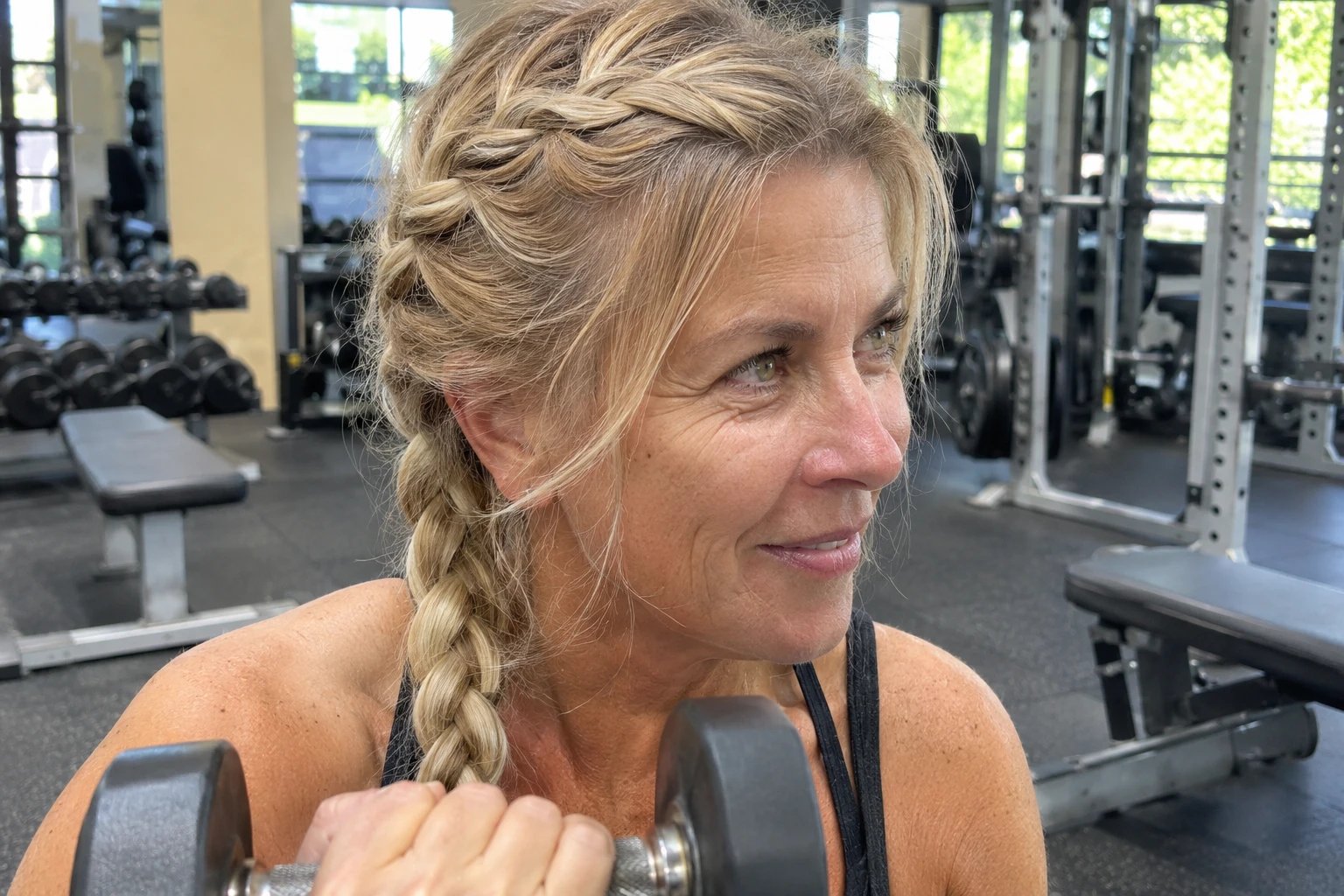
Before you start, check your shortest layer. Christina Butcher, who writes the braiding blog Hair Romance, gives the rule: "Your braid needs to sit above your shortest layer… If your shortest layer can reach your braid, then you know it will hold."
So take one of the short pieces near your face and pull it back toward where the braid will run. If it reaches, braid away. If it falls short, start the braid higher and closer to your face, or pick another style.
Butcher says French and Dutch braids handle layers better than fishtails do. The difference between those two is just the direction you cross. A French braid crosses each strand over the middle. A Dutch braid crosses it under. For stray ends, Butcher hooks a bobby pin into them or uses a little hairspray.
Braid only on dry hair. Dermatologist Dr. Michele Green explains why: "Wet hair strands are much more fragile than dry hair strands… the protein structure is weakened."
Done right, Hello! says a French braid for cardio, spin or lifting "keeps every strand locked in place, no matter how intense."
14A wide headband for bangs and pixies
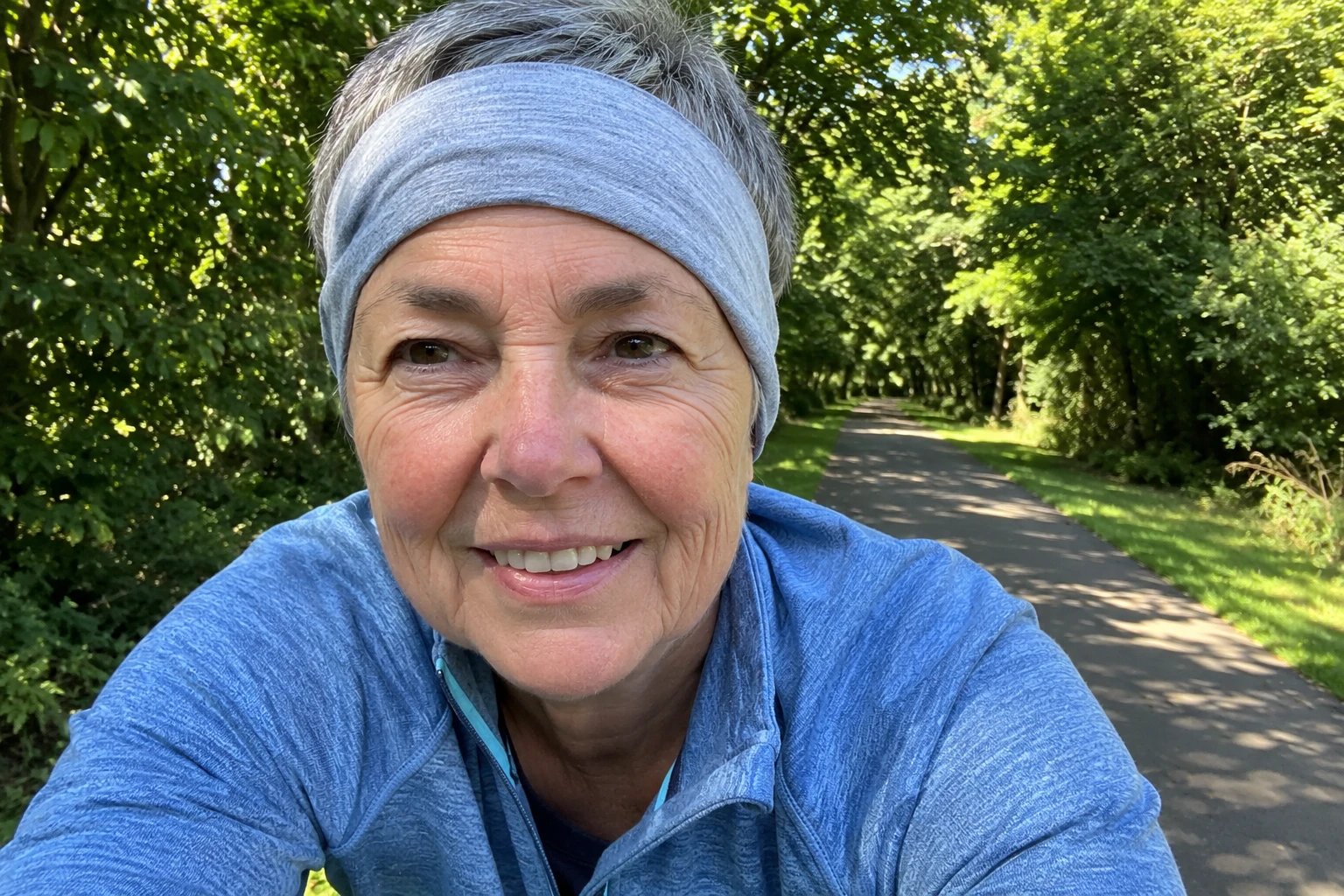
If your hair is too short to tie back, a headband does the job a ponytail can't. Hello! says one will keep any flyaways out of your face whatever the workout. Liv Cycling says it can even go under a bike helmet, as long as the helmet still fits safely and securely.
Nobody selling cute sweatbands mentions the headache. Migraine & Headache Australia lists tight headbands, goggles and tight ponytails as causes of pressure headaches from steady squeezing on the head. The ache is worst right where the band sits, and it usually fades within about an hour of taking it off.
So if you've finished a class with a dull ache above your ears and blamed the workout, look at the band first. Go wide and soft, so the pressure spreads out.
13A low bun for the bench and the mat
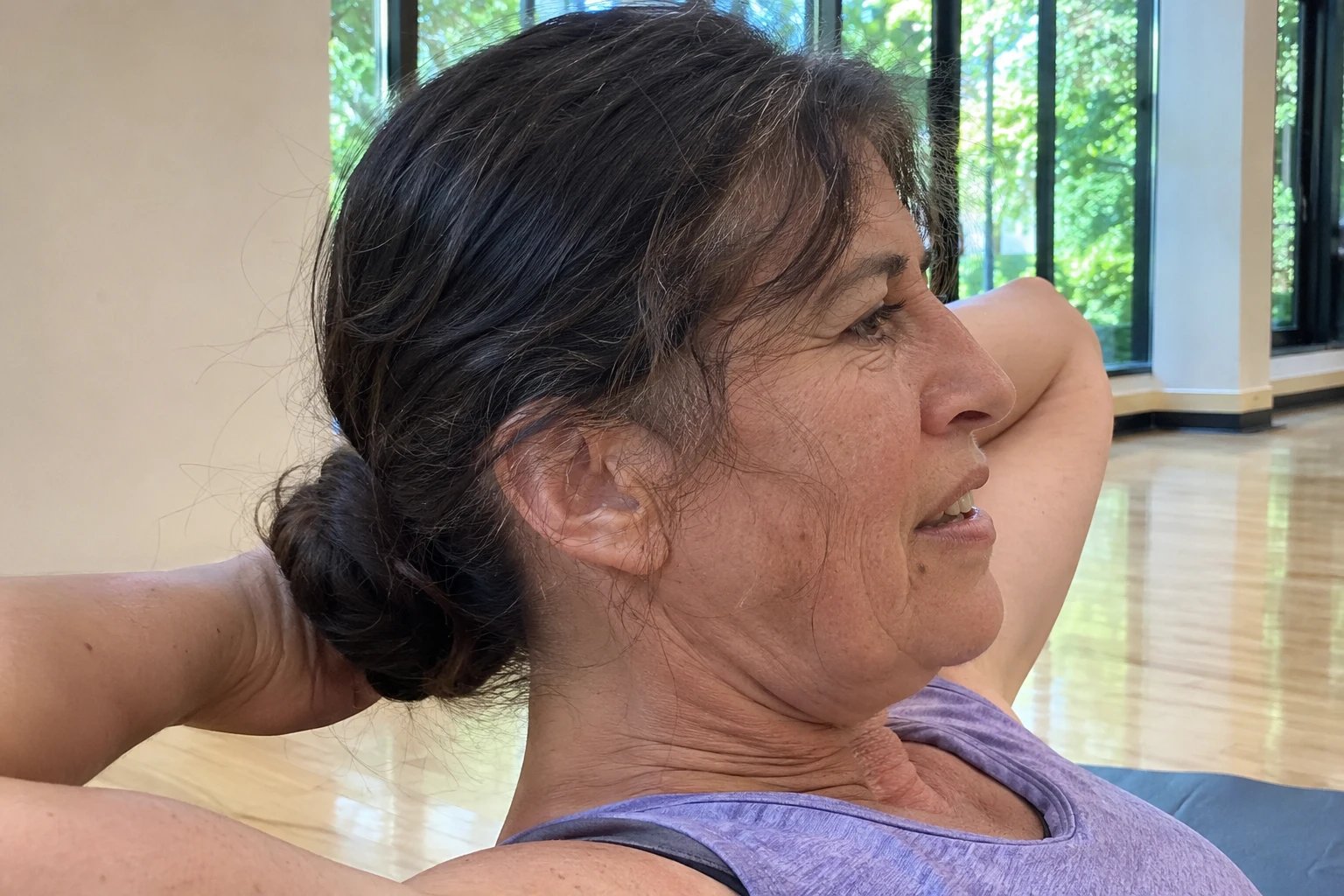
A messy bun or top knot is the reflex. For anything you do on your back, go low and flat instead, because anything bulky at the back of your head is what you end up lying on.
makeup.com says claw clips are probably best to remove for anything involving lying on your back, like ab work. You know the feeling: one crunch and the clip digs into your skull like a rock under a picnic blanket. Hello! picks a low bun for yoga, barre and Pilates.
Don't throw the claw clip out. makeup.com likes everything piled up in a claw clip for the stationary bike, where it keeps hair off your neck.
| Where you are | What works | What to skip |
|---|---|---|
| Bench, mat, ab work | Low, flat bun at the nape | Claw clip |
| Yoga, barre, Pilates | Low bun | A big knot on the back of the head |
| Stationary bike | Everything up in a claw clip | Hair on your neck |
12The chin bob that air-dries flat at the nape
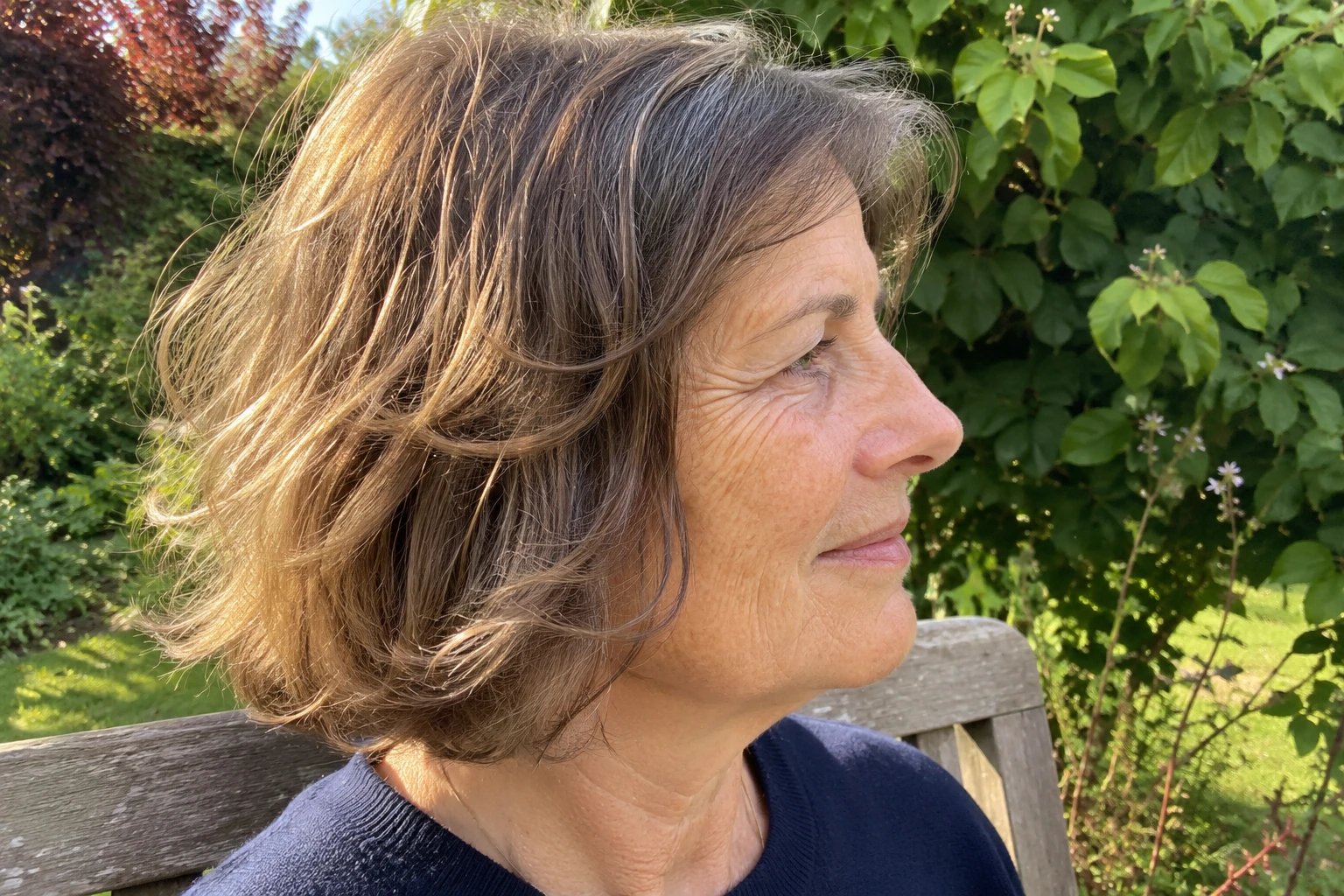
Sweat gets the blame when a bob frizzes after the gym. Your hands usually did it.
Neale Rodger, style director at STIL Salon, says frizz "often appears when the hair is disrupted while drying." That covers fluffing it in the car, tucking it behind your ear twelve times, and pushing it around while it's half wet. Put it where you want it, then leave it alone until it's dry.
Fine hair has the opposite problem. Rodger says it "can easily fall flat if left completely untouched." His fix is a light volumizing spray or mousse on damp roots, so the lift comes from the top while the nape lies smooth and flat.
If you do finish with a dryer, finish cool. In a 2025 lab test on cut hair, run by researchers at a dryer maker, three minutes of steady hot air around 80°C (about 176°F) cut the hair's strength by 9.4%. A cooler setting that cycled the heat cut it by 0.4%.
Hairstylist Justin Hickox hits a bob with cool air while the section is still wrapped on the round brush, to help lock in the bend.
11The shag, only if your hair already waves

The shag is everywhere as one of the great low-maintenance hairstyles for women over 50. On the right hair it is. On the wrong hair it's a styling session after every workout.
Justin Hickox, a hairstylist with 30 years behind the chair, says it straight out: stick-straight hair may not be the best fit for a shag. A shag needs natural wave. Without it, it takes extra styling with hot tools, or it just looks choppy.
Under one TikTok selling the shag as easy after 50, commenters push back hard. On straight or loosely wavy hair, they say, "low-maintenance" turns out to mean a blow-dryer, a curling iron and rollers. The women who found it easy had wavy or curly hair to begin with. Several more said they couldn't find a stylist who cuts one well.
Now add sweat, which flattens whatever the curling iron did by the second song.
10Wash-and-go curls in a pineapple
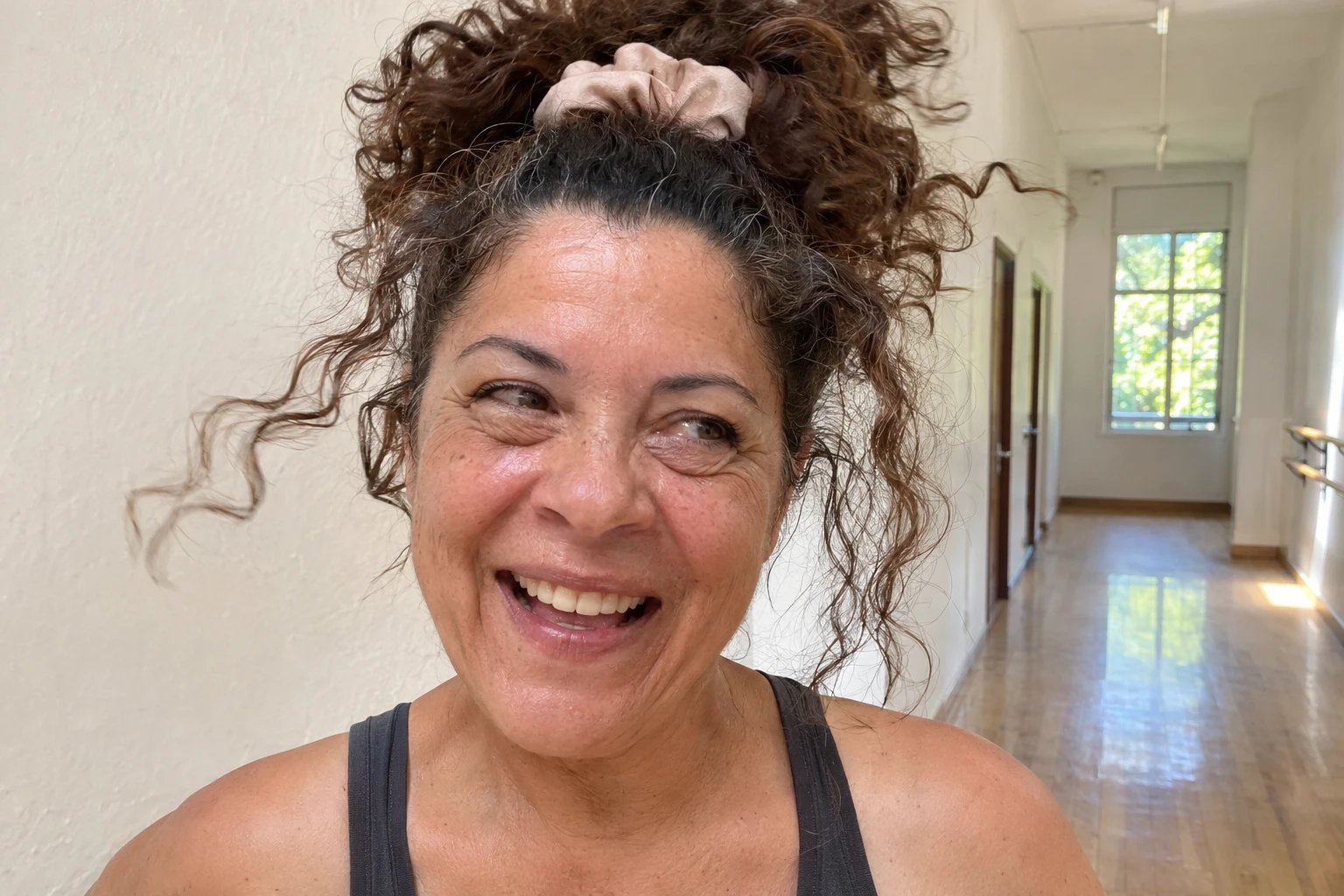
If your curls are the whole point of your wash-and-go haircut, this is how a curl specialist protects them through a workout.
"The pineapple is my favorite workout style and sleep maintenance option for curly hair." Angela C. Stevens, stylist and co-creator of a protective-styles line, in Glam
Gather your curls loosely at the very top of your head and hold them with a soft scrunchie, so they sit like a pineapple's leaves and nothing gets crushed against your neck. The AAD suggests the same loose pineapple for sleeping. After class, Stevens says to "remove the scarf and shake your curls back downward." If you didn't use a scarf, just drop the scrunchie and shake.
Don't reach for a brush on the way out. The AAD says to comb textured hair only while it's damp, with a wide-tooth comb.
A sweaty class also doesn't automatically mean a full wash. The AAD says curly hair should be washed at least every two to three weeks.
9A crown braid for hot yoga
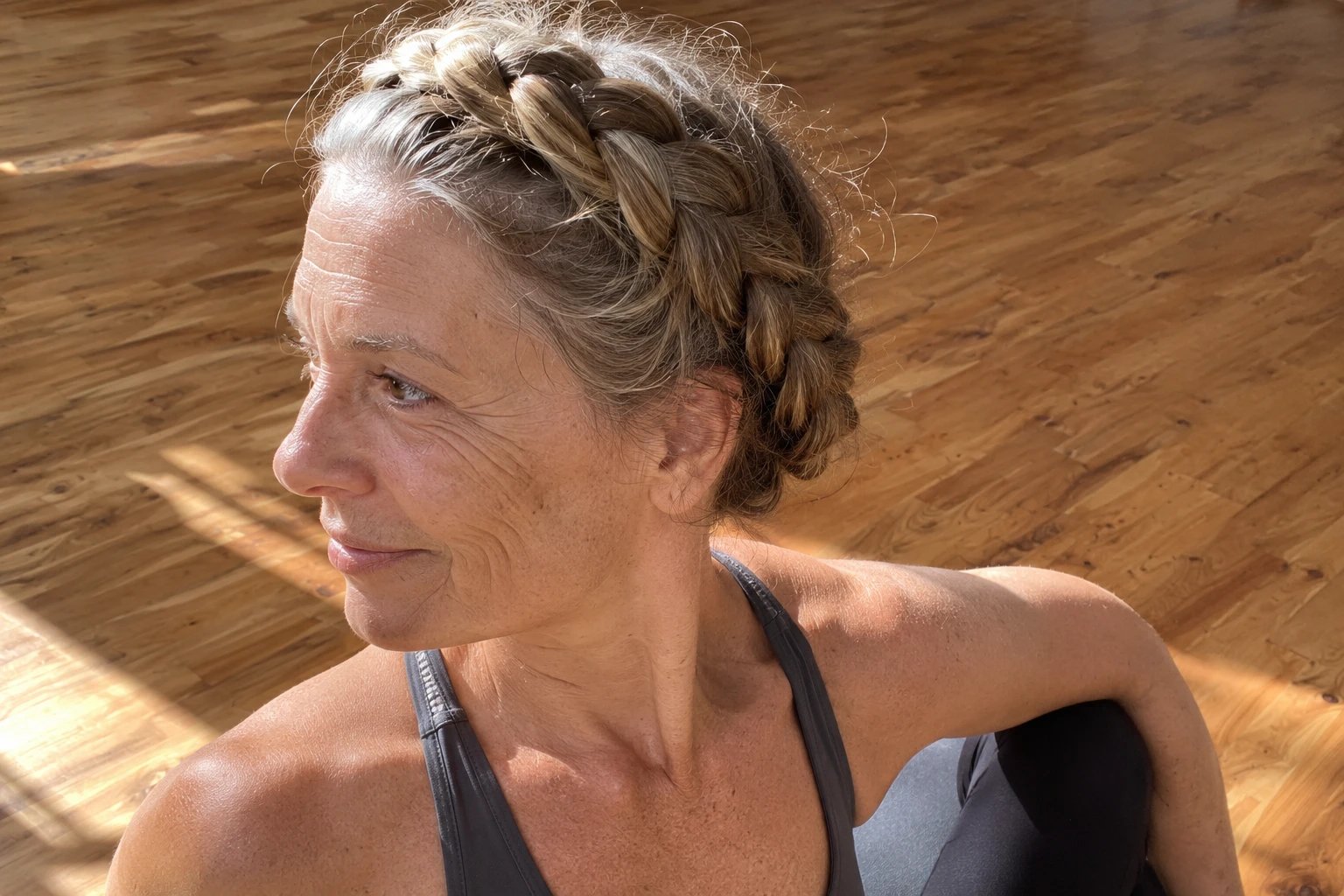
In a heated room, your neck and hairline sweat heavily. The nape is also the spot a ponytail lies across on the mat. A crown braid keeps everything off both.
Bianca Cheah, a yoga instructor and Aveda ambassador, showed Grazia how she does hers:
- Part your hair down the center.
- Braid each side, starting behind the ear and working toward your face.
- Wrap one braid across the front of your head, just behind the hairline, pinning as you go.
- Wrap the second braid just in front of it and tuck the ends under.
Her verdict: "They are easy to do, and they sit in place all practice long."
When you roll down into child's pose, there's nothing left at the back of your head to land on.
See more: 16 Gray Blending Highlight Ideas Over 50 That Hide Roots Longer →
8A low bun or braid under a bike helmet
Too high and the helmet won't sit right. Liv Cycling, a women's bike maker, gives the placement that works.
Tie a ponytail mid-head, not high, and pull the loose length through the webbing at the back of the helmet. With a low bun, either cinch the helmet above the bun or pull the bun through the webbing and cinch underneath. A braid goes at the base of the head, with the cinch dial on top of it. Whichever you choose, the front of the helmet should still sit above your eyebrows.
Leave out the fistful of bobby pins. Liv warns that as the helmet settles on your head, "those bobby pins will become increasingly uncomfortable."
7Long hair tied back under a swim cap
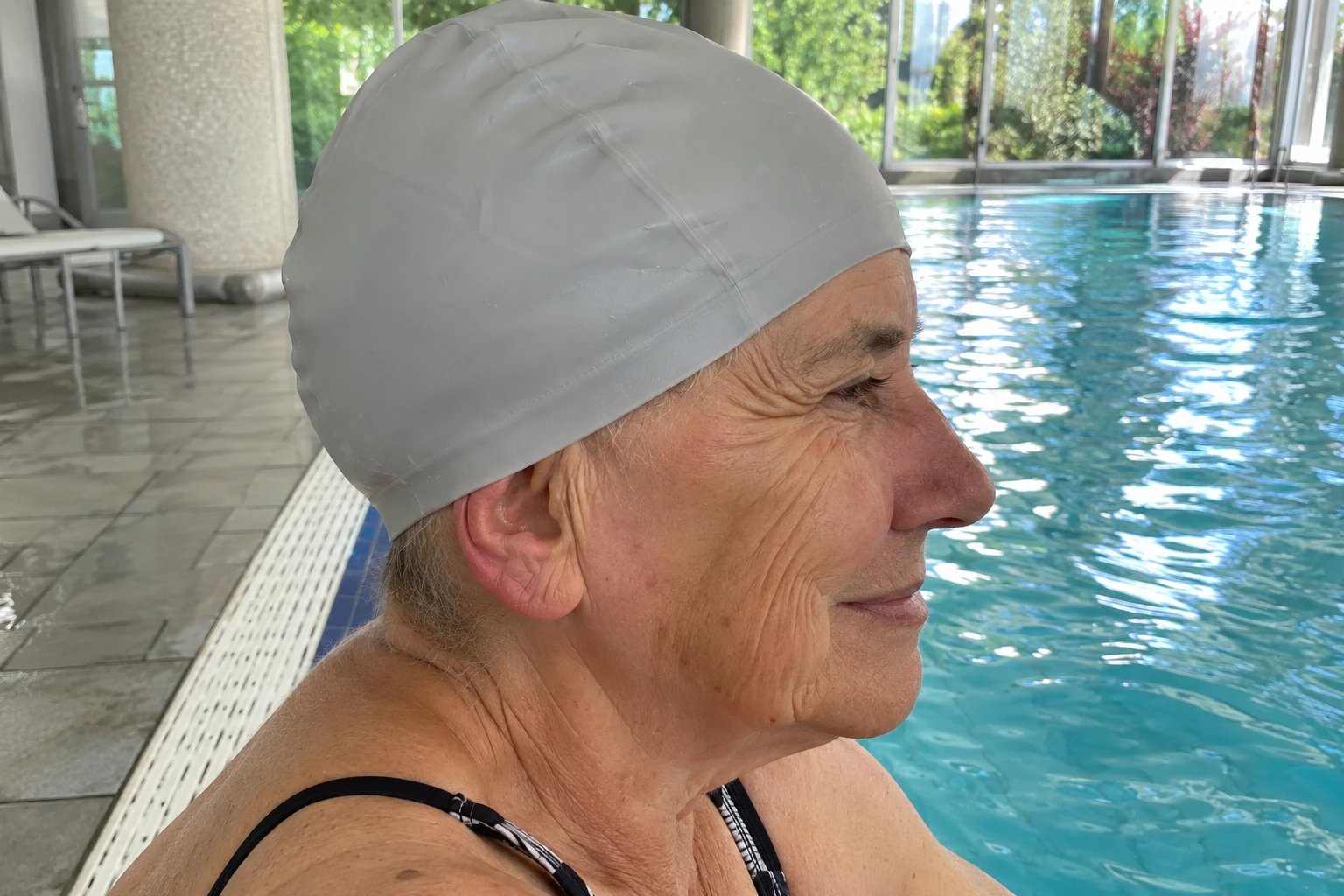
Wet your hair before the cap goes on. U.S. Masters Swimming says some cap materials, particularly latex, stick to dry hair. That's the yank you feel when you peel it off on the pool deck. Tie long hair back first.
The cap itself is a trade-off, per U.S. Masters Swimming:
- Lycra goes on and off without pulling hair, but it won't keep hair dry.
- Latex is cheap, but it can rip with regular use.
- Silicone lasts longer and costs noticeably more.
If you swim several times a week, I'd pay for silicone and stop replacing torn latex.
Your color matters too. The AAD says blonde and grey hair are at greater risk from chlorine than darker shades. Chlorine breaks down the proteins and fats in hair, which is where the straw feeling comes from. Rinse right after you swim, wash with a swimmers' shampoo, then use a deep conditioner. If your silver hair has started looking dull after laps, that's the order to follow.
See more: 16 Long Hairstyles Over 50 for Women Who Won't Cut Their Hair →
6Box braids or locs for long gym weeks
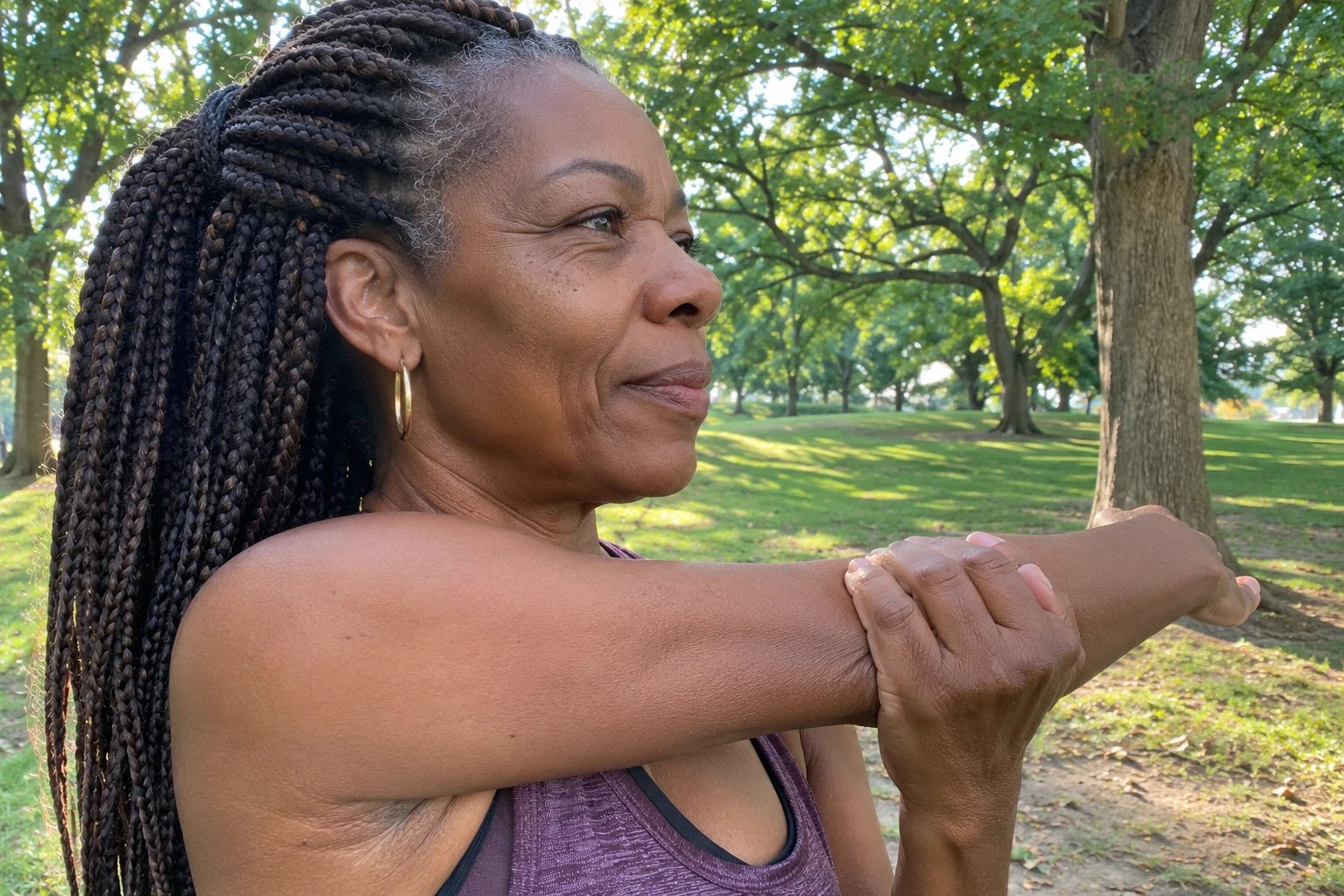
If your hair is tightly coiled, you may know this one from experience: sometimes the hair, not the workout, decides whether you go.
In a 2013 study of Black women at one Wake Forest dermatology clinic, half had changed their hairstyle to fit exercise, and nearly 4 in 10 sometimes skipped workouts because of their hair. The women averaged 42, so most were younger than you. The lead researcher, dermatologist Dr. Amy McMichael, told CBS News: "We have now identified the problem - hair care does seem to be a factor - and it is one that is not easily solvable."
Long-wear braids or locs are one answer. You sweat, you clean the scalp, and you don't restyle after every class. Set them up to last. The AAD advises thicker braids and shorter locs, braids out within 6 to 8 weeks, and loosening anything that pulls at the hairline.
On washing, dermatologist Dr. Crystal Aguh says "the ideal wash frequency is once a week as it allows tightly coiled textures to get more moisture. But if once a week isn't possible, washing every one to three weeks is okay." The method in that article is diluted sulfate-free shampoo in an applicator bottle, aimed at the scalp. Then dry everything all the way through, because braids that stay damp can turn musty.
5The loose bun after your shower
You know the routine: shower at the gym, twist wet hair into a tight elastic, and go through the rest of your day like that. That's the habit to drop.
Dr. Sam Ellis warns against leaving washed hair up in a wet bun for hours, because it makes your hair more prone to breakage. Her rule: tight styles go only on hair that's completely dry.
If it has to go up damp, keep it loose. Dermatologist Dr. Anna Chacon says, "I recommend loosely braiding your hair or tying it in a loose bun to limit the amount of friction." Dr. Green adds a step first: blot with a microfiber towel or an old T-shirt, or let it air-dry partway.
The AAD says to let hair dry a bit before you comb it, gently, with a wide-tooth comb.
4Dry shampoo to stretch the days between washes
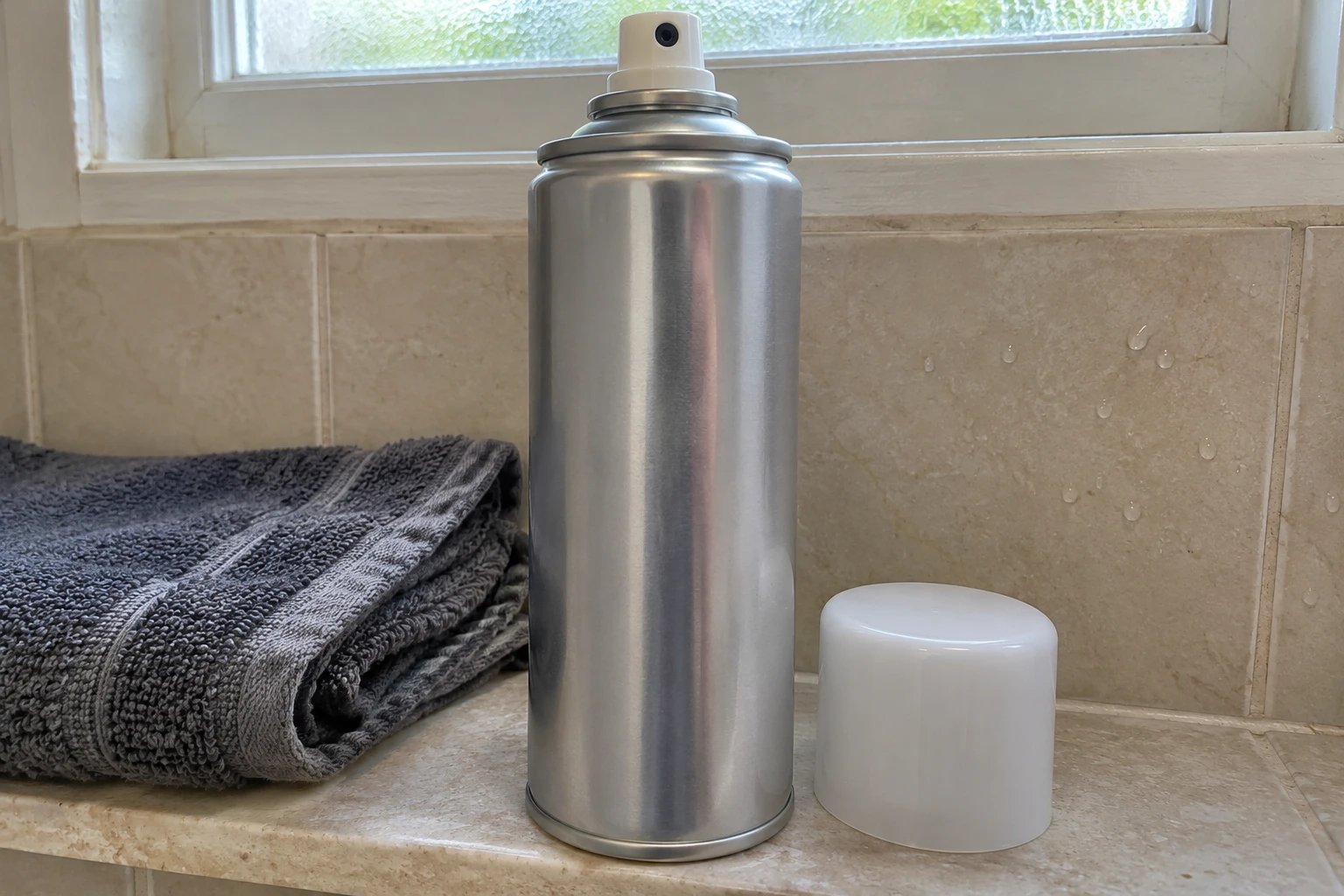
Dry shampoo doesn't wash anything. Dermatologist Dr. Zoe Draelos explains: "Dry shampoo contains little particles that absorb oil, but it doesn't clean hair." The AAD calls it helpful after a workout, then says to do a regular wash after one or two dry shampoos. Leaning on it alone could lead to seborrheic dermatitis, a flaky, irritated scalp.
Used that way, it's fine. Dr. Ellis says that in itself, dry shampoo doesn't damage your scalp or your hair.
She also explains the scary shower that often comes next: the hair you've shed over the past several days tends to come out all at once. The AAD says shedding 50 to 100 hairs a day is normal. So after three days between washes, up to 150 to 300 hairs can let go in one wash and still be ordinary. It looks like a lot wrapped around your fingers. It's three days' worth.
Who should go easy: Dr. Shari Marchbein told TODAY that people with dandruff, seborrheic dermatitis, eczema, psoriasis or sensitive skin should be careful. She suggests no more than once or twice a week. Dr. Ellis advises against it altogether if you have dandruff or seborrheic dermatitis.
3Scalp-only washing on daily workout days
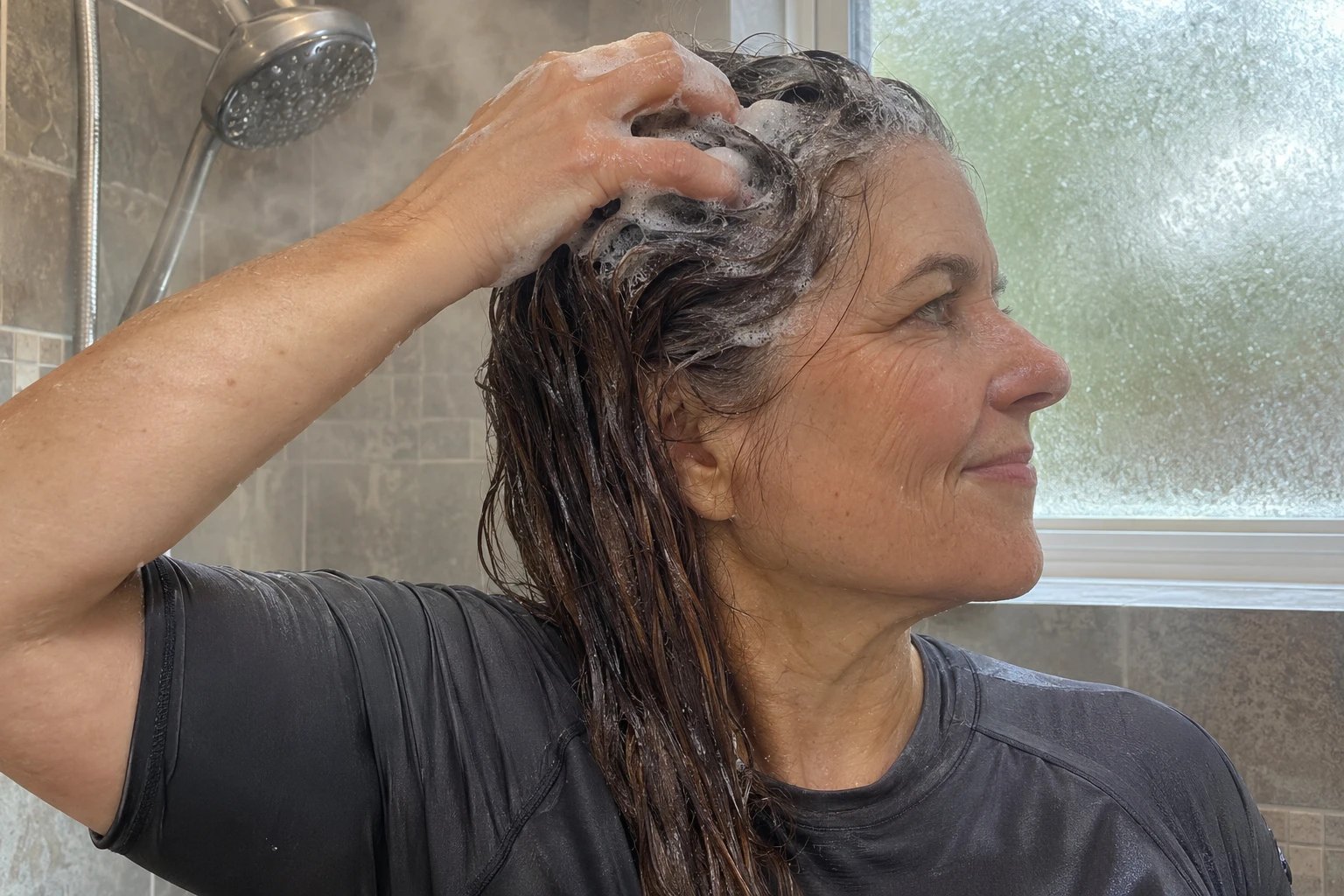
Two people who know hair give opposite answers on daily washing. They're both right for different hair, so pick the one that fits yours.
Dr. Ellis says daily washing is fine if you sweat every day, as long as you focus the washing on your scalp. The oil and sweat sit on your scalp, and your lengths don't need cleaning every day.
A salon stylist who teaches on YouTube as Blowout Professor sees it the other way: wash it, style it, then leave it alone for days. He puts shampoo only on the roots and scalp, and conditioner only on the mids and ends.
Notice where they agree: shampoo goes on the scalp, not the length. The AAD says the same thing. It adds to put conditioner on the ends if your hair is fine or straight, all the way down if it's dry or curly, and after every shampoo. Dermatologist Dr. Michelle Henry explains why the ends get thirsty: "As we get older, our bodies produce fewer lipids and less sebum."
What I'd do: if your scalp gets oily fast and your ends hold up, scalp-wash every workout day. If your ends look like dry grass by Thursday, wash less, and save shampoo for the days you truly drenched it.
2Air-drying instead of the daily blow-dry
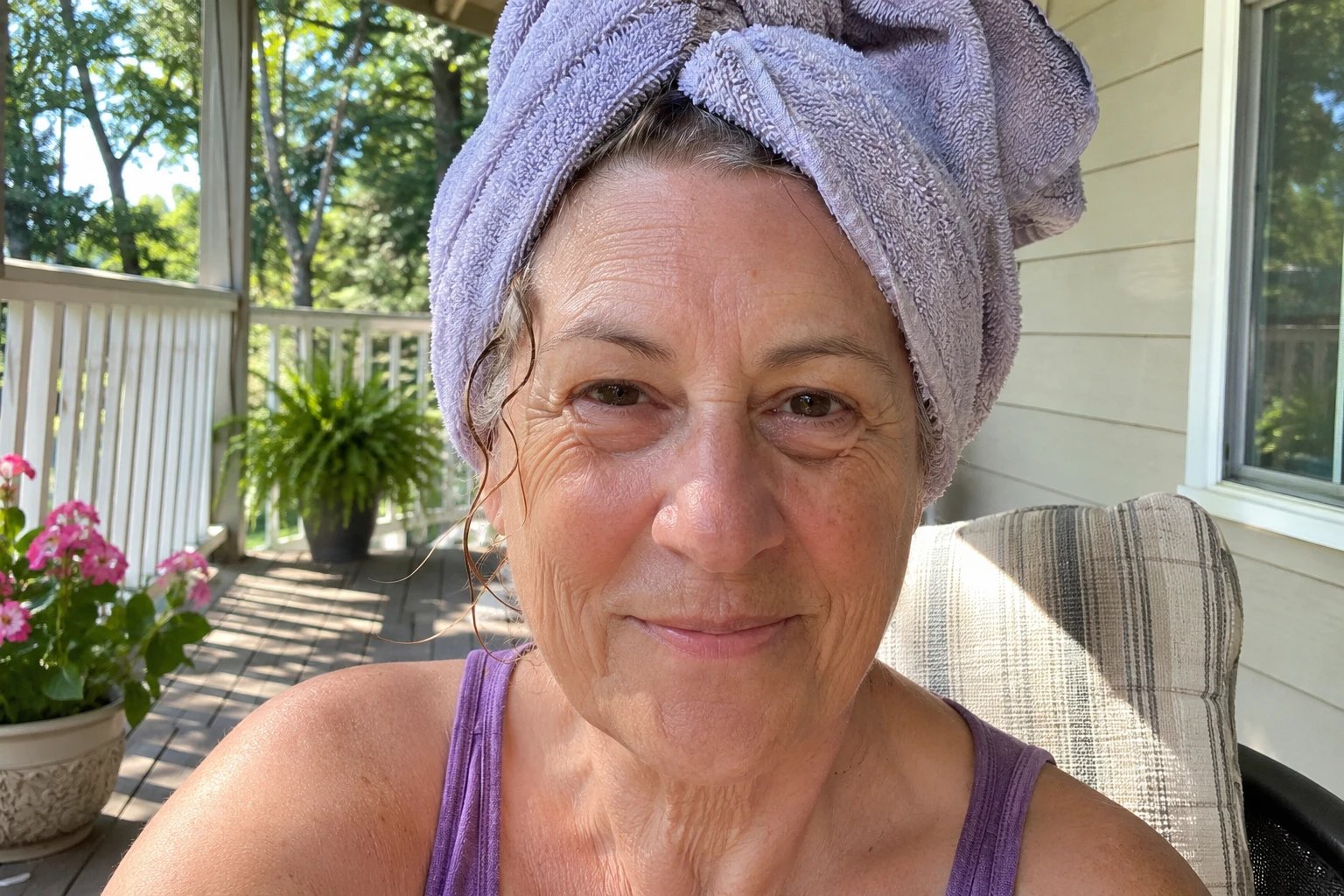
"I'll just blow-dry after the gym" sounds small. Count it up over a year and it's the biggest heat habit you have.
The AAD says to use heat tools less often, aiming for once a week or even less. That's about 52 times a year. The CDC's example for adults 65 and up is 30 minutes, five days a week. Dry your hair after every one, and here's where you land:
| Workouts a week | Blow-dries a year | Compared with the AAD's aim |
|---|---|---|
| 3 | 156 | 3 times |
| 4 | 208 | 4 times |
| 5 | 260 | 5 times |
The fix starts before the gym: styles that hold through the sweat, and cuts that look fine with their natural texture. Wrap your hair in a microfiber towel to help it dry faster. Let it air dry when you can. On the days you must use a dryer, use the lowest heat setting. Most dryers have a switch for it that you've probably never moved.
1The monthly hairline check with your hair pulled back
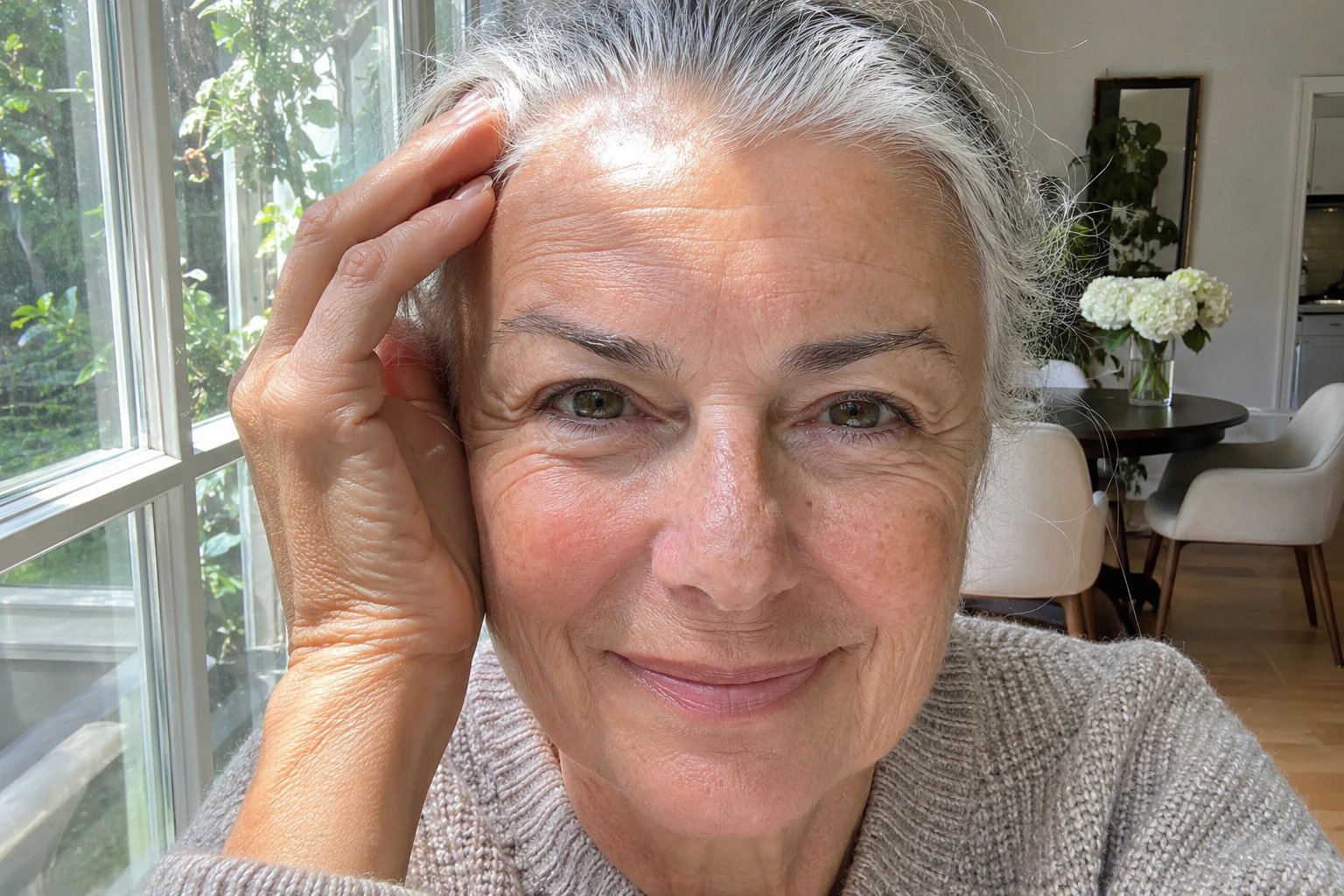
Once a month, after a workout with your hair scraped back, stand in good daylight. Look along the front and the sides of your hairline. Then look at your eyebrows. That's the ten seconds.
You're checking for frontal fibrosing alopecia (FFA), a scarring hair loss the AAD says is typically diagnosed in women about 2 to 12 years after menopause starts. Most talk about menopause hair is about thinning at the part. This shows up somewhere else: as "a thin band of balding skin that runs along the front and sides of the hairline." Between 80% and 95% of women diagnosed with it have lost some or all of their eyebrows.
Dermatologist Dr. Dray says it isn't super common, but it tends to happen around the time of menopause. She notes the hairline moves back slowly, sometimes with pinkness or roughness around the hairs. That slowness is why a regular look helps. Pulled-back workout hair, brown, grey or silver, puts your hairline in plain view.
Timing is everything. "If you catch FFA early and treat it, you may regrow some hair," the AAD says. Once the follicles scar, they can't grow hair again.
The bottom line
Choose the workout first and the hair second. A Tuesday spin class and a Thursday swim need different hair, and you'll do better rotating two or three styles than forcing one to do everything.
Then think about the last time your hair felt bad on the drive home. Was it the sweat, or something you did after: the dryer, the wet bun, the fluffing at the red light?
Tonight, put three things in your gym bag: a soft scrunchie, a wide-tooth comb and an old cotton T-shirt. Take the round brush out.
Up next
17 Work Outfits for Women Over 50 Who Stand All Day
Seventeen comfortable work outfits for women over 50 who stand all day, built from the shoes up, with the compression socks, waistbands and real pockets that get you to hour nine still looking polished.
Read the list →
Reader quiz
Did you catch the details?
5 questions from this article. Finish them all to unlock the editor's bonus tip.
According to the American Academy of Dermatology's simple test, how can you tell a hairstyle is too tight?
Questions people also ask
How should you wear your hair while working out?
Match the style to the activity. For cycling, Liv Cycling says to tie a ponytail mid-head or a low bun and thread it through the helmet webbing. For swimming, tie long hair back and wet it before the cap goes on. For yoga, a low bun or a pinned crown braid works; for barre and Pilates, a low bun. For running, spin or lifting, a French braid or braided pony stays put. Whatever you choose, the AAD says it shouldn't hurt.
Can ponytails cause hair loss?
Yes, tight ponytails worn often can cause traction alopecia, hair loss from steady pulling. The AAD lists tightly pulled ponytails, buns and updos among the causes and says a painful style is too tight. A 2017 medical review describes the loss as reversible at first and scarring later, so loosening the style early matters.
Is it bad to wash your hair every day if you work out?
Not necessarily, but dermatologists disagree on it. Dr. Shari Lipner told TODAY it's "totally fine to wash your hair every day" with gentle shampoos, while Dr. Ife J. Rodney told Prevention that daily washing can cause hair to dry out, become brittle, and break and suggests rinsing between wash days. Both fit the AAD's advice to shampoo only the scalp and condition after every wash.
Is dry shampoo bad for your hair?
No, dry shampoo itself isn't harmful, and dermatologists who spoke to TODAY said there's no direct evidence it causes hair loss. It absorbs oil without cleaning, so the AAD advises a regular wash after one or two uses. If you have dandruff, seborrheic dermatitis, eczema, psoriasis or sensitive skin, use it sparingly.
Why am I losing so much hair in the shower?
Often it's normal shedding that built up between washes. The AAD says shedding 50 to 100 hairs a day is normal, and dermatologist Dr. Corrie Alford says people who wash less often may see more come out per shower. A widening part, or heavy shedding that hasn't improved after four to six weeks, is worth a dermatologist visit.
Does hair get thinner after menopause?
Often, yes. Cleveland Clinic says about two-thirds of women have thinning hair or hair loss after menopause, often starting as a gap at the center part. The AAD says treatment for female pattern hair loss works best when it starts at the first sign.
Did any of these feel familiar?
Know someone who needs this?
 Prime Journal · Free printable
The Closet Fit and Color Checklist
- A clearer view of colors beside your face.
- Clothes that pass the sitting and walking test.
- Shoes and repairs checked before anything gets replaced.
Free printable: The Closet Fit and Color Checklist. Enter your email and it is yours.
Sources cited in this article
This article links to 39 outside sources, listed here so you can read them yourself.
- If your hairstyle feels painful, the style is too tight www.aad.org/public/diseases/hair-loss/causes/hairstyles
- Shows up most often at the temples www.women.com/1966253/hair-tie-wrist-habit-damage-scalp
- Covered band made for hair www.aad.org/public/everyday-care/hair-scalp-care/hair/habits-that-damage-hair
- Puts it plainly www.youtube.com/watch?v=QSwmr0K2SKg&t=425
- Invented the scrunchie in 1986 www.ijpr.org/npr-news/2022-09-17/the-inventor-of-the-scrunchie-dies-leaving-…
- Reddit.com www.reddit.com/comments/lygt4f
- Reddit.com www.reddit.com/comments/kuvu7w
- Braided pony for running and strength training www.hellomagazine.com/hfm/beauty-trends/510982/best-gym-hair-workout-hairsty…
- Your braid needs to sit above your shortest layer www.hairromance.com/how-to-braid-when-you-have-layers
- Crosses it under www.luxyhair.com/blogs/hair-blog/how-to-do-a-dutch-braid-hair-tutorial-for-b…
- Wet hair strands are much more fragile than dry hair strands www.nbcnews.com/select/shopping/is-it-bad-to-sleep-with-wet-hair-rcna153476
- Pressure headaches from steady squeezing on the head headacheaustralia.org.au/headachetypes/pressure-headache
- Probably best to remove for anything involving lying on your back www.makeup.com/hair/all-hair/hairstyles-to-wear-to-the-gym
- Often appears when the hair is disrupted while drying www.womanandhome.com/beauty/hair/air-drying-hair-tips
- Cut the hair's strength by 9.4% www.jkslms.or.kr/journal/view.html?doi=10.25289/ML.25.022
- To help lock in the bend www.youtube.com/watch?v=vFul5tvg1Cw&t=493
- Stick-straight hair may not be the best fit for a shag www.youtube.com/watch?v=KwhlIt-dAkY&t=853
- TikTok selling the shag as easy after 50 www.tiktok.com/@glamgirlgabi/video/7522495000270228742
- In Glam www.glam.com/1666281/how-help-curly-hair-survive-workout
- Same loose pineapple for sleeping www.aad.org/public/everyday-care/hair-scalp-care/hair/curly-hair-care
- How she does hers graziamagazine.com/articles/aveda-yoga-braids
- Placement that works www.liv-cycling.com/global/campaigns/best-hairstyles-for-biking/19001
- Some cap materials, particularly latex, stick to dry hair www.usms.org/fitness-and-training/articles-and-videos/articles/how-do-i-put-…
- U.S. Masters Swimming www.usms.org/fitness-and-training/articles-and-videos/articles/differences-i…
- Blonde and grey hair are at greater risk from chlorine www.aad.org/public/everyday-care/hair-scalp-care/hair/summer-hair-care
- We have now identified the problem - hair care does seem to be a factor - and it is one that is not easily solvable www.cbsnews.com/news/hair-deters-many-african-american-women-from-exercising
- The ideal wash frequency is once a week un-ruly.com/how-to-wash-your-box-braids
- Leaving washed hair up in a wet bun for hours www.youtube.com/watch?v=QSwmr0K2SKg&t=122
- Dry shampoo contains little particles that absorb oil, but it doesn't clean hair www.aad.org/public/everyday-care/hair-scalp-care/hair/dry-shampoo-best-results
- Dry shampoo doesn't damage your scalp or your hair www.youtube.com/watch?v=QSwmr0K2SKg&t=487
- Shedding 50 to 100 hairs a day is normal www.aad.org/public/diseases/hair-loss/insider/shedding
- Dandruff, seborrheic dermatitis, eczema, psoriasis or sensitive skin www.today.com/health/skin-beauty/should-you-use-dry-shampoo-rcna80826
- Wash it, style it, then leave it alone for days www.youtube.com/watch?v=e6JnY0vsZuI
- As we get older, our bodies produce fewer lipids and less sebum www.thezoereport.com/beauty/hair-changes-as-you-age
- 30 minutes, five days a week www.cdc.gov/physical-activity-basics/guidelines/older-adults.html
- Microfiber towel to help it dry faster www.aad.org/public/diseases/hair-loss/treatment/tips
- Typically diagnosed in women about 2 to 12 years after menopause starts www.aad.org/public/diseases/hair-loss/types/frontal-fibrosing-alopecia
- Isn't super common www.youtube.com/watch?v=tHir0Ny6dv0&t=983
- Shoulder length at around 12 inches and chin length at roughly 6 to 8 www.lorealparisusa.com/beauty-magazine/hair-style/long-hairstyles/hair-lengt…

Irina Byalik
Style Editor
Irina Byalik is a hairdresser and the owner of New Image Hair Salon in East Brunswick, New Jersey, with more than 20 years of experience. She came to the United States from Ukraine.
More from Irina Byalik