






27 Small Comforts Frequent Travelers Over 60 Never Leave Home Without
A pillowcase, a curtain clip, and a practiced gate-check transfer keep familiar essentials close when sleep or flight plans fall apart.
By Margaret Hale, Travel Editor
Updated · 17 min read
- Written by our travel editor
- Cited 6 sources
- How we review
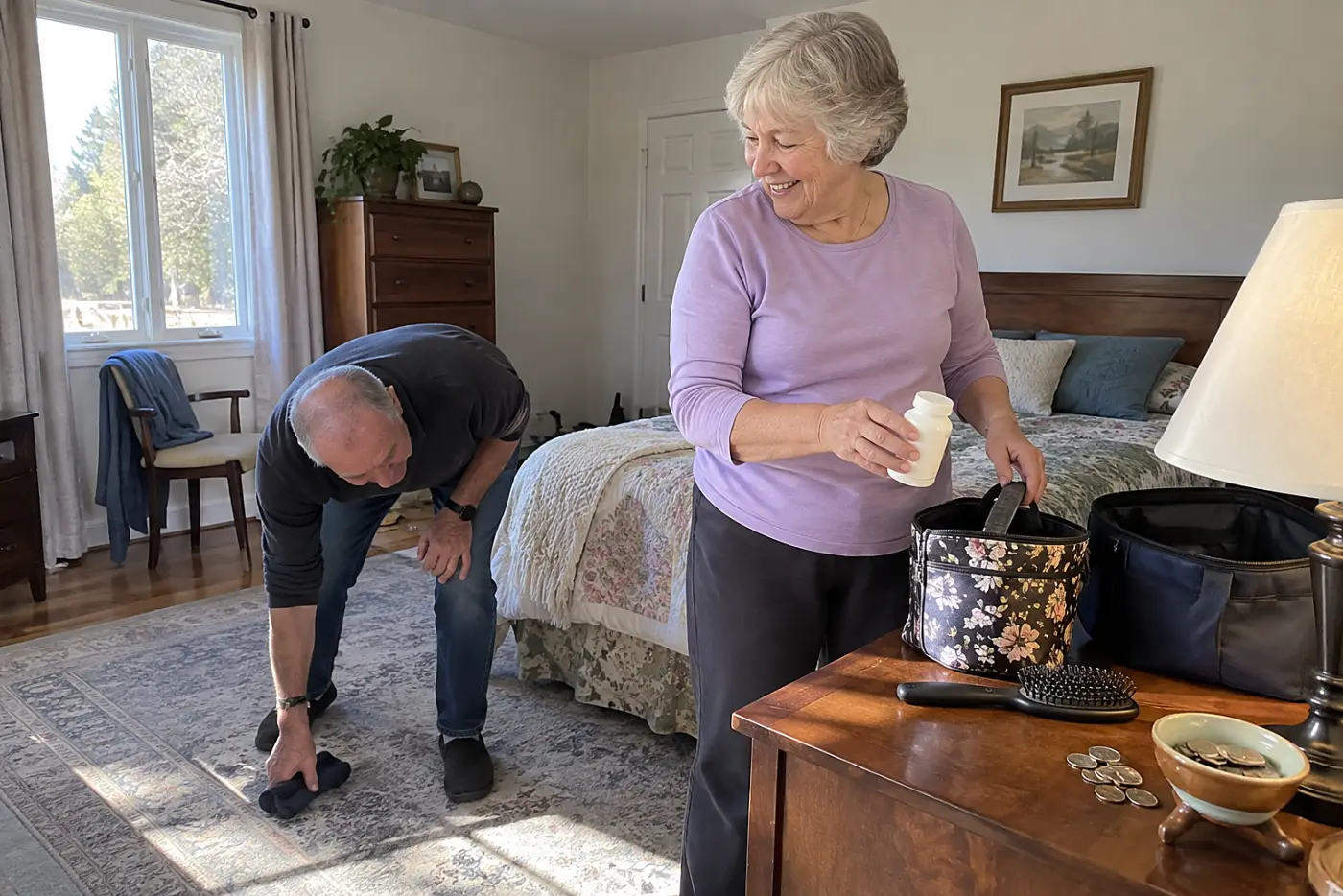
Read to the end: #1 is the gate-check transfer that keeps your medicine and battery beside you, and almost nobody rehearses it.
The hotel lamp clicks off, but light still leaks around the curtains. Your phone is charging across the room, beside a chair buried under tomorrow's clothes. You lie there counting the hours before the alarm, then remember the hallway door that slams every time someone returns.
Packing less won't close the curtain gap or bring the charger within reach. Packing more won't help if the useful things are buried when you're tired, delayed, or asked to hand over a bag at the gate.
Here are 27 small comforts, with a place for each.
27A soft pillowcase from home
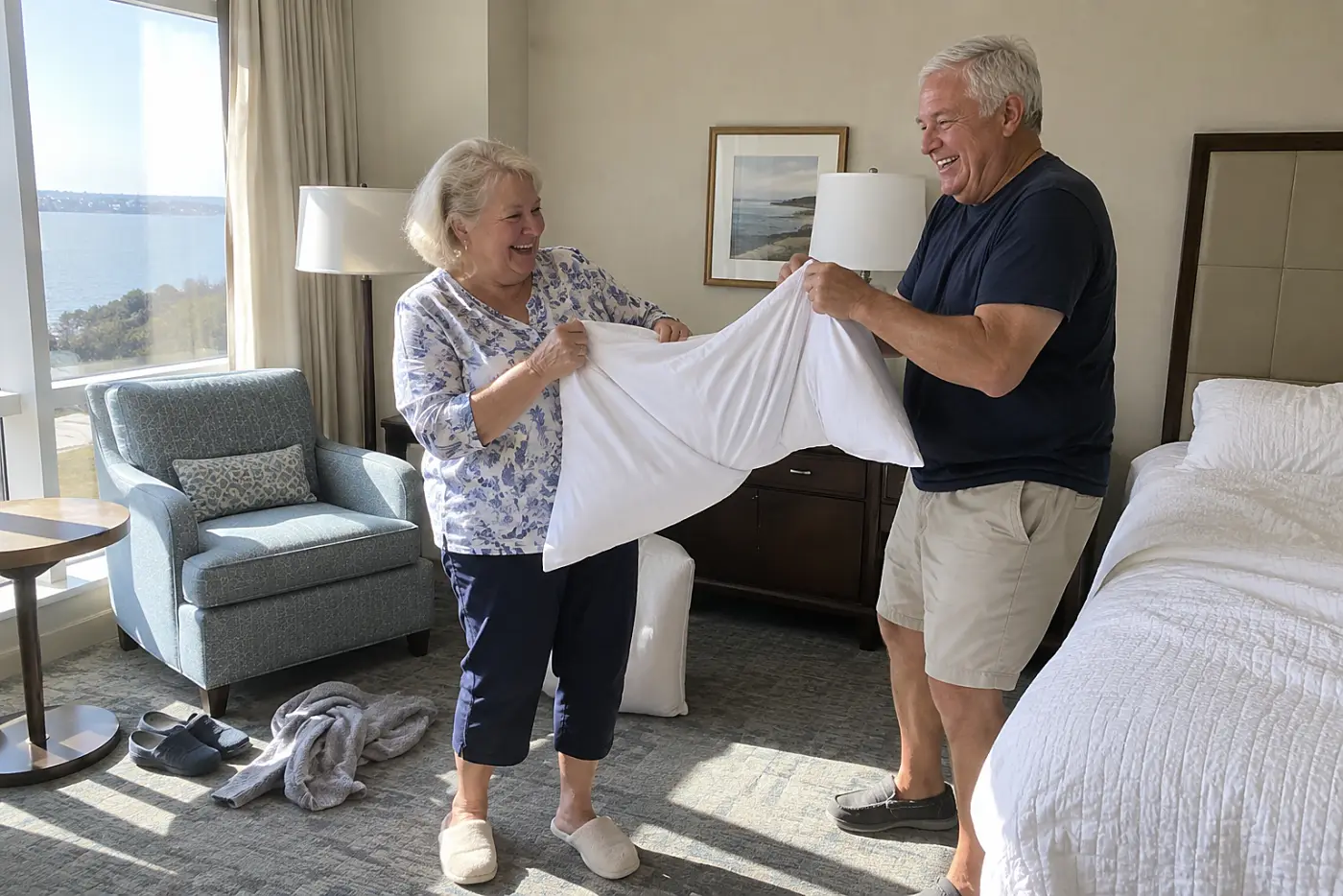
Hotel pillows have their own smell and scratch.
A pillowcase changes the surface against your face without taking up the space of a pillow. Slip it over the hotel pillow after checking the bed. When you leave, put the hotel case back and seal yours in a zip bag.
Otherwise, the used case lands against clean shirts when you pack. You also lose the comfort of knowing exactly where it went.
Put a washed pillowcase and an empty zip bag with your travel things this week. “This goes back in its bag before checkout.” Choose a case you've slept on at home; a new one defeats the point.
The pillow feels familiar, but the room still has its own light.
26Two clothespins for the hotel curtains
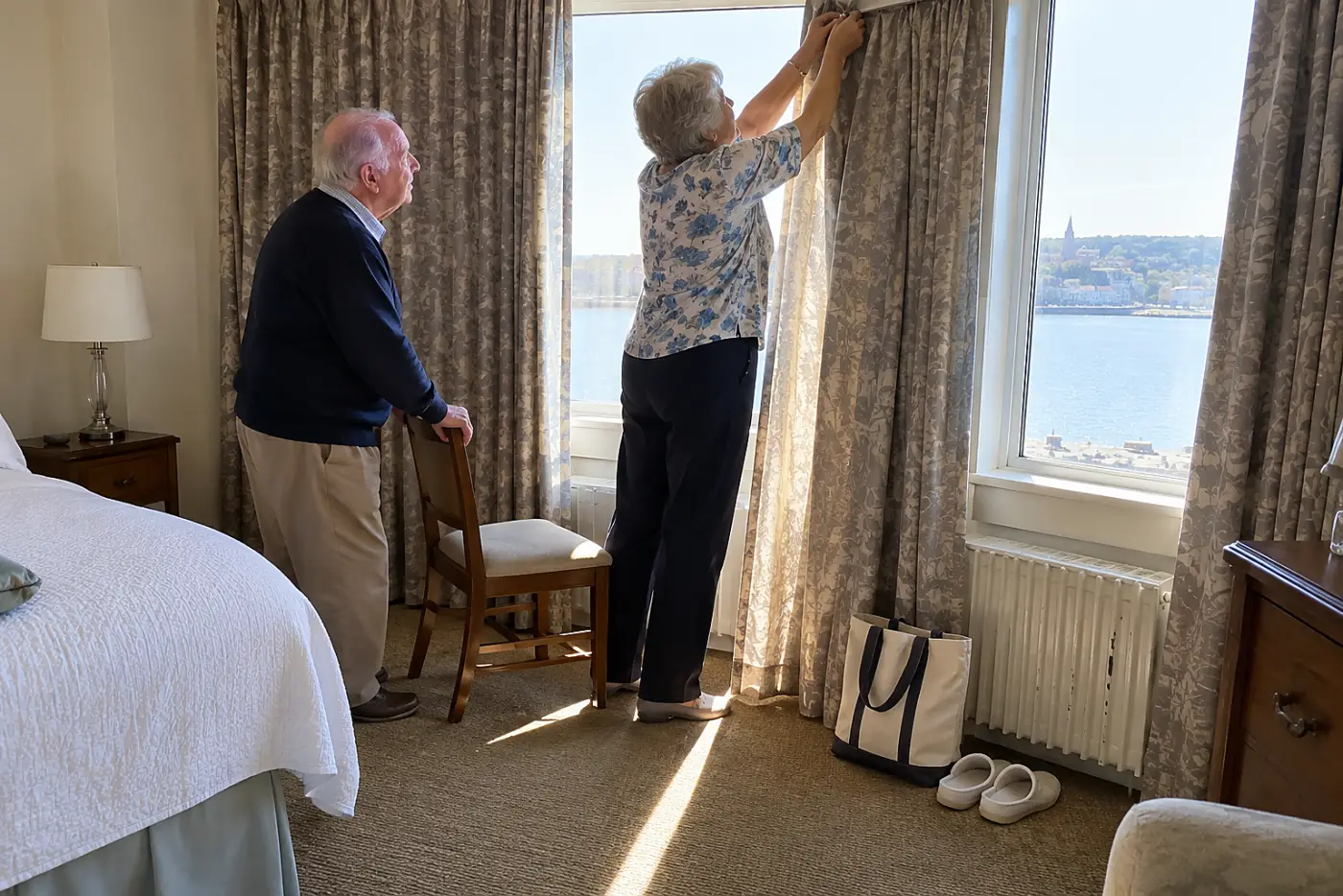
A bright curtain seam points straight at the pillow.
Curtain hooks stop short of the window's center in some rooms. Two smooth clothespins hold the inner fabric edges together without tape. Close the curtains before unpacking so you spot gaps while you still have energy to fix them.
At dawn, that strip of light has already cost you sleep. Snagging the lining with a sharp clip creates another problem for checkout.
Test two clothespins on your curtains at home this week. “I'll close that gap before I turn out the lamp.” Pack them where you'll find them at bedtime, not beneath tomorrow's clothes.
Once the room is dark, hallway noise has more room to land.
25A small fan for steady room noise
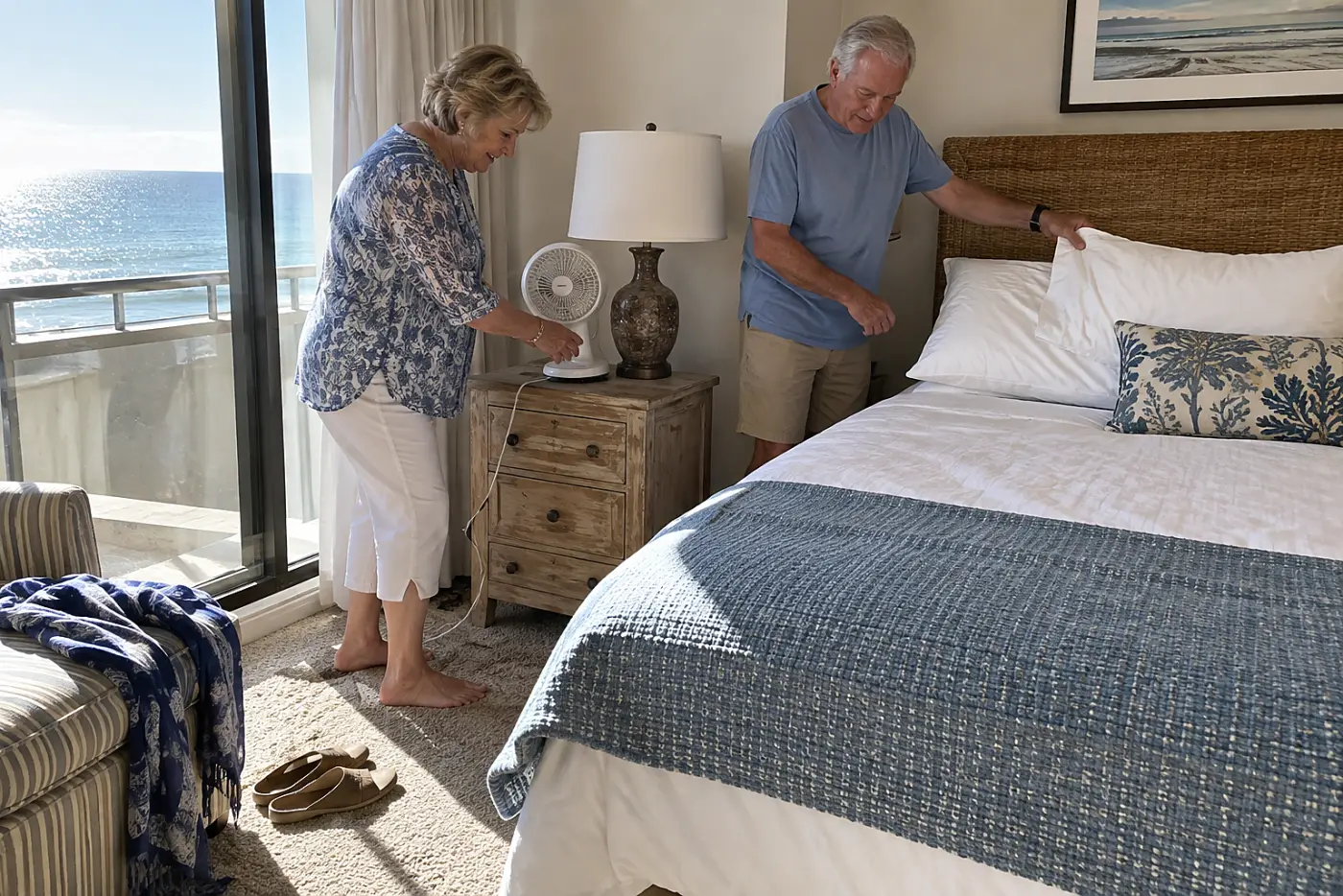
Hallway voices carry through a hotel door.
A small fan makes a steady sound without using your phone battery. Set it on a stable surface away from bedding and papers. Check the available outlet before you settle in, and read the fan's power label before taking it abroad.
A fan in checked luggage won't help during an overnight delay. Neither will one whose cord can't reach a safe spot.
Try the fan beside your bed this week. “I'll set this up before I forget where the outlet is.” Give it a place in your carry-on if you plan to use it during a delay.
The sound is steadier; the room's temperature remains another question.
24A lightweight layer within arm's reach
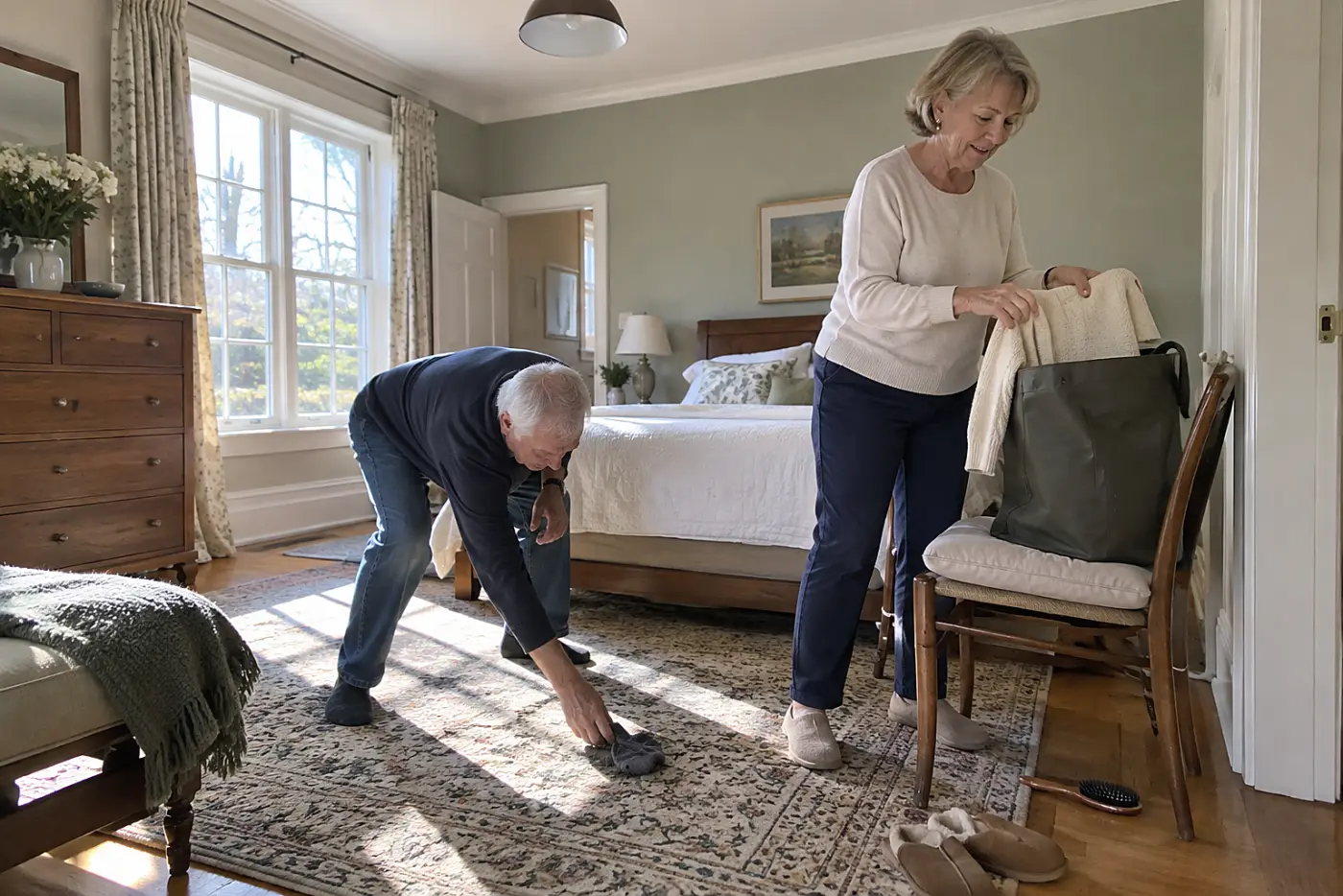
The cabin turns cold after your bag goes overhead.
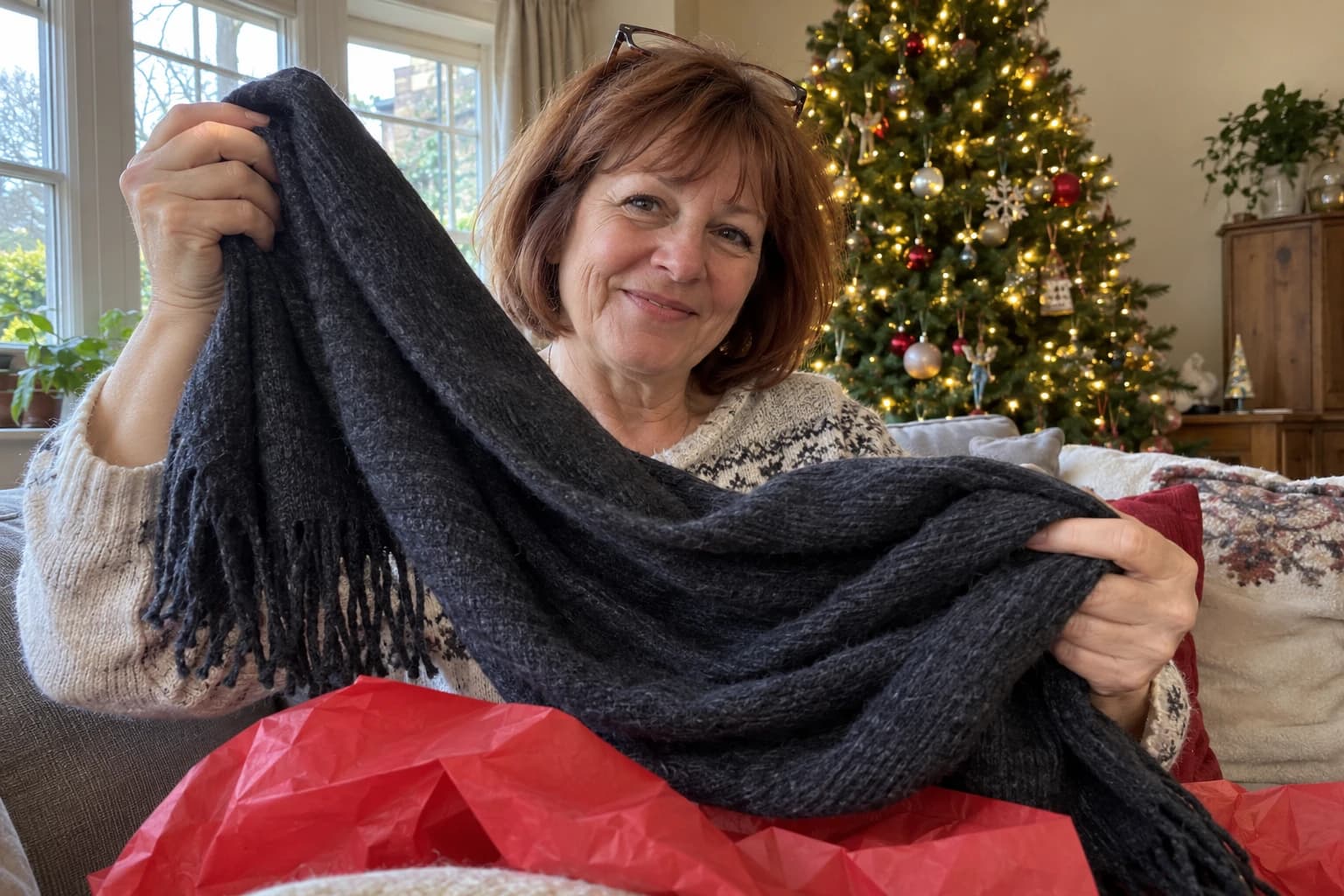
A cardigan or light wrap works when it sits near the top of your personal bag. Fold it into a fabric pouch so it doesn't drag across the tray table. Wear it on the way through a drafty station, then put it back where you can reach it seated.
A warm layer in checked luggage does nothing during the flight. Buying another at an airport is an expensive answer to a pocket problem.
Fold a layer into your personal bag this week. “I'm keeping this under the seat.” Try lifting the bag afterward; if the layer makes it awkward, choose a thinner one.
Cold air isn't the only thing you'll feel on the plane.
See more: 23 Best Places to Winter for Retirees on a Budget →
23Lip balm in an easy pocket
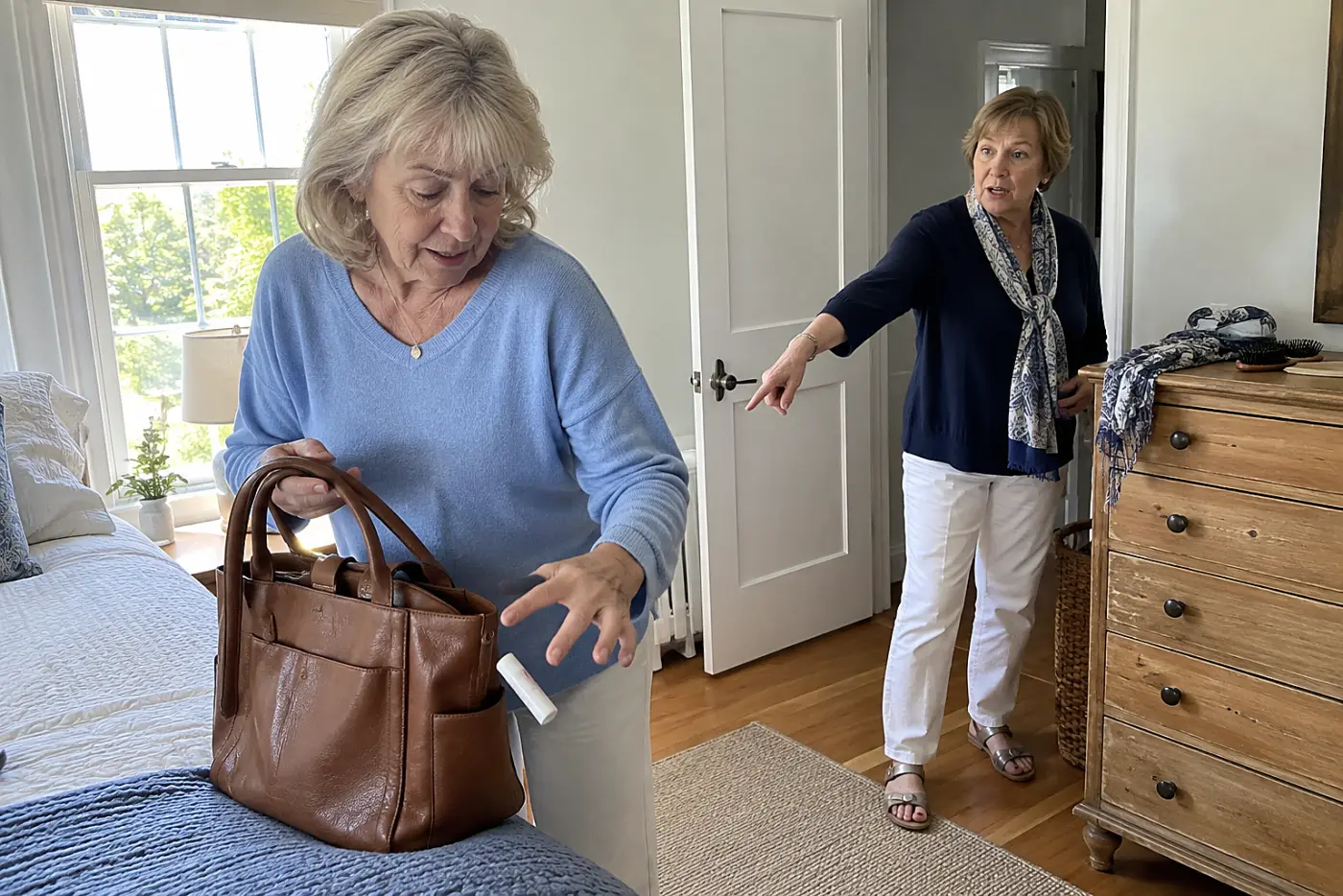
Dry lips make every sip feel sharp.
Keep lip balm in a pocket you can find without opening the whole bag. Check the cap before it goes beside papers or clothing, especially after it has sat in a hot car. If your balm is a liquid or gel, check TSA's liquids rule before packing it.
Digging for balm after the seatbelt sign comes on defeats its purpose. A loose cap also leaves a greasy mark on the boarding pass you need next.
Put a fresh tube in your usual travel pocket this week. “I want this where I can reach it seated.” Find it with your eyes closed before the bag goes by the door.
Your lips are covered; your hands have touched every rail and tray.
22A small bottle of hand moisturizer
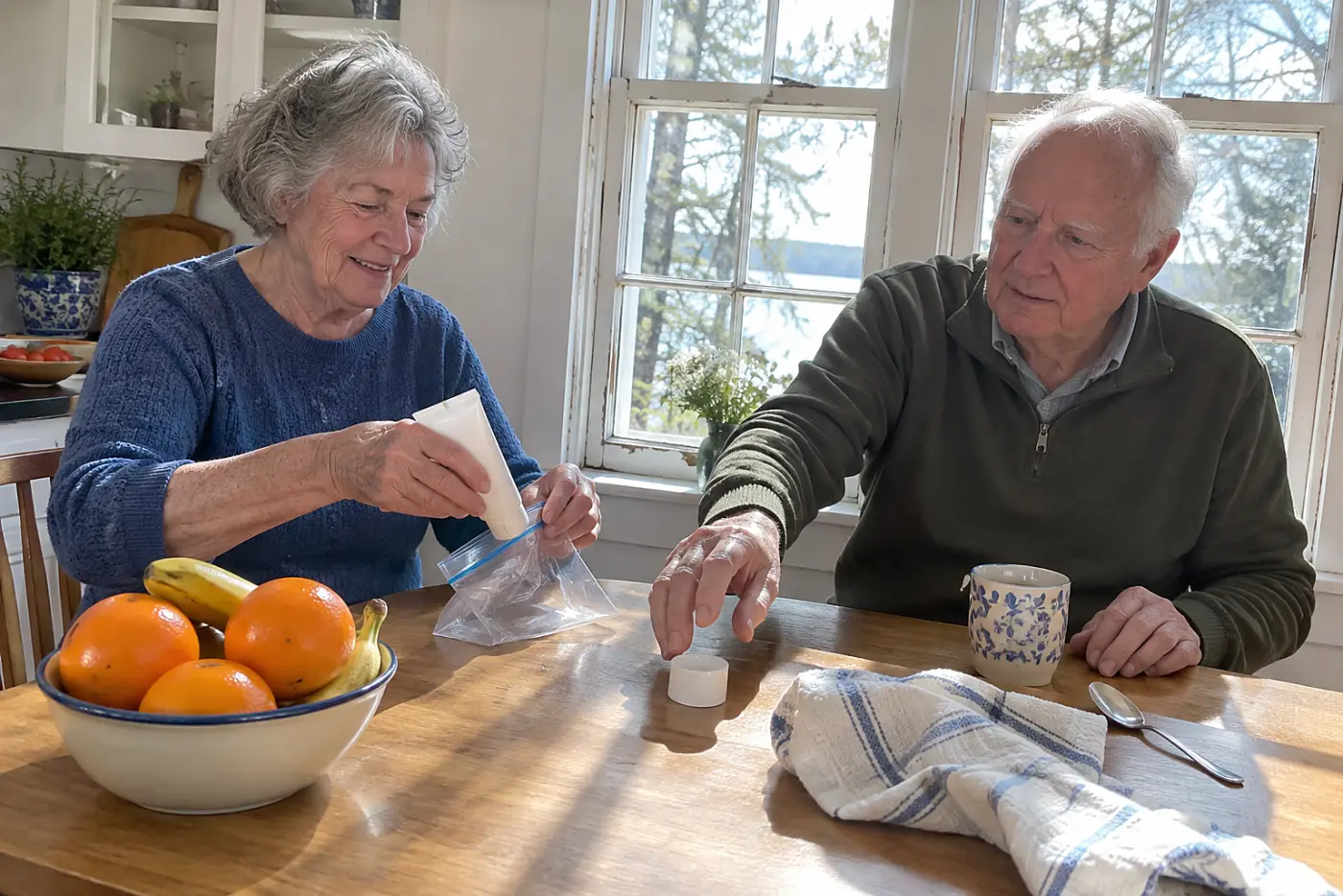
Repeated handwashing leaves your knuckles tight.
A tightly capped travel bottle lets you moisturize after washing instead of waiting for the hotel. Choose a lid you can open without a struggle. Pack the bottle in a sealable bag, and check TSA's current liquids rule before carrying it through a checkpoint.
A leaking bottle on your papers creates more work than dry hands. A bottle buried under clothes won't help at the airport sink.
Fill your travel container this week and test its cap upside down over a sink. “This stays with the things I use after washing.” Put it back in its bag after each use, even when you're rushing.
Once your hands feel better, notice what you've been gripping all day.
21A padded sleeve for reading glasses
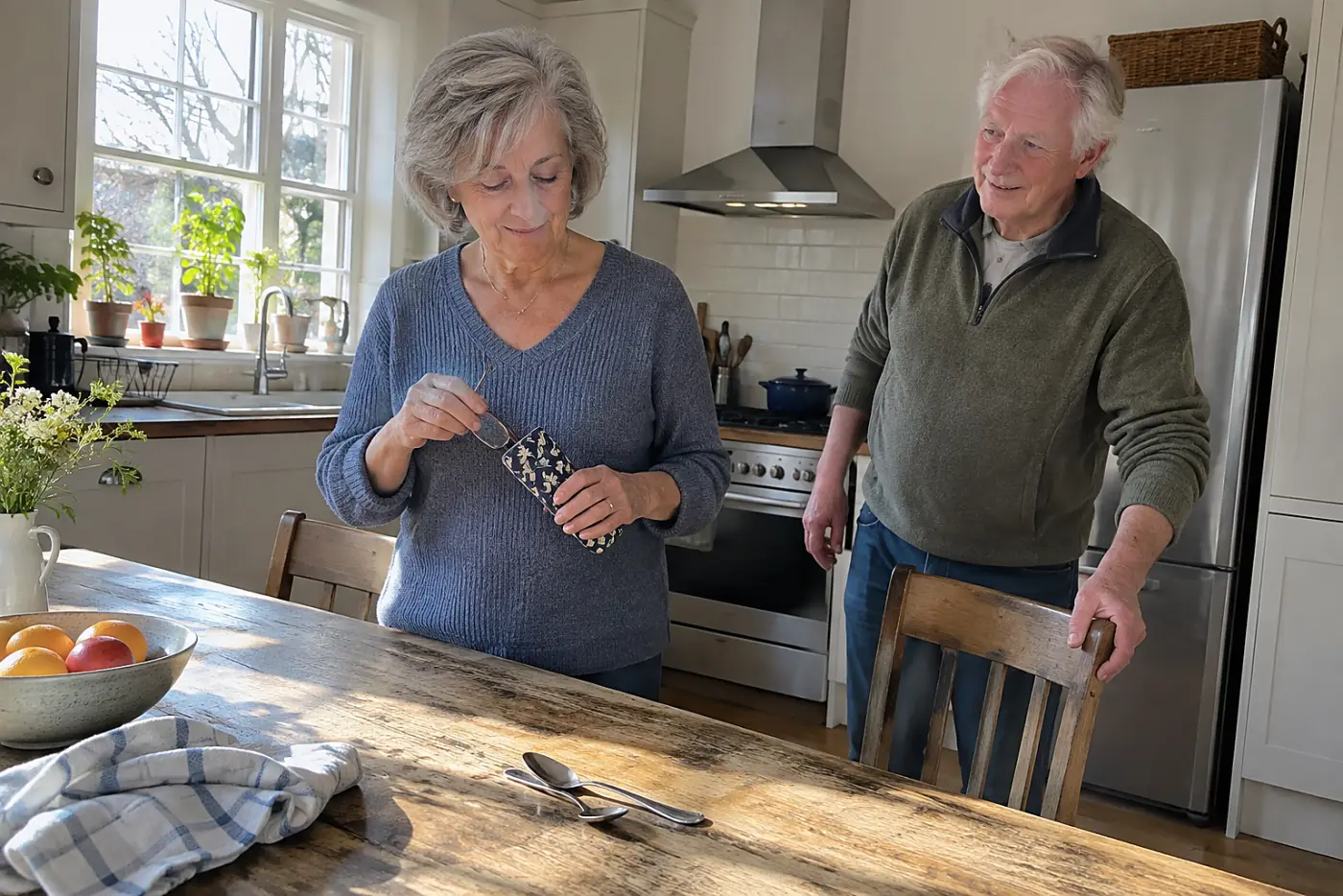
Loose glasses meet keys and zippers.
A padded sleeve gives your reading glasses one place in a crowded handbag. Fold the arms, slide the glasses inside, and return the sleeve to the same pocket each time. Make sure you can pull it out without emptying everything onto a counter.
A scratched lens follows you into menus, timetables, and check-in screens. Hunting for a missing pair during a connection costs time you need for walking.
Choose a sleeve and assign its pocket this week. “The glasses go back here every time.” Practice finding them while the bag is zipped and resting under a chair.
Then check the screen you'll use to find your way.
20A charging cable long enough for bed
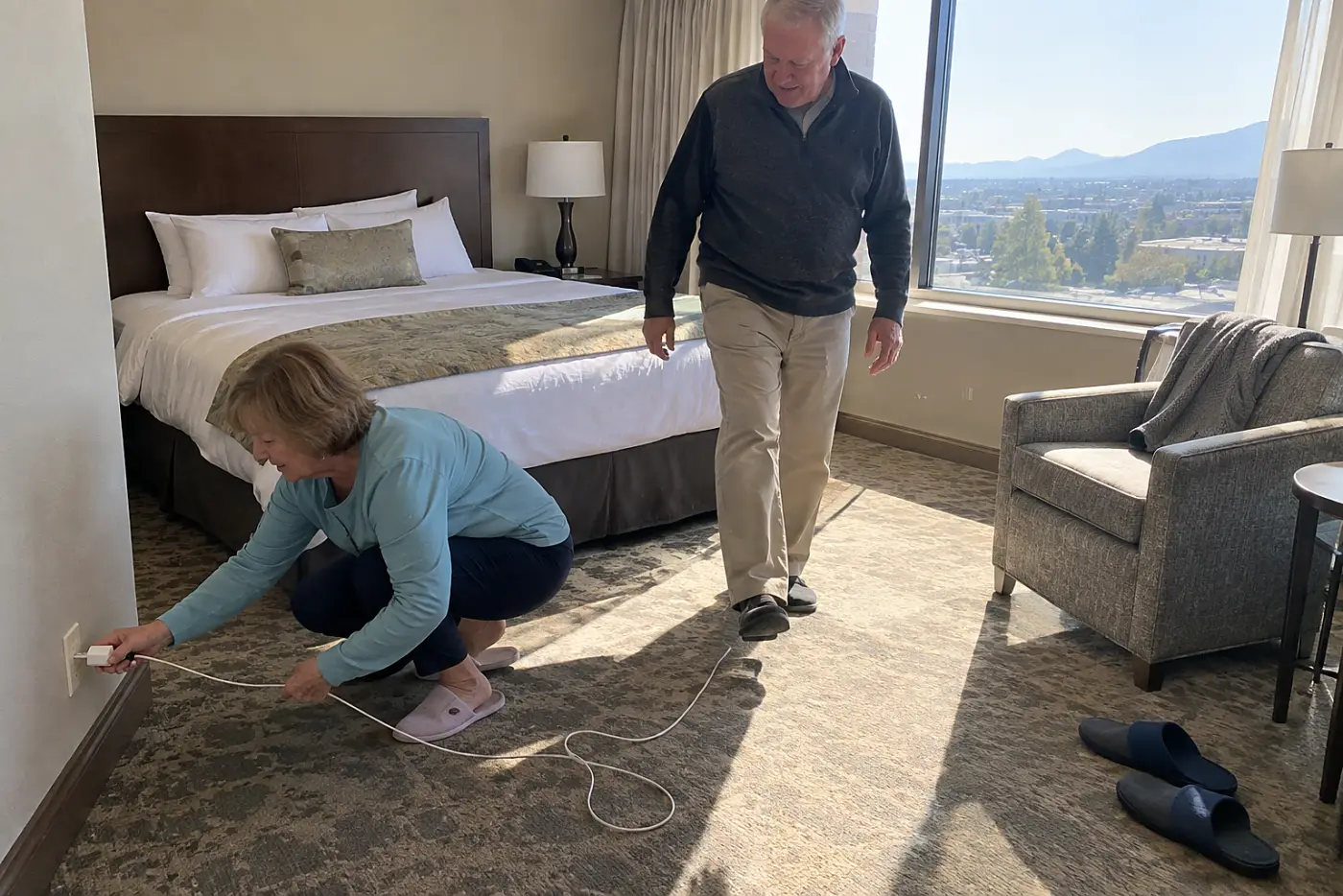
The free outlet sits behind the nightstand.
A cable about 6 to 10 feet long lets the phone charge somewhere visible and reachable. Test it with your own charger, then inspect both connectors and the insulation for wear. Coil it loosely so the plug doesn't bend sharply inside your bag.
A phone charging across the room leaves the alarm and directions out of reach when you wake. The wrong connector is no better than no cable.
Put a working cable in your travel pouch this week. “I'll charge the phone beside the bed, away from the edge.” Before buying a replacement, check your phone's connector and the charger's port against the cable package.
The cable reaches the bed, unless the outlet is already full.
19A compact outlet extender without a cord
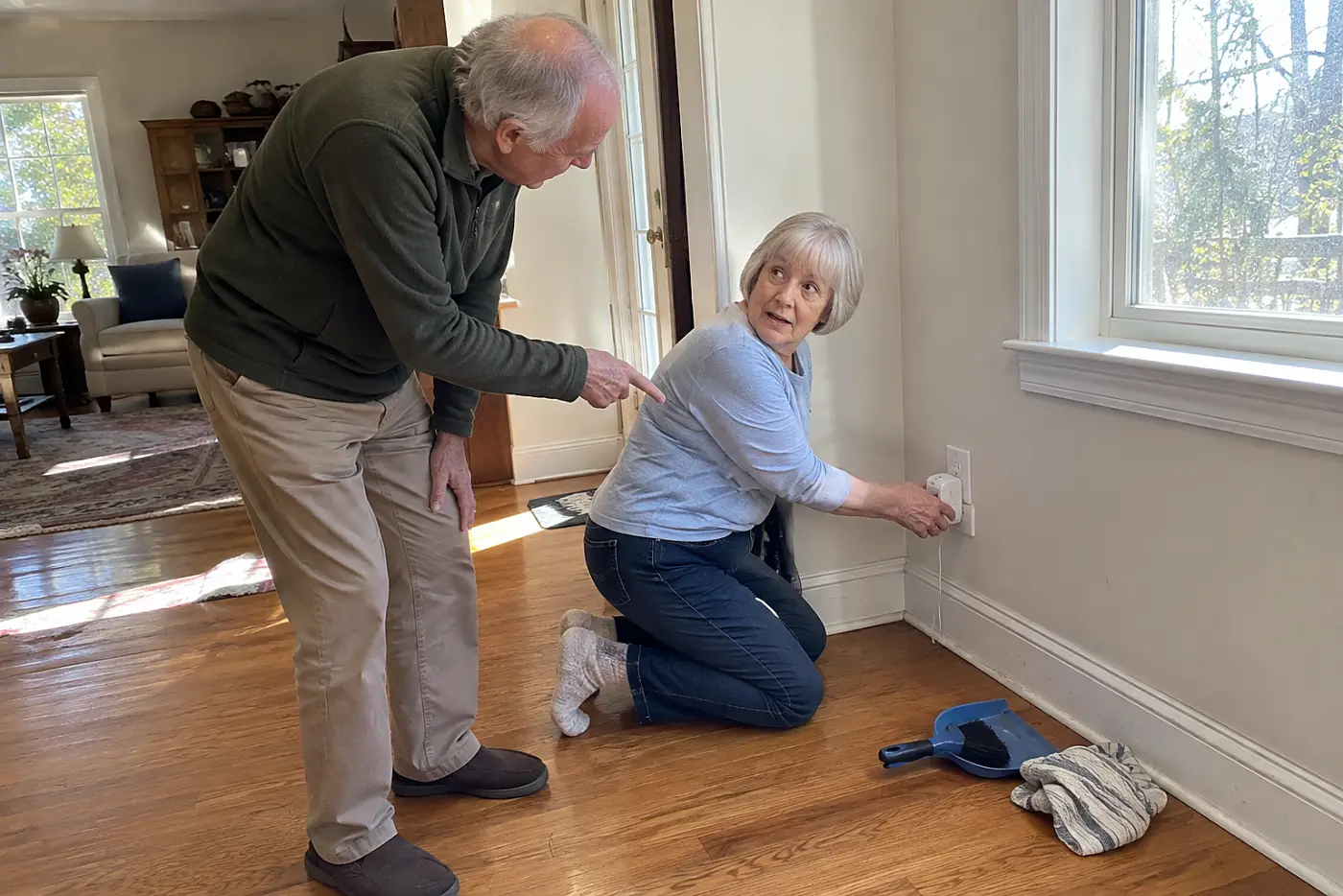
One outlet serves the lamp and your charger.
A compact extender gives your plugs room without putting a cord across the floor. Read the electrical rating printed on the extender and on each device. Outside the United States, check plug shape and voltage separately; a plug adapter changes the shape, not the voltage.
An overloaded outlet isn't a comfort. Waking to an uncharged phone isn't one either.
Test the extender with your actual plugs this week. “I'll check the outlet before I unpack everything.” If a bulky charger blocks another socket, find that out at home rather than behind a hotel bed.
An available socket still won't help when you're away from the room.
18A charged power bank in your day bag
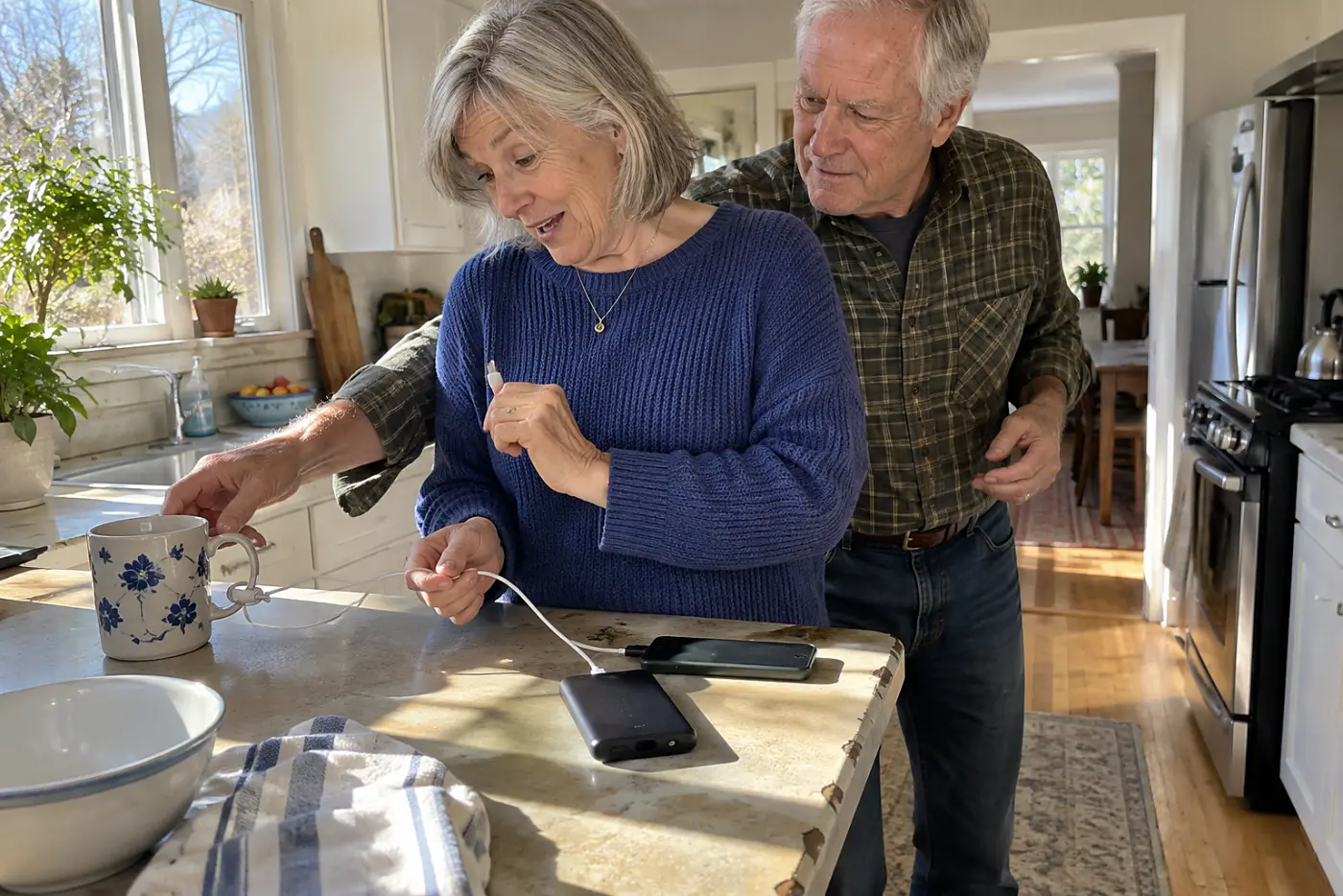
The gate has no free outlet.
A charged power bank keeps your phone usable while you wait for a boarding update or a ride. Pack a cable that fits your phone. FAA PackSafe says power banks belong in carry-on baggage, not checked baggage; check your airline's battery limits before flying.
A battery in checked luggage can't help with a dead boarding pass screen. It also creates a problem if that bag is checked at the gate.
Charge and test the bank this week. “The battery and its cable stay where I can reach them.” Make the test real: plug in your phone and confirm it starts charging.
The phone is awake, though its signal still isn't guaranteed.
17A paper card with your hotel address
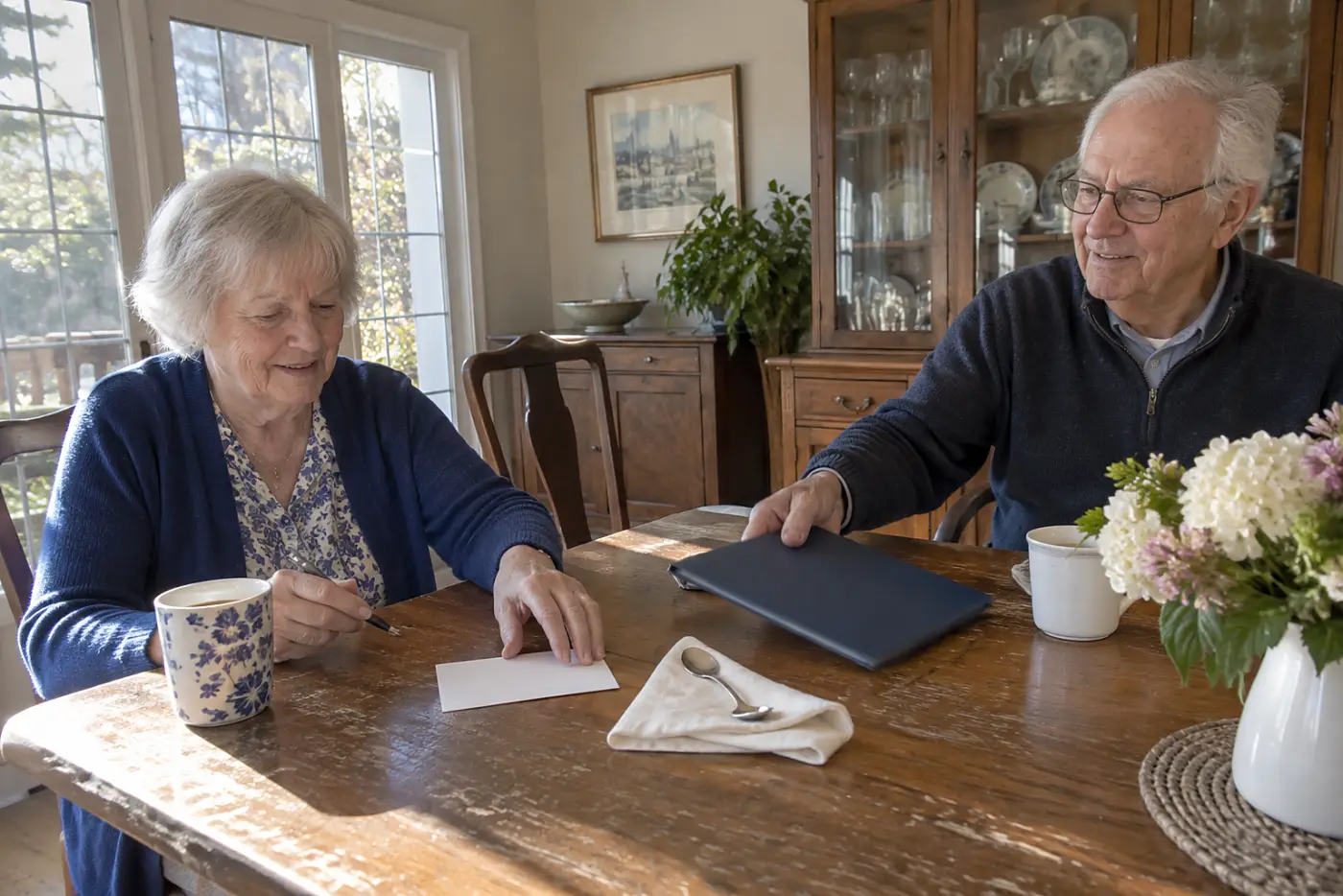
Maps fail at the curb.
Write the hotel's street address, phone number, and reservation name on a small card. Keep it apart from your phone, inside a wallet pocket. For an international trip, copy the address in the local language from your booking confirmation.
Without the card, you're searching a slow screen while traffic moves around you. A hotel name alone doesn't identify the entrance your driver needs.
Write the card for your next booking this week. “Here's the address; I'd like to go to this entrance.” Compare it with the confirmation after writing it, since one wrong street number undoes the whole idea.
The card gets you there; arrival brings another wait.
16A snack you actually want to eat
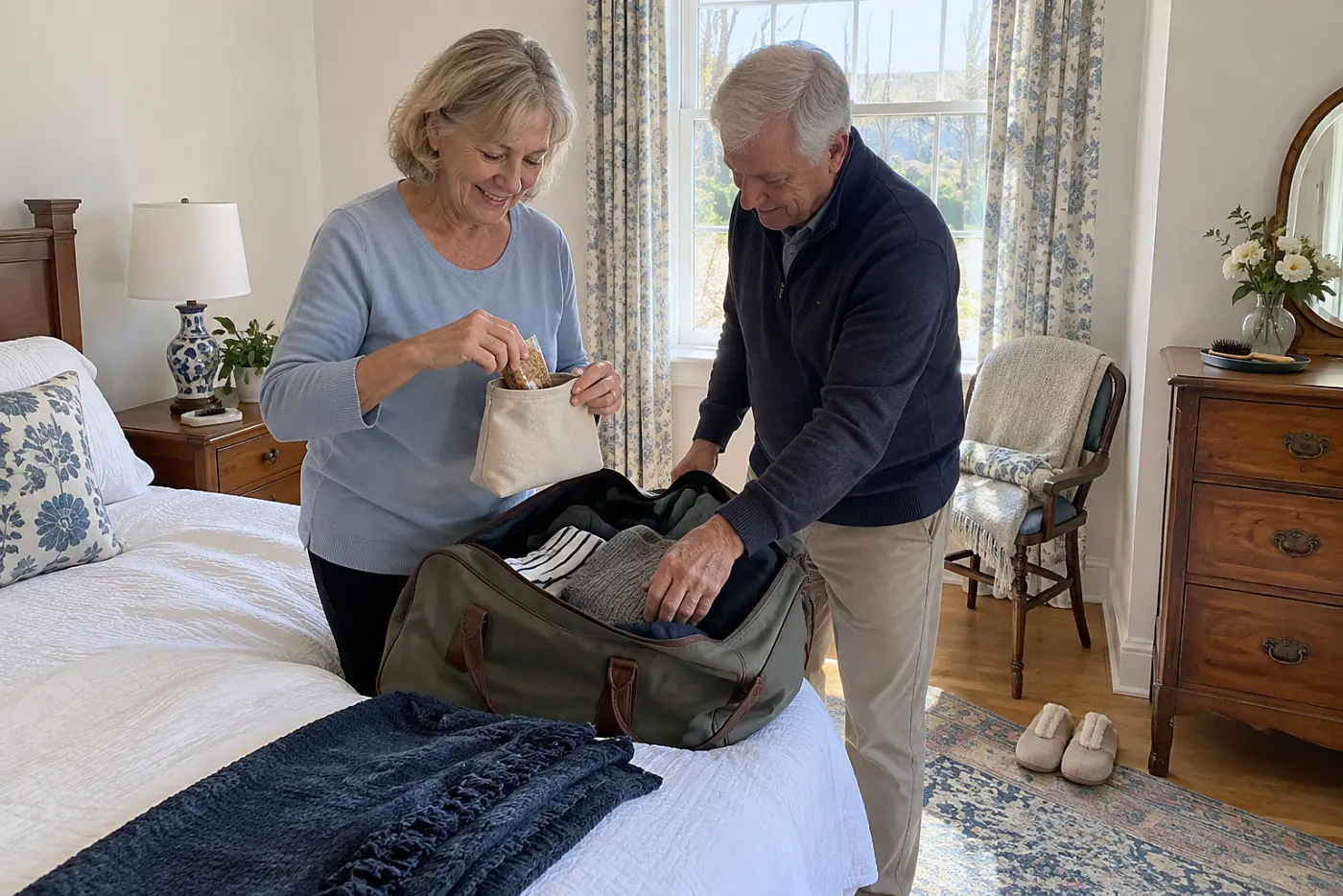
The airport shop closes before you arrive.
A shelf-stable snack you already like gives you an option while you look for a meal. Choose packaging you can open without scissors, and keep it near the top of your personal bag. Check destination rules before carrying food across a border; U.S. Customs and Border Protection requires travelers to declare agricultural items entering the country.
Hunger makes a delayed ride or long line feel worse. A snack won't replace dinner, but it gives you time to find one.
Buy a snack for your next travel day this week. “I'll eat this before I start looking for dinner.” Try opening the package at home with the hand you'll use to hold it on a plane.
Food buys time, but you'll still need something to drink.
15An empty water bottle past security
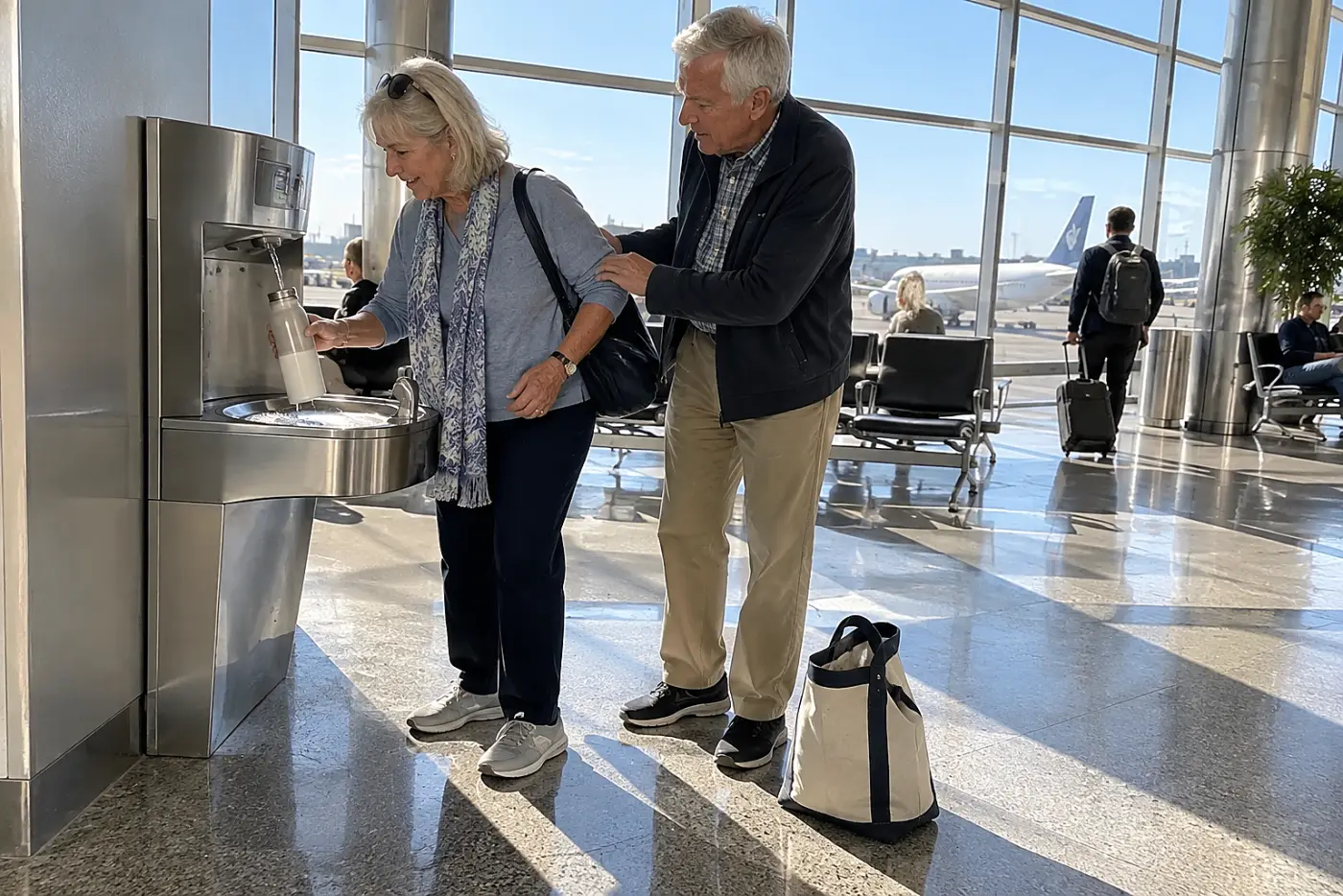
The drink cart follows its own schedule.
Take an empty bottle through security, then fill it before boarding where water is available. A leakproof cap matters more than a clever shape. Give the filled bottle a spot where it won't roll beneath the seat.
A leak inside your bag creates more work than thirst. An empty bottle left at the gate is no comfort once everyone is seated.
Wash your bottle and test its lid upside down over a sink this week. “I'll fill this after security, before I sit down.” Check for drips around the threads, not just beneath the spout.
Now the bottle needs to stay within reach without crowding everything else.
14A small pouch for seat essentials
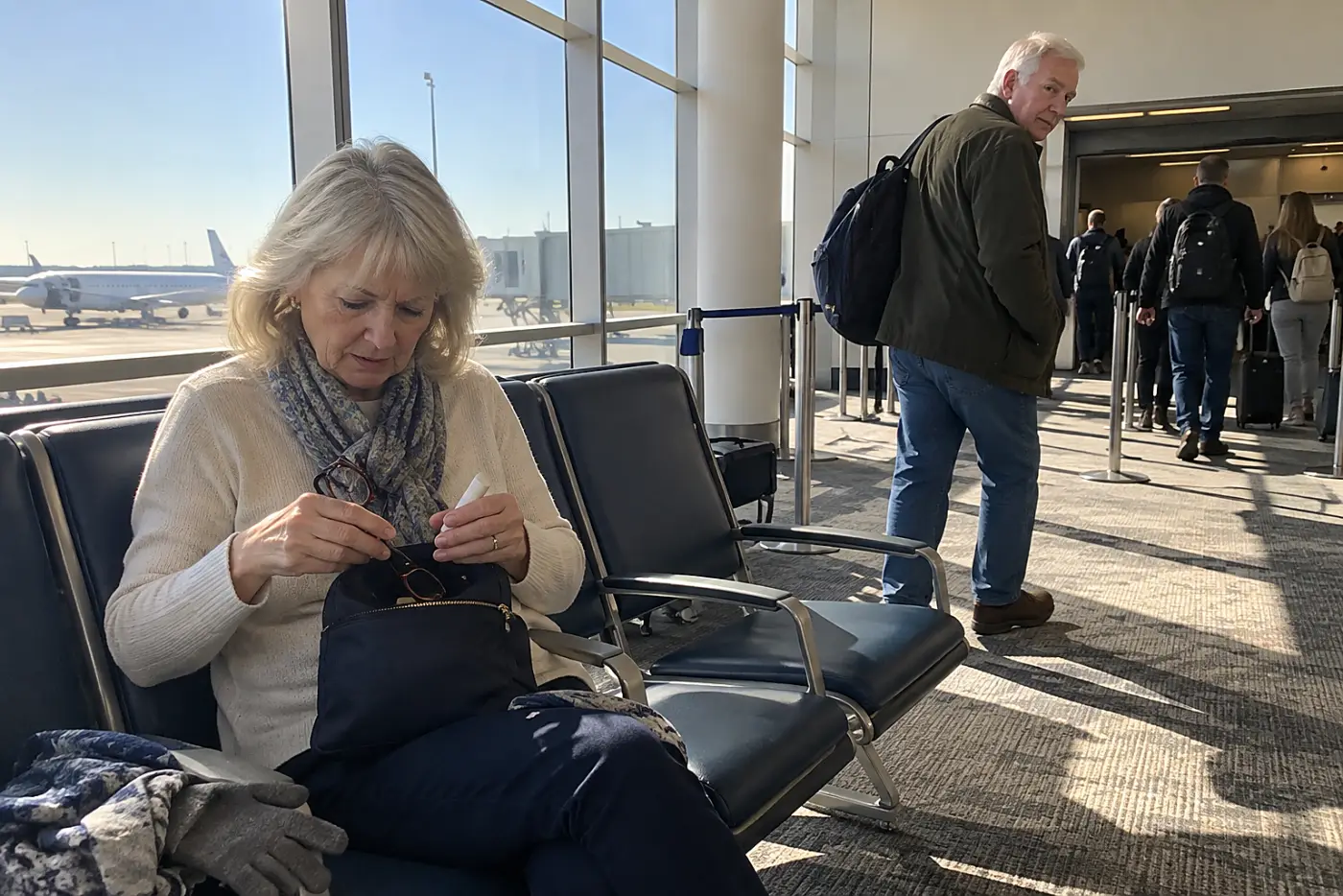
The overhead bin closes around the thing you need.
A small pouch holds the glasses, balm, and cable you'll use during the flight. Move those things into it before boarding, while you have room to see what you're doing. Choose a closure you can feel without looking, then put the pouch back in your under-seat bag.
Opening a full handbag in a narrow seat sends small objects between the cushions. Leaving the pouch on the tray table crowds your meal.
Set up the pouch at home this week. “I'll take out what I need before boarding.” Sit in a chair with the larger bag at your feet and check that you can return everything one-handed.
The seat is arranged; your feet still face a long walk.
See more: 25 Things That Happen When You Take the Train Instead of Flying →
13Slip-on shoes with firm soles
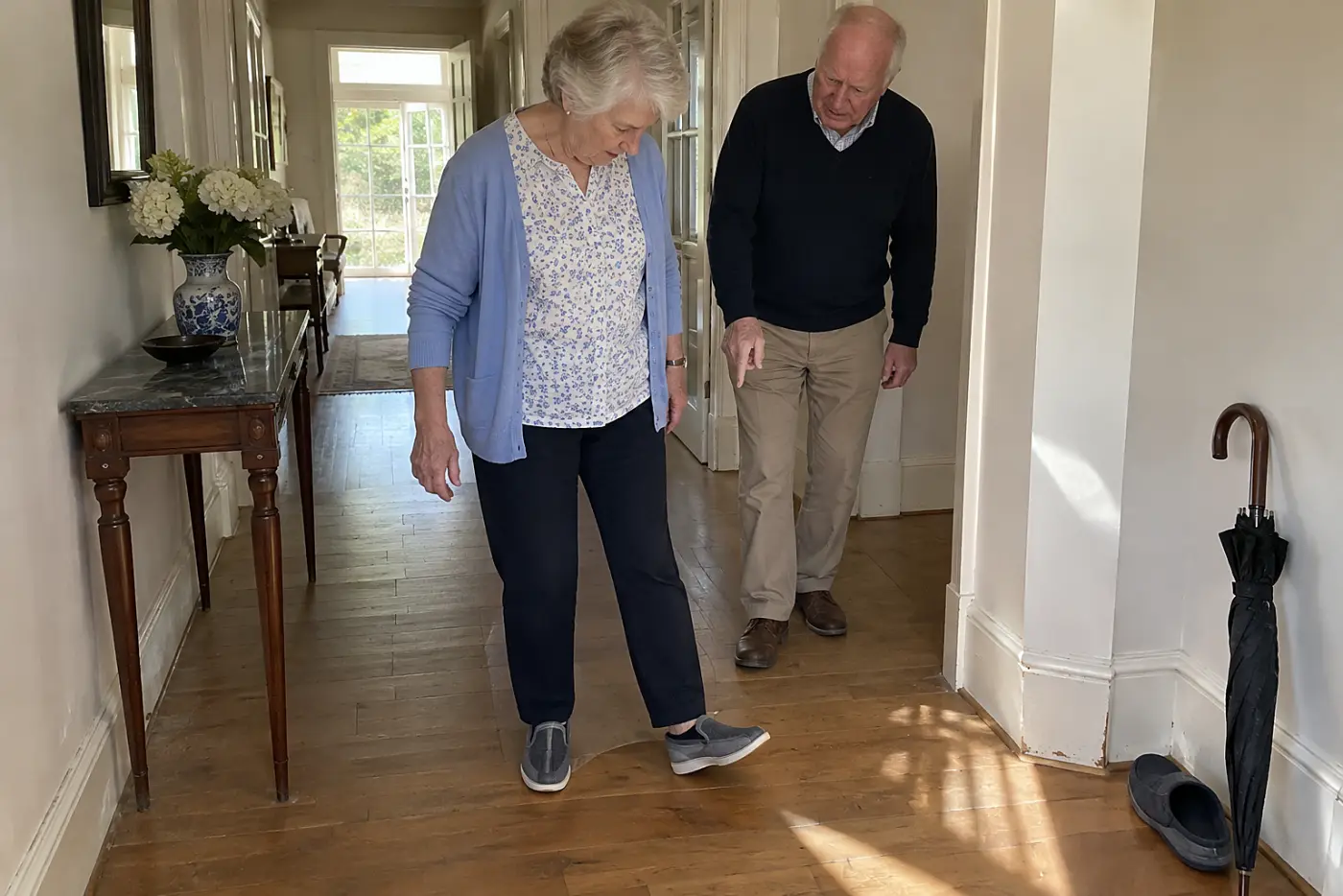
Pinching shoes get louder with every corridor.
Choose shoes you've worn through an ordinary long day, rather than saving a new pair for travel. Slip-on shoes save a struggle at the seat; firm soles help on slick floors and uneven sidewalks. Walk quickly and check whether either heel slips.
A painful pair turns a short connection into a hard one. Check TSA's screening guidance before flying rather than counting on a particular shoe rule at the checkpoint.
Wear the shoes on an errand this week. “If they hurt now, they aren't coming.” Include stairs or a stretch of sidewalk, not just a lap around the bedroom.
Shoes help you move; standing still has its own discomfort.
12A folded tote for unexpected extras
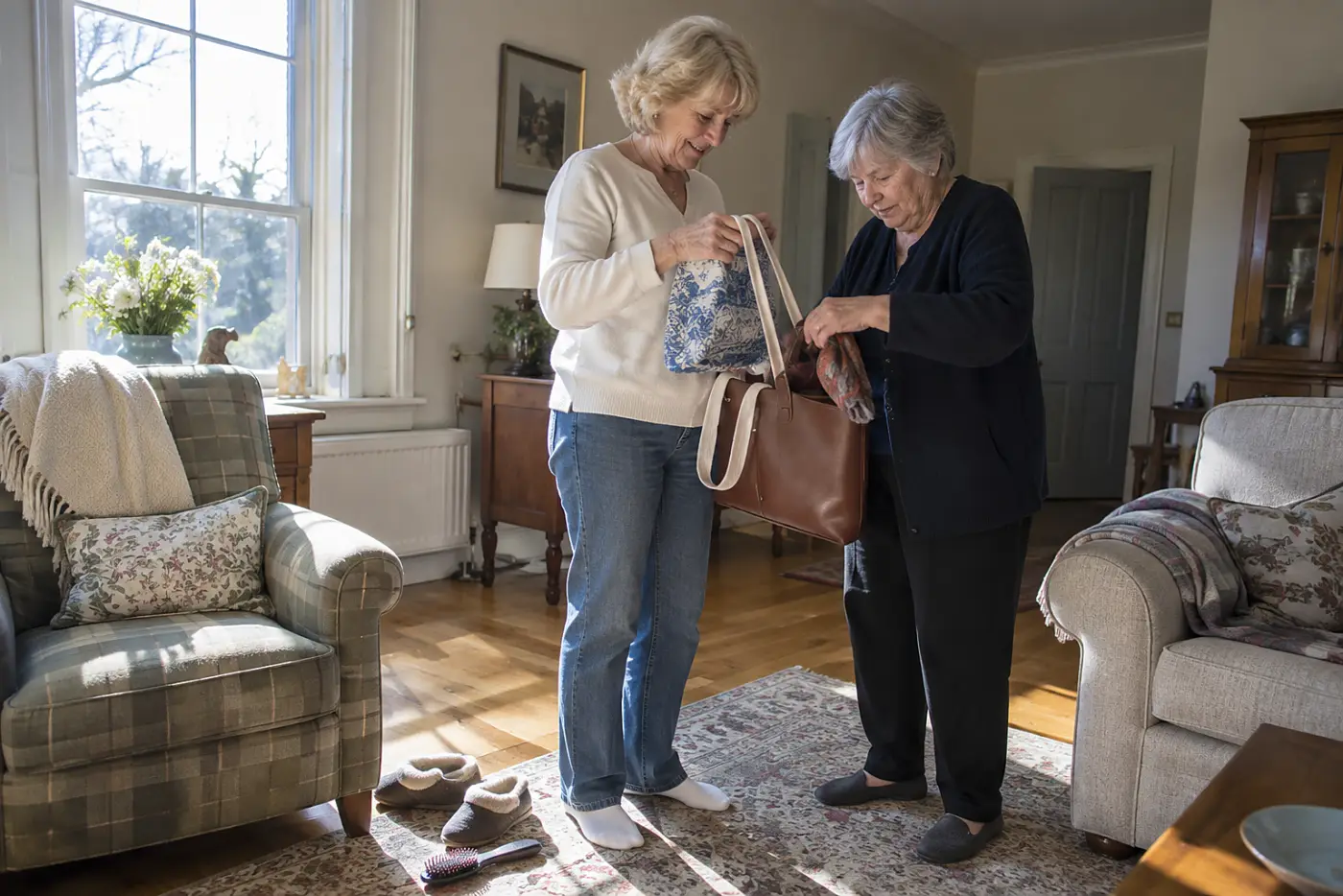
A coat and a coffee take both hands.
A foldable tote gathers the loose things travel hands you: a layer, a book, or groceries after arrival. Keep it folded inside your regular bag until you need it. At the airport, check your airline's personal-item rules; a tote doesn't create another free baggage allowance.
Without it, small belongings spread across chairs and counters. A tote that won't close is a poor choice for a crowded station.
Fold one into your bag this week. “I'll gather these before I leave the table.” Put a coat inside at home and see whether the handles still sit comfortably on your shoulder.
The loose things have a home; the document you'll show repeatedly needs one too.
11A bright sleeve for your passport
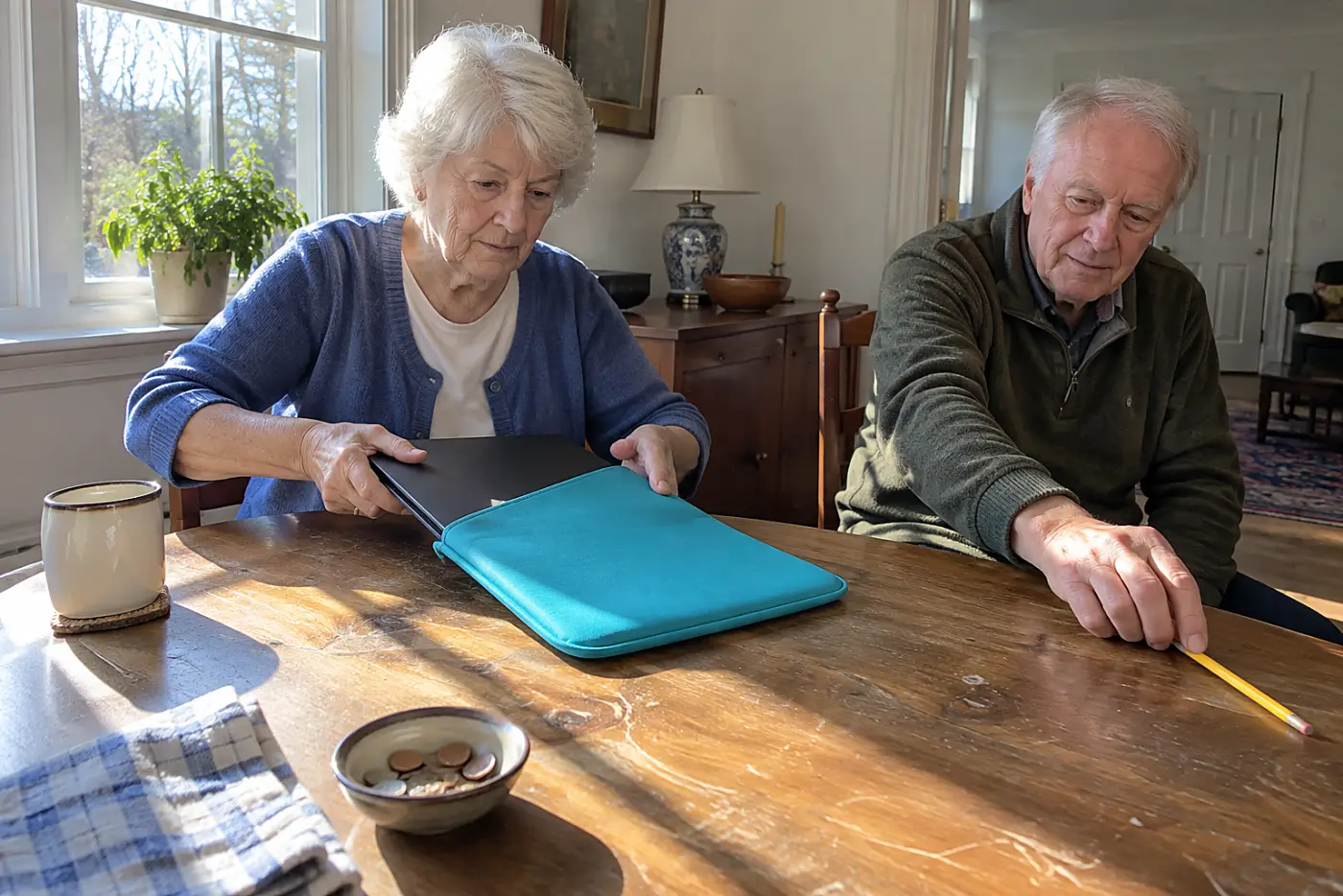
A dark passport disappears in a dark bag.
A bright sleeve makes the passport easier to spot without adding another wallet to open. Choose one that slides off easily when an official needs the document. Return the sleeved passport to its assigned pocket after every inspection.
A missing passport is far worse than a missing sleeve. If yours is lost or stolen, U.S. State Department passport guidance gives you the replacement steps.
Choose the sleeve and pocket this week. “It's going straight back into this pocket.” Test that routine at home by taking the passport out, removing the sleeve, and putting both back.
The document is easy to find; your booking details deserve the same treatment.
10A printed page of reservation details
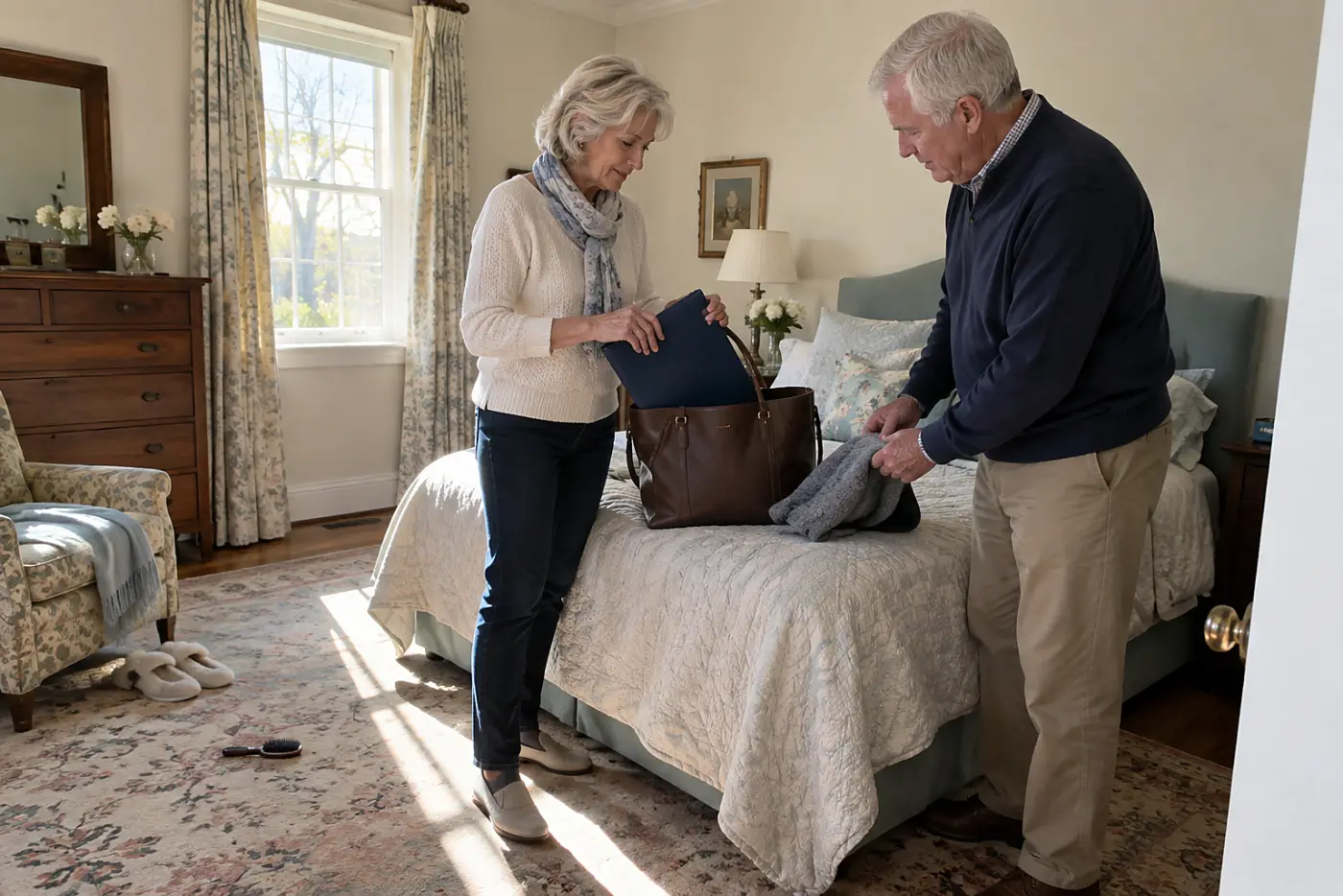
Your confirmation hides beneath newer emails.
Print one page with booking numbers, lodging address, and arrival instructions. Keep it apart from the phone that holds your tickets. Update the page after a change, and leave card numbers and passwords off it.
A dead phone turns a simple check-in into a search on borrowed Wi-Fi.
Make the page for your next trip this week. “I have the confirmation number here.” Find that number without unlocking your phone.
The page tells you where to go; getting around the room takes another tool.
9A tiny flashlight beside your bed
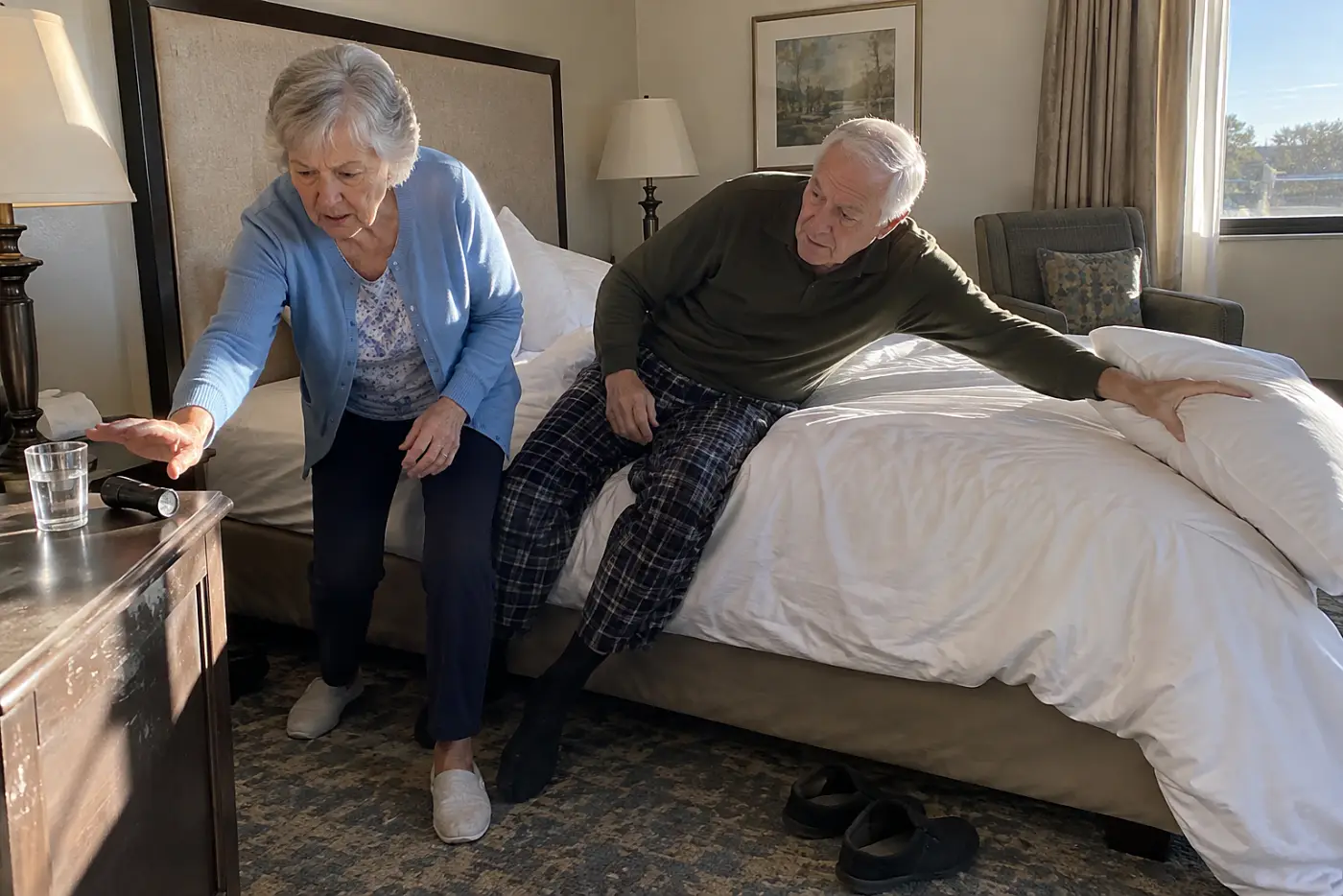
Hotel switches hide when the lights go out.
A small flashlight lights the route to the bathroom without lighting the whole room. Put it beside the bed before turning off the lamp. Test the button first, so you know which end lights up.
A suitcase left in the walking path is still a trip hazard. Light helps you see it, but clearing the floor matters too.
Find a flashlight and test its battery this week. “I'll put this by the bed tonight.” Walk your usual route at home with the room lights off and check whether its beam reaches the floor.
Seeing the floor helps; settling an unfamiliar door takes another step.
8A working latch on your room door
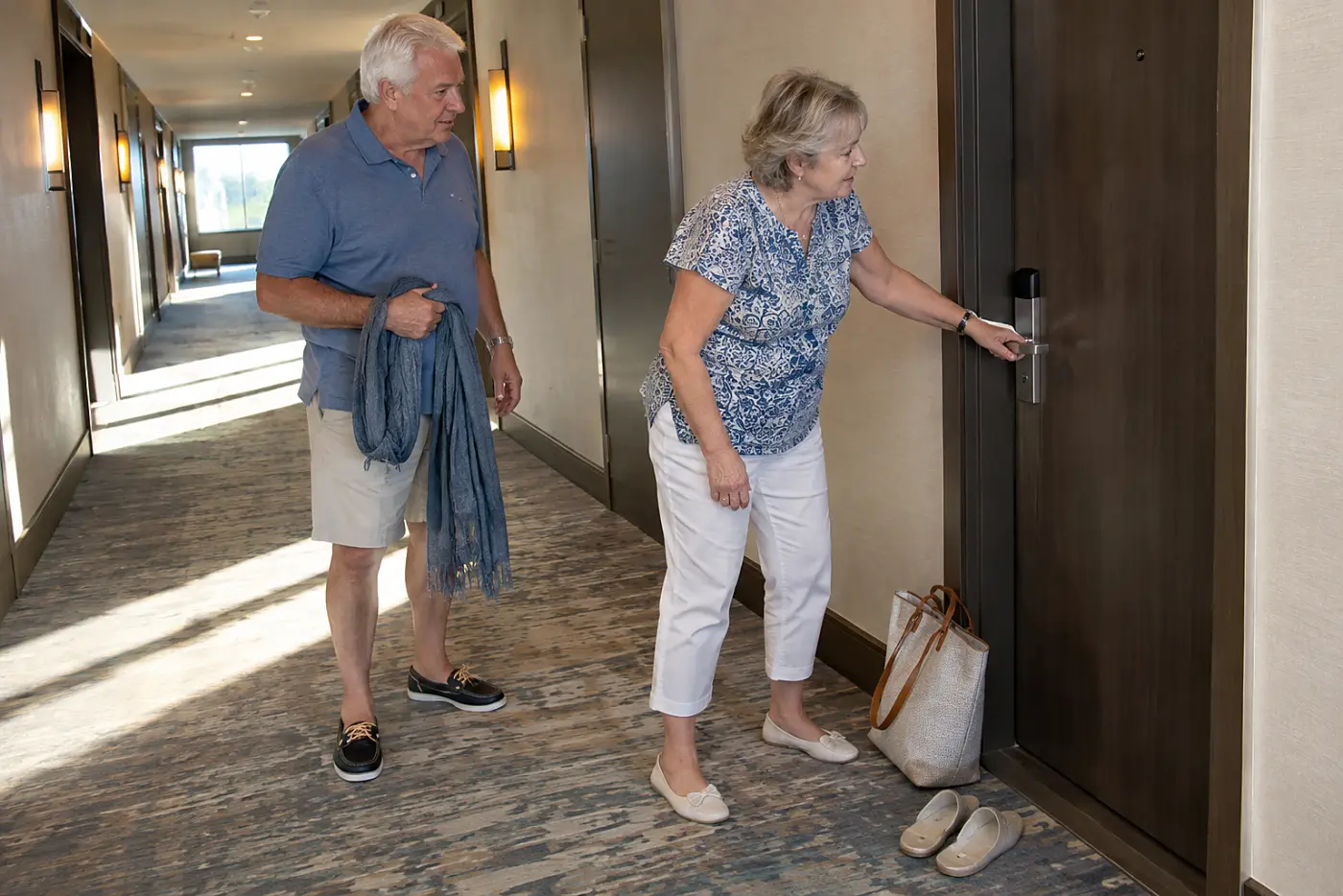
A door that won't latch keeps you listening.
Close the door when you arrive, then pull it to confirm the latch holds. Check the installed lock and find the exit route before unpacking. If the door doesn't latch, tell the front desk and request a working room.
A small doorstop doesn't repair a bad latch. It also must never block your exit.
Practice the latch check on your door this week. “This door isn't latching; I need another room.” Keep your bag closed until you've checked, so changing rooms doesn't mean packing twice.
Once the door works, the bathroom has its own small frustrations.
7A suction hook for the shower
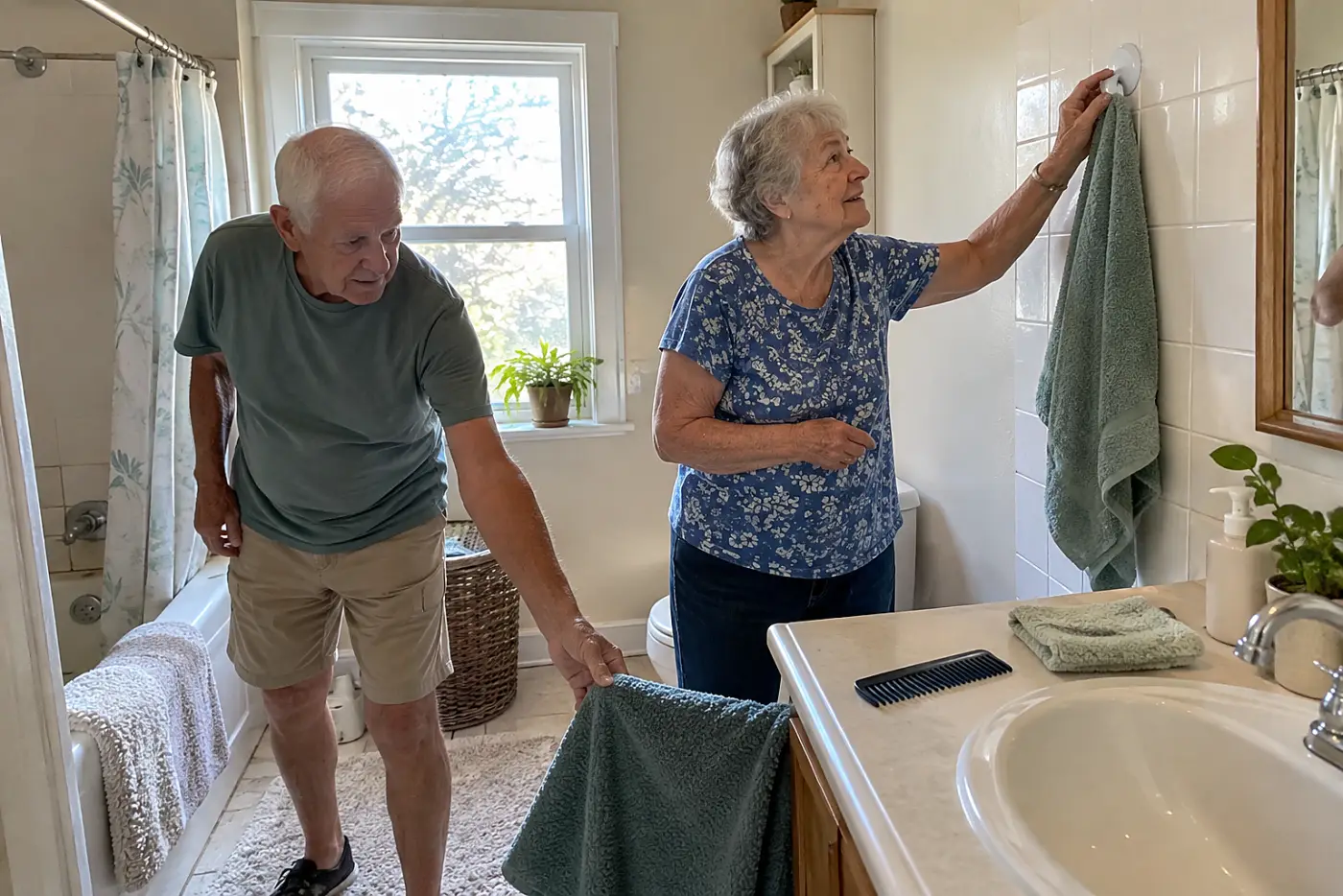
The towel bar sits across the bathroom.
A small suction hook puts a washcloth within reach on smooth, clean tile. Press it onto dry tile and tug before hanging anything. Never use it as a grab bar or hang a heavy bag from it.
A falling washcloth is annoying; trusting a loose hook for support is dangerous. Keep the floor clear as well.
Test a hook on your bathroom tile this week. “This holds a washcloth, nothing heavier.” Remove it afterward, so you know how easily it comes away at checkout.
The washcloth has a place; your feet need a dry one.
6A pair of grippy room socks
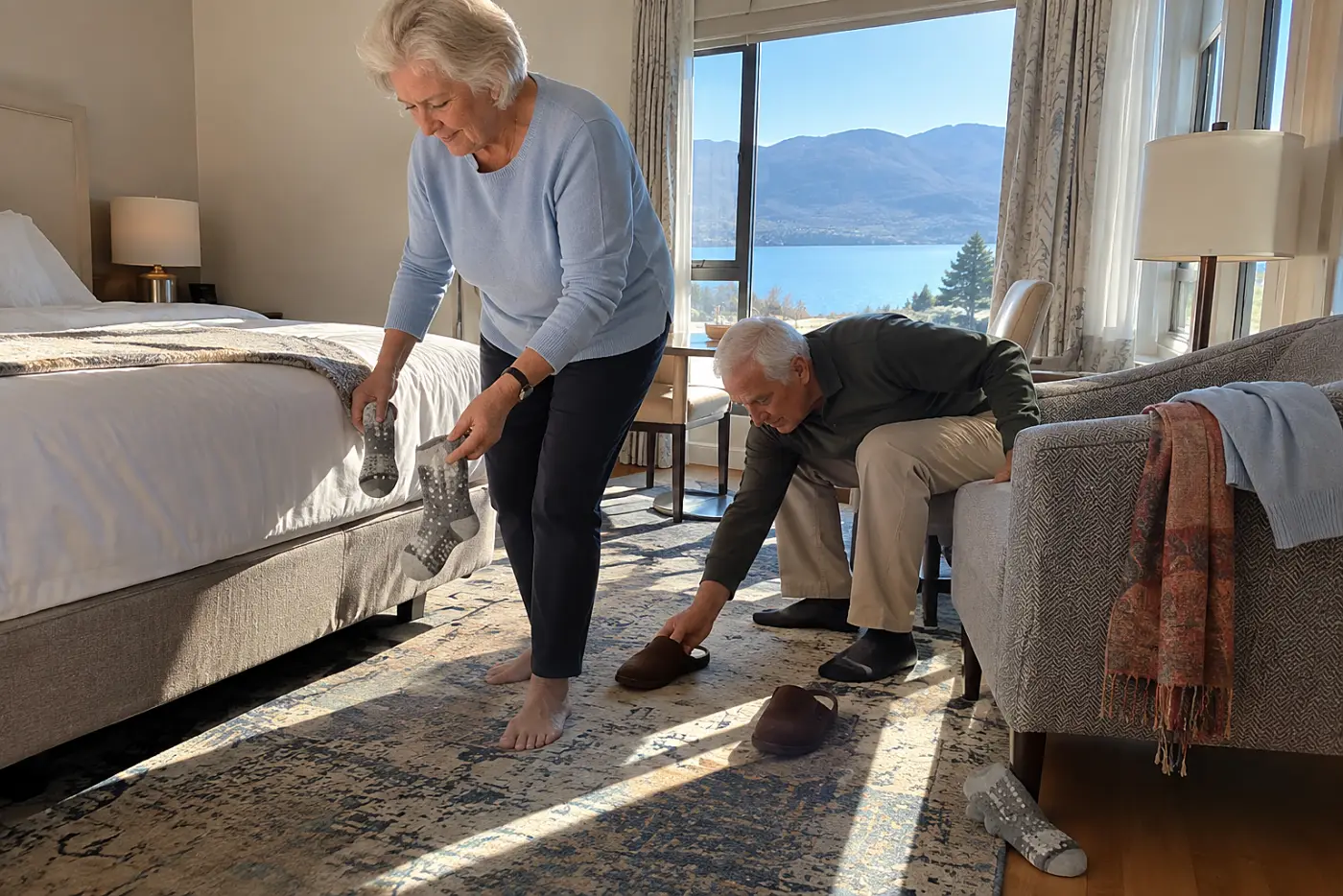
Cold tile meets your feet before breakfast.
Grippy socks warm your feet and give you traction on a dry hotel floor. Check that the grips still catch after washing. They're for walking around the room, not for stepping into a wet shower.
Smooth socks slide on polished floors. A pair buried in the suitcase doesn't help on the first walk from bed.
Check your socks on a clean, dry floor this week. “These stay beside the bed.” Pack them together so you aren't hunting for the second sock at midnight.
Your feet are ready; the room beside yours still has a voice.
5Earplugs tested before the trip

The next room starts talking after lights-out.
Try earplugs at home so you know how they fit and come out. Store a clean spare pair in a small case. Test your alarm while wearing them, or set a vibrating alert as well.
Poorly fitted earplugs leave you awake and frustrated. An alarm you can't hear creates a different worry before an early departure.
Test the pair for one night this week. “I'll check the alarm before I rely on these.” Keep the case beside your bed when you travel, rather than loose at the bottom of a bag.
The noise fades, but morning still needs a familiar start.
4A packet of your usual tea
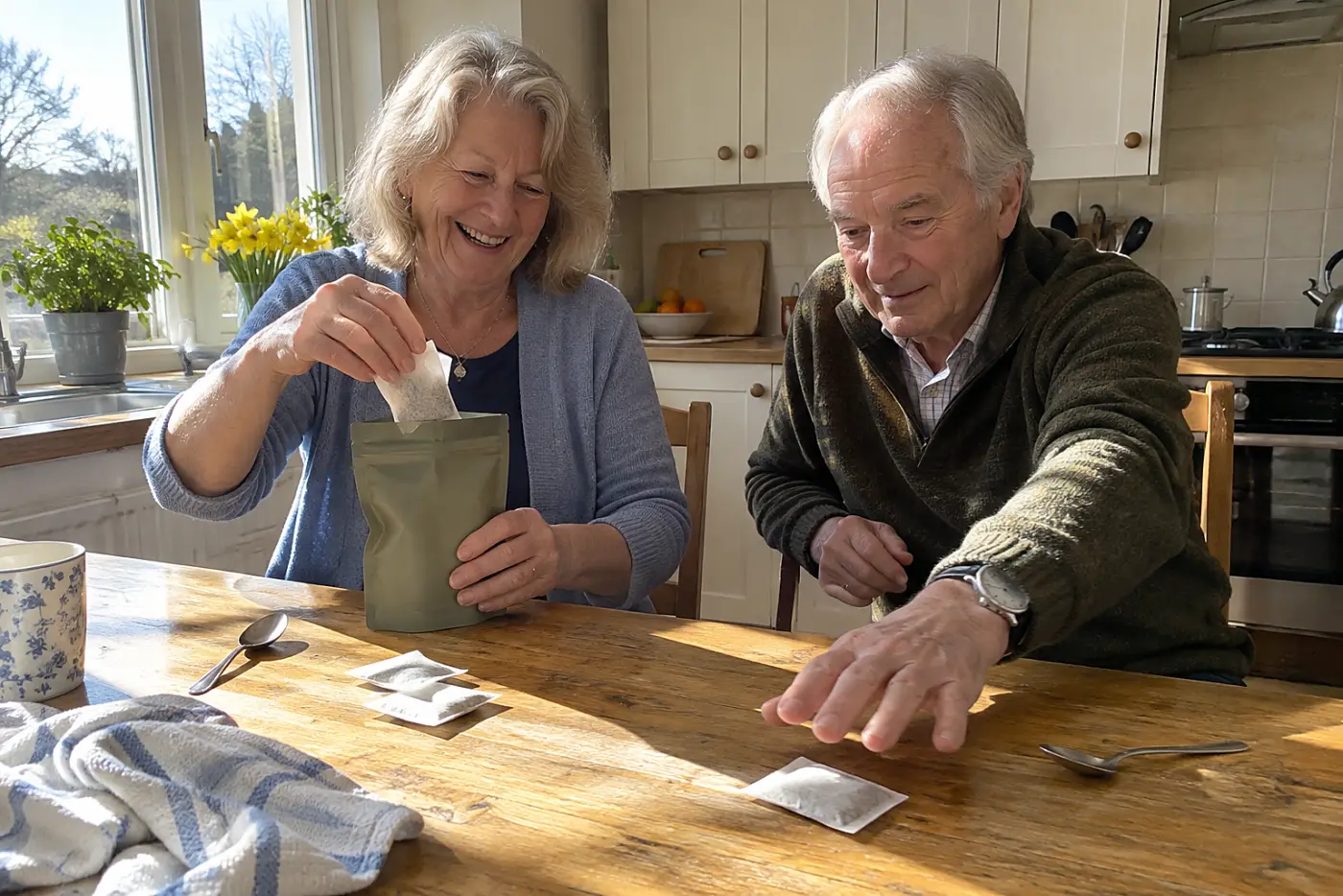
The hotel offers tea you never choose.
A few sealed packets of your usual tea make an unfamiliar morning easier to start. Keep them away from scented products in your bag. Before an international trip, check the destination's food rules; CBP's agricultural guidance tells you what to declare when entering the United States.
Buying tea after arrival takes another errand when you're already tired. The packet is useful because it's there when you reach the room.
Put a few packets in a sealed pouch this week. “I'll make this after I unpack.” Add the pouch to the bag you'll open first at your lodging.
Tea helps the morning, but your daily routine needs a clearer record.
3A written list of daily medications
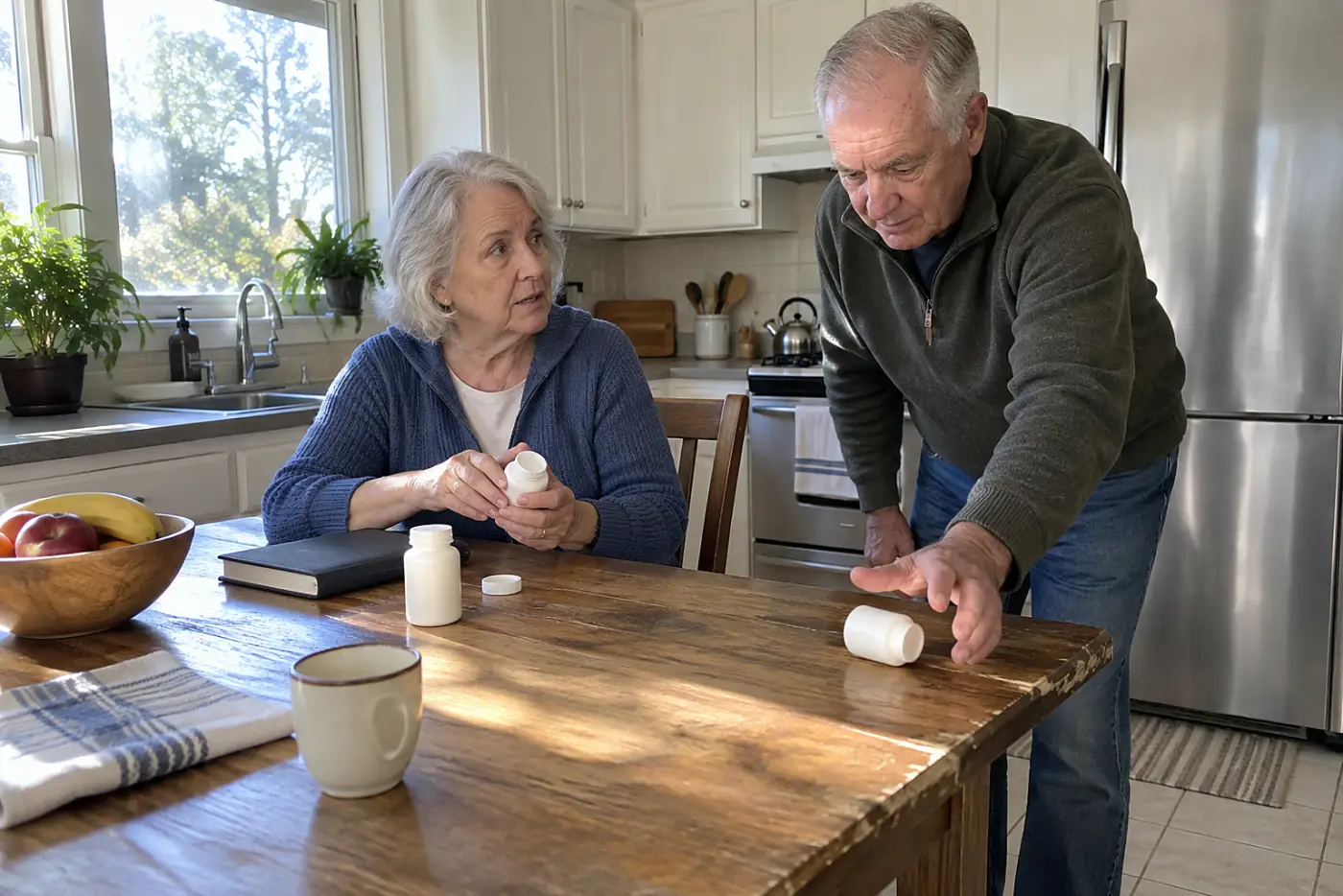
A time change scrambles familiar pill habits.
Write each medicine's name, dose, and usual schedule on one sheet. Keep it with your medications, and take labeled containers when you travel. Ask your pharmacist how to handle timing across time zones instead of making a new schedule in an airport.
A missed dose or an accidental double dose has higher stakes than a forgotten toothbrush. The list also gives a clinician the details if you need care away from home. A destination 6 hours ahead turns an 8 a.m. home-time dose into 2 p.m. local time; that arithmetic is not a new dosing schedule.
Update the sheet with your pharmacist this week. “How should I time these on my travel days?” Before an international trip, check CDC Travelers' Health for advice tied to your destination.
The list says what you take; it doesn't put the medicine within reach.
2Prescription medicine in your personal bag
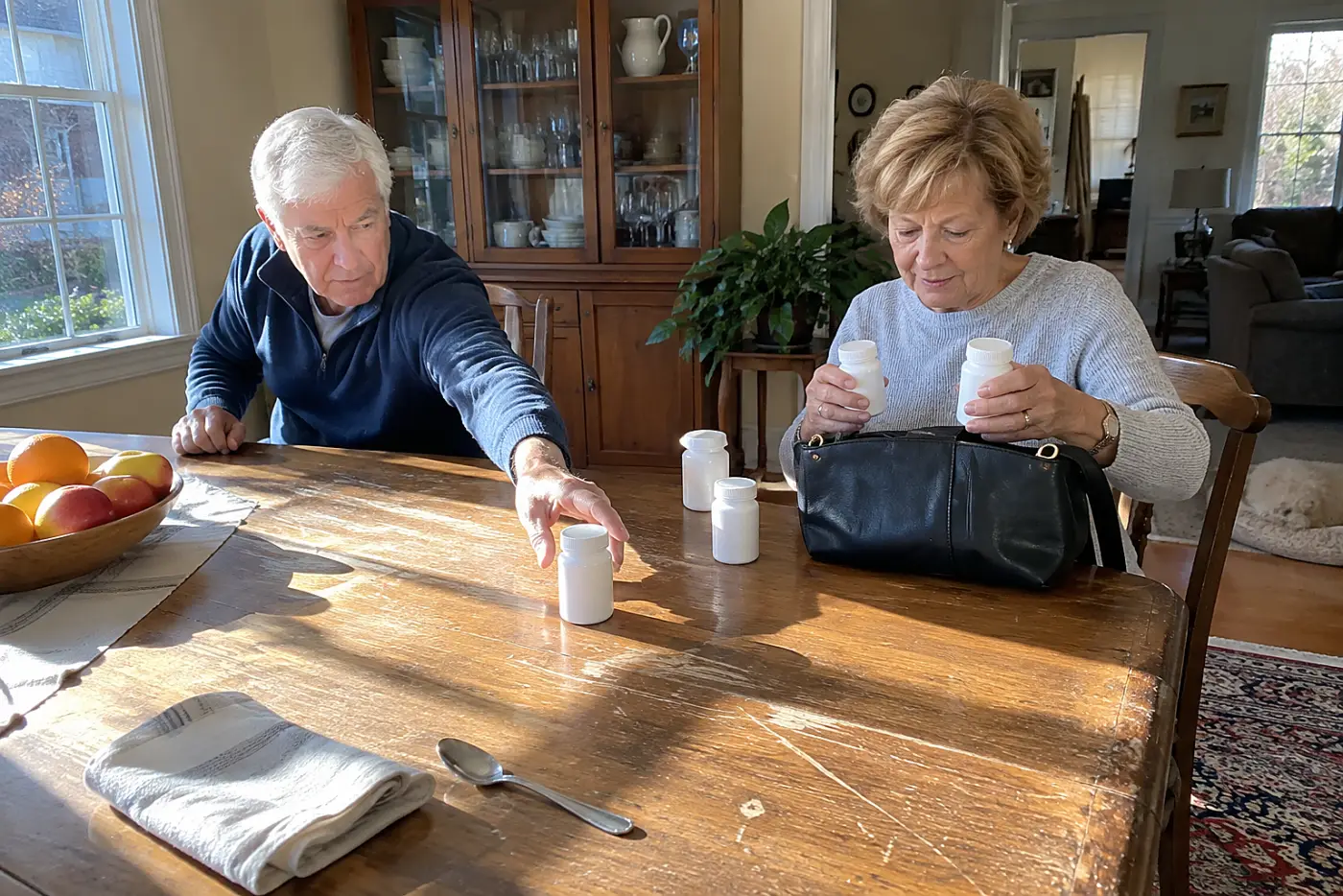
A checked suitcase takes its own route.
Put the full supply needed for your trip in your personal bag, in labeled containers. Count it before packing. For international travel, check the destination's medicine rules through its embassy or consulate; a prescription from home doesn't settle what you can bring across a border.
A bag delay doesn't pause a dosing schedule. Don't plan on a pharmacy elsewhere filling a prescription at short notice.
Count your doses this week and call your pharmacy about any gap. “I leave on this date; when is my next refill available?” Ask your prescriber about additional doses if the trip requires them, without counting on an extra supply.
Medicine stays with you; the bag carrying it still needs a final decision.
1A gate-check transfer before handing over luggage
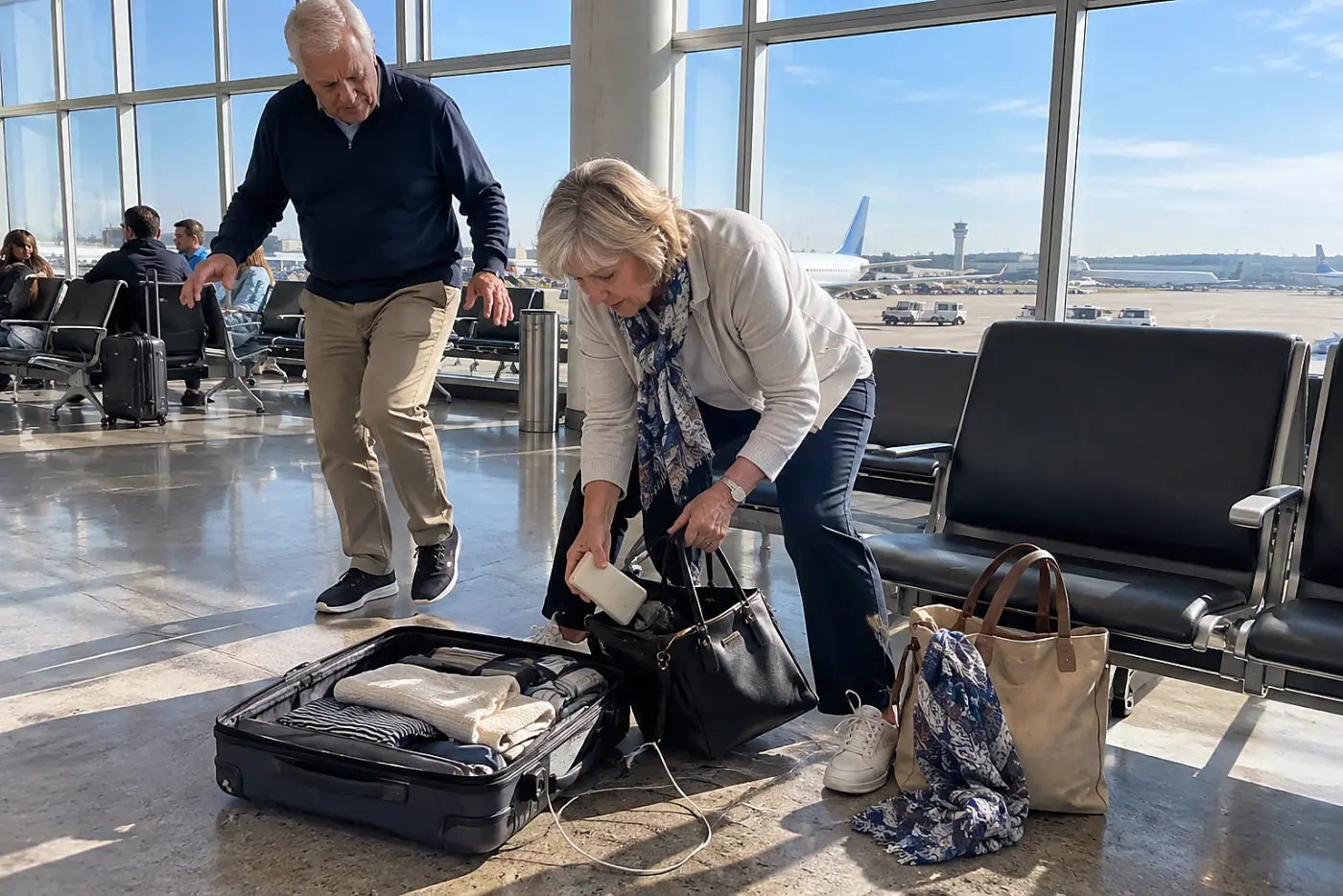
The gate agent calls for your overhead bag.
That bag might hold the medicine, spare lithium batteries, or power bank you packed for easy access. Before handing it over for a gate check, open it and transfer those items to the personal bag staying with you. FAA PackSafe requires spare lithium batteries and power banks to travel in carry-on baggage, not checked baggage.
Once the bag leaves your hands, a pocket you can reach at the gate is no longer a pocket you can use. Medicine in that bag also leaves you without it during a delay.
Rehearse the transfer at home this week with both bags closed, then open the overhead bag and move the essentials. “Give me a moment to take out my medicine and battery.” Check that the smaller bag still closes and fits your airline's personal-item rules.
The transfer takes practice before anyone is waiting behind you.
The bottom line
All 27 comforts work because they have a place before you're tired enough to need them.
The best-prepared version of you has tested the small things and knows which bag stays with her.
Which small comfort has saved a trip for you?
Up next
24 Trips for Seniors With Mobility Issues
A room-by-room, port-by-port guide to cruises, resorts, bus tours, cities, and the shower bench worth checking before you go.
Read the list →


Reader quiz
Did you catch the details?
5 questions from this article. Finish them all to unlock the editor's bonus tip.
When should you close the hotel curtains to look for gaps?
Did any of these feel familiar?
Know someone who needs this?
Sources cited in this article
This article links to 6 outside sources, listed here so you can read them yourself.
- TSA's liquids rule www.tsa.gov/travel/security-screening/liquids-rule
- FAA PackSafe www.faa.gov/hazmat/packsafe
- TSA's screening guidance www.tsa.gov/travel/security-screening
- U.S. State Department passport guidance travel.state.gov/content/travel/en/passports.html
- CBP's agricultural guidance www.cbp.gov/travel/international-visitors/agricultural-items
- CDC Travelers' Health wwwnc.cdc.gov/travel
Margaret Hale
Travel Editor
Margaret has covered travel for 25 years and has ridden every long-distance train route in the U.S. at least once.
More from Margaret Hale