





19 Best Walking Shoes for Women Over 50 With Foot Pain
Your feet changed, so your shoes can too, starting with a rocker sole that rolls you past a stiff, sore big toe.

By Peter Byalik, Food & Home Editor
Updated · 16 min read
- Written by our food & home editor
- Cited 3 sources
- How we review
The pair that helps most sore feet is the one that feels wrong in your hands at the store: too stiff.
So the loop around the block ends with your heel throbbing, or your bunion burning against a seam in a shoe that fit fine five years ago.
Arches sag and feet spread, too, and many women wear a size larger than in their 20s.
For a lot of sore feet, the fix is a shoe with the right parts, and almost none of those parts show from across a room.
For Dresses, Work and Summer
Support can sit inside a shoe that looks like any other. These three are for the days a sneaker won't do.
19A Mary Jane Strap on a Walking Sole
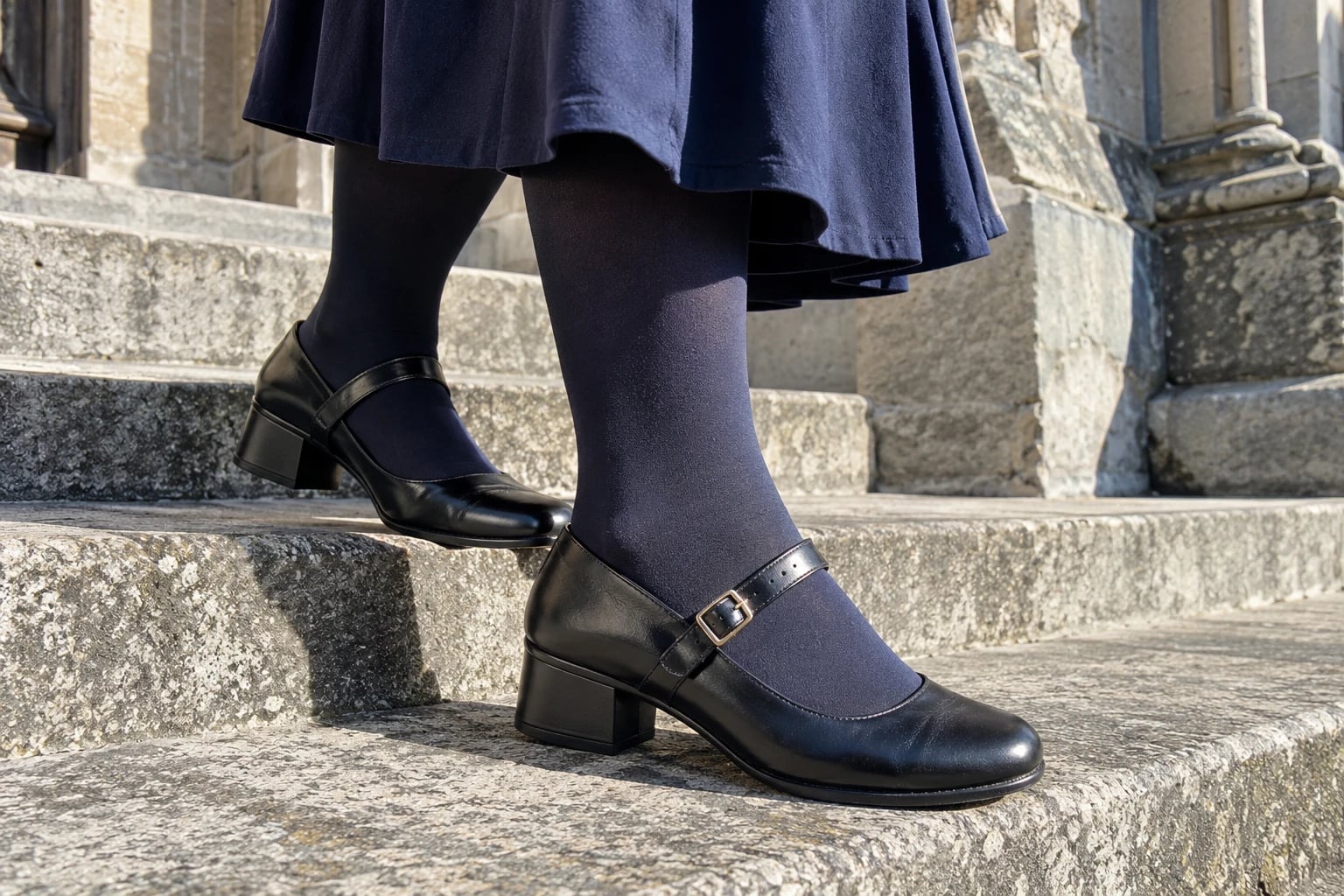
Look at the strap first. It crosses the top of the foot and fastens with a buckle or Velcro, so the shoe stays on without your toes gripping. Underneath sits a rubber walking sole and a low block heel, about an inch.
This is the shoe for church, a wedding or a dinner where sneakers would stand out. In smooth black, navy or soft taupe leather, it reads as a dress shoe from across the aisle.
Look for a rounded toe and a footbed that lifts out. Skip any pair with a pointed toe, or with an ankle strap that cuts across an ankle that swells.
If you're worried people will look at your feet, give them less to look at. Match your tights or hose to the shoe, and the line from hem to toe runs unbroken. A midi skirt that ends below the calf helps too.
18A Plain Black Leather Walking Sneaker
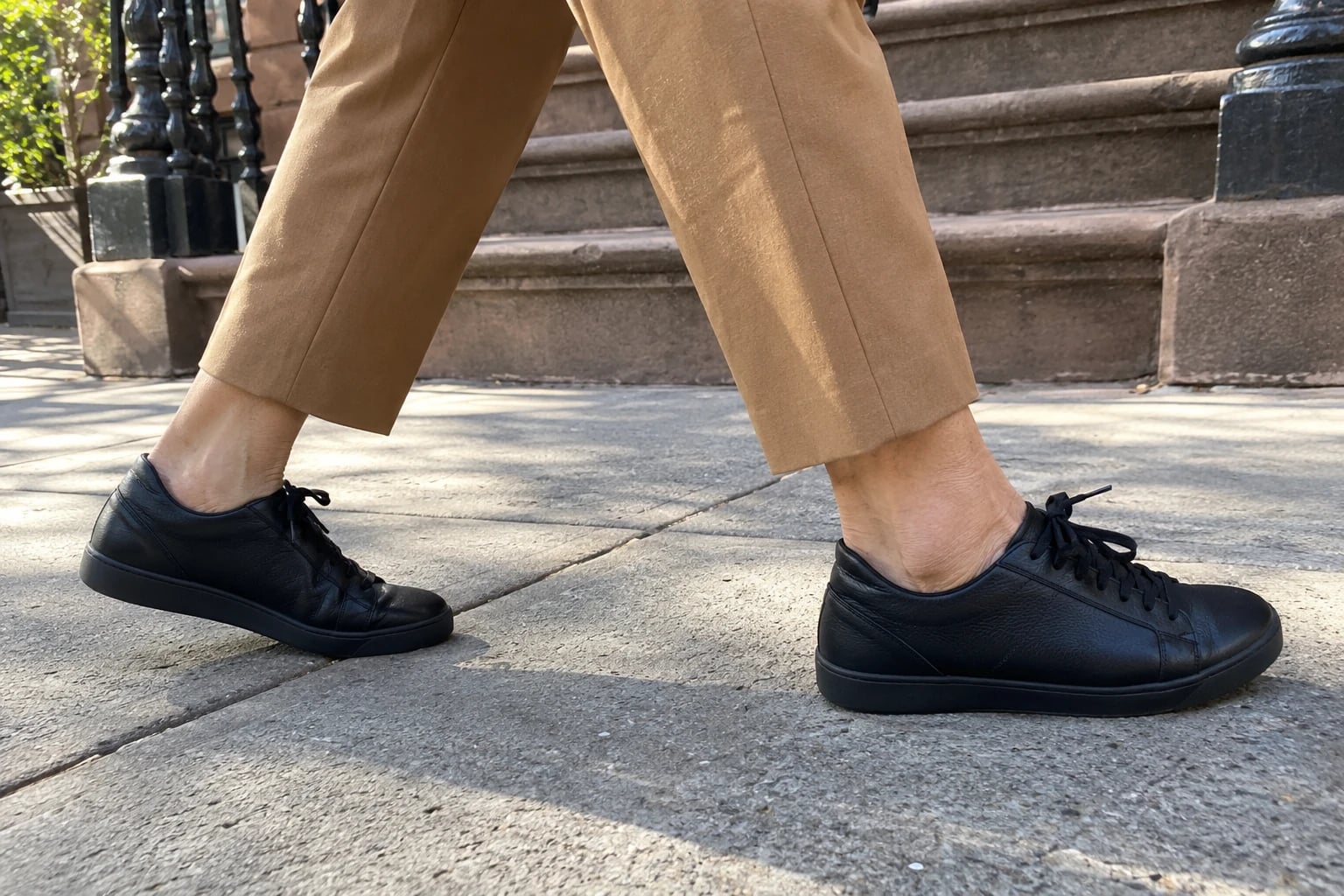
Plain is the point. Smooth black leather, black laces, a slim black rubber sole with no bright stripe along the side. From six feet away it reads more like a loafer than a gym shoe.
Wear it with cropped trousers, a denim skirt or a knit dress on a workday, when you'll be on your feet but want to look put together.
Price tracks support features and brand more than the upper material, so compare the specific pair, not the fabric.
A pair is worth its price if it has a firm heel cup, a lift-out footbed and comes in your width. It isn't worth paying extra for a designer name on a soft, bendy sole.
Smooth leather does give a little with wear, and that tempts women to buy snug. Don't. If your feet swell by evening, buy the pair that fits in the afternoon, and let any give be a bonus.
17A Walking Sandal With a Back Strap
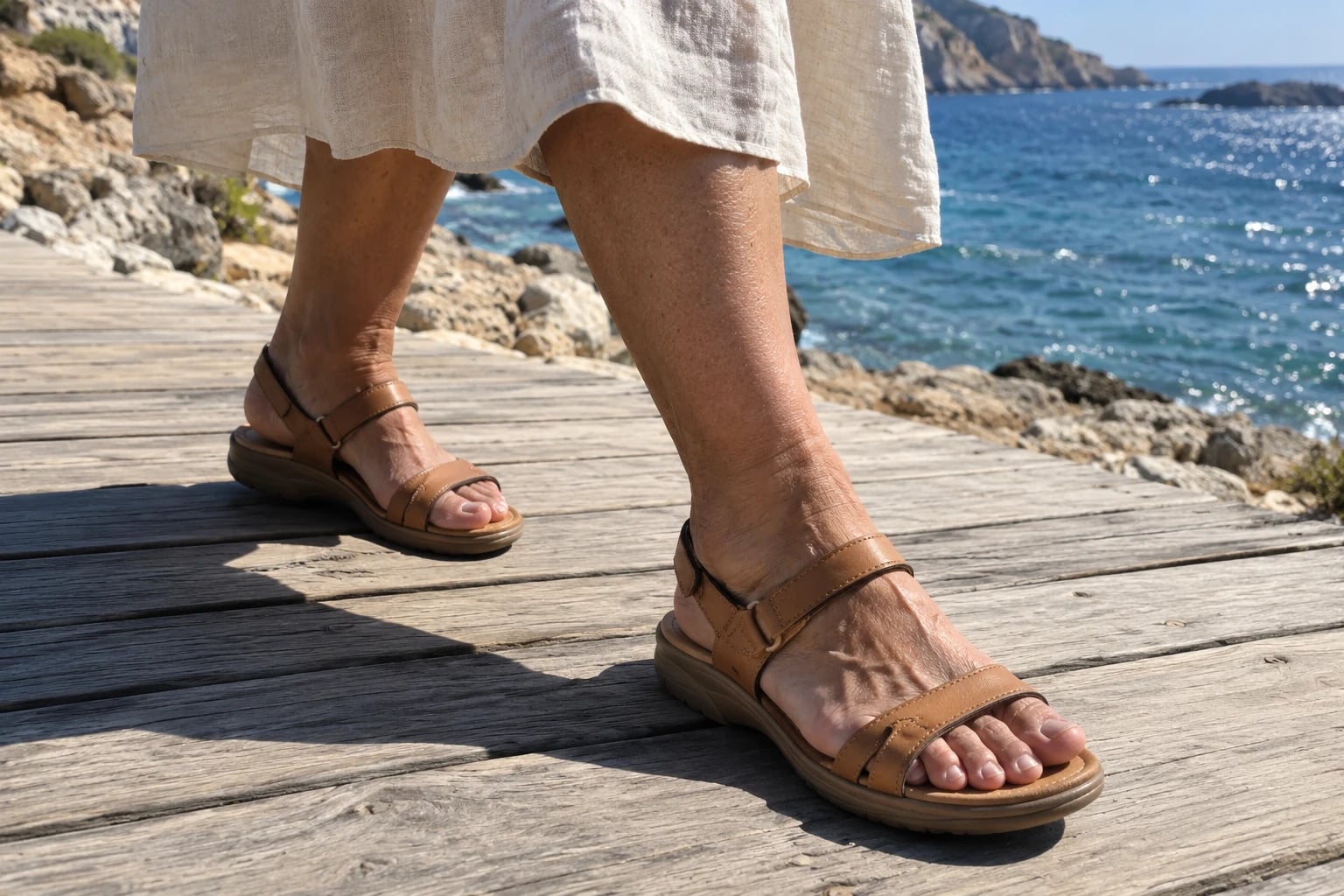
Three straps hold this sandal on: one across the toes, one over the instep and one around the back of the heel. All three adjust. The footbed underneath is molded, with a rise under the arch and a cup for the heel.
That back strap makes it a walking shoe. Without one, your toes clench with every step to keep the sole from slipping away, which is the trouble with flip-flops on any walk longer than the driveway.
Choose one if your feet swell in summer heat or on travel days, since you can loosen the straps as the day goes on. If your bunion rubs, find a pair whose front strap sits behind the joint, not across it.
When Your Foot Has Changed Shape
Wider, longer, flatter, sometimes all three. Fix the fit first and the rest of the shoe can do its work.
16A Sneaker Made in True Extra-Wide Width
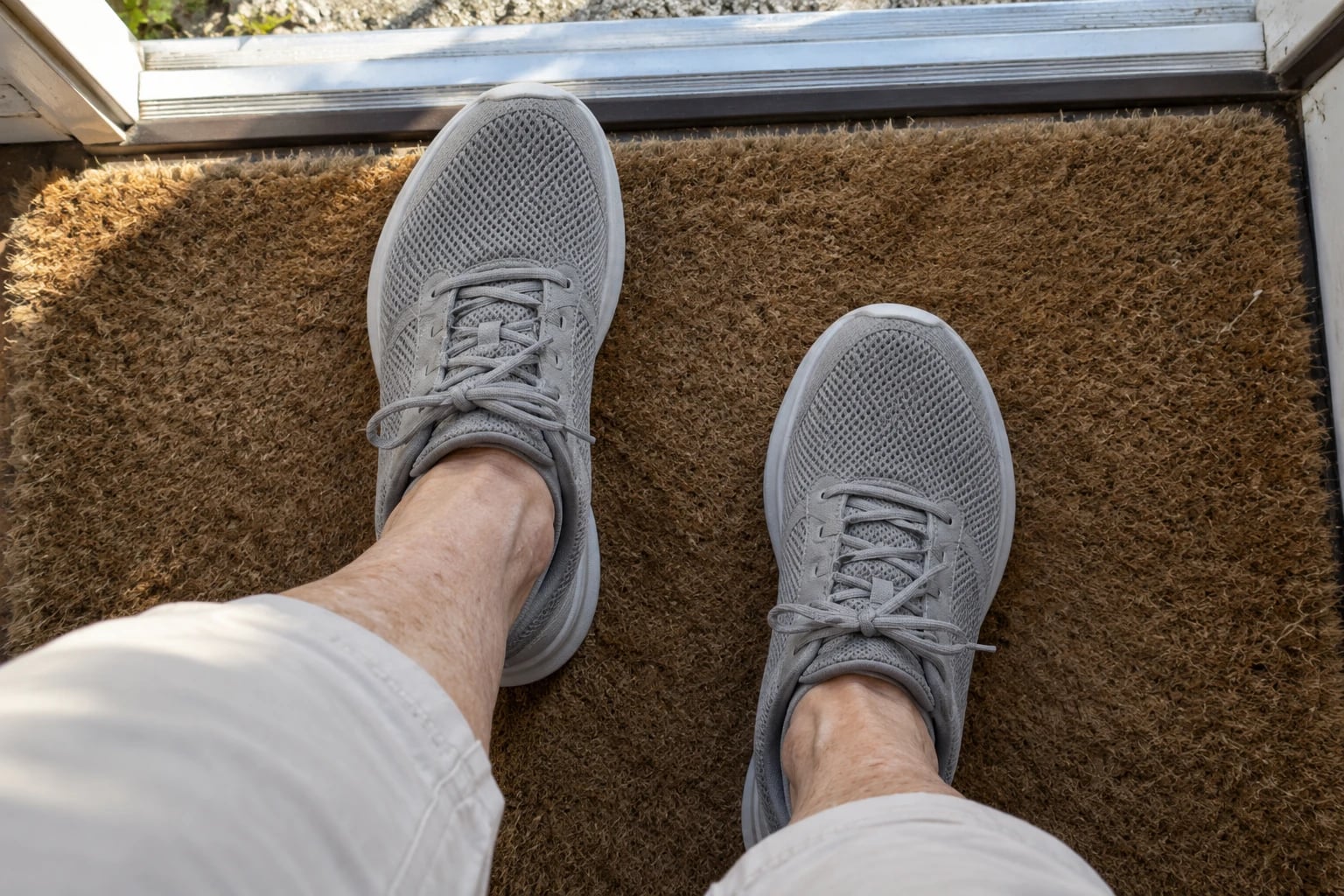
From above, this sneaker looks broad across the front, and the mesh doesn't bulge where the widest part of your foot pushes out. That's what real width looks like.
If shoes marked "wide" still pinch, you're not imagining it. Women's widths run roughly A through E, narrow to extra wide, and many stores stock little beyond medium. Ignoring width is a common shoe-buying mistake.
Ask which widths a shoe comes in, then check the maker's website, which often lists more than the shelf holds.
Different materials can fit differently even on the same model. Try on the exact color you'll take home, not its sister in another fabric.
15A Shoe Narrow at the Heel, Wide Up Front
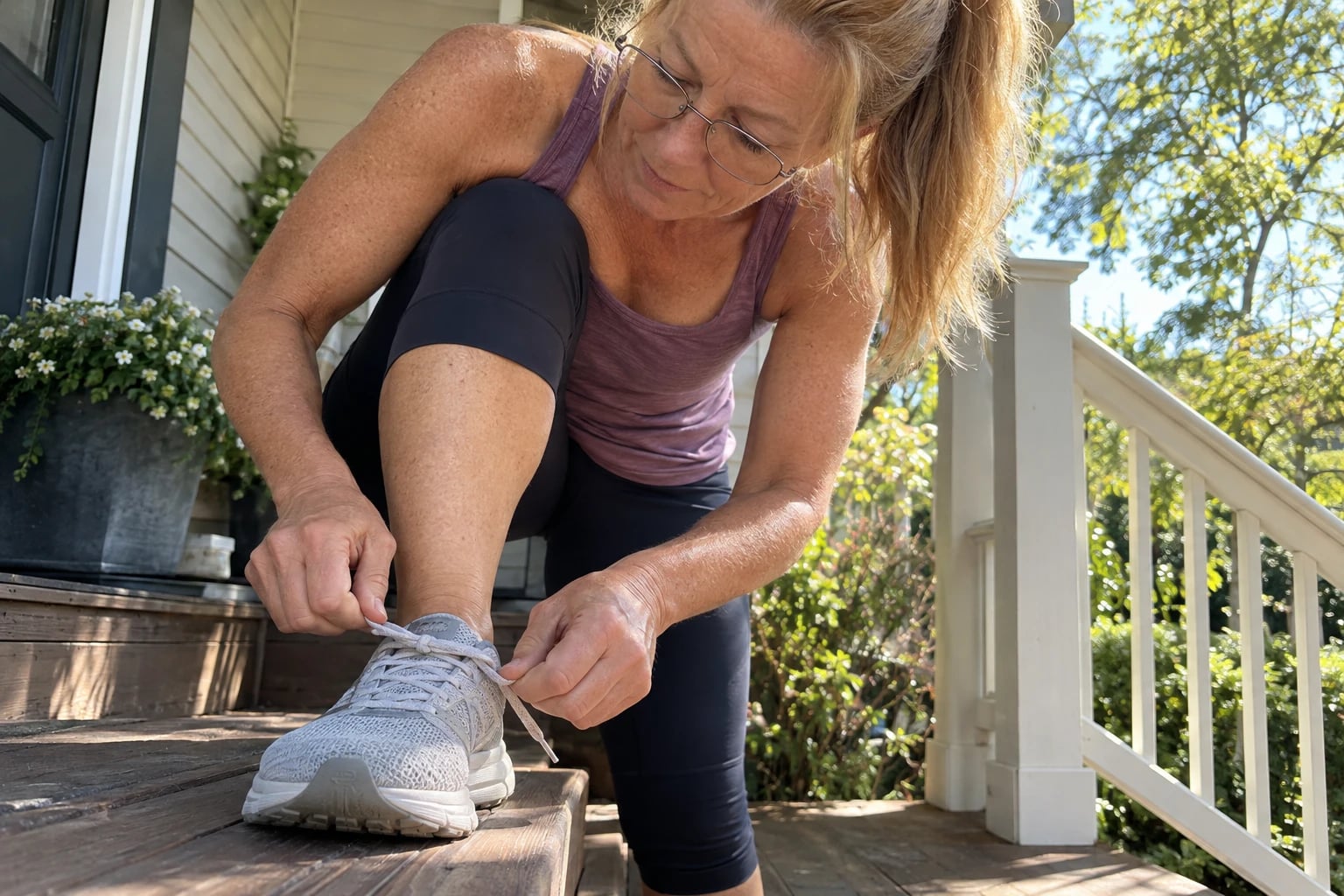
From behind, this shoe looks slim. From above, it doesn't. The heel cup is slim and snug, while the front opens out wide. Fitters call this a combination last. The last is the foot form a shoe is built on.
It's for the mixed foot: a broad front, a narrow heel and often a high instep. Buy wide for your bunion and your heel slides out. Buy for your heel and your toes get crushed.
Ask the fitter for a combination fit, or a wide forefoot with a standard heel. A good fitter will know which makers build that way.
Then use the extra eyelet at the top of most sneakers, the one nobody laces.
Thread each lace down through the eyelet on its own side to make a small loop. Cross the laces, pass each through the opposite loop, and pull. Your heel stays put.
14An Extra-Depth Shoe With Room Above the Toes
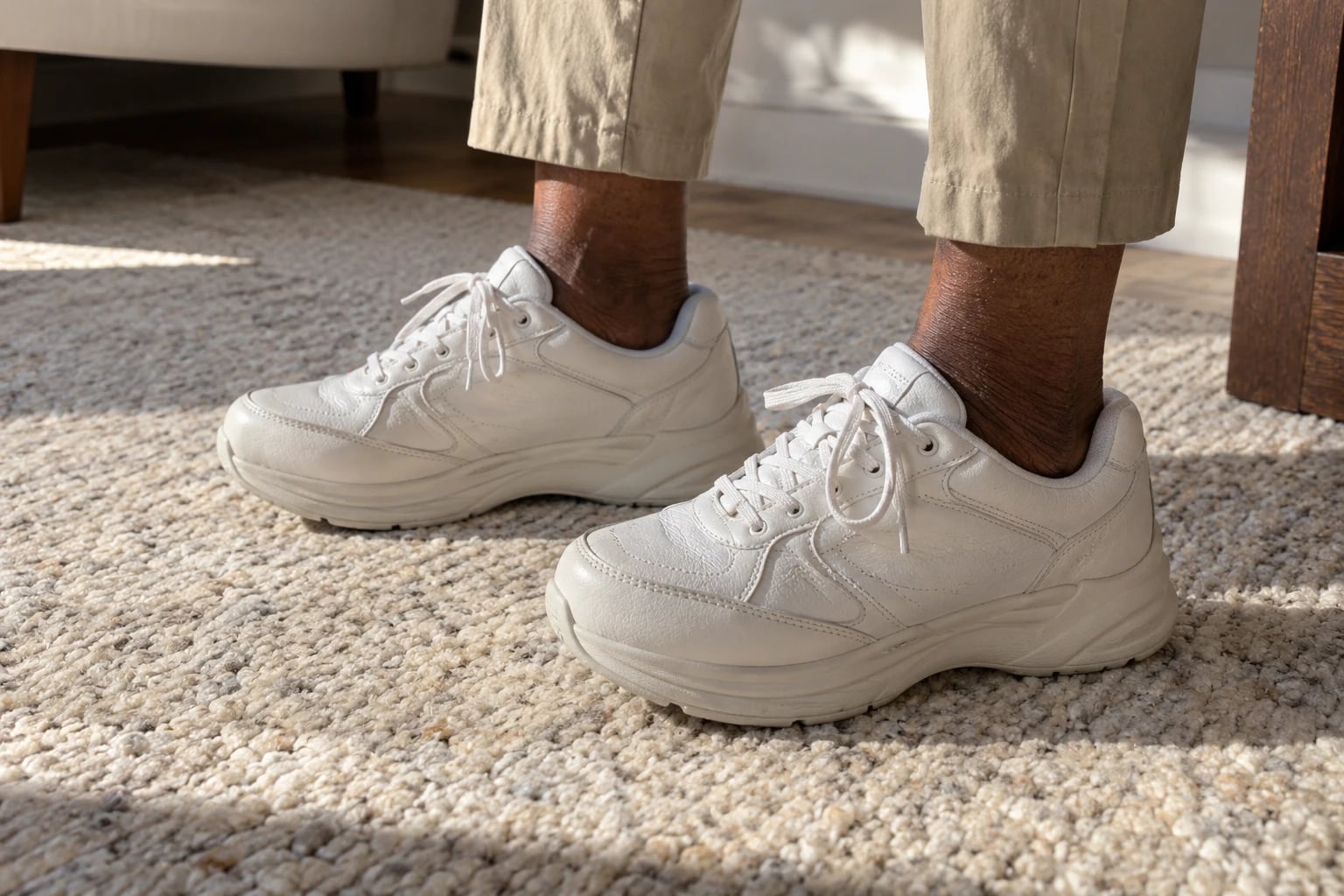
Toes that turn red on top by afternoon, or a corn on a knuckle, point to depth before width.
From the side, an extra-depth shoe looks a touch taller over the toes than a regular sneaker. Inside, your foot sits about ¼ to ½ inch deeper.
That space is for toes that have curled into hammertoes, or for a custom orthotic that would otherwise lift your heel half out of the shoe. Many extra-depth shoes come with a spare insole, so you can choose thick or thin.
A wider shoe won't help a toe that's rubbing on the roof. Corns and calluses call for roomier shoes.
The older ones looked orthopedic. Newer extra-depth walking shoes come in knit and leather sneaker shapes, so ask for them by that name.
13A Lift-Out Footbed That Makes Room for Orthotics
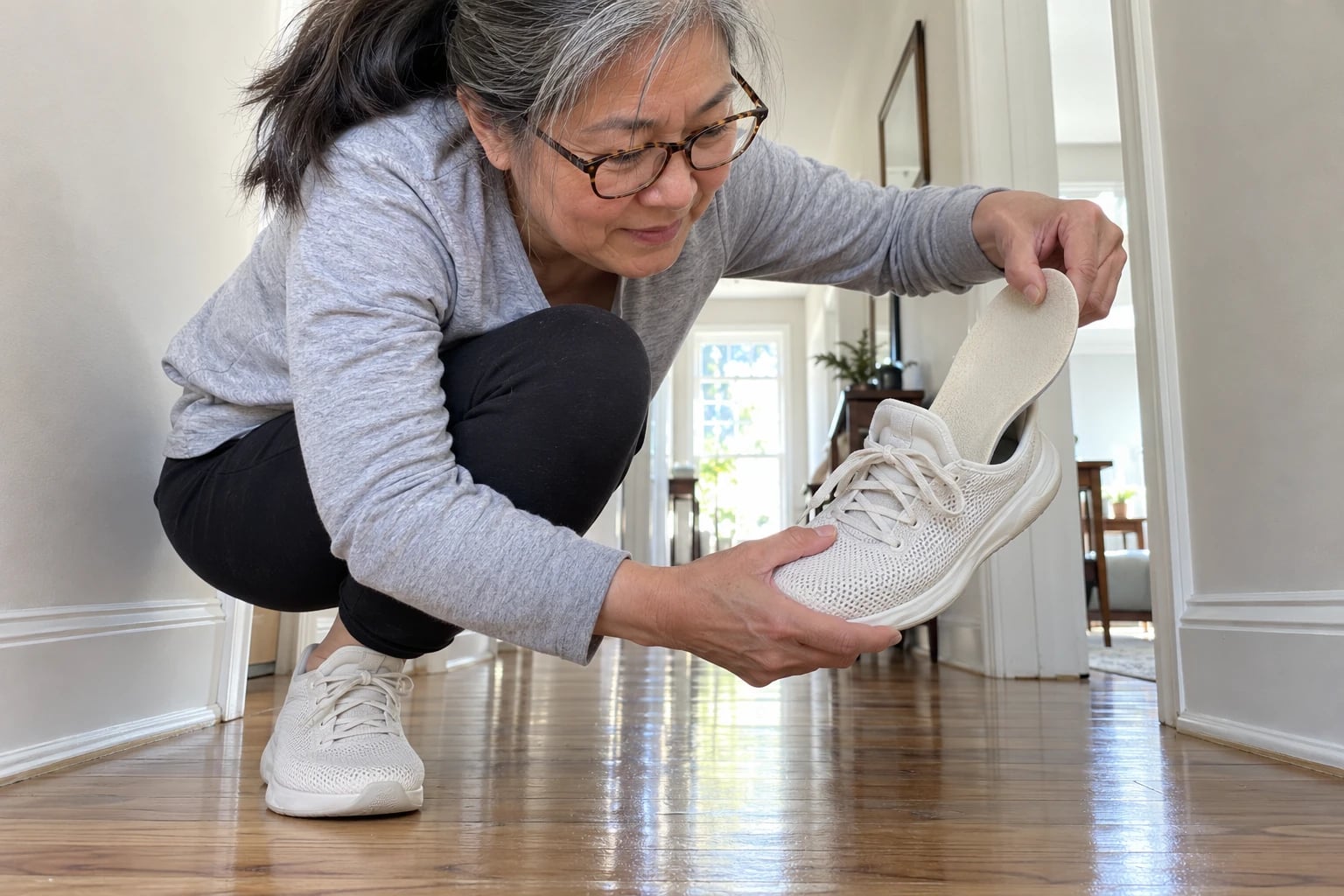
Custom orthotics need a shoe with room for them. Pull the tab at the back of the insole.
In a shoe built for orthotics, the whole footbed (the padded inner sole your foot rests on) lifts out in one piece, and the floor underneath is flat.
Many shoes have the footbed glued in, so a podiatrist's orthotic sits on top and your heel rides up and out.
Bring your orthotics to the store, as the podiatrists' association APMA advises, and swap them in before you take a step. Walk around. Your heel should sit down in the cup, not perch on its rim.
The same goes for an off-the-shelf insert. And if you've bought insert after insert without relief, ask a podiatrist whether custom orthotics make sense for your feet.
12Velcro Straps Across the Top of the Foot
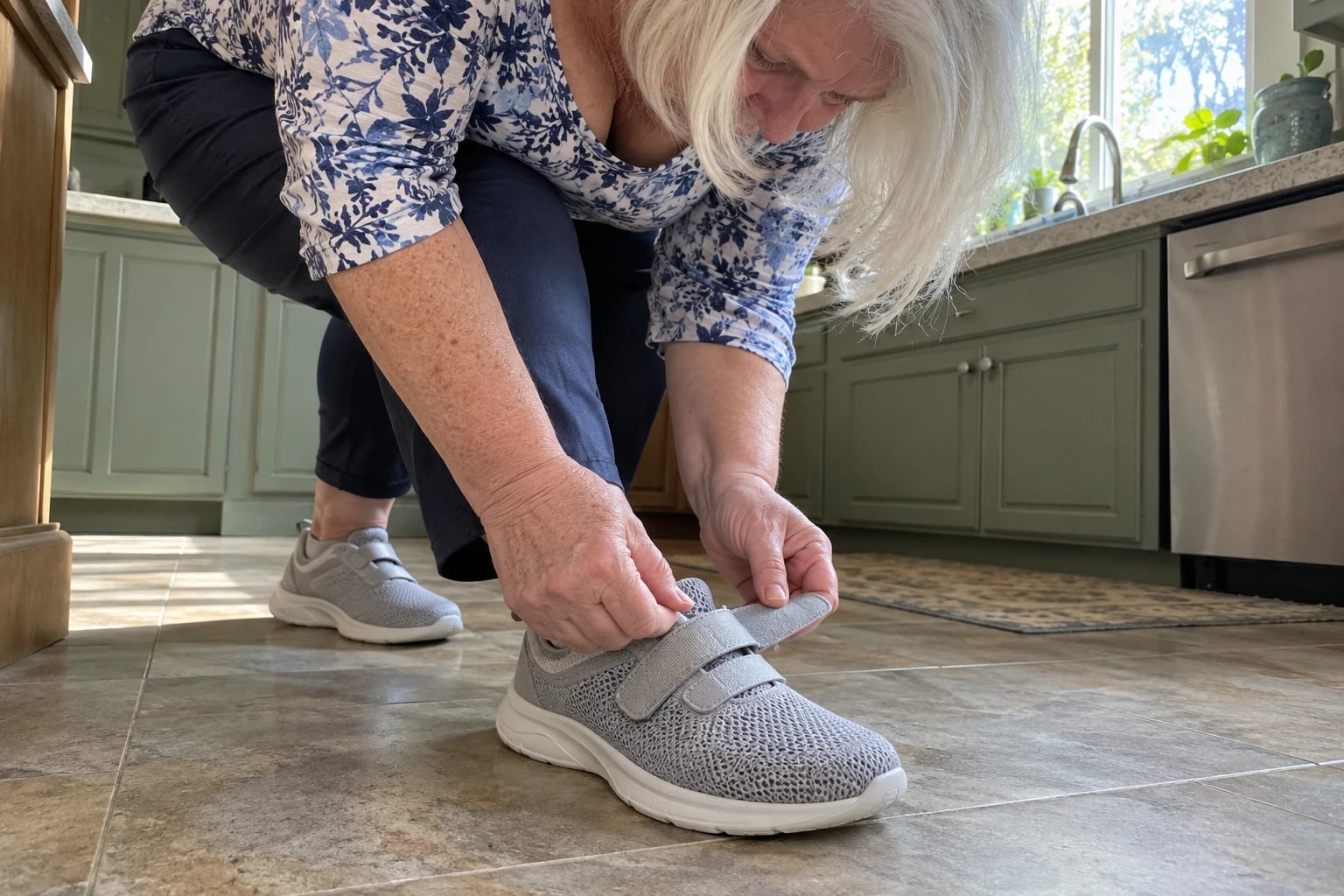
Two or three wide straps cross the top of this sneaker, each pulling through a loop and pressing flat. No laces. You can open the whole front with one hand.
It answers two problems that often arrive together. Arthritis in your fingers makes tight bows a chore, and arthritic feet can swell. CreakyJoints, an arthritis patient group, points to Velcro, elastic laces or zippers as closures that are easy to adjust.
On a swollen day, loosen the straps at lunch and pull them snug again for the walk home. Laces can't do that without retying.
For a dressier look than Velcro, swap the laces on a sneaker you love for elastic no-tie laces.
They stretch as your foot swells, and the shoe slips on without bending down to tie. Either way, skip any strap that fastens right over your bunion.
When the Front of Your Foot Hurts
Bunions, cramped toes, a burning or bruised ball of the foot. These four give the front of your foot room, padding or a way to roll.
11Seamless Stretch Knit Over the Bunion Joint

A bunion that rubs is often rubbing on a seam. On this sneaker, the upper where your big toe joint pushes out is soft knit or fine mesh, with no seam, stitching or stiff overlay crossing the bump.
Run a finger along the inside before you try the shoe on and feel for ridges at the joint.
A bunionette, or tailor's bunion, the bump by your little toe, needs the same check on the other side.
Bunions are more common in women, partly because women's shoes are often narrower and higher-heeled. UPMC recommends soft leather or mesh, adjustable straps or laces and a low heel.
Shoes can ease bunion symptoms, but they can't get rid of a bunion. If yours hurts in every shoe, or you're weighing surgery, that's a talk for a foot surgeon, not a shoe store.
10A Rounded Toe Box With Room to Spread
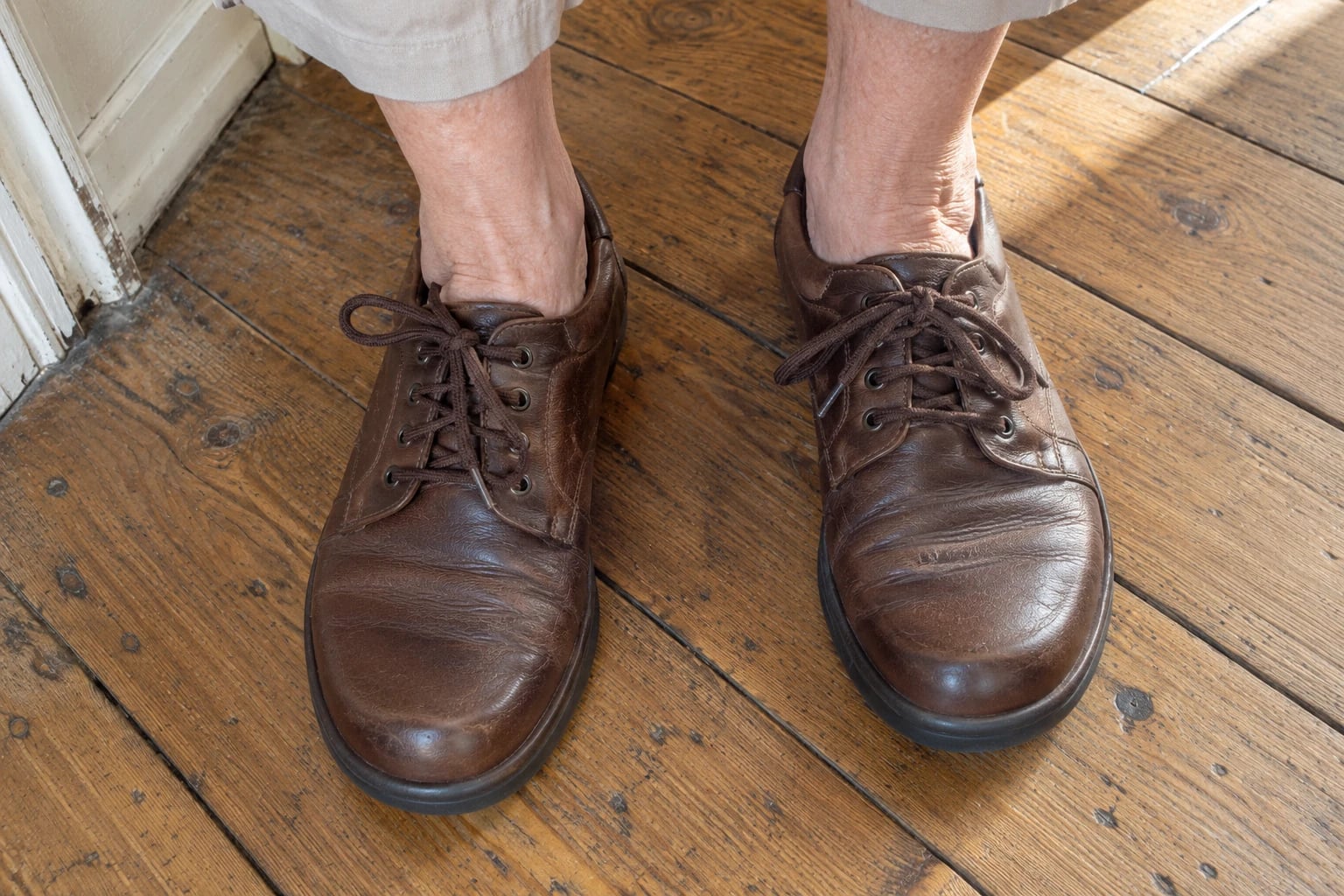
Seen from above, the front of this shoe is round or nearly square, shaped like your toes instead of a point. The toe box, where your toes sit, should let you wiggle all five.
That room matters for Morton's neuroma, a pinched nerve between the toes. It burns, or feels like a fold in your sock that isn't there. A shoe that squeezes the toes together is the wrong one.
Stand in the shoe and press the top of the toe box. You should feel a little give above every toe, and none should touch the end. AAOS suggests about ½ inch between your longest toe and the tip.
Pointed toes are another common shoe mistake. You don't need a clunky shoe to avoid one, since a softly rounded toe in leather looks like a classic oxford.
9Thick Cushioning Under the Ball of the Foot
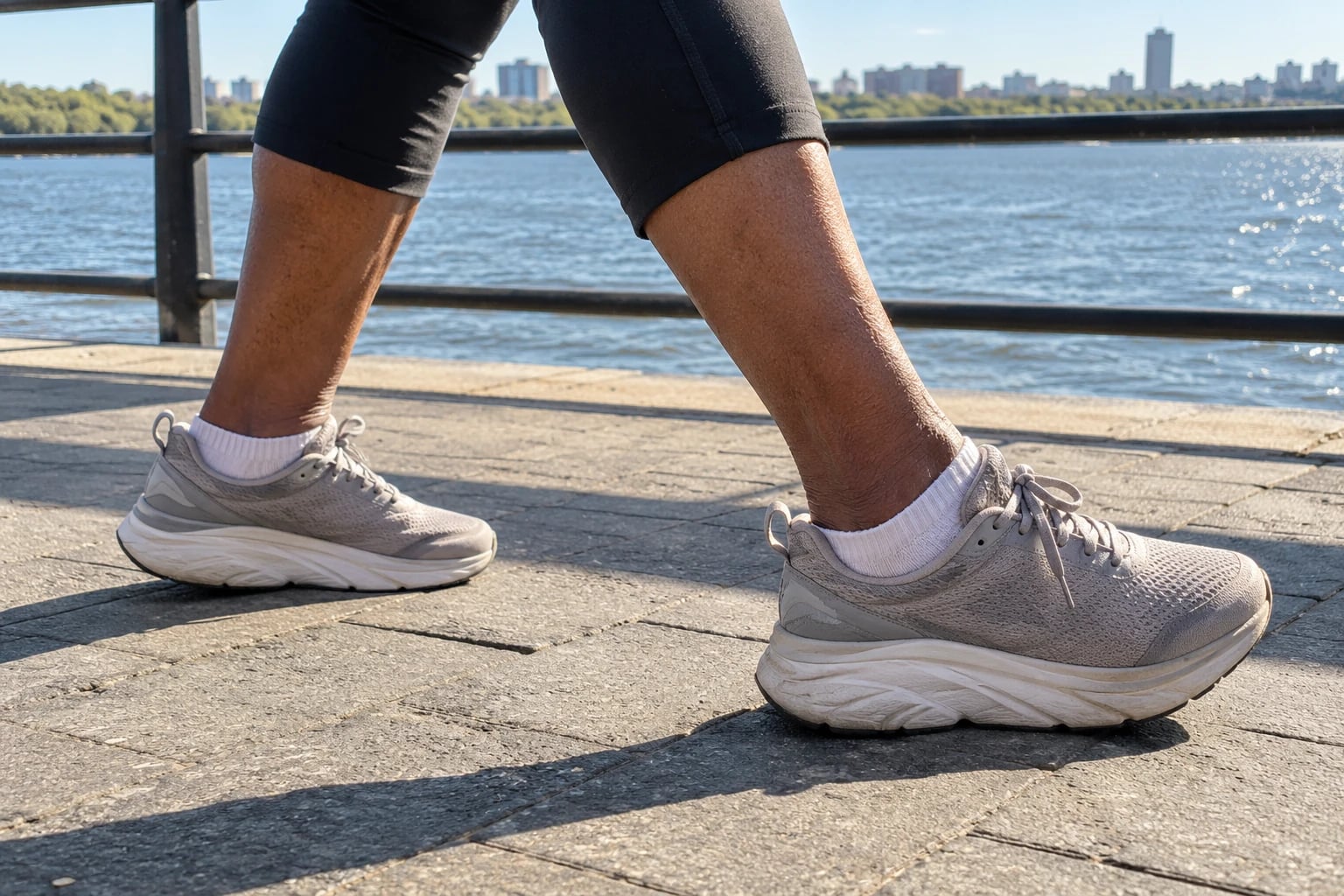
Turn the shoe on its side. Under the ball of the foot, the midsole is nearly as thick as at the heel. Some have a small raised dome inside, a metatarsal pad, set just behind where the ball of your foot lands.
This is for the woman who feels like she's walking on bone. The fat pad is the natural cushion under your heel and the ball of your foot, and it thins with age. Pain across the ball is called metatarsalgia.
Press your thumb into the front of the insole. Good cushioning gives, then pushes back. If your thumb sinks and the dent stays, that foam will flatten fast.
A metatarsal pad works only when it sits behind the ball of your foot, not under it. A marble under the sore spot means that pair isn't yours.
8A Rocker Sole That Curves Up at the Toe
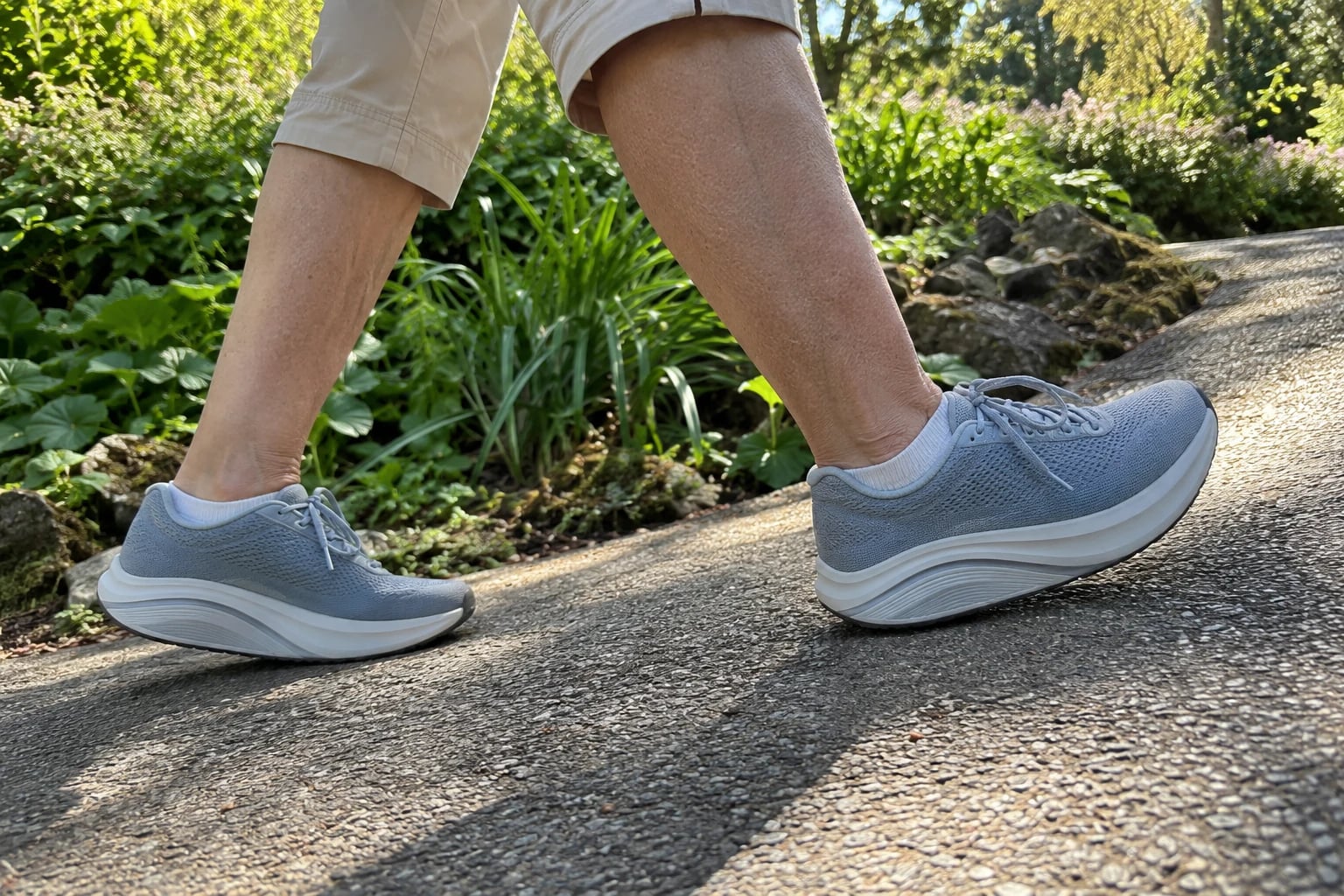
Set this shoe on the floor and look from the side. The sole curves up at the toe, and sometimes at the heel, like the bottom of a rocking chair. Push the toe down and the whole shoe rocks.
That curve rolls you forward through each step, so your big toe joint doesn't have to bend as far.
It suits hallux rigidus, arthritis in the big toe joint, and many sore balls of the foot. Small studies show rocker soles ease joint pain.
The sole is stiff by design. If you've always liked bendy shoes, the first few steps feel odd.
With shaky balance, start with a gentle rocker, not a steep one. Walk a long loop of the store, including any ramp or step, and ask for a flatter curve if you feel tipped forward.
For Heels, Arches, Ankles and Balance
Heel pain, a fallen arch, a stiff ankle, a fear of falling. These seven work from the back of the shoe and the ground up.
7A Heel That Rises About an Inch
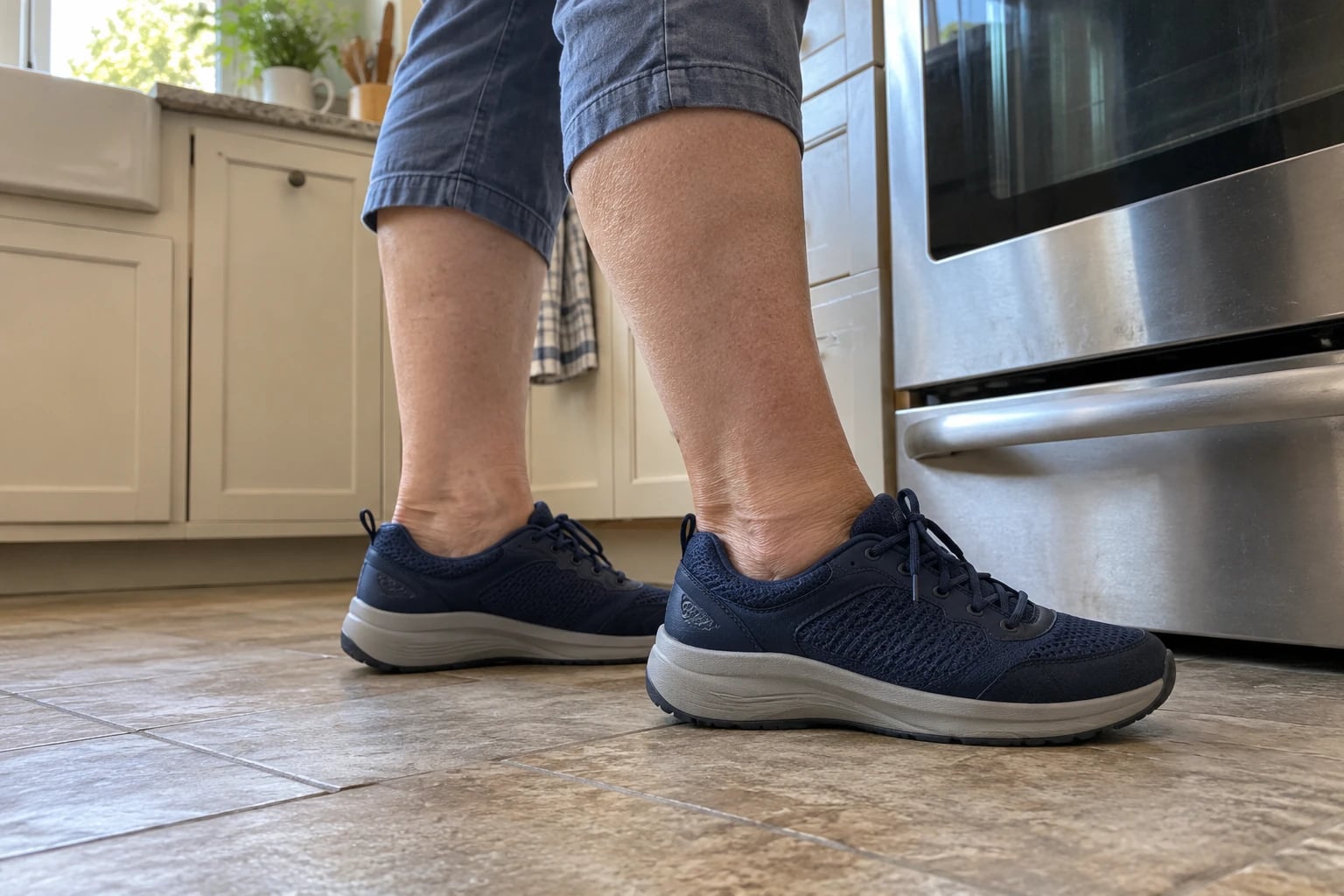
The heel of this walking shoe sits a little higher than the toe, about an inch at most, on a broad, flat base.
AAOS advises keeping women's heels under 2 inches, and the CreakyJoints guide for arthritic feet puts the top at 1 to 1½ inches. Research finds load on the front of the foot rises about 76% in a 3-inch heel, compared with a flat shoe.
That number explains why your dress heels hurt in a way they didn't at 35. A walking shoe and a dressy one can share the same inch.
With plantar fasciitis, don't assume dead-flat is kindest. Ask your podiatrist whether a slight lift at the back would help your heel, since that depends on your foot. If the ball of your foot is the sore spot, keep the heel low.
6A Deep, Firm Foam Heel
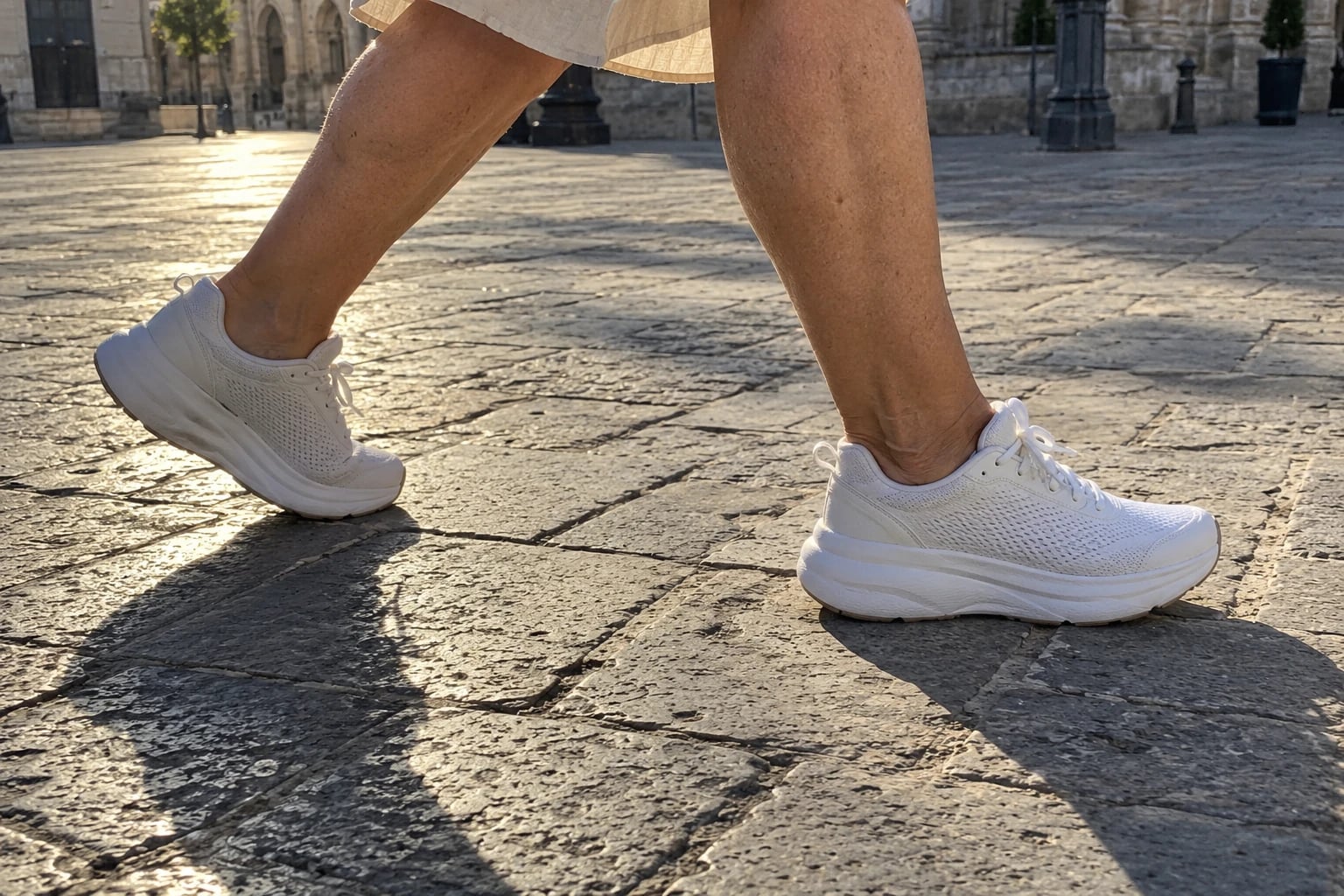
From the side, there's a thick layer of foam under the heel of this shoe. Press it, and it springs back.
It's for two kinds of heel pain. Plantar fasciitis hurts most with the first steps of the morning or after you've been sitting. A thinned fat pad under the heel aches the whole time you walk, worst on pavement.
Soft is the trap. A shoe that feels like a pillow in the store can let your heel sink and roll, which is why so many women are puzzled when the cushiest pair didn't help. You want deep and firm, foam that pushes back.
Press your thumb into the heel of the insole, then squeeze the outside of the heel. The foam should give a little. The cup around it shouldn't give at all.
Save these for hard surfaces: sidewalks, store floors, an airport concourse.
5A Stiff Heel Cup That Holds Its Shape
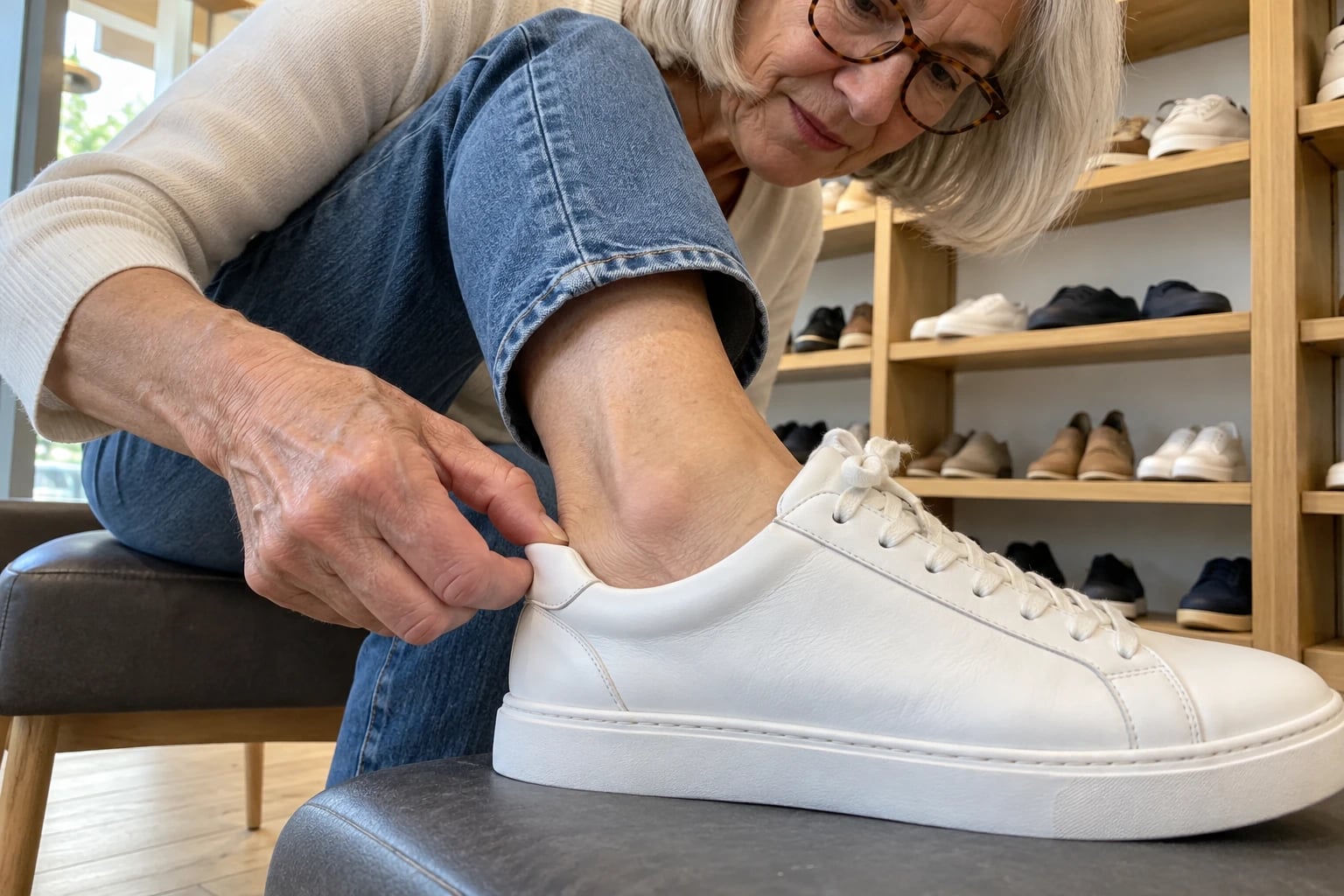
Pinch the back of the shoe between your thumb and fingers. On this one, the heel counter, the stiff cup that wraps your heel, barely moves.
APMA puts this first in its shoe test: squeeze the heel, and it shouldn't collapse. The stiffer the counter, the more control it gives.
Control of what? Pronation, the foot rolling inward as you step. UPMC recommends a firm heel counter for women with bunions to limit that roll.
Almost every sore foot does better with a firm cup. If you have a bump on the back of your heel, though, look for a padded collar along the top edge so the firm part never presses on it.
And a heel cup that folds flat now, when it didn't when the shoe was new, is telling you something.
4A Stability Sneaker With a Firm Arch
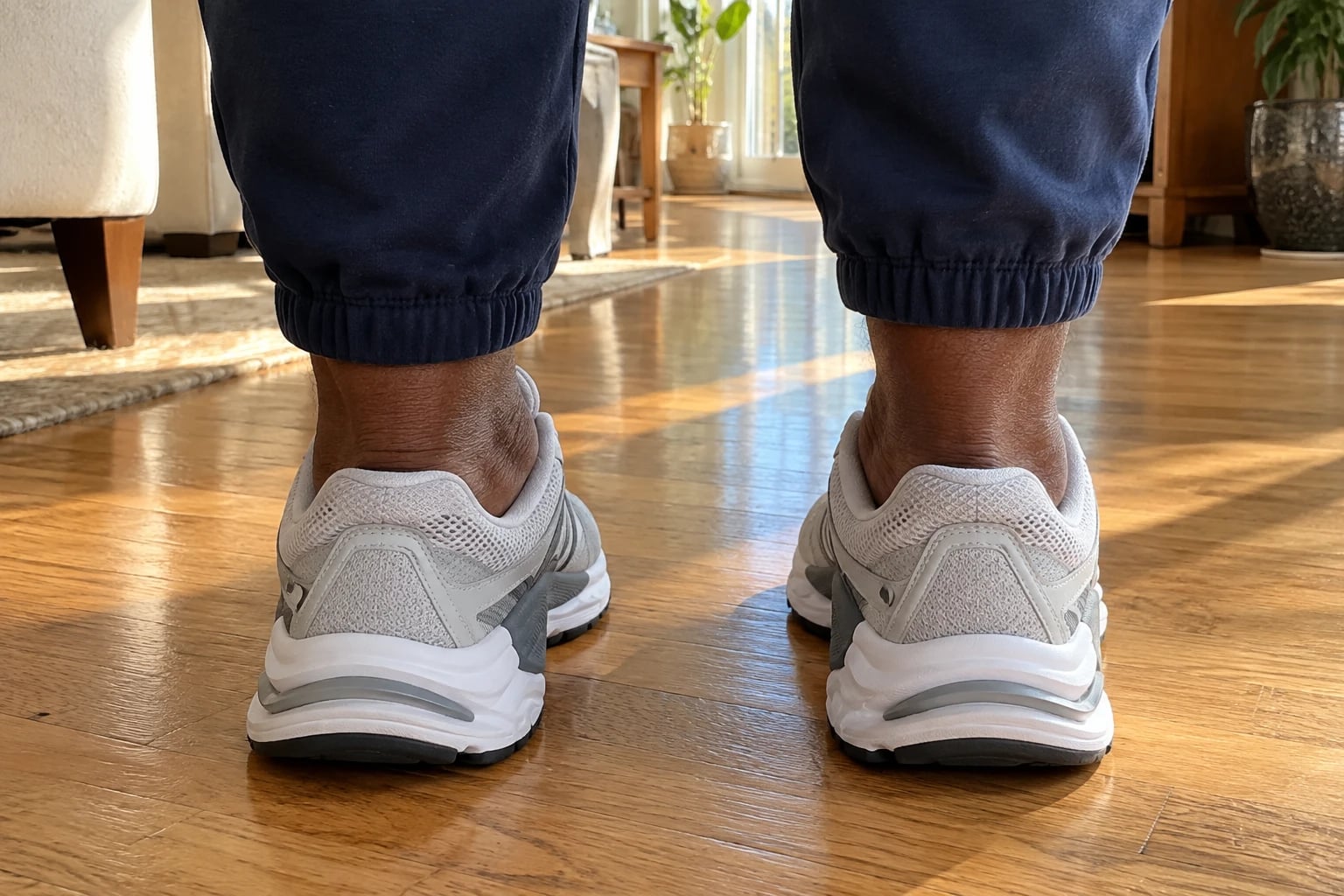
This sneaker is a bit broader under the arch than a running shoe, and the foam along the inner side is firmer, sometimes a different shade. Press the inside of the midsole and it pushes back harder than the outside.
It's for the arch that has dropped. Cleveland Clinic podiatrist Nicole Nicolosi, DPM, explains that worn arch ligaments let the arch fall, so feet get longer or wider.
An arch flattened after pregnancy, from the hormone relaxin, is often permanent, too.
Check your old shoes. If they wear out along the inside edge first, or someone watching from behind sees your ankles lean in as you walk, a stability shoe is worth trying.
The firm side should sit under your arch without digging in. Feel a hard ridge, and it's time to try another make.
3A Mid-Height Walking Shoe That Wraps the Ankle
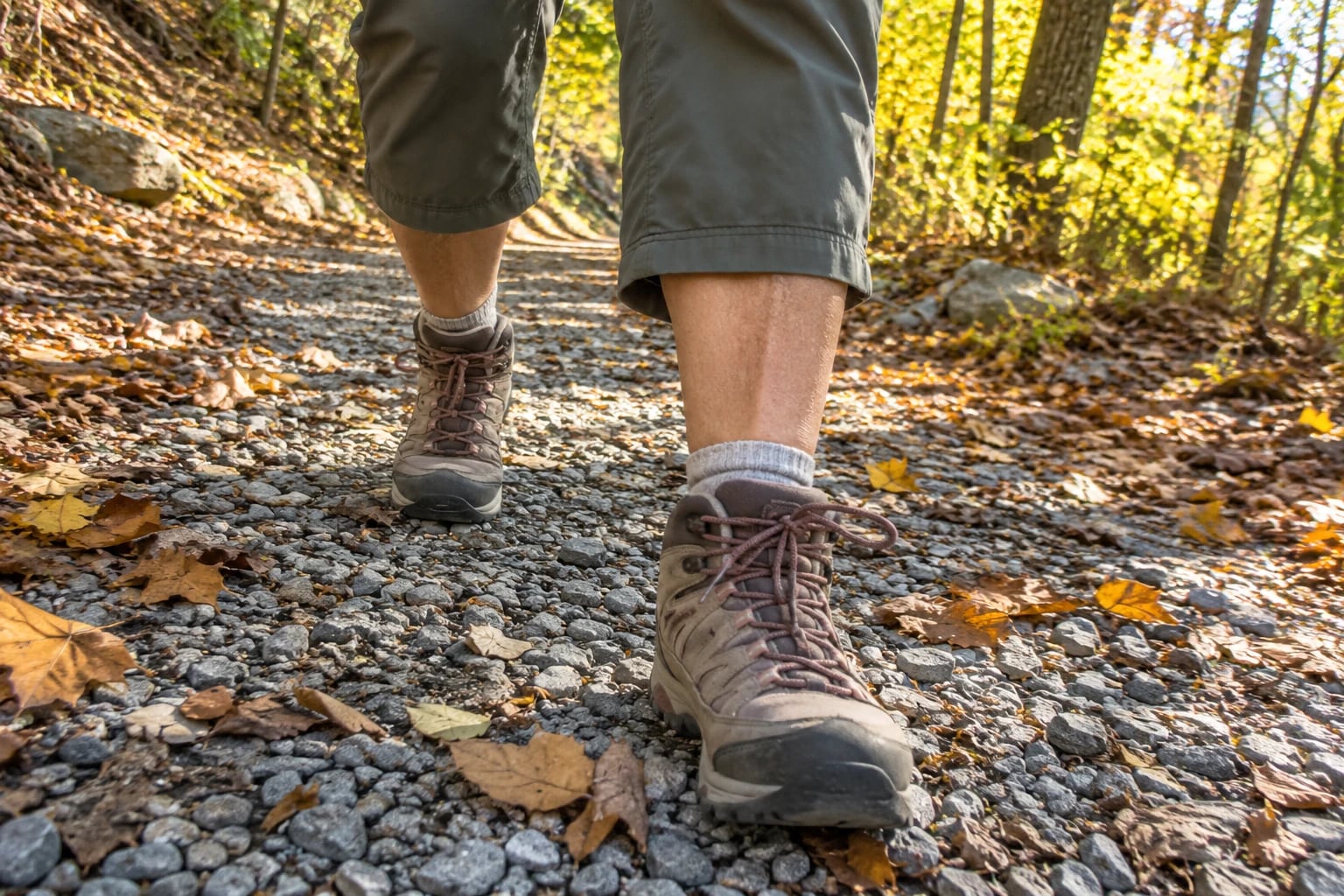
The collar of this shoe rises to just above the ankle bone, padded all the way around, and the laces run high so you can snug the top. Below, it's a walking shoe: a firm sole and a toe box with room.
Choose one if arthritis has stiffened your ankle, or it rolls on uneven ground, or your walks take you onto gravel paths and park trails. You'll notice the hold on a slope.
Lace the bottom eyelets loosely and the top ones snug. The front of your foot can swell while the ankle stays wrapped.
Skip it if your ankle swells a lot by evening, since a high collar can dig in. It's heavier than a low sneaker, too, so keep it for walks where the ground is rough.
2A Wide, Grippy Rubber Outsole
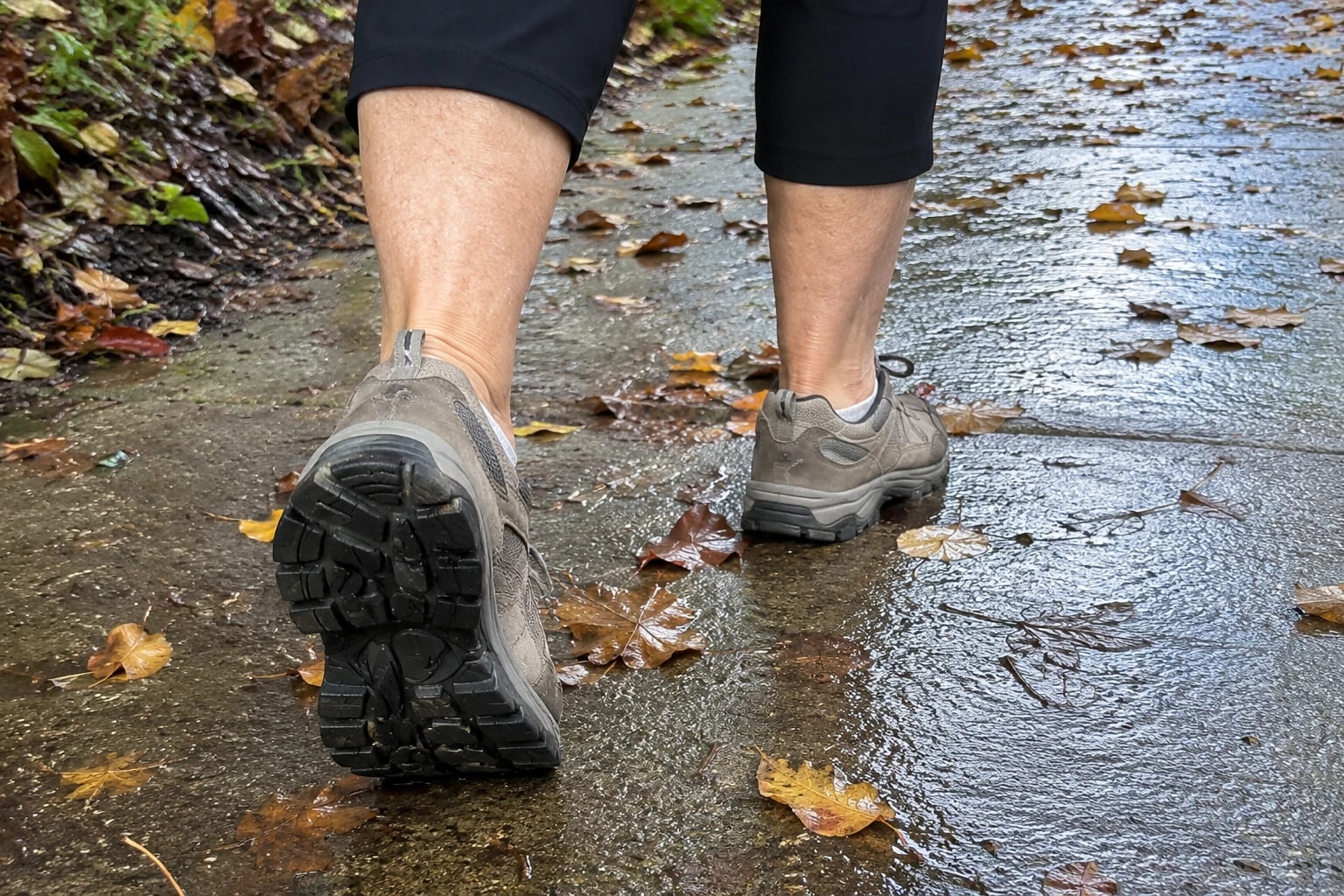
Flip this shoe over. The rubber bottom is wide, a little wider than the shoe above it, with deep grooves running across the foot and curling up the edge at the heel.
This is the shoe for balance. APMA notes that falls are the leading cause of fatal and non-fatal injuries in older adults, and about 3 million older adults get emergency care for fall injuries each year.
A wide base keeps your foot from tipping off its edge. Rubber with real grooves grips wet leaves, a rainy curb and a freshly mopped store floor.
Skip very tall, very soft soles that wobble, and outsoles that look slick even when new. In the store, stand on one leg in each pair you're considering. The steadier pair wins.
1A Firm-Soled Sneaker That Won't Twist
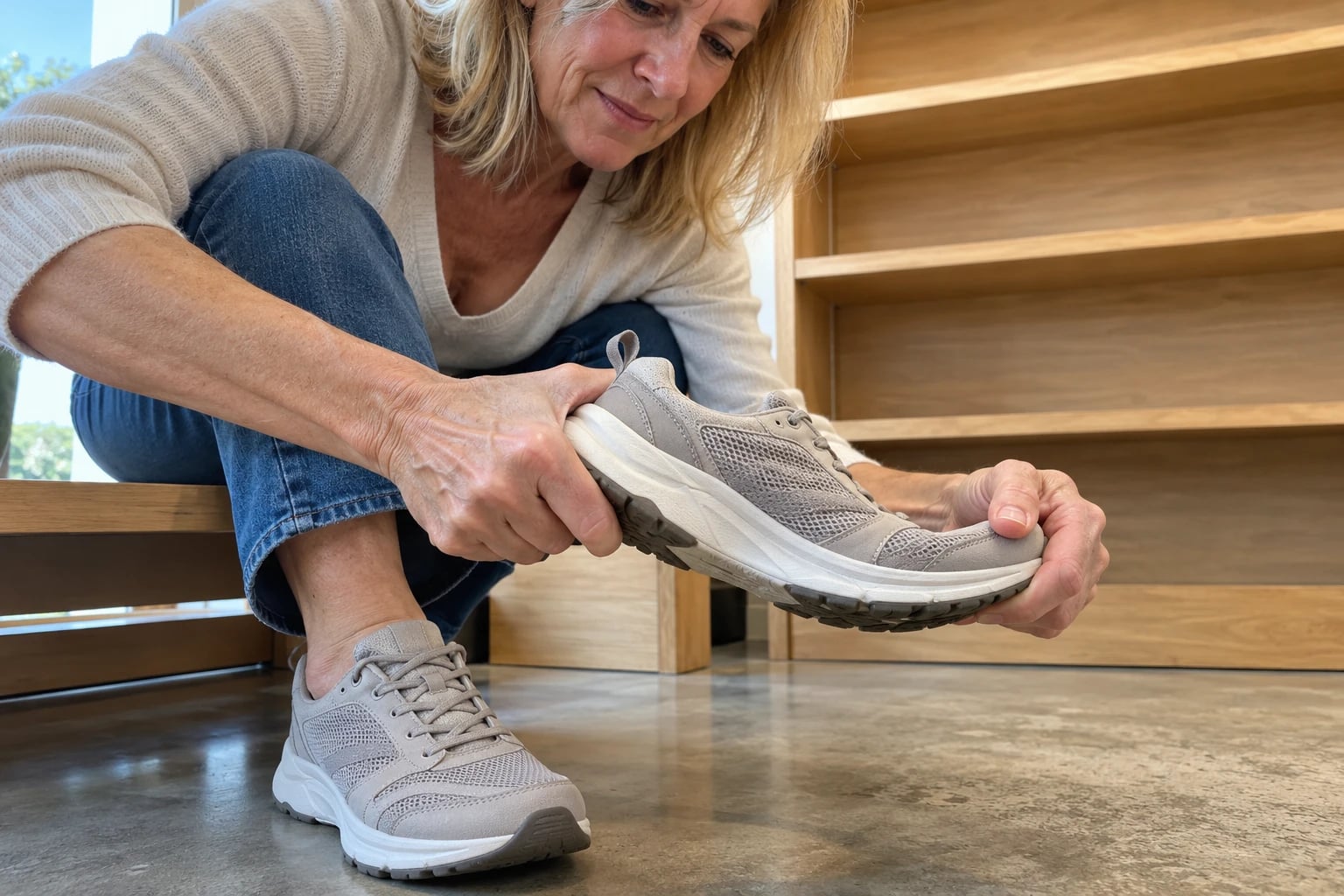
Pick this sneaker up by the heel and the toe and try to wring it like a dishcloth. It won't. The middle stays rigid, the heel cup stays round, and it bends only across the ball of the foot, where your toes bend.
That stiffness is why so many women put it back on the shelf. In the hand it feels less friendly than the soft pair beside it. Out on a long walk, the firm one is usually the pair still comfortable at the end.
APMA's ten-second test tells you. Squeeze the heel: it shouldn't collapse. Bend the shoe: it should flex at the toes, but not too much. Twist it: it shouldn't twist in the middle.
The stiff part under your arch is the shank, and it shouldn't bend. For most sore feet, heel, arch or big toe, that steady middle is what every other feature sits on.
It should also feel supportive the first time you walk in it. Skip any shoe that needs breaking in.
The bottom line
Start with the sole. Take three pairs off the shelf, squeeze, bend and twist each one, and try on only the ones that pass.
If you can buy only one pair right now and need it to walk and dress, choose a plain leather sneaker in your real width with a footbed that lifts out. Add the strapped Mary Jane for weddings when you can.
Up next
17 Plus-Size Office Outfits Over 50 That Actually Look Polished
Seventeen office outfits for a real plus-size body, each with the one fit detail that makes it work, from where a blazer button lands to what a tailor charges.
Read the list →


Reader quiz
Did you catch the details?
5 questions from this article. Finish them all to unlock the editor's bonus tip.
Where should a metatarsal pad sit for it to work, according to the article?
Did any of these feel familiar?
Know someone who needs this?
Sources cited in this article
This article links to 3 outside sources, listed here so you can read them yourself.

Peter Byalik
Food & Home Editor
Peter Byalik is a professional chef with more than 20 years of experience, including years running his own business. He came to the United States from Ukraine.
More from Peter Byalik