





How to Lose Weight After 50 Without Going to the Gym
A full plan for your kitchen and living room, including a chair-and-soup-can strength routine, with honest numbers on pace, hunger and the stall that shows up around months six to eight.
By Peter Byalik, Food & Home Editor
Updated · 27 min read
The short answer: Food does most of the work; a gym is optional. What drives the loss: a daily cut of about 200 to 500 calories, protein at every meal, more fiber, fewer sugary drinks and at least 7 hours of sleep. Home strength moves (chair stands, push-ups, rows) protect the muscle dieting alone can cost. Expect 1 to 2 pounds a week, and a stall around six to eight months.
- Written by our food & home editor
- Cited 59 sources
- How we review
Every professional kitchen I've worked in portions food with a scale and a rack of ladles. Nobody does it for looks. A cook who eyeballs the rice gives away the profit one generous scoop at a time, and by month's end the books show it.
Your kitchen at home runs on eyeballing. That's where most weight is gained and lost, far more than on any treadmill. So if you're wondering how to lose weight after 50 without going to the gym, start with the room you already run. Food does the heavy work. A chair and two soup cans protect your muscle while it happens. And plain numbers on pace and hunger will keep you steady through the stall most people hit around month six.
Can you really lose weight after 50 without going to the gym?
Yes, and the evidence leans hard that way. Food decides most of what the scale does. Exercise mostly decides what kind of weight comes off, and how you feel while it does.
Family physician Dr. Mike Varshavski, known online as Doctor Mike, says diet accounts for the vast majority of weight loss, and that you can lose weight without changing your workout routine at all. He still tells his patients to exercise, for their mood and their aches. That's my view too. Move because it makes the day better, and let the kitchen handle the weight.
Two trials show how lopsided the split is:
- In the CROSSROADS trial, 164 adults 65 and older with obesity, all taking at least one medicine for cholesterol, blood pressure or diabetes, were followed for a year. Only the group that cut 500 calories a day on top of exercising lost meaningful weight, about 4% of body weight. The exercise-only group barely changed.
- The Diabetes Prevention Program paired daily calorie targets of 1,200 to 2,000 with 150 minutes a week of activity about as hard as brisk walking. No gym was involved, and it cut new cases of diabetes by 58%.
If you're on Medicare, it covers its own version of that program at no cost to you. To qualify, you need a blood test in the past 12 months showing prediabetes, no prior diagnosis of diabetes or end-stage renal disease, and a BMI (body mass index) of 25 or more, or 23 or more if you're Asian American. With a BMI of 30 or more, Medicare also covers weight-loss counseling with your primary care provider, free if they accept Medicare's approved rate.
Walking on its own rarely does it. The Obesity Medicine Association's summary of the American College of Sports Medicine's guidance says walking alone "has not consistently been associated with a weight or BMI change," and that "the chances of substantial weight loss are unlikely... without additional caloric restriction."
People over 50 have put up big numbers this way. Missy Gillenwater, 50, lost 114 pounds in about 13 months by changing what she ate and walking every day. Detricia Woods-Meadows, 52, lost 65 pounds in about nine months with portion control and more water, and no medication. Janet Allen started at 55 and lost 110 pounds over four to five years, partly by clearing junk food out of the house. She also took Contrave, a prescription drug that isn't one of the GLP-1 medicines, the newer class of weight-loss drugs.
Can you lose weight without exercise? People do. Across several Reddit weight-loss threads, commenters say eating less did nearly all of it, some while sitting most of the day. A man on r/keto who lost more than 100 pounds between 57 and 59, without exercise, wrote: "My carb and sugar cravings have been gone for a long time and I feel a real sense of freedom to be over these addictions."
Losing 50 pounds without working out has been done too. A commenter on r/loseit lost about 50 after 50 with portion control and fiber. Another, in the same thread, kept it to three short sentences: "I lost 45 lbs this past year age 61. CICO. You just have to commit." CICO is shorthand for calories in, calories out.
If the gym's crowd and small talk are what keep you home, commenters in one Reddit thread say the same. Home works fine. The one thing a gym does that your couch won't is load your muscles, and that part is worth copying with a chair.
How many calories should you cut each day?
Fewer than you'd guess. Gastroenterologist Dr. Palaniappan Manickam, who goes by Dr. Pal, says a daily cut of about 200 to 300 calories is enough for most people, and that bigger cuts usually backfire. That gap between what you eat and what you burn is your calorie deficit, and the right size is the one you can keep for months. For a personal starting number, the NIH's free Body Weight Planner turns your weight, height, age, activity and goal into a daily calorie target.
Here's what a cut you keep actually buys. Kevin Hall and his NIH colleagues, writing in The Lancet in 2011, gave a rule of thumb for an average overweight adult: every permanent change of 10 calories a day eventually moves your weight by about a pound. About half of that shows up in the first year, and nearly all of it by year three.
| Daily cut you keep | Lost by end of year one | Where it levels off |
|---|---|---|
| 200 calories | about 10 lb | about 20 lb |
| 500 calories | about 25 lb | about 50 lb |
| 500, by the old 3,500-calorie rule | about 52 lb | never, in theory |
The bottom row is the rule most of us learned, and it promises roughly double what happens in year one. Hall's team says the standard line, a pound a week from 500 calories, is wrong because "it ignores dynamic physiological adaptations." A smaller body burns less, so the same cut does less over time.
So the 200-calorie cut won't impress you in week one, but it keeps paying. In kitchen terms, 200 calories is a heavier hand with the oil, a finishing pat of butter, a second roll from the basket. Read the label on your cooking oil once and you'll start measuring it with a spoon.
If you've never tracked, write down what you normally eat for a week before cutting anything. You can't trim a budget you've never looked at.
Belly fat follows the same rules as the rest of you. Dr. Pal says belly fat shrinks when overall body fat shrinks, and no number of crunches gets to pick the spot.
For a first goal, the CDC says losing 5% of your weight, 10 pounds if you weigh 200, can improve blood pressure, cholesterol and blood sugar. By the table above, a 200-calorie cut gets you to about 10 pounds lost in a year, which is a 5% loss only if you weigh around 200 pounds.
How do you set up your kitchen to eat less without trying?
Make the small portion the easy one. What's in reach when you're hungry is what gets eaten, so these six changes are about reach:
- Buy single servings, or split the big bag the day it comes home. The NIDDK, the federal institute for digestive and kidney diseases, says to "divide the items into single-serving packages right away," and to eat one serving off a plate "instead of straight out of the box or bag." The bulk bag wins on price per ounce. It loses on everything else.
- Use smaller plates, bowls and glasses. NIDDK says plainly to use smaller dishes "so you eat and drink less." Doctor Mike says his patients eat big portions without realizing it, and a smaller plate helps them judge a sensible one. From the restaurant side: a big plate makes a normal portion look stingy, and a stingy-looking portion gets a second spoonful.
- Eat the same breakfast and lunch most days. Gillenwater eats oatmeal and a protein shake every morning. People in a Reddit thread on household habits say a fixed breakfast and lunch tells them exactly how much room is left for dinner, when hunger peaks. Restaurants control cost with a set menu. You can control calories the same way.
- Drink water instead of calories. Several commenters on Reddit and TikTok call cutting sugary drinks their easiest big change: soda swapped for seltzer or diet, a lighter coffee creamer, water at meals. Liquid calories are the cheapest cut you'll ever make, because you won't miss chewing them.
- Cook at home, and cook ahead. Doctor Mike points out that cooking ahead keeps you from ordering takeout when you're tired, and you choose the food and the oil. NIDDK suggests freezing extra food in single portions as ready-made meals. In my experience, what gets eaten on a tired night is whatever's already cooked. A tray of roasted chicken, a pot of grains and a bowl of washed fruit on a Sunday will beat the delivery app three nights running.
- Keep the foods you overeat out of the house. Allen removed junk food from her home as one of her first changes. Nobody needs to win an argument with a pantry every evening.
None of this means banning anything.
"I can have it, (but) I can't have it all." Detricia Woods-Meadows, who lost 65 pounds at 52, speaking to TODAY
The evidence for portion sizes is about as solid as nutrition research gets. A Cochrane review pooled 61 high-quality trials with 6,711 people and found that people consistently ate more when given larger portions, packages or tableware, whatever their sex or body size. The authors modeled what would happen if larger sizes vanished from American adults' diets: up to 527 fewer calories a day. That's a projection across all ages, but it's the right order of magnitude to take seriously.
Ian Shemilt, who co-led the review, put it this way: "The evidence is compelling now that actions that reduce the size, availability and appeal of large servings can make a difference." His team even suggested limiting the price breaks on bigger sizes. That's the multi-buy aisle, and you can skip it today.
How much protein and fiber do you need to stay full?
More protein than most people eat at breakfast, and more fiber than almost anyone eats at all. Get those two right and hunger stops being the price of admission. Doctor Mike rejects the old advice to get used to being hungry, and says you can lose weight without feeling hungry and suffering with it: eat until you're satisfied, not stuffed.
The Dietary Guidelines for Americans in effect in 2026, the 2025 to 2030 edition, advise 1.2 to 1.6 grams of protein per kilogram of body weight a day for adults. In pounds, that's a little over half a gram to about three-quarters of a gram per pound you weigh. At 150 pounds, it comes to about 82 to 109 grams a day. If you have chronic kidney disease, that range isn't for you: the National Kidney Foundation advises far less protein for most people with it, set with a kidney dietitian.
Dr. Pal suggests a good protein source at every meal, at least 25 to 30 grams, spread across the day instead of piled onto dinner. Protein grams are on every package label, which makes this the easiest number in the plan to check. From what I've seen of how people really eat, breakfast is where the protein goes missing: toast, coffee, maybe a banana. Gillenwater's oatmeal and protein shake fixes that in one move.
Fiber is the other half. After 51, the target is 22 grams a day for women and 28 for men, and most American adults eat about 16. Only about 5% hit their number. Cleveland Clinic dietitian Beth Czerwony says to "add in no more than 5 grams of fiber per week until you reach your individual goal," and to drink enough water along the way. Your gut will thank you for the patience.
- From a typical 16 grams, reaching 22 takes about two weeks at that pace.
- Reaching 28 takes about three.
A commenter on r/loseit who lost weight after 50 credited exactly this pairing: "Fiber supplements (to help me feel full) and portion control were the key."
Then slow down. Doctor Mike says chewing thoroughly gives your body time to register that you're full, and NIDDK says that signal may take at least 15 minutes to reach your brain. A cook can help you here. Serve food that takes some work: a bone-in chicken thigh, a salad of real leaves you have to cut, a bowl of soup too hot to gulp.
What's a good home strength routine without a gym?
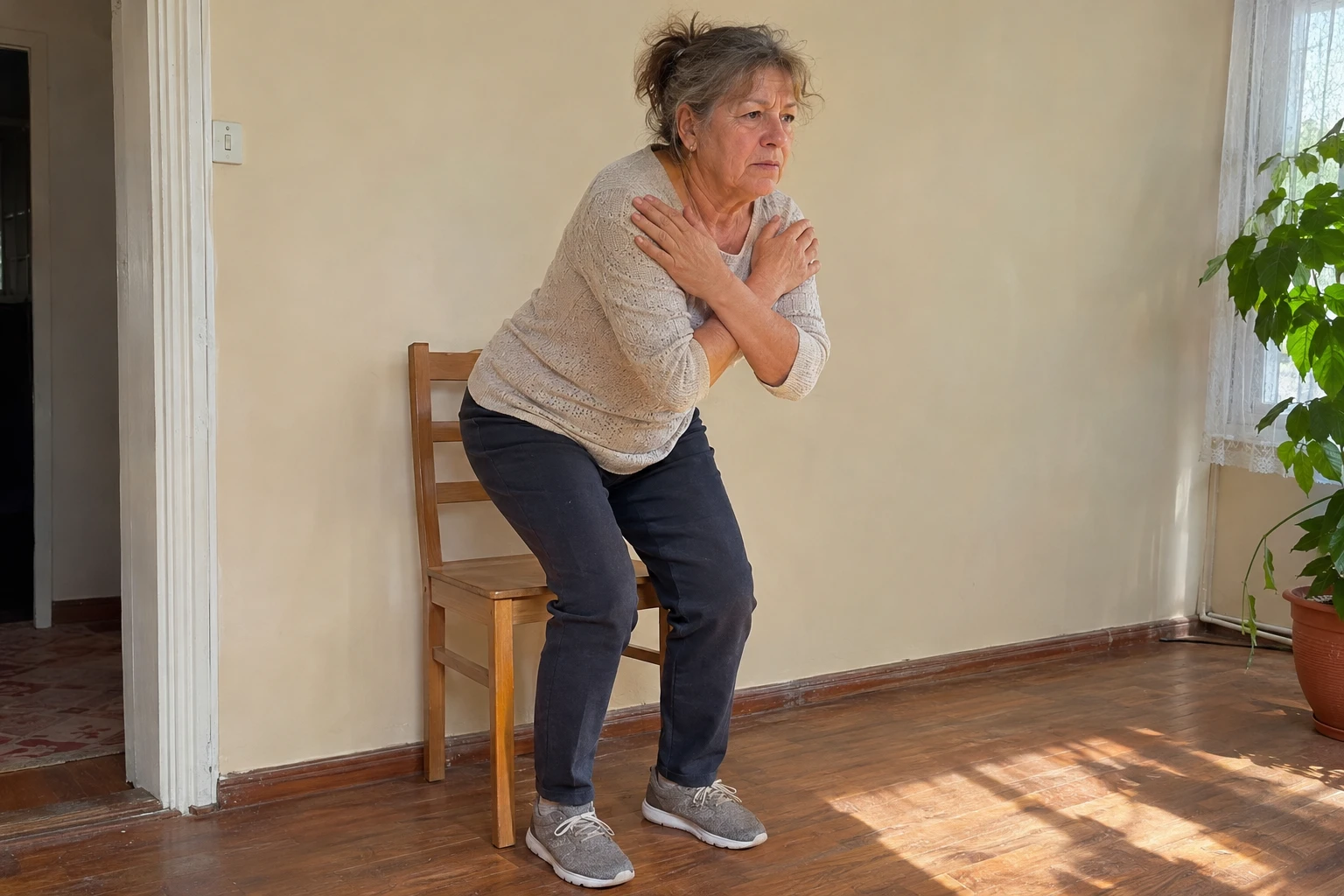
Three moves, a sturdy chair, a countertop and two cans of soup, two or three days a week. Shrey Vazir, a registered physiotherapist in Canada, recommends exactly this kit: chair sit-to-stands, countertop push-ups and rows with soup cans, each made a little harder as it gets easier. These are bodyweight exercises, the home versions of squats and push-ups, and the equipment costs whatever you paid for the soup.
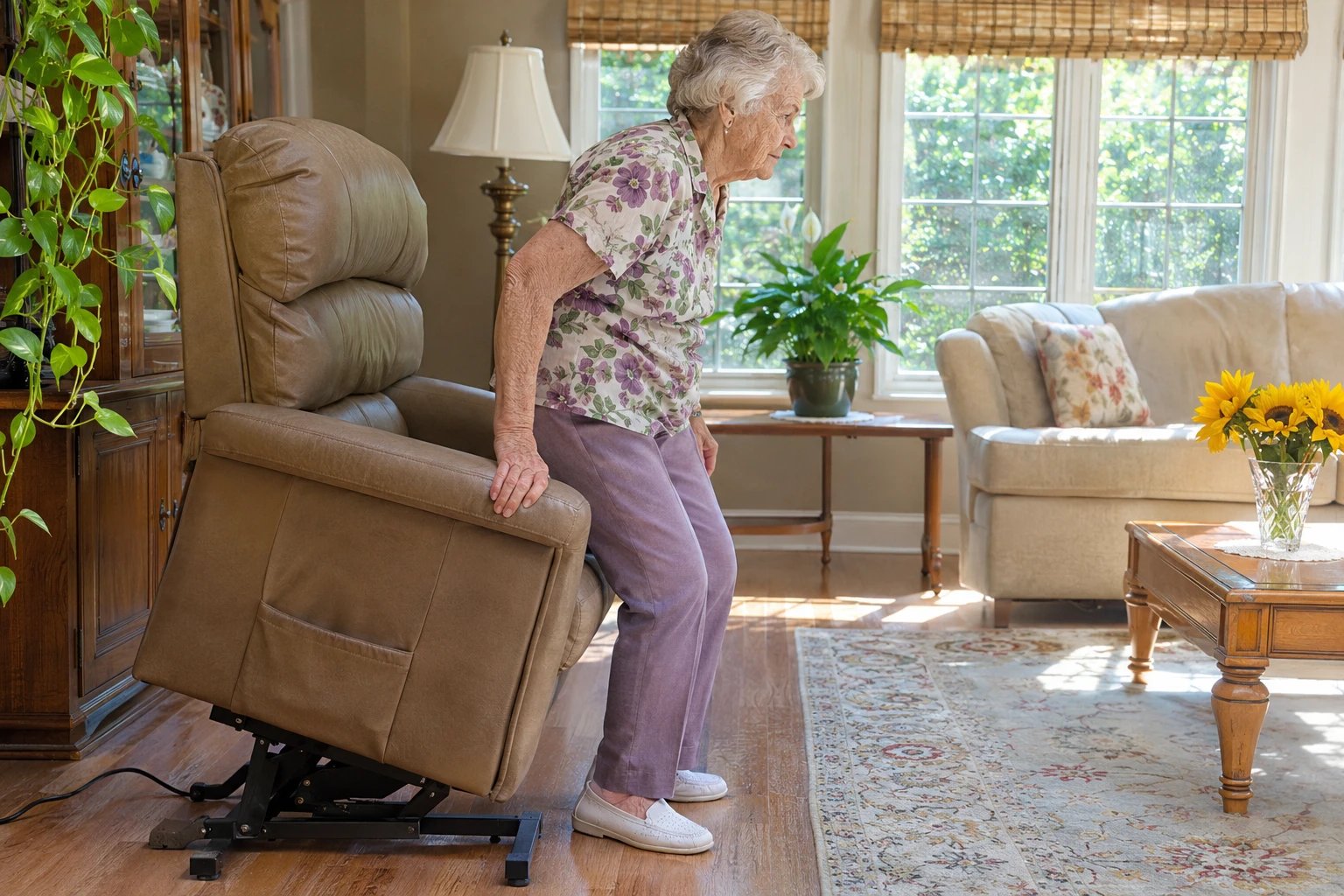
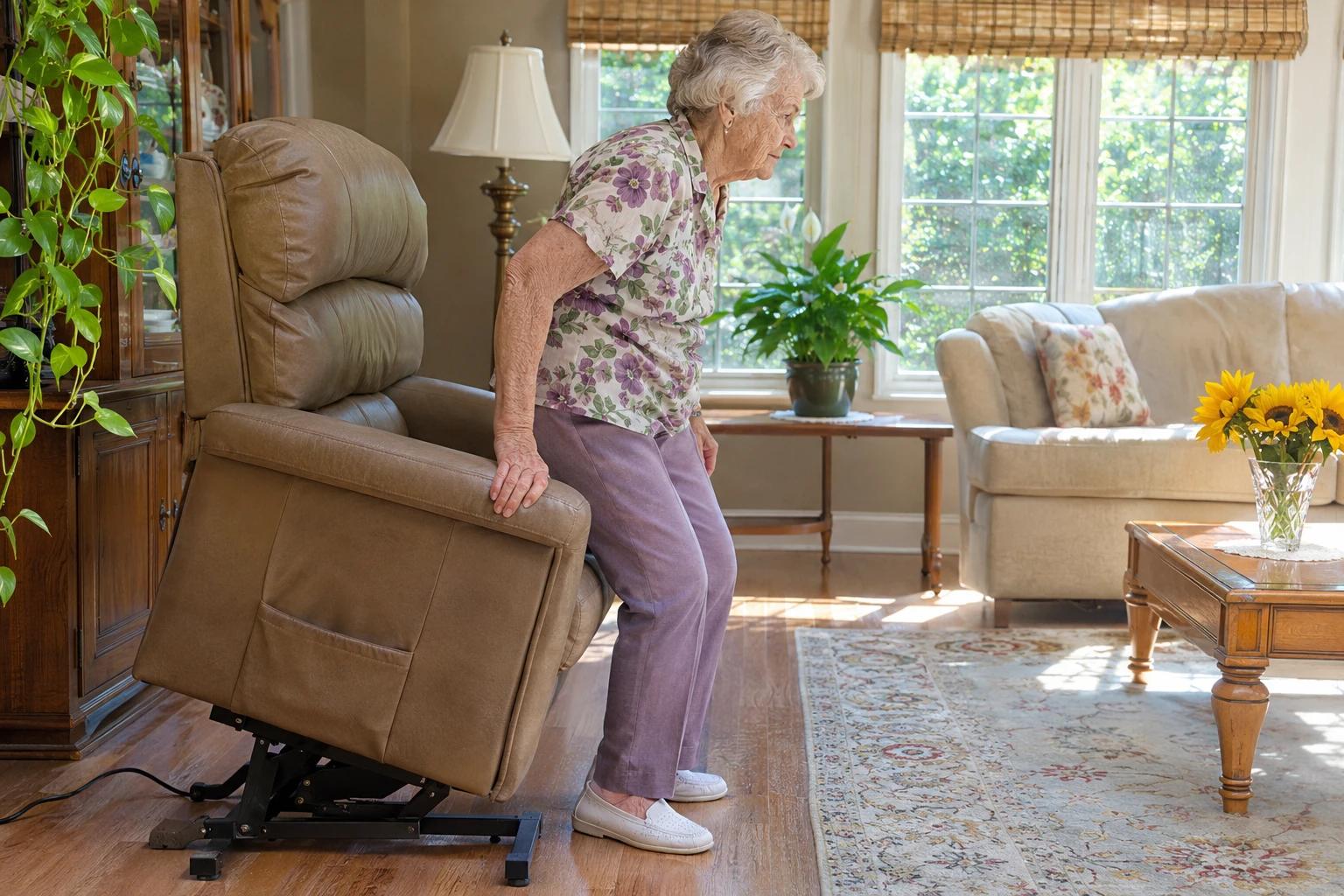
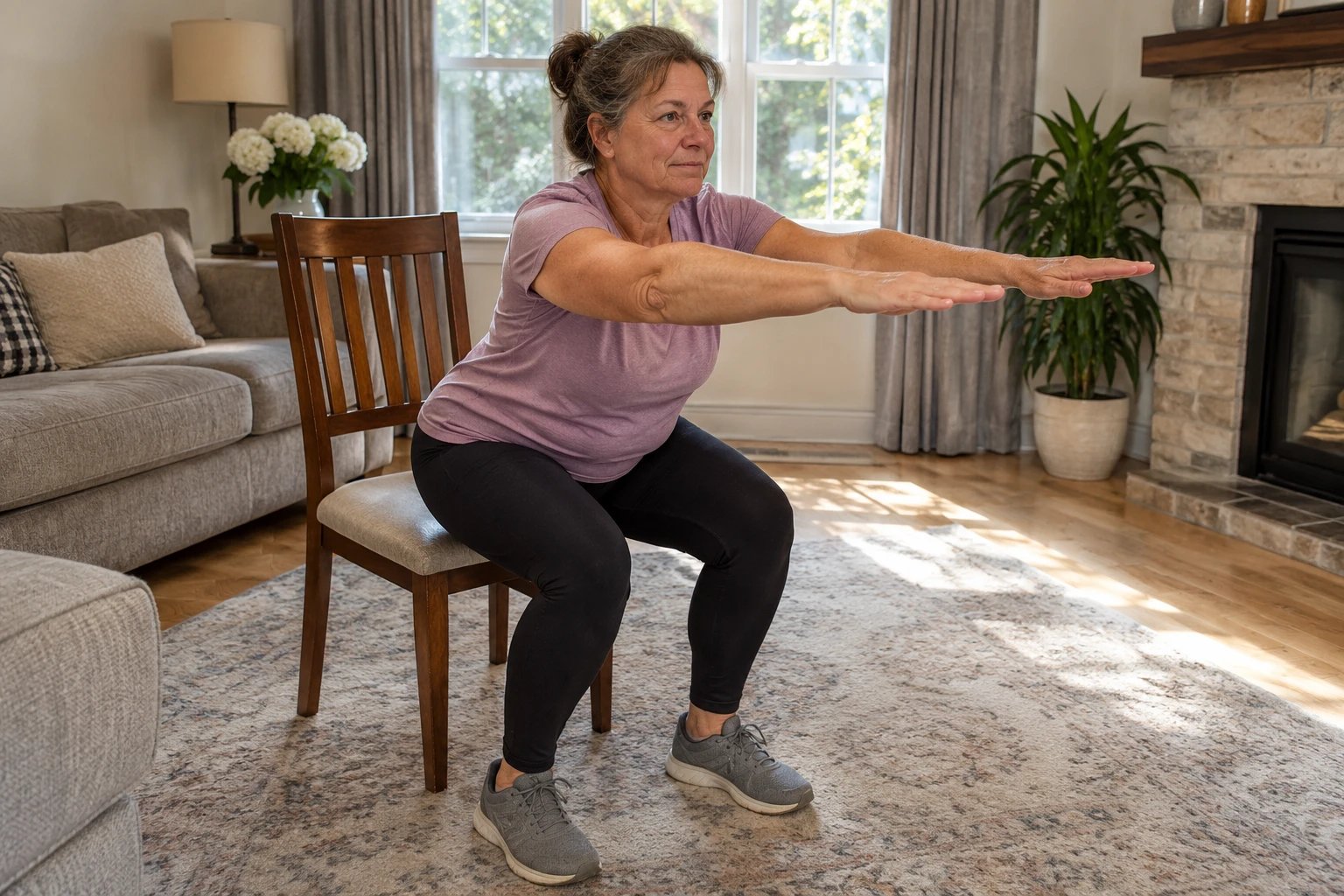
- Chair stand. Harvard Health Publishing's version: push a chair back against a wall and put a small pillow at the back of the seat. Sit toward the front with knees bent and feet flat. Sit upright, then "stand up slowly, using your hands as little as possible (or not at all)," and sit back down slowly. Do 8 to 12, rest, and do the set again.
- Wall or countertop push-up. The National Institute on Aging's version: stand a little farther than arm's length from a wall, feet shoulder-width apart, palms flat on the wall at shoulder height. Bend your elbows to lower yourself slowly toward the wall, hold a second, then push back to straight arms. Vazir uses the edge of a sturdy counter for the same move.
- Soup-can arm raise. From the same NIA guide: hold a can in each hand at shoulder height, palms forward, raise both arms overhead with elbows slightly bent, hold a second and lower slowly. Start light, with a can of soup. If you've had hip or back surgery, check with your doctor before these.
Want a fourth? Harvard's page also covers biceps curls and reverse flies, and the same cans will do. Vazir's video shows his push-up, if you'd like to watch before you start.
How often: the CDC's guidelines for older adults ask for at least two days a week of activities that strengthen muscles. Dr. Pal goes a step further, calling strength training the foundation for losing fat and keeping it off, and says three days a week is enough for most people. The whole routine takes about as long as a pot of rice.
Why bother, if food does the losing? Because food alone takes some of the wrong weight with it. In a year-long study of more than 100 adults 65 and older with obesity, average age 70, the people who only dieted lost 5% of their lean body mass and 3% of their hip bone density. Lean mass means muscle and everything else that isn't fat. Those who dieted and exercised lost 3% and 1%.
Walking won't cover this for you. Vazir says: "Many people think that walking and stretching are enough to stay strong and healthy in later years, but research proves that they do not combat sarcopenia." Sarcopenia is the slow muscle loss that comes with age.
A chair stand is a squat with a seat waiting under you. That's the whole trick.
How do you sit less and move more if you hate exercise?
Break up your sitting with a few minutes of walking, and put the first walk right after a meal. The federal Physical Activity Guidelines open with one line: "The first key guideline for adults is to move more and sit less." The current edition dropped the old 10-minute minimum, so every bout counts.
Dr. Pal calls these exercise snacks: 2 to 5 minutes of walking, squats or stairs every 30 to 60 minutes, which he says improves blood sugar control after meals. A 2022 analysis led by Aidan Buffey at the University of Limerick pooled seven small lab studies and found that light walking breaks cut the rise in blood sugar after meals by about 17% compared with sitting straight through. Standing breaks helped by about 9%.
Timing matters. Blood sugar typically peaks 60 to 90 minutes after eating, so the walk works best soon after you finish. That's a blood sugar benefit rather than a weight one, but it comes with the same few minutes on your feet.
Standing at the sink doing the dishes after dinner gets you the smaller benefit. A lap around the block gets you the bigger one.
Go easy on the hard stuff. Commenters in one Reddit thread say hard workouts make them hungrier, or hand them an excuse to eat more. The E-MECHANIC trial saw it happen: 198 adults, mostly women and averaging 48, did 24 weeks of supervised treadmill exercise, and about three in four lost less weight than their exercise should have produced. The researchers point to people eating more. I've watched line cooks finish a double shift and eat like they'd been at sea for a month. Gentle and often wins.
Walking is the most common gym replacement in Reddit weight-loss threads, and some people there lost weight walking a few miles a day. If walking bores you stiff, commenters there have practical fixes:
- A podcast or audiobook saved for walks only
- A phone game
- Dancing alone at home, which commenters describe as fun and forgiving
Nobody judges your dancing in your own living room.
Where do you start if you're out of shape or stiff?
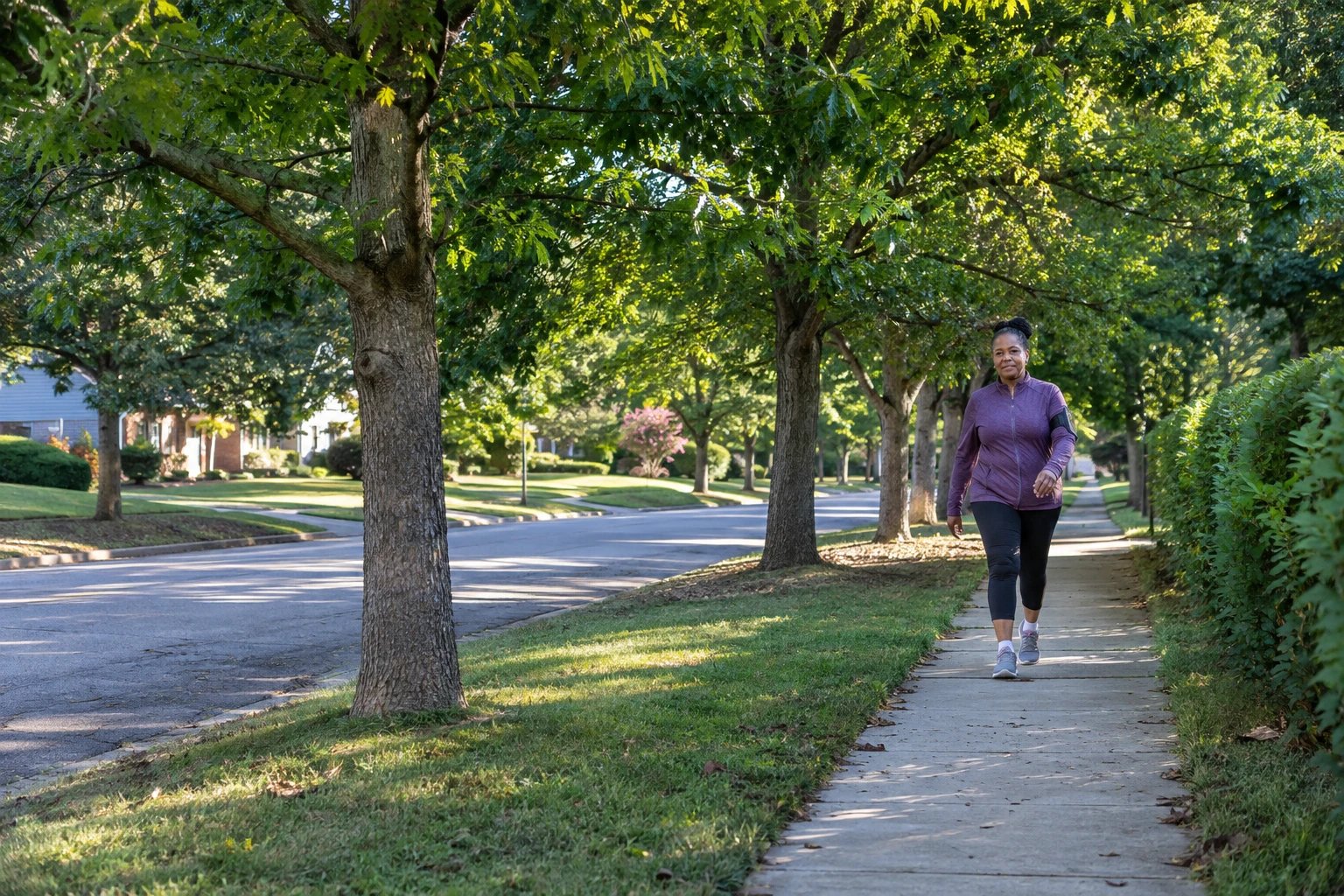
Start with whatever you can do today, even if it's one block. The CDC's advice for older adults is to "be as physically active as your abilities and conditions allow," because "some physical activity is better than none at all."
Of the four TODAY stories we read about people over 50 who lost 60 to 114 pounds, every one started small. Here's how to copy them:
- Find your baseline. Most phones already count steps. Look at three ordinary days and take the average.
- Add 500 steps every two or three weeks. Woods-Meadows did exactly this, starting at 5,000 a day. She reached 10,000 by August 2022 and 13,000 to 15,000 or more by May 2023. At that rate, going from 5,000 to 10,000 steps per day takes five to seven months, a slope gentle enough to keep.
- Split it into pieces. Monica Poole, 54, started with 7,000 steps a day in 10-minute bits and lost 60 pounds in about a year and a half. "Magic happens when you focus on what you can do every day," she told TODAY. She later added twice-weekly weight training, so her story isn't a strictly gym-free example.
- Count the chair. Chair stands with full help from your hands are a real start on strength, and they make every walk easier.
The starting points were humble. At 277 pounds, Gillenwater could barely walk 1 mile, at about 25 minutes a mile. She built up to 10 to 13 miles a day: "I haven't missed one day of walking over the past 13 months." Allen began with one block and worked up to hour-and-a-half walks with her daughter.
You don't need 13 miles. You need next month's number to be a little higher than this month's.
How do sleep and late-night eating affect your weight?
Short nights make eating less harder, so give sleep a fixed slot in the plan. The CDC recommends 7 or more hours for adults through 60, 7 to 9 hours of sleep from 61 to 64, and 7 to 8 hours from 65 on. Dr. Pal says to aim for at least 7 and treats sleep as a working part of weight loss, not an extra.
One trial points the way, though it was run on adults aged 21 to 40, so take it as a direction, not a promise. Researchers at the University of Chicago and the University of Wisconsin-Madison gave 80 overweight adults who usually slept under six and a half hours a single counseling session on sleep habits. Over two weeks they slept about 1.2 hours more a night and ate about 270 fewer calories a day. Esra Tasali, who directs the UChicago Sleep Center, said "in real life, without making any other lifestyle changes, you can extend your sleep and eat fewer calories."
Commenters in a Reddit thread on household habits describe the other side: short nights lead to more snacking, more delivery orders and skipped walks.
Late-night eating usually starts earlier in the day. NIDDK warns that skipping or delaying meals "may cause you to overeat later in the day." To eat less at night, eat a real lunch and a proper dinner at a regular hour. Restaurant kitchens close at a set time and nobody argues with the chef. Give your kitchen a closing time and stick to it.
Intermittent fasting, eating only within set hours or skipping meals on set days, carries more risk than its fans let on. AARP lists the main ones for older adults: too little protein, leading to muscle and bone loss, plus dehydration, medicines that must be taken with food, and the chance of setting off an eating disorder. Kenneth Koncilja, MD, of Cleveland Clinic's Center for Geriatric Medicine, says people with high blood pressure or diabetes "might want to work with their primary care physician" before trying it.
Under one fasting video on TikTok, commenters report woozy spells, brain fog, migraines and binges. Hormones seem less of a worry: in an eight-week trial by Krista Varady at the University of Illinois Chicago, estrogen and progesterone didn't change in postmenopausal women, and a hormone called DHEA fell about 14% but stayed within the normal range.
Water targets have gotten silly too. Harvard Health says "most people need about four to six cups of plain water each day," and commenters under a TikTok water-challenge video call 100-ounce goals unrealistic. Too much water can cause trouble if you have thyroid, kidney, liver or heart disease, or take certain medicines, including anti-inflammatory pain relievers (NSAIDs), opioids and some antidepressants, so ask your doctor what's right for you if any of those apply.
How fast will you lose weight, and what happens at a stall?
About 1 to 2 pounds a week, then a slowdown somewhere around six to eight months. Both are normal. Cleveland Clinic dietitian Beth Czerwony warns against rushing it: "When you lose weight quickly, it tends to come from muscle, rather than fat." The CDC adds that people who lose about 1 to 2 pounds a week are more likely to keep it off.
The appetite figures come from a 2016 analysis by Polidori, Hall and colleagues of 153 people with type 2 diabetes, average age 55, taking a drug that causes weight loss rather than dieting. Take it as a rough guide to the pull you may feel. If you've been blaming your metabolism after 50, the numbers point mostly at appetite instead. The Diabetes Prevention Program set its goal for the first six months because past studies showed most people hit their maximum loss by then.
Cleveland Clinic endocrinologist Dr. Shirisha Avadhanula explains the stall this way: during weight loss "your body thinks it's starving," so it makes hormones that raise hunger, and the same exercise burns less over time as your body gets efficient at it. Her fix is to add exercise and keep the diet steady: "The most important thing with dietary habits is being consistent."
If the scale won't budge at all, check the medicine cabinet before blaming yourself. Mayo Clinic lists weight gain as a possible side effect of nearly all antidepressants, older beta blockers such as atenolol and metoprolol, insulin and steroids like prednisone. Ask your doctor about a switch or a dose change, and don't stop or cut any of them on your own. An underactive thyroid usually adds 5 to 10 pounds, mostly salt and water.
So at a stall, don't cut further. Change these instead:
- Tighten the tracking. Commenters on Reddit who broke through stalls say they tracked more closely or changed their eating pattern. Portions creep, and oil creeps fastest.
- Add movement. Another 500 steps a day, or a third strength day.
- Lean on protein and fiber, which both increase fullness and can help offset a bigger appetite.
- Measure more than weight. Dr. Pal suggests tracking your waist measurement, how clothes fit, your energy and your strength, not only the scale.
A belt that needs a new hole is data too.
The bottom line
Start in the kitchen this week. Pick a breakfast you'll eat most mornings, make sure it carries real protein, and swap any sugary drink for water or seltzer. Move the snacks into single servings and put the big plates at the back of the cupboard.
Then push a chair against a wall and do your first set of chair stands, up to 8. Two or three days a week, add the push-ups (10 to 15 reps) and soup-can arm raises (8 to 12 reps, stepping up when 12 come easily).
If you're starting from very little, the first walk is one block, and the steps go up by 500 every two or three weeks. If you've already lost and stalled, hold your eating where it is and add movement instead of cutting more.
The soup cans go back in the pantry when you're done. Dinner is at the usual hour.
Up next
17 Tai Chi Exercises and Honest Truths for Women Over 50
Real tai chi moves you can start today, standing or seated, plus straight answers about your balance, your bones and those belly-fat videos.
Read the list →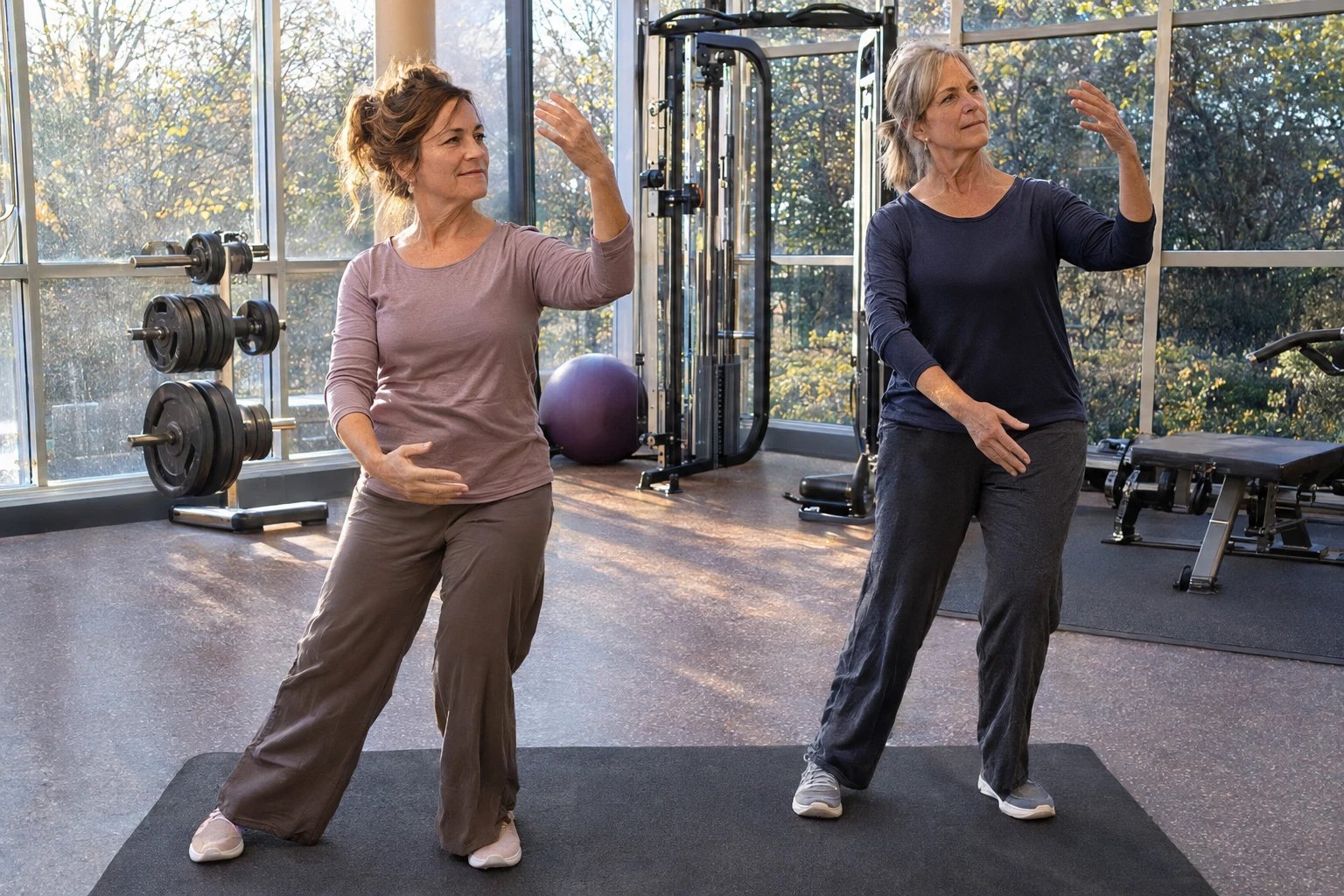
Reader quiz
Did you catch the details?
5 questions from this article.
According to the article, what should you do with a big bag of snacks the day you bring it home?
Questions people also ask
Do you need weight-loss drugs to lose a lot of weight after 50?
No, people over 50 have lost large amounts through food and walking changes alone. Detricia Woods-Meadows lost 65 pounds at 52 with portion control, more water and walking, and used no medication. Missy Gillenwater lost 114 pounds in about 13 months by changing her diet and walking daily. Janet Allen, who lost 110 pounds starting at 55, did take a prescription drug, Contrave, which isn't a GLP-1.
Is walking enough to lose weight after 50?
Usually not on its own. A summary of American College of Sports Medicine guidance says 150 to 250 minutes a week mostly prevents weight gain, and clinically meaningful loss takes more than 225 minutes a week. The summary notes that walking alone "has not consistently been associated with a weight or BMI change," and that substantial weight loss is unlikely from exercise alone without also cutting calories, so pair your walks with a modest calorie cut.
Will I lose muscle if I lose weight without strength training?
You're likely to lose more of it. In a year-long study of adults 65 and older with obesity, dieting alone cost 5% of lean mass and 3% of hip bone density, against 3% and 1% when exercise was added. Cleveland Clinic also warns that fast weight loss tends to come from muscle. Short home strength sessions two or three days a week help protect it.
How much weight can a 50-year-old woman lose in a month?
About 4 to 8 pounds a month is realistic, according to Cleveland Clinic's guidance for adults, which isn't specific to women over 50. In one eight-week time-restricted eating study, postmenopausal women with obesity lost about 4% of their body weight. The CDC says losing about 1 to 2 pounds a week makes it more likely to stay off.
Is intermittent fasting safe for women over 50?
It isn't automatically safe, and the evidence on it is thin. AARP lists the risks for older adults: muscle and bone loss from too little protein, dehydration, trouble with medicines that must be taken with food, and the chance of triggering disordered eating. In one eight-week trial, estrogen and progesterone didn't change in postmenopausal women. If you have diabetes or high blood pressure, or take medicine with food, check with your doctor first.
Why did I stop losing weight after 50?
Most likely because stalls are a normal part of weight loss at any age, usually arriving around six to eight months in. As weight drops, appetite tends to rise. In one study of people with diabetes losing weight on medication, appetite rose by about 100 calories a day for every 2.2 pounds lost, while calories burned fell by far less. Cleveland Clinic's Dr. Shirisha Avadhanula advises adding exercise and keeping your diet consistent rather than cutting further.
Did any of these feel familiar?
Know someone who needs this?
 Prime Journal · Free printable
The Everyday Health Readiness Checklist
- A clearer path from bed to bathroom
- A medicine list ready for the pharmacist
- A symptom story and follow-up plan you can use
Free printable: The Everyday Health Readiness Checklist. Enter your email and it is yours.
Sources cited in this article
This article links to 59 outside sources, listed here so you can read them yourself.
- Accounts for the vast majority of weight loss www.youtube.com/watch?v=q42n27oCOUM&t=563s
- CROSSROADS trial academic.oup.com/biomedgerontology/article-lookup/doi/10.1093/gerona/glw237
- Diabetes Prevention Program pmc.ncbi.nlm.nih.gov/articles/PMC1282458
- Its own version of that program www.medicare.gov/coverage/medicare-diabetes-prevention-program
- Weight-loss counseling www.medicare.gov/coverage/obesity-behavioral-therapy
- Has not consistently been associated with a weight or BMI change obesitymedicine.org/blog/how-much-physical-activity-is-needed-for-weight-los…
- Lost 114 pounds in about 13 months www.today.com/health/diet-fitness/woman-lost-114-pounds-cured-acid-reflux-wa…
- Lost 65 pounds in about nine months www.today.com/health/woman-loses-65-pounds-walking-rcna72499
- Lost 110 pounds over four to five years www.today.com/health/diet-fitness/100-pound-weight-loss-post-menopause-food-…
- Several Reddit weight-loss threads www.reddit.com/comments/1mhdhs3
- My carb and sugar cravings have been gone for a long time and I feel a real sense of freedom to be over these addictions www.reddit.com/comments/gfgfji
- R/loseit www.reddit.com/comments/1rztmxz
- One Reddit thread www.reddit.com/comments/1q6480i
- A daily cut of about 200 to 300 calories is enough for most people www.youtube.com/watch?v=x55dgK79d4c&t=128s
- Body Weight Planner www.niddk.nih.gov/health-information/weight-management/body-weight-planner
- Every permanent change of 10 calories a day eventually moves your weight by about a pound pmc.ncbi.nlm.nih.gov/articles/PMC3880593
- Losing 5% of your weight www.cdc.gov/healthy-weight-growth/losing-weight/index.html
- Divide the items into single-serving packages right away www.niddk.nih.gov/health-information/weight-management/just-enough-food-port…
- Eat big portions without realizing it www.youtube.com/watch?v=q42n27oCOUM&t=64s
- Reddit www.reddit.com/comments/1ndrp9s
- TikTok www.tiktok.com/@tinaliftsheavy/video/7567746437551885599
- Cooking ahead keeps you from ordering takeout when you're tired www.youtube.com/watch?v=q42n27oCOUM&t=502s
- People consistently ate more when given larger portions, packages or tableware www.cam.ac.uk/research/news/larger-sized-portions-packages-and-tableware-lea…
- You can lose weight without feeling hungry and suffering with it www.youtube.com/watch?v=q42n27oCOUM&t=313s
- 1.2 to 1.6 grams of protein per kilogram of body weight a day www.aafp.org/afp/2026/0700/practice-guidelines-dietary-guidelines
- National Kidney Foundation www.kidney.org
- A good protein source at every meal, at least 25 to 30 grams www.youtube.com/watch?v=x55dgK79d4c&t=255s
- 22 grams a day for women and 28 for men health.clevelandclinic.org/how-much-fiber-per-day
- Recommends exactly this kit www.youtube.com/watch?v=gWpQS-fp-Fg&t=183s
- Stand up slowly, using your hands as little as possible (or not at all) www.harvardhealth.org/exercise-and-fitness/chair-exercises-for-seniors-boost…
- Lower yourself slowly toward the wall www.govinfo.gov/content/pkg/GOVPUB-HE20-PURL-gpo62941/pdf/GOVPUB-HE20-PURL-g…
- At least two days a week of activities that strengthen muscles www.cdc.gov/physical-activity-basics/guidelines/older-adults.html
- The foundation for losing fat and keeping it off www.youtube.com/watch?v=x55dgK79d4c&t=566s
- Consistency is always better than intensity www.youtube.com/watch?v=USzSlDUyMK0&t=245s
- Lost 5% of their lean body mass and 3% of their hip bone density source.washu.edu/2011/03/dietexercise-combo-best-for-obese-seniors
- The first key guideline for adults is to move more and sit less odphp.health.gov/our-work/nutrition-physical-activity/physical-activity-guid…
- 2 to 5 minutes of walking, squats or stairs every 30 to 60 minutes www.youtube.com/watch?v=x55dgK79d4c&t=630s
- Light walking breaks cut the rise in blood sugar after meals by about 17% www.news-medical.net/news/20220808/Every-little-bit-helps-Light-walking-brea…
- Typically peaks 60 to 90 minutes after eating www.wral.com/archive/20444626
- About three in four lost less weight than their exercise should have produced pmc.ncbi.nlm.nih.gov/articles/PMC7473954
- Reddit weight-loss threads www.reddit.com/comments/1xomgvs
- Lost 60 pounds in about a year and a half www.today.com/health/diet-fitness/woman-loses-weight-small-changes-rcna76802
- 7 or more hours for adults through 60, 7 to 9 hours of sleep from 61 to 64, and 7 to 8 hours from 65 on www.cdc.gov/sleep/about/index.html
- Aim for at least 7 www.youtube.com/watch?v=x55dgK79d4c&t=696s
- A single counseling session on sleep habits news.cals.wisc.edu/2022/02/07/uchicago-and-uw-madison-research-study-on-slee…
- A Reddit thread on household habits www.reddit.com/comments/1ilj7d7
- AARP lists the main ones for older adults www.aarp.org/health/healthy-living/is-intermittent-fasting-safe-for-older-ad…
- One fasting video on TikTok www.tiktok.com/@hermes.the.cynic/video/7522989619453955383
- Estrogen and progesterone didn't change in postmenopausal women www.sciencedaily.com/releases/2022/10/221025150257.htm
- Most people need about four to six cups of plain water each day www.harvardhealth.org/staying-healthy/how-much-water-should-you-drink
- A TikTok water-challenge video www.tiktok.com/@project.s.lifestyle/video/7325448745213283630
- When you lose weight quickly, it tends to come from muscle, rather than fat health.clevelandclinic.org/lose-10-pounds-in-a-month
- A 2016 analysis by Polidori, Hall and colleagues pmc.ncbi.nlm.nih.gov/articles/PMC5108589
- Your body thinks it's starving health.clevelandclinic.org/weight-loss-plateau
- Nearly all antidepressants www.mayoclinic.org/diseases-conditions/depression/expert-answers/antidepress…
- Atenolol and metoprolol www.mayoclinic.org/diseases-conditions/high-blood-pressure/expert-answers/be…
- Insulin www.mayoclinic.org/diseases-conditions/diabetes/in-depth/insulin-and-weight-…
- Prednisone www.mayoclinic.org/tests-procedures/cortisone-shots/in-depth/steroids/art-20…
- Underactive thyroid www.thyroid.org/wp-content/uploads/patients/brochures/Thyroid_and_Weight.pdf
Peter Byalik
Food & Home Editor
Peter Byalik is a professional chef with more than 20 years of experience, including years running his own business. He came to the United States from Ukraine.
More from Peter Byalik