




15 Gentle Strength Exercises to Help Adults Over 50 With Everyday Tasks
Each of these 15 moves is matched to one job, from hauling bags out of the trunk to getting up off the rug.
By Dr. Alan Pierce, PT, DPT, Health Reviewer
Updated · 13 min read
- Written by our health reviewer
- Cited 1 source
- How we review
Two days a week is the federal target for strength work, and none of it needs a gym. The Physical Activity Guidelines for Americans set that target for adults, covering every major muscle group from the legs and hips to the shoulders and arms.
A sturdy chair without wheels, a bare stretch of wall, the kitchen counter and a jug of water will handle all of it. Skip buying dumbbells for now. A jug is the better start, because you can add water a cup at a time, and each cup adds about half a pound.
If you have a heart condition, osteoporosis, a joint replacement or recent surgery, talk with your doctor before you start. During any move here, stop and sit down if you feel chest pain or pressure, turn dizzy or can't catch your breath.
15Towel wrings for tight jar lids and bag handles

A stuck jar lid and the thin handles of a heavy grocery bag both lean on the forearm muscles that close and turn your hand. A rolled-up hand towel trains both of those jobs at once.
Sit tall in a sturdy chair. Roll a dry hand towel into a tube and hold it in front of your belly, elbows bent. Wring it as if you were squeezing out water, then untwist and wring it the other way.
Each twist and release is one rep, short for repetition. Start with 5 each way. No single count fits everyone, here or anywhere in this list. Pick a number where the last two reps feel like work but your form stays clean.
A thin dish towel makes it easier and a thick bath towel makes it harder. Your forearms should feel warm and tired, and pain at the base of your thumb or in your wrist means stop.
14Toe lifts so your feet clear the rug
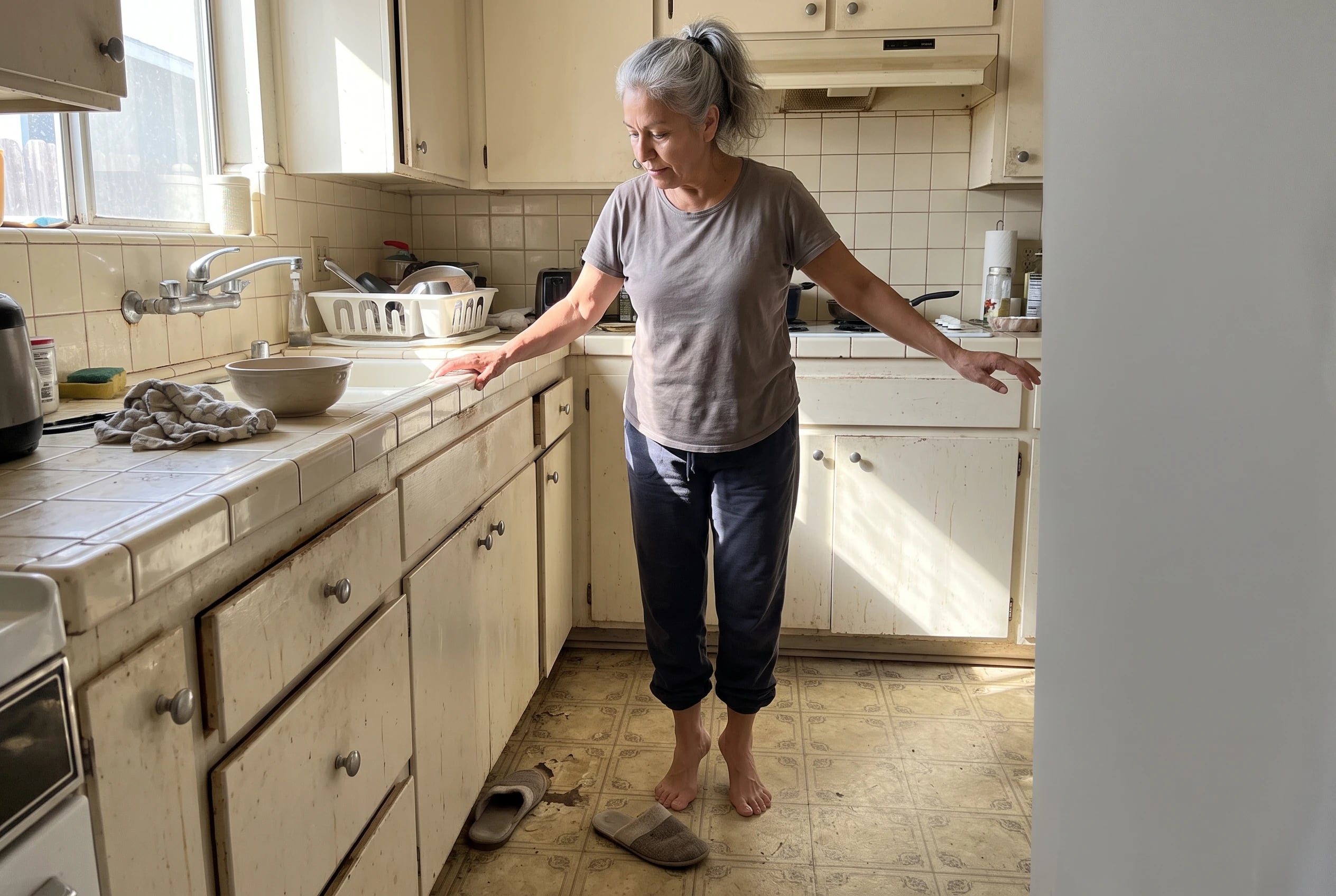
The muscle down the front of your shin lifts your toes with every step. When it tires, your toes ride lower, and the edge of a rug gets easier to catch.
Stand at the counter, hands resting on it. Keep your heels down and lift your toes as high as they go. Hold for two, lower slowly, and do 10.
A burn down your shins means the right muscle is working, and a cramp means stop and walk it off. Seated toe lifts are easier, and one foot at a time is harder.
13Seated knee lifts for stepping over the tub edge
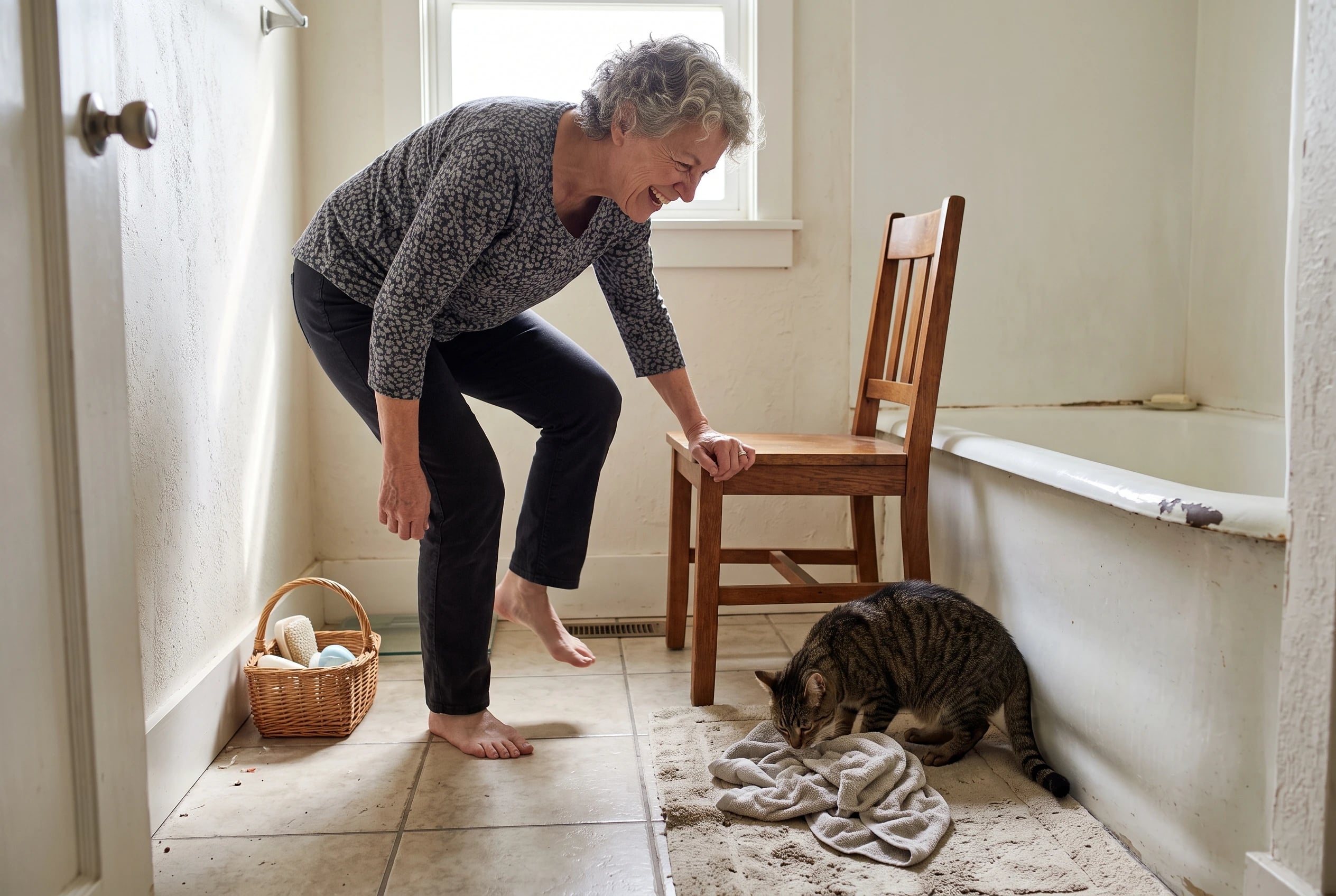
A strength move done sitting down can feel like cheating. The chair takes balance out of it, so the muscles at the front of your hip do all the work. They're the ones that lift your leg over the tub edge or onto the first step of a bus.
Sit near the front of a sturdy chair, back tall, hands holding the sides of the seat. Lift your right knee until your foot is a few inches off the floor, hold for two, lower slowly and switch legs.
Start with 8 on each side. You should feel it in the crease at the top of your thigh. For less work, lift only an inch; for more, stand at the counter and march in place.
A pinch at the front of your hip or in your lower back means stop. After a hip replacement, ask your surgeon how high you may lift your knee.
12Side steps along the counter for crowded rows
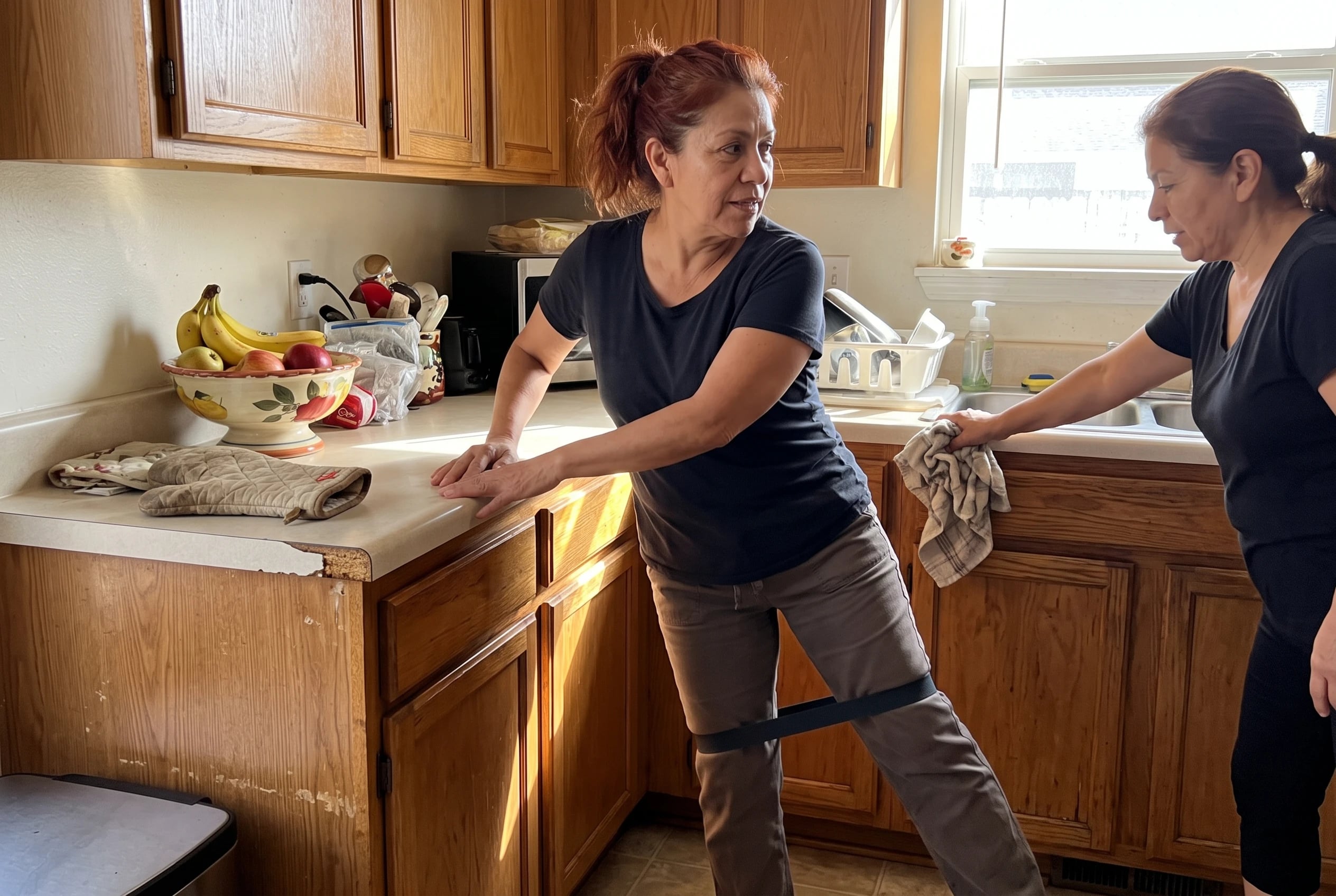
You use the muscles on the outside of your hips each time you sidestep down a theater row or around the bed with a clean sheet. They also hold your pelvis level whenever you stand on one leg, which happens with every step.
1. Stand facing the counter with your fingertips on the edge. Put your feet together.
2. Bend your knees a little, as if about to perch on a high stool.
3. Step your right foot out about a foot. Then bring your left foot over to meet it, toes still pointed at the counter.
4. Take 10 steps to the right, or as many as the counter allows, then come back.
You should feel it on the side of your hip, just below the bony top edge. If your upper body sways, your steps are too wide, and if your groin or knee hurts, stop.
Smaller steps make it easier. For more, put a loop band, a flat ring of stretchy rubber, around your legs just above the knees.
11Hip bridges for getting out of bed
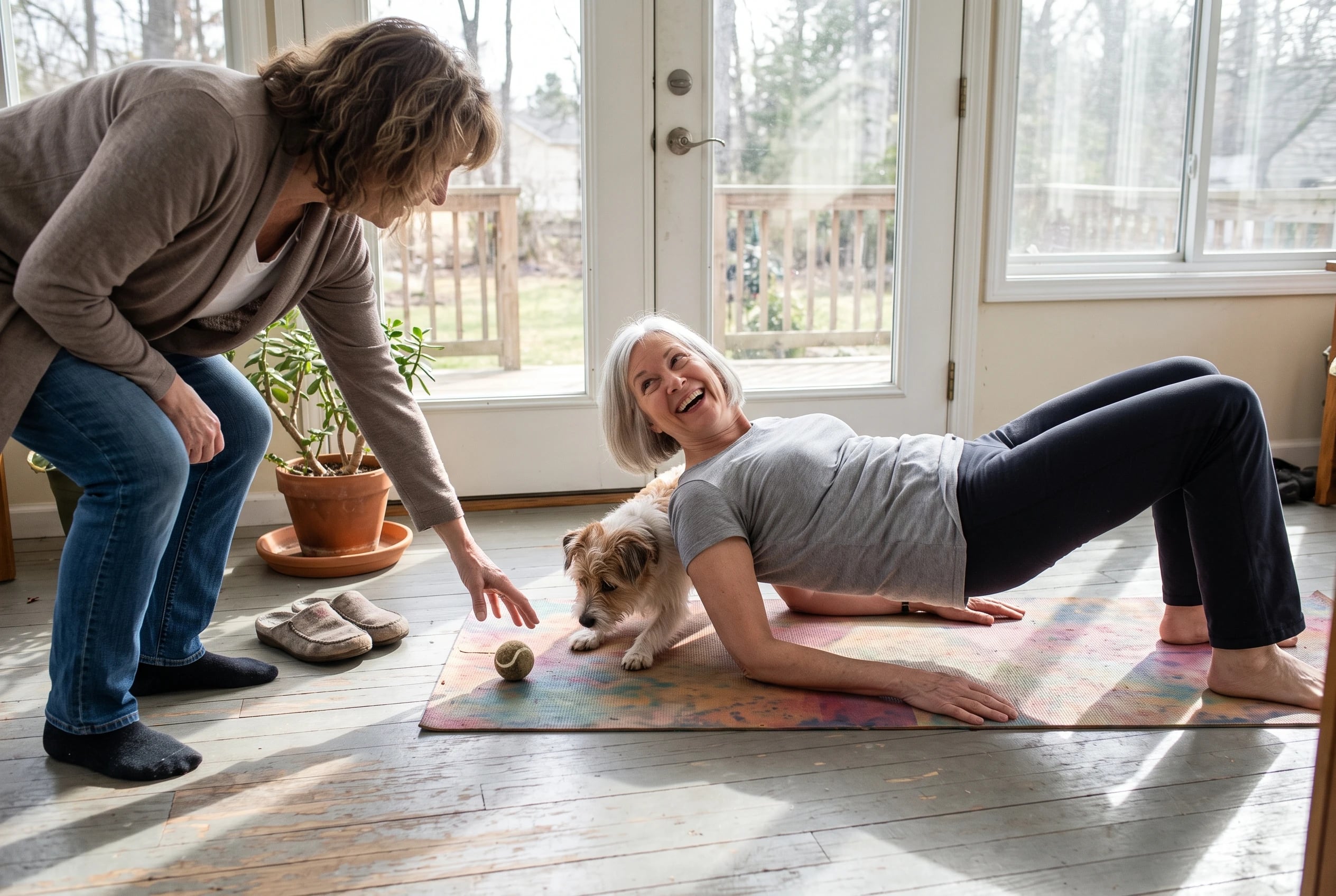
This one should land in your buttocks.
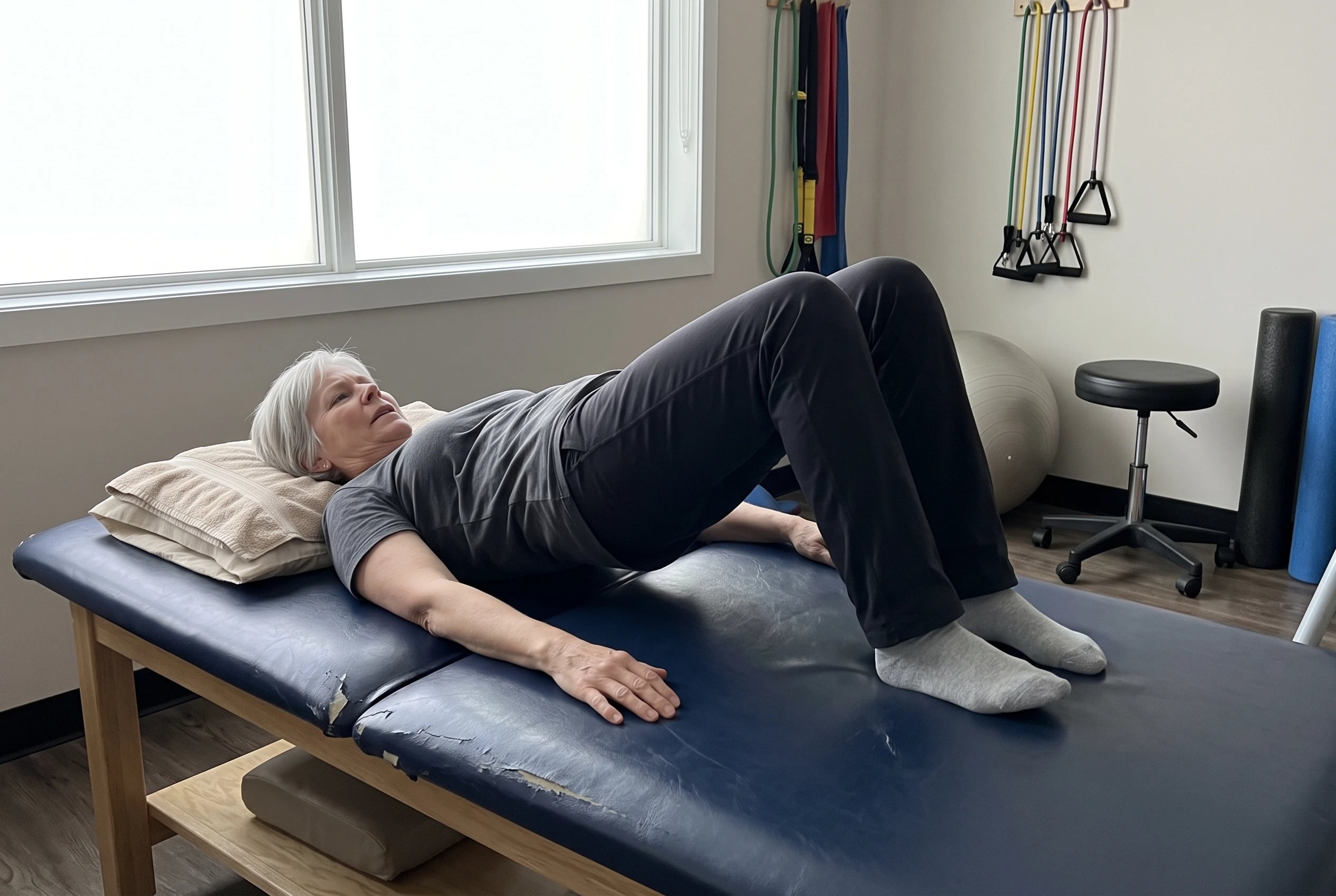
Lie on your back on a firm bed or a mat, knees bent and feet flat. Breathe out, squeeze your buttocks and lift your hips until your shoulders, hips and knees form a slope. Hold for three, lower slowly, and start with 8.
It's the same push that shifts you to the edge of the mattress in the morning. If you feel it mostly in your lower back, lift only an inch or two, which is also the easier version, and stop if the ache stays.
Holding the top for a count of 10 makes it harder. A cramp in the back of your thigh usually means your feet are too far away. Slide them closer to your hips.
See more: 26 Daily Activities for Seniors That Give a Day Its Shape →
10Bird dogs for leaning into the back seat
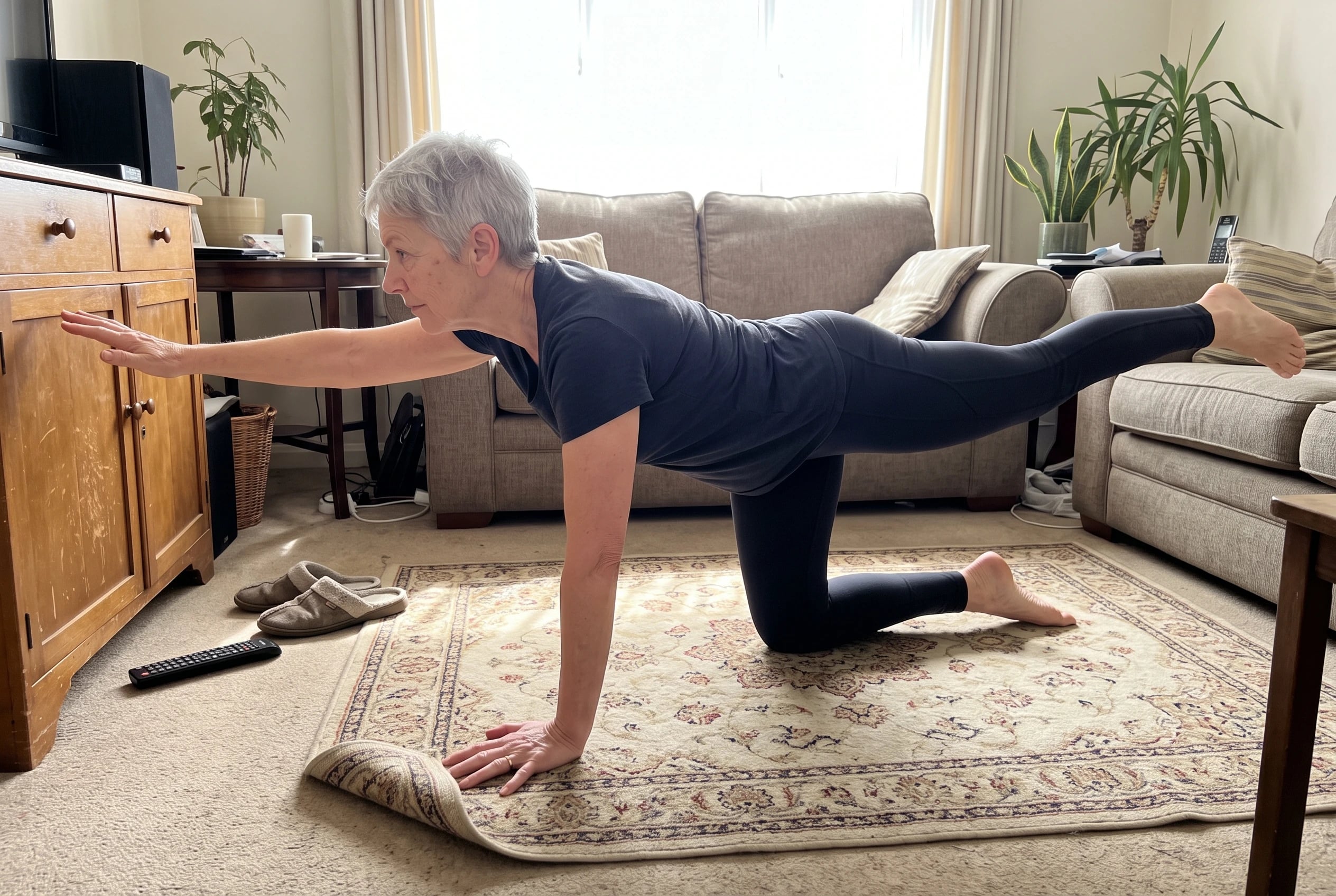
A bird dog is done on your hands and knees, reaching one arm forward and the opposite leg back. It trains your back and belly to hold steady while your arms and legs move, as they do when you lean into the back seat to buckle a car seat.
Kneel on a rug or a folded towel, hands under your shoulders and knees under your hips. Pull your belly in a little, the way you would to zip up snug trousers.
Slide your right arm forward and your left leg back along the floor, then lift them only as high as your back stays flat. Hold for three and switch sides. Start with 5 on each side.
If your lower back sags, the leg is too high. For an easier version, keep both hands down and move only one leg at a time. For a harder one, hold each reach for 10.
Sore wrists do better on fists than on flat hands, and back or knee pain means stop.
9Can presses for lifting a bag into the overhead bin
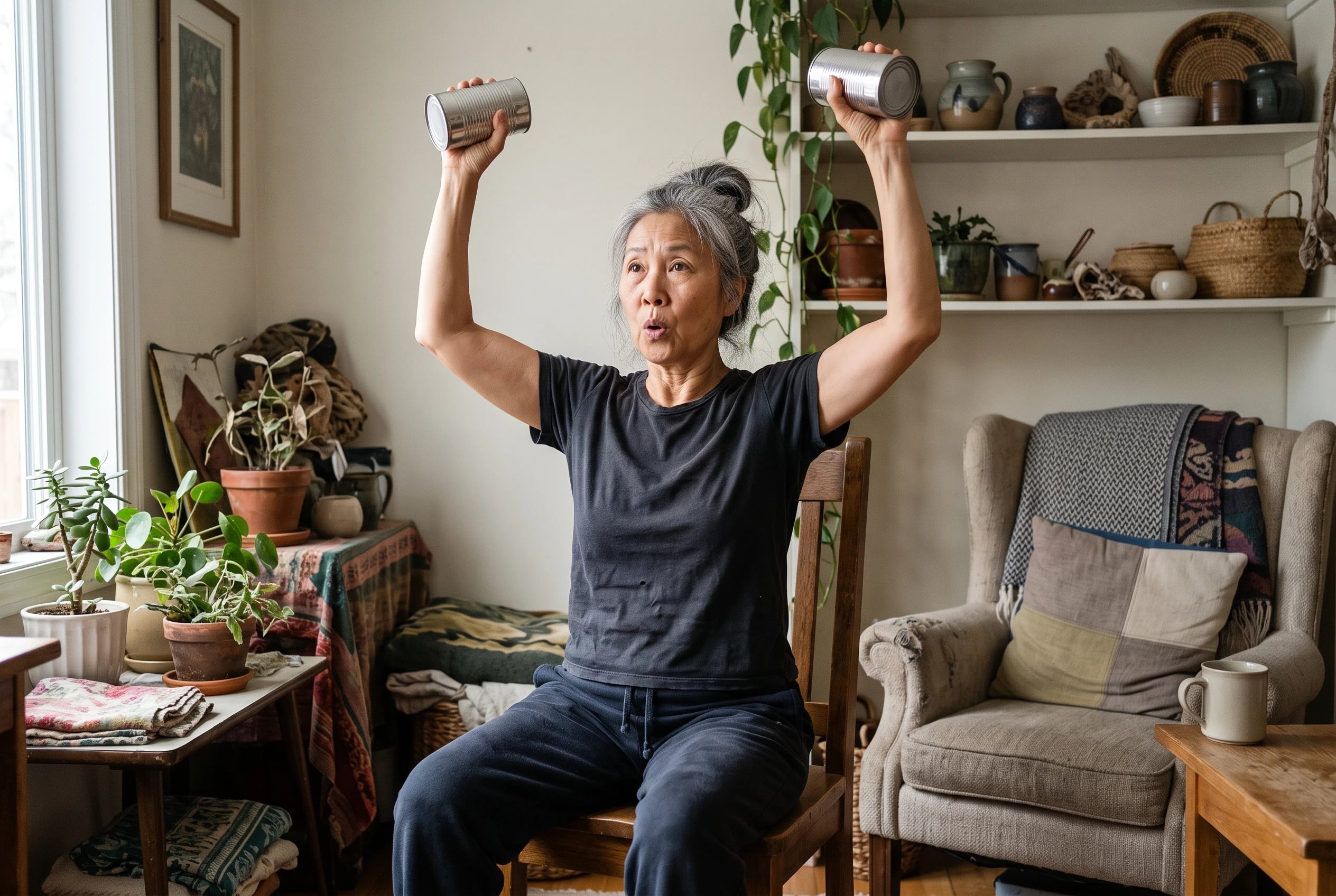
Two cans of beans from the pantry, about a pound each, are a good weight to start. This press trains your shoulders for the push that gets a carry-on into the overhead bin.
Sit tall in a sturdy armless chair. Hold a can in each hand at shoulder height, palms forward and elbows down. Breathe out and press both cans up until your arms are nearly straight, then lower them for a count of three. Start with 8.
You'll feel it across the tops of your shoulders and in the backs of your arms. One arm at a time is easier, and half-gallon jugs filled partway are harder. If the top of your shoulder pinches, press only as high as stays comfortable, and stop if it hurts at any height.
See more: 21 Muscle-Building Diet Foods and Habits That Help Women Build Strength →
8Heel raises for reaching the top cupboard on tiptoe
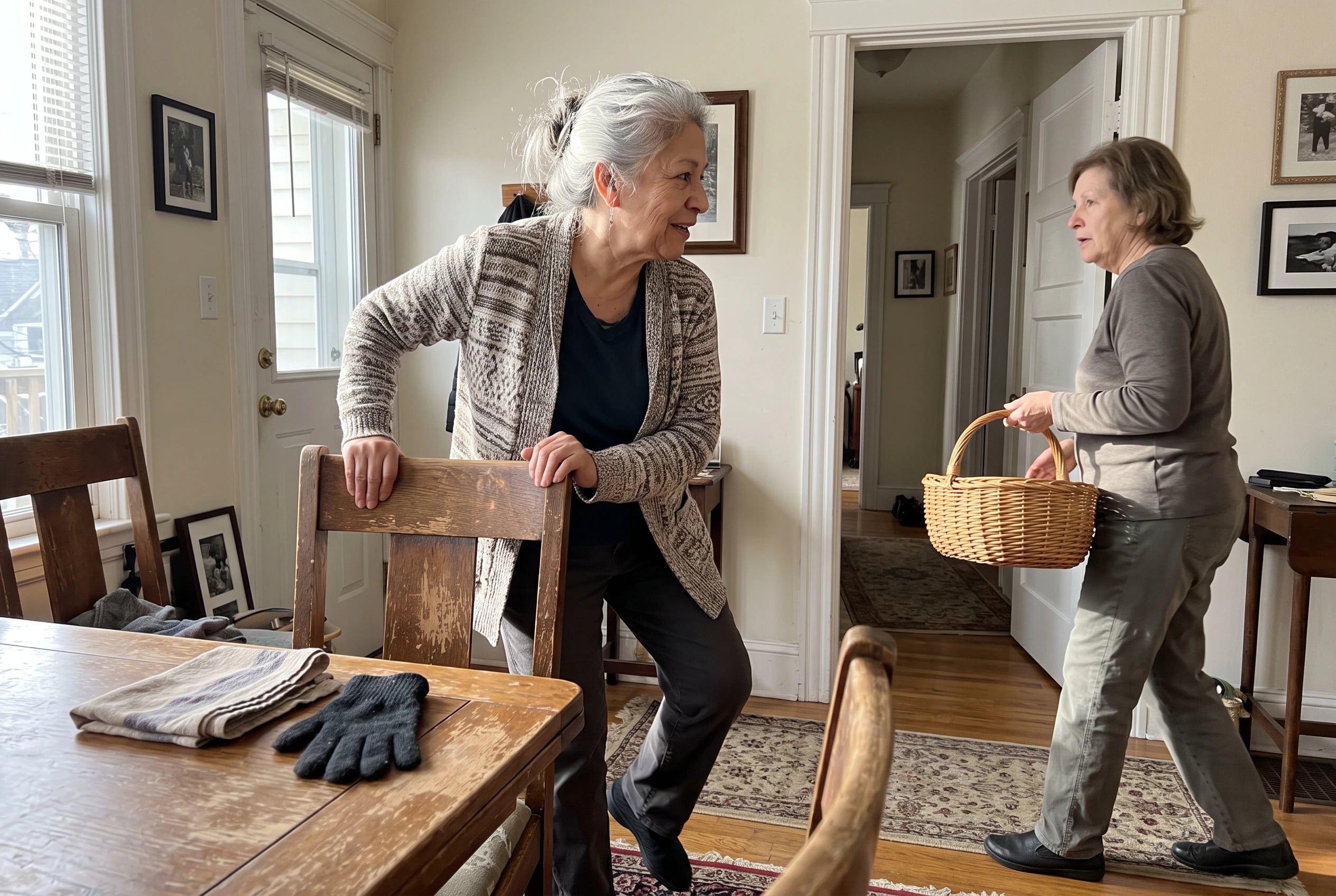
Count out loud on this one.
Saying the numbers keeps you from holding your breath, which is easy to do up on tiptoe. The National Institute on Aging advises breathing out as you lift, in as you lower, and never holding your breath during strength exercises.
Stand behind a sturdy chair with both hands on its back. Rise onto the balls of your feet, hold for two, and lower your heels slowly. Start with 10. You'll feel it in your calves, the muscles that hold you up as you reach the top shelf.
Rising halfway is easier. Doing it one foot at a time is harder. A calf cramp or pain at the back of your heel means stop.
7One-arm rows for pulling bags out of the trunk
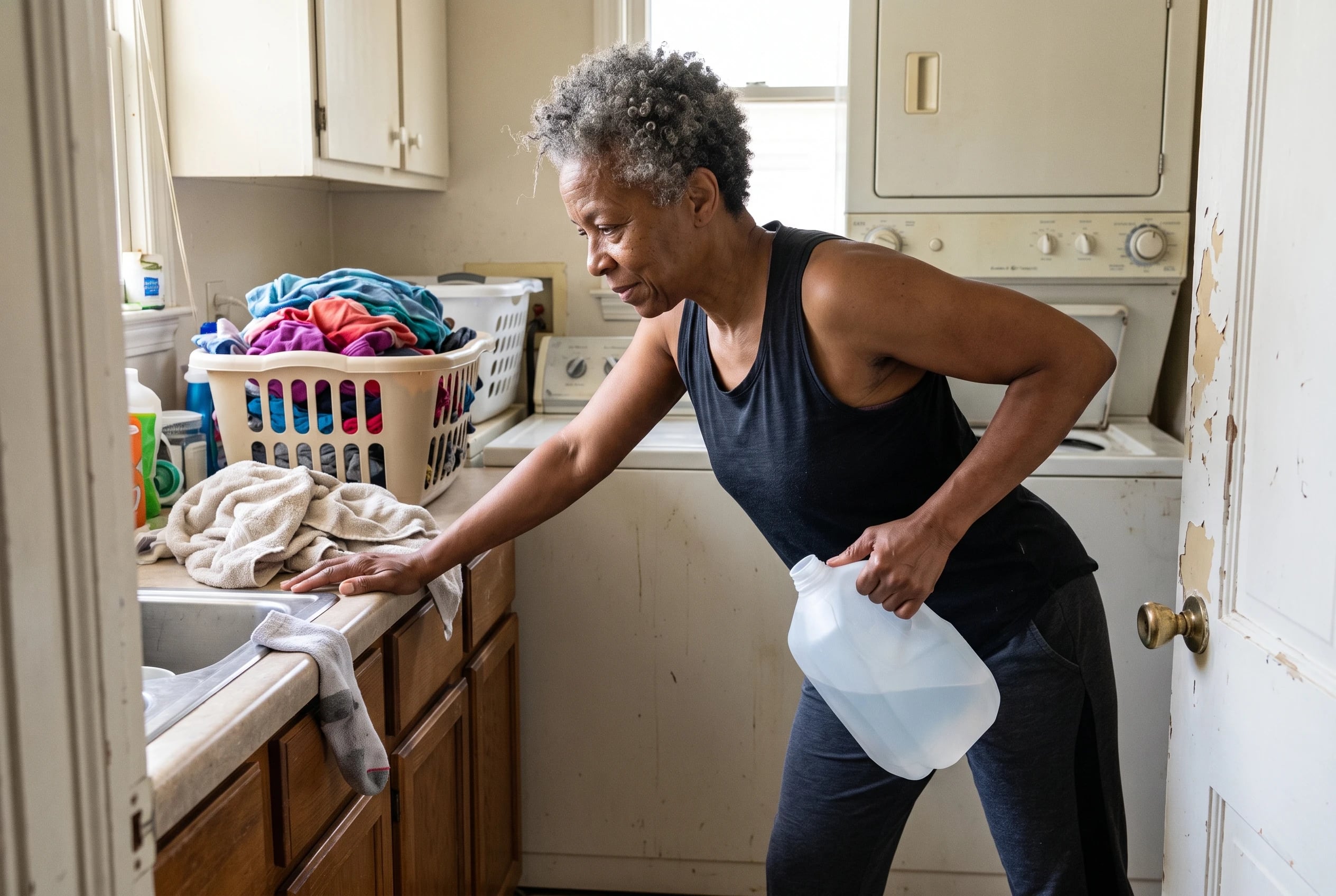
Lifting a grocery bag up and over the lip of the trunk is a pull, and so is dragging the trash bin to the curb. Both use the muscles between your shoulder blades and down the sides of your back.
Stand beside the counter with your left hand flat on it and your left foot a step forward. Hold a half-gallon jug, half full, in your right hand, arm hanging straight. Tip forward a little from your hips, back flat.
Pull the jug toward your lowest rib, elbow brushing your side, like drawing a saw back through a board. Lower it for a count of three, and start with 8 before you switch sides.
You should feel it between your shoulder blade and your spine. If your lower back aches, stand more upright. If your shoulder or neck hurts, stop.
Pour out some water to make it easier. To make it harder, add water a cup at a time until a full jug feels steady for all 8.
6Wall push-ups for pushing open a heavy door
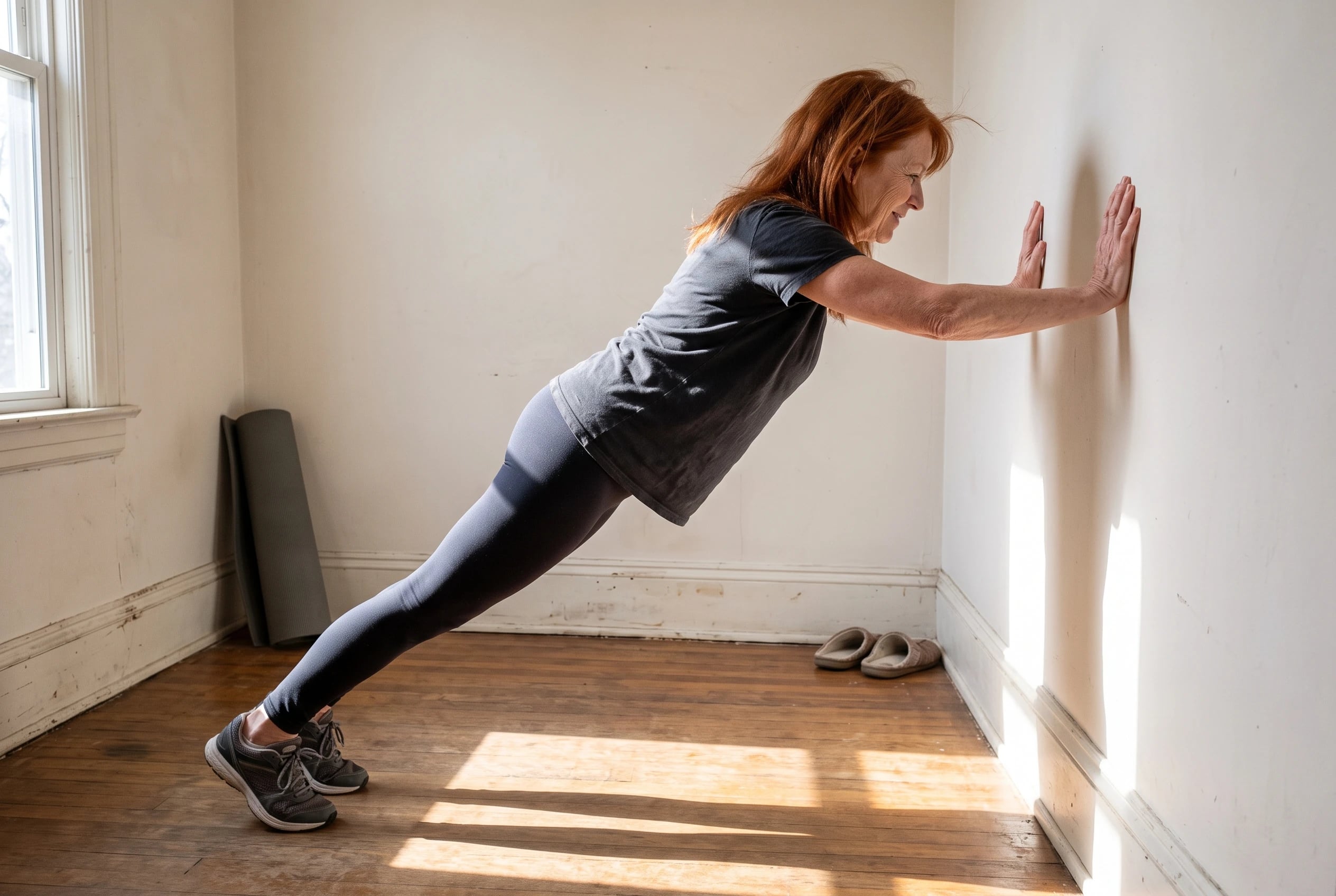
Stand facing a bare wall, about arm's length away, feet hip-width apart. Put your palms on the wall at shoulder height, a bit wider than your shoulders. Bend your elbows and lower your chest toward the wall for a count of three, body straight from head to heels.
Push back out, breathing out as you go, and start with 10. It's the push you put into a heavy post office door, and you should feel it across your chest and in the backs of your arms.
If your hips sag toward the wall, step a little closer. If your wrists hurt, turn your fingers slightly outward. Stop if the front of your shoulder hurts.
Your distance from the wall sets how hard this is.
- Stand closer to the wall for an easier version.
- Step your feet farther back for a harder one. Move back a few inches at a time.
- Put your hands on the edge of the kitchen counter instead, which puts more of your weight over your arms.
5Step-ups on the bottom stair for climbing a full flight
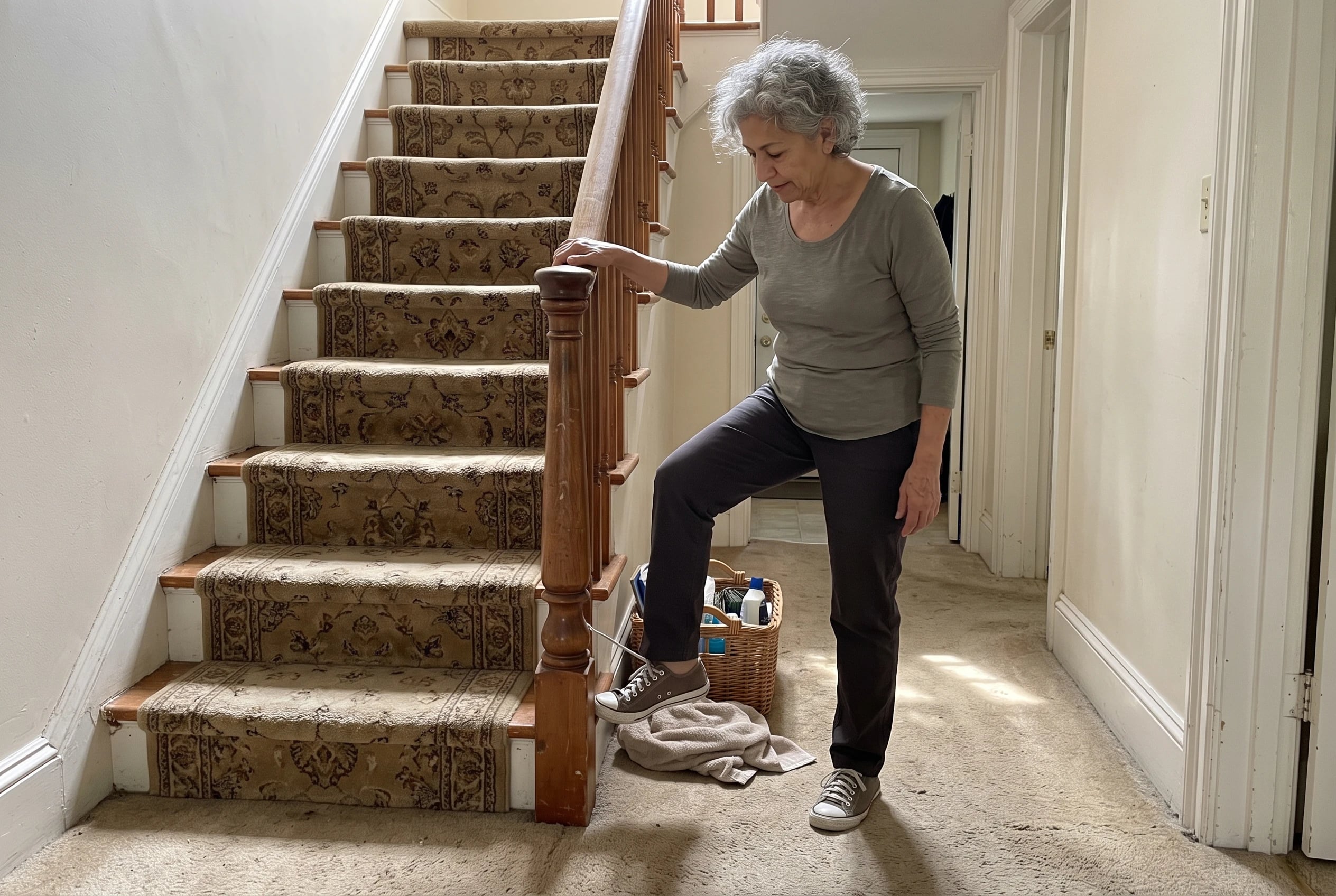
Stand at the foot of the stairs, one hand on the banister. Put your whole right foot on the bottom step, push through that heel and bring your left foot up beside it. That's the lift you make on every stair of a flight. Step down left foot first.
Do 8, then lead with the left for 8 more. The front of your thigh and your buttock should do the work.
Pulling a little on the banister makes it easier, and a slow count of three on the way down makes it harder. Stop for pain at the front of the knee or under the kneecap.
Step-ups put your knees to work, so use the Arthritis Foundation's two-hour check for sore joints. If a joint hurts more two hours after exercise than it did before, do fewer next time.
4Kneel-and-rise practice for getting up off the floor
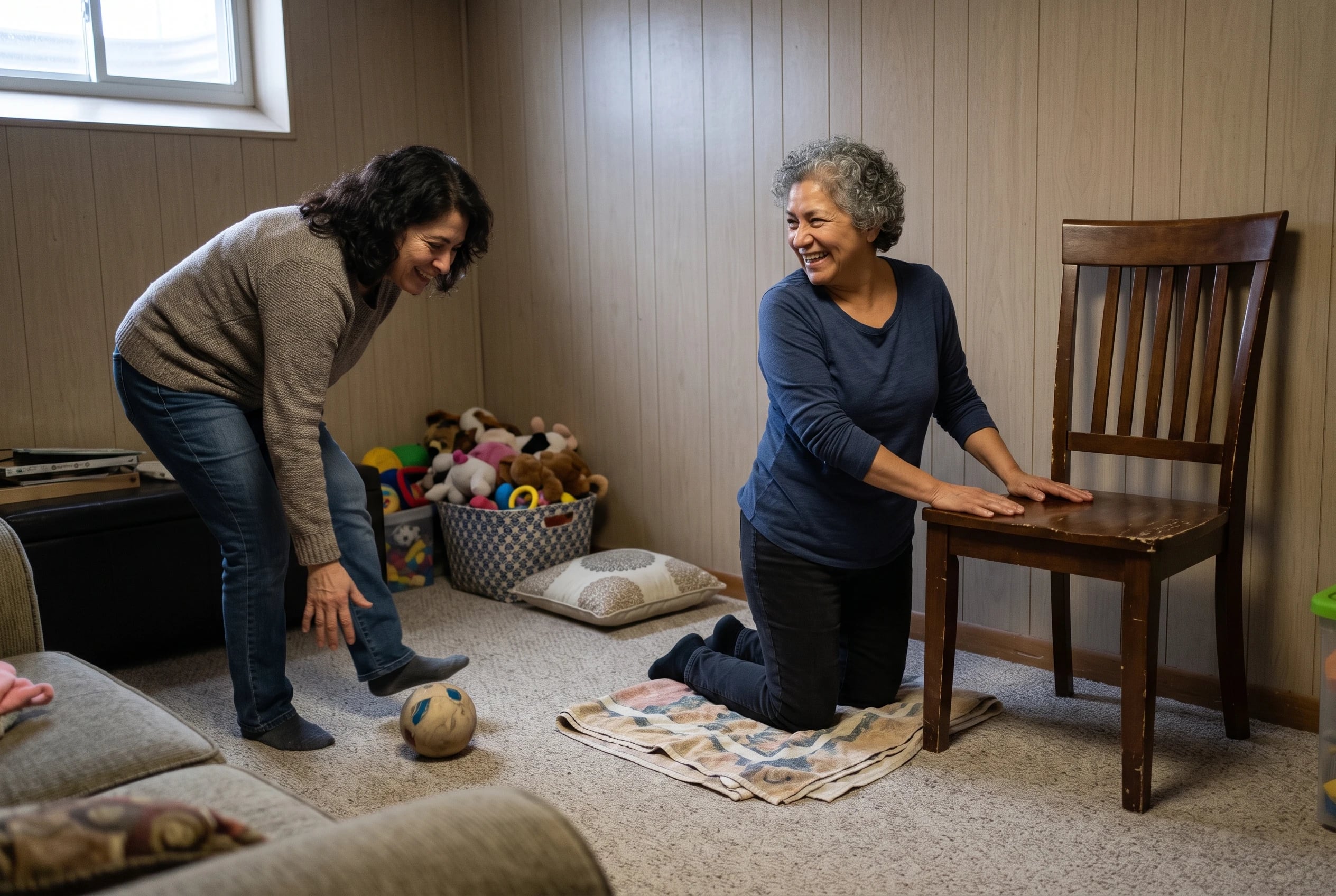
Getting down on the rug to play with a grandchild is the easy half. Getting back up takes four moves in order, and a chair makes them easy to practice.
Push a sturdy chair against a wall and lay a folded towel in front of it.
1. Sit on the floor beside the chair and roll onto your hands and knees, facing the seat.
2. Move close enough to rest both hands on the seat.
3. Bring your stronger leg forward and set that foot flat. You're now on one knee, the way someone kneels to propose.
4. Push through your front foot and your hands, and rise until you can turn and sit on the chair.
Do it twice the first day, resting on the chair in between. If getting down is too much, kneel on the towel holding the seat and practice steps 3 and 4.
You'll feel it in your front thigh and your arms. One hand on the seat makes it harder. Stop if kneeling hurts even on the towel, and sit and wait if you come up light-headed.
The first few times, practice when someone else is home.
See more: 24 Best Hamstring Stretches for Seniors, Standing, Seated and in Bed →
3Farmer's carries for bringing the groceries in
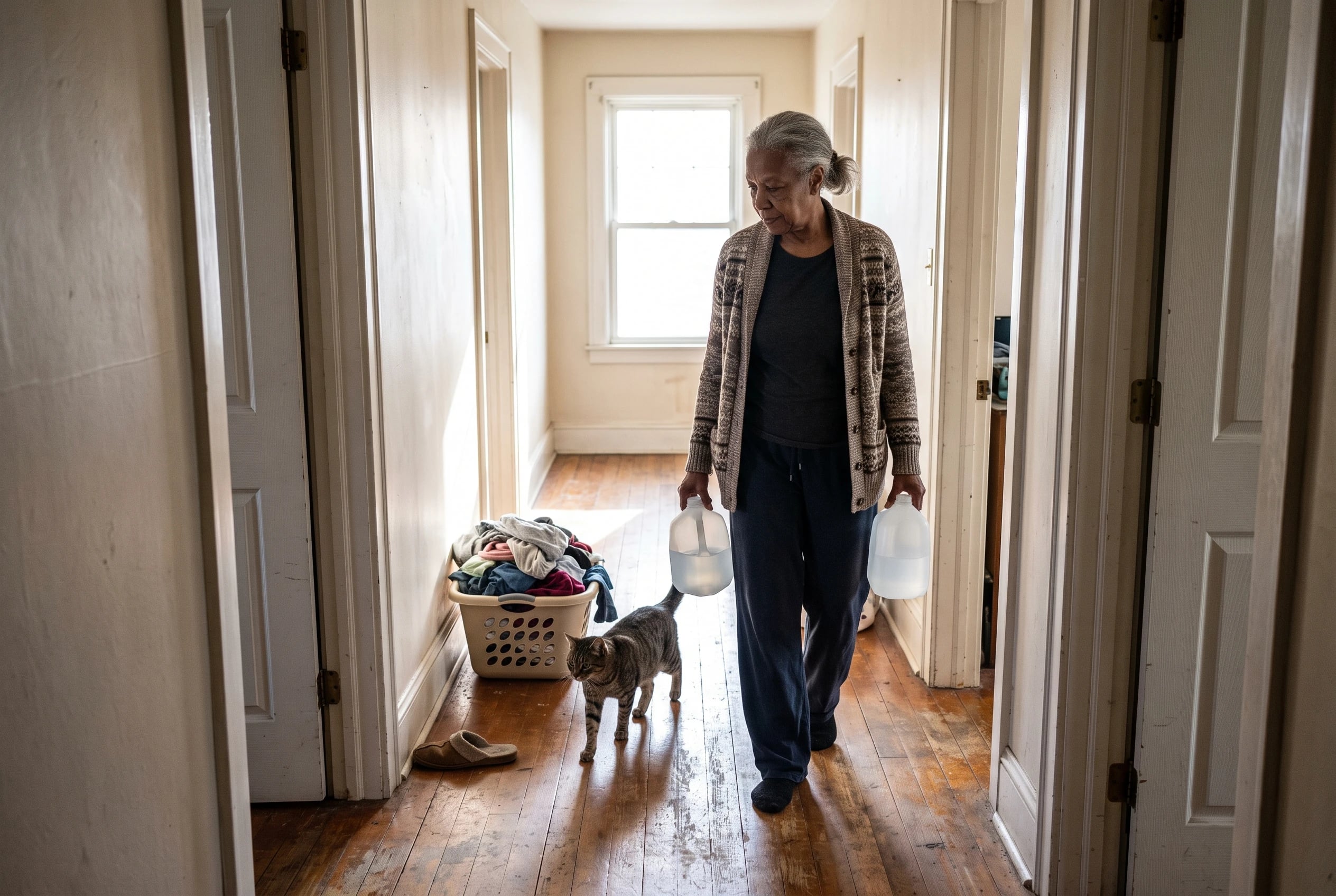
Two half-full bags are easier on your back than one full bag, because the load balances on both sides. A farmer's carry, walking tall with a weight in each hand, trains that walk on purpose.
Fill two half-gallon jugs about halfway and clear the hallway of rugs. Walk its length and back at your normal pace, shoulders down, then bend your knees to set the jugs down. Start with 2 trips.
Your grip and your belly should be doing the work. If one shoulder drops, check that both jugs hold the same amount. Less water makes it easier, and fuller jugs, or just one jug, make it harder. Put them down if your hands tingle or you feel unsteady.
See more: 23 Ways to Get a Toned Body After 50 Without Endless Cardio →
2Backpack lifts for picking up a grandchild
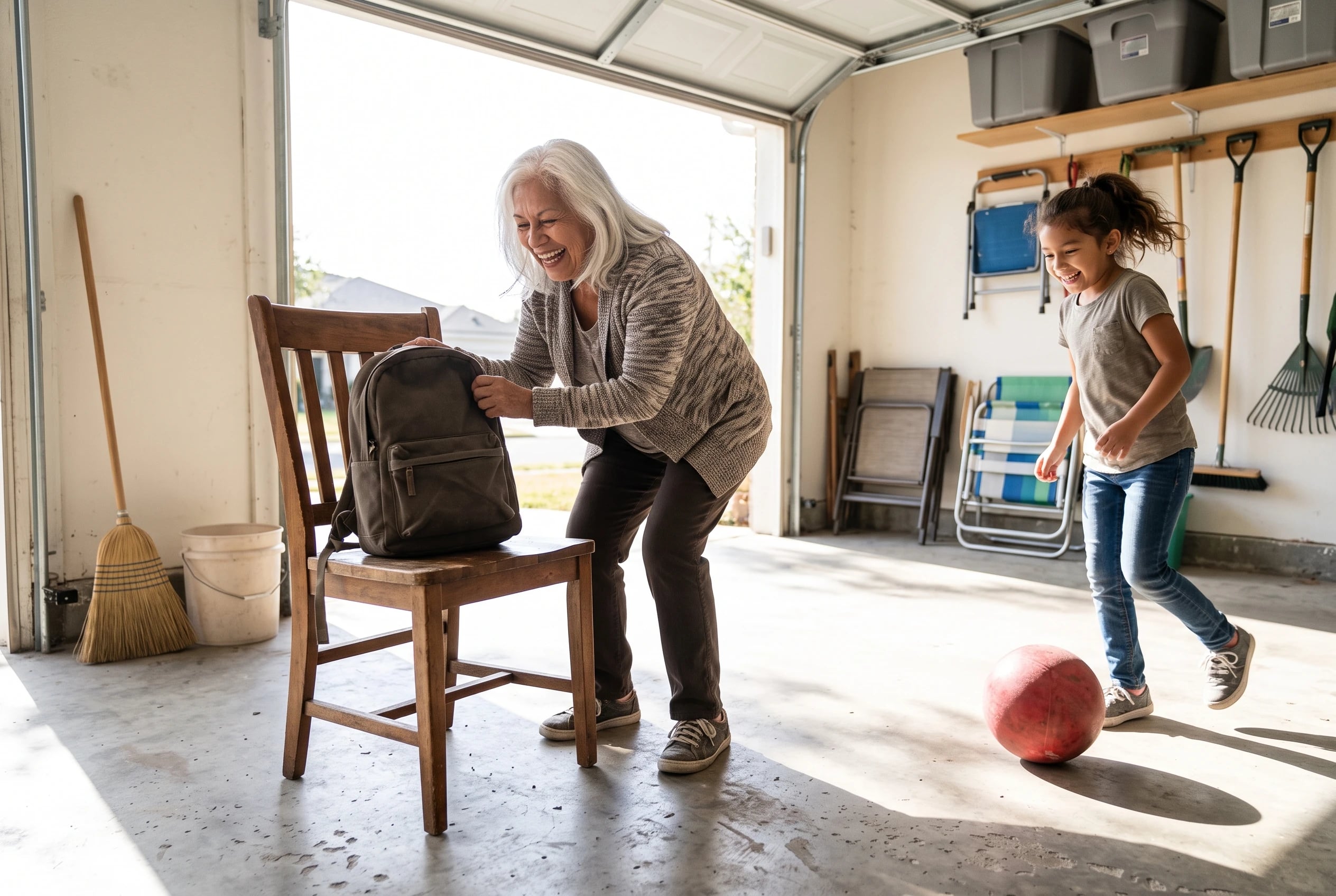
A 2-year-old can weigh 25 pounds or more, about as much as three full gallon jugs of water. Practice on a backpack with a few books in it first.
Set the backpack on the seat of a sturdy chair and stand close, feet hip-width apart. Bend your knees and push your hips back, as if nudging a car door shut with your bottom. Keep your back flat and your chest up.
Pull the backpack in against your belly, breathe out and stand by pushing through your heels. Lower it the same way, and start with 6. You should feel it in your buttocks and thighs, and sharp pain in your back or pain running down a leg means stop.
Fewer books make it easier, and moving the backpack down to the bottom stair, then the floor, makes it harder. If you have osteoporosis, the Bone Health & Osteoporosis Foundation warns against bending forward from the waist and twisting.
With your grandchild, keep the same order. Get close, bend your knees, bring your grandchild to your chest before you stand, and turn with your feet.
1Chair stands for getting up from any low seat
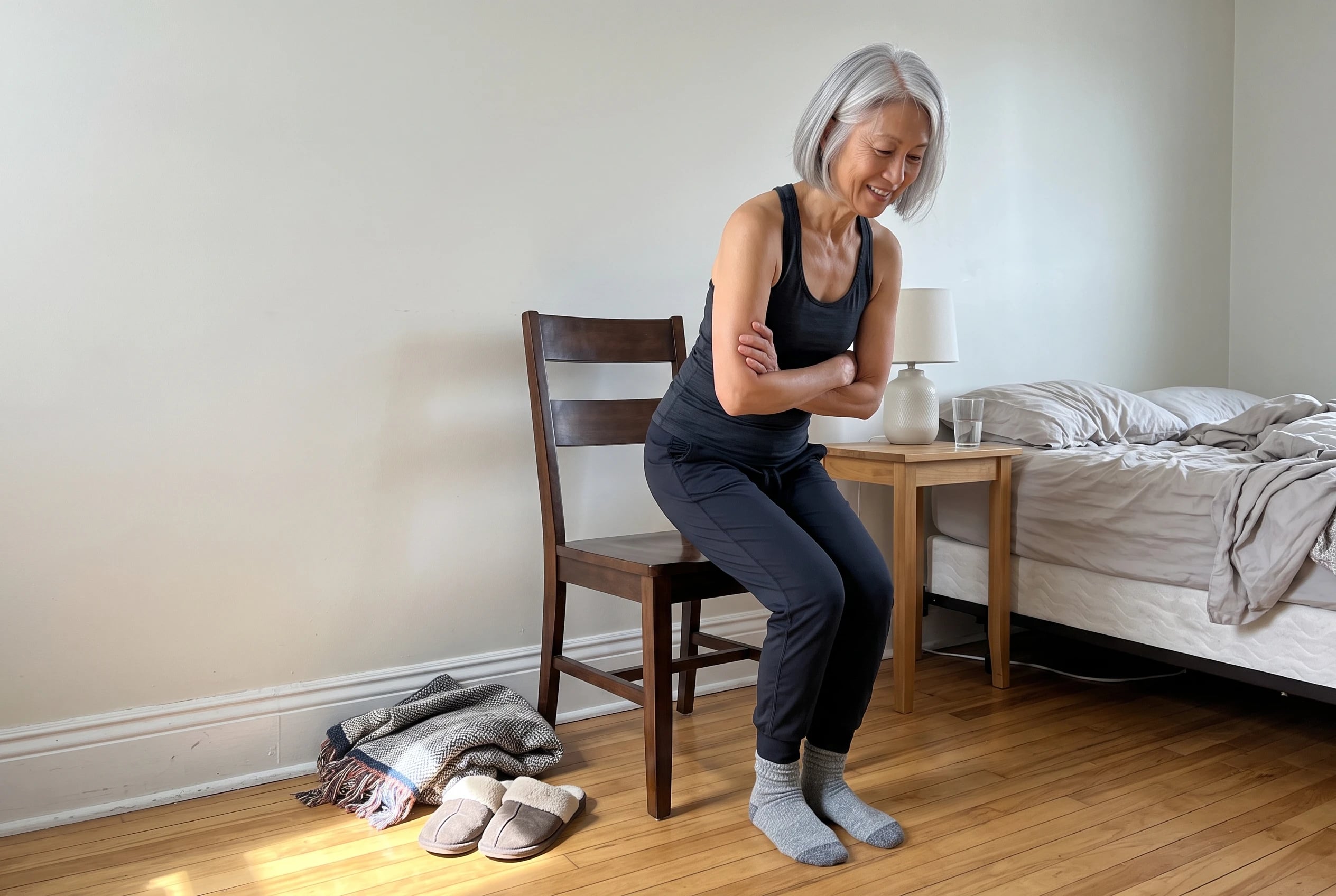
The CDC times a version of this move for 30 seconds as one of its fall-risk tests for older adults. It's the same job as getting off the sofa or out of a low car seat. If you only have time for one move, keep this one.
Sit in the middle of a sturdy armless chair pushed against a wall, feet flat and arms crossed over your chest. Lean forward until your nose is over your toes, then stand all the way up, breathing out. Sit back down for a count of three, and start with 5.
Pushing off your thighs with your hands makes it easier, and pausing an inch above the seat makes it harder. Your thighs and buttocks are the ones working. Stop if a knee hurts. Once you start dropping into the seat, you've done enough.
When 10 in a row feel steady, try the CDC's timed version, part of its STEADI program, short for Stopping Elderly Accidents, Deaths and Injuries.
The bottom line
Choose by the job that's hardest for you right now. If it's the stairs, start with the step-ups. If it's the car trunk, start with the rows and the carries. From there, keep adding moves until every major muscle group gets a turn.
Do them on two days that aren't back to back, such as Monday and Thursday. The National Institute on Aging advises against working the same muscles two days in a row. If you'd rather follow a class, check whether your Medicare Advantage plan includes SilverSneakers, which runs online classes for members.
If one move hurts the same joint every time, drop it and ask your doctor about physical therapy. If you have Original Medicare, Part B covers outpatient physical therapy when it's medically necessary. After the yearly Part B deductible, you usually pay 20% of the Medicare-approved amount.
Tonight, fill a half-gallon jug halfway and leave it beside the chair you sit in most, so your first round is waiting in the morning.
Up next
26 Five-Minute Exercises for Seniors
A head-to-toe menu of 5-minute exercises for seniors using a sturdy chair, a kitchen counter, and, if you want one, a soft ball.
Read the list →
Reader quiz
Did you catch the details?
5 questions from this article.
During toe lifts, what should you keep on the floor?
Did any of these feel familiar?
Know someone who needs this?
Sources cited in this article
This article links to one outside source, listed here so you can read it yourself.
- National Institute on Aging www.nia.nih.gov/health/exercise-and-physical-activity
Dr. Alan Pierce, PT, DPT
Health Reviewer
Alan is a physical therapist who specializes in helping adults over 50 stay strong and mobile.
More from Dr. Alan Pierce