





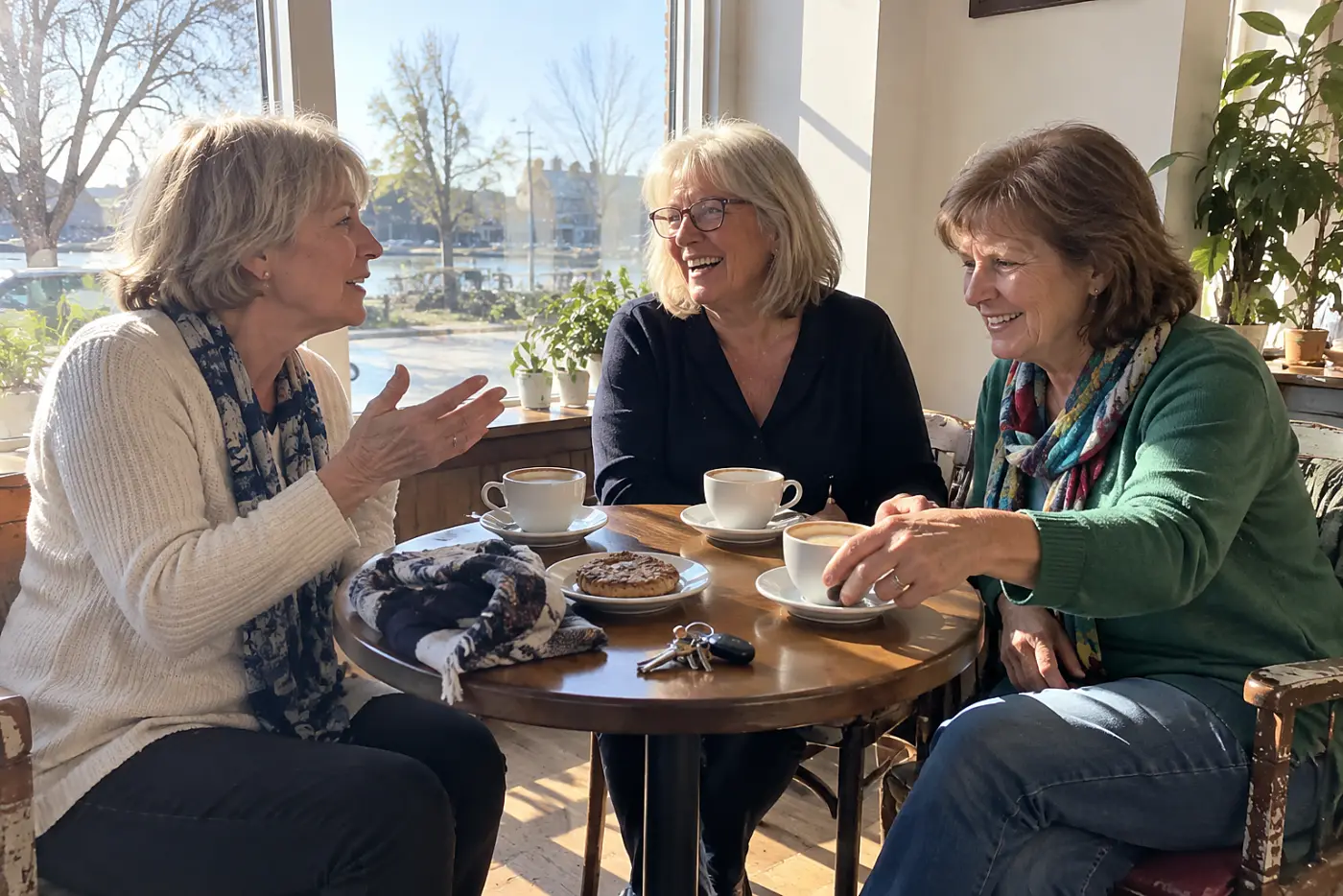
How to Stop Feeling Invisible After 50
What to say at the counter, in the meeting and at your own family table so people see you again, without trying to look a day younger.
By Ruth Ellison, Family Editor
Updated · 16 min read
- Written by our family editor
- Cited 10 sources
- How we review
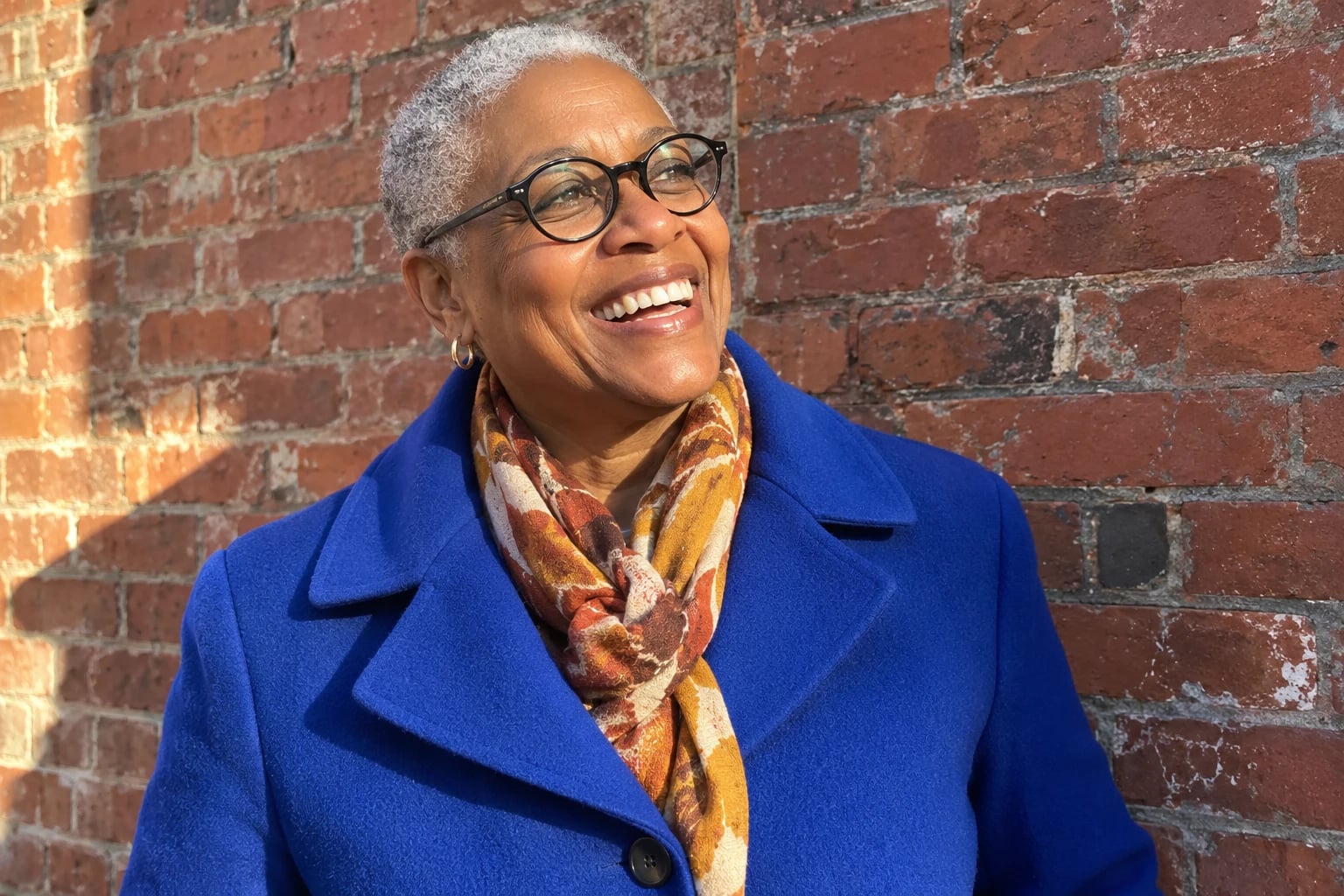
Ask women over 50 when other women start to go unnoticed, and the average answer is just under 53. Ask when it started for them, and the answer drops to about 48.
Those two numbers come from a 2016 poll of more than 1,000 people over 50, run by the UK site Gransnet, and they cut two ways.
Being looked past is common enough that most women can put a date on it. It also starts earlier inside your own head than it does out in the world.
Both halves are useful to know. The part out there, you can push back on. The part in here, you can change.
Is this really happening, or is it me?
It's really happening. You aren't imagining the store clerk who greets the woman behind you, or the bartender who serves three people who walked up after you did.
In that same poll, 43 percent said they'd been passed over at a bar. About a third had been pushed past in lines or crowds. Thirty-one percent had been ignored in stores, and a quarter in restaurants. Those are ordinary errands, and over a week they add up.
In a 2023 study of 158 women aged 50 to 89, researchers at the University of York sorted these slights into five kinds. Most women will recognize every one.
You're missing from ads and TV, or shown badly when you do appear. You're treated as no longer attractive. You're ignored in stores and public places. You're "grandmotherised," which means seen only as someone's grandma. And you're talked down to, as if you can't keep up.
There's a reason it lands harder on women. Gendered ageism is the academic name, and it simply means ageism and sexism arriving at the same time.
It wears on you. Nearly two in three women over 50 said they face discrimination regularly, an AARP survey of 6,643 women found, and age was the most common reason. The women who did rated their own mental health lower.
So the world plays a part. Your own view plays one too. Women in the poll dated their own invisibility about four years before they'd date anyone else's. That may mean some of us start expecting to be overlooked, then read every slow clerk as proof.
The expectation matters. People who held positive views of their own aging lived a median 7.5 years longer, even after accounting for health, loneliness and socioeconomic status. That finding comes from a long-running Yale study of 660 people over 50.
It shows a link, not proof that one causes the other. It's still a good reason to question the story before you accept it.
Some slights are about age. Some are about a clerk covering two departments alone, or a man who interrupts everyone in the room. Learning to tell them apart saves you a lot of hurt.
Plenty of women say the quiet has an upside, mostly a rest from unwanted attention from men. But only 17 percent in the poll said they actually like being invisible. Most want to choose when they're seen.
How to get served when the clerk looks past you
You're at the jewelry counter with a gift receipt and a bracelet that's the wrong size. The salesperson looks up, smiles at the young woman two steps behind you, and says, "Hi there, what can I help you find?"
Waiting politely is what gets you skipped. The women who handle this well don't wait to be noticed. They go first.
At a store counter:
- Speak before the clerk looks away. "Hi, I'm next. I need to exchange this."
- Say what you need in one sentence. A specific request gets action faster than a general one.
- Put the item on the counter. Things on the counter get rung up.
- If someone else gets served first, say it evenly, at normal volume: "Excuse me, I was here first."
That last one feels rude to many women raised to be gracious. It isn't. It's information the clerk may honestly not have.
In a line or a crowd: stand close enough to the person ahead that no one can drift into the gap. If someone does, "I think the line starts back there" is enough. You don't need to explain or apologize.
On the store floor: walk up to a salesperson rather than hovering near the rack and hoping. "Can you check if this comes in a medium?" puts you on their list.
At a bar: stand square to the bartender, not sideways. Put your card on the bar where they can see it. Catch their eye and lift one finger. Bartenders work from signals, and a card on the bar is the clearest one.
At a restaurant: if no one has come by in about ten minutes, catch any server's eye or go to the host stand. "We haven't been greeted yet. Could you let our server know?" Hosts can fix this in a minute, and they usually do.
None of this calls for a raised voice. It calls for going first and saying exactly what you want.
Try it twice this week. Next time, the clerk who looked past you is the one asking whether you'd like a gift box.
How to be heard at work, and what to say when someone talks down to you
Start with the meeting itself. Being heard there depends more on timing and phrasing than on volume.
Speak in the first ten minutes. Early speakers get treated as part of the conversation. Late speakers get treated as an interruption.
Put your point in your first sentence. "I think we should push the launch two weeks, and here's why." The reasons come after. If someone cuts in before you finish the reasons, the point is already on the table.
When someone repeats your idea as their own: "Thanks for coming back to my point. Here's the next step I'd suggest." You've claimed it without starting a fight.
Follow up in writing. A two-line email after the meeting puts your name on the idea: "As I mentioned today, I'd suggest moving the launch two weeks. Happy to draft the timeline."
Now the harder moments. Some people talk to women over 50 as if they're slow. There's a name for one version of it.
Elderspeak is baby talk aimed at older adults. It's the pet names ("honey," "sweetie"), the "we" in place of "you" ("How are *we* doing?"), and the slow, sing-song or extra-loud delivery. Older adults generally find it condescending, and the exaggerated tone actually makes speech harder to understand, not easier.
So asking someone to drop it is a practical request. Try these, said calmly:
- "You can just use my name."
- "Normal speed is fine. I'll keep up."
- "What did you mean by that?"
The third one works on almost any condescending remark. Asking someone to explain what they meant makes them hear it. Most people back off rather than defend the comment out loud.
When it's a man explaining your own job to you, try: "I've done this for twenty years. What part were you thinking I'd missed?" Then wait. The silence does the work.
When it's younger women looking straight past you, it can sting more, because you expected an ally. Go first here, too. Ask one of them what she's working on.
Offer one specific thing you know that would help. Join the lunch run without waiting for an invitation. Respect at work usually starts with someone making the first move, and you can be the one who makes it.
If the remarks keep coming, or start costing you, keep a short, dated note of each one: what was said, who said it, who heard it. Notes written at the time are much easier to stand behind later.
One offhand comment usually won't meet that bar. A pattern might. If you're unsure, the clock is the thing to watch, so check your dates before they run out.
When your own family talks past you
At home, being overlooked usually comes with a kinder face. Nobody is rude. They just stop asking.
You might be the one who drives a grandchild to practice, remembers who can't eat shellfish at the cookout or keeps track of a parent's doctors. Then the family decides to move Thanksgiving, sell the lake cabin or plan the wedding, and you hear about it afterward.
That's being grandmotherised. You're valued for what you do for everyone, and less often asked what you think.
It often comes paired with caregiving. The average family caregiver in the US is 51, and 61 percent are women, according to AARP's 2025 report. Nearly one in five caregivers say it has left their own health fair or poor.
If you're in the sandwich generation, caring for grown children and aging parents at once, you may be the most needed person in your family and the least consulted. Both can be true in the same week.
Two habits make it worse. The first is saying yes to everything so you stay useful. The second is going quiet at the table because nobody turned to you, then feeling hurt that nobody turned to you.
The fix is one conversation with one person, not a speech to the whole family. Pick the person whose opinion carries the most weight, often a grown child or your spouse. Choose a calm moment: a drive, a walk, a phone call that isn't about a crisis.
Then say something close to this: "I've noticed decisions get made before I hear about them. I'd like to be asked, not just told. Next time something big comes up, call me before it's settled."
Keep it to one request. A list of grievances gets argued with. A single, specific request gets remembered.
There's a public version of this too. Many women describe being out with an adult daughter while the server talks only to the daughter. "And what will she be having?" In the Gransnet poll, 23 percent said people had talked to a younger companion instead of them.
You can head it off two ways. Order before anyone asks, looking at the server: "I'll have the salmon, and could we get water for the table?"
Or, if you're out with an adult daughter, set it up on the drive over. If the server turns to her, she can say, "Ask my mom. She knows what she wants."
Most companions are glad to do this once they notice the pattern, and many start correcting it without being asked.
What clothes, posture and your voice can do without chasing younger
In one UK poll, 63 percent said style and confidence affect how they're treated more than age does. It's a belief, not a measurement, but it matches what the earlier sections suggest. People respond to signals, and some signals are in your control.
One caution first. Trying harder and harder to look younger is one of the warning signs a psychiatrist recently linked to the feeling of being invisible. The aim here is to look deliberate, not younger.
Wear one strong color. Cobalt, red, emerald or a clear coral near your face makes you easy to spot across a store or a conference room. Neutrals head to toe can read as "background."
Choose one thing that's clearly yours. A bold watch, a ring you always wear, a bag in a color nobody else would pick. It gives people something to remember you by and something to comment on.
Wear shoes you can stand in. It sounds minor. But if your feet hurt, you shift, lean and look for a place to sit. Steady shoes let you plant your feet and stay put.
Face people square on. Turn your shoulders toward the clerk, the bartender or the colleague who's speaking. People often half-turn to be polite, and a half-turn reads as "I'll wait."
Put the phone away. A phone in your hand signals you're busy. Empty hands at your sides or on the counter signal you're ready.
Take up your seat. At a meeting or a dinner table, sit back, rest your forearms on the table and leave your papers or your glass out in front of you. Folded inward, you look like you're preparing to leave.
Then there's your voice, which changes more than most women are told. At least a third of women going through menopause notice voice changes, as reported by a laryngologist at USF Health. Collagen loss and dryness can lower the pitch and make the voice rougher.
A lower voice isn't a weaker one. Lower voices carry well in a noisy room. What tends to fade is breath support, so the end of each sentence trails off.
Try this before your next meeting or phone call:
- Breathe in low, so your belly moves, not your shoulders.
- Say your first sentence a little slower than feels natural.
- Let your sentences end on a downward note, not a rising one, so statements don't sound like questions.
- Keep water with you. Dryness makes the voice crack and catch.
Read one paragraph aloud from your newspaper or your phone that way, three mornings in a row. By the third morning you'll hear the difference.
Where to find people who want what you know
In 2025, psychiatrist Gail Saltz of Weill Cornell proposed a new name for this feeling: Age-related Gendered Diminishment. It means feeling invisible and unimportant after midlife. She also laid out six steps for working through it. Here they are, as they might look in your own week.
1. Write down the story you've been telling yourself. Be honest and specific. "Since I left the firm, nobody needs my opinion." "My kids only call when they need a sitter."
2. List what you actually enjoy. Not what you're good at out of duty. Maybe it's balancing numbers, growing tomatoes, teaching someone to drive, or planning anything that involves forty people and a deadline.
3. Match each one to a real need near you. Numbers might fit AARP Foundation Tax-Aide, which trains volunteers to help people file their taxes. Planning might fit a school fundraiser. Tomatoes might fit a community garden that needs someone to run the spring sign-ups.
4. Do one, and judge how it went. One season, one project. Then ask yourself plainly what worked and what didn't.
5. Ask for feedback. Ask the people you worked with what difference you made. It feels awkward. It's also the step that turns doing into being seen.
6. Write the new story. "I'm the one who got the garden's water bill under control." Keep it where you'll read it.
Saltz bases this on her clinical work with patients, not on formal trials, so treat it as a sensible approach to try rather than a proven treatment.
The question many women ask next is whether to stick with friends their own age. Same-age friends know your references and your knees. But a week spent only with them can make 60 feel like the whole world.
The feeling of being a "nobody" after retiring is common, and for some women it takes years to fade. It tends to fade faster with a role that has a name. "Treasurer." "Section leader." "The Thursday driver." A title gives people a reason to come find you.
Most volunteer boards for libraries, food banks and community theaters are short on members who know how to read a financial statement. If you spent a career with spreadsheets, that skill alone can get you a seat at the table.
When the feeling is worth telling a doctor
Some of what feels like being ignored has a physical cause, and those causes are treatable. Three are worth checking: your hearing, your voice and symptoms from the years around menopause. A fourth, your mood, matters just as much.
Start with hearing. Disabling hearing loss affects about 5 percent of adults aged 45 to 54 and about 10 percent at 55 to 64. Yet only about 16 percent of adults aged 20 to 69 who could benefit from hearing aids have ever used them.
From across the table, missing half a conversation looks like losing interest. You laugh a beat late or stop joining in. People stop turning to you, and it feels like they've stopped seeing you.
If several of those fit, and the change came on gradually, over-the-counter hearing aids are an option. They're sold without a prescription or exam, for adults with what feels like mild to moderate loss.
Skip the store and see a doctor right away if the change was sudden, if you have ear pain, discharge or dizziness, or if the loss is in one ear only.
Next, your voice. Many women treat a rougher or lower voice as just getting older.
Hoarseness that lasts more than four weeks, hoarseness that comes on suddenly, or a feeling of a lump in your throat is worth a visit to an ENT, an ear, nose and throat doctor. A laryngologist is an ENT who specializes in the voice.
If you're considering hormone therapy, voice is worth raising. Estrogen therapy tends to help voice quality. Testosterone can lower your pitch, and that change can be permanent.
Third, the menopause symptoms you've been putting up with. More than three in four women aged 45 to 60 had symptoms and a third rated them moderate to very severe, in a Mayo Clinic study of nearly 5,000 women. More than 80 percent hadn't sought care.
Poor sleep, hot flashes and brain fog make you quieter in meetings and shorter at home. In an earlier Mayo Clinic study, about 13 percent of women had a bad work outcome tied to their symptoms, and about 11 percent had missed work days.
Fourth, your mood. Saltz lists warning signs of the diminished feeling she named. You pull back from things you used to enjoy. You work harder and harder to look younger.
You overdo it at work or at home. If these sound like you, tell your doctor, or ask for a referral to a therapist.
One more thing many women notice: once a doctor finds something wrong, the visits get shorter and the plans get smaller. You can turn that around with one question: "If I were 45 with this, what would you do next?"
It's a fair question, and it usually gets you a fuller answer.
The bottom line
Start where it stings most. If it's stores and restaurants, your next errand is the place to practice. Speak first, say what you need in one sentence and put the item on the counter.
If it's work, start a dated note this week and check your timeline under federal law. The 180 days begin when the act happens, not when you finally decide it was too much.
If it's family, pick one person and make one request. If you're also tired, straining to follow conversations or pulling back from things you used to love, book a doctor's appointment before anything else. A hearing aid or treated hot flashes can change how every other room in your week goes.
Up next
27 Reasons Women Over 50 Feel Invisible, and Ways to Be Seen Again
A meeting chair, a fitting-room mirror, and a phone contact card show how someone else ends up holding your turn.
Read the list →

Reader quiz
Did you catch the details?
5 questions from this article. Finish them all to unlock the editor's bonus tip.
At a bar, what does the article call the clearest signal to a bartender that you want service?
Did any of these feel familiar?
Know someone who needs this?
Sources cited in this article
This article links to 10 outside sources, listed here so you can read them yourself.
- Researchers at the University of York pure.york.ac.uk/portal/en/publications/its-the-not-being-seen-that-is-most-t…
- Nearly two in three women over 50 www.aarp.org/health/conditions-treatments/women-discrimination-and-mental-he…
- Yale study www.apa.org/pubs/journals/releases/psp-832261.pdf
- The exaggerated tone actually makes speech harder to understand pmc.ncbi.nlm.nih.gov/articles/PMC7741962
- Age Discrimination in Employment Act www.eeoc.gov/age-discrimination
- According to AARP's 2025 report www.aarp.org/caregiving/basics/caregiving-in-us-survey-2025
- Age-related Gendered Diminishment pmc.ncbi.nlm.nih.gov/articles/PMC11996891
- Only about 16 percent of adults aged 20 to 69 www.nidcd.nih.gov/health/statistics/quick-statistics-hearing
- Over-the-counter hearing aids www.fda.gov/medical-devices/hearing-aids/otc-hearing-aids-what-you-should-know
- An earlier Mayo Clinic study mayoclinic.elsevierpure.com/en/publications/impact-of-menopause-symptoms-on-…
Ruth Ellison
Family Editor
Ruth writes about grown children, grandchildren, ageing parents, and the conversations families put off, in the words of the people involved.
More from Ruth Ellison