
How to Sleep Better Over 50 With Night Sweats
What actually gets you back to sleep after a soaking, from the sheet on your bed to the pills worth asking your doctor about.

By Peter Byalik, Food & Home Editor
Updated · 13 min read
- Written by our food & home editor
- Cited 7 sources
- How we review
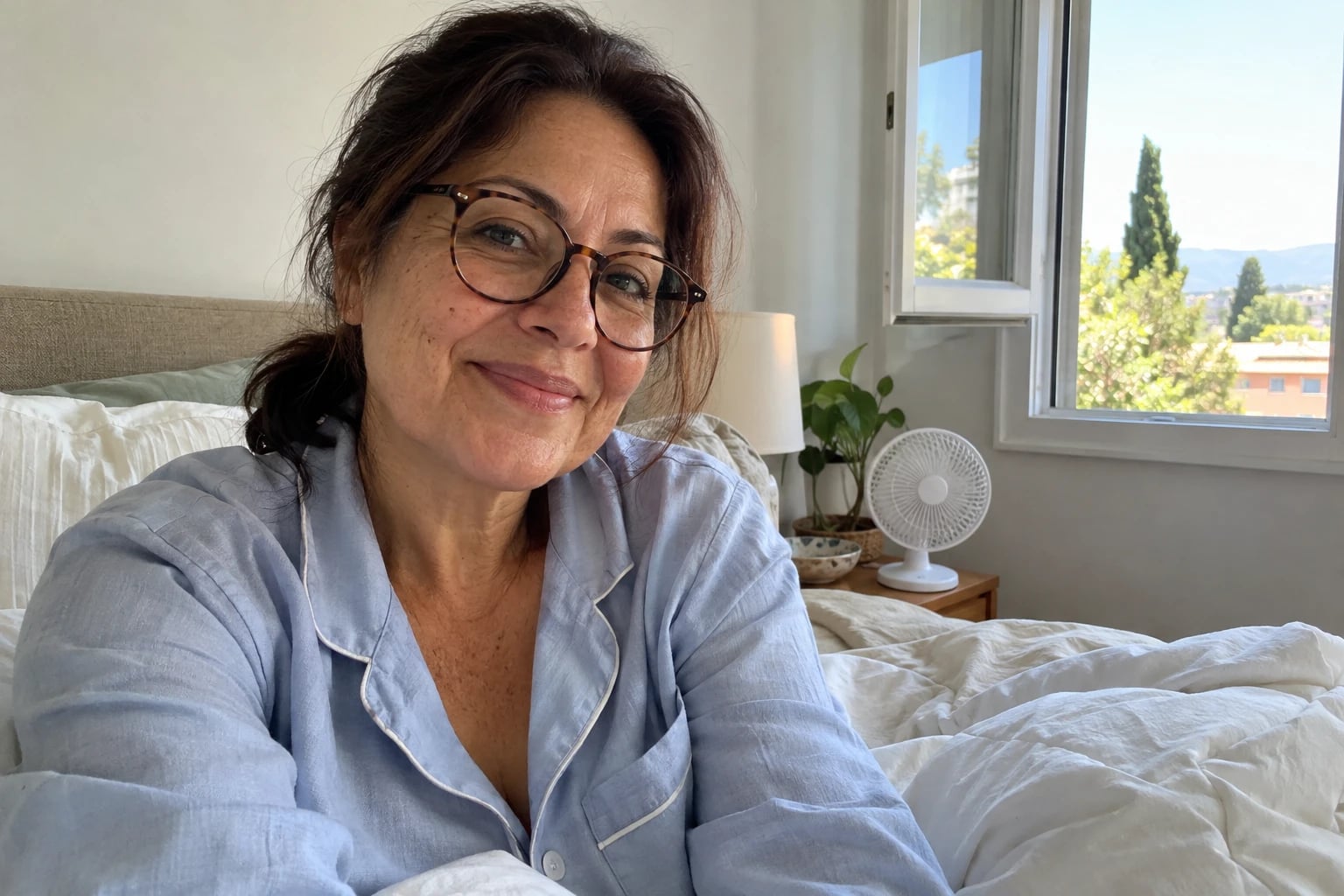
Ten minutes later you're shivering. The comforter comes back up, but your mind is already awake, adding up how many hours are left before the alarm.
That cold spell is part of the same problem as the heat, and it has the same causes.
Once you know what your body is doing at 3 a.m., most of the night becomes something you can plan for: the room, the bedding, the two minutes after you wake, and the treatments that make the sweats less frequent.
Why you wake up soaked, then cold
Night sweats are hot flashes that happen while you're asleep. Up to 80% of women get hot flashes around menopause, and a single one lasts from about one to five minutes.
They start in your brain. As estrogen falls, the part of the brain that keeps your temperature steady starts misreading a normal body as too warm. It dumps heat fast. Blood rushes to your skin, you flush, and you sweat.
Then the cold. A physician at Penn State Health explains that the same part of the brain controls both hot and cold feelings, so the chill afterward is the same faulty thermostat swinging the other way. She calls it temperature dysregulation. The useful part is that treatments for the heat may help the chill too.
A flash is often followed by chills, according to University of Utah Health. There's a second, quieter reason you notice it more now.
Everyone's body sheds about a degree of heat between bedtime and morning, partly by warming the skin and sometimes by sweating. Younger women sleep through it.
At your age you're more likely to be awake for it already: up for the bathroom, or turning over because a hip or shoulder aches. You catch the warm, damp phase you used to miss.
If someone told you this would be over in three to five years, that line is outdated. In the long-running SWAN study, frequent hot flashes and night sweats lasted a median of 7.4 years, and up to 14.
The timing matters. Women whose flashes began while their periods were still regular, or early in perimenopause (the years leading up to the last period), had them for a median of 11.8 years. Black women in the study had them longest, a median of about 10 years.
They can run well into your sixties. A Swedish study found 15% of women at 66, and 9% at 72, still bothered by hot flashes. If you're four or five years past your last period and still changing your nightgown twice a night, you're well within the normal range.
What else can cause night sweats
Menopause is the usual cause at your age, but it isn't the only one, and sometimes a second cause is stacked on top of it. Two are worth checking before anything else.
Your medicines. Open the cabinet or the weekly pill organizer and read the labels. Cleveland Clinic lists blood pressure medicines, antidepressants and pain relievers as possible causes of night sweats.
Steroids are on the list too, including a course of prednisone, along with some migraine drugs and breast cancer treatments.
Don't stop any of them on your own. If your sweats got worse around the time you started something new or changed a dose, write down the date. That timing is exactly what your doctor needs, and sometimes the fix is a different drug in the same family.
Sleep apnea. This is breathing that keeps stopping and starting while you sleep. About a quarter of women have it before menopause, and more than a third after. Night sweats are reported in roughly a third of women who have it.
The clues are loud snoring, waking with a gasp, a dry mouth or headache in the morning, and feeling exhausted even on nights you don't remember waking.
If a partner has ever nudged you because you stopped breathing, mention it. A sleep study can confirm it, and treating apnea can cut down the sweating along with it.
Two other things make hot flashes more frequent: smoking and carrying more weight around your middle. Women whose ovaries were removed in surgery also tend to get more frequent, more severe flashes, because the drop in hormones is sudden.
Set up a bed you can cool without freezing
The goal is a bed where you can lose heat in seconds and get it back just as fast, without a full round of throwing everything off and hauling it back.
- Set the room cool. Aim for 60 to 67°F at night. If your thermostat can be scheduled, set it to drop at bedtime.
- Layer the bed. Put a thin cotton sheet between you and the comforter. When a flash hits, the comforter goes and the sheet stays, so you're never lying bare and wet when the chill comes.
- Add a middle layer. A light cotton or wool blanket under the comforter gives you three weights to choose from at 3 a.m.
- Split the covers if you share the bed. Two separate comforters of different weights mean your partner keeps theirs and you shed yours.
- Put a small fan on your nightstand, aimed at your face and chest, with the switch where your hand falls.
- Lay out a dry set within arm's reach: spare pajamas, a folded towel or second sheet, and a glass of cold water.
For sleepwear, cotton or linen pajamas feel cool and breathe well. If you sweat heavily, try moisture-wicking sleepwear, which pulls sweat off your skin and dries faster than cotton. Some women prefer a close-fitting cotton top, because it stays against the skin and soaks up sweat before it pools on the sheet.
A cooling gel pillow helps if your neck and hairline are where the sweat starts. You can flip it to the cool side mid-night.
If your partner runs hot and you're both waking each other, sleeping in separate beds or rooms for a stretch is a common, sensible fix. It reflects your body's thermostat, not the health of your marriage, and you can move back whenever you like.
One honest point: according to the Menopause Society, cooling tricks haven't been shown to reduce the number of hot flashes. What they do is make each one easier to sleep through. That makes them worth setting up tonight, as long as you don't expect them to stop the sweats.
Does the evening glass of wine matter?
You've probably wondered whether the wine with dinner, the late cup of decaf that may not be fully decaf, or Thursday's takeout curry is behind your worst nights.
The honest answer is maybe, and only you can find out. Sleep specialists commonly advise skipping caffeine, alcohol and spicy food before bed. But there isn't good evidence that avoiding triggers reduces hot flashes overall.
Both can be true. For many women, alcohol in particular warms the skin and breaks up sleep in the second half of the night, which is exactly when you're waking soaked. For others it makes no difference.
So test it instead of giving everything up for good. Pick one suspect, such as wine, and drop it for a week. Keep everything else the same. Count your wake-ups on a note on your phone each morning. Then have it again for a week and count.
If the numbers don't move, enjoy your glass. If they do, you've found a real lever, and you can decide how often it's worth the trade.
Caffeine is easier to test, because the effect usually shows up sooner. If your last coffee or iced tea is after lunch, move it earlier for a few days.
Smoking is the one evening habit with clear evidence against it: it's linked to more hot flashes. If you still have a cigarette after dinner, that's the one worth cutting.
What to do when you wake up soaked at 2 a.m.
You surface damp and too hot. The clock glows. You can feel the urge to throw the covers off entirely and grab your phone to see what time it is.
Here's a better order, built around the fact that the flash will pass in a few minutes and the chill is coming next.
- Peel back one layer, not all of them. Leave the cotton sheet on.
- Turn on the fan and let it run over your face and chest.
- Breathe slowly from your belly. In through your nose, letting your stomach rise, then a long, slow breath out. Keep it up until the heat fades.
- Cool your skin directly. A cloth wrung out in cool water on your neck or wrists speeds it up. Keep one in a bowl on the nightstand on bad weeks.
- Change anything wet. Damp fabric is what makes you freezing ten minutes later. Swap your top, or slide the folded towel under you.
- Pull the layer back up before you start to shiver, not after.
- Leave the phone face down. Checking the time starts the arithmetic about how much sleep you've lost.
If you're still wide awake after that, some women find that a few minutes out of bed resets them. Sit in a cool, dim room until you feel drowsy, then go back. Lying there tense for an hour tends to teach your body that bed is where you lie awake.
Notice the thought that usually shows up: "If I wake up, I'll never get back to sleep." It feels true at 2 a.m., but the flash is a few minutes long. Most of the lost time comes from what happens after it, which is the part this routine is built to shorten.
Is hormone therapy still an option for you?
For many women it is still an option, and it's worth asking about directly. The Menopause Society calls hormone therapy (HT, which you may know as HRT, and which some doctors call MHT, menopausal hormone therapy) the most effective treatment for hot flashes and night sweats.
Timing makes the biggest difference. A Harvard physician describes hormone therapy as generally the best option for the first 10 years after menopause, meaning the first decade after your last period. For a woman 11 years out, he suggested non-hormone medicines instead.
Many women find they have to raise it themselves rather than wait for a doctor to bring it up. You can say this, word for word, at your next appointment with your OB-GYN or primary care doctor:
"My night sweats wake me two or three times a night, and I'm exhausted during the day. I'd like to talk about treatment options, including hormone therapy, and whether it's right for me."
Then ask what your own history means for your risk. Your age, how long since your last period, and any history of blood clots, stroke or cancer all shape the answer. A good doctor walks through those with you rather than giving a flat yes or no.
Non-hormone treatments with real evidence behind them
If hormones are off the table, or you'd rather not, you still have options with research behind them. The Society's list of what works:
- Cognitive behavioral therapy (CBT) for menopause. A short, structured talk therapy. One program runs four to six weekly sessions, about eight hours in all, teaching belly breathing and how to challenge the thoughts that keep you awake. Women in it reported 39% fewer night sweats.
- Clinical hypnosis. A guided treatment with a trained clinician, nothing like a stage act. It's on the evidence list, and it's one of the options open to women who can't take hormones after cancer.
- Weight loss, if you carry extra weight, especially around your middle.
- Fezolinetant, an FDA-approved non-hormone pill that works on the brain's temperature center. The FDA has added a boxed warning for rare but serious liver injury, so your doctor will test your liver with blood work before you start and regularly afterward.
- Low-dose paroxetine, an antidepressant at a dose approved for hot flashes.
Separately, elinzanetant, a newer once-daily non-hormone capsule, won FDA approval for hot flashes and night sweats in October 2025, but it isn't part of the Society's evidence-based list. In its trials, women's sleep scores improved more on the drug than on a placebo, which matters if waking is your main complaint.
Doctors also prescribe some drugs off-label, meaning for a use the FDA hasn't specifically approved. Gabapentin is the one to know if sleep is your main problem.
It's taken at bedtime so its drowsiness works in your favor. It tends to suit women with night sweats, trouble staying asleep and aches. Doctors usually start low and raise the dose slowly; about one in ten people get dizziness or sleepiness.
Oxybutynin, a bladder medicine, also has evidence behind it. For women past the hormone window, Harvard's list adds three more names to raise with your doctor: clonidine, SSRI antidepressants and pregabalin.
If you take a breast cancer drug, make sure the doctor prescribing any of these knows, since some antidepressants don't mix with some of those treatments.
If insomnia has taken on a life of its own, so you lie awake even on nights without a flash, ask about CBT-I. It's the first-line treatment for insomnia and works on the sleep problem itself.
What isn't worth your money: black cohosh, vitamin E, soy and ginseng supplements. They lack good evidence for hot flashes, and so do acupuncture and chiropractic care.
Signs your night sweats need a doctor soon
Most night sweats at your age are menopause. A few patterns point somewhere else. Run through these:
- Do you have a fever, or feel ill in a way you can't explain?
- Have you lost weight without trying?
- Are you over 60 and the sweats have suddenly gotten worse, or come back in a new pattern?
- Along with the sweats, is your heart racing, are your hands trembly, or are you losing weight? That combination can point to an overactive thyroid.
- If you have diabetes, do you wake sweaty, shaky or confused? Blood sugar can drop overnight.
- Do you have a cough that won't go away, or swollen glands in your neck, armpits or groin?
Infections, tuberculosis and lymphoma can all cause night sweats, which is why fever and weight loss matter so much. Hot flashes after 60 also show up more often in women with higher heart and brain risks, so a new pattern at this age deserves a proper look.
A yes to any of these means calling your doctor this week rather than waiting for your annual checkup.
The bottom line
How you start depends on two facts about you: how long since your last period, and whether estrogen is safe for you.
If it's been under 10 years and you have no reason to avoid estrogen, hormone therapy is the most effective treatment, and you can ask about it at your next visit. If it's been longer, or you've had breast cancer, the non-hormone pills, gabapentin at bedtime, CBT and clinical hypnosis are where to start.
Either way, the cool room, the layered bed and the 2 a.m. routine cost little and work from the first night. And if anything in the warning list fits, that visit comes before everything else.
The newest of those non-hormone pills was approved in October 2025, so a doctor who said there was nothing else to try a few years ago has more to offer you now.
Up next
17 Plus-Size Office Outfits Over 50 That Actually Look Polished
Seventeen office outfits for a real plus-size body, each with the one fit detail that makes it work, from where a blazer button lands to what a tailor charges.
Read the list →

Reader quiz
Did you catch the details?
5 questions from this article. Finish them all to unlock the editor's bonus tip.
According to the article, when a hot flash hits, which layer of bedding should stay on you?
Did any of these feel familiar?
Know someone who needs this?
Sources cited in this article
This article links to 7 outside sources, listed here so you can read them yourself.
- Up to 80% of women get hot flashes menopause.org/patient-education/menopause-topics/hot-flashes
- The same part of the brain controls both hot and cold feelings www.psu.edu/news/hershey/story/medical-minute-lesser-known-symptoms-menopause
- University of Utah Health healthcare.utah.edu/the-scope/health-library/all/2024/03/i-have-night-sweats…
- A median of 7.4 years, and up to 14 www.swanstudy.org/up-to-14-years-of-hot-flashes-found-in-menopause-study
- Bothered by hot flashes www.health.harvard.edu/womens-health/is-it-normal-for-hot-flashes-to-last-lo…
- Cleveland Clinic lists my.clevelandclinic.org/health/symptoms/16562-night-sweats
- 39% fewer night sweats pmc.ncbi.nlm.nih.gov/articles/PMC8453849

Peter Byalik
Food & Home Editor
Peter Byalik is a professional chef with more than 20 years of experience, including years running his own business. He came to the United States from Ukraine.
More from Peter Byalik