



22 Dishes on a 1960s Dinner Party Menu, Course by Course
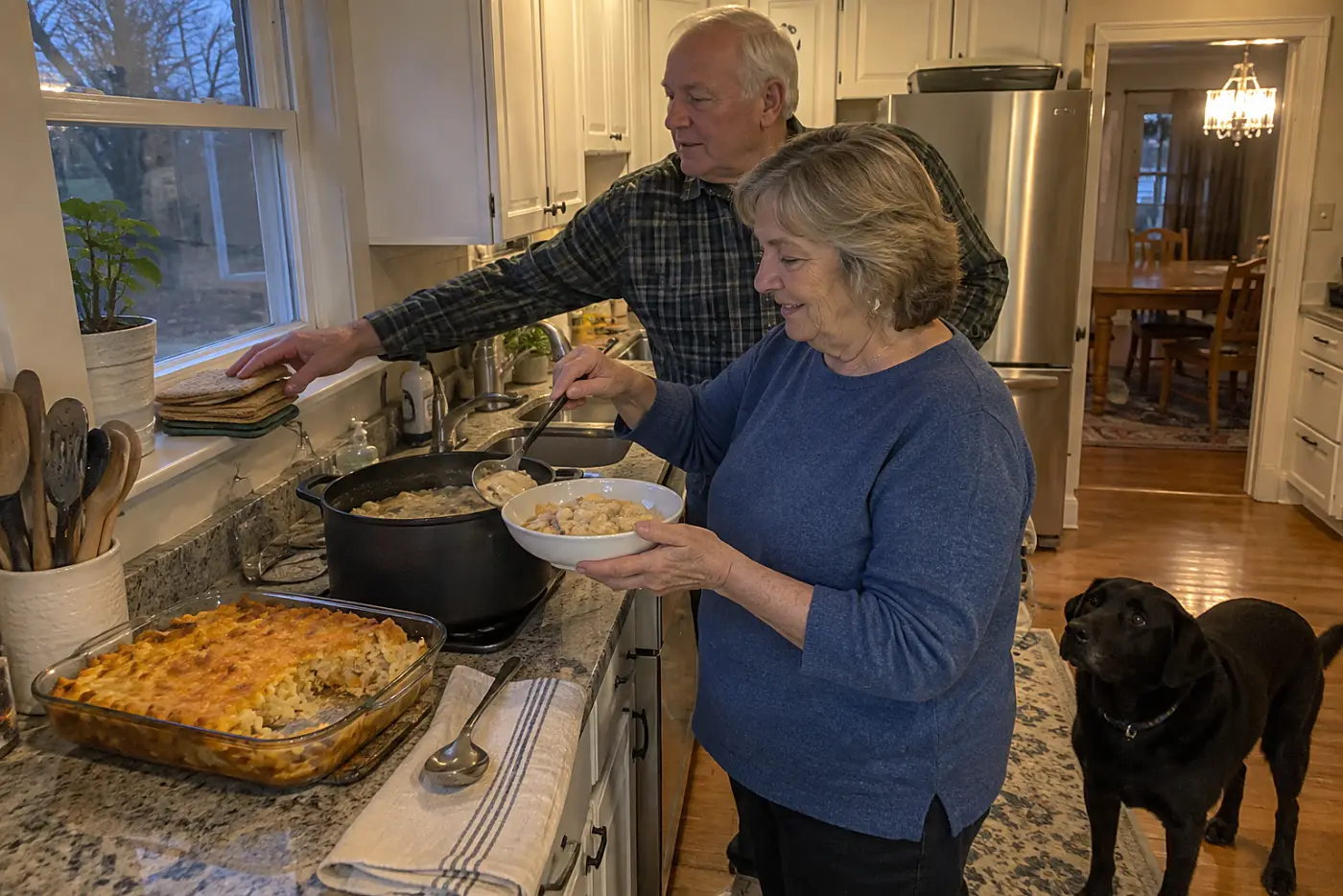
A stemmed shrimp glass, a bowl of potato chips, and a bubbling pot of beef make this a menu you’ll want to serve.
By Carol Whitaker, Kitchen Editor
Updated · 20 min read
The short answer: A 1960s dinner party menu opens with drinks such as martinis or Manhattans and appetizers including a cheese ball, shrimp cocktail, deviled eggs, or rumaki. For the main course, serve Chicken à la King or Boeuf Bourguignon with scalloped potatoes and carrots. Finish with a dessert such as Tunnel of Fudge Cake.
- Written by our kitchen editor
- Cited 18 sources
- How we review
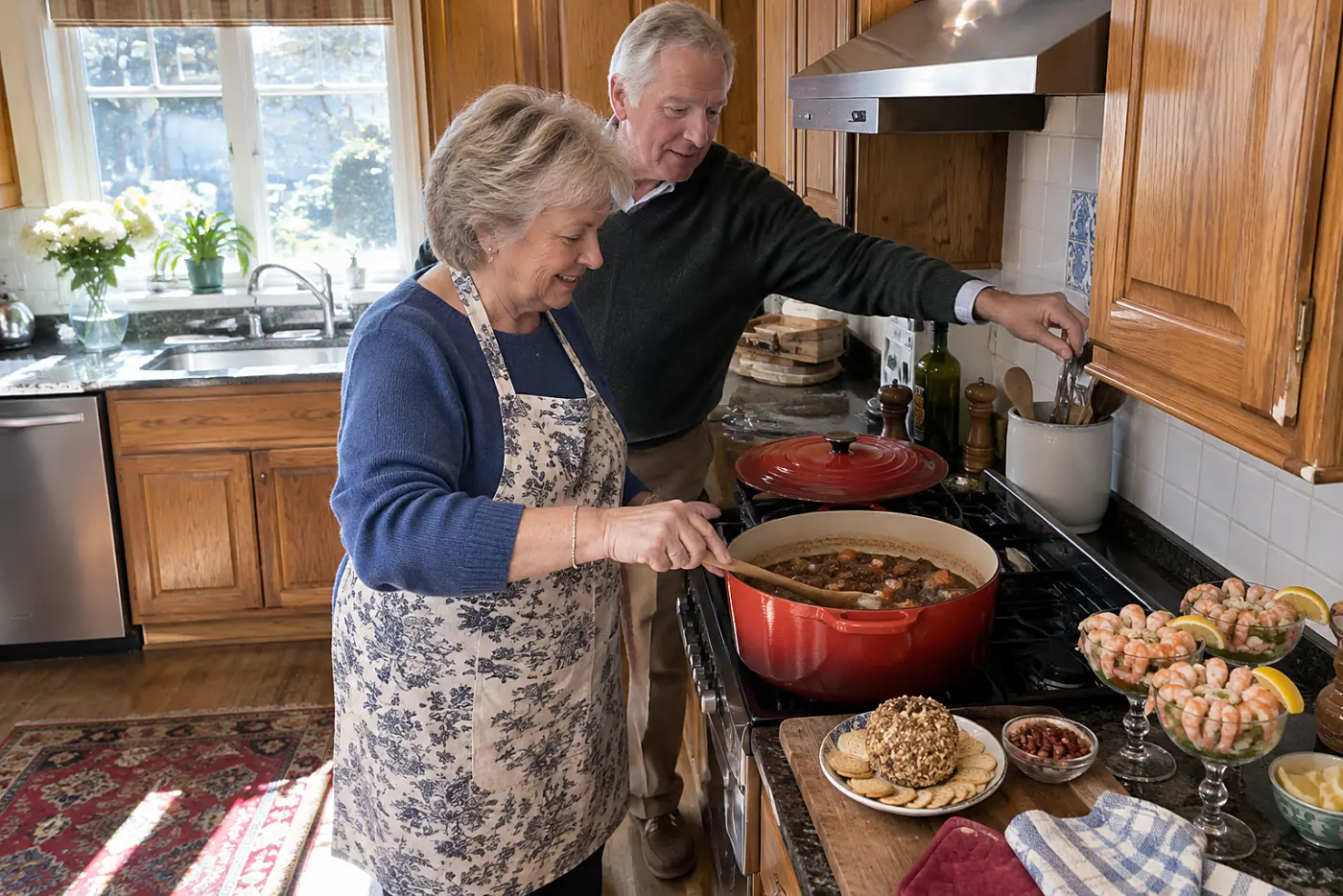
The glasses are cold. There’s a bowl of potato chips near the drinks, and something rich is bubbling on the stove. The pleasure of this party is the sequence: guests get a bite while you finish the main, then everyone sits down to a meal that feels like an occasion.
You don’t need to cook all 22 entries. Choose a drink, a couple of openers, a main, a side, and dessert. Some of these recipes show what belonged on an ordinary supper table, too. That contrast is part of the fun: you get to choose what deserves its entrance tonight.
22Sherry Glasses Beside the Bar Cart

Serves 2. 5 minutes, no cooking.
You need: 4 oz sherry, 2 small glasses, 1 bowl of ice.
Set the glasses beside the ice before anyone arrives. Pour 2 oz sherry into each glass as guests come in. Carry the drinks to the living room, away from the stove.
Where will the used glasses go? Answer that before the doorbell rings. You’re arranging a room you’ll move through, not copying a table-setting diagram. Put the clean glasses within reach and leave an empty spot for the ones guests set down.
A 1962 Grosse Pointe News party column advised keeping sherry alongside gin, Scotch, bourbon, and vermouth. It gave no diagram for your furniture. Walk your own route from the drinks to the chairs and move anything that blocks it.
Short-pantry swap: Serve cold water in the small glasses if you have no sherry.
21Celery Bites for a Small Guest List
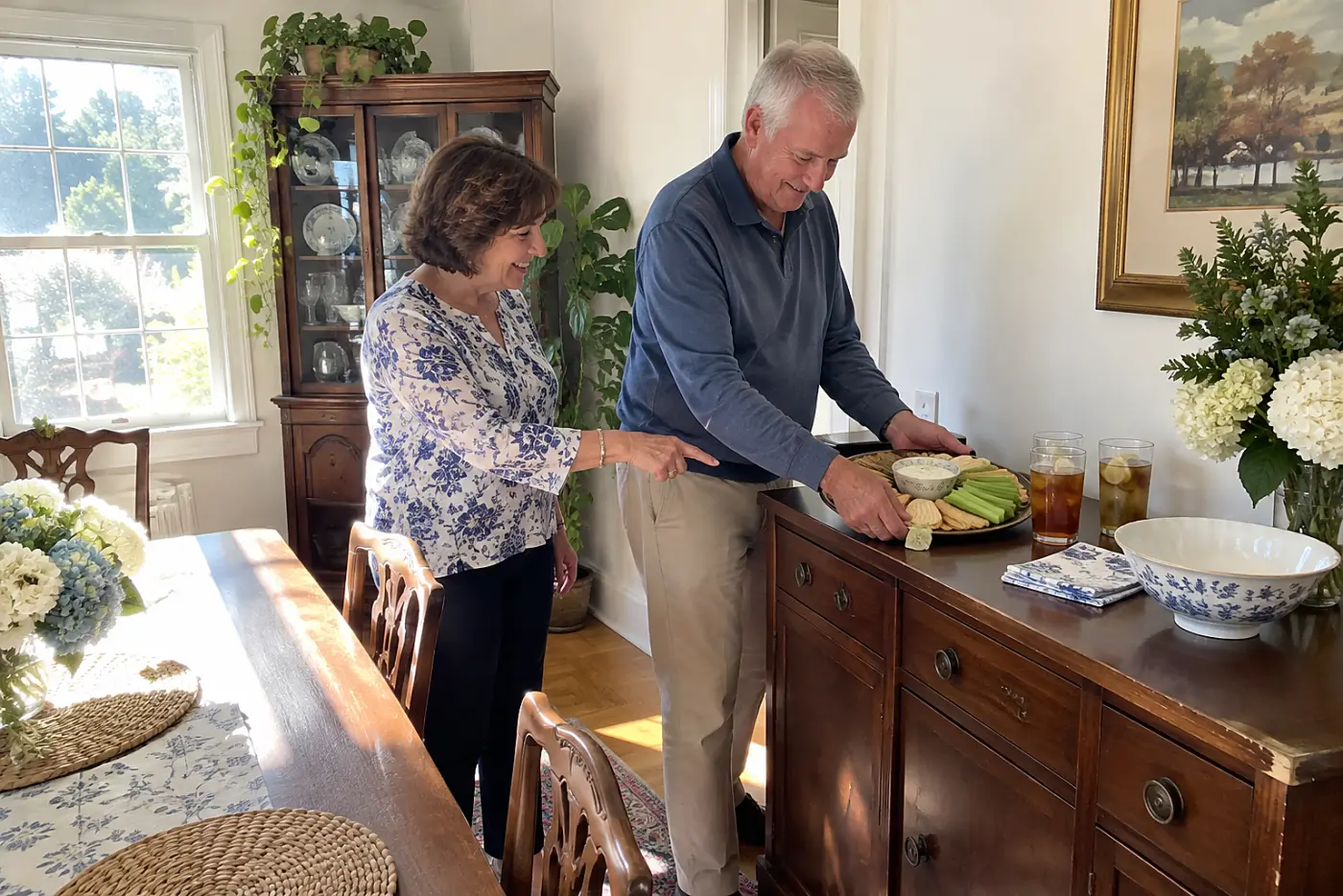
Serves 2. 10 minutes, no cooking.
You need: 2 celery stalks, 2 tbsp cream cheese, 4 plain crackers.
Cut the celery into pieces guests can pick up. Fill each piece with cream cheese. Arrange the celery and crackers on a small plate near the drinks.
How much food should you plan per guest? This tray gives you a way to work it out without borrowing a cocktail-party formula. Choose your courses first. Then check each recipe’s yield against the people coming, and write down what you need before shopping.
A 1962 party guide suggested 6 quarts of Scotch, 4 of bourbon, and 3 of gin for 50 guests, plus sherry and vermouth.
Those are drink quantities for a large party, not an appetizer count for dinner. For two people, you can see the whole opening tray at a glance.
Short-pantry swap: Spread the cream cheese on the crackers if the celery drawer is empty.
20Dry Martini for the First Arrival
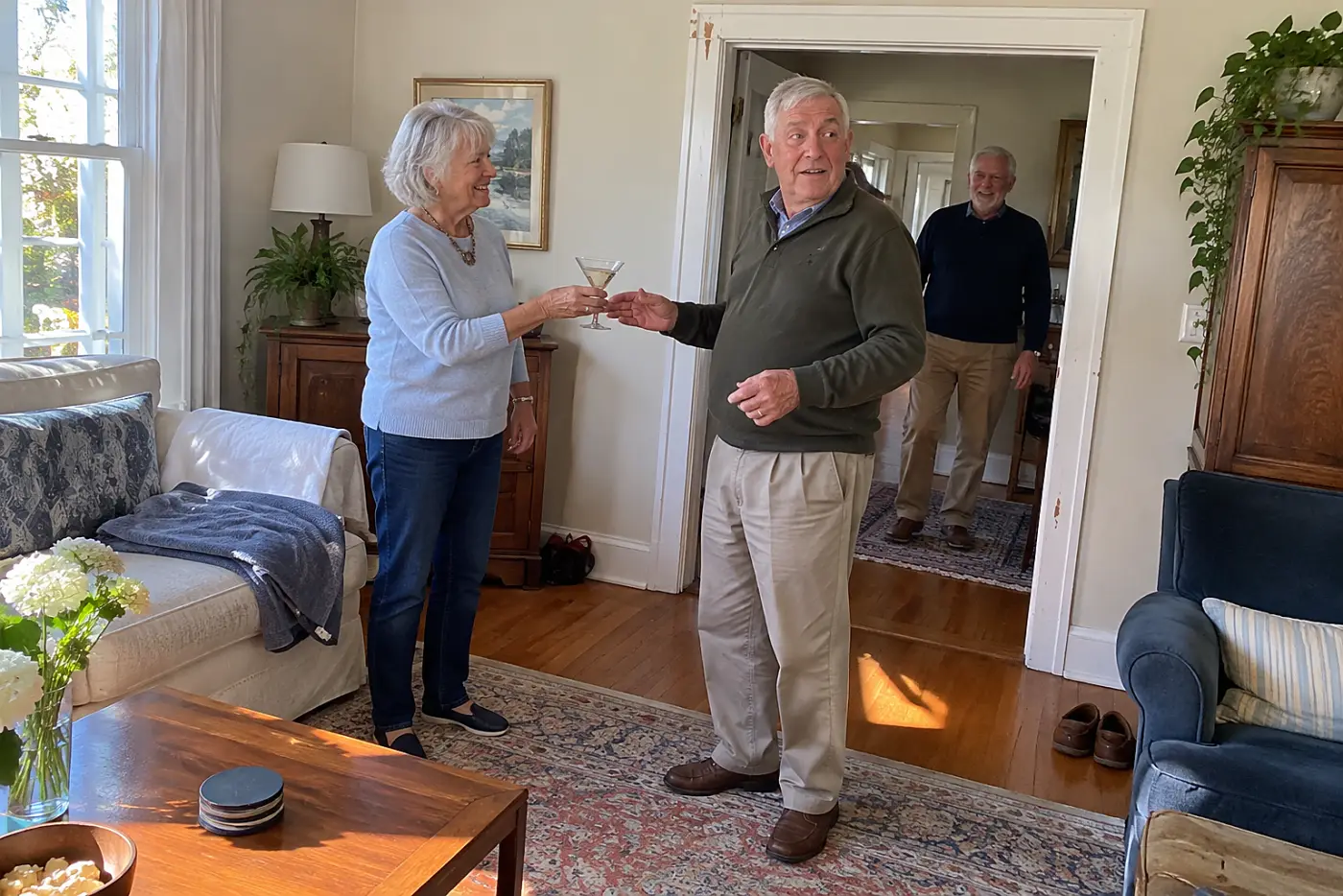
Serves 2. 5 minutes, no cooking.
You need: 4 oz gin, 1 oz dry vermouth, 2 olives, 1 bowl of ice.
Chill 2 cocktail glasses. Stir the gin and vermouth with ice. Strain the drink into the glasses and add an olive to each.
The first guest arrives while you’re carrying something from the stove. Put down the pan. Your drink is already decided, so you don’t have to open every cabinet while someone waits by the door.
What did people drink at a 1960s dinner party? The International Bartenders Association lists both the Dry Martini and Manhattan among its “Unforgettables.” If someone prefers a Manhattan, follow that recipe rather than treating the drinks as interchangeable.
For this opening, the Martini is enough: a cold glass, a familiar drink, and an appetizer close by. Then you can return to dinner.
Short-pantry swap: Serve a small glass of sherry if there’s no vermouth.
19What People Ate in 1960s Britain: Prawns
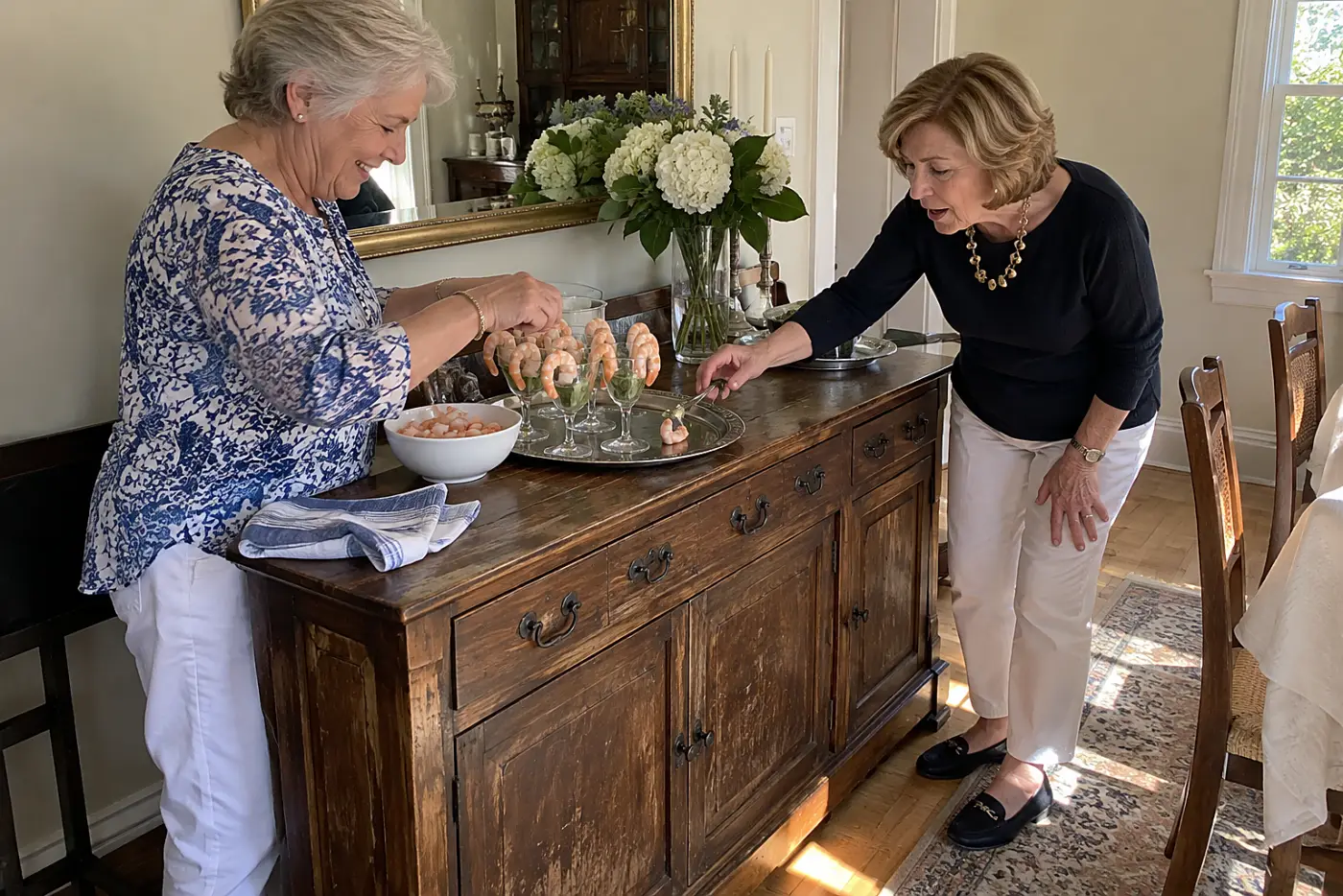
Serves 2. 10 minutes, no cooking.
You need: 6 oz cooked chilled prawns or shrimp, 2 tbsp cocktail sauce, 2 lettuce leaves, 2 stemmed glasses.
Tuck a lettuce leaf into each glass. Divide the prawns between the glasses. Spoon the sauce over them and serve cold.
Across the Atlantic, the glass has a particular association. Prawn cocktail is closely identified with the 1960s in Britain, where its stemmed-glass presentation turns a cold appetizer into an individual course.
Choose this British-style serving or the American shrimp cocktail at #6; you don’t need both at one dinner. Here, the lettuce sits beneath the prawns. Bring each guest a fork, and let the glass do the work.
Short-pantry swap: Use small tumblers if there are no stemmed glasses.
18What People Ate in 1960s Kitchens: Casserole
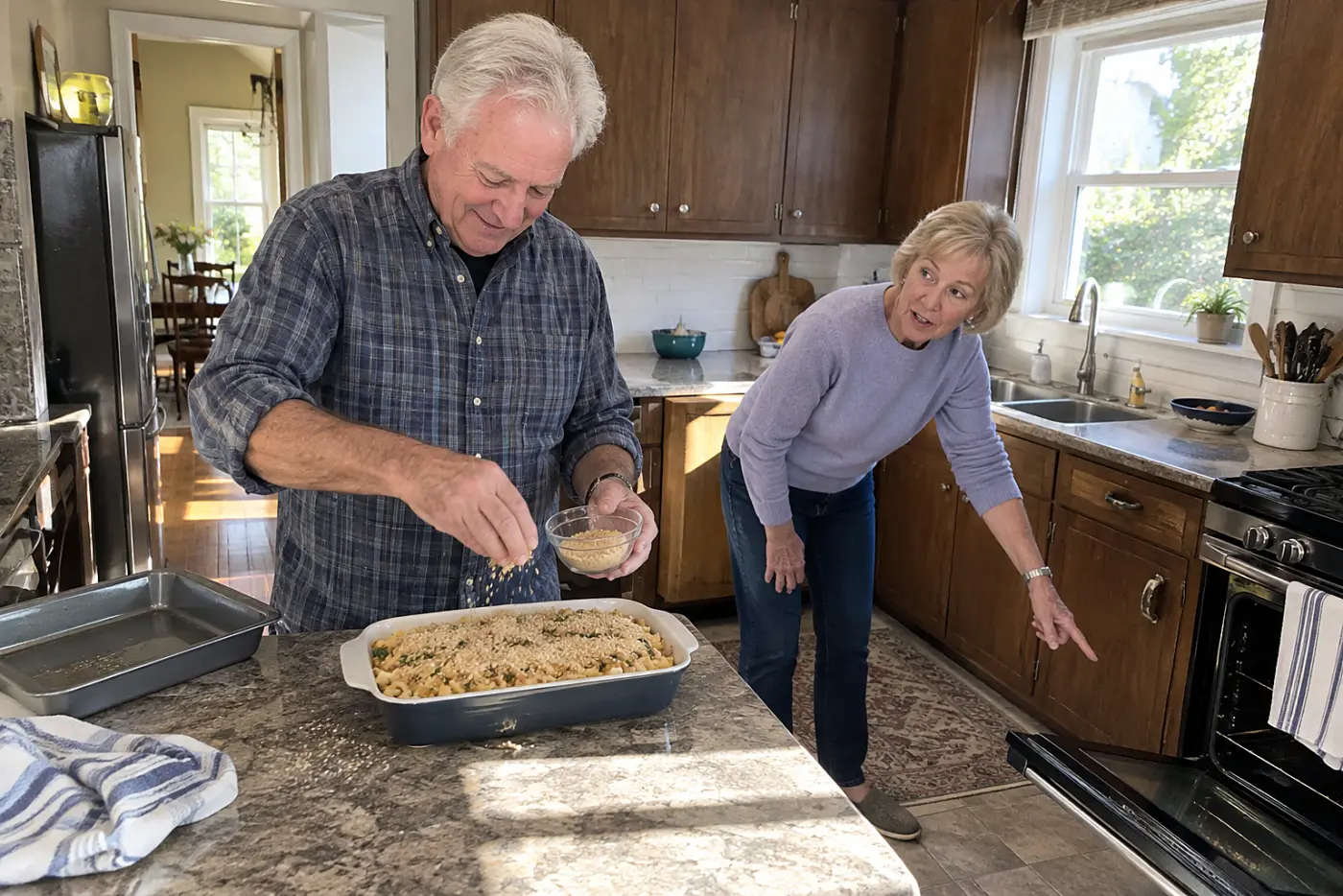
Serves 2. 30 minutes, one baking dish.
You need: 4 oz dry noodles, 1 can tuna, 1 cup milk, ½ cup shredded cheddar, ¼ cup breadcrumbs.
Heat the oven to 375°F [190°C] and cook the noodles according to the package. Mix the drained noodles, tuna, milk, and cheddar in a small baking dish. Scatter the breadcrumbs over the top. Bake until the edges bubble and the top browns.
Not every meal wore its party clothes. The USDA Economic Research Service food-availability series tracks a mid-century shift toward processed and convenience foods in American kitchens.
This pantry-based casserole expresses that practical side of cooking; it isn’t a claim that every household made this exact recipe.
If you remember opening a can while a baking dish warmed, there’s pleasure in making that supper again. Serve it on an ordinary night. At your dinner party, let the more elaborate main have its turn.
Short-pantry swap: Use crushed plain crackers instead of breadcrumbs.
See more: 24 Simple Slow Cooker Recipes for Two →
17What People Ate in 1960s Homes: Chicken Toast
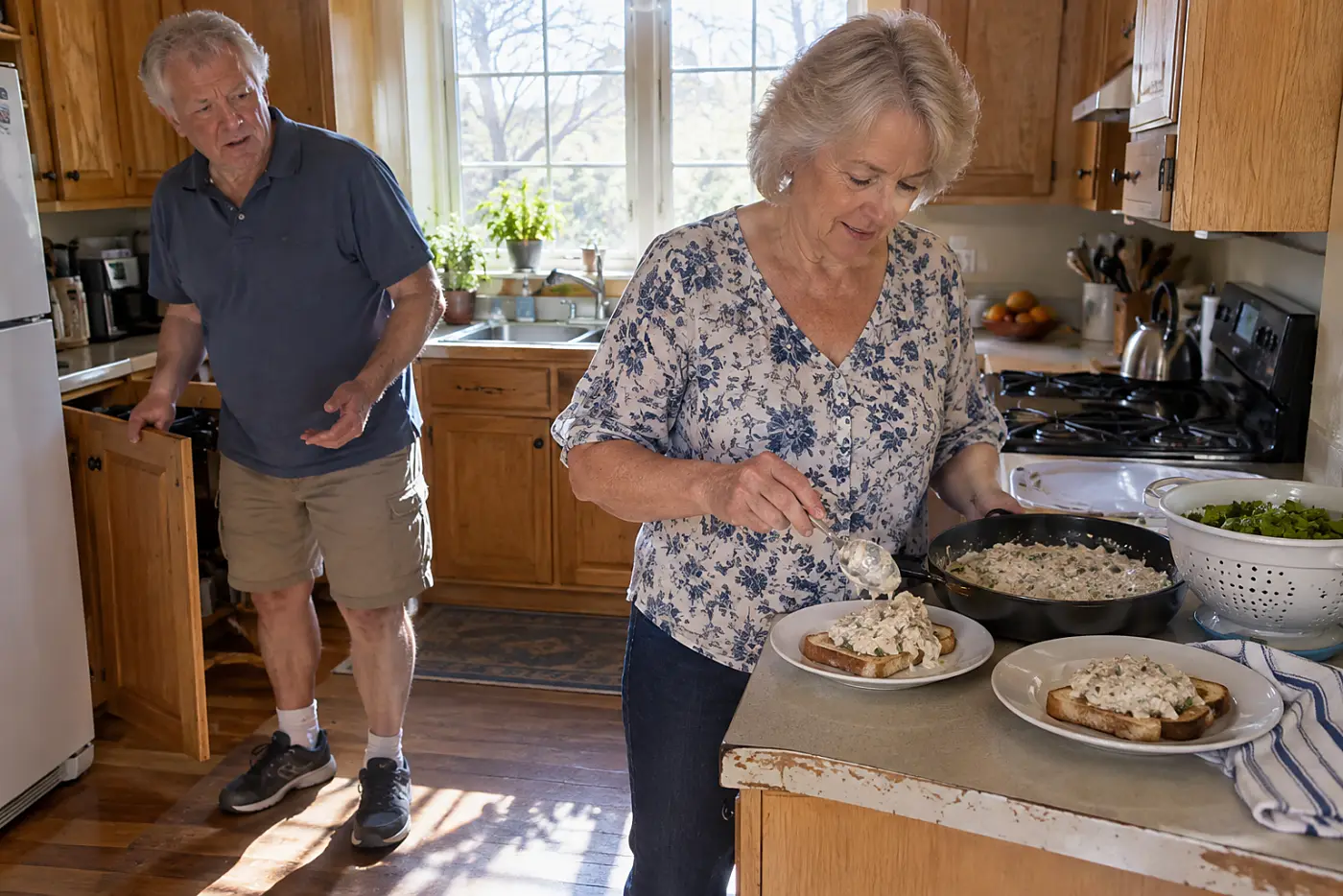
Serves 2. 20 minutes, one skillet.
You need: 1 cup diced cooked chicken, 1 tbsp butter, 1 tbsp flour, 1 cup milk, 2 slices toast, ¼ tsp salt.
Melt the butter in a skillet and stir in the flour. Whisk in the milk until the sauce thickens. Fold in the chicken and salt, then spoon the mixture over the toast.
What did people eat in the 1960s when nobody was coming over?
The USDA’s history of American eating shows the growing place of processed and convenience foods in home kitchens. A host still had reason to cook something more elaborate for company.
This supper shares the creamy comfort of Chicken à la King at #3, but it asks less of your evening. Put the toast on plates before the sauce is ready. Spoon it over while it’s hot, and eat before the bread loses its crunch.
Short-pantry swap: Use cooked rice if you’re out of bread.
See more: 27 Rooms That Tell Visitors Your Age Without a Word →
16Cheese Fondue for a 1970s Dinner Party Menu
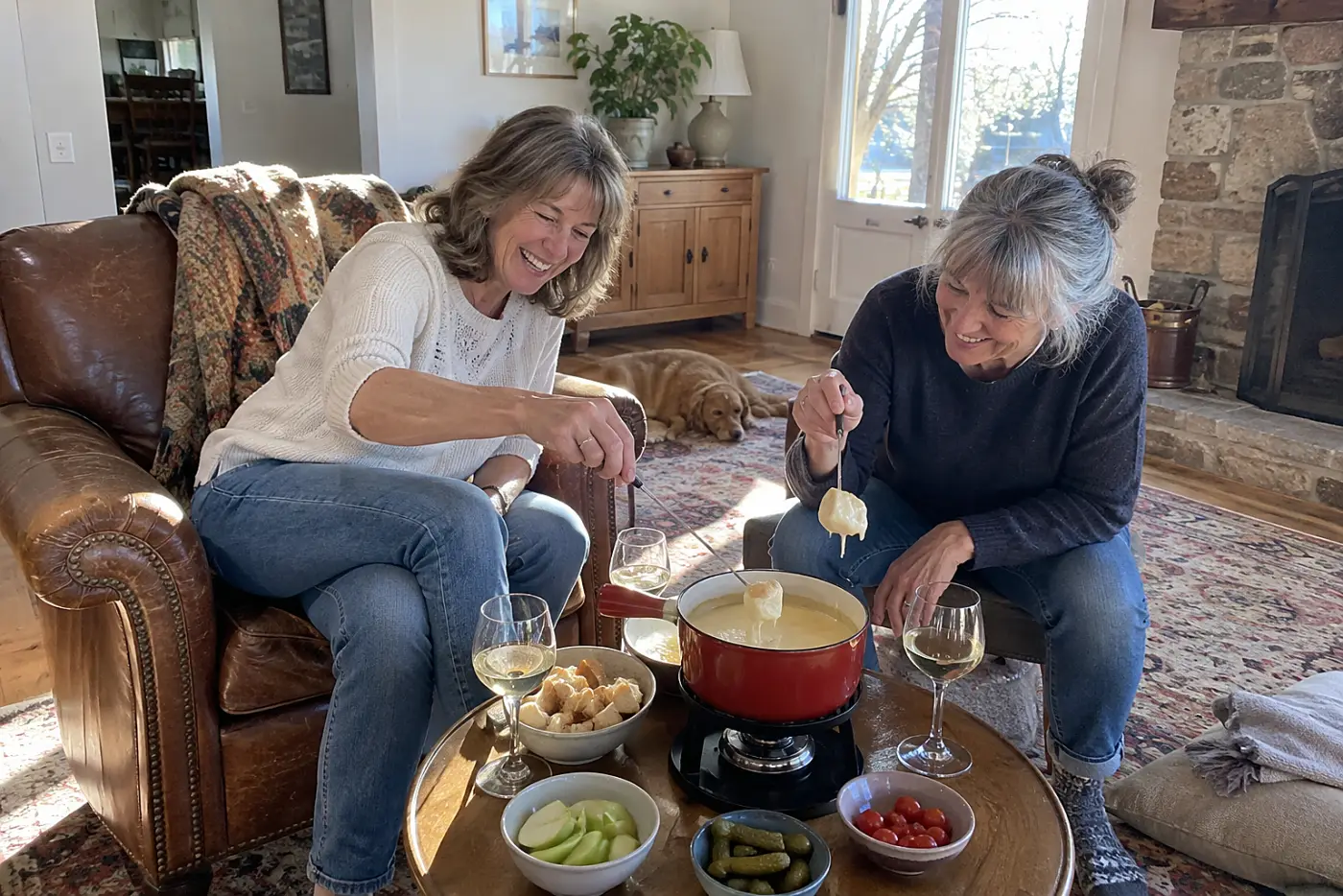
Serves 2. 20 minutes, one pot.
You need: 6 oz grated cheese, ¼ cup dry white wine, 1 tsp flour, 2 cups bread cubes.
Toss the cheese with the flour. Warm the wine in a small pot over low heat. Stir in the cheese a handful at a time until it melts. Dip the bread while the cheese stays warm.
For a 1970s menu dinner party, fondue is a documented link to the decade before.
Bon Appétit covered cheese fondue in 1965, and histories of the dish place its U.S. popularity across both the 1960s and 1970s. You don’t have to assign the pot to one decade.
Picture the moment you set it down: everyone has bread, and the first course becomes part of the conversation. That’s a good reason to serve it regardless of the date on your invitation.
For a fully documented 1970s menu, look up a dated cookbook or magazine menu and check its other courses. The research here doesn’t establish a complete one.
Short-pantry swap: Cut day-old bread into cubes instead of buying a fresh loaf.
See more: 25 Ways a House Changes When You Stop Hosting the Holidays →
15Beef Fondue on a 1970s Party Menu
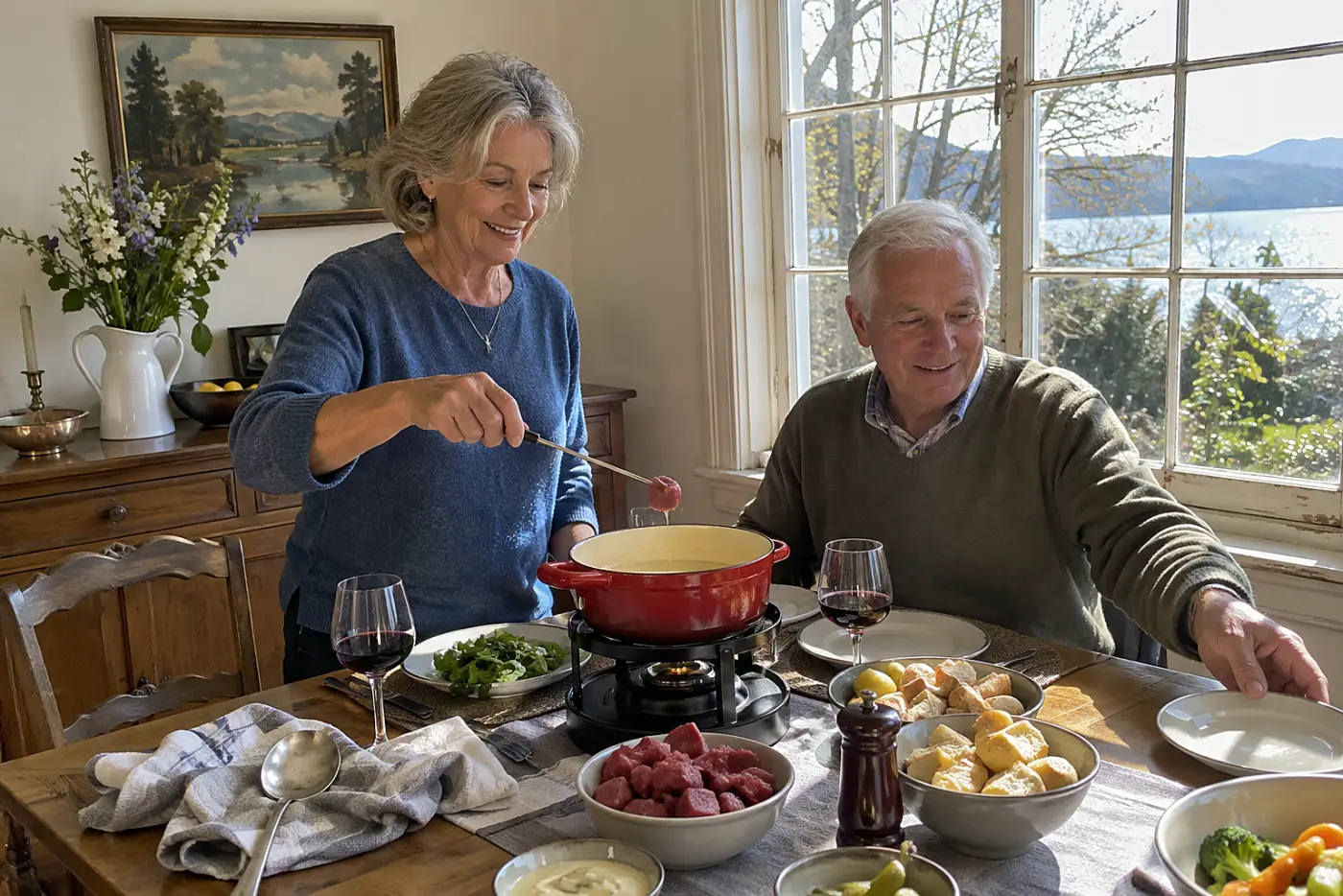
Serves 2. 30 minutes, one fondue pot.
You need: ½ lb beef cut into small cubes, 2 cups cooking oil, 2 fondue forks.
Cut the beef into pieces you can lift with the forks. Heat the oil in a fondue pot according to its instructions. Cook the beef in the hot oil, then transfer it to plates before eating.
Is this the same supper as the cheese pot? Hardly. A 1965 *Bon Appétit* feature taught fondue bourguignonne, with meat cooked tableside in hot oil.
Here, each person cooks a piece of beef instead of dipping bread into cheese. The research also places fondue’s U.S. popularity across both decades.
Read your pot’s instructions before guests arrive, and set it where nobody has to reach across another person. When the beef comes out, move it to a plate rather than eating from the fork over the oil.
You’ll see key lime pie named in proposed 1970s menus. This research found no dated party-menu source for that claim. If you want to give dessert a decade, check a dated menu first.
Short-pantry swap: Use a smaller batch of beef if that’s what you have; follow the pot’s oil instructions rather than filling it by eye.
14Quiche Supper for a 1970s Dinner Party
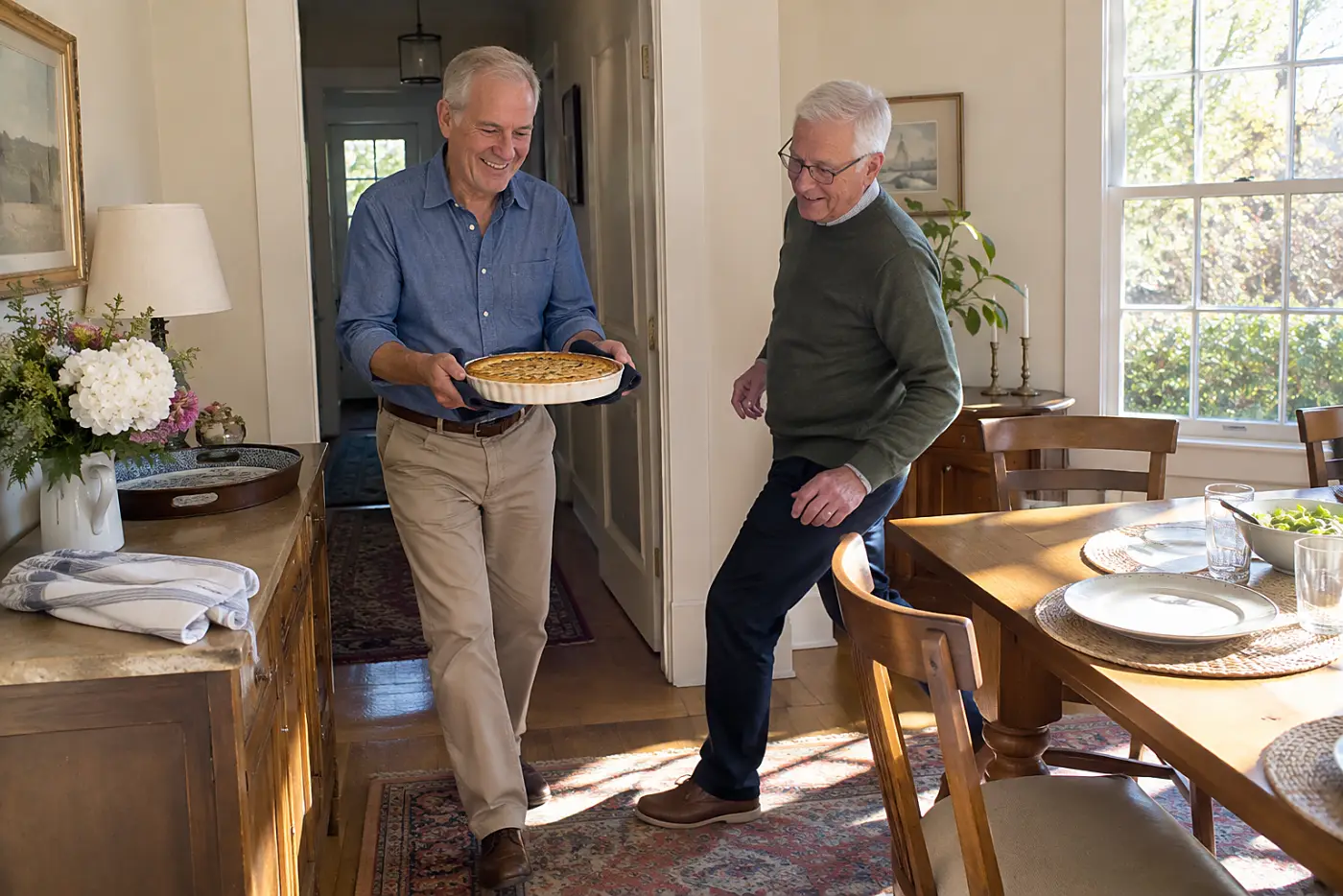
Serves 2. 35 minutes, one baking dish.
You need: 2 eggs, ½ cup milk, ½ cup shredded cheese, 1 small onion, 1 tsp butter.
Heat the oven to 375°F [190°C] and butter a small baking dish. Chop the onion and scatter it with the cheese in the dish. Whisk the eggs and milk, then pour them over the filling. Bake until the center is set.
Quiche is a pleasant supper for two. It doesn’t need a decade label to earn its place. If you’re building a 1970s dinner party menu, though, look for a dated American menu before presenting quiche as its signature main.
The same caution applies to beef stroganoff. This research found no reliable period source establishing either dish as a 1970s American party trend. Check a cookbook’s publication date and its full suggested menu, rather than relying on an undated recipe page.
Serve the quiche because you want it warm from the oven. Save the historical claim for a menu you can actually put a date on.
Short-pantry swap: Leave out the onion if you’re short of it.
See more: 29 Thirty-Minute Dinners for Two →
13Baked Carrots With Cheddar and Tabasco
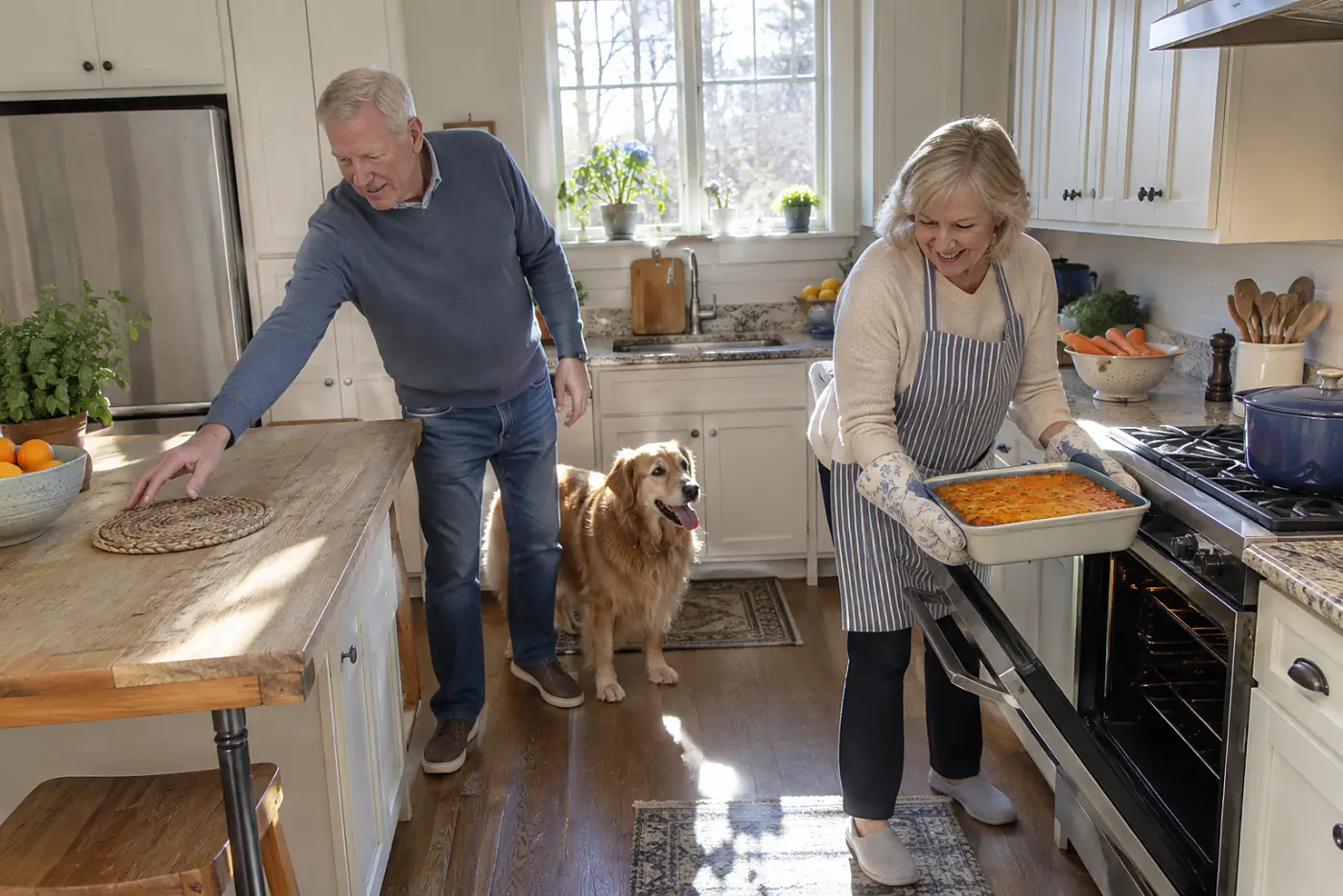
Serves 2. 35 minutes, one baking dish.
You need: 2 cups thinly sliced carrots, ¼ cup water, ½ cup shredded cheddar, 2 tbsp milk, 2 drops Tabasco sauce.
Heat the oven to 375°F [190°C]. Simmer the carrots in the water until they begin to soften, then drain them. Layer the carrots and cheddar in a small baking dish. Pour the milk over them, add the Tabasco, and bake until the cheese bubbles.
A carrot au gratin recipe shows how carrots and cheddar fit together. A 1960 *Sanford Herald* clipping suggested Tabasco for vegetables. That small dash has a job beside a rich main: it gives you a sharp note without turning dinner into a test of anyone’s appetite for heat.
Set the dish down while the cheese is still bubbling. Guests who came for the beef will have a reason to reach for the carrots, too. It’s the side that looks as though you spent longer on it than you did.
Short-pantry swap: Leave out the Tabasco if it isn’t in your cupboard.
12Scalloped Potatoes Beside the Roast
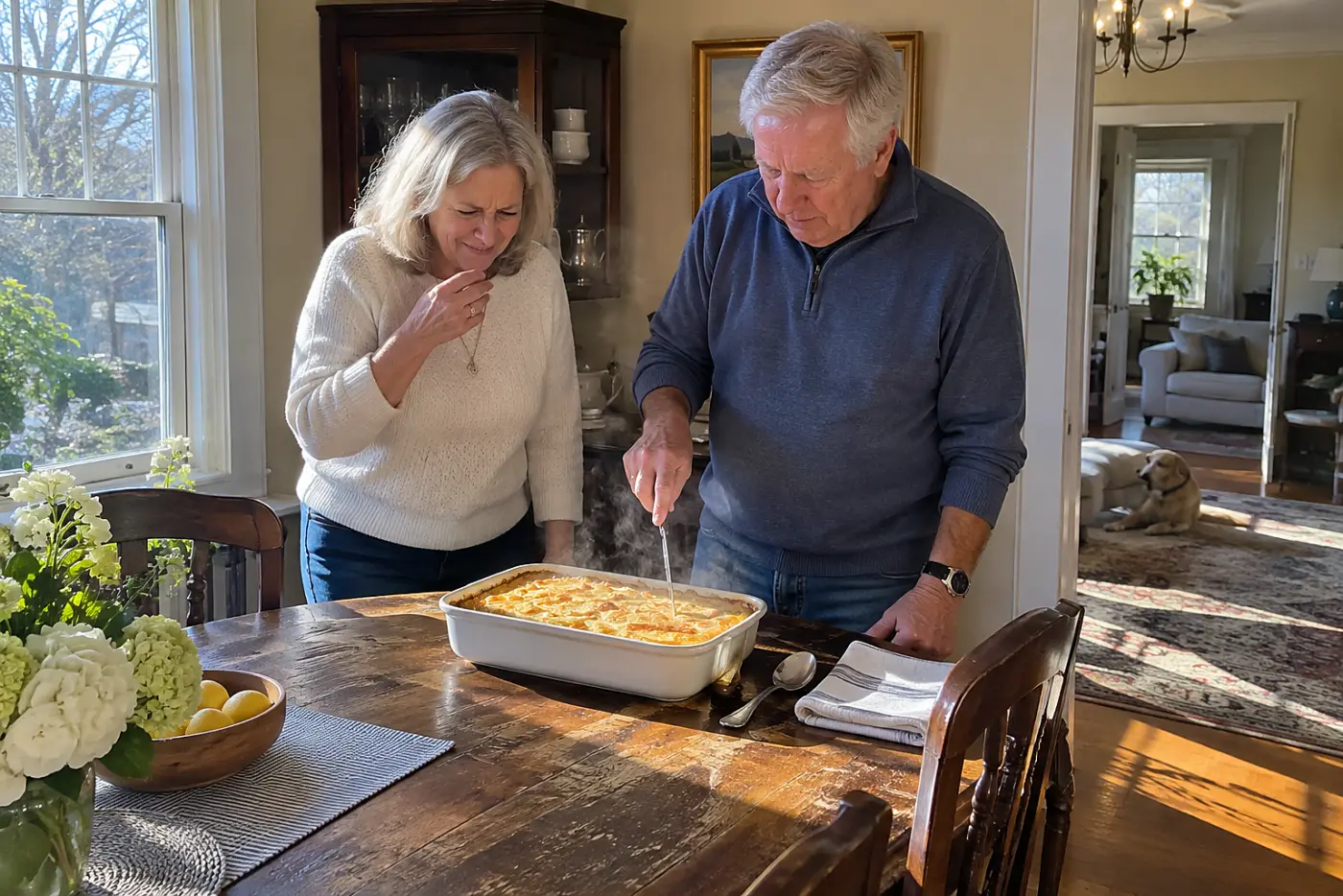
Serves 2. 55 minutes, one baking dish.
You need: 2 medium potatoes, ½ cup milk, ¼ cup shredded cheese, 1 tsp butter, ¼ tsp salt.
Heat the oven to 375°F [190°C] and butter a small baking dish. Slice the potatoes thinly and layer them with the salt and cheese. Pour the milk over the top. Bake until the potatoes are tender and the surface has browned.
These are the potatoes you want beside a roast or French-style beef. King Arthur Baking’s classic scalloped potatoes use the same thin-sliced, creamy approach.
Test a slice with a knife before carrying the dish out. A browned top doesn’t tell you whether the potatoes underneath are ready. Once they’re tender, leave the dish as it is; the browned edges are part of the appeal.
You might encounter “Vaughan’s-style potatoes” while looking for period menus. This research found no reliable source tying that name to a 1960s dinner-party preparation. Check the dated recipe itself before putting it on your menu.
Short-pantry swap: Use cream in place of milk if that’s what you have open.
11Chilled Tomato Aspic on Lettuce
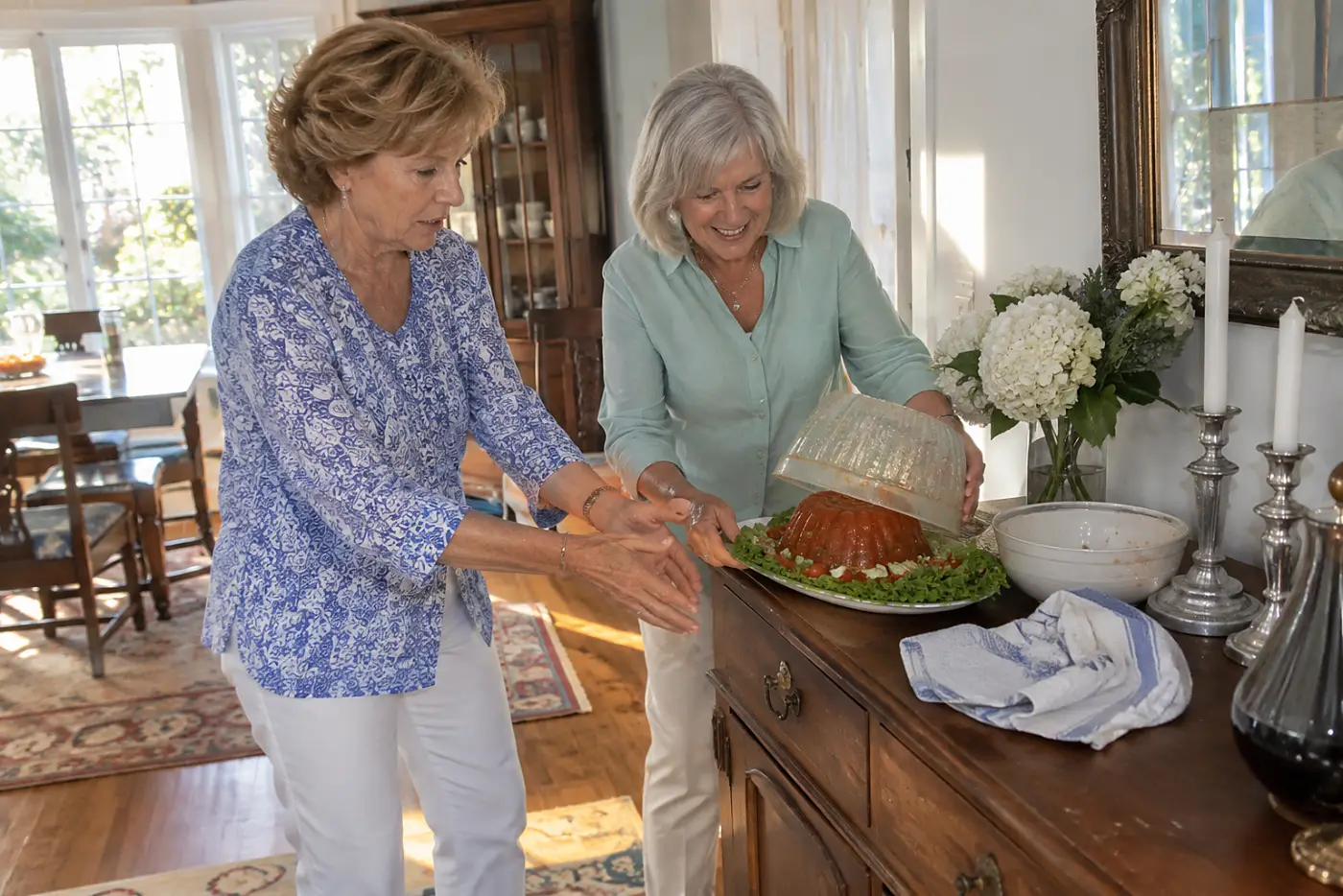
Serves 2. 20 minutes active time, plus chilling.
You need: 1 cup tomato juice, 1 tsp unflavored gelatin, 2 tbsp cold water, 2 lettuce leaves, 2 tsp mayonnaise.
Sprinkle the gelatin over the cold water. Warm the tomato juice, then stir in the softened gelatin until it dissolves. Pour the mixture into 2 small molds and chill until set. Turn each mold onto a lettuce leaf and add mayonnaise.
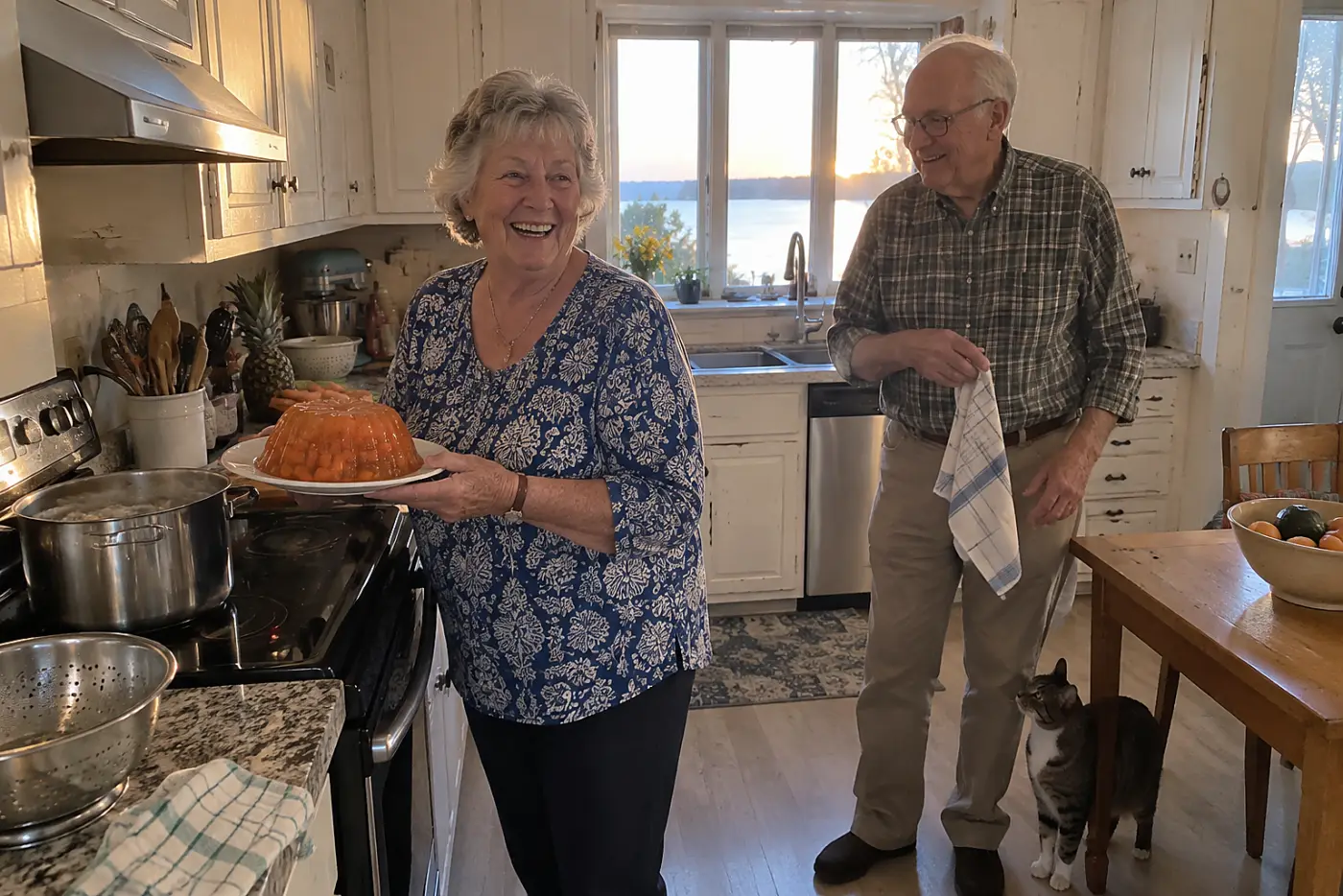
There’s the jellied course, and it deserves a fair hearing. Tomato aspic appears in *McCall’s Cook Book* from 1963, served unmolded with lettuce and mayonnaise. It’s a savory, cold course, not a dessert pretending to be salad.
Make small portions. Your guests can try a few bites before the main, rather than face a towering mold in the middle of the table. If you’re curious about the taste, make these for yourself first.
Short-pantry swap: Spoon the set aspic from small glasses if you don’t own molds.
10Iceberg Wedges With Blue Cheese
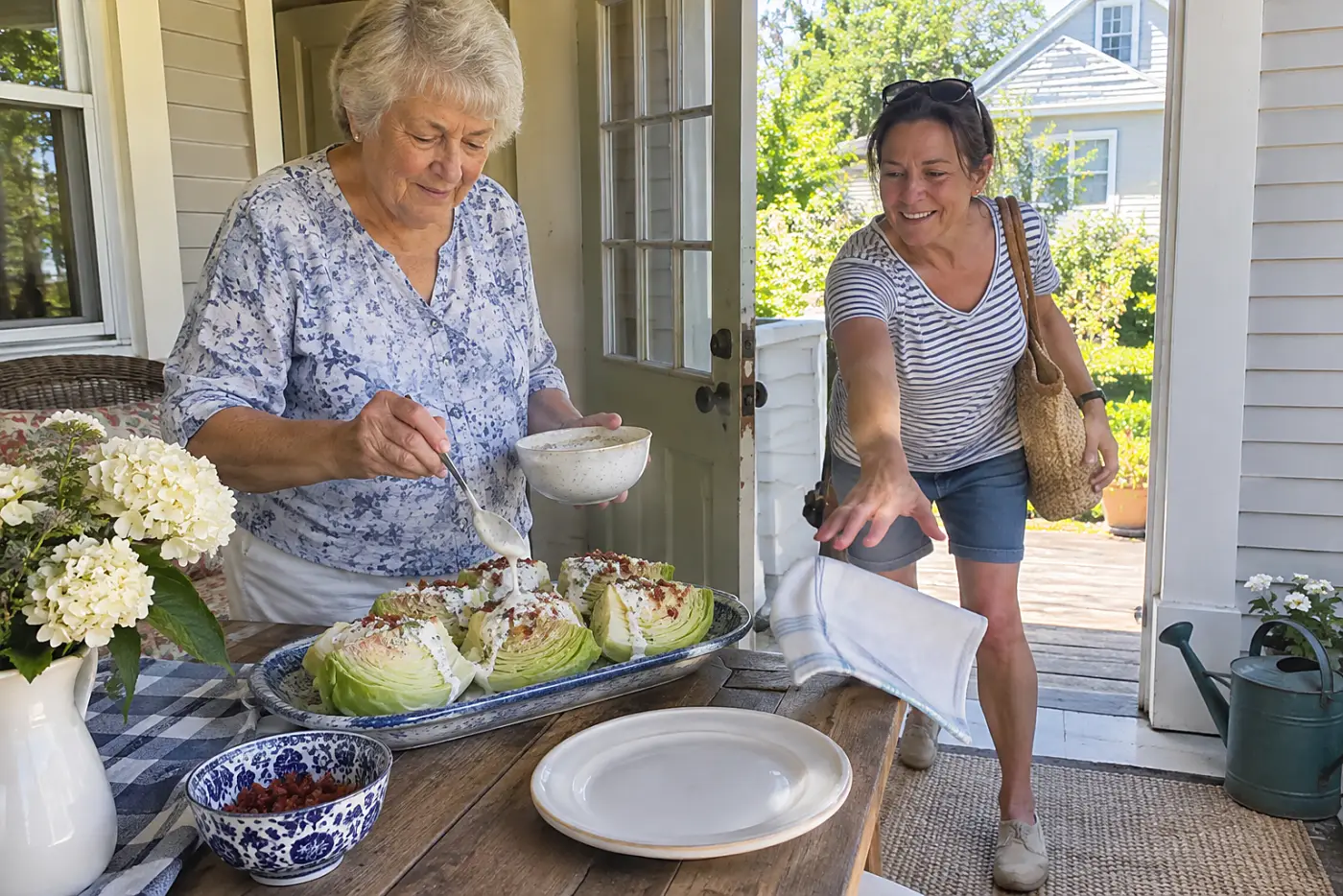
Serves 2. 10 minutes, no cooking.
You need: ½ head iceberg lettuce, ¼ cup blue cheese dressing, 2 tbsp crumbled blue cheese.
Cut the lettuce into 2 wedges and leave the core attached. Set a wedge on each plate. Spoon the dressing over the cut faces and scatter the cheese on top.
A crisp wedge gives your dinner a break from warm, creamy dishes. *The Washington Post* traces the iceberg wedge with blue cheese dressing as a mid-century steakhouse classic.
Serve it before the main, while everyone still wants something cold. The core holds the leaves together, so each guest gets a wedge rather than a heap of chopped lettuce. It’s a small bit of presentation that asks almost nothing of you.
Short-pantry swap: Use blue cheese dressing alone if there’s no extra cheese to crumble.
9Onion Soup Dip With Potato Chips
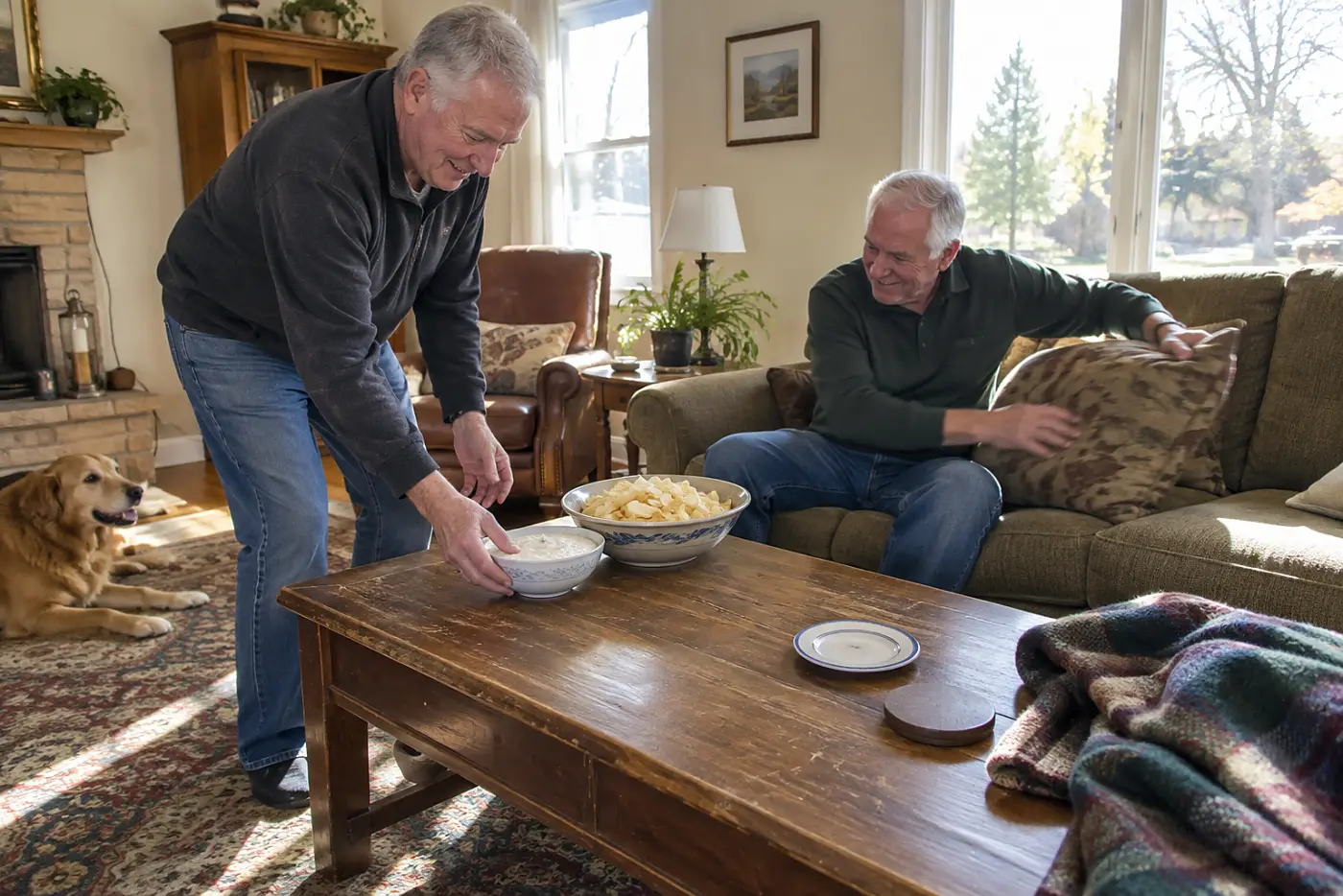
Serves 2. 5 minutes, no cooking.
You need: ½ envelope Lipton Recipe Secrets Onion Soup & Dip Mix, ½ cup sour cream, 2 cups potato chips.
Stir the soup mix into the sour cream. Spoon the dip into a small bowl. Set it beside the chips where people are having drinks.
This opener needs no announcement at the door. Lipton still sells the Recipe Secrets mix for onion dip, and its published California Dip formula pairs the soup mix with sour cream. The bowl is ready before your more demanding cooking begins.
For two people, keep it small. If you’re having more guests, check the envelope’s current directions and make the amount you need. Then put the chips close enough that nobody has to balance a dip-covered one across the living room.
Short-pantry swap: Serve the dip with celery sticks if the chips have vanished.
8Bacon Wrapped Water Chestnut Rumaki
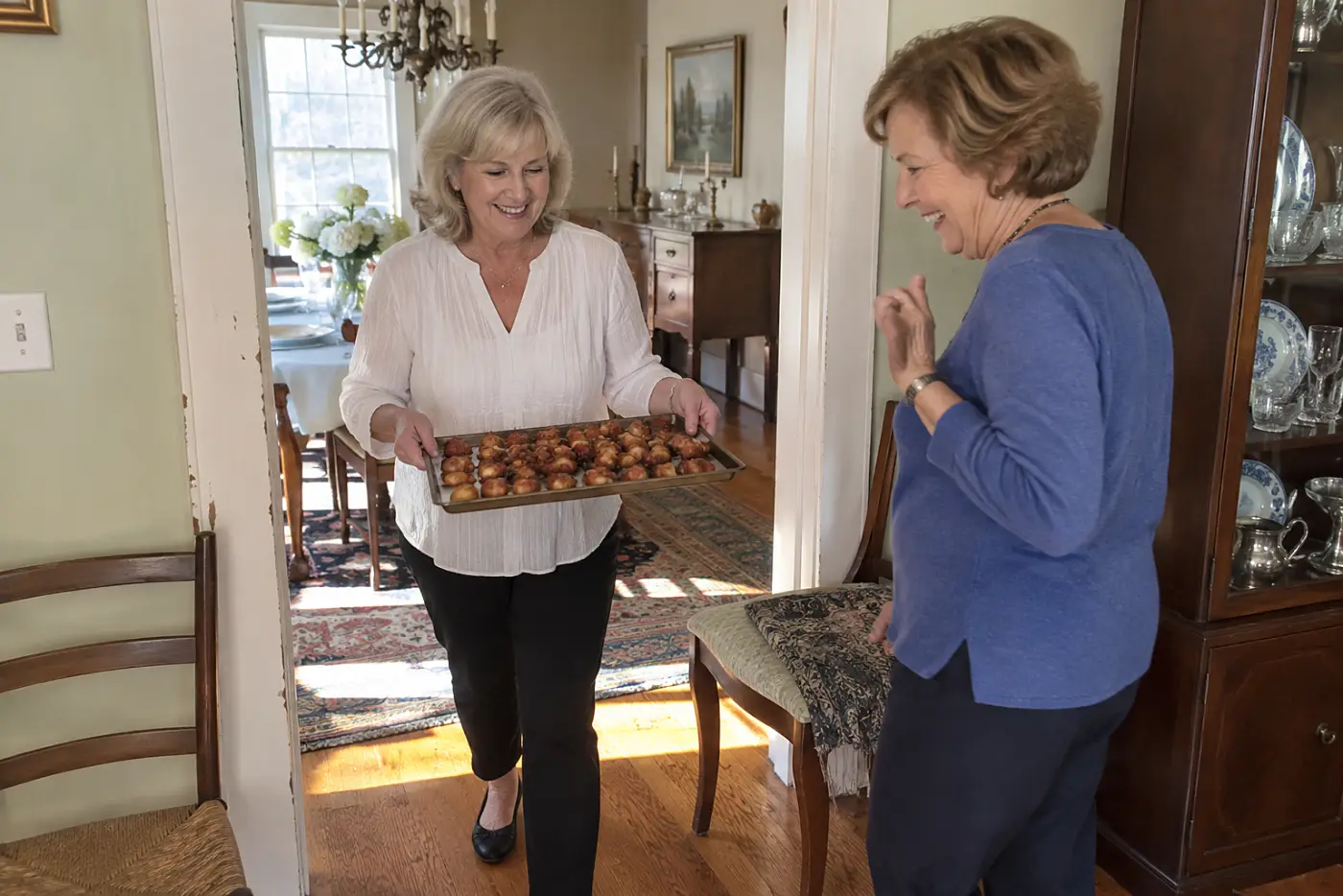
Serves 2. 30 minutes, one baking sheet.
You need: 8 drained water chestnuts, 4 bacon strips cut in half, 8 toothpicks.
Heat the oven to 400°F [205°C]. Wrap each water chestnut with a half strip of bacon and secure it with a toothpick. Arrange the pieces on a baking sheet. Bake until the bacon is cooked and browned.
Rumaki brings the tiki-restaurant side of the period into your living room. The dish, associated with places including Trader Vic’s, uses water chestnuts and/or chicken liver wrapped in bacon.
This version chooses the crisp water chestnut center. Bring the tray out hot while the main course finishes, then give guests a small dish for their used toothpicks. Count the picks before you serve; otherwise, one ends up on the arm of the sofa just as everyone sits down.
Short-pantry swap: Use drained canned water chestnuts if fresh ones aren’t available.
7Deviled Eggs and Stuffed Celery Tray
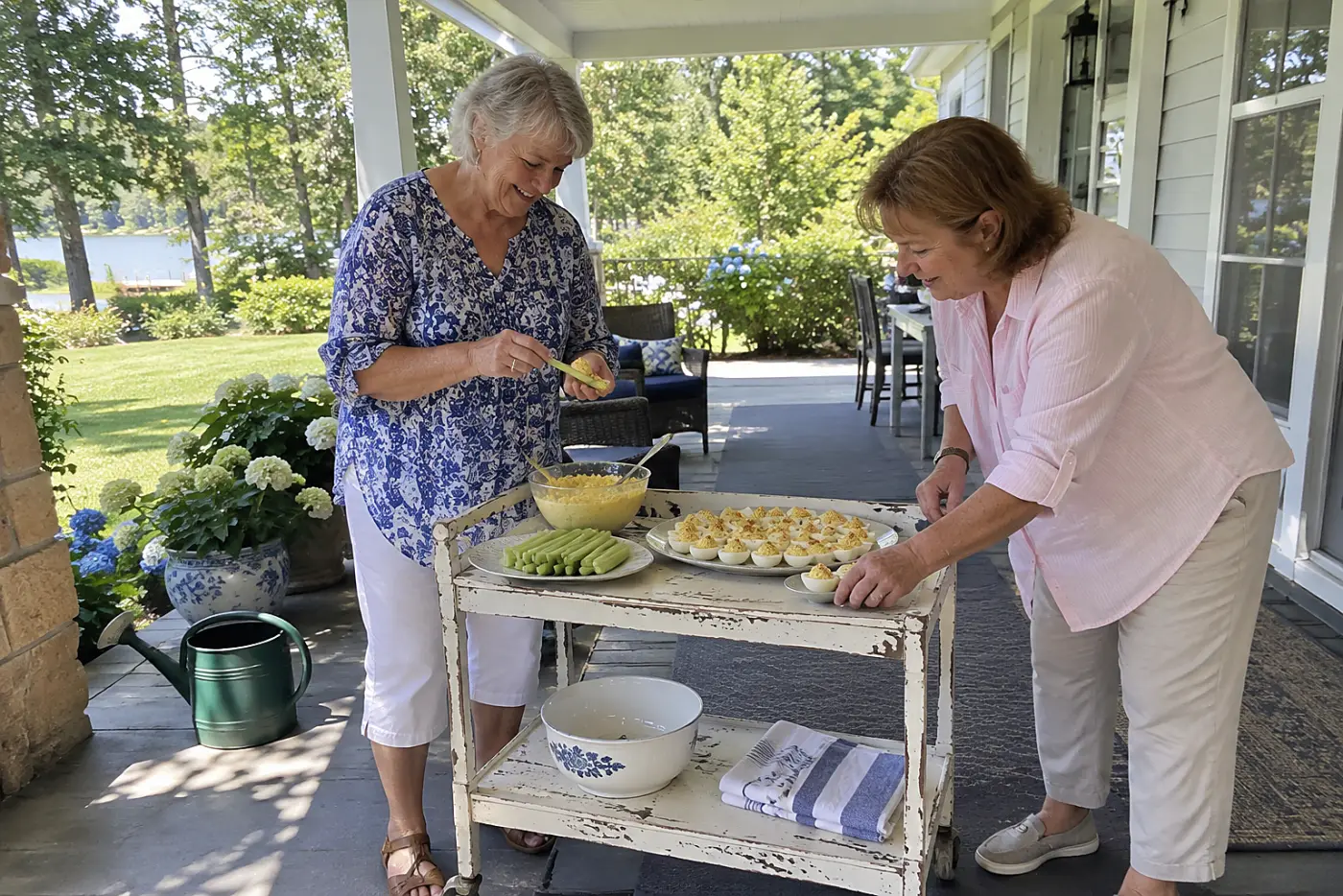
Serves 2. 20 minutes, one saucepan.
You need: 2 eggs, 2 celery stalks, 2 tbsp mayonnaise, 1 tsp mustard, ¼ tsp salt.
Cook the eggs until hard, then cool and peel them. Halve the eggs and mix their yolks with 1 tbsp mayonnaise, the mustard, and the salt. Fill the egg whites with the yolk mixture. Cut the celery into short pieces, fill it with the remaining mayonnaise, and arrange everything on a tray.
You’re making a tray people recognize without having to explain it. Library of Congress materials document stuffed celery as a long-standing American hors d’oeuvre. Hard-cooked egg dishes also appear in Craig Claiborne’s 1966 *New York Times Menu Cookbook*.
Leave space between the eggs and celery. Guests can take one without dismantling the whole arrangement. Put the tray out before you return to the stove, and this part of the welcome takes care of itself.
Short-pantry swap: Fill the celery with a little egg-yolk mixture if you’re short of mayonnaise.
6Shrimp Cocktail in Glass Goblets
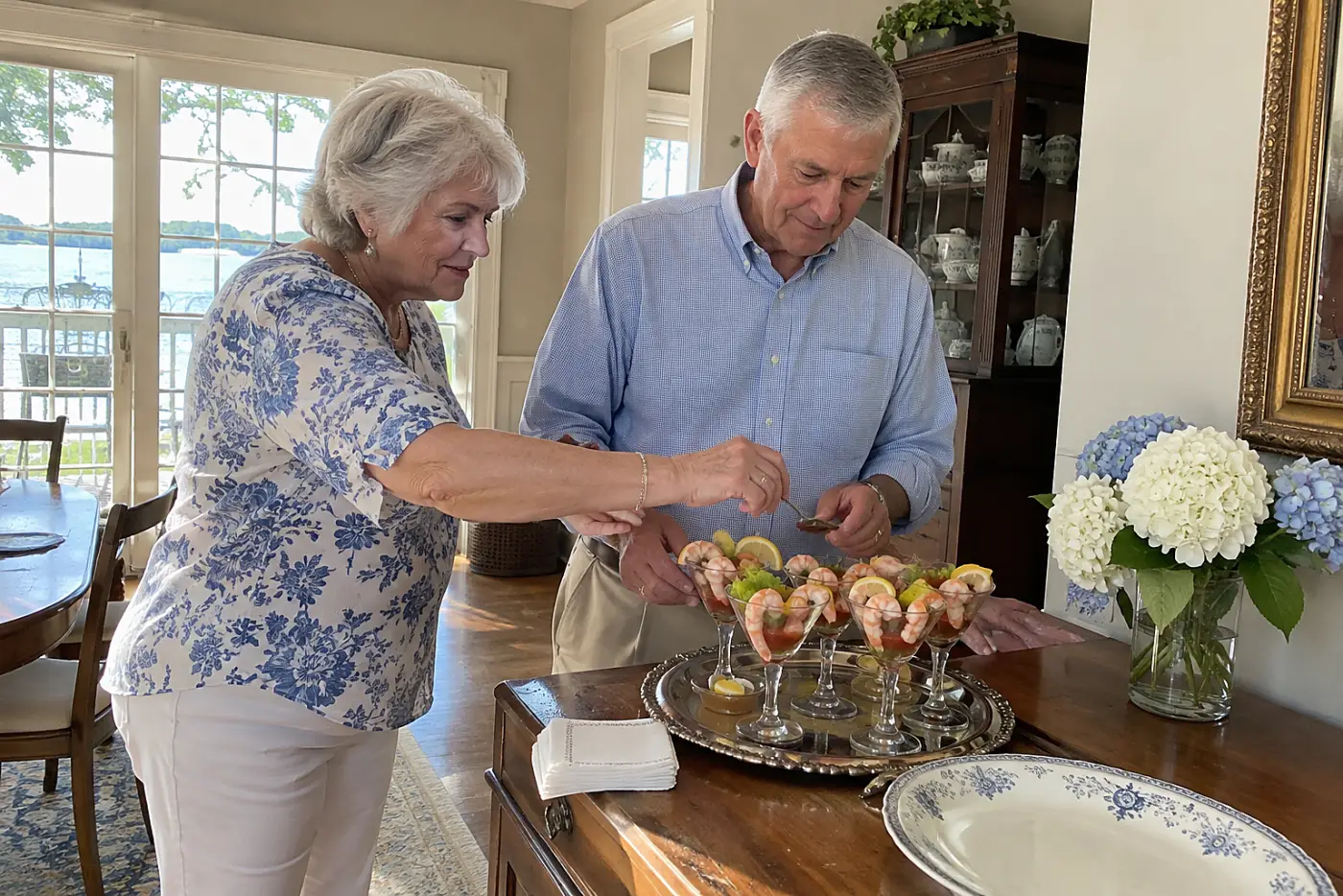
Serves 2. 10 minutes, no cooking.
You need: 6 oz cooked chilled shrimp, 2 tbsp cocktail sauce, 2 lettuce leaves, 2 small glasses.
Line each glass with a lettuce leaf. Divide the shrimp between them. Spoon the cocktail sauce into the glasses and serve cold.
At #19, the prawn glass showed the British side of this idea. Here’s the American dinner-party serving: a cold first course handed to each guest in its own glass. Craig Claiborne’s 1966 *New York Times Menu Cookbook* included shrimp cocktail, and the glass keeps each portion tidy.
Don’t hunt for a vintage set before inviting people over. Check your cupboard for glasses that sit steadily on a tray. Add forks and napkins, then carry the course out while the main stays warm.
Short-pantry swap: Use small bowls when the glasses are spoken for.
5Nut Coated Party Cheese Ball
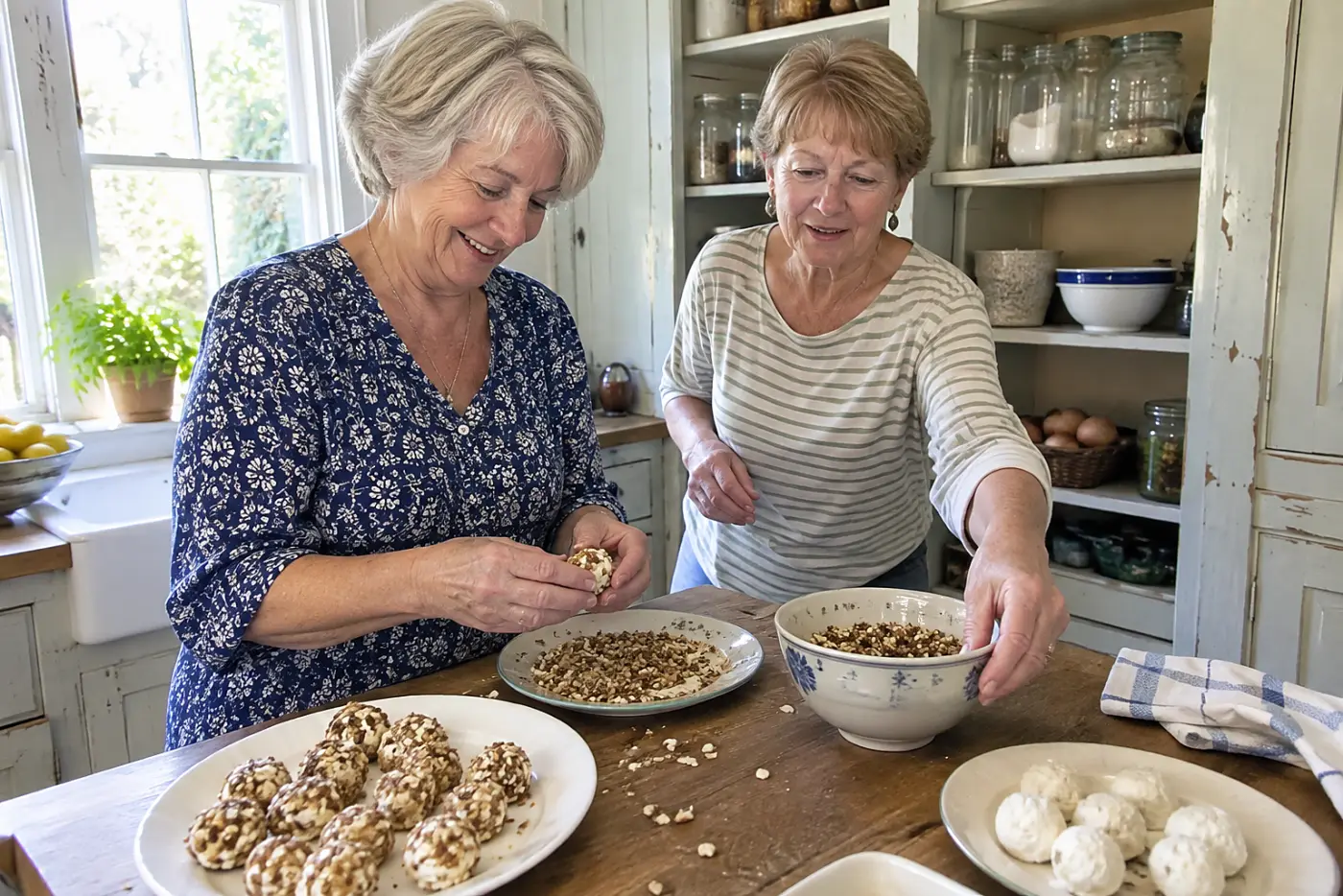
Serves 2. 15 minutes, no cooking.
You need: 4 oz cream cheese, 1 tbsp finely chopped onion, ¼ cup chopped pecans, 4 plain crackers.
Mix the cream cheese and onion. Shape the mixture into a small ball. Roll it in the pecans and set it on a plate with the crackers.
The Philadelphia Party Cheese Ball recipe uses two 8 oz blocks of cream cheese for a full-size party version. This smaller ball gives two people the same nut-crusted opener without leaving a great mound of it in the refrigerator.
Put out a spreading knife. It sounds obvious until guests try to break off cheese with crackers. You want the first course to leave you free to welcome people, not send you back to a drawer.
Short-pantry swap: Roll the ball in crushed crackers if you have no nuts.
4Martini Glasses Ready for Cocktail Hour

Serves 2. 5 minutes, no cooking.
You need: 4 oz gin, 1 oz dry vermouth, 2 olives, 1 bowl of ice.
Chill 2 cocktail glasses. Stir the gin and vermouth with ice. Strain the drink into the glasses and add an olive to each.
Your chosen drink is a Dry Martini for two. If you’d rather offer a Manhattan, follow the International Bartenders Association’s recipe instead of guessing at the ingredients. Both drinks appear in its “Unforgettables” collection.
The 1962 party advice was practical: stock gin, Scotch, bourbon, vermouth, and sherry, but limit the bar to 3 or 4 choices. You don’t have to serve every bottle on that list. Decide what you’re offering before the doorbell rings, so cocktail hour doesn’t become a search through your cabinets.
Short-pantry swap: Serve the sherry you’ve already opened if you’re out of vermouth.
3Chicken à la King Over Toast
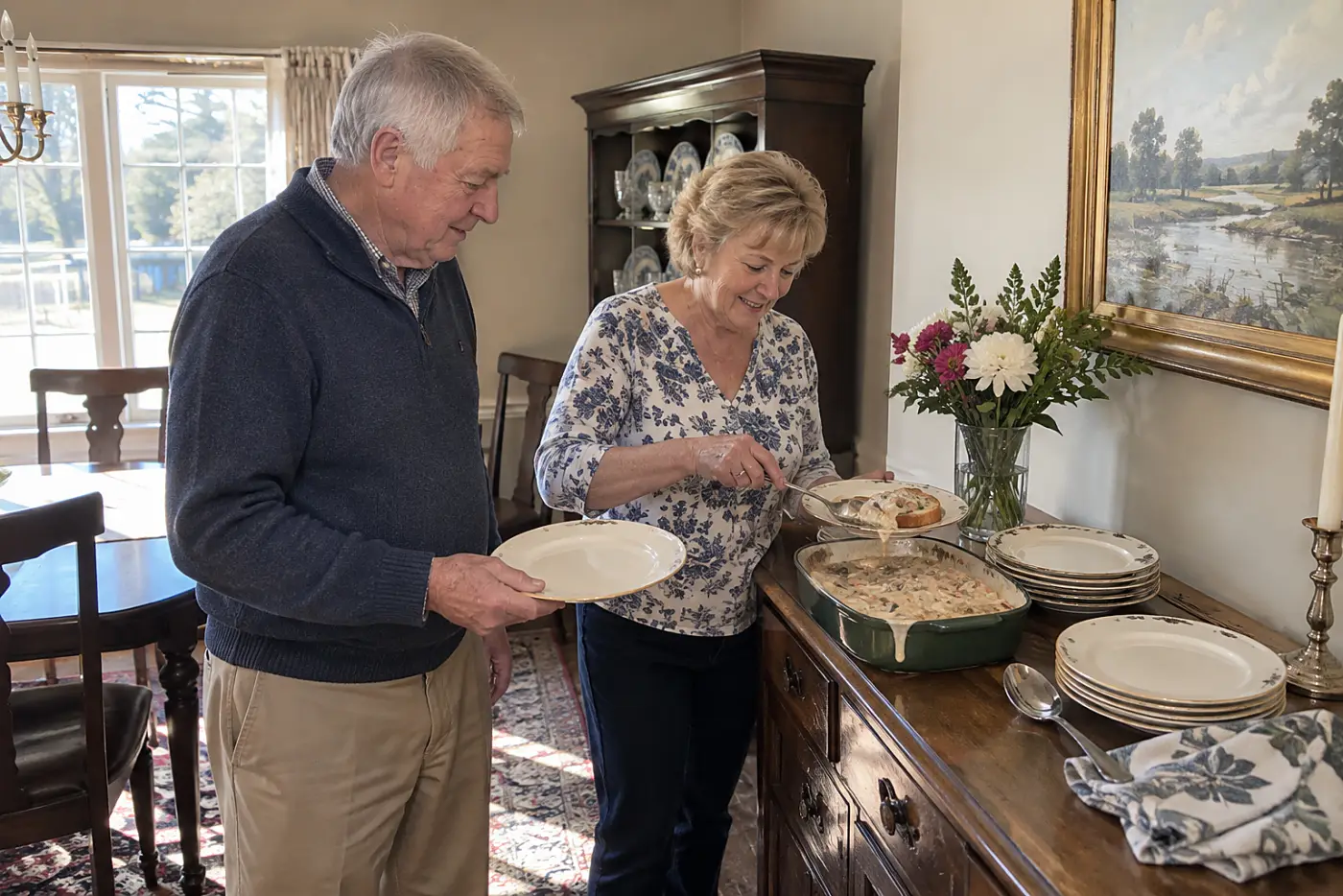
Serves 2. 25 minutes, one skillet.
You need: 1 cup diced cooked chicken, ½ cup sliced mushrooms, 1 tbsp butter, 1 tbsp flour, ¾ cup milk, 1 tbsp sherry, 2 slices toast.
Cook the mushrooms in the butter until tender. Stir in the flour, then whisk in the milk until the sauce thickens. Add the chicken and sherry and heat everything through. Spoon it over the toast.
Chicken à la King is diced chicken in a cream sauce, with mushrooms and sherry among its familiar additions. It’s served over toast, rice, or pastry shells, so you have a main course without carving a roast at the table.
Choose toast if you want supper promptly. Put each slice on a warm plate, then add enough sauce to reach the edges. If someone asks what you made, the name supplies all the dinner-party charm it needs.
Short-pantry swap: Use cooked rice instead of toast.
2Tunnel of Fudge Bundt Cake
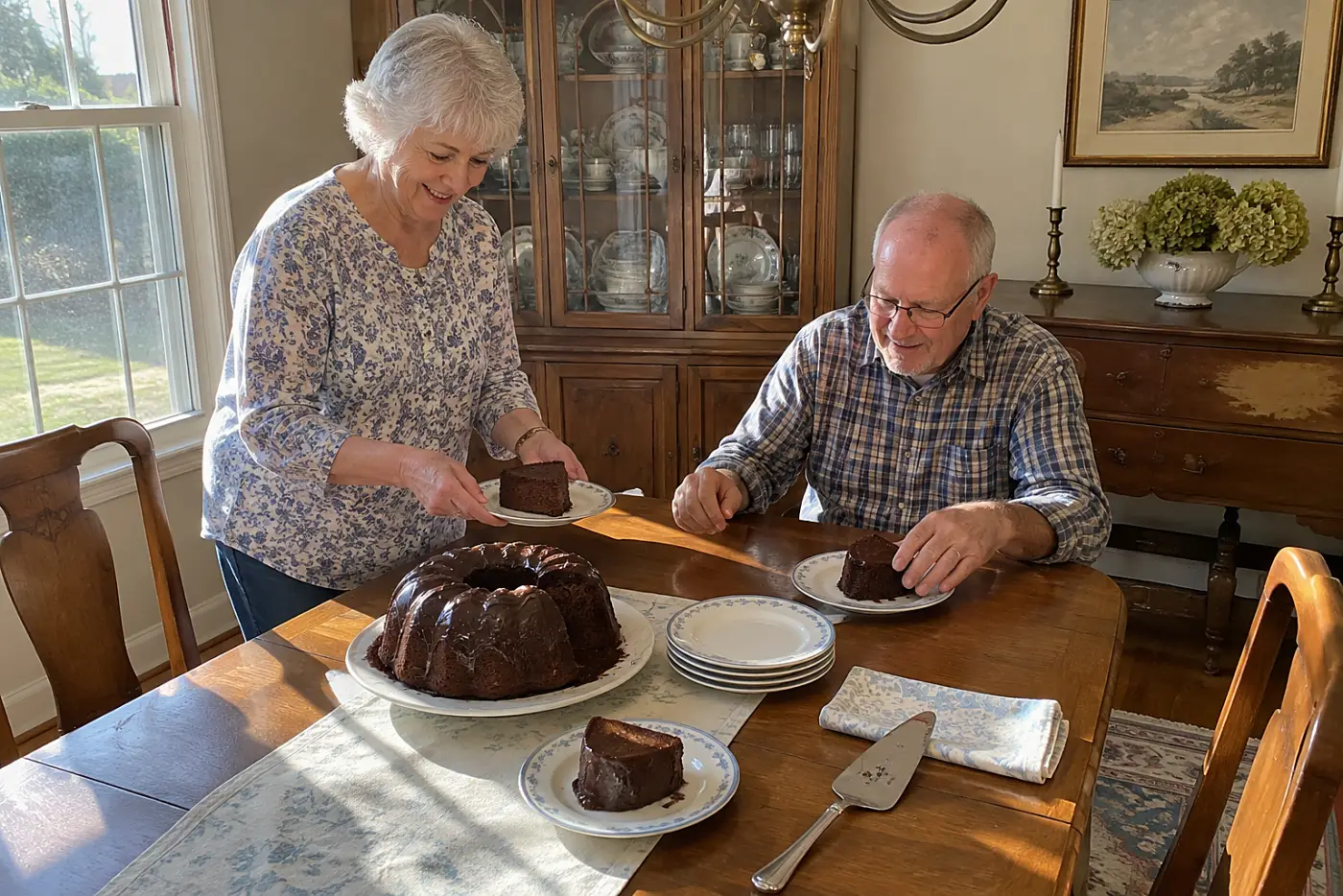
Serves 2. 10 minutes to plate purchased cake, no cooking.
You need: 2 slices Tunnel of Fudge Cake, 2 dessert plates, 2 forks.
Set the cake slices on the plates. Check that each slice shows the fudgy center. Serve them after the dinner dishes are cleared.
If you want to bake the cake yourself, use a complete Tunnel of Fudge recipe and check its pan requirements before shopping. This dessert has a specific history; a chocolate ring cake without that center isn’t the same thing.
Ella Helfrich’s cake was a 1966 Pillsbury Bake-Off runner-up. General Mills records that thousands of consumers asked for the ring-shaped pan afterward.
Nordic Ware’s 12-cup Classic Bundt has that shape. If you’re borrowing a pan, check its capacity against your chosen recipe.
Short-pantry swap: Serve slices of another chocolate cake, but don’t call it Tunnel of Fudge.
1Boeuf Bourguignon the Julia Child Way
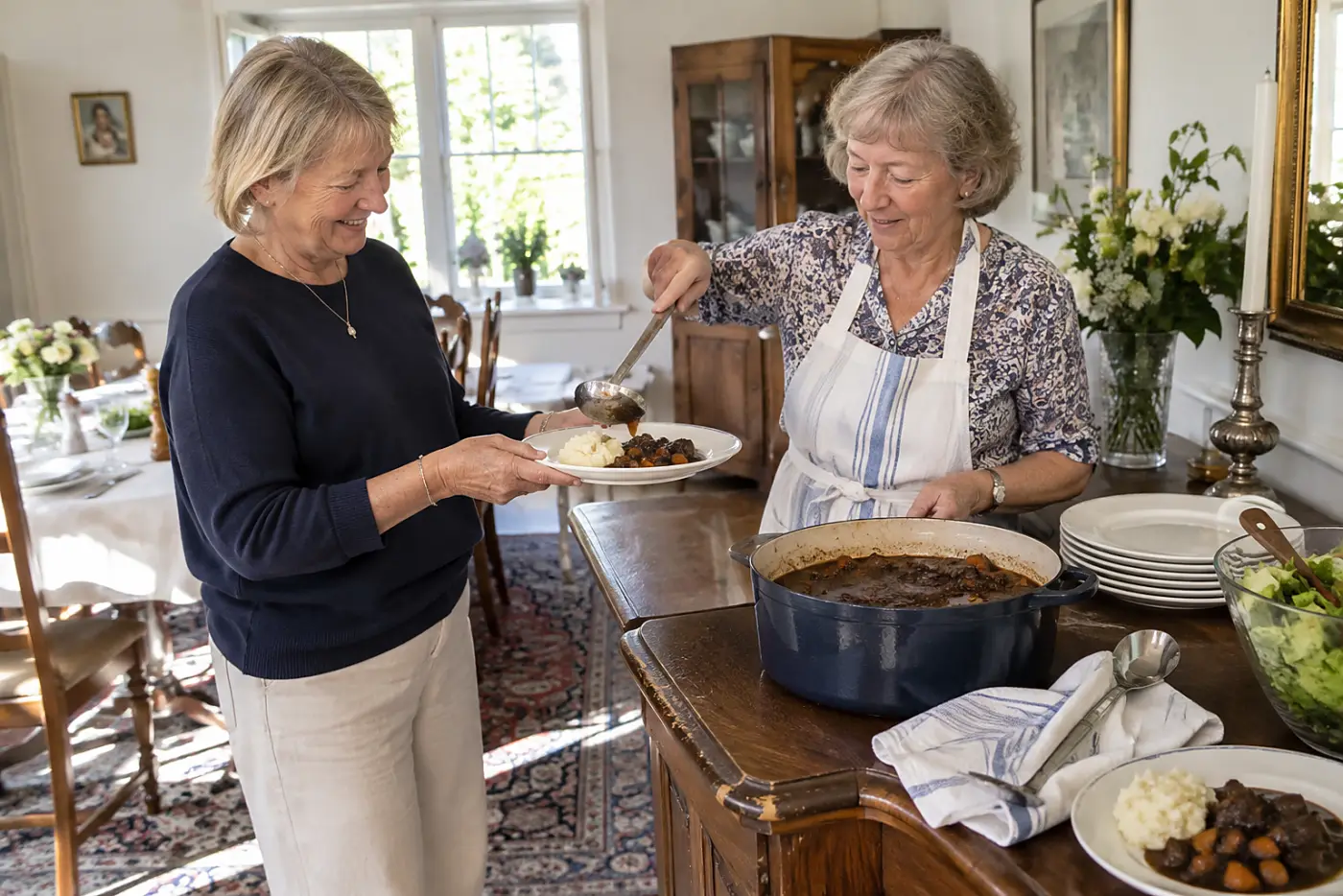
Serves 2. About 3 hours, one heavy pot.
You need: ¾ lb beef chuck in large cubes, 2 bacon strips, 1 small onion, 1 carrot, 1 cup red wine, 1 cup beef broth, ½ cup mushrooms, 1 tbsp flour.
Brown the bacon in a heavy pot, then lift it out and brown the beef. Add the chopped onion and carrot, then stir in the flour. Pour in the wine and broth, return the bacon, and simmer until the beef is tender. Cook the mushrooms separately and stir them into the pot before serving.
This is a small home version, not every step of Julia Child’s method. For the full dish, cook from the recipe published by GBH.
Child taught Boeuf Bourguignon on *The French Chef*. PBS hosts an episode if you want to see her handle it.
Bring out the pot, spoon the beef beside the potatoes, and sit down with everyone else. You’ve already done the cooking. Your guests get the grand entrance; you get dinner.
Short-pantry swap: Leave out the mushrooms if there are none in the fridge.
The bottom line
The menu works because it has a rhythm: a drink, something to pick up, a cool course, a substantial main, and dessert. You don’t need every recipe to make the evening feel complete.
The well-prepared version of you has chosen the courses, checked each recipe’s yield, and put out the glasses before the pot goes on. She’s also decided whether she’s baking the cake or bringing home a slice.
Which dish would you bring back for a night with friends?
Up next
22 Thanksgiving Dinner Ideas for Two
A little gravy boat, a short make-ahead list, and a scaled-down centerpiece give you the holiday dinner without the sink full of pans.
Read the list →
Reader quiz
Did you catch the details?
5 questions from this article.
After choosing your courses, what should you check before shopping for guests?
Questions people also ask
What dishes were popular in the 60s?
The USDA’s food history documents a broader shift toward processed and convenience foods in American kitchens. For company, separately documented choices included cheese balls, onion dip, fondue, Chicken à la King, and jellied salads. A 1963 *McCall’s* tomato aspic recipe gives you a dated example of the last.
What were some popular appetizers and finger foods in the 1960s?
Shrimp cocktail, stuffed celery, filled eggs, and bacon-wrapped rumaki fit a period-style tray. The Library of Congress preserves a stuffed-celery recipe. Craig Claiborne’s 1966 *New York Times Menu Cookbook* includes shrimp cocktail and hard-cooked egg dishes, while rumaki brings in the tiki-restaurant influence.
What was the most popular food in 1966?
There’s no single official record naming the year’s most popular food. Tunnel of Fudge Cake is a documented sensation from 1966: Pillsbury records its Bake-Off finish. General Mills’ history describes the requests for Bundt pans that followed.
What are some good retro dinner party menu ideas?
Start with a Martini or Manhattan, then serve shrimp cocktail or a cheese ball. Follow with Boeuf Bourguignon and scalloped potatoes, and finish with Tunnel of Fudge Cake. The International Bartenders Association, GBH’s Julia Child recipe, King Arthur Baking’s scalloped potatoes recipe, and Pillsbury’s Bake-Off history document those choices.
Was fondue really a 1960s thing or a 1970s thing?
Both. Bon Appétit covered cheese fondue and fondue bourguignonne in 1965. Historical accounts place its U.S. popularity across the 1960s and 1970s.
What did people drink at a 1960s dinner party?
A Dry Martini or Manhattan makes a documented cocktail choice; both appear in the International Bartenders Association’s “Unforgettables.” A 1962 party column also advised keeping sherry alongside gin, Scotch, bourbon, and vermouth.
Did any of these feel familiar?
Know someone who needs this?
 Prime Journal · Free printable
The Small-Batch Kitchen Checklist
- A right-sized dish for supper without a crowded fridge.
- A quick check before the slow cooker goes on.
- A plan for leftovers before the shopping starts.
Free printable: The Small-Batch Kitchen Checklist. Enter your email and it is yours.
Sources cited in this article
This article links to 18 outside sources, listed here so you can read them yourself.
- 1962 party guide digitize.gp.lib.mi.us/history/newspapers/grossePointeNews/year_ranges/1960s/…
- International Bartenders Association iba-world.com/cocktails/the-unforgettables
- Prawn cocktail en.wikipedia.org/wiki/Prawn_cocktail
- USDA Economic Research Service food-availability series ers.usda.gov/data-products/food-availability-per-capita-data-system/interact…
- USDA’s history of American eating www.ers.usda.gov/amber-waves/2010/march/guess-who-s-turning-100-tracking-a-c…
- Bon Appétit covered cheese fondue in 1965 www.bonappetit.com/columns/vintage-ba-columns/article/cheese-fondue-1965
- Carrot au gratin recipe yourfarmmarket.ca/carrots-au-gratin
- King Arthur Baking’s classic scalloped potatoes www.kingarthurbaking.com/recipes/classic-scalloped-potatoes-recipe
- *McCall’s Cook Book* from 1963 www.bostonglobe.com/lifestyle/food-dining/2011/12/07/recipe-for-tomato-aspic…
- Lipton still sells the Recipe Secrets mix www.liptonkitchens.com/products/recipe-secrets.html
- Water chestnuts and/or chicken liver wrapped in bacon en.wikipedia.org/wiki/Rumaki
- Library of Congress materials document stuffed celery tile.loc.gov/storage-services/public/gdc/00002916915/00002916915.pdf
- Philadelphia Party Cheese Ball recipe www.kraftheinz.com/philadelphia/recipes/505461-party-cheese-ball
- Toast, rice, or pastry shells en.wikipedia.org/wiki/Chicken_%C3%A0_la_King
- 1966 Pillsbury Bake-Off runner-up www.pillsbury.com/bake-off-contest/history-of-the-pillsbury-bake-off-contest
- Nordic Ware’s 12-cup Classic Bundt www.nordicware.com/products/12-cup-formed-bundt-pan
- Recipe published by GBH www.wgbh.org/lifestyle/food/recipes/2020-05-22/julia-childs-beef-bourguignon…
- PBS hosts an episode www.pbs.org/video/beef-bourguignon-wkrrva
Carol Whitaker
Kitchen Editor
Carol writes recipes for two and the old-fashioned dishes people still ask for, with an ingredient line you can read without your glasses and steps that fit a weeknight.
More from Carol Whitaker