

27 Old-Fashioned Comfort Food Recipes Grandma Made
From a chipped casserole dish to a pot of chicken broth, these dinners bring familiar flavors back with ingredients, timings, and temperatures you can use.
By Carol Whitaker, Kitchen Editor
Updated · 25 min read
The short answer: Old-fashioned comfort food recipes include chicken and dumplings, tuna noodle casserole, meatloaf, pot roast, macaroni and cheese, and chicken noodle soup. Their familiar methods rely on broth, pantry staples, slow cooking, and a hot oven. The recipes below give you small-batch amounts for two, plus the steps and food-safety checks that matter when you make them now.
- Written by our kitchen editor
- Cited 15 sources
- How we review
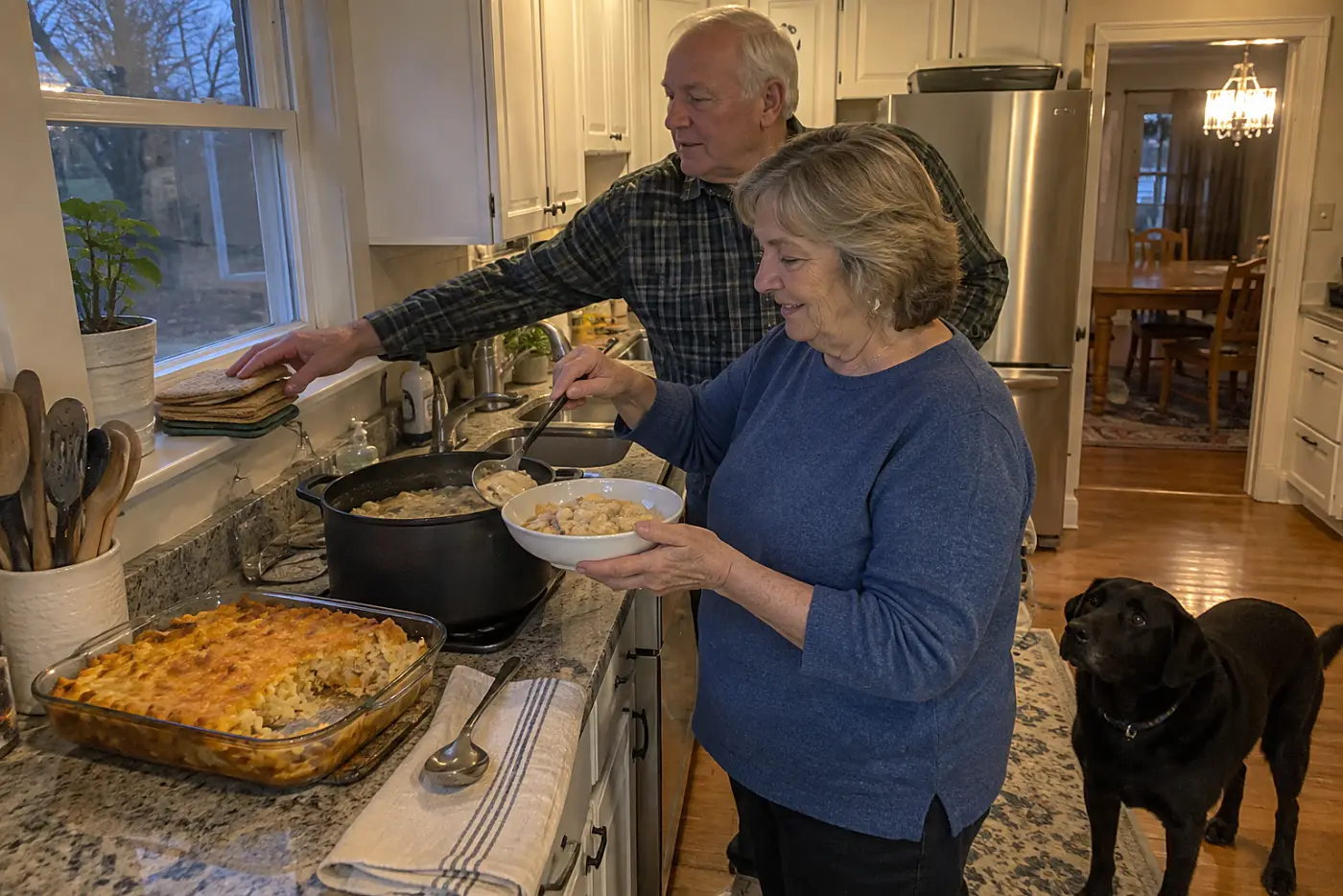
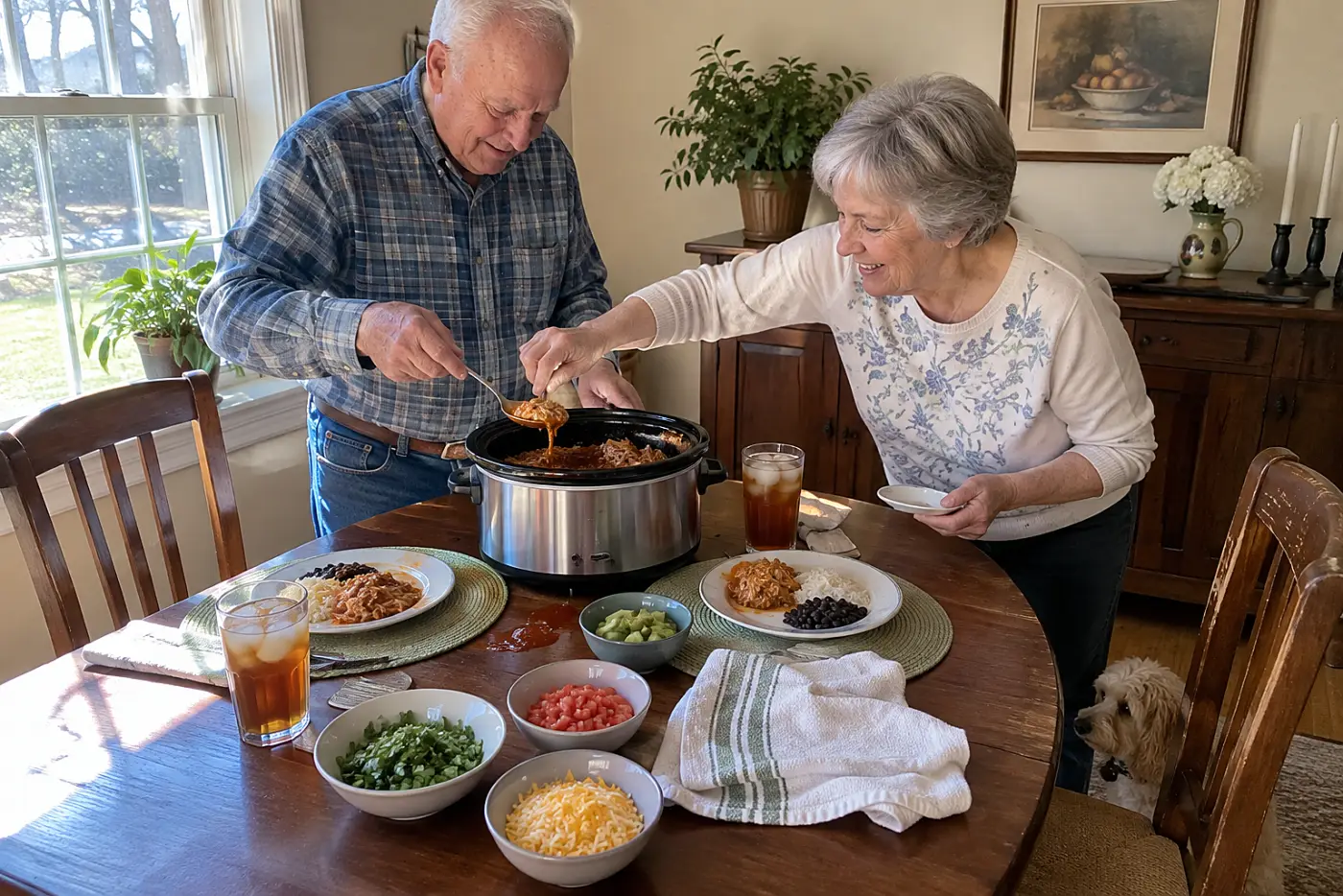
The spoon hits the side of the pot, and suddenly you remember the sound of dinner before anyone called you in. Maybe it was chicken broth. Maybe it was onions cooking beside a roast, or the crackle of crumbs on macaroni.
Your grandmother didn't leave instructions for every dish. You still have the taste to work toward. Start with the smell you remember, follow the steps, and adjust the seasoning at your own stove.
27Classic Chicken and Dumplings From Scratch
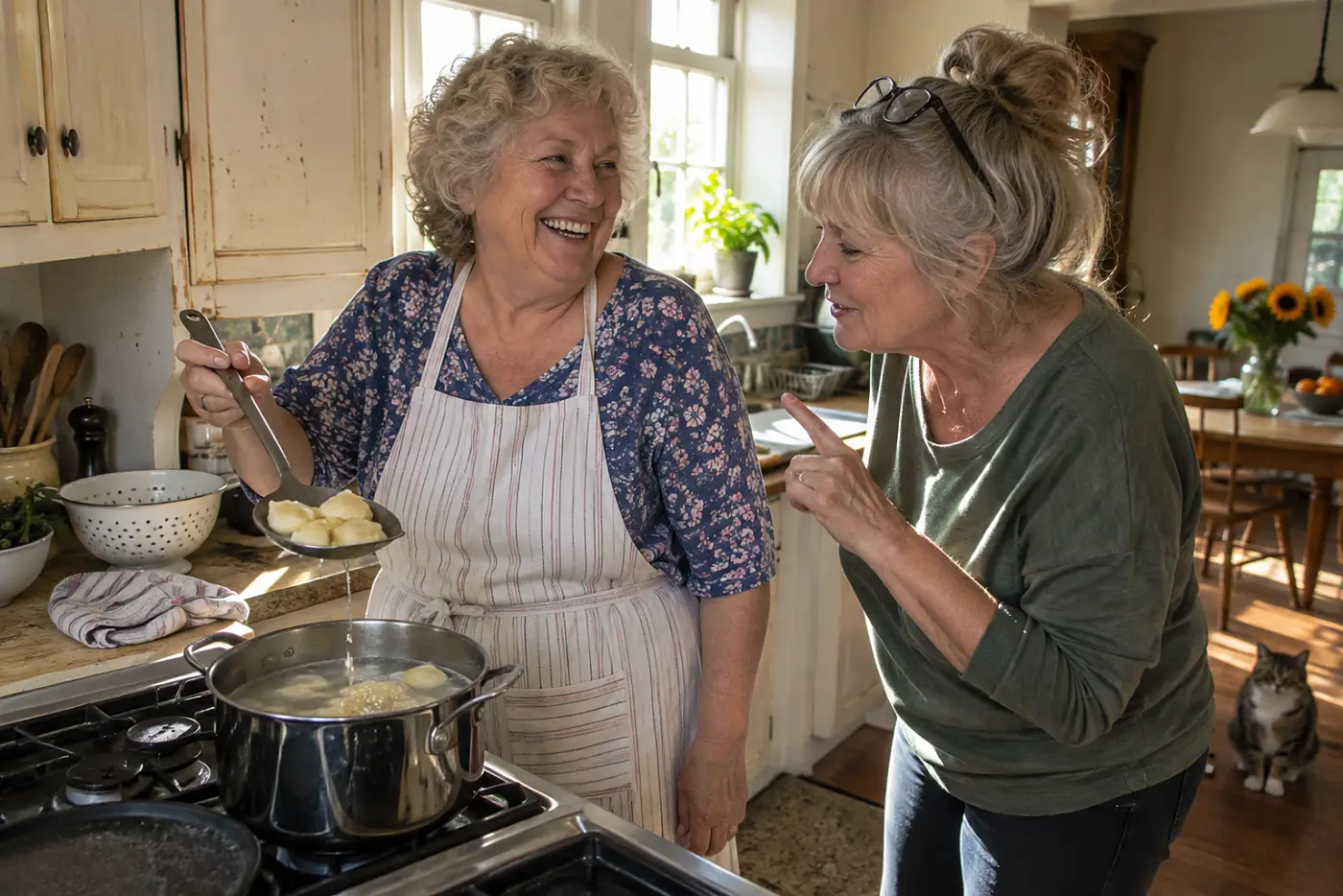
Serves 2. About 1 hour, one pot.
You need: 2 bone-in chicken thighs, 3 cups water, 1 chopped carrot, 1 chopped celery stalk, 1/2 chopped onion, 3/4 cup flour, 1 teaspoon baking powder, 1/4 teaspoon salt, 1/3 cup milk, 1 tablespoon butter.
Broth is the point here. Give the chicken time to flavor the pot before you drop in the dough.
Simmer the chicken and vegetables in the water until the meat reaches 165°F [74°C]. Lift out the chicken, pull off the meat, and return it to the broth.
Mix the flour, baking powder, salt, milk, and melted butter into a soft dough. Drop spoonfuls onto the simmering broth; cover and cook until each dumpling is set inside.
If you're short on milk, use water in the dough. Leave the lid on while those little pieces cook.
Cambridge Dictionary describes dumplings as dough cooked by simmering or steaming. You want to lift the lid when they're done, just as you did to see whether dinner was ready.
26Old-Fashioned Tuna Noodle Casserole With Chips
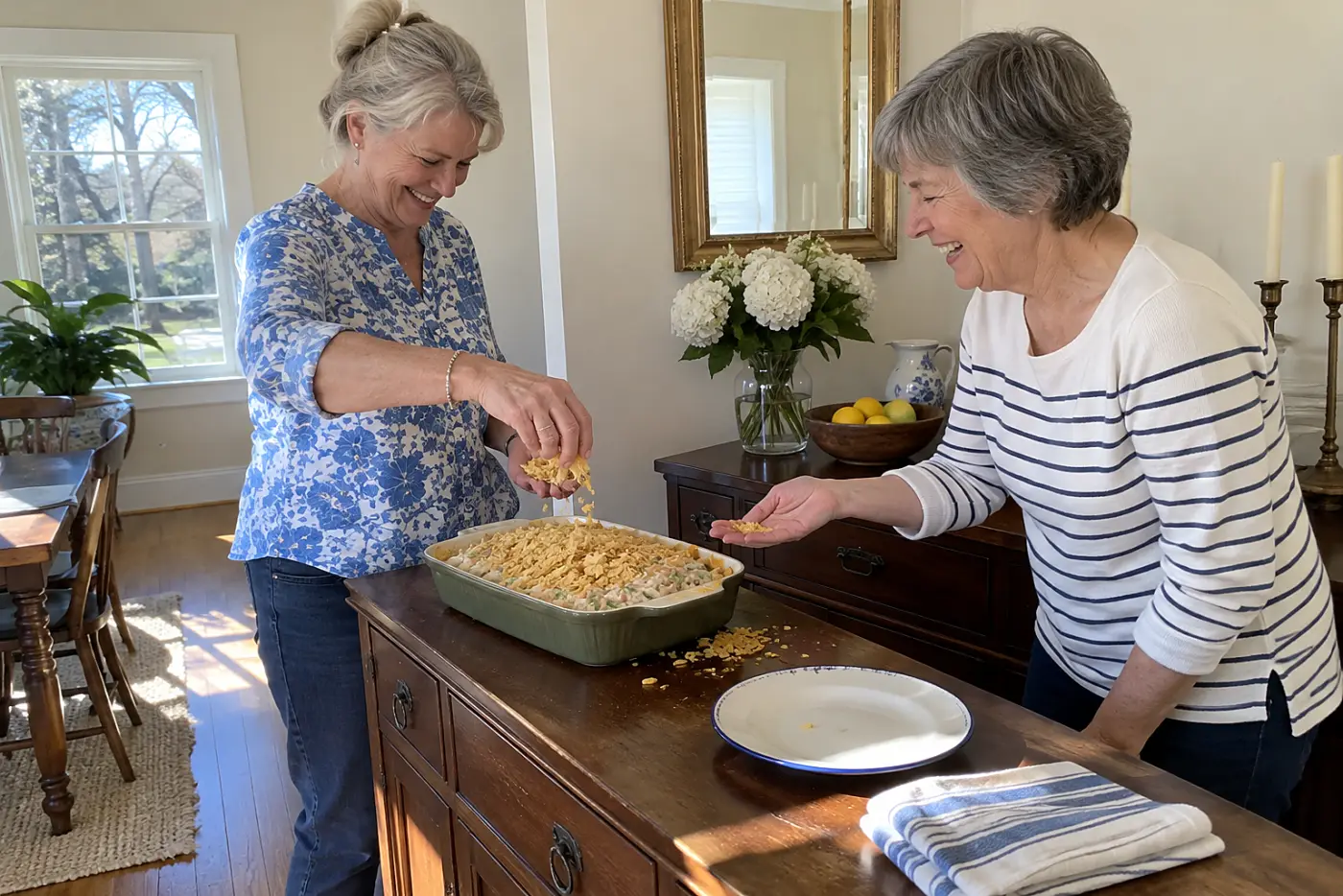
Serves 2. About 35 minutes, one pot and one baking dish.
You need: 4 ounces egg noodles, 1 drained 5-ounce can tuna, 1/2 cup condensed cream of mushroom soup, 1/3 cup milk, 1/2 cup frozen peas, 1/2 cup crushed potato chips, 1 tablespoon butter.
You know the sound of a spoon breaking through the chip topping. Save that crunch for the oven rather than stirring it into the sauce. The noodles need enough liquid to stay creamy underneath.
Heat the oven to 375°F [190°C]. Boil the noodles until just tender, then drain them. Stir the tuna, soup, milk, peas, and noodles together in a buttered baking dish. Scatter the chips on top and bake until the center reaches 165°F [74°C].
No chips? Crush plain crackers instead. Look at the noodles before baking; if they seem dry, stir in another splash of milk. You want sauce around them after they've soaked some up.
See more: 27 Things Every 1970s Kitchen Had That Your Grandchildren Have Never Seen →
25Grandma's Meatloaf With Ketchup Glaze
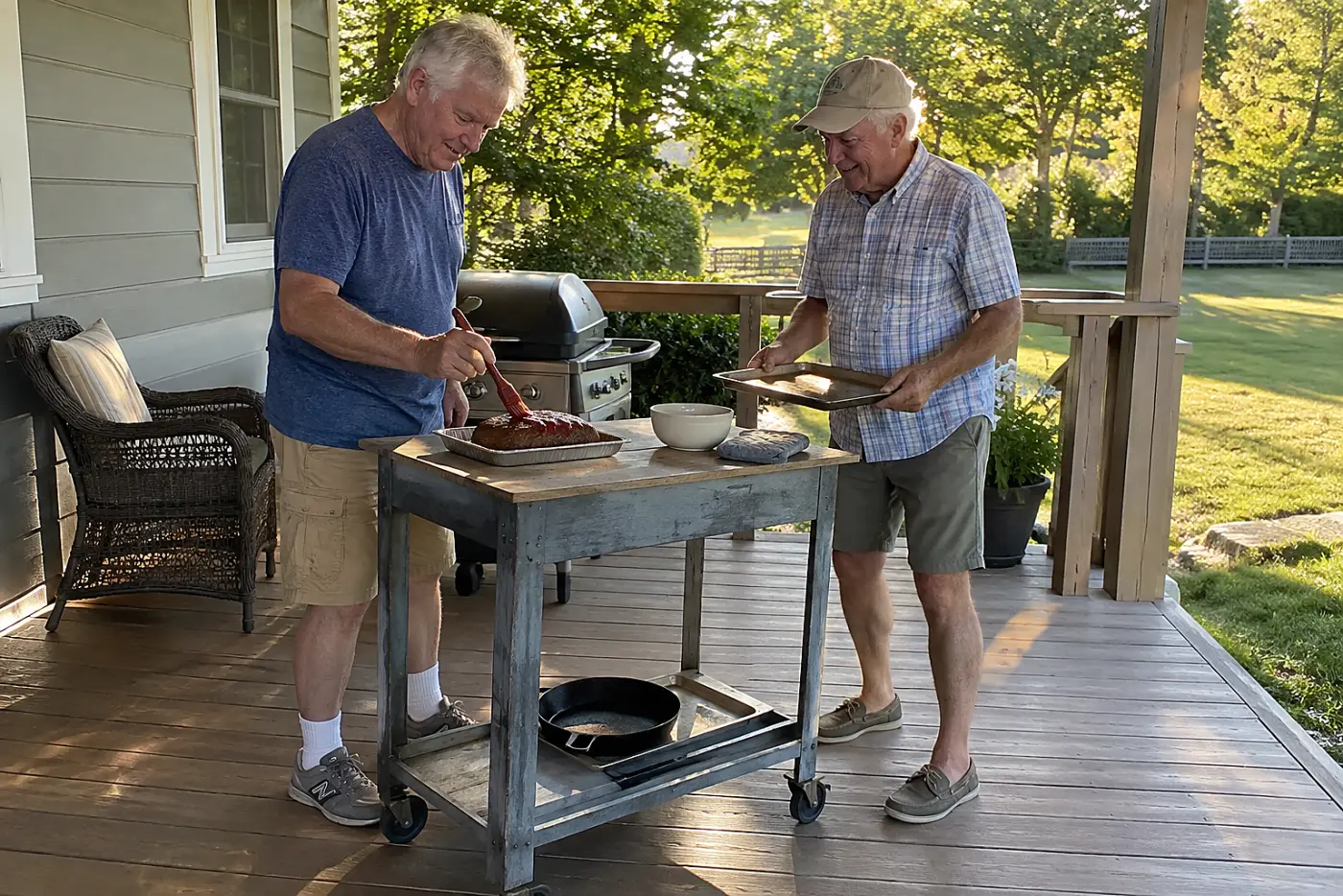
Serves 2. About 50 minutes, one small loaf pan.
You need: 3/4 pound ground beef, 1 egg, 1/3 cup crushed crackers, 2 tablespoons milk, 2 tablespoons chopped onion, 1/4 teaspoon salt, 3 tablespoons ketchup.
Does the first slice hold together under your fork? Give it a short rest before you find out. The ketchup should bake onto the top rather than arrive as a cold spoonful afterward.
Heat the oven to 350°F [175°C]. Mix the beef, egg, crackers, milk, onion, and salt just until combined. Shape a small loaf and spread the ketchup over it. Bake until the center reads 160°F [71°C], then rest the loaf before cutting thick slices.
Out of crackers? Use plain breadcrumbs. Don't pack the mixture hard into the pan; your hands only need to bring it together. Taste the plain glaze first, then decide whether your grandmother's had a little sugar in it.
The USDA sets 160°F for ground-beef meatloaf. A browned top can't tell you what happened in the middle.
24Sunday Pot Roast With Carrots and Onions
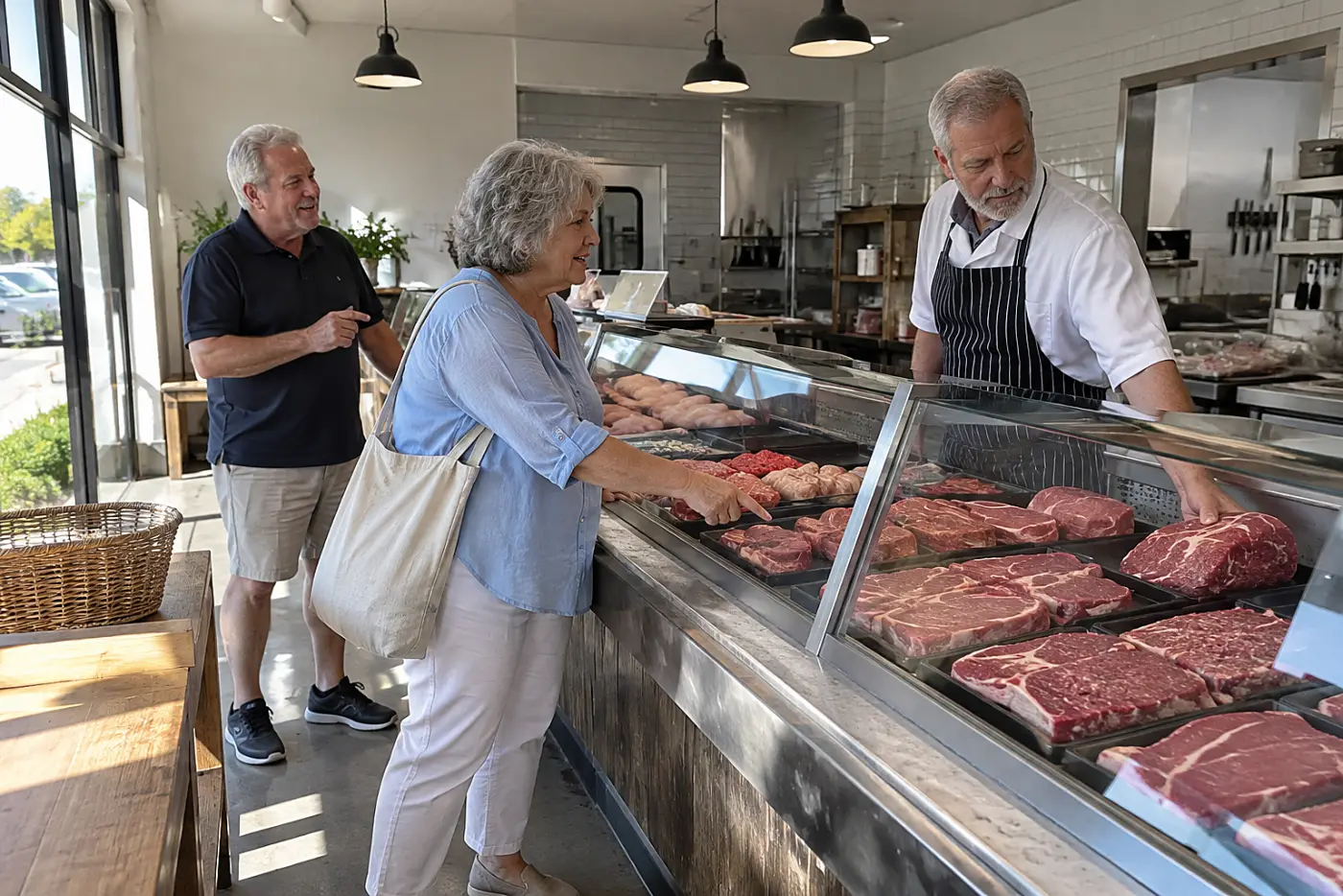
Serves 2. About 3 hours, one heavy pot.
You need: 1 1/2 pounds chuck roast, 1 tablespoon oil, 1 onion in wedges, 2 carrots in chunks, 1 cup beef broth, 1 tablespoon tomato paste, 1/2 teaspoon salt.
At the butcher counter, look for chuck roast. The Beef. It's What's For Dinner cut guide identifies chuck pot roast as a cut suited to slow braising. That long, covered stretch is what this dinner asks of you.
Heat the oven to 325°F [165°C]. Brown the roast in the oil on both sides, then set it aside. Cook the onion briefly in the same pot and stir in the tomato paste and broth. Return the beef with the carrots, cover, and braise until a fork slips easily into the meat.
If you don't have broth, use water and taste the juices for salt before serving. Don't hurry the fork test because the clock says dinner is due. Put on the lid and give the roast more time. Spoon those pot juices over each serving.
23Creamy Chicken and Rice Casserole
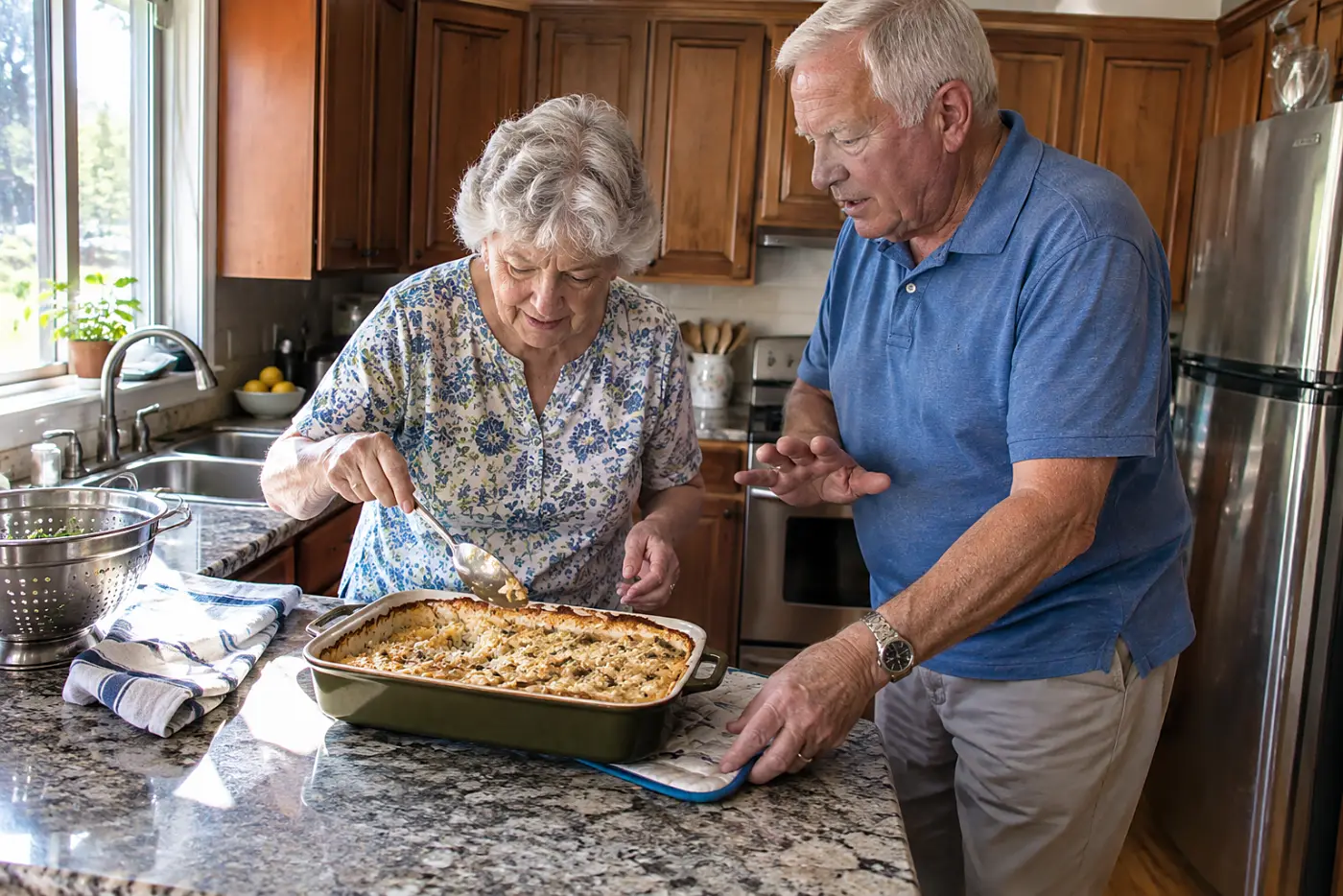
Serves 2. About 55 minutes, one baking dish.
You need: 3/4 cup uncooked white rice, 1 cup diced cooked chicken, 1 cup chicken broth, 1/2 cup milk, 1/2 cup condensed cream of mushroom soup, 1/2 cup frozen peas, 1 tablespoon butter.
A spoonful from the edge tells you little about the middle. That's where the rice needs checking before you bring the dish out.
Heat the oven to 350°F [175°C]. Butter a small baking dish and stir in the rice, chicken, broth, milk, soup, and peas. Cover tightly and bake until the rice is tender and the center reaches 165°F [74°C]. Uncover and let the casserole stand briefly before spooning it out.
If you're missing peas, use chopped cooked carrots. Add a little warm broth and cover the dish again if the rice needs more time. Let the center, rather than the browned edge, make the decision.
22Baked Macaroni and Cheese With Breadcrumbs
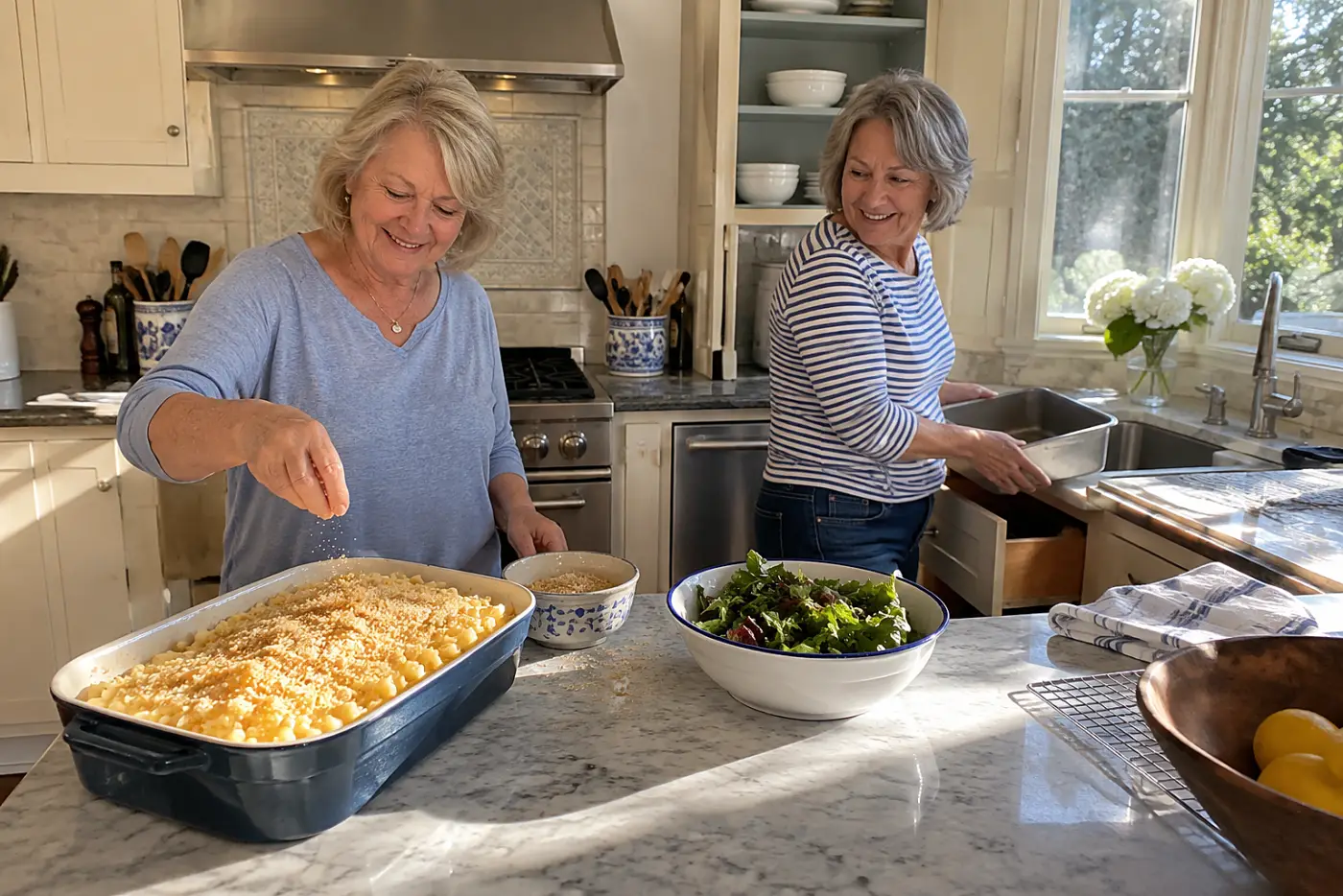
Serves 2. About 35 minutes, one pot and one baking dish.
You need: 4 ounces elbow macaroni, 1 tablespoon butter, 1 tablespoon flour, 3/4 cup milk, 3/4 cup grated cheddar, 1/4 teaspoon salt, 1/4 cup breadcrumbs.
The corner piece matters: crisp crumbs above macaroni that's still creamy underneath. In a small dish, both of you get a fair share. Set it out when the topping has browned, and listen for the spoon going through.
Heat the oven to 375°F [190°C]. Boil the macaroni until just tender and drain it. Melt the butter in the pot, stir in the flour, and whisk in the milk until it thickens.
Stir in the cheddar and salt, fold in the macaroni, and transfer it to a small baking dish. Sprinkle on the breadcrumbs and bake until the top browns.
Short on breadcrumbs? Crumble a slice of toasted bread. Save a spoonful of cheese for the top if you like a deeper crust. The sauce should look a little loose before baking; the macaroni keeps taking it up.
21Homemade Chicken Noodle Soup From a Whole Bird
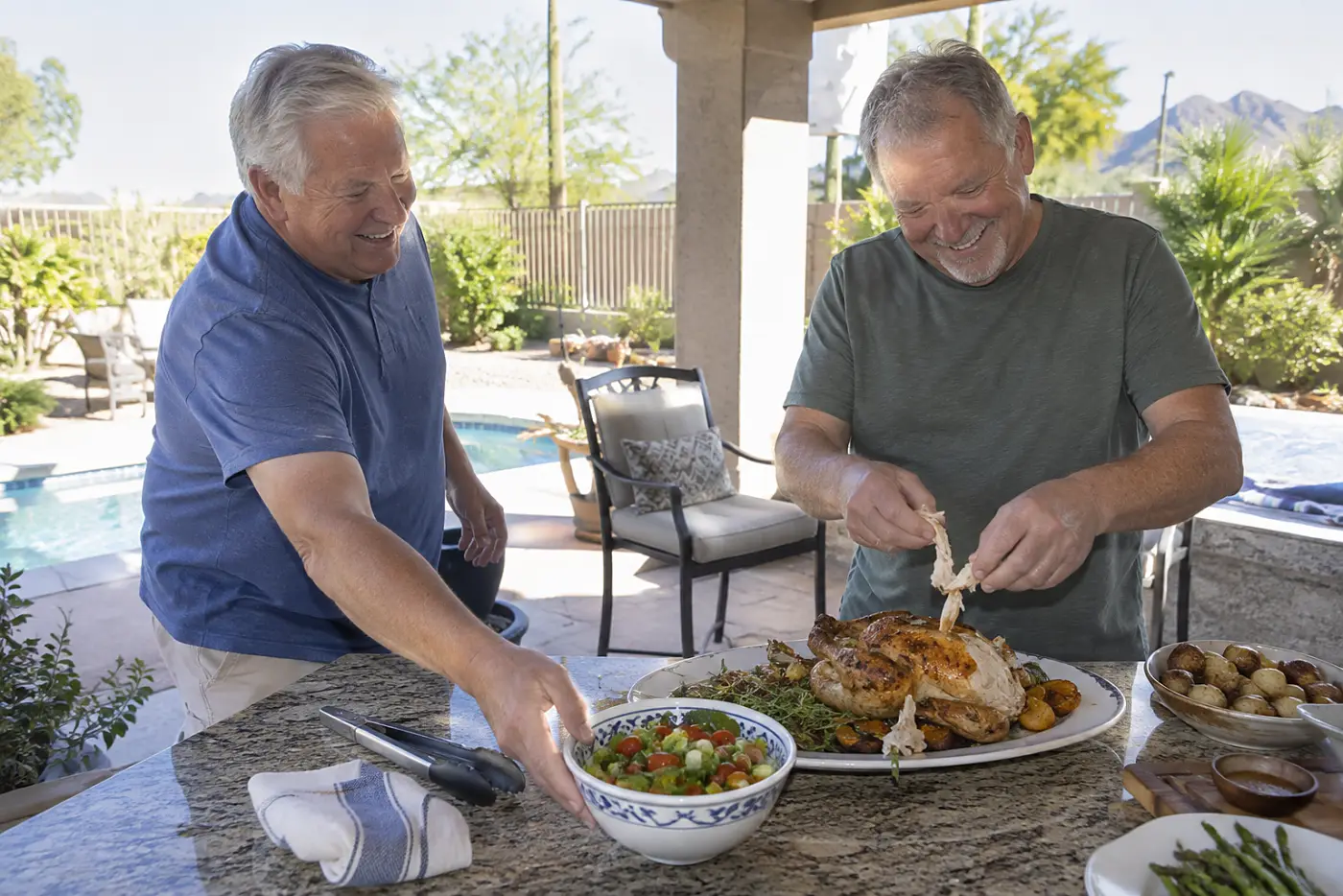
Serves 2, with extra cooked chicken. About 1 hour and 30 minutes, one pot.
You need: 1 small whole chicken, 6 cups water, 1 halved onion, 2 sliced carrots, 2 sliced celery stalks, 3 ounces egg noodles, 1/2 teaspoon salt.
A whole bird gives you broth and meat from the same pot. You'll need only some of that meat for two bowls, so keep the rest for another meal. The onion can come out when you lift the bird.
Simmer the chicken, water, onion, carrots, and celery until the bird reaches 165°F [74°C]. Check the innermost thigh and wing and the thickest breast, following USDA guidance for a whole chicken.
Lift out the bird and pull enough meat for two bowls. Return that meat to the broth, boil the noodles in it until tender, and taste for salt.
If you're out of egg noodles, break spaghetti into short lengths. Taste the broth before the noodles go in. For a stronger chicken taste, simmer the broth uncovered a little longer.
20Classic Beef Vegetable Soup With Barley
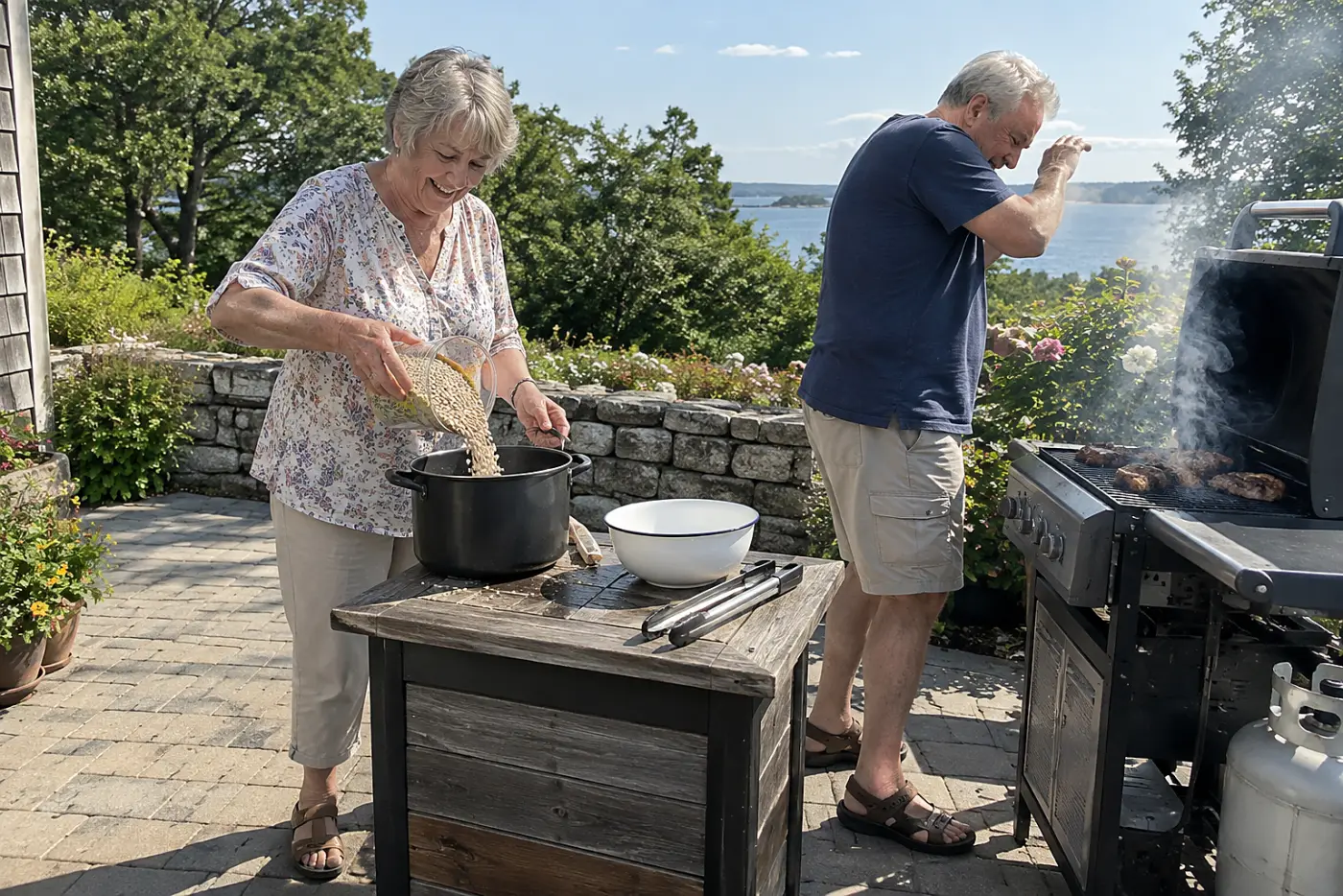
Serves 2. About 1 hour and 15 minutes, one pot.
You need: 1/2 pound chopped beef stew meat, 1 tablespoon oil, 1/3 cup pearl barley, 3 cups beef broth, 1 chopped carrot, 1 chopped celery stalk, 1/2 chopped onion, 1/2 cup canned diced tomatoes.
Barley takes its time. Give it a head start so the vegetables don't wait in the pot while the grain catches up. Bob's Red Mill's pearl-barley directions call for about 50 to 60 minutes of covered simmering.
Brown the beef in the oil, then pour in the broth and add the barley. Cover and simmer until the grain approaches tenderness. Add the carrot, celery, onion, and tomatoes; simmer until the vegetables are tender and the beef is easy to bite. Taste the broth before bringing the bowls out.
No canned tomatoes? Leave them out, or add a spoonful of tomato paste if you have it. Start checking the barley as it cooks. Your spoon will tell you when its hard center is gone.
19Old-Fashioned Potato Leek Soup
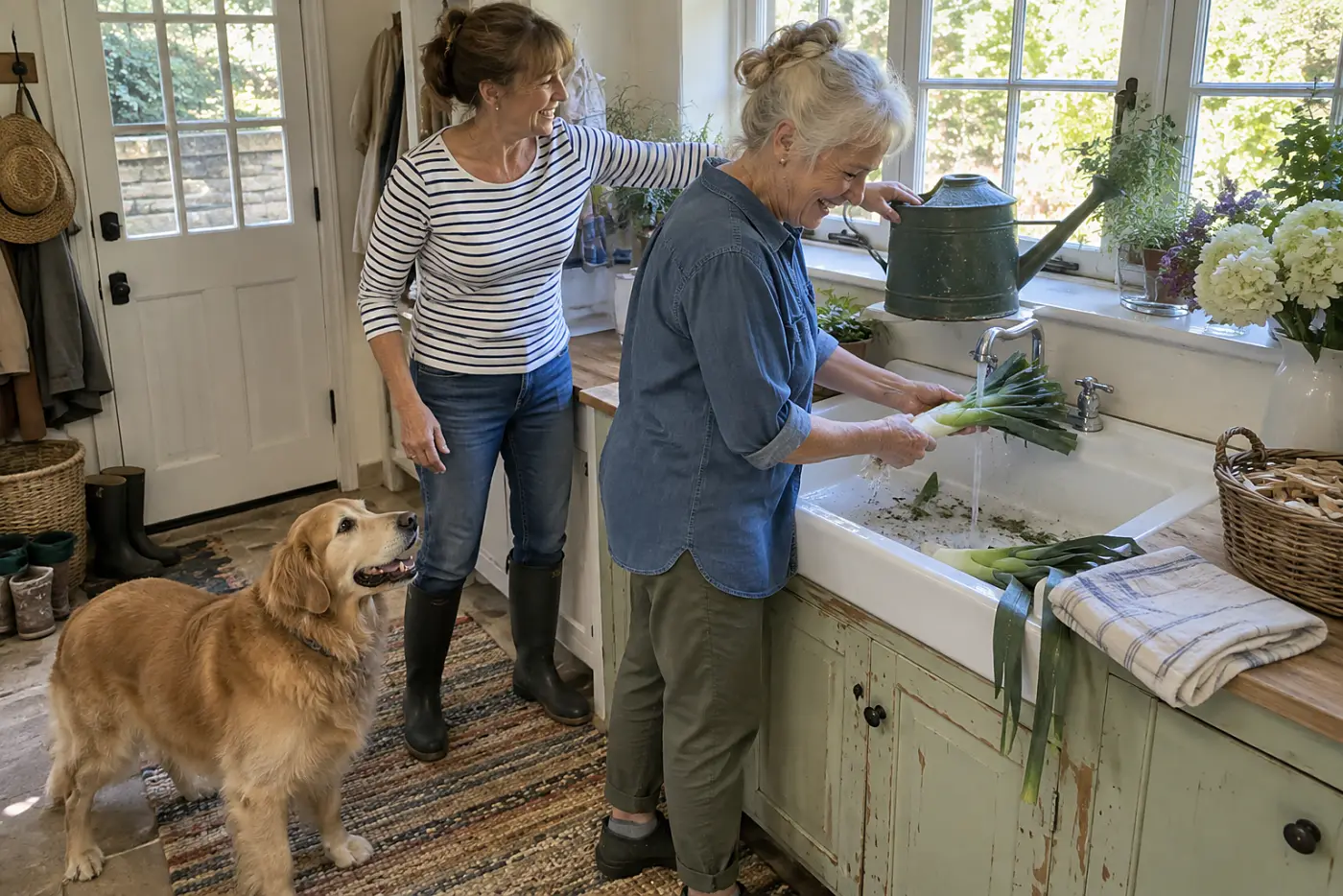
Serves 2. About 35 minutes, one pot.
You need: 2 peeled, diced medium potatoes, 1 sliced leek, 1 tablespoon butter, 2 cups broth, 1/2 cup milk, 1/4 teaspoon salt.
The grit hides between the leek's layers. Split it and rinse through those layers before it reaches your soup pot. The Academy of Nutrition and Dietetics recommends halving leeks and running water through their layers. It's worth that extra moment at the sink.
Melt the butter and cook the rinsed leek until it softens. Add the potatoes and broth, then simmer until the potatoes give way to a fork. Mash some potatoes against the pot, stir in the milk, and warm the soup without boiling it hard. Taste, add the salt, and ladle it into bowls.
If there's no milk, use a little extra broth and mash more potato for body. Leave a few pieces intact if that's how you remember the soup. You don't need a blender to make it feel rich.
18Shepherd's Pie With Mashed Potato Topping
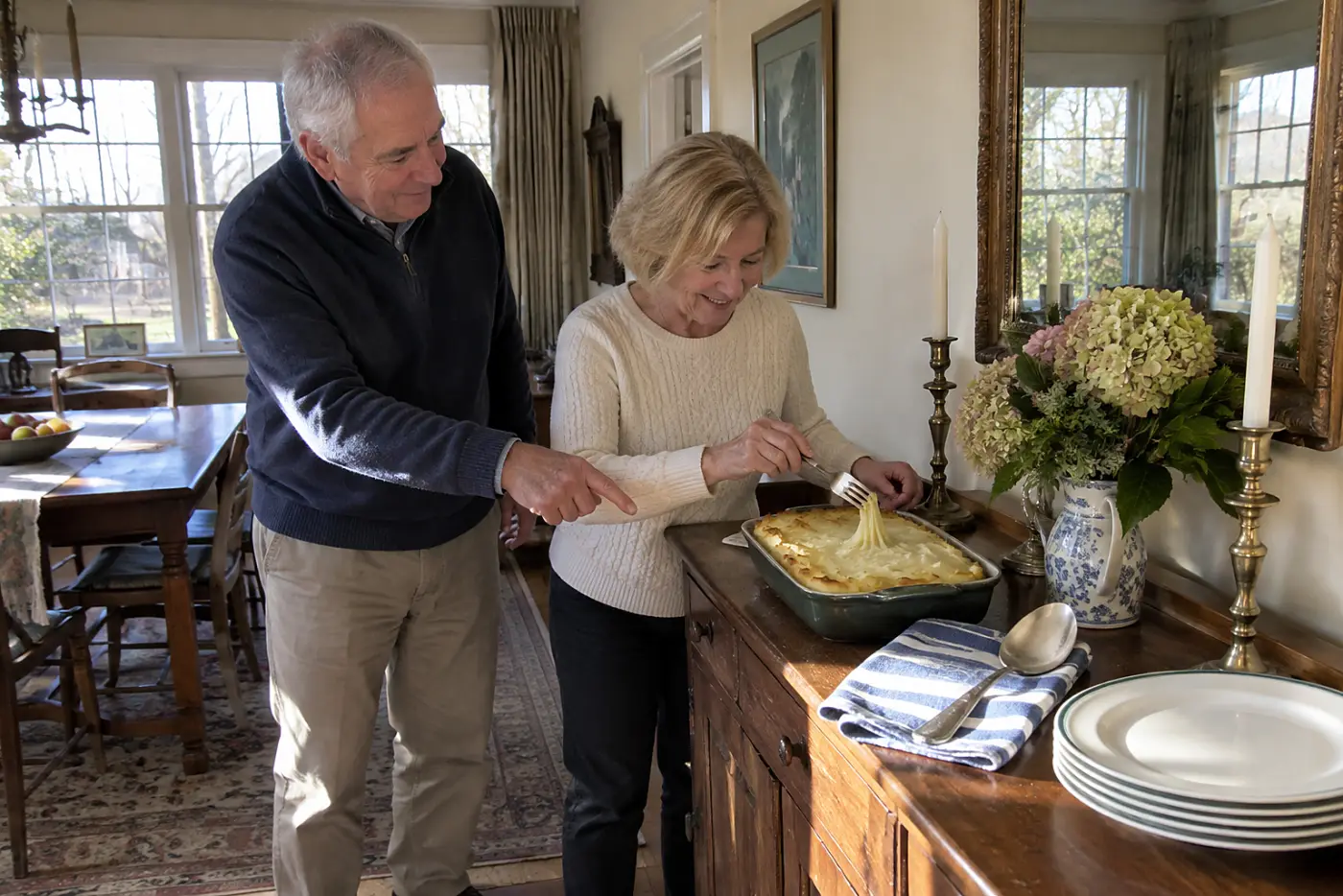
Serves 2. About 50 minutes, one skillet and one baking dish.
You need: 1/2 pound ground lamb, 2 peeled, chopped potatoes, 1/2 chopped onion, 1 diced carrot, 1/2 cup frozen peas, 1/2 cup broth, 1 tablespoon butter, 2 tablespoons milk.
Where the potato meets the savory filling is the good part. Drag a fork across the top before baking; those ridges will brown first. Keep the filling thick enough to support them.
Heat the oven to 400°F [205°C]. Boil the potatoes until tender, then mash them with the butter and milk. Brown the lamb with the onion and carrot, add the peas and broth, and simmer until the liquid reduces.
Spoon the filling into a small dish, spread the potatoes over it, and bake until the top browns and the center reaches 165°F [74°C].
No lamb in your store? Use ground beef and cook it to 160°F [71°C] before assembling the dish. The beef version is commonly called cottage pie; shepherd's pie traditionally uses lamb or mutton. Use whichever name was spoken in your grandmother's kitchen.
17Salisbury Steak With Mushroom Gravy
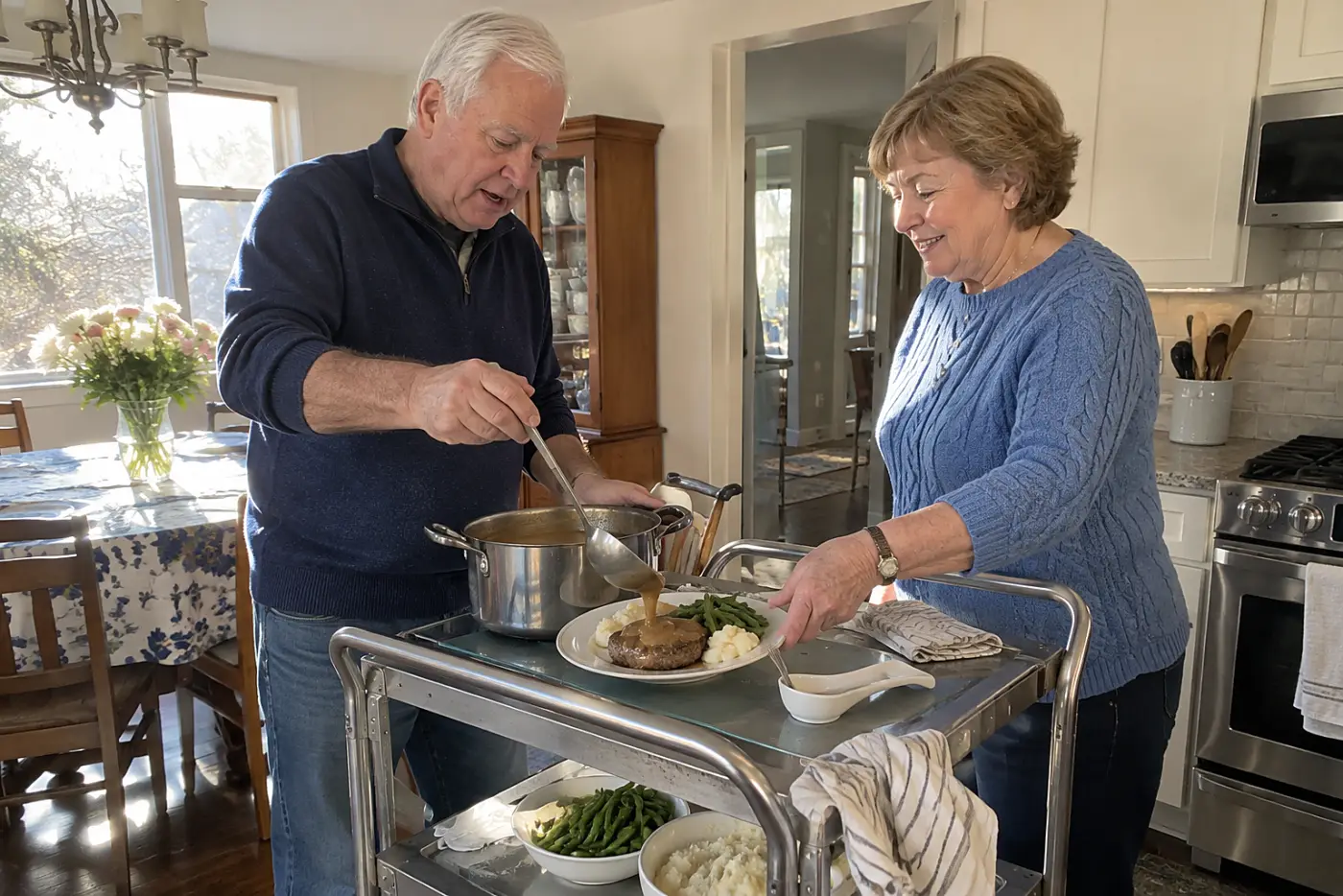
Serves 2. About 35 minutes, one skillet.
You need: 3/4 pound ground beef, 2 tablespoons breadcrumbs, 1 tablespoon milk, 1/4 teaspoon salt, 1 tablespoon oil, 1 cup sliced mushrooms, 1 tablespoon flour, 3/4 cup beef broth.
Make the patties first, then use their browned bits to build the gravy. That's what gives this skillet dinner its Sunday feel.
Mix the beef, breadcrumbs, milk, and salt, then form two oval patties. Brown them in the oil and cook until their centers reach 160°F [71°C], as the USDA directs for ground beef.
Move the patties to a plate and cook the mushrooms in the skillet. Stir in the flour and broth, simmer until the gravy thickens, then return the patties to coat them.
Out of mushrooms? Use sliced onion and let it brown before adding flour. Spoon plenty of gravy over the patties, whether you put potatoes underneath or bread alongside.
Salisbury steak has its own definition in the USDA's food labeling policy book, but the pleasure at home is simpler: browned beef and gravy from the same pan.
16Old-Fashioned Cabbage Rolls With Dill
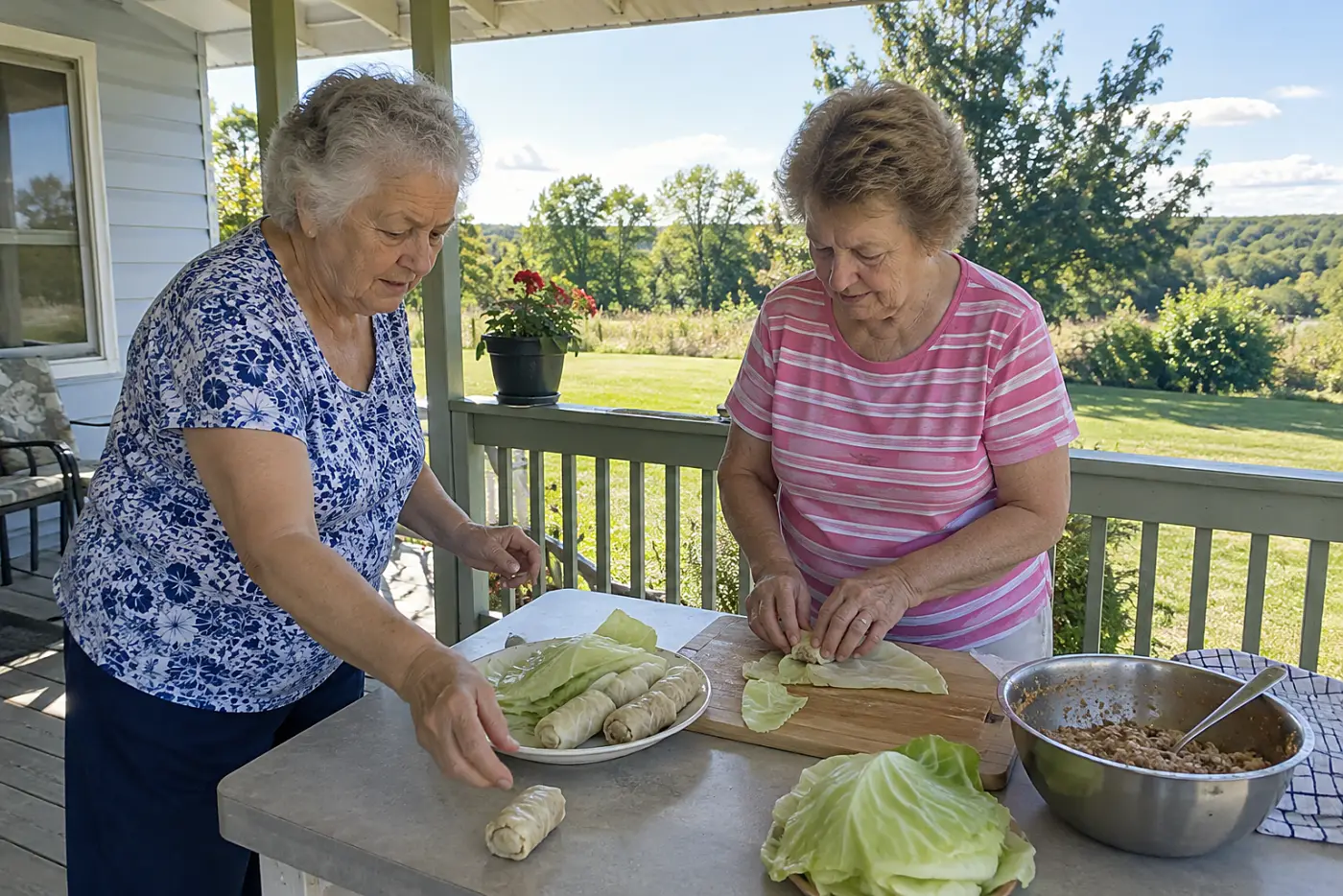
Serves 2. About 1 hour, one pot and one baking dish.
You need: 4 large cabbage leaves, 1/2 pound ground beef, 1/4 cup cooked rice, 2 tablespoons chopped onion, 1 tablespoon chopped dill, 1 cup canned crushed tomatoes, 1/4 teaspoon salt.
If a cabbage leaf tears, patch it with another small piece. Nobody will notice once the roll is covered in tomato sauce.
Heat the oven to 350°F [175°C]. Blanch the leaves until they bend, then drain them. Mix the beef, rice, onion, dill, and salt; divide the filling among the leaves and roll each one snugly. Lay the rolls seam-side down, cover with tomatoes, and bake until the filling reaches 160°F [71°C].
If dill is missing, use chopped parsley. Trim the thickest part of each leaf's rib if it fights you while rolling. A spoonful of sauce under the rolls helps keep them from sticking. Check the meat in the center of a roll, even when the sauce is bubbling.
15Swiss Steak Braised Low and Slow
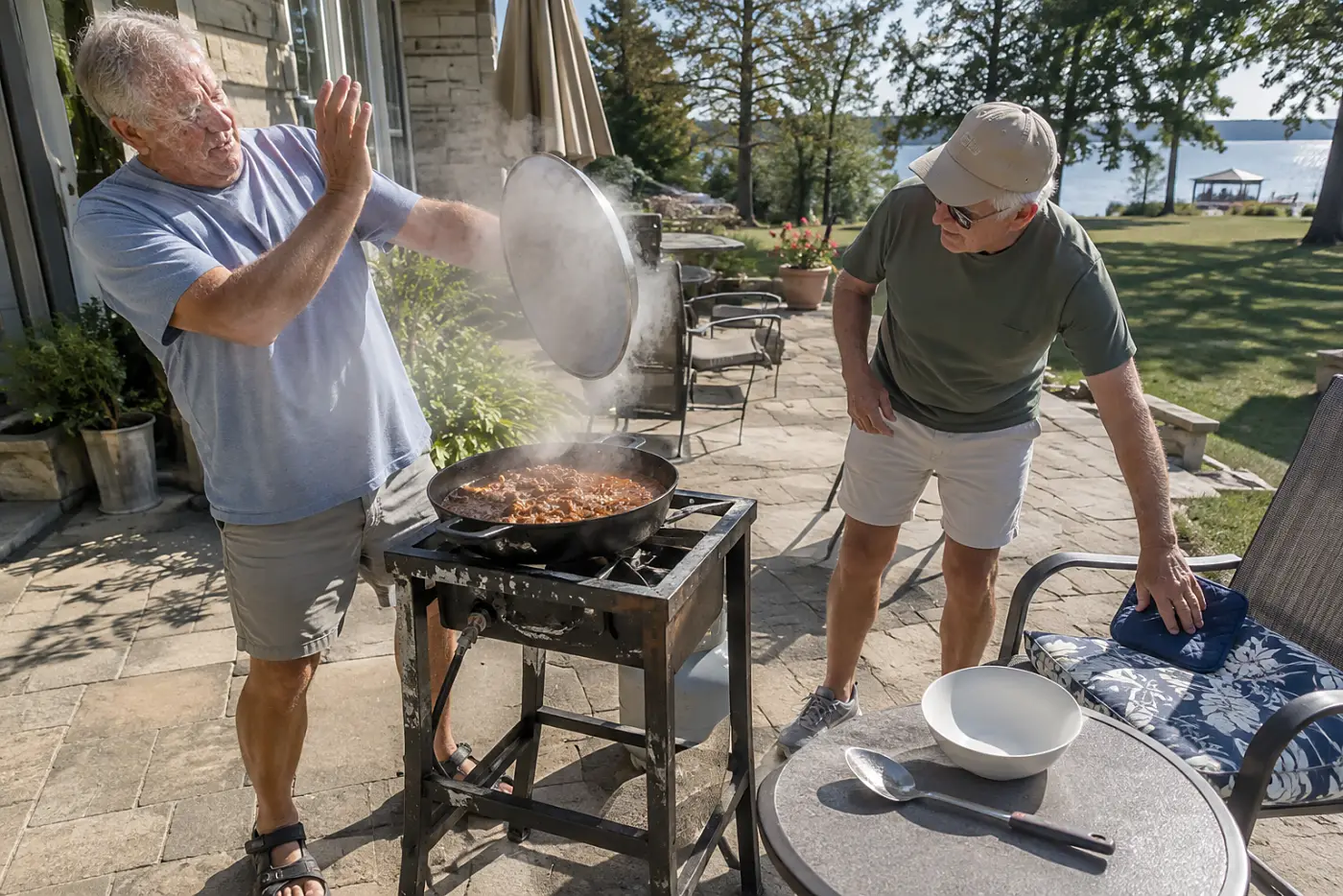
Serves 2. About 2 hours, one covered skillet.
You need: 3/4 pound round steak, 2 tablespoons flour, 1/4 teaspoon salt, 1 tablespoon oil, 1/2 sliced onion, 1/2 sliced bell pepper, 1 cup canned crushed tomatoes, 1/2 cup water.
The tomato gravy does its work while the pan stays covered. Give the steak time, then see whether your fork meets any resistance.
Pound the steak lightly, then coat it with the flour and salt. Brown it in the oil and set it aside.
Cook the onion and pepper briefly, pour in the tomatoes and water, and nestle the steak back into the skillet. Cover and simmer until the meat is tender, adding a little water if the gravy gets too thick.
No bell pepper? Use another half onion. Cut the meat across the grain when you serve it, and put the tomato gravy where a fork can catch it.
The USDA's food labeling policy book describes Swiss steak and gravy as a distinct prepared dish. Your version belongs in your skillet, with the vegetables you have on hand.
14Southern Fried Chicken With Buttermilk Crust
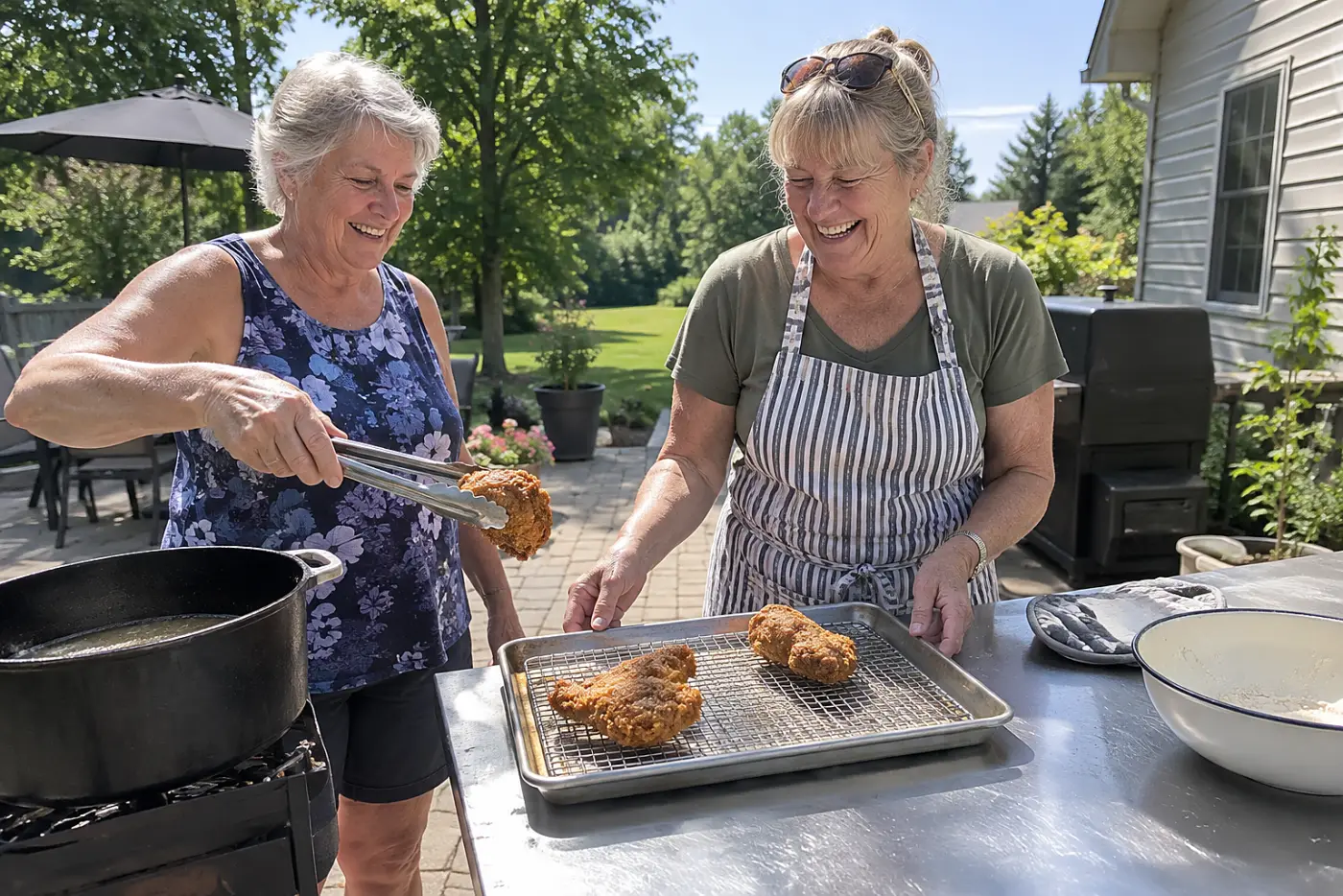
Serves 2. About 1 hour, including a short soak, one skillet.
You need: 2 bone-in chicken thighs, 1/2 cup buttermilk, 3/4 cup flour, 1/2 teaspoon salt, 1/4 teaspoon black pepper, enough oil for a shallow layer in the skillet.
You remember the crust before you remember the plate. Give the flour something to cling to, then leave the chicken alone long enough to brown.
Soak the chicken in the buttermilk while you set out the flour. Mix the flour, salt, and pepper, then coat the chicken well. Heat the oil, fry the pieces, and turn them until the crust browns and the chicken reaches 165°F [74°C]. Drain on a rack before serving.
If you're short on buttermilk, use plain milk for the coating; expect a different tang. Bon Appétit explains how buttermilk's lactic acid works on meat proteins.
Keep the heat steady so the crust doesn't darken before the center cooks. Check the thickest part without touching bone. A thermometer lets you keep the old method without guessing at the chicken.
13Biscuits and Sausage Gravy Breakfast
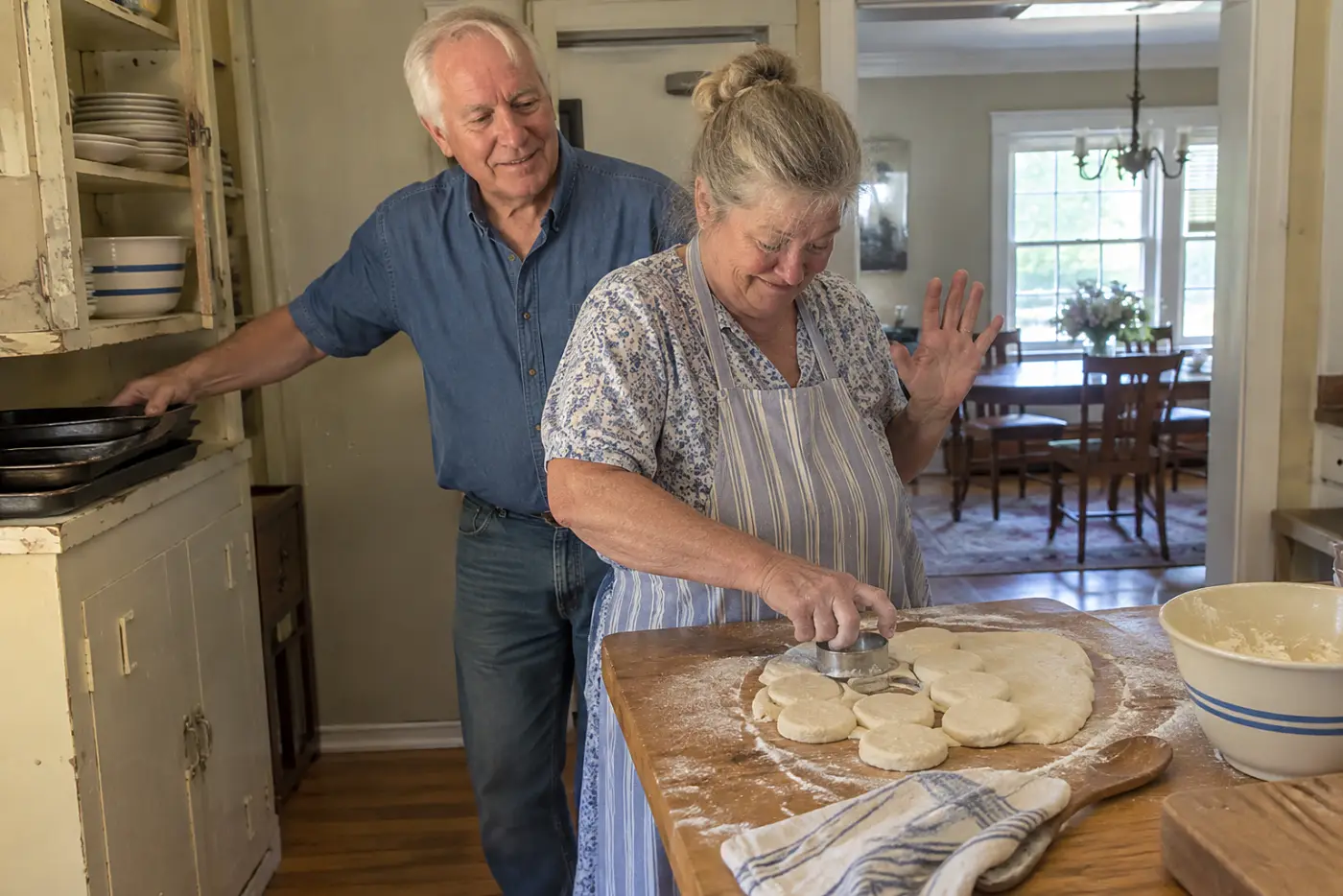
Serves 2. About 40 minutes, one baking sheet and one skillet.
You need: 1 cup flour, 1 teaspoon baking powder, 1/4 teaspoon salt, 2 tablespoons cold butter, 1/3 cup milk, 1/2 pound uncooked pork breakfast sausage, 1 tablespoon flour for gravy, 3/4 cup milk for gravy.
Cold butter is worth the trip back to the refrigerator. Work the dough only enough to bring it together; the biscuit has to hold up under a spoonful of gravy.
Heat the oven to 425°F [220°C]. Rub the butter into the first measure of flour, baking powder, and salt. Stir in the first measure of milk, fold the dough once, and cut biscuits.
Bake until the tops brown. Brown the sausage until it reaches 160°F [71°C], then stir in the gravy flour and remaining milk. Simmer until thick, split the biscuits, and spoon over the gravy.
Short on sausage? Make the biscuits and serve them with butter and jam; save the gravy for another day.
King Arthur Baking recommends cold butter and light handling for flaky biscuits. The USDA sets 160°F for uncooked ground-pork sausage. Don't let a browned outside make that decision for you.
12Scalloped Potatoes Layered With Cheddar
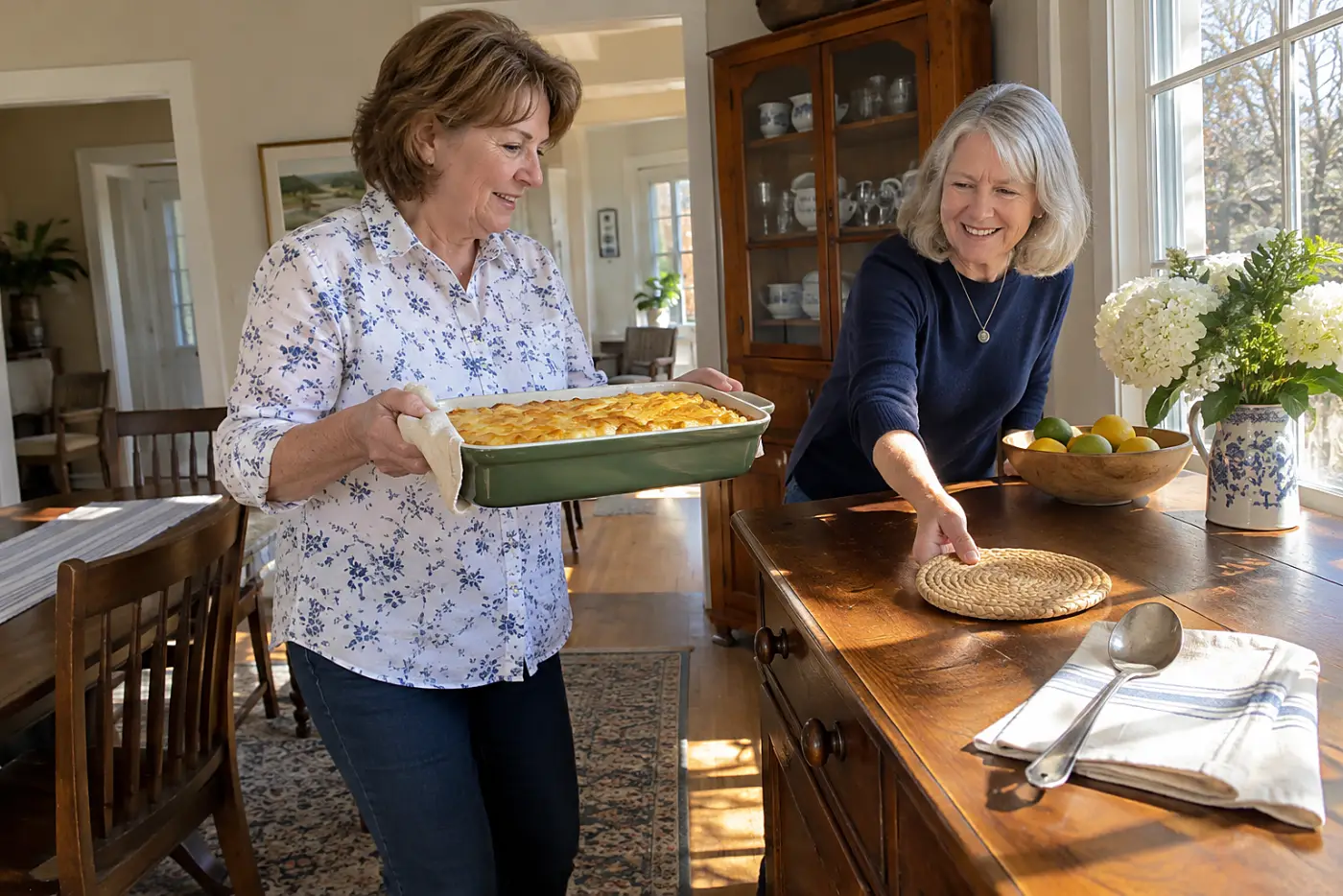
Serves 2. About 1 hour, one small baking dish.
You need: 2 thinly sliced medium potatoes, 1 tablespoon butter, 1 tablespoon flour, 3/4 cup milk, 1/2 cup grated cheddar, 1/4 teaspoon salt.
If you grew up calling these scalloped potatoes, keep calling them that. The cheese is the part your family remembers.
Heat the oven to 375°F [190°C]. Melt the butter, stir in the flour, and whisk in the milk until slightly thickened. Layer the potatoes, sauce, cheese, and salt in a buttered dish. Cover and bake until the potatoes are tender, then uncover and brown the top.
No cheddar? Use another melting cheese already in your refrigerator. Cut the potato slices evenly so the middle finishes with the edges.
Potatoes USA explains the naming distinction: au gratin traditionally includes cheese, while classic scalloped potatoes use cream without it. A family recipe doesn't have to change names to earn a place at dinner.
11Corn Pudding Baked the Old Way
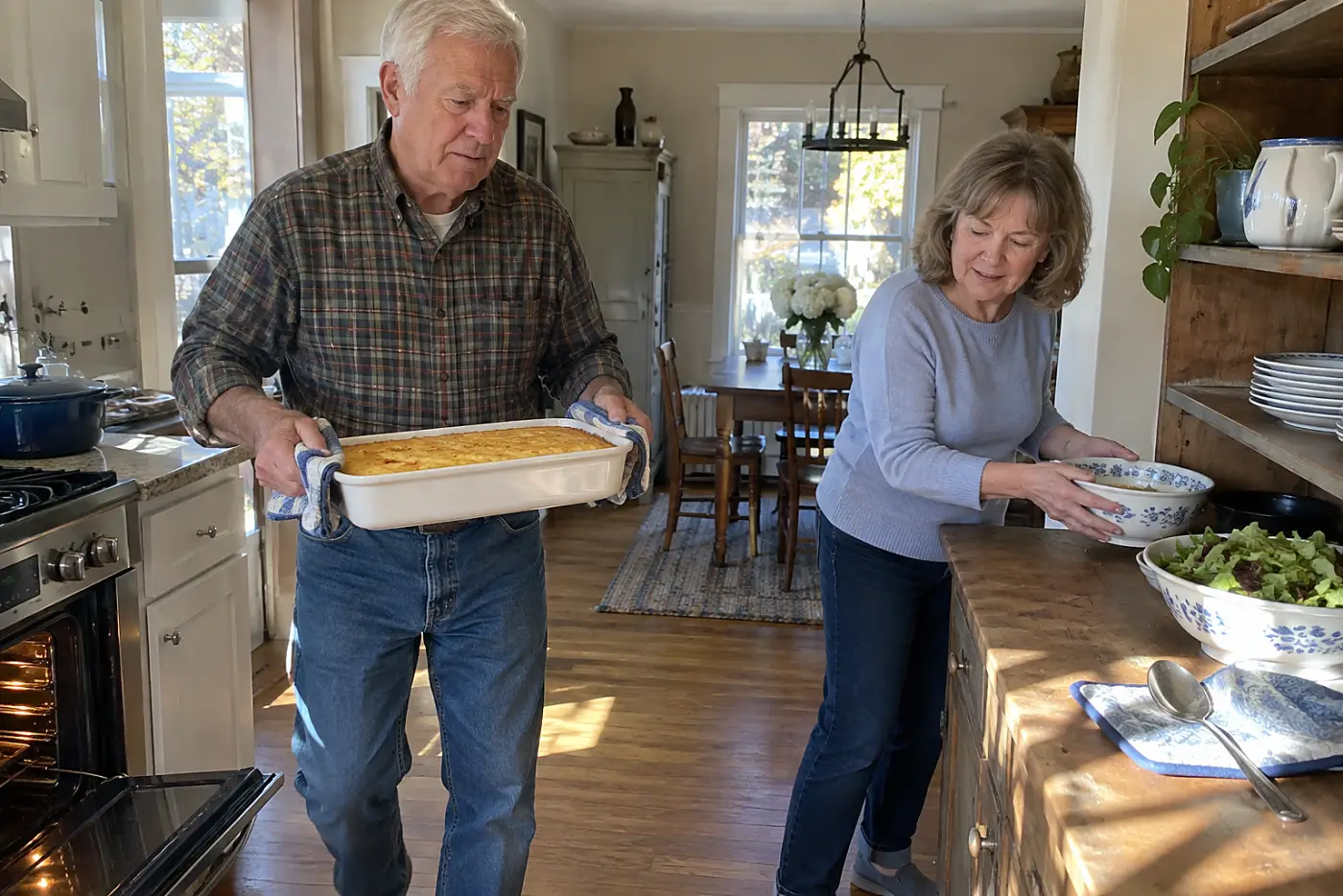
Serves 2. About 40 minutes, one small baking dish.
You need: 1 cup canned cream-style corn, 1 egg, 1/4 cup milk, 1/4 cup cornmeal, 1 tablespoon melted butter, 1/4 cup grated cheddar, 1 teaspoon sugar.
Bring corn pudding out while its top still has color. It should yield to a spoon, with enough body to hold a serving.
Heat the oven to 350°F [175°C]. Whisk the egg, milk, butter, and sugar together. Stir in the corn, cornmeal, and cheddar, then pour the mixture into a buttered dish. Bake until the center is set and the top has color.
No cheddar? Leave it out for a plainer corn flavor. If your family version started with a boxed mix, you're remembering a pantry tradition.
Chelsea Milling says its prepared baking mixes began in 1930 and its corn muffin mix arrived in 1950. This version uses cornmeal so you can make a small dish without opening a whole box.
10Peach Cobbler With Fresh Summer Peaches
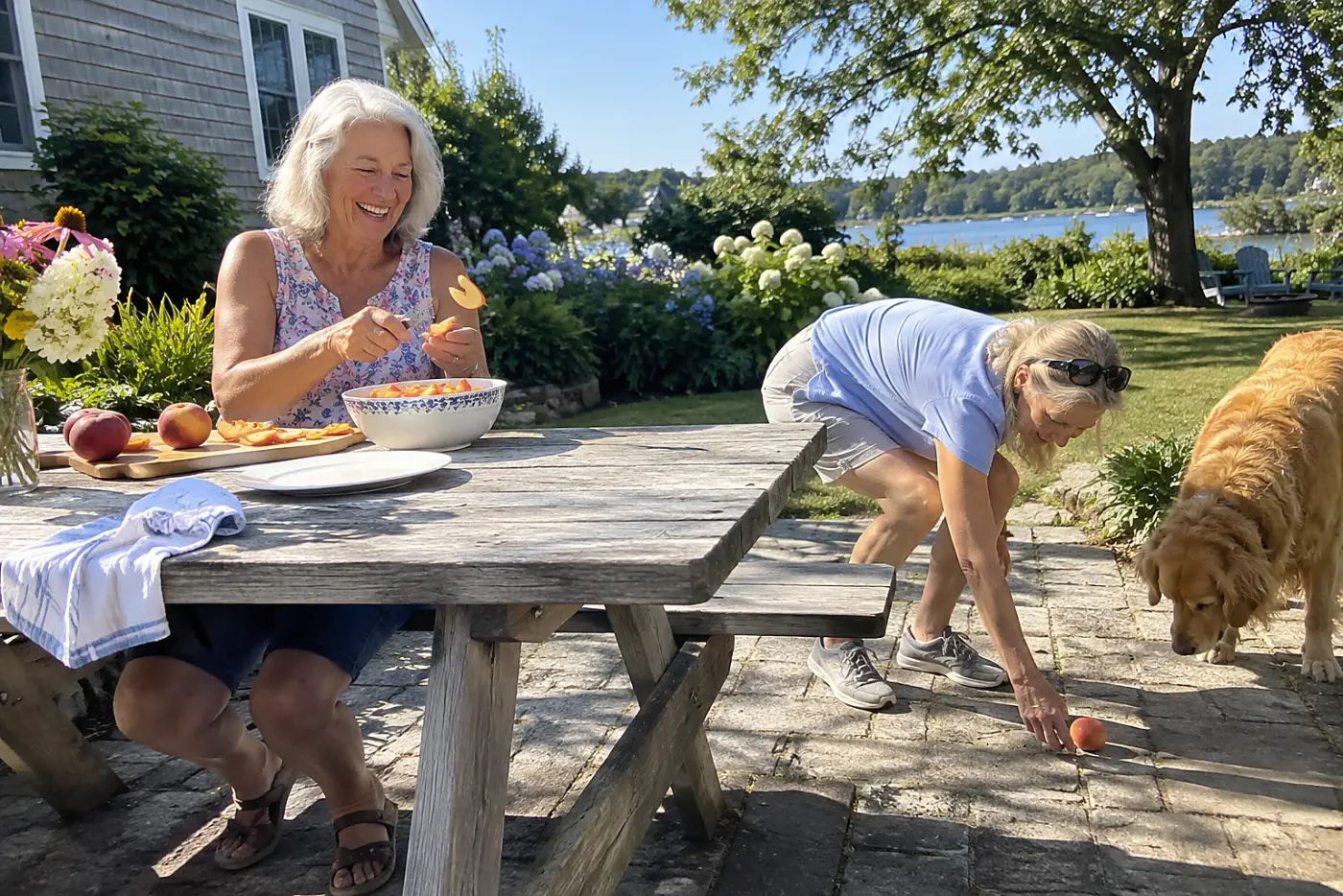
Serves 2. About 45 minutes, one small baking dish.
You need: 2 cups sliced fresh peaches, 2 tablespoons sugar for the fruit, 1 teaspoon flour for the fruit, 1/2 cup flour for topping, 1 teaspoon baking powder, 1 tablespoon sugar for topping, 2 tablespoons cold butter, 1/4 cup milk.
Leave room in the dish for the topping to rise and the peach juice to bubble. You don't have to cover every slice of fruit.
Heat the oven to 375°F [190°C]. Toss the peaches with their sugar and flour, then spread them in a small dish.
Rub the butter into the topping flour, baking powder, and remaining sugar; stir in the milk and spoon the dough over the fruit. Bake until the topping browns and peach juice bubbles around it.
No fresh peaches? Use thawed frozen slices and drain off extra liquid before adding the sugar. Let the cobbler stand until the juice settles enough to spoon. Those spaces between the topping let you see the fruit you brought home.
9Lattice-Top Apple Pie Like Grandma's
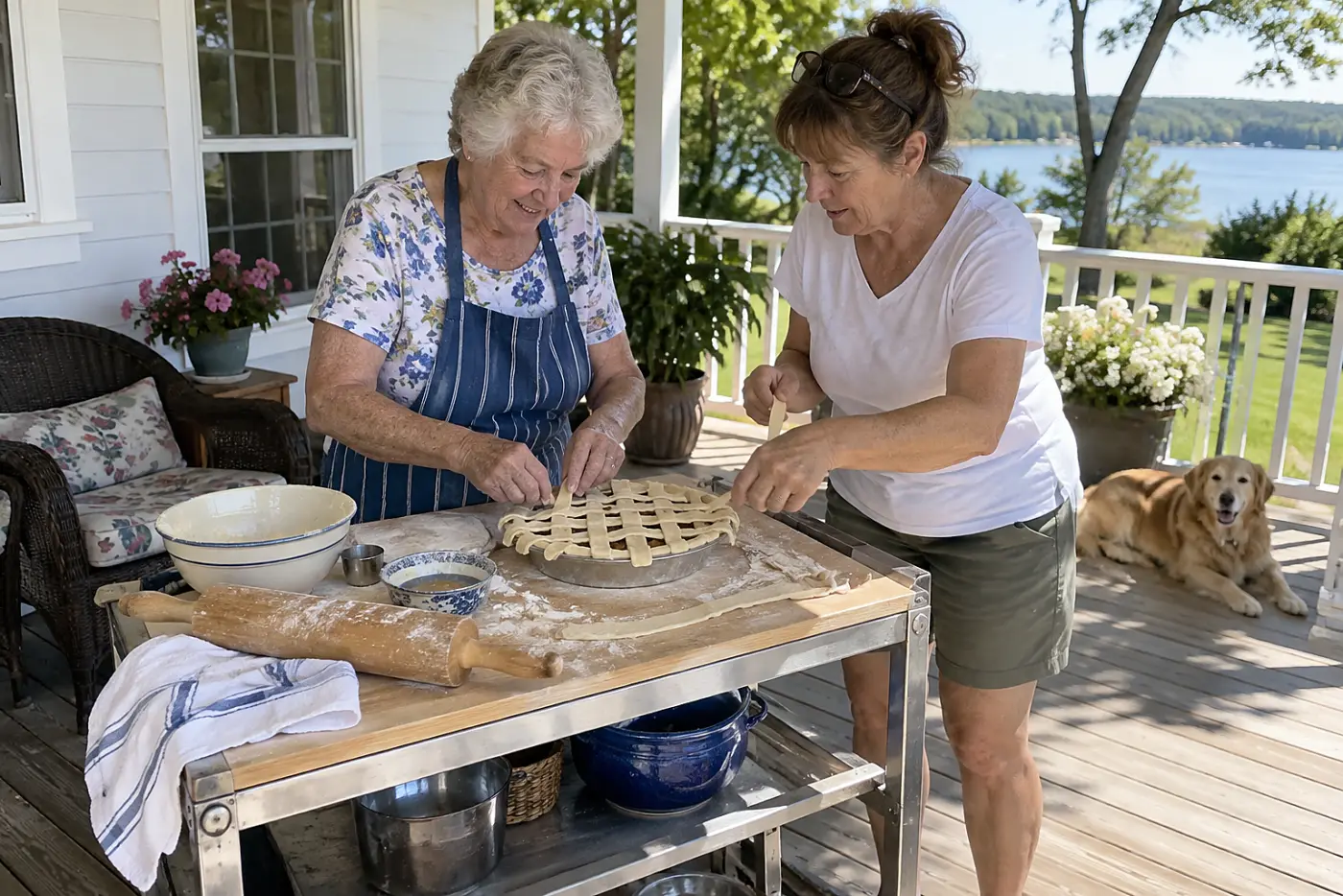
Serves 2 to 4. About 1 hour and 30 minutes, one small pie dish.
You need: 1 1/4 cups all-purpose flour, 1/4 teaspoon salt, 6 tablespoons cold butter, 3 tablespoons cold water, 2 cups thinly sliced apples, 2 tablespoons sugar, 1 teaspoon flour for filling, 1/4 teaspoon cinnamon.
The strips don't need to be identical. A lattice made by your hands still lets the apple filling peek through.
Heat the oven to 400°F [205°C]. Rub the butter into the larger measure of flour and salt, add the water, and press the dough together.
Roll out enough dough to line a small pie dish, then toss the apples with sugar, filling flour, and cinnamon. Fill the shell, weave strips of remaining dough across the top, and bake until the crust browns and the filling bubbles.
Short on butter? Make a simpler cobbler with the fruit rather than forcing a pie crust. Unbleached all-purpose flour is a standard choice for pie dough; check the flour bag you already have. Chill the dough if it starts sticking while you weave.
See more: 27 Things Grandmothers Notice That Nobody Else Does →
8Fun Old-Fashioned Wacky Cake Without Eggs or Dairy
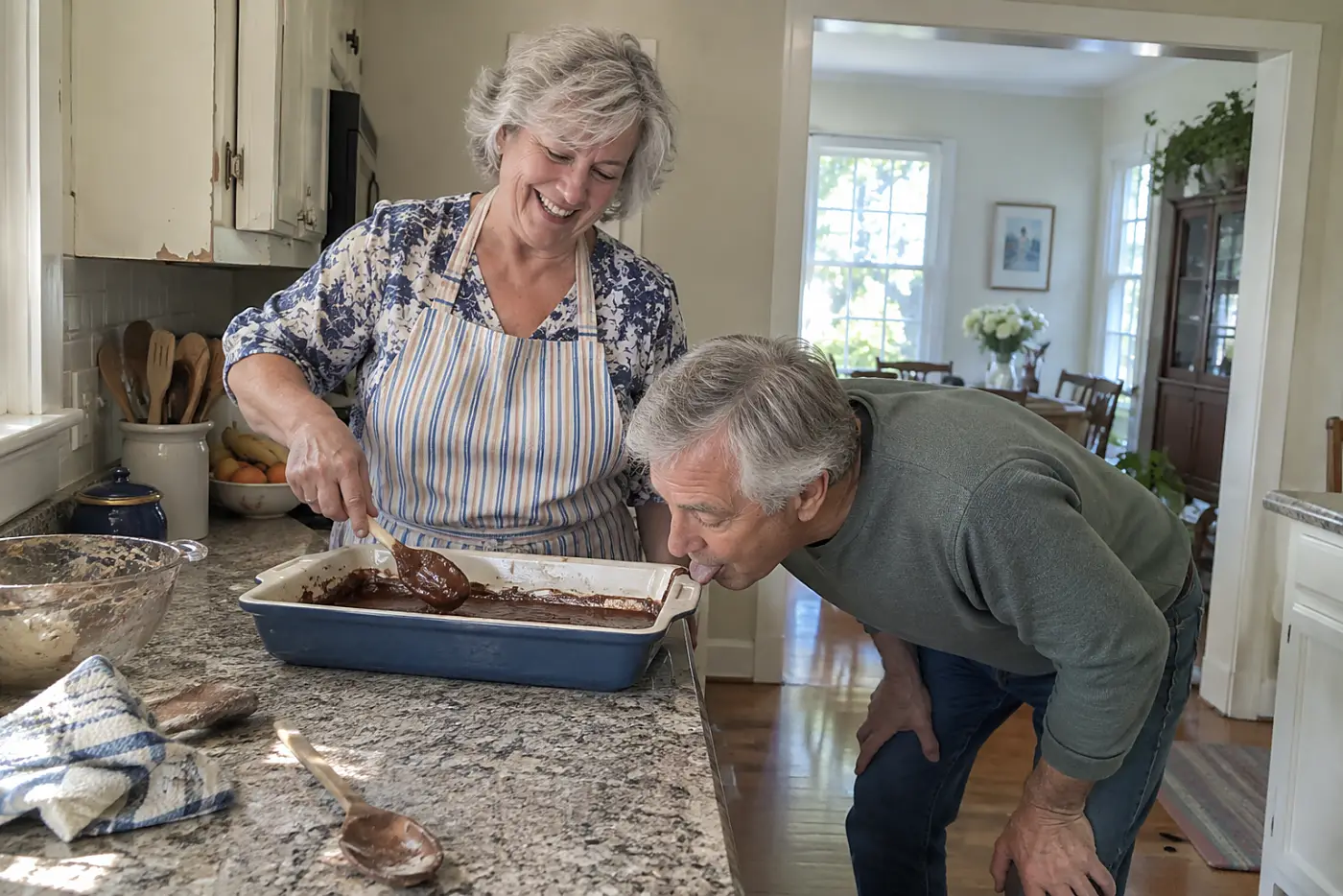
Serves 2 to 4. About 35 minutes, one small baking dish.
You need: 3/4 cup flour, 1/2 cup sugar, 2 tablespoons cocoa powder, 1/2 teaspoon baking soda, 1/4 teaspoon salt, 1/2 teaspoon vinegar, 1/2 teaspoon vanilla, 2 tablespoons oil, 1/2 cup water.
The egg carton is empty. You can still make cake, and you can mix it right in the baking dish.
Heat the oven to 350°F [175°C]. Stir the flour, sugar, cocoa, baking soda, and salt together in a small baking dish. Add the vinegar, vanilla, oil, and water, then stir until no dry flour remains. Bake until the center is set and a tester comes out clean.
No vanilla? Leave it out; the cocoa still leads. King Arthur Baking traces cake-pan cake, also called wacky cake, to World War II rationing.
Its egg-free, milk-free, butter-free method belongs to that history. Cut a piece while the edges are still warm.
7Fun Old-Fashioned Pigs in a Blanket
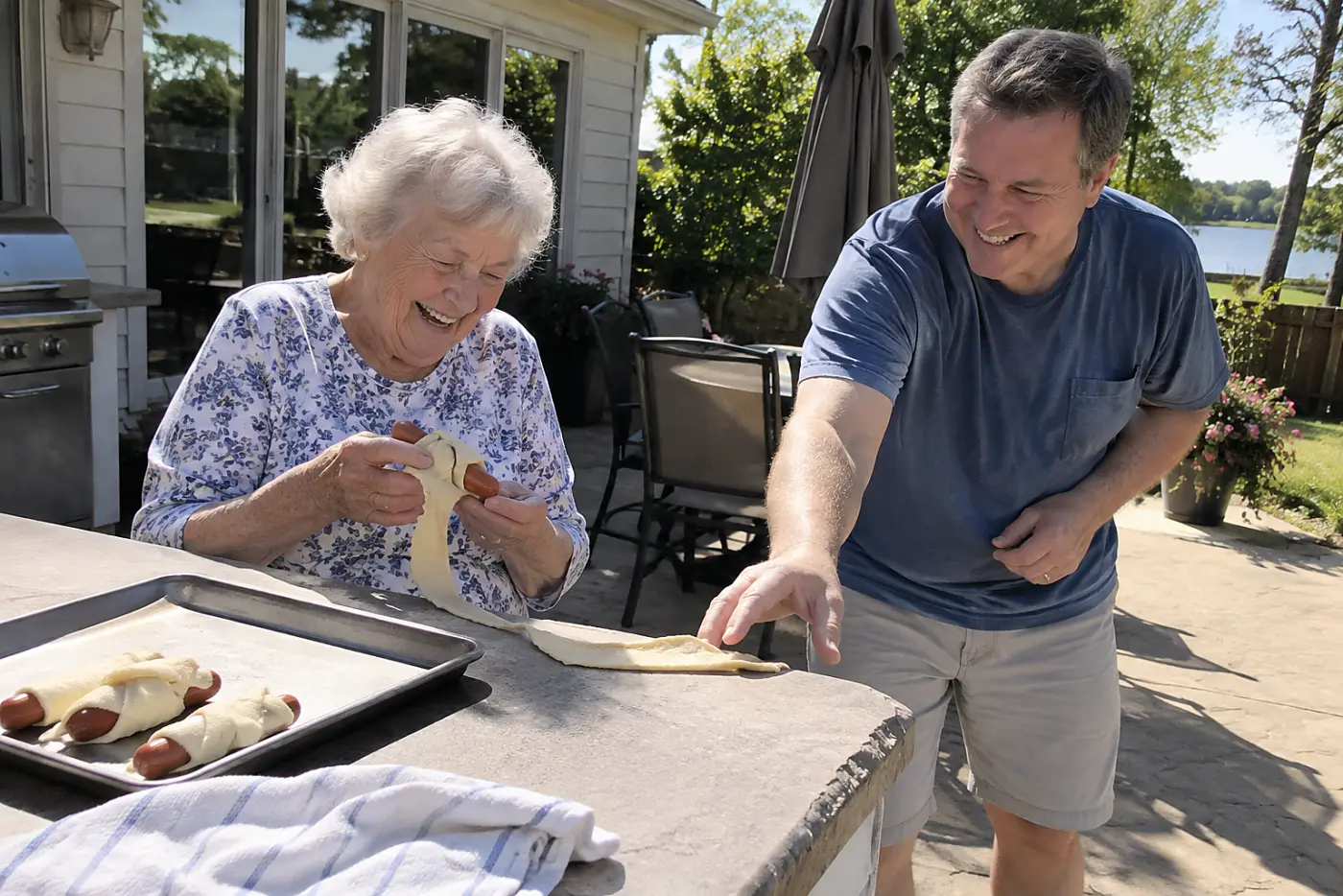
Serves 2. About 20 minutes, one baking sheet.
You need: 1 four-count can refrigerated crescent rolls, 4 small fully cooked hot dogs, 1 teaspoon mustard for serving.
Set out a plate and watch how fast these disappear. For two people, the small can of dough keeps the snack from turning into a second dinner.
Heat the oven to 375°F [190°C]. Unroll the dough and separate it into four pieces. Wrap each hot dog with a piece of dough, set them on a baking sheet, and bake until golden. Serve with the mustard on the side.
No small can? Use part of a larger can and bake the remaining dough separately. Pillsbury lists a four-count size and gives 10 to 13 minutes at 375°F [190°C] for its crescent rolls.
Let the color settle the final minute, then pull one apart while the dough is still flaky.
6Old-Fashioned Thanksgiving Roast Turkey With Pan Gravy
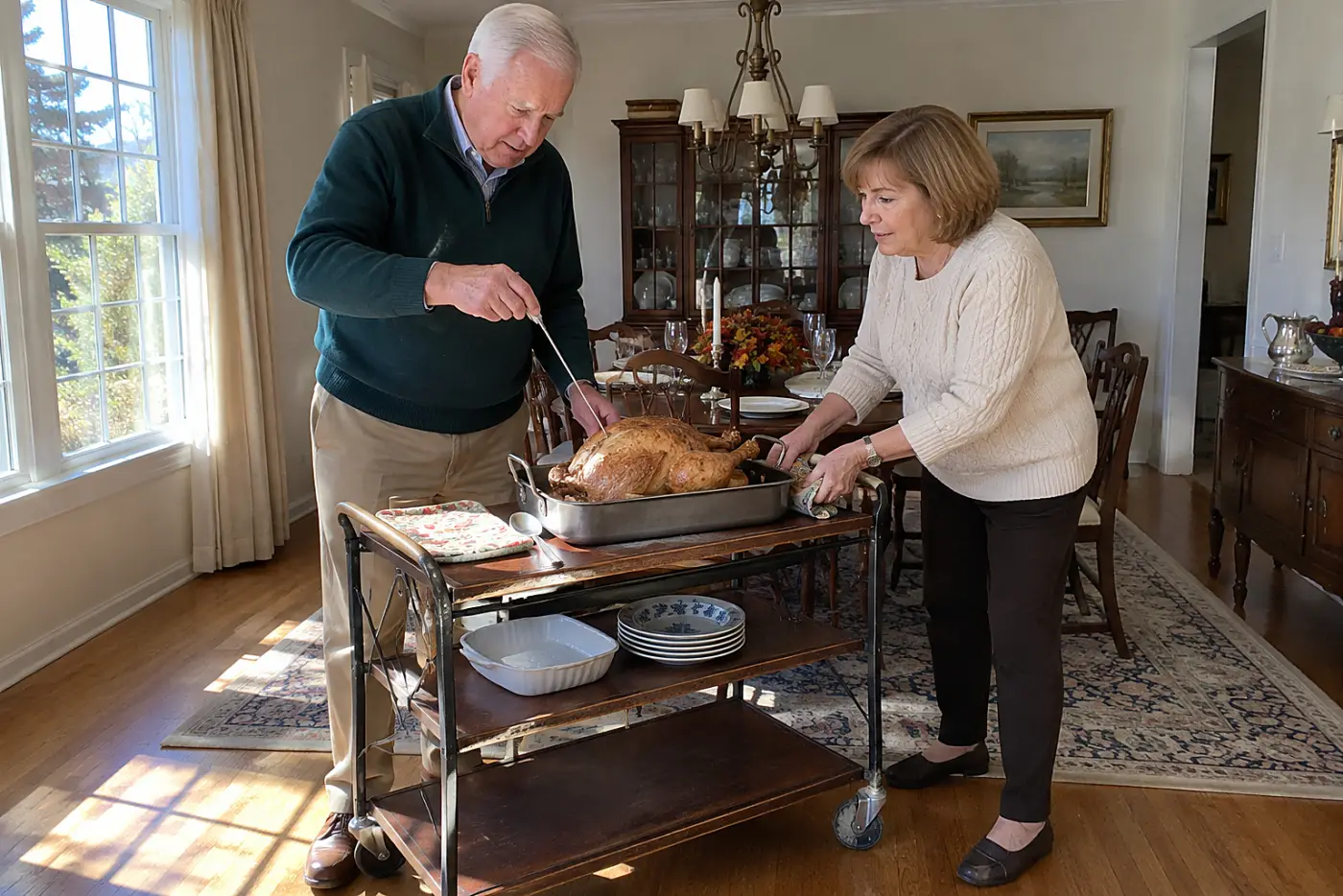
Serves 2, with leftovers. About 2 hours, one roasting pan and one saucepan.
You need: 1 bone-in turkey breast, 1 tablespoon butter, 1/2 teaspoon salt, 1/2 onion, 1 cup water, 1 tablespoon flour, 1/2 cup broth.
A turkey breast gives you the holiday smell without filling every shelf in the refrigerator. Keep the gravy close to the bird: its pan juices are worth catching.
Heat the oven to 325°F [165°C]. Rub the turkey with butter and salt, set it over the onion with the water in the pan, and roast until the thickest part reaches 165°F [74°C].
Rest the turkey while you pour the pan juices into a saucepan. Whisk the flour into the juices, add the broth, and simmer until the gravy coats a spoon.
No broth? Use water and taste the gravy before adding more salt. Check the turkey with a thermometer rather than trusting the skin's color.
For a whole bird, the USDA says to check for 165°F; stuffing inside it must reach that temperature too.
See more: 22 Dishes on a 1960s Dinner Party Menu, Course by Course →
5Old-Fashioned Thanksgiving Bread Stuffing With Sage
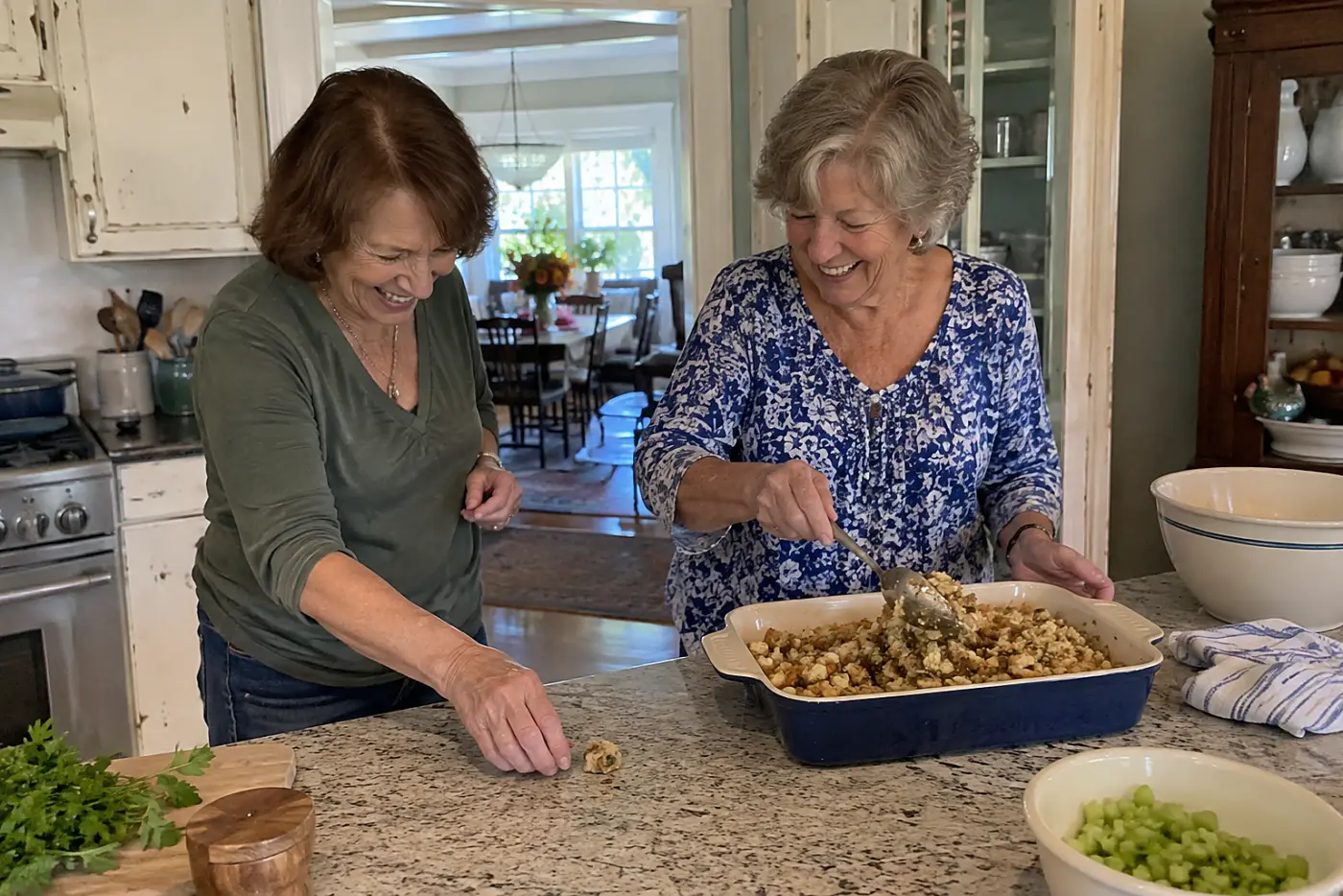
Serves 2. About 45 minutes, one skillet and one baking dish.
You need: 3 cups cubed bread, 1 tablespoon butter, 1/2 chopped onion, 1 chopped celery stalk, 1/2 teaspoon dried sage, 3/4 cup broth, 1 beaten egg.
Bake the stuffing beside the bird. You'll still get a browned top and a spoonable middle, with room to check the center.
Heat the oven to 350°F [175°C]. Cook the onion and celery in the butter until softened. Toss them with the bread and sage, then stir in the broth and egg.
Spoon the mixture into a buttered dish, cover, and bake until the center reaches 165°F [74°C]. Uncover briefly to brown the top.
Out of sage? Use a pinch of another dried herb you like with poultry. The bread should be damp, not swimming, before it goes into the oven.
USDA food-thermometer guidance gives stuffing the same 165°F [74°C] center target whether it cooks in a casserole or a bird. That check protects the part a browned top can't show you.
4Old-Fashioned Thanksgiving Sweet Potato Casserole
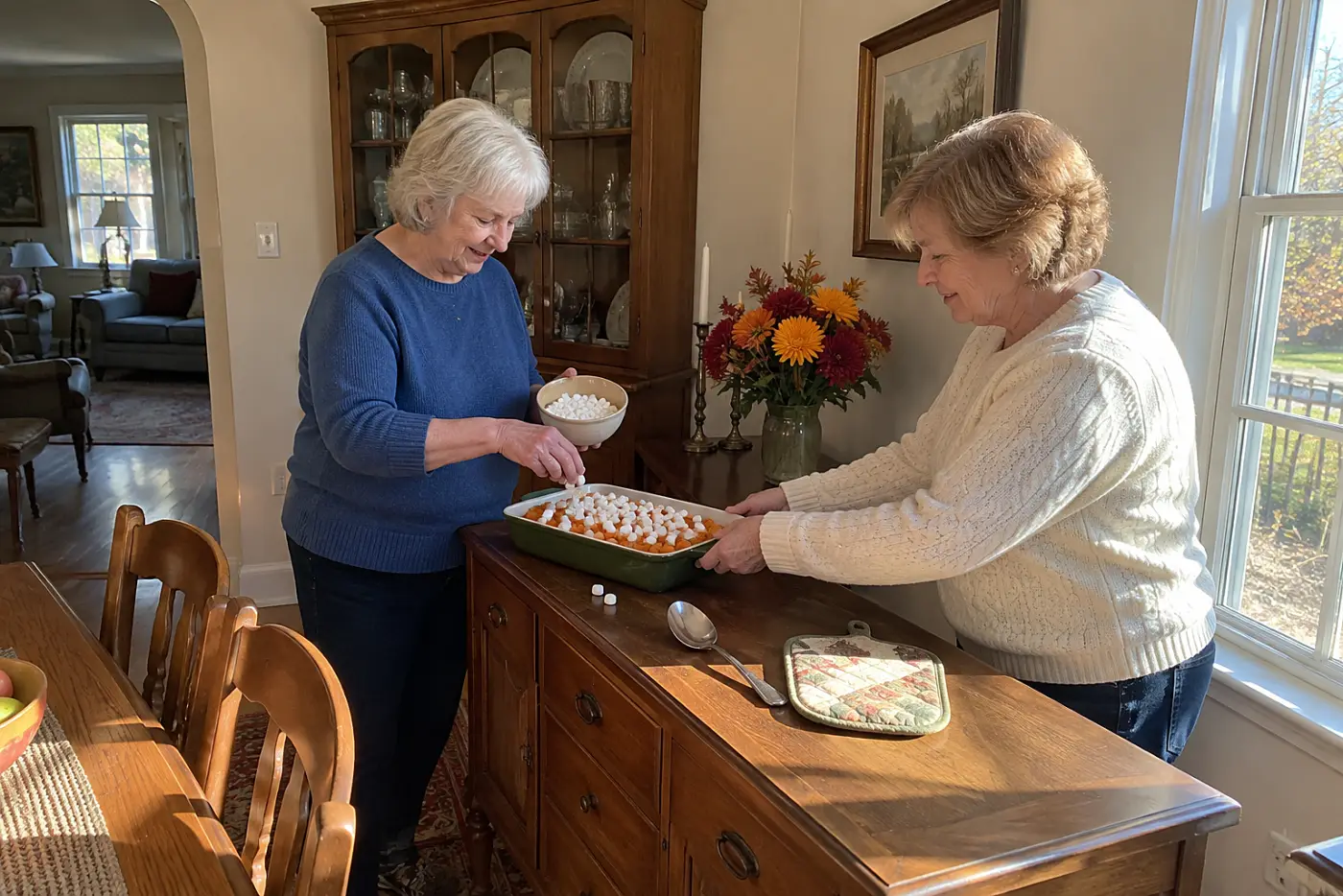
Serves 2. About 40 minutes, one small baking dish.
You need: 2 medium sweet potatoes, 1 tablespoon butter, 1 tablespoon brown sugar, 2 tablespoons milk, 1/2 cup mini marshmallows.
Wait until the sweet potatoes are nearly hot before adding marshmallows. Then the top toasts instead of disappearing into the filling.
Heat the oven to 375°F [190°C]. Boil or bake the sweet potatoes until tender, then mash them with the butter, brown sugar, and milk. Spread the mash in a small dish and bake until hot. Scatter the marshmallows over it and return the dish to the oven until the top colors.
No marshmallows? Sprinkle a little brown sugar over the mash before its final minutes in the oven. If you're warming a casserole made earlier, check its center for 165°F [74°C] with a thermometer. Watch the marshmallows closely: they brown quickly.
3Old-Fashioned Thanksgiving Green Bean Casserole
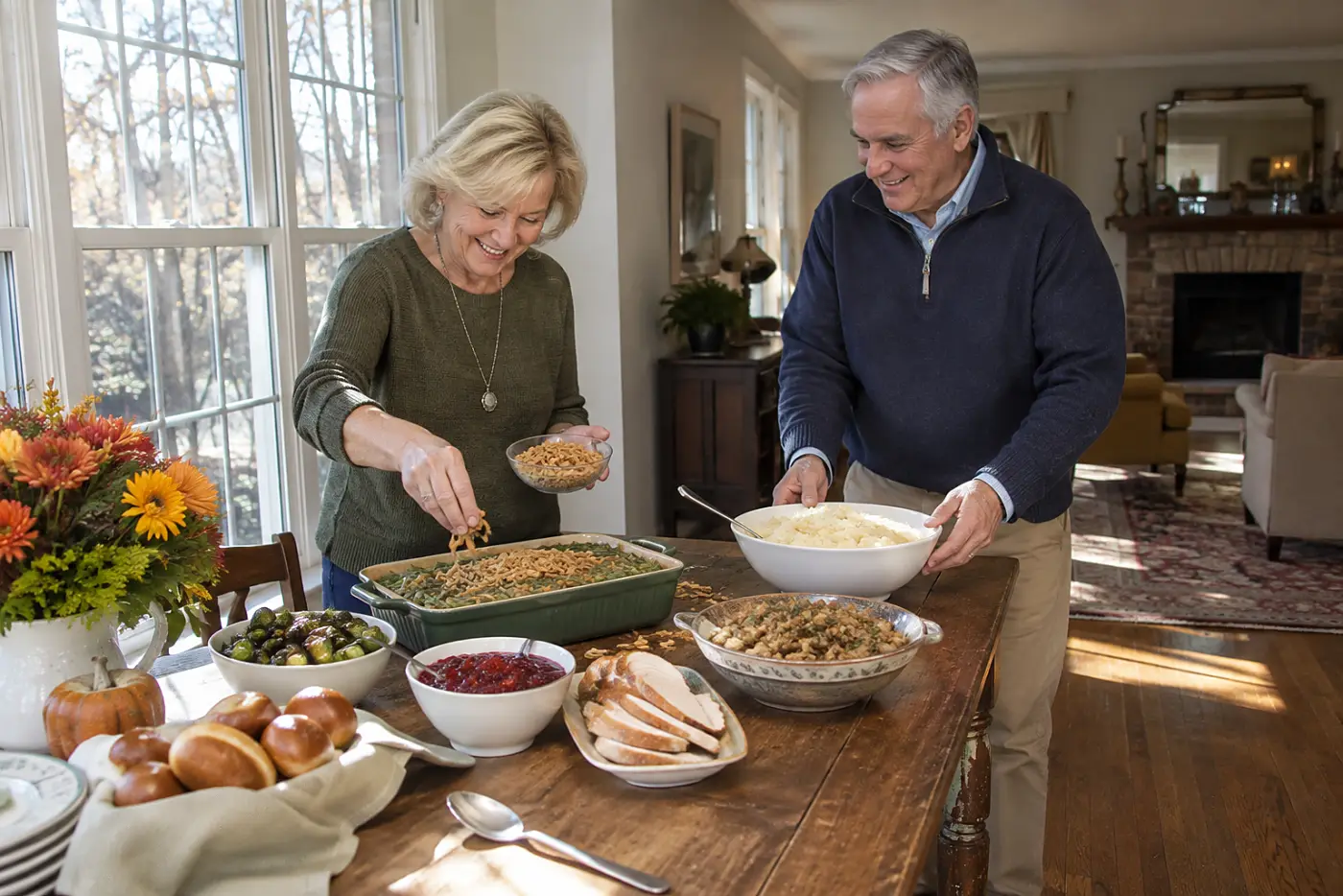
Serves 2. About 30 minutes, one small baking dish.
You need: 2 cups cooked green beans, 1/2 cup condensed cream of mushroom soup, 1/4 cup milk, 1/2 cup crispy fried onions, 1/4 teaspoon black pepper.
Save some onions for the final stretch of baking. That way, the top crunches when you put a spoon through it.
Heat the oven to 350°F [175°C]. Stir the beans, soup, milk, pepper, and half the onions together in a baking dish. Bake until the center reaches 165°F [74°C]. Scatter the remaining onions over the top and bake briefly until crisp.
No fried onions? Use toasted breadcrumbs for the last layer. Campbell's dates its green bean casserole to 1955 and credits test-kitchen manager Dorcas Reilly. Spoon through the crunchy top so both servings get some.
2Slow-Cooker Ham and Black-Eyed Pea Soup
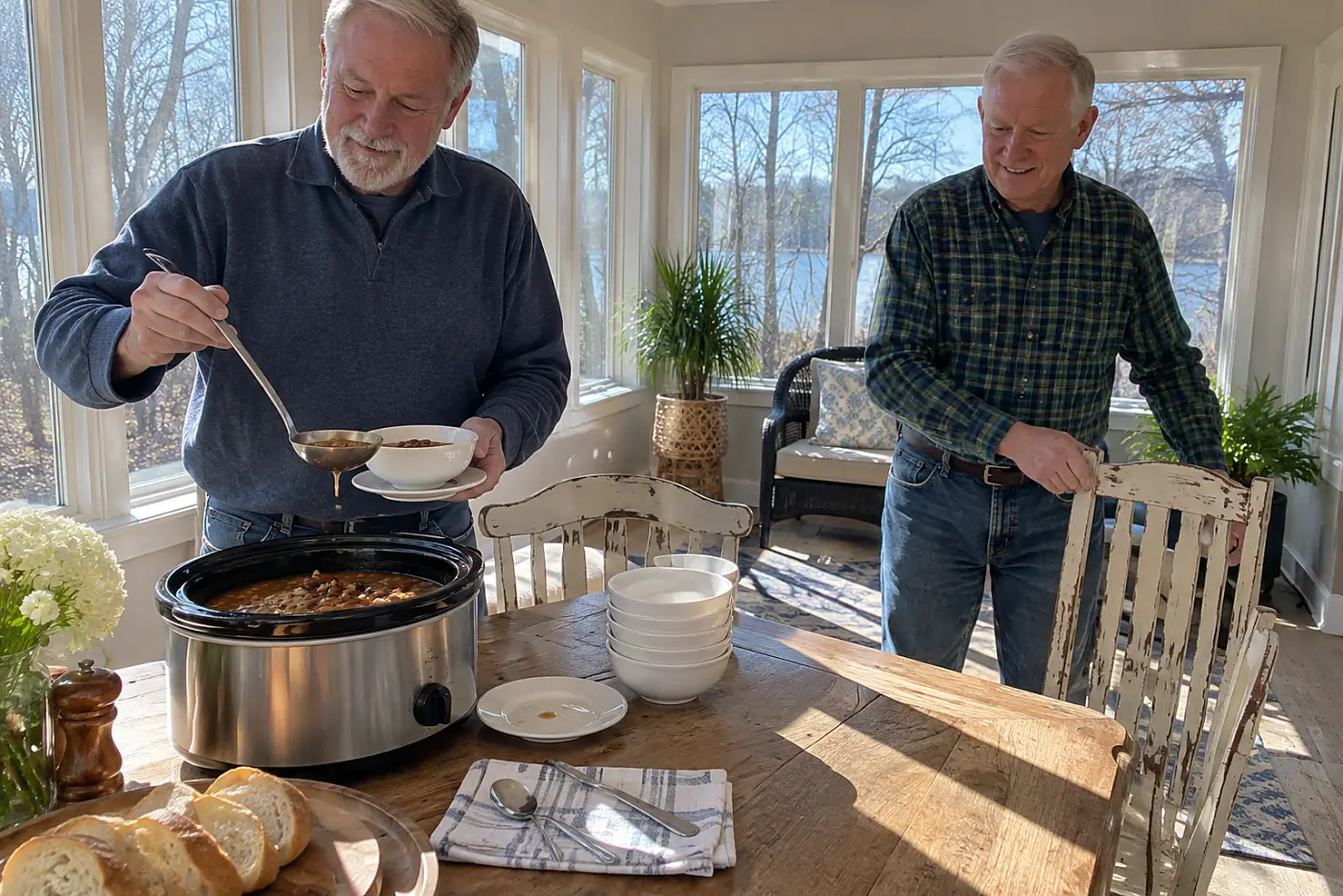
Serves 2. About 4 hours on high, one slow cooker.
You need: 1 cup cooked black-eyed peas, 3/4 cup diced leftover ham, 1 chopped carrot, 1 chopped celery stalk, 1/2 chopped onion, 2 cups broth, 1/4 teaspoon black pepper.
The slow cooker handles the wait; you handle the last check. Leftover ham needs to be heated through, not merely stirred into hot broth.
Put the peas, ham, vegetables, broth, and pepper into the slow cooker. Cover and cook on high until the vegetables are tender. Stir well and check that the soup containing the leftover ham reaches 165°F [74°C] before serving.
No black-eyed peas? Use cooked white beans. Add a little water if the soup is thicker than you remember it.
The USDA's leftovers guidance says to hold hot food at 140°F [60°C] or higher for serving. Ladle dinner while it's hot, then put the rest away promptly.
1Baked Ham and Potato Casserole With Cheese
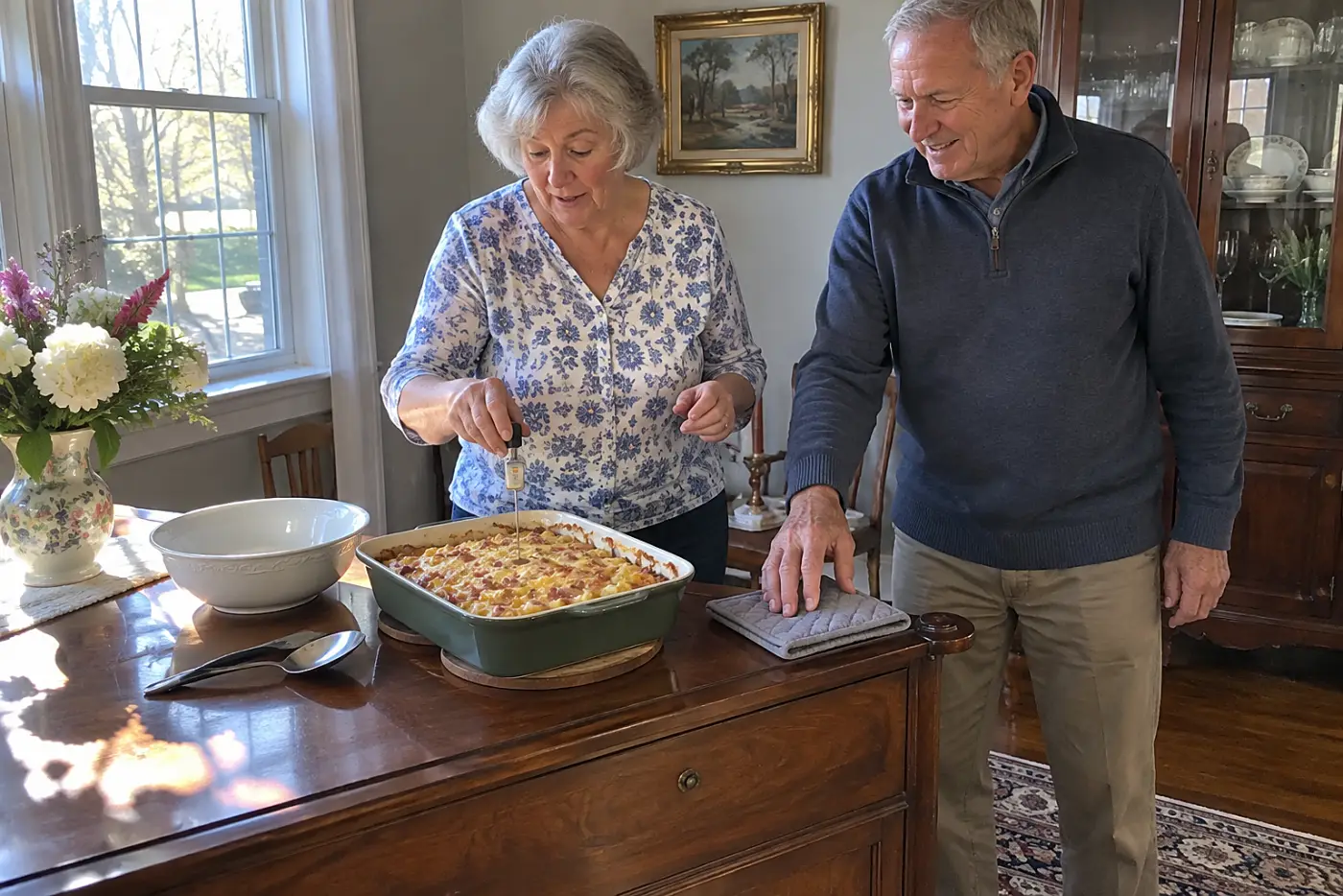
Serves 2. About 1 hour, one small baking dish.
You need: 2 thinly sliced medium potatoes, 3/4 cup diced fully cooked ham, 1 tablespoon butter, 1 tablespoon flour, 3/4 cup milk, 1/2 cup grated cheddar, 1/4 teaspoon black pepper.
That last piece of ham in the refrigerator has a job. Dice it small so it reaches every forkful. Before the casserole goes in, work out whether the ham came from a sealed package or from an earlier dinner.
Heat the oven to 375°F [190°C]. Melt the butter, whisk in the flour and milk, and cook until the sauce thickens. Layer the potatoes, ham, sauce, cheddar, and pepper in a buttered dish. Cover and bake until the potatoes are tender, then uncover and brown the cheese.
Out of cheddar? Use another cheese that melts well. Check the casserole's center with a thermometer before serving.
The USDA's ham guidance distinguishes fully cooked ham packaged by a USDA-inspected plant from repackaged or leftover ham.
If yours is leftover, bring the center to 165°F [74°C]. The box below gives you both reheating targets.
The bottom line
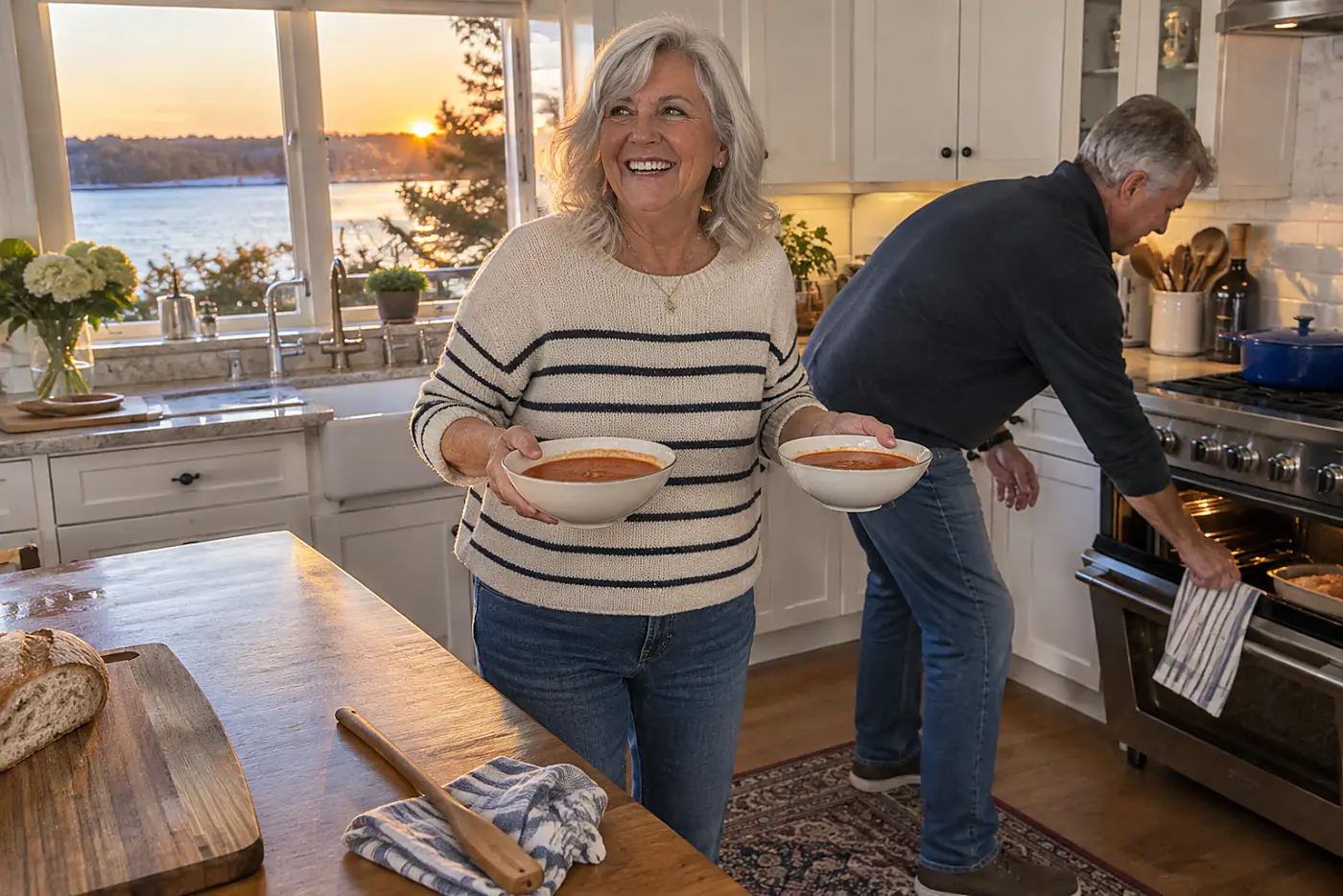
The dishes you remember share a habit: use what's in the kitchen, then give it enough time. A broth needs simmering. A roast needs a covered pot. A casserole needs a check at the center, not a guess from its browned edges.
Choose the dish whose smell you remember, put its ingredients on your grocery list, and keep the thermometer nearby.
Which recipe would you make first, and what did your grandmother put in hers that you haven't seen written down?
Up next
20 Casserole Recipes for Two People
A measured noodle scoop, small baking dishes and clear bake times give you a home-cooked dinner without a week of leftovers.
Read the list →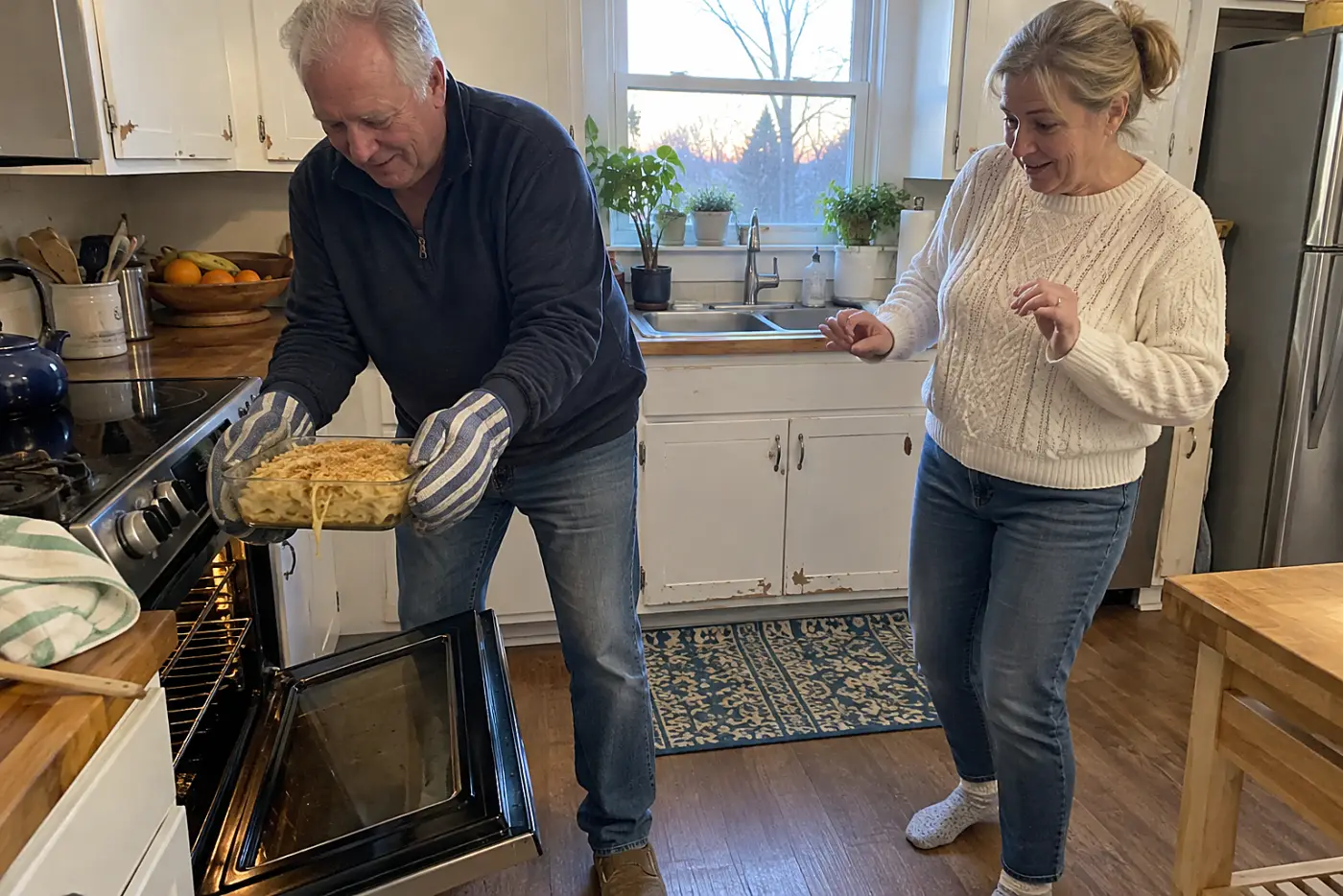
Reader quiz
Did you catch the details?
5 questions from this article.
In Classic Chicken and Dumplings From Scratch, what should you do while the dumplings cook?
Questions people also ask
What were some classic comfort food recipes from the 1940s?
Wartime home cooks worked within rationing that began in 1942, according to the National WWII Museum. Vegetable and bean stews fit a thrifty pantry. For dessert, King Arthur Baking describes wacky cake, made without eggs, milk, or butter and mixed in its pan.
What are the top 10 comfort foods of all time?
There's no official top ten. For a familiar starting list, try chicken and dumplings, macaroni and cheese, meatloaf, pot roast, and tuna noodle casserole. Add chicken noodle soup, apple pie, biscuits and gravy, Salisbury steak, and shepherd's pie. The Beef. It's What's For Dinner chuck-roast guide covers the cut for one of those classics, not a ranking.
What are some good old-fashioned meals for older adults?
Choose by the texture and portion that suit you, rather than an age label. Soup, stew, and small casseroles are straightforward to portion; if chewing is difficult, cook the vegetables and meat until tender. The USDA's leftovers guidance gives refrigerated leftovers three to four days and a reheating target of 165°F [74°C].
What are the top 20 comfort foods?
No universal top-twenty ranking exists. For ideas, start with pot roast, beef stew, mashed potatoes, scalloped potatoes, and mac and cheese. Add chicken and dumplings, fried chicken, meatloaf, tuna casserole, apple pie, biscuits and gravy, green bean casserole, shepherd's pie, chicken noodle soup, and corn pudding. Finish with peach cobbler, sweet potato casserole, stuffing, Salisbury steak, and Swiss steak; use the USDA's temperature chart for the dish you cook.
What is the difference between a soup and a stew?
Soup has more liquid in the bowl; stew puts more emphasis on its solid ingredients and thicker cooking liquid. That's the practical distinction described by Dictionary.com. If your beef and barley has plenty of broth, call it soup and pass a spoon.
What's a good make-ahead comfort food for a busy week?
Make the beef vegetable soup or chicken noodle soup, then portion what you won't eat tonight. The USDA's leftovers guidance gives refrigerated leftovers three to four days and a reheating target of 165°F [74°C]. Keep noodles separate from broth if you want them firm when you reheat your bowl.
Did any of these feel familiar?
Know someone who needs this?
 Prime Journal · Free printable
The Small-Batch Kitchen Checklist
- A right-sized dish for supper without a crowded fridge.
- A quick check before the slow cooker goes on.
- A plan for leftovers before the shopping starts.
Free printable: The Small-Batch Kitchen Checklist. Enter your email and it is yours.
Sources cited in this article
This article links to 15 outside sources, listed here so you can read them yourself.
- Cambridge Dictionary describes dumplings dictionary.cambridge.org/us/dictionary/english/dumpling
- USDA sets 160°F for ground-beef meatloaf www.fsis.usda.gov/food-safety/safe-food-handling-and-preparation/meat-catfis…
- Beef. It's What's For Dinner cut guide www.beefitswhatsfordinner.com/cuts/cut/2851/chuck-roast
- USDA guidance for a whole chicken www.fsis.usda.gov/food-safety/safe-food-handling-and-preparation/poultry/chi…
- Bob's Red Mill's pearl-barley directions www.bobsredmill.com/recipes/how-to-make/basic-preparation-instructions-for-p…
- Academy of Nutrition and Dietetics recommends halving leeks and running water through their layers www.eatright.org/food/food-groups/vegetables/all-about-leeks
- Bon Appétit explains how buttermilk's lactic acid works on meat proteins www.bonappetit.com/story/what-is-buttermilk-article
- King Arthur Baking recommends cold butter and light handling www.kingarthurbaking.com/blog/2015/08/15/tips-better-biscuits
- Potatoes USA explains the naming distinction potatogoodness.com/faq/what-is-the-difference-between-au-gratin-potatoes-and…
- Chelsea Milling says its prepared baking mixes began in 1930 and its corn muffin mix arrived in 1950 www.jiffymix.com/about/chelsea-milling-company
- King Arthur Baking traces cake-pan cake, also called wacky cake, to World War II rationing www.kingarthurbaking.com/blog/2015/10/01/cake-pan-cake
- Pillsbury lists a four-count size www.pillsbury.com/products/crescents/original-4-count
- USDA says to check for 165°F www.fsis.usda.gov/food-safety/safe-food-handling-and-preparation/poultry/tur…
- Campbell's dates its green bean casserole to 1955 and credits test-kitchen manager Dorcas Reilly www.campbells.com/wp-content/uploads/2020/11/Campbells_NoFailRecipes_Campbel…
- USDA's ham guidance www.fsis.usda.gov/food-safety/safe-food-handling-and-preparation/meat-catfis…
Carol Whitaker
Kitchen Editor
Carol writes recipes for two and the old-fashioned dishes people still ask for, with an ingredient line you can read without your glasses and steps that fit a weeknight.
More from Carol Whitaker