






How to choose hair color for your skin tone over 50
Pick a shade that suits your undertone, your gray and your hair's limits, with yearly visits and cost for touch-ups, gray blending and going gray.

By Irina Byalik, Style Editor
Updated · 18 min read
The short answer: Start with your skin's undertone: golden or peachy skin suits honey, caramel, copper and warm browns; pink or rosy skin suits ash and cool browns; neutral skin suits beige blonde, soft caramel, sandy blonde and dark chocolate. Stay within three shades of your natural color, as the American Academy of Dermatology advises, because heavy lightening damages hair. Test swatches against your face in daylight before committing.
- Written by our style editor
- Cited 31 sources
- How we review
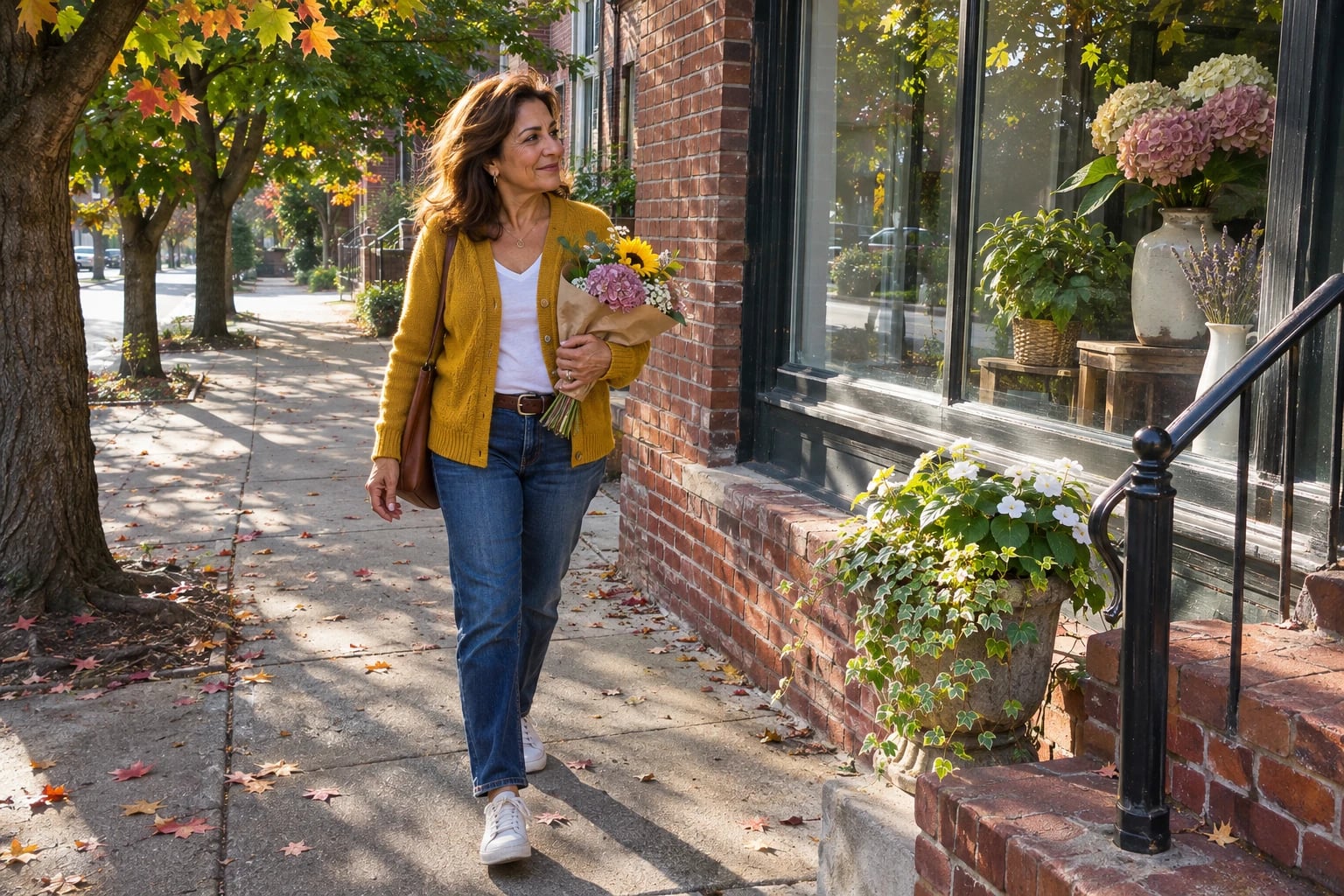
Before you buy a box or book a colorist, find a plain white bath towel. Held under your chin at a mirror, it shows whether your skin looks pink or rosy (cool) or golden or peachy (warm).
If you're working out how to choose hair color for your skin tone over 50, that towel comes in soon. One decision comes before it: what you want your hair to do from here. You can keep covering the gray, blend it, or let it come in. After that, check how gray you are and how much lightening your hair can take. Then match shades to your undertone, test two or three against your own face, and look at what each route costs you in visits and money.
Should I keep coloring, blend my gray or stop?
Decide this first, because it shapes every choice after it. All three routes are reasonable. The right one depends on how you feel when you see your gray, what your working life is like, and how much upkeep you'll tolerate.
Medicine doesn't push you either way. The American Academy of Dermatology (AAD), the professional body for US dermatologists, says that if gray hair affects your self-esteem, "you can cover it using hair dye." Dr. Sam Ellis, a board-certified dermatologist in Northern California, is blunter about it:
"There is absolutely nothing wrong with dying your hair." Dr. Sam Ellis, dermatologist, in a video
The women who've picked each route put the trade-offs better than I can. In Reddit's r/AskWomenOver50 forum, a woman almost 60 and still working wrote: "I'm almost 60. I'm still coloring. I will continue coloring until retirement. Ageism is real." A woman who stopped coloring about eight years ago answered in the same thread: "The freedom from hair color and root touch up is fantastic." And a woman of 58 who tried it: "I've tried to let my hair just be grey. But I hate it. It truly does make me look 10 years older."
Anne Kreamer, author of the book *Going Gray*, grew hers out and still said work could have stopped her: "If I were a 49-year-old single mother in sales and marketing, I probably wouldn't have tried this right now."
Two studies get quoted a lot here. In a 2009 PLoS ONE study, Danish twins aged 59 to 81 who used hair colorants looked about 1.69 years younger for their age in passport-type photos. The study also included British women aged 45 to 75. A 2025 experiment found faces with digitally grayed hair were judged about 1.2 times older, but it used faces around 30, 100% gray and mostly young raters. Neither study can tell you how your own face will read.
Women in the same Reddit threads describe being stuck between going back to color and keeping the gray. If that's you, blending is the middle route: it softens the gray without locking you into either choice.
How much gray do you have, and what does it change?
How gray you are decides which kind of color can do the job. First silver strands can be softened with demi-permanent color, which Clairol says lasts up to 28 washes and gives gray blending. If you're mostly gray and want it fully covered, Clairol says its permanent color gives full 100% gray coverage.
Clairol also says its Natural Instincts Bold line "is not recommended for over 25% gray hair." Clairol's 25% is the only gray-percentage limit its page gives. Go by what you see in the mirror.
Colorist Leslie Shores of Eric Marshall Salon in Nashville likes the softer route for women over 50: "Use translucent or demi-permanent color to soften greys into a harmonious mix. The maintenance is lower and only needs a touchup every six to eight weeks."
You may have heard that half of people are half gray by 50. A 2012 study of 4,192 volunteers, summarized by dermatologist Dr. Jeff Donovan, found only 6% to 23% had at least half gray hair at 50, depending on origin and natural color. If you're less gray than you expected, a light-touch blend may be all you need.
Gray also behaves differently. Dr. Antonella Tosti, a dermatologist at the University of Miami, says "as hair turns gray, it often becomes thicker and coarser," and more brittle. Dr. Ellis notes in his video that it often feels rougher partly because the scalp makes less oil.
One habit to drop: the AAD advises against plucking grays, since plucking can thin hair and "the removed hair will grow back gray."
How do I find my skin undertone at home?
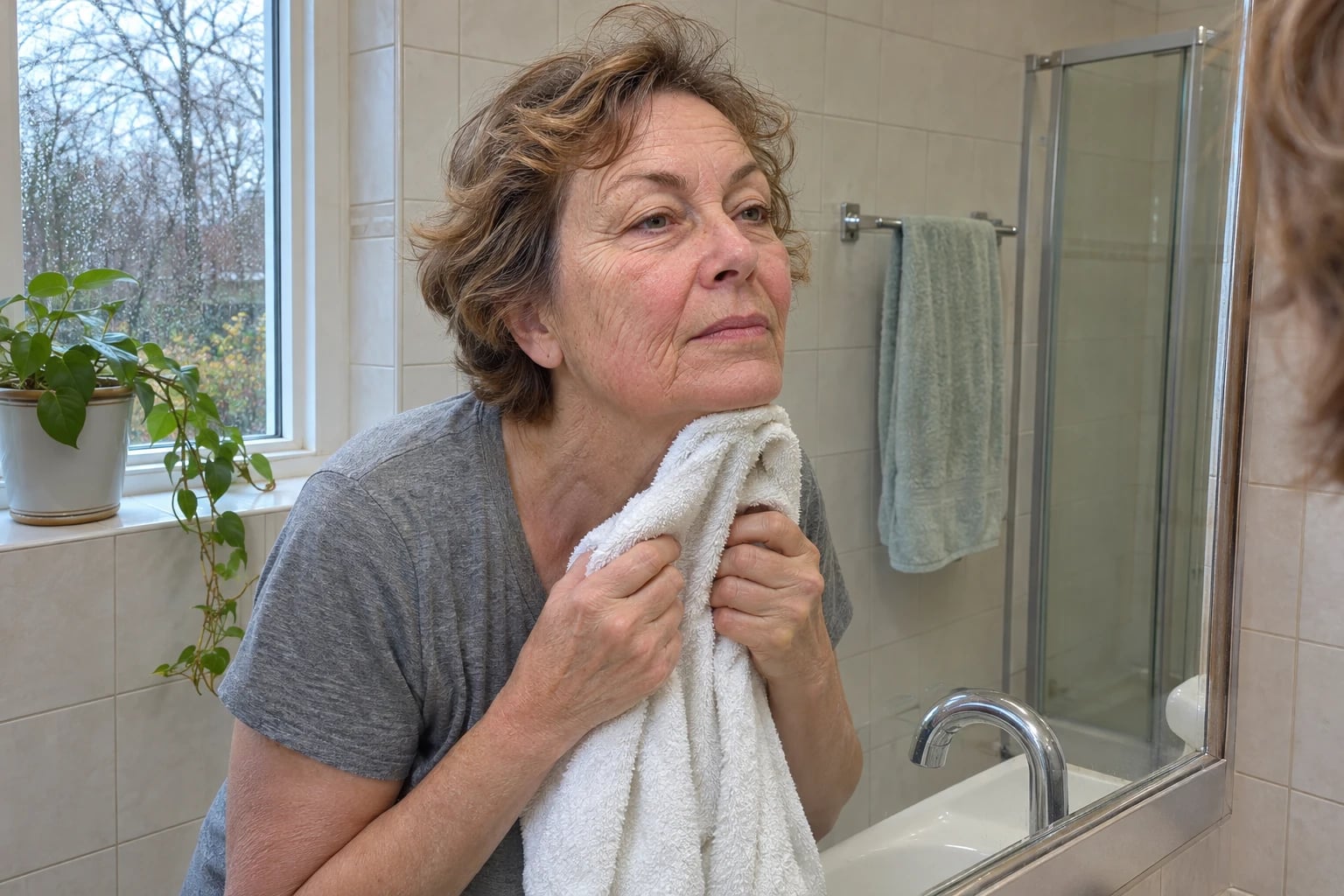
Your undertone is the color under the surface of your skin. Run the quick tests in the box below by a window, and go with the way most of them lean. Don't let a single result decide it.
In my experience, the towel and the eye pairing are easier to read than wrist veins, which can look blue-green under bathroom lights.
You may also read that skin turns cooler with age. A 2024 study of 2,543 Japanese people aged 17 to 71 (mostly women, median age 34) found skin color becoming more yellow and less blue with age. Test the skin you have now.
Which hair colors suit warm, cool and neutral undertones?
Warm undertones suit golden shades such as honey blonde, caramel, chestnut and copper. Cool undertones suit ash, champagne, espresso and cool browns. Neutral undertones do well with soft in-between shades like beige blonde, sandy blonde and dark chocolate.
| Undertone | Shade families | Shelf examples (L'Oréal Paris) |
|---|---|---|
| Warm | Honey blonde, warm caramel, golden blonde, chestnut brown, copper, light auburn | Medium Golden Blonde, Féria Power Copper, Lightest Auburn |
| Cool | Ash blonde, champagne, platinum, espresso, cool dark browns; reds like burgundy and auburn brown | Extra Light Ash Blonde, Mocha Ash Brown, Féria Deep Burgundy |
| Neutral | Beige blonde, soft caramel, sandy blonde, dark chocolate | None named |
The shade families come from Leslie Shores, Wella and L'Oréal Paris's picks, and the shelf examples from L'Oréal Paris. If you're cool, Wella says to steer away from warm, golden or chestnut shades and look for "ash, platinum, and champagne."
Shores's own rule is the one I'd follow: "You must match someone's hair tone directly to their underlying hue, staying within range of the natural color."
If you color at a salon, it helps to know that on L'Oréal Professionnel's system, the digit after the dot is the tone: .1 ash.2 iridescent.3 golden.4 copper.
Christel Lundqvist, global technical director at the hair brand TIGI, adds a point I wish more people heard. She says "it's better not to try to recreate the original colour of your hair" and to "rethink the intensity." I see it often: the deep brown someone loved decades ago, put back at full strength, sits heavier around a face framed with silver. That's what rethinking the intensity looks like: the same family, a notch softer.
How light can I safely go from my natural color?
Stay within three shades of your natural color, the AAD's rule for lower-damage dyeing. Lightening past that takes higher volumes of peroxide, and that means more damage. Going darker is typically easier on hair than going lighter.
To use the rule, you need your starting point:
- Find your level. Salons rate hair from 1 to 10. On L'Oréal Professionnel's scale, "1 is black, 5 is light brown, 6 is dark blonde, 7 is blonde and 10 is the lightest blonde."
- If your hair is already colored, Wella says your current shade is your starting point.
- Count up from there. Wella says it is possible to change your hair color to one to three shades lighter or darker than your starting color; going past three, or adding highlights, is a salon job.
Gray hair gives you a little less room. Dr. Tosti says gray hair often becomes thicker and coarser, and more brittle. She also says bleaching weakens and thins the hair shaft.
That's why I'd treat three shades as a ceiling, not a target, if your hair already feels dry or snaps easily.
If you color at home, patch-test every store-bought dye as the package directs. The AAD says a rash, redness, swelling, burning or itching means an allergic reaction: don't dye, and see a dermatologist for allergy testing.
Is darker or lighter hair color better after 50?
For your hair, darker is gentler. For your face, colorists warn that flat, dark color can look harsh. Both are true, for different reasons: one is about damage, the other about looks.
Dermatologist Dr. Paradi Mirmirani, in an AAD release, says to "consider choosing a dye that is darker rather than lighter than your natural color." Leslie Shores sees the mirror side: "Going darker as you age just tends to look harsh and usually ages someone." A commenter in r/AskWomenOver50 described it plainly: "I have a co-worker who dyes her hair dark brown, but it looks too harsh for the age of her face."
Lighter has its own trap. About six commenters in skin-tone threads, posters who appear younger than you, say lighter shades wash out the face and deeper ones bring out the eyes and brows.
Jonathan Long, a color adviser for Nice 'n Easy, recommends "a shade or two lighter as you get older." The AAD's limit is three shades from your natural color, so check that a lighter shade stays inside it.
How do I test shades against my face before I commit?
Hold your two or three finalists right next to your face in daylight, then check them on screen and, if you color at home, on a hidden strand. Here's how I'd do it:
- Narrow to two or three shades from your undertone and your lightening window.
- Go to a window. Mantra Hair Salon's advice is to "hold a warm and a cool swatch next to your face in daylight," and to "Try it in daylight, not under salon bulbs." Choose the one that makes your eyes look more vivid, not just your skin.
- Try it on your phone. L'Oréal Paris has a virtual try-on: upload a photo "in your current hair color" or use your camera live, and a split screen compares shades. L'Oréal says it gives you "an idea of the result" before you dye, not a guarantee, and it can show when a shade would need bleach.
- At a salon, ask to see the swatch book at your face, by a window, before anything is mixed. Viewers under one stylist's TikTok video asked for exactly this.
- At home, test a strand first. Clairol's instructions say to try the mixed dye on a small strand that doesn't show, such as one near the nape of your neck. Process it for the time given, then rinse, dry and judge the color.
One pattern worth knowing: commenters on TikTok and Reddit keep noticing that the winning shade ended up close to the person's natural color. I see the same thing.
Can I go blonde with deeper skin?
Yes. The open question is which blonde, and stylists disagree.
Celebrity hairstylist Nafisah Carter favors warmth: "As black women, we have lots of melanin in our skin, so warm tones generally look better and bring out our beautiful complexions." Kim Kimble, Beyoncé's hairstylist, goes the other way: she recommends ashy blonde because it helps neutralize the red in the hair.
SoftSheen-Carson, a hair color maker, matches shades like this:
- Honey blonde for warm undertones.
- Chestnut blonde for neutral undertones.
- Caramel blonde for warm or neutral.
- Brown shades if you'd rather skip bleach; they don't need it and blend with regrowth.
Domo, a Dallas image consultant and licensed aesthetician, puts the aim well: "The goal isn't to just become lighter like the stereotypical blonde. The goal should be to become more harmonious." She says the glow people want from blonde often comes from a softer, deeper version rather than a pale one that can cast an ashy look over the face.
Then protect the hair. The AAD says "Black people's hair is especially fragile and prone to injury and damage," and the ends are the oldest, most fragile part. It also advises one chemical service at a time: if you relax or perm, do it first, two weeks before you color. None of this advice is specific to women over 50, so put it together with the lightening limits above.
How do highlights, lowlights and gray blending soften regrowth?
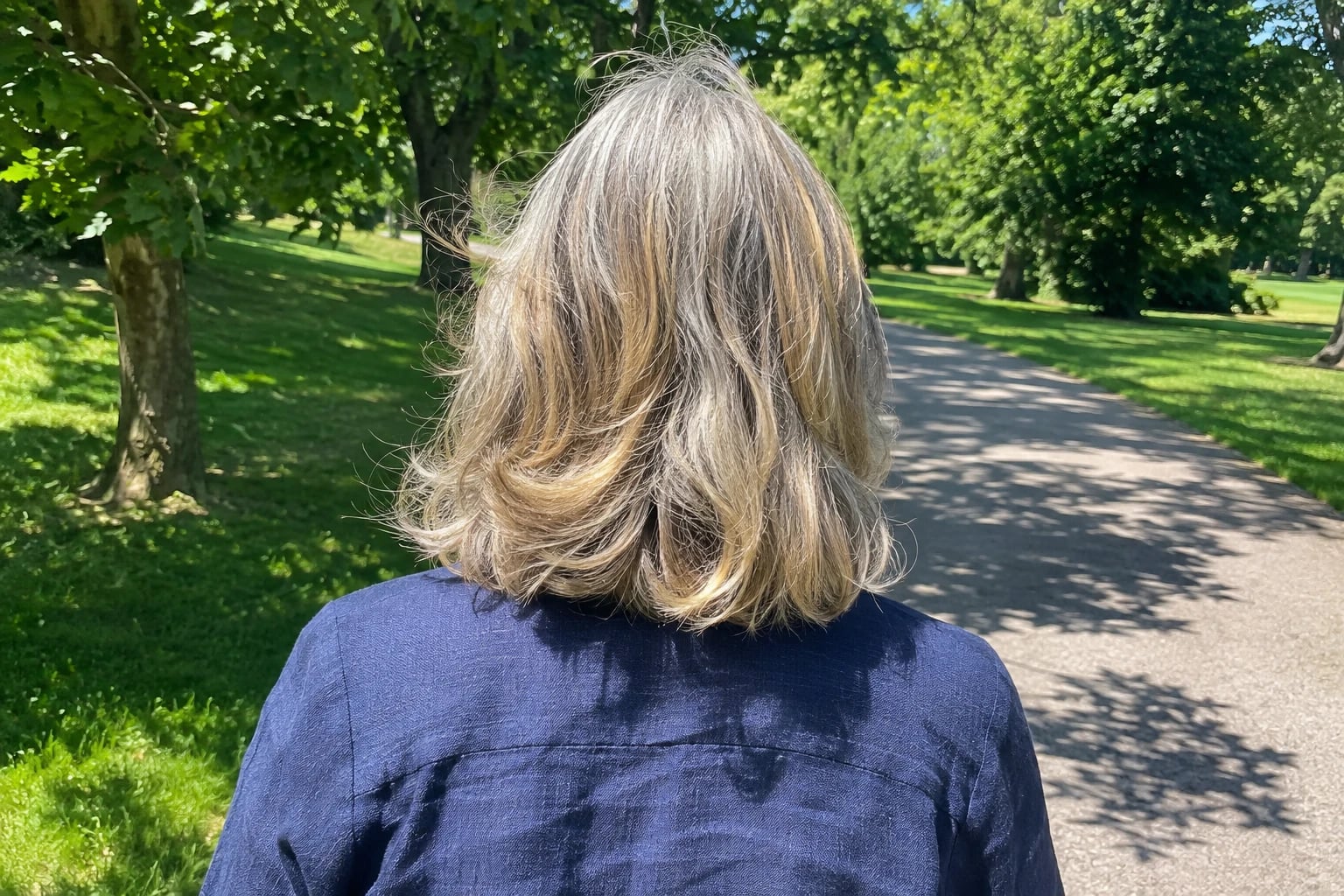
In our view, blending changes how the grow-out looks, not how long it takes. Timing is set by how fast hair grows. What blending does is soften the line: Shores uses translucent or demi-permanent color to soften grays into a harmonious mix.
Shores's usual approach: "Normally, I would blend grays with a highlight and lowlight with balayage."
MedlinePlus, from the US National Library of Medicine, says "It takes about a month for healthy hair to grow half an inch." So:
By our estimate, it takes about 12 months to grow out 6 inches of colored hair and about 18 months for 9 inches.
That matches Anne Kreamer's experience: "Start to finish, 18 months." She also said that "the shorter your hair goes, the easier and faster the process is."
Blending can also land you somewhere you didn't plan. A woman of 59 in r/AskWomenOver50 wrote: "So I grew out the gray and I get some lavender highlights. I'm happy with the way it looks now."
What do root touch-ups, gray blending and going gray cost in a year?
Salon root touch-ups run roughly $310 to $780 a year, box dye at home about $26 to $130, and going gray nothing for color once it's grown out. The figures below are estimates. They rest on the AAD's touch-up spacing, Shores's demi-permanent spacing, and typical mid-market US salon prices in 2026 from SalonsRated's price guide, which bases its ranges on Professional Beauty Association surveys.
| Choice | Visits a year (estimate) | Yearly color cost (estimate) |
|---|---|---|
| Salon root touch-ups | About 5 to 6½ | About $310 to $780 |
| Box dye at home | About 5 to 6½ | About $26 to $130 |
| Demi-permanent gray blending | About 6½ to 9 | Ask the salon's price, multiply by visits |
| Going gray, after grow-out | None | Nothing for color |
The touch-up count comes from the AAD's advice to stretch touch-ups to every 8 to 10 weeks or longer in winter, when air is dry. The AAD gives that spacing for winter only. If your roots show sooner, you'll book more often and pay more.
For demi-permanent blending, Shores puts touch-ups at every six to eight weeks, so that row assumes more visits than the AAD's winter spacing.
Highlights and balayage vary too much by person to count visits, but per session SalonsRated lists:
- Partial highlights: $80 to $160.
- Full highlights: $120 to $250 and up.
- Balayage: $100 to $350 and up.
Box dye is the cheapest way to keep coloring, but if a home job goes wrong, corrective color runs $150 to $450 and up per session. Whichever route you take, the AAD's other cheap tip applies: conditioner after every shampoo.
How do I go darker after years of blonde?
Wella recommends a fill step first when hair is too light and the target is more than two levels darker than your starting level.
A fill is a first color step. The colorist applies a fill shade, rinses, then applies your target shade, which gives "even saturation and balanced color results."
What color should my brows be after a color change?
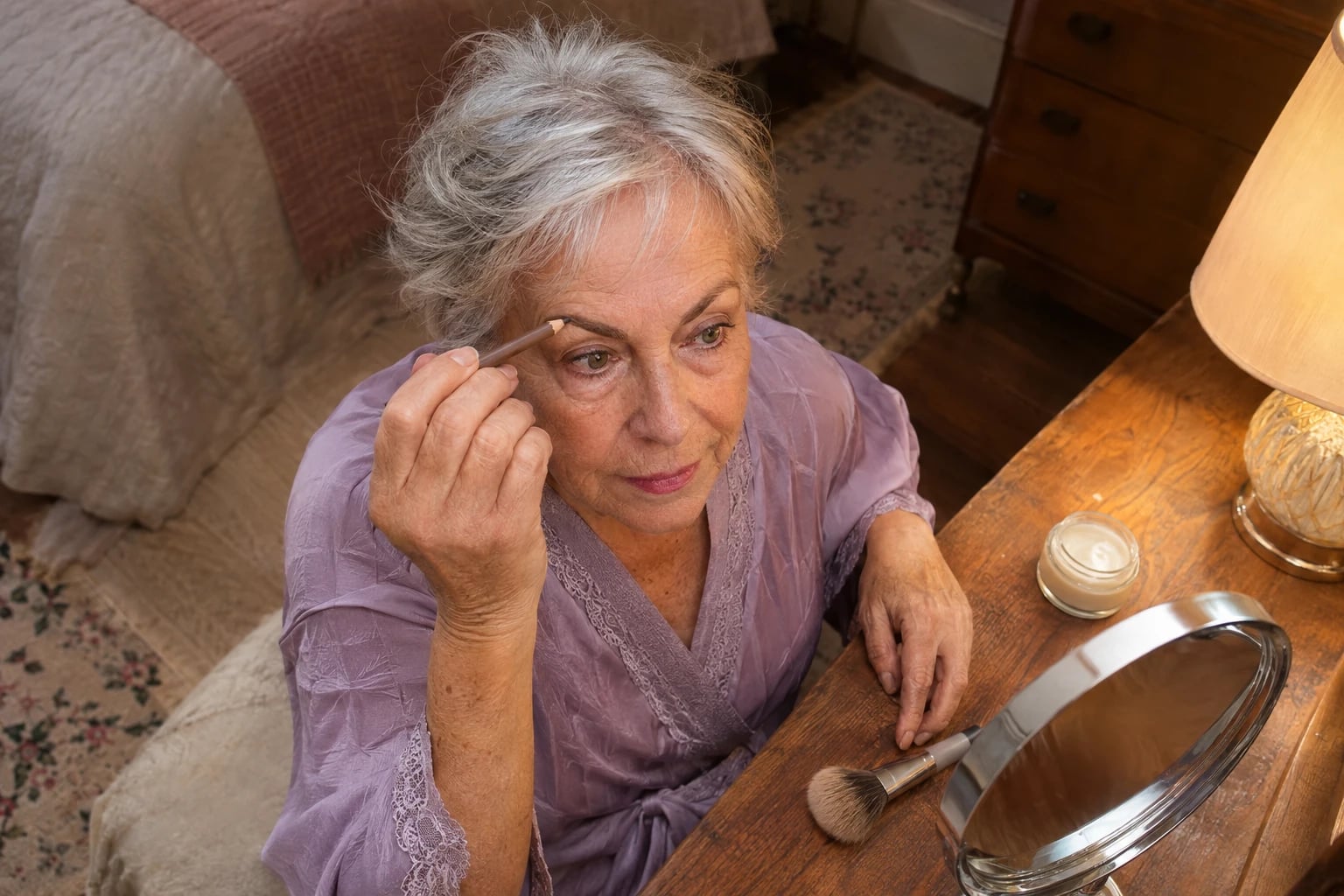
If you've gone gray or silver, makeup artist Lauren D'Amelio Ventre suggests brows "slightly deeper than the hair color but softer and cooler than a traditional brunette brow." Think taupe, soft ash brown or gray-brown. She warns that "warm pencils that pull red or orange immediately look disconnected."
Fill with a plain pencil in one of those shades, and keep box dye away from your brows. As she puts it: "Hair dye is not approved for use near the eyes, and it can cause irritation or injury." If you'd rather have them tinted, that's a salon job: the FDA lists only one color additive for eyebrows and eyelashes, silver nitrate, and only for professional use.
The bottom line
Settle the gray question first. It sets your calendar and your budget, and if you can't decide, a demi-permanent blend lets you wait.
Then do the towel test at a window, find your level at the roots, and write down two shades that fit your undertone and sit inside your lightening window. If your hair already feels brittle, aim nearer your natural level than the edge of it.
Take those two shades to a colorist, or into the virtual try-on, and look at each one beside your face in daylight before anything is mixed.
Up next
16 Gray Blending Highlight Ideas Over 50 That Hide Roots Longer
The exact highlights and lowlights to ask for, the real dollar cost, and how many weeks you can actually go between visits.
Read the list →


Reader quiz
Did you catch the details?
5 questions from this article.
In the white towel test at a mirror, what does pink or rosy skin under your chin suggest?
Questions people also ask
What color hair makes a 50 year old look younger?
Colorists such as Nice 'n Easy's Jonathan Long suggest a shade or two lighter; Leslie Shores says going darker tends to look harsh. In a 2009 PLoS ONE study, Danish twins aged 59 to 81 who used hair colorants looked about 1.69 years younger for their age in passport-type photos. It also included British women aged 45 to 75, but the study tested no shade.
Is it better to go lighter or darker as you get older?
Darker is gentler on hair. The AAD says dyeing darker is typically better, because lightening more than three shades needs more peroxide. Colorists such as Shores say going darker can look harsh, while Long suggests a shade or two lighter. A middle path is to keep to the AAD's three-shade window.
Should a 70 year old woman dye her hair?
She can if she wants to, since no medical body sets an age limit on hair dye. The AAD says that if gray hair affects your self-esteem, "you can cover it using hair dye." It also says to patch-test every store-bought dye and stop if you get a rash, swelling, burning or itching.
Can I wear copper hair over 50?
Makers steer copper toward warm skin. Wella lists copper among the warm tones, and L'Oréal Paris puts Féria Power Copper in its warm-skin picks. If your undertone is cool, L'Oréal Paris steers you toward reds such as Féria Deep Burgundy or Féria Auburn Brown instead.
Can you go blonde with dark skin?
Yes, though stylists disagree on whether warm or ashy blondes work best. Nafisah Carter favors warm tones, while Kim Kimble recommends ashy blonde to neutralize red. Because the AAD says Black hair is especially fragile, have one chemical service at a time, and relax or perm two weeks before coloring.
How often do you need to touch up hair color?
The AAD suggests stretching touch-ups to every 8 to 10 weeks or longer in winter, when the air is dry. Applied all year, that is an estimate of roughly 5 to 6½ touch-ups; the AAD gives the spacing for winter only. Colorist Leslie Shores puts demi-permanent gray blending at every six to eight weeks.
Did any of these feel familiar?
Know someone who needs this?
 Prime Journal · Free printable
The Closet Fit and Color Checklist
- A clearer view of colors beside your face.
- Clothes that pass the sitting and walking test.
- Shoes and repairs checked before anything gets replaced.
Free printable: The Closet Fit and Color Checklist. Enter your email and it is yours.
Sources cited in this article
This article links to 31 outside sources, listed here so you can read them yourself.
- If gray hair affects your self-esteem, "you can cover it using hair dye." www.aad.org/public/everyday-care/hair-scalp-care/hair/gray-hair-causes
- In a video www.youtube.com/watch?v=GaZlBcSoQFo&t=430s
- Wrote www.reddit.com/comments/1i4y8h9
- 2009 PLoS ONE study journals.plos.org/plosone/article?id=10.1371%2Fjournal.pone.0008021
- 2025 experiment www.frontiersin.org/journals/psychology/articles/10.3389/fpsyg.2025.1541836/…
- Clairol says www.clairol.com/en-US/blog/hair-coloring/temporary-vs-semi-permanent-hair-co…
- Likes the softer route shopping.yahoo.com/beauty/hair/articles/9-best-hair-colors-women-194914754.h…
- Summarized by dermatologist Dr. Jeff Donovan donovanmedical.com/hair-blog/50-50-50-rule-revisited
- Says news.miami.edu/stories/2024/09/why-do-we-go-gray.html
- Notes in his video www.youtube.com/watch?v=GaZlBcSoQFo&t=60s
- 2024 study of 2,543 Japanese people www.frontierspartnerships.org/journals/journal-of-cutaneous-immunology-and-a…
- Green veins mean warm, blue mean cool www.lorealparisusa.com/beauty-magazine/hair-color/hair-color-ideas/best-hair…
- Gold brightens warm skin, silver brightens cool www.mantrahairsalon.com/single-post/7-steps-to-choose-the-right-hair-color-f…
- Wella says www.wella.com/international/wella-magazine/better-color-results-its-good-kno…
- L'Oréal Professionnel's system www.lorealprofessionnel.co.uk/hair-colour-advice/what-do-the-numbers-in-hair…
- Says gulfnews.com/lifestyle/fashion/fifty-shades-of-grey-1.1282900
- Rule for lower-damage dyeing www.aad.org/public/everyday-care/hair-scalp-care/hair/coloring-perming-tips
- AAD release www.newswise.com/articles/dermatologists-offer-tips-for-color-treated-hair
- Virtual try-on www.lorealparisusa.com/beauty-magazine/hair-color/hair-color-application/tes…
- One stylist's TikTok video www.tiktok.com/@beautybytheresaxo/video/7646919303563857165
- Clairol's instructions www.clairol.com/en-US/blog/hair-coloring/dye-hair-at-home
- Favors warmth www.marieclaire.com/beauty/hair/g33638228/hair-colors-for-dark-skin
- SoftSheen-Carson www.softsheen-carson.com/tips-and-tutorials-blog/hair-colors-for-dark-skin-t…
- Puts the aim well www.tiktok.com/@domosthetics/video/7668015590338039054
- "Black people's hair is especially fragile and prone to injury and damage," www.aad.org/public/everyday-care/hair-scalp-care/hair/care-african-american
- One chemical service at a time www.aad.org/public/everyday-care/hair-scalp-care/hair/habits-that-damage-hair
- MedlinePlus medlineplus.gov/hairproblems.html
- SalonsRated's price guide salonsrated.com/guides/hair-color-cost
- Wella recommends us.wella.professionalstore.com/en-US/blog/hair-color/color-correction-101-fi…
- Suggests www.aol.com/articles/best-eyebrow-color-gray-hair-140000985.html
- Lists only one color additive www.federalregister.gov/documents/2021/10/06/2021-21755/listing-of-color-add…

Irina Byalik
Style Editor
Irina Byalik is a hairdresser and the owner of New Image Hair Salon in East Brunswick, New Jersey, with more than 20 years of experience. She came to the United States from Ukraine.
More from Irina Byalik