






25 Healthy Dinners Over 50 That Are Easy and Filling
Twenty-five healthy dinner ideas for busy women over 50, from a store-bought rotisserie chicken to a can of salmon, with protein and fiber numbers for most of them so you can see which ones last until bedtime.

By Peter Byalik, Food & Home Editor
Updated · 29 min read
- Written by our food & home editor
- Cited 52 sources
- How we review
The dinner at #1 needs a can opener and a microwave, and the woman who shared it promises you won't be hungry for hours.
It's ten to seven. Your keys are still in your hand, the fridge door is open, and the cold air is showing you eggs, a tub of cottage cheese and a lemon of uncertain age.
In my experience, more tired evenings are lost right here, in ten minutes of standing and deciding, than at the stove. Close the door. You have dinner. What you need to know is which version of it will still be holding you up at ten o'clock.
25Rotisserie chicken over crunchy cabbage salad
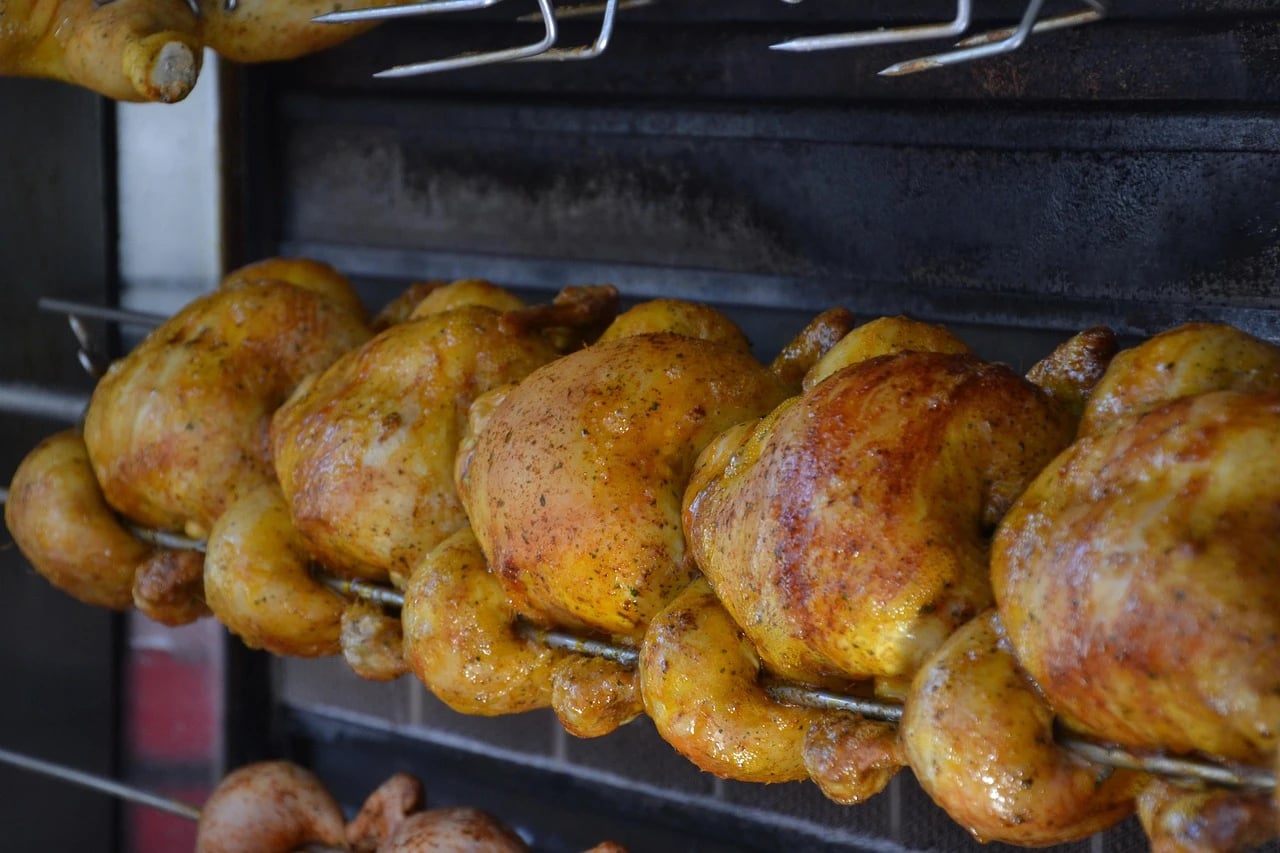
Buy the chicken and a head of cabbage, and the cooking is done for the night. Pull the breast meat while it's warm and pile about 3 ounces on shredded cabbage. That gives you roughly 24 grams of protein without turning on a burner.
Dietitian Shelly is a registered dietitian in Shreveport, Louisiana, who makes videos for people managing diabetes or prediabetes. She builds a whole prep meal this way, with mini peppers and feta. "I love cabbage because it really stays crunchy," she says, and she keeps the dressing in its own container until she eats.
She also tells viewers not to fuss over their knife work: "None of us are chefs here." Speaking as one, I agree.
Chef Abra Berens warns that cut romaine browns quickly, so if you add romaine, keep the head whole until you serve it. Cabbage, as Shelly says, stays crunchy.
Now the salt. Store birds have a salty reputation. Consumer Reports' June 2026 lab test of chickens from 10 retailers found that Costco and Sam's Club chickens tested below their labels.
| Store | Sodium, label vs. lab test | Price per pound |
|---|---|---|
| Costco | 460 mg vs. 112 to 194 mg | $1.66 |
| Sam's Club | 430 mg vs. 172 to 253 mg | $1.66 |
| Walmart | 250 mg vs. 251 to 273 mg | $2.65 |
Walmart was the exception: its lab results (251 to 273 mg) were just above its 250 mg label.
In Reddit threads about easy dinners, rotisserie chicken is the shortcut that comes up most. People pick it clean once, then spread it across salads, soup, potatoes and wraps for several nights. Samantha Cassetty, MS, RD, puts the appeal plainly: "It's a lean protein source that helps keep you full."
24Scrambled eggs with spinach, tomato and cheese
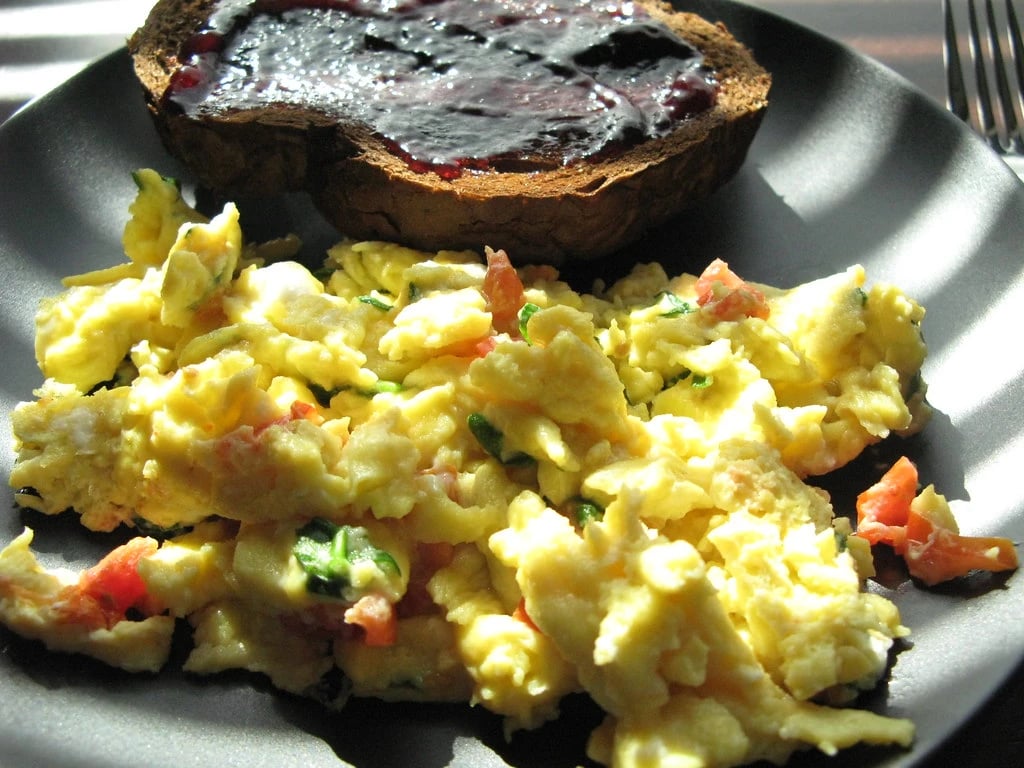
Eggs for dinner show up again and again in those same threads as the tired-night fallback, usually scrambled with spinach, tomato and a little cheese. So is it dinner, or a snack wearing dinner's clothes?
Three large eggs give you about 19 grams of protein. That's respectable. Fold in ½ cup of low-fat cottage cheese and the plate climbs to about 34 grams, which makes it a genuinely high protein dinner.
In my experience, the trick is timing:
- Wilt the spinach in the pan first.
- Add the eggs.
- Stir the cottage cheese in just before they set, so the curds go soft and the eggs stay creamy.
- Add the tomato last, off the heat.
A note on yolks, if they're a question for you. The American Heart Association's 2018 page on eggs suggests one egg a day for people who eat them. On the same page, Jo Ann Carson, a professor of clinical nutrition at UT Southwestern, says people with diabetes or heart-disease risk should watch dietary cholesterol more closely. If that's you, ask your doctor how many yolks fit. Two eggs plus the cottage cheese still lands around 28 grams.
See more: 17 Healthy Christmas Appetizers That Still Feel Festive →
23Chili over a baked potato
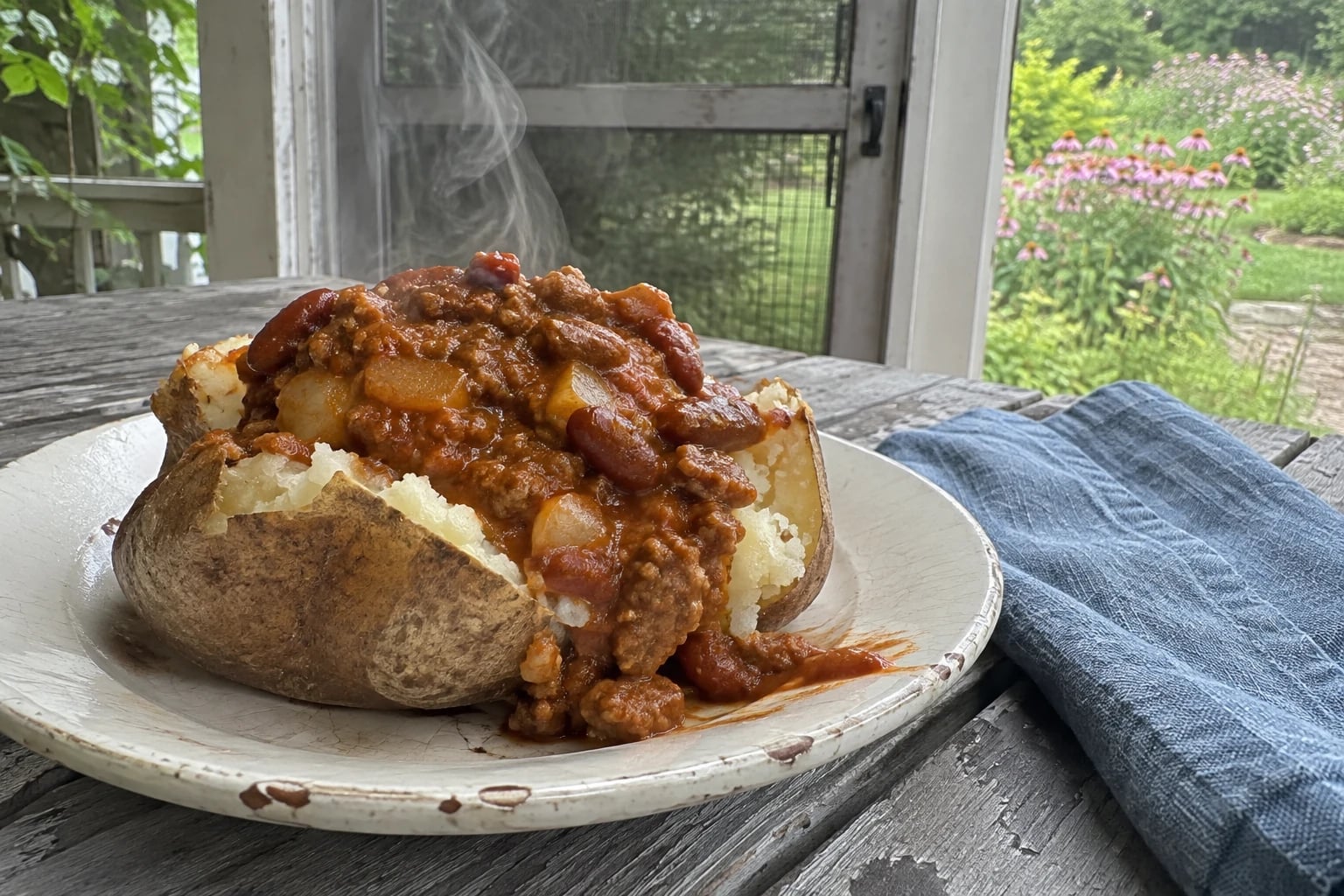
Split a baked potato and ladle chili over it. That's a comfort food dinner that asks nothing of your teeth or your evening.
In a Reddit thread about cooking for groups, chili over a baked or sweet potato was a favorite filling dinner. Cooks there advised avoiding spicy dishes, and tough or hard foods because of poor dental care. Mild chili, soft potato. Everybody eats.
The potato pulls more weight than it gets credit for. A large one baked in its skin brings 7.48 grams of protein and 6.58 grams of fiber before the chili lands on it. How much fiber the chili adds depends on how many beans went in, which is my standing argument for more beans.
Chili is also the freezer's best friend. University of Georgia Extension says soups and chilis freeze well, and its advice is simple:
- Freeze it in small portions, about what you'd put on one potato.
- Leave 1 inch of space at the top.
- Label each container with what it is, the date and how much is inside.
- Thaw it in the fridge for 24 hours, and don't refreeze a serving that's partly thawed.
Do the label. Three months from now, "brown, maybe chili" is not a plan.
22Sheet-pan salmon with whatever vegetables you have

Ask a room of tired cooks for their one-pan dinner and you'll hear salmon. In the Reddit threads we read, salmon roasted with whatever vegetables were in the drawer came up often among one-pan dinners. One pan, one rinse, and you sit down while the oven works.
The question people ask me is farmed or wild. Here's how 4 ounces of cooked salmon compare, using USDA figures. The omega-3s in the last column are EPA and DHA, the two fats fish is known for.
| 4 oz cooked salmon | Protein | Omega-3s (EPA and DHA) |
|---|---|---|
| Farmed Atlantic | about 25 g | about 2.4 g |
| Wild Atlantic | about 28.7 g | about 2.1 g |
Farmed edges out wild on omega-3s. Wild has a few more grams of protein. Both are generous, so buy the one you'll actually cook.
For the fish, Oregon State University Extension bakes salmon pieces at 450°F for about 10 to 15 minutes, depending on how thick they are. It's done at 145°F in the center, when it looks opaque and flakes with a fork.
In my experience, dense vegetables like carrots and potatoes need a head start. Give them the pan first and add the fish later. Broccoli and peppers can go in alongside it. That's the easiest sheet pan dinner going.
21Baked sweet potato stuffed with black beans
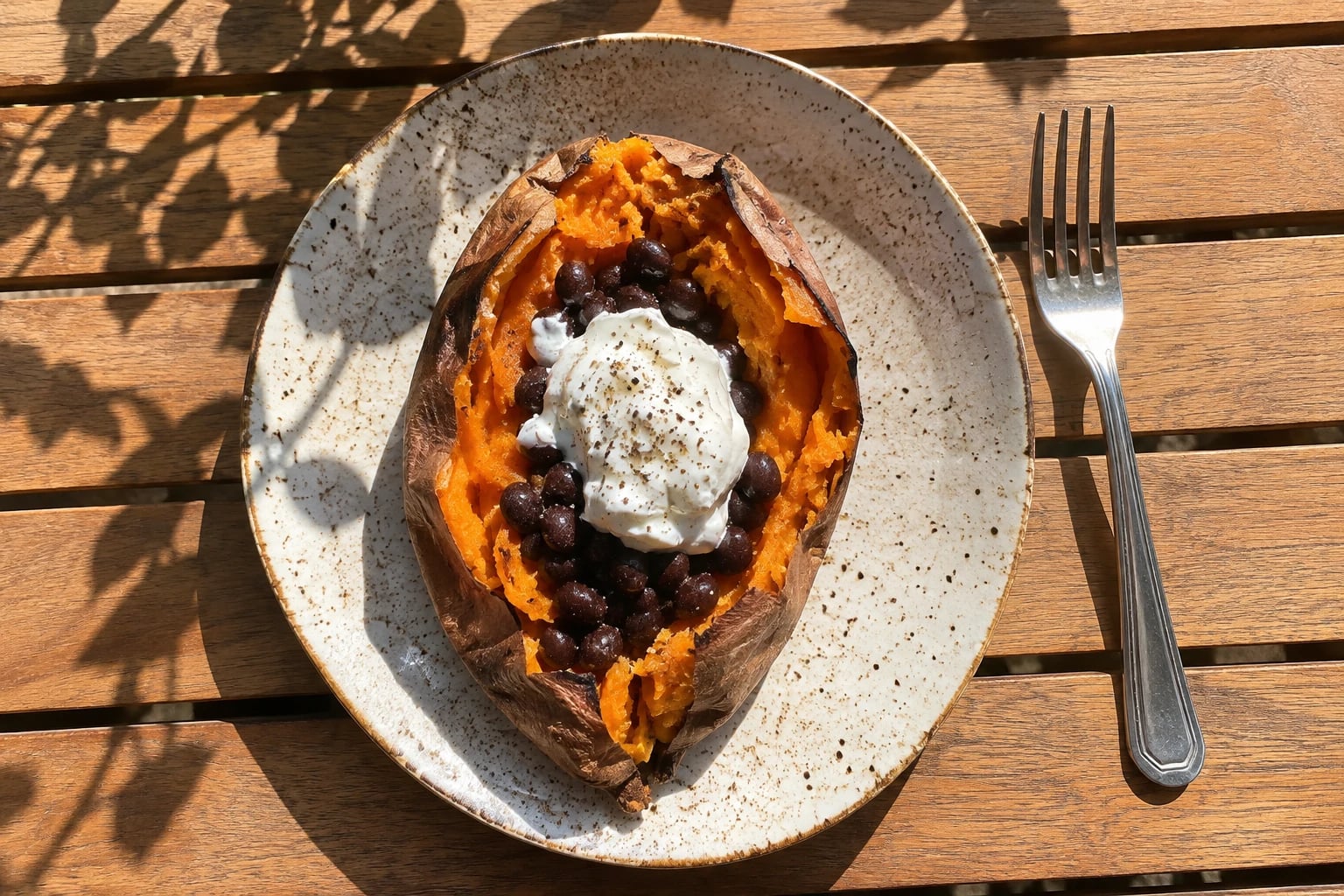
This one looks like a full dinner and doesn't quite eat like one.
The fiber is excellent. A medium sweet potato has 3.76 grams, and half a cup of black beans brings the plate to about 11 grams. The protein is the problem: about 10 grams, roughly a third of a dinner's worth.
Fix it on top:
- An egg adds about 6 grams.
- Half a cup of cottage cheese adds about 15, which takes the plate to around 25.
- A spoonful of plain yogurt or a handful of shredded cheese helps too.
Bake the potato however you usually do. The topping is where the dinner happens.
20Fish, a grain and a vegetable

One dietitian eats fish, a grain and a vegetable most nights, and a coach teaches the same frame.
Tracy Guanlan Liu is a registered dietitian and the founder of FIM Health, and her practice includes women in menopause. She says her own dinner is usually fish, a grain and a vegetable. On busy nights she doesn't chop: "I just cut open the frozen veggie bag and just dump it in there."
Heike Yates, a fitness and nutrition coach who works with women over 50, says in her video that a complete meal is a protein, a grain and a vegetable. She has two easy variations:
- On a lower-carb night, swap the grain for a second vegetable.
- On a meatless night, make the protein beans.
In my experience, a formula beats a recipe on a tired night because you can't run out of a formula. The fish can be a frozen fillet, a tin from the cupboard or whatever looked good at the counter. The grain can be last night's rice. The vegetable comes out of a bag of frozen vegetables, scissors optional.
19Pasta with canned tuna and white beans
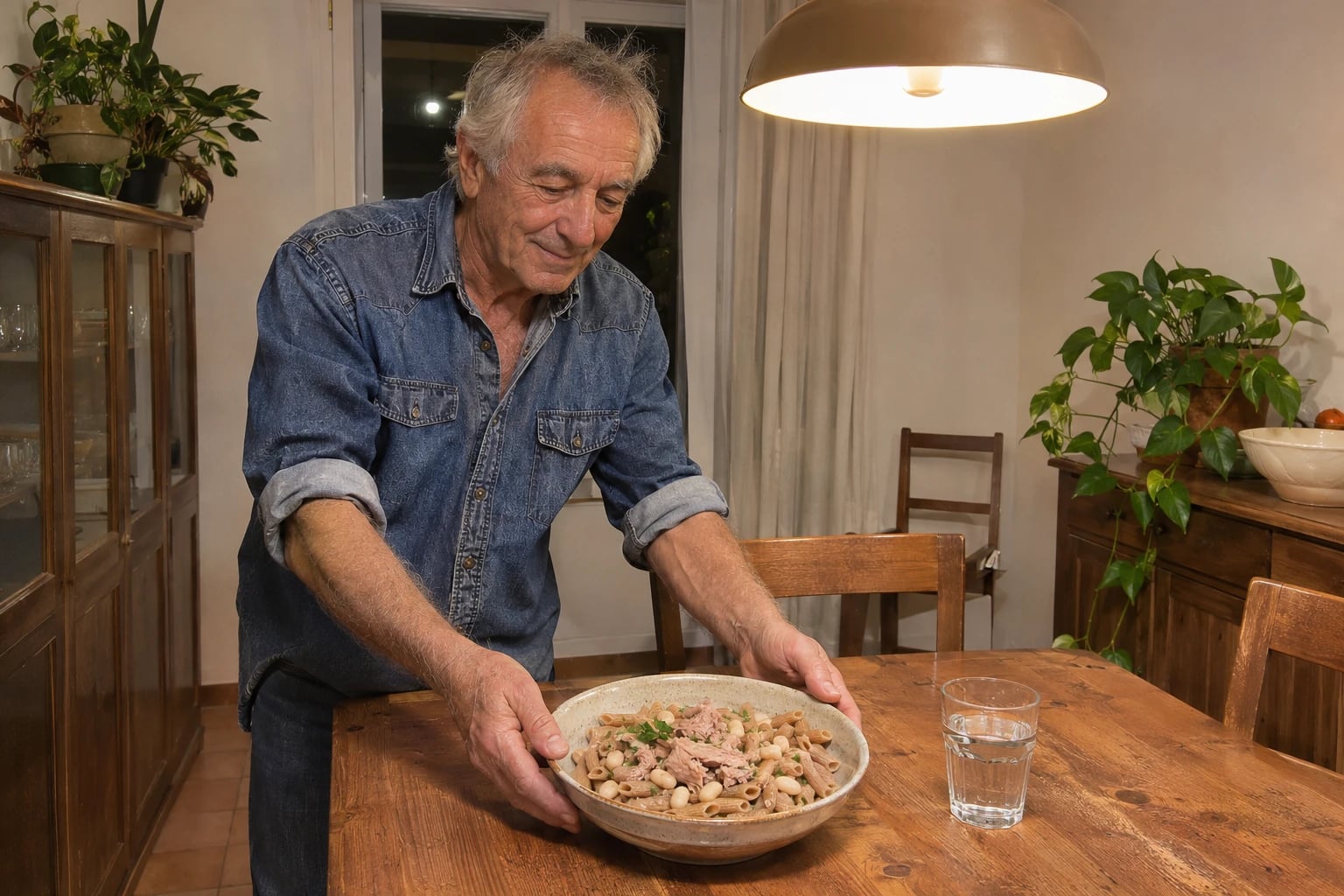
Everything in this one lives in the cupboard, which is the whole point on a night when the fridge is bare.
Tuna's omega-3s are modest. Cleveland Clinic puts 3 ounces of light tuna in water at 0.5 grams of omega-3s and albacore at 0.7, both measured raw. If omega-3s are why you're eating fish, albacore is the better can.
Choose whole-grain pasta. The American Diabetes Association lists it among the carbs to "eat some of", along with brown rice and whole-wheat bread.
Then drain and rinse the canned beans before they go in. #16 has the numbers on why that's worth ten seconds.
Use more beans than you think and less pasta than you'd normally boil. Toss it all with olive oil, lemon and garlic. In my experience, a splash of pasta water saved before you drain turns oil and tuna into something that clings to the noodles.
18Chicken stir-fry from a frozen vegetable mix
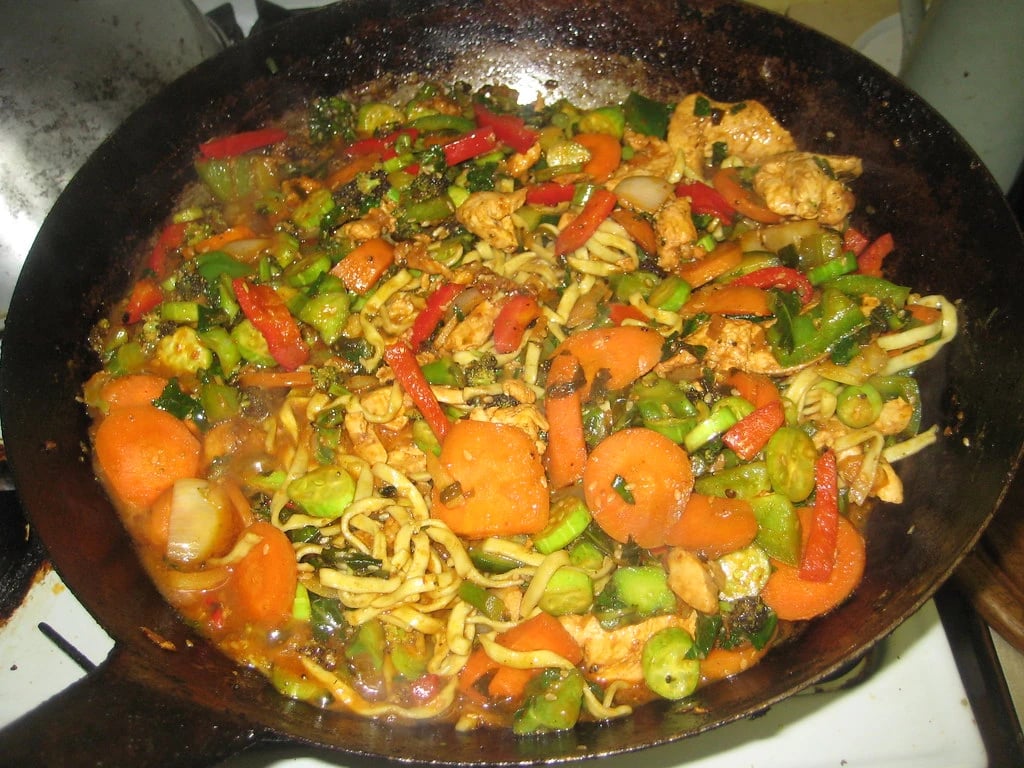
Use the frozen bag, and don't let anybody make you feel bad about it.
A two-year University of Georgia study found frozen produce as nutritious as produce kept five days in the fridge. Some frozen items had more vitamin A, vitamin C and folate. The study was done in partnership with the Frozen Food Foundation, an industry group.
The catch hides in the bottle. Kikkoman's Less Sodium Soy Sauce has 590 milligrams of sodium per tablespoon, which the company says is 38% less than its regular soy sauce. The American Heart Association's limit is 2,300 milligrams a day. One tablespoon of the low-sodium kind is about a quarter of your day.
So measure it. Add one tablespoon at the end, and let fresh garlic, ginger and a splash of rice vinegar do the rest of the flavor work.
In my experience, a hot pan and vegetables straight from the freezer work best. Don't crowd them, or they'll steam instead of fry.
17Chickpea coconut curry over brown rice
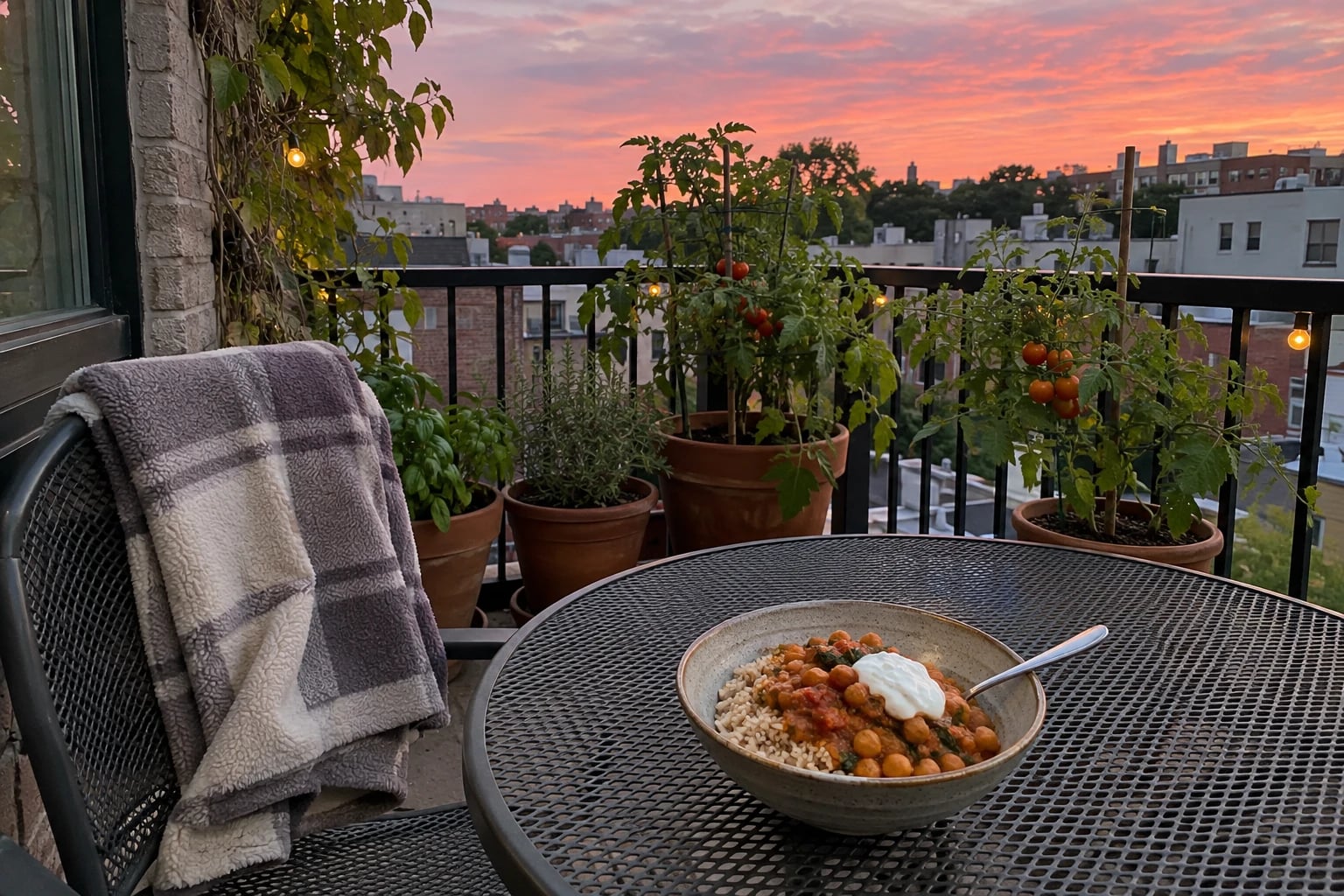
Most of the fiber in this bowl comes from the chickpeas, by a mile.
Half a cup of chickpeas gives you about 7.3 grams of protein and 6.2 grams of fiber. Cooked brown rice has 3.51 grams of fiber per cup against 0.63 for white, so brown is worth choosing for the whole grains. But a half-cup scoop of brown gets you only about 1.5 grams more fiber than white would. The beans did six.
As plant-based protein goes, chickpeas are a good start, not a finish. We built a meatless plate of lentils, brown rice and broccoli from USDA values, and it came in 7 to 16 grams short of the dinner range in the box at #24.
Curry has a built-in fix. A big spoonful of plain yogurt on top adds protein. A boiled egg on the side works too.
If you use a jarred sauce, check the sodium line before it goes in the cart.
16Minestrone from frozen vegetables and canned beans
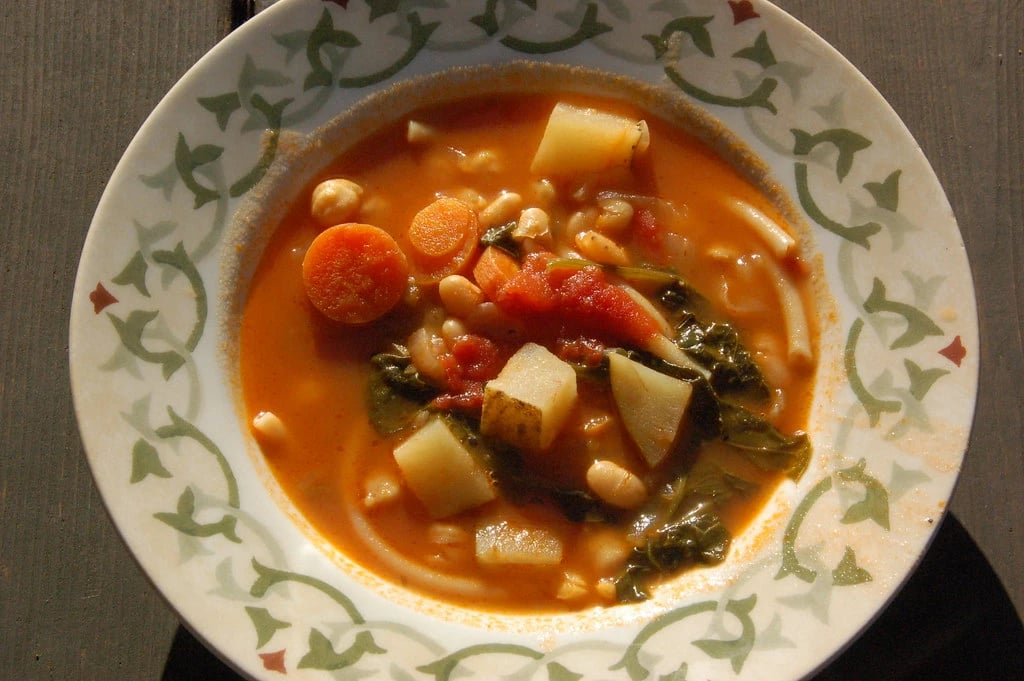
Open the can of beans over a colander, not the pot.
University of Tennessee researchers found that draining canned beans cut their sodium by 36%, and draining plus rinsing cut it by 41%. That held for every brand and type they tested.
Diane McKay, PhD, of Tufts' Friedman School, says rinsing costs a little folate and other B vitamins, but beans keep plenty of fiber. Cans labeled "reduced sodium" start with at least 25% less. Buy those, or drain and rinse regular cans.
Minestrone is built for stretching. In Reddit threads on low-energy cooking, people stretch canned soup and broth with frozen vegetables instead of chopping fresh, and minestrone is the best place to do it.
Start with broth and a can of tomatoes. Add the drained beans and a bag of frozen mixed vegetables, then a handful of small pasta at the end. If you use black beans, half a cup adds about 7.5 grams of fiber to your bowl.
15Split pea soup with a little ham
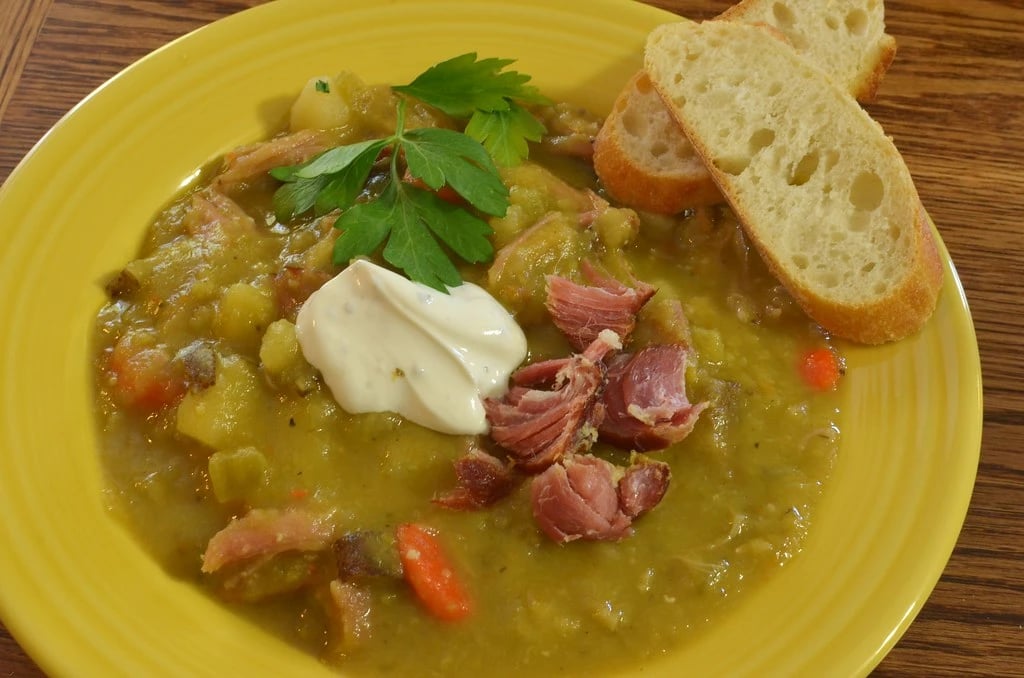
If you grew up with a ham bone in the pot the week after a holiday, you already know this soup. What you may not know is how much it gives back.
One cup of cooked split peas has 16.35 grams of protein and 16.27 grams of fiber, and only about 4 milligrams of sodium. The salt comes from what you add. The University of Maine Extension's recipe lists the ham as optional, so use a little for flavor and you control the number.
The timing is forgiving either way:
- On the stove, simmer it covered for 60 to 90 minutes.
- In a slow cooker, give it 6 to 8 hours on low or 4 to 5 on high.
It freezes for up to 3 to 4 months. In the fridge it thickens like it's setting concrete, so thin it with a little water or broth when you reheat it to 165°F.
14Chicken thighs roasted with carrots and onions
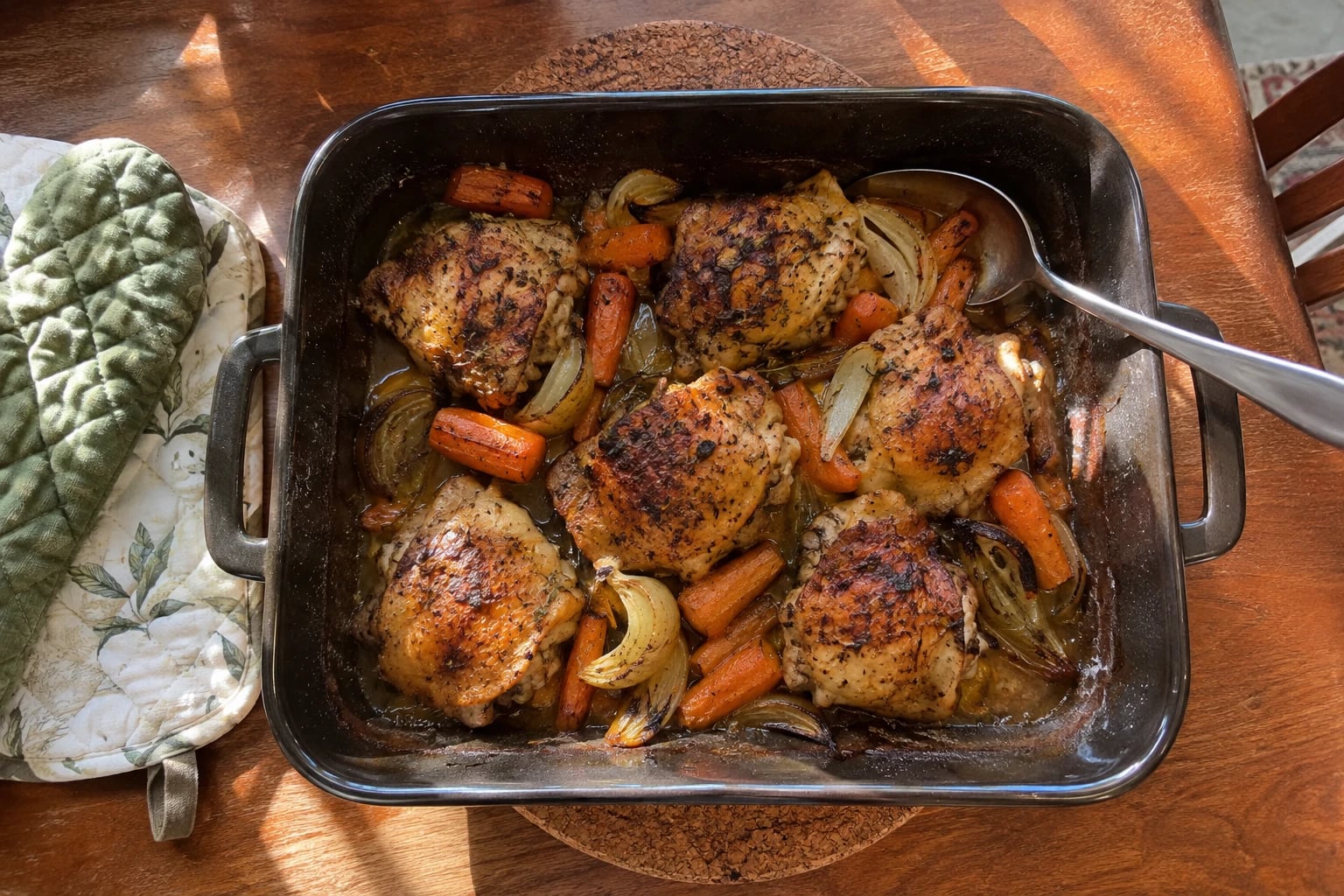
The breast-or-thigh argument has an honest answer, and the gap is smaller than people make it.
Jamie Allers, a registered dietitian at Hartford HealthCare, compares a 3-ounce boneless, skinless serving of each:
- Breast: about 140 calories and 3 grams of fat.
- Thigh: about 170 calories and 9 grams of fat.
"Nutritionally speaking, boneless, skinless chicken breasts do have fewer calories and fat overall," she says. So breast is the leaner protein, by 30 calories and 6 grams of fat a serving.
What thighs give you is room for error. In my experience, they stay juicy through a few extra minutes that would turn a breast into cardboard. On a night when you wander off to sit down, that matters. Roast them on one pan over thick-cut carrots and onions, and the vegetables catch everything that drips.
So pick by what you care about. If you're watching fat closely, go with breast. If you're tired of dry chicken, go with thighs. Either way, cook it to 165°F, the safe temperature for all poultry.
13Black bean and cheese quesadilla with salad
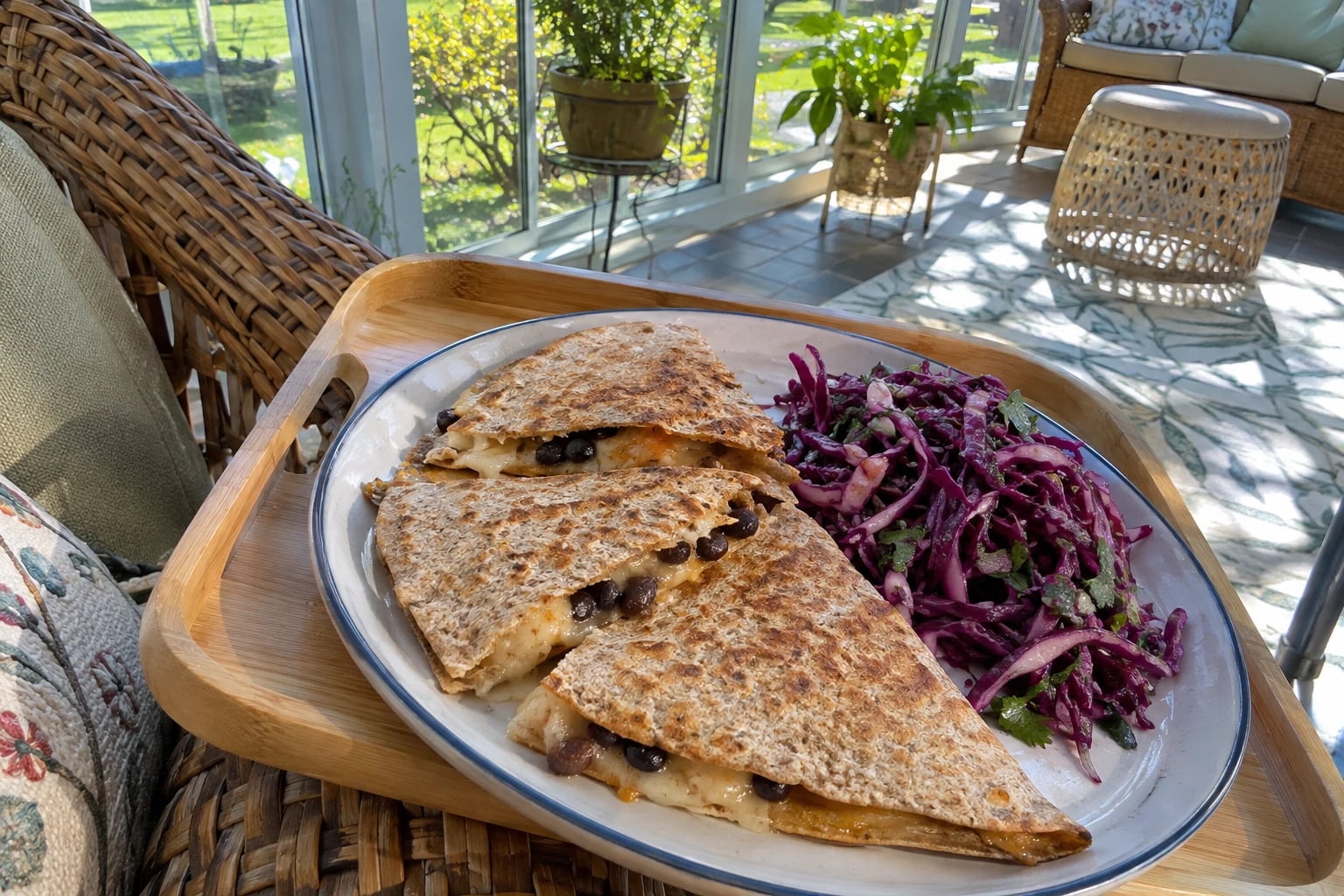
The tortilla is the decision that matters here, so make it whole wheat.
The 2025 to 2030 Dietary Guidelines put flour tortillas on the list of refined carbs to minimize. They also recommend 2 to 4 servings of whole grains a day.
The beans carry the rest. A cup of black beans has 15.24 grams of protein and 14.96 grams of fiber. Mash half a cup with a fork and spread it on the tortilla. Add cheese, then fold and toast.
Put a pile of that crunchy cabbage from #25 on the side and call it a plate.
12Leftover-vegetable frittata

Half a pepper. The last of the spinach. Three roasted potatoes nobody claimed. A frittata is how they stop being guilt and start being dinner.
Six eggs cut into four wedges come to about 9.5 grams of protein a wedge before any cheese, so two wedges make about 19. Stir ½ cup of cottage cheese into the eggs before they hit the pan and each wedge picks up nearly 4 more grams.
In my experience, it pays to cook the vegetables first, especially wet ones like zucchini and mushrooms, so they don't weep into the eggs. Then pour the eggs over them and let the edges set.
The real payoff is the leftovers. A frittata keeps 3 to 4 days in the fridge, and a cold wedge beats most things sold as lunch. Cooking for one, a single pan is two dinners, or one dinner and two lunches.
11Egg fried rice, half cauliflower rice
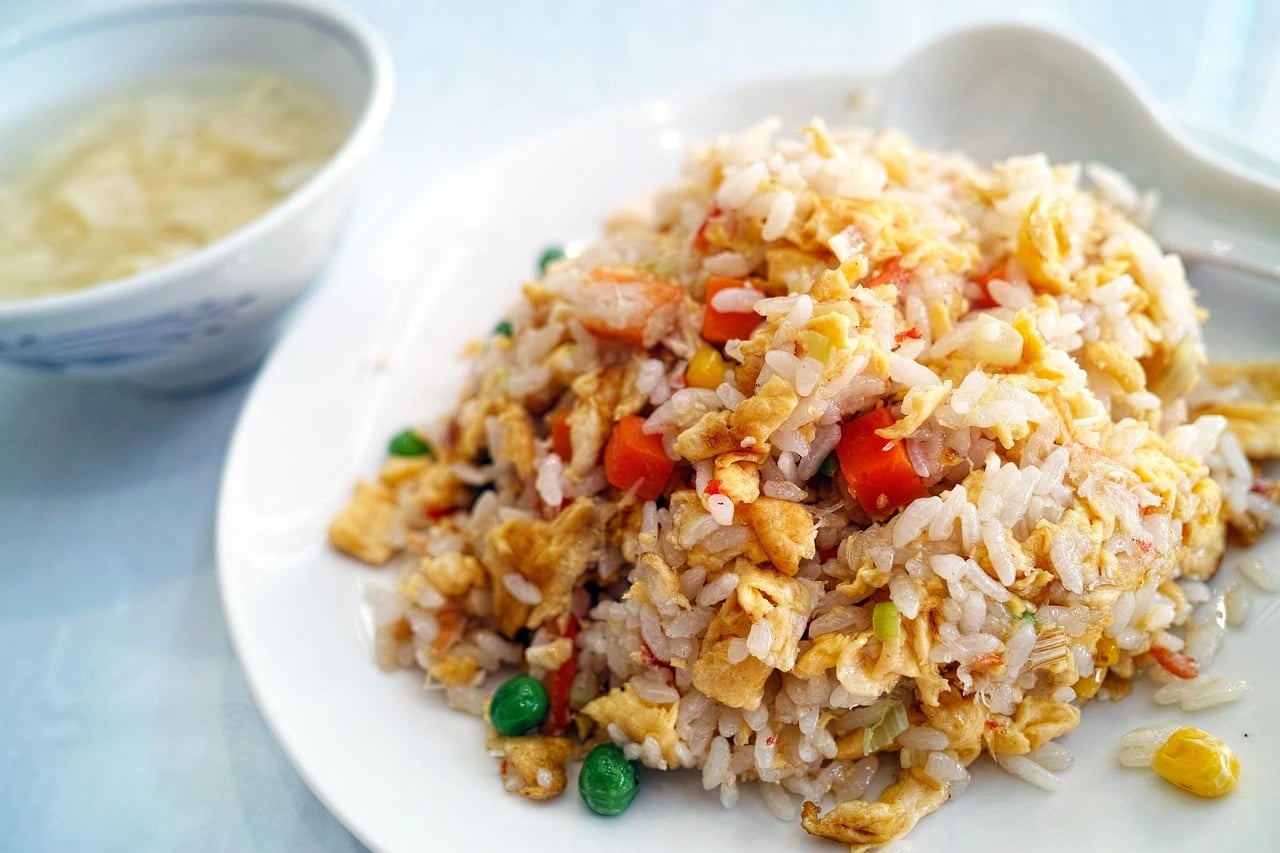
If you've been eyeing rice like it owes you money, this one is for you.
Make the rice half regular and half frozen cauliflower rice. Half a cup of each comes to about 26 grams of carbohydrate, against 44.5 grams for a full cup of white rice. The frozen cauliflower rice adds only 4 grams per prepared half cup. You keep the rice, and the bowl looks just as full.
Tracy Guanlan Liu, the dietitian from #20, tells patients who fear rice and bread that they don't have to cut them out. What matters is how much, what kind, and what you eat with it. Handled that way, "It does not have to spike your blood sugar."
The half-and-half also solves a taste problem. Commenters on TikTok bowl-recipe videos say they don't like cauliflower rice on its own but would happily mix it with real rice. In a hot pan with egg, scallions and a little soy sauce, it disappears.
Scramble two eggs in the pan first, push them aside, and add everything else.
10Chicken sausage and vegetable sheet pan
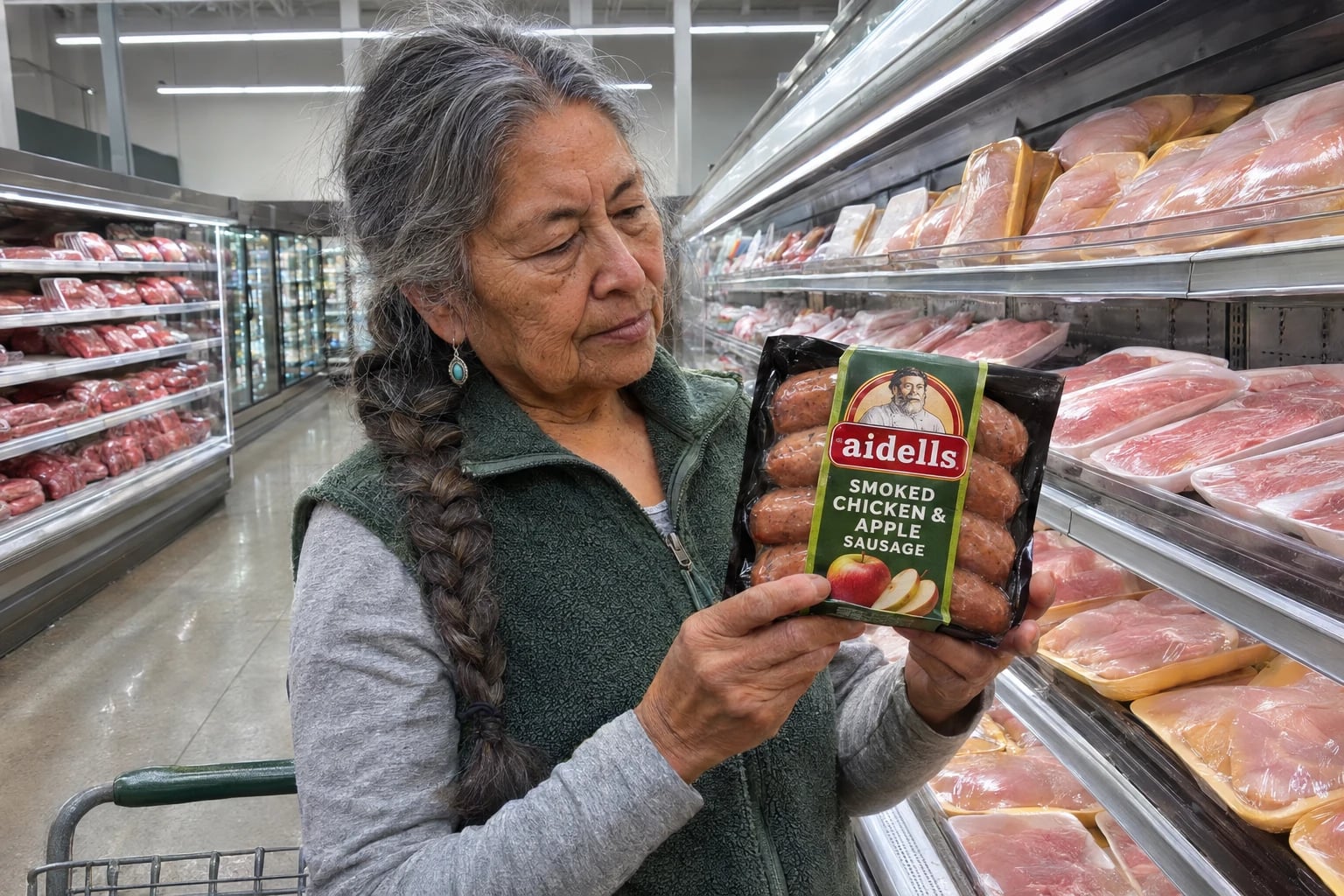
This sheet pan dinner starts with the shortcut already done. Aidells Smoked Chicken & Apple links come fully cooked, so on the pan you're only browning them and heating them through. The vegetables set the clock.
Read the label before you build the pan around them. One 85-gram link has 12 grams of protein, 160 calories and 600 milligrams of sodium, which is 26% of the Daily Value.
Two links come to 1,200 milligrams. That's more than half the American Heart Association's 2,300-milligram daily limit before a single vegetable gets seasoned.
My fix is one link per person, sliced into coins so it spreads across the pan. Then roast half a cup of drained chickpeas alongside. Together they give you about 19 grams of protein, and the chickpeas add about 6 grams of fiber.
Peppers, onions, broccoli and cubed sweet potato all hold up on the pan. With sausage on board, none of them need salt.
9Pork tenderloin with Brussels sprouts and apples
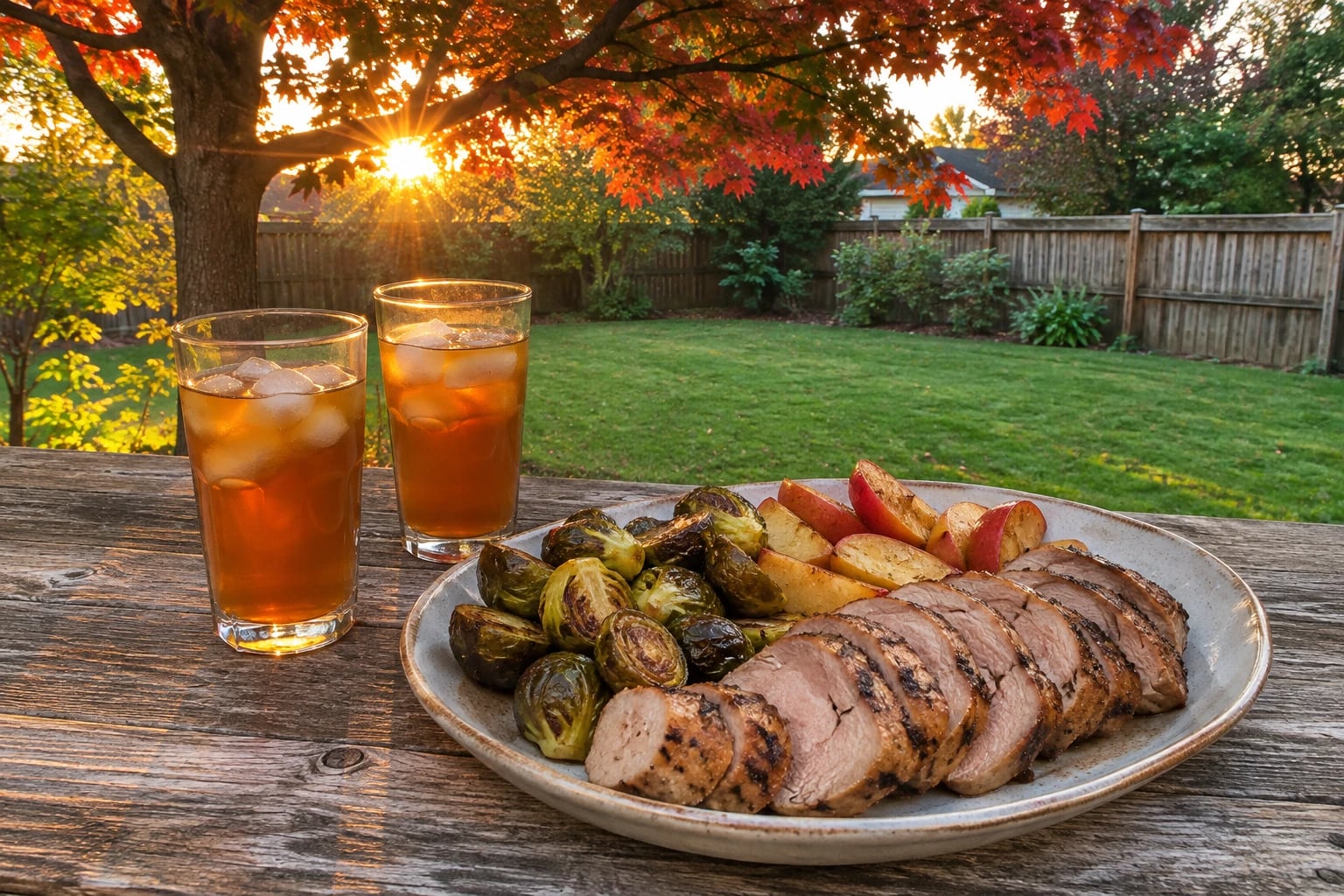
If you learned to cook pork until it was gray all the way through, you've been working harder than you needed to.
In May 2011, the USDA lowered the safe temperature for whole cuts of pork to 145°F plus a three-minute rest. Beth Reames, a nutritionist at the LSU AgCenter, says how meat looks isn't a reliable sign of whether it's safe, so use a thermometer.
Tenderloin is a lean cut, and a high-protein one. Halved Brussels sprouts and apple wedges roast on the same pan, and the apples go soft and sweet next to the pork.
Cooking for one or two, a pound is dinner tonight and sandwiches for the next two days.
8A microwaved baked potato built into dinner
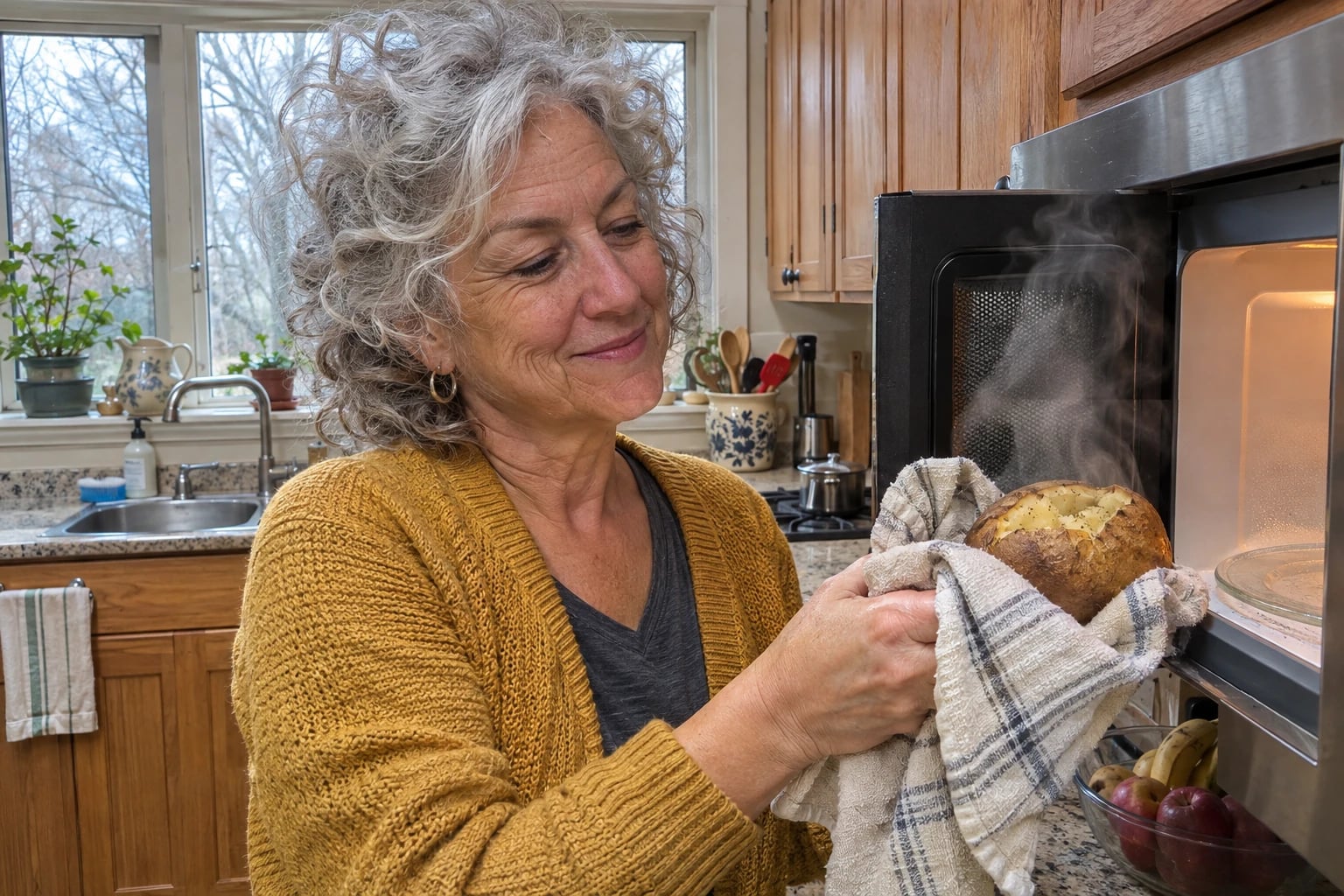
This is the lowest-effort hot dinner I know, and it never touches the oven. The Idaho Potato Commission's method:
- Pierce the potato a few times with a fork.
- Microwave it on high for about 5 minutes if it's medium, flipping it halfway.
- Keep going in 1-minute bursts until it gives when you squeeze it.
- Let it rest for 1 minute.
A bigger potato just takes more bursts.
Then build it. Top a large potato with ½ cup of low-fat cottage cheese and 1 cup of frozen broccoli, microwaved while the potato rests. That brings the plate to about 29 grams of protein, a full dinner by the numbers in #24, from a spud and two things you already keep cold.
Watch one number. That half cup of cottage cheese carries about 460 milligrams of sodium, so let black pepper and chives do the seasoning.
7Mediterranean chickpea quinoa bowl
Cook a pot of quinoa when you have twenty minutes, and you have bowls for days.
Quinoa simmers covered in about 15 minutes, at two parts liquid to one part grain. A cooked cup has about 8 grams of protein and 5 grams of fiber, where brown rice has about 5 and 3.5. Harvard calls quinoa a complete protein.
Build the bowl:
- Start with quinoa.
- Add half a cup of chickpeas, for about 7.3 grams of protein.
- Pile on cucumber, tomatoes and olives.
- Crumble feta over the top.
That's about 15 grams of protein before the feta, so be generous with it or add an egg. Keep the dressing in its own container, the same trick Shelly uses with her cabbage in #25, and the bowls keep 3 to 4 days in the fridge.
There's a longer-term reason to like this bowl. In the Nurses' Health Study, women aged 57 to 61 who ate a more Mediterranean-style diet were 46% more likely to age healthfully. The researchers defined healthy aging as reaching 70 without chronic disease or major mental, cognitive or physical decline. The study was observational: it shows the women who ate this way did well, and it can't prove the food is why.
6Chicken and hummus whole-wheat wrap
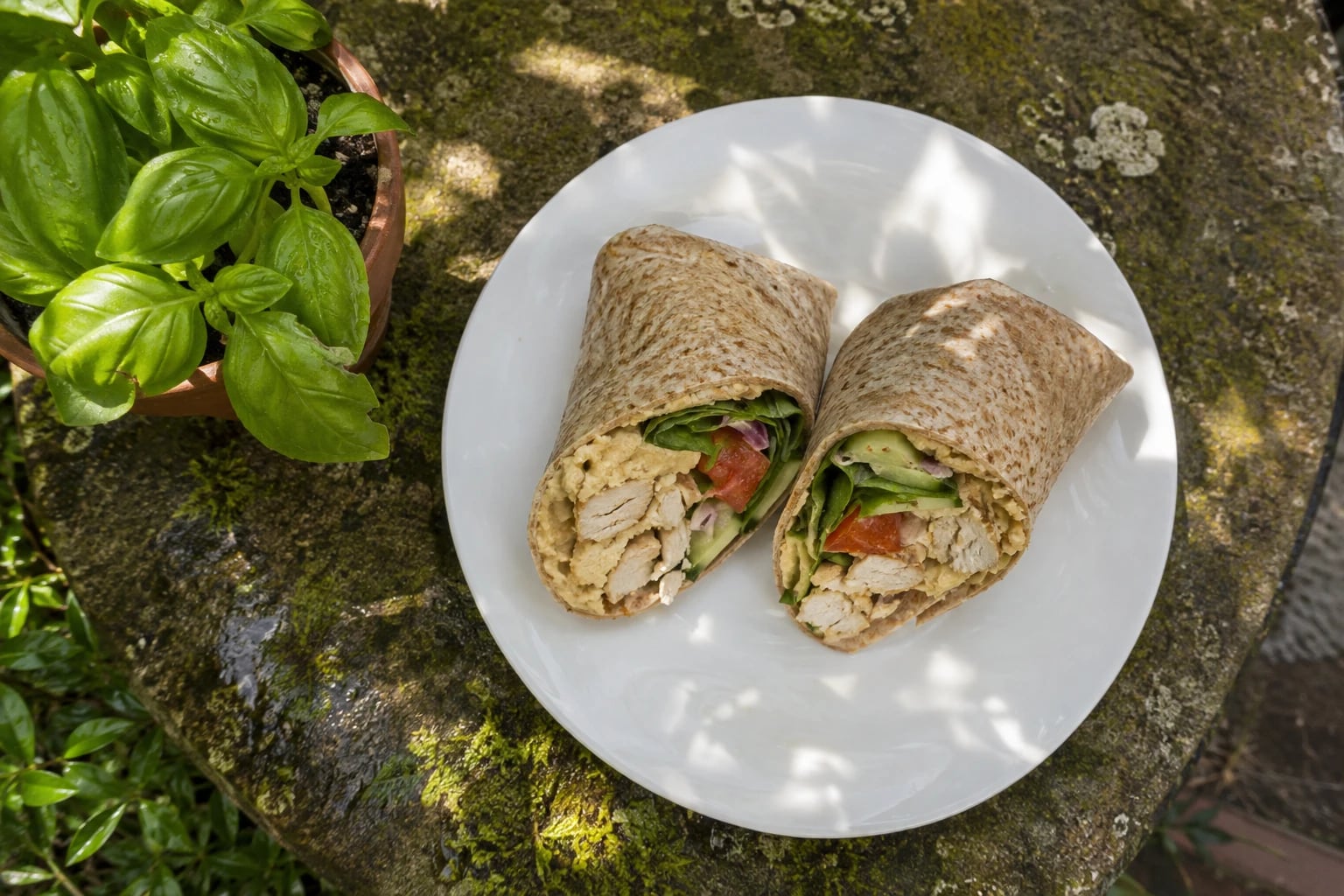
This is what the leftover chicken from #25 was waiting for.
A full cup of chopped roasted chicken breast has 43.43 grams of protein and 5 grams of fat, which is more than most wraps can hold. Half a cup fits, and that's about 22 grams.
Spread 2 tablespoons of hummus on a whole-wheat tortilla first. It adds about 2.2 grams of protein and 1.7 grams of fiber and does the job mayonnaise would. Add the chicken and a handful of shredded cabbage, then roll it up.
You're at about 24 grams of protein, and the only thing to wash is a knife.
5One pot roast, then two more dinners
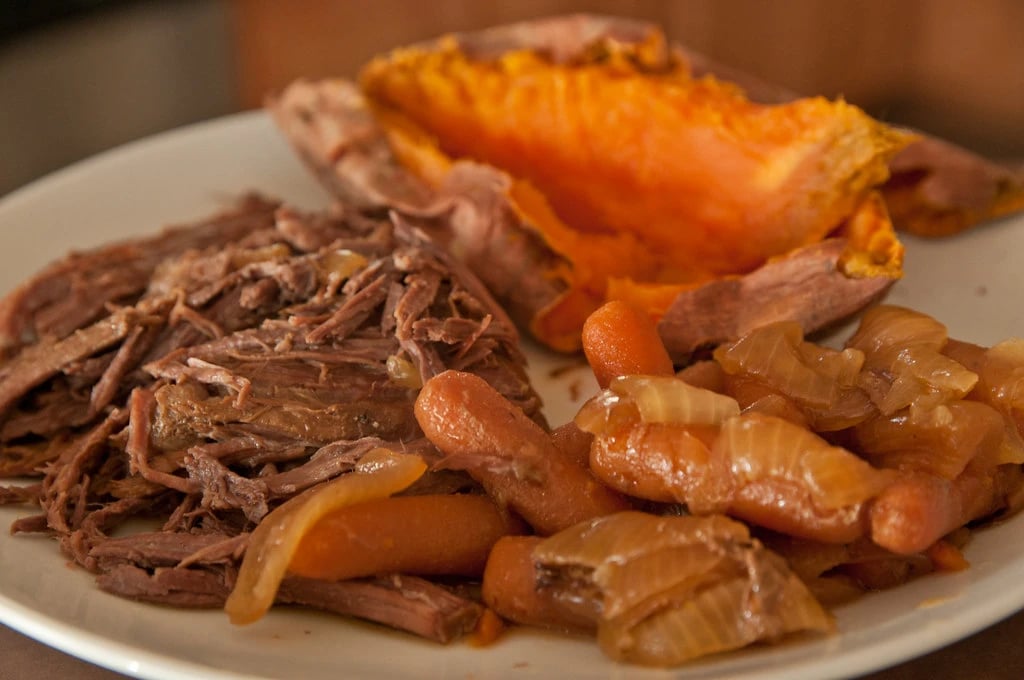
A pot roast is built for a crowd. If you're cooking for one or two, that's its best feature.
In Reddit threads, people describe one roast becoming two or three different dinners. A woman who cooked for 40 years while working summed up her rule in two sentences: "I only cook if I'm in the mood. And enough for two dinners for us."
Night one is the roast. On night two, shred what's left over a baked potato, or warm it in a pan of onions and peppers for sandwiches. On night three, it goes into soup with frozen vegetables and broth. That's the same beef in three dinners, and none of them tastes like a rerun.
Heike Yates, the coach from #20, warns about the classic mistake: planning on leftovers, then cooking only enough for one dinner. Buy the bigger roast.
Whole cuts of beef need 145°F plus a three-minute rest. After dinner, the clock below starts.
See more: How to Host Christmas Dinner on a Budget Without It Looking Cheap →
4Slow cooker chicken and vegetable stew
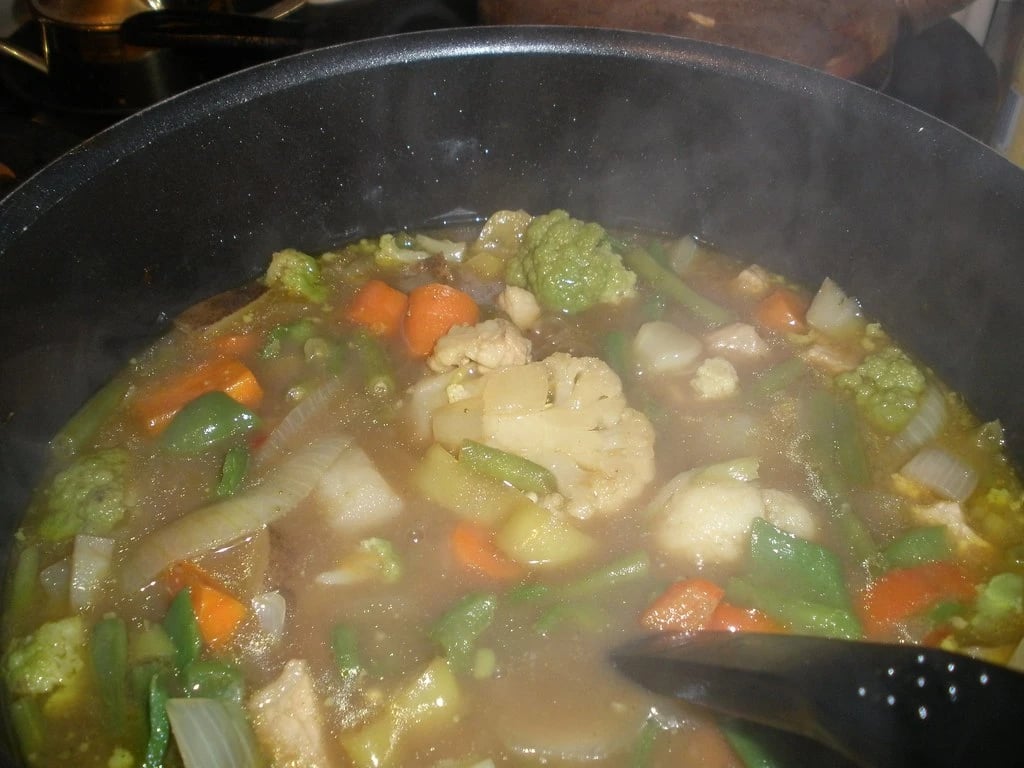
In r/Cooking, a 58-year-old woman who works in an office described the problem: "my back and feet start giving me problems if I have to stand up for more than 15 minutes."
If standing at the counter is what wears you down too, the slow cooker is the dinner you can make sitting down. Chop at the table in the morning, load the pot and walk away.
The rules are where people slip, so here they are from Colorado State University Extension:
- Raw chicken is fine as long as it's fully thawed, because frozen pieces might not reach 140°F quickly enough.
- If you can, start on HIGH for the first hour, then switch to the setting your recipe calls for.
- Fill the cooker at least halfway and no more than two-thirds full.
- Use a thermometer to check that the chicken reaches 165°F.
- Never reheat leftovers in the slow cooker. Move them into shallow covered containers and get them into the fridge within two hours.
3Sardines or mackerel on whole-grain toast

If someone in your house used to eat sardines straight from the tin, standing at the counter, they were onto something.
The American Heart Association recommends two servings of fish a week, particularly fatty fish, about 3 ounces cooked each, and it lists sardines and mackerel alongside salmon. They need nothing from you but a can opener.
Cleveland Clinic puts the omega-3s in 3 ounces of sardines canned in oil at 0.8 grams, about 1.6 times what light tuna gives you in #19. Mackerel has 2.0 grams, four times the tuna's 0.5. Two of these suppers a week covers the heart association's two servings.
The bones count for something too. A cup of canned sardines with the bones in has 569 milligrams of calcium. That same cup carries 752 milligrams of sodium, so compare labels when you shop.
Toast a slice of whole-grain bread. Mash the fish with lemon and a little mustard, pile it on, and lay sliced tomato over the top if you have one. "Supper" is the right word for it.
2Red lentil soup from pantry staples
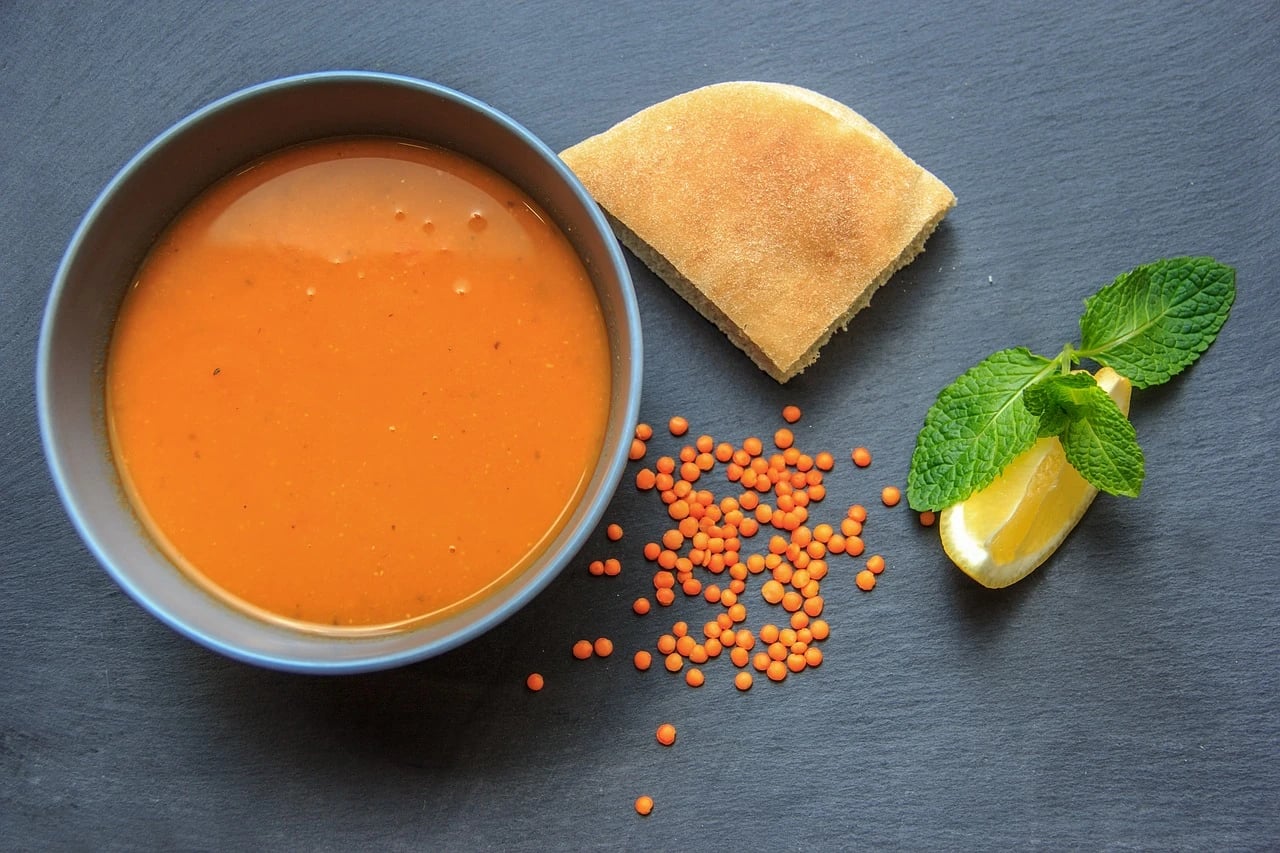
A bag of red lentils, an onion and a can of tomatoes make a soup with a fiber payoff few dinners can match.
One cup of cooked lentils has 15.64 grams of fiber, close to the 17.3 grams a day that adults 60 and older averaged in a national survey.
Red lentils are also fast. Bob's Red Mill says they need no soaking:
- Use 1 cup of lentils to 3 cups of water.
- Bring it to a boil.
- Cover and simmer until tender, about 15 to 20 minutes.
Harvard's Nutrition Source compares a cup of lentils with a 4-ounce sirloin. The lentils have about 18 grams of protein and almost no saturated fat. The steak has about 33 grams of protein and 5 grams of saturated fat.
So the soup wins on fiber and needs a little help on protein. Crack an egg into the simmering pot and let it set, or stir in a spoonful of yogurt at the table.
Jade, a registered dietitian in South Africa who posts as The Frugal Dietitian ZA, cooks dried lentils ahead, drains and cools them, and freezes them in portions. She says they're cheaper than canned, and they go straight from the freezer into dinner.
1Canned salmon, rice, cottage cheese and broccoli bowl
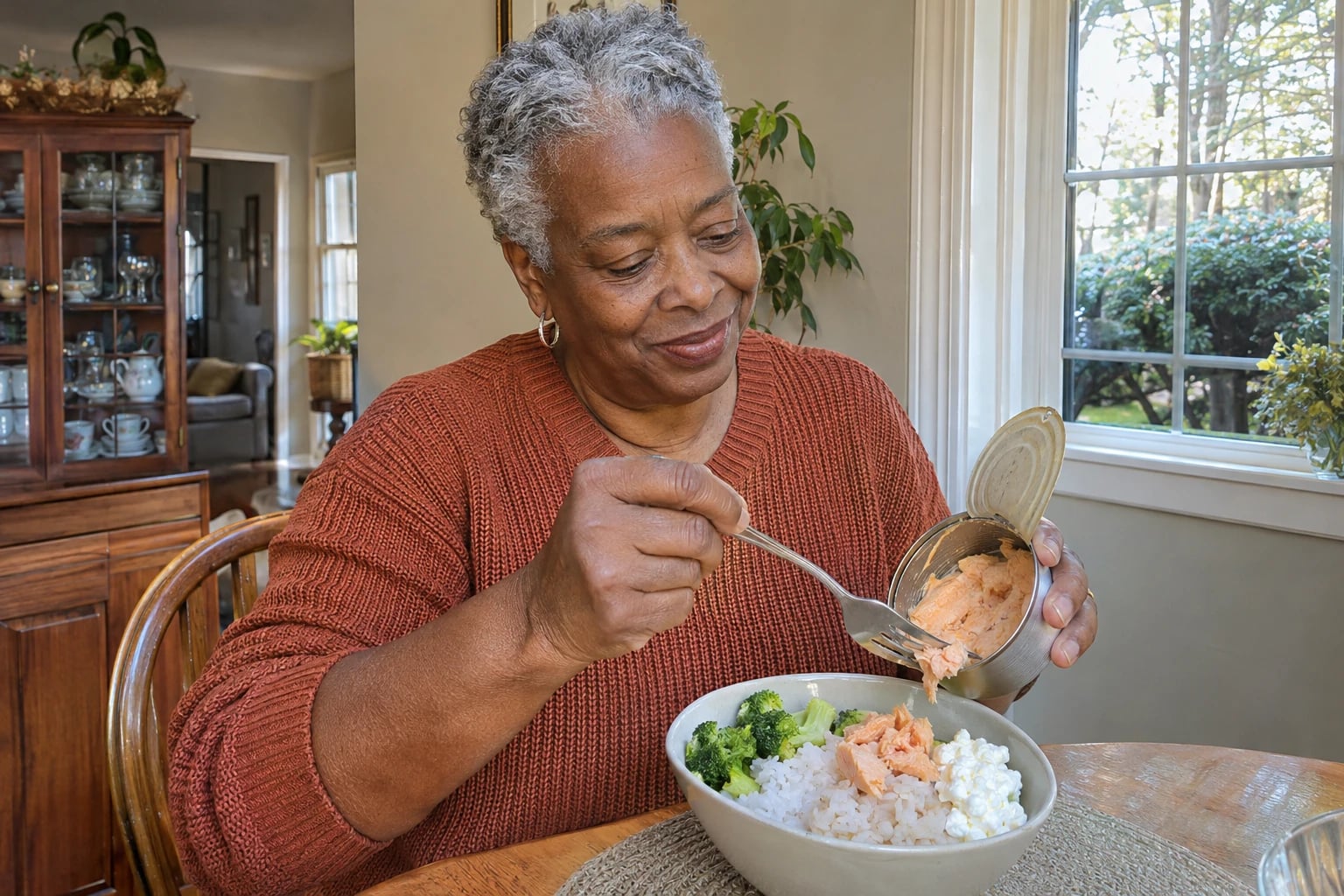
"You won't be hungry for hours." A member of r/AskWomenOver60, describing this bowl.
Here's what goes in:
- 3 ounces of canned salmon with bones
- ½ cup of cottage cheese
- ½ cup of brown rice
- 1 cup of frozen broccoli
That bowl gives you about 40 grams of protein and 7 grams of fiber, just above the 28 to 37 gram dinner range for a 154-pound adult. The salmon alone brings about 181 milligrams of calcium and 1.4 grams of omega-3s. Every part of it comes from a can, a tub or the freezer.
Microwave the broccoli. Warm the rice, either last night's or a frozen portion. Flake the salmon over the top and spoon on the cottage cheese, and the heat from the rice softens the curds. Add a squeeze of lemon if you have one.
Don't pick the bones out. They're where the calcium lives. The drained, boneless kind gives you only about 51 milligrams of calcium per 3 ounces, and about 0.8 grams of omega-3s instead of 1.4. The can that looks less appealing is the better can.
Two notes on salt. The half cup of cottage cheese has about 460 milligrams of sodium. The USDA numbers above are for no-salt-added salmon, so look for that on the can if you're watching sodium.
Swap the rice and cottage cheese for half a cup of black beans and the bowl drops to about 30 grams of protein, but its fiber nearly doubles, to about 13 grams.
The bottom line
Count how many of the top ten start with a can, a bag from the freezer or something already cooked. Most of them do. That means the tired-night dinner gets decided days earlier, at the store, on an afternoon when you had energy to spare.
So start at the store. Next time you shop, buy for two of these on purpose: a bag of red lentils, a tub of cottage cheese, a bag of frozen broccoli, a couple of tins of sardines. Put them on the shelf at eye level, where the crackers usually sit.
Then, for a few nights, notice what time you go looking for a snack, and which of these dinners held you longest.
Up next
How to Host Christmas Dinner on a Budget Without It Looking Cheap
A practical plan for the main dish, the sides, and the schedule that keeps your Christmas table looking generous while you spend less.
Read the story →


Reader quiz
Did you catch the details?
5 questions from this article. Finish them all to unlock the editor's bonus tip.
In the canned salmon bowl, what does the article say to do with the salmon bones?
Questions people also ask
How much protein should a woman over 50 eat at dinner?
About 28 to 37 grams, if she weighs around 154 pounds and eats three similar meals a day. That estimate comes from splitting the 2025 to 2030 Dietary Guidelines' target of 1.2 to 1.6 grams per kilogram of body weight a day across three meals. Elena Volpi, a geriatrics professor, suggests 25 to 30 grams per meal. A heavier body or uneven meals change the number.
What should I eat for dinner if I have diabetes or high cholesterol?
Fill half the plate with non-starchy vegetables, a quarter with lean protein and a quarter with quality carbohydrates, which is the American Diabetes Association's Diabetes Plate. For high cholesterol, the American Heart Association says to cut saturated and trans fat and emphasize vegetables, beans, whole grains, fiber and fish. Lentils have almost no saturated fat, and fish is on the heart association's list. Check any changes with your own doctor or dietitian.
Are frozen vegetables as healthy as fresh?
Yes, compared with fresh produce that has sat in the fridge for five days. A two-year University of Georgia study, done in partnership with the frozen-food industry's Frozen Food Foundation, found frozen produce just as nutritious, and some frozen items had more vitamin A, vitamin C and folate. Cooked frozen broccoli still gives 5.52 grams of fiber per cup. The 2025 to 2030 Dietary Guidelines accept frozen produce with no or very limited added sugars.
How do I cook healthy dinners for just one or two people?
Cook two meals' worth and freeze the extra in small portions labeled with the name, date and amount, as University of Georgia Extension advises. Leftovers keep 3 to 4 days in the fridge or 3 to 4 months in the freezer for best quality, and they should be reheated to 165°F, according to University of Illinois Extension. When you eat out, the American Heart Association suggests asking for a take-out box and saving half for the next day.
Is it OK to eat rice or bread at dinner over 50?
Yes, especially whole-grain versions at about a quarter of the plate. The American Diabetes Association puts brown rice, whole-wheat bread and whole-grain pasta under "Eat some of these," and white rice and white bread under "Try to eat less of these." The 2025 to 2030 Dietary Guidelines recommend 2 to 4 servings of whole grains a day.
What's a healthy dinner when you're too tired to cook?
Eggs scrambled with cottage cheese, a canned salmon bowl, or rotisserie chicken over cabbage all take almost no cooking. Three eggs with ½ cup of cottage cheese come to about 34 grams of protein, and 3 ounces of rotisserie breast to about 24. If you're tired all the time, Cleveland Clinic says to talk to your healthcare provider.
Did any of these feel familiar?
Know someone who needs this?
 Prime Journal · Free printable
The Small-Batch Kitchen Checklist
- A right-sized dish for supper without a crowded fridge.
- A quick check before the slow cooker goes on.
- A plan for leftovers before the shopping starts.
Free printable: The Small-Batch Kitchen Checklist. Enter your email and it is yours.
Sources cited in this article
This article links to 52 outside sources, listed here so you can read them yourself.
- She says www.youtube.com/watch?v=NcUcfAT-ZwQ&t=61s
- Warns that cut romaine browns quickly www.today.com/food/how-prepare-store-salad-greens-so-they-stay-fresher-longe…
- Consumer Reports' June 2026 lab test www.yahoo.com/lifestyle/articles/best-rotisserie-chicken-store-consumer-1801…
- The shortcut that comes up most www.reddit.com/comments/1xb5wjf
- "It's a lean protein source that helps keep you full." ca.style.yahoo.com/dietitians-keep-mind-eating-rotisserie-140900120.html
- About 19 grams of protein www.urmc.rochester.edu/encyclopedia/content?contenttypeid=76&contentid=01123-1
- Low-fat cottage cheese www.urmc.rochester.edu/encyclopedia/content?contenttypeid=76&contentid=01015-1
- 2018 page on eggs www.heart.org/en/news/2018/08/15/are-eggs-good-for-you-or-not
- In a Reddit thread about cooking for groups www.reddit.com/comments/mv0dmw
- 7.48 grams of protein and 6.58 grams of fiber www.urmc.rochester.edu/encyclopedia/content?contenttypeid=76&contentid=11674-1
- Soups and chilis freeze well extension.uga.edu/county-offices/banks/family-and-consumer-sciences/freezing…
- Came up often among one-pan dinners www.reddit.com/comments/1chobj6
- Bakes salmon pieces at 450°F for about 10 to 15 minutes extension.oregonstate.edu/imported-publication/oven-baked-salmon
- Has 3.76 grams www.urmc.rochester.edu/encyclopedia/content?contenttypeid=76&contentid=11508-3
- "I just cut open the frozen veggie bag and just dump it in there." www.youtube.com/watch?v=U-ittmYA5q0&t=870s
- Says in her video www.youtube.com/watch?v=dOOlNiO1nYY&t=1162s
- Light tuna in water at 0.5 grams my.clevelandclinic.org/health/articles/17290-omega-3-fatty-acids
- "eat some of" diabetes.org/food-nutrition/understanding-carbs
- Frozen produce as nutritious www.fooddive.com/news/study-shows-frozen-fruits-and-veggies-can-be-healthier…
- Has 590 milligrams of sodium per tablespoon kikkomanusa.com/homecooks/products/less-sodium-soy-sauce
- 2,300 milligrams a day www.heart.org/en/healthy-living/healthy-eating/eat-smart/sodium/how-much-sod…
- About 7.3 grams of protein and 6.2 grams of fiber www.urmc.rochester.edu/encyclopedia/content?contenttypeid=76&contentid=16057-1
- Draining canned beans cut their sodium by 36% www.todaysdietitian.com/reducing-sodium-in-canned-beans-easier-than-1-2-3
- Costs a little folate and other B vitamins www.nutritionletter.tufts.edu/general-nutrition/q-are-nutrients-lost-by-rins…
- Stretch canned soup and broth with frozen vegetables www.reddit.com/comments/st7wxu
- 16.35 grams of protein and 16.27 grams of fiber www.urmc.rochester.edu/encyclopedia/content?contenttypeid=76&contentid=16086-1
- University of Maine Extension's recipe extension.umaine.edu/food-health/recipes/split-pea-soup
- "Nutritionally speaking, boneless, skinless chicken breasts do have fewer calories and fat overall," hartfordhealthcarerehabnetwork.org/patients-caregivers/news/newsroom-detail?…
- Safe temperature for all poultry www.lsuagcenter.com/portals/communications/news/news_archive/2011/may/news_y…
- 2 to 4 servings of whole grains a day www.aafp.org/afp/2026/0700/practice-guidelines-dietary-guidelines
- 15.24 grams of protein and 14.96 grams of fiber www.urmc.rochester.edu/encyclopedia/content?contenttypeid=76&contentid=16015-1
- 3 to 4 days in the fridge extension.illinois.edu/food-safety/leftovers
- 44.5 grams for a full cup of white rice www.urmc.rochester.edu/encyclopedia/content?contenttypeid=76&contentid=20045-1
- Frozen cauliflower rice greengiant.com/products/frozen-riced/riced-veggies-cauliflower-family-size
- "It does not have to spike your blood sugar." www.youtube.com/watch?v=U-ittmYA5q0&t=993s
- Come fully cooked www.aidells.com/products/lunch-dinner-sausage/00764014208059
- Idaho Potato Commission's method idahopotato.com/dr-potato/how-to-bake-a-potato-in-the-microwave
- About 15 minutes nutritionsource.hsph.harvard.edu/food-features/quinoa
- 46% more likely to age healthfully nutritionsource.hsph.harvard.edu/healthy-weight/diet-reviews/mediterranean-d…
- 43.43 grams of protein www.urmc.rochester.edu/encyclopedia/content?contenttypeid=76&contentid=05064-1
- Hummus www.urmc.rochester.edu/encyclopedia/content?contenttypeid=76&contentid=16158-2
- Warns about the classic mistake www.youtube.com/watch?v=dOOlNiO1nYY&t=915s
- Colorado State University Extension extension.colostate.edu/resource/crockpot-and-slow-cooker-food-safety
- Recommends two servings of fish a week, particularly fatty fish www.heart.org/en/healthy-living/healthy-eating/eat-smart/fats/fish-and-omega…
- 569 milligrams of calcium www.urmc.rochester.edu/encyclopedia/content?contenttypeid=76&contentid=15088-1
- 15.64 grams of fiber www.urmc.rochester.edu/encyclopedia/content?contenttypeid=76&contentid=16070-1
- Bob's Red Mill www.bobsredmill.com/recipes/how-to-make/basic-preparation-instructions-for-r…
- Compares a cup of lentils with a 4-ounce sirloin nutritionsource.hsph.harvard.edu/2026/01/09/dietary-guidelines-for-americans…
- Cooks dried lentils ahead www.youtube.com/watch?v=78bOZP5EdCg&t=750s
- 2025 to 2030 Dietary Guidelines realfood.gov
- Suggests 25 to 30 grams per meal kffhealthnews.org/aging/why-older-adults-should-eat-more-protein-and-not-ove…
- Puts it simply www.youtube.com/watch?v=8l4230iTOBE&t=249s

Peter Byalik
Food & Home Editor
Peter Byalik is a professional chef with more than 20 years of experience, including years running his own business. He came to the United States from Ukraine.
More from Peter Byalik