





16 Winter Outfits for Women Over 50 in Cold Climates
Fleece-lined tights under a wool sweater dress, a down coat light enough for a long afternoon and fourteen more ways to dress warm without the bulk.

By Irina Byalik, Style Editor
Updated · 17 min read
- Written by our style editor
- Cited 6 sources
- How we review
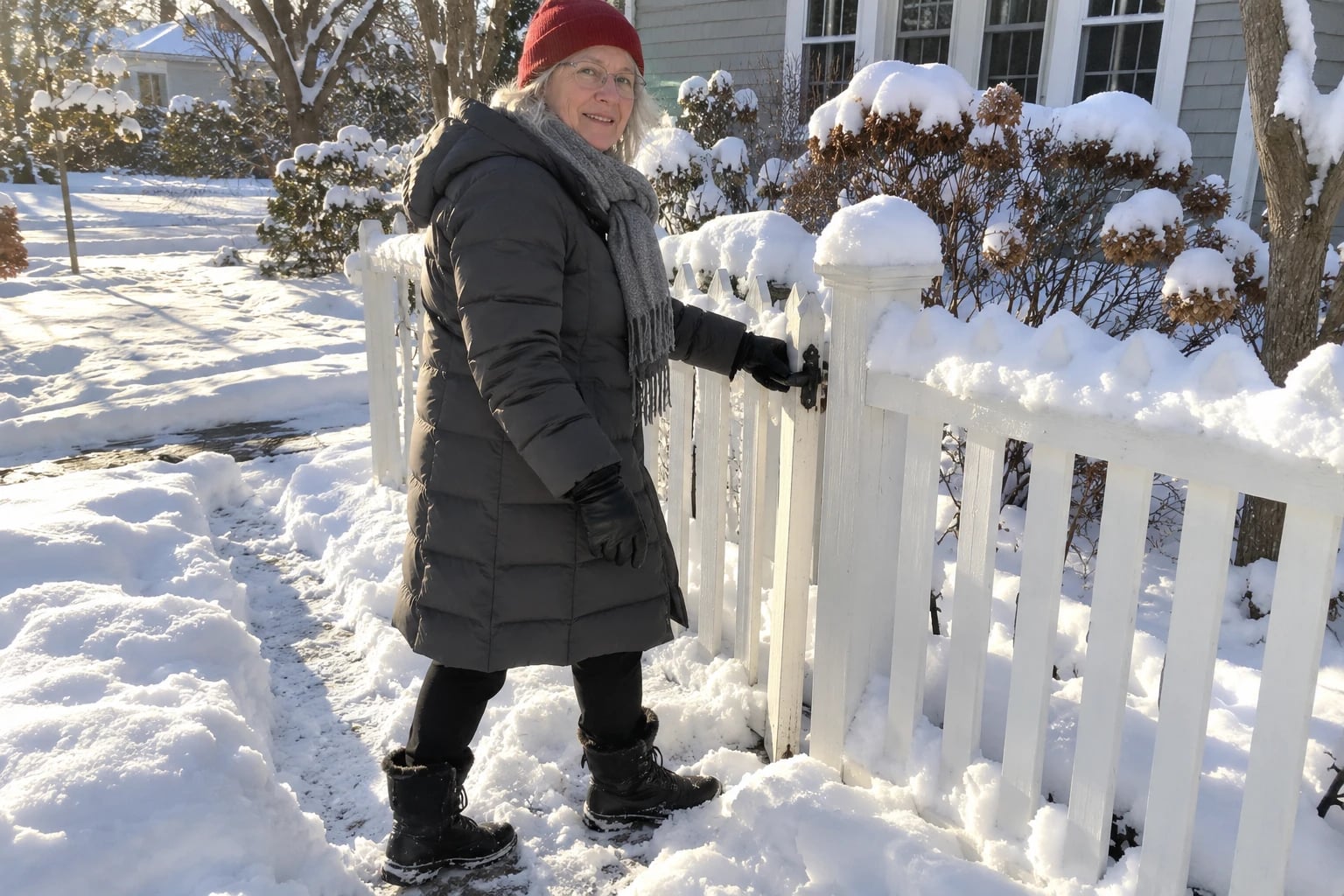
Your warmest winter coat could be the lightest one you've ever owned.
Until about age 50, women and men land in the emergency room after falls on ice and snow at similar rates. After 50, an 11-year study of emergency visits in Calgary found women coming in about 25 percent more often.
Then there's heat. The fat layer under your skin thins with age, and your blood vessels lose some stretch, so your body moves warmth around less well than it did.
Winter asks more of your clothes now. It shouldn't ask you to dress like a sleeping bag.
At home, on weekends and in the stands
Sitting still is the hardest cold to dress for, and a chilly house counts.
16A Ribbed Turtleneck Under a Slim Down Vest

Look at what's missing: no oversized sweater, no blanket around the shoulders. A close ribbed merino turtleneck in heather gray, wide-leg knit pants in deep plum and a slim charcoal down vest do the work instead.
This is for the woman who keeps the thermostat at 65°F and is still cold by mid-afternoon. One big sweater gives you two settings, on and off. Three thin layers let you adjust as the house cools after dark.
The vest holds heat around your middle, which counts for more now that the fat layer under your skin is thinner, and it leaves your arms free for cooking, typing and the dog.
If you buy one thing for a cold house, buy this, because you'll wear it daily from November to March.
Under the turtleneck goes a thin long-sleeve layer, the kind stores call a base layer. Indoors, where you won't sweat, silk or cotton is fine here.
Finish with wool socks and slippers that have a real rubber sole, so you can step out to the mailbox on a frosty morning without hunting for shoes.
15A Mid-Calf Parka Over Black Snow Pants
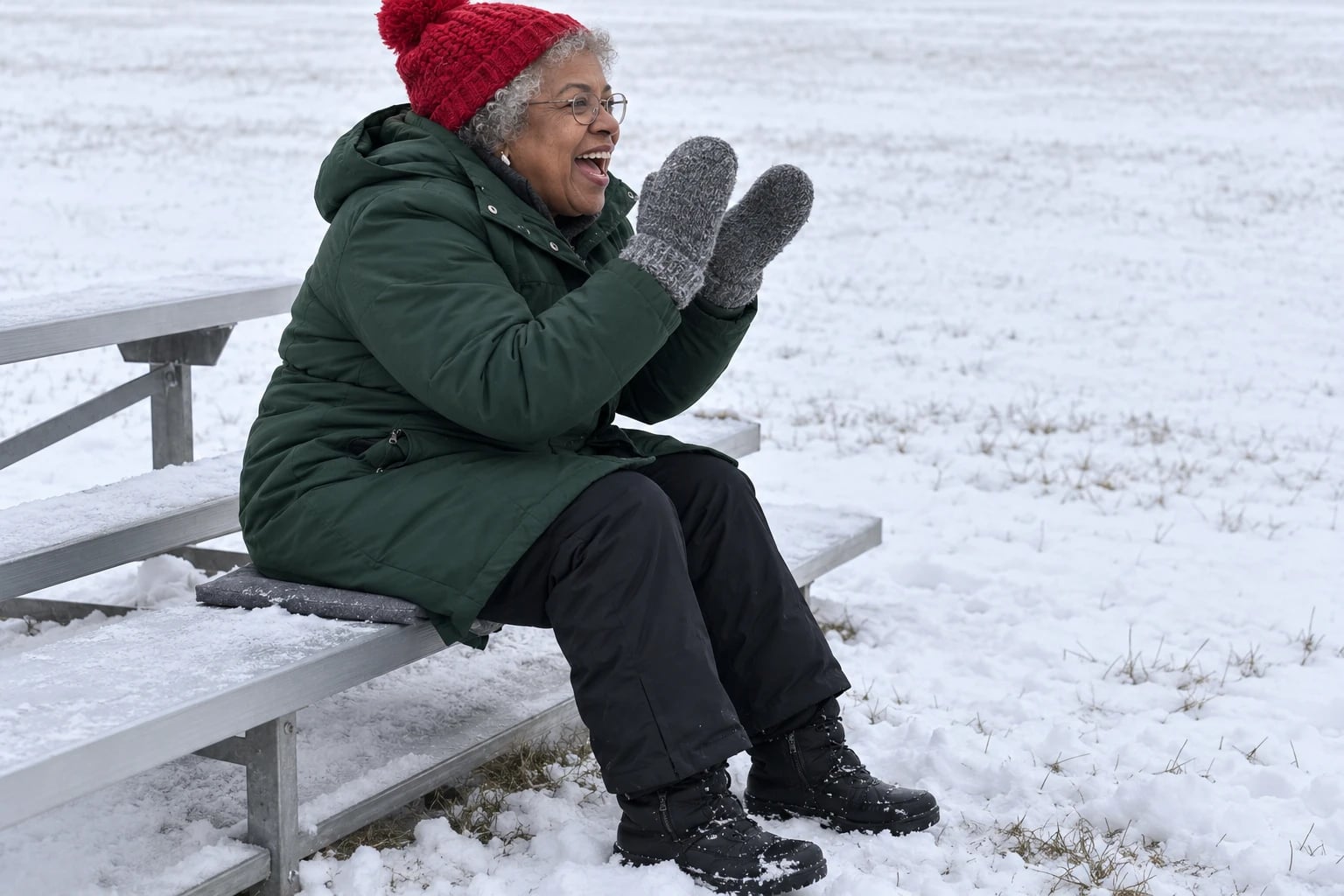
The forest-green parka reaches mid-calf, and that length matters more here than anywhere else in winter. Under it: black insulated snow pants over fleece-lined leggings, a red pom-pom hat and mittens roomy enough to hold a hand warmer.
Two hours on a metal bleacher at a high school game feels colder than a brisk walk at the same temperature, because you're not moving and making heat, and your body spreads warmth less well than it once did.
A parka you can sit on keeps the bench from pulling warmth out of your legs.
Snow pants are where women hesitate, since they sound like a ski trip.
Plain black ones with a straight leg read as pants from the stands, and they come off in the car. Skip bib styles, or you'll be shedding your whole outfit in the restroom.
Put toe warmers in your boots before you leave the house, not once your feet already hurt.
Mittens beat gloves for sitting still, because your fingers keep each other company. Bring a folded foam pad for the seat. It weighs nothing, and by halftime it's the smartest thing you packed.
14A Fair Isle Sweater and Toffee Corduroy Pants
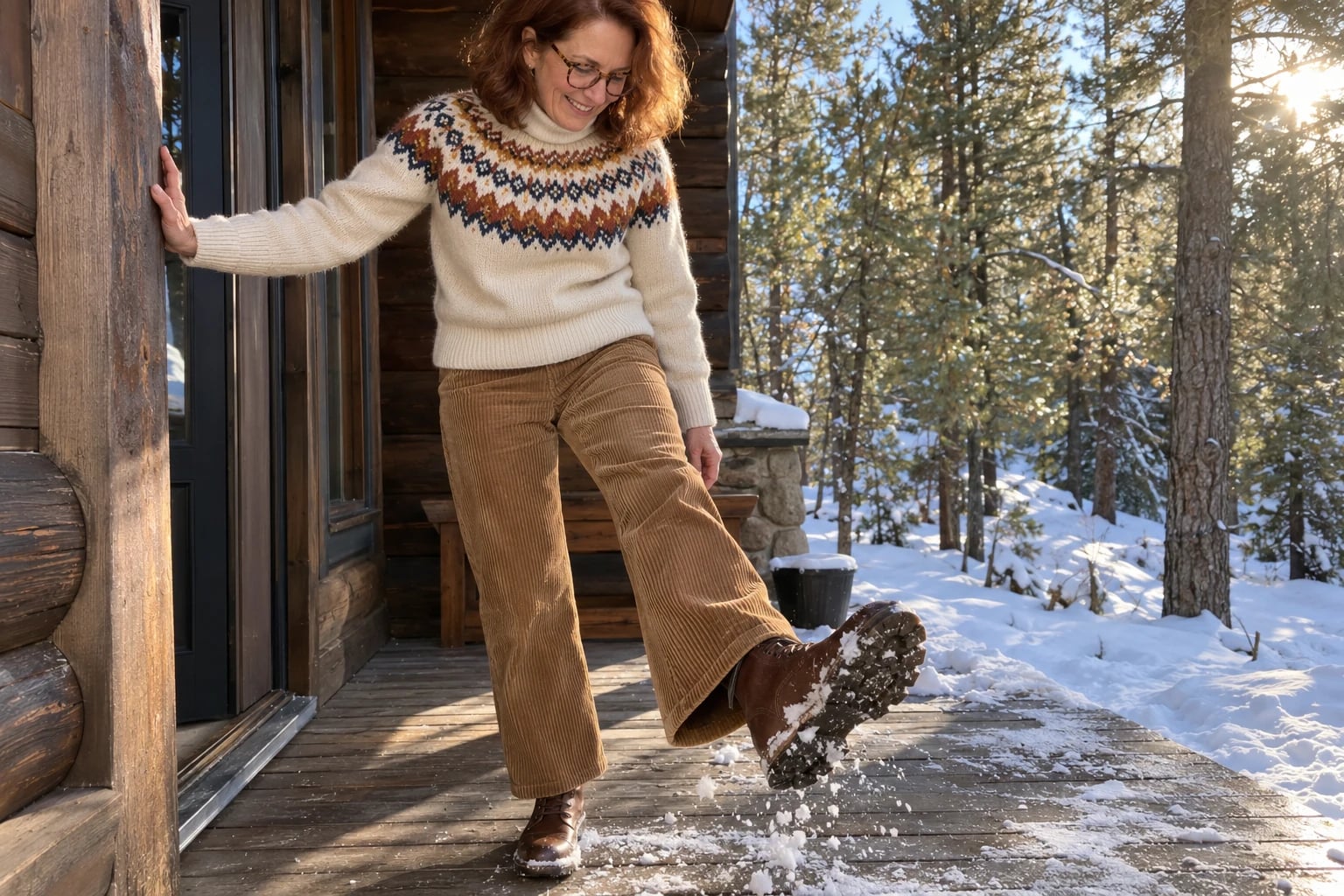
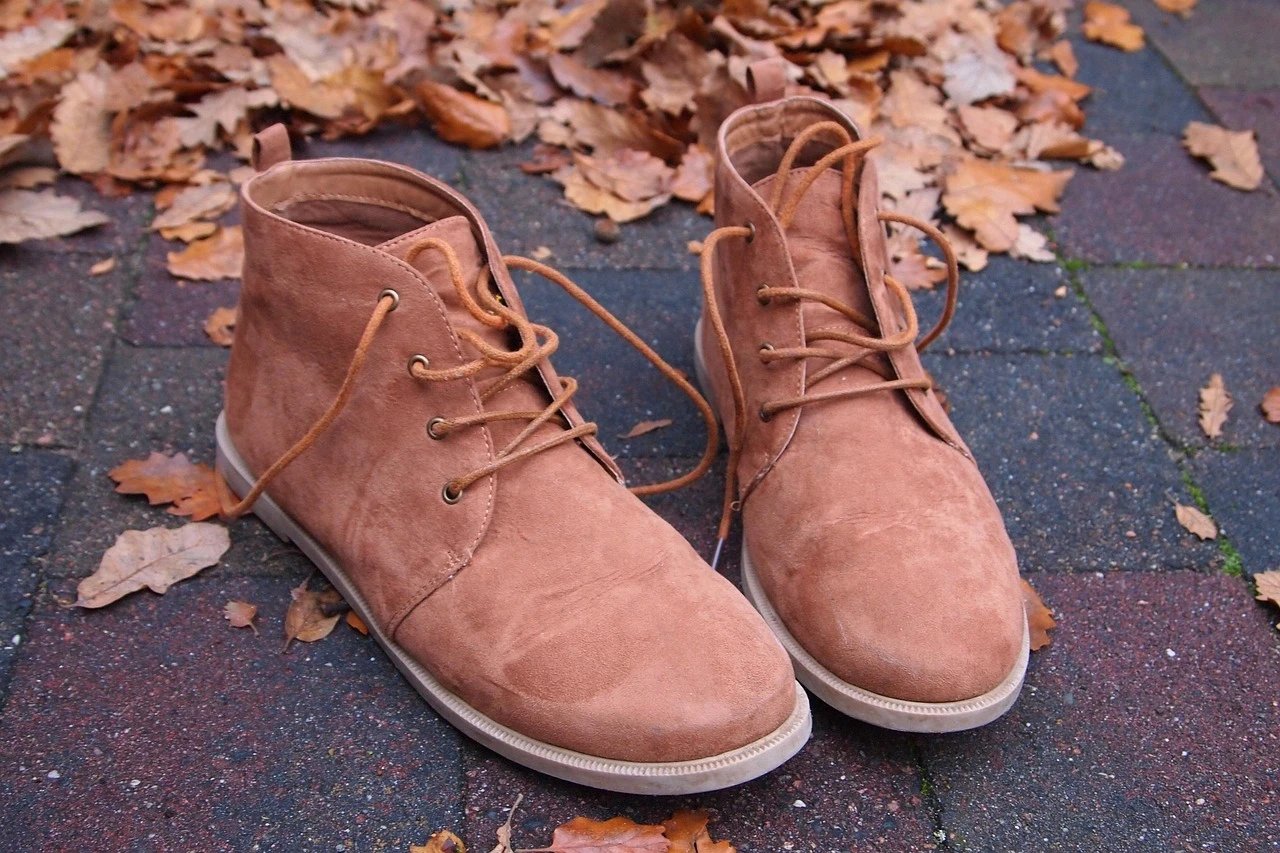
A cream sweater with a band of rust, navy and mustard pattern around the yoke, toffee wide-wale corduroy pants and brown leather lace-up boots with a deep tread.
Patterned yoke sweaters are often knit from sturdier wool than merino, and sturdier wool can prickle. If wool has always bothered you, the thickness of the fiber is the likely cause, and a soft layer underneath fixes most of it.
The American Academy of Dermatology suggests a cotton or silk layer under rough fabrics when winter skin is dry. A thin ivory silk turtleneck under the crewneck does it, and the neat inch of collar looks finished.
One honest note about the cords. Corduroy is usually cotton, so check the label, since many pairs blend in polyester, rayon or a little stretch.
Cotton soaks up damp and turns cold once it's wet. Wear them with long johns underneath for an afternoon of shops and lunch in a snowy town. For the sledding hill, change.
13A Cherry-Red Parka for a Snowy Walk

A cherry-red parka to mid-thigh with a deep hood, a gray merino quarter-zip, dark gray softshell hiking pants, a charcoal wool hat and gray waterproof boots. Everything but the coat is quiet, on purpose.
Gray skies, gray slush, a wardrobe of navy and black: by February, winter clothes start to feel like a uniform. The coat is the piece everyone sees for four months, so if you want color, put it there.
Which color depends on you. If your hair has gone silver or white, cherry red, cobalt and emerald look crisp beside it.
If your coloring is warm, with golden or red tones, try rust, mustard or deep teal. Hold it under your chin in daylight before you decide.
On a long walk, unzip on the uphill and zip back up at the top.
The standard advice for cold-weather layers is to take them off when you're active and put them back on when you feel cold. A quarter-zip makes that a one-hand job.
Work, and the drive to get there
Office heat, a cold parking lot and a dress code rarely agree. The warmth goes where nobody at the meeting can see it.
12A Fine Merino Sweater Under a Tweed Blazer

A navy merino crewneck knit so finely it lies flat, a gray-and-blue tweed blazer, charcoal wool pants with a straight leg and black leather ankle boots with rubber soles.
Chunky sweaters look like Saturday, which is why warm work clothes so often feel too casual. A fine-gauge knit, meaning thin yarn knit tightly, sits under a blazer without lumps and looks like you planned it.
Try this in the fitting-room mirror. Put the blazer on over the sweater and lift both arms. If the shoulders ridge or the sleeves bunch at the elbow, the sweater is too thick for that blazer, so swap one of them.
Now the feet. Warm socks work with dress pants when the hem touches the top of your boot as you stand. Thin merino trouser socks in charcoal or navy disappear under it.
If your feet run cold, two thin pairs can beat one thick pair, and the boots stay comfortable.
If your winter work clothes are more than ten years old, start replacing them with the pants. A straight or slightly wide leg in mid-weight wool looks current and keeps you warmer than a thin polyester blend.
11A Camel Sweater Dress and Tall Boots
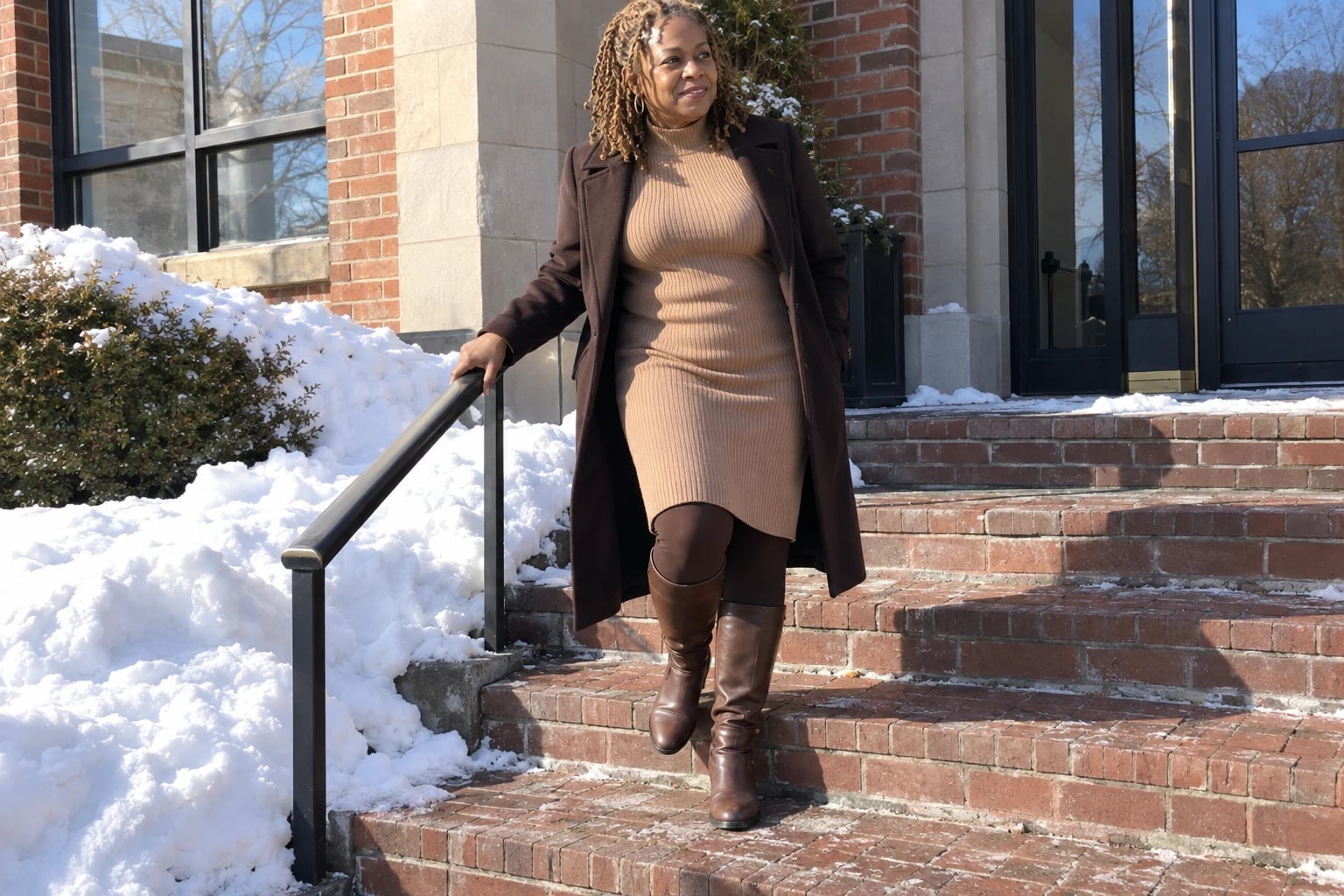
A camel rib-knit dress that ends just below the knee, chocolate fleece-lined tights, tall brown leather boots and, for outside, a dark brown wool coat that covers the hem.
Can you wear a dress when the high is 10°F? Yes, if three things line up. Tights alone won't keep you warm, but fleece-lined ones will. The dress should be wool or a wool blend.
And your coat has to reach at least your knee, or the gap between hem and boot catches every gust.
The boots cover the rest, and they're where many women get stuck. Tall boots that won't zip over a fuller calf are miserable to shop for. Measure your calf at its widest while seated, and compare it with the calf size listed for each boot.
A stretch panel at the back or a lace-up tall boot gives you room to adjust. Zippers can break, and the teeth can snag tights and start a run. A zipper guard, the strip of leather behind the zip, prevents that.
Leave this outfit home on days you'll stand outside for long. It's built for door to car to office.
10A Hip-Length Quilted Car Coat
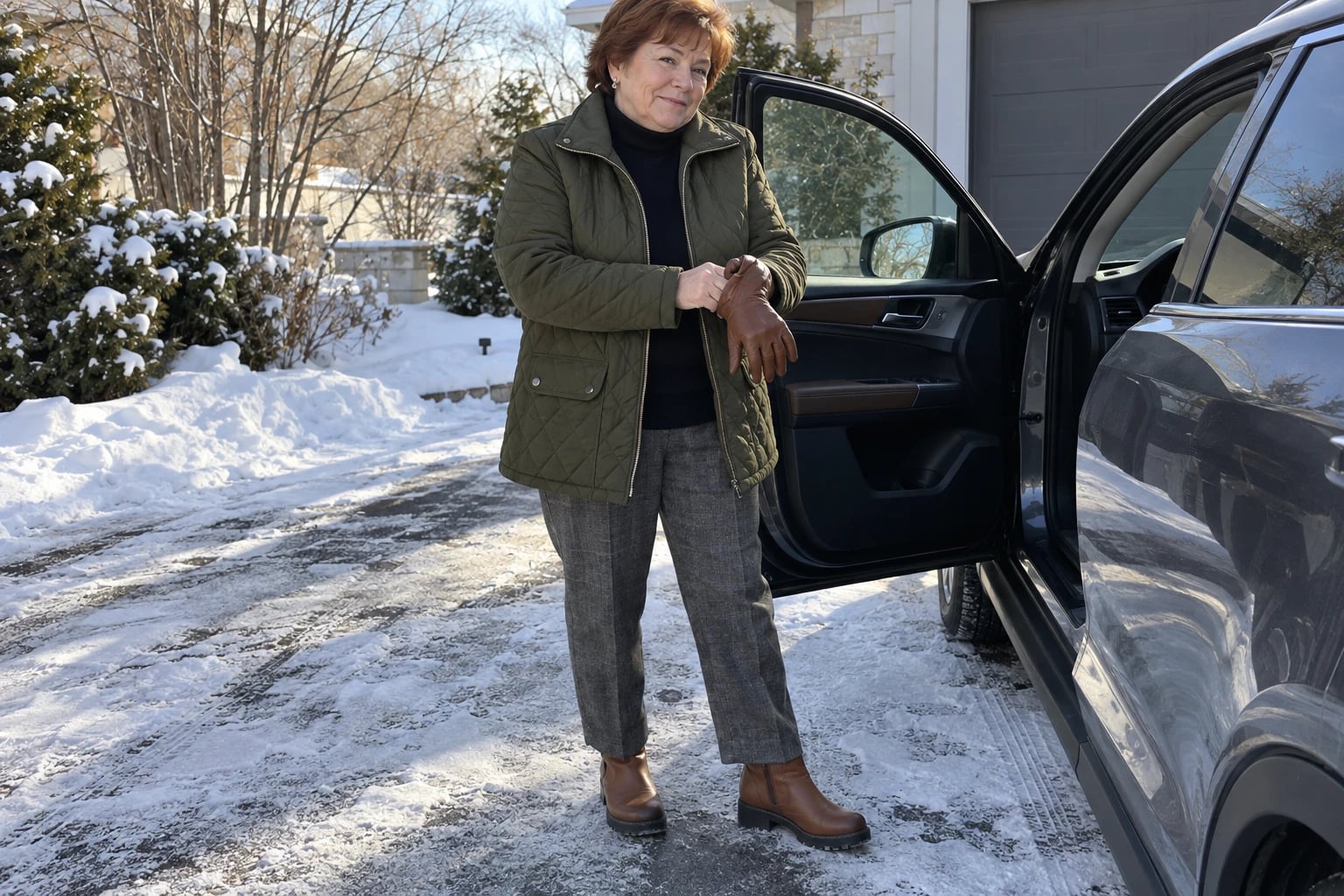
An olive quilted coat that stops at the hip, a black merino turtleneck, gray flannel pants, cognac lug-sole ankle boots and brown leather gloves.
A long coat bunches under you on the seat and creases at the back. A hip-length one stays put, and you can unzip it once the heater catches up.
The boots matter at the pedals. Big snow boots with a wide toe can catch the edge of the brake or dull the feel of the gas.
Drive in a slimmer insulated ankle boot with real tread, and keep your snow boots in the trunk in case you get stuck.
This coat is the wrong choice for a long walk from the parking lot or a wait at a bus stop. Hip length leaves your thighs out in the wind, and for that commute you want a coat to the knee.
Look closely at the quilting. Each stitched line is a seam with no fill in it, so fewer, wider channels mean fewer cold seams, though down can shift inside a wide channel over time. Squeeze along the coat to check it stays evenly filled.
9Silk Long Johns Under Wide-Leg Wool Pants

Wide-leg camel wool pants, a pale blue collared shirt under a cream cashmere V-neck, a camel scarf and brown suede ankle boots. Under the pants, out of sight, a pair of silk long johns.
Gear shops call these base layers, and the word you'll hear is wicking: the fabric pulls sweat off your skin so it can't chill you later. Silk and fine merino both do it. Cotton holds damp against you instead.
For the office, try silk first. It's thin enough to vanish under a wide leg with no ridge at the knee, and it skips the bulk that makes three layers look like six.
Long johns, a sweater and thick socks can still leave you cold at your desk and looking padded. Thinner pieces in better fibers fix both problems at once.
Merino base layers are sold in weights. The lightest suits work clothes, and the heavier ones are for outdoors. Silk is delicate, so wash it on a gentle cycle in a mesh bag and it will see you through more winters.
Church, holidays and nights out
Dressier clothes run thinner. These keep the polish and find the warmth somewhere else.
8A Midi Wool Skirt and Wrap Coat for Church

A heather-gray wool skirt to mid-calf, a burgundy merino turtleneck, gray merino tights, black low-heeled boots and a navy wool wrap coat to the knee.
The longer skirt is the warm choice, because it meets the top of the boot and leaves almost nothing for the wind to find. That lets you wear one pair of merino tights instead of two pairs, which matters once you're inside.
Sitting through a service in a warm sanctuary in doubled tights is its own kind of misery.
Menopause can bring chills as well as hot flashes. You may be freezing on the steps and flushed by the second hymn.
Thin layers handle that swing better than one thick layer you can't take off in a pew.
About the coat. A heavy coat worn for more than an hour or so can start to pull on your back and shoulders, especially with your hands jammed in the pockets.
If your back or neck already gives you trouble, choose a lighter wool blend with some stretch.
7An Emerald Turtleneck With a Long Gold Pendant

An emerald cashmere turtleneck, dark gray wool pants, black suede ankle boots, small gold studs and a gold pendant on a chain that falls well below the collar. Over it, a camel wool coat with a small gold brooch on the lapel.
Winter breaks most jewelry habits. A short necklace sinks into a high neck and vanishes. Bangles catch on coat cuffs. Rings bunch under gloves, and you end up choosing between them and warm hands.
So change what you wear. A chain of about 28 to 32 inches clears a turtleneck and lands mid-chest, where it shows with the coat open and with it off.
Earrings carry more of the load in winter, since they're the one thing a scarf frames. Pick studs or short drops that won't tangle in wool.
The brooch is the old trick worth bringing back. Pinned to a coat lapel or a hat, it means you walk into a holiday visit looking dressed before the coat comes off. Estate jewelry cases and antique malls are full of 1950s and 1960s brooches.
For rings, wear one flat, simple band, with mittens or gloves a half size roomier.
6Green Velvet Pants and a Long Down Coat

Bottle-green velvet pants with a wide leg that brushes the floor, a black silk-blend top, a long black down coat to the calf and black lug-sole ankle boots hidden under the hem.
Evening out means a dark parking lot or a wait at the curb, often after the sidewalks have refrozen.
A wide, long pant leg covers a chunky rubber sole completely, so you get real grip on the walk in and everyone else sees velvet.
If you want heels, carry them in a tote and change inside. Thin leather soles on frozen pavement after dark aren't worth the risk.
For evening, pick a down coat with a matte finish and narrow quilting. Shiny fabric with wide channels looks like ski gear over velvet.
Velvet's thick pile holds more warmth than most dressy fabrics, and silk long johns won't show under a leg this wide.
If your evenings involve a lot of sitting in the car, go shorter, since a calf-length coat gets crushed and creased. A knee-length one in the same matte black works nearly as well.
5Winter White From the Collar to the Boots

A cream merino turtleneck, cream wool pants, an oatmeal wool coat, a cream knit hat and taupe suede boots: one color family from top to toe against a gray December.
Shades of one color make one long line, and in winter white that line looks deliberate. After months of navy and black, it's a relief to look at.
Who should skip it: anyone whose week involves slush, salt spray or small grandchildren with hot chocolate. Winter white is for cleared sidewalks, a museum, a lunch or a visit where you'll mostly be indoors.
The worry is washing, and wool is more forgiving than most fabrics. Woolmark, the wool industry body, says wool resists stains and odors and needs washing less often than most fabrics. Air it out between wears.
When it does need a wash, use a mild wool detergent and dry it flat, never on a hanger.
Small fuzzy balls, called pilling, show up first on cream knits where your arms brush your sides. A fabric shaver clears them in minutes.
If bright cream washes you out, try ivory or oatmeal next to your face.
Everyday cold: errands, the dog and bitter wind
These are the outfits you'll wear four mornings out of five, from the first hard freeze to the March thaw.
4A Knee-Length Puffer With Fleece-Lined Leggings

A navy puffer to the knee, black fleece-lined leggings, an oatmeal tunic sweater long enough to cover your seat, a cream knit hat, black mittens and black lace-up snow boots with ice cleats stretched over the soles.
Walking a dog at 7 a.m. is when you meet the ice nobody has salted yet, usually while being pulled. The American Academy of Orthopaedic Surgeons recommends shoes with good traction and points out that slip-on traction devices are available.
That's what ice cleats are: metal studs or coils on a rubber frame that pulls over your boot. Put them on at the door and take them off before you come in. On tile or wood floors they're slippery, and they scratch.
Lace-up boots hold your ankle more firmly than a loose pull-on, which helps when the leash jerks. Laces also give you room for a fuller calf or a thicker sock.
If your shins get dry and itchy in winter, tight leggings can rub. A looser fleece-lined jogger in the same black does the same job.
Keep the leash short on icy stretches, so a sudden lunge can't pull you off balance.
3A Mustard Parka and a Fleece Neck Gaiter
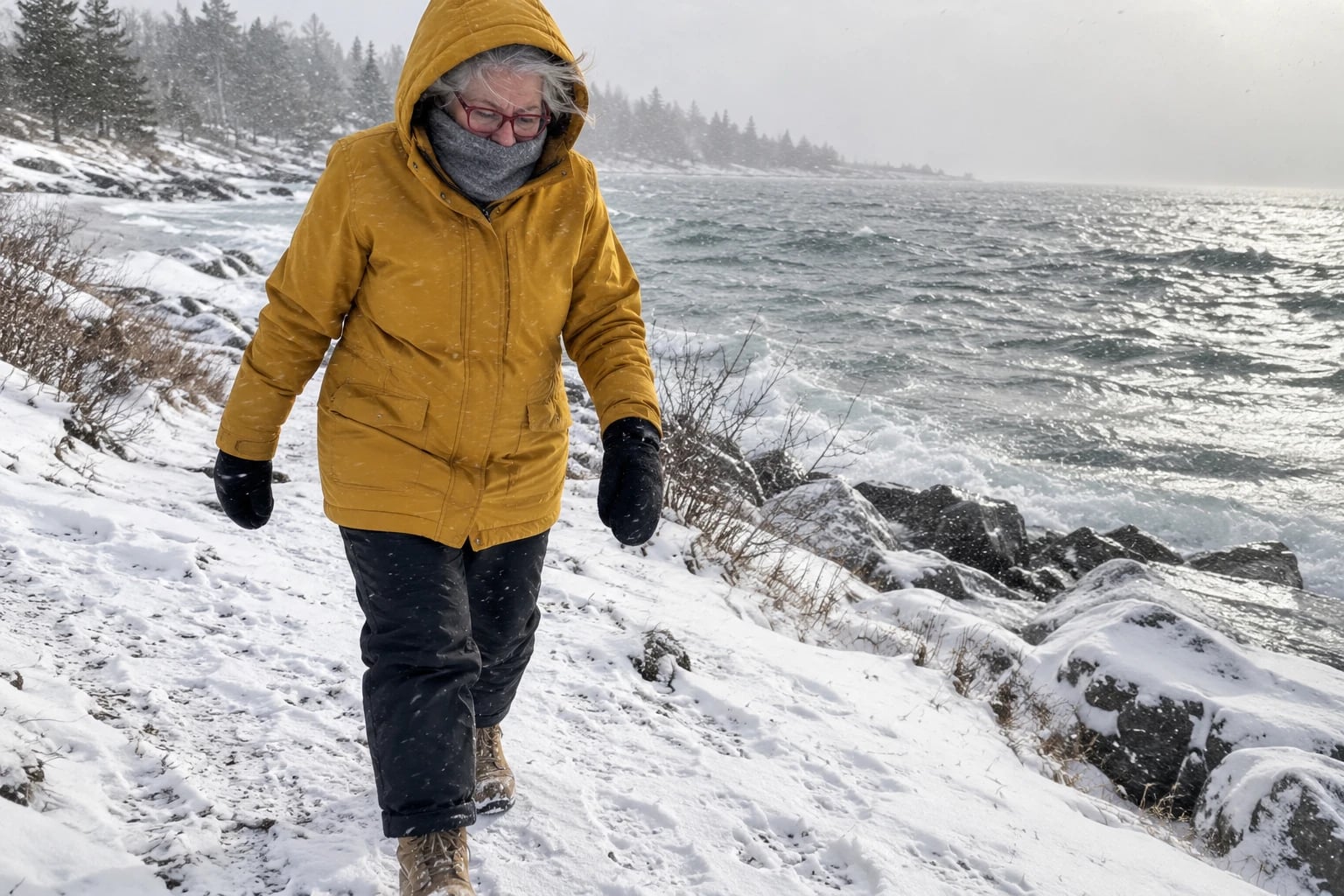
A mustard-yellow parka to mid-thigh with the hood up, a gray fleece neck gaiter pulled over the nose, black windproof pants, black mittens and tan snow boots.
On the days the wind does the damage, the coat's main job is keeping it out. At 0°F with a 15 mph wind, the National Weather Service wind chill chart puts the wind chill at 19 below zero.
At that wind chill, bare skin can freeze in about 30 minutes.
So look for an outer fabric labeled windproof, a zipper with a flap over it, a hood with a drawcord and cuffs that close around your wrists. A thick fleece with no shell lets the wind straight through, however cozy it feels in the store.
The gaiter is the piece women skip and shouldn't. On a day like that, your face is usually the only bare skin you have, and a scarf slips. A gaiter stays where you put it and pulls down to your chin in a shop.
The same chart notes that sunshine can make it feel 10 to 18 degrees warmer. Dress for the gray, windy afternoon, even when the thermometer reads the same as a sunny morning.
2Wide-Toe Snow Boots, Two Socks and Mittens

A burgundy down jacket to mid-thigh, gray wool pants tucked into brown snow boots with a roomy toe and a felt liner, a black wool hat, and gray wool mittens over thin black liner gloves.
This one is for the woman whose toes go white and numb in the cold. That's worth asking a doctor about, since it can point to Raynaud's, a condition where fingers and toes briefly lose blood flow.
Cleveland Clinic vascular specialist Dr. Meghann McCarthy calls keeping your hands and feet warm "one of the mainstays" of managing it.
Start with the toe box. A boot that narrows at the front squeezes your toes and makes them feel colder faster.
Try boots on with the socks you'll wear and wiggle every toe. Good-looking roomy ones are rare, so buy them when you find them.
Wear a thin liner sock under a wool one, and never cotton, which gets damp and stays damp. A removable liner lets you dry the boot overnight.
Liner gloves let you slip a mitten off for your keys without baring your hand. Tuck a hand warmer in each mitten.
Some blood pressure drugs, including beta blockers and calcium channel blockers, can reduce blood flow to the hands and feet. If you take one and your fingers are getting worse, tell your doctor.
1Fine Merino Layers Under a Light Down Coat

A knee-length down coat in deep teal, a rust wool scarf, an oatmeal knit hat, brown leather gloves and black waterproof boots with deep lugs. Under the coat: a cream merino turtleneck over a thin merino base layer, and dark gray wool pants.
Underneath is the three-layer approach UCLA Health doctors describe: an inner layer that moves sweat off your skin, a middle layer that insulates and an outer layer that sheds wet. Cotton stays out of all three.
Down coats list a fill power, a measure of how fluffy the down is. Around 600 to 650 is good, 700 to 750 very good and 800 and up excellent.
Higher fill power gives the same warmth from less down. Roughly, a 550-fill coat needs 40 to 50 percent more down by weight to match an 800-fill one, and that extra down is the marshmallow.
Fill power alone won't tell you how warm a coat is, so squeeze the channels too.
A high-fill coat is the winter purchase most worth paying more for, and your shoulders will notice by the end of a morning of errands.
Indoors, the coat comes off and the rest stays on. You're left in a cream turtleneck and good wool pants.
The bottom line
If you're cold most of the winter, put your money into two things first: a knee-length down coat with high fill power, and boots with a roomy toe and real tread. Thin merino layers can come a piece at a time.
The coat hangs by the door; what's under it is what people see all afternoon.
Up next
17 Plus-Size Office Outfits Over 50 That Actually Look Polished
Seventeen office outfits for a real plus-size body, each with the one fit detail that makes it work, from where a blazer button lands to what a tailor charges.
Read the list →


Reader quiz
Did you catch the details?
5 questions from this article. Finish them all to unlock the editor's bonus tip.
In the dog-walking outfit, when does the article say to put on and take off ice cleats?
Did any of these feel familiar?
Know someone who needs this?
Sources cited in this article
This article links to 6 outside sources, listed here so you can read them yourself.
- American Academy of Dermatology www.aad.org/public/everyday-care/skin-care-basics/dry/dermatologists-tips-re…
- National Weather Service wind chill chart www.weather.gov/safety/cold-wind-chill-chart
- Cleveland Clinic health.clevelandclinic.org/how-to-manage-raynauds-during-the-winter
- UCLA Health www.uclahealth.org/news/article/older-adults-more-susceptible-to-hypothermia
- Woolmark www.woolmark.com/fibre/what-is-the-wool-fibre/is-wool-comfortable-for-sensit…
- American Academy of Orthopaedic Surgeons www.aaos.org/aaos-home/newsroom/press-releases/6-tips-to-prevent-winter-inju…

Irina Byalik
Style Editor
Irina Byalik is a hairdresser and the owner of New Image Hair Salon in East Brunswick, New Jersey, with more than 20 years of experience. She came to the United States from Ukraine.
More from Irina Byalik