23 Things That Feel Dangerous About Travel After 70, and Which Ones Actually Are
A missed connection looks alarming, but the harder question is which hotel number your family should call when you’re unreachable.
By Margaret Hale, Travel & Lifestyle Editor
Updated · 16 min read
- Written by our travel & lifestyle editor
- How we review
Read to the end: #1 is the family handoff that starts help without handing over your trip, and almost nobody rehearses it.
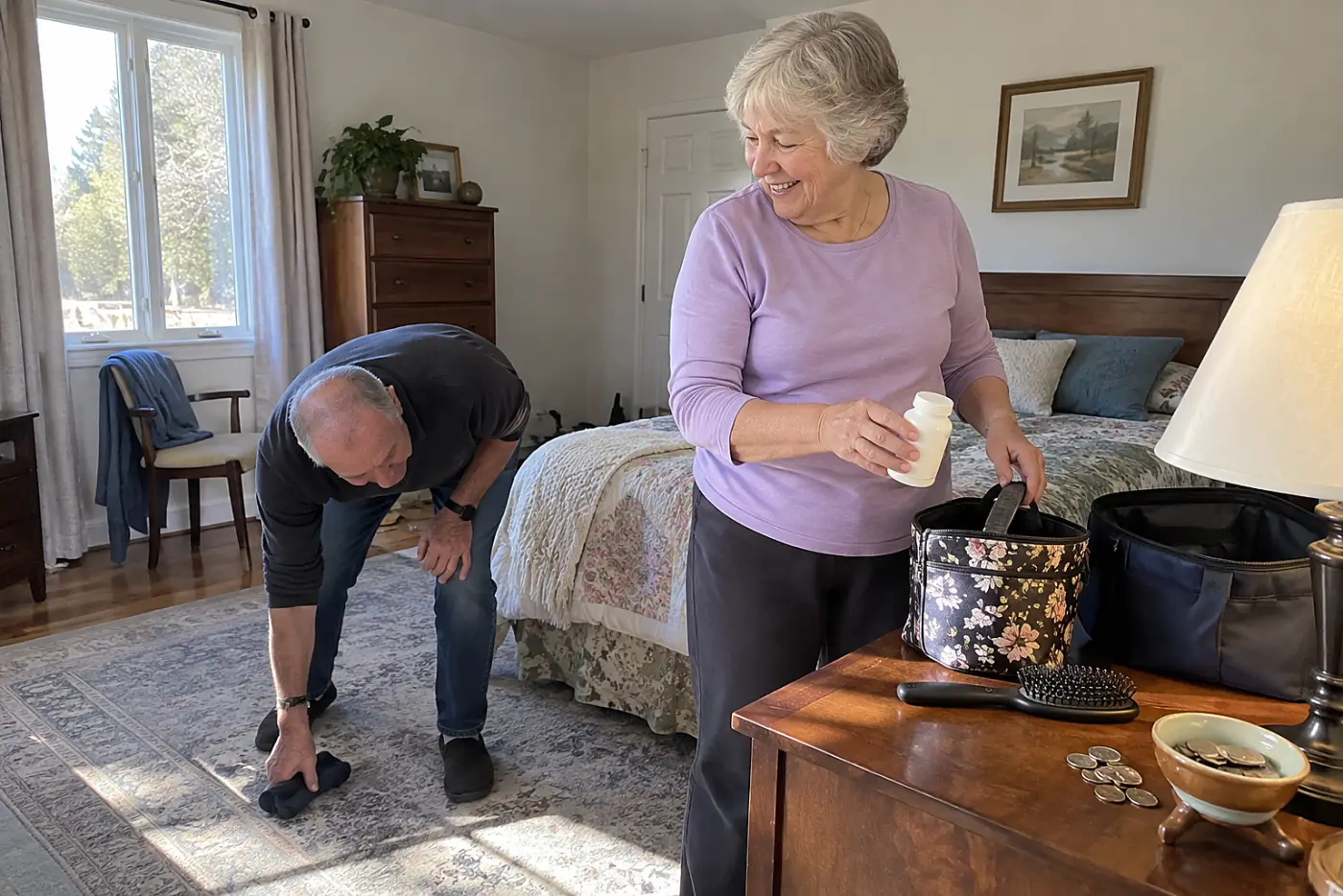
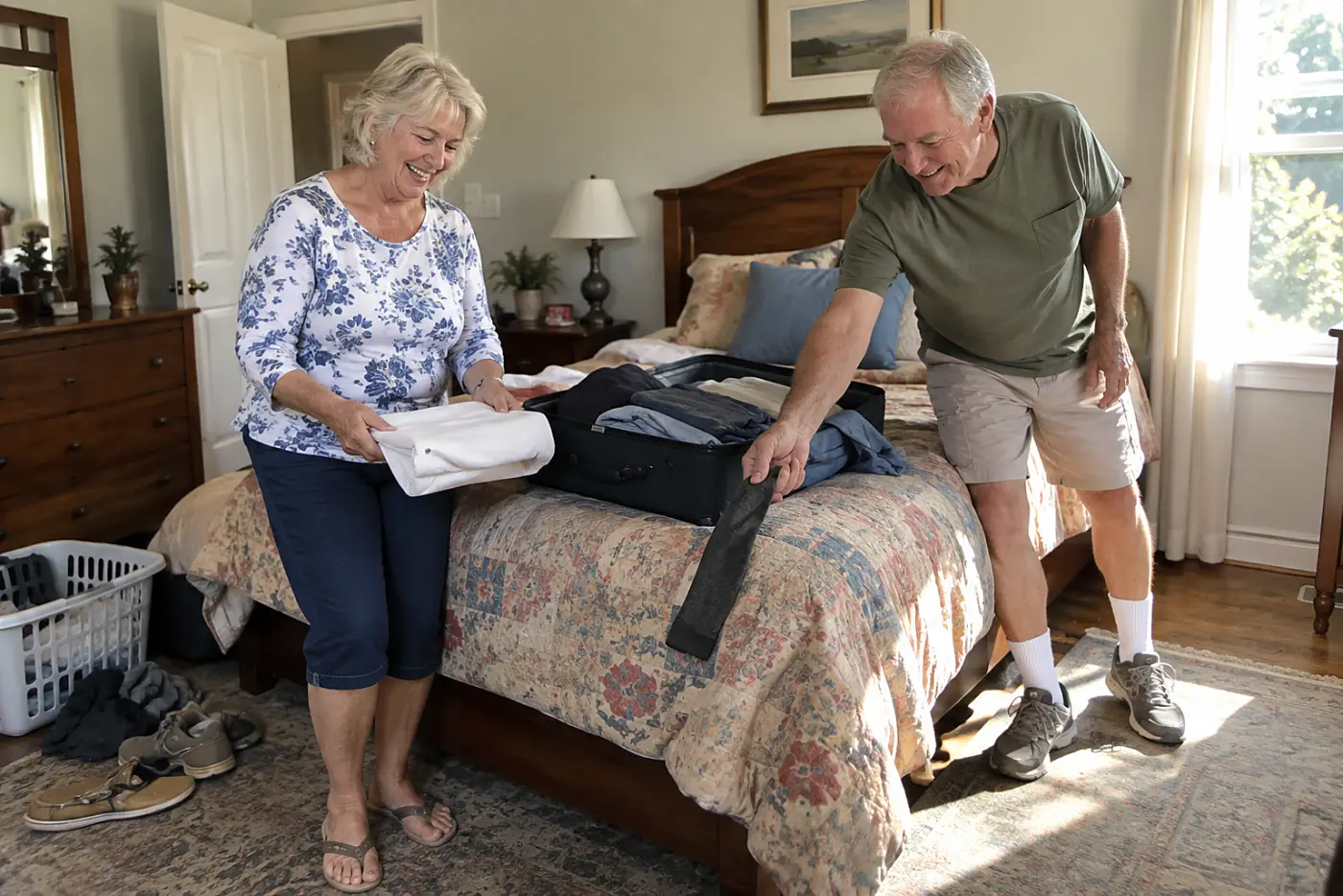
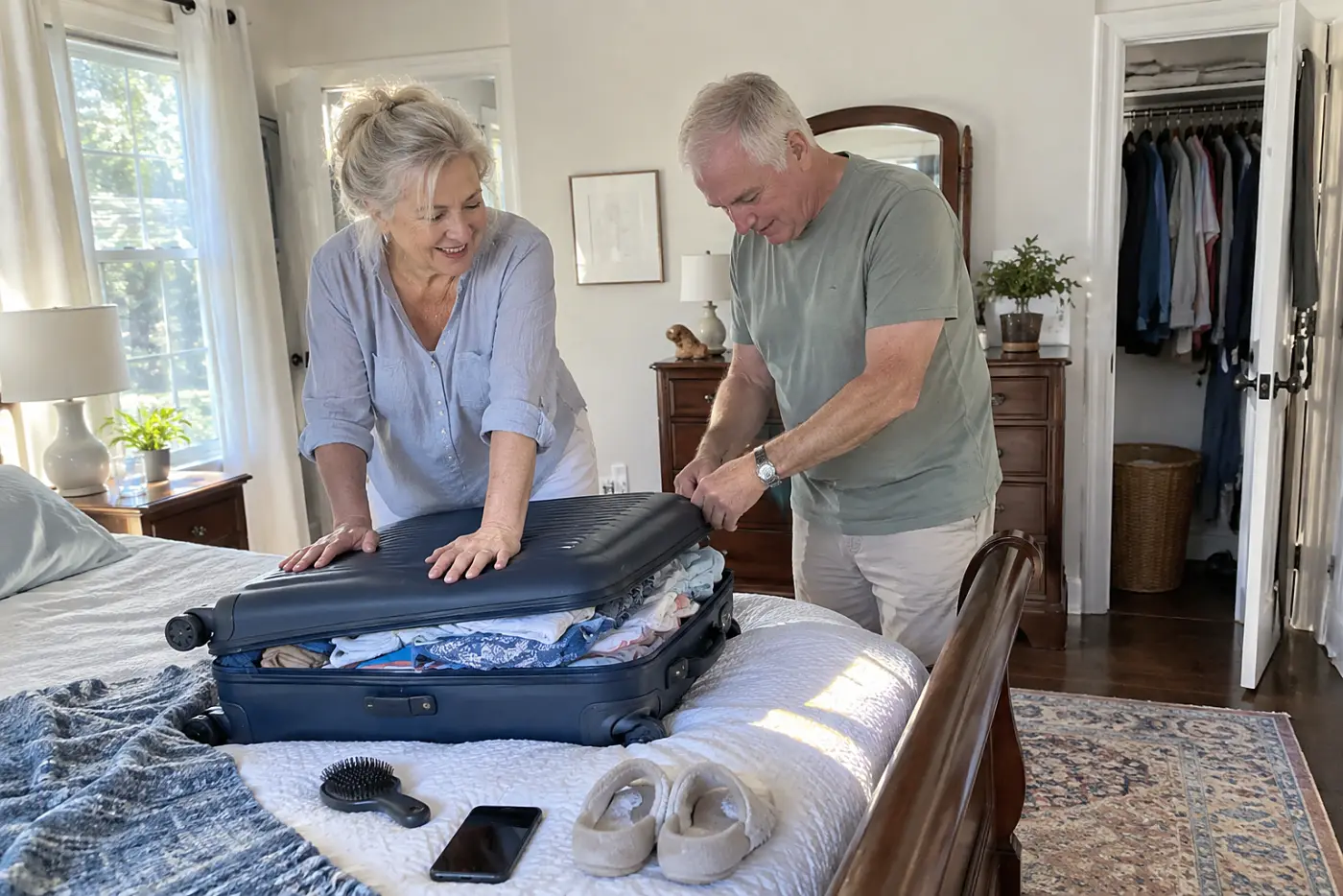
The suitcase is open on your bed. Beside it sits a phone showing three messages from your daughter: “Are you sure?” “What about the airport?” “Please call me.” You haven't left the house, yet the trip already feels like a hearing.
Her worry deserves an answer, but it doesn't get to become your itinerary. A birthday doesn't tell you whether a connection is too tight, a prescription will run out, or anyone knows what to do if you miss a call.
These 23 checks separate travel problems from family fear.
23A window seat beside your daughter
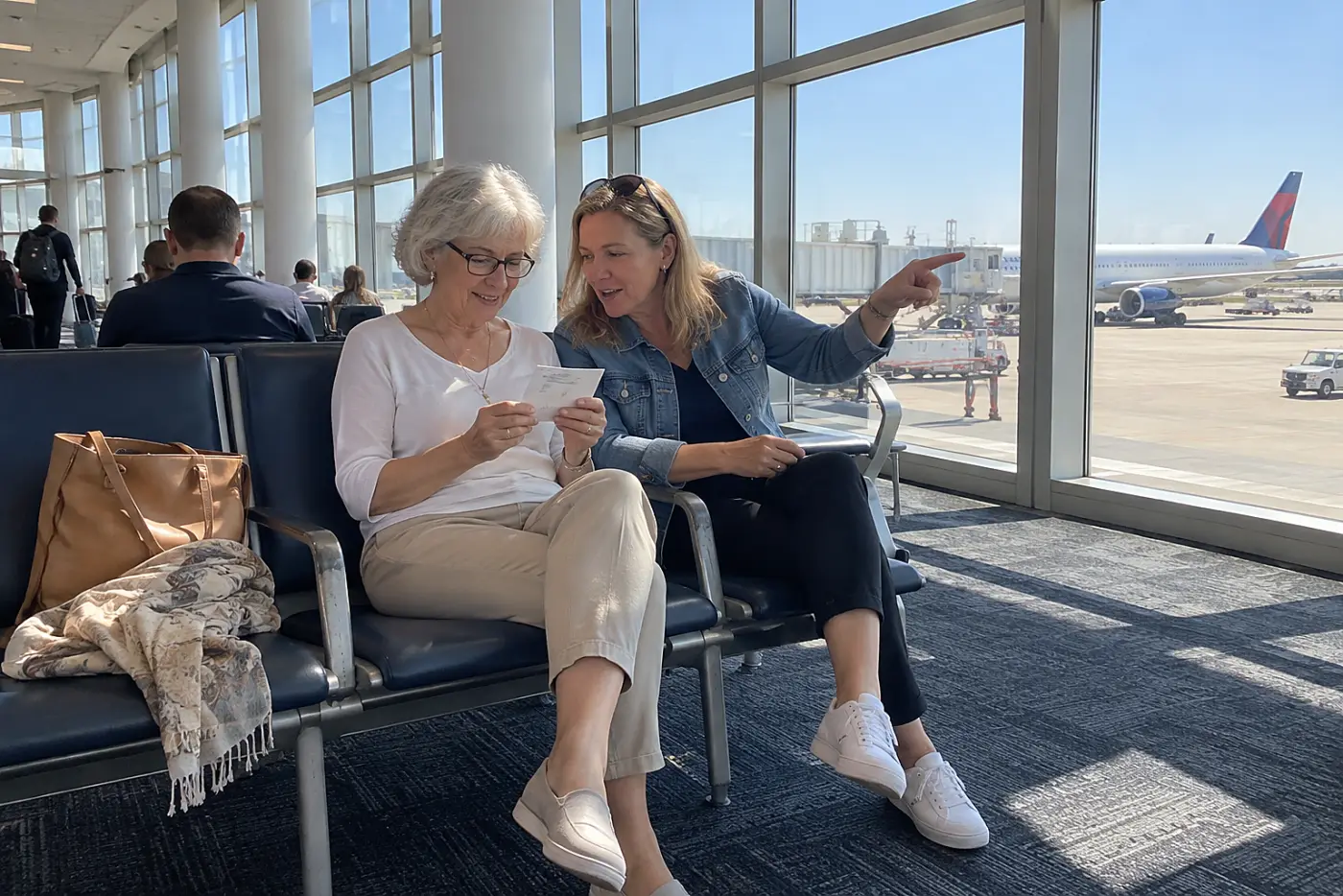
Her presence won't make a weak travel plan stronger.
Traveling together gives you company, not automatic help at a crowded gate. If she's carrying every document and answering every question, you lose track of details you need when you separate to use the restroom or board different rows. That turns an ordinary delay into a search for the person holding the boarding passes.
This week, put your own itinerary, hotel address, and return date on your phone and on paper. Tell her, “I want us both to know the plan, even if we split up for an hour.”
Company is worth having. The next question is what happens when you're on your own.
22The suitcase you lift at home
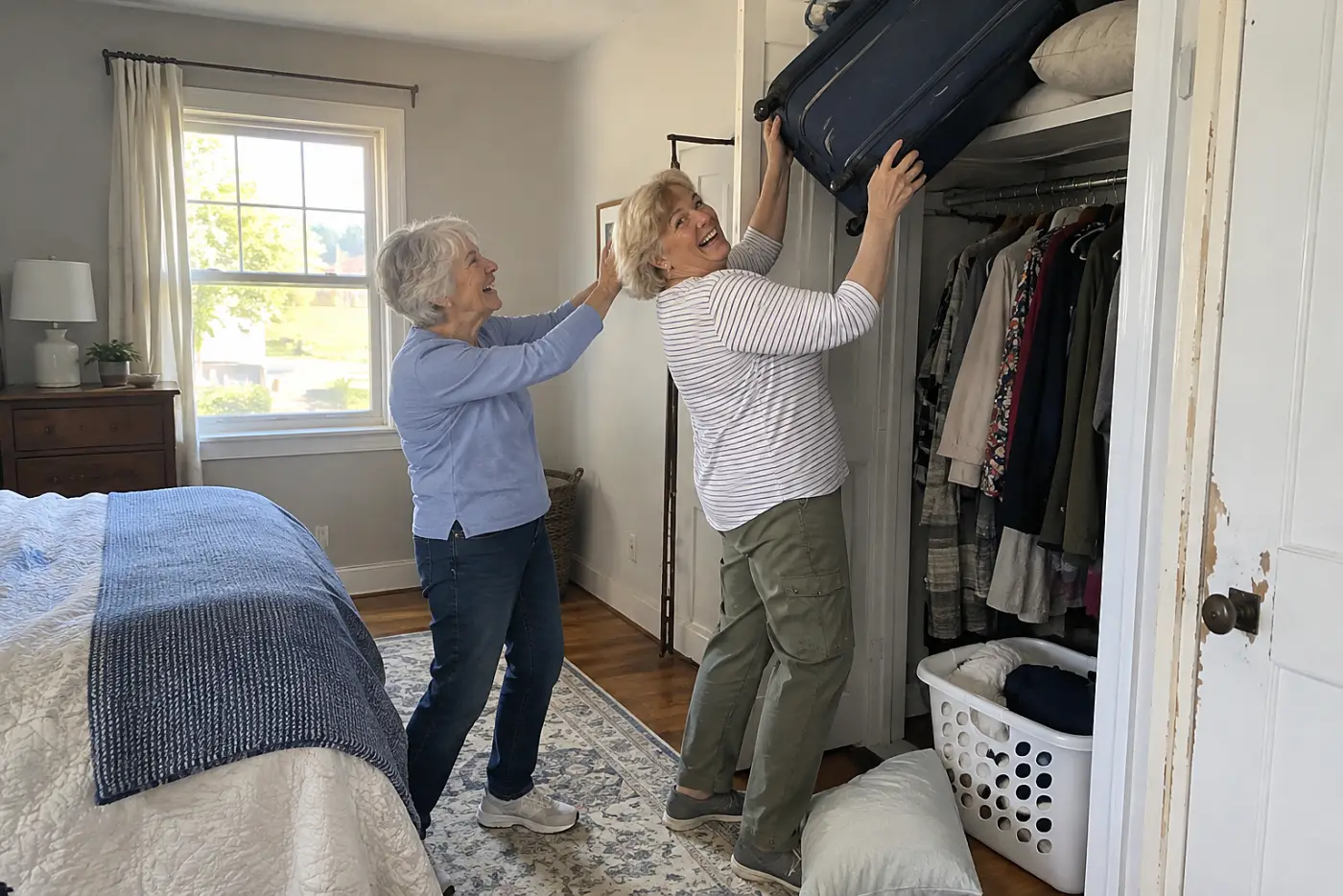
A bag's weight changes when you're reaching overhead.
At home, you lift from the floor with both feet planted. In a plane aisle, people wait behind you while the overhead bin sits above shoulder height. A rolling bag still needs lifting at security, onto a train, or up a hotel step. The real test is the lift, not your age.
If you can't lift the packed bag onto a high shelf without twisting, plan to check it. You still need to move it from baggage claim to your ride. An injury on departure day costs more than the convenience of keeping every sweater within reach.
Pack the bag this week, then try each lift you expect to do. Say to your daughter, “I tested the bag, and I'm changing what I pack.”
Weight isn't the only thing that makes an airport hard to cross.
21The connection printed on your ticket
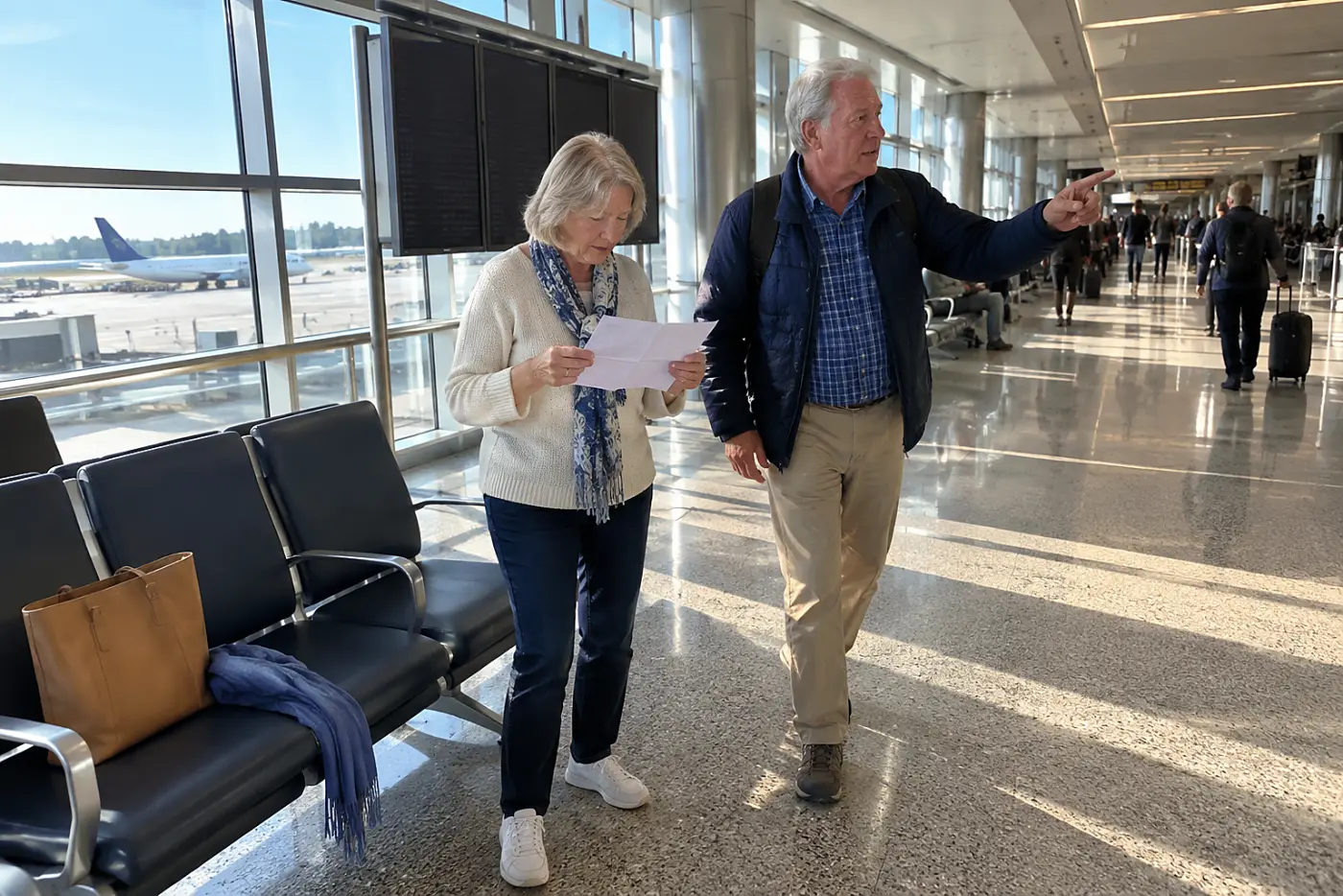
A legal connection isn't a comfortable one.
Airlines sell connections based on their scheduling rules. That doesn't measure the walk from your arrival gate, a terminal change, or the time you need for a restroom stop. One late incoming flight takes those minutes away before you've moved.
A missed connection brings rebooking and a new arrival time. Check the airport map and both flight numbers this week. If the transfer involves a train or separate terminal, look for a longer connection. Tell your traveling partner, “I'd rather arrive later than sprint through that airport.”
Then check how you'll handle the part between gates.
20The airport wheelchair request on your booking
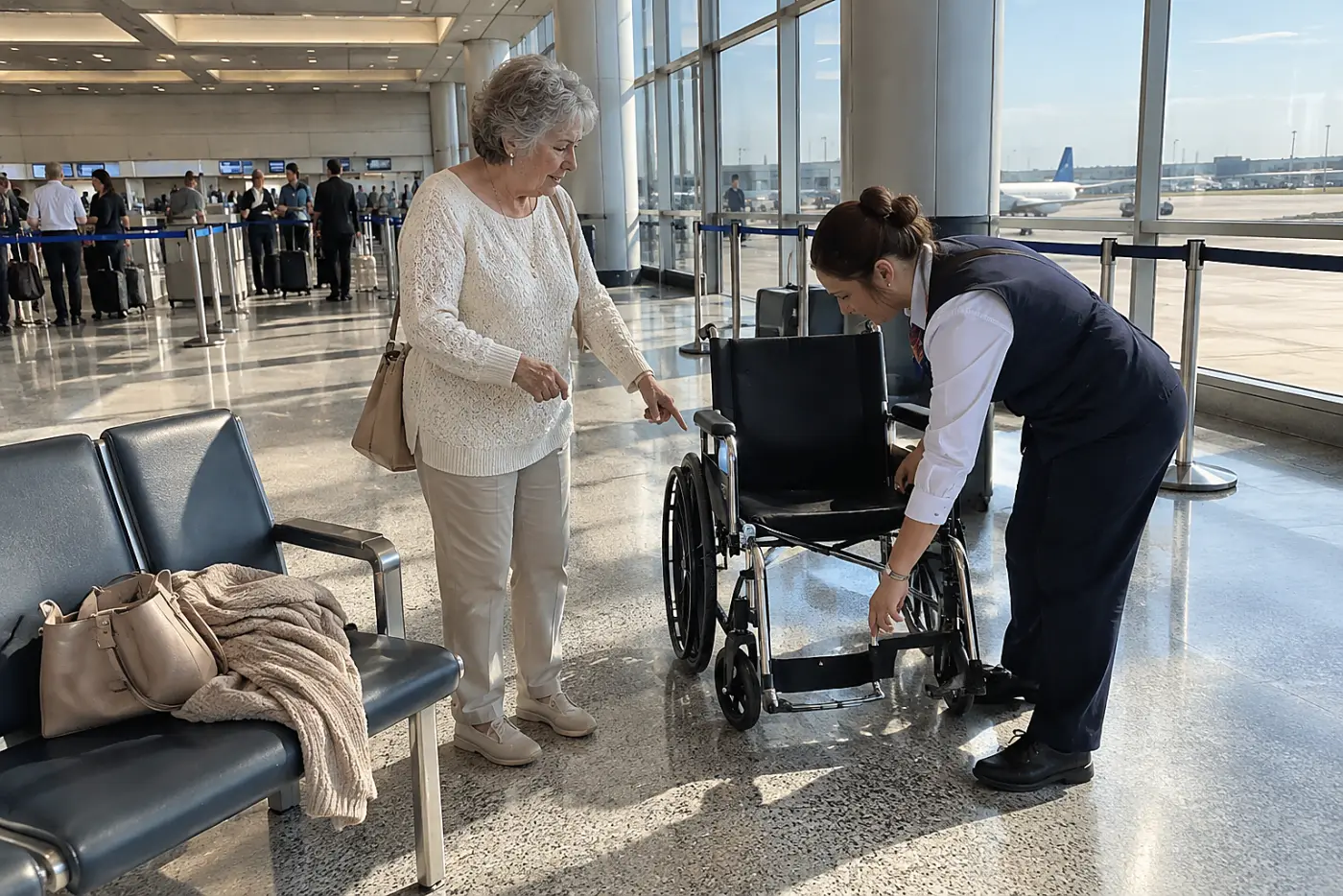
A long terminal walk is a distance problem.
At a U.S. airport, wheelchair help isn't reserved for someone who uses a wheelchair every day. Under the Air Carrier Access Act, airlines must help passengers with disabilities who request assistance. That includes help through a long terminal when a disability makes the walk difficult.
Tell the airline which parts of the trip you need help crossing. Staff might ask whether you need help standing, boarding, or making a connection. The request is for access, not a way to skip a line.
Waiting until boarding begins leaves less time to arrange help. A rushed walk also spends the energy you wanted for arrival, when you'll still need to find your ride and hotel.
This week, contact the airline through its accessibility channel and add the request to your reservation. Say, “I need wheelchair assistance from check-in to my gate, including a connection.” Keep the confirmation with your flight details and ask where to meet the attendant.
Getting through the terminal still leaves the security checkpoint.
19The shoes you wear through security
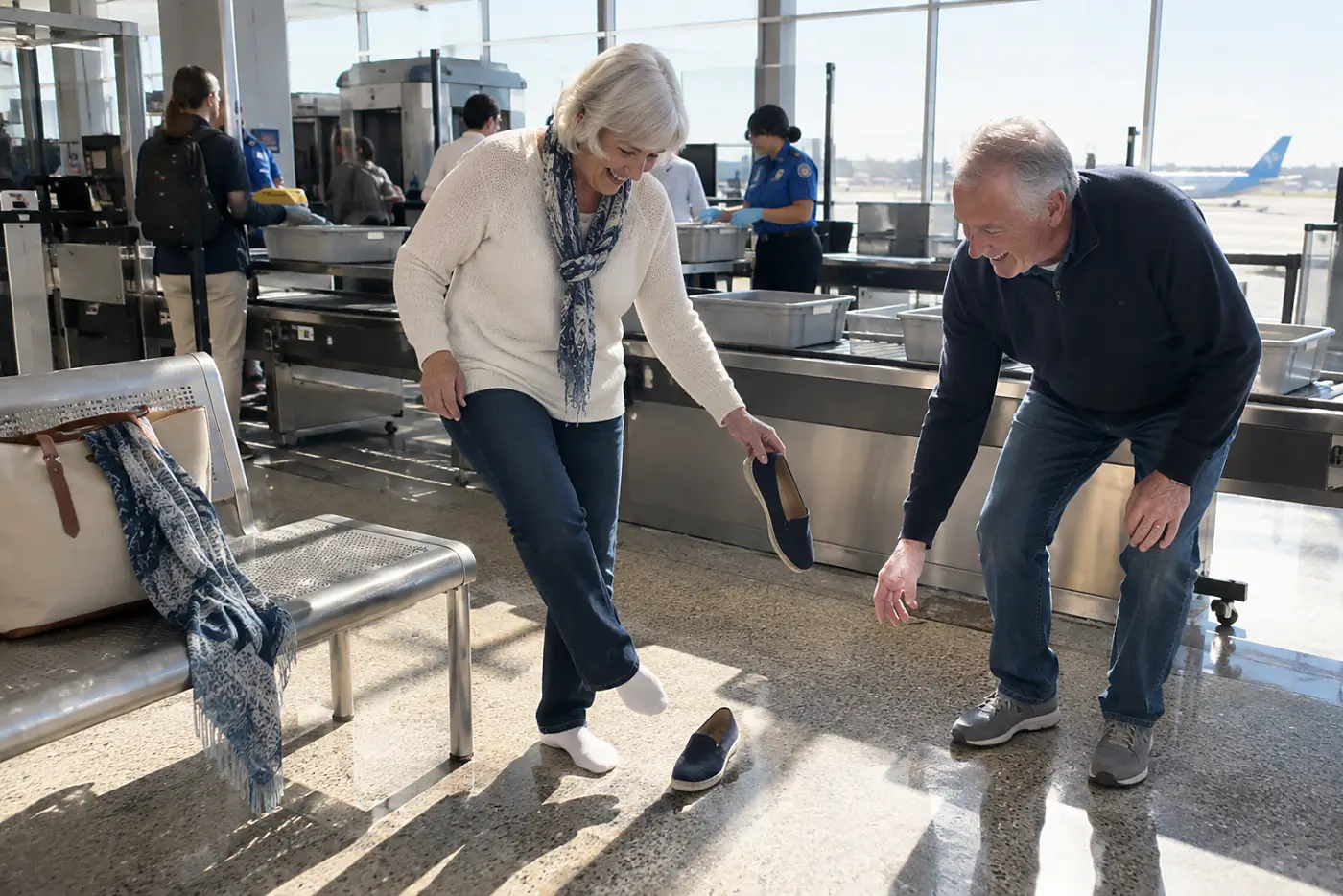
A screening shortcut won't erase the checkpoint.
The TSA has modified screening for travelers age 75 and older, including keeping shoes on. An alarm or security concern still means further screening, so your child shouldn't schedule a tight departure around a quick pass.
Wear shoes you can remove without a struggle anyway. This week, check TSA's current screening guidance and leave enough time for an ordinary line. Tell your companion, “I'll dress for security, but I won't count on a shortcut.”
After security, the boarding pass has another detail worth reading.
18The name beside your passport photo
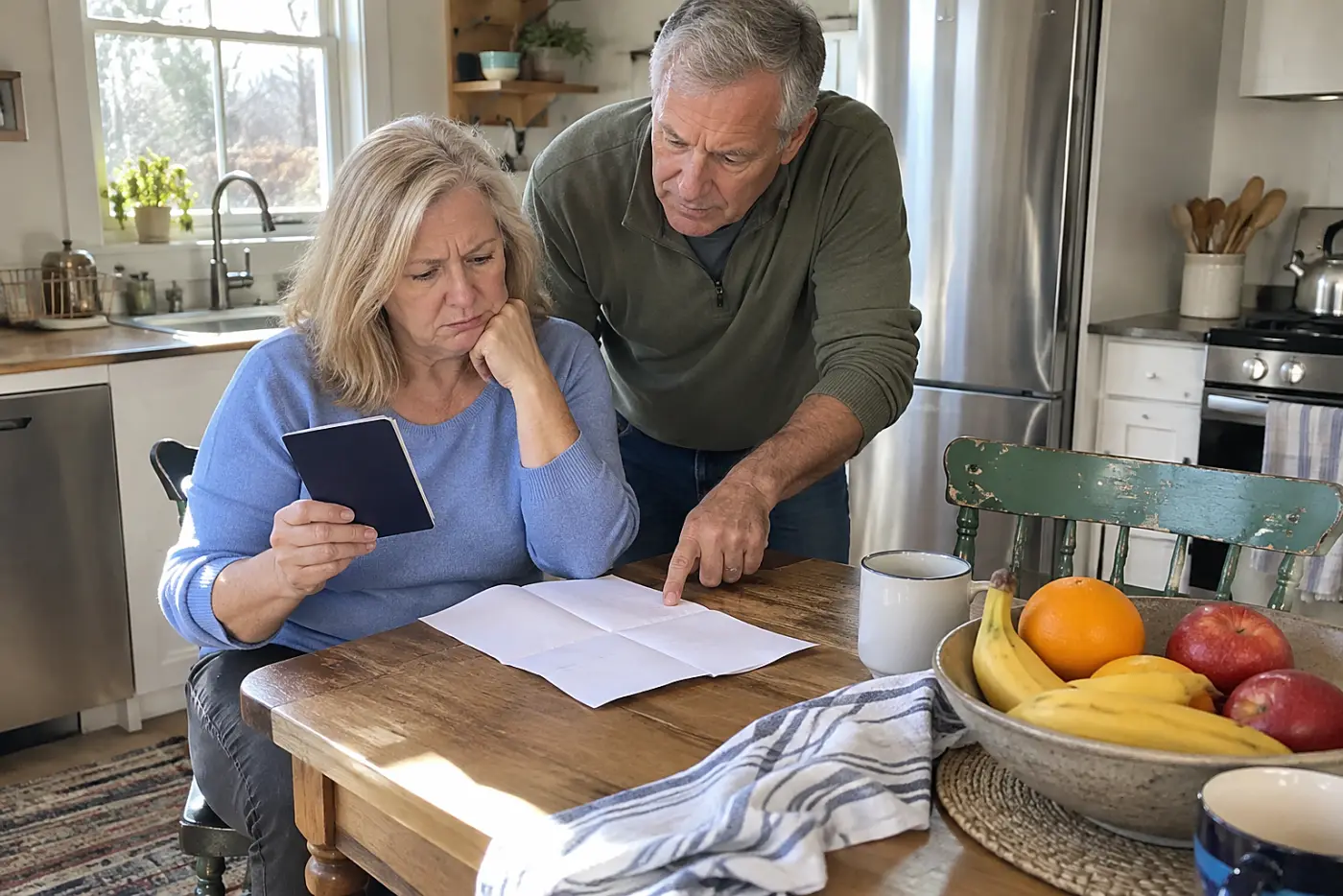
One wrong letter can stop a smooth departure.
For international flights, your airline reservation needs to match the name on your travel document. A mismatch leaves you trying to fix a booking at the counter. Look closely at a changed surname, a missing part of a hyphenated name, or an old passport saved in an airline account.
An unexpired passport isn't enough for every destination. The U.S. Department of State lists entry rules, including places that require passport validity beyond your travel dates.
This week, put the passport beside every flight booking and compare the names character by character. Then read the destination's entry requirements on the State Department site. Tell the agent, “Please check this reservation against the name printed on my passport.”
The next document question is what happens if that passport disappears.
17A passport copy outside your purse
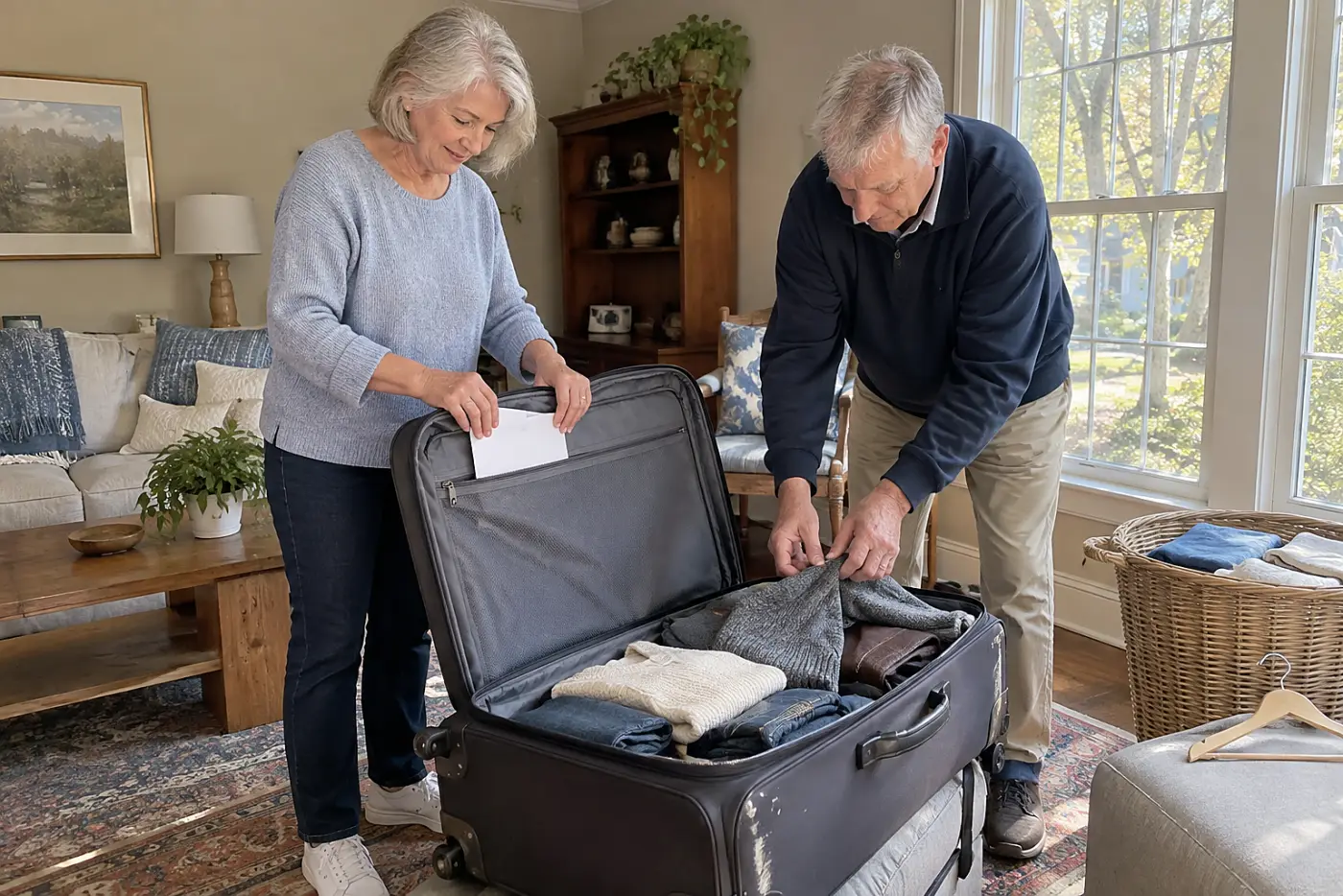
A stolen purse shouldn't take every identifier with it.
If your passport disappears abroad, the nearest U.S. embassy or consulate is the place to report it and seek a replacement. A copy of the information page helps you supply its number and spelling. It does not replace the passport for travel.
Your child can't read a photo stored only on your missing phone. This week, keep a paper copy apart from the original and save another in a secure account you know how to open. Say, “I have the number stored separately, so nobody needs to guess.”
Next, check what else is riding in that purse.
16The Medicare card in your wallet

A familiar card doesn't pay every foreign bill.
Medicare generally doesn't cover care outside the United States. Some Medicare Advantage plans and Medigap policies include travel provisions; your plan's documents tell you what applies. Don't mistake an insurance logo for an answer about a clinic abroad.
A clinic will want a payment method. Medical evacuation is a separate question: an ambulance to a local hospital isn't transport home. If you haven't checked both, your daughter has no reliable answer when she asks what happens if you get sick.
This week, call the number on your plan card and request its written rules for your destination. Ask, “What do I pay first, and how do I file a claim from abroad?” Before buying travel medical insurance, read its exclusions and emergency assistance instructions.
Insurance answers only part of the question when treatment begins.
15The prescription bottles in your carry-on
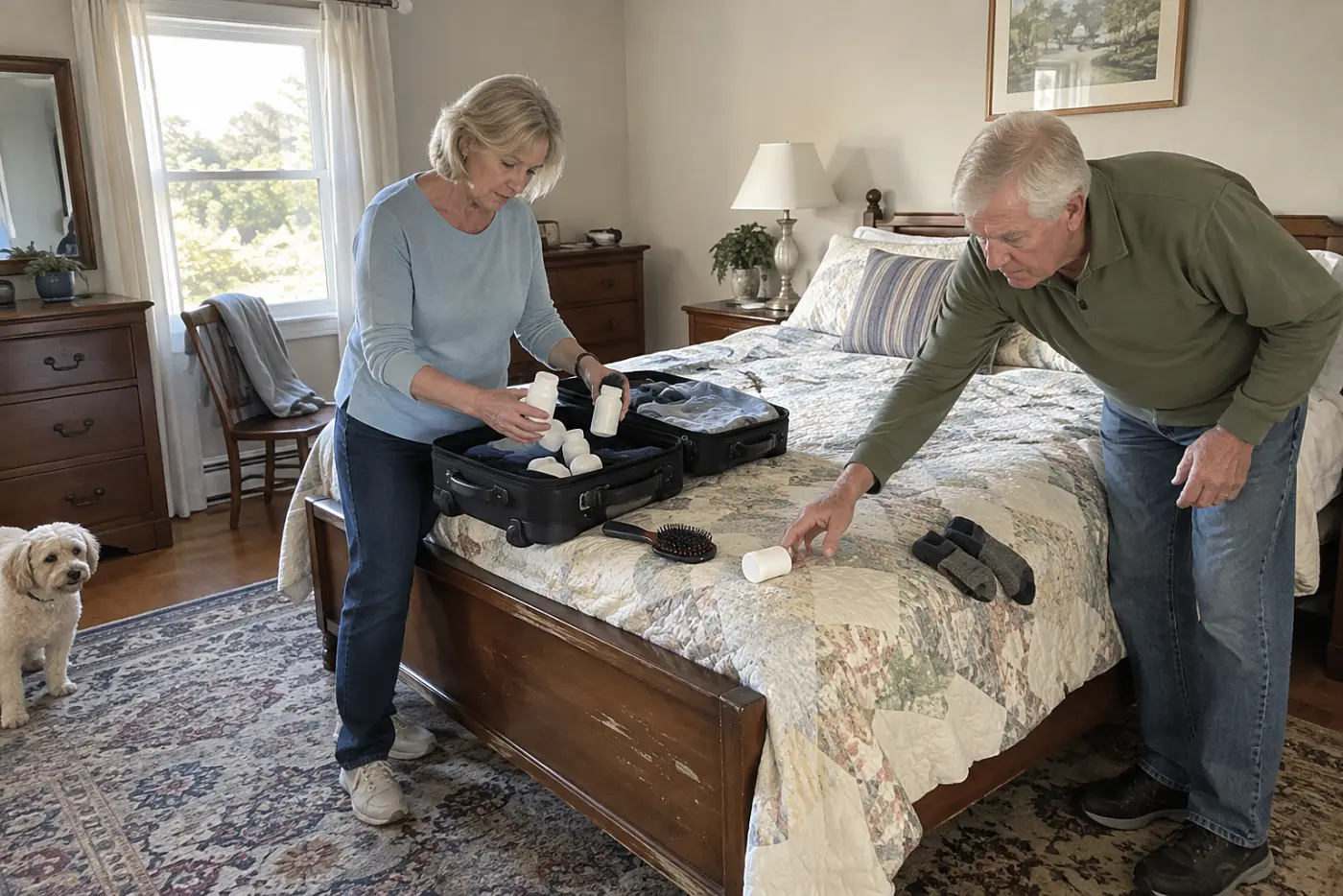
Checked luggage is a poor place for daily medicine.
A delayed bag can reach the hotel after you do. Some medicines also need documentation or face restrictions in another country. The CDC's Travelers' Health site tells travelers to check destination rules before carrying medicine across borders.
This week, pack medicines in your carry-on, in labeled containers, with enough for the planned trip. Ask your pharmacist, “How should I carry these, and what should I check for my destination?” Keep your prescription list separate from the bottles.
There's another medicine question that doesn't appear on the label.
14The new pill before a long flight

Departure day is a bad trial run.
A medicine that makes you dizzy at home can do the same when you stand after hours in a seat. A sleep aid adds another problem if you're groggy during an evacuation or connection. Your doctor knows the prescription; you know when and where you'll take it.
Falls and missed connections are concrete risks. A blanket “you're too old to fly” doesn't tell you which pill, dose, or schedule needs attention.
This week, put your medicines and flight times on one page for your prescriber or pharmacist. Ask, “Will this schedule change when I cross time zones, and should I avoid starting anything new before I go?” Don't change a dose on your own. Write down the answer so you don't have to recall it at a noisy gate.
Even a familiar prescription needs a plan for the hours in the air.
13The aisle walk after takeoff
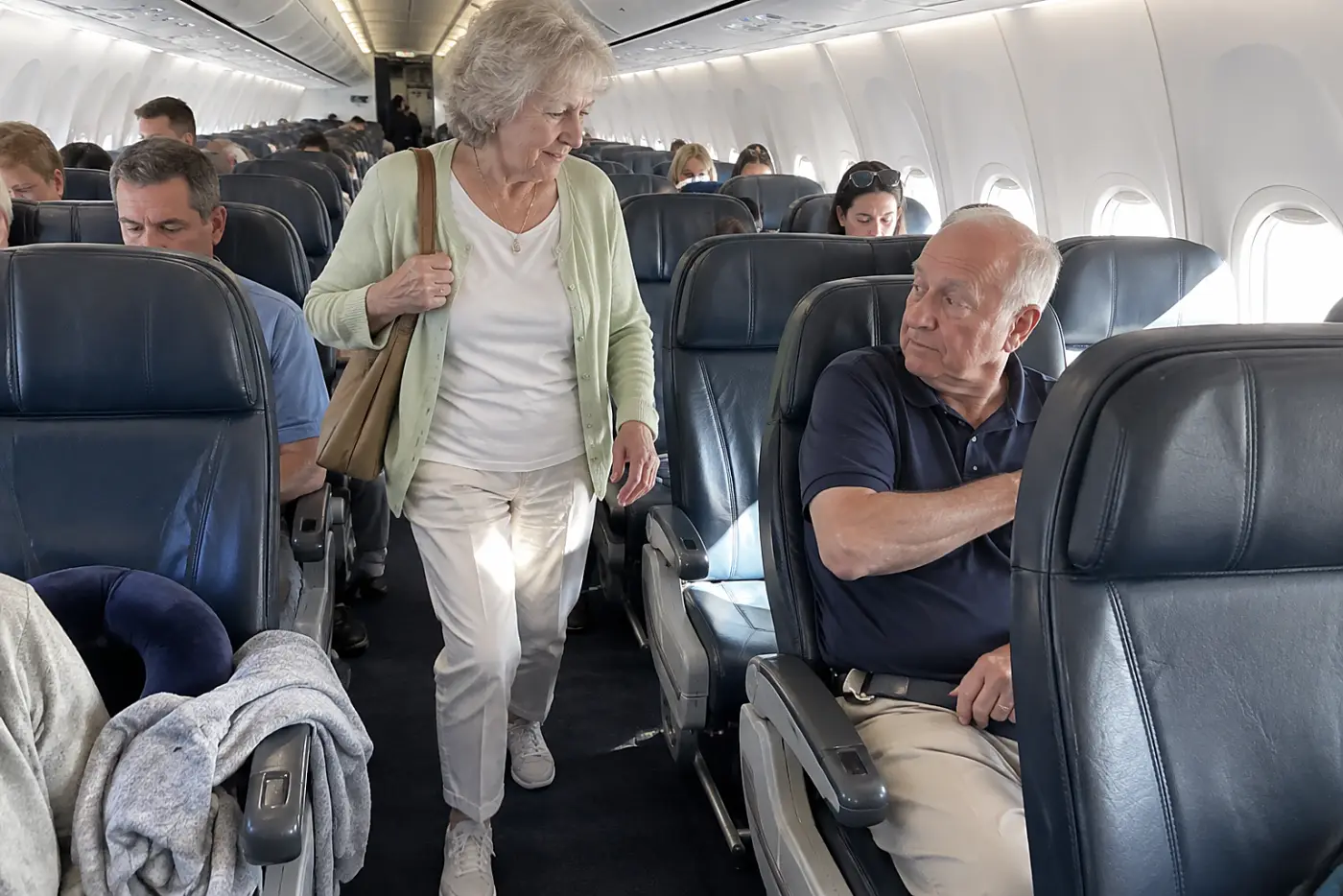
Sitting still for hours raises blood clot risk.
The CDC recommends moving your legs during long trips. It also recommends talking with a clinician about personal risk before travel. That gives you a specific question to ask, instead of accepting a blanket warning about your age.
A swollen, painful leg or sudden breathing trouble needs prompt medical attention. This week, ask your clinician about your own clot risk, especially if you've had a clot before. Say, “I have a long flight. What should I do during it?”
The arrival plan deserves the same attention as the flight.
12The taxi stand outside arrivals
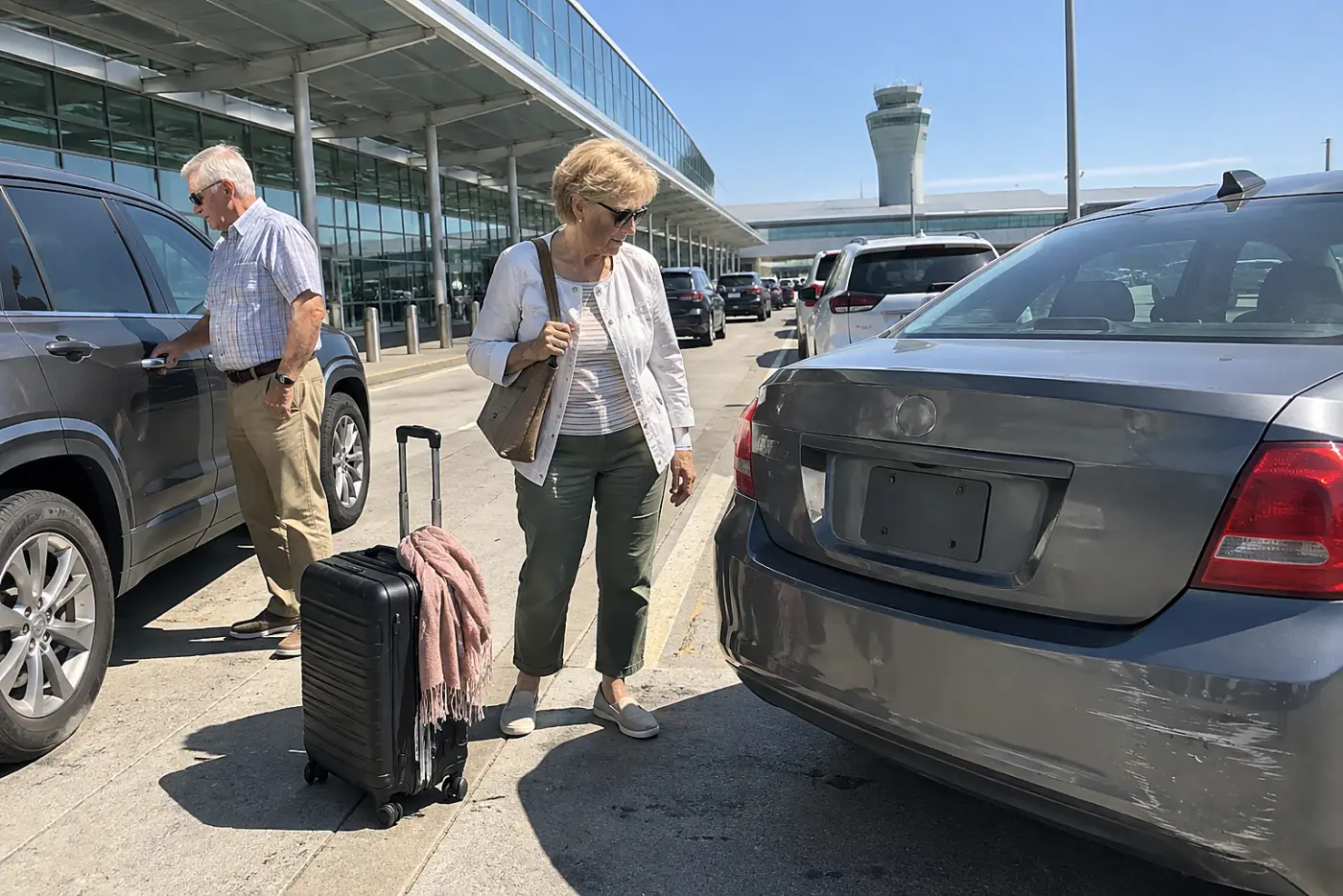
The riskiest ride starts before you enter the car.
After a flight, you want a seat and a hotel key. That makes an unsolicited ride offer appealing, especially when the official pickup point sits beyond another set of doors. At some airports, licensed taxis and app rides use different pickup areas. Follow the airport's posted directions rather than a stranger's shortcut.
A wrong car puts your destination and luggage in someone else's hands. Your daughter watching your flight land won't know which vehicle you entered.
This week, find the airport's official ground-transport page and note the pickup location. Put your hotel address on paper in the local language where needed. Say to a driver, “Please confirm the destination before I get in.” If the car is an app ride, compare its plate and driver details with the booking.
Then look at what your phone needs to make that booking work.
11The phone settings before you land

A full battery won't summon data service abroad.
Your carrier controls roaming access and charges. Airport Wi-Fi takes a working connection, while a ride app needs data before you reach the car. A service gap looks like trouble to family expecting an instant landing message.
This week, ask your carrier which services work at your destination and what they'll cost. Save the hotel address and airport pickup instructions offline. Tell your family, “If I don't have service at landing, I'll message from the hotel.”
That message still has to travel through a crowded day.
10The updates your family expects during transit
Repeated requests for updates make a delay harder.
One child wants a text after takeoff; another expects one at landing. On a disrupted route, you're answering both while finding a new gate. An agreed update schedule keeps your attention on the trip instead of three conversations.
A late reply then has an ordinary explanation. This week, tell your family which travel milestones you'll report and which ones you'll skip. Say, “I'll send an update after I reach the hotel, not from every gate.”
But a caller claiming an emergency presents a different interruption.
9The emergency call from an unknown number
A convincing voice isn't proof of an emergency.
Scammers claim a traveler is hurt, stranded, or under arrest, then demand money immediately. The FTC advises checking an unexpected emergency story through a number you already know. Caller ID and personal details don't settle it.
Your worried children are targets too. This week, choose a family verification phrase and a second person to call before anyone sends money. Say, “If a caller says I'm in trouble, hang up and call my usual number.”
The next money decision happens before any call arrives.
8The credit card left in the drawer
Losing one card shouldn't strand the whole trip.
Cards fail for ordinary reasons: a damaged chip, a purchase declined by fraud controls, or a wallet left in a cab. A second payment method stored separately gives you a way to pay for a room while you sort out the first. Cash alone won't solve every hotel deposit.
A family member at home can't hand you a replacement card at the front desk. Card issuers have different emergency replacement procedures, so find yours before you need it.
This week, take two payment methods and store them in different places. Save each issuer's international contact number away from the card itself. Ask your bank, “If my card stops working abroad, what number do I call and how do I get cash?” Check your available credit and account access before departure.
Payment gets you into a hotel. The room itself needs a look.
7The bathroom floor in your hotel
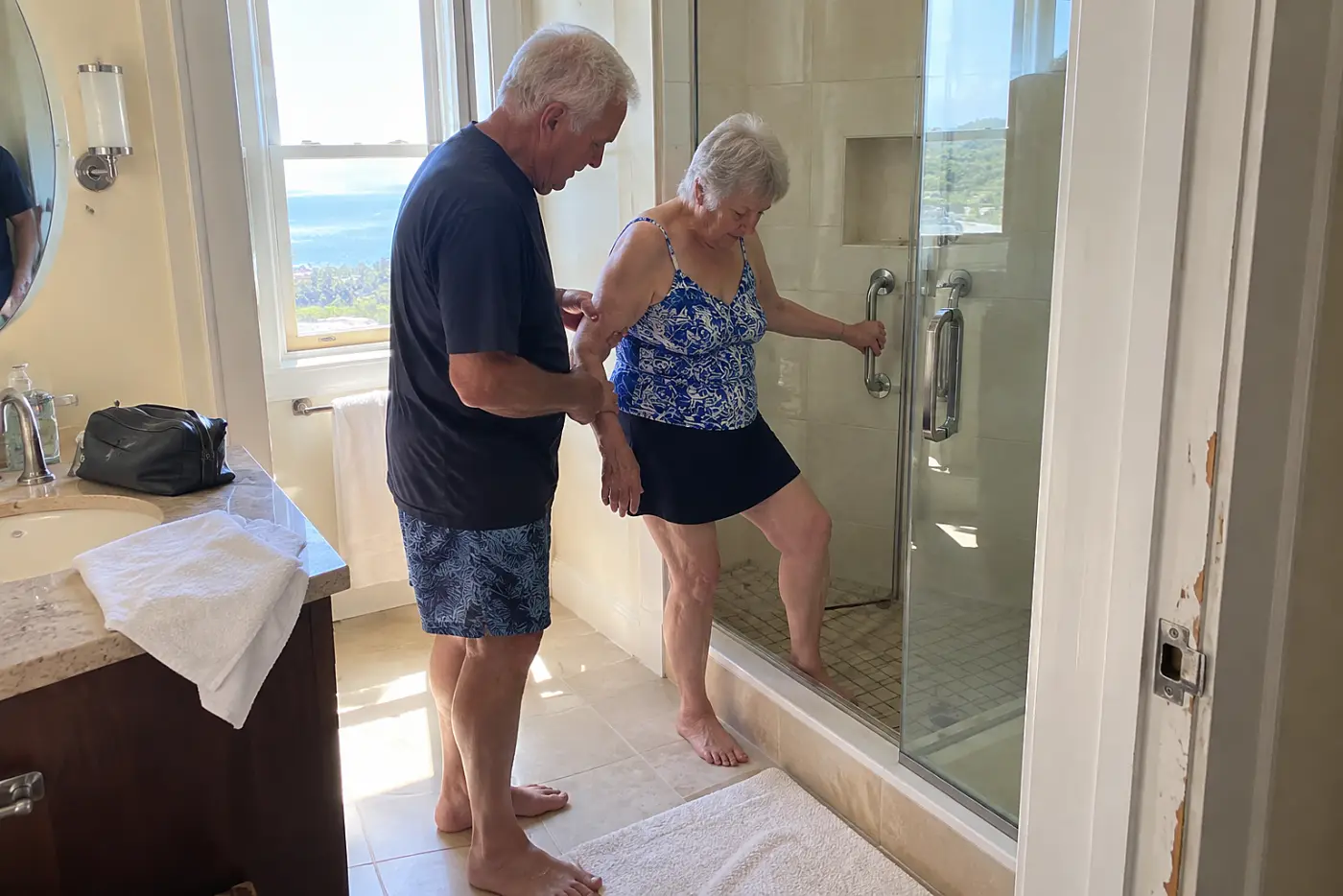
A polished room can hide a slippery step.
Photos show the bed, not the route from it to the toilet at night. A shower ledge, loose bath mat, or poor lighting is easier to spot while you're alert. The risk is physical and specific, not a verdict on whether you should travel.
This week, ask the hotel about the bathroom layout before booking. On arrival, check the floor, shower entry, and light switches. Say at the desk, “I need a room without a step into the shower, if you have one.”
Outside the room, another route needs checking.
6The stairs on a train platform

A train ticket doesn't describe the station.
A route that looks simple on a map can involve stairs, a platform gap, or a short transfer between tracks. Station accessibility and boarding arrangements differ, so check the stations you'll actually use. Your family picturing a seated train ride misses the part where you move bags through a busy terminal.
A tight transfer leaves little room for a changed platform. Missing it costs time and can leave you waiting somewhere you hadn't planned to stop.
This week, look up your departure, connection, and arrival stations on the rail operator's site. Ask, “Is there step-free access from the entrance to this platform, and where do I board?” Pack so you can move your bag without relying on a stranger lifting it.
Once you reach the street, distance becomes a different calculation.
5The walking route between planned stops

A short distance on a map still has terrain.
Old streets have uneven stones, hills, and crossings that take time. A schedule built around the straight-line distance ignores those details. Your own pace at home gives you a better measure than anyone's guess about what people your age do.
This week, check the walking route between stops, not just their addresses. Mark a place to sit and an alternate ride. Tell your companion, “I'm keeping the museum, but I'm taking a car afterward.”
Long days also put pressure on the hours you meant to rest.
4The first day's crowded itinerary
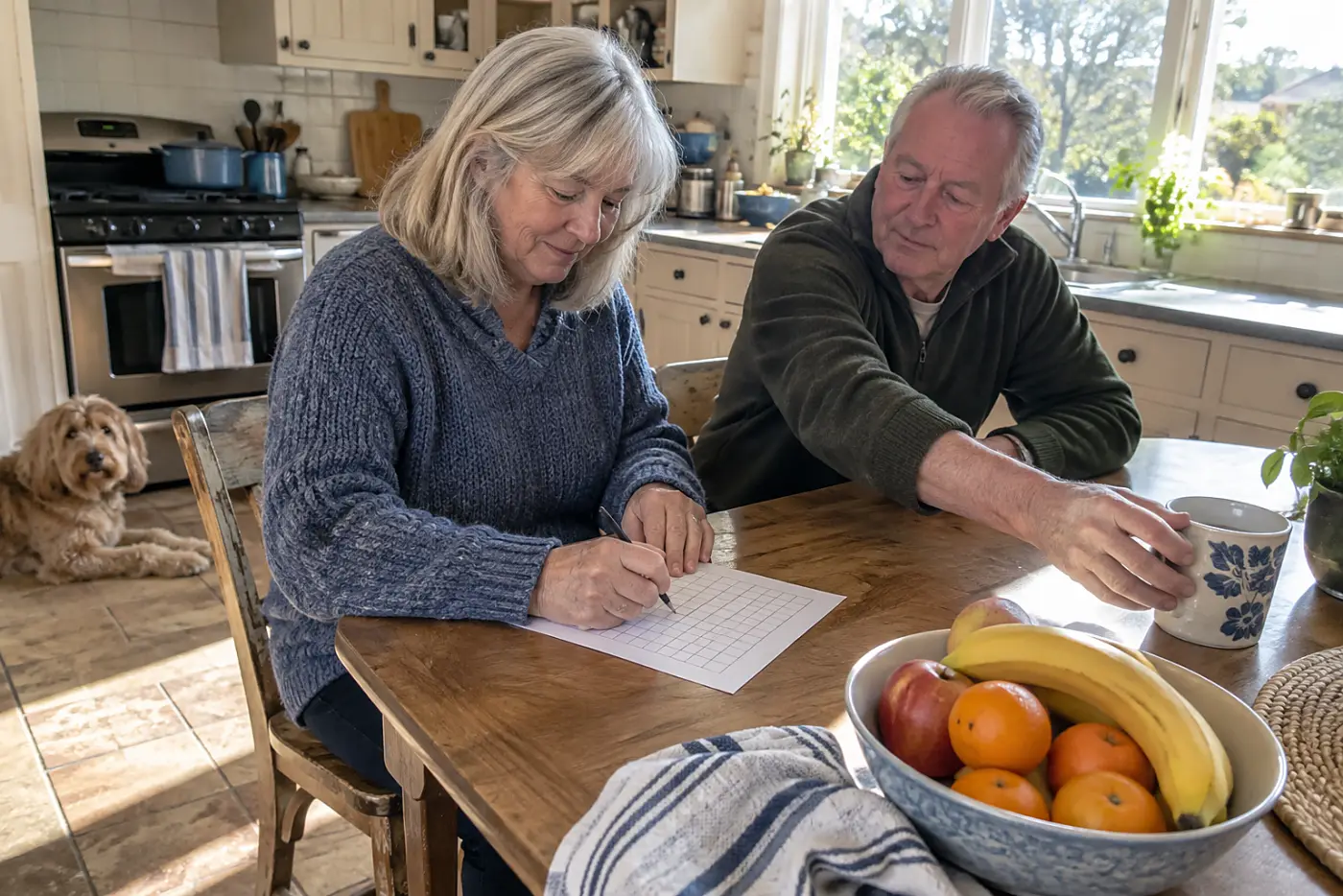
Exhaustion makes small choices harder to judge.
After a flight, you're handling signs, money, bags, and a new street layout. Add a timed tour and a distant dinner, and there's no gap for a late arrival. That doesn't make the destination dangerous; it makes the first day brittle.
A missed reservation costs money. More important, rushing while tired makes it harder to spot a wrong turn or question a driver who takes you somewhere unexpected.
This week, move one timed activity off your arrival day. Keep the hotel address, check-in time, and first meal plan easy to find. Say to your travel partner, “I want the first evening clear so we can deal with whatever the flight hands us.” You can fill that time later if everything runs smoothly.
The same room to breathe helps when a trip changes after it starts.
3The cancellation terms before you pay

A cheap booking gets expensive when plans change.
A nonrefundable room stays nonrefundable when you decide the trip is too much. Airline fare rules, hotel terms, and travel insurance answer different questions. Read each before you pay rather than treating “insured” as a promise of a refund.
This week, save the cancellation terms for your flights, rooms, and tours in one folder. Mark the deadlines on your calendar. Ask the seller, “What happens to my payment if I cancel for a reason I choose?”
If you go, someone still needs the right information to help.
2The allergy list beside your medicines

An allergy nobody knows about won't warn a clinician.
In a new place, you might have to give a medical history while tired or in pain. A list of medicine names, doses, and allergies gives a clinician something readable. It's for the moment you seek care, not a request for your child to manage the visit.
A relative recalling the color of a pill won't settle which medicine you take. This week, check your list against the bottles and keep it in your wallet. Say to your pharmacist, “Please help me check these names and doses before I leave.”
Someone at home still needs a different set of instructions.
1The one-page handoff you rehearse before departure

Unassigned help arrives late, even when everyone cares.
Give one person a written handoff: where you're going, your hotel number, and the time you'll check in. State when a missed check-in requires action and which call comes first. Name a backup if your contact is unavailable. Include your insurer, medicines, allergies, and doctor's number on the same page.
Keep the job narrow; this person is your contact, not your supervisor. Without a first step, a missed call turns into competing guesses. Your contact needs the hotel's number more urgently than a running report of your whereabouts.
For travel abroad, enroll in the State Department's Smart Traveler Enrollment Program. Its destination alerts and embassy contact give you another route for information when trouble reaches your destination. STEP doesn't replace local emergency help or the instructions you've given your family.
This week, sit with your chosen contact and walk through the page. Say, “If I miss our agreed time, follow these steps in order. Otherwise, let me enjoy the trip.” Ask them to repeat the first call back to you.
That rehearsal leaves one question worth asking aloud.
The bottom line
Across these 23 checks, the trouble starts when a real task gets replaced by a broad fear.
The best-prepared version of you has tested the bag, checked the route, and given one trusted person a clear job. She hasn't asked for permission.
Which of these has already happened in your family?
Bonus: The family handoff that starts help without handing over your trip
- Write your destination, flight numbers, hotel phone number, travel dates, and medical details on one page.
- Name one contact and one backup. Give both the page, then keep a copy with you.
- Set a check-in deadline. Write the first call to make if you miss it: the hotel, using the number on the page.
- Rehearse it aloud: “What will you do first if I don't check in?” If the answer differs, fix the page together.
Margaret Hale
Travel & Lifestyle Editor
Margaret has covered travel for 25 years and has ridden every long-distance train route in the U.S. at least once.
You might also like