27 Ways Travel Changes After Your Husband Is Gone
The first trip alone changes decisions as small as where the spare room key goes and as consequential as whose name appears on the reservation.
By Margaret Hale, Travel & Lifestyle Editor
Updated · 17 min read
- Written by our travel & lifestyle editor
- How we review
Read to the end: #1 is the hotel arrival check that prevents a booking mistake at the desk, and almost nobody does it before leaving home.
The suitcase is open on the bed. His side of the closet is still full, and the small zipper pocket holds the adapter he always packed.
Booking one seat instead of two sounds like half the work. Yet the tasks he handled don't vanish with his ticket, and the habits you shared can make an empty seat feel loudest at an ordinary moment. You don't need a new personality to take a trip. You need to see which decisions have changed hands.
Here are 27 changes worth looking at before you zip the bag.
27The suitcase pocket he always filled

The missing adapter turns up when you reach the hotel.
He had a packing routine, even if neither of you called it one. The charger, medication pouch, or paper confirmations went into his bag. Now those things need a place in yours. A forgotten charger costs time on the first evening, when finding dinner already feels like enough.
This week, lay out everything you carried separately on your last trip and check each device's plug. Say to a friend, "I'm doing a packing run-through. Would you look at this pile with me?"
Leave the bag open; the next omission is harder to see.
26The unused ticket in his name

His ticket does not become yours when plans change.
Airline tickets name individual passengers. If an old trip still shows two tickets, removing his name won't move his seat or fare into yours. Ask the airline what happens to the unused ticket under its fare rules; don't cancel the whole itinerary while checking.
This week, find the airline's record locator and read each passenger name aloud. Contact the airline through its official site: "My husband died before this trip. What happens to his unused ticket, and will my ticket stay intact?"
Save the reply beside your confirmation. Then consider what sitting alone changes at the airport.
25The empty seat on the plane

The aisle feels different when nobody you know takes the window.
On a shared trip, one person watched the bags while the other found coffee or a restroom. Alone, your carry-on goes where you go. TSA advises travelers to keep belongings in sight through screening; there's no familiar hand to collect your coat or phone.
This week, try moving through your local station or a busy café with only the bags you'll fly with. "I need a moment to gather my things," is enough to tell the person waiting behind you.
Next comes the cost of booking for one.
24The single room bill

A room doesn't become half price when one guest checks in.
Tours and cruises price some trips per person based on two people sharing a room. A solo supplement is the extra charge for taking that room alone. A private room on another trip has no supplement line, yet its full price still lands on your card. Comparing only the advertised per-person figure hides what changed.
This week, ask for the total price for one traveler in one room, with taxes and fees included. Put it beside the price for any trip you used to take together. "Please send me the total for one person, including the room charge."
That number gives you a budget, but it doesn't tell you where you'll want company.
23The dinner table set for one

Eating alone in public feels different from eating alone at home.
Dinner used to arrive with someone who knew the day's small story. At a busy restaurant, a counter seat gives you a place to eat without facing an empty chair. A reserved table works too, if you'd rather have space for a book and your own thoughts.
This week, pick one restaurant near your first hotel and check its booking options. "I'd like a table for one by the window," is a complete request. You don't owe anyone an account of why you're alone.
The harder meal is the one you haven't planned for.
22The first evening without a plan

An unfilled evening leaves too much room for old habits.
After check-in, you used to decide together whether to unpack, walk, or find food. Now the decision waits while you're tired and still carrying the day. A late arrival narrows your choices further.
The hotel restaurant closes, the nearest shop shuts, and an aimless walk feels less inviting in an unfamiliar place. You don't have to fill the night with entertainment. A short plan gives you one less decision to make at the door.
This week, write down an arrival meal, its opening hours, and one backup within walking distance of the hotel. Check the route on a map before you leave home. If arrival runs late, say at the desk, "Is there somewhere nearby serving food now?"
Once you've eaten, the room itself asks for a different kind of check.
21The room door at bedtime

He used to be there when someone knocked.
At check-in, look at how the door locks from inside. Test the deadbolt and check that the peephole gives you a clear view. The State Department's travel site has destination details, but nobody there can test the lock in front of you.
This week, add "door, lock, peephole" to your arrival note. If anything fails, call the desk from inside: "The deadbolt doesn't catch. Do you have another room?"
A secure door helps you sleep; it doesn't tell anyone where you are.
20The address left with one person

A shared itinerary once lived in two heads.
If a flight changes or you switch hotels, someone at home needs the new details. A person who expects your check-in also needs to know when silence calls for a phone call, rather than a worry-filled guess. This isn't permission to track every hour. It's a clear agreement with someone you trust, made before either of you needs it.
This week, send that person your flight numbers, hotel name, address, and check-in times. Agree on what they should do if they don't hear from you, and give them a way to reach the hotel. "If I miss our Sunday call, please text first, then call the hotel."
A plan at home still leaves the question of whom to call while you're away.
19The emergency contact on your phone

His number won't help a stranger reach you now.
Medical ID on an iPhone or Emergency info on an Android phone holds contacts for an emergency. The setup differs by phone, so test what appears from the locked screen. A paper contact card in your wallet gives someone another route if the phone is lost or broken.
This week, replace his entry if he's still listed, then ask your chosen contact for the best number to use. "I'm listing you as my travel contact. Is this still your mobile number?"
The phone also holds the documents you once split between two bags.
18The passport expiration date
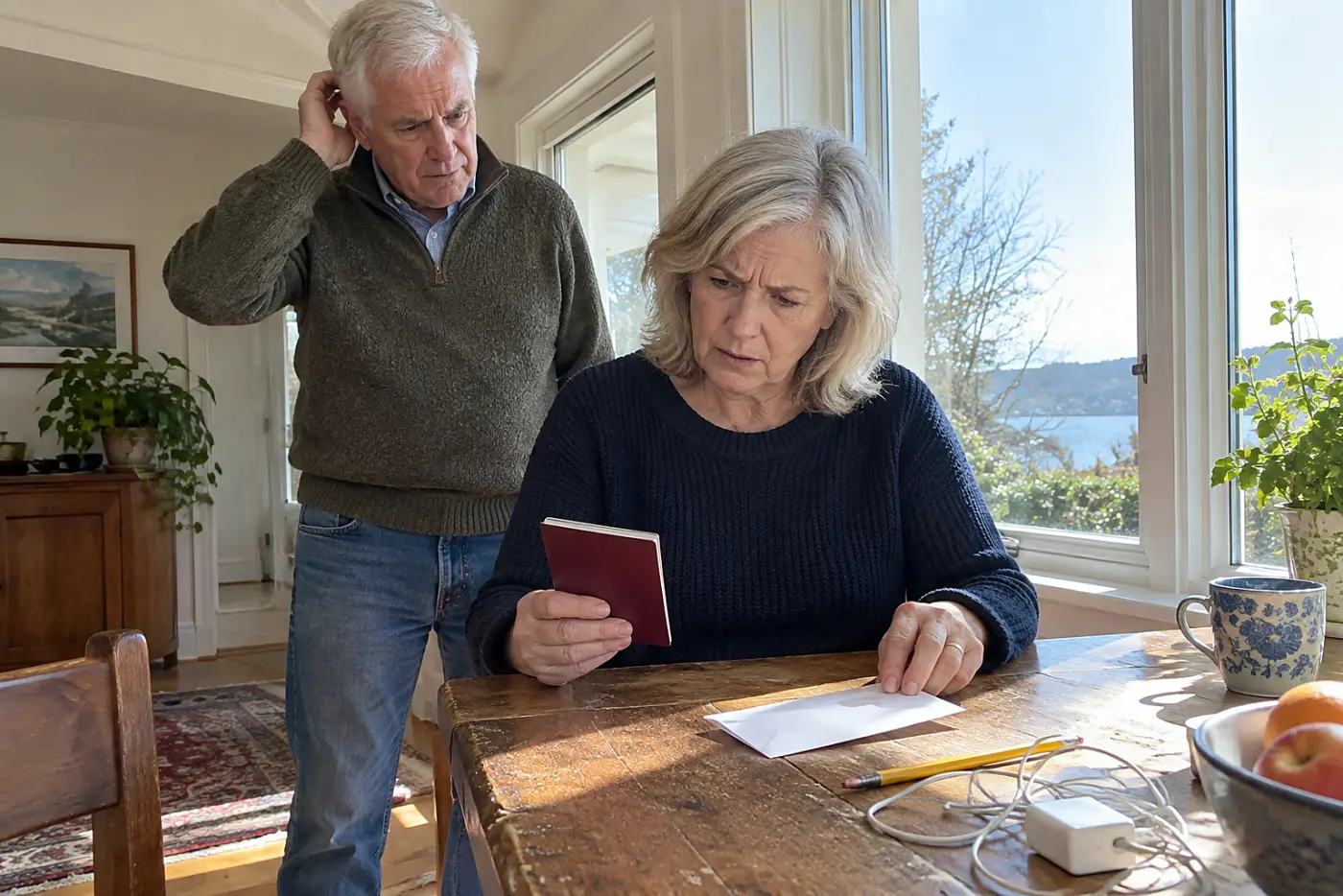
His passport used to sit beside yours in the drawer.
For an international trip, your passport stands alone, and the destination sets its entry rules. Some countries require validity beyond the travel dates. The State Department lists destination information; airline staff check documents before boarding. Discovering a short validity window at the airport ends the trip before it begins.
This week, take out your passport and compare its expiration date with the destination's entry requirements. Check the name against your ticket, especially if you changed your name after marriage or widowhood. "I want to confirm the document requirements for this itinerary," is the question for the airline.
The document gets you aboard, but it won't pay for care abroad.
17The health plan in your wallet
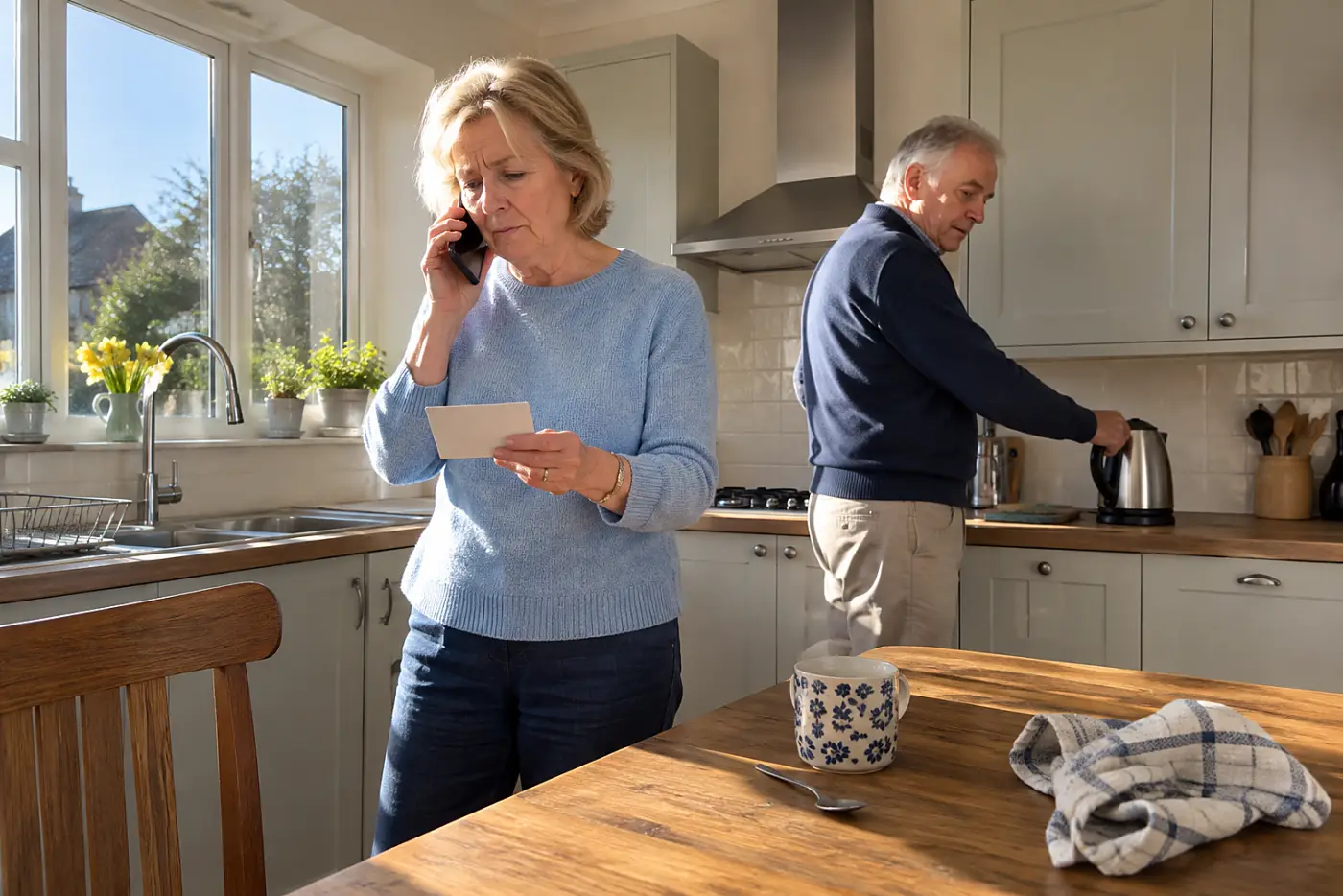
His presence never made a hospital bill smaller.
Original Medicare rarely pays for care outside the United States. A Medicare Advantage plan or another policy needs its own review. Start at Medicare, then read your plan's coverage documents; without those details, you don't know what a hospital abroad will expect you to pay.
This week, call the number on your insurance card and ask about your exact destinations and dates. "If I need emergency care abroad, what pays first, and what do I submit?"
Write down the answer before looking at a travel policy.
16The travel policy bought at checkout

A checkout screen turns several different risks into one checkbox.
Trip cancellation, medical care, evacuation, and baggage are separate promises, with separate limits and exclusions. A policy bought after an event becomes known won't erase what was already foreseeable.
The NAIC publishes travel insurance guidance, but your claim turns on the policy you actually bought. Read its covered reasons and claim instructions before paying, while you still have the chance to choose another policy.
This week, compare the policy's cancellation reasons with the payments you can't get back. Then check medical and evacuation sections against the answer from your health plan. "Please show me where this policy says what happens if I cancel because of a family emergency."
The paper promises matter. So does the cash you keep within reach.
15The card he carried for emergencies

The backup card can't stay in his wallet.
If your card stops working abroad, a second payment method gives you a way to settle a bill. A card in your own name also avoids a dispute at the desk over who owns the account. The Consumer Financial Protection Bureau has guidance on credit cards and authorized users; the issuer can tell you your account status.
This week, check the names on the cards you plan to take. Put one backup somewhere other than your everyday wallet. "Is this card account in my name, and what number do I call from overseas?"
Money is only useful if you can reach it.
14The bank alert sent to his phone

A purchase alert means little when it goes to a silent phone.
Bank and card accounts send sign-in codes to the contact details on file. If his number still receives a code, you could be locked out while trying to pay a hotel or replace a card. A shared household history doesn't tell a bank which number you use now. Make the change through your own account or the bank's verified service channel, not through a link in a stray text.
This week, sign in to each account you will rely on and check its recovery phone and email. Complete a test sign-in before you travel. "I need to update the number that receives my sign-in code."
Once the accounts open, check what happens when the phone itself fails.
13The paper copy in your bag

A dead battery takes the booking email with it.
Put a printed hotel address, flight confirmation, and emergency contact in your carry-on. If you lose your phone, that sheet gives a taxi driver an address and gives you a reservation number to read at the desk. It needn't contain card numbers or passwords. Fold it where you can find it without unpacking at the curb.
This week, print one page and keep it away from your passport. Check that the hotel address is legible after folding. "Here is the hotel address," is all you'll need to say in a cab.
Paper helps you arrive. Getting around afterward takes another decision.
12The ride from the airport
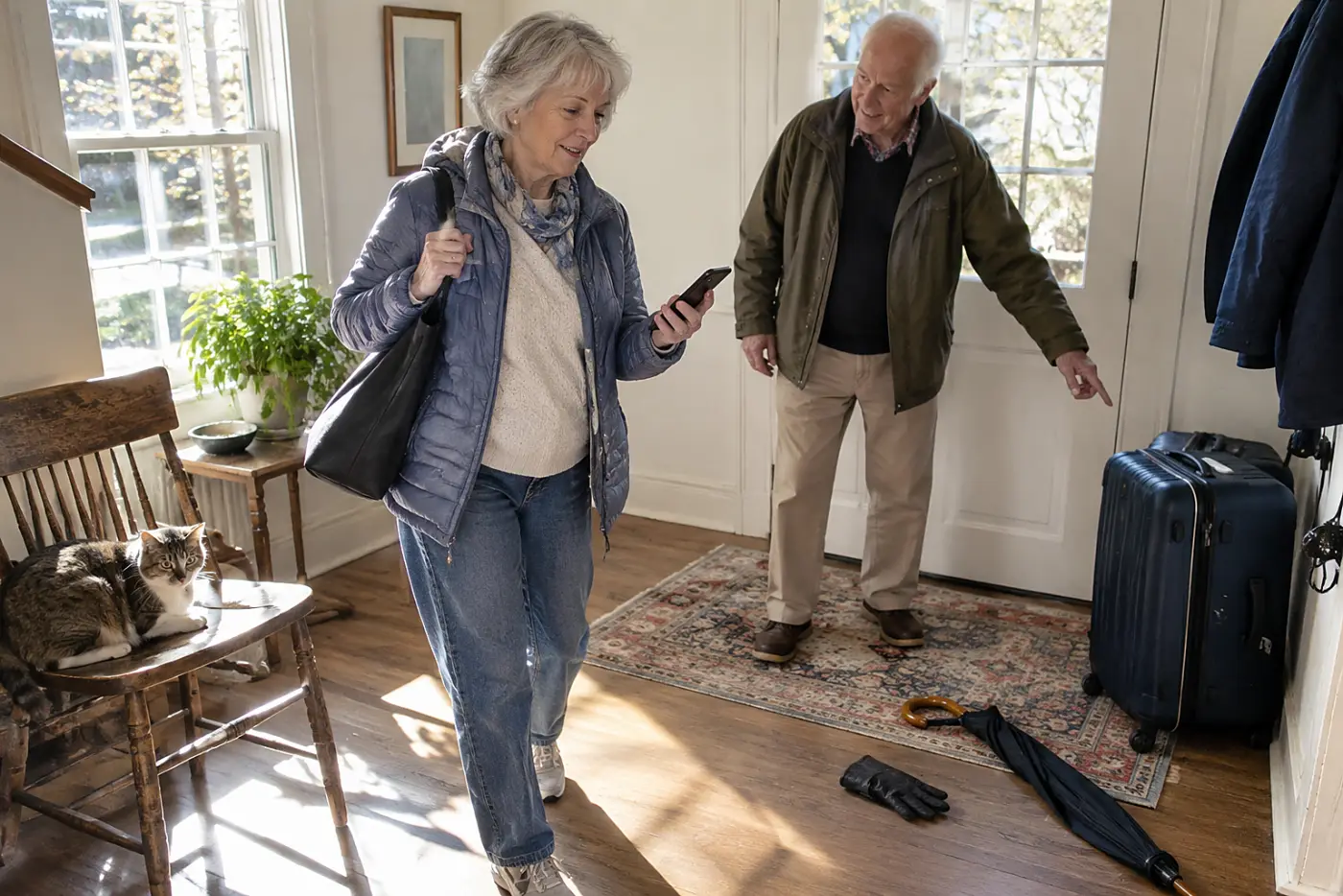
He used to look for signs while you watched the bags.
After a long flight, deciding between a train, taxi line, and app pickup is tiring. An airport's official website shows ground transport and pickup locations. Knowing the terminal and the hotel address turns a confusing curb into a shorter choice. If your arrival is late, check whether the service you want still runs then.
This week, look up the airport's ground transport page and save one route to your hotel. Note where to meet the driver or board the train. "Please take me to this address," is enough once you're in the right vehicle.
Arrival is one trip. Walking around tomorrow asks a different question.
11The walk back after dark

Two people chose the evening route together.
A street that felt fine at noon looks different when shops are shut. Check a route before dinner rather than relying on your phone outside a doorway. If the walk doesn't suit you, choose another restaurant or a ride. Your judgment is the point, not a rule that keeps you in your room.
This week, mark the hotel entrance on your map and look at the route to one evening destination. "I'll meet you at the restaurant, but I'm taking a car back," works with a new acquaintance.
Daylight brings its own problem: doing everything yourself.
10The suitcase lifted onto the rack
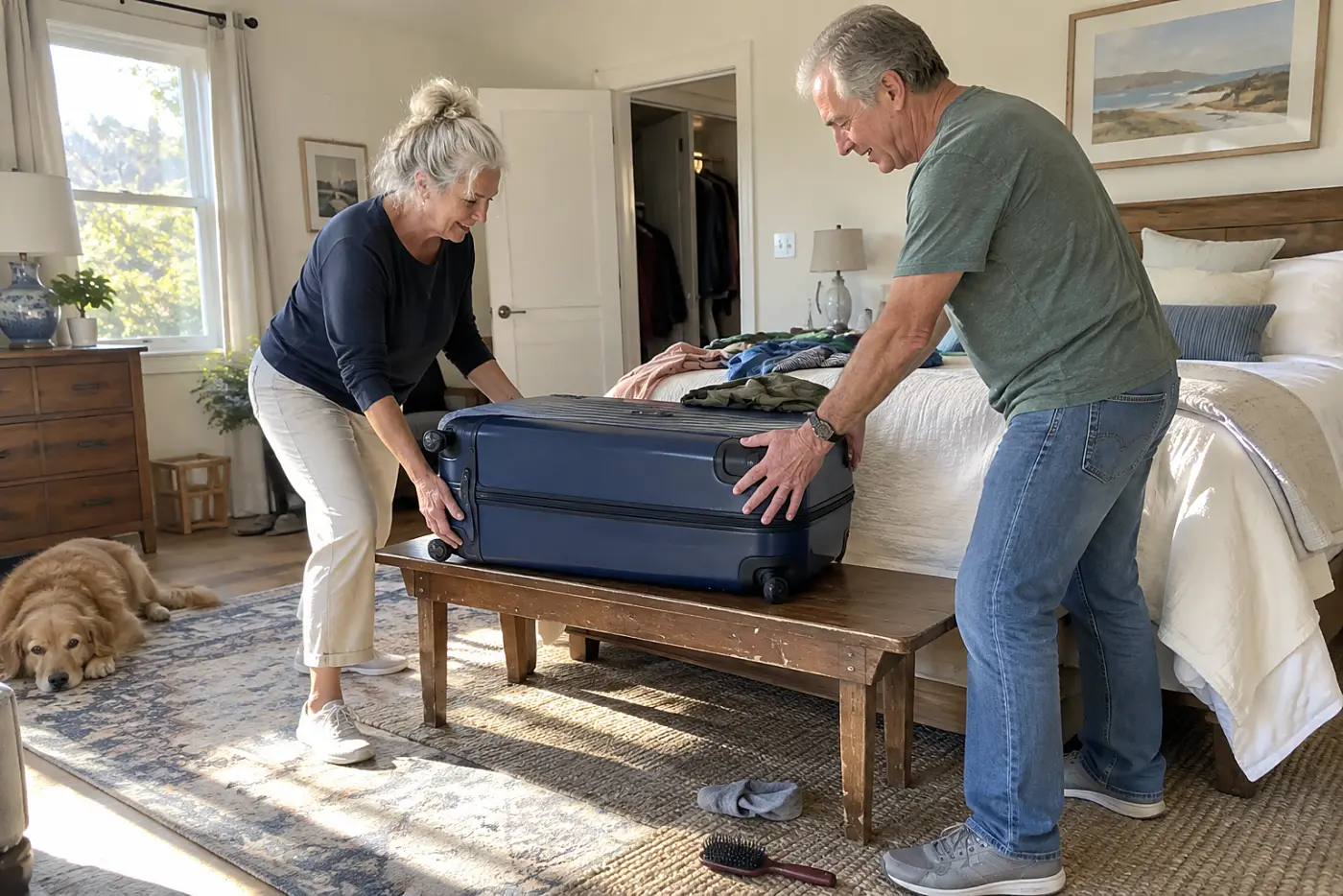
The overhead bin was once his job.
A bag you can roll still has to clear a step, a train gap, or a luggage rack. At home, lift it onto a sturdy surface at roughly the height you expect to use. If that takes a strained twist, remove something or check the bag.
Airline baggage rules and fees differ, so read your carrier's page before deciding. A lighter case won't replace a companion, but it gives you control over the next platform change.
This week, pack the case, weigh it if your airline lists a limit, and try the lift. "I need a moment to put this on the rack," is a reasonable thing to say.
The weight test is physical. The next one happens in your calendar.
9The day with nothing booked

You used to agree on when to stop.
A full itinerary leaves no room for a slow morning or a hard memory. Without him, there's also nobody to suggest a break when you push past tired. Leave one open stretch and keep the address of a café or park nearby. An unscheduled hour isn't a failed trip.
This week, remove one optional activity from a draft day. "I'm going back to the hotel for a while," needs no defense.
That pause gives you time to notice whose trip you're taking.
8The museum he loved more

His favorite stop doesn't have to stay on every route.
Couples build repeat trips from compromise: his museum, your garden, the café you both liked. The first itinerary you make alone gives you a chance to sort those places without declaring the old trips a mistake. Keep the museum if you want to see it. Skip it if the obligation is the only reason it appears.
This week, take an old itinerary and mark each stop "mine," "his," or "ours." Then choose one place that didn't fit when you traveled together. "I want to spend the afternoon here," is a whole plan.
A choice made freely feels different from one made to avoid a memory.
7The photograph with no one behind the camera

You come home with pictures of places, not yourself.
He knew when you'd want a photograph without being asked. Now a fellow visitor or staff member can take one, or you can use your phone's timer. Keep hold of the phone's place in your day; hand it over only when the person and setting feel right.
This week, learn where the timer sits in your camera app. "Would you take one picture of me by the fountain?" gives a stranger a clear, brief task.
A picture proves you were there. It doesn't replace telling someone about it.
6The call after a good day

A beautiful view still leaves you reaching for him.
On past trips, you had someone to tell before the day was over. Arrange a call with a friend who welcomes the small details, not only an emergency update. Time zones make "I'll call sometime" easy to miss. Give the conversation a place on the calendar, while leaving yourself free to enjoy what's in front of you.
This week, choose a person and agree on a time in both time zones. If talking feels too much that day, send one photograph with a sentence about it. "I saw something you'd have liked. Are you free for ten minutes tonight?"
Sharing the day helps. Sharing a room is another choice entirely.
5The invitation to share a room

A friend on the trip isn't automatically a roommate.
Two people who like each other at lunch still need to agree on sleep, lights, bathrooms, and spending. Before booking, compare a shared room with separate rooms in the same hotel. Discuss the difference in price without treating either choice as a test of friendship.
This week, ask your travel companion what she wants before either of you pays a deposit. "I'd love to travel together. I'd sleep better in my own room."
Separate rooms settle the night, but not how you spend every hour.
4The hour you spend apart

Together all day was your old default.
A trip with a sister or friend works better when each person can choose a stop alone. Set a meeting place and time, then go where you want. If plans change, send a message before the agreed meeting. That small courtesy replaces the constant check-ins you once had with your husband.
This week, build one independent hour into a shared itinerary. Put the meeting address in both phones. "I'll see you at the café at three," gives each of you room to enjoy the afternoon.
Once you can part and meet again, the next decision is which trips still belong to both of you.
3The place you always went together

A familiar hotel can hurt before you reach the desk.
Returning to a place you shared isn't a duty, and avoiding it isn't a failure. Look at what you actually want there now: the beach, a friend nearby, or the room you booked for years. Change one part of the trip if that gives you a reason to go on your terms.
This week, write down one place you're considering and the reason you'd go today. "I want to visit, but I won't stay at our old hotel," is a decision.
Where you sleep is still a practical question, not only a memory.
2The hotel room you choose now

The old room request belonged to two people.
Maybe he wanted the high floor while you wanted to be near the elevator. Maybe you accepted a tub you didn't like because it suited him. Look at the room description for what matters to you now, including stairs, shower access, noise, and distance from the lobby. A photograph doesn't answer every question. Call the property and ask about the room you're considering before booking.
This week, choose two room features you care about and check them directly with the hotel. "Does this room have a walk-in shower, and is there a step at its entrance?"
Once you've chosen the room, make sure the booking follows you all the way to its door.
1The hotel arrival check before departure

A confirmation email doesn't guarantee an easy arrival.
The hotel holds a booking under a guest name and arrival date. If an older reservation still names him, ask about the property's options before you travel; a name change isn't guaranteed. Even a booking in your name deserves a readback, especially after a date change. Use the phone number on the hotel's official site, not one from a forwarded message.
This week, find the confirmation number and call the hotel directly. "Please read back the registered guest name, arrival date, and payment details on my reservation."
Write down who answered and what they said. Keep the note with your travel papers. One final script makes the call easier.
The bottom line
The pattern is simple: shared decisions now need names, plans, and room for your own preferences.
The best-prepared traveler checks the bookings, picks one person to keep informed, and leaves space for a day that doesn't go to plan.
Which of these has already happened on one of your trips?
Bonus: The hotel arrival check
- Find the hotel's phone number on its official website, not in a forwarded message.
- Have your confirmation number ready and ask the hotel to find the reservation.
- Say, "Please read back the registered guest name and arrival date."
- Ask how payment will work at check-in and what identification you'll need.
- Write down the answers and the date of the call; keep the note with your confirmation.
Margaret Hale
Travel & Lifestyle Editor
Margaret has covered travel for 25 years and has ridden every long-distance train route in the U.S. at least once.
You might also like