27 Ways to Travel With a Friend Without Losing the Friendship
A separate bathroom helps, but the real safeguard is deciding who pays when one of you changes the plan.
By Margaret Hale, Travel & Lifestyle Editor
Updated · 17 min read
- Written by our travel & lifestyle editor
- How we review

Read to the end: #1 is the prebooking money conversation that protects the friendship, and almost nobody writes it down.
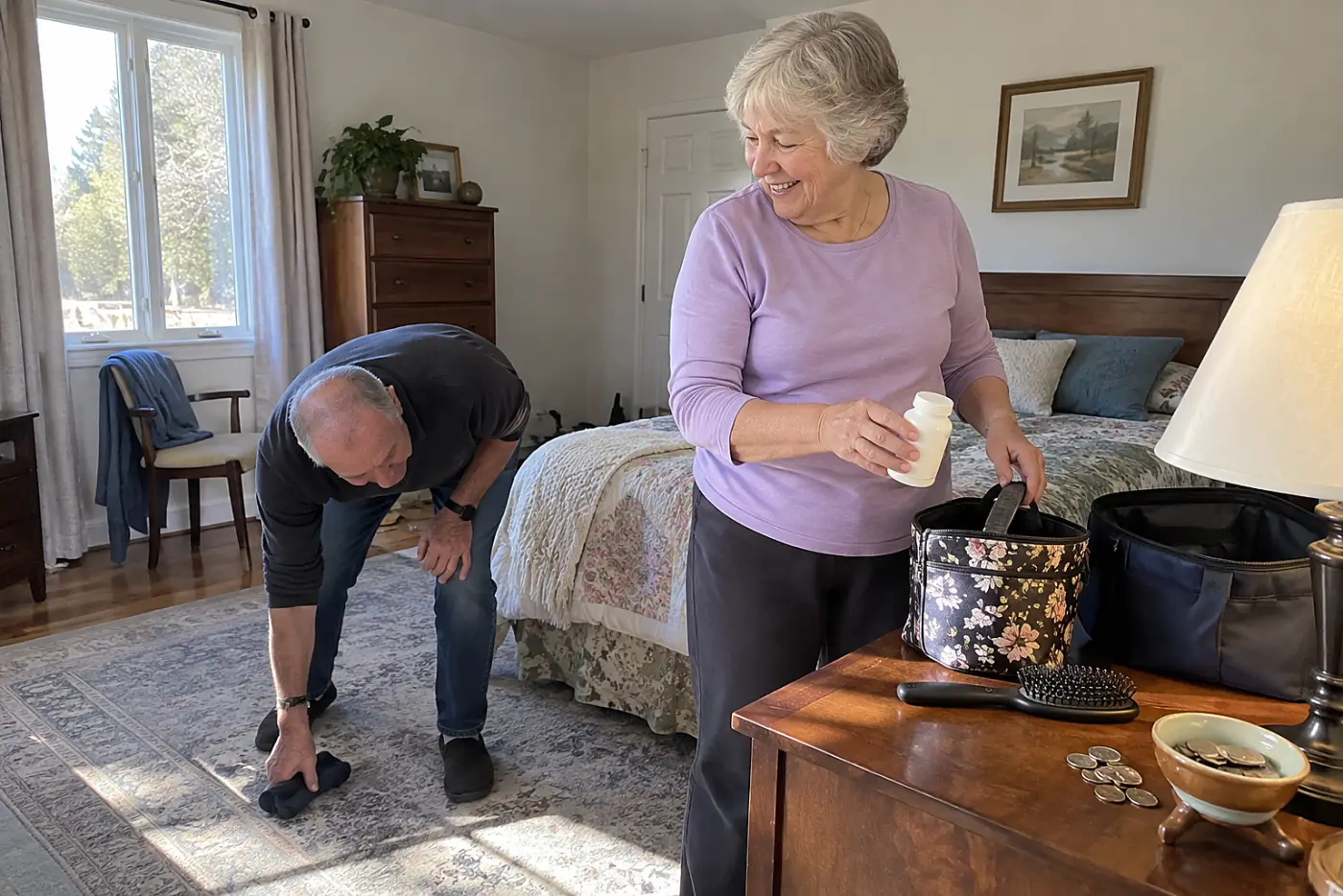
Your friend has left her toiletry bag across the hotel sink. You’re holding a toothbrush, waiting to get in, while she calls from the shower to ask if you’ve picked dinner. It’s the first morning of a trip you planned for months.
The obvious fix is to promise each other patience. Patience won’t tell you whether she expects every breakfast together or whether you’re paying for the room if she leaves early.
Here are 27 decisions worth making before either of you gets annoyed.
27Put the hotel bathroom on the table

One sink can become the trip’s busiest intersection.
A room listing tells you the bed count, but a shared bathroom sets the morning schedule. One person’s long shower delays the other person’s coffee, medication, or departure. With one mirror and two toiletry bags, even getting dressed takes turns.
That delay follows you out the door. A timed tour won’t wait while two friends negotiate a mirror, and a missed entry slot costs both of you the visit.
This week, pull up the room’s floor plan or photos together. Ask, “Would we rather pay for separate rooms than coordinate this bathroom every morning?”
Beds deserve their own inspection.
26Check the bed configuration before booking

Two beds don’t guarantee two comfortable nights.
“Two beds” could mean a queen and a sofa bed. A connecting-room request also differs from a confirmed connecting room. Check the exact room type and ask the hotel what it will guarantee in writing before paying a nonrefundable rate.
Otherwise, one of you arrives expecting a mattress and finds a foldout. The disagreement starts at the front desk, with luggage at your feet and no easy place to regroup.
This week, send your friend the room description and the hotel’s answer. Say, “I’m happy to share a room, but I’m not taking the sofa bed for six nights.”
Even with two proper beds, night has its own rules.
25Agree on lights-out without policing bedtime

A phone screen lights up an entire dark room.
If one of you reads until midnight and the other sleeps at ten, shared space makes both habits public. Neither person has to defend a normal bedtime to keep the peace.
After several short nights, breakfast stops feeling friendly. Earplugs won’t fix a ceiling light or a television playing across the room.
This week, compare sleep routines before choosing a room. Say, “I need the lights off by ten; would separate rooms make this easier?”
Morning brings a different kind of noise.
24Set an alarm plan for departure mornings

The third snooze belongs to both of you.
An early flight, train, or tour puts two wake-up routines against one clock. Agree who sets an alarm, when it rings, and whether the first person up leaves the room to dress. Put the departure time in both phones, including the time you need to leave the hotel.
Miss that window and the cost moves beyond breakfast. A missed train or timed entry ticket sends both of you to a counter to solve a problem neither wanted.
This week, run through one early morning aloud. Say, “If I’m ready first, I’ll meet you downstairs rather than rush you from the doorway.”
Once you’re downstairs, the question becomes who leads.
23Choose the route before leaving the lobby

Two confident walkers can take different streets.
One person follows the map; the other recognizes a landmark and turns. At a busy crossing, a casual “this way” becomes two separate plans. Neither notices the gap while looking for street signs.
Backtracking wastes the hour you set aside for the museum. It also turns an ordinary wrong turn into a contest over who reads a map better, with both of you standing on the curb.
This week, pick one person to handle directions each day. Say, “You take the map this morning; I’ll speak up if I spot a problem.”
A good route still needs a good pace.
22Test your walking pace on a local outing

A trip exposes the gap between “I walk” and “I walk all day.”
Museum floors, hills, cobblestones, and station stairs ask different things of your feet. Take a local outing together before departure: walk to lunch, visit a museum, then head home without driving between stops. Notice when each of you wants to sit, not who finishes first.
Without that test, one person spends the trip hurrying while the other keeps apologizing. Neither gets to look at the place you traveled to see.
This week, choose an outing with real walking and a meal afterward. Say, “Let’s see what pace feels good to both of us before we build full sightseeing days.”
Pace is only half the schedule.
21Leave an empty block on the itinerary

A full calendar makes rest look like refusal.
When every hour has a shared activity, skipping one forces your friend to change plans. Leave a block with no tickets, reservations, or meeting time. Keep it open even when a tempting tour appears.
That space gives each of you a choice without a public explanation. Otherwise, an afternoon nap becomes a debate about wasting the trip. Nobody rests well while defending a nap.
This week, mark one unplanned stretch on each busy day. Say, “I’ll take that afternoon on my own, and we’ll meet for dinner.”
Dinner needs its own agreement.
20Compare dinner budgets before choosing restaurants

The menu is a poor place to discover different budgets.
One person sees dinner as the main event; the other wants soup and a walk. Look at actual menus together, including drinks, tax, and tip where they apply. Pick a few places you both want, then leave other meals open.
If you settle this after sitting down, the person watching the bill has to order under an audience. That’s an awkward price for keeping your friend company.
This week, send three restaurant links and ask which prices feel comfortable. Say, “I’d rather choose a less expensive place together than worry over the check.”
Paying the check raises a separate question.
19Decide how to split shared meals

Money talk shouldn’t start after the menus arrive.
Restaurants handle checks differently, and equal shares feel unequal when one person orders wine and the other drinks water. Decide whether you’ll request separate checks, split evenly, or settle afterward. Ask about separate checks when you sit down, before the server starts taking orders.
A small imbalance repeated at every meal becomes a tally nobody wants to admit keeping. Even one unexpected shared check leaves someone doing arithmetic instead of enjoying dessert.
This week, choose the method before your first reservation. Say, “Let’s ask for separate checks when we sit down, if the restaurant does that.”
The larger charges need clearer labels.
18Keep separate receipts for shared reservations

The person who clicks “book” becomes the unofficial banker.
Flights, rooms, and tours carry different cancellation terms. Put the confirmation, amount paid, and refund rule in one shared message as soon as either of you pays. Label what the other person owes and when she’ll send it.
Otherwise, a canceled tour leaves one friend searching her email while the other remembers a different price. If a merchant issues a credit, check whose account received it before settling the bill.
This week, open a shared note for reservations and receipts. Say, “I’ll send the confirmation tonight, and we can settle each booking as it happens.”
Now look at what happens if a booking disappears.
17Read the cancellation terms aloud together

“Refundable” needs an end date and a name.
A hotel room, flight, and tour each have their own terms. Check whether a refund returns to the original payment method, becomes a credit, or ends at a stated deadline.
Miss that distinction and one friend holds a credit the other cannot use. The word “flexible” on a search page won’t settle the bill.
This week, read the terms on the final checkout screen together. Say, “Before we pay, what happens to each of us if one person cancels?”
Insurance has its own fine print.
16Compare travel insurance without assuming shared coverage

Two travelers need two answers from an insurer.
Check what your health plan covers abroad before assuming travel insurance fills the gap. The U.S. Department of State advises travelers to review overseas medical coverage. Travel policies have separate terms for cancellation, medical care, and evacuation.
Ask the insurer how each traveler is listed and what happens if only one ends the trip. Otherwise, a canceled journey becomes a dispute about whose reason qualifies under whose policy. Booking together doesn’t put both names on every benefit.
This week, call the insurer with the proposed trip details in front of you. Say, “If my travel companion cancels but I still go, what happens to my claim?”
Coverage matters most when the trip changes suddenly.
15Share emergency contacts without swapping passwords

Your friend needs a phone number, not your login.
If you’re hurt or delayed, she needs to reach the person you choose. Put a contact name and number where she can find them, separate from your banking and email passwords.
For a trip abroad, check the destination on the CDC’s Travelers’ Health site before leaving. That won’t tell your friend whom to call if you need help while she’s standing beside you.
This week, exchange one emergency contact each. Say, “If something happens to me, please call this person first.”
Your phone needs a plan of its own.
14Save meeting places for dead-phone moments

“Text me” stops working when a phone dies.
A dead battery, lost signal, or crowded station separates you from a plan stored only in messages. Set a meeting place for each unfamiliar area: a named entrance, a hotel desk, or a ticket counter. Include a time to wait before returning to the hotel.
Without that detail, both of you move around looking for the other. Two people searching are harder to reunite than one person waiting.
This week, add the hotel address and first meeting point to paper in your bag. Say, “If we lose each other, I’ll wait at the main entrance for 30 minutes.”
A working phone brings another choice.
13Check phone roaming before lending your hotspot

One shared connection puts one phone in charge.
If your friend relies on your hotspot, she loses maps when you split up. Check your carrier’s international roaming terms, or arrange separate service, before leaving the United States.
The FCC’s international roaming guidance points you toward charges worth checking. Find your carrier’s current terms rather than assuming home-plan data works abroad. A restaurant table is the wrong place to discover whose phone connects.
This week, confirm how each phone will work at your destination. Say, “Let’s make sure we can both pull up a map when we’re apart.”
Being reachable doesn’t mean being together.
12Give solo time a return address

Walking off alone works better with a reunion plan.
You don’t need to defend an hour in a bookstore while your friend visits a gallery. Agree when and where to meet, and decide what happens if either person is late. Leave enough space for each of you to choose an activity without making the other wait nearby.
Skip the return plan and your friend faces a choice between leaving and hunting for you. Your private afternoon then becomes her logistical problem.
This week, try one separate outing at home before the trip. Say, “I’m going to the bookstore after lunch; let’s meet by the hotel desk at five.”
Together again, you’ll still have different interests.
11Buy timed tickets only for shared priorities

A booked ticket turns a preference into an appointment.
If only one of you loves the exhibit, buy one ticket. Timed entry fixes an arrival window, and the other person shouldn’t have to build her day around it. Before checkout, check whether the ticket permits a change if your plans split.
Paying for a second ticket doesn’t create enthusiasm. It creates a reason to complain while standing in line. That mood follows you to the next stop.
This week, mark each proposed attraction as together or separate. Say, “I want to see this one, but you don’t have to spend your afternoon there.”
The same rule matters on longer excursions.
10Separate day trips from group decisions

A day trip takes more than its ticket price.
It claims the travel time, lunch hour, and energy you hoped to spend elsewhere. Before booking, compare the full route and return time. If only one of you wants the excursion, make it a solo day rather than a vote.
Otherwise, the reluctant traveler pays in time as well as money. She gets a long ride to a place she never chose.
This week, put each proposed day trip beside one alternate plan in town. Say, “I’d like to go, and I’m fine going alone if you’d rather stay.”
Long rides also put luggage in the middle.
9Try carrying your own bag before departure

A heavy suitcase recruits your friend without asking.
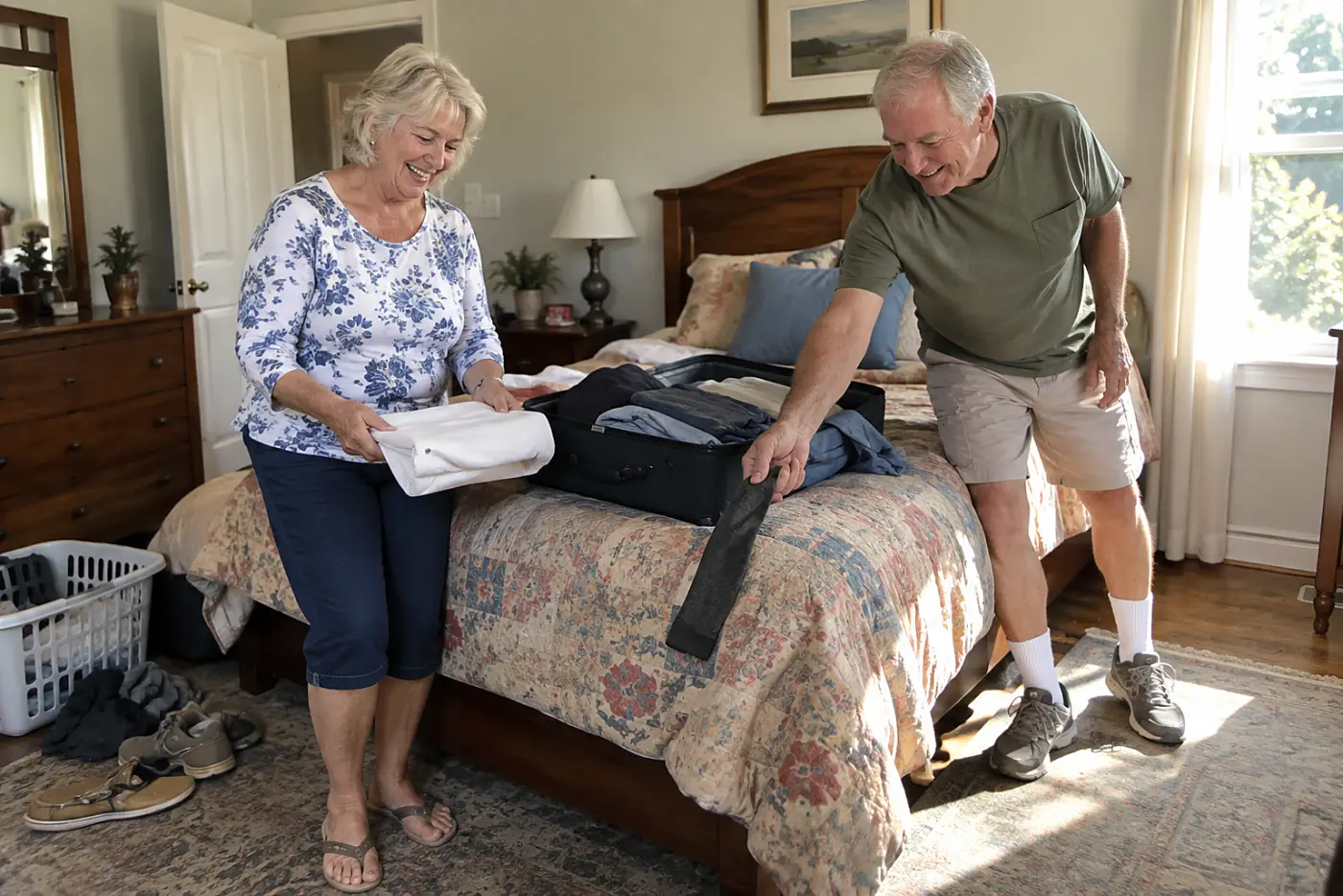
Stairs, train platforms, and hotel entrances turn bag weight into someone else’s work. Lift your packed bag into a car trunk and carry it up a flight of stairs.
If you need help, arrange it in advance instead of handing your friend an unspoken job. For a train trip, check your route against Amtrak’s baggage rules; don’t make your friend sort out an oversize bag at the station.
This week, do the lift test with the actual packed bag. Say, “I’m checking whether I can handle this myself.”
A seat assignment deserves the same candor.
8Choose seats without trading favors midflight

The seat map is easier than a gate argument.
An aisle seat, window seat, or seat near the front has value to the person choosing it. Book separately if your preferences conflict, then share flight details. If you book together, decide who sits where before selecting seats.
Wait until boarding and one friend has to ask the other to move, with people watching from the aisle. Check the airline’s seat selection terms before paying; don’t rely on a stranger’s post about guaranteed seats.
This week, compare seat preferences before buying flights. Say, “I need an aisle; please choose the seat you actually want.”
Airports have other points of separation.
7Carry your own travel documents

One folder leaves one person holding both trips.
Keep your own identification, boarding pass, and reservation details accessible. For international travel, check destination entry information through the U.S. Department of State’s country pages before either of you pays.
If your friend is in another line, her bag can’t be your document drawer. A missing passport at check-in affects her trip too.
This week, put your documents in the bag you’ll carry. Say, “Let’s each keep our own copies so neither of us has to wait.”
Your health details need similar care.
6Pack medication in your own carry-on

A checked bag is the wrong place for tonight’s dose.
Pack needed medication in the bag that stays with you, along with the details you need to identify it. Check the TSA’s medication guidance for your flight. For international travel, check destination rules separately through the State Department’s country pages.
If your friend carries your medication, a simple split at security becomes a search for her bag. Neither of you wants a private health conversation in the boarding line.
This week, make a medication packing list and check the rules for your route. Say, “I’ll keep my medicine with me, even if we share other supplies.”
Sharing a room raises a more personal question.
5Decide what stays private in the room

Close friendship doesn’t cancel a closed door.
A shared room puts phone calls, medication, clothing, and bathroom routines within earshot. Name what you’d rather handle alone before either person has to ask from behind a half-open door.
Embarrassment grows when a friend treats access as a favor you owe her. Separate rooms are a sound choice, even if you’ve traveled together before.
This week, say what privacy you need without offering a medical history. Try, “I want my own bathroom and a door I can close at night.”
Daytime privacy needs words too.
4Set a rule for unanswered messages

A delayed reply isn’t a search party.
When you separate for an afternoon, decide whether a message needs an immediate answer. Pick one urgent signal, such as a phone call, and use ordinary texts for updates that can wait. Agree on a check-in time if the outing takes you far from the hotel.
Without that rule, one person watches her phone in a museum while the other grows worried over an unread lunch photo. Both lose the freedom they planned to take.
This week, test the rule during a local outing. Say, “If it’s urgent, call me; I won’t watch texts while I’m inside.”
Then decide how to handle a real change of plan.
3Name the point when either person leaves

An early flight home changes two reservations.
If either of you leaves before the planned return, the remaining traveler faces new room, transport, and meal decisions. Identify which bookings require a call, which remain usable, and whose name appears on each reservation.
The original checkout terms still matter. Friendship alone won’t tell the hotel whose card to charge for the remaining nights.
This week, list every shared booking that would change if one person left. Say, “If either of us goes home early, we’ll call the hotel before changing the room.”
The smallest irritations need an earlier exit.
2Practice saying no to one small plan

A polite yes can spoil an entire afternoon.
If your friend chooses a second shop and you need to sit, say so before the walk starts. Offer a place to reconnect instead of waiting until your feet hurt. That keeps a preference from sounding like a verdict on her company.
Ignore that moment and you’ll carry it into dinner. She’ll hear irritation without knowing which turn of the afternoon caused it.
This week, practice with a real, low-stakes choice. Say, “I’m going back to the hotel after lunch; enjoy the shops, and I’ll see you at six.”
One larger conversation makes those smaller sentences easier.
1Write the one-person cancellation payment clause

An early departure shouldn’t turn your friendship into a debt dispute.
Before paying, decide who covers shared costs if one person cancels or goes home early. Start with the room: check its terms, the booked rate, and whether the remaining guest would owe more. Then address each tour or transport booking you plan to share.
Those facts won’t make the answer for you. You might agree that each person covers her own nonrefundable purchases. For a shared room, decide whether the traveler leaving contributes to any extra cost the other actually incurs. Write the choice in a message both of you keep.
Without that clause, the person who stays faces the hotel bill while her friend remembers a different promise. A booking confirmation shows what the seller charges, not what the two of you agreed to pay each other.
This week, have this conversation before opening a checkout screen. Say, “If one of us leaves early, how do we split the room cost that remains?”
The question is whether you can both say yes to the answer.
The bottom line
Across all 27 decisions, an unspoken preference becomes a personal slight when a booking gives it a price.
The best-prepared traveler has checked the terms, named her needs, and made space for her friend’s answer.
Which of these has already happened on a trip with a friend?
Bonus: The prebooking money conversation to put in writing
- **Open with the change:** “If one of us cancels or leaves early, what costs would the other still face?”
- **Check the room terms:** Find the cancellation deadline, booked rate, and payment method before choosing a split.
- **List shared purchases:** Name each room, tour, and transport booking; identify what each person has already paid.
- **Agree on the bill:** Write who covers an extra cost the remaining traveler actually incurs.
- **Send one message:** Put the payment clause in both inboxes before either of you pays.
Margaret Hale
Travel & Lifestyle Editor
Margaret has covered travel for 25 years and has ridden every long-distance train route in the U.S. at least once.
You might also like