23 Things Hotel Staff Will Do for an Older Guest, but Only If You Ask
Your reservation won't tell staff you need a luggage cart, a shower chair, or a room near the breakfast entrance.
By Margaret Hale, Travel & Lifestyle Editor
Updated · 16 min read
- Written by our travel & lifestyle editor
- How we review
Read to the end: #1 is the arrival request that checks your daily route before you accept a key.
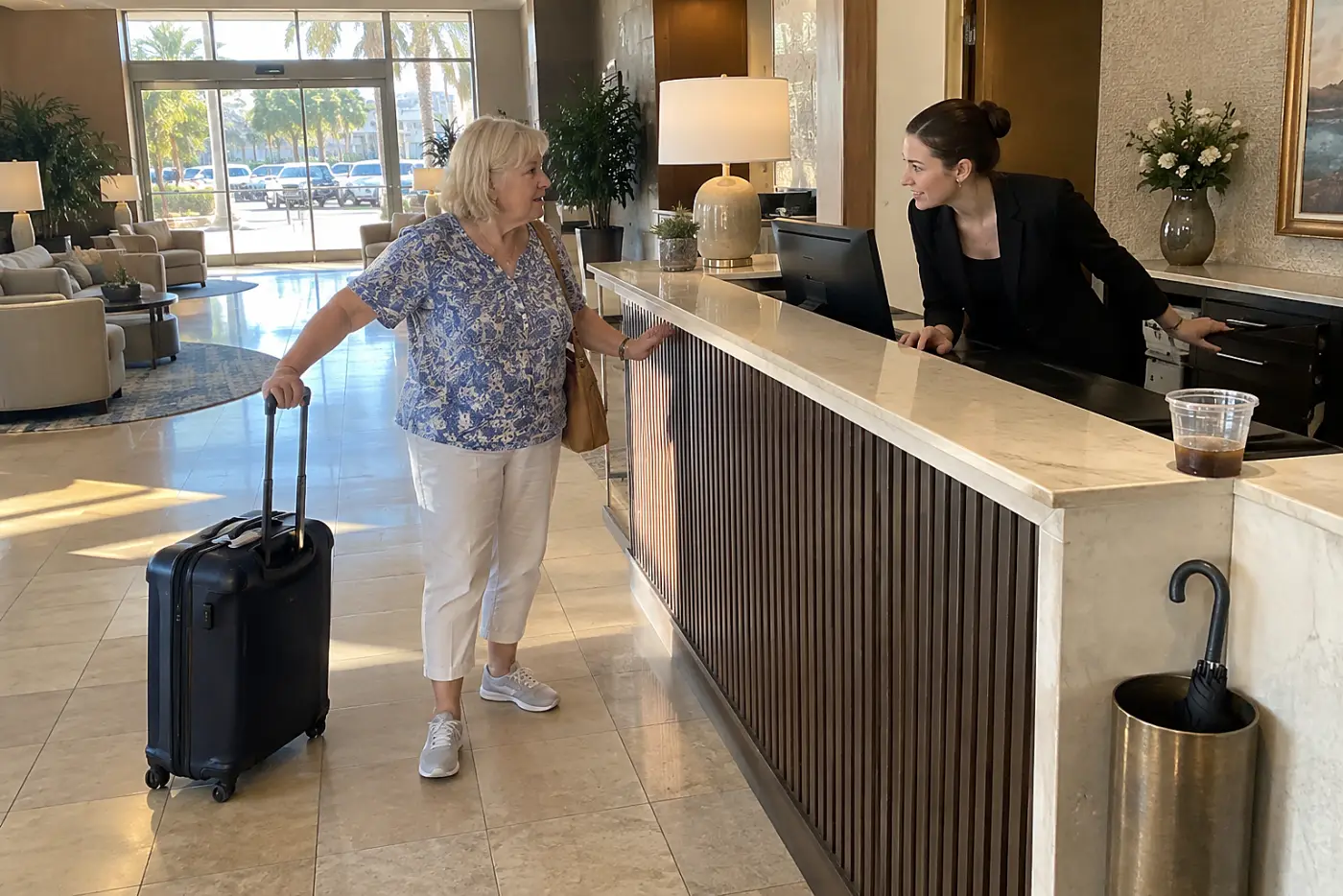
The suitcase wheels catch in the lobby rug. Your room number flashes across a phone screen, but nobody has told you how far it is from the elevator. Behind you, another guest steps up to the desk.
You don't want to hold up the line. Yet the desk clerk can't see the stairs inside your room or know that a long walk back after dinner will hurt. Asking before you take the key gives staff a chance to find a better fit.
Here are 23 requests worth making, starting with the smaller ones.
23A luggage cart brought to the lobby
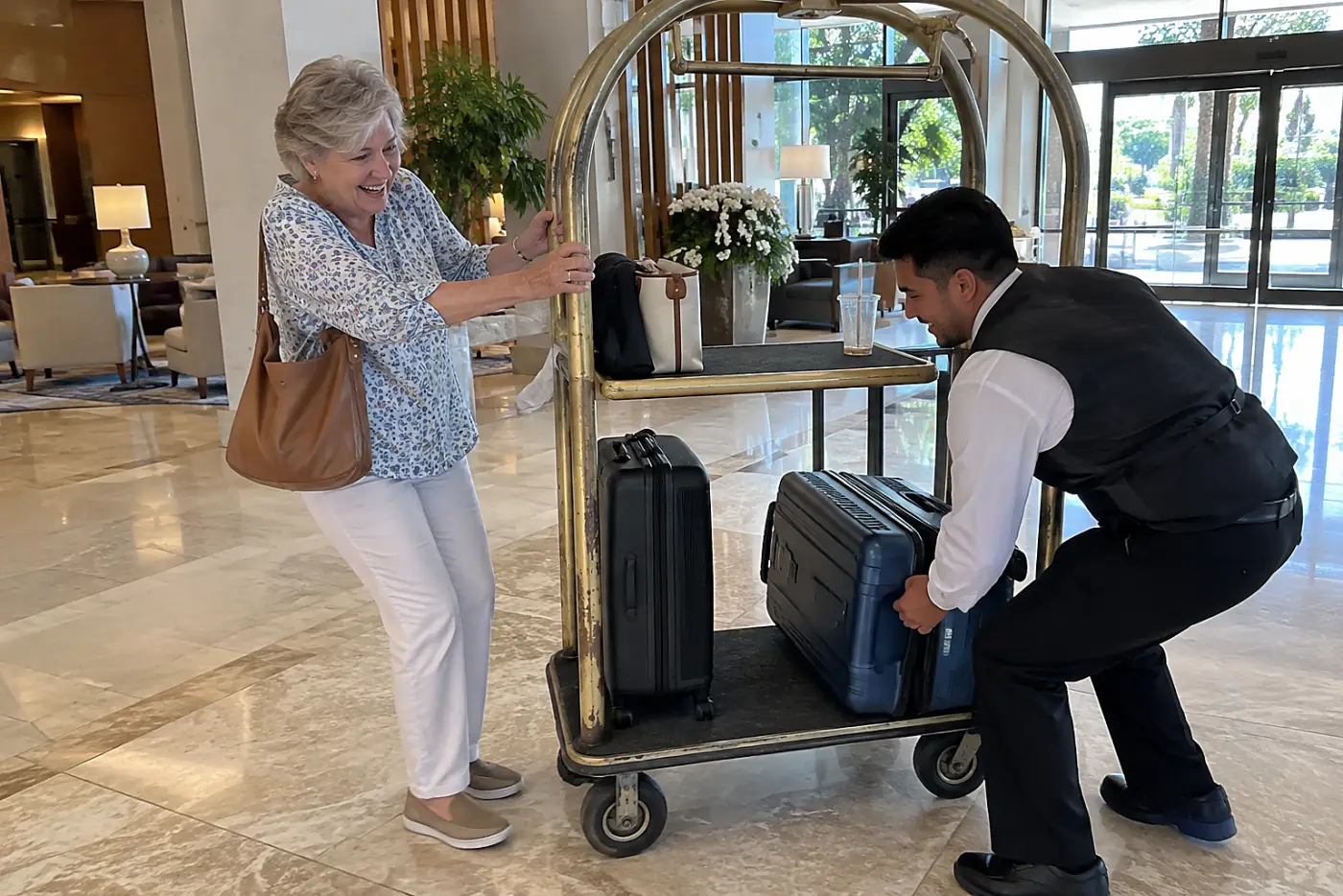
Dragging a suitcase shouldn't be the price of checking in.
Bell staff or the front desk will tell you where carts are kept. At one property, staff bring the cart; at another, you collect it after they point it out. Ask before lifting a bag onto your shoulder. Then find out where the cart goes when you're done.
A sore arm or strained back spoils more than the walk to the elevator. If the cart stays downstairs, you'll still need help getting the bag to your room.
This week, add a luggage note to your booking details and ask the property how it handles bags. At check-in, say, “Could someone bring a cart for my bags and tell me where to return it?”
Once the bags are handled, look at the route ahead.
22A staff member to show the elevator route
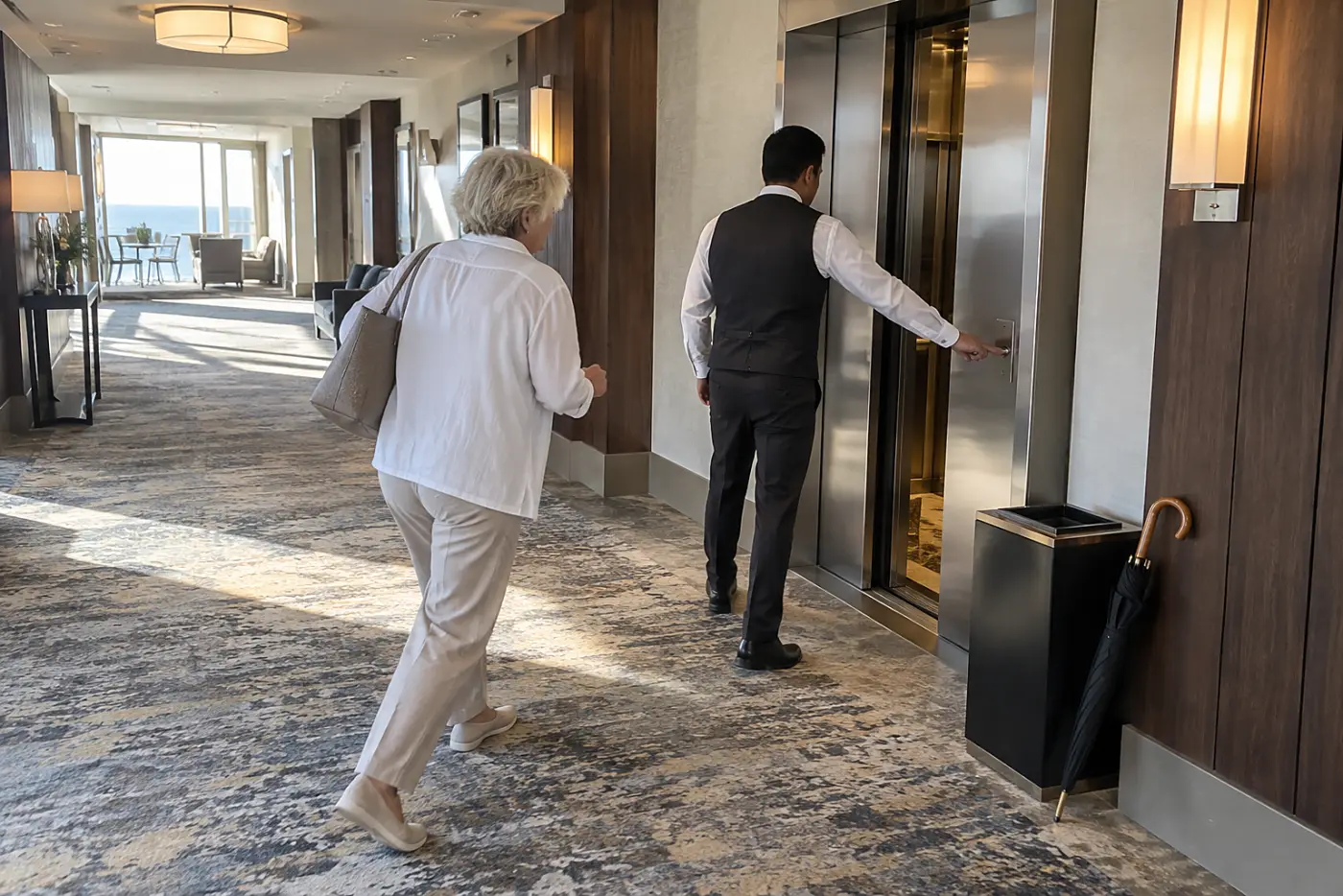
The shortest-looking hallway isn't always the easiest route.
Hotel layouts grow in pieces. A guest tower, parking garage, and breakfast room might connect on different floors. The front desk knows whether the marked elevator reaches your room directly or leaves you facing another corridor. Ask for a route from the entrance you plan to use, not only from the lobby where you happen to be standing.
If you arrive tired and take the wrong lift, the mistake costs a walk back with your bags. A map at the desk is better than a map discovered after you've gone upstairs.
This week, check the hotel's floor plan if one appears on its site. At the desk, say, “Please show me the easiest elevator route from the parking entrance to my room.”
Then check what happens when the lift opens.
21A room door near the elevator
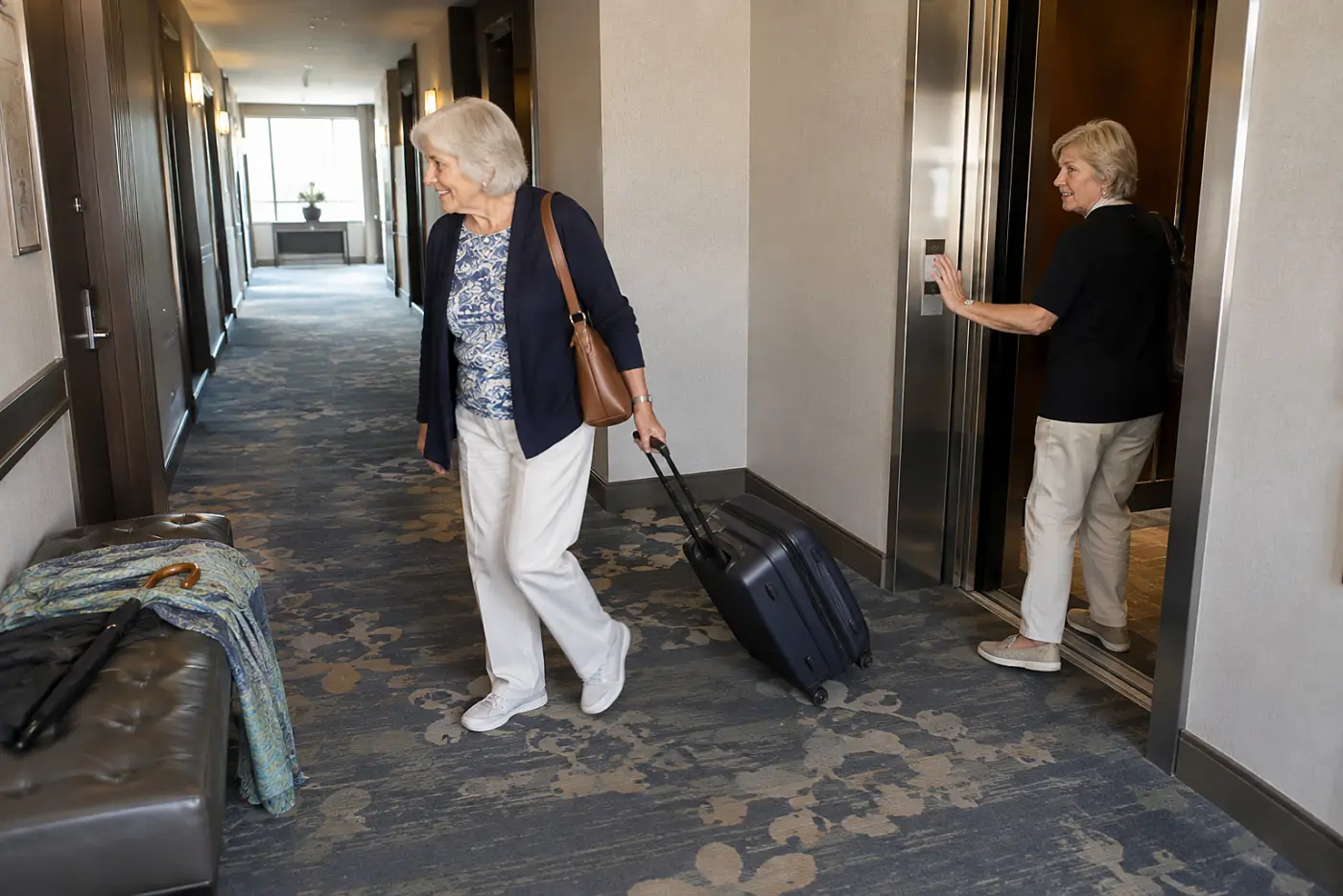
A room number doesn't tell you how far you'll walk.
Rooms near an elevator are assigned through the hotel's room system. Tell the front desk that elevator proximity matters before accepting the key. Ask which available room has the shortest hall between the elevator and its door.
Waiting until bedtime means another trip downstairs to ask. A reservation note alone doesn't tell you where the assigned door sits.
This week, put “near elevator” in your reservation notes and call the hotel to confirm they see it. At check-in, say, “Would you check the walk from the elevator to my room door before I take the key?”
Distance is only one part of the room's location.
20A room away from the ice machine
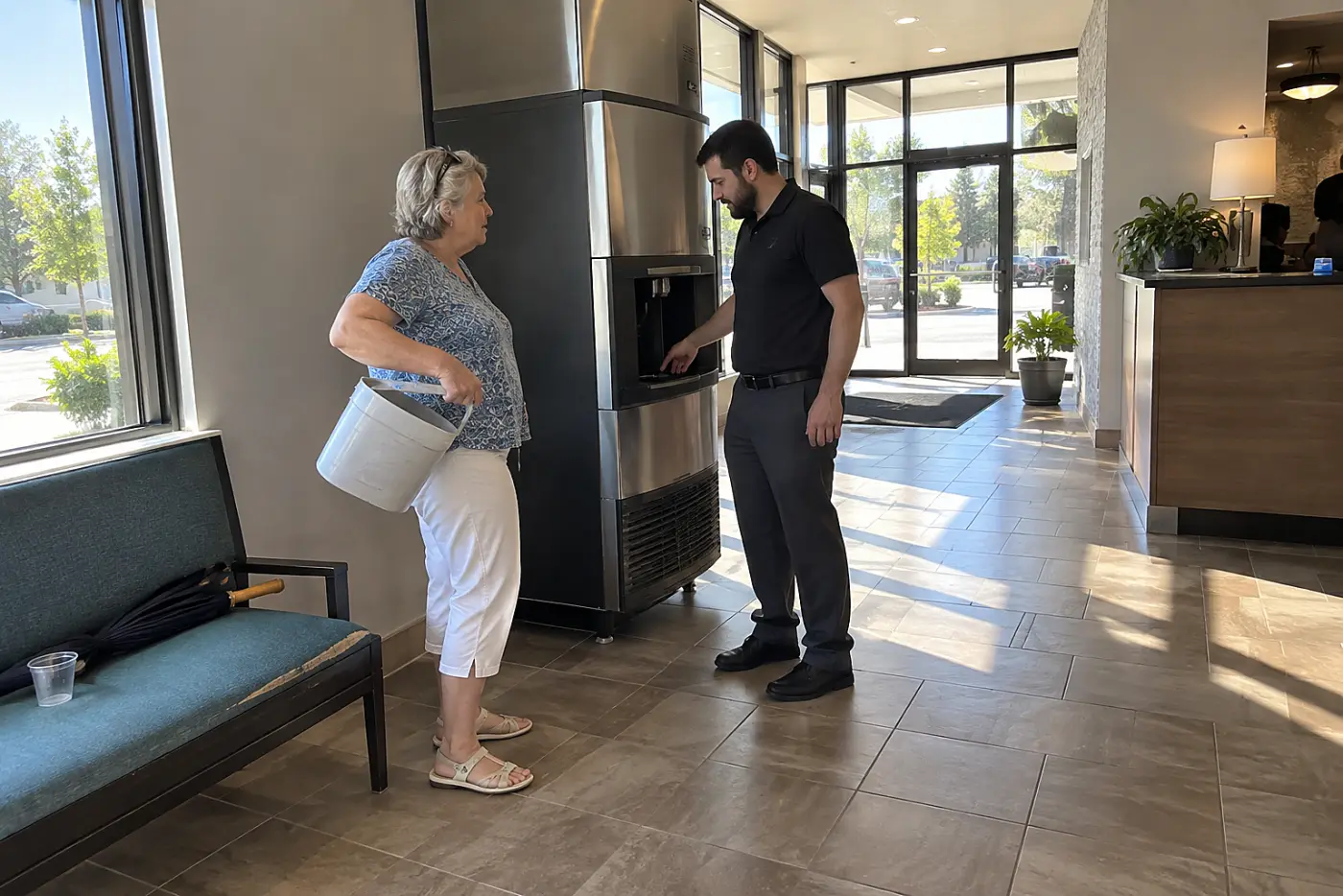
Sleep gets harder when a machine rattles outside the door.
The ice machine, elevator bank, and housekeeping closet each bring different hallway noise. Staff have a floor plan and the current room inventory. Ask them to look for a room farther from the sound that bothers you. Do it before the suitcase is open and your nightgown is in a drawer.
A request for “a quiet room” gives the clerk less to work with than naming the noise you want to avoid. That distinction matters when the floor is nearly full.
This week, decide which noise bothers you most and put that detail in the booking note. At check-in, say, “Is there a room away from the ice machine and elevator doors?”
The floor plan tells you little about the bed itself.
19A lower bed in another room
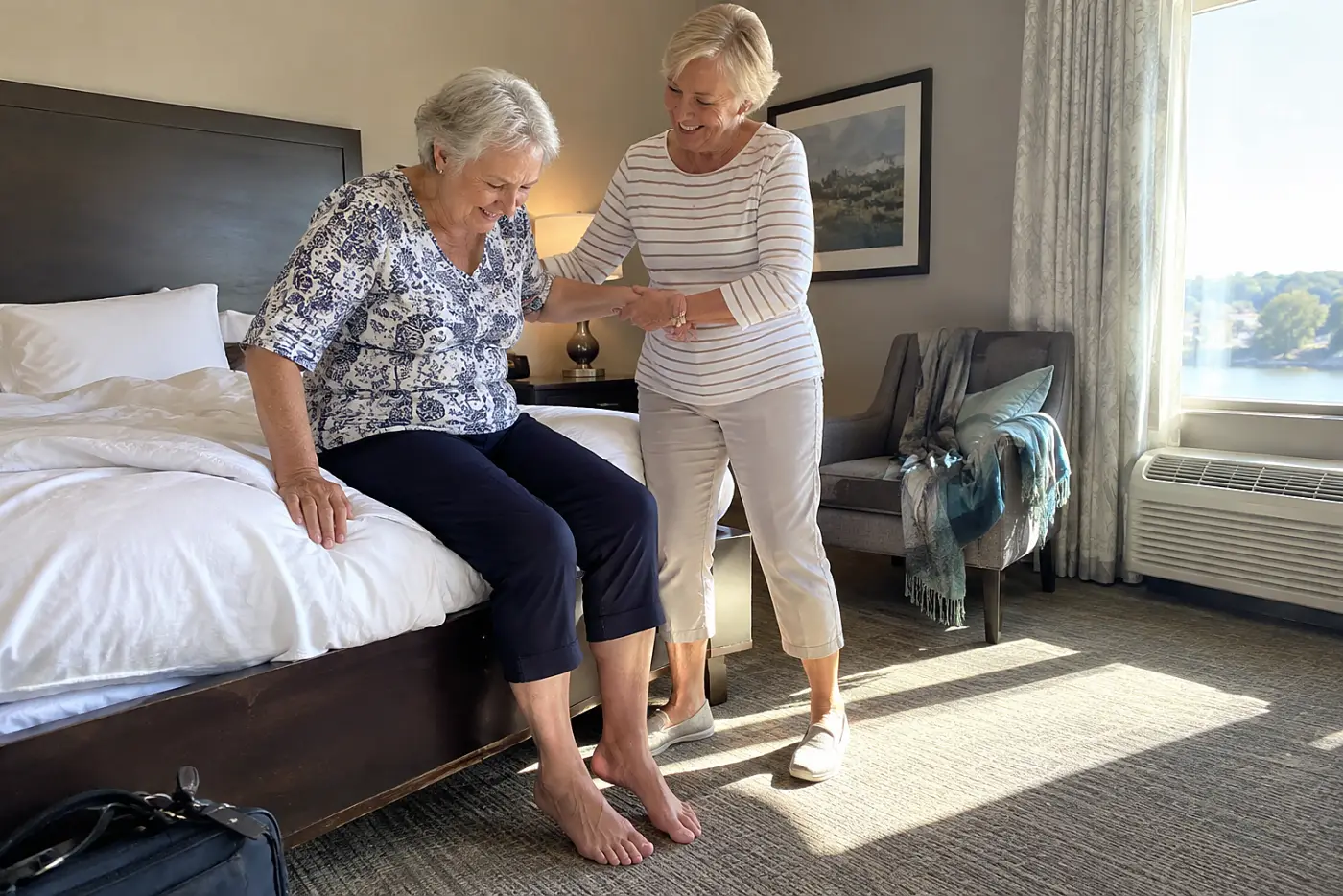
A high mattress makes getting up a problem.
Platform beds and thick mattresses vary across rooms, even in the same hotel. Ask staff to check the bed in an actual room rather than judge its height from a photo. Tell them whether sitting on the edge leaves your feet on the floor.
A bed you can't enter or leave safely is worth addressing before you unpack. Changing rooms after you settle in means handling the bags again.
This week, call the hotel and describe the bed height you manage at home. Say, “Could someone check whether a room has a lower bed and tell me what they found?”
Next, check the place where footing matters even more.
18A bath mat for a slick tub
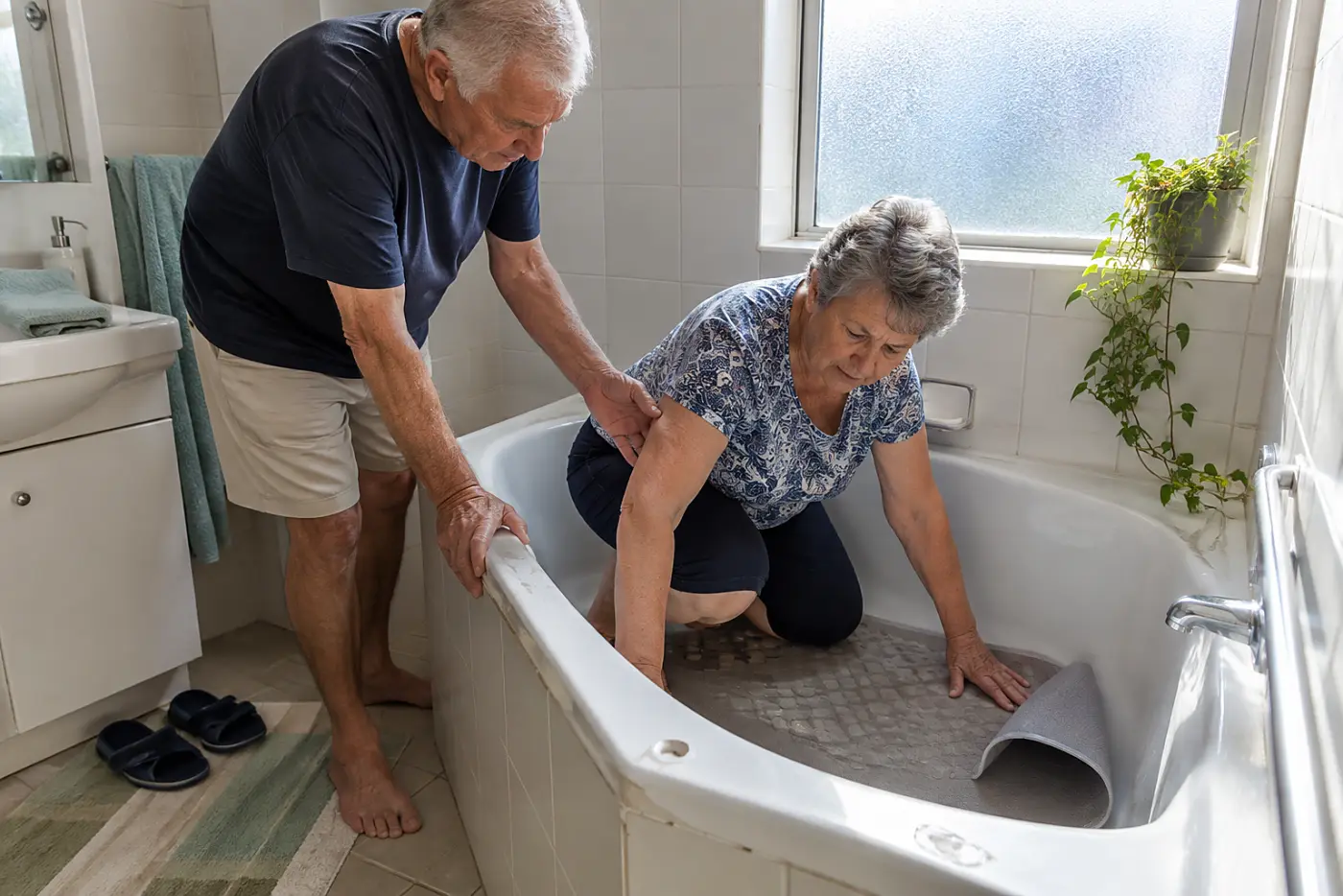
A polished tub feels slippery under wet feet.
Call the desk before your first shower and ask whether the hotel stocks a nonslip bath mat. Housekeeping will need the room number to bring one. Place it flat, then press it with your hand before stepping in. A loose mat that slides under pressure won't help.
The CDC's fall prevention information gives you good reason to take bathroom footing seriously. You don't need a fall to justify checking the tub.
This week, pack a note beside your toiletries: “Check shower floor.” Once in the room, say, “Do you have a nonslip mat housekeeping could bring?” If the answer is no, ask staff to check the bathing setup in another available room.
Before you run water, look at what your hand reaches.
17A shower chair delivered before bathing
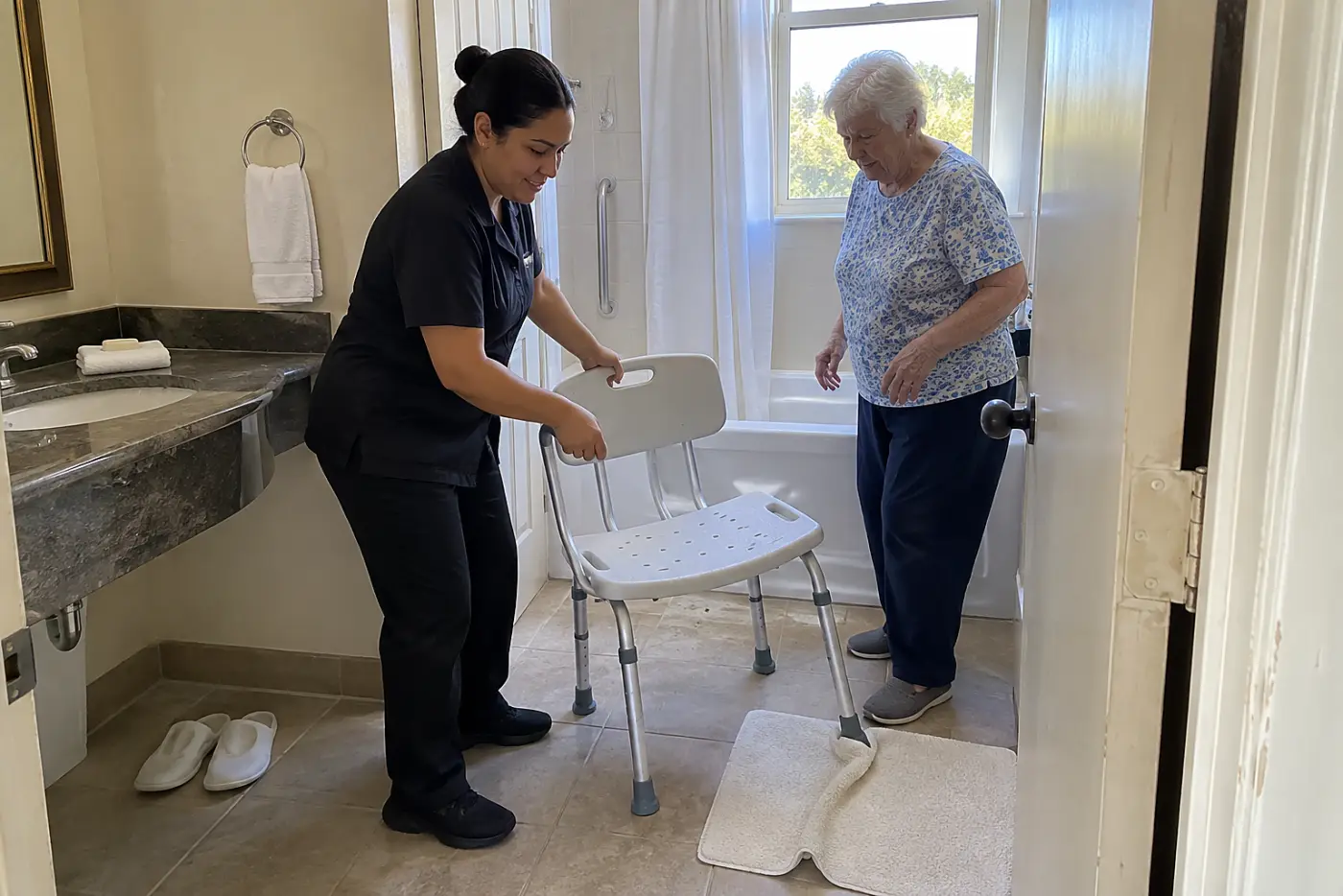
Standing through a shower isn't a hotel requirement.
Ask the front desk whether the property has a shower chair for guest use. Have staff check its condition and whether it fits the shower in your assigned room. A chair that blocks the shower door solves nothing. Ask where they will leave it, so you aren't hunting for equipment in the hallway.
If staff need time to locate one, you'll want to know before you're ready for bed. A booking site's amenities list won't confirm what is on hand that day. The ADA National Network has guidance on access questions, but the property must answer this equipment question.
This week, call the hotel itself before packing. Say, “Do you have a shower chair, and would someone check that it fits my room's shower?”
The chair helps only if you can reach everything around it.
16A description of the actual bathroom layout
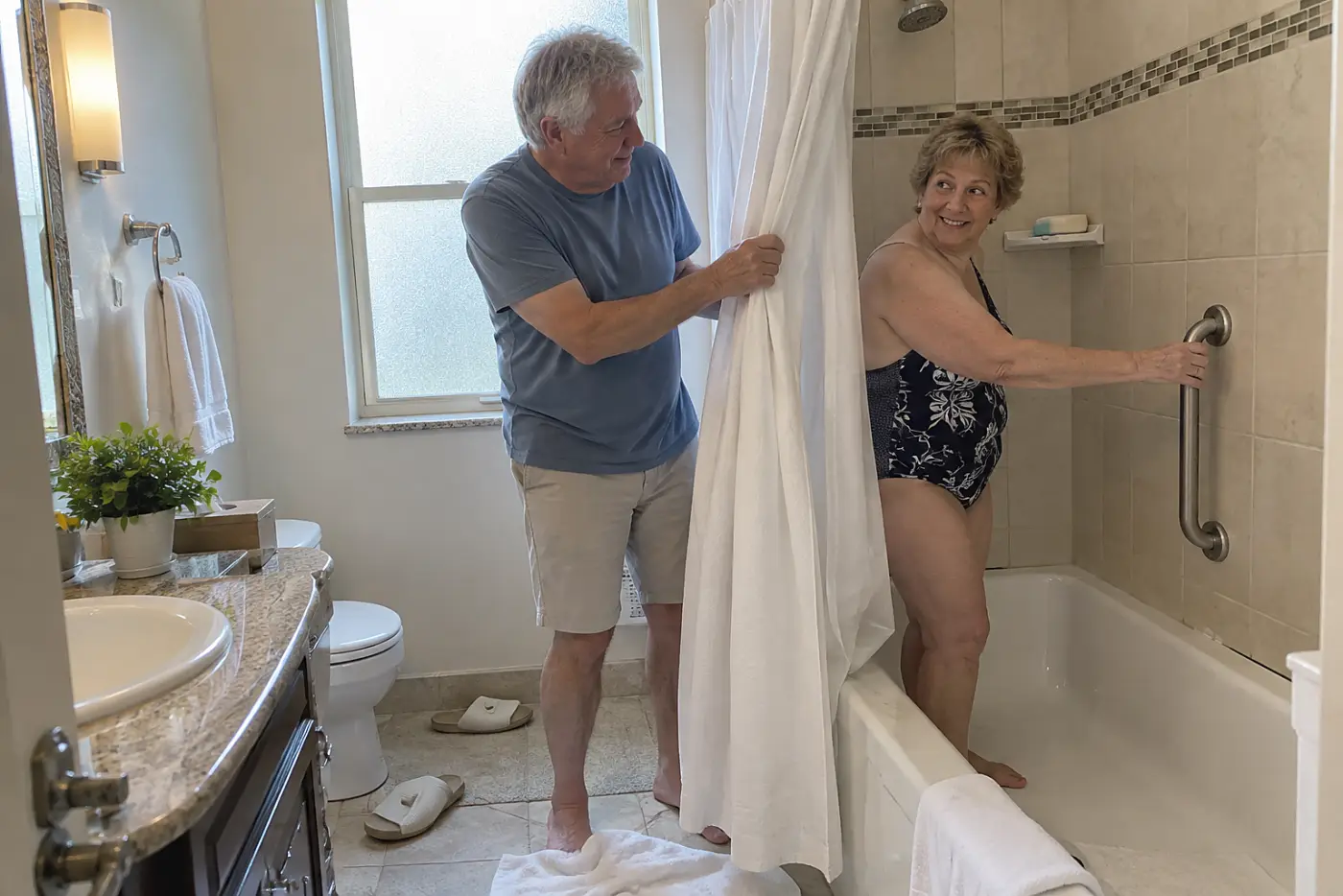
Two rooms called accessible work very differently.
One bathroom has a roll-in shower. Another has a tub with grab bars. An accessible label alone won't tell you which bathing setup, toilet clearance, or bed approach works for you. Ask the hotel to describe the room's features, then confirm the reserved room type.
A mismatch discovered with your bags upstairs takes longer to fix than a question asked by phone. ADA.gov sets out lodging access rules; your own list identifies the features you need to verify.
This week, write down what you use at home, including the side from which you approach the bed. Call the hotel and say, “Please describe the shower, toilet grab bars, and clear space beside the bed in the room you're holding for me.”
After the bathroom, another small detail deserves a look.
15An extra lamp beside the bed

A dark bedside corner turns a simple trip into guesswork.
Ask staff whether housekeeping has a spare lamp or another room has better lighting. If a lamp arrives, place it where the switch is reachable from bed. Test the outlet and your route to the bathroom before nightfall.
The National Institute on Aging's fall prevention advice includes better lighting. A working ceiling light won't help much when its switch is across a dark room.
This week, add “bedside light” to your arrival checklist. At the desk, say, “Could someone help me get a working light I can reach from the bed?”
Once you see the floor, check what's in your path.
14A safe outlet for your CPAP machine
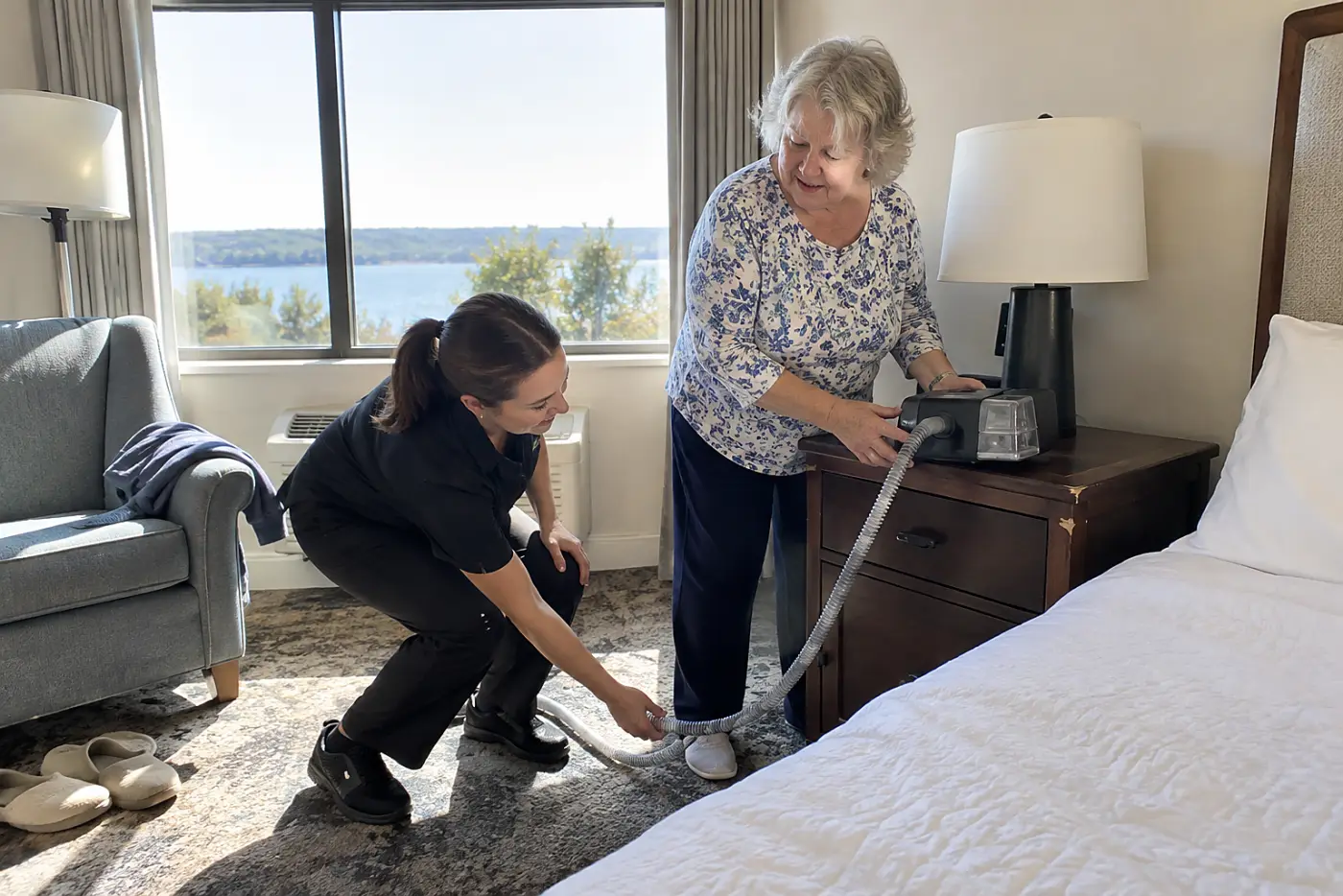
The outlet behind the bed isn't much use to you.
If you sleep with a CPAP machine or charge a mobility device, tell staff where the equipment needs to sit. Ask them to identify an accessible outlet and explain the hotel's rules for cords. Don't run a cord across a walkway or improvise a power setup for medical equipment.
Your device's manual and the hotel's fire rules matter more than a midnight fix. The U.S. Fire Administration also advises guests to review hotel exits on arrival.
This week, put your device's power needs in your travel notes, including whether you use water with it. On arrival, say, “I need power beside the bed for my CPAP. Would you show me a safe outlet?”
Power is one problem. Medicine storage raises another.
13A refrigerator checked for your medicine
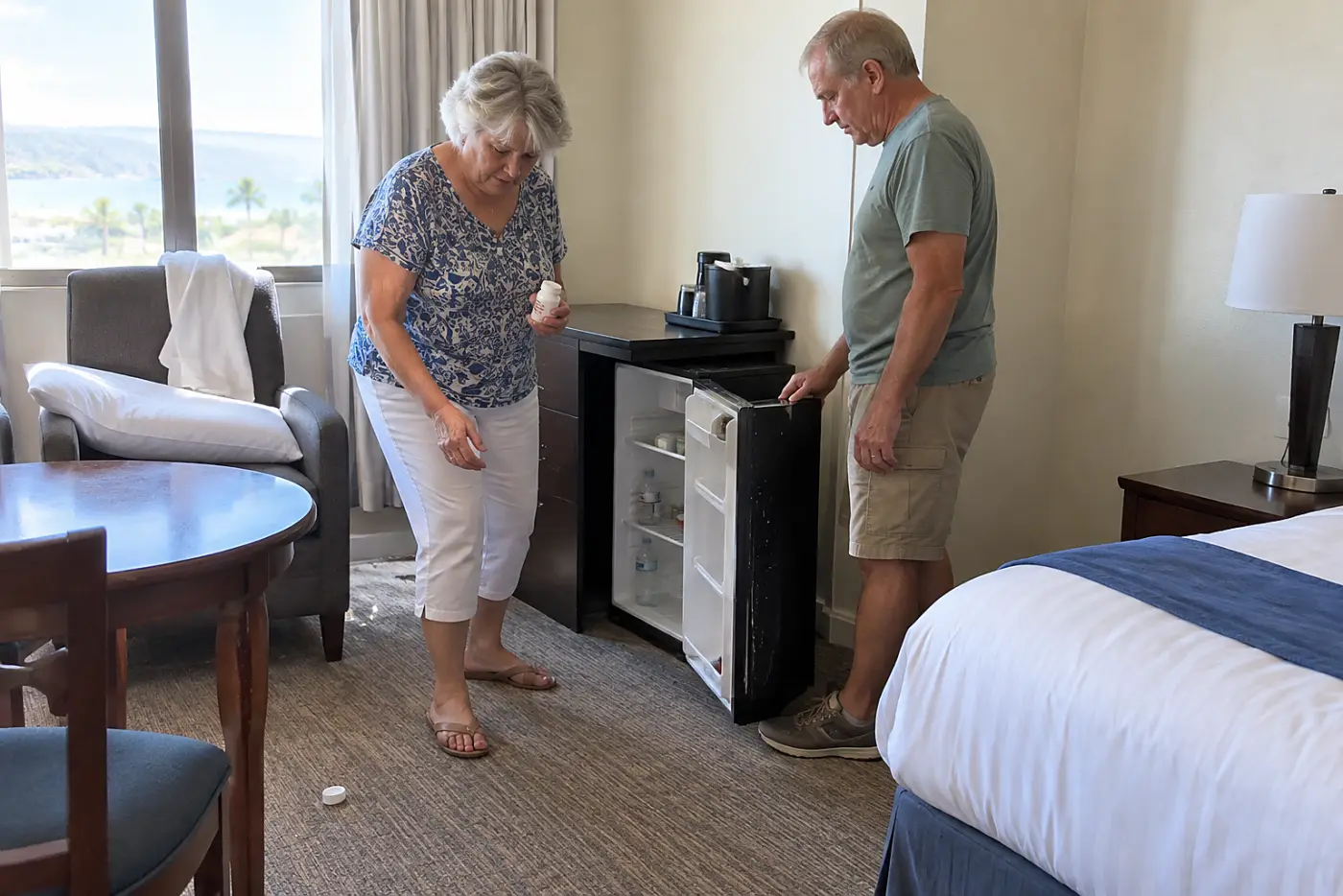
A minibar isn't automatically a medicine fridge.
Ask staff whether your room has a refrigerator with a temperature control. Compare its actual temperature with the storage directions on your medication label. If staff offer storage elsewhere, ask who has access and when you retrieve it. Don't hand over medicine without understanding that arrangement.
The FDA tells you where to find drug labeling; your pharmacist will explain instructions you don't understand. A cold-looking cabinet is no substitute for the temperature your medicine requires.
This week, read the label and ask your pharmacist about travel storage. At the hotel, say, “What refrigerator options are available for medication, and who controls the temperature?”
Temperature isn't the only reason to speak up before unpacking.
12A request to skip scented room spray
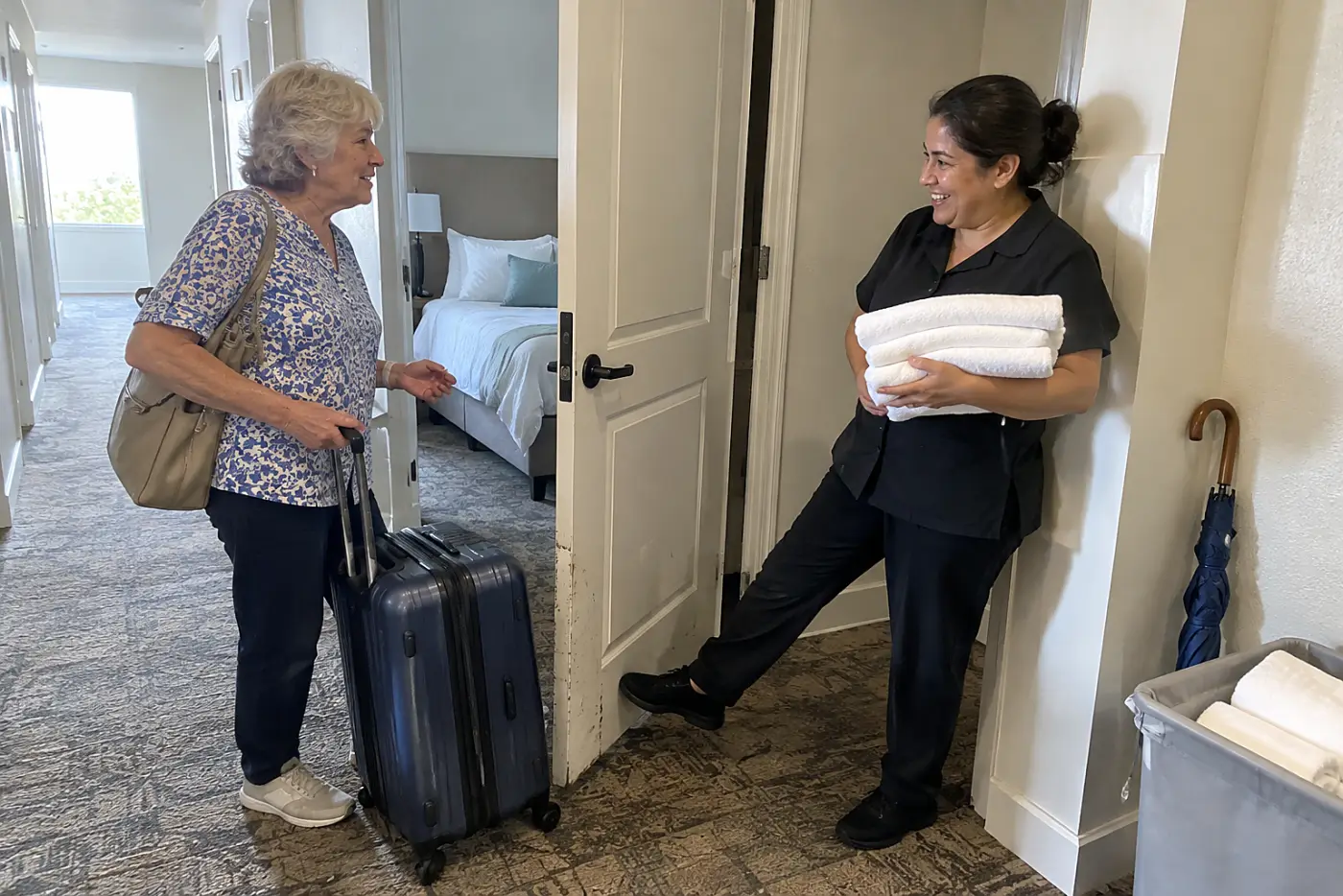
A freshly sprayed room sends you straight back downstairs.
Housekeeping starts with the property's cleaning routine. Call before arrival to ask which scented products are used and whether staff will note your request to skip room spray. Get a direct answer; “fragrance-free” means little without the product names.
Once a scent sits in curtains or bedding, opening a window won't necessarily clear the room. Many hotel windows stay shut. Asking early leaves time to discuss another available room if the cleaning routine won't work for you.
This week, write down the products that cause trouble, such as air freshener or scented detergent. Call and say, “Could housekeeping skip air freshener and scented spray for my room? Please tell me if that's outside your cleaning routine.”
While you're discussing the room, ask about its air.
11A thermostat lesson before bedtime
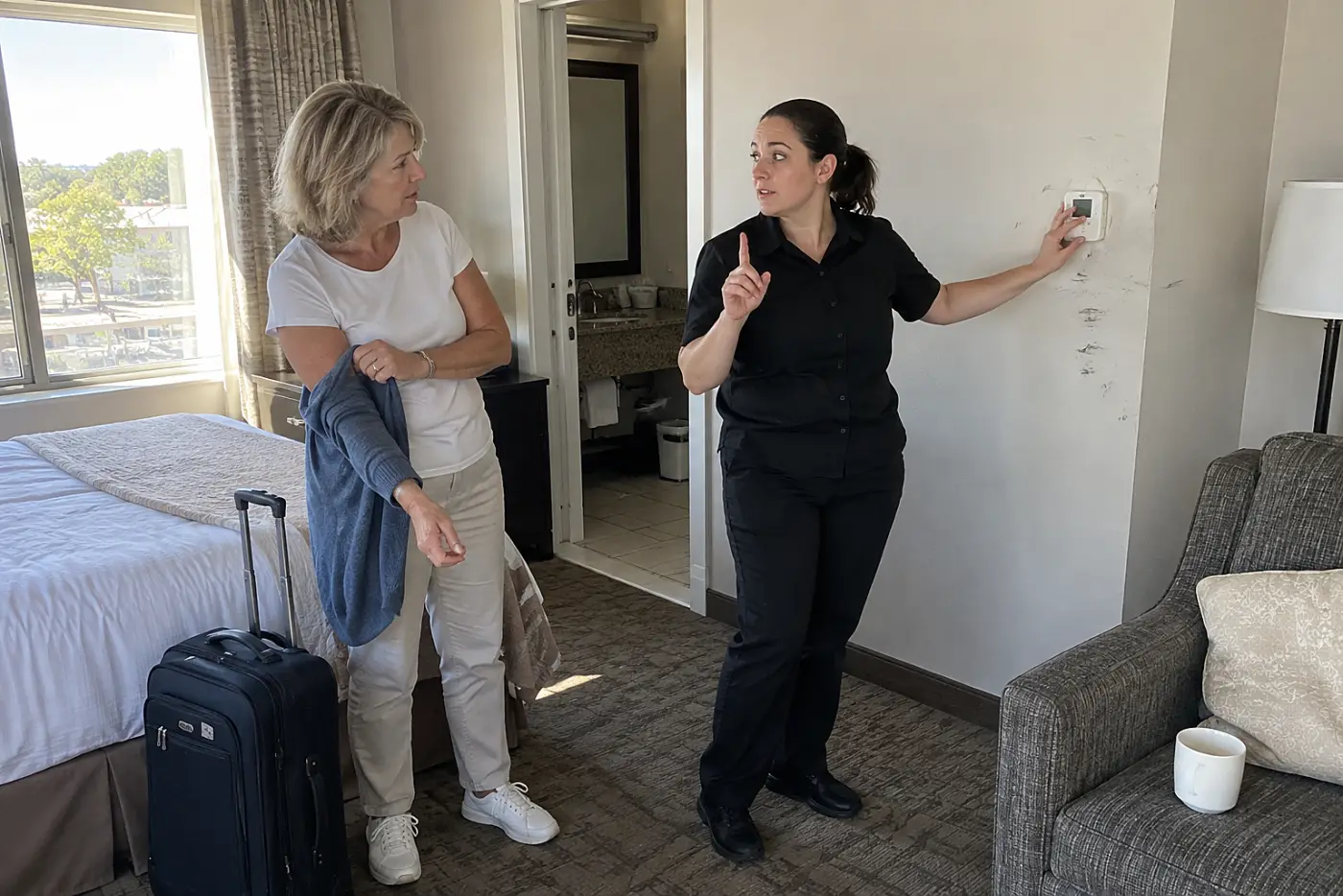
An unfamiliar thermostat leaves you awake and cold.
A wall control and a unit beneath the window don't always work the same way. Ask staff which one sets the room temperature and how to change the fan setting. Turn it on while you're still dressed for dinner. If the air doesn't change, report that then, rather than waiting under the covers.
By midnight, a desk call feels harder than a question during check-in. You also need time for staff to inspect the unit or discuss another room.
This week, put “test thermostat” on your arrival list and check it before dinner. Say, “Would someone show me the heat and fan controls, then tell me whom to call if they don't work?”
Then turn to the service that interrupts your sleep.
10A housekeeping time that suits you
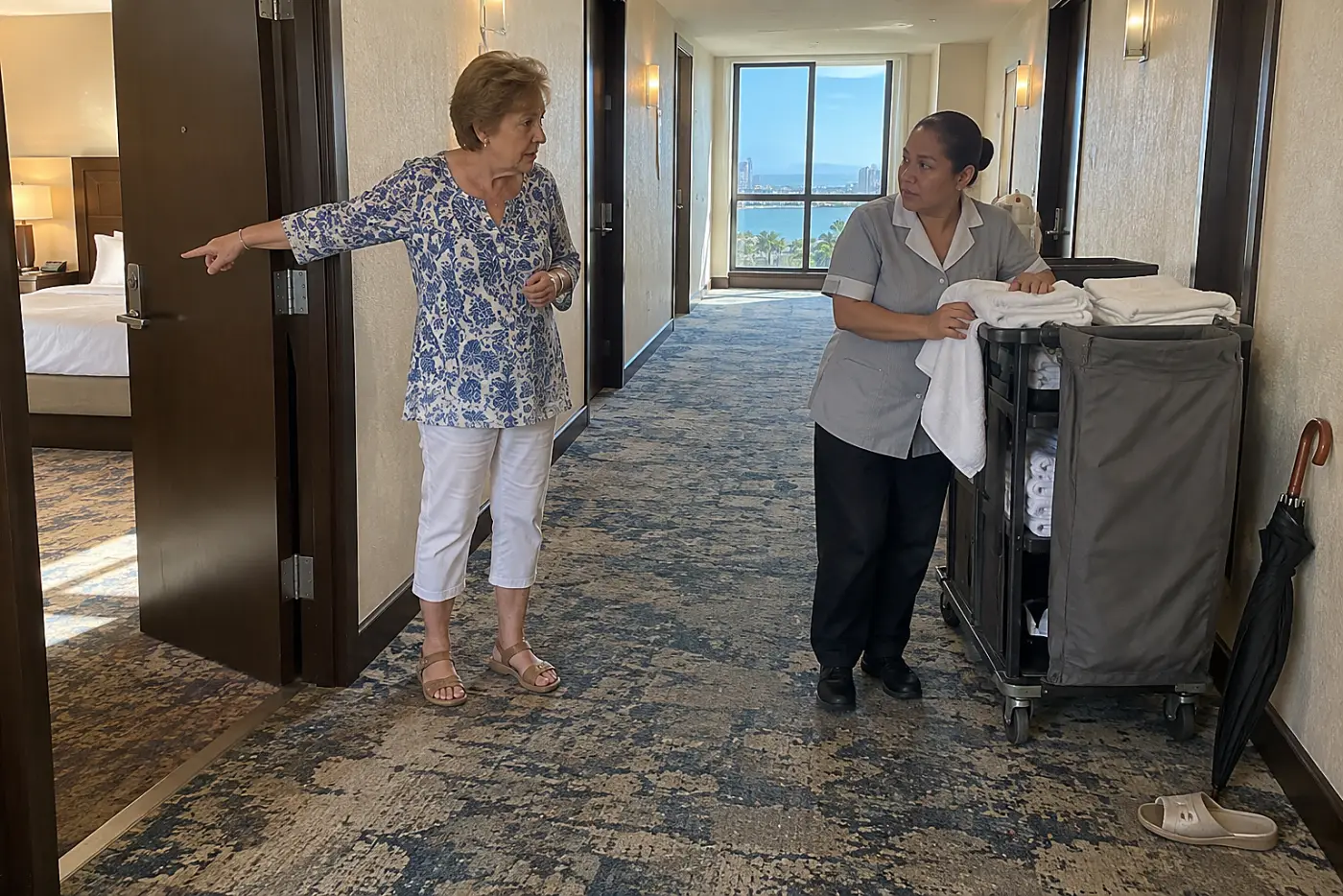
A knock during your nap is avoidable.
Housekeeping works from a room list, and the desk passes along service preferences. Ask whether your hotel offers a time window or a no-service option. A door hanger helps, but speak to the desk when you need towels delivered at a particular time.
Skipping service without saying so has a cost: you might discover at bedtime that the towels are wet and the wastebasket is full. If privacy matters, ask how the hotel handles wellness checks when a room remains undisturbed.
This week, decide whether you want daily cleaning, fresh towels only, or no visit during your stay. At check-in, say, “Please ask housekeeping not to enter between one and four. How do I request fresh towels afterward?”
The same desk handles an even more useful morning detail.
9A wake-up call with confirmation

A phone alarm dies when its battery dies.
Ask the front desk to set a wake-up call and repeat the time back to you. Check that the room phone works by calling the desk. Keep your own alarm as a second check; one working phone call tonight doesn't guarantee tomorrow's timing.
Missing a departure time is worse than making one short call. If you cross time zones, confirm the hotel is using local time.
This week, save the hotel's number with your trip details and note your departure time. At the desk, say, “Please set a wake-up call for six in the morning, local time, and repeat it back.”
Morning plans also depend on getting out the door.
8A taxi pickup at the easiest entrance
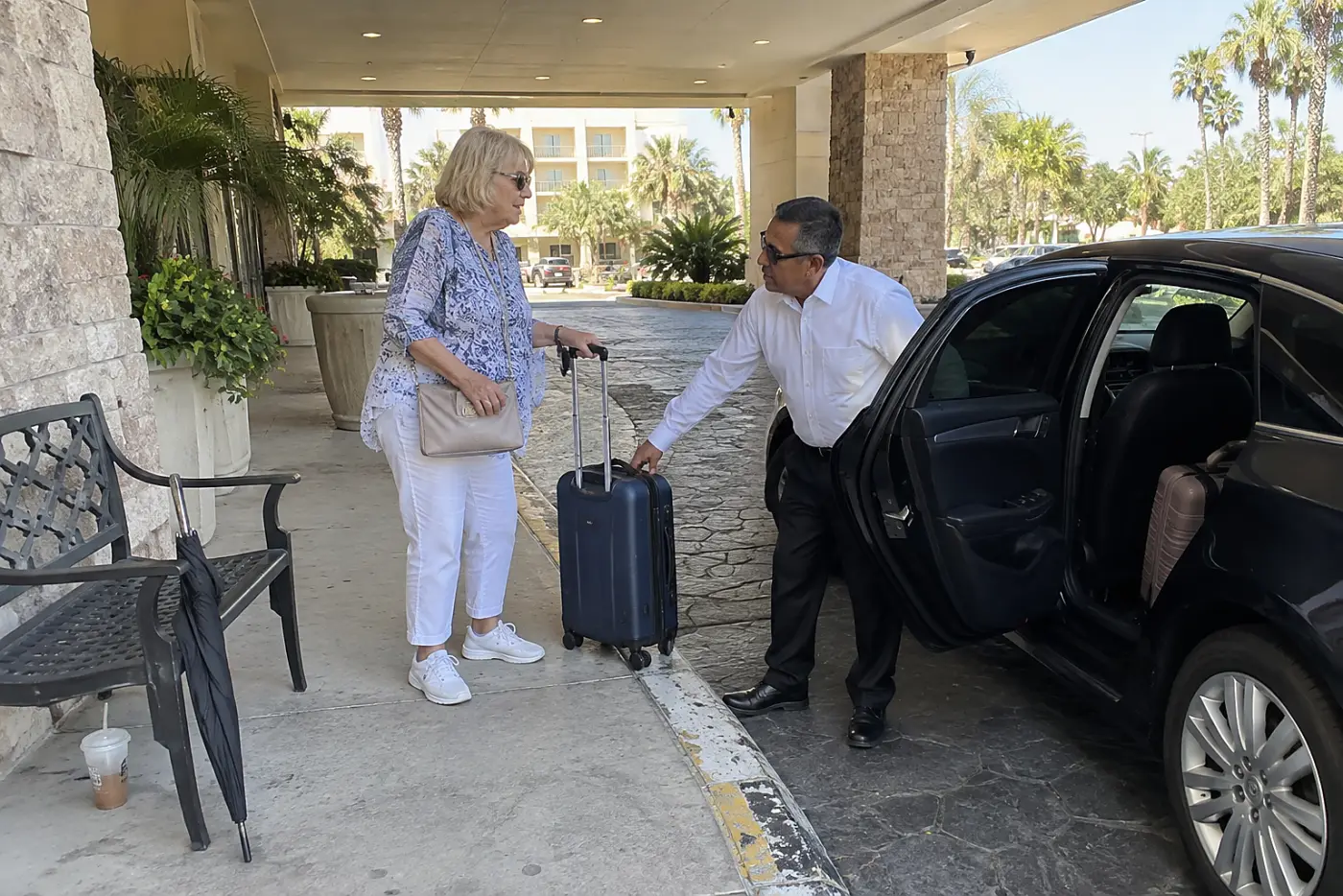
“Meet your ride outside” leaves too much unsaid.
A hotel with several entrances has several curbs. Ask the desk which one has seating, cover, or fewer steps. Then ask staff to explain the route from your room to that door. Give the driver the entrance details before pickup, while there's time to correct a mistake.
A car waiting at the wrong door starts a scramble across the lobby. Ride-service waiting and cancellation rules differ, so check the terms in your app before booking.
This week, save the hotel's address and ask which entrance suits your walk. At the desk, say, “Which entrance has the shortest walk and a place to sit while I wait for my car?”
While you wait, there's no prize for standing.
7A chair near the pickup entrance
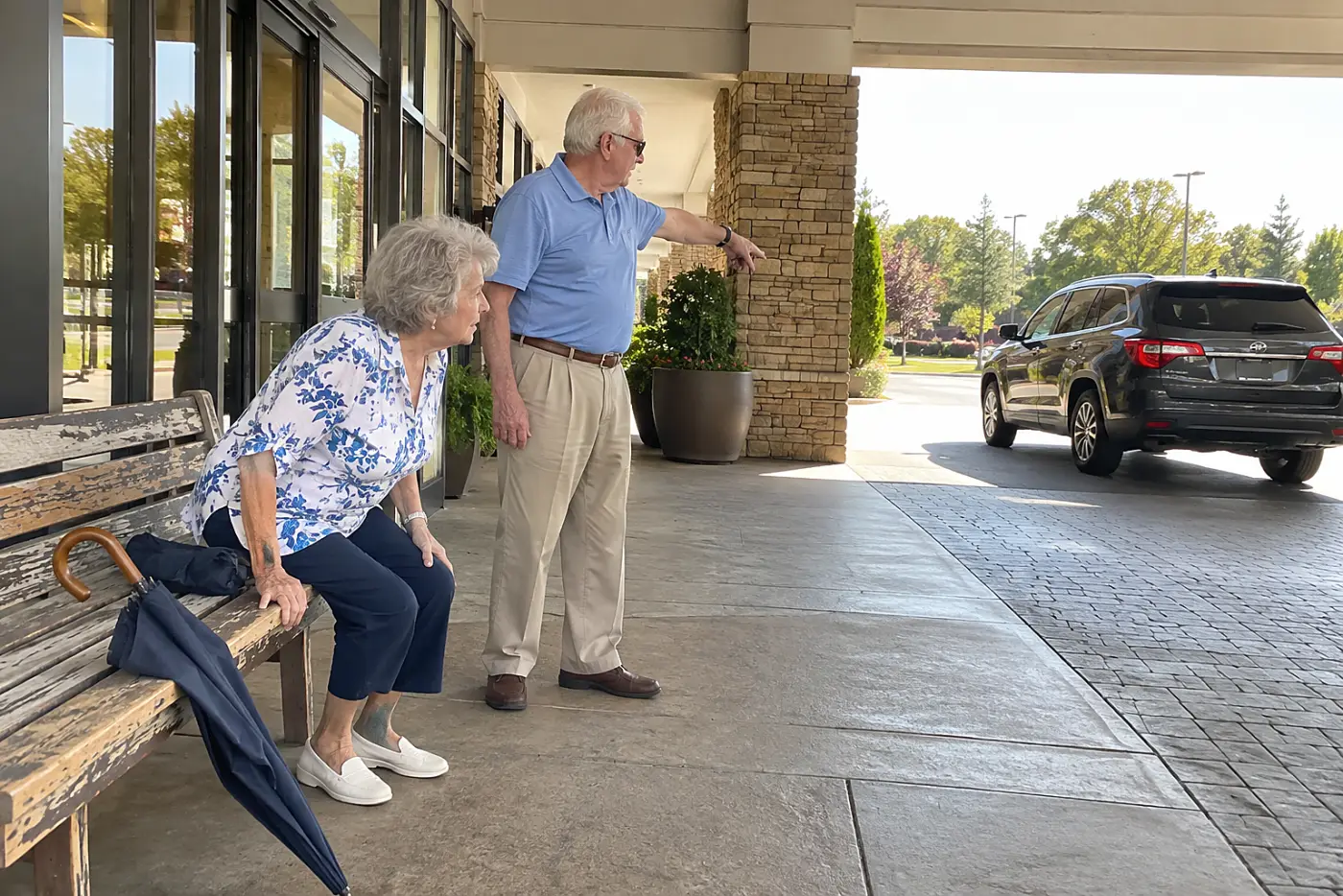
A pickup area might have nowhere to sit.
Ask staff for a chair at a safe waiting spot or directions to nearby seating. Keep the doorway and vehicle lane clear. If there's no chair by that entrance, arrange for the desk to tell you when the ride arrives. Check where you need to stand to see the car.
Standing outside through a delay takes energy you need for the trip. This request works best before you bring your bags down, not while a driver is calling.
This week, check whether your car service sends arrival texts. At the desk, say, “Is there a place to sit near pickup, and would you tell me when my car arrives?”
Before the car comes, another errand is easier inside.
6A printed boarding pass at the desk
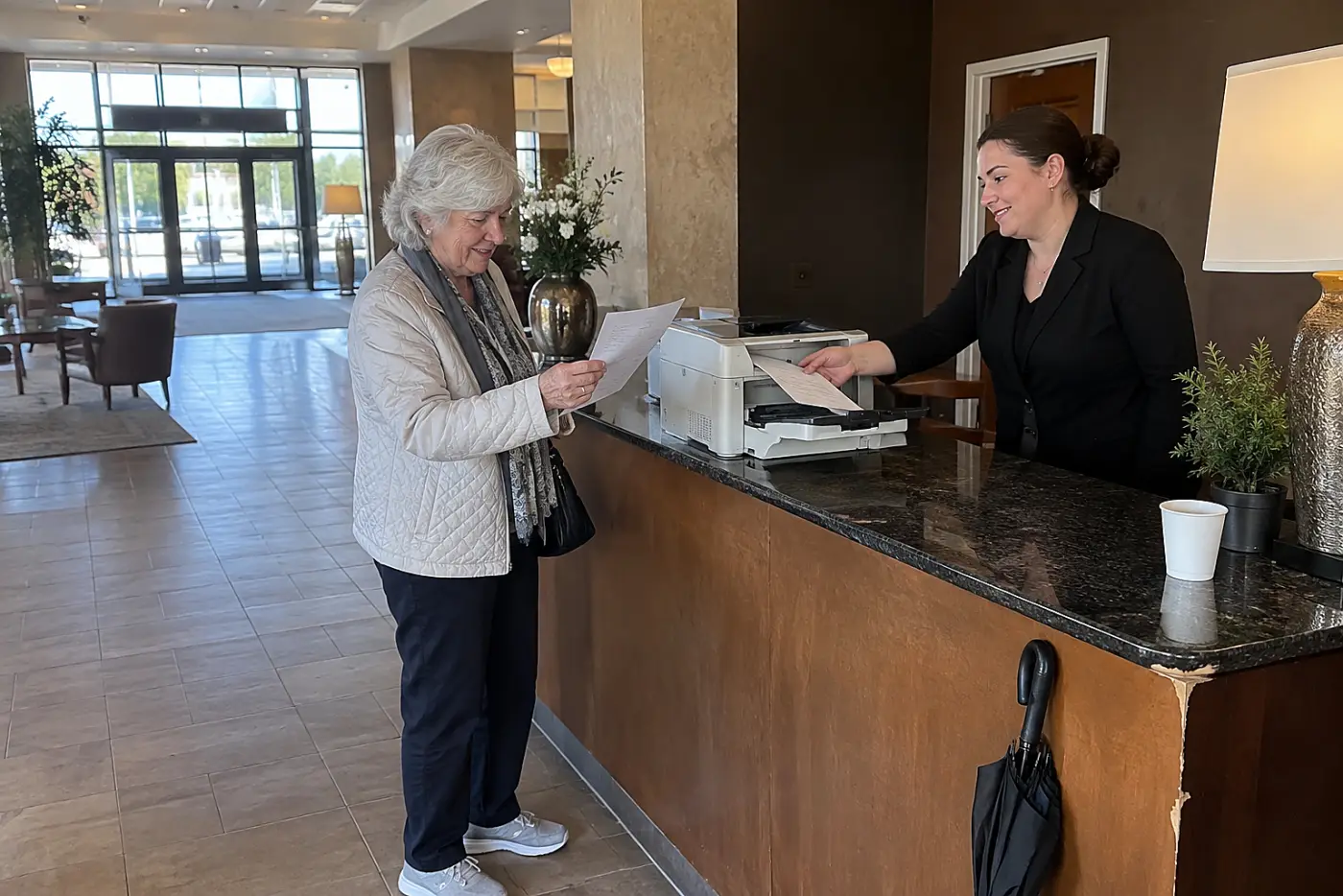
A phone screen isn't the only way to board.
A paper boarding pass gives you another option when a screen freezes or the battery runs low. Ask whether the hotel has a guest printer and how to send the file. Don't email a pass until staff confirms the property's current printing address.
Your pass contains travel details. Collect every page yourself, and ask staff how they remove files from the printer queue. If the hotel has no printer, ask the airline about its airport kiosk or check-in desk.
This week, save your airline confirmation where you'll find it without searching through messages. At the hotel, say, “Do you have a guest printer for a boarding pass, and what's the secure way to use it?”
That paper is useful. So is one more piece of paperwork.
5An itemized bill before checkout
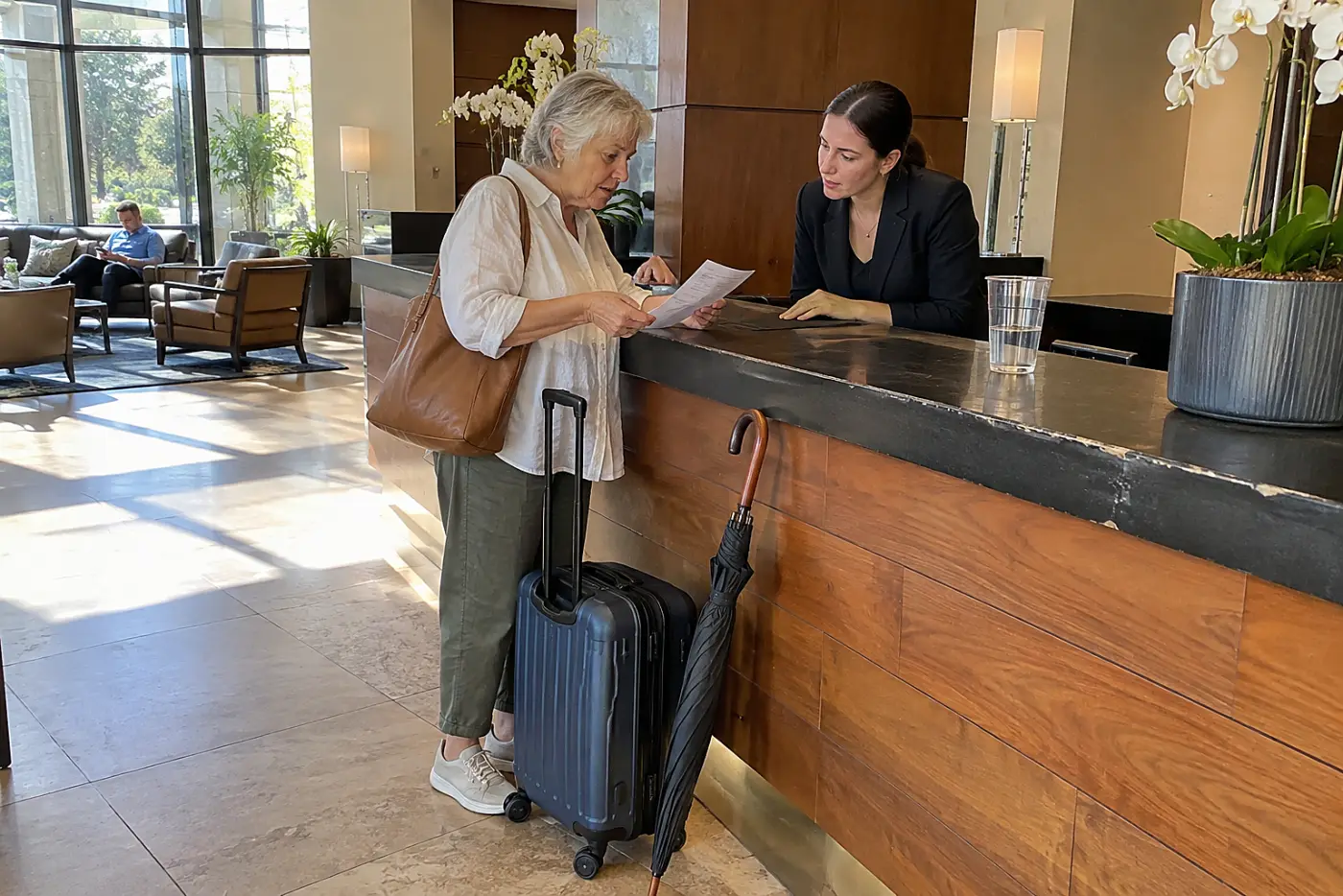
A total isn't enough to check what you owe.
Ask the front desk for a folio listing the room rate, taxes, and extras. Read it while staff still have your reservation open. If your card shows a pending hold, ask which entry is temporary and which is a final charge.
An incorrect minibar or parking charge is easier to discuss before you leave. Your reservation confirmation gives you a rate to compare with the folio.
This week, save that confirmation where you can reach it at checkout. Say, “Please give me an itemized folio so I can check each charge before I leave.”
The bill tells you what happened at the desk, not what stayed upstairs.
4A staff-assisted sweep of your room

The charging cable hides behind the nightstand.
Before checkout, ask a staff member to help look where reaching is difficult. Point out the outlets, drawers, safe, and space behind the bed. Tell them what you're looking for; nobody knows whether the black cable beside the lamp belongs to you.
Once you've left, lost property enters the property's separate process. The American Hotel & Lodging Association represents hotels, but your hotel is the place to ask about its lost-and-found rules.
This week, make a five-place departure list: outlets, safe, drawers, bathroom, and bed. Before checkout, say, “Could someone help me check behind the nightstand and inside the safe?”
There is one service worth arranging even earlier.
3A luggage hold after checkout

Checkout time doesn't have to dictate your afternoon.
Ask your property whether staff hold luggage after checkout. If they do, find out where bags go, how they're tagged, and when to collect them. Keep medication, identification, keys, and valuables with you. Save the claim ticket where you won't have to empty your purse at pickup.
Without a plan, you're hauling a suitcase to lunch. A bag hold also matters if you have a long gap before your train or flight.
This week, ask the hotel about luggage storage and pickup hours. At the desk, say, “Will you hold my suitcase after checkout, and what do I need to show when I collect it?”
That takes care of the bags. Your exit route needs attention too.
2A staff walk-through of emergency exits
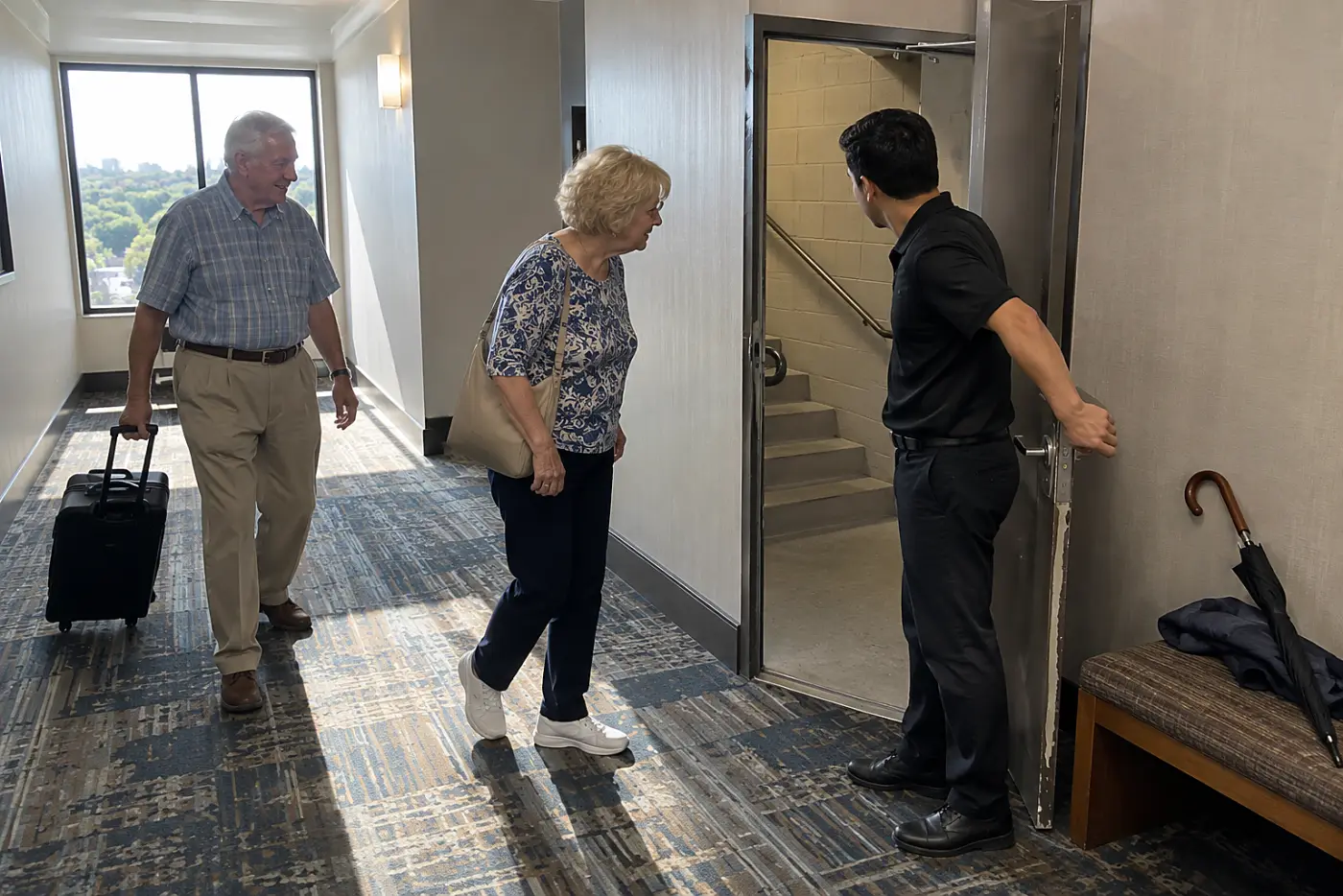
An exit sign doesn't show the whole route.
Once you're in the room, ask staff to point out the nearest exit and an alternate route. Walk the halls before you settle in. Notice where each stairwell door opens.
Count the doors between your room and the stairs if that helps you find them without relying on a sign. The U.S. Fire Administration's hotel fire safety advice says to find exits upon arrival.
If stairs are hard for you, tell the front desk before an alarm. Ask what staff would do to help a guest who cannot use the stairs. Make sure they know your room number, and don't assume an elevator will run during a fire.
This week, decide what staff need to know about your mobility. On arrival, say, “Please show me both exit routes and tell me whom to contact if I can't use the stairs.”
The best time to fix a difficult route is before you take the key.
1A walk through your daily hotel route
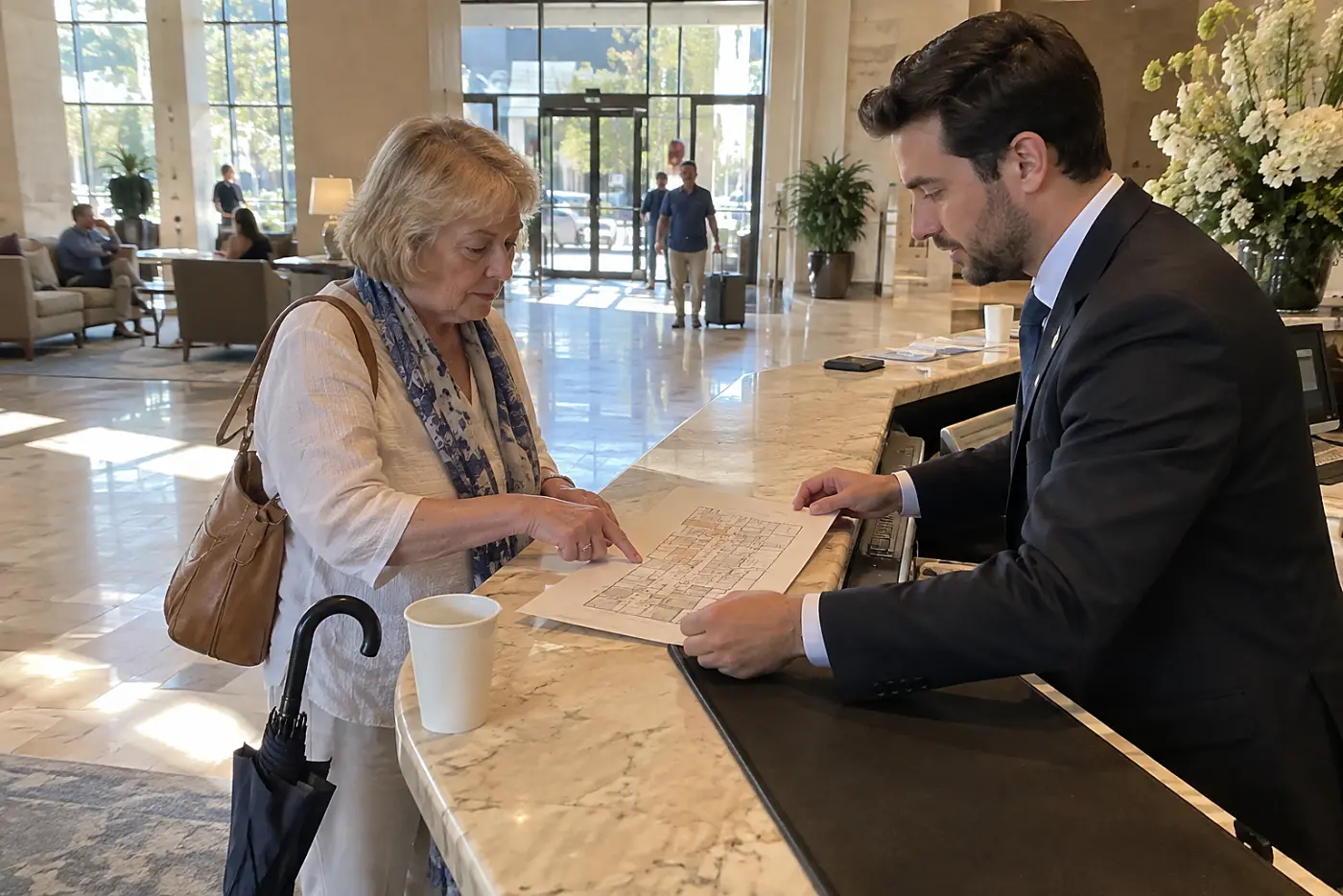
A workable room still fails if breakfast takes a staircase.
Before accepting a key, ask staff to trace the places you'll actually use each day. Start at the entrance. Include the room, breakfast area, parking, and any dining space you plan to visit. Have them identify stairs, long corridors, and elevator changes along that route.
An accessible bathroom or a door near the elevator doesn't tell you how the rest of the property connects. Discovering a difficult route after unpacking means another desk conversation and another move.
This week, list your daily stops and the stairs you won't use. At check-in, say, “Before I take the key, please show me the route from this room to breakfast and the entrance.”
That conversation is easier with a short list in your hand.
The bottom line
Across all 23 requests, staff need the physical detail before they can check what the hotel has.
The best-prepared version of you has called the hotel, noted the answer, and checked the room before unpacking. That still leaves the walk beyond its door.
Which of these has already happened on one of your trips?
Bonus: The arrival request that checks your daily route
- Write down the places you'll use: your entrance, room, breakfast area, and parking spot.
- Call the hotel and ask staff to note any stairs or walking distances you need to avoid. Keep the answer with your reservation.
- At check-in, say, “Before I take the key, please show me the route from my room to breakfast and the entrance.”
- Check each part of that route with staff. If it doesn't work, ask them to look for another available room before you accept the key.
Margaret Hale
Travel & Lifestyle Editor
Margaret has covered travel for 25 years and has ridden every long-distance train route in the U.S. at least once.
You might also like