23 Things First-Time Cruisers Over 60 Wish They'd Known Before Booking
A cabin price isn't the final cost. Fare terms, the port map, and the final-payment date decide what the trip costs.
By Margaret Hale, Travel & Lifestyle Editor
Updated · 15 min read
- Written by our travel & lifestyle editor
- How we review

Read to the end: #1 is the prepayment invoice audit that catches mismatches, and almost nobody completes it.
A tiny deck plan fills the phone screen. Two cabins look identical until you enlarge the image: one sits under the pool deck, while the other faces a wall of lifeboats.
The obvious move is to pick the itinerary, grab the cheaper cabin, and sort out details later. But cruise lines attach different rules to the fare, the ship, and each port, and those rules start mattering before you pack.
Here are 23 things worth knowing before you book.
23Read the daily service charge policy

The fare on the first screen isn't the final onboard bill.
Cruise lines publish their own policies for daily service charges or gratuities. Some fares include them. Others add a charge for each guest, each day. For a seven-night booking, check the charge across every person and every night.
If you assume it's included, the checkout total understates your planned spending. The cruise line's published gratuity policy gives the current amount.
This week, open that policy beside your fare quote and note whether the charge is included. Ask, “Does this exact fare include daily service charges, or will they appear on my onboard account?”
That answer makes the next price comparison less obvious.
22Check the fare deposit rules

The word “deposit” doesn't tell you whether the money comes back.
Cruise fares have separate deposit, cancellation, and final-payment terms. A promotion labeled nonrefundable puts the initial payment at risk before the balance comes due. Look at the cancellation schedule for the selected fare, not a general chart.
Future cruise credit also differs from a refund to your card. That distinction matters when plans change.
This week, read the deposit and cancellation terms before paying anything. Ask, “If I cancel before final payment, what comes back to my card, and what stays as credit?”
Once you know when the money leaves, check what it buys.
21Match the cabin number to the deck plan

A cabin category is not a cabin location.
Find the exact cabin number on the ship's deck plan. Then look directly above and below it. A theater, elevator lobby, or pool deck tells you more about nearby activity than the category photo.
You'll live with that placement every night. A lower fare won't move a fixed room.
This week, enlarge the ship's official deck plan. Ask, “What is directly above, below, and across from this cabin?”
The room's position is only one part of the space you're buying.
20Decode the balcony obstruction label

A balcony photo rarely shows the view from your railing.
“Obstructed view” and “partially obstructed view” mean ship equipment interrupts the sightline. The position of that equipment changes by cabin. A lifeboat below the railing creates a different view from one directly in front of the glass.
The category name won't protect the expense if an open sea view is why you're paying extra. A discount only helps when you know what blocks the view.
This week, look for cabin-specific view notes. Compare them with the deck plan and any photos of that exact cabin. Ask, “What blocks the view from this balcony when I'm seated?”
Even a clear view won't help if the layout fights your routine.
19Measure the bathroom against your routine

A cabin marked “accessible” is a specific design claim.
Start with the doorway width and the shower threshold. Check grab bars, toilet clearance, and space to turn with your equipment. The ship's accessibility information should describe the exact cabin. A photograph of a similar room isn't a measurement.
A walker that won't clear the bathroom doorway stays outside it. If you need space beside the toilet, get dimensions rather than relying on a room label.
This week, measure the equipment you plan to bring. Compare those measurements with the exact cabin's specifications. Ask, “What are this cabin's bathroom doorway width and toilet clearance?”
The same equipment raises a question before you reach the gangway.
18Check how each port brings you ashore

A dot on the itinerary doesn't promise a dock.
At some ports, the ship anchors offshore. Passengers then ride smaller boats called tenders or water shuttles. Boarding means moving between vessels. At a docked port, you leave by gangway instead.
Steps, balance, and the size of a mobility device change what that transfer means for your day. The Cruise Lines International Association has accessibility information, but the sailing's port notes are the ones to examine.
This week, mark every tender stop on the proposed itinerary. Ask the line, “At these ports, what is the boarding process for someone using my mobility device?”
Getting ashore still doesn't mean you'll reach the place pictured in the brochure.
17Locate the actual cruise terminal

The city name on a ticket isn't a terminal address.
New York-area cruises leave from more than one terminal. Even within a port complex, the correct entrance matters when a driver drops you with luggage. Check the terminal named in your sailing documents.
The wrong curb costs time on a day with a final boarding deadline. “Near the port” doesn't tell you how far a hotel sits from your pier.
This week, enter the terminal address into a map. Ask your hotel, “How would you get me to this specific terminal with two bags?”
Before you choose that hotel, check when your flight arrives.
16Keep the flight off embarkation morning

The ship won't wait for a delayed flight.
Air travel and cruise boarding run on separate clocks. A canceled flight, late bag, or long ride from the airport eats into the time before final boarding. That deadline comes before the ship's departure time.
Miss it, and you face the carrier's rules for joining later or going home. You also face the cost of any new travel. Neither reservation makes the other company responsible for a delay.
This week, price a flight arriving at least a day before sailing. Include the hotel and airport transfer in the comparison. Check whether the fare lets you change flights, then find the cruise line's final boarding time in writing. Ask, “Where is the final boarding time printed in my documents?”
The return flight deserves the same attention, for a different reason.
15Leave room after the return docking

A ship's arrival time isn't your airport arrival time.
After docking, passengers still disembark, collect luggage, clear required inspections, and travel to the airport. Check the cruise line's earliest recommended flight time for that return port. It won't be the same for every sailing.
An early ticket turns the last morning into a race. Changing it later puts you under the airline's fare rules.
This week, read the line's flight guidance before buying airfare. Ask, “What is the earliest flight time recommended for this sailing?”
Now look at the document you'll show before either flight.
14Check passport rules for this itinerary

A round-trip cruise isn't an automatic passport exemption.
U.S. Customs and Border Protection describes a closed-loop cruise exception for eligible sailings beginning and ending at the same U.S. port. That doesn't answer every foreign port's entry rules. It also doesn't give you the documents needed to fly home from abroad after an interruption.
Wrong documents put boarding and the trip home at risk. Passport validity requirements differ by destination.
This week, check CBP guidance and the U.S. Department of State destination information for every stop. Ask the cruise line, “Which documents must I show at boarding for this exact sailing?”
Your paperwork gets you aboard; the next question concerns care away from home.
13Read the medical evacuation terms

Your health insurance card isn't an evacuation plan.
Medicare pays for care outside the United States only in limited circumstances. Check your own health plan before assuming it pays for a shipboard visit. Travel insurance lists emergency medical treatment and medical evacuation separately, with separate limits and exclusions.
A medical emergency followed by transport ashore creates two questions about payment. A policy's headline benefit won't answer both.
This week, find the medical and evacuation sections in any policy you're considering. Note the limits and what the policy excludes. Ask the insurer, “What treatment and transport does this policy cover on my itinerary?”
The wording matters even more when a diagnosis predates the booking.
12Note the preexisting condition waiver deadline

Buying insurance later changes what the policy protects.
Some travel insurance plans offer a preexisting condition exclusion waiver when you buy within a stated window after the initial trip payment. Each plan sets its own eligibility terms. The policy, not a checkout badge, gives the deadline.
Pay a deposit now and shop after final payment, and that window might already be closed. The initial payment date is the one to record.
This week, compare plans before making that payment. Read the waiver requirements with the National Association of Insurance Commissioners consumer information open for background. Ask the insurer, “What must I do, and by when, to qualify for this waiver?”
An insurance decision is separate from what the cruise fare promises to refund.
11Separate cancellation coverage from changing your mind

A refund promise needs a named reason.
Standard trip cancellation coverage lists covered reasons in the policy. Disliking the forecast isn't automatically one of them. Neither is deciding you no longer want to travel. “Cancel for any reason” is a separate benefit with its own purchase rules and reimbursement terms.
Paying a premium doesn't turn every cancellation into a full refund. Find the section that matches the reason you have in mind.
This week, read the covered-reasons list and benefit schedule. Ask, “If I cancel for this specific reason, which section says I'd be covered?”
Next, check the expenses you'll owe even if you never cancel.
10Price the drink package against actual habits

A package looks simple until everyone in the cabin is included.
Drink-package rules differ by cruise line. Some require eligible adults sharing a cabin to buy the same package. A service charge also appears at checkout on some packages. Read the terms and the full checkout total, not only the displayed daily rate.
If you drink little, ordering individually costs less than a package chosen for convenience. The cabin rule matters when one traveler wants the package and the other doesn't.
This week, count what you'd order on a sea day and a port day. Compare that list with the package price for everyone required to buy it. Ask, “Does this package require the other adult in my cabin to buy it too?”
Drinks aren't the only purchase you'll make before reaching the pier.
9Reserve the dining time you actually want

“Dinner is included” doesn't give you a table at your chosen hour.
Ships use different dining arrangements, including assigned seatings and reservations. Specialty restaurants carry separate charges on many fares. Look at the dining terms for the ship and fare you're considering, then check when reservations open.
A late seating changes an evening planned around a show or an early night. A specialty restaurant booking also changes the amount you expected dinner to cost.
This week, note your preferred dinner hour and check the ship's reservation process. Ask, “Does this fare assign a dining time, or do I book each evening?”
That answer settles dinner, but not how you'll contact home.
8Compare ship Wi-Fi with cellular roaming
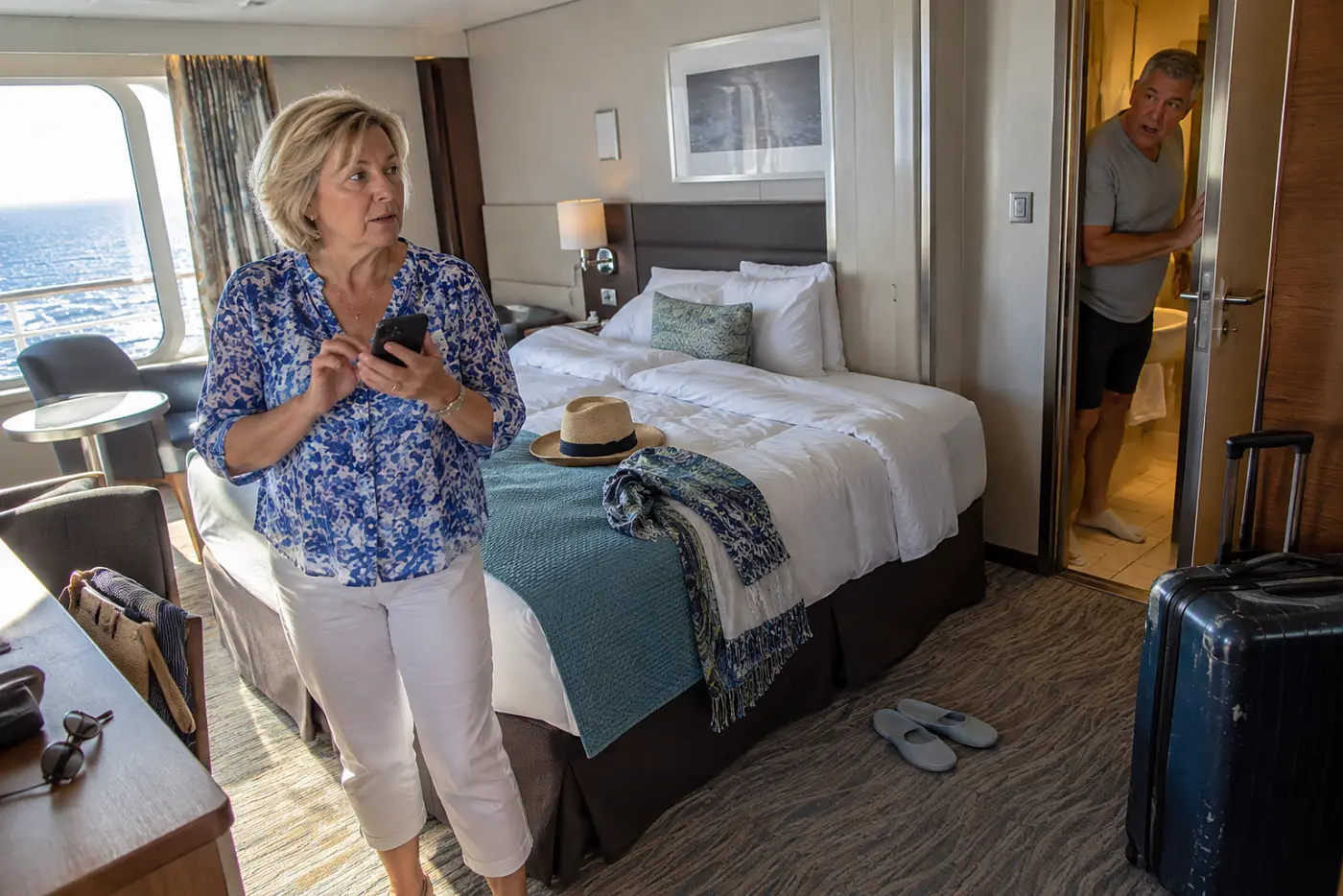
One phone connects to two networks and two different bills.
Ship Wi-Fi plans have terms for devices and permitted uses. A plan suited to messages won't necessarily handle a video call. Cellular service at sea runs through a separate network, with charges set by your carrier. Buying Wi-Fi doesn't turn cellular roaming off.
The Federal Communications Commission has travel guidance worth reading before you leave. Your carrier must tell you how its plan handles service aboard this ship.
This week, list the online tasks you need at sea. Compare them with the Wi-Fi plan, then ask your carrier about cruise-ship roaming. Practice switching on airplane mode and turning Wi-Fi back on. Ask, “Will this plan support a video call without a separate cellular charge?”
The phone needs another bit of preparation before you step ashore.
7Download the port map offline

A port day starts before your phone finds service.
Cruise terminals and meeting points aren't always where a broad port label puts them. An offline map lets you find the pier without mobile data. Save the terminal and your planned meeting place before departure.
“I'll look it up” fails without a connection. A paper address gives you another route back.
This week, download one port area and test the map with cellular data off. Ask, “Where exactly is our return meeting point?”
That return point matters because the ship follows its own clock.
6Follow ship time at every port
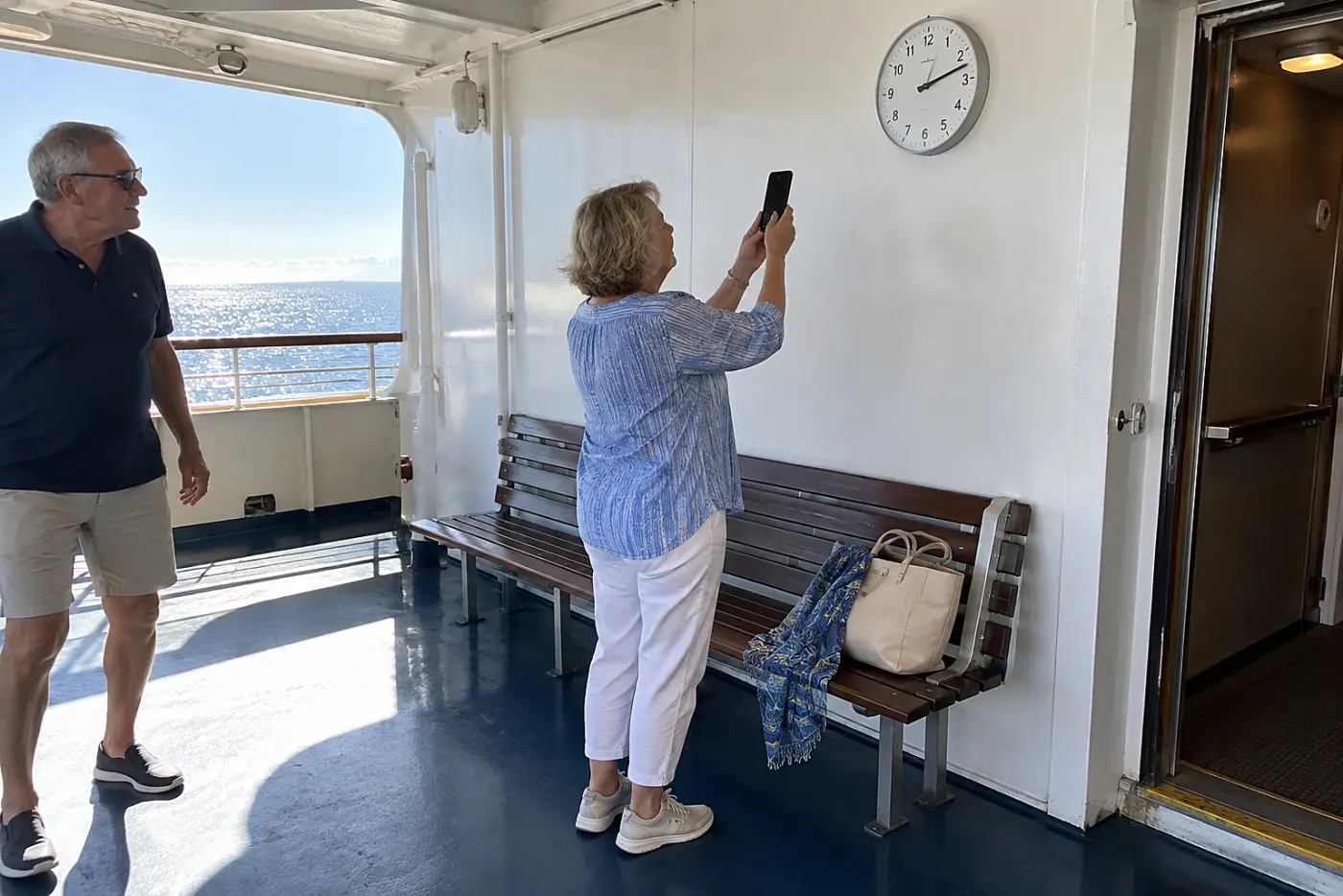
The hour on your phone isn't always the ship's hour.
The cruise line tells passengers which clock governs all-aboard deadlines. Your phone might change to local time ashore. The posted return deadline still follows the time announced on board.
Miss it, and you'll have to arrange your next steps from shore. An excursion's end time needs room for the trip back through the terminal.
This week, find where the line posts ship time and all-aboard times. On a port morning, photograph the posted deadline. Ask a crew member, “Is this all-aboard time shown in ship time?”
The person selling a tour also shapes the plan for getting back.
5Compare ship excursions with independent tours

Two similar bus tours carry different return arrangements.
A cruise-line excursion follows the line's published excursion terms. An independent operator sets its own meeting point, cancellation terms, and return plan. Compare those details before choosing by price.
A tour ending near all-aboard time leaves little room for traffic. The return plan matters as much as the sights.
This week, compare one ship tour with one independent tour. Write down both return times. Ask the operator, “Where do we meet, and what happens if the tour returns late?”
Timing isn't the only detail a tour title leaves out.
4Read the excursion's walking description

“Easy” is not a distance you can picture.
Listings describe stairs, uneven ground, and time on your feet in different ways. A bus tour still starts with a walk to the bus. Look for the longest stretch without a seat.
A tour you can't comfortably finish changes the whole port day. Total tour length won't tell you how demanding that walk feels.
This week, check the steps, surfaces, and walking stretches for one tempting excursion. Ask, “How far is the walk from the ship to the vehicle, and are there stairs?”
Back aboard, another schedule controls your last evening.
3Check the luggage pickup instructions

Your suitcase can leave your room before you do.
Near the voyage's end, the line gives disembarkation instructions. If you use checked-luggage pickup, you put a tagged bag outside your cabin at the stated time. Your remaining things leave with you.
Keep your passport, medicine, glasses, and morning clothes out of that suitcase. Otherwise, the item you need is already out of reach.
This week, test whether a small bag holds those essentials. Ask, “When must checked bags be outside the cabin?”
That plan starts with what you carry onto the ship.
2Keep medicine in your carry-on
Checked luggage follows a different path from you.
Suitcases pass through baggage handling at airports and cruise terminals. Medicine in your carry-on stays accessible during delays and before the cabin is ready. The Transportation Security Administration has guidance on bringing medicine through airport security.
A late bag shouldn't decide whether you have an evening dose. Refrigerated medicine calls for a storage conversation with the cruise line before you book.
This week, pack medicine and a written medication list in the bag you'll carry aboard. Ask, “What storage is available in this cabin for medicine that needs refrigeration?”
One final check ties the quoted trip to the amount due.
1Compare every promised inclusion with the final invoice

A missing invoice line is easiest to challenge before payment.
Put the current invoice beside the written quote and booking confirmation. Start with the passenger names, ship, sailing dates, cabin number, and fare type. Then move line by line through the promised inclusions. Look for service charges, transfers, onboard credit, and anything else named in the offer.
Don't fill a gap with what you remember hearing on the phone. Write “missing” beside any promise that isn't shown. Write “unclear” when an invoice label doesn't match the offer. Those two words turn a vague worry into a question the booking agent can answer.
Once the balance is paid, changes fall under the fare's terms. The Federal Maritime Commission won't settle a mismatch that you never raised with the seller. You need the corrected booking record, not reassurance that someone will note it later.
This week, make three columns: “promised,” “shown on invoice,” and “needs an answer.” Fill them in before the final-payment deadline. Ask, “Will you send me an updated confirmation showing this correction before I pay the balance?”
Keep that page open while you work through the last step below.
The bottom line
Each cruise detail has its own rule, price, clock, or document.
The best-prepared version of you has checked the sailing and settled every mismatch before final payment.
Which of these has already happened on a trip you took?
Bonus: The prepayment invoice audit
- Open the written offer, current invoice, and booking confirmation side by side.
- Match the names, ship, dates, cabin number, fare type, and balance due date.
- Mark each promised inclusion that is missing or unclear on the invoice.
- Ask, “Please send a corrected confirmation showing these details before I pay the balance.”
Margaret Hale
Travel & Lifestyle Editor
Margaret has covered travel for 25 years and has ridden every long-distance train route in the U.S. at least once.
You might also like