23 Rules About Dressing Your Age That Are Worth Ignoring
A mirror, a fitting-room light, and the tag inside a jacket tell you more than any birthday-based dress code.
By Margaret Hale, Travel & Lifestyle Editor
Updated · 15 min read
- Written by our travel & lifestyle editor
- How we review
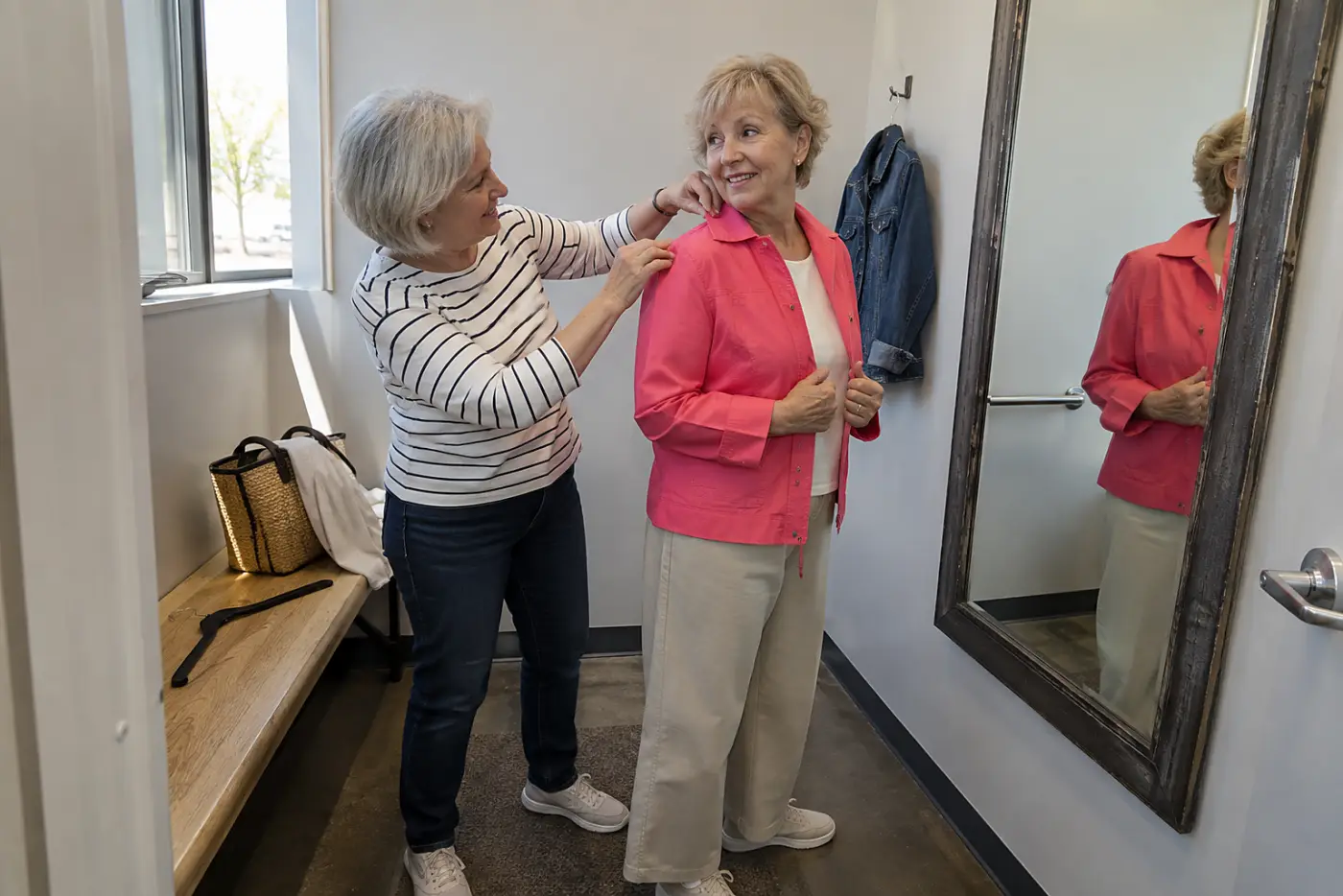
Read to the end: #1 is the fitting-room test that keeps an age rule off your receipt. Almost nobody completes all three steps.
A sales associate holds up a jacket. Its shoulder seam sits halfway down your arm, but the color is beautiful, and you’ve already imagined wearing it to dinner. Then comes the question that has nothing to do with the seam: “Is it age-appropriate?”
The question sounds practical until you ask what it measures. Age won’t tell you whether that shoulder fits, the fabric scratches, or you’ll reach for the jacket next Tuesday. Someone else’s comfort has slipped into the fitting room and started making decisions.
Here are 23 rules worth leaving there.
23The sleeveless dress in your closet
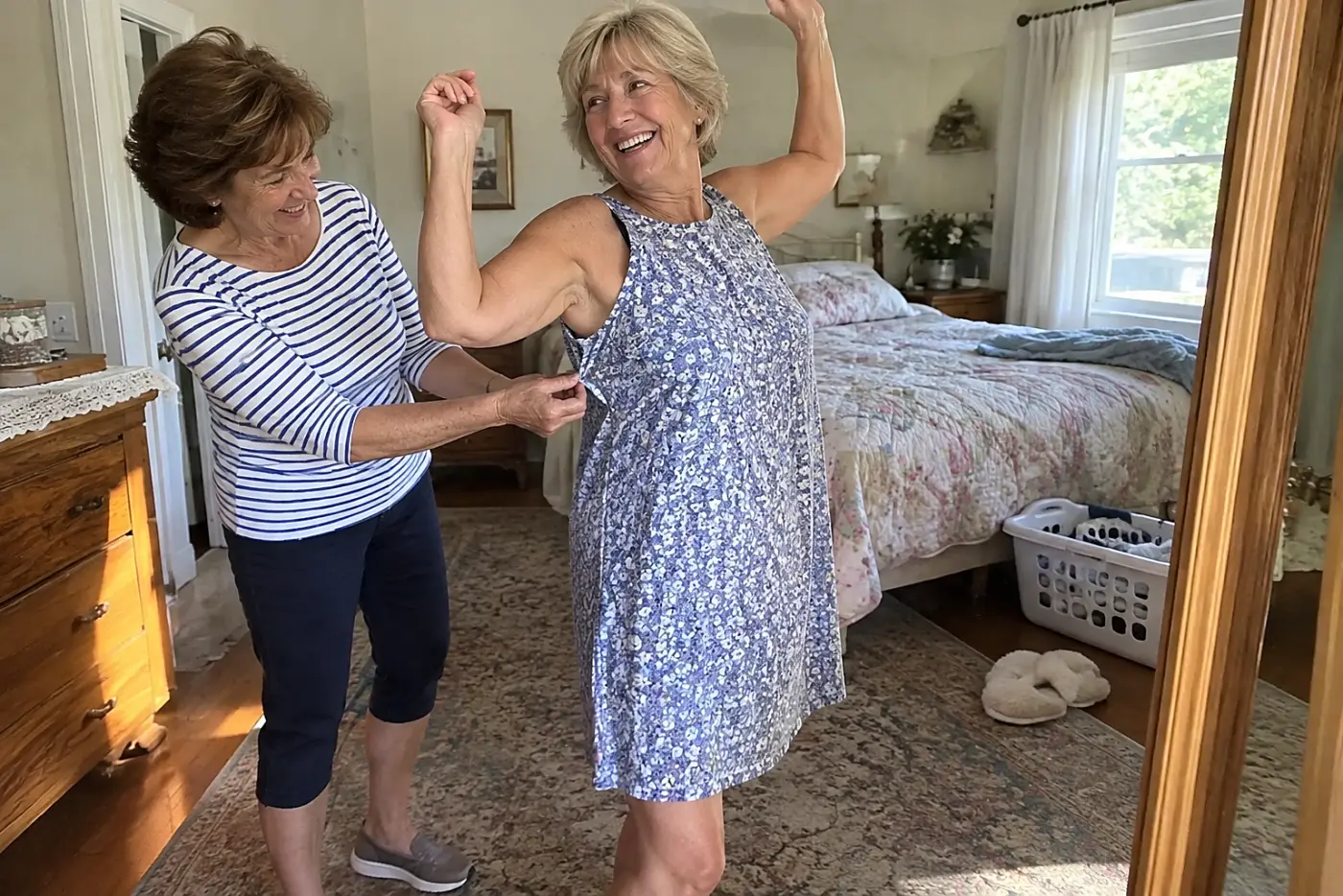
Bare arms attract advice nobody asked for.
A sleeve doesn’t make a dress more flattering by itself. Look at the armhole instead: a close cut stays put, while a wide one exposes your bra when you reach forward. The dress has to work while you move.
Leave it unworn because of somebody else’s arm rule, and a perfectly good outfit stays on its hanger.
This week, put it on and raise both arms in front of a mirror. Tell anyone who comments, “I’m checking the fit, not taking votes on my arms.”
That reach test leads straight to another piece of clothing people keep policing.
22The jeans with the narrow legs

A birthday cannot choose the width of your jeans.
The useful question is where the fabric pulls. Sit down, stand up, and check the waistband and knees. Narrow legs that let you move beat wider ones that twist around your calves, regardless of who declared one cut “appropriate.”
Before buying another pair, try the jeans with the shoes you actually wear. A hem that looks right in bare feet lands differently over ankle boots. The wrong length gets blamed on the silhouette, and you stop wearing jeans that otherwise fit.
This week, take your current pair through a full sit-and-stand test. At the mirror, say, “I need room at the waist when I sit.”
Then check what happens when the color itself breaks a rule.
21The bright coat on the rack

Color has no retirement date.
A bright coat sits next to your face, so daylight tells you more than a label ever will. Walk toward a window and see whether you like the color against your skin. Check it over the clothes you wore into the store, too.
Skip it because someone called it “too much,” and you lose the coat you noticed first. That’s the one you’d reach for on a gray morning.
This week, try one bright layer beside a window, away from the fitting-room lights. Say, “Let me see it in daylight.”
The next supposed rule concerns what you wear beneath that coat.
20The black top someone says ages you
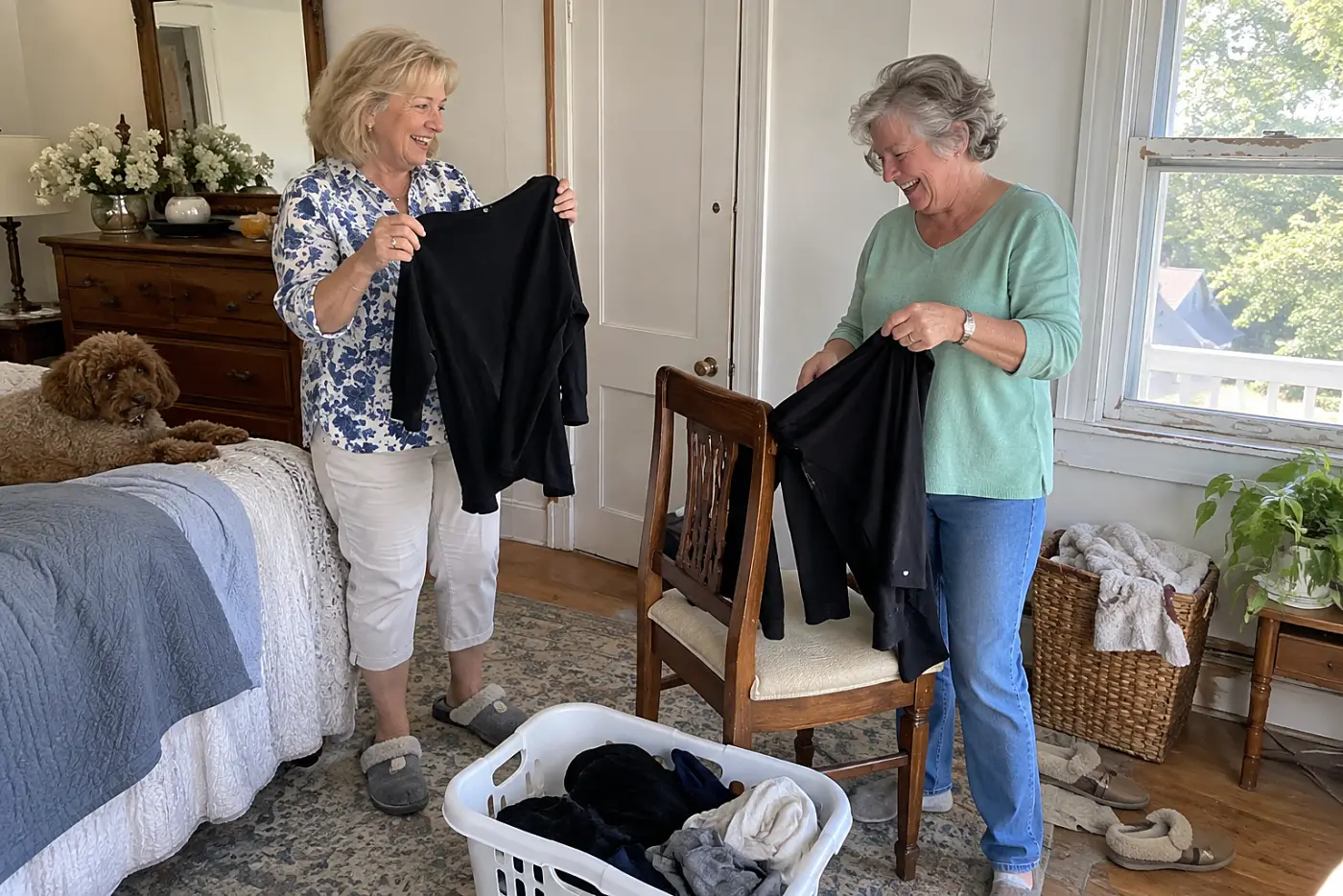
Black fabric isn’t a verdict on your face.
A high neckline, a faded wash, and harsh overhead light all change how a black top looks. Move into daylight before you judge it. If the shape feels severe, opening the neckline with a different top is an option; replacing every black item is not a requirement.
The cost of obeying this rule is a wardrobe you don’t recognize. You bought those pieces because they went with your shoes, survived spills, or made getting dressed easy. None of that vanished on a birthday.
This week, try your favorite black top beside another one in daylight. Ask yourself which one you want to put on tomorrow. If someone offers a blanket ban, say, “I’m keeping the one I wear.”
Next, the rule-maker turns from color to a number on a tag.
19The size label inside the dress
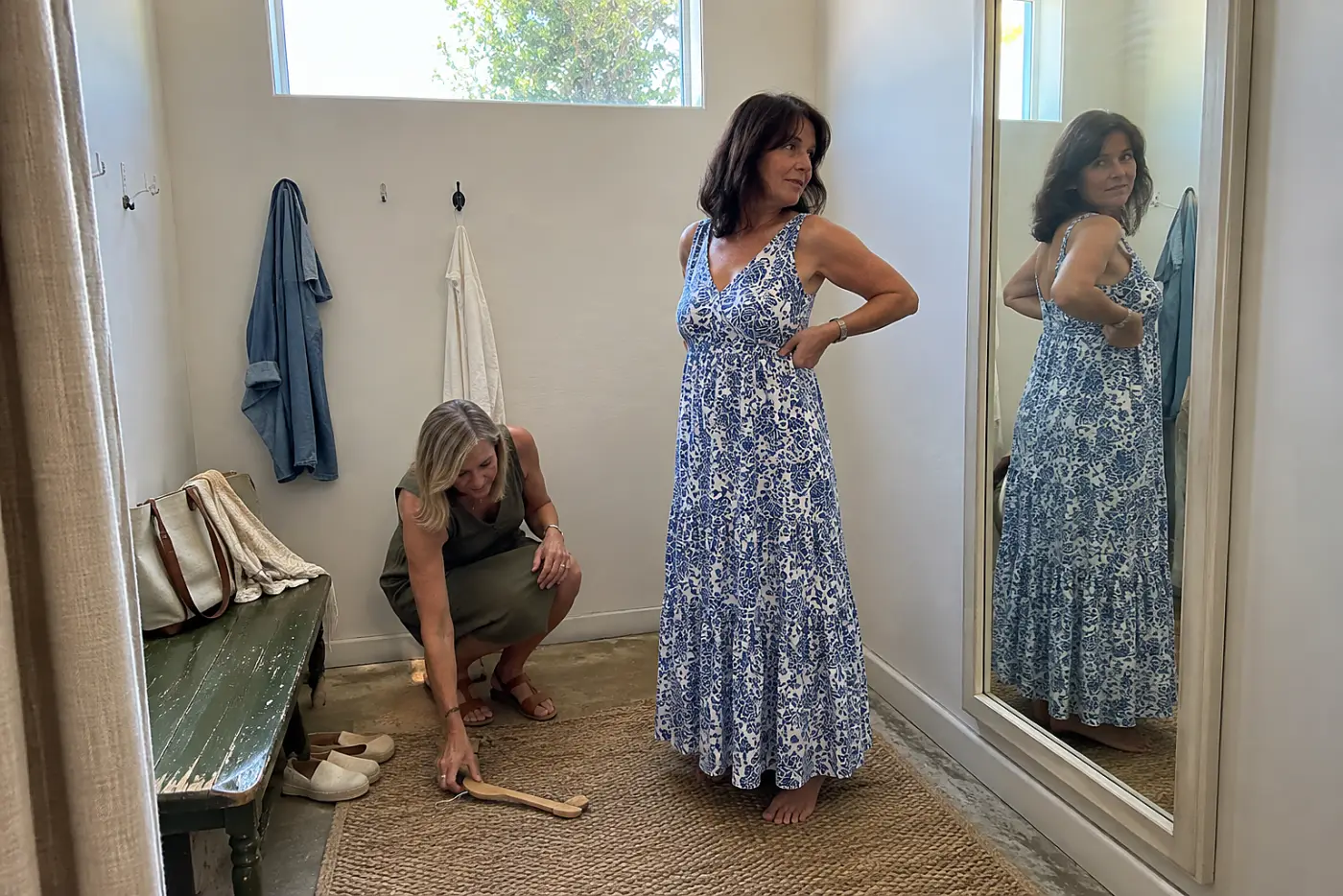
A size tag is not a report card.
Brands cut garments differently. Even within one store, two dresses with the same number can sit differently at the bust, waist, and hips. The mirror and the movement test come after the tag.
Buy the smaller number to prove a point, and you’ll feel the side seam every time you sit.
This week, take two sizes into the fitting room without announcing either one. Tell the associate, “Please judge how it hangs, not the number.”
The seam matters even more when the fabric clings.
18The fitted sweater on the hanger

Loose fabric doesn’t automatically make you look better.
A fitted sweater shows the shape of the layer underneath. Try it over the bra you plan to wear, then turn sideways and lift your arms. If it rides up, the length or cut is wrong; your age hasn’t caused the problem.
An oversized sweater has its own costs. Extra fabric can bunch beneath a coat or catch at the hips when you sit. Dressing to hide your whole body also hides the clothes you chose.
This week, compare one fitted sweater with one loose sweater over the same pants. Say, “I want to see which one moves with me.”
That comparison gets harder when a salesperson insists on coverage.
17The short skirt in the drawer
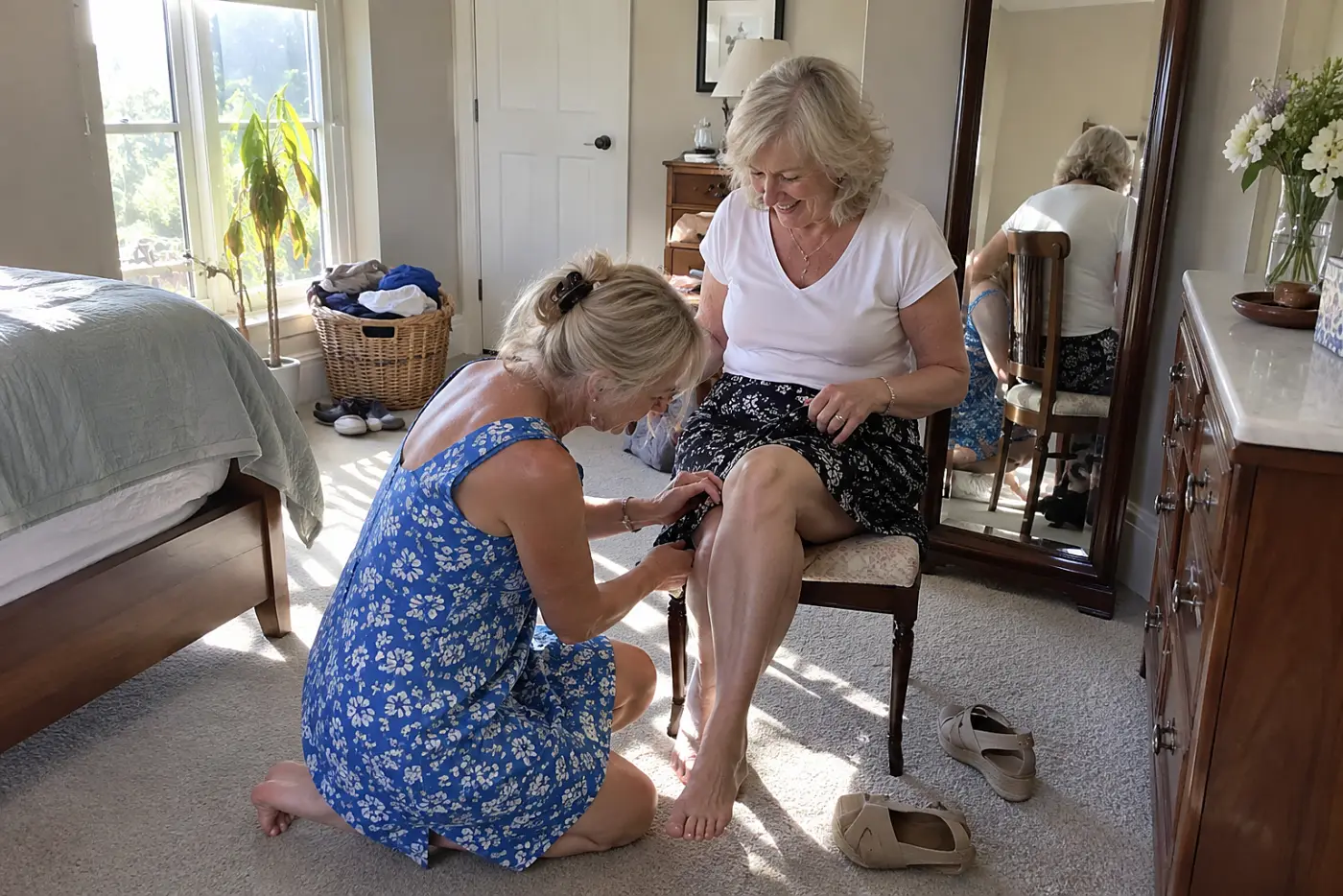
A hemline doesn’t know your birth year.
Sit in the skirt before deciding what it shows. Check the back in a mirror, then walk a few steps and climb a stair if one is nearby. Those tests answer the practical question without consulting an imaginary age chart.
A skirt left in the drawer because of a rule serves nobody. You’ve lost a choice for the day it suits your plans.
This week, wear it around the house with the shoes you’d choose outside. Tell a companion, “I’ve checked the hem. I like it.”
The same scrutiny follows you down to your shoes.
16The heels you still enjoy wearing

Comfort is a reason to change shoes; age alone isn’t.
Check the soles for worn tread, then walk on a hard floor. Notice whether the heel slips or your toes grip to keep the shoe on. A lower heel isn’t automatically easier: its shape, sole, and fit decide how it feels on your foot.
Don’t let a stranger turn a sensible footwear check into a ban. Equally, don’t let defiance talk you into a pair that hurts before you leave the house. You’re dressing for the actual walk, not winning an argument in the shoe aisle.
This week, wear your heels indoors for the length of a normal outing. Try the stairs if stairs are part of that outing. At the shop, say, “I need to walk on the floor in these.”
The next shoe rule gets things backward in the opposite direction.
15The sneakers beside your dress

Dress clothes don’t require painful shoes.
A sneaker changes the line of a dress, so judge the whole outfit in a full-length mirror. Pay attention to where the dress hem meets the shoe, rather than treating “sneakers with dresses” as a forbidden combination.
Choosing shoes that let you get home comfortably costs you no claim to looking dressed.
This week, put your dress and sneakers on together before deciding. Say, “I’ll wear the pair I want to walk in.”
From there, the argument moves to what counts as dressing up.
14The sequined jacket for a weekday

Sparkle does not need a wedding invitation.
A sequined jacket already draws the eye. Put it over the plain clothes you wear most, then check whether the lining catches on your sleeves. That small snag matters more than a rule reserving shine for evening events.
Keep it sealed in a garment bag for a perfect occasion, and you never find out whether it works with your jeans. A jacket doesn’t need an audience to earn space in your closet. You have a Tuesday, a grocery run, and the right to enjoy getting dressed for both.
This week, wear it for an ordinary errand. If someone asks what the occasion is, say, “I wanted to wear my jacket.”
Another supposedly special-occasion item is waiting nearby.
13The red lipstick in your bag

Bold lipstick doesn’t expire when you turn 50.
Color looks different with each shirt and in each light. Put it on near a window, then check whether you like the edge and the shade. Look at your whole face rather than the swatch on the tube.
If the color pleases you, shelving it to seem discreet gives the decision to somebody else. The lipstick stays in your bag while an unwritten rule gets its way.
This week, wear it with the outfit you’ve already chosen. Check it again after lunch to see whether you still like how it wears. Say, “I like this color on me.”
Next comes the rule about drawing attention to your hair.
12The gray hair you stopped coloring

Gray hair needs choices, not apologies.
Whether you color it is entirely your call. If you’ve stopped, the practical questions are cut, texture, and what happens after a wash. A haircut that suited freshly colored hair isn’t under contract to suit the hair growing in now.
Someone urging you to look “younger” has skipped the question of what you want. Coloring takes time in the chair and upkeep between visits. Going gray has upkeep, too, including trims and the products you decide are worth using. Neither choice is a character test.
This week, take a photo of your hair after styling it yourself. Bring that photo to your next appointment and say, “This is how it falls at home. Let’s cut for that.”
Once hair becomes public property, accessories tend to follow.
11The large earrings in the jewelry box

Statement earrings aren’t reserved for younger ears.
Weight matters more than size. Hold one earring against your ear, then wear the pair for an hour. Check whether the backs stay secure and your lobes still feel comfortable after you’ve moved around.
Leaving them in the box because they attract notice wastes the part you liked. Remember what made you pick them up: the color, the shape, or the shine.
This week, try them with a plain top at home and check the fastenings before heading out. Tell a friend, “I chose the earrings on purpose.”
Attention isn’t a flaw in the next accessory either.
10The leopard-print scarf on your hook
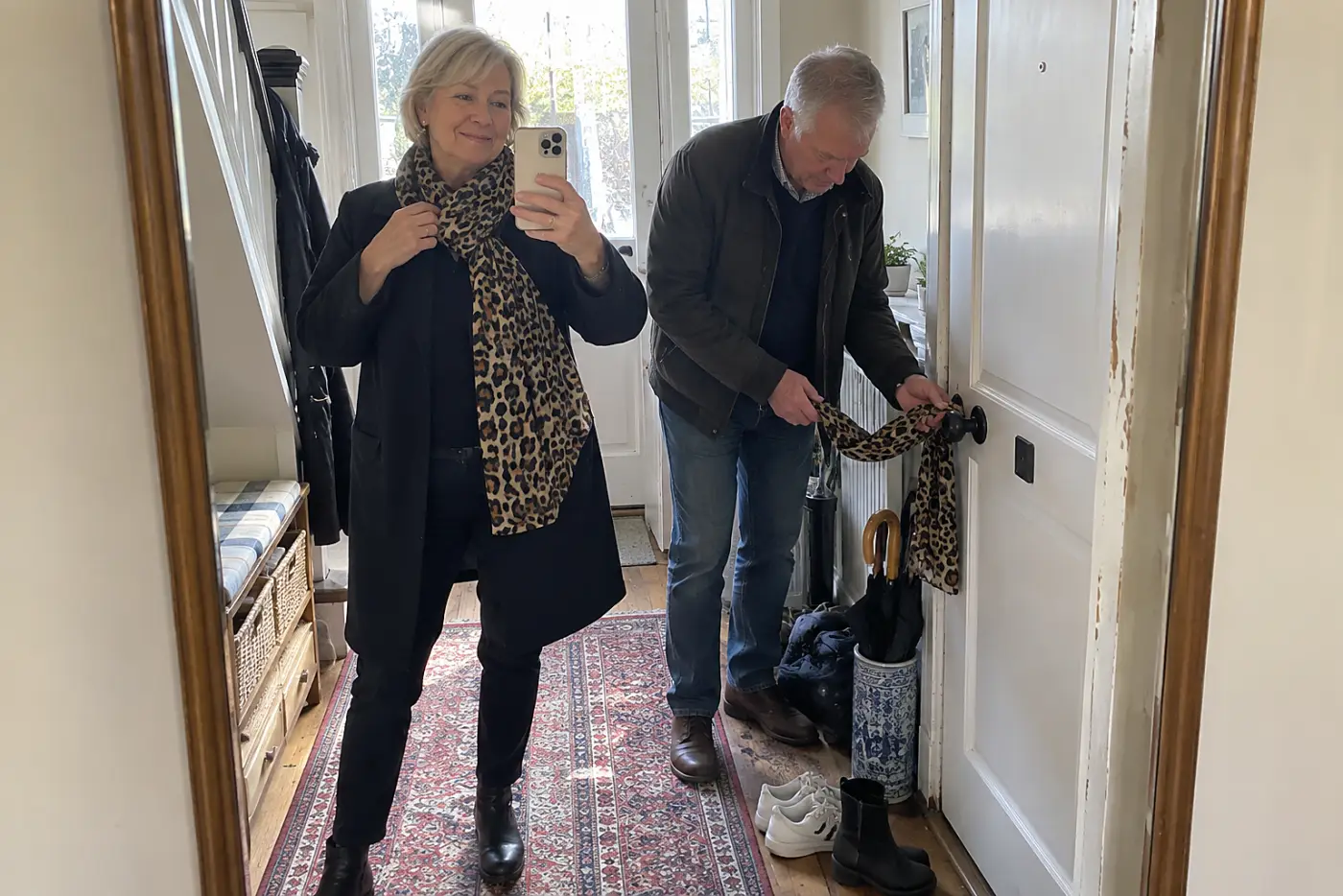
Print has never asked to see identification.
A scarf sits close to your face, where its colors meet your coat and hair. Try it tied loosely, then draped open. Changing that small arrangement changes how much print you see; you don’t need a rule that bans the print altogether.
If you keep choosing plain accessories to avoid comments, getting dressed turns into an exercise in predicting other people’s reactions. That’s a tedious job, and nobody hired you for it.
This week, wear the scarf with the coat you reach for most. If someone calls it “brave,” say, “I just like the print.”
The next claim tries to shrink the entire outfit.
9The oversized shirt you actually like
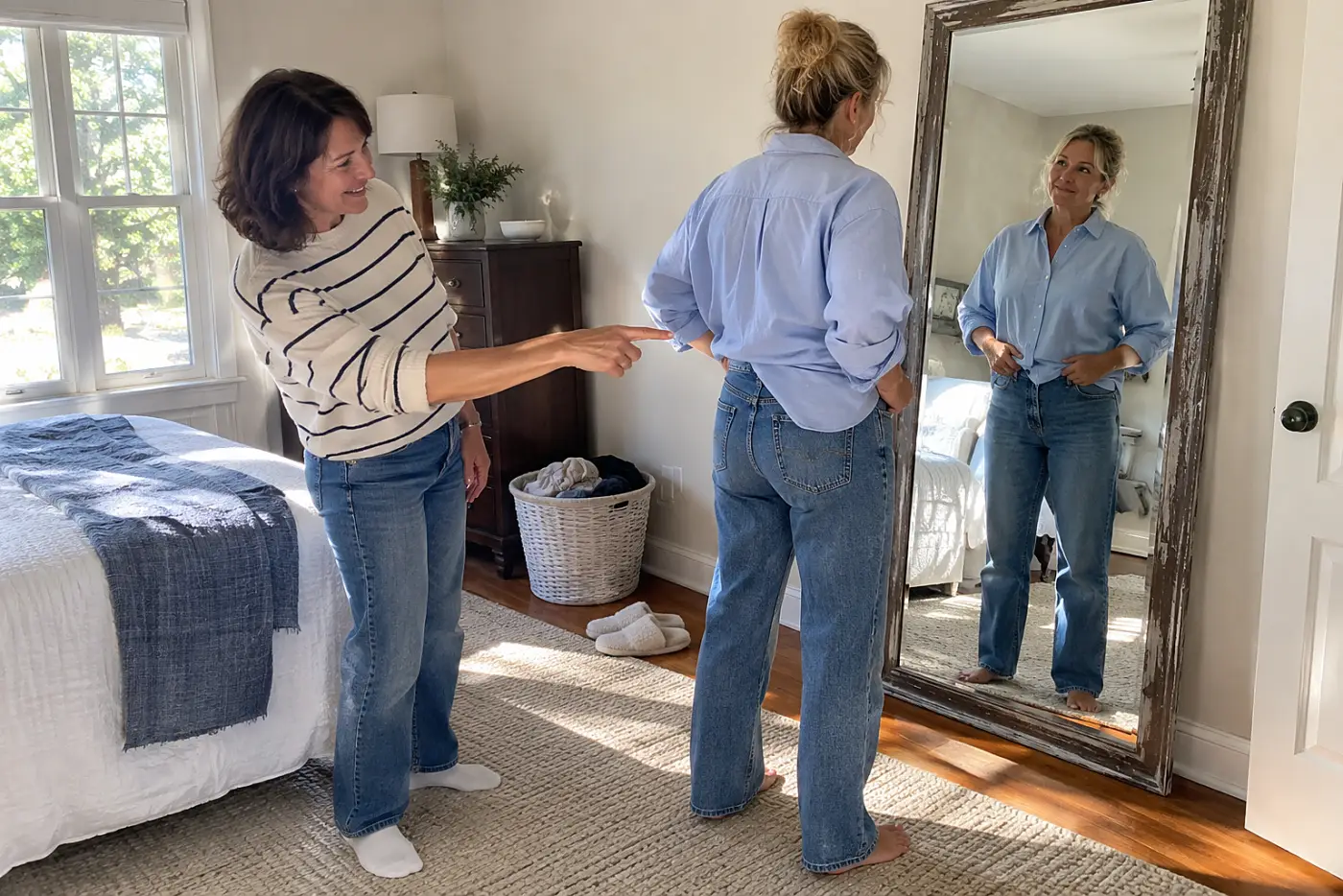
An oversized shirt is a cut, not a disguise.
Check where the shoulder seam lands and whether the cuffs interfere with your hands. Then look at the shirt untucked and partly tucked before deciding which shape you prefer. Push up the sleeves and see whether they stay there.
Giving it up because somebody calls it shapeless ignores what the shirt does on you. It also ignores how easily it pairs with the pants you already wear.
This week, style the same shirt two ways in your own mirror. Say, “I’ve seen both. I prefer this one.”
Fit gets another vote when the fabric turns sheer.
8The sheer blouse you keep passing over

Showing a layer beneath your blouse isn’t an age offense.
Hold the blouse against daylight and see where it’s sheer. Then try the camisole or bra you intend to wear with it. You get to decide whether the result feels intentional; no birthday rule answers that for you.
The wrong underlayer can make a blouse you love feel awkward. So can leaving it on the rail because someone insists on total coverage. This is a question about fabric and your comfort in it, not a referendum on your body.
This week, try the blouse with two layers you already own. Move around near a window before buying anything new. Tell the sales associate, “I’m checking the fabric in daylight.”
Once you’ve settled what shows, another rule declares what should be hidden.
7The belt across your waist

A belt doesn’t require a certain waistline.
Its job is to hold, shape, or decorate an outfit. Place it at two heights over the same dress, then sit down and see whether it presses or shifts. Walk across the room before choosing a spot.
Skip the belt on principle, and you lose an easy way to change clothes you own. A dress that hangs straight gives you a different shape when the belt sits where you want it.
This week, try one with a dress already in your closet. Say, “I’m putting it where it feels right.”
The next supposed limit concerns how much skin appears below it.
6The shorts waiting for hot weather

Heat doesn’t care what anyone thinks of your knees.
Shorts work when the waistband stays put and the legs let you sit and walk. Try them on, sit in a chair, and check the hem when you stand. A length that looks fine standing still can ride higher in motion.
Wearing long pants through a hot day to satisfy a stranger’s rule is a poor trade. You deserve to choose based on the weather, the outing, and how the shorts feel.
This week, put a pair through that chair test before the next warm day. If someone comments on your legs, say, “I dressed for the heat.”
The next rule tries to control the clothes meant for water.
5The swimsuit in your shopping bag
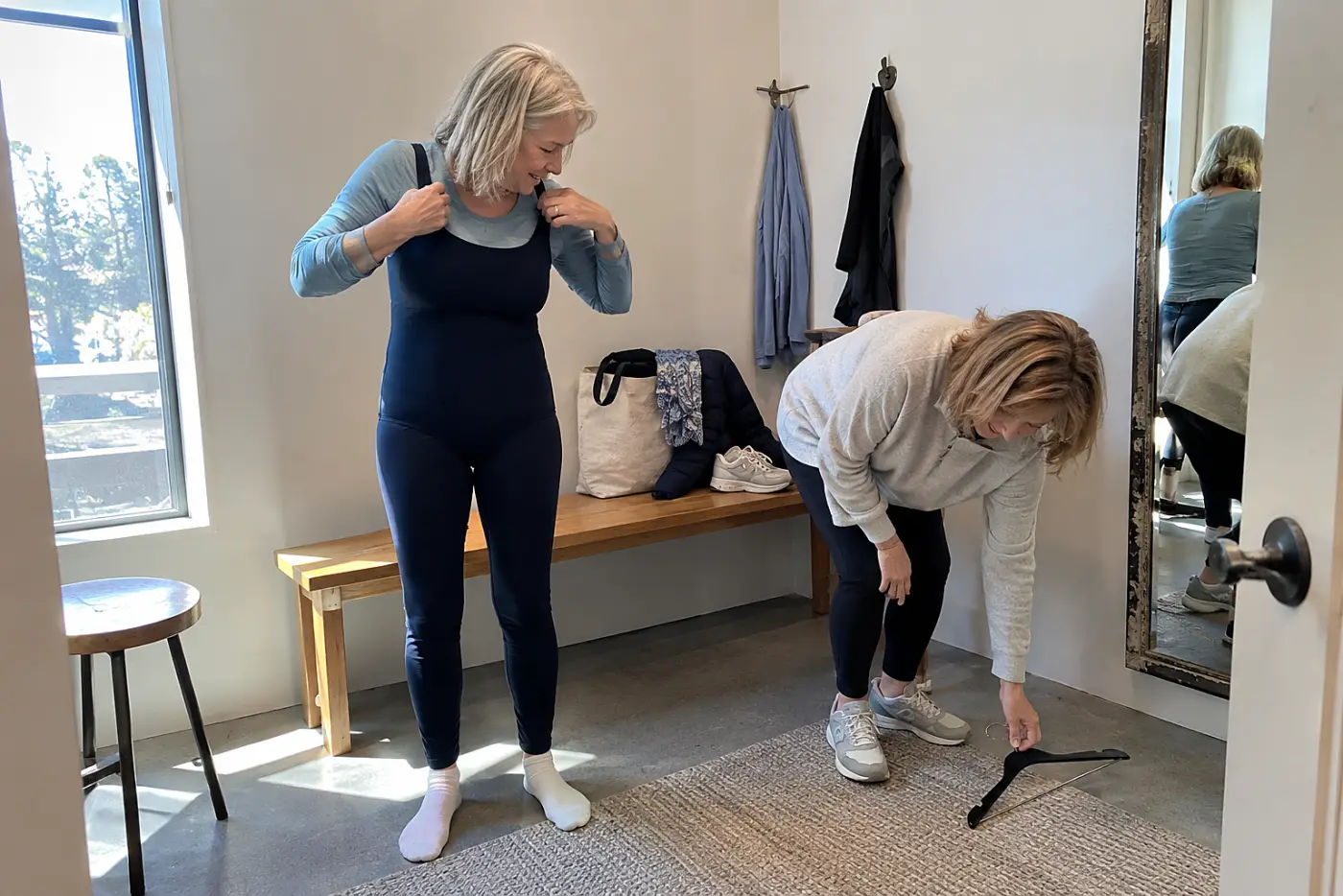
A swimsuit has one immediate job: stay on.
Bend, reach, and walk while trying it on. Check straps and leg openings before judging your reflection. Water adds movement, so the fitting room gives you a first test rather than the whole answer.
Buying a suit chosen to satisfy somebody else leaves you tugging at it all day. That’s time spent fixing straps instead of enjoying the pool or beach.
This week, test the suit you own or try one that appeals to you. Reach overhead and bend as you would getting into the water. Say, “I need it to stay put when I move.”
Coverage is also the argument people use against your next purchase.
4The crop top beneath your jacket

A shorter top doesn’t come with an age cutoff.
Where it ends matters alongside the waistband below it. Try the two pieces together, lift your arms, and see how much skin appears while you move. You decide whether that amount suits the place you’re going.
If someone objects without seeing the outfit on you, they’re supplying a rule instead of useful information. The mirror gives you better evidence. A crop top over high-waisted pants creates a different line from the same top over low-waisted jeans, and neither combination owes anyone an explanation.
This week, put the top on with two waistbands you own. Check it standing and seated. Tell a friend, “I’ve tried the whole outfit.”
A different old rule attempts to pick the date, rather than the wearer.
3The white pants after Labor Day

A calendar cannot dirty white pants.
Weather and fabric deserve a look. Thin linen and sturdy denim feel different on a cold day, regardless of their color. Hold the pants up to daylight and check whether the fabric shows the pockets beneath it.
Leave white pants unworn because summer ended, and you’ve let a date dress you. The sweater hanging beside them never got a chance to make the outfit work.
This week, try them with the sweater or coat you’d wear outside. Step away from the mirror and judge the pairing as a whole outfit. Say, “I’m dressed for the weather.”
The final judgment gets even more personal when someone chooses your neckline.
2The neckline someone calls too young
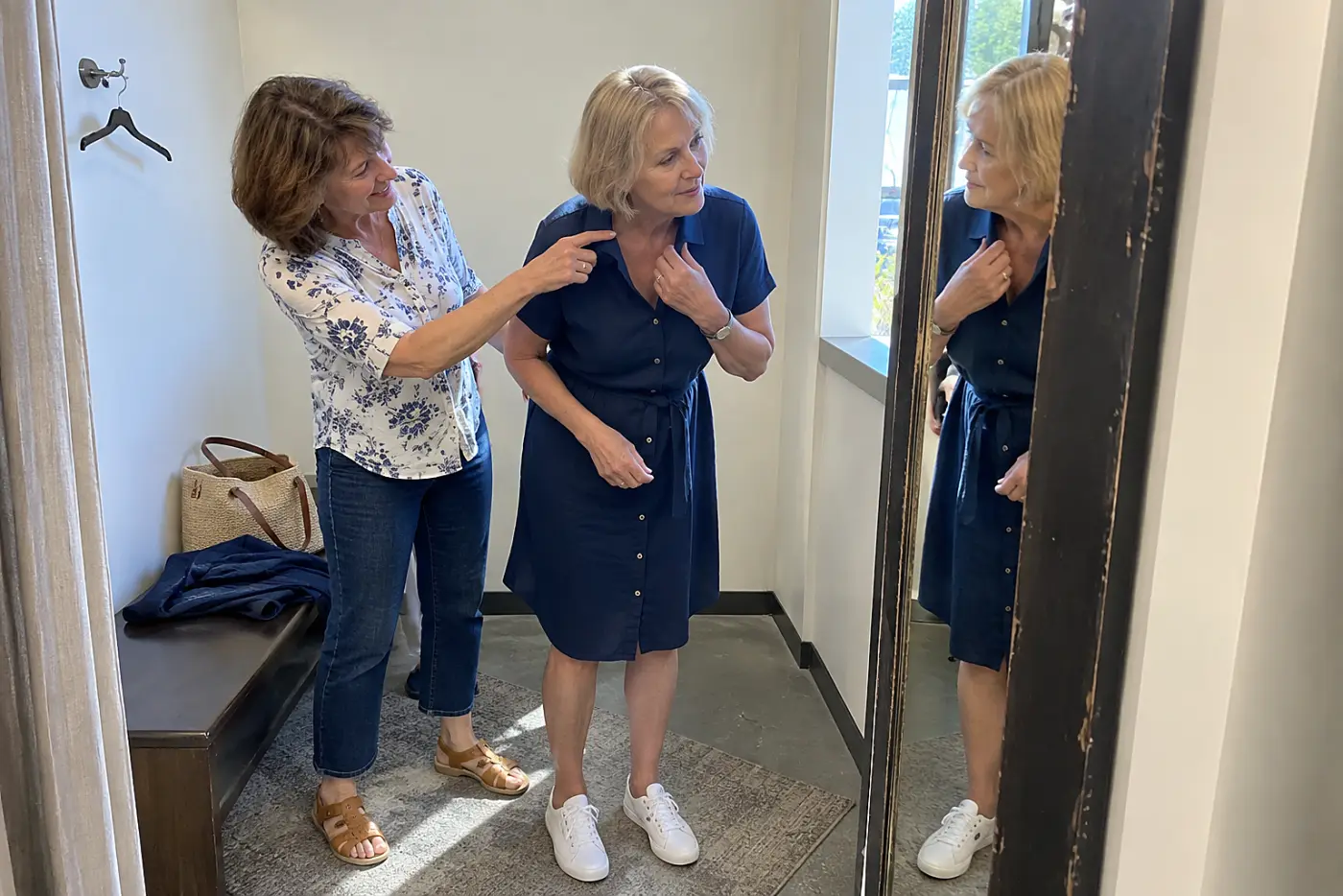
No stranger gets to assign your neckline.
Try the top with the bra you’d wear out, then bend forward and sit down. Check whether the neckline stays where you want it. That test works for a low cut, a high neck, and everything between.
The cost of handing over this choice is bigger than one shirt. Once “too young” counts as an answer, any item you enjoy becomes open for review. You don’t have to defend your body to get dressed.
This week, try the neckline at home and move the way you move. If someone offers an age verdict, say, “I’ve checked how it fits. I’m wearing it.”
There’s still one check to make before any rule follows you to the register.
1The fitting-room test before you pay

The fitting-room mirror shows only one version of you.
Store lighting and a still pose make it easy to judge an outfit by how you stand. Then a remembered rule steps in: too short, too bright, too noticeable. None tells you what happens when you sit, reach, walk, or put the garment beside the clothes you own.
Before paying, run a three-part test: move, pair, choose. Move in it as you will outside the store. Pair it with something you already wear. Finally, choose whether you want the item without defending it to an absent critic.
Skip any part, and you risk buying for approval or leaving behind clothes you’d wear. The test won’t promise a perfect outfit. It gives the decision back to the person paying and getting dressed.
This week, use it on one item already in your closet, even if you buy nothing. At the counter or at home, say, “I’ve moved in it, I know what goes with it, and I want to wear it.”
The same test belongs on your phone for the next fitting room.
The bottom line
All 23 rules hand a practical clothing decision to someone who isn’t wearing the clothes.
You’ve already done the useful work when you check the fit, picture a real outing, and choose for yourself.
Which age-based clothing rule has someone tried to apply to you?
Bonus: The fitting-room test that keeps an age rule off your receipt
- Move: sit, reach, walk, and check what shifts.
- Pair: name one item at home you’d wear with it.
- Choose: ask, “Would I wear this next week if nobody commented?”
- Pay or put it back based on that answer, not your birth year.
Margaret Hale
Travel & Lifestyle Editor
Margaret has covered travel for 25 years and has ridden every long-distance train route in the U.S. at least once.
You might also like