23 Ways to Dress for the Body You Have Now Without Giving Up
The jeans that fit your hips but gap at the waist aren't a verdict; they're a place to start.
By Margaret Hale, Travel & Lifestyle Editor
Updated · 9 min read
- Written by our travel & lifestyle editor
- How we review
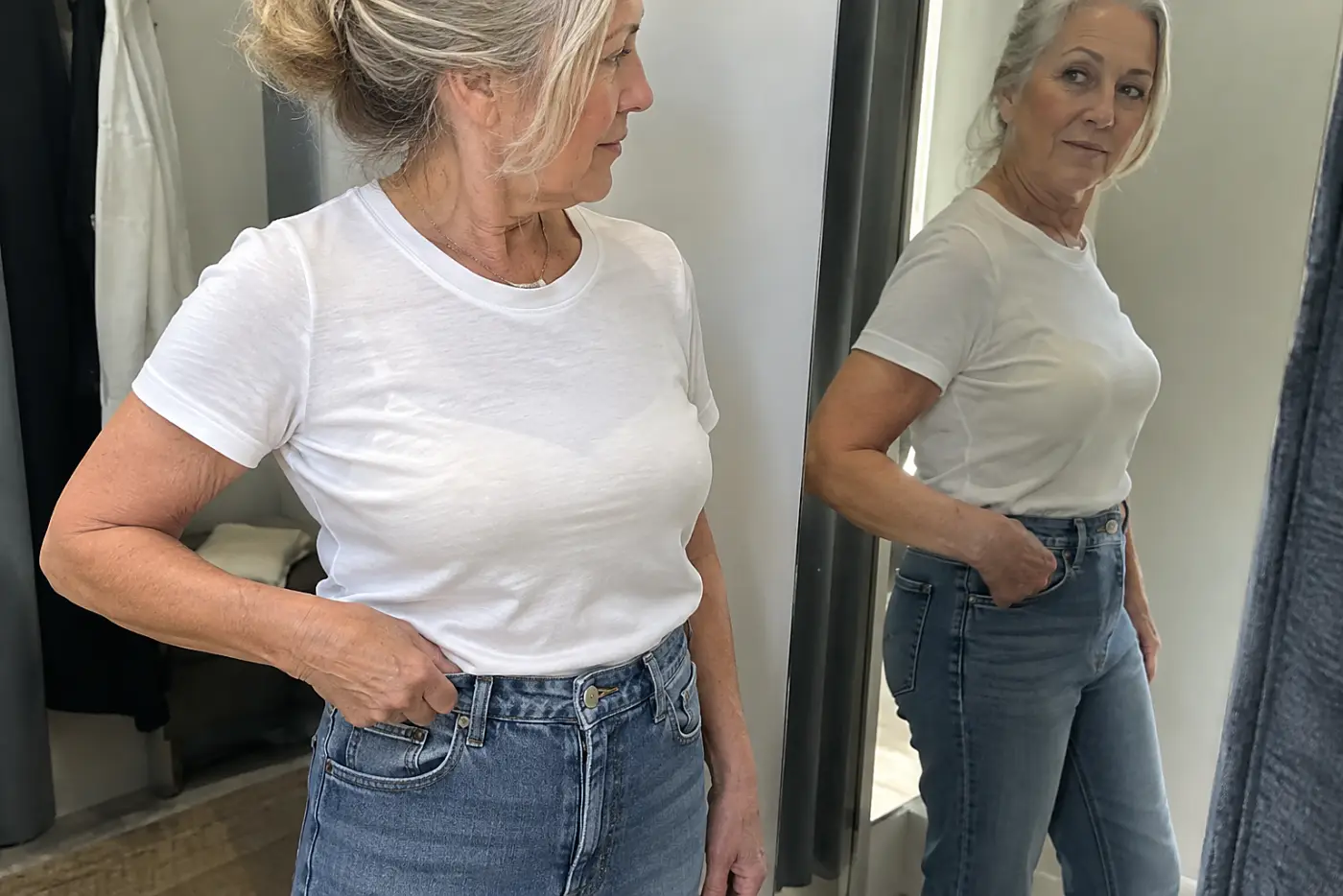
Read to the end: #1 is the one fitting-room check that stops a bad purchase, and almost nobody does it.
The waistband closes, but sitting down sends it into your ribs. You stand again, tug your shirt over it, and wonder when getting dressed became this much work. Keep the shirt. The waistband is the problem.
These 23 choices start with the clothes you already reach for.
23Jeans With a Higher Back Rise
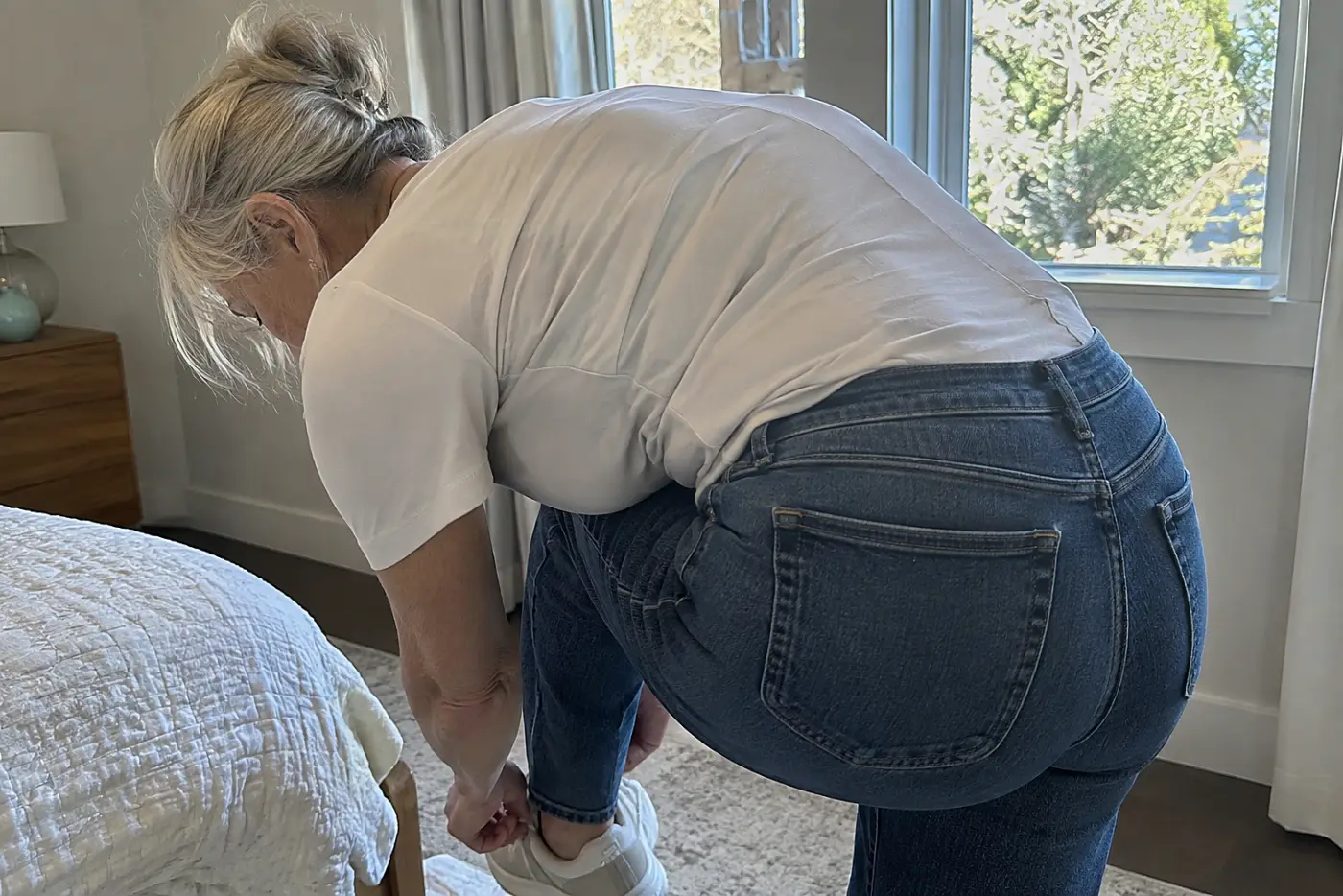
The back waistband sits where your old jeans used to stay.
If jeans slide down when you sit, look at the back rise, not just the waist measurement. A pair that fits while standing still has to follow you into a chair. Check where the waistband lands after you bend to tie a shoe. A belt won't fix a rise that leaves too little room at the back.
Try them seated before you decide.
22Pants With a Flat Front

The front lies smooth instead of folding under your shirt.
Pleats add room, but they also add fabric where a shorter top ends. A flat front keeps that area clear without squeezing it. Judge the pants by how they feel after lunch, not by an empty stomach in the morning.
Keep the pair that lets you breathe and sit.
21A Waistband With Side Elastic
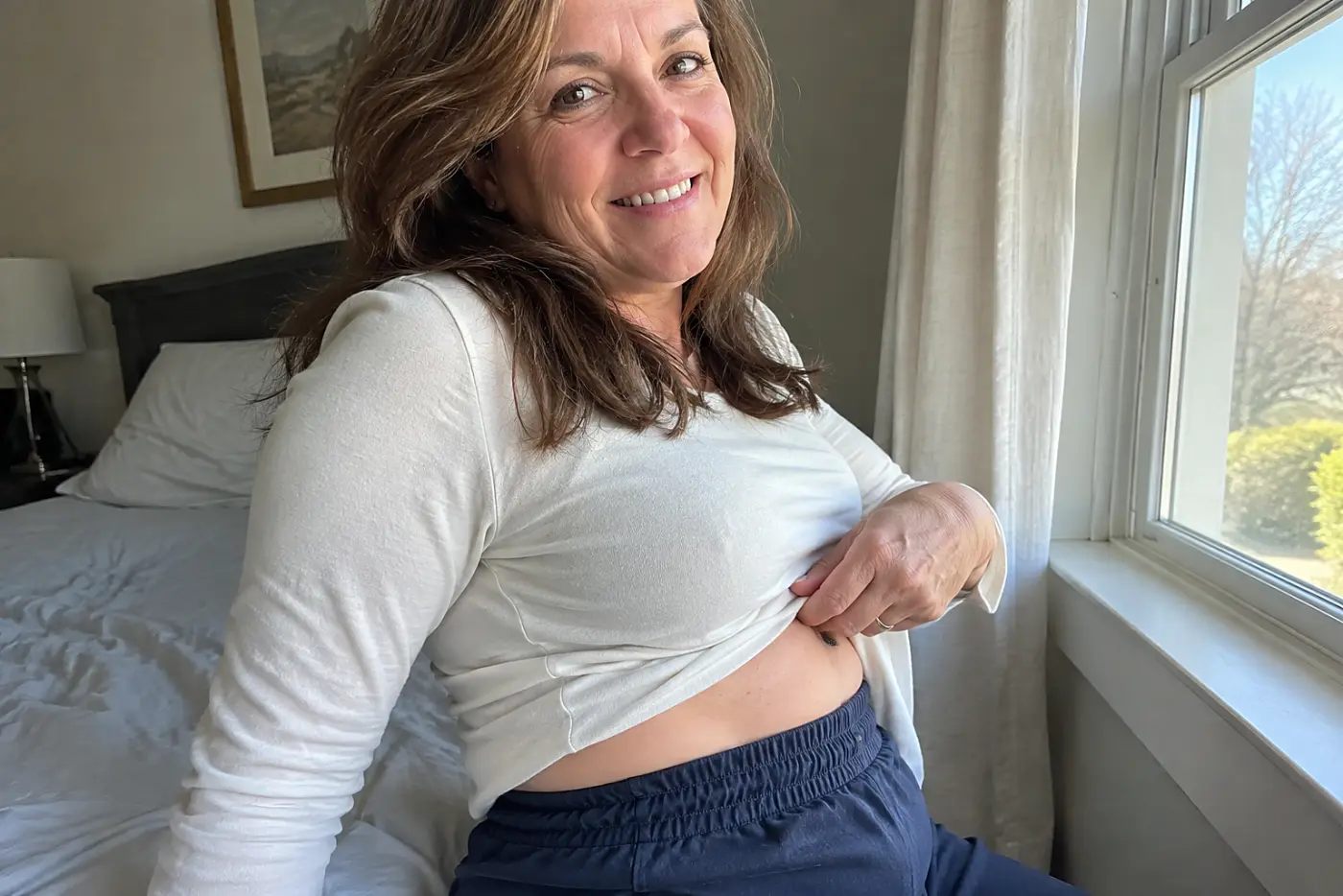
The stretch hides at the sides of an otherwise ordinary waistband.
Your waist changes across a day. Side elastic gives it room without gathering the entire back of your pants. Look at the seam where the elastic meets the flat front. If it pulls into a sharp wrinkle while you're standing, the pants are too tight elsewhere. Stretch should give you space, not do all the holding.
Check the fit again while seated, with your shirt untucked.
20A Skirt With a Wide Waistband
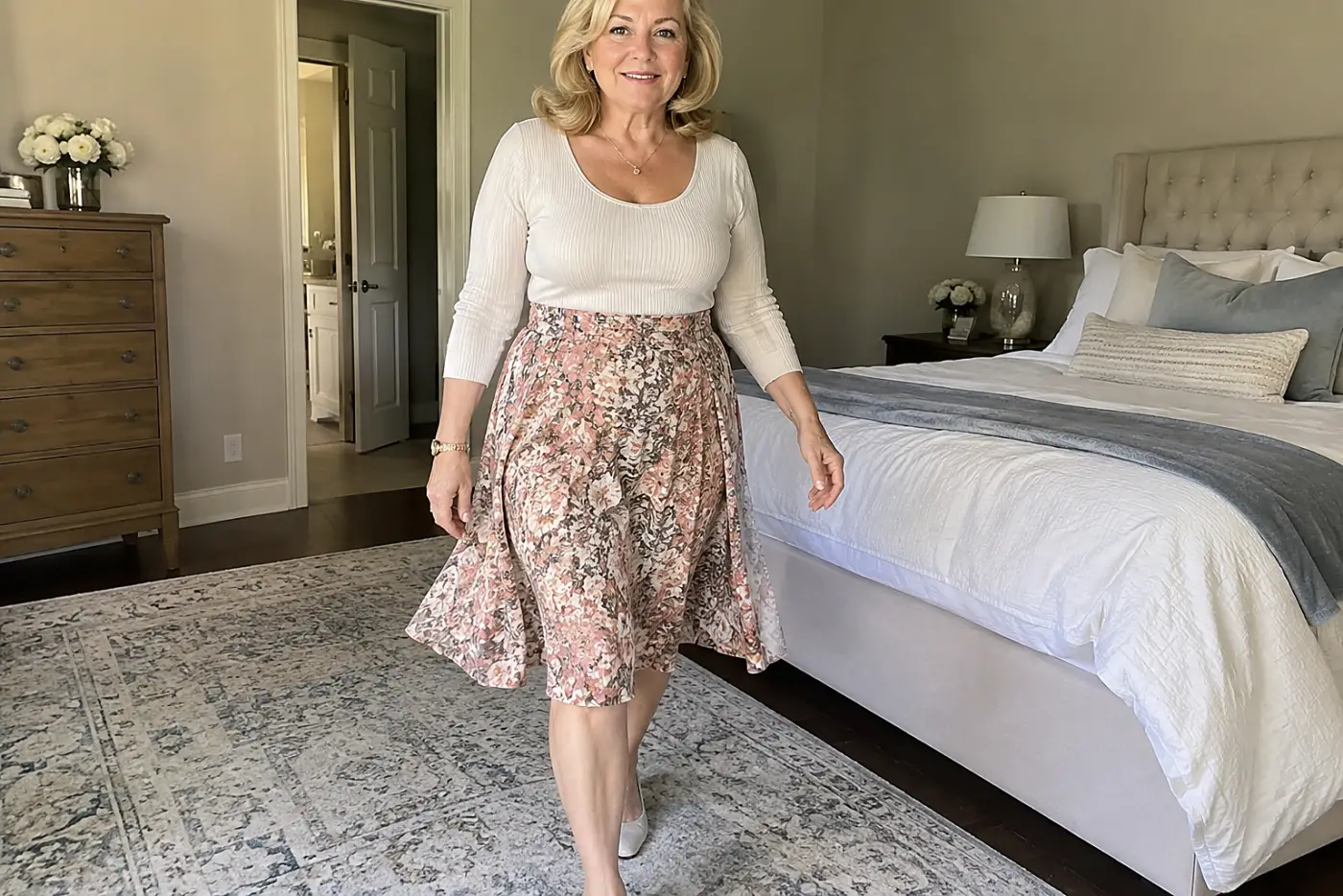
The waistband stays flat while the skirt moves around your knees.
A narrow band digs in when you sit. A wider one spreads the pressure, but only if it fits without folding over. Watch it after a few steps, too. It shouldn't turn or roll as you walk.
Walk across the fitting room before keeping it.
19An A-Line Skirt Below the Knee
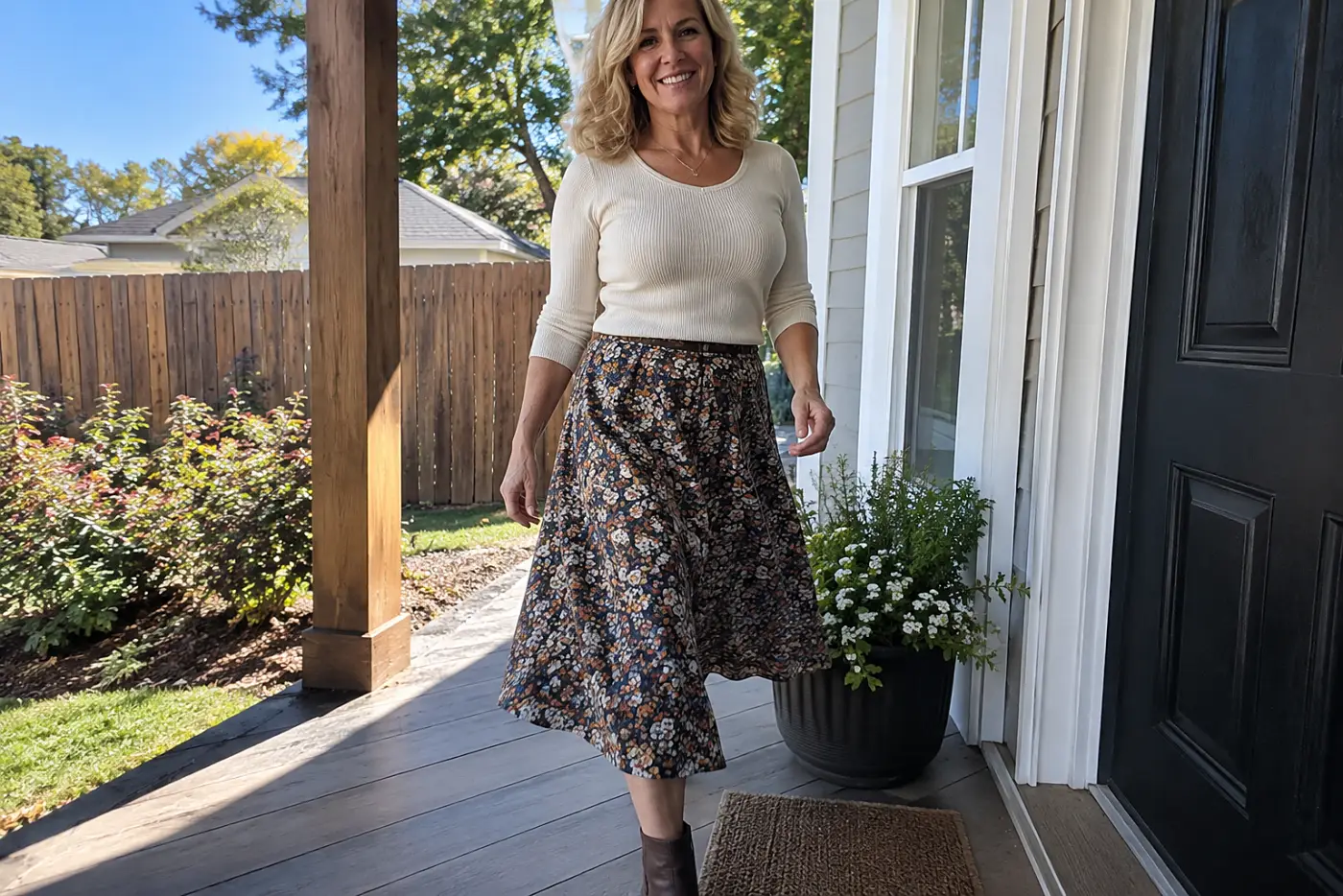
The hem clears your knees without clinging to your thighs.
If straight skirts feel tight when you climb stairs, the shape is worth changing. An A-line gives your legs room while keeping the waist where you want it. The hem matters: try it with the shoes you actually wear. A skirt that looks right barefoot can feel different over a low boot.
Take the stairs in it if the store has them.
18A Dress With an Adjustable Tie
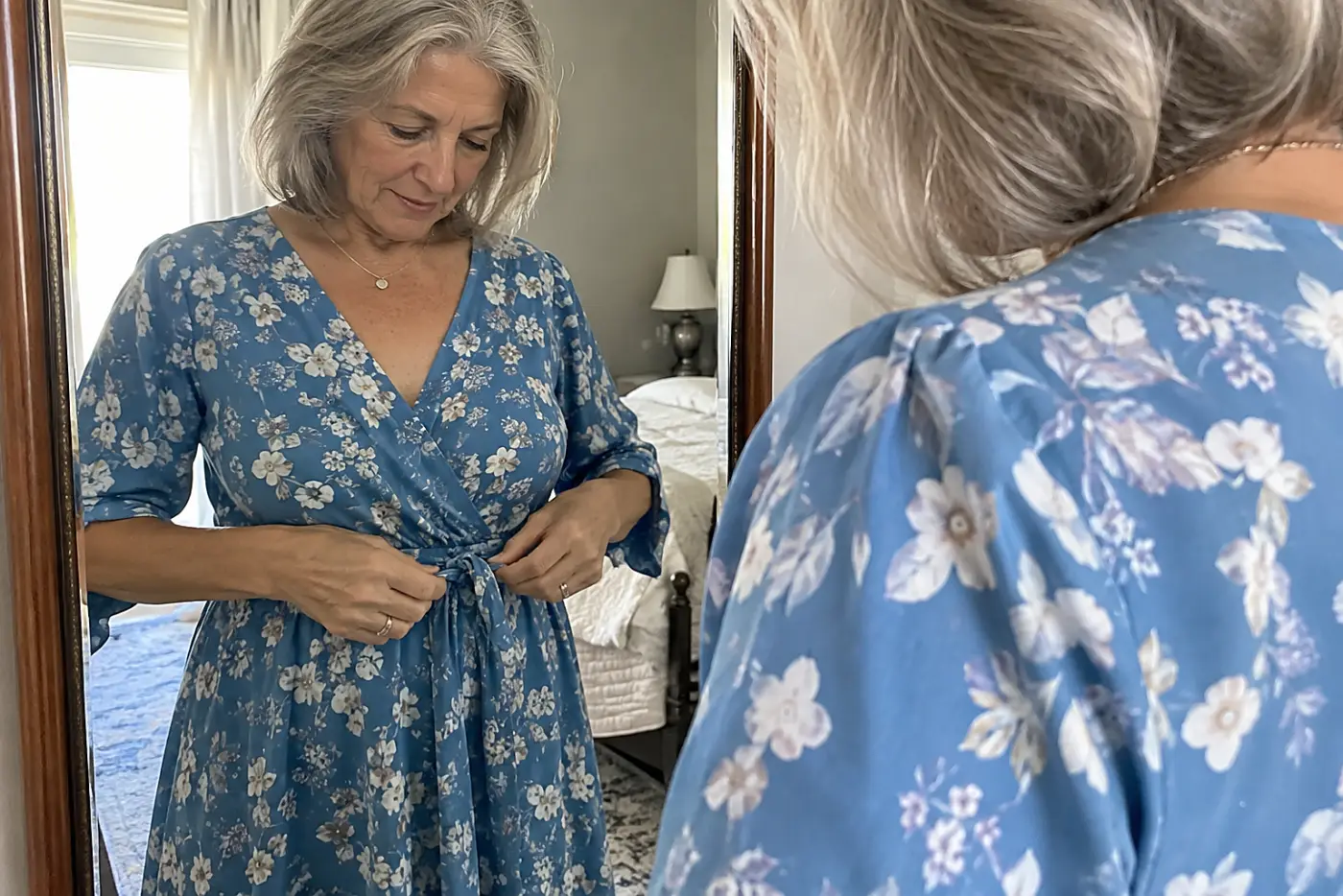
The tie sits at your waist, not at a fixed seam.
Bodies don't all put the waist in the same place, even within one dress size. A separate tie lets you choose where the dress gathers. Pull it snug enough to stay, not tight enough to make the fabric bunch.
Tie it once while standing and again after sitting.
17A Wrap Dress With a Secure Neckline
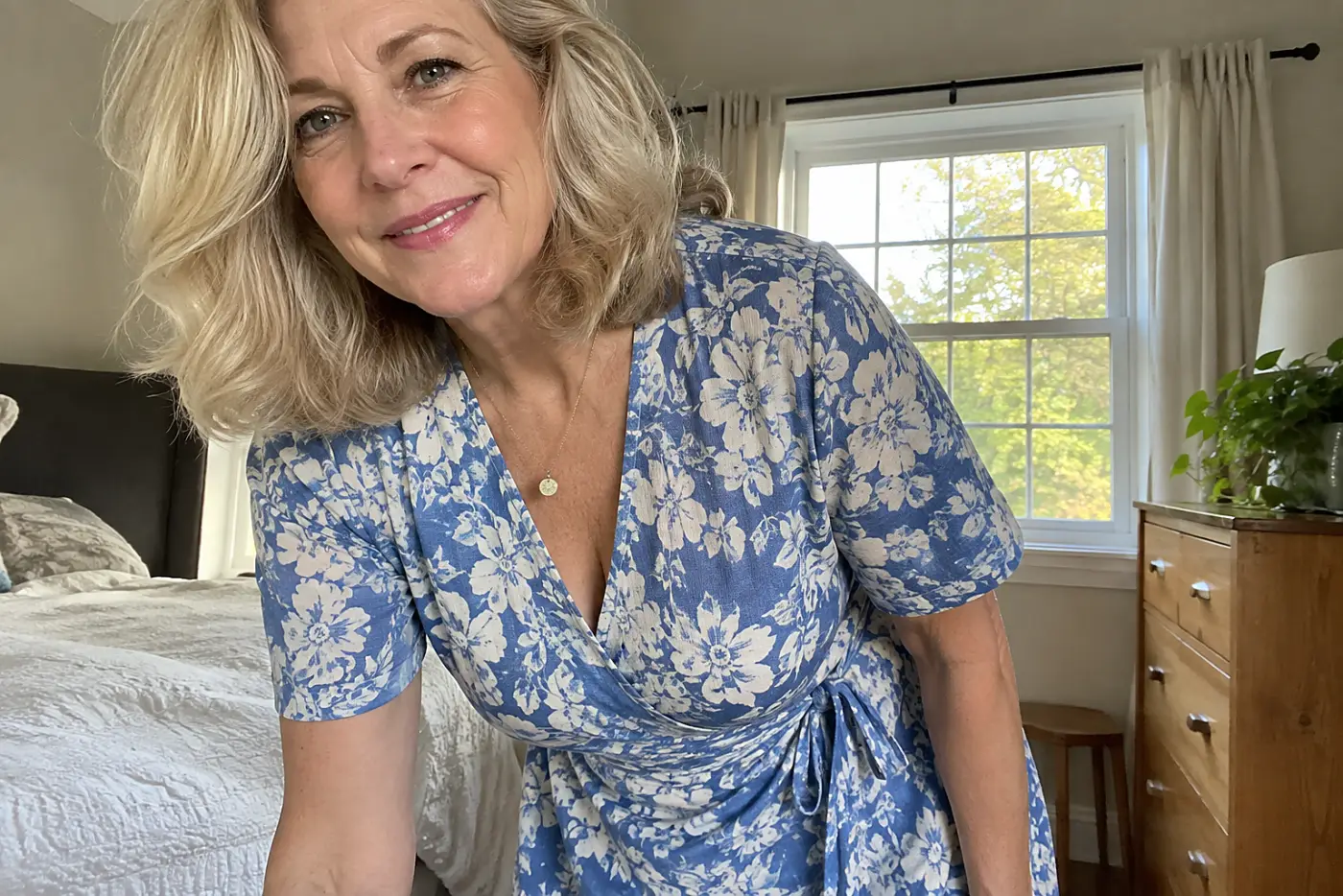
The crossed fabric stays closed when you bend for your bag.
A wrap dress gives you room to adjust the waist, which is why it's hard to part with. But a loose neckline turns every bend into a check. Look for enough overlap at the chest and a tie that doesn't creep upward.
Check the skirt overlap while seated, too. You shouldn't have to hold it shut with one hand.
Bend, sit, and reach before you take it home.
16A Jacket With Open Front Edges
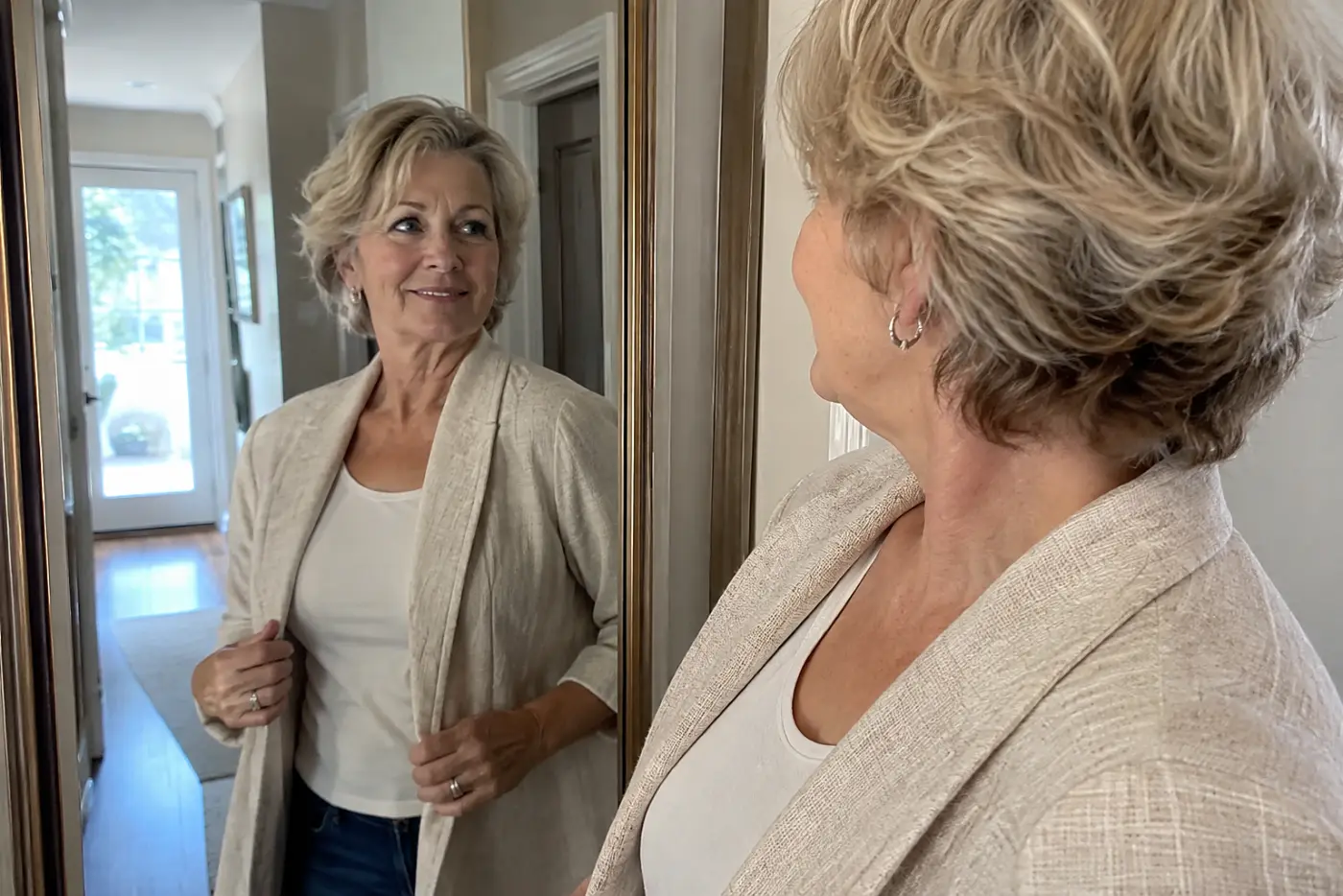
The jacket hangs straight without a button pulling across the middle.
You don't have to close every jacket you own. Check the shoulders and sleeves first; those are the parts that still need to fit. If the front edges hang evenly, an open jacket does its job over a shirt you like.
Keep it open, and let go of the button test.
15A Blazer With Room in the Arms

You reach forward without the blazer pulling behind your shoulders.
That old blazer looked good standing with your arms at your sides. Driving, hugging, and lifting a grocery bag ask more of it. Try the same motions in the fitting room. If the whole jacket rides up, sizing up isn't always the answer; the cut across the back matters too.
Choose the one that lets you move before you check the mirror.
14A Shirt With Shoulder Seams in Place

The seams meet your shoulders rather than slipping down your arms.
A shirt that's tight across the bust often sends you reaching for a larger size. Then the shoulders fall and the sleeves twist. Start with shoulders that sit correctly. If the front still pulls, try a different cut instead of adding width everywhere.
Check the seams before checking the size tag.
13A Hidden-Snap Shirt Placket

The shirt front lies flat between its buttons.
A gap there doesn't mean the whole shirt is too small. Your shoulders and waist might already fit. A fuller-cut shirt, a different button position, or a hidden snap solves a different problem than buying two sizes up. Check the fabric while you're seated; pulling isn't always visible when you stand straight.
Keep the shirt that stays closed without a hand on your chest.
12A Blouse That Clears the Hips
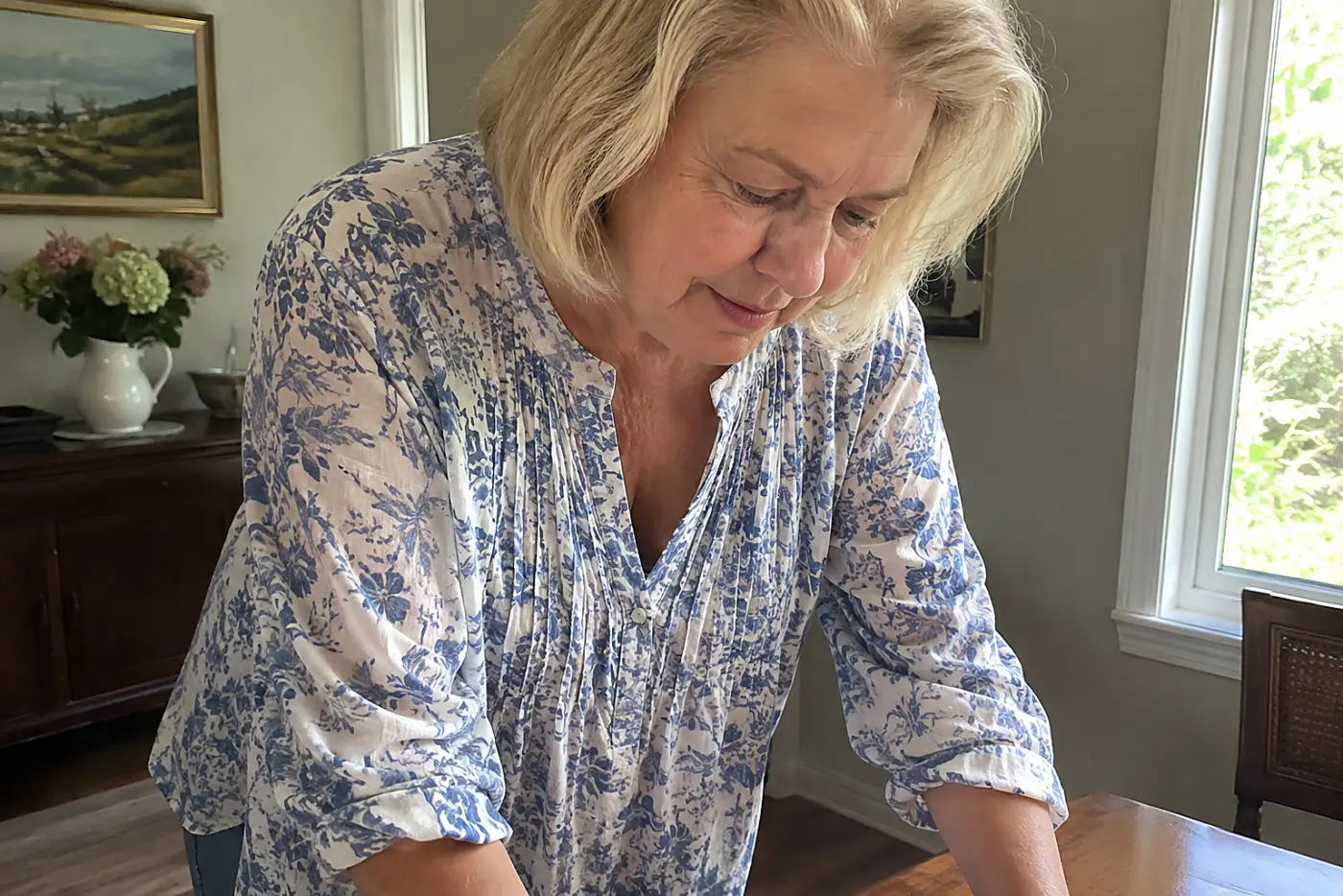
The blouse ends below the waistband without bunching at the sides.
If every shirt feels short when you sit, check the hem before blaming your pants. A few extra inches keep your back covered when you lean forward. Too much length, though, bunches in your lap.
Sit in it and see where the hem lands.
11A Tucked Shirt With Loose Fabric

The tuck has room above the waistband instead of pulling tight.
Tucking a shirt doesn't require smoothing every inch against your stomach. Leave enough fabric to reach forward and sit. A full tuck keeps the back hem from escaping; a front tuck works when the side seams hang straight. Either way, the waistband should stay where you put it.
Raise both arms and see what comes loose.
10A Cotton Tee With a Shaped Hem

The hem curves below the waistband instead of cutting straight across.
A straight tee that lands at the widest part of your hips draws a hard line there. A shaped hem breaks that line and gives you coverage at the back. Check that the side openings don't rise above your pants.
Wear it with the jeans you reach for most.
9A Knit Top That Skims the Waist

The fabric follows your shape without catching at the waistband.
A clingy knit tells you about every seam underneath it. A much larger top falls from the bust and hides the waist altogether. Look for a knit with enough weight to hang cleanly, then turn sideways. If it grips at the back, try another cut. You should be able to sit without pulling it down afterward.
Keep the one you stop adjusting after five minutes.
8A Sweater With Firm Ribbing

The ribbed hem holds its shape instead of rolling upward.
Some sweaters look roomy on a hanger and shrink into a band at your waist. Check the bottom ribbing with the sweater on. It should rest where you placed it, without gripping your hips or folding underneath.
Raise your arms once before calling it a fit.
7A Cardigan That Reaches the Hip
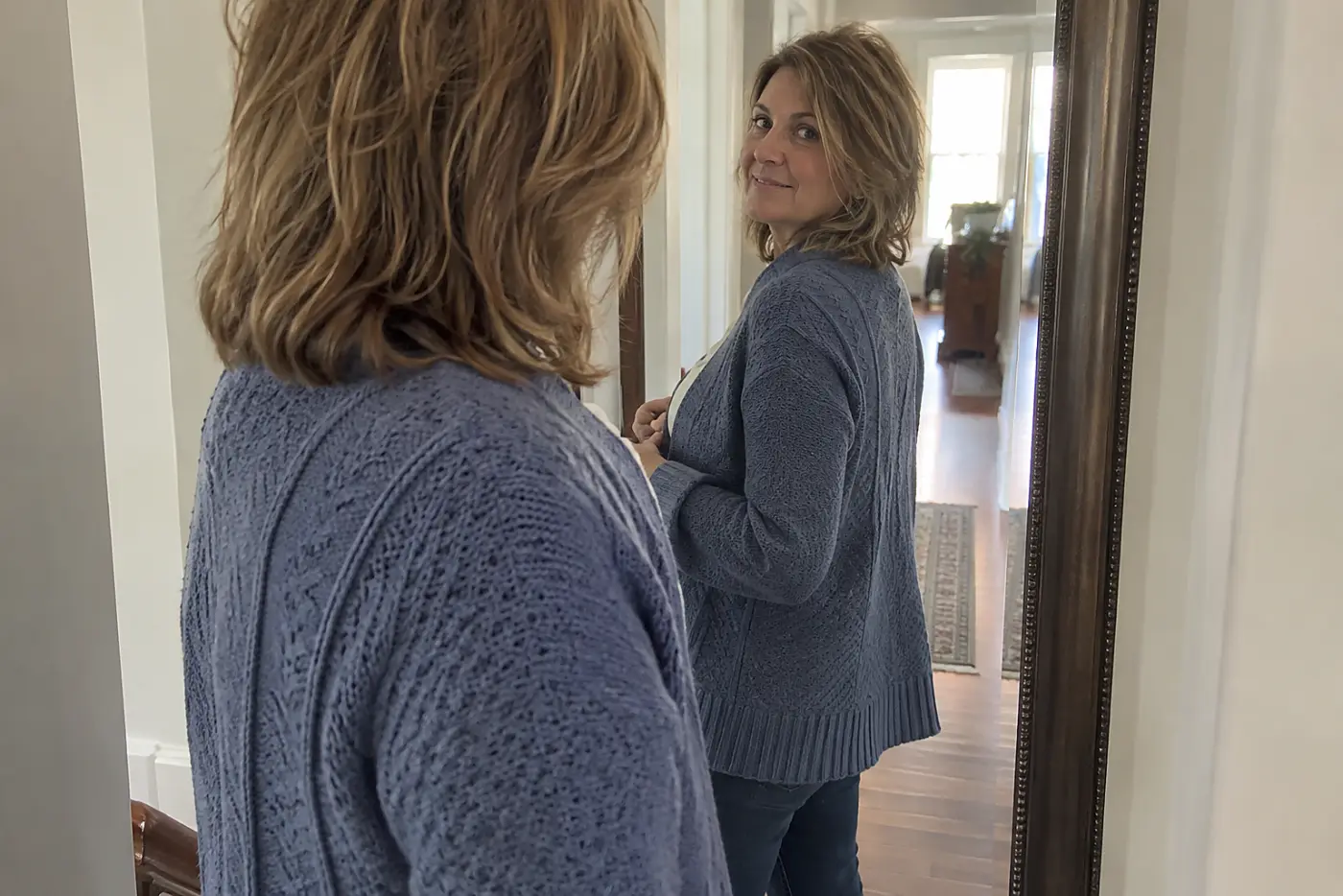
The open edges fall past the waistband of your pants.
A cardigan that ends above your waist leaves a shirt hem to manage underneath. Hip length covers it without swallowing your legs. Check the sleeves: pushed-up cuffs should stay up, so you aren't dragging knitwear through the sink. Then turn around and see whether the back hangs straight.
Try it over a shirt you already own, not a store display.
6A Smooth Camisole Beneath a Shirt
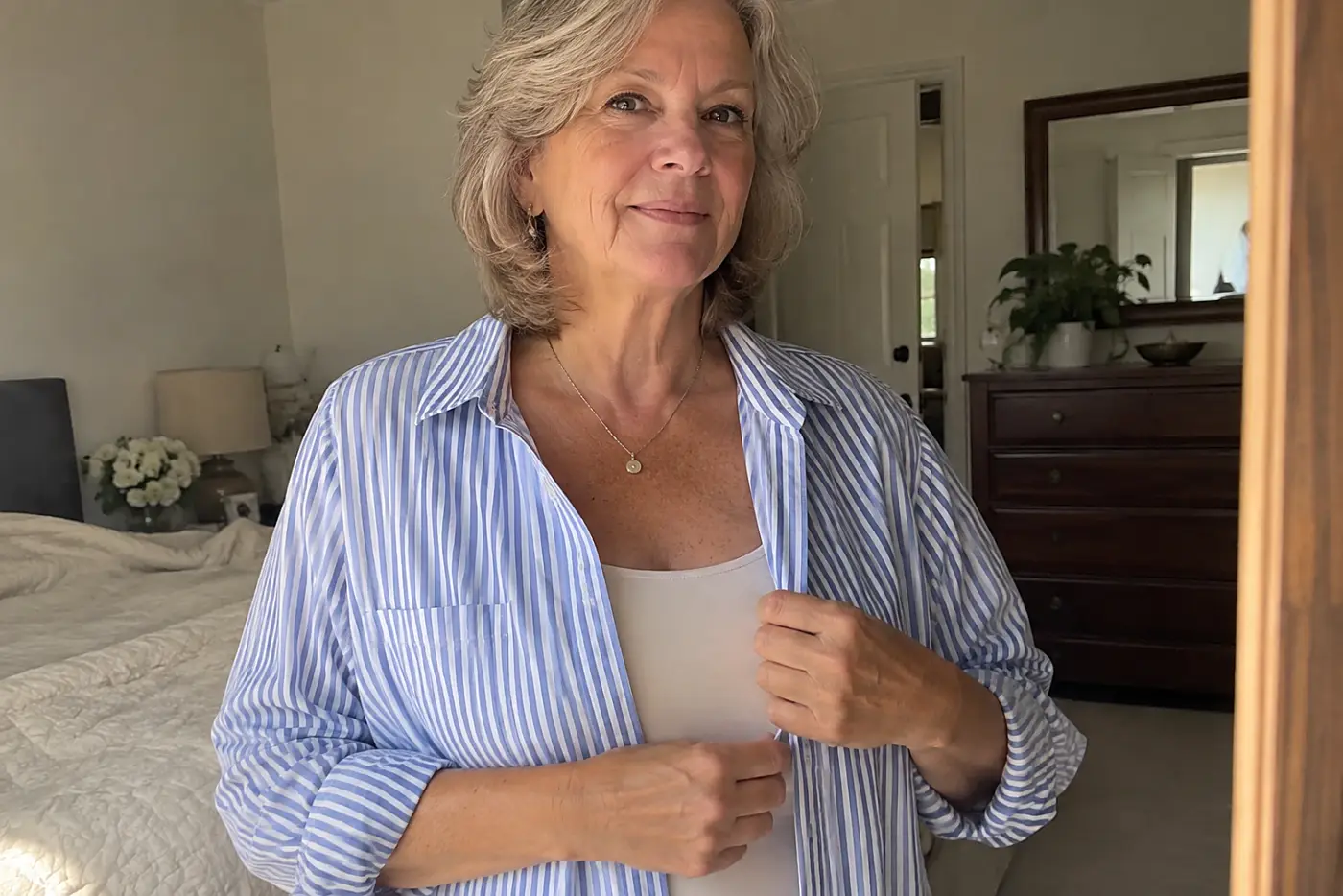
The shirt falls cleanly over a thin layer underneath.
When a shirt catches on your bra or skin, the fit looks tighter than it is. A smooth camisole gives the outer layer a surface to slide over. Keep its neckline below the shirt's opening and its hem flat under your pants.
Add the layer before replacing the shirt.
5A Bra With a Level Back Band
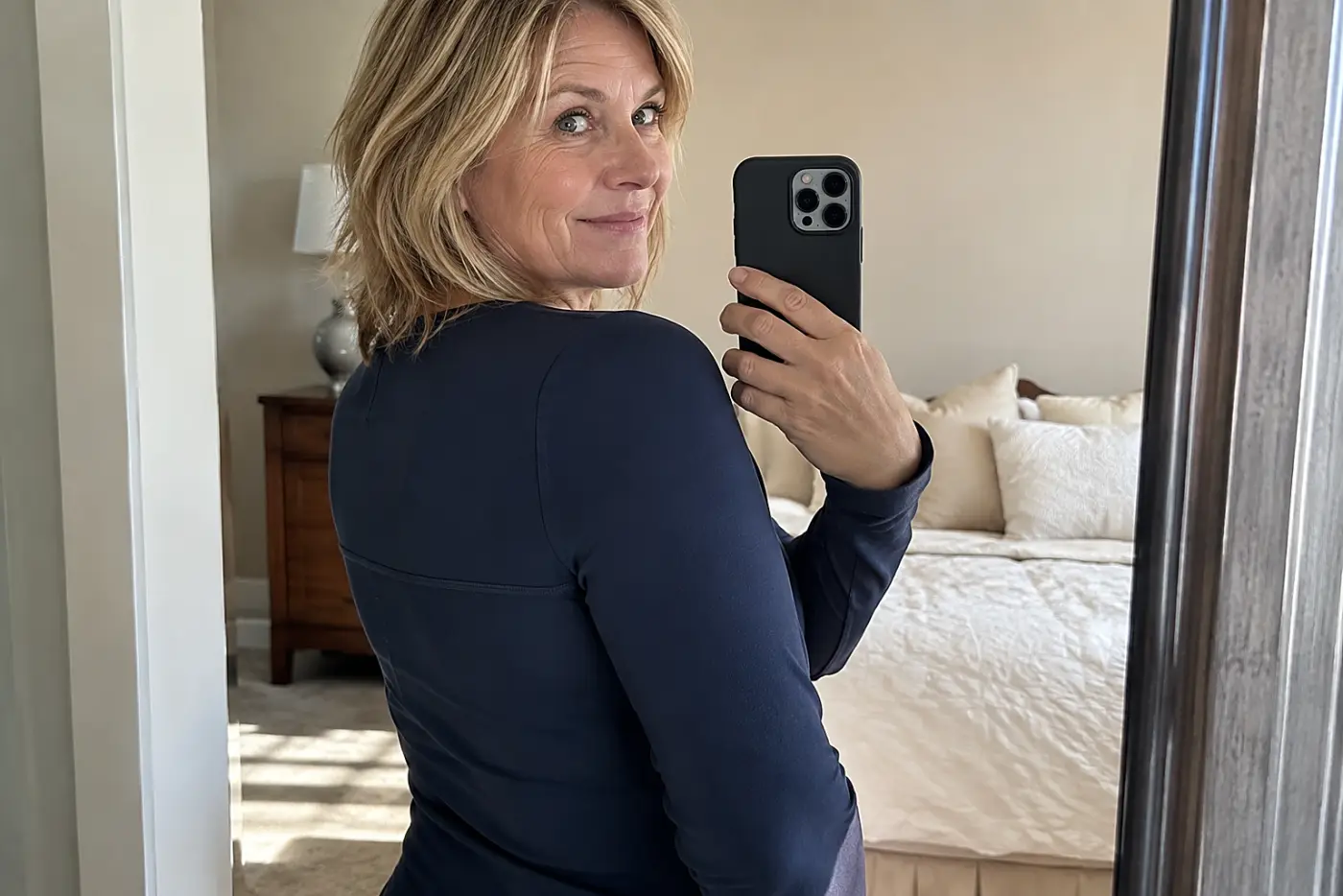
The back band sits straight across, not high between your shoulders.
A band that rides up changes how every shirt hangs in front. Straps shouldn't do the band's work. Check the band in a mirror from the side, then move your arms. If it climbs, get fitted for a different band and cup combination. Don't judge a favorite blouse until you've checked what sits beneath it.
Start there before buying another top.
4Shoes That Match Your Longest Walk
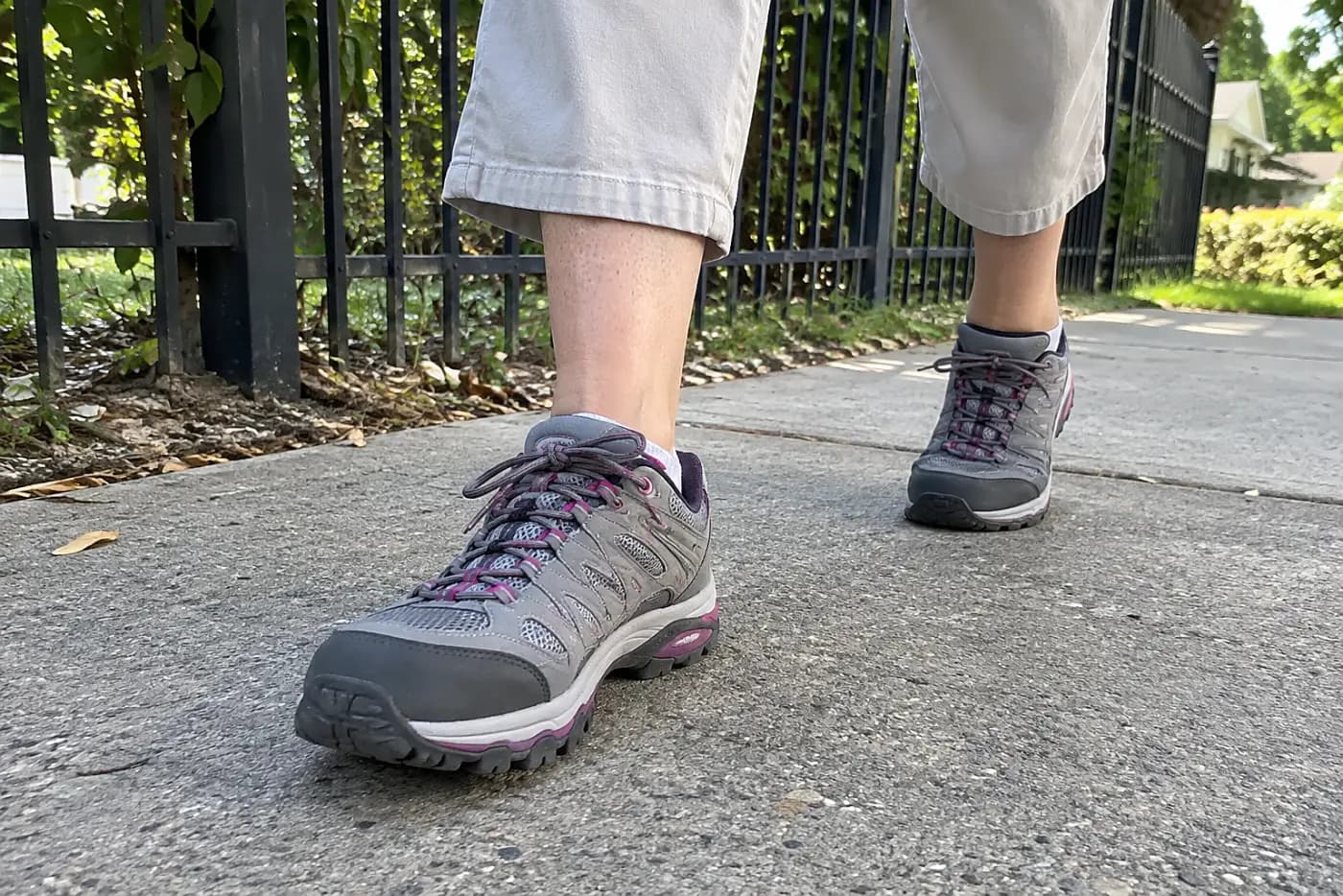
The shoes stay on your feet without your toes gripping.
A pair that feels fine beside the mirror has a different job on a sidewalk. Your feet need space at the toes and a heel that stays put. If you limp toward the car, the outfit didn't work, however good the shoes looked indoors.
Wear new shoes around the house before a full day out.
3An Altered Hem on Favorite Pants
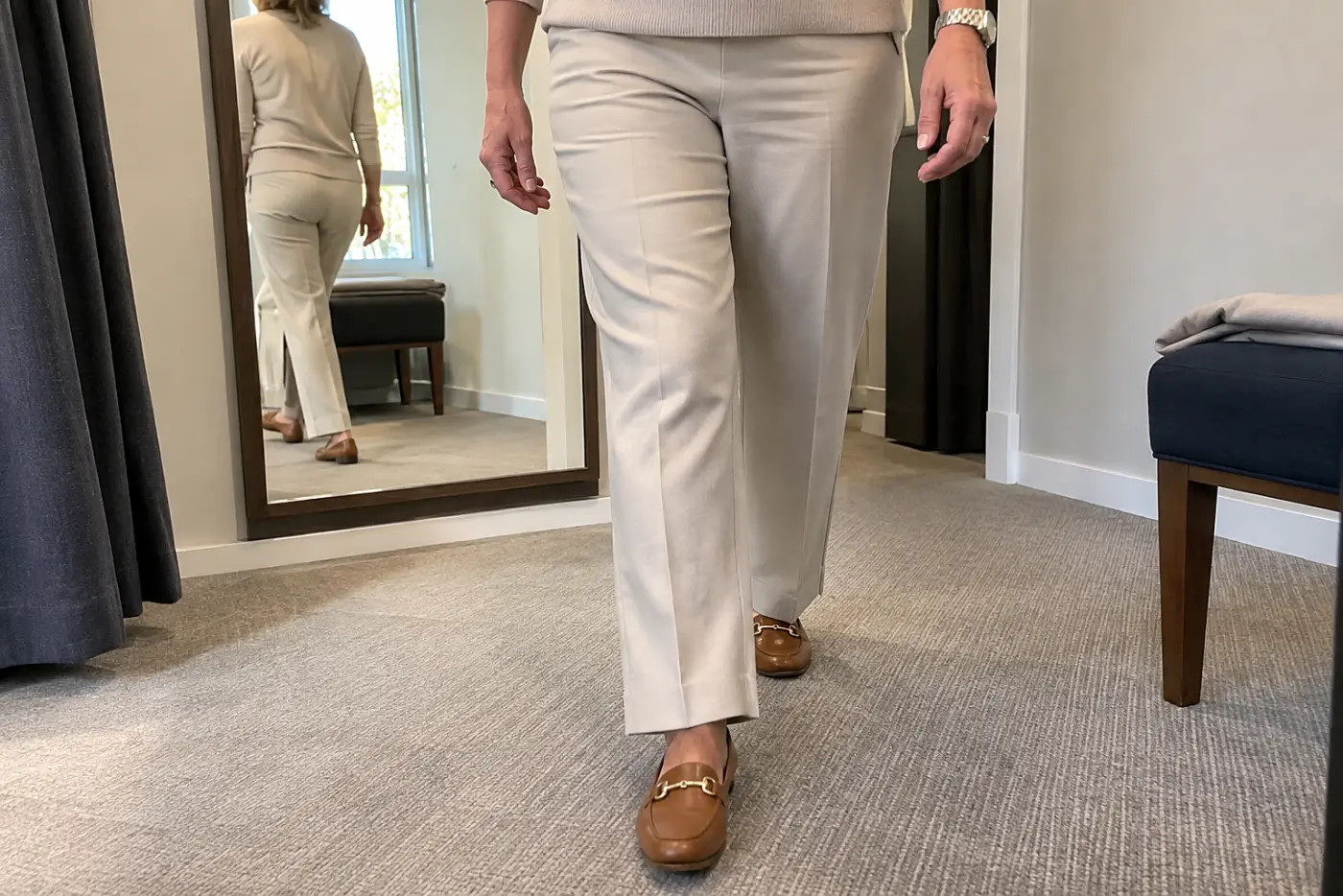
The pant leg clears the floor when you walk.
If the waist and hips fit, don't give up good pants because the hem is wrong. Bring the shoes you'll wear most to a tailor. Mark the length while standing, then walk before anything gets cut. A hem that drags at the back wears out fast; one cut for heels looks short with flats.
Ask for a pinned fitting in your usual shoes.
2A Tailored Waist on Good Jeans
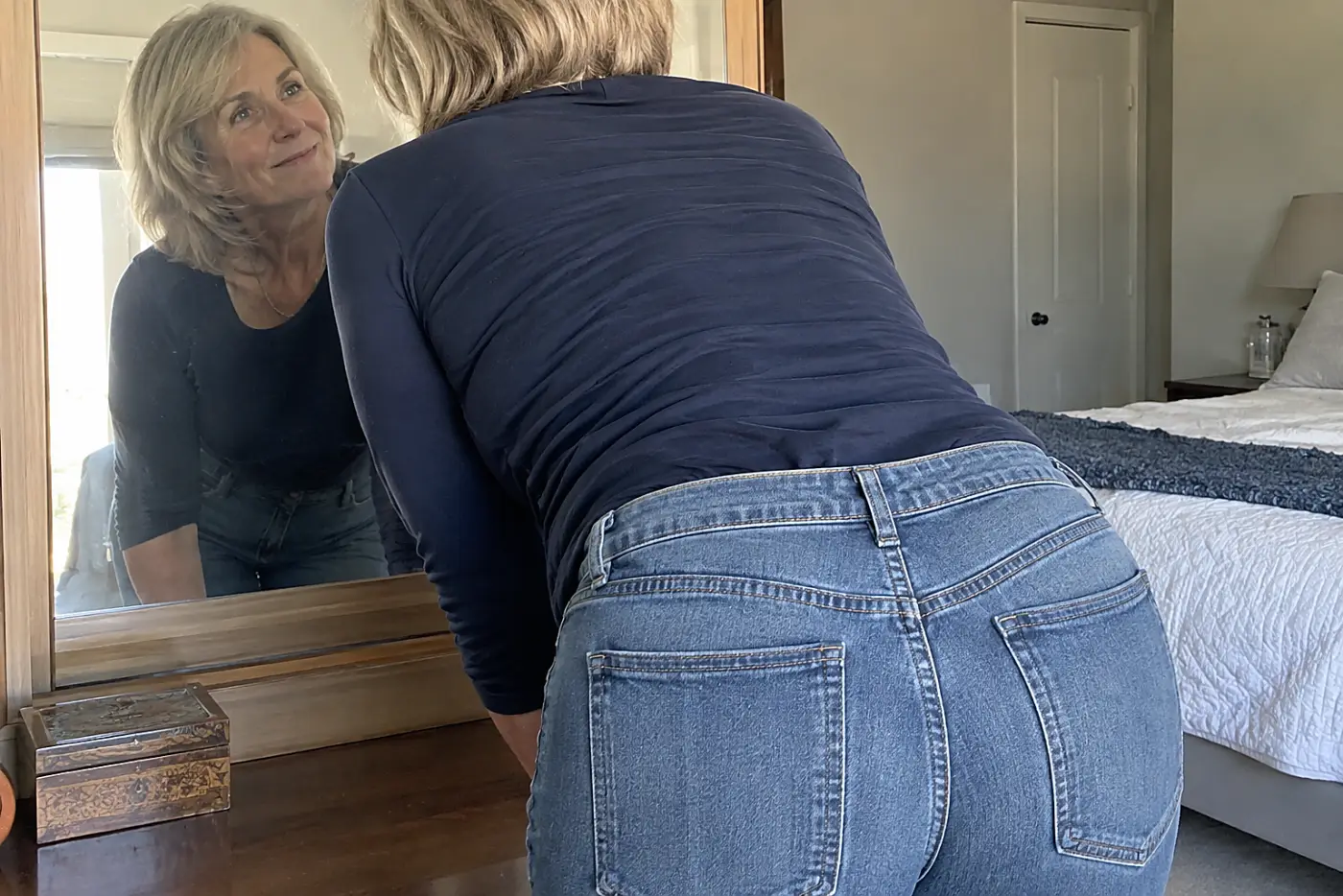
The waistband lies against your back when you bend.
Jeans that fit your hips but gap behind you need a different fix from smaller jeans. A tailor can assess whether the waist can be taken in without changing the seat. Don't pin it yourself and assume the seam will lie flat.
Take the jeans to a tailor before replacing them.
1A Chair Beside the Fitting Mirror

The chair catches what the standing mirror misses.
This is the check to do before you pay. Sit as you would at lunch, then lean forward for a bag and stand without fixing your clothes. Notice the waistband at your ribs, the skirt across your thighs, and the shirt at your back. If you spend the whole test tugging and smoothing, imagine doing that all day.
Use a fitting-room bench if one is available, or test the clothes seated at home before removing the tags.
The bottom line
All 23 choices come back to one thing: clothes have to fit your movements, not just your reflection.
You already know when something makes you tug at it all day. Now give that feeling a proper test before you keep it. Which piece in your closet still needs a fix?
Bonus: The Fitting-Room Chair Check
- Put on the shoes you'll wear with the outfit.
- Sit fully back and check the waistband, skirt, and shirt hem. Notice where it pulls.
- Lean forward, then reach both arms toward an imaginary shelf.
- Stand without adjusting anything. Notice what shifted.
- Keep it only if you can move on without thinking about your clothes.
Margaret Hale
Travel & Lifestyle Editor
Margaret has covered travel for 25 years and has ridden every long-distance train route in the U.S. at least once.
You might also like