24 Reasons People Over 70 Refuse to Move, and Which Ones Hold Up
A familiar address protects your routines, but a deed, a stairway and a care schedule test whether staying still works.
By David Ruiz, Tech & Home Writer
Updated · 17 min read
- Written by our tech & home writer
- How we review

Read to the end: #1 is the written home-staying test that puts the decision in your hands, and almost nobody completes it.
The pencil marks beside the kitchen door still show how tall the grandchildren were at eight. Now someone has put a glossy apartment brochure beside the grocery list. You move it to make room for the mail, but you don't throw it away.
The brochure assumes a smaller home would settle every worry. Yet the worries aren't all alike: a loose rug has a different answer from an unaffordable roof, and neither answers who gets to choose your address. Staying deserves the same close look as moving.
Here are 24 reasons, and what each one must withstand.
24The pencil marks beside the kitchen door
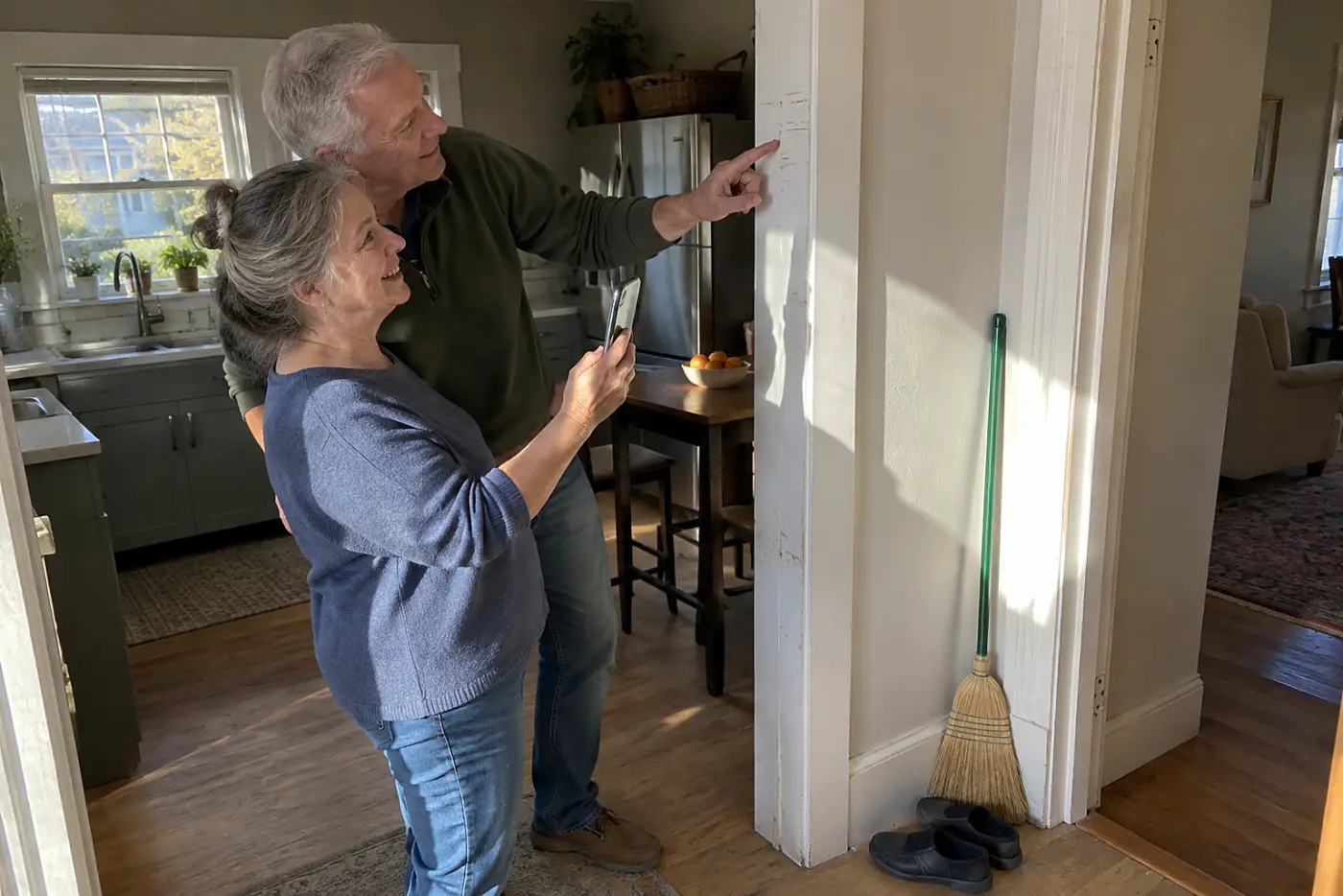
Those marks aren't clutter to be sorted.
They record who lived here, and when. A new place won't have the same walls, though the memories don't vanish with a sale. Staying for that history holds up when the house still serves your life outside the photograph.
If you leave without deciding what matters, someone else might choose what to keep. The doorframe itself matters differently from a picture of it.
This week, photograph the marks and pick one object you'd insist on keeping. Tell anyone pressing for a move, “I need you to understand what I'd be leaving.” You don't have to settle the larger question to show them what it contains.
Then look beyond the doorway, toward the people who notice it.
23The neighbors who recognize your porch light
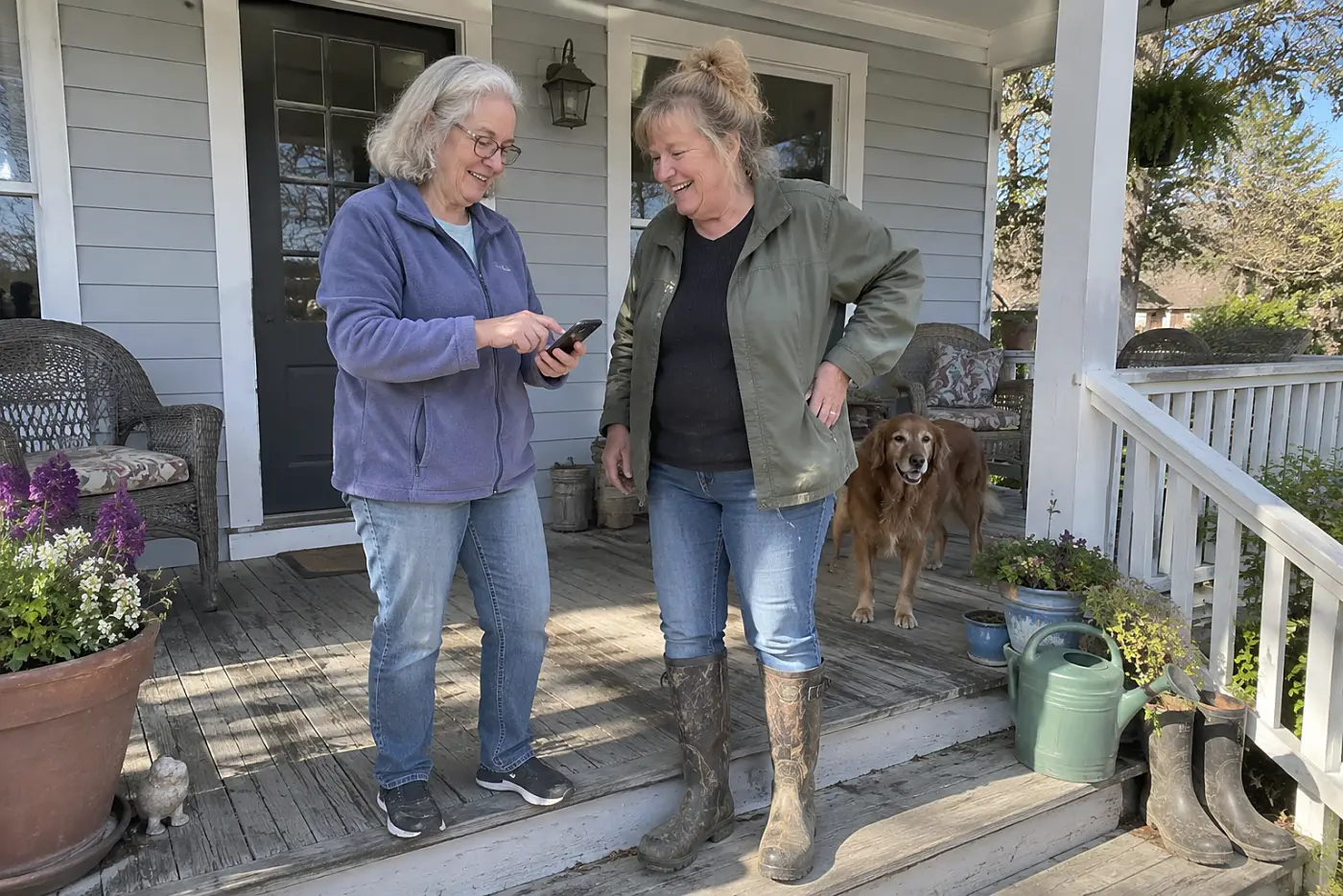
A familiar face offers something an apartment brochure can't measure.
The neighbor across the street notices a newspaper left outside. Another knows which car belongs in your driveway. That attention matters, but it isn't the same as someone agreeing to check on you during a storm.
A wave proves connection. It doesn't prove that anyone has your phone number or knows whom to call. If you count on a neighbor without asking, the first test of that arrangement arrives when something goes wrong.
This week, ask one neighbor whether they'd exchange phone numbers and emergency contacts. Say, “If you notice something wrong at my house, would you call me first?” Agree on what they'd do if you don't answer.
A street can feel close until a specific favor is needed. The next kind of company has a calendar of its own.
22The friends who still meet on Thursdays

A familiar zip code doesn't guarantee company.
If friends gather at the library or diner, moving across town changes the trip, not necessarily the friendship. Staying holds up when the meetings still happen and reaching them remains manageable. What counts is the Thursday you attend, not the invitation pinned to the refrigerator.
Missing several gatherings changes the argument for staying near friends. The problem might be the route, the time of day or the ride home.
This week, check when you last went and how you'd reach the next gathering from this address. Tell a friend, “I'd like to keep Thursday on the calendar wherever I live.” Ask what time the group actually leaves, so the trip home belongs in your decision too.
A standing invitation needs a way to reach it.
21The car keys on the hallway hook

Independence can rest on one set of keys.
The house feels convenient when you drive to the pharmacy, church and grocery store. Once driving stops, that same address has a different map. Distance becomes a cost in rides, favors and missed trips.
Before anyone debates a move, test the week without driving. Notice each errand and who has agreed to take you. Check whether public transit or a car service serves your address, including the return trip. The Eldercare Locator helps you find your local Area Agency on Aging for transportation questions.
This week, call that agency about routes and eligibility at your address. Say, “How would I get groceries and reach a morning appointment without driving?” Include a rainy day in the trial, not just the easiest afternoon.
Keeping the house still leaves the question of getting through it.
20The stairs between your bed and bathroom
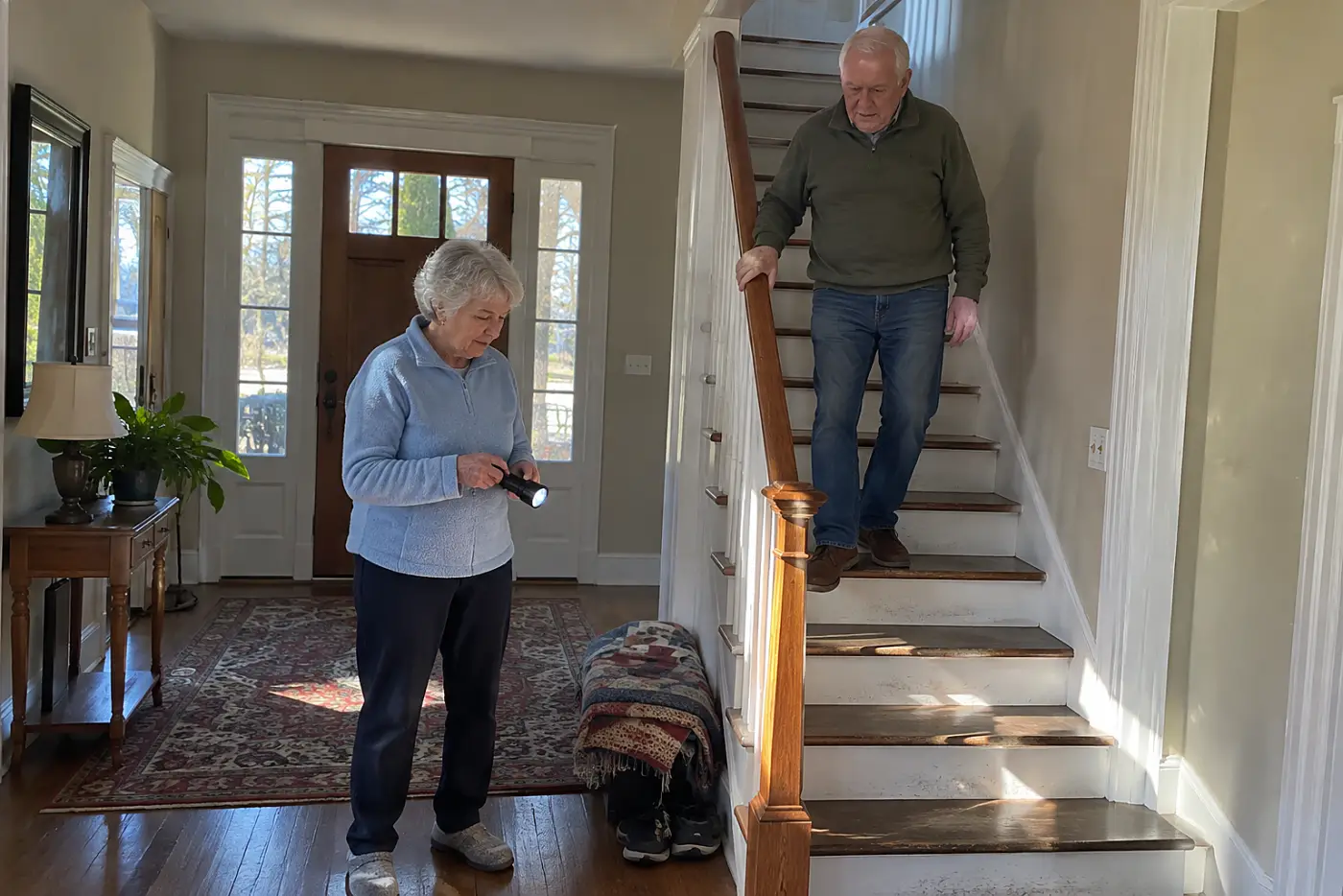
Stairs don't care how attached you are.
A bedroom upstairs and a bathroom downstairs put a climb between you and the toilet. A first-floor sleeping space deserves a look before anyone treats a move as settled. So does the location of a bathroom you could use at night.
A fall isn't the only cost. Avoiding water before bed or delaying a trip downstairs changes your routine to fit the stairs.
This week, walk the route at night using only the lights you'd normally switch on. Ask a contractor, “What would it take to make the first floor work for sleeping and bathing?” Get the proposed work in writing before judging it against another home.
If the layout changes, the surfaces underfoot need their own test.
19The loose rug at the bathroom door
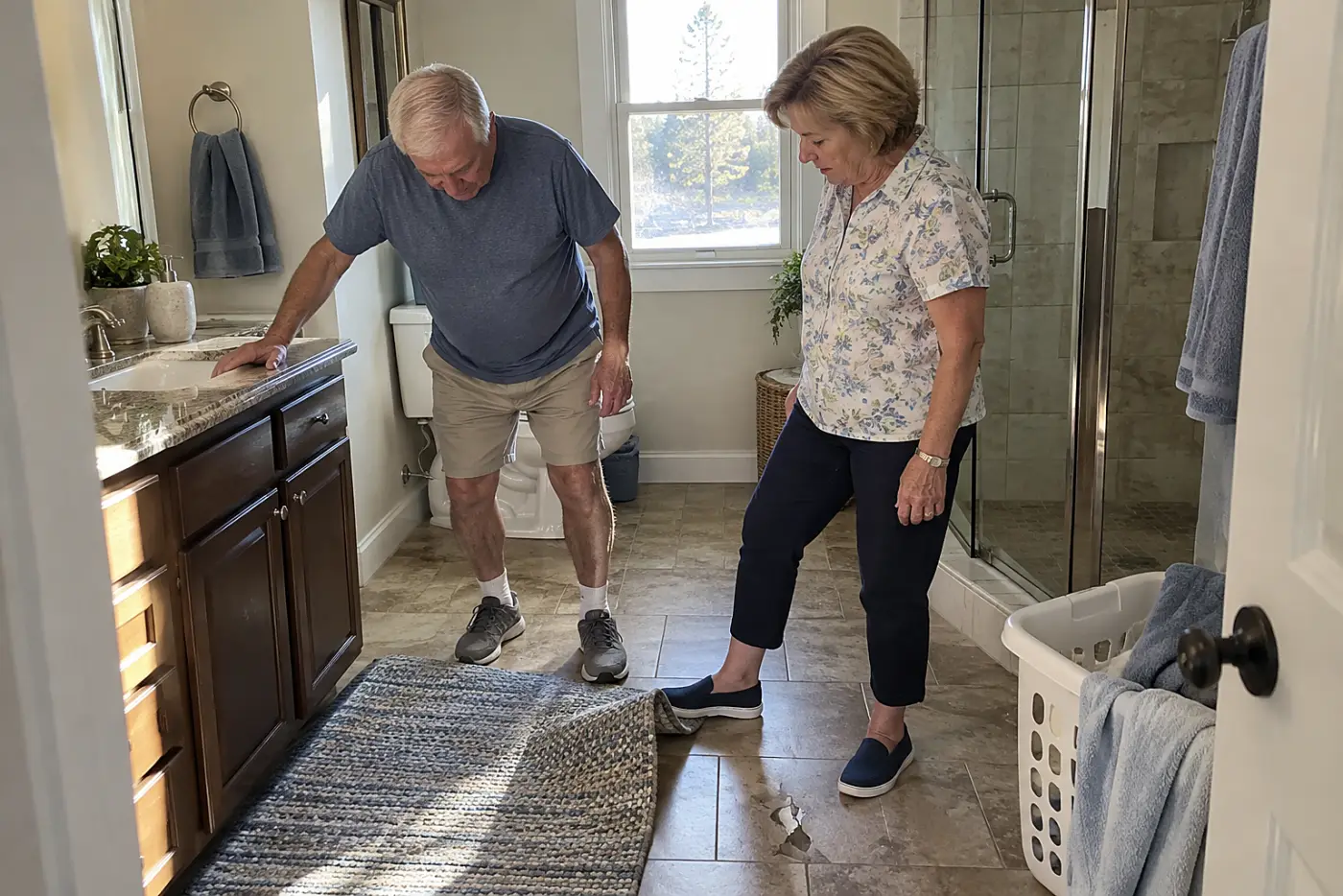
A fall hazard isn't a vote for moving.
A rug edge, poor lighting or a missing handrail is a problem in a particular spot. Fixing that spot differs from giving up the house. The CDC's STEADI materials give you a room-by-room fall-prevention checklist.
Look at where you steady yourself when getting off the toilet or stepping from the shower. A towel bar isn't installed as a grab bar. If you rent, get the owner's permission before changing fixtures.
This week, remove a rug that slips and note each place where you reach for support. Tell a contractor, “Show me where a grab bar would anchor securely.” Ask for a written scope, including wall repairs if installation requires them.
A safer floor helps. It doesn't settle what happens when you need a hand.
18The daughter listed as your emergency contact
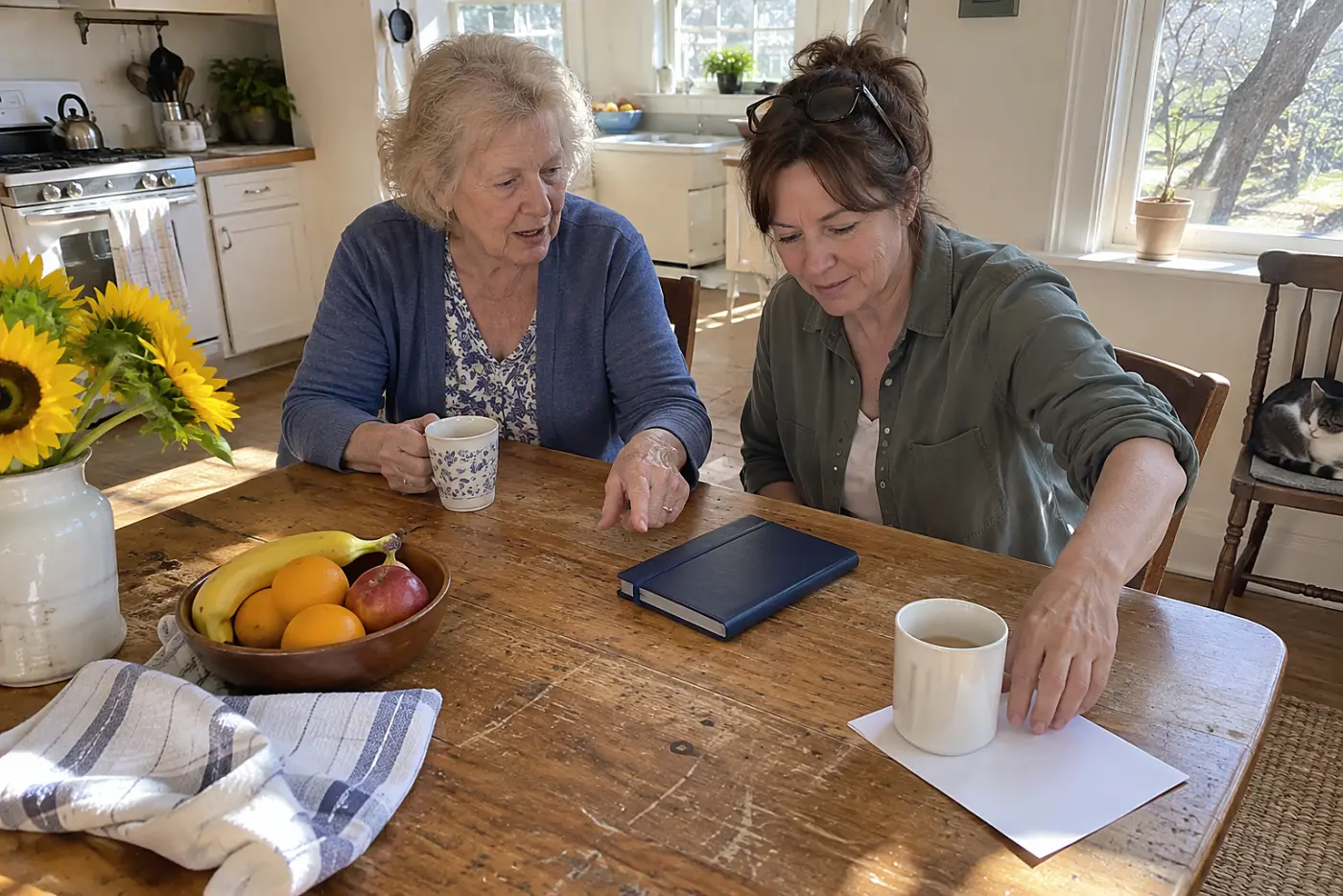
A phone number isn't a care schedule.
Your daughter can be the first person called and still have a job, children or a long drive. Being willing to answer a call differs from being available every Tuesday. If staying depends on regular help, she needs a chance to agree to that particular job.
Without that conversation, a missed ride looks like a broken promise nobody made. The strain reaches both of you.
This week, ask her which help fits her actual schedule, including rides or nights after a hospital visit. Say, “What are you willing to do regularly, and what needs another answer?” Listen for a firm answer rather than treating affection as availability.
An agreed favor still has to survive a real calendar.
17The spare bedroom for a future caregiver

An empty room doesn't bring someone to the door.
Live-in help changes privacy, sleep and time off for everyone in the house. Paid home-care agencies set their own hours and rates. Medicare's home health benefit won't pay for a standing, round-the-clock caregiver. Read the Medicare home health page before counting on that benefit.
Start with the help you mean: bathing, meals, medication reminders or an overnight presence. Ask agencies which tasks their workers perform and who fills an absence. A bedroom has no value as a care solution until someone has agreed to work there.
This week, call two agencies for current rates and minimum visit lengths in writing. Say, “I want a schedule and a price for the help I'd need at home.” Include nights if that's when you need someone.
A room and a quoted rate still leave the question of payment.
16The mortgage statement you keep filing
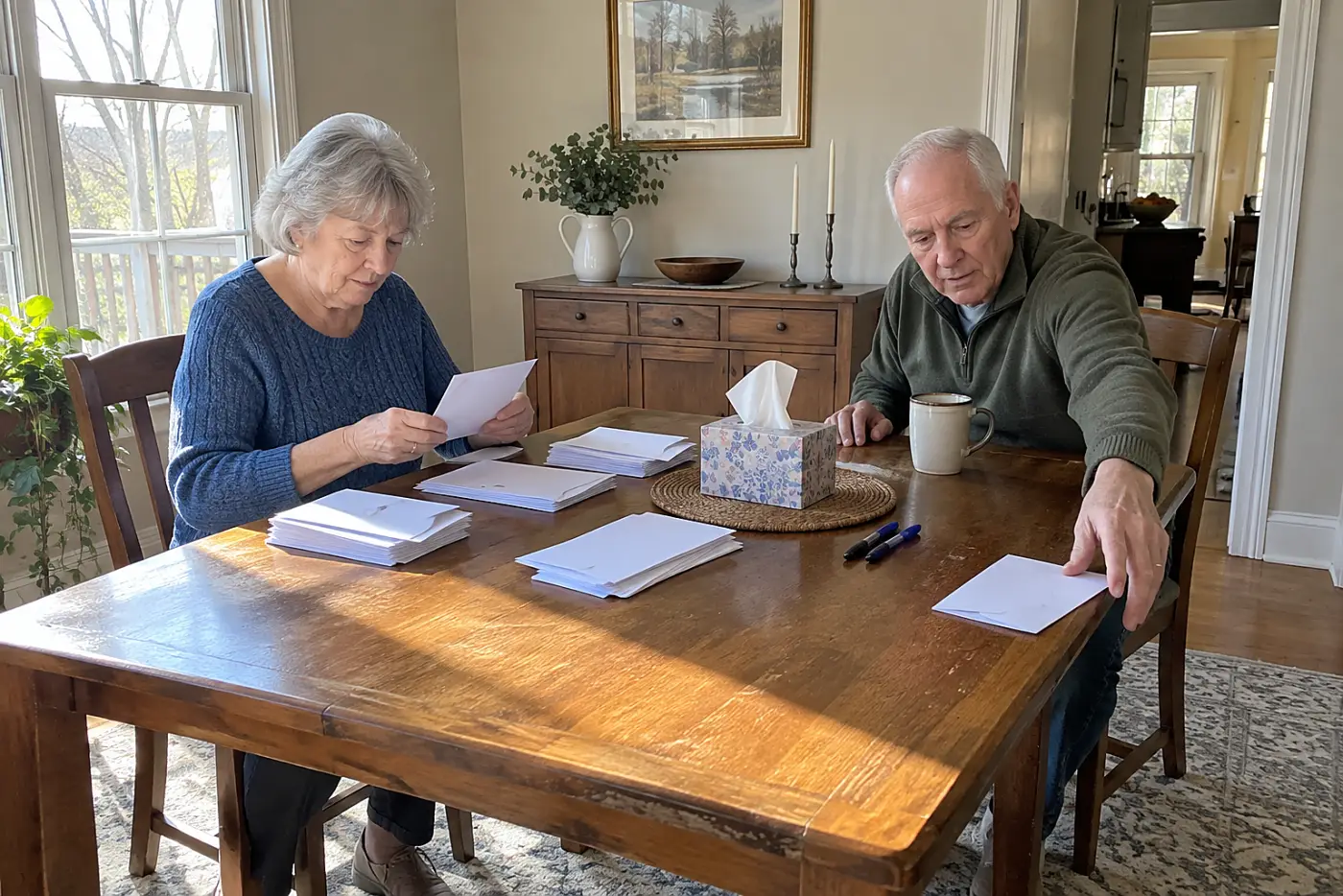
A paid-off house still sends bills.
Property tax, insurance, utilities and repairs continue after the final mortgage payment. Staying holds up when those bills fit beside food, care and transportation. The mortgage statement alone hides much of the cost of this address.
A repair that waits for spare cash also waits while the damage grows. Compare bills across a full year rather than judging the house by one easy month.
This week, put the last property-tax bill, insurance renewal and twelve utility bills on the table. Say to anyone calling the house “free,” “Let's include the bills that keep arriving.” Keep repair estimates separate so a one-time job doesn't disappear into a monthly guess.
The next bill arrives whether or not you've planned for it.
15The roof you've meant to inspect

Deferred repairs don't wait for family consensus.
A roof leak reaches the ceiling before anyone settles the moving argument. Hiring a roofer costs money; leaving water inside narrows your choices about repairs and a sale. A stain tells you where to look, not how much work the roof needs.
Get a written inspection and estimate that separates urgent work from work that waits. Ask what the estimate includes and who obtains permits when required. Check licensing through your state contractor board if your state licenses roofers.
This week, photograph the stain or damaged shingles and book an inspection. Say, “Please put the scope, payment schedule and exclusions in writing.” Keep the report even if you defer the work; it gives you a firmer answer than a relative's guess.
A sound roof protects the building. The next question concerns how you hold it.
14The deed inside the safe deposit box
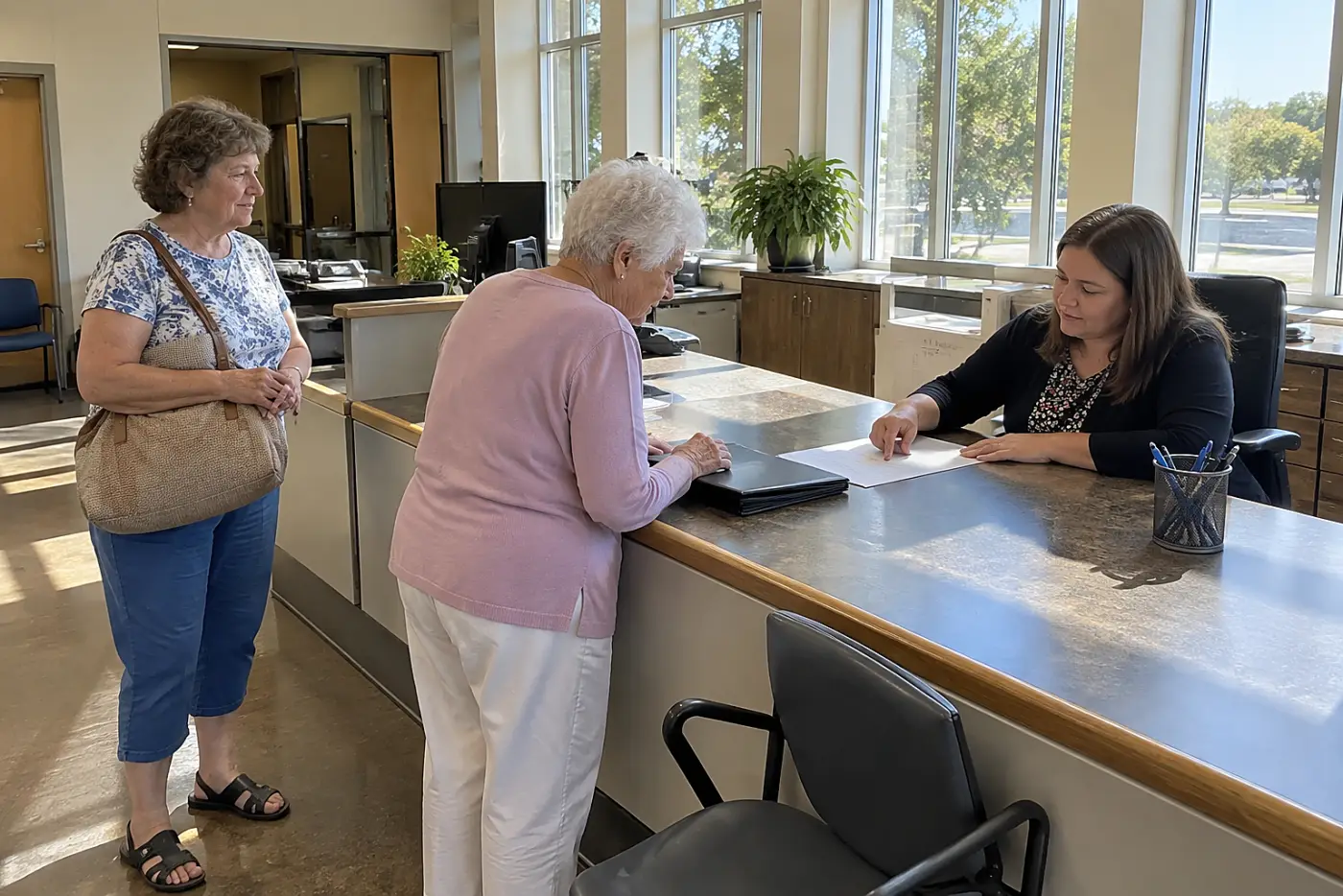
The deed matters more than a family assumption.
If another name appears on the title, that person's legal interest belongs in any discussion about the house. A will and a deed do different jobs; neither should be described from memory. An old copy also might not show a later recorded change.
If you're planning around ownership you haven't checked, a proposed sale or loan starts on uncertain ground. That uncertainty gives everyone else room to speak as though they know.
This week, get a current copy from your county recorder or land records office. Tell the clerk, “I want to confirm whose names are on the recorded deed.” If the names raise questions, take the copy to a lawyer working for you.
Who owns the house shapes the choices that follow.
13The property-tax bill on the refrigerator

An exemption has rules, not a rumor.
Property-tax relief differs by state and county, and your area might have no program that fits. Some places use age, income, disability or occupancy rules. The assessor's office has the local application and filing deadline; a neighbor's lower bill proves nothing about yours.
A deferral also postpones a bill rather than erasing it. Read what happens when the house is sold or stops being your main residence.
This week, find the assessor listed on your bill and ask whether any local exemption or deferral exists. Say, “Before I make plans, where do I check the rules for this address?” Don't budget for a reduction until the office confirms eligibility.
A lower bill helps, but money tied up in the walls presents another choice.
12The reverse-mortgage flyer in your mailbox

A flyer leaves out your obligations.
A Home Equity Conversion Mortgage is a loan against home equity for eligible older homeowners. You still owe property taxes, insurance and required upkeep. The lender's terms also matter if you stop living in the home.
The cash doesn't erase those bills. Missing loan obligations puts your home at risk, which makes a sales pitch a poor place to start.
This week, read the Consumer Financial Protection Bureau's reverse-mortgage guide before calling the flyer’s number. Tell a HUD-approved housing counselor, “Show me what I'd still owe while living here.” Ask how the loan is repaid if you leave the house.
The loan doesn't erase the reason you needed cash.
11The guest room nobody has used lately

A spare room creates choices and chores.
Renting it brings another person into your home, along with income if the arrangement works. Local rental rules, your insurance policy and tenant screening all matter. Hosting a relative raises different questions: how long, which expenses and whose rules govern the kitchen.
Don't offer the room during an argument about moving. Picture an ordinary Tuesday with a shared bathroom and someone else's guests. Check local rules before advertising a rental, and ask your insurer whether a tenant changes the policy.
This week, discuss the room without promising it. Tell a relative, “I won't offer it until we've discussed costs, privacy and an end date.” A spare room isn't free help if the arrangement takes away the peace that made you want to stay.
Another source of help doesn't require handing over a key.
10The porch steps you use every morning
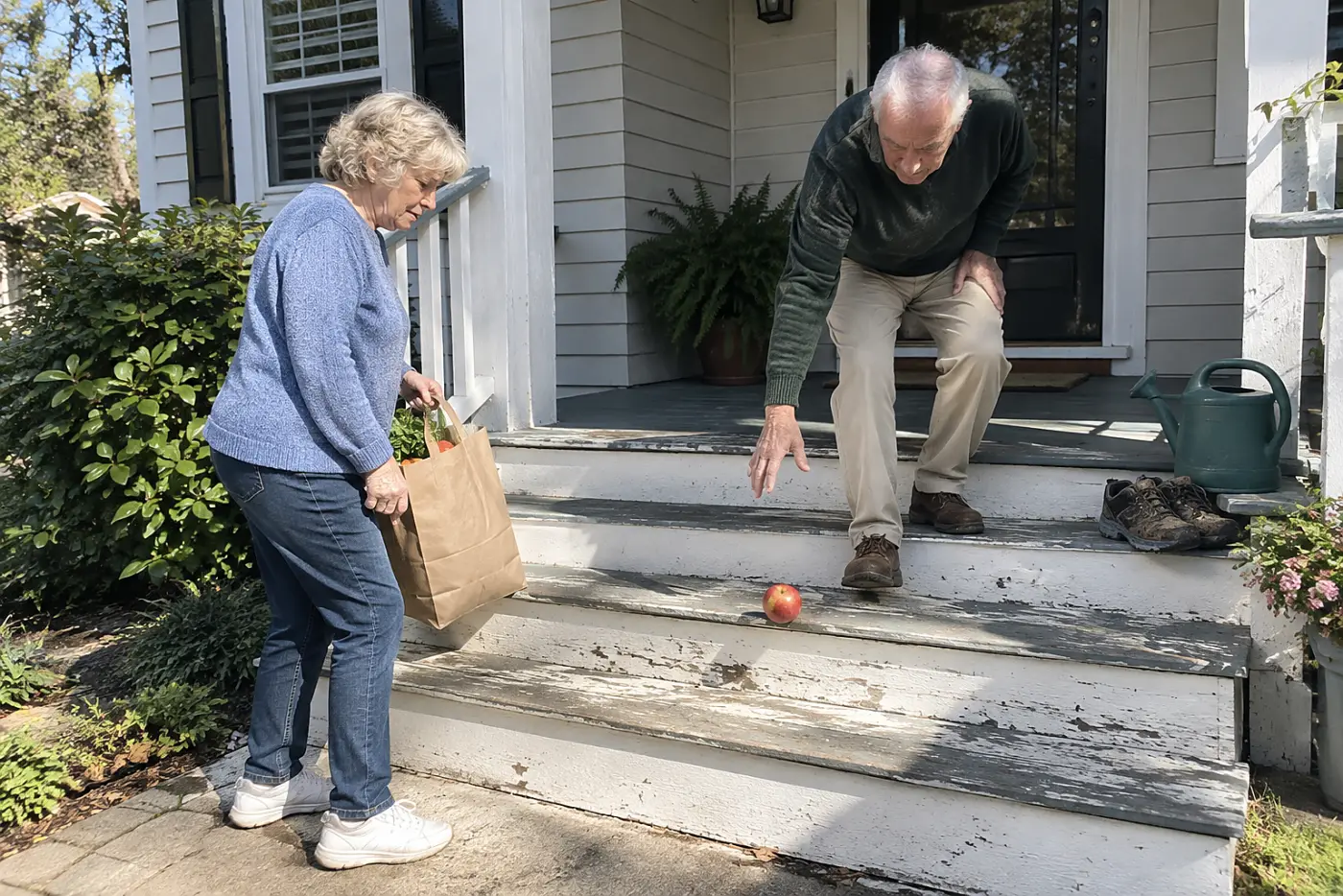
The front door is part of the plan.
If the steps become hard to climb, a safe bedroom won't solve the trip to an appointment. Railings, lighting and another entrance deserve a close look before anyone declares the house unsuitable. Carrying groceries tests that entrance differently from stepping outside empty-handed.
A door you avoid turns an ordinary errand into a request for help. That matters even when every room inside works well.
This week, carry one grocery bag through the entrance and notice where you reach for balance. Ask a contractor, “Which entry would take fewer steps, and what work would it need?” Check the path from the sidewalk as well as the steps themselves.
A usable door still has to meet help arriving from outside.
9The ambulance ride and discharge papers
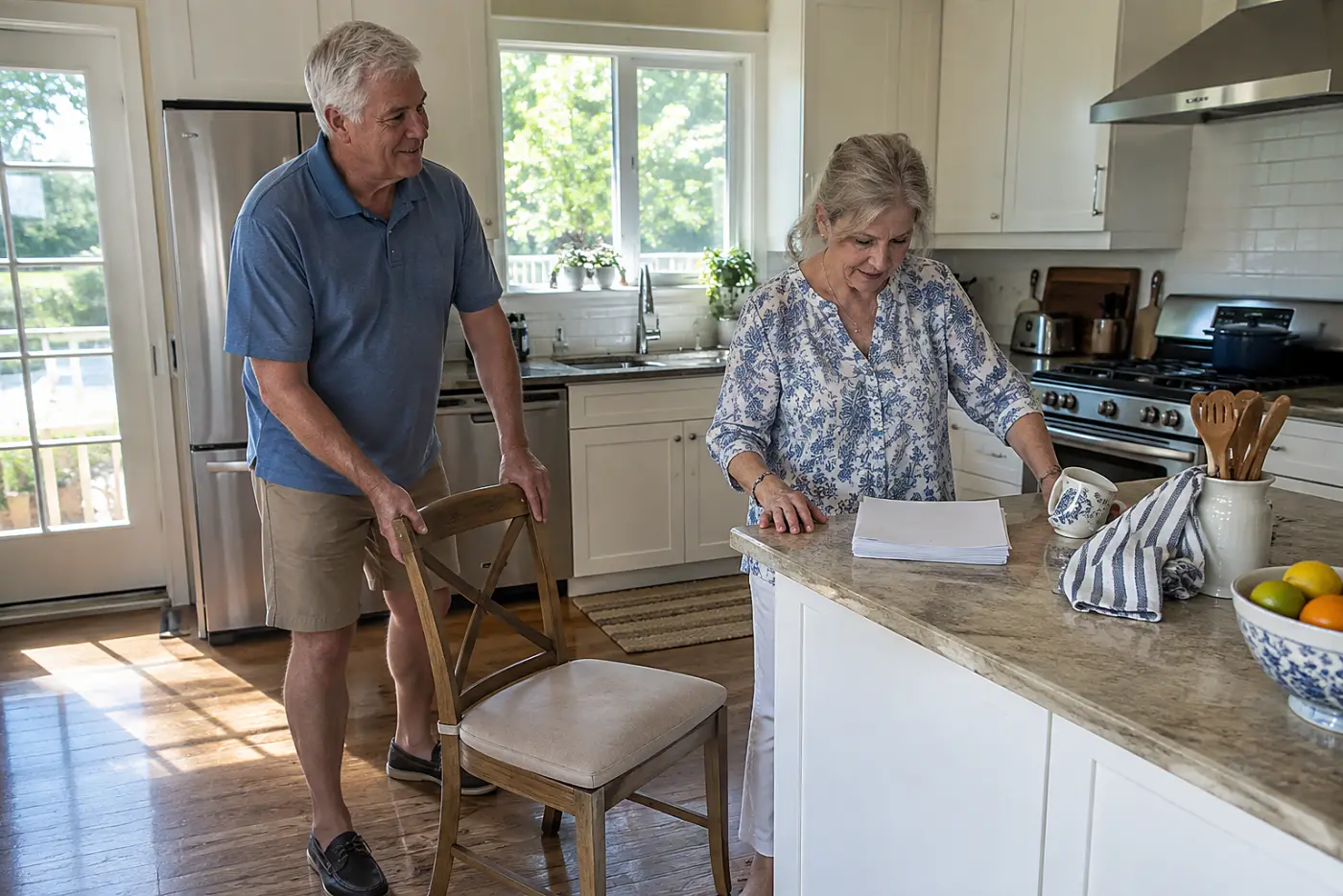
One emergency shouldn't decide every ordinary day.
After a hospital trip, relatives look at the house through that event. Ask what caused it and what would have changed the outcome. A fall on ice points toward a different fix from trouble reaching the bathroom.
The discharge papers give you the next test. They list follow-up visits, equipment or daily tasks that need attention after you return. If nobody checks those instructions against life at home, the plan stops at the kitchen counter. Fear alone won't tell you which change matters.
This week, read the papers beside a timeline of what happened and call the clinical team with questions. Say, “Which instruction changes what I need to do at home?” Ask who handles any task you cannot do yourself.
The answer matters most when that task lands after dark.
8The dog waiting beside the back door
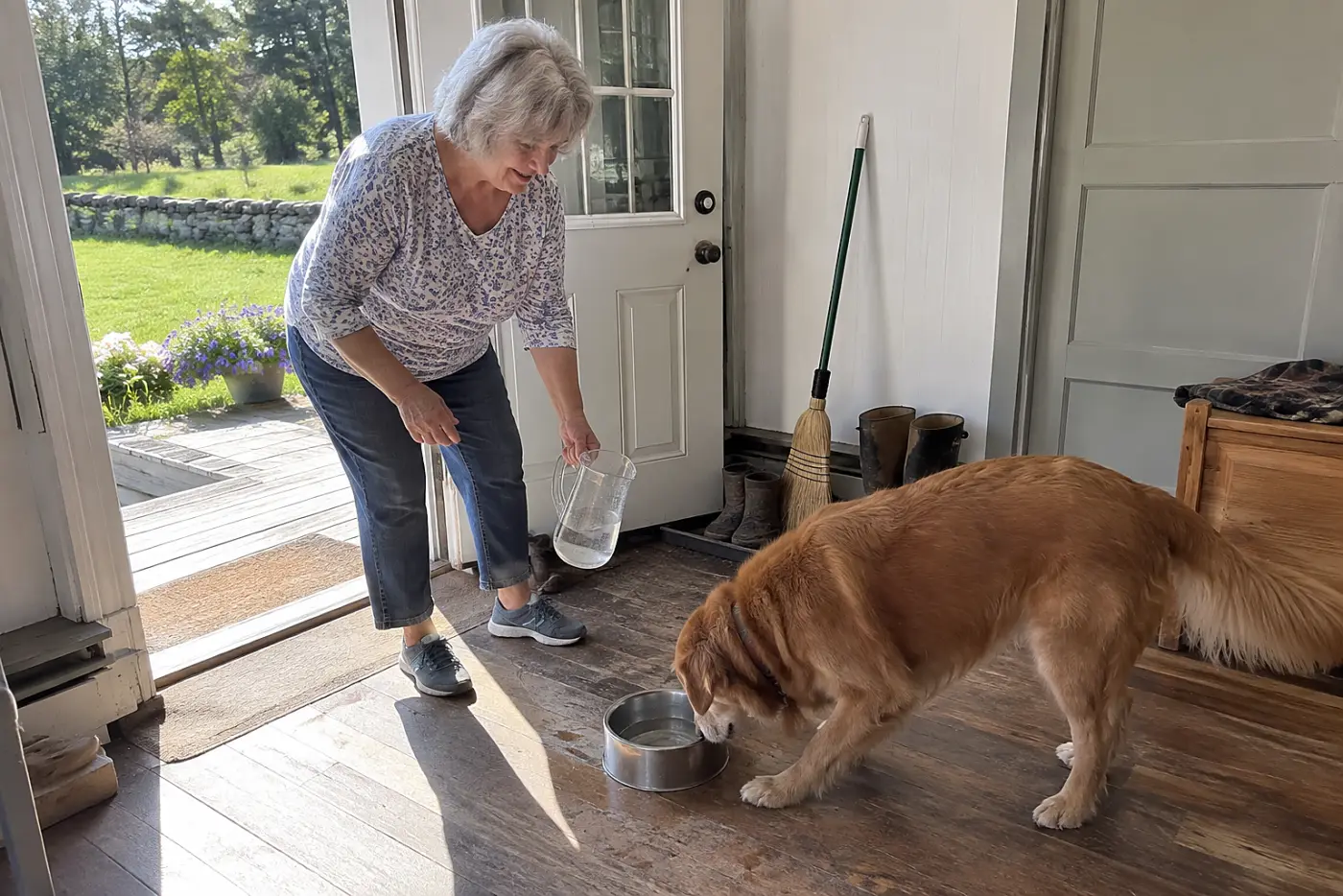
Your dog's routine is part of the address.
The yard, familiar path and veterinarian all give staying a practical advantage. A building that bars pets would change more than your floor plan. Still, the dog needs food, walks and care on days when you cannot provide them.
Without help for those days, the yard alone doesn't keep that routine going. A move should be judged against a real pet policy, not an assumption that the dog must be left behind.
This week, check the pet rules and fees at any place you're considering. Tell the person urging a move, “Please show me where my dog would live there.” Ask one trusted person whether they'd take the dog out during an illness.
A daily routine still leaves the question of reaching someone in a crisis.
7The phone beside your bed
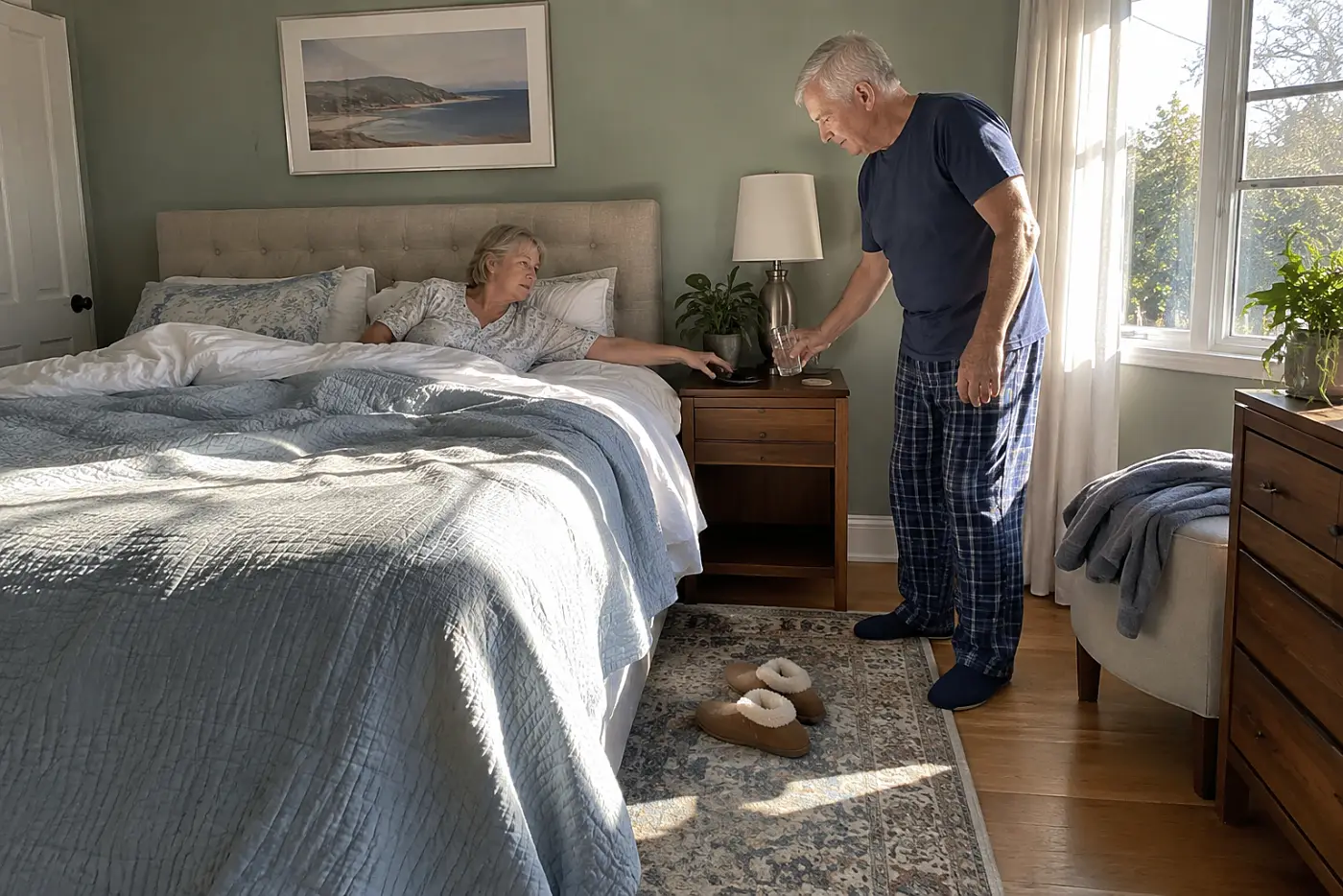
A charged phone needs a working routine.
If you fall or become ill, the device helps only if you reach it and place a call. Test cellular service, charger placement and what happens when your first contact doesn't answer. A medical alert service adds a fee, but it still needs a response plan.
Walk through dinner, the shower, bedtime and a bathroom trip. Where is the phone at each point? Think about who would answer at 2 a.m. and how that person would enter.
This week, test a call from each room and move the charger within reach of bed. Tell your chosen contact, “If I call overnight, here's my address and how to get inside.”
A response plan works only if someone knows the way in.
6The house key hidden under a flowerpot
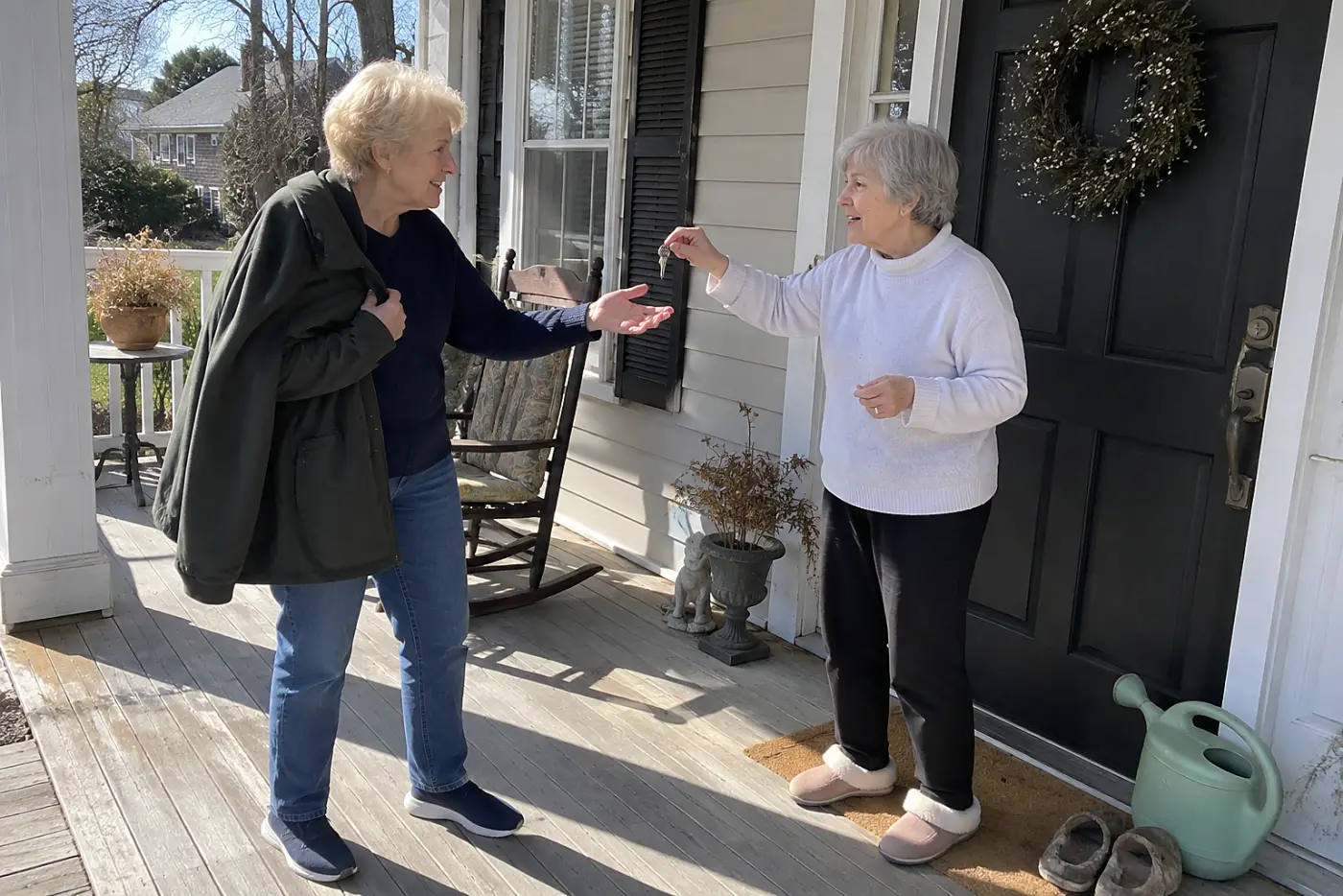
A hidden key serves whoever finds it.
Emergency access needs an arrangement the right person knows and strangers don't. A trusted contact or secure key arrangement belongs in that decision. Your local fire department's nonemergency line is also the place to ask how responders approach a locked door.
Without an entry plan, a neighbor who answers your call still stands outside. A key under a pot solves that problem for anyone who looks there.
This week, remove an obvious hiding-place key and check the entry plan with your chosen contact. Say, “Here's how to get in if I ask for help.” Ask the fire department's nonemergency line what information responders need for your address.
Once someone gets through the door, they'll need more than a key.
5The medication list in your handbag

A half-remembered list slows an urgent conversation.
Write every prescription, dose and prescribing clinician, then add over-the-counter medicines and supplements. Keep the list where you find it and bring it to visits. The National Institute on Aging has medication guidance if you need help sorting what belongs on it.
The list needs updating when a drug changes or stops. A bottle in the kitchen cabinet doesn't tell a clinician whether you still take what's printed on its label.
This week, compare the list with the bottles and your pharmacy record. Tell your pharmacist, “Please help me check this against what you've filled.” Include every pharmacy you use so an urgent conversation doesn't start with guesswork.
The same clarity matters for decisions you can't explain in the moment.
4The health-care directive in your drawer

Your wishes need the right document.
An advance directive puts medical wishes on paper for a time when you cannot speak for yourself. A health-care power of attorney names someone to speak for you. State forms and signing rules differ, so the paper in a drawer deserves a fresh look.
Without a current document, the person you trust might not have the role you thought you gave them. The National Institute on Aging's advance-care guidance gives you questions to discuss.
This week, locate your document and check your state's current form and signing rules. Tell the person you'd choose, “I want you to know what matters to me before an emergency.” Give that person access to the completed document.
That conversation shouldn't be mistaken for control of your house.
3The power of attorney someone wants signed

A broad signature hands over serious authority.
A financial power of attorney names an agent to act under its terms. It doesn't require you to leave home. But signing because someone calls it “for safety” lets the document, rather than that reassurance, define the agent's powers.
Read the proposed paper with a lawyer who works for you, not the person requesting the signature. Ask when it takes effect and exactly what powers it gives over the house. Ask how revocation works under your state's law. The American Bar Association's legal-help directory points to lawyer referral services.
This week, gather any power of attorney already signed and book a review before signing another. Say, “I'll decide after my own lawyer explains this document.”
Even sound paperwork won't settle a disagreement nobody has stated plainly.
2The family meeting held without you

Being discussed isn't the same as being heard.
When relatives trade worries before asking what you want, the conversation starts with a destination instead of a problem. Ask for the exact event behind each concern. “The house is too much” gives you nothing to examine; a missed grocery trip does.
Without specifics, you wind up defending every room against a fear nobody has named. The meeting becomes a vote about your address without your evidence.
This week, invite the concerned people to one conversation with you present. Say, “Tell me the specific event you're worried will happen here.” Ask each person to describe what they've seen, rather than what someone else predicts.
Then put each worry against a workable answer.
1The written test for staying home

A firm answer needs a plan that survives Tuesday.
On one page, put what staying requires: meals, rides, bills, safe routes through the house and help with bathing or medication. Add a way to reach someone overnight. Give each task a responsible person, a backup and a cost if paid help is needed.
An empty space shows exactly where independence is being assumed rather than supported. A name means little until that person agrees. Run the page through an ordinary week, recording missed rides, unfinished tasks and help that never arrived. Price each gap before treating a move as its only fix.
This week, make the page with the people whose help it names. Say, “I want to stay, and I want us to test what that takes.” Revisit it after a hospital visit, a driving change or a new bill.
That page won't choose for you. The unfilled spaces still need answers.
The bottom line
Across all 24 reasons, the pattern is the same: staying holds up when the daily details do.
The best-prepared version of you has checked the bills, tested the help and kept the decision in your own hands.
Which of these has already happened in your family?
Bonus: The written home-staying test
- Draw four columns: task, person, backup and cost.
- Add a normal week's meals, rides, bathing, bills and nighttime needs.
- Ask each named person, “Can you actually do this?”
- Run the plan for seven days and mark every missed task.
- Price the gaps, then decide which fixes make staying work.
David Ruiz
Tech & Home Writer
David tests gadgets with real readers in their 60s and 70s, because the best tech is the tech you'll actually use.
You might also like