24 Conversations to Have Before Moving In With Your Adult Children
A room, a grocery receipt, and a house key can settle questions that affection alone leaves dangerously open.
By David Ruiz, Tech & Home Writer
Updated · 17 min read
- Written by our tech & home writer
- How we review
Read to the end: #1 is the written household agreement that protects your place. Almost nobody finishes it before moving day.
The spare bedroom has a fresh coat of paint. There’s a lamp beside the bed, and your daughter has cleared half the closet. Then she mentions that the grandchildren keep their winter coats in the other half. You smile, but you’re already wondering where your suitcase will go.
A warm invitation doesn't settle who controls the room, the money, or the front door. Those choices get made anyway, often in the middle of a rushed Tuesday when nobody has time to talk.
These 24 conversations put the decisions back in your hands.
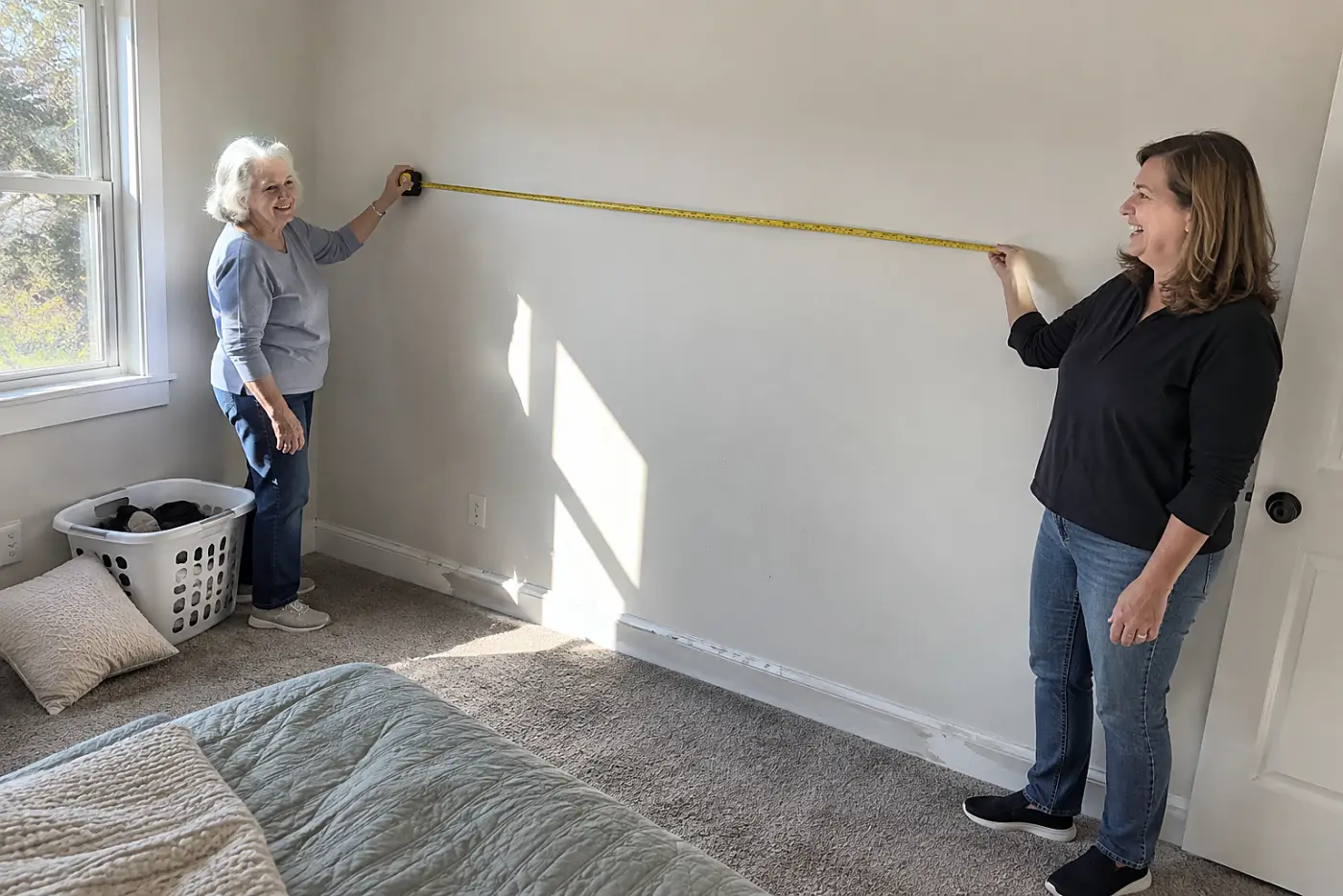
24Decide which furniture comes through the door

A spare room fills up before your things arrive.
Measure the room and the furniture before anyone rents a truck. A bed that fits still needs space for a dresser drawer to open and for you to walk past it.
Otherwise, the piano or armchair you planned to keep becomes a last-minute problem. Storage bills start before you’ve decided what to store.
This week, sketch the room with door swings and furniture measurements. Say, “I want to know where my things will live before we pack them.”
The next question is what happens to the things that don’t fit.
23Set a deadline for the storage unit

Boxes without an exit plan acquire a monthly bill.
When a moving truck is full, a storage unit looks like a quick fix. Then the first payment becomes a recurring household cost, while nobody opens the boxes to decide what stays. The person paying the bill doesn’t necessarily control when the unit gets emptied.
Ask who will sign the rental agreement, hold the access code, and pay the bill. If the unit is in your child’s name, find out how you’ll get your belongings without relying on their schedule. Put photographs of stored items somewhere you control.
Without a deadline, your favorite dishes sit in storage while someone buys replacements for the kitchen. And the bill keeps arriving even after you stop remembering what’s inside.
This week, sort the boxes into keep, sell, give away, and undecided. Agree on a date to revisit the undecided pile, then say, “I don’t want storage to become a permanent room I pay for.”
Once the boxes have a destination, your day-to-day belongings need one too.
22Claim a shelf in the shared kitchen

Your groceries disappear when nobody knows they’re yours.
The first shopping trip tells you how this kitchen works. Look for shelf space, freezer space, and a spot for food you buy for yourself. Check whether children are expected to ask before taking something from that spot.
If everything gets mixed together, replacing groceries becomes a private chore. A special diet makes that confusion harder. Food you planned for tomorrow's lunch is gone before you notice.
This week, open the cupboards together and choose your shelves. Say, “I’m happy to share dinner, but I need one shelf that stays mine.”
Then settle who’s expected to buy what goes on the other shelves.
21Write down the grocery split

A generous first month can become an expensive habit.
Decide whether you’re paying for your own food, contributing to shared meals, or buying groceries for everyone. Those are different arrangements. A family dinner also changes shape when grandchildren bring friends home or someone starts working late.
Choose how to handle takeout, household basics, and food bought for guests. Keep grocery money separate from rent or household contributions so nobody has to guess what a payment covered. If a meal plan changes, the money plan needs another conversation.
Without that split, you end up defending a carton of milk or wondering whether a grocery run was expected. The receipt won’t explain the agreement for you.
This week, look at a recent receipt together and mark what would be shared. Say, “Let’s decide which groceries I’m covering before we start putting everything in one cart.”
After food, the next bill arrives whether anyone discussed it or not.
20Name the bill your payment covers

A transfer labeled “help” invites different interpretations.
A monthly payment could cover rent, utilities, or a share of both. Name the amount, due date, and expense it covers before you set up a transfer. Look at a recent bill together so you know what the expense includes.
Otherwise, a broken furnace can prompt a second request you never budgeted for. Your own bills still have to clear. A payment toward utilities does not answer who pays for new appliances.
This week, write the payment description beside the amount. Say, “I can pay this toward utilities, but let’s keep repairs separate.”
That leaves the repair question waiting at the front door.
19Agree who pays when the furnace fails

Repairs turn vague promises into urgent requests.
A homeowner pays the repair company, but family members can still expect you to contribute. Separate routine supplies, household repairs, and improvements that raise the home’s value. Replacing an air filter is a different decision from buying a new furnace.
Ask who chooses the contractor and approves the work. Decide whether anyone needs to call you before spending money they expect you to repay. If you pay for a major improvement, don’t rely on a handshake about getting that money back later. A local attorney can explain how to record the arrangement.
Without a repair rule, your savings can become the house’s emergency fund. The bill arrives when the heat is out, which is a terrible moment to debate ownership.
This week, list three likely expenses and put a payer beside each one. Say, “If you want me to share a repair bill, talk to me before hiring someone.”
Money buys a place in the household, but it doesn’t give you a key.
18Get a key and test the front lock

Waiting on the porch changes how home feels.
Carry your own key, then test every lock you’ll need. If the household uses a keypad, learn how its code gets changed and who controls it.
Being locked out after an appointment leaves you dependent on someone answering a phone. A shared code also leaves you guessing who has it.
This week, open the door yourself while everyone is home. Say, “I need a way in that works when nobody else is here.”
Getting inside is only the start of having space of your own.
17Decide who enters your bedroom

An open bedroom door soon becomes an invitation.
Talk about knocking, children borrowing things, and where guests put their coats. If your room also holds family storage, decide when someone needs to retrieve it. A lock is worth discussing, but a lock won’t replace an agreement about entry.
Look at the room from the hallway. Does someone have to cross it to reach a bathroom or another door? If so, you need a different plan before your furniture arrives.
Without an entry rule, you start hiding mail in a drawer and changing clothes with one ear on the hall. Your bedroom should not require a lookout.
This week, stand in the doorway and describe exactly what privacy means there. Say, “Please knock and wait for me to answer, even if the door is open.”
Once the door is settled, listen to what carries through it.
16Check the walls for sound
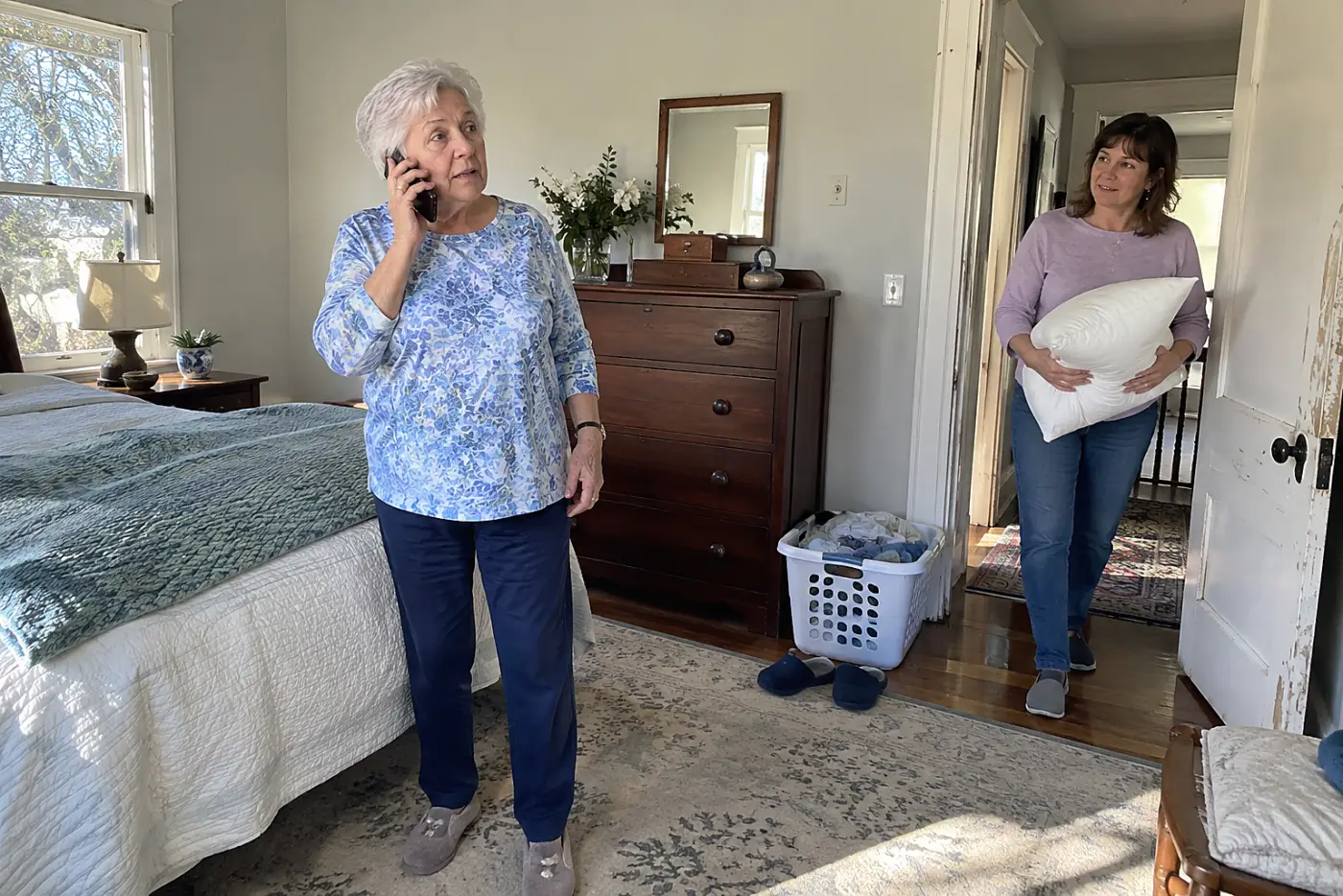
A closed door does not stop every conversation.
Try a normal phone call in the room while someone listens from the hall. Check whether a television in the living room reaches the bed. Have the listener speak at a normal volume, then switch places so each of you hears both sides.
If voices travel both ways, bedtime and private calls become household negotiations. A rug or a different spot for the television is worth trying before move-in day.
This week, do the sound test before you move your bed. Say, “I need to know whether we can hear each other through this wall.”
The clock matters as much as the walls.
15Put quiet hours on the household calendar

Someone’s bedtime is someone else’s laundry hour.
Compare actual schedules, not the hours everyone wishes they kept. Ask when the dishwasher runs, when work calls start, and when the grandchildren get ready for school. Include weekends, since an early soccer departure can sound like a weekday rush.
Choose the rooms where noise matters most. A late television show behind a closed door is different from a blender outside someone’s bedroom. Discuss headphones, overnight guests, and what happens when a schedule changes.
Without this talk, you’ll begin planning your sleep around other people’s habits. They’ll resent rules they never knew existed.
This week, put everyone’s usual wake and sleep times on one calendar. Say, “I’m not asking the house to shut down, but I need to sleep through the night.”
Even a calm evening can end with someone waiting for the bathroom.
14Plan the morning bathroom queue

One bathroom turns small delays into family arguments.
Walk through a weekday morning in order. Count who needs the shower, mirror, sink, and toilet before leaving home. Ask where wet towels go and whether anyone needs the room for medication or a phone call.
If your appointment overlaps the school run, you need a plan before everyone reaches the door. Bathroom shelves also need room for your everyday supplies. A missed shower window can send you out late.
This week, ask each person for their busiest bathroom time. Say, “I need a reliable shower window on the mornings I go out.”
Next, decide which chores make those shared rooms work.
13Divide chores by task, not gratitude

The person who notices a mess often cleans it.
A general promise to “pitch in” leaves every task open to interpretation. List cooking, dishes, laundry, trash, bathroom cleaning, and pet care separately. Decide which jobs are yours and which remain with the people already doing them.
Account for what you actually want to do. Cooking one dinner a week isn’t the same as being available whenever plans fall apart. Ask how the family handles a chore when its usual owner is away.
Without named tasks, you can become the default cleaner because you’re home when the floor gets dirty. Or you’ll hear that you never help, despite doing work nobody counted.
This week, make a short chore list and put a name beside each task. Say, “I’ll handle these jobs, but please don’t assume I’m covering everything during the day.”
A tidy house still needs boundaries around your time.
12Set a rule for babysitting requests
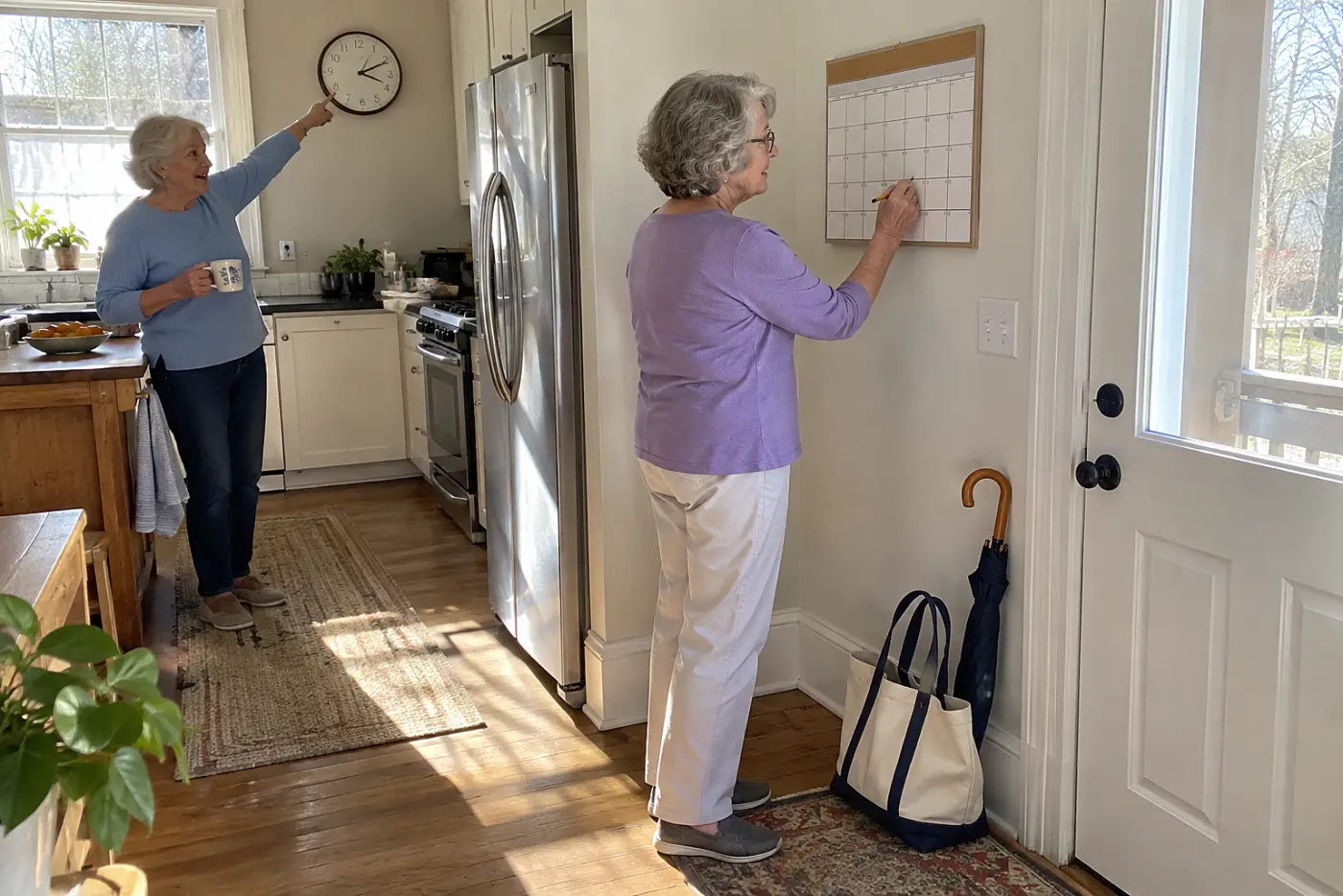
Being home does not mean being on call.
Ask for advance notice when childcare is needed. Decide which days you’re willing to help, and what happens if you already have plans. Talk about whether a request for an hour includes making dinner or driving somewhere.
Without that rule, a short errand can turn into an afternoon you didn’t choose. Your calendar belongs to you. If plans change, the parent needs to ask again rather than assume you are free.
This week, mark the times you want protected. Say, “Ask me first; I’ll tell you when I’m free.”
Time boundaries become harder when a child needs immediate help.
11Decide what happens on a sick school day

A fever can erase everyone’s plans by breakfast.
Ask who picks up a child from school, who stays home, and who calls work. If you’re willing to help, say which parts you’ll do. Driving a child home differs from spending the day supervising them.
Find out how the school handles pickup authorization before anyone is sick. The school controls its own release process, so the parent should confirm what it requires. Keep the child’s emergency contacts and the parent’s phone number easy to find.
Without a plan, you can become the answer simply because your coat is closest to the door. That puts you in charge of a decision the parents need to make.
This week, ask the parents to walk through their last sick-day routine. Say, “If the school calls, who makes the decision, and what part do you want me to handle?”
Emergencies deserve a plan, but ordinary days need one too.
10Mark the hours you leave alone

Constant company can feel like constant interruption.
Tell the household when you read, rest, work, or call friends. A closed door or a calendar note should mean something clear to everyone. Agree on what calls for an interruption and what waits until you come out.
Otherwise, you're asked to explain each hour you spend alone. You don't need an appointment to claim time. Without a shared signal, even a nap becomes a question you have to answer.
This week, choose one regular period that stays yours and tell each adult what the signal means. Say, “I'll be in my room after lunch; please knock if you need me.”
Time alone also matters outside the house.
9Set the terms for your car

A car key passes between people faster than permission.
If you own a car, decide whether anyone else drives it. Before lending it, ask your insurer how the policy treats other drivers and where the vehicle is kept. Give the insurer the actual arrangement, rather than guessing from an old policy card.
Talk about gas, parking tickets, maintenance, and who holds a spare key. If you’re sharing one family car instead, put recurring appointments on a calendar before school pickups fill it.
Without clear terms, you can lose access to your own ride on the day you need it. An insurance question is worse after a crash than before a trip.
This week, call the number on your insurance card and describe the planned drivers and parking address. Say, “I need my car available for my appointments, so ask before taking the keys.”
Then look at what you’ll do when driving isn’t the plan.
8Trace the route to your appointments

An address alone doesn’t get you to the doctor.
Try the route from the new house at the time you’d travel. Check parking, bus stops, and the walk from the driveway to the sidewalk. If you take transit, check the return trip too, when the appointment ends later than planned.
If every trip requires a ride, your calendar starts depending on someone else’s. Write down the trips you make regularly. Keep the route and the return plan somewhere you can find them.
This week, travel one route before moving day. Say, “I want to know how I’ll get there on my own.”
Travel plans matter less if your mail goes missing.
7Choose a place for your mail

A kitchen pile can bury a bill.
Decide where unopened mail goes and who brings it in. Use the USPS change-of-address service when you move, and update important senders directly. Mail forwarding is a bridge, not a substitute for changing the address on each account.
Check your bank, insurer, medical offices, and any agency that sends you notices. Set a place for packages too, especially if several people use the same doorstep. Keep your account statements away from a shared household sorting pile if that’s what you prefer.
Missing a notice can mean losing the chance to respond on time. A sealed envelope addressed to you still needs to reach you.
This week, choose a basket or drawer and tell everyone whose mail belongs there. Say, “Please leave my mail unopened, and put it here when it arrives.”
Once the envelopes have a home, the passwords deserve attention.
6Keep your bank logins separate

Sharing a roof does not require sharing a password.
Pay your household contribution from an account you control. If someone helps you with banking, ask the bank what access arrangements it offers and what each person can do.
A shared login leaves no clear line between help and control. The Consumer Financial Protection Bureau has guidance on managing someone else’s money.
This week, check who knows your passwords and receives account alerts. Say, “I’m paying my share myself; I won’t be sharing my banking login.”
Financial privacy brings up the paperwork people reach for in a crisis.
5Find your health care directive

A medical crisis is a poor time to hunt through boxes.
Find the health care directive or health care power of attorney you already signed. Read the name on it. Moving in with one child doesn’t change the person named to make decisions for you.
If you want a change, ask an attorney familiar with your state’s rules how to make it. Tell the people involved where the current document is kept. MedlinePlus has an overview of advance directives, but your signed document is the one to read.
Without a current copy, family members can spend urgent hours arguing over what you chose. The person named in an old document might be the last person anyone expected.
This week, locate the signed copy and check every name and phone number. Say, “Here’s who I named, and here’s where the document is.”
Paperwork answers one question; daily care raises another.
4Spell out help with medication

A reminder is different from managing your pills.
Decide whether you want reminders, rides to the pharmacy, or no help at all. Keep your medication list where you can reach it.
If a child starts handling refills without a conversation, you lose track of what was ordered. Medicare has tools for checking plans and pharmacies if your coverage or address changes.
This week, show the household where you keep the list, if you want them to know. Say, “Please ask before calling my pharmacy for me.”
That leaves a bigger question about the house itself.
3Ask whose home this remains on paper
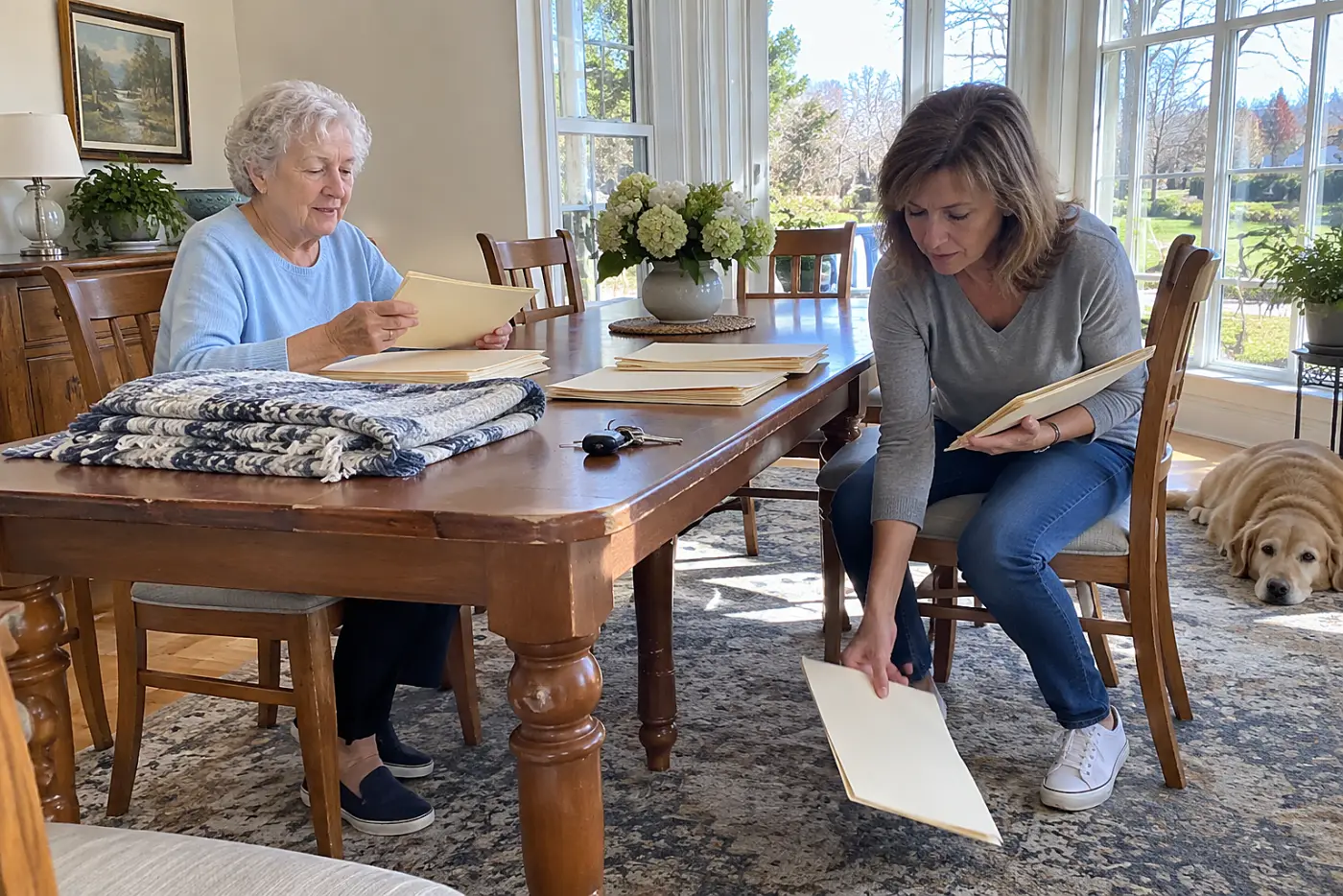
A family invitation does not change a deed.
Find out who owns the home and whose name is on the mortgage or lease. If you’re paying toward housing, ask whether the payment is rent, a shared expense, or money toward ownership. Don’t put money into a renovation expecting a share of the house unless an attorney puts the terms in writing.
Homeowners should check with their insurer about another resident and the belongings you’re bringing. If the home is rented, the lease and landlord’s rules need checking before you move in. For local legal help, the Legal Services Corporation provides a directory of legal aid organizations.
Without knowing what the paperwork says, you can pay for the house while holding no say in selling it. Your place at the dinner table won’t settle a dispute about ownership.
This week, ask to see the deed or lease and discuss your housing payment in plain words. Say, “Before I contribute to the house, I need to understand what that payment gives me.”
Knowing who owns the walls still leaves the question of who gets to stay.
2Plan where you go if it fails

Nobody enjoys discussing an exit while carrying boxes in.
Still, agree on how much notice everyone will give if the arrangement ends. Identify where you’d stay first and what money you’d need to reach it.
Without a plan, a family argument can become a housing emergency. Tenancy rules vary by state, so ask a local legal aid office before assuming a family agreement sets the rules.
This week, write down two places you could call and how you’d move your things. Say, “I hope this works, but I need us to plan for what happens if it doesn’t.”
Now put the decisions you’ve made in one place.
1Sign a living agreement before moving day

A good conversation fades when the first disagreement arrives.
Write one household agreement while everyone still has time to read it. Include your payment, its due date, repair costs, bedroom privacy, chores, childcare, guests, and the notice each side will give before ending the arrangement. Put names and the move-in date on it, then give each adult a copy.
Read every line aloud before signing. If a line sounds vague, replace it with a task, amount, person, or date.
Keep the agreement separate from any deed, lease, or health care directive. For questions about housing rights, use a local legal aid organization or the American Bar Association’s lawyer referral resources.
Without that page, you’re left proving what someone meant at a kitchen table months ago. A written agreement gives you something to revisit before a dispute becomes a verdict about who belongs.
This week, set a time to draft it together before a box crosses the threshold. Say, “I want this move to work, and I want our promises written down while we’re getting along.”
The page only helps if everyone knows where to find it.
The bottom line
Across all 24 conversations, the pattern is the same: an unspoken expectation becomes a household rule.
You’ve prepared well when you’ve tested the daily routines and checked the paperwork. Write the promises down before moving day.
Which of these has already happened in your family?
Bonus: The living agreement that protects your place
- Start one page with the names of the adults, the address, and the move-in date. Give every person at the table a chance to read it.
- Write what you pay, when you pay it, and which bills stay separate. Add who approves repairs before anyone asks for money.
- Name your room, your privacy rule, your chores, and when childcare requires a fresh yes. Use exact tasks instead of “help out.”
- Add how much notice each person will give if the arrangement ends. Ask a local attorney about state rules before relying on that line.
- Sign and date the page together. Give everyone a copy and set a date to read it again.
David Ruiz
Tech & Home Writer
David tests gadgets with real readers in their 60s and 70s, because the best tech is the tech you'll actually use.
You might also like