23 Things Nobody Tells You About Recovering From Surgery After 65
The six-week estimate names a healing milestone, but your discharge sheet holds the separate rules for walking, medicines, and calling the surgeon.
By Dr. Alan Pierce, PT, DPT, Health Reviewer
Updated · 15 min read
- Written by our health reviewer
- How we review

Read to the end: #1 is the recovery-planning call that gives “six weeks” a clear meaning, and almost nobody makes it.
The coffee cup is still on the counter, but carrying it to the sofa now takes both hands. Your surgeon said six weeks. On day twelve, the distance between the kitchen and the chair feels longer than it did yesterday.
That number wasn't a promise about sleep, strength, driving, or feeling like yourself. You still have to get out of bed, eat lunch, manage new instructions, and decide whether a change needs a phone call. None of those jobs waits for the date on your calendar.
These 23 things fill in what the estimate left out.
23The discharge sheet beside your bed

The instructions you need disappear beneath the pharmacy receipt.
A discharge sheet separates routine care from reasons to call. Those instructions belong to your procedure, not to the friend whose surgery sounded similar. Read the wound, activity, medication, and follow-up sections before the first evening at home.
Missing a restriction can set back the recovery you were told to expect. Missing a call instruction can delay help when something changes.
Put the sheet where you take your medicines this week. Say to someone helping you, “Let’s find the phone number before we need it.”
Then look at what that sheet assumes about getting around.
22The clear path to the bathroom

A short walk feels different at three in the morning.
Anesthesia, pain medicine, and lost sleep change how steady you feel. Rugs, cords, and low furniture make the trip harder when you're moving with a walker or holding a sore abdomen.
A fall interrupts the recovery calendar entirely. The CDC's STEADI fall-prevention resources include home safety guidance.
Clear the bedroom-to-bathroom route this week and place a light within reach. Tell whoever shares your home, “Please leave this path clear, even during the day.”
The next obstacle sits at the edge of the mattress.
21The first rise from your own bed

Getting upright takes more work than walking across the room.
A hospital bed raises your head and gives you rails. Your bed does neither. After abdominal, chest, joint, or spine surgery, the way you roll and push up matters, and the safest method differs by procedure.
Straining through that first movement can make you avoid getting up. Yet staying in bed all day works against rebuilding strength.
Before discharge, show the nurse or physical therapist how you get out of a bed. If you're already home, ask your surgical team to review the movement by phone this week. Say, “I can walk once I'm standing, but getting out of bed is the hard part.”
Then notice what happens on the trip back.
20The chair you thought was comfortable

A deep sofa can trap you after surgery.
Soft cushions lower your hips and give your arms little support. Standing then asks more from a sore knee, hip, abdomen, or back than sitting did. A firm chair with armrests changes the movement, especially when you need several tries to stand.
If every rise hurts, meals and short walks start to look optional. That shrinks the day when you're trying to expand it. You also spend energy bracing for the next time you have to stand.
Try the chairs in your home this week while someone is nearby. Say, “This one is easy to sit in, but I need a chair I can stand up from.”
Comfort also depends on what happens overnight.
19The sleep you expected to get back

A full night doesn't return on the discharge date.
Pain, naps, bathroom trips, and an unfamiliar sleeping position break sleep into pieces. Medication timing matters too. Some pain medicines cause drowsiness without giving you restful sleep; others leave you uncomfortable when a dose wears off.
The cost shows up the next day. Fatigue makes exercises, meals, and the walk to the mailbox harder to manage.
Write down when you sleep, wake, and take medicine for three days this week. Bring the record to your surgical team rather than changing doses on your own. Say, “I wake at this time each night. What should I check first?”
And if nighttime sends you toward the bathroom, check the medicine list.
18The pain pill and the bathroom clock

Constipation can become the hardest part of recovery.
Opioid pain medicines slow the bowel. Less walking, less food, and less water add to the problem. The National Institute on Aging has guidance on constipation and medication safety for older adults.
Waiting until you're badly uncomfortable makes the next few days harder. Your discharge papers should tell you what bowel plan to follow.
Check those instructions and your last bowel movement this week. Ask the surgical team, “What should I do if the plan isn't working?”
One pill deserves a closer look for another reason.
17The medication list from before surgery

The old pillbox isn't a safe restart guide.
The hospital team changes medicine instructions around surgery. Your discharge list shows what to take now, while the bottles at home still show the old routine. That gap matters for blood thinners, diabetes medicines, and drugs that affect blood pressure.
Taking both an old dose and a new one risks harm. Skipping a medicine that was meant to resume has a cost too.
Set every bottle beside the discharge list this week and ask a pharmacist to reconcile them. Say, “Please help me match these bottles to the instructions I brought home.”
Once the doses match, the food on the table needs attention.
16The small meals left on your plate

Healing takes food even when appetite takes a break.
Surgery, pain, and constipation leave ordinary meals unappealing. Your body still needs food and fluid to support wound healing and activity. Specific restrictions belong to your procedure and medical conditions, so keep the instructions you received close to the table.
Eating very little makes it harder to regain strength. The National Institute on Aging's healthy eating resources give you basic nutrition advice.
Note what you've actually eaten and drunk today. Tell your care team, “My appetite is down, and this is what I've managed.”
The scale offers another clue, but it needs context.
15The swelling around your ankles
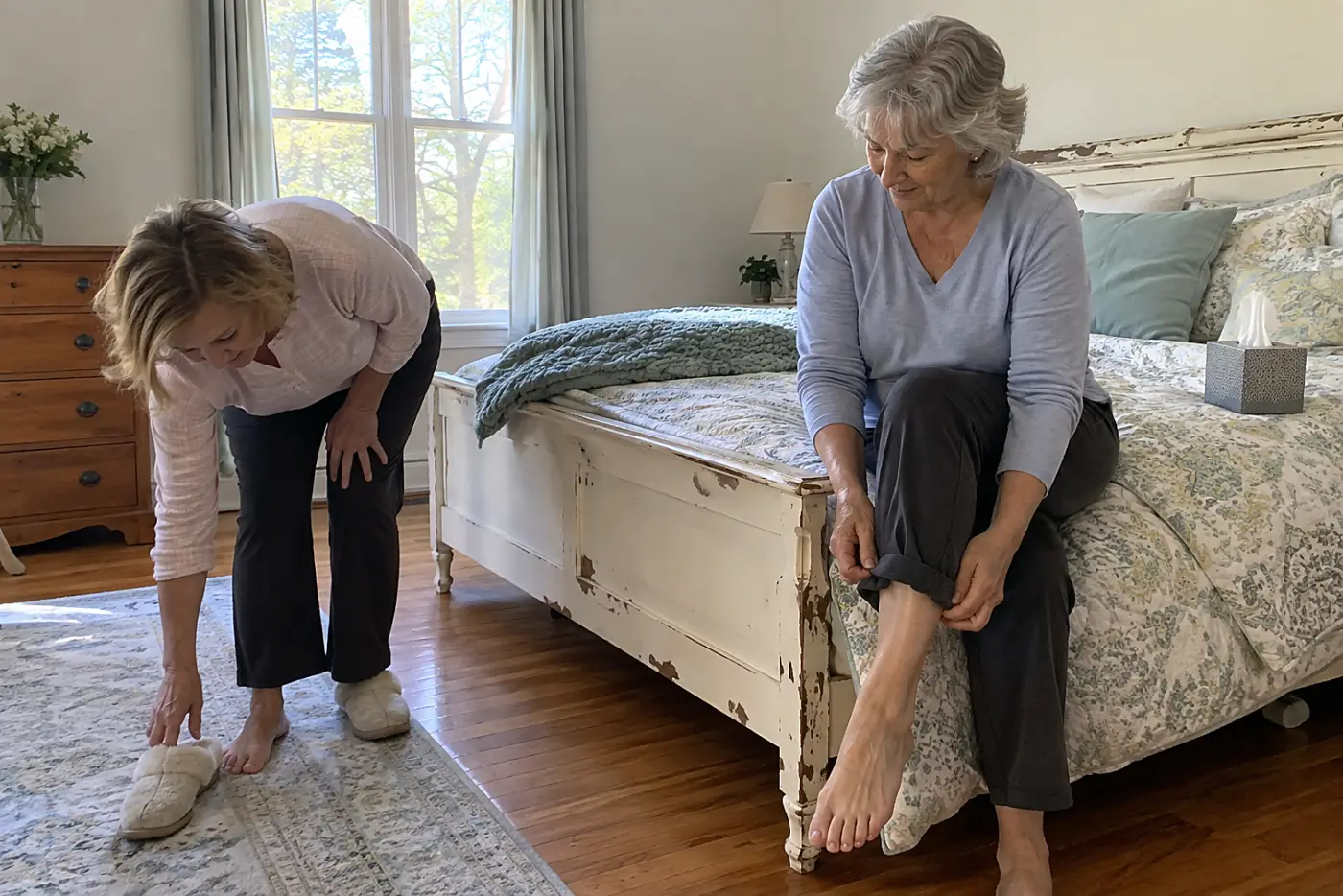
Swelling doesn't follow one simple timetable.
After some operations, swelling near the surgical area is expected. New swelling in a calf or leg raises a different question, especially with pain, warmth, or redness. Shortness of breath or chest pain calls for emergency care.
Don't wait for a follow-up appointment to describe a new, one-sided change. The CDC lists warning signs of deep vein thrombosis and pulmonary embolism on its blood clot pages.
Compare both legs today and call your surgical team about new calf symptoms this week. Say, “This leg has changed since yesterday; where should I be evaluated?” For sudden chest pain or trouble breathing, call 911.
Another change needs its own close look.
14The photo of your incision

Your memory isn't a reliable wound photograph.
An incision changes as it heals. Taking a picture in the same light gives your surgical team a clearer comparison if redness, drainage, or an opening appears. Follow their directions for dressings and cleaning first.
A worsening wound shouldn't wait for the next scheduled visit. The CDC's surgical site infection guidance describes signs to report.
Take a photo today if the wound is visible without disturbing its dressing. Say, “This is how it looked yesterday, and this is what changed.”
A wound isn't the only reason the calendar shifts.
13The fever reading on your thermometer

A number needs the instructions that came home with you.
Your team should give you a temperature threshold and a number to call. Fever after surgery needs attention, but the response depends on the operation and your symptoms. A thermometer reading tells more when you know when it was taken and whether you took fever-reducing medicine.
Guessing at the threshold wastes time when you're already tired. Your discharge sheet, not a neighbor's experience, sets the call plan.
Find that threshold and program the contact number into your phone this week. Say, “My temperature is this, I took this medicine, and these are my other symptoms.”
When the fever question is settled, don't lose track of movement.
12The walk that became too ambitious

One long walk doesn't replace several manageable ones.
Walking after surgery helps you spend less time still, but the right amount follows your surgeon's restrictions. Pushing until you're exhausted can make the rest of the day disappear. Doing nothing because yesterday went badly has its own cost.
Your recovery plan needs a starting distance you can repeat. The American Academy of Orthopaedic Surgeons' OrthoInfo site has procedure-specific recovery guidance.
Ask your team this week how far and how often to walk. Say, “I can do this route, but I lose the afternoon afterward.”
That afternoon matters when exercise instructions arrive.
11The exercise sheet in your bag

A printed exercise isn't proof you're doing it right.
Physical therapy instructions describe a movement, but pain and fatigue change how you perform it at home. A small shift in position moves the work away from the intended muscles. If an exercise sharply increases pain or conflicts with restrictions, stop and check before repeating it.
Skipping every exercise delays the return of strength and motion. Forcing one through the wrong pain sets you back too.
Take the sheet to your next therapy visit and demonstrate each move. If that visit isn't soon, call this week. Say, “Watch me do this one; I want to know whether I'm using the right muscles.”
Soon, you'll need to decide which effort deserves your energy.
10The shower you tried to finish alone

Bathing uses more strength than it appears to.
Standing, turning, reaching, and drying off all happen in one stretch. Wound instructions also control when an incision gets wet. A shower chair helps only when it fits the space and your transfer restrictions.
Rushing through a slippery task raises the risk of a fall. A missed wound instruction creates another problem.
Read the bathing section of your discharge sheet this week and test the setup before turning on the water. Say, “I need help with the first shower, not an audience for every shower.”
Dry clothes bring a smaller but stubborn challenge.
9The shoes waiting by the door

The easiest shoes to slip on aren't always safe.
Swelling changes how a shoe fits after surgery. A loose backless shoe slides underfoot, while a tight one presses on swollen skin. Bending to fasten shoes also conflicts with some hip or spine precautions.
A poor fit makes a short walk feel harder than it needs to. It turns a trip to the bathroom into a balance test.
Try on the pair you'll wear indoors this week while seated. Check that the sole grips, the heel stays put, and no edge presses painfully. Ask your therapist, “How should I get these on without breaking my movement restrictions?”
Before you head outside, there's another test no shoe can answer.
8The car keys in the drawer

Feeling alert doesn't clear you to drive.
Pain medicines slow reaction time. A brace, weak leg, or restricted movement keeps you from braking or turning safely. Your surgeon's instructions matter more than the date circled on the calendar.
Driving before clearance puts more than the incision at risk. The MedlinePlus surgery pages offer background, but your procedure sets the rule.
Check the discharge sheet for driving instructions this week. Ask your surgeon, “What must I be able to do before I drive again?”
Until then, getting to appointments needs its own plan.
7The ride to your follow-up visit

A visit isn't useful if you can't reach it.
Postoperative appointments check healing, remove staples when needed, and adjust restrictions. Transportation gets complicated when you can't drive, climb into a high vehicle, or sit through a long trip. A ride that works for errands won't necessarily work for an appointment after a painful night.
Missing the visit leaves a wound concern or activity question unanswered. Rescheduling also pushes back decisions about work, driving, or therapy.
Look at the appointment time and the way you'll get there this week. If the ride is uncertain, call the office before the visit. Say, “I want to keep this appointment. What should I do if I can't manage the trip?”
The person giving you a ride isn't automatically available afterward.
6The help your household actually needs

The first week at home exposes every heavy chore.
Laundry baskets, trash bags, groceries, and pets still need attention. Your restrictions decide which tasks you must leave alone. A willing friend needs a specific job and a specific day, not a promise to “call if you need anything.”
Trying to prove you're fine turns a small household task into a setback. Help is easier to accept when it has an end time.
List three jobs you shouldn't do this week. Ask someone directly, “Could you carry the laundry downstairs on Thursday?”
Even with help, watch what happens to your attention.
5The forgotten details in a phone call

Brain fog makes a brief call feel impossible.
Anesthesia, poor sleep, pain, and medication changes leave you searching for words. That doesn't mean you should ignore a new problem. A short note gives the person on the phone the sequence: what changed, when, and what you took.
Without those details, a call ends before the team understands what's happening. The National Institute on Aging's older-adult health pages include guidance on communicating with clinicians.
Write down symptoms, temperature if relevant, and medication times before calling this week. Say, “I have the details in front of me; let me read them in order.”
The office also needs to know which number reaches you.
4The missed call from the surgical office

A full voicemail box blocks the answer you need.
Clinics return calls between patients and procedures. If your phone rejects messages or blocks unknown numbers, their reply won't reach you. The next call then starts the whole exchange over.
That delay matters when you're waiting on instructions about a wound, a prescription, or activity. It also steals another day from a recovery plan that already feels slow.
Clear your voicemail and check your call settings this week. Tell the office, “This is the best number for me, and voicemail is working.”
Once the call connects, make room for one more question.
3The follow-up note about your energy

The incision can heal before your stamina returns.
A surgeon checks whether the operation healed as expected. That visit doesn't automatically measure how long you can stand, shop, cook, or concentrate. When those tasks lag, they deserve their own description and, when appropriate, a referral or a change in the recovery plan.
Saying “I'm fine” because the wound looks fine hides the part of recovery shaping your day. The National Institute on Aging's exercise and physical activity resources describe strength and endurance as separate parts of function.
Before your next visit, list three ordinary tasks and what happens when you attempt them. Say, “The incision looks better, but I still can't finish these tasks.”
One task has a deadline that isn't written on your wound.
2The date marked for returning to work

A calendar date can't perform your job.
Desk work demands sitting and attention. Other jobs demand lifting, standing, driving, or quick movement. Recovery instructions need to match the tasks, not only the number of days since surgery.
Returning before you can do those tasks puts your recovery under pressure. Waiting without discussing your duties leaves you without a useful plan.
Write down your actual work tasks this week and bring them to your follow-up. Say, “These are the parts of my job. Which restrictions still apply?”
Now bring every unfinished question back to the original estimate.
1The call that defines six weeks

“Six weeks” needs a subject and a finish line.
Your surgeon's estimate refers to something specific: wound healing, a lifting restriction, or a follow-up point. It doesn't set the day you'll drive, return to work, or finish errands without resting. Those are separate questions, and your surgical team needs to hear which tasks remain out of reach.
Without an answer, you lack a clear point for calling when progress stalls. Every slower day also leaves you guessing whether to wait, change an activity, or seek care.
Call your surgical team this week, even if the six-week mark has passed. Put the discharge sheet and three unfinished tasks in front of you. Say, “When you said six weeks, what exactly should be different by then?”
Then ask which symptoms need a call now and which tasks still have restrictions. Ask when to check back if your function hasn't improved, and write the answers beside the date.
Keep that page close; the questions below put the call in order.
The bottom line
All 23 things show the same pattern: a healing estimate leaves out the work of getting through an ordinary day.
The best-prepared version of you has matched the pills to the discharge sheet. She's recorded what changed and knows which number to call.
Which of these has already happened in your family?
Bonus: The recovery-planning call that defines six weeks
- Put your discharge sheet beside a list of three tasks you still can't do.
- Call the surgical office and say, “When you said six weeks, what exactly should be different by then?”
- Ask, “Which symptoms need a call now, and which limits should I still follow?”
- Ask, “If these tasks haven't improved, when should I check back?” Write down the answer.
Dr. Alan Pierce, PT, DPT
Health Reviewer
Alan is a physical therapist who specializes in helping adults over 50 stay strong and mobile.
You might also like