22 Small Habits That Protect Your Knees for Another Decade
Thigh strength, reliable shoe tread, and a dated walking log help you keep walking while giving a clinician something concrete to work with.
By Dr. Alan Pierce, PT, DPT, Health Reviewer
Updated · 14 min read
- Written by our health reviewer
- How we review
Read to the end: #1 is the appointment-prep step that turns your walking notes into a plan, and few people do it.
The curb outside the grocery store looks ordinary until your knee objects on the way down. You pause with a bag in each hand, then wonder whether tomorrow’s walk is worth trying. The bags go in the car, but that question follows you home.
Avoiding every ache sounds protective. Yet knees need the muscles, movement, and useful information that help you keep walking; giving up walks without a plan solves none of those problems.
These 22 habits start with the next step.
22Leave your walking shoes beside the door
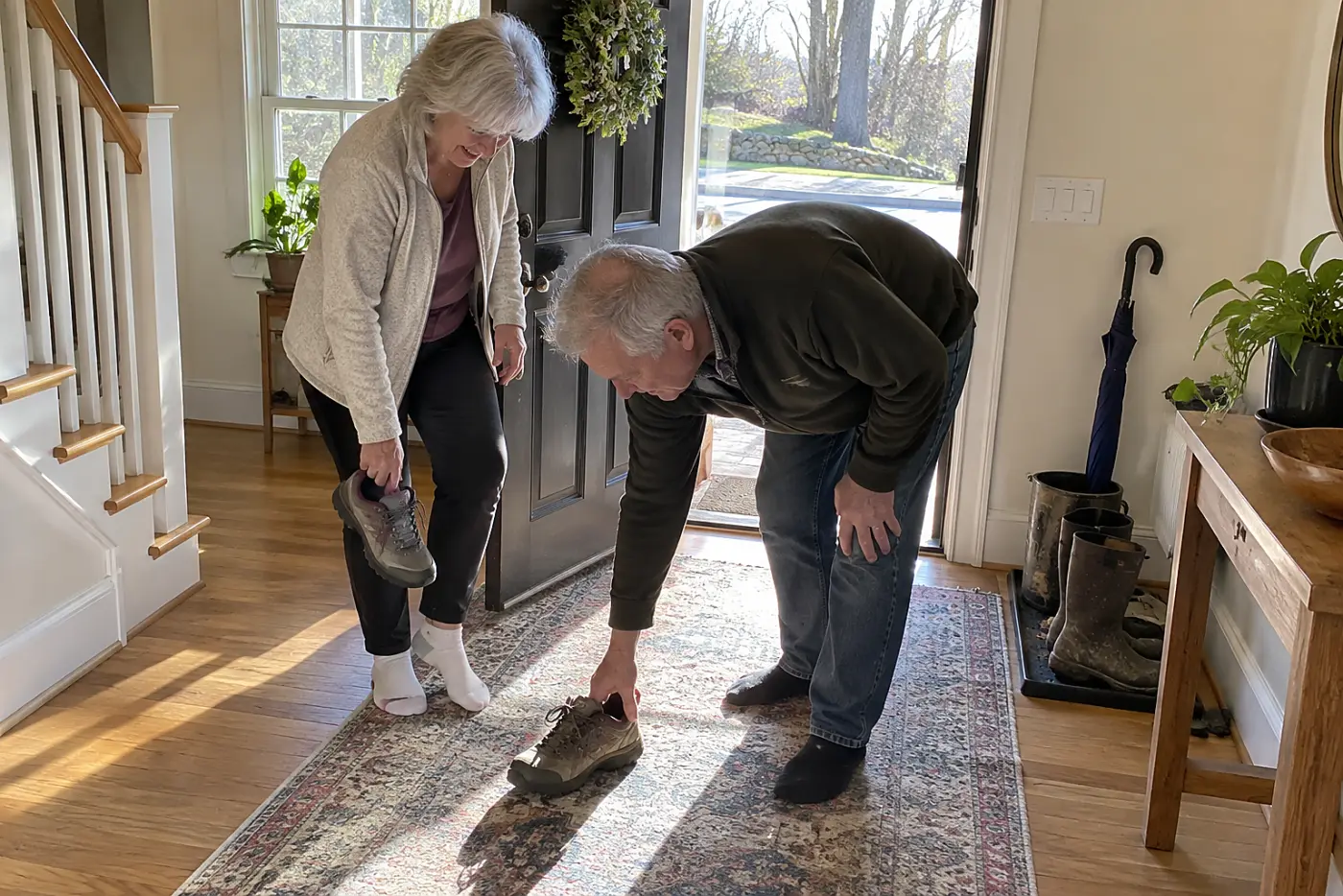
Shoes left in a closet turn a walk into a decision.
A pair by the door removes one small obstacle between you and a walk. Keeping them there also gives you a moment to notice loose laces before you step outside.
This week, put the pair you walk in beside the exit you use. Lace them while seated, then stand and check that neither heel slips. A steady first step matters more than an ambitious route.
If you use different exits, choose the one you take for ordinary walks. Put the shoes back there when you return, ready for the next time you have half an hour free.
The shoe itself deserves a closer look.
21Check the tread on both walking shoes

Worn soles change how your feet meet the ground.
Place both shoes on a table and compare the heel edges. Then look across the forefoot, where one shoe might have worn faster than the other. Uneven wear alone does not diagnose a knee problem, but a shoe that rocks or slips gives you less reliable footing.
A fall could interrupt walking far longer than replacing a shoe. This week, inspect the soles in good light and retire a pair whose tread has worn smooth. If pain began after you changed shoes, take the old and new pairs to a physical therapy visit. They give the clinician something concrete to compare.
Once your footing feels secure, pay attention to the route beneath it.
20Choose a level route for your first lap

A hill asks more of an irritated knee.
Downhill walking puts greater demands on the muscles that control each step. A level route lets you judge your knee’s response without adding that challenge. The Arthritis Foundation lists walking among joint-friendly activities.
This week, pick a flat loop near home and note where you can turn back. Start with a distance you know you can finish. If you feel good at the halfway point, save the extra distance for another day.
That choice leaves you able to compare one walk with the next. Once the loop feels familiar, notice whether the same section still bothers your knee.
Now give that route a pace your knee can handle.
19Start each walk at an easy pace
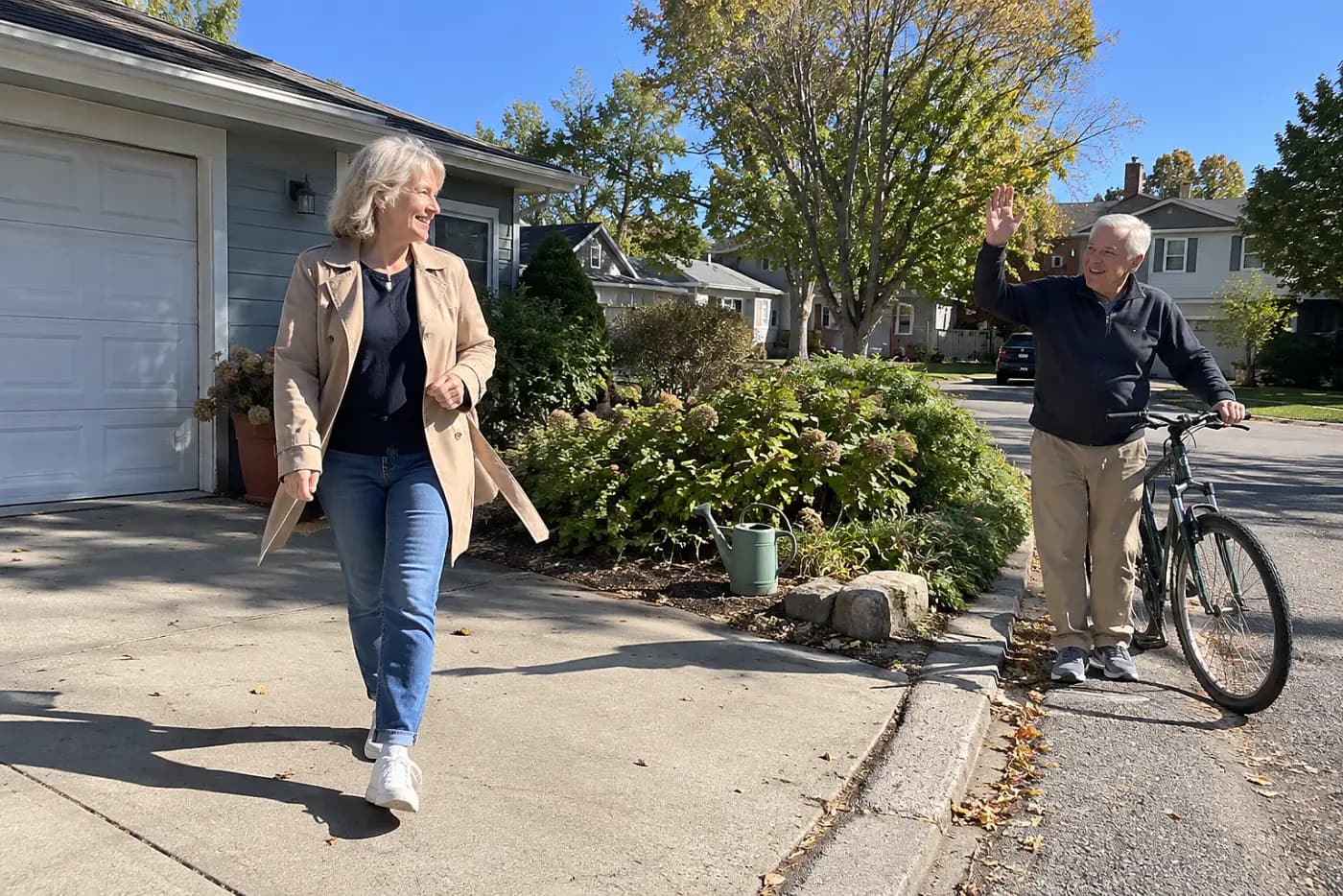
Your knee gets no warm-up if you rush outside.
Begin slowly enough to speak in full sentences. As your muscles warm, settle into a comfortable pace rather than chasing a step count. The American Academy of Orthopaedic Surgeons includes warm-ups in its knee conditioning guidance.
This week, make the first five minutes of your usual walk the easy part. Notice whether the knee loosens, stays the same, or grows more painful. Stop and seek medical advice if you develop sudden, severe pain or cannot bear weight. A warm-up is useful information, but it is not a reason to push through those signs.
The first few minutes are only part of the walk; what happens afterward matters too.
18Add walking time in small steps
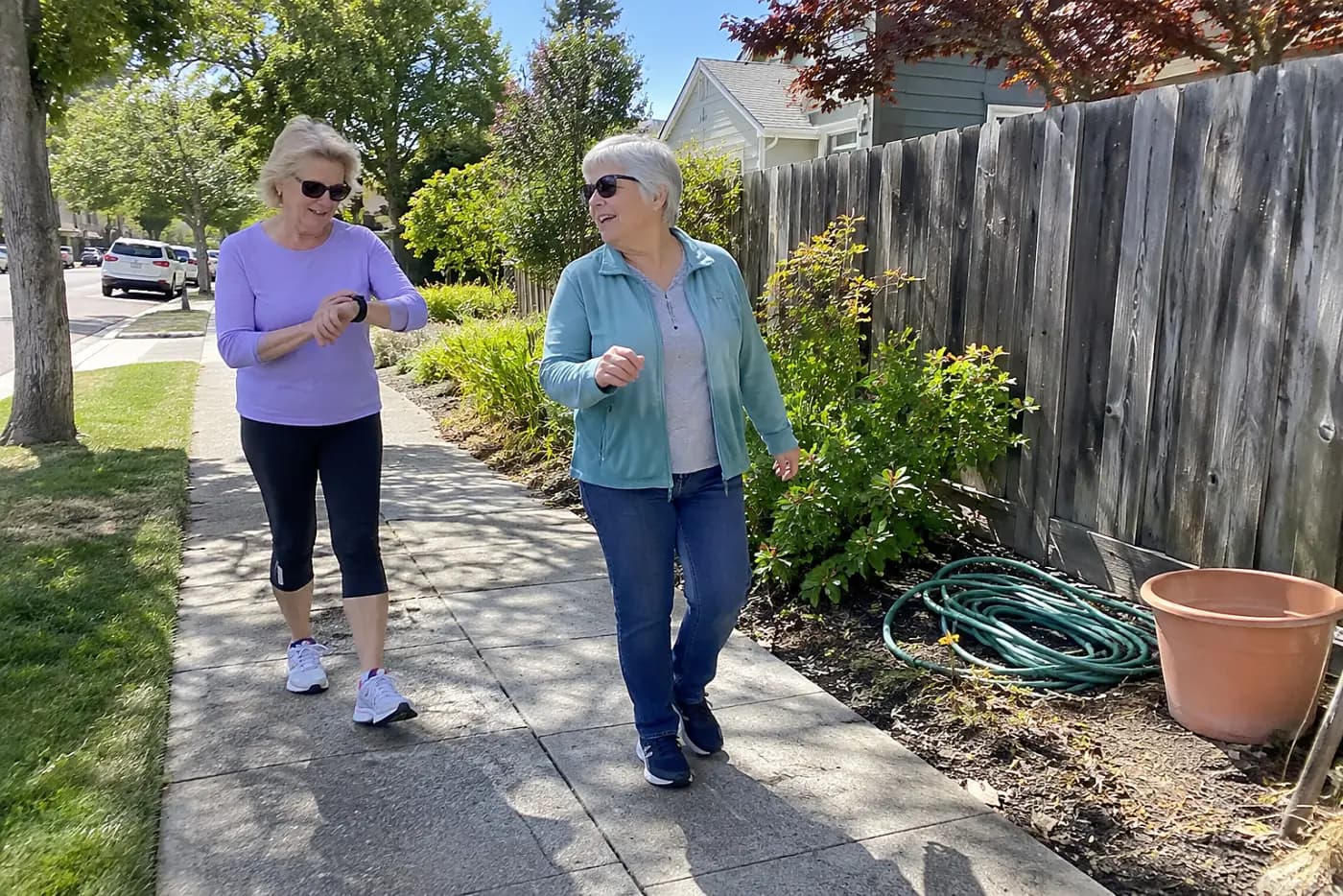
A good day can tempt you to do too much.
If your usual walk is ten minutes, a sudden hour changes the load on your knee. Build from what you already do, and give the knee time to respond before adding more. The CDC’s physical activity guidance recommends starting slowly when you increase activity.
This week, keep your familiar route and add a little time only after it feels manageable. Check how your knee feels that evening and the next morning. A walk that felt fine at noon still deserves that follow-up check.
Hold the route steady while you change the time. Otherwise, you won’t know whether the longer walk or the new hill made the difference.
That next-morning clue helps you choose tomorrow’s route.
17Notice stiffness on your first morning steps
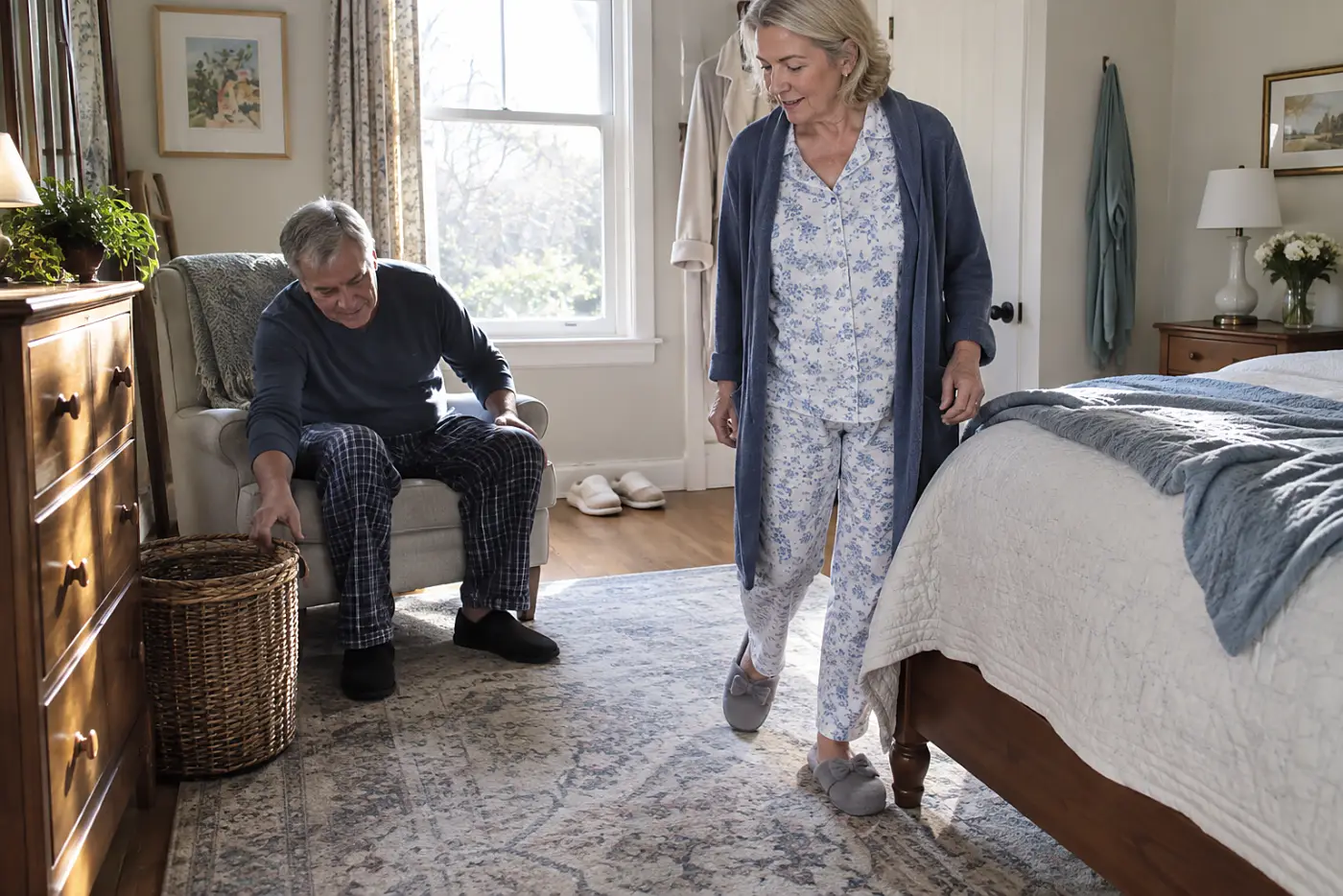
Yesterday’s comfortable walk does not tell the whole story.
Before you plan another outing, notice how the knee feels when you leave bed. Compare those first steps with an ordinary morning, especially if yesterday’s walk was longer than usual. A harder morning after a harder walk gives you a reason to ease back.
This week, take those first steps without rushing toward the stairs. Tell your clinician, “My knee feels different the morning after a longer walk.” If stiffness keeps changing what you do each day, arrange a visit rather than testing it with still longer walks.
First steps are one clue; the weight you carry is another.
16Split grocery bags between both hands
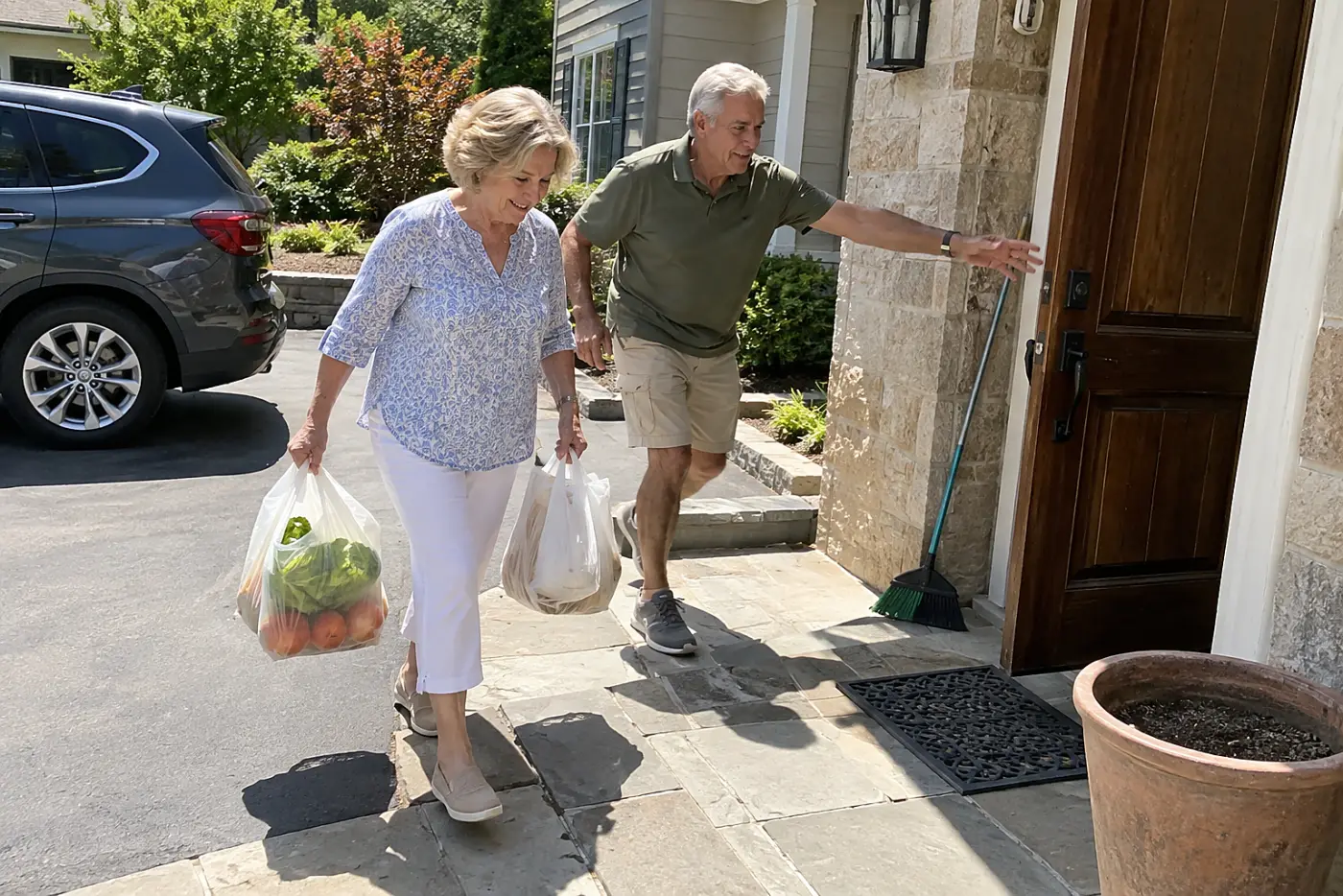
One heavy bag changes your balance on the sidewalk.
Carrying weight on one side shifts how you hold your trunk. Your knee still has to handle every step while you manage that pull. Split the load into smaller bags or make two trips from the car.
This week, set lighter bags on the counter before unloading anything heavy. If a bag makes you lean, put it down and divide its contents. There is no prize for getting every carton inside at once.
Keep a hand free when you approach a curb or stairs. Ask whoever is loading the bags, “Could you split these so I can carry them without leaning?”
The next load is one you carry with every step.
15Work on chair rises without using momentum
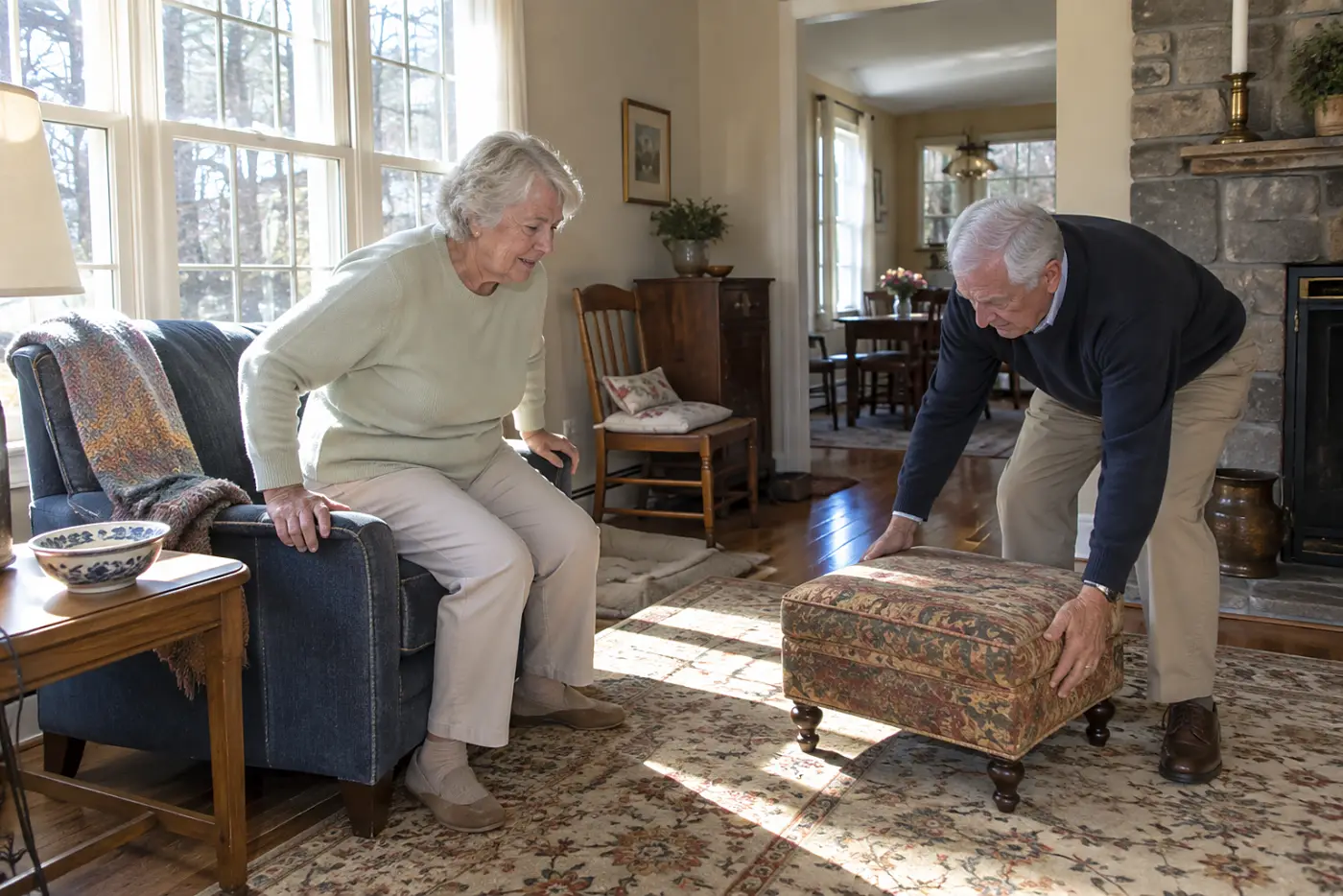
Getting out of a chair asks your thighs to work.
Move to the front of a sturdy chair and place both feet beneath you. Lean your trunk forward, then stand without throwing your shoulders backward. Sit down with control. Stronger thigh muscles help support the knee during walking and stairs; the National Institute on Aging includes strength work in its exercise guidance.
This week, try a few comfortable chair rises with the chair against a wall. Keep your hands available for balance. If this brings sharp pain, stop and ask a physical therapist to check your form. The aim is a movement you can repeat, not a test you have to pass.
Those thighs have another job when the pavement slopes.
14Practice a supported step-down at home
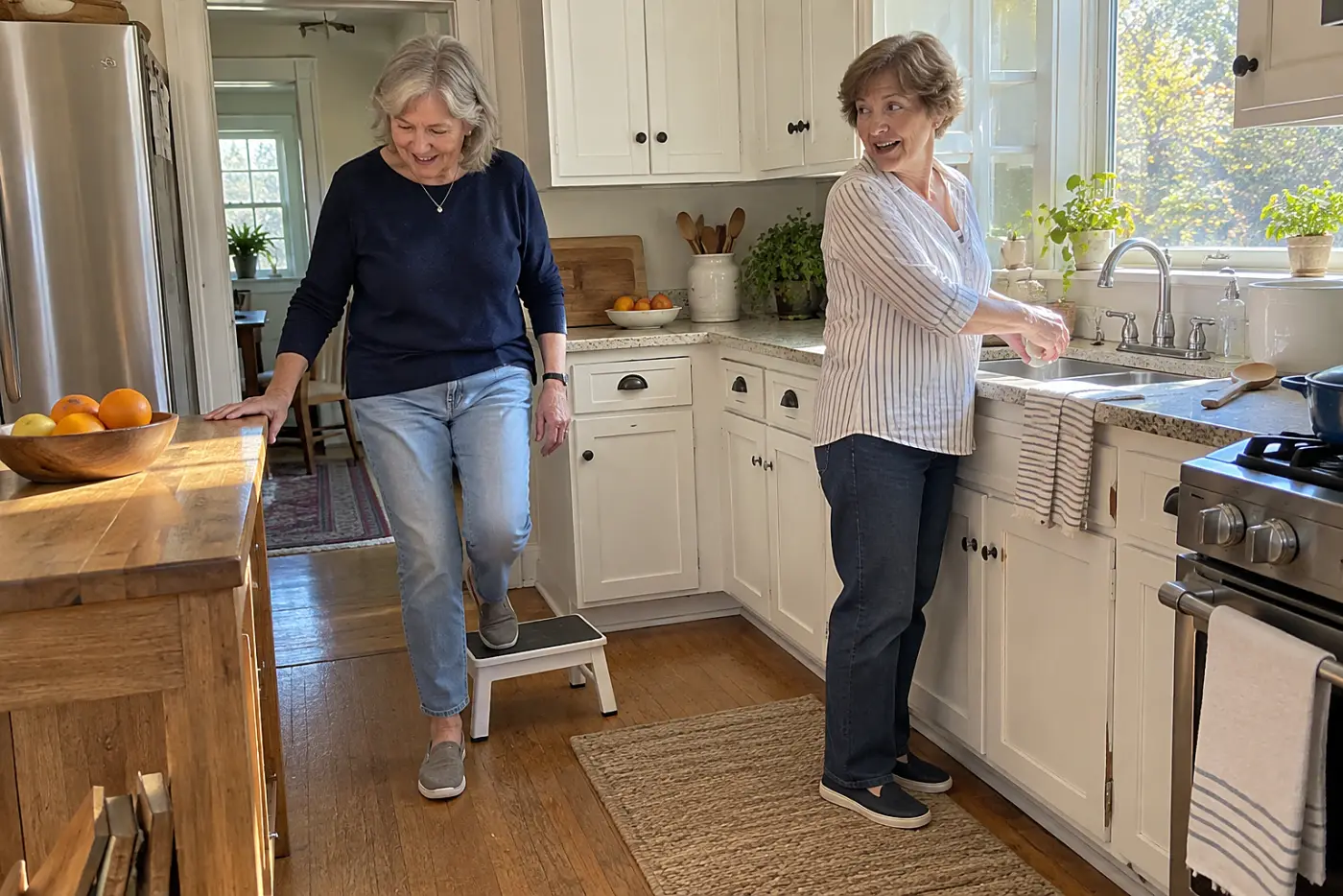
A curb exposes strength you rarely notice indoors.
Stand beside a counter or rail on a low step. Lower one foot toward the floor while the standing knee bends, then return. Keep the motion small and controlled; a painful wobble is a signal to stop, not to go lower.
This week, try the movement where you have something solid to hold. Ask a physical therapist, “Could you show me a safe step-down for this knee?” A better curb step makes an ordinary walk feel less uncertain.
Watch what happens before your foot reaches the floor. If your knee turns inward or you drop suddenly, stop there and bring that detail to your therapist.
Balance deserves practice before you need it at a curb.
13Stand on one leg beside the counter
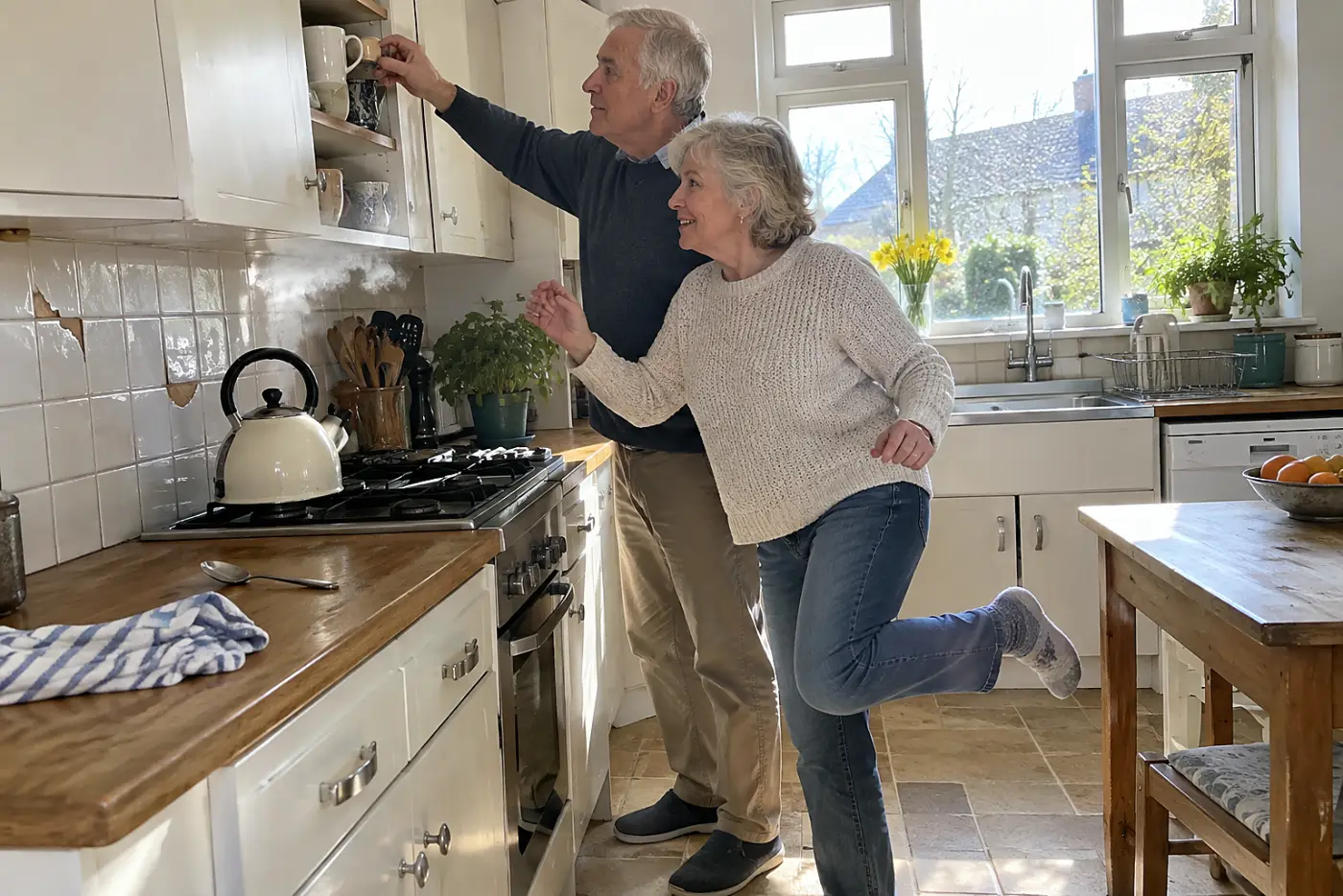
A stumble can cost you weeks of walking.
Balance practice gives your body a chance to steady itself while a counter is within reach. Stand tall with one hand resting lightly on it. Lift one foot just clear of the floor, then switch sides. Keep a hand ready rather than treating the counter as a challenge to avoid.
This week, try a few brief holds while waiting for the kettle. Clear shoes and bags from the floor first. If dizziness starts, sit down and speak with a clinician before trying again. The National Institute on Aging’s falls guidance puts balance work among its fall-prevention steps.
Balance helps outside, but the floor inside matters as well.
12Clear the loose rug from your path
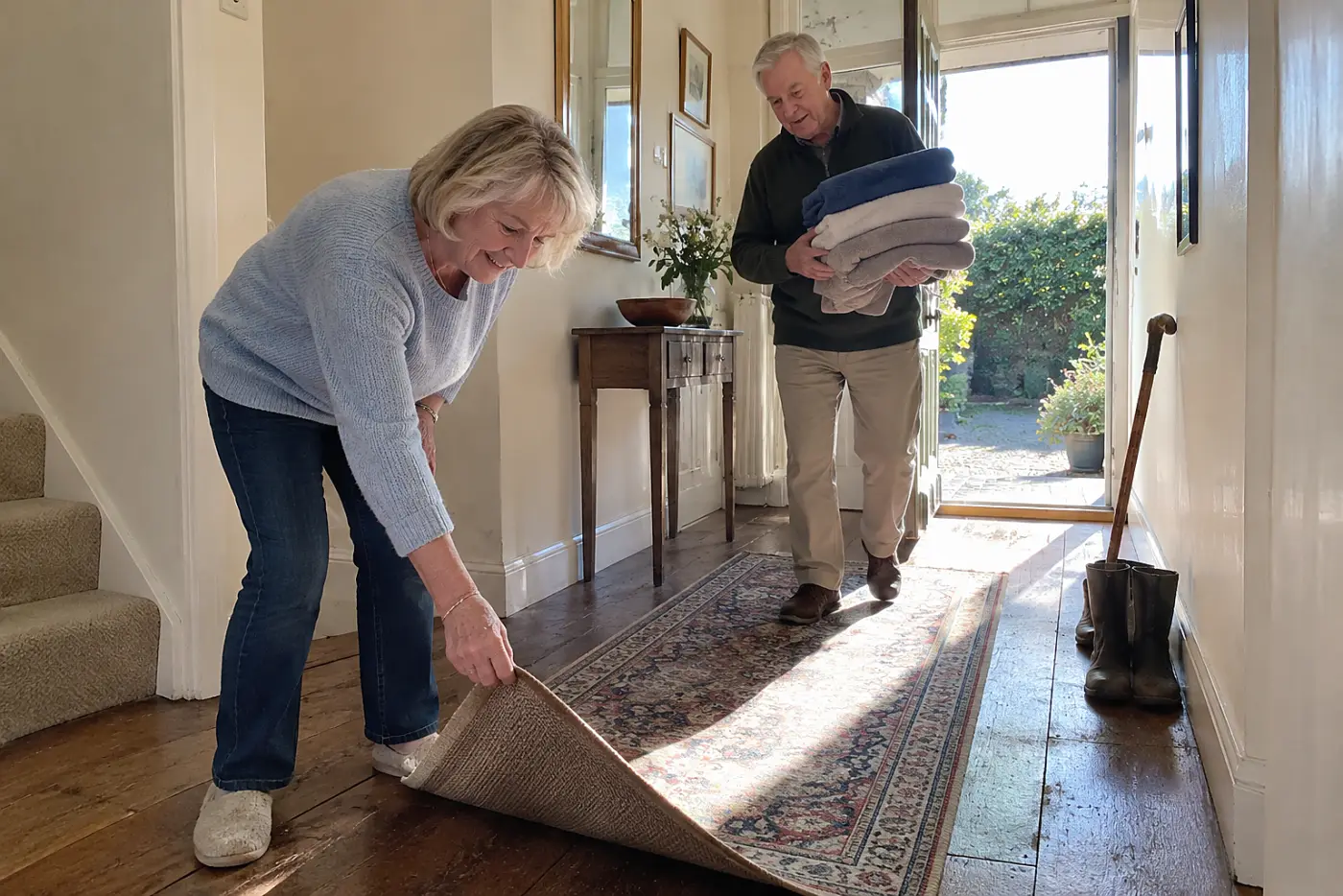
A curled rug edge can end a walking streak.
Your foot catches first; your knee takes part of the landing. Look at the route from bed to bathroom and from the front door to the kitchen. Those are paths you use when you are tired or carrying something.
This week, remove a loose rug or secure it so its edges lie flat. Check the same path after moving furniture. A clear walkway lets the work you do outside count.
Walk the route wearing the shoes or slippers you use at home. An edge that catches a slipper deserves attention before your next trip down the hall.
The bathroom has another small hazard worth checking.
11Test the nonslip mat beside your shower
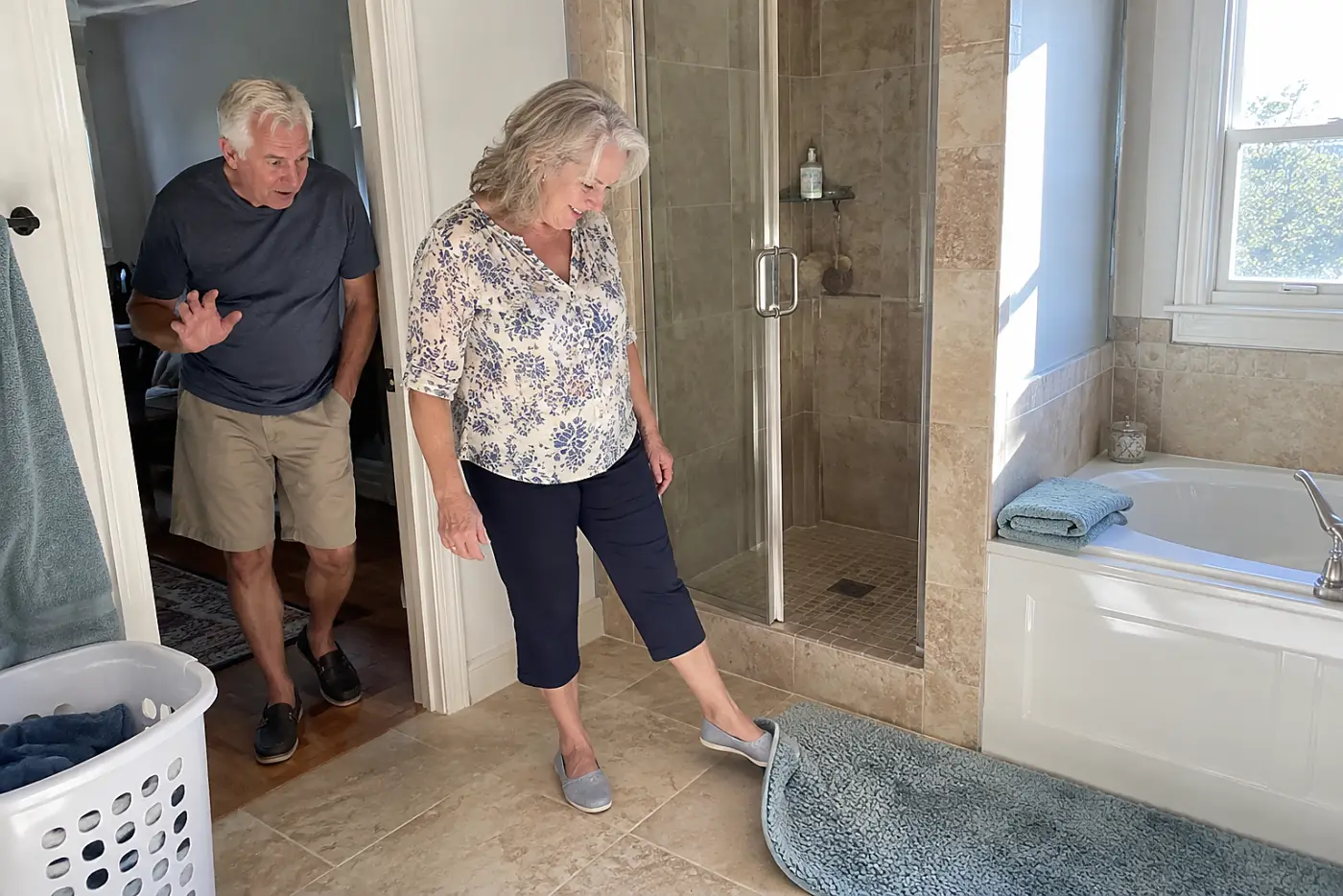
Wet tile offers no warning before your foot slides.
A mat with a gripping underside helps keep your footing when you step out. Place it where your foot actually lands, then check that it stays put. If it slides during that test, do not rely on it.
This week, clear the shower exit and test the mat with dry feet first. Hold a stable support while stepping onto it after a shower. The CDC’s fall prevention resources cover hazards at home as well as strength and balance. Avoiding a fall protects the walks you’ve worked to keep.
Once the floor is secure, give your joints room to move.
10Straighten your knee during long sitting spells
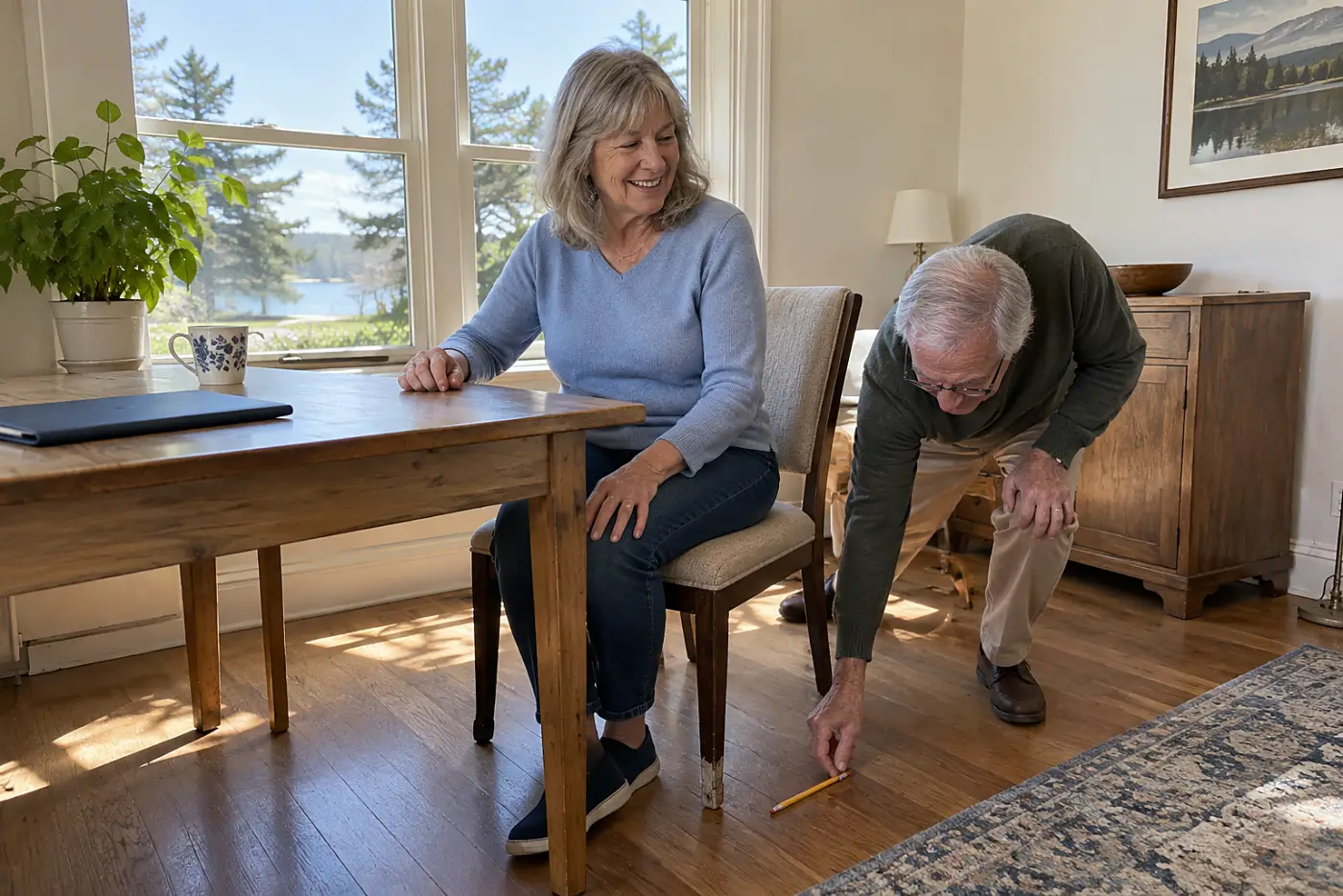
Sitting still can leave the first steps stiff.
After time in a chair, slowly extend your knee and bend it again. Move within a comfortable range instead of forcing the joint straight. Then stand, pause, and take your first steps at an easy pace.
This week, try a few bends and straightens before leaving your desk or favorite chair. If your knee locks and will not move normally, arrange medical care. Ordinary stiffness deserves movement; a knee that will not move deserves a closer look.
Notice whether stiffness fades as you cross the room. Tell your clinician if it does not, especially when it changes where you’re willing to walk.
Movement helps, but swelling calls for a different response.
9Scale back when your knee swells
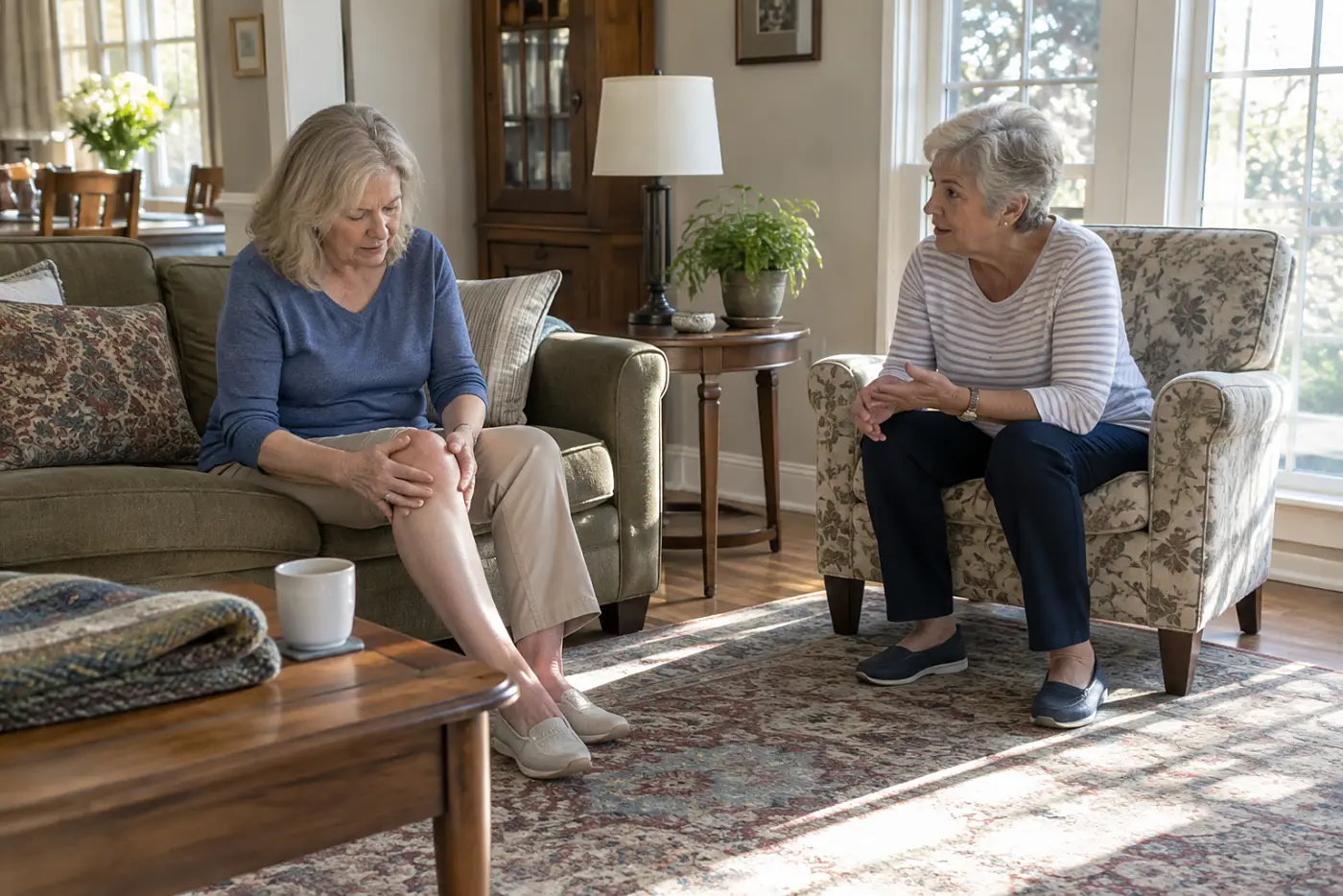
Swelling is information, not a dare to keep going.
A newly swollen knee needs less loading while you work out what changed. Skip the long walk and stick to comfortable daily movement while you arrange advice. The American College of Rheumatology lists swelling among joint symptoms worth discussing when they persist.
This week, note when the swelling began and whether you twisted the knee or fell. Seek prompt medical care after an injury if you cannot bear weight, or if the knee looks deformed. Seek urgent care for a hot, red joint with fever. Those signs need more than a change of walking shoes. A milder pattern that keeps returning also belongs in a medical appointment.
Once swelling settles, choose movement that keeps you in motion.
8Walk in water when pavement hurts
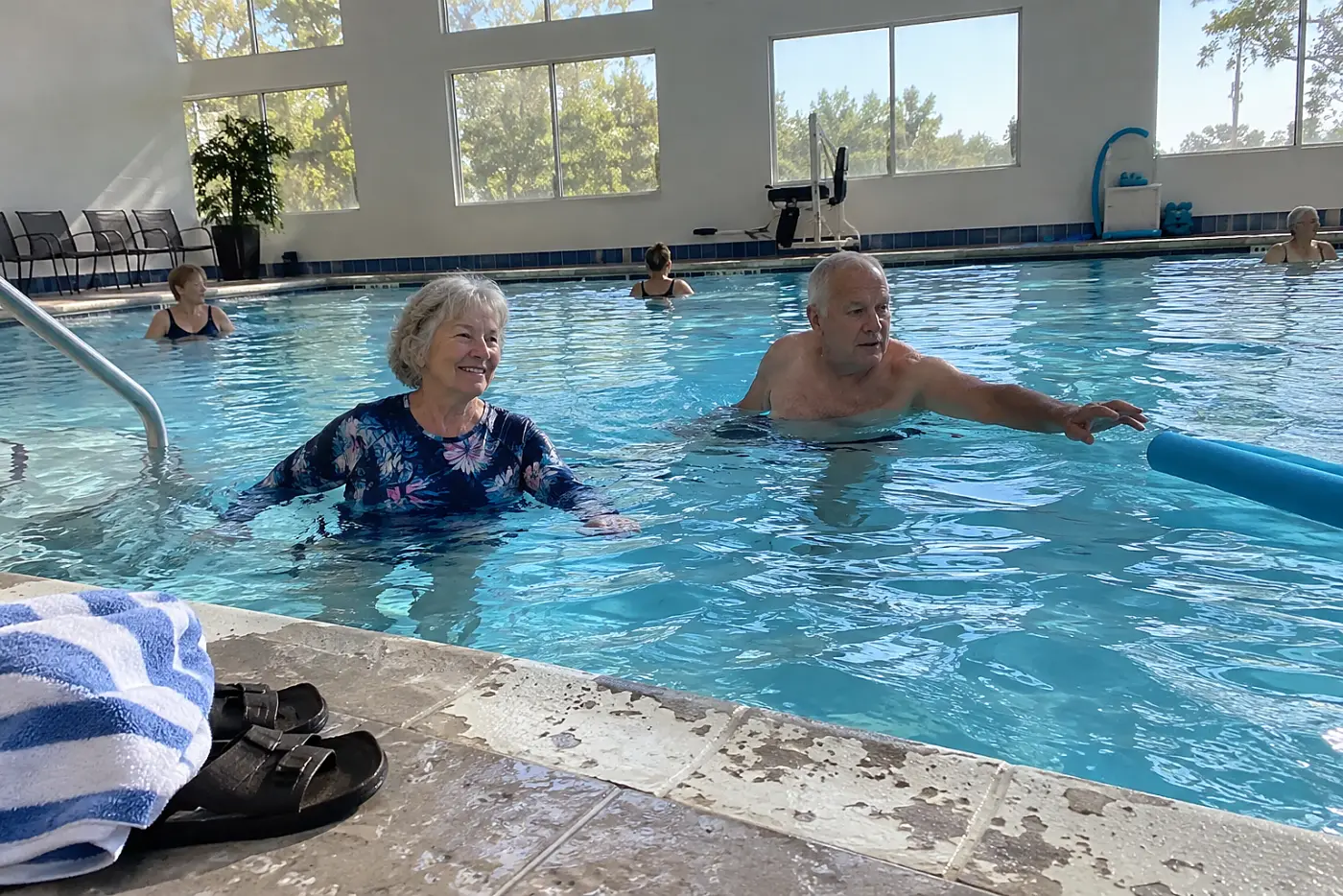
Water changes the work of every step.
Buoyancy reduces the weight your knee bears while you move. Walking through chest-deep water lets you practice a walking motion without the same ground impact. Use the pool rail when entering and leaving.
This week, find a pool with a safe entry and try a short, comfortable session. Stop if movement increases pain. The Arthritis Foundation includes water exercise among activities for people with arthritis.
Check the pool’s entry before paying for a session. If the only way in is a ladder your knee cannot manage comfortably, look for a different pool.
You still need strength on dry ground.
7Add a simple hip-strength exercise
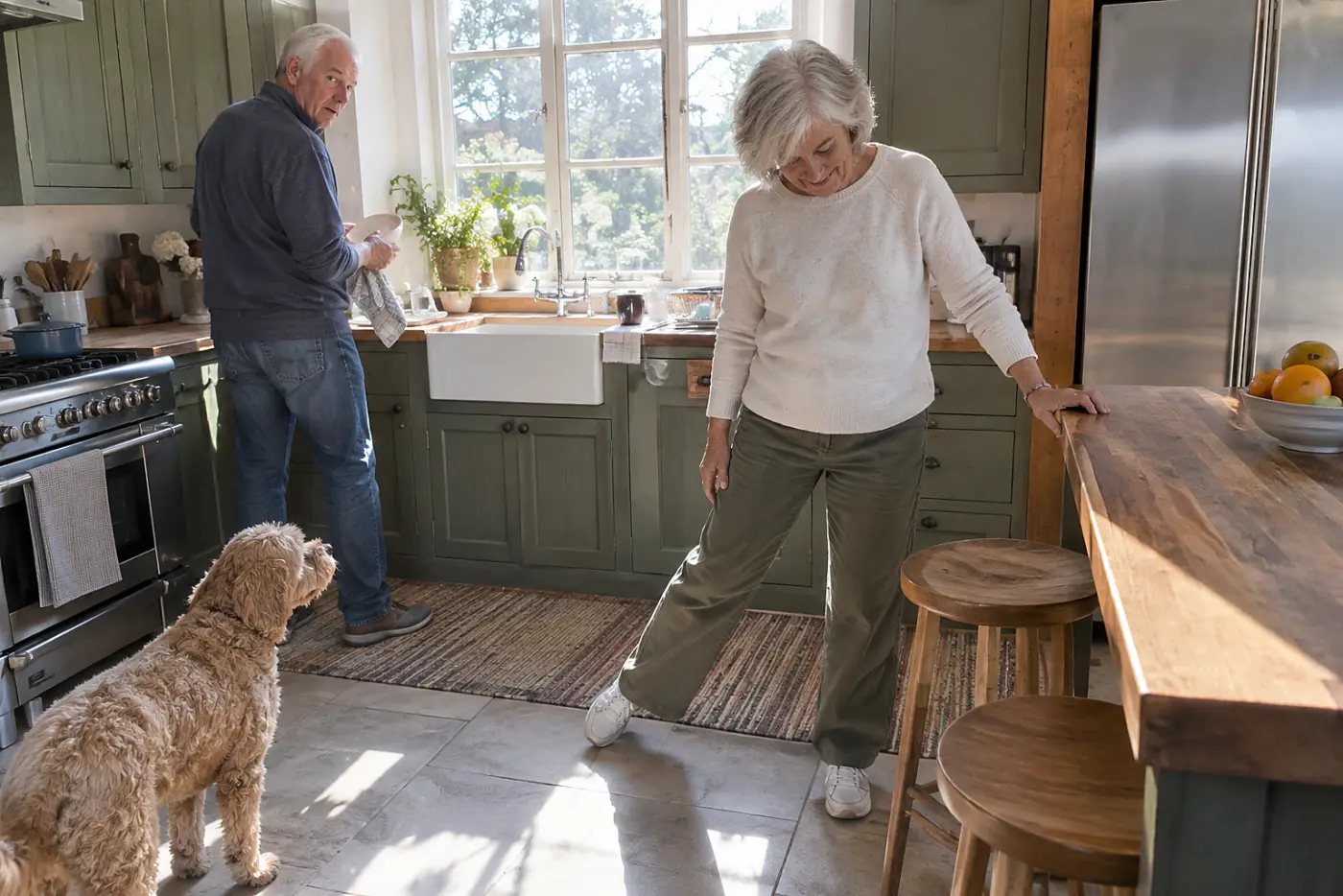
Your hips help control where your knee goes.
Stand beside a counter and move one leg out to the side without leaning your trunk. Return slowly, then switch legs. Hip muscles help steady the leg when you walk, especially as weight shifts from one foot to the other.
This week, ask a physical therapist to check your form if knee pain changes how you move. At home, keep the motion small enough that you stay upright. Pain in the joint is a reason to adjust the exercise. A stronger hip will not replace a medical assessment, but it gives your walking stride support you can build.
The other end of that stride deserves attention too.
6Move your ankle before a walk

A stiff ankle changes how you take a step.
While seated, point and flex your foot several times. Then circle it in each direction without forcing a stretch. Comfortable ankle motion helps you roll through a step instead of landing with a rigid foot.
This week, try the movements before you put on walking shoes. If an ankle is swollen or newly painful, have it assessed rather than working through it. A walking stride depends on more than the knee in the middle.
Notice whether one foot moves less freely than the other. Bring that difference up at a physical therapy visit if it keeps showing up on walks.
The stairs offer a useful place to notice the whole stride.
5Use the handrail before stairs feel hard
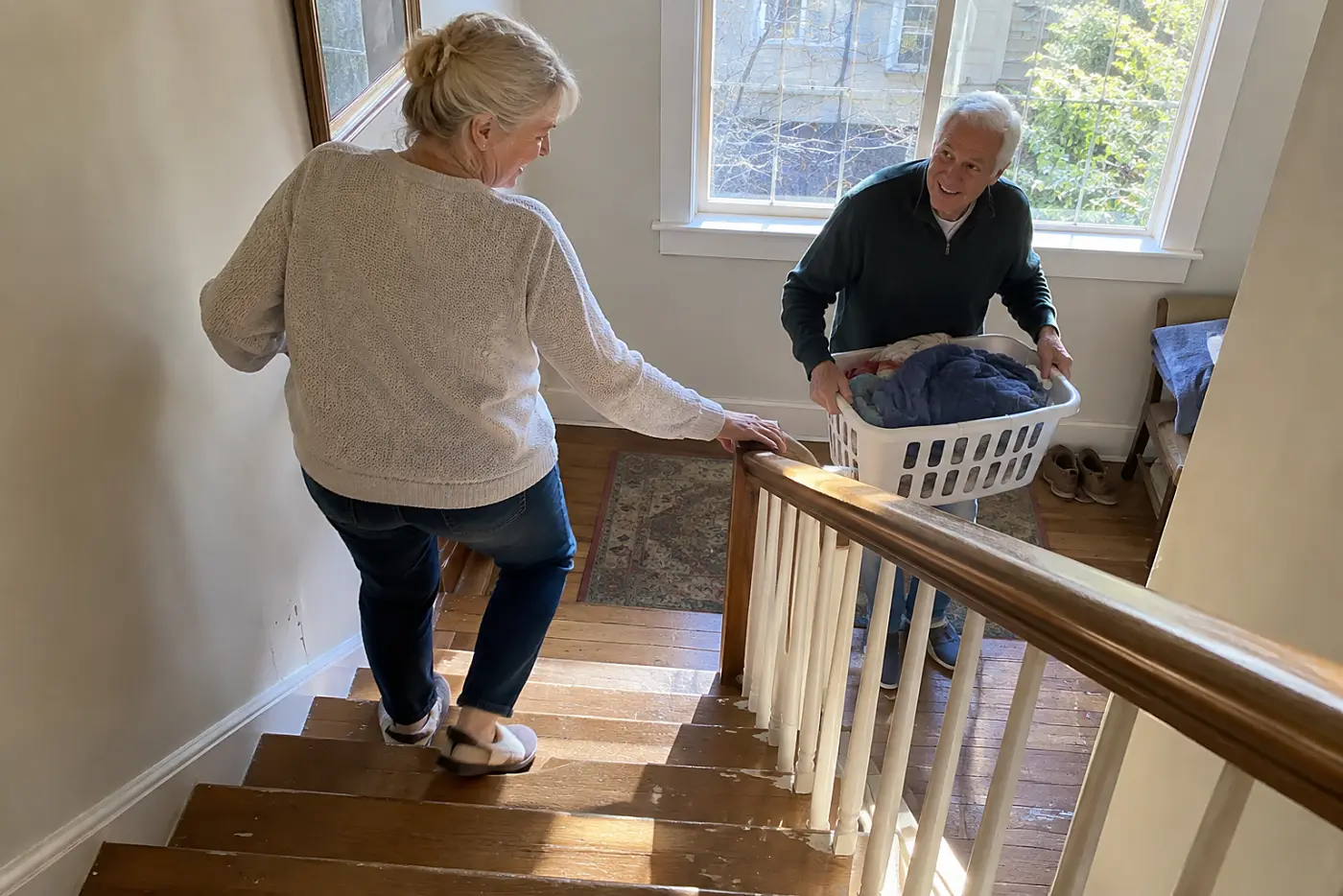
Waiting for a scare is a poor rail plan.
A handrail gives you another point of support while your knee handles the rise or descent. Turn on the light, keep one hand free, and take the stairs at a pace you control. If one knee hurts, a clinician can show you a step pattern that fits your situation.
This week, check whether the rail at home feels secure from top to bottom. Use it on every trip rather than saving it for a painful day. Carry smaller loads so you can keep a hand available. Trouble descending that keeps returning belongs in the conversation at your next appointment.
The next thing to check sits in the medicine cabinet.
4Read the label before taking pain medicine
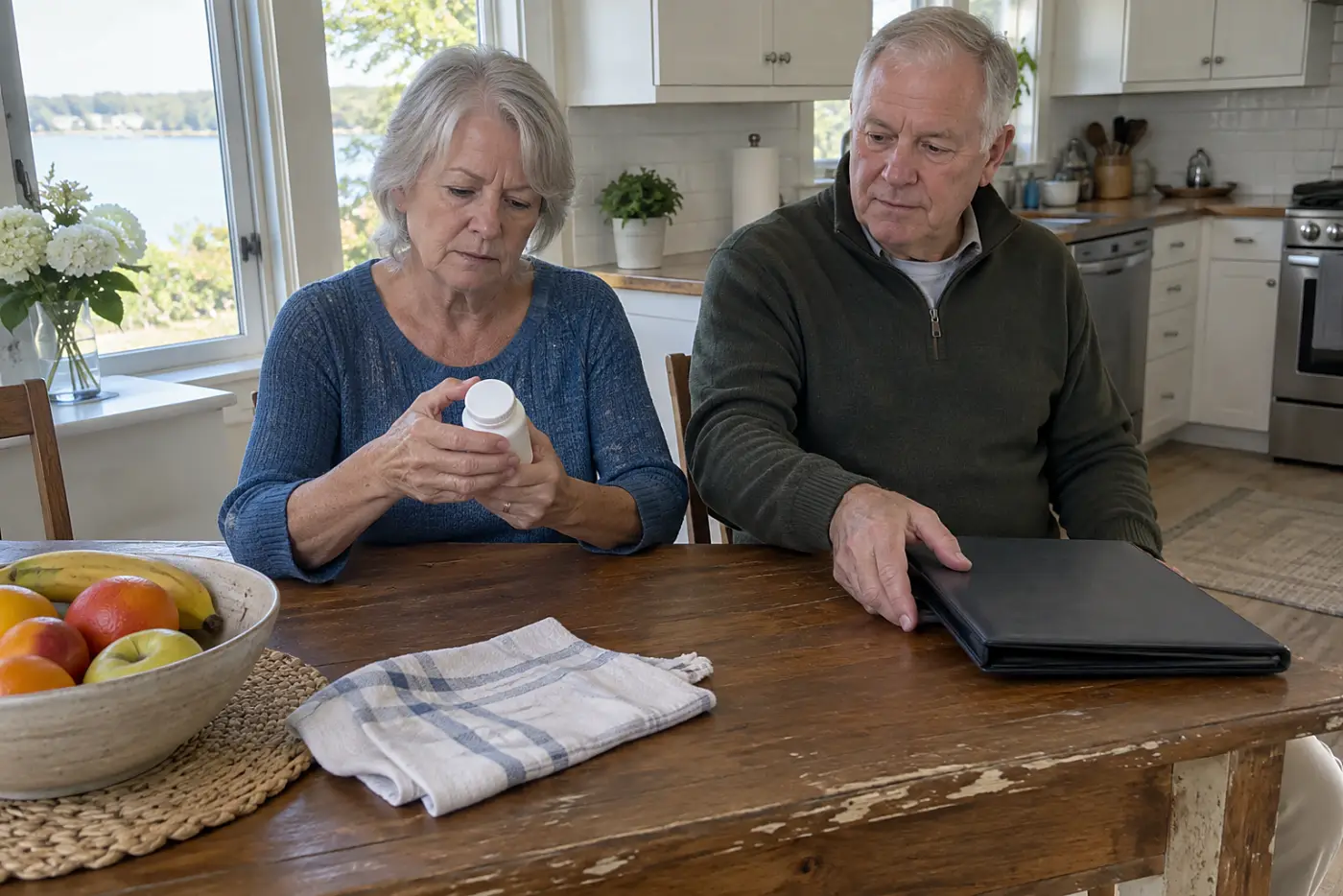
An over-the-counter pill still has risks.
Ibuprofen and naproxen are nonsteroidal anti-inflammatory drugs, or NSAIDs. They raise concerns for people with certain kidney, stomach, heart, or medication issues. The FDA’s drug information is available, but your own medication list matters most.
This week, check the Drug Facts label before taking a pain reliever. Ask your pharmacist, “Does this fit with my medicines and health conditions?” Pain relief should help you move without creating another problem.
Keep the package nearby when you ask. The exact medicine and dose on its label give the pharmacist more to work with than its color or brand name.
Then tell the clinician what the medicine did.
3Point to the movements that hurt

“Knee pain” leaves out the most useful details.
A clinician needs to know whether pain starts on stairs, after sitting, or halfway through a walk. Location matters too: point to the spot instead of calling the whole leg sore. Show the movement that brings it on, without pushing into sharp pain.
This week, notice which movement changes your pain during an ordinary walk. Tell your clinician, “It starts when I step down from a curb.” A clear example gives the examination somewhere to begin. The NIAMS information on osteoarthritis describes how symptoms and examination help shape a diagnosis.
There is one more question to bring with that example.
2Ask what your diagnosis means for walking

A label alone will not plan your next walk.
Knee pain has different causes, so treatment follows the diagnosis and examination. Ask which activities to keep, which to adjust, and what change should bring you back. The American Academy of Orthopaedic Surgeons describes exercise and other treatment options for knee conditions.
This week, write that question on paper before a visit: “What should I change about my walks right now?” Take the answer home in words you understand. If it is unclear, ask for a specific example using your usual route.
That conversation works better when you bring more than a memory.
1Bring a dated walking log to your appointment

A vague account makes a changing knee harder to assess.
For one week, record each walk, its length, the ground you covered, and any pain or swelling afterward. Add what happened the next morning. This lets a clinician see whether a longer walk, a hill, or repeated short trips line up with symptoms. It also keeps one unusually bad day from telling the whole story.
Start the log this week, even if your walk is only to the mailbox. Bring it to your primary care clinician or physical therapist, along with your medication list.
Say, “I want to keep walking. What does this pattern suggest, and what should I change first?” Ask what improvement to look for and when to follow up. If you cannot bear weight, have marked swelling after an injury, or have a hot joint with fever, seek care promptly instead of waiting to finish the log.
The log is ready. Now make sure it leads to a plan you can use outside.
The bottom line
The pattern is simple. Keep moving, build support around your knee, and notice when its response changes.
The best-prepared version of you has an adjustable walk and a clear account to bring your clinician. She knows which changes need care before the next outing.
Which of these has already happened on one of your walks?
Bonus: The walking-log appointment card
- Write down seven days of walks, including time, route, pain, swelling, and the next morning’s first steps.
- Circle the first day the pattern changed. Add any fall, twist, new shoe, or increase in walking time.
- Bring the page and your medication list. Say, “I want to keep walking. What should I change first?”
- Before you leave, write down what to try, what to watch for, and when to check back.
Dr. Alan Pierce, PT, DPT
Health Reviewer
Alan is a physical therapist who specializes in helping adults over 50 stay strong and mobile.
You might also like