23 Reasons Sleep Changes After 60, and What Actually Helps
An earlier body clock, a late water pill, or interrupted breathing can each lead to a 3 a.m. wake-up.
By Dr. Alan Pierce, PT, DPT, Health Reviewer
Updated · 16 min read
- Written by our health reviewer
- How we review
Read to the end: #1 is the two-week record that helps sort out your 3 a.m. wake-up. Almost nobody brings it.
The clock says 3:08. The sheet is twisted around your ankle, and the refrigerator hum sounds louder than it did at midnight. You reach for your phone to check the time again. By morning, the details blur: when you fell asleep, whether you were hot, whether your bladder woke you first.
It’s tempting to call this “just getting older” and leave it there. Sleep does change with age, but a repeated 3 a.m. wake-up also leaves clues you can act on. The American Academy of Sleep Medicine’s patient site, Sleep Education, describes several sleep disorders that deserve more than another pillow.
Here are 23 places to look.
23The bedtime that crept earlier
An earlier bedtime can put morning in the middle of your night.
Your body clock shifts earlier with age. If you fall asleep in front of the television at 8 p.m., a 3 a.m. awakening comes after seven hours in bed. That doesn’t prove you’ve had enough sleep; it tells you when to look.
Losing the hour between the couch and bed makes the night harder to understand. Keep track of when you actually fall asleep, including naps in the chair.
This week, write down your first sleep time rather than your official bedtime. “I fall asleep at eight, then wake at three” tells a clinician more than “I don’t sleep.”
And the hour you wake matters as much as the hour you lie down.
22The morning light through your curtains

A dark morning gives your body clock a weaker start.
Light helps set the daily timing of alertness and sleepiness. When you spend mornings indoors behind curtains, that timing loses a clear cue. The National Institute on Aging recommends regular sleep and wake times, along with daylight exposure, as part of better sleep habits.
A lamp beside the bed is no substitute for getting outside after sunrise. You don’t need to stare at the sun, and you shouldn’t. You need daylight reaching your eyes during an ordinary walk, coffee on the porch, or a few minutes near a bright window.
This week, open the curtains when you get up and step outdoors in the morning if it’s safe. Tell someone at home, “I’m taking my coffee outside first; the dishes can wait.”
That daylight cue also makes your wake-up time worth checking.
21The alarm you keep moving later

Sleeping late after a bad night can move the next night later.
Your wake time anchors your daily sleep pattern. When it swings from 7 a.m. to 10 a.m., bedtime at 10 p.m. arrives after a shorter waking day. Sleep pressure has had less time to build.
The extra morning in bed feels like repayment. It can leave you wide awake when you want to sleep the following night.
This week, choose a wake time you can keep, including weekends. “I’m getting up at seven even after a rough night” is a clearer experiment than chasing sleep each morning.
Once you’re up, the time you spend asleep in daylight counts too.
20The nap that stretches past lunch

A long afternoon nap borrows sleep from tonight.
Sleep pressure builds while you’re awake and eases while you sleep. A nap that starts after lunch and ends near dinner leaves less pressure for bedtime. Then the first stretch of nighttime sleep ends early, and 3 a.m. finds you alert.
Naps aren’t a character flaw. If you’re exhausted, forcing yourself through the day isn’t the answer either. The point is to see whether timing is part of the pattern.
The National Institute on Aging suggests keeping naps short and earlier in the day when nighttime sleep is a problem. Falling asleep without meaning to, especially while driving or talking, deserves a medical conversation rather than a stricter nap rule.
This week, note when a nap starts and ends. If you choose to nap, set an alarm for a short rest early in the afternoon. “I keep nodding off after lunch, even when I slept all night” is worth saying to your clinician.
The drink that gets you through that afternoon deserves its own look.
19The coffee cup refilled after noon

Caffeine can still be working when the kitchen goes dark.
It blocks the brain signal that helps you feel sleepy. Coffee, tea, cola, energy drinks, and some headache medicines all count. A cup that seems harmless at lunch can make sleep lighter later.
You lose the trail when you count only coffee and forget the iced tea. Check labels before blaming your age.
This week, write down every caffeinated drink and the time you finish it. Try moving the last one earlier, and tell your clinician, “This is when I have caffeine, including tea.”
But even a caffeine-free drink can leave you awake.
18The nightcap poured before bed

A nightcap sends some people to sleep, then wakes them early.
Alcohol helps some people fall asleep quickly, then disrupts sleep as the body processes it. It also raises the chance of bathroom trips and worsens snoring or breathing problems. That sequence fits the familiar pattern of dropping off easily and waking in the small hours.
If you take a sedative or sleep medicine, alcohol adds another risk. The National Institute on Alcohol Abuse and Alcoholism warns that alcohol interacts with many medicines, including those used for sleep.
This week, notice whether early waking follows nights with wine, beer, or a cocktail. Skip the nightcap for several nights and compare. Ask your pharmacist, “Does alcohol interact with anything I take at bedtime?”
The next glass to inspect is the ordinary one beside your sink.
17The water glass filled at bedtime

Drinking most of your water late can wake your bladder.
Fluid doesn’t stop moving through you because the lights are off. Evening tea, water, and soup add to what your kidneys process overnight. Waking to urinate then breaks a stretch of sleep.
Don’t restrict fluids if a clinician has told you to drink them on a schedule. Burning, blood in urine, or a sudden change needs medical attention.
This week, note what you drink after dinner and when you use the bathroom overnight. Say, “I’m up three times to urinate; should we check why?”
One pill in the bathroom cabinet changes that calculation.
16The water pill taken too late
A diuretic taken late puts its busiest hours inside your night.
These medicines increase urine production. Some are prescribed for blood pressure or heart failure. The reason matters before anyone changes the timing, and moving a dose on your own risks missing the schedule your prescriber chose.
The label gives the medicine’s name, but it won’t tell you why *your* dosing time was chosen. That takes a call. The National Institute of Diabetes and Digestive and Kidney Diseases notes that medicines, bladder problems, and other conditions all play a part in nighttime urination.
This week, put every prescription bottle on the counter and mark the time you take each one. Call the prescribing office or pharmacist: “I take this at this hour and wake to urinate. Is that the intended time?”
Changing a clock time won’t solve a bladder that signals urgency on its own.
15The bladder urge that wakes you
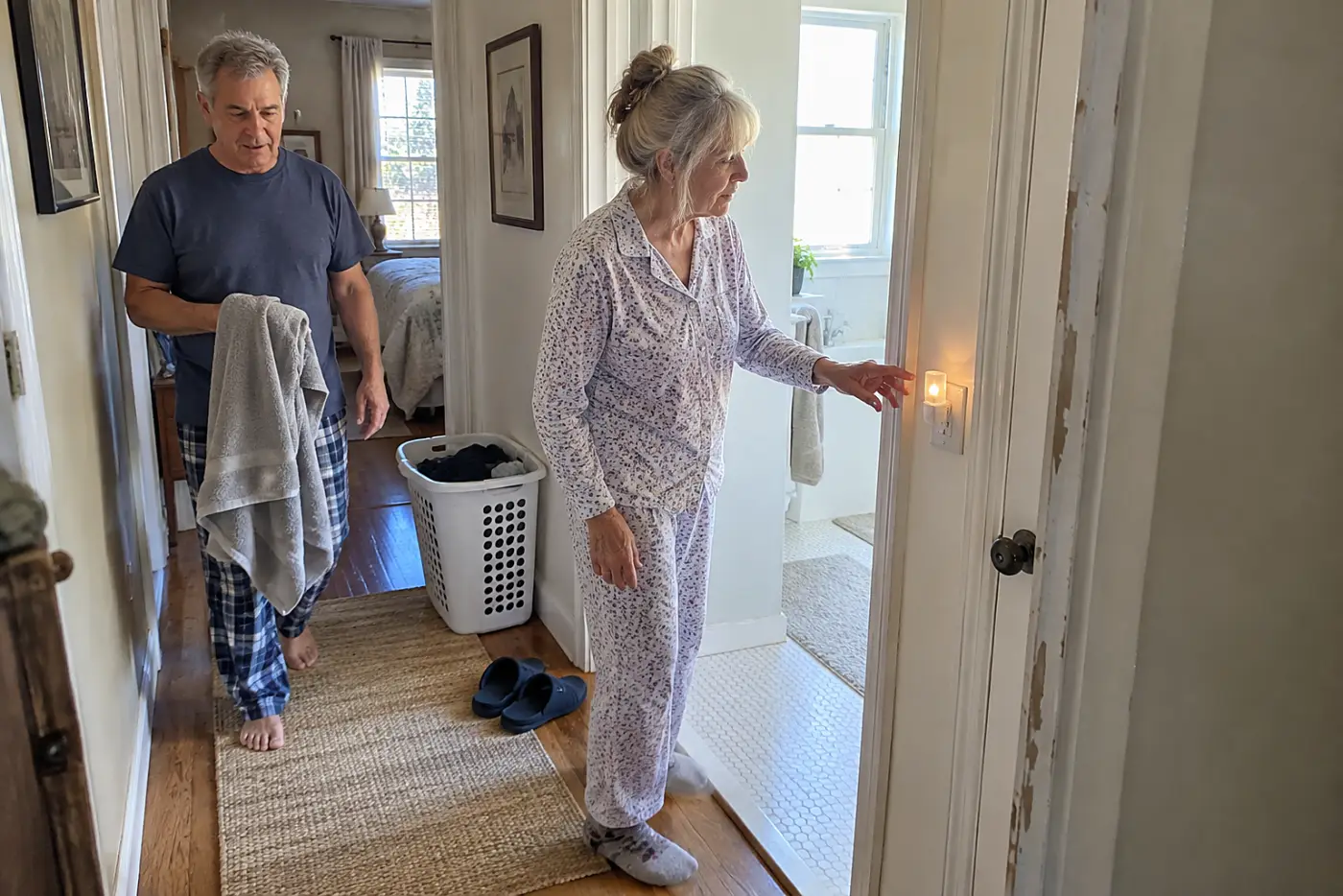
Urgency has a different feel from waking and deciding to urinate.
If the need to go wakes you suddenly, write that down. If you wake first and then decide to use the bathroom, write that down too. The order helps a clinician sort bladder symptoms from sleep disruption.
New urgency, leakage, pain, or blood deserves an appointment. Repeated trips also raise the chance of a fall on the way to the bathroom.
This week, leave a clear path and a working night-light to the toilet. Tell your clinician, “The urge wakes me,” or “I’m already awake before I feel it.”
A broken night has other physical causes that announce themselves less clearly.
14The snoring someone hears through the door

Loud snoring with breathing pauses deserves more than earplugs.
Obstructive sleep apnea occurs when the airway repeatedly narrows or closes during sleep. Breathing resumes, but the interruptions fragment your night even when you don’t remember waking. Women don’t always describe the classic picture of loud snoring; fatigue, insomnia, and morning headaches belong in the conversation too.
The National Heart, Lung, and Blood Institute lists snoring, gasping, and daytime sleepiness among sleep apnea clues. Untreated apnea is linked with health problems beyond a bad morning, including high blood pressure.
This week, ask the person who hears you sleep whether they notice pauses, choking, or gasping. If you sleep alone, note any waking with a gasp or dry mouth. Tell your clinician, “I wake at three and have these breathing clues. Should I be evaluated for sleep apnea?”
Breathing isn’t the only thing your legs do without your permission.
13The legs that demand a walk

Restless legs can make lying still feel impossible.
The urge to move appears at rest, grows worse in the evening, and eases with movement. Walking to the kitchen helps briefly; getting back under the covers brings it back. That pattern differs from a simple muscle cramp.
Iron deficiency and certain medicines deserve review when those symptoms appear. Taking iron without a blood test brings its own risks.
This week, note whether moving your legs relieves the sensation. Ask your clinician, “Could we review my medicines and check whether iron is part of this?”
If movement brings no relief, look at what hurts while you’re still.
12The hip that aches against the mattress

Pain can wait until the house goes still to take over.
During the day, errands and conversation compete for your attention. At night, a sore hip, shoulder, back, or knee gets the whole stage. Staying in one position adds pressure, while repeated turning breaks sleep before morning.
A new injury, fever, weakness, or pain that keeps worsening needs medical review. So does a pattern that makes you dread going to bed. The National Institute of Arthritis and Musculoskeletal and Skin Diseases has information on joint and muscle conditions, but your pain pattern matters more than a general list.
This week, note which position hurts and what happens when you change sides. Bring your pillow setup and medicine list into the discussion: “My hip wakes me when I lie on this side. What should we check before I change pain medicine?”
The temperature under those covers can be its own alarm.
11The hot room at three
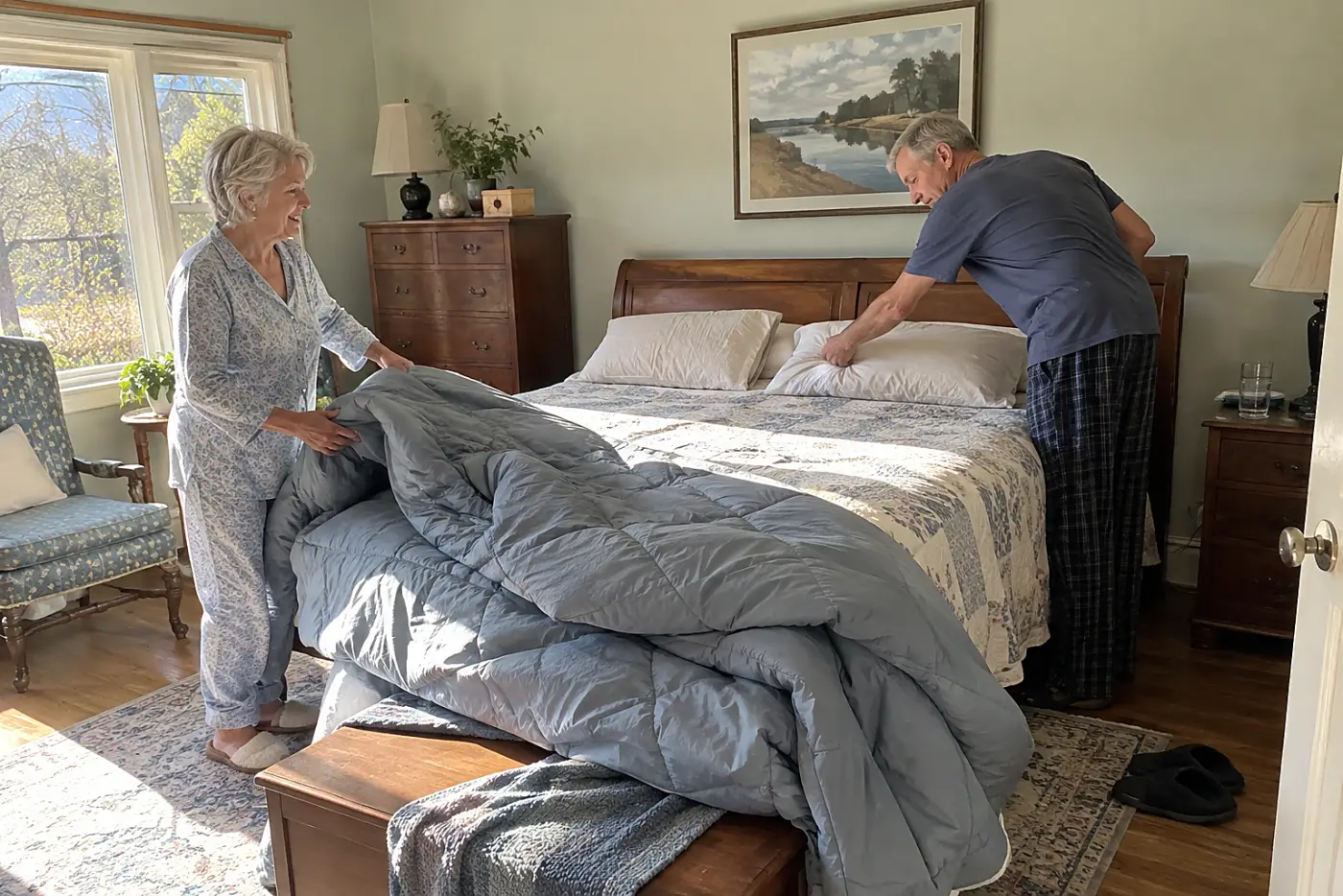
Heat can wake you before you know you’re sweating.
Body temperature changes across the night. A heavy comforter, warm room, or heat-trapping mattress cover makes it harder to cool down. By the time you notice the heat, you’re already awake.
Night sweats that soak clothes or sheets, especially with fever or weight loss, warrant a medical call. Don’t file those under “bad bedding.”
This week, check the room temperature and try lighter, easy-to-remove layers. Say, “I wake hot enough to change my shirt,” if that’s what happens.
A cool room still won’t help if another internal heat source is at work.
10The hot flash you still get

Hot flashes don’t obey a birthday cutoff.
Menopause-related symptoms can continue for years. A sudden wave of heat or sweating interrupts sleep, and the chill afterward keeps you from settling. Guessing that you’re “too old” for hot flashes delays a useful conversation.
Keep the symptom separate from unexplained night sweats. If it’s new, drenching, or comes with other illness signs, seek medical advice rather than treating it as menopause by default. The Office on Women’s Health has menopause information worth reading before your visit.
This week, note whether warmth arrives in a wave and whether your face or chest flushes. Write down the time and what you were wearing. Ask your clinician, “These episodes still wake me. Which treatments fit my medical history?”
When the heat passes, what you do while awake becomes the next factor.
9The phone screen beside the pillow
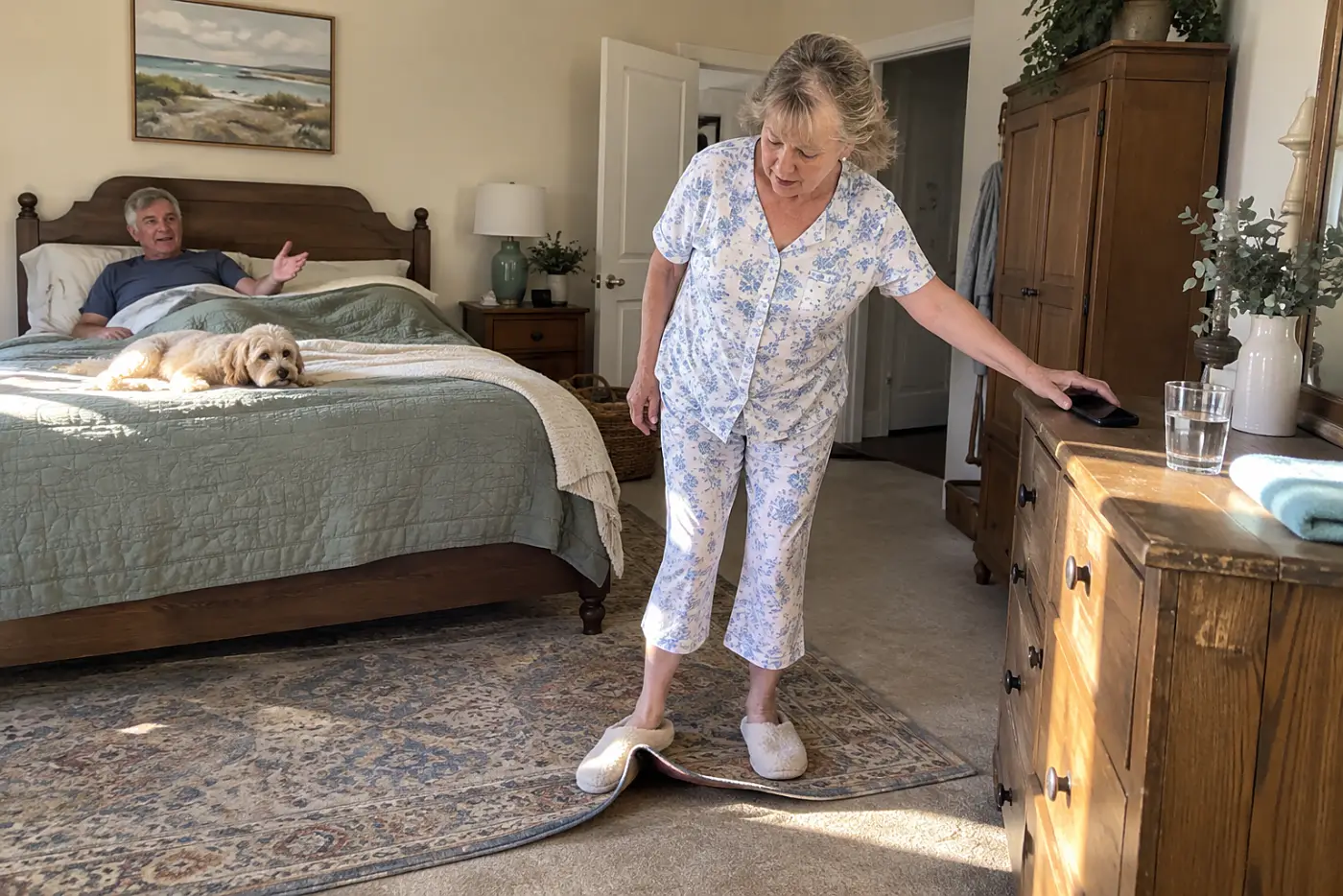
A bright phone turns a brief waking into a longer one.
Checking the clock adds a calculation: how little sleep remains. Messages and headlines add problems to solve. Light and attention then pull you further from sleep.
You don’t need a perfect bedroom to stop this particular loop. You need one fewer reason to stay alert at three.
This week, charge your phone beyond arm’s reach and turn the clock face away. Keep an alarm you trust. Tell yourself, “I don’t need the time to rest.”
If you’re awake long enough, the bed itself starts to change meaning.
8The hours spent staring at your ceiling

Lying in bed frustrated teaches your brain an unwanted lesson.
When the bed becomes the place where you calculate tomorrow’s damage, alertness follows you under the sheets. The approach called stimulus control breaks that link: go to bed when sleepy, and leave the bed when you’re wide awake. Return when sleepiness comes back.
Don’t turn this into a contest with the clock. Sit somewhere safe in dim light and do something undemanding. Avoid a bright screen, chores, and anything that makes you watch the minutes pass.
The American College of Physicians recommends cognitive behavioral therapy for insomnia, or CBT-I, as the first treatment for chronic insomnia. Stimulus control is one part of that treatment, not an instruction to spend the night pacing. If getting up raises your fall risk, discuss a safer version with a clinician.
This week, set a chair, lamp, and dull book where you can reach them safely. Say, “I spend hours awake in bed. Would CBT-I fit me?”
There’s another reason your mind races once the room goes dark.
7The worry list written at midnight

An unfinished task feels urgent when nobody else is awake.
At three, you can’t call the dentist or settle a bill. Rehearsing either job in bed keeps your attention on tomorrow. A page written earlier gives those thoughts a place to land.
This won’t erase a serious worry. It does stop the same small task from demanding a fresh decision every night.
This week, spend a few minutes before bed listing tomorrow’s tasks and the first step for each. If a thought returns overnight, write one line rather than planning the whole day. Tell yourself, “It’s on the page.”
A racing mind is worth discussing when it arrives with a change in mood.
6The mood shift that arrives before dawn

Early waking can travel with depression, not just insomnia.
Depression does more than make someone feel sad. Sleep changes, lost interest, low energy, and appetite changes all matter. Anxiety can also turn nighttime waking into hours of fear and planning.
The National Institute of Mental Health describes sleep changes among depression symptoms. If thoughts of self-harm appear, call or text 988 for immediate support in the United States.
This week, write down what changed in your mood, appetite, and interest alongside your sleep. Make an appointment rather than waiting for the sleep problem to fix everything else. Tell your clinician, “I’m waking early, and these other things have changed too.”
The timing of a prescription belongs in that same conversation.
5The new prescription on your nightstand

A medicine change can show up first as a sleep change.
Steroids, some antidepressants, and stimulants affect sleep. Even an over-the-counter cold remedy has ingredients worth checking. The dose, timing, and reason for treatment all matter.
Stopping a prescription abruptly creates a different problem. Keep the bottles together instead of testing changes alone.
This week, compare the date sleep changed with dates you started or changed medicines. Include supplements and nonprescription products. Ask your pharmacist, “Which of these could affect sleep, and what should I ask my prescriber?”
The remedy you bought specifically for sleep needs equal scrutiny.
4The sleep pill bought at the drugstore

“Nonprescription” doesn’t mean harmless at two in the morning.
Some nighttime products contain sedating antihistamines. They leave some people groggy or confused and raise fall concerns. Combining products also makes it easy to take the same ingredient twice.
Check the active ingredients, not the picture on the box. The American Geriatrics Society’s Health in Aging site discusses medicines that deserve extra caution as you get older. Prescription sleep medicines need review too, especially when you’re unsteady on your feet.
This week, photograph the front and ingredient panel of every sleep product you use. Show them to a pharmacist: “I take these when I wake up. Are any ingredients duplicated or risky with my prescriptions?”
If the medicine helps only briefly, the underlying pattern remains.
3The reflux that reaches your throat

Heartburn isn’t always a burning feeling behind the breastbone.
Reflux can bring a sour taste, cough, or throat irritation when you lie down. A late meal gives stomach contents less time to settle before bed. Waking with that taste offers a clue separate from ordinary insomnia.
Trouble swallowing, vomiting blood, or black stools needs prompt medical attention. Repeated nighttime symptoms deserve review instead of another pillow experiment.
This week, note dinner time, bedtime, and any sour taste or cough. Tell your clinician, “I wake coughing with a sour taste. Could reflux be involved?”
One more clue sits in the morning, after you think the night is over.
2The morning headache you dismiss
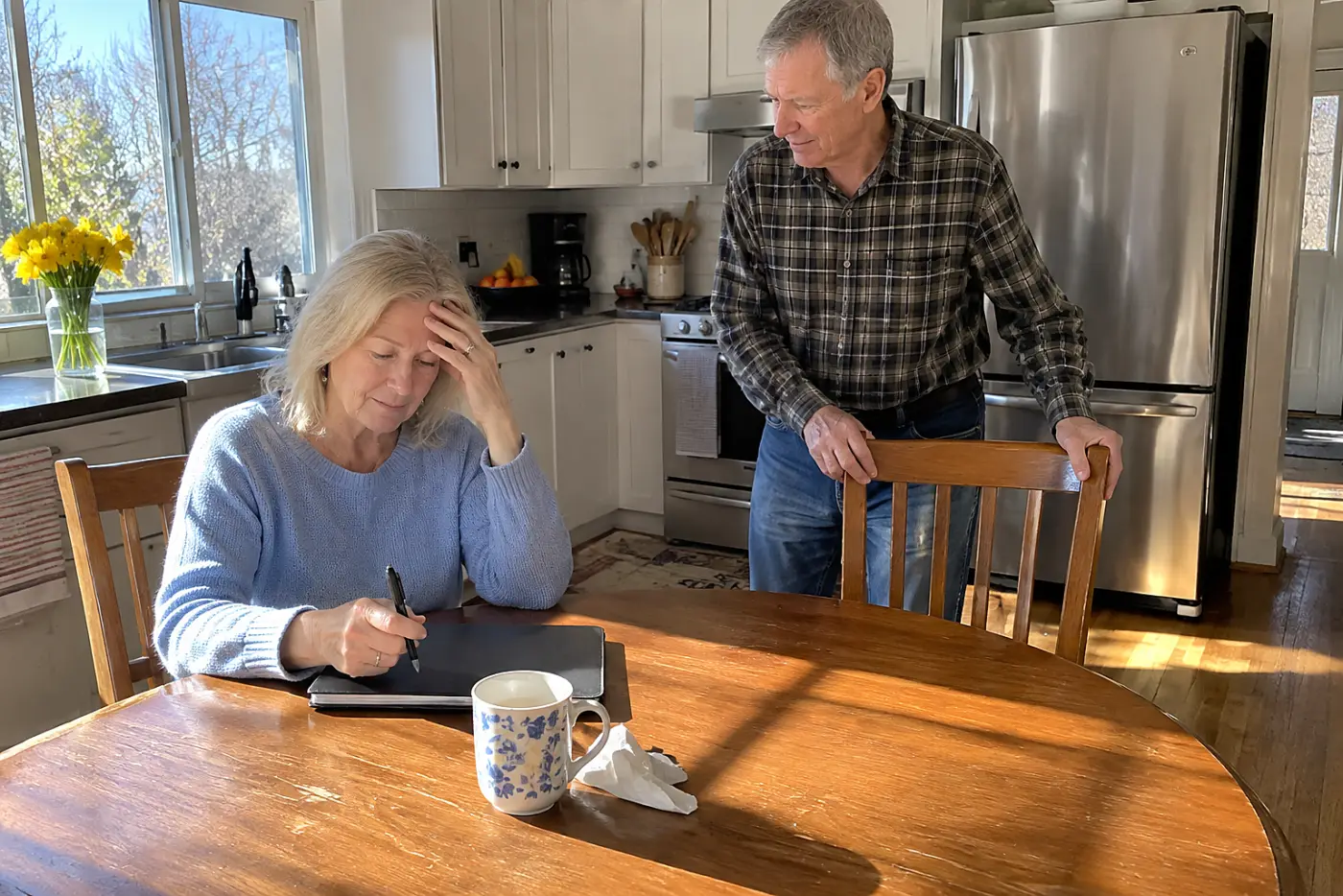
A morning headache can be evidence from the night.
Sleep apnea is one possibility, but it isn’t the only explanation. A headache that fades after you’re up still belongs in your notes, especially alongside dry mouth, gasping, or daytime sleepiness.
A sudden, severe headache or one with weakness, confusion, or trouble speaking needs urgent care. Don’t wait for a routine sleep appointment in that situation.
This week, mark when the headache starts and when it ends. Write down any breathing clues without deciding the diagnosis yourself. Tell your clinician, “I wake with a headache, and here’s what else happens overnight.”
Those separate clues are most useful when you put them in order.
1The two-week sleep record you bring

A 3 a.m. story loses detail by appointment day.
A sleep diary captures the sequence while it’s fresh. Record when you got into bed, when you think you fell asleep, each waking, your final wake time, and when you got up. Add naps, caffeine, alcohol, medicines, bathroom trips, pain, and breathing clues. Estimates are fine; watching the clock all night defeats the purpose.
This gives your clinician more than the phrase “I sleep badly.” An early body clock, a late water pill, and breathing interruptions call for different next steps. The National Sleep Foundation publishes sleep health information, but your own record shows what happens in *your* bed.
This week, put a pencil and one sheet beside the bed. Fill in each morning for 14 days, then take it to your primary care visit. Say, “Here are two weeks of sleep and wake times. What pattern do you see, and what should we check first?”
The page won’t diagnose you; it gives the next conversation somewhere solid to begin.
The bottom line
The pattern behind these 23 reasons is that the same 3 a.m. wake-up can start in different places.
You’re best prepared when you’ve recorded the timing and noticed what wakes you. Bring your medicines and symptoms too.
Which of these has already happened in your family?
Bonus: The two-week record that makes your 3 a.m. appointment more useful
- Put paper and a pencil beside the bed. Don’t check the clock repeatedly.
- Each morning, estimate bedtime, sleep time, awakenings, final wake time, and time out of bed.
- Add naps, caffeine, alcohol, medicines, bathroom trips, pain, heat, mood changes, and breathing clues.
- Bring the 14-day record and your medicine list. Say, “What pattern do you see, and what should we check first?”
Dr. Alan Pierce, PT, DPT
Health Reviewer
Alan is a physical therapist who specializes in helping adults over 50 stay strong and mobile.
You might also like