23 Reasons Retirees Feel Guilty Spending Their Own Money
A paycheck used to refill the account. Now a withdrawal sits beside a tax notice, and even a plane ticket feels reckless.
By Linda Cho, CFP®, Money Editor
Updated · 16 min read
- Written by our money editor
- How we review

Read to the end: #1 is the written spending permission that makes a planned purchase easier to judge, and almost nobody writes it down.
The suitcase is open on the bed. Beside it sits a flight confirmation you haven't bought yet, though the money is in the bank. You close the airline tab and check the account balance again. The number hasn't changed, but the thought of spending it feels different from seeing it there.
A paycheck once replaced what you spent, and retirement changes that rhythm. Yet an account balance alone doesn't tell you whether the ticket fits; it leaves out next month's bills, taxes, and the money already set aside for later.
Here are 23 reasons the purchase still feels wrong.
23The dinner bill you insist on paying

Picking up every check turns generosity into an obligation.
When you worked, dinner might have come from that month's pay. Now the same offer comes from savings. Relatives remember who reached for the check last time. Repetition turns a choice into something everyone expects, even when nobody asks you to pay.
That pressure matters even when each meal fits. It leaves less room for the occasions you actually want to celebrate.
This week, decide which invitations you'll treat and which you'll split. Before you go, check the restaurant's menu so the choice isn't made with the bill in hand. Say, “I'd love dinner with you; let's each get our own tonight.”
The check is only one way old roles stay in place.
22The adult child's unfinished financial emergency

One rescue has a way of becoming next month's plan.
A late rent payment, car repair, or credit-card bill arrives with a deadline. You pay it because the problem is immediate. The next request arrives before you've decided whether the first payment was a gift or a loan.
Then a vacation feels selfish, though you've taken on an expense that wasn't yours. A gift also changes what you have available for your own bills.
This week, write down every transfer to family from the past year. Separate gifts from money you expect back, then decide what amount, if any, belongs in your budget. Say, “I need to check my own numbers before I promise anything.”
A promise made for someone else still lands in your account.
21The old paycheck that stopped arriving

The missing deposit makes every purchase look permanent.
During working years, a paycheck offered a familiar reset. In retirement, income arrives through different channels, including Social Security, pensions, or withdrawals you arrange yourself. An intentional transfer feels like taking money away instead of paying yourself.
That feeling doesn't show whether your plan supports the expense.
This week, list each income source and its deposit date beside your regular bills. Say, “I want to see what comes in before I decide what goes out.”
The calendar tells part of the story, but the account label tells another.
20The IRA withdrawal marked as a loss

An IRA transfer looks like damage on the statement.
Money moving from an IRA into checking lowers the IRA balance. If your retirement plan called for that withdrawal, the lower number reflects the plan in action. A traditional IRA distribution still needs a tax check, so the amount transferred isn't the whole cost.
Without that distinction, you keep postponing purchases already covered by planned withdrawals. You also risk treating tax withholding as an afterthought.
This week, review the account statement and label each planned distribution in your records. Check the IRS retirement plans page for distribution rules, and ask your tax preparer how withholding fits your return. Say, “Show me the amount available to spend after taxes.”
The next sting comes when a different account begins paying you.
19The first Social Security deposit in checking

A benefit deposit feels too important to touch.
You paid Social Security taxes while working. Once benefits start, the deposit joins your other income and pays bills under the same roof. Leaving every dollar untouched isn't a rule from the Social Security Administration.
Still, that deposit carries decades of work in your mind. Spending it on pleasure feels harder than spending a pension check.
This week, look at your deposit history and assign the money to actual expenses. Use my Social Security to review your benefit information. Say, “This payment is part of my income, so I'll give it a job.”
One benefit check doesn't settle what happens when prices rise.
18The grocery receipt with a higher total

Rising prices turn an ordinary basket into a warning.
You buy the same staples, then see a bigger total at checkout. Social Security's cost-of-living adjustment changes benefits when its inflation measure calls for one. Your own grocery list, insurance costs, and housing bills won't match that measure exactly.
An old spending target makes today's necessary purchases feel like mistakes. It also makes a birthday lunch compete with an outdated number.
This week, compare three recent grocery receipts with the amount in your current budget. Update the line for food using what you actually buy. The Social Security Administration publishes its annual cost-of-living adjustment; check the current notice rather than guessing from last year's increase. Say, “The food budget needs updating before I judge the lunch.”
A higher grocery line raises another question about bills you don't control.
17The Medicare notice beside the vacation brochure

One premium notice spoils an entire trip.
Medicare costs belong in your plan before you book travel. Part B premiums change by year. Higher income triggers an income-related monthly adjustment under Medicare's rules. A past year's premium won't tell you what your next bill says.
The uncertainty, rather than the trip itself, keeps the brochure on the table.
This week, find your current Medicare notice and record the premium in your monthly bills. Check Medicare.gov for current costs. Say, “I want this year's premium in the budget before I price the trip.”
Medical bills have another trap: guessing what a service will cost.
16The procedure estimate with an empty box

A blank cost estimate invites the worst possible guess.
Before a scheduled procedure, the price you owe hinges on the service, the provider, and your coverage. A doctor's office and a facility bill are separate pieces. Guessing from a friend's bill won't tell you what appears on yours.
Fear of an unknown bill crowds out spending you planned months ago. It also leaves you unprepared when a real bill arrives.
This week, call the provider's billing office for the procedure codes and the facility name. Then ask your insurer for an estimate using those details, and keep the estimate number. The Medicare coverage page lets Medicare beneficiaries check a service by name, but a coverage page isn't a personal price quote. Say, “Which parts of this visit will bill me separately?”
The next worry comes from care that lasts longer than a visit.
15The empty space labeled future care

A blank reserve swallows every pleasure today.
Future care is a real planning concern. Without a written estimate or funding source, though, “save it for care” has no stopping point. Each new purchase loses to an expense you haven't priced.
You need a number to examine. Otherwise, even the smallest treat competes with an unlimited bill.
This week, ask a local facility for its current daily private-pay rate in writing. Ask what's included, too. Review what any long-term care policy covers, including its waiting period. The Administration for Community Living's LongTermCare.gov site describes ways people pay for care. Say, “I'd like the private-pay rate and what it includes.”
Once care has a price, another family assumption needs a closer look.
14The house deed with your child's name in mind

A future inheritance makes your house feel borrowed.
If you plan to leave the house to your children, repairs for your own comfort start looking like deductions from their share. Yet you live with the drafty window or the uneven front step now. An estate plan says what happens to property later; it doesn't set today's home-maintenance budget.
Putting off repairs leaves you facing a larger problem. It also turns a future gift into a claim on your present life.
This week, get a written estimate for the repair you've delayed. Compare it with the amount you've set aside for home upkeep, not with an imagined inheritance total. If you've named heirs in a will or trust, review that document with an estate attorney when you make changes. Say, “I want the house to work for me while I live here.”
The same pressure follows smaller things you've kept for years.
13The good dishes still inside the cabinet
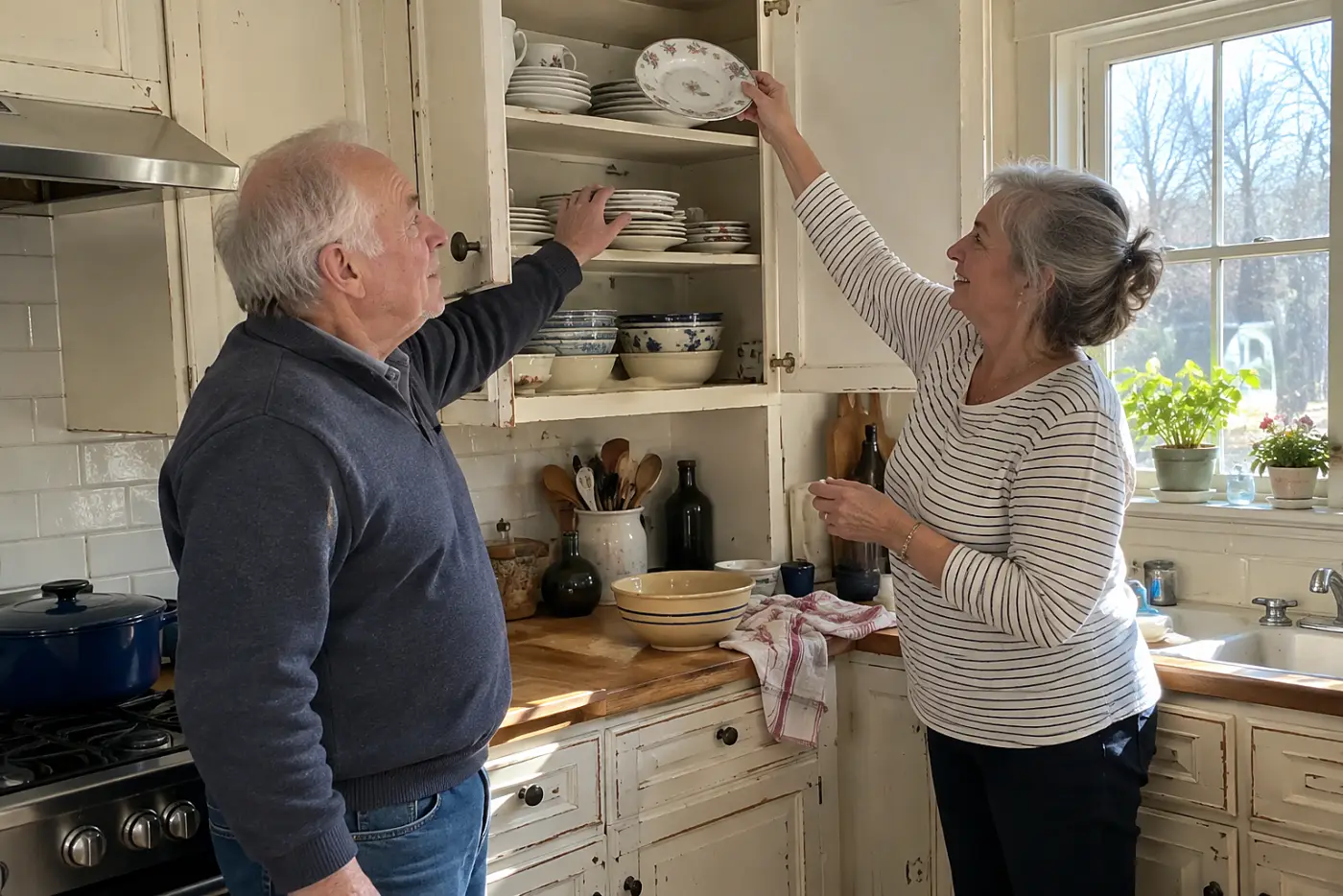
Keeping things pristine turns use into waste.
The china was bought, inherited, or saved for an occasion. Each year it stays wrapped, its purpose shifts from dinner to preservation. Buying inexpensive replacements for everyday use doesn't protect the original purchase.
That habit makes any comfort item feel undeserved.
This week, take out one plate, coat, or piece of jewelry you've been saving. Use it for an ordinary day, then decide whether the pleasure was worth the wear. Say, “I kept this because I loved it, and I'm here to use it.”
A stored object is visible; an old rule about hard work is harder to spot.
12The notebook where every purchase needs a reason

A record meant to help becomes a trial.
Tracking spending shows where money goes. Trouble starts when every entry needs a defense, while transfers for family or routine bills pass without question. The notebook then measures whether a purchase feels virtuous, not whether it fits.
You lose the ability to compare choices on equal terms. A new coat faces tougher scrutiny than an automatic payment you've never reviewed.
This week, look through one month's entries and circle purchases you wrote comments beside. Compare those with recurring charges you never questioned. Pull one bank or card statement to find subscriptions that renew without a fresh decision. Say, “If the coat needs a reason, the subscription does too.”
That double standard grows stronger when the expense is for you alone.
11The solo ticket you keep abandoning

Buying one ticket feels harder than buying two.
When you shared expenses with a spouse or partner, an outing felt like a joint decision. Alone, the entire price and the decision sit with you. A single ticket isn't less worthwhile because nobody else uses it.
Repeatedly closing the booking page costs you the event itself.
This week, price one concert, train ride, or class you've wanted to attend. Check the refund terms, then decide using your budget rather than the empty seat beside you. Say, “One ticket is the number I need.”
An empty seat also brings up the agreements money once carried.
10The promise you made to a late spouse

An old agreement outlives its original purpose.
You and your spouse might have saved for a shared retirement, protected an emergency fund, or planned a trip together. After a death, spending from that account feels like breaking a promise. The purpose deserves a fresh look because the person living with the decision is still here.
Keeping the account untouched doesn't recreate the plan you made together. It leaves you paying to maintain a life that has changed.
This week, find the account or expense tied to that promise. Write what the money was meant to do and which parts still apply. If the issue involves an inherited IRA, check the IRS's guidance on required minimum distributions for IRA beneficiaries before changing withdrawals. Say, “I want to honor our plan without pretending nothing changed.”
A promise made together is different from a habit learned much earlier.
9The childhood rule against buying new

An old household rule keeps collecting interest.
If your family repaired everything, a replacement purchase feels like a failure. But repair takes money too, along with time and another round of inconvenience. The useful comparison is today's repair quote against today's replacement price.
Without both figures, guilt gets to decide for you.
This week, get a written repair quote for one item you've been tolerating. Compare it with a replacement you can inspect in person. Say, “I'll decide from the prices in front of me, not the rule I grew up with.”
Childhood rules become harder to untangle when debt once backed them up.
8The credit-card balance you once carried

A paid-off card still makes spending feel dangerous.
Debt taught you that a purchase had a second price: interest. After the balance is gone, that memory stays, even when you pay the card in full. The current statement and payment plan matter more than an old balance.
Fear of debt keeps you from replacing something you've already funded. It also blurs the line between using credit and carrying a balance.
This week, open your latest statement and check the statement balance, due date, and interest charge. If you use a card, set a payment reminder before the due date and keep spending within cash already available. The Consumer Financial Protection Bureau has plain-language information on card statements and interest. Say, “I pay this bill in full; I don't have to relive the old balance.”
A different debt worry arrives when you think about the people who follow you.
7The beneficiary form you haven't checked

An outdated form makes every purchase feel like subtraction.
A beneficiary designation tells an account provider who receives that account after death. It operates separately from your day-to-day spending. If you haven't looked at the form in years, you don't know whether it still names the people you intend.
That uncertainty makes an inheritance feel fixed before you know its terms.
This week, request the current beneficiary record from each retirement account provider. Compare the names with your wishes and estate documents. Say, “Please send me the beneficiary designation currently on file.”
Once the paperwork is clear, family conversations still feel harder than forms.
6The comment about spending the inheritance

One joke turns your balance into family property.
Imagine a child joking, “You're spending my inheritance.” Others laugh along. Later, you hesitate over a purchase because the comment gave a future gift a present owner. Until you die, the money supports your life and your choices.
Letting the joke stand invites more questions about your accounts. It also leaves your family guessing whether you want their input.
This week, decide what financial details you want to share and which stay private. If the comment comes up, answer it directly without giving a balance or defending a purchase. Say, “I'll make my own spending decisions; I'll tell you if I need help.”
Some questions come from relatives. Others come from your own mailbox.
5The charity envelope on the kitchen table

A request for help makes pleasure feel selfish.
An appeal arrives with a real need and a deadline to give. You want to help, so a purchase for yourself starts to look like money taken from someone else. But an open-ended giving plan leaves every request competing with your bills.
Skipping your own needs doesn't tell you what you can give.
This week, choose an annual amount for donations and record what you've already sent. Check a charity's details through the IRS Tax Exempt Organization Search before a new gift. Say, “I've set my giving amount for the year, and I'll decide within it.”
A request in the mail is easy to see. The next request hides inside a bill.
4The insurance renewal you never compare

A recurring bill claims money without a decision.
Insurance renews, and the payment leaves your account. Because coverage matters, you avoid touching the bill, while a weekend away gets weeks of debate. The renewal deserves attention before it gets another year's automatic approval.
Paying without a review leaves you with a premium you haven't compared against your current needs. Cancelling blindly is a different risk, so read first.
This week, pull the renewal notice and declarations page for your home or auto policy. Check the coverage amounts, deductibles, and listed drivers or property.
Then request comparable quotes. The National Association of Insurance Commissioners links to state insurance regulators for licensing and complaint checks. Say, “Please quote the same coverage and deductible shown on this page.”
Once fixed bills have had their turn, there is room to ask what a purchase gives back.
3The class registration left in your cart

A class looks optional until you name its purpose.
A painting course, language class, or swim pass doesn't arrive as a household bill. You have to choose it, pay for it, and take the first step through the door. That makes it easier to postpone than a charge that renews itself.
The missed class has a cost too: you don't get the hours you wanted.
This week, check the schedule, total price, and cancellation terms for one class. Put the dates on your calendar before you register. Say, “I want to take this class, and the cost fits the plan.”
The plan matters most when a large purchase has no rehearsal.
2The big purchase without a trial run

A large purchase feels final when you've only imagined it.
A new car, long trip, or home change asks for money and a guess about daily life afterward. The guilt grows when you treat the first decision as permanent. Testing the experience gives you evidence before a deposit or contract.
A rushed purchase risks money; endless delay costs time you planned to enjoy. Neither tells you whether the thing suits you.
This week, choose the smallest honest test. Rent the car model for a day, take a shorter trip, or visit the neighborhood at different hours. Get the full written price before making a commitment. If a seller presses for an immediate signature, take the paperwork home. Say, “I don't sign for a purchase this size during the first conversation.”
Then comes the decision no salesperson or relative can make for you.
1The written permission line in your spending plan

An affordable purchase stays forbidden until you give it a place.
Your budget lists bills, taxes, and savings, but the line for enjoyment is missing. Each purchase then faces a fresh hearing in your head. A written spending line changes the question from “Am I allowed?” to “Does this fit what I set aside?”
The line isn't permission to ignore the numbers. It comes after you've checked essential bills, taxes on withdrawals, and the reserves you've chosen to keep. Without it, even a sound plan sits unused while you talk yourself out of the trip again.
This week, write one amount for spending you get to choose, using your actual income and account plan. Put it beside the bill amounts, not on a loose scrap of paper. If you work with a planner, ask them to show how that amount holds up across their projections. Say, “Show me what I can spend without undoing the plan.”
Then keep the page where you'll see it before the next purchase.
The bottom line
Across these 23 decisions, the same pattern returns. Bills get automatic approval. A purchase for you has to prove itself.
The best-prepared version of you has checked the bills and taxes. You've priced the unknowns and written down an amount that's yours to choose.
Which of these has already happened in your family?
Bonus: A written spending permission you can use this week
- Write down the monthly income that reaches your accounts after withholding.
- Subtract regular bills, planned transfers, and the reserves you've chosen for irregular costs.
- Name one monthly amount for spending you choose, and put it in your written plan.
- Before the next purchase, ask: “Does this fit the amount I already set aside?”
Linda Cho, CFP®
Money Editor
Linda is a certified financial planner who spent two decades advising retirees before joining Prime Journal.
You might also like