23 Habits That Drain a Retirement Account Without Anyone Noticing
A saved card, an IRA withholding setting, and an unread statement can turn ordinary decisions into withdrawals that are hard to trace.
By Linda Cho, CFP®, Money Editor
Updated · 16 min read
- Written by our money editor
- How we review

Read to the end: #1 is an account check that traces missing money, and almost nobody does it.
The receipt is still tucked under the mug, but the checking balance is lower than you expected. You remember the grocery trip. You remember paying the plumber. Neither explains why another transfer from retirement savings landed in checking on Tuesday. You move the receipt, open the bank app again, and see the same balance.
The obvious suspect is a big purchase you forgot to count. Yet a balance shrinks through repeated charges, missed deadlines, and small decisions that never looked like spending when you made them.
Here are 23 habits to check.
23Keeping the streaming trial after it renews
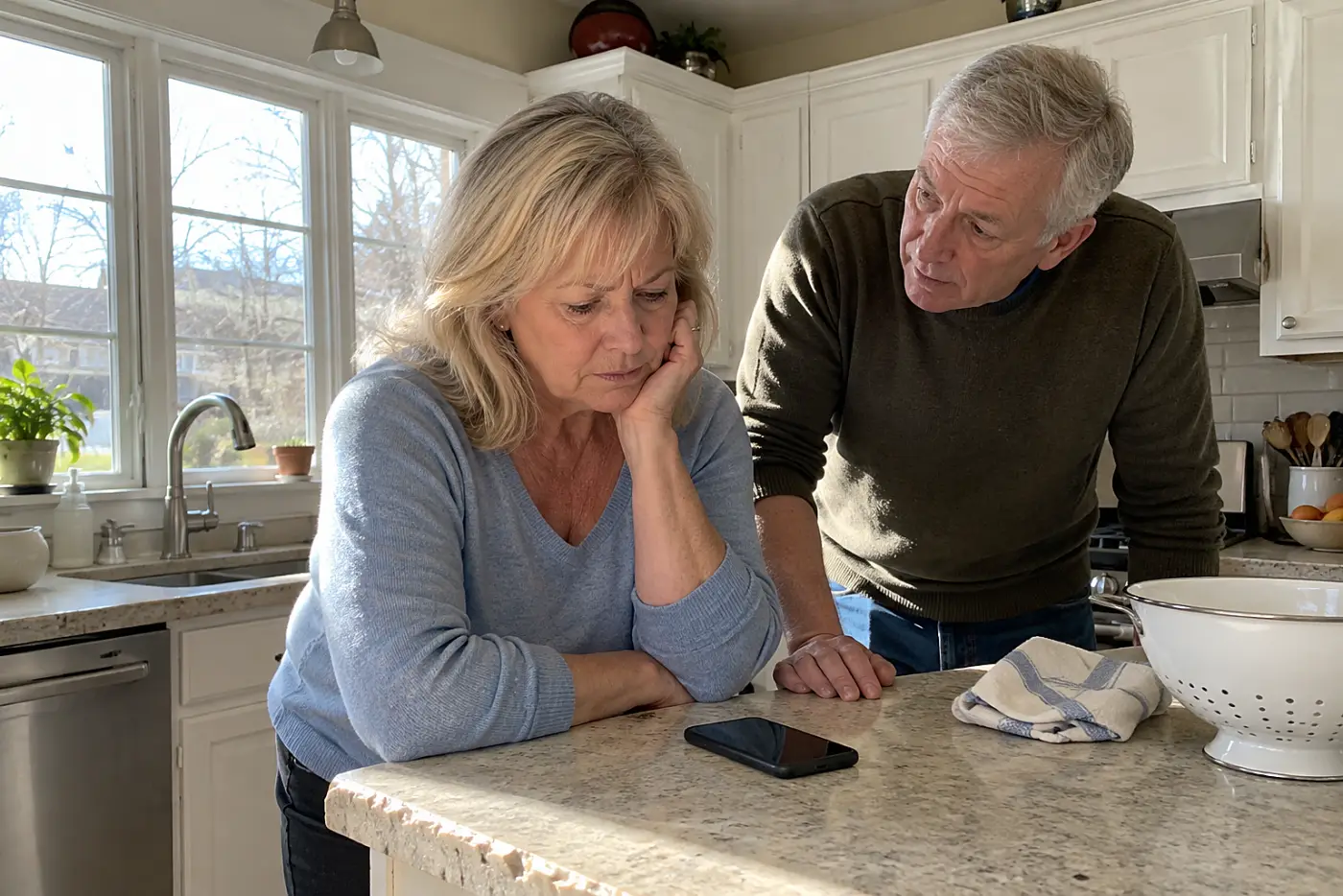
A free trial becomes a bill without another decision.
The sign-up screen asks for a card before the trial starts. Unless you cancel under its terms, the service begins charging after the trial ends. A card you rarely use makes that change harder to spot.
One extra subscription is a small leak. Several renewals become a reason to move money from savings into checking.
This week, search your email for “trial,” “renewal,” and “subscription,” then check the charges against your cards. Say to the provider, “Please confirm the cancellation date and send me the confirmation.”
The next charge has a different hiding place.
22Letting the utility bill pay itself

Autopay handles the due date, not the amount.
Your utility draws the balance shown on its latest bill. If an estimated reading is followed by a larger actual reading, the withdrawal changes while your payment routine stays the same. A rate change or new service fee also passes through unless you read the bill.
When checking runs short, the gap has to come from somewhere. A transfer from retirement savings hides the original cause: a bill you never opened.
This week, open the last three utility bills and compare usage, rates, and fees. If the account shows an estimated reading, ask, “When will you take an actual reading, and how will you correct the bill?”
Then look at the card that pays without being opened.
21Leaving the gym membership on an old card

An unused membership still has a payment method.
A gym charges under the agreement you signed, even when you stop going. Replacing an expired card doesn't always stop recurring charges; card networks have account-updater services that pass new card details to participating merchants. The charge follows the replacement card without a new visit to the gym.
The cost stays in the monthly total until you cancel under your contract. Blocking one charge won't necessarily end the agreement.
This week, find the membership terms and follow the cancellation instructions exactly. Tell the gym, “Please send written confirmation that my membership and future billing have ended.”
The next leak doesn't involve a merchant at all.
20Leaving too little tax withheld from IRA withdrawals

The deposit looks larger when tax isn't taken out.
A taxable traditional IRA withdrawal increases the income on your tax return. With little or no withholding, more cash reaches checking now, but the tax bill arrives later. The IRS expects tax payments throughout the year, not just when you file.
That bill can force a second withdrawal to cover tax on the first. An underpayment penalty adds another charge if your payments fall short under IRS rules.
This week, compare your IRA withdrawal confirmations with the federal tax withheld on each one. Bring the figures to your tax preparer, or use the IRS Tax Withholding Estimator where it fits your income. Tell the IRA custodian, “Show me my current withholding election and the form to change it.”
There is also a tax cost hidden in which account pays first.
19Selling investments before checking the tax lot

The same sale can produce a different tax bill.
Shares bought at different prices have different cost bases. When you sell from a taxable brokerage account, the lots selected determine the gain or loss reported. Your broker's default selection isn't a decision you made for this year's taxes.
A larger taxable gain leaves less of the sale proceeds available to spend.
This week, review the lot-selection setting before placing your next sale. Ask your broker, “Which shares will this order sell, and where do I change that choice before submitting it?”
Another tax choice begins before the money reaches checking.
18Missing the IRA distribution deadline

A required withdrawal doesn't happen because you meant to take it.
Your required minimum distribution deadline and amount depend on your birth year and account type. An IRA custodian calculates and reports information, but you remain responsible for taking the correct amount on time. An automatic monthly transfer won't cover the requirement if you set it too low.
A missed required minimum distribution brings an excise tax unless you qualify for relief. The IRS instructions for Form 5329 tell you how to report a shortfall and correction.
This week, list every traditional IRA and old workplace account, then request each account's required distribution figure. Say to each custodian, “What amount have I taken from this account this year, and what remains?” Check the IRS required minimum distributions page before relying on an old age rule.
Even a distribution taken on time can change another bill.
17Taking an extra IRA withdrawal near year-end

This year's withdrawal can raise a later Medicare premium.
Medicare uses tax-return income from an earlier year to set income-related adjustments for Part B and Part D. A taxable IRA withdrawal raises that income. You won't see the result in the bank account that received the withdrawal.
The added premium arrives later, when the spending decision feels finished. Social Security sends a notice if the adjustment applies.
This week, total the taxable withdrawals already taken this year before scheduling another. Ask your tax preparer, “What will this withdrawal do to the income Medicare uses?” Check the Medicare costs page for the current premiums, rather than using last year's figures.
Another monthly charge starts with a date on your calendar.
16Paying a Medicare premium penalty for late enrollment

Missing an enrollment window can make a premium last longer.
If you delay Medicare Part B without qualifying coverage, a late-enrollment penalty is added to its premium. Coverage through a current employer follows different enrollment rules from retiree coverage or COBRA. The card in your wallet doesn't settle that question by itself.
The cost isn't a single missed payment. A Part B late-enrollment penalty lasts as long as you have Part B.
This week, write down when your current work coverage ends and who provides it. Before dropping it, ask the employer benefits office, “Is this coverage based on current employment, and when does my Medicare special enrollment period end?” Check the Medicare Part B enrollment page against that answer.
The next bill gets through even when coverage is in place.
15Filling a prescription at the wrong pharmacy

The same prescription can carry a different price.
A Part D plan sets its own pharmacy network and cost-sharing terms. The pharmacy you used last year isn't necessarily the least costly choice under this year's plan. A refill on autopilot keeps arriving without a fresh price comparison.
The difference comes out of your account each refill, not once a year.
This week, enter your medicines and pharmacies in Medicare Plan Compare or call your plan directly. Ask, “What will this refill cost here, and what will it cost at a preferred pharmacy?”
A doctor visit has its own version of that problem.
14Assuming a provider still takes your plan

Yesterday's in-network doctor isn't proof about tomorrow's visit.
Networks and contracts change. A name in an online directory also doesn't tell you whether every clinician involved in a procedure participates. The facility, surgeon, anesthesiologist, and lab each have a role in the bill.
You have federal surprise-billing protections for many out-of-network emergency bills and certain services at in-network facilities. Those protections don't make every planned out-of-network appointment in network. Check the CMS No Surprises Act page if a bill arrives that looks wrong.
This week, call both the plan and the provider before a planned visit. Ask the plan, “Is this clinician in network at this location for my exact plan?” Write down the representative's name and the date. If a hospital stay is planned, repeat the check for the facility.
After the visit, a different piece of paper deserves attention.
13Paying the medical bill before reading the EOB

A medical bill isn't the insurer's final word.
The explanation of benefits, or EOB, shows what the provider billed, what the plan allowed, what it paid, and what it says you owe. A provider bill that arrives first won't show the claim's full path.
Paying immediately gives up the chance to catch a duplicate charge or a payment the provider hasn't posted.
This week, match the bill's service date and charge against the EOB. Tell the billing office, “Please put this bill on hold while we compare it with my insurer's EOB.”
One recurring household bill rarely sends an EOB.
12Renewing homeowners insurance without checking the deductible

A lower premium can leave a bigger bill after damage.
Your deductible comes out of your pocket before insurance pays for a covered loss. Some policies set a separate deductible for wind or hail. If it's written as a percentage of the home's insured value, the dollar amount changes when that value changes.
A premium comparison that ignores the deductible misses the amount you'd have to find after a storm. That emergency withdrawal won't appear on the renewal notice.
This week, pull out the declarations page and mark every deductible, including separate storm deductibles. Ask your agent, “What would I pay out of pocket for a covered wind claim under this policy?” Then compare the answer with the cash you've set aside, rather than judging the policy by its monthly payment.
A different kind of home expense begins with a familiar face.
11Paying the contractor's deposit before the scope is written

An oral estimate leaves room for two different jobs.
The contractor hears the repair she priced. You picture the finished room, including cleanup and materials. Without a written scope, later work becomes a change order, and the final payment grows beyond the number you first remembered.
That difference is hard to trace after several deposits and supply-store trips.
This week, ask for a written estimate listing materials, labor, payment stages, and what isn't included. Say, “Please put any change in writing with its price before the work starts.”
Some home bills come from work you didn't order.
10Ignoring a property tax exemption application

The tax bill won't apply every eligible exemption for you.
Homeowner relief varies by state and county, and eligibility has to be checked locally. An exemption tied to age, disability, veteran status, or primary residence status doesn't help if your assessor requires an application you never filed. A move can change which property's records matter.
Property tax is paid through a mortgage escrow account or directly to the tax office. Either way, an unchecked bill can lead to a larger draw from savings.
This week, find your parcel number on the tax bill and look it up with the county assessor. Ask, “Are any exemptions recorded for this parcel, and which applications am I eligible to file?” Use the assessor's answer, not a neighbor's tax bill.
The mortgage statement can conceal another routine withdrawal.
9Letting mortgage escrow shortages roll forward

A fixed mortgage rate doesn't mean a fixed payment.
Your mortgage servicer collects property taxes and insurance through escrow. When those bills rise, the servicer recalculates the payment. A shortage from bills already paid then increases the amount due alongside next year's projected costs.
The higher payment looks like a housing cost with no clear source. Without the escrow statement, you won't know which part reflects last year's shortage.
This week, read the annual escrow statement beside last year's tax and insurance bills. Ask the servicer, “How much of my new payment covers the shortage, and how much covers future bills?”
Another automatic transfer starts with a payment that looks affordable.
8Financing the car by monthly payment alone

A smaller payment can hide a longer debt.
A lender spreads the amount borrowed across the loan term and charges interest. Extending the term lowers each payment while keeping the debt around longer. Add-ons sold in the finance office raise the amount borrowed if they enter the contract.
The drain shows up month after month, then again when savings cover a repair on a car you still owe money on. The payment figure alone doesn't tell you the total cost.
This week, find your contract and read the amount financed, annual percentage rate, term, and total of payments. For the next car, ask, “What is the out-the-door price before we discuss a monthly payment?” The Consumer Financial Protection Bureau's auto-loan guide lists contract terms worth comparing.
A smaller purchase uses the same trick at checkout.
7Choosing installments for ordinary purchases

Four smaller charges are still one full price.
Buy now, pay later splits a purchase across scheduled payments. When several plans overlap, each has a separate due date and payment method. The bank balance you see today doesn't include every installment waiting to land.
A missed payment brings fees if the plan's terms call for them. Even on-time payments leave less cash for the next ordinary bill.
This week, list every open installment plan and its remaining payment dates. Say to yourself at checkout, “Would I buy this at its full price today?”
Next, check the card balance those smaller payments share.
6Paying only the credit card minimum

The minimum keeps the account current, not cheap.
If you carry a balance, interest is charged under your card agreement. New purchases can also lose the interest-free grace period while that balance remains. Paying the stated minimum reduces the balance slowly because part of the payment goes to interest.
The statement shows a payoff comparison based on minimum payments. Read it before pulling more money from retirement savings to cover routine charges.
This week, stop new charges on that card and look up its annual percentage rate. Ask the issuer, “How much interest was charged on my last statement, and what payment would clear the balance?” If the answer is out of reach, the CFPB's credit card guidance lists options to review.
One more charge can arrive from the bank itself.
5Using overdraft protection as extra cash

An overdraft transfer isn't income.
Some banks link checking to savings or another account. When checking falls short, the bank pulls money across to cover the transaction. The purchase succeeds, so the shortage is less visible than a declined card.
Repeated transfers leave savings lower without one obvious purchase to blame.
This week, open your bank's overdraft settings and review the last three months of transfers. Ask, “Which account funds an overdraft, and what fee applies to each transfer?”
The next transfer happens because cash sat in the wrong place.
4Leaving everyday cash inside an expensive fund
Money you need soon shouldn't require a forced sale.
An investment fund has operating expenses, shown as an expense ratio, that reduce its returns. It also changes value as its holdings change. When routine bills force you to sell shares during a decline, you lock in that day's price rather than waiting for a better one.
Neither cost arrives as a separate bill marked “retirement drain.” One appears inside performance; the other appears when you sell.
This week, find the fund name and expense ratio on your retirement statement or its prospectus. Mark the money earmarked for near-term spending before deciding where it belongs. Ask your adviser, “Which account holds the cash for my next withdrawals, and what does that holding cost?” Compare any proposed move with your full plan, including taxes.
A statement can also show charges you never agreed to one by one.
3Skipping the retirement plan fee notice

A plan charge won't always appear beside a purchase.
Your workplace plan's fee notice lists administrative and investment expenses. Some appear as direct charges on a statement; others come out of fund assets. Leave an old plan untouched, and changes in its menu or fees pass without a decision from you.
You still pay the expenses taken from fund assets. Read the Department of Labor's retirement-plan fee guidance before assuming your old plan's costs haven't changed.
This week, find your plan's annual fee notice and compare it with your statement. Ask the plan administrator, “Which fees come directly from my account?”
The next cost begins when helpfulness has no limit.
2Sending family help without a stopping point

A transfer for one emergency can become a standing bill.
You send money when someone needs it, then send more when the next bill arrives. Without a set amount or end date, the help slips into your household's regular spending. Love doesn't make the withdrawal disappear from your account.
A gift from cash and a distribution from a traditional IRA don't have the same tax result. Your family receives the help now; you handle the possible tax bill later.
This week, total what you've sent over the past year, including payments made directly to landlords, schools, and card companies. Decide what fits before the next request arrives. Say, “I can help with this amount once, but I can't make it a monthly payment.”
Then return to the question that started this search.
1Reconciling retirement withdrawals against checking deposits

The missing money needs a trail, not another budget.
Your retirement statement shows distributions leaving the account. Your checking statement shows deposits arriving, but withholding means the figures won't always match. Transfers between your own accounts add another layer: a deposit can look like fresh income when it came from savings.
Without a line-by-line match, you can mistake a tax payment for spending, overlook a repeated transfer, or count the same money twice. That is why the balance falls while every individual purchase seems familiar.
This week, gather the last three monthly retirement-account and checking statements. On paper or in a spreadsheet, mark each withdrawal's date and gross amount, the tax withheld, and the deposit that followed.
Circle every withdrawal without a matching deposit and every deposit whose source you can't name. Ask the custodian, “Please walk me through this distribution: gross amount, withholding, fees, and destination account.”
Don't stop when the columns balance. Label what each deposit paid for, including bills, family transfers, and cash withdrawals. The pattern is in those labels.
One page will show where to look next.
The bottom line
The pattern is money leaving in stages, with each stage filed under a different name.
The best-prepared version of you has matched withdrawals to deposits and named what each deposit paid. That leaves the unexplained lines ready for a closer look.
Which of these has already happened in your family?
Bonus: The one-page withdrawal-to-deposit check
- Put three months of retirement-account and checking statements side by side.
- Write each retirement withdrawal's gross amount, tax withheld, date, and destination on one line.
- Match each net deposit in checking to that line. Circle anything without a match.
- Beside each deposit, write where the money went. Start with transfers, bills, family payments, and cash withdrawals.
- Call the custodian about any unmatched withdrawal: “Where did this money go, and what was taken out before it arrived?”
Linda Cho, CFP®
Money Editor
Linda is a certified financial planner who spent two decades advising retirees before joining Prime Journal.
You might also like