23 Memory Slips That Are Normal After 60, and the Ones Worth Mentioning
A missing word reveals less than a dated phone note: record whether it returns, repeats, or arrives with a new problem.
By Dr. Alan Pierce, PT, DPT, Health Reviewer
Updated · 15 min read
- Written by our health reviewer
- How we review

Read to the end: #1 is the 911 call script for sudden speech trouble, and almost nobody plans it.
Your sister's name is right there. You're holding the phone, staring at the blue call button, while the first sound of her name refuses to come. You put the phone down, then wonder whether that pause means something serious.
One missed word gives little information by itself. What matters is whether it returns, whether the problem is new, and what else changed alongside it.
Here are 23 slips and warning signs to sort before panic supplies its own answer.
23A familiar name returns after dinner

The name disappears right when someone asks for it.
Retrieving a name takes a moment, especially when you're distracted. If it comes back later and you still recognize the person, the missing name alone says little about your daily memory. Remembering where you met her also tells you something the pause itself didn't.
The trouble starts when you treat every pause as proof of disease. That fear deserves attention too, particularly if you start avoiding calls or conversations because of it.
This week, note whether names return without help and what you were doing when they vanished. Tell your clinician, “The name comes back later, but the pause scares me.”
The next clue is whether you knew the word you wanted.
22The word on the tip of your tongue

You know the object, but its name won't arrive.
You picture the colander, describe its holes, and remember that it sits beside the sink. Word retrieval slows with age, while knowledge of the object remains. Describing an object and finding its name later differs from repeatedly losing the meaning of familiar words. The National Institute on Aging makes this distinction in its memory and aging guidance.
Panic makes the search harder. It also hides the detail a clinician needs: whether you recognized what you were trying to name.
This week, jot down the word when it returns and how long the search lasted. Say, “I knew what the object did; I couldn't pull up its name.”
Another kind of pause happens when the word isn't missing at all.
21The reason you entered the kitchen

A doorway erases the errand you meant to do.
Walking into another room changes the cues around you. Retracing your steps brings the original thought back when the cue returns. If you were thinking about a phone call while carrying laundry, the errand had competition before you reached the doorway.
Missing a cue differs from forgetting what familiar rooms are for. Notice whether the errand comes back and whether you're losing it while doing several things at once.
This week, pause where the thought began and write down what returns. Tell someone at home, “I lost my errand for a minute, then remembered it.” If that sentence stops describing what happens, save the example for your clinician.
A conversation creates its own missing cues.
20The question you asked twice at breakfast

You hear yourself repeat a question and freeze.
One repeat during a distracted morning says little. Repeatedly asking the same question after receiving an answer points to trouble holding on to new information. The Alzheimer's Association lists repeated questions among its warning signs.
A family member's irritation doesn't settle what happened. Record whether you heard the answer, recalled the exchange, and asked again anyway.
This week, ask someone you trust to tell you when a question repeats, without turning it into a joke. Say, “Please tell me the exact question and whether I heard your answer.” That gives a clinician an event to assess, rather than a label.
There's another clue in what happens when you're interrupted.
19The story lost during an interruption

A ringing phone breaks the thread of your story.
Attention shifts to the call, then has to return to the conversation. Picking up the thread after a reminder differs from losing the whole exchange. Ask for the last sentence rather than trying to rebuild every detail while everyone waits.
You don't need to perform perfect recall for an audience. You do need to notice when an ordinary prompt stops helping.
This week, ask a friend to remind you where you left off if you lose the thread. Say, “Give me the last thing I said.”
Next, look at the memory that feels more practical: an appointment.
18The appointment missing from your calendar

The dental visit slips past without a reminder.
Forgetting an appointment happens. The pattern matters more: whether you missed a reminder you read, couldn't recall making the appointment, or have started missing visits despite your usual system. The National Institute on Aging includes missed appointments in its guidance on memory changes.
A calendar works only when you check it. If the system that served you for years has stopped working, don't dismiss the change because the appointment seems small.
This week, look back at missed visits and write down what your calendar showed. Tell the office, “I missed this despite writing it down, and that is new for me.” Bring the same example to your clinician if it happens again or comes with other changes.
But a reminder system isn't the same as remembering a conversation.
17The conversation you cannot recall afterward

Someone mentions a talk you don't remember having.
A forgotten detail from a busy day differs from losing the entire exchange. Ask what was said and whether you were alert and taking part.
Missing whole conversations leaves gaps in decisions you made. A specific example belongs in a medical visit.
This week, write down one missing conversation and ask the other person for its date and setting. Say, “I remember seeing you, but I don't remember that discussion.”
Then check whether the problem shows up with objects you use daily.
16The glasses left beside the bathroom sink
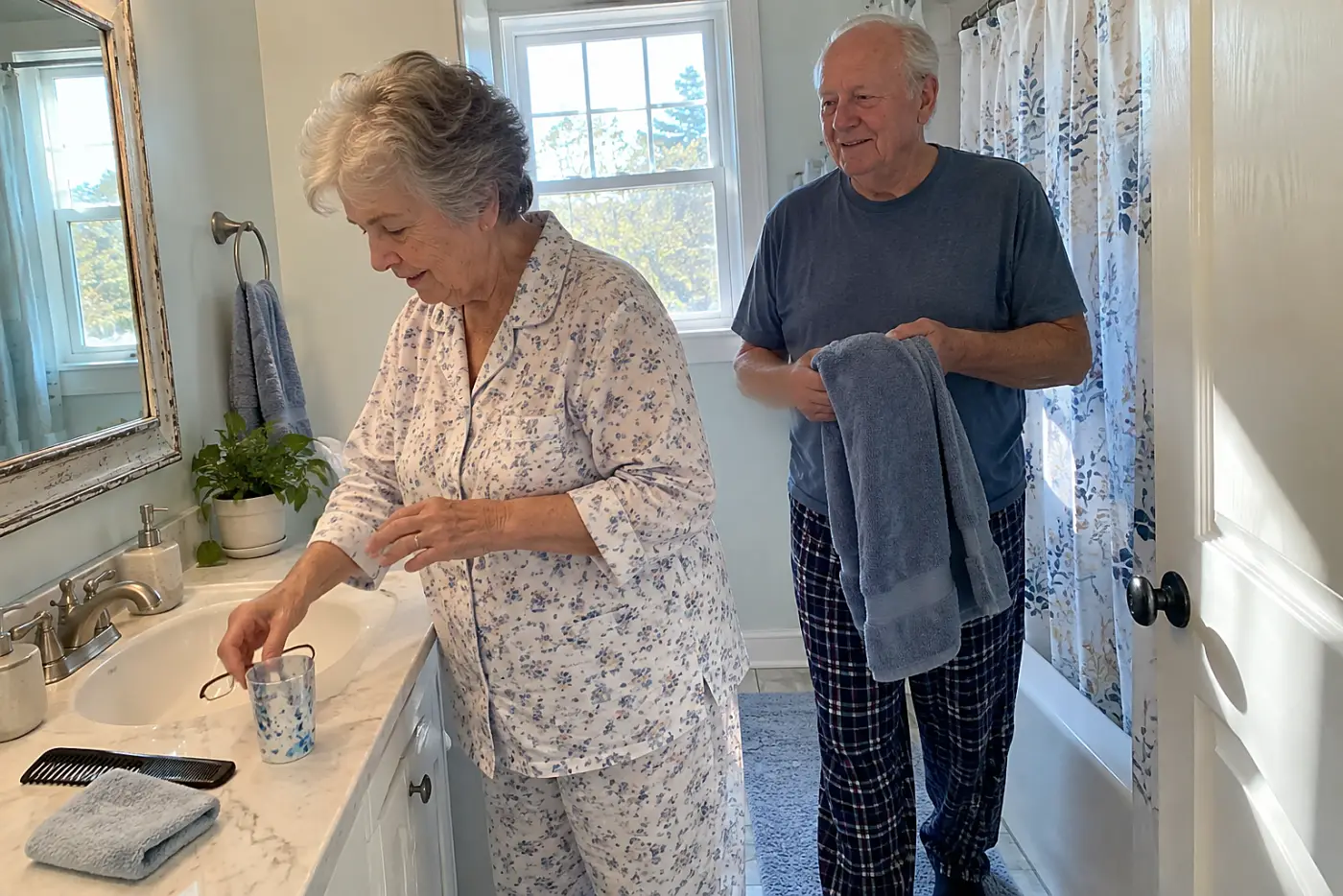
You search the house while your glasses sit by the sink.
Putting something down without paying attention leaves a weak memory of the moment. Finding it in a plausible place, after retracing your steps, differs from finding things in strange places with no idea how they got there.
The Alzheimer's Association includes misplacing things and losing the ability to retrace steps among its warning signs. A single lost pair of glasses still isn't a diagnosis.
This week, pick one home for your glasses and note where they turn up when you miss them. Tell your clinician, “I found them in an unusual place and couldn't work out how they got there,” if that describes what happened.
Your keys tell a slightly different story.
15The keys found inside the refrigerator

Keys appear somewhere you would never put them.
An odd location matters when it keeps happening, especially if retracing your steps doesn't help. Putting groceries away while distracted is one explanation for a single episode.
Don't let a neat explanation cover a pattern you haven't checked. Write down the date and what else was happening.
This week, ask someone at home to note unusual placements without moving the object first. Say, “Show me where you found it before you put it back.”
An object is one thing; a task with several steps is another.
14The familiar recipe with missing steps

You reach for the flour and lose the sequence.
Anyone can skip a step while tired or interrupted. Trouble following a recipe you've made for years, despite having the directions in front of you, deserves a closer look. The Alzheimer's Association includes difficulty completing familiar tasks among its warning signs.
The important detail isn't whether the cake failed. It's whether you could read the next instruction, understand it, and carry it out.
This week, try a familiar recipe with the written steps beside you, without testing yourself under pressure. If you get stuck, mark the step and what confused you. Tell your clinician, “I could read the instruction, but I couldn't work out what to do next.”
That distinction grows sharper when the task involves money.
13The utility bill paid a second time

The same bill leaves your account twice.
One duplicate payment follows a missed checkmark or a changed billing screen. Repeated errors in a bill-paying routine deserve attention, particularly when you don't remember making the first payment. Check whether automatic payment and a manual payment both went through before treating the second charge as a memory lapse.
Fees and missed bills have consequences beyond embarrassment. Look for a change from your own habits, rather than judging yourself against anyone else's system.
This week, review your latest statements and mark each payment against its bill. If a charge doesn't make sense, call the number on your bank statement. Say, “I see two payments to this company; help me check how each one was made.”
Another routine can reveal a change before a bill does.
12The medication organizer with skipped compartments
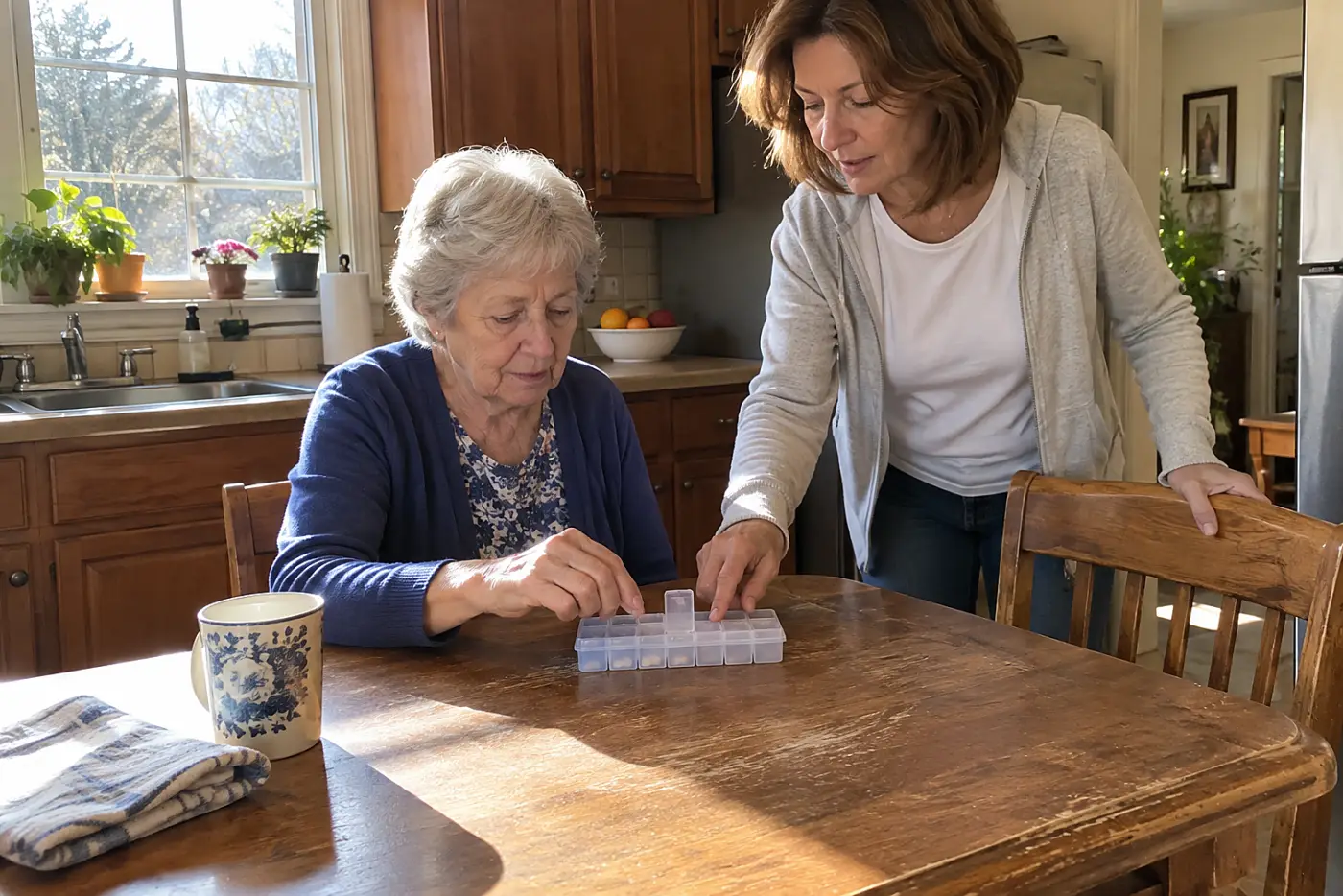
Tuesday's pills are still there on Thursday.
A missed dose has several possible causes, including a changed schedule or a confusing organizer. Don't take extra medication to catch up unless your pharmacist or prescriber tells you to. The FDA's medicine-use guidance and your prescription label are better guides than a guess.
The memory question is whether skipped doses are new and whether your usual reminder still works. A dosing error also deserves prompt advice from a pharmacist.
This week, photograph the organizer before changing it, then call your pharmacist about any missed or doubled dose. Say, “I found pills in the wrong days; what should I do about today's dose?” Bring the pattern to your clinician.
The next check is whether treatment itself changed before your memory did.
11The new prescription beside your old one
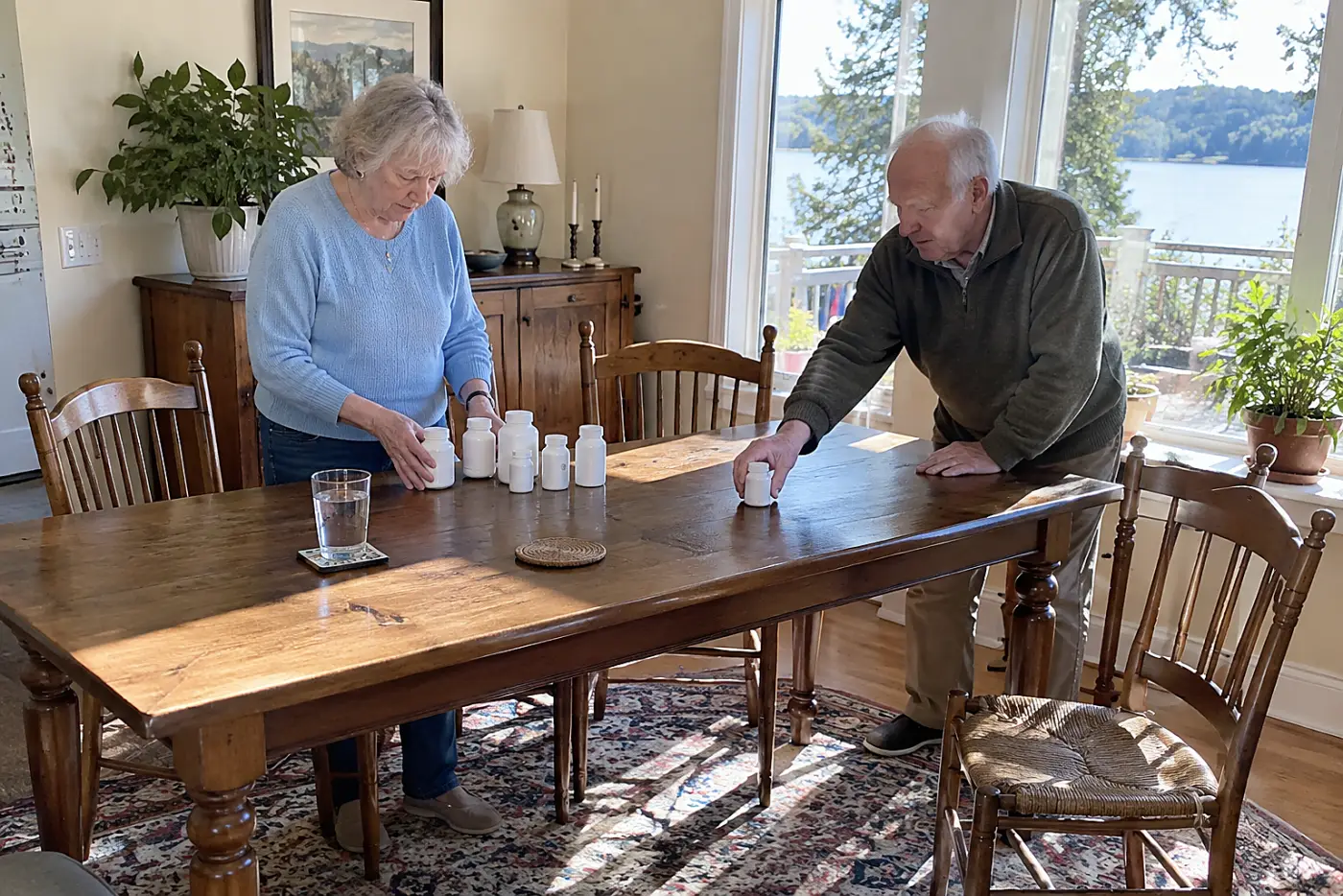
Your memory changed after the medicine bottle changed.
Prescription drugs, over-the-counter sleep aids, and other medicines affect alertness and thinking. A clinician needs the names, doses, and start dates to check for side effects or interactions.
Stopping a prescribed drug on your own creates a second problem. A medication review starts with the full list.
This week, put every bottle and supplement on the table and photograph the labels. Say, “My memory changed after this was started; please review everything I take.”
The bottle isn't the only recent change worth checking.
10The sleepless night before a word lapse

After little sleep, even ordinary words feel out of reach.
Sleep helps attention, and attention helps a memory form. If you didn't register a detail, there is less to retrieve later. The National Institute on Aging lists sleep problems among conditions worth checking when memory changes.
One bad night gives useful context, not a free pass for an ongoing change. Loud snoring, breathing pauses noticed by another person, or daytime sleepiness also belongs in a medical conversation.
This week, note your sleep hours beside any lapses for several days. Tell your clinician, “The lapses followed poor sleep, and I want to check why I'm sleeping badly.” Include any report of breathing pauses rather than guessing what caused them.
Next, consider what happens when your mind has too much to hold.
9The shopping list left on the counter

You reach the store without the list you wrote.
Writing a list doesn't put it in your bag. A broken departure routine explains plenty of forgotten paper. Look at what happens when you get home: the handwriting, the items, and the moment you wrote them should still be familiar.
The question is whether you recognize the list later and remember writing it. Losing that memory repeatedly is worth mentioning, especially when the same thing happens with other notes.
This week, keep the list beside your keys and note what happens. Say, “I found my list, but I don't remember writing it,” if that's the troubling part.
Stress can crowd the same small space in your attention.
8The word that disappears during an argument

A sharp exchange makes the sentence fall apart.
Strong emotion competes for attention. You still know what you meant, but pulling out the word takes longer while you manage the argument. Stress, anxiety, and depression belong in a memory discussion because each deserves care in its own right.
Don't write off every change as stress. If the lapse continues when the pressure lifts, that detail matters.
This week, note whether the word returned and whether the same problem happened during a calm conversation. Tell your clinician, “It started during stress, but it now happens when I'm relaxed,” if that fits.
The room itself can interfere with what you hear and store.
7The answer missed across a noisy table

You ask again because you didn't catch the answer.
Hearing a fragment isn't the same as receiving the full message. If the words never came through clearly, there was no complete answer to remember.
The National Institute on Deafness and Other Communication Disorders describes hearing loss and conversation. Treating every repeat as a memory failure misses a checkable problem.
This week, try the conversation face-to-face in a quiet room. Say, “I heard part of that; please tell me again without the television on.”
Now look at whether vision is getting blamed on memory too.
6The note you could not read
A blurred note looks like a forgotten instruction.
If you can't read the handwriting or see a screen clearly, you lose information before memory has a chance. Changes in vision deserve their own exam. The National Eye Institute describes age-related vision changes, but the immediate question is simpler: could you see the message?
Mistaking a missed visual cue for a forgotten one leads you toward the wrong fix. It also leaves a vision change unaddressed.
This week, check the note in good light with your usual glasses, and arrange an eye exam if reading has changed. Tell the eye doctor, “I thought I forgot these notes, but I couldn't read them clearly.”
A change in mood deserves the same honest check.
5The unopened mail after a hard month

Bills sit untouched while your energy disappears.
Low mood changes concentration and motivation. It also makes it harder to tell whether you forgot the mail or couldn't face opening it.
The National Institute of Mental Health describes depression in older adults as a condition that deserves treatment. Don't make memory carry the whole explanation.
This week, note changes in sleep, appetite, interest, and concentration. Tell your clinician, “My memory feels worse, and I've also stopped opening my mail.”
Then ask whether the change arrived gradually or all at once.
4The abrupt confusion during an illness
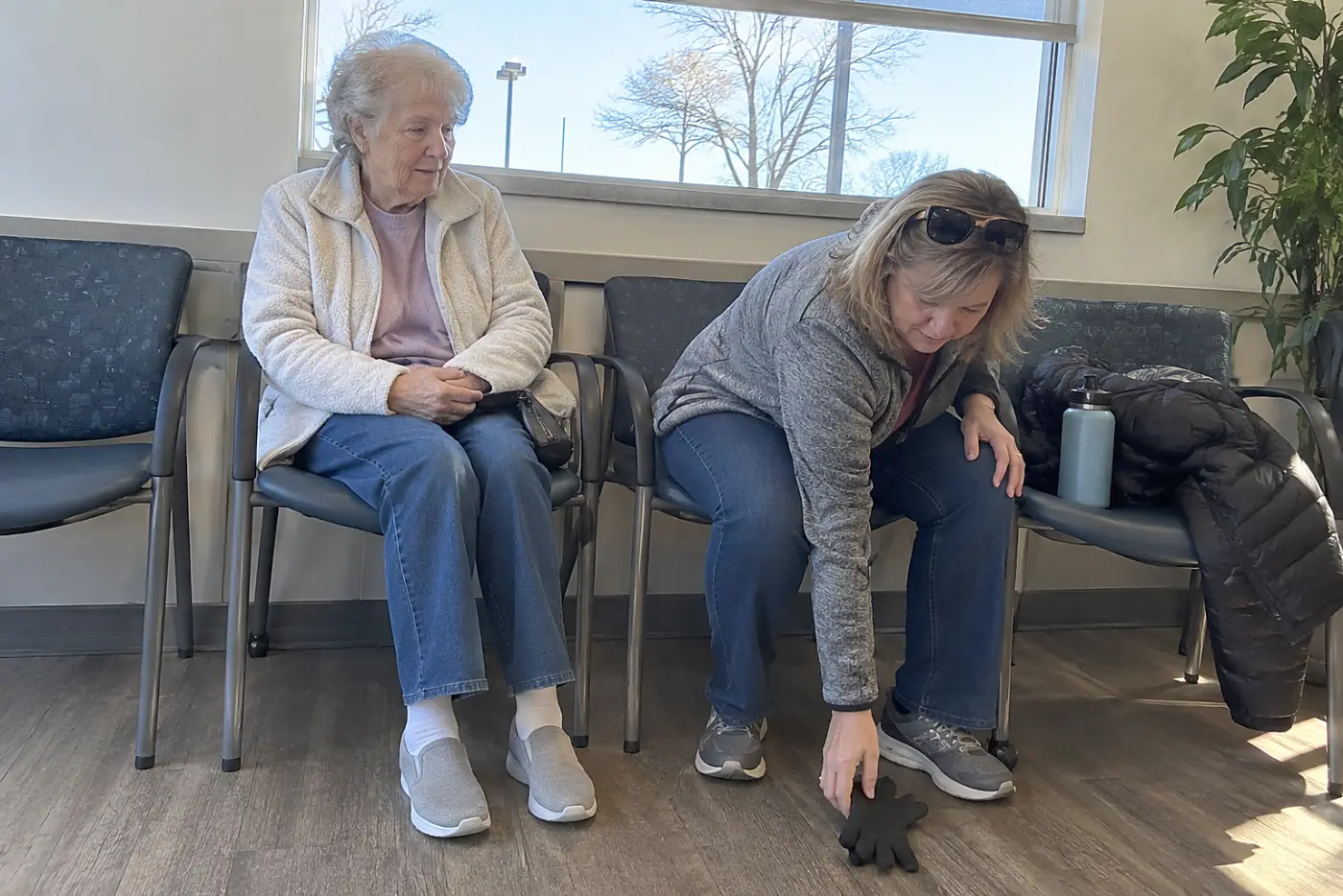
Yesterday's routine no longer makes sense today.
Confusion that starts over hours or days needs prompt medical attention, particularly alongside illness, fever, dehydration, or a medication change. Delirium disrupts attention and awareness; the person struggles to follow what's happening around her. The National Institute on Aging describes delirium as a sudden change, not a normal part of aging.
Waiting for the next routine appointment risks missing a treatable cause. If you're suddenly confused, ask someone to stay with you and get immediate medical help.
This week, leave a current medication list where you and a trusted person can find it. If confusion begins, say, “This is a change from yesterday; I need medical help now.” Sudden trouble speaking or understanding calls for an even more specific response.
First, consider a slower change that still affects safety.
3The familiar drive with a wrong turn

You miss a turn on a route you know.
One wrong turn happens, especially when construction or traffic changes your route. Getting lost on a familiar drive is different, particularly when you don't recognize the street or cannot work out how to get home. Write down whether a landmark helped you find your way.
Safety matters before anyone settles on a cause. Don't turn the next trip into a test of whether you can manage alone.
This week, tell your clinician about a familiar-route episode rather than testing yourself with another drive. Say, “I got lost going somewhere I know.” Include the route, the date, and how you got home.
A doctor's visit goes better when the story has details.
2The dated examples in your phone notes
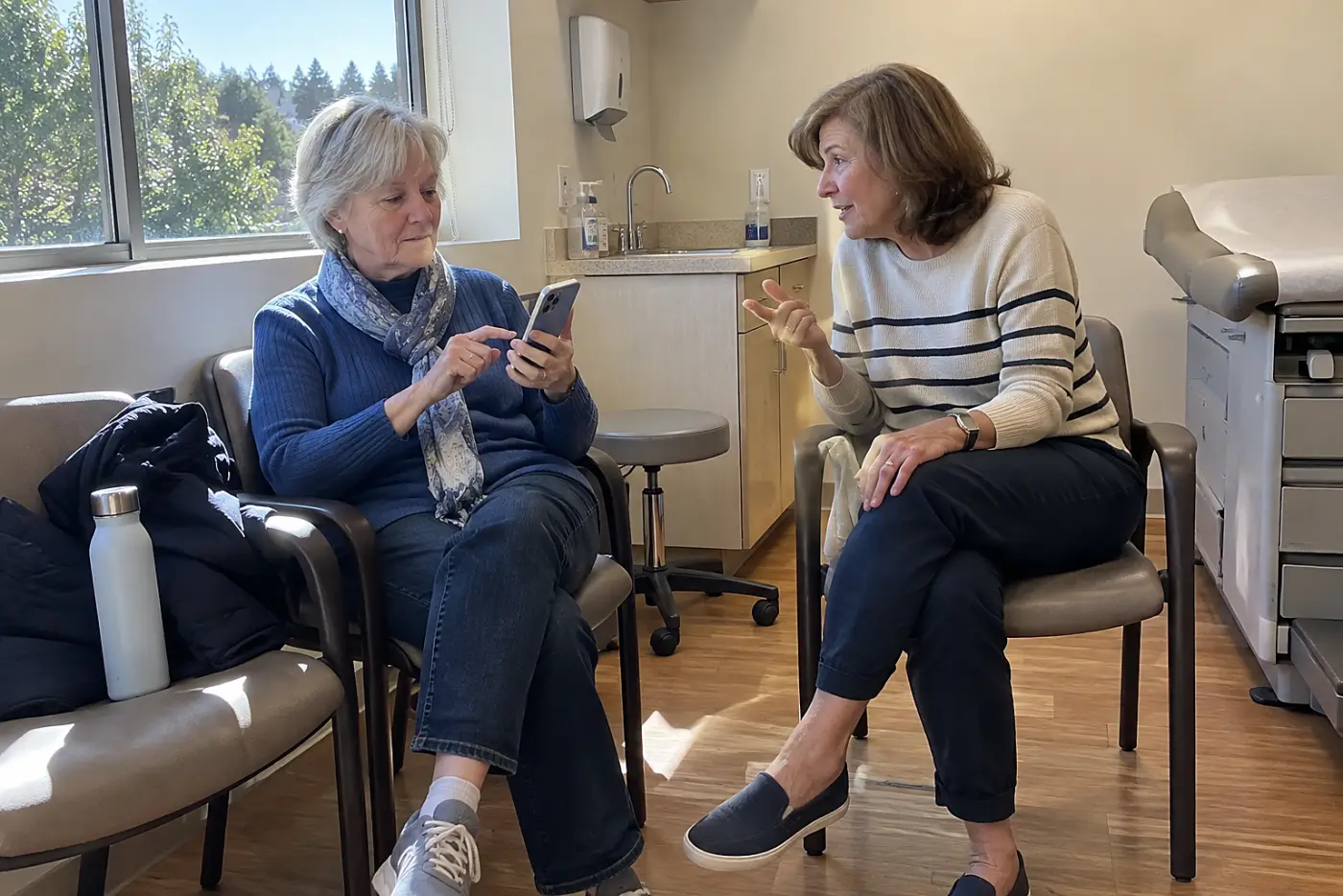
A vague complaint disappears inside a short appointment.
A note with dates, specific events, and what happened next gives your clinician something to investigate. Add sleep, illness, medicine changes, and whether anyone else noticed. The National Institute on Aging advises discussing memory concerns with a health professional; a clinician can assess them and decide what further testing fits.
Write what happened, not what you fear it means. “Asked the same question three times after hearing the answer” tells more than “my memory is terrible.”
This week, start one note on your phone and bring it to an appointment with your medication list. Say, “These are the changes I noticed, and these dates show when they started.” Ask what happens next if the first assessment doesn't explain them.
One symptom, though, shouldn't wait for a notebook or an appointment.
1The 911 call for sudden speech trouble
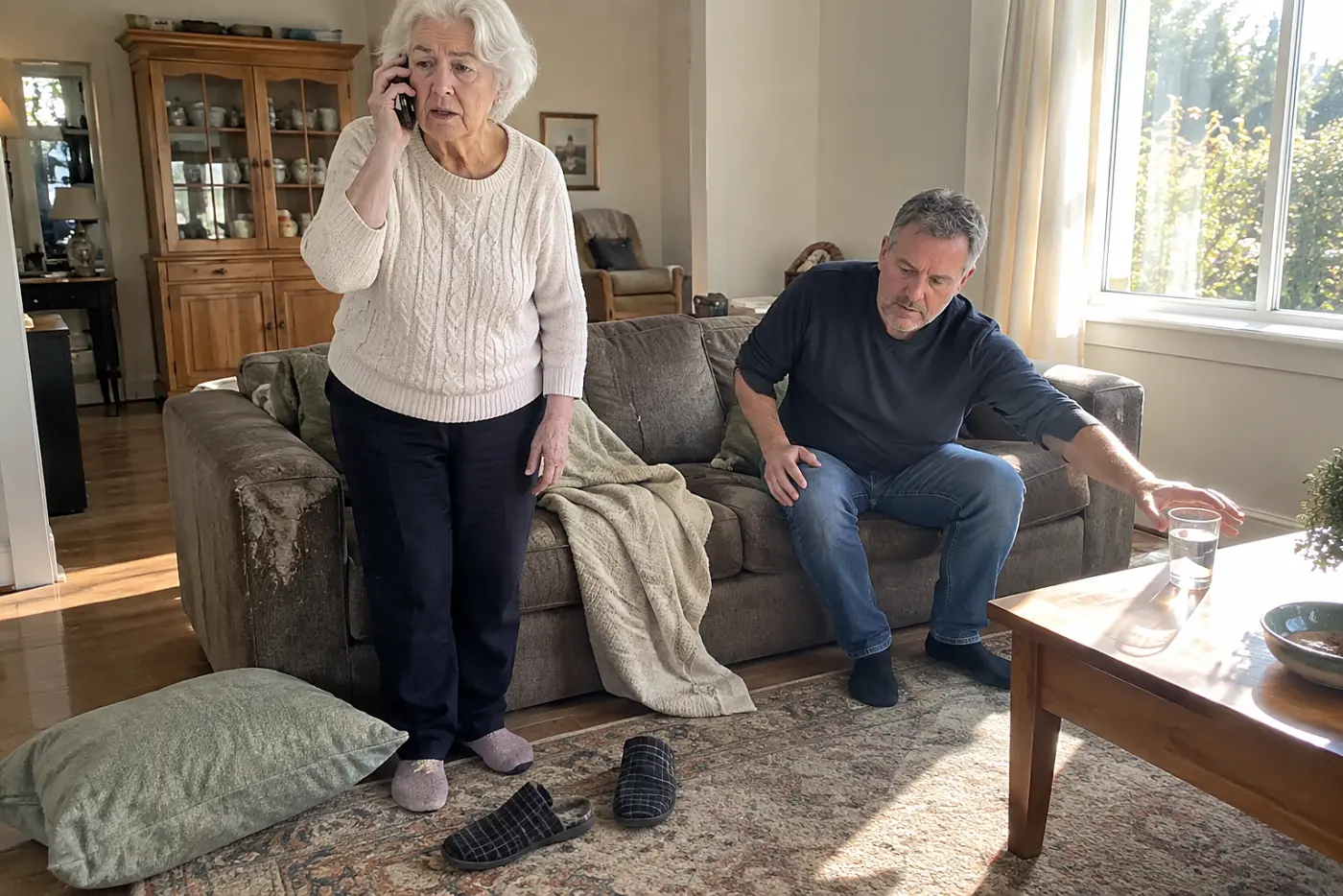
A sudden word failure can signal a stroke.
If speech becomes slurred, words suddenly won't come out, or you can't understand speech, call 911. Sudden face drooping, arm weakness, vision trouble, or severe headache adds urgency. The CDC's stroke signs page says to call 911 and note when symptoms began.
Don't drive yourself or wait to see whether the word returns. Stroke treatment depends on quick assessment, including the time you were last well.
This week, put your address where you can see it and tell someone close which symptoms mean an immediate call. Say to the dispatcher, “My speech changed suddenly. I was last well at this time.”
Keep the exact words for that call just below.
The bottom line
Across these 23 situations, watch what returns, what repeats, and what changes suddenly.
The best-prepared version of you has dated examples and a medication list ready. She also knows when to call 911.
Which of these has already happened in your family?
Bonus: The 911 call script for sudden speech trouble
- Call 911 when speech or understanding changes suddenly, even if the symptom improves.
- Say, “My speech changed suddenly,” or describe the change you're seeing in someone else.
- Give the time the person was last known to be well. If you don't know, say so.
- Give the address, then follow the dispatcher's instructions. Don't drive to the hospital yourself.
Dr. Alan Pierce, PT, DPT
Health Reviewer
Alan is a physical therapist who specializes in helping adults over 50 stay strong and mobile.
You might also like