26 Things You Learn When Your Husband Handled the Money and Now You Have To
A paper bank statement shows which bill was paid, while the account holder’s name tells you whom to call when the password fails.
By Linda Cho, CFP®, Money Editor
Updated · 17 min read
- Written by our money editor
- How we review

Read to the end: #1 is the first-week document that puts urgent calls in order. Almost nobody makes it first.
The laptop opens to a sign-in screen. His name sits above an empty password box. On the desk are a bank envelope, an insurance card, and a sticky note with four numbers. None tells you whether the electric bill is due. The phone he used for approval codes is still charging beside the bed.
Knowing where the money went feels like the first job. First, you need to know which accounts exist, who owns them, and which bills will try to collect from which account. A password solves only one piece.
Here are 26 things to check, starting with the clues closest to hand.
26The mail pile behind the kitchen calendar
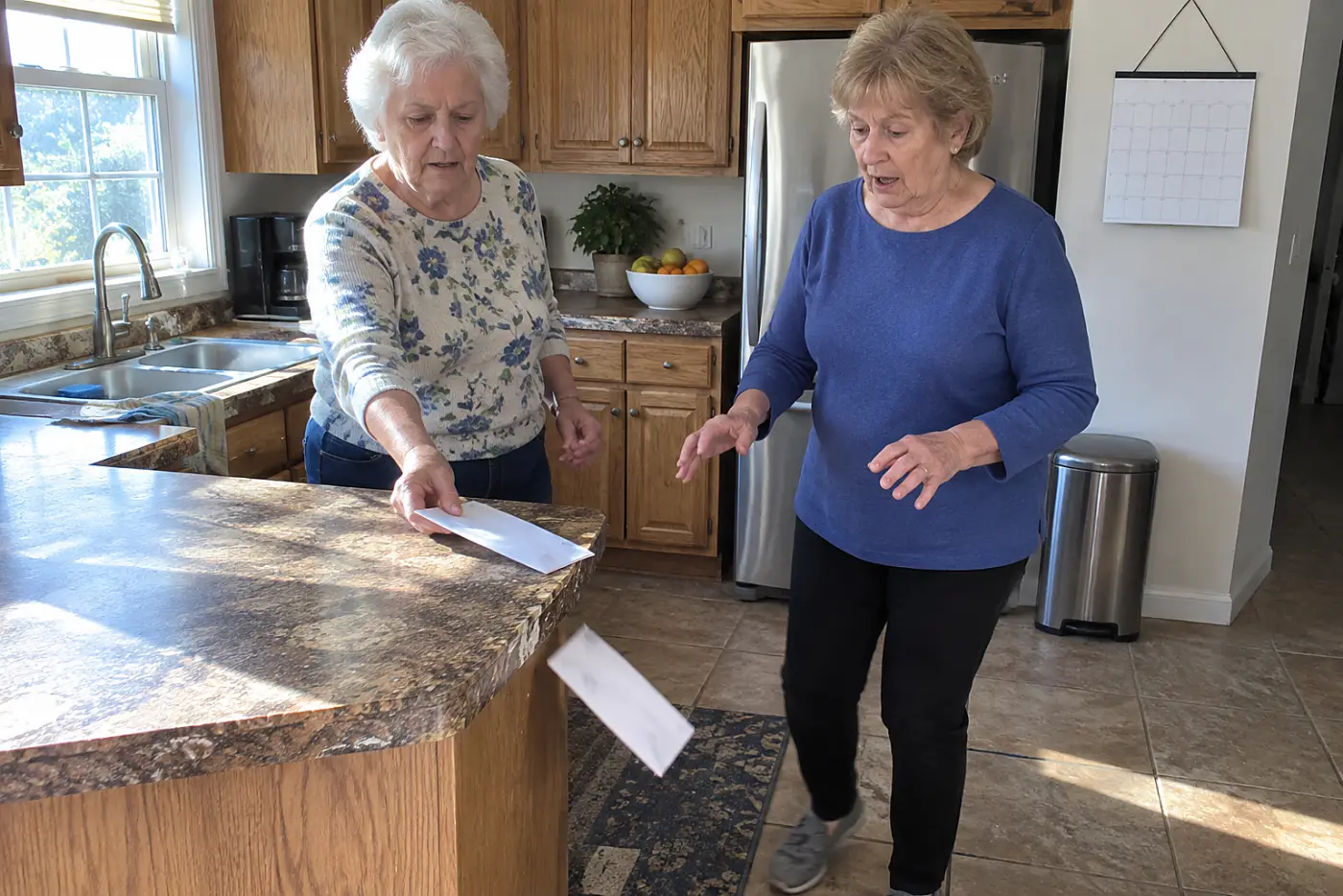
Important accounts still leave paper tracks.
A statement shows a company name, part of an account number, and an address. A bill shows a due date and the service it pays for. Even an envelope reveals which institution expects to reach your house.
Throwing out the pile before sorting it costs you clues you cannot recreate from memory. An overdue notice also tells you which call belongs near the top of the list.
This week, sort the mail into accounts, bills, taxes, and unknown senders. Say, "I have a notice from your company. What account does it refer to, and how do I verify my authority?"
The next clue sits with the deposits.
25The bank statements that show each deposit
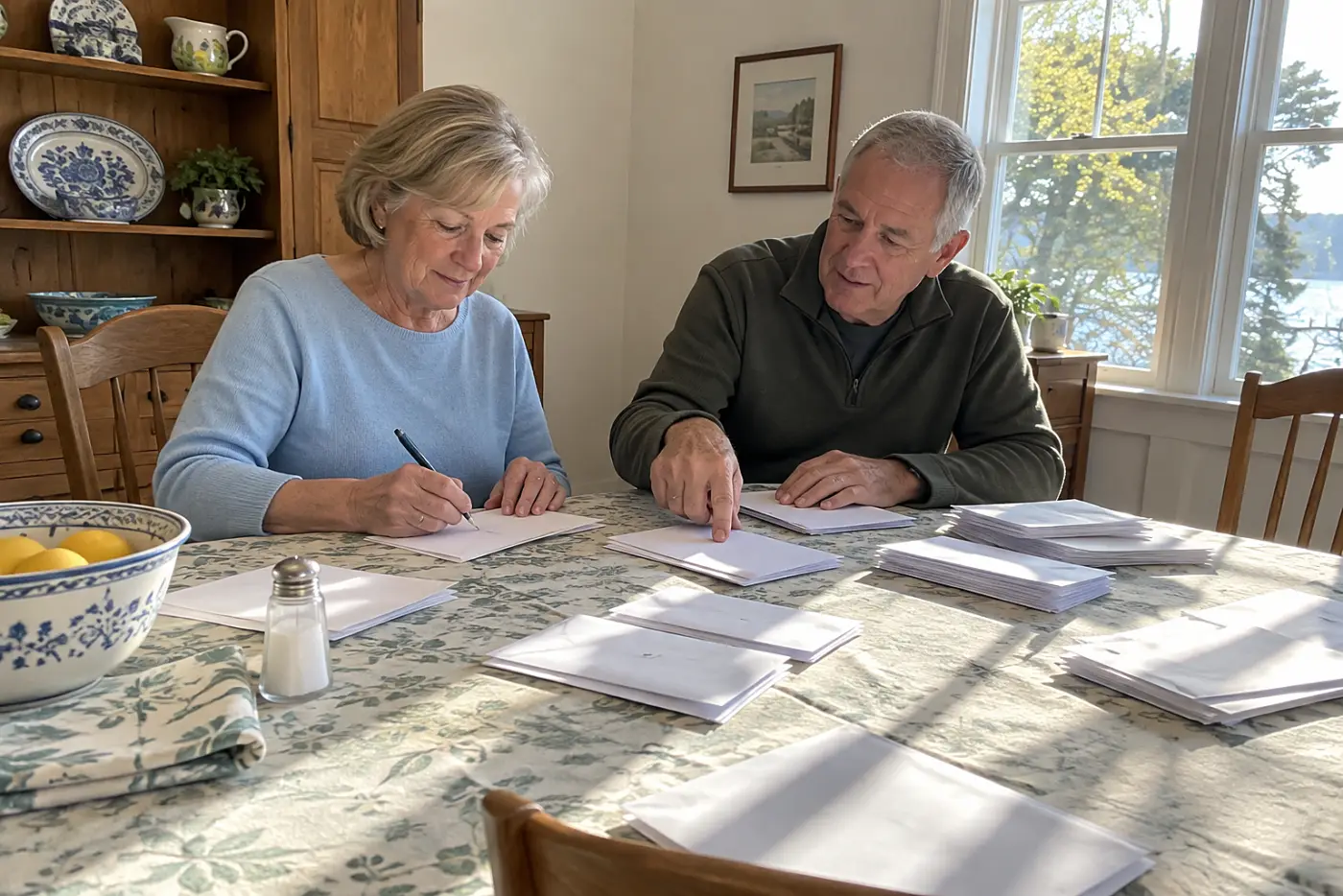
A balance doesn't tell you what arrives next.
Look at recent statements for Social Security deposits, pensions, wages, interest, and transfers. Then mark deposits that belong to your husband rather than the household. A payment received after his death isn't automatically money you can spend.
Social Security doesn't pay benefits for the month he died. A deposit made after his death isn't necessarily yours to keep, so check before spending it. The Social Security Administration handles survivor benefits separately; an old deposit pattern won't tell you the new amount.
This week, circle every deposit on three recent statements and identify its source. Say, "Which deposits should I expect now, and whom do I notify about payments made after his death?"
Keep the statements open; the withdrawals have their own story.
24The checking withdrawals that keep bills paid
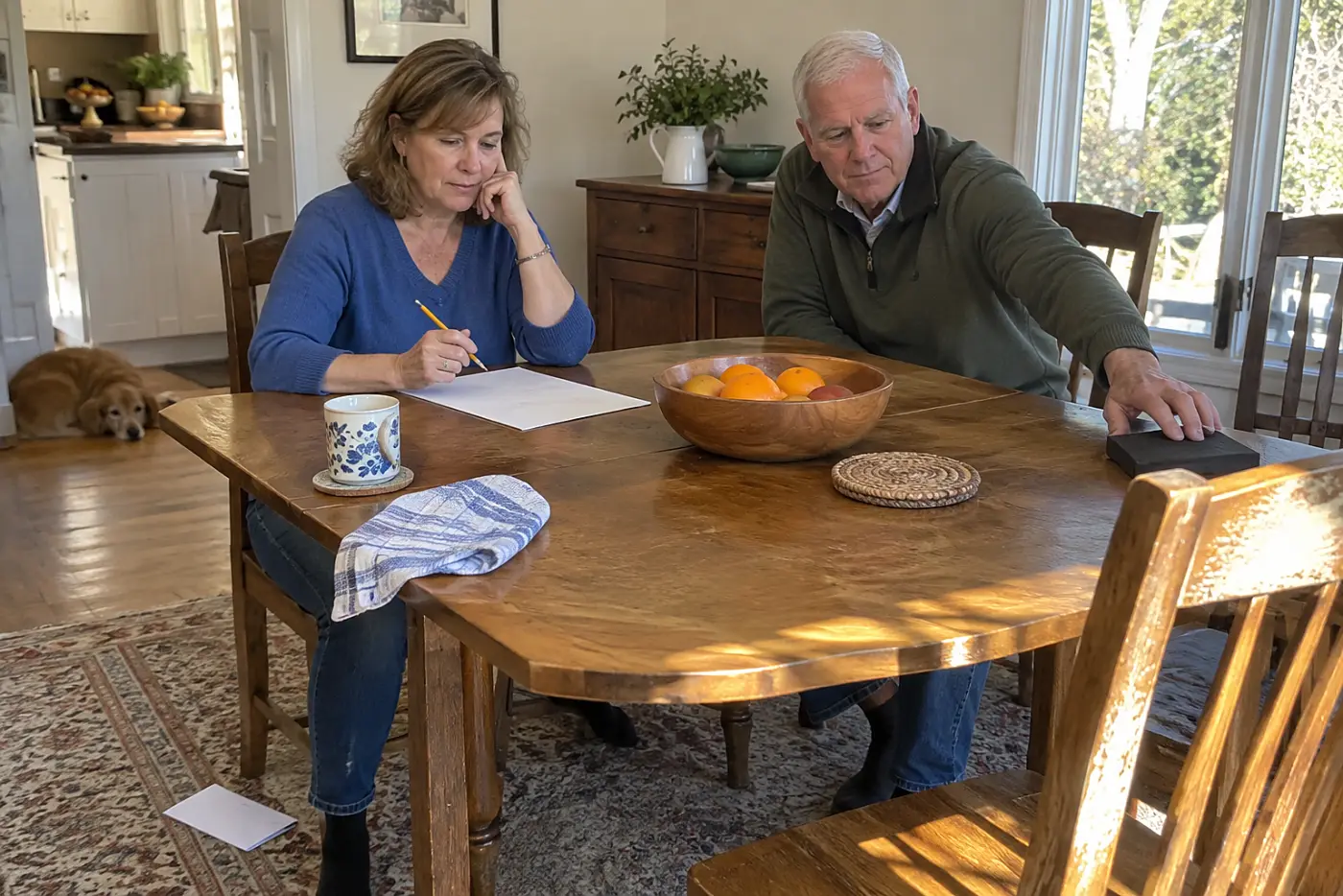
Automatic payments don't pause for confusion.
A utility, mortgage servicer, or insurer pulls money using account details already on file. A debit card payment follows the card instead. Those are different arrangements, even when both appear on one statement.
Closing the account before finding those withdrawals risks missed payments. A returned payment also creates another problem to sort out.
This week, mark every recurring withdrawal on recent statements and note its date. Say, "How is this bill paid now, and what do you need to change the payment source?"
One payment could be tied to a card you haven't found.
23The credit card with his name on it

A card in your wallet proves little about the account.
A joint account holder shares responsibility for the account. An authorized user has permission to use it but does not own it. Look for those exact terms in the card agreement or ask the issuer to identify your status.
If he was the sole owner, the issuer's death process matters before you rely on that card for groceries or the pharmacy. A card closing also leaves subscriptions without a payment method. Calling early gives you time to move the charges.
This week, list the cards you use and call each issuer's number printed on the card. Say, "Am I a joint account holder, an authorized user, or the sole owner of my own account?"
Then look for the debts that never came with a card.
22The mortgage statement beside the deed

The mortgage and the house aren't the same thing.
Check the deed to see whose name is on the house. Then read the mortgage statement for the loan servicer and the next payment due. Your name on one document doesn't put it on the other.
A missed payment has consequences even while ownership papers are being sorted. The Consumer Financial Protection Bureau has guidance for successors dealing with a mortgage servicer.
This week, find the deed and the latest mortgage statement. Say, "What documents do you need to discuss this loan with me as a possible successor?"
A different loan can stay hidden in the glove box.
21The car title inside the glove box
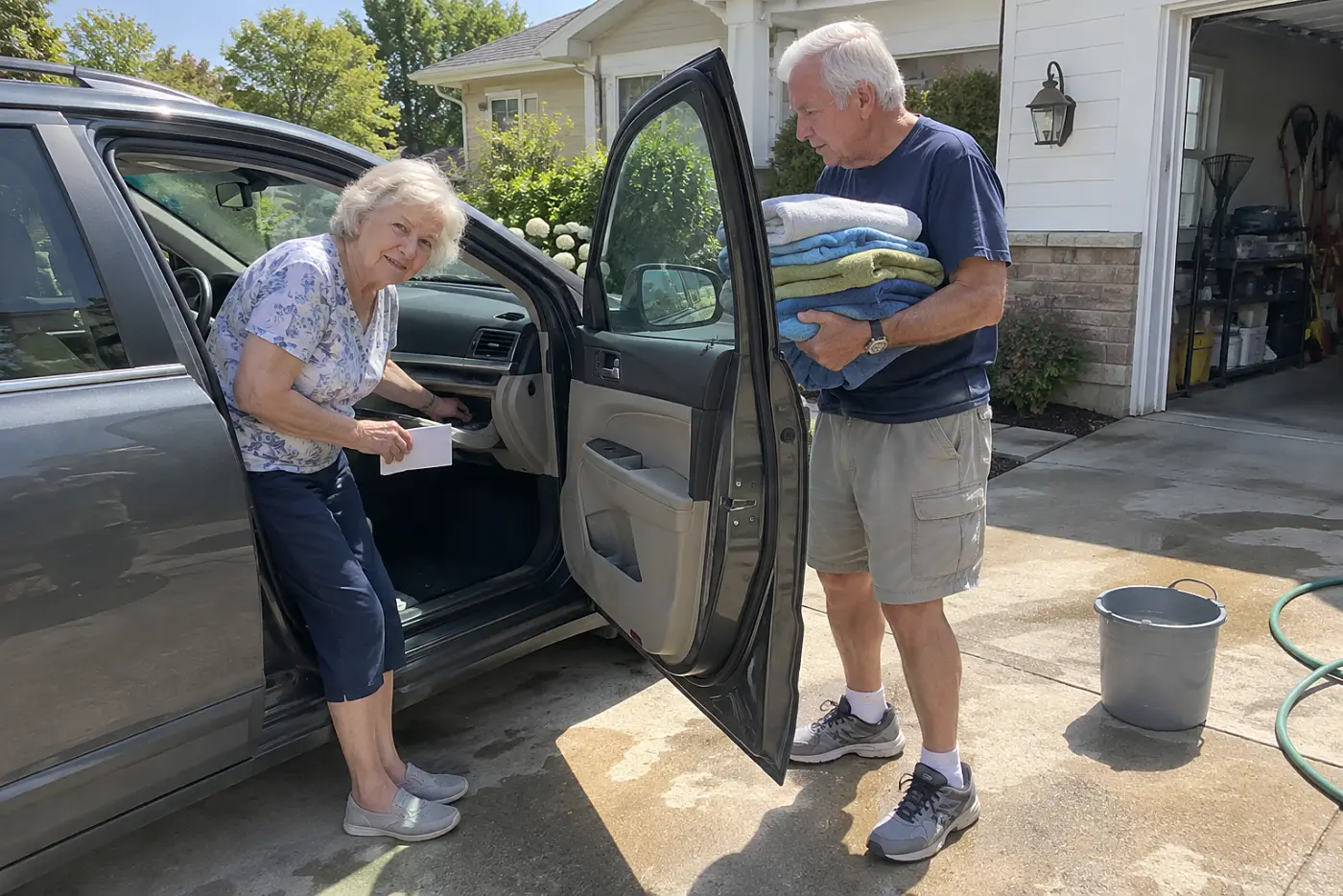
Driving the car doesn't settle who owns it.
The title names the owner. A loan statement names the lender and payment terms. Registration and insurance answer different questions, so gather all four before asking anyone to transfer the car.
A payment still comes due while the title remains unchanged. Your state motor vehicle agency sets its own transfer requirements; the lender has a separate process if money is owed.
This week, photograph the title, registration, insurance card, and latest loan statement. Say, "What paperwork do you require to transfer this title after an owner's death?"
Next, check the policy whose bill appears every six months.
20The insurance declarations page with both names

Paying the premium doesn't prove you're listed correctly.
The declarations page lets you check whose names, property, and vehicles the insurer has on file. Read it alongside the bill; paying a premium doesn't tell you whether the policy details still fit. After a death, the insurer needs accurate ownership and contact information.
Don't cancel an existing policy while you check what needs updating. A lapse in homeowners or auto coverage creates trouble before you finish the paperwork.
This week, find the home and auto declarations pages and call the agent. Say, "Who is named on these policies, and what do you need to update the file?"
Another policy has a different purpose entirely.
19The life insurance policy with an old address

A policy cannot pay you if nobody finds it.
Search files, bank withdrawals, and old email for insurer names. The insurer checks its beneficiary designation and asks for claim documents, including a death certificate. A will doesn't replace the name on a life insurance beneficiary form.
If you cannot identify the insurer, the NAIC Life Insurance Policy Locator accepts search requests. It isn't a substitute for calling an insurer whose name you already have.
This week, write down each insurer and policy number you find. Say, "I need the claim instructions and the beneficiary information you're authorized to share with me."
Keep that beneficiary question in mind when you open the next envelope.
18The retirement account beneficiary form on file

The statement balance isn't the whole answer.
An IRA or workplace plan has its own beneficiary record. The institution uses that record to identify who receives the account after death. An inherited account also has tax and withdrawal rules that differ by account and beneficiary.
Moving money before you know those rules risks a costly mistake. The IRS has inherited IRA guidance, but the custodian holds the actual account paperwork.
This week, call each retirement account custodian and ask for its beneficiary claim packet. Say, "What can you tell me about the beneficiary on file, and what steps come before any transfer?"
The next folder has no beneficiary form.
17The will in the desk drawer
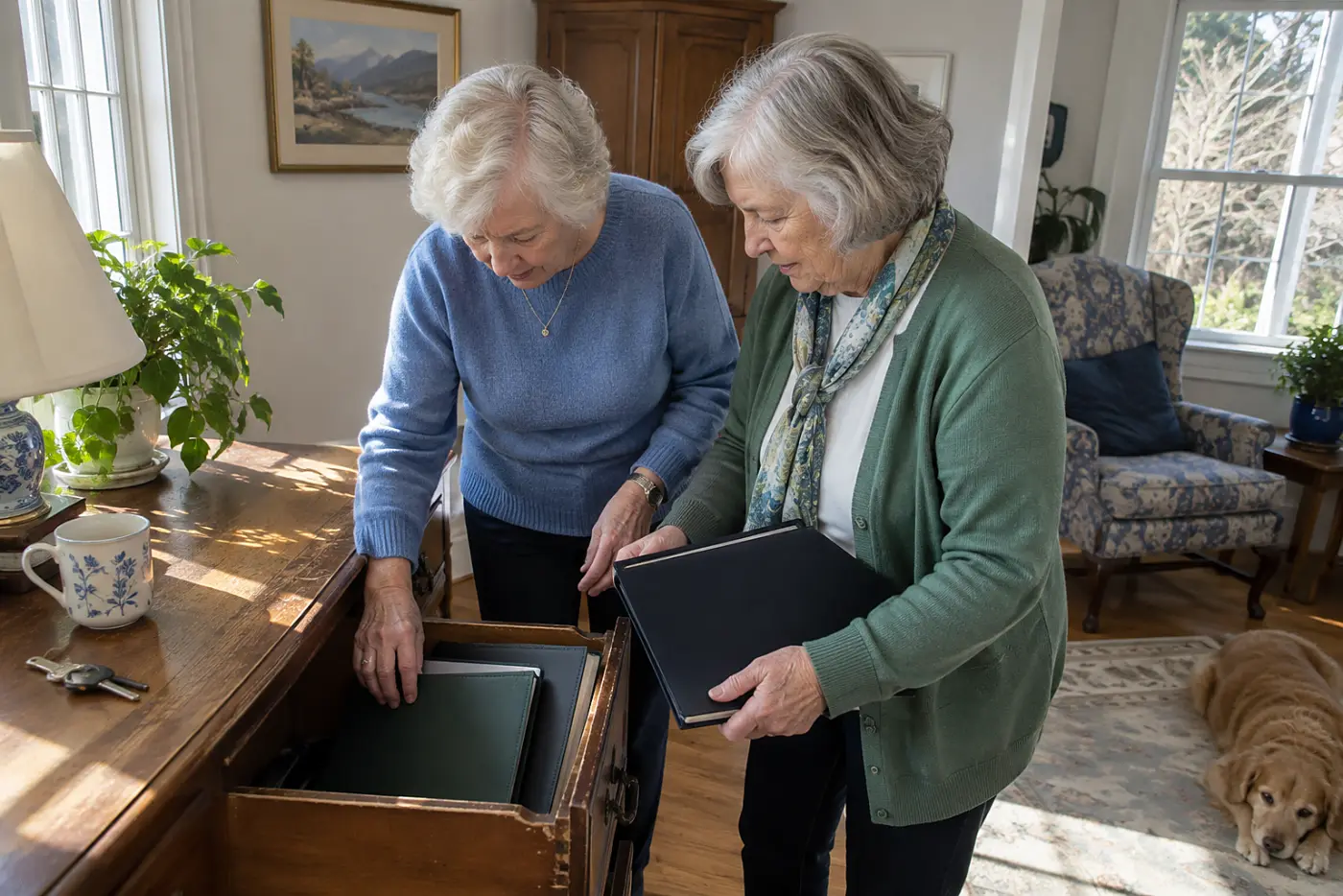
A will does not unlock every account.
A will directs what happens to property passing through the estate. That won't hand you access to an account with a named beneficiary. Joint ownership follows its own records too. A bank won't treat the will alone as permission to hand over estate funds.
That difference matters when cash is needed for ordinary bills. If you're named executor, the bank will still want proof of the authority it recognizes.
This week, locate the signed will and note where it is stored. Say, "What court document do you require before I can act for the estate?"
The person named in an old form deserves a closer look.
16The power of attorney in your file

His power of attorney ended when he died.
While he was alive, that document gave someone authority to act for him within its terms. It does not turn its agent into the executor afterward. Banks ask for different proof once they learn of a death.
Using the wrong paper delays the call you actually need to make. The signed will or a court appointment points toward the next step.
This week, read the name and scope on the power of attorney. Say, "He has died. What proof of authority do you need from me now?"
Then count the official copies people will request.
15The death certificates requested by account providers

One certificate won't finish every claim.
Insurers, retirement custodians, banks, and government offices ask for proof of death. Some accept a copy; others specify a certified certificate. Their instructions determine what you send and whether they return it.
There's no reliable number to order from an account list you haven't found yet. Ordering before asking leaves you guessing; waiting until a claim stalls costs time too. The funeral home or your state's vital records office explains how to get certified copies.
This week, ask each organization what it requires before placing an order. Say, "Do you need a certified death certificate, or will a copy do, and will you return it?"
One agency also needs a direct conversation.
14The Social Security survivor claim call
His benefit doesn't turn into yours automatically.
A death must be reported to Social Security. Survivor benefits require a separate discussion about eligibility and when payments begin. The agency can tell you what records it needs for your situation.
That call also helps sort out payments deposited after death. The SSA survivor benefits page is the official place to start.
This week, contact Social Security and have both Social Security numbers ready. Say, "I need to report my husband's death and ask about survivor benefits."
Now check the income that came from his employer.
13The pension paperwork from his last employer
A pension check has rules you cannot see.
When his pension began, he made a payment election. The plan administrator has that choice on file, and it's the detail you need before counting on another check. His monthly deposit won't tell you whether a survivor payment continues.
Don't build a budget around the old check until the plan confirms what follows. If you don't have a plan statement, an old tax form or bank deposit helps identify the payer.
This week, find the plan's phone number and ask for written survivor benefit information. Say, "Please explain the payment election on file and the documents you need from me."
Another benefit arrives as a card rather than a deposit.
12The Medicare card and current plan notices
A familiar card can hide an unanswered question.
Check whether your coverage is your own Medicare plan or coverage through his employer. Medicare enrollment and employer coverage don't follow the same paperwork. A change in household coverage deserves a call before you discard notices.
Missing an enrollment window creates a harder problem than opening the mail. Medicare and the employer benefits office can tell you which coverage is active.
This week, put your cards beside the latest plan notices. Say, "What coverage do I have today, and does his death change anything I must file?"
One folder records what the household already told the government.
11The last tax return with attached schedules

That return is an account-finding tool.
Interest and dividend forms name banks and brokerages. A retirement distribution form names its payer. Look through the attached forms, not only the signed return, and mark every institution you cannot already identify.
The filing status for the year of death deserves its own check. The IRS explains how a surviving spouse signs and files a final joint return when eligible. Don't assume last year's software already knows what changed.
This week, gather the most recent federal return and its supporting forms. Say to your tax preparer, "Which institutions appear here that I haven't contacted, and what do you need for the final return?"
One of those names leads to an account no longer used.
10The account named on an old tax form
An unused account isn't always empty.
Banks and brokerages change names, merge, or move accounts. An older tax form gives you a payer name and tax identification details to help trace a record. Ask the institution what it needs before sending sensitive documents.
Leaving the lead unexplored leaves money or records outside your inventory. State unclaimed property offices offer another search route through MissingMoney.com.
This week, flag every unfamiliar payer on older returns and statements. Say, "I found your institution on a tax form. How do I check whether an account remains open?"
The next record is about what is owed, not owned.
9The credit report you have never opened

Not every debt sends mail to the house.
Your report lists accounts reported under your name. His report is separate; after his death, the credit bureaus have procedures for requesting a deceased person's report. Reviewing both helps you separate your obligations from accounts that need estate attention.
Read each entry for the lender's name and the type of account. A joint debt raises a different question from a card on which you were only an authorized user. If a collector calls, write down its name before discussing payment.
Don't agree to pay a debt merely because a collector says your husband owed it. Responsibility depends on the account and state law. The CFPB's debt collection guidance explains what to ask before paying.
This week, get your free reports through AnnualCreditReport.com and mark unfamiliar accounts. Say to a collector, "Please send written details of the debt and explain why you believe I owe it."
A debt tied to the house calls for a different record.
8The county property tax notice in the drawer

The tax bill follows the property.
Your county assessor or treasurer sends notices to the address on file. A mortgage payment includes taxes only when an escrow account collects them. The mortgage statement shows whether that is happening.
Missing a property tax notice doesn't erase the bill. It also leaves you unaware of the next due date set by your county.
This week, check the latest tax notice against the mortgage statement. Say, "Is this property tax paid through escrow, and where will future notices be sent?"
Then look at the smaller bills that still need attention.
7The utility account in his name alone

The lights have an account holder.
Electric, gas, water, phone, and internet providers each keep their own billing records. Changing the contact name and payment method requires contacting each provider. The password for one website won't fix the others.
A bill left on an inactive card still comes due. Before changing service, ask about any deposit or account change the provider requires.
This week, make a list from recent bank withdrawals and paper bills. Say, "The account holder has died. What do you need to keep service and billing current?"
The phone bill matters for a reason beyond calls.
6The phone number receiving sign-in codes

A code sent to his phone can stop everything.
Banks and other services use a stored number to confirm sign-ins. If the phone line closes, a password reset still sends the code to a number you no longer control. Account access and legal authority remain separate questions.
Losing the number before calling providers makes each recovery harder. Keep the device and service in place while you identify accounts and ask about their procedures.
This week, list the services that send codes to his phone. Say, "What is your process for updating the verification number after an account holder dies?"
Email holds the next set of account clues.
5The email inbox full of account notices

Search reveals accounts the drawer missed.
Billing notices, renewal messages, and statement alerts show which companies contacted him. An email address also receives password resets, but having access to his inbox doesn't give you ownership of every account named there. Use what you find to contact each company through its published number.
Don't forward sensitive mail into a shared family thread. Record the company, account clue, and next call instead.
This week, search the inbox for “statement,” “payment,” “insurance,” and “renewal” if you have lawful access. Say, "I found an account notice addressed to my husband. How do I handle this account after his death?"
Before changing any password, check where his records were saved.
4The password manager on his laptop

One master password opens more than websites.
A password manager stores logins and sometimes notes, payment cards, and recovery details. The application name and its recovery instructions tell you what is possible. Don't guess repeatedly or reset the device before checking its records.
A locked vault gives you leads to discuss with providers, not a reason to bypass their claim rules. Its contents are also worth protecting from anyone helping with the laptop.
This week, identify the password manager and read its official recovery instructions. Say to a trusted computer helper, "Please identify the program without changing or deleting anything."
The papers outside the computer need guarding too.
3The safe deposit box key on his ring

A key doesn't prove who gets inside.
The bank's rental agreement names people authorized to access the box. State law and bank procedure govern what happens after a renter dies. A will placed inside becomes harder to retrieve if no one knows the access rules.
The box also holds records you need elsewhere, from insurance policies to property papers. Don't treat the key as permission to open it without checking.
This week, find the bank name and call the branch that rents the box. Say, "Who is listed on the rental agreement, and what documents do you require after a renter dies?"
Now protect the records you've gathered from the next mistake.
2The stack of originals leaving your house

An original sent away is hard to replace.
Providers ask for different documents. Some want a certified copy; others accept a scan. Record what leaves before sealing an envelope.
Losing the signed will or title stalls another task. Keep originals together until you receive clear instructions.
This week, copy the documents you expect to send. Say, "Do you require the original, a certified copy, or a regular copy?"
All those calls need one place to land.
1The one-page account and call sheet

You need a map before another password.
Put every institution on one sheet. Add the account type, last four digits if known, whose name is on it, the payment or deposit tied to it, and the next question. Leave the password column off. A list of passwords does not show which account pays the heating bill.
Next, give each row a status: not called, waiting for documents, or done. Date every call and write the representative's name. This stops the same conversation from starting over when a letter arrives.
This week, make the sheet from mail, statements, tax forms, and your phone notes. Say, "I'm calling about this account. Please tell me who owns it, what happens next, and what documents you need from me."
The page won't answer every question. It will show which question to ask first.
The bottom line
Across these 26 things, the pattern is ownership: each account has its own record and next call.
The best-prepared version of you has the papers together, urgent bills marked, and somewhere to record each answer.
Which of these has already happened in your family?
Bonus: The first-week account and call sheet
- Draw six columns: company, account, name on account, money in or out, next question, and call status.
- Start with three recent bank statements. Add every deposit and recurring withdrawal, even when the company name means nothing yet.
- Add names from insurance papers, retirement statements, and the last tax return. Mark each name you haven't matched to an account.
- Circle payments due soon. Call those providers first, then record the date, representative's name, required documents, and next step.
- Keep the sheet with the papers, not inside an email draft. Say on each call, "What must I do next, and when should I follow up?"
Linda Cho, CFP®
Money Editor
Linda is a certified financial planner who spent two decades advising retirees before joining Prime Journal.
You might also like