23 Signs Everyone Else Notices Your Hearing Before You Do
When consonants blur, your brain fills the gaps. The person across the table hears the sentence you missed.
By Dr. Alan Pierce, PT, DPT, Health Reviewer
Updated · 14 min read
- Written by our health reviewer
- How we review

Read to the end: #1 is the appointment request that gets speech and pitch measured, and almost nobody makes it before blaming the room.
The dishwasher hums behind you. Across the kitchen table, your friend says something about Saturday, and you catch the smile but miss the place. You ask again. She repeats it louder, with the same smile, while you wonder when she started swallowing her words.
A louder repeat feels like proof that she spoke too low. Yet hearing changes take pieces out of speech before they make the whole voice seem faint, so the same word disappears again.
Here are 23 signs to check against your own week.
23The grocery clerk repeats your total

The checkout line gives you no time to reconstruct a sentence.
A clerk says the total while bags rustle and another register beeps. If you catch the voice but miss the number, you look at the screen instead. That shortcut works, so the missed words disappear from your memory.
Missed prices are inconvenient. Missed directions about a return or a card charge take more work to untangle, especially after you’ve left the counter.
This week, notice whether you look up only after the clerk repeats herself. Say, “I missed that last part. Please say it while facing me.”
The next clue follows you out of the store.
22The turn signal covers a passenger’s directions
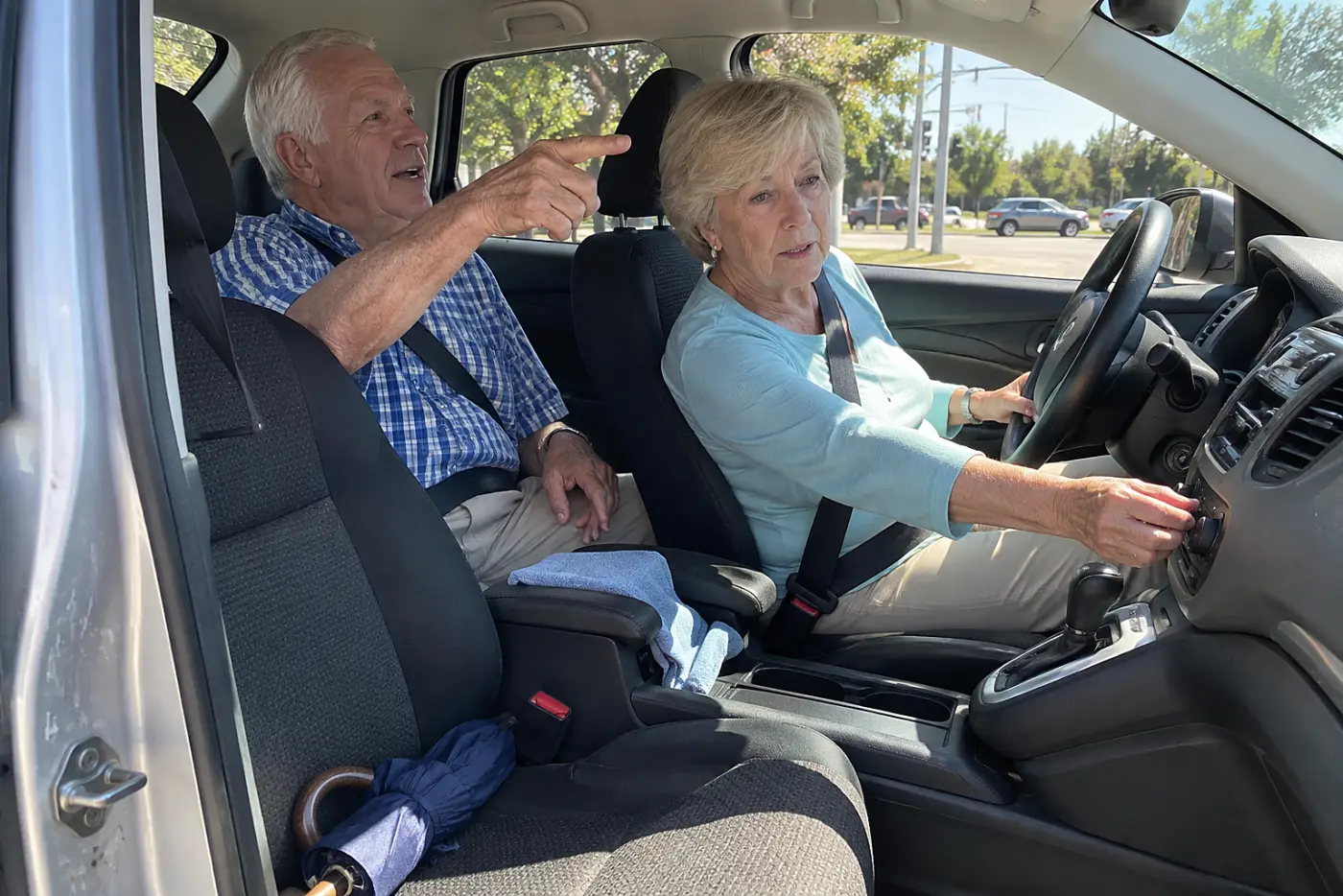
Your passenger sounds clear until the car starts moving.
Tires, ventilation, and turn signals compete with speech inside the cabin. A voice from the passenger seat reaches you without a clear view of the speaker’s mouth. You catch “left” only after passing the street.
Wrong turns aren’t a hearing test. Repeated missed directions in the car, though, give you a place and a noise level to describe later. Notice whether the trouble starts when the fan runs, or whether street names remain hard to catch after you turn it down.
On one drive this week, turn the radio off before asking for directions. Say, “Wait until I turn the fan down, then tell me the street name again.”
There’s another place where the speaker faces away from you.
21A waiter walks away after your answer

The menu question arrives from above your shoulder.
A waiter asks about a side dish while you’re reading the menu. You answer the question you think you heard. When the plate arrives, the mismatch looks like a kitchen error.
That small mistake costs a conversation at the table. It also hides how much you relied on the printed menu to fill gaps.
This week, look up before answering a server’s question. Say, “I missed the choices. Please say them again.”
A table full of voices makes that harder.
20Dinner-table laughter arrives before the punch line

You laugh because everyone else did.
At a crowded table, several voices overlap. Your brain follows one speaker, then loses a word when another person starts talking. By the time you work out the sentence, the group has moved on.
The cost is the part of dinner you stop entering. That matters even when every person at the table is speaking at a normal volume. Watch whether the trouble follows one particular voice or starts when two people speak at once.
At your next meal together, choose a seat with a view of the faces. Say, “I lost the last sentence when we all talked together. What did she say?”
One voice across a room poses a different problem.
19The television volume changes after you leave

Someone lowers the television before sitting down.
You set the volume where dialogue makes sense to you. Another person hears the soundtrack and voices at that level and turns it down. You notice the change, then reach for the remote again.
The disagreement tells you little about a number on the screen. It tells you that two people in the same room hear the program differently.
This week, ask someone to sit beside you for one scene. Say, “Is this volume comfortable for you, or am I pushing it up?”
A clear screen still doesn’t make every word clear.
18Movie dialogue disappears beneath the soundtrack
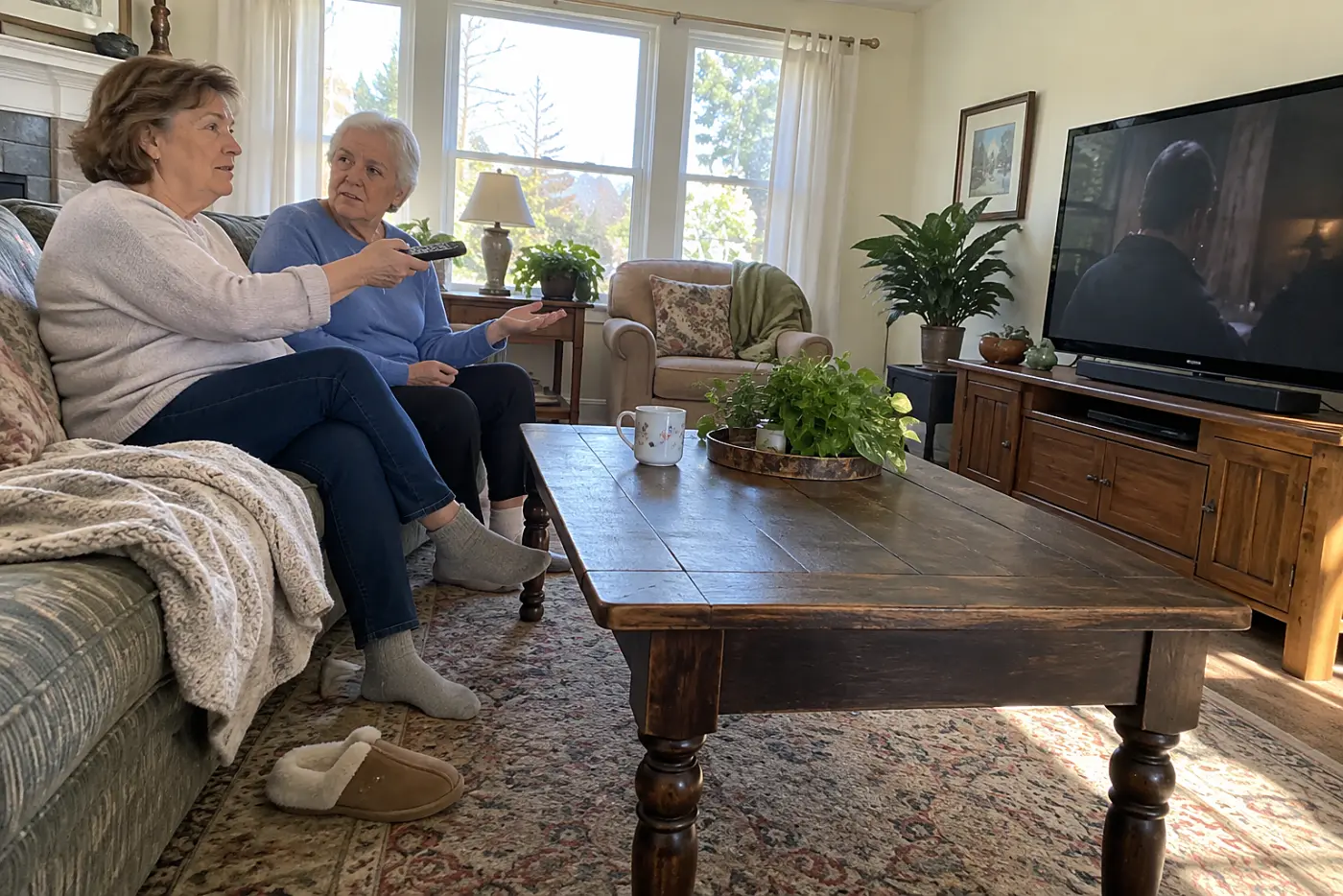
Explosions survive a volume setting that loses ordinary speech.
Movies mix music, effects, and voices at different levels. Turning everything up makes the loud parts louder without restoring every consonant in a low line. Captions show the missing words, which makes them a useful check rather than a defeat.
If you’ve stopped watching films without captions, remember that exact detail. It describes speech understanding more clearly than “the TV is too low,” especially when the music and effects remain easy to hear.
This week, replay one short scene with captions on, then off, at the same volume. Say to the person beside you, “I heard the voice, but I missed those words.”
Next, notice what happens without a screen to help.
17A phone call becomes a string of guesses
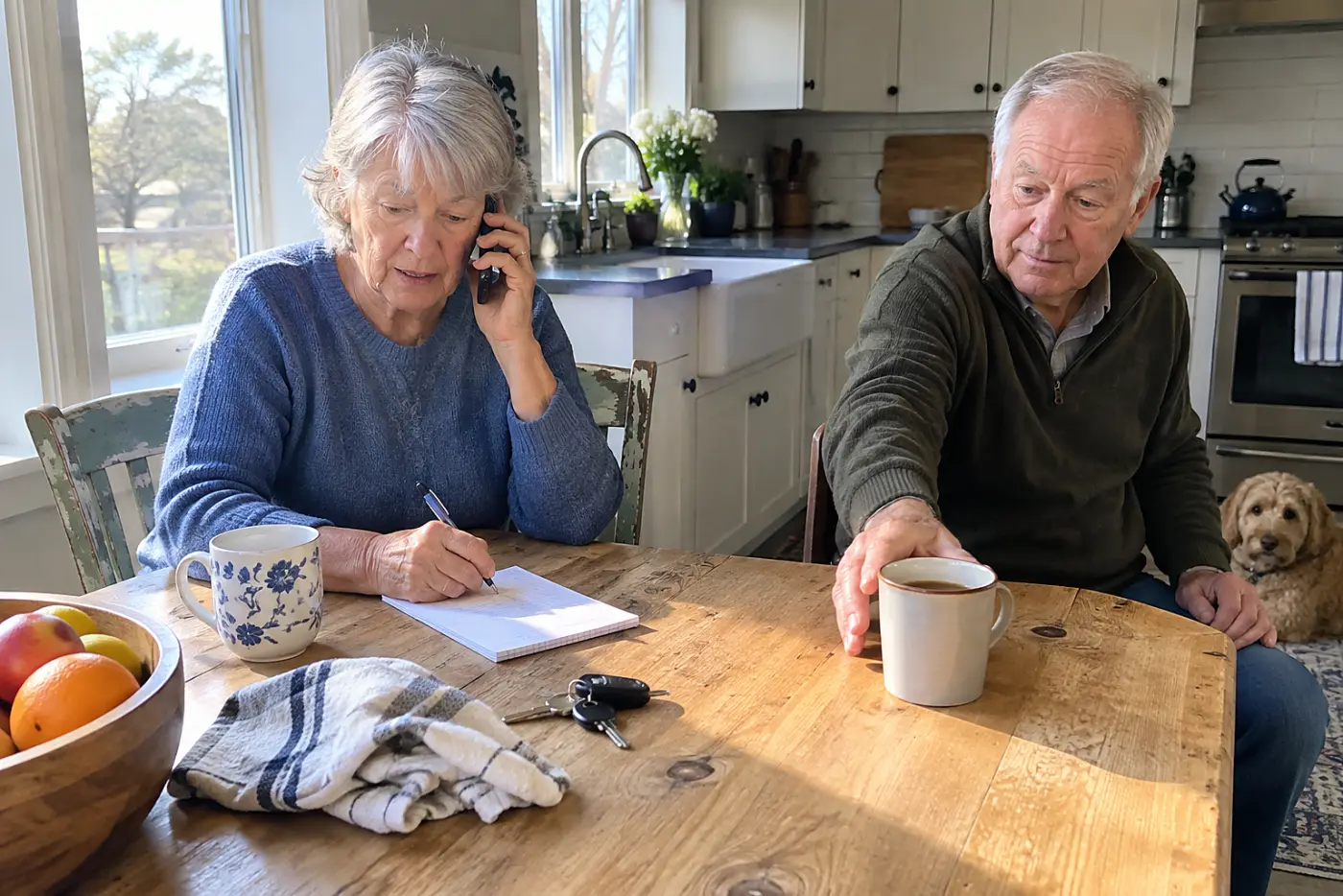
The phone removes the face that helps you listen.
On a call, you lose lip movements and expressions. A poor connection strips away more detail. You fill in words from context, then discover later that a name or time was different.
A wrong appointment time has a cost you can check. Your phone’s call log shows whom you spoke with, but not what you agreed.
This week, write down names and times during calls. Say, “Let me repeat that back: Thursday at three?”
The same habit turns up in a quieter room.
16The pharmacy counter turns into a guessing game
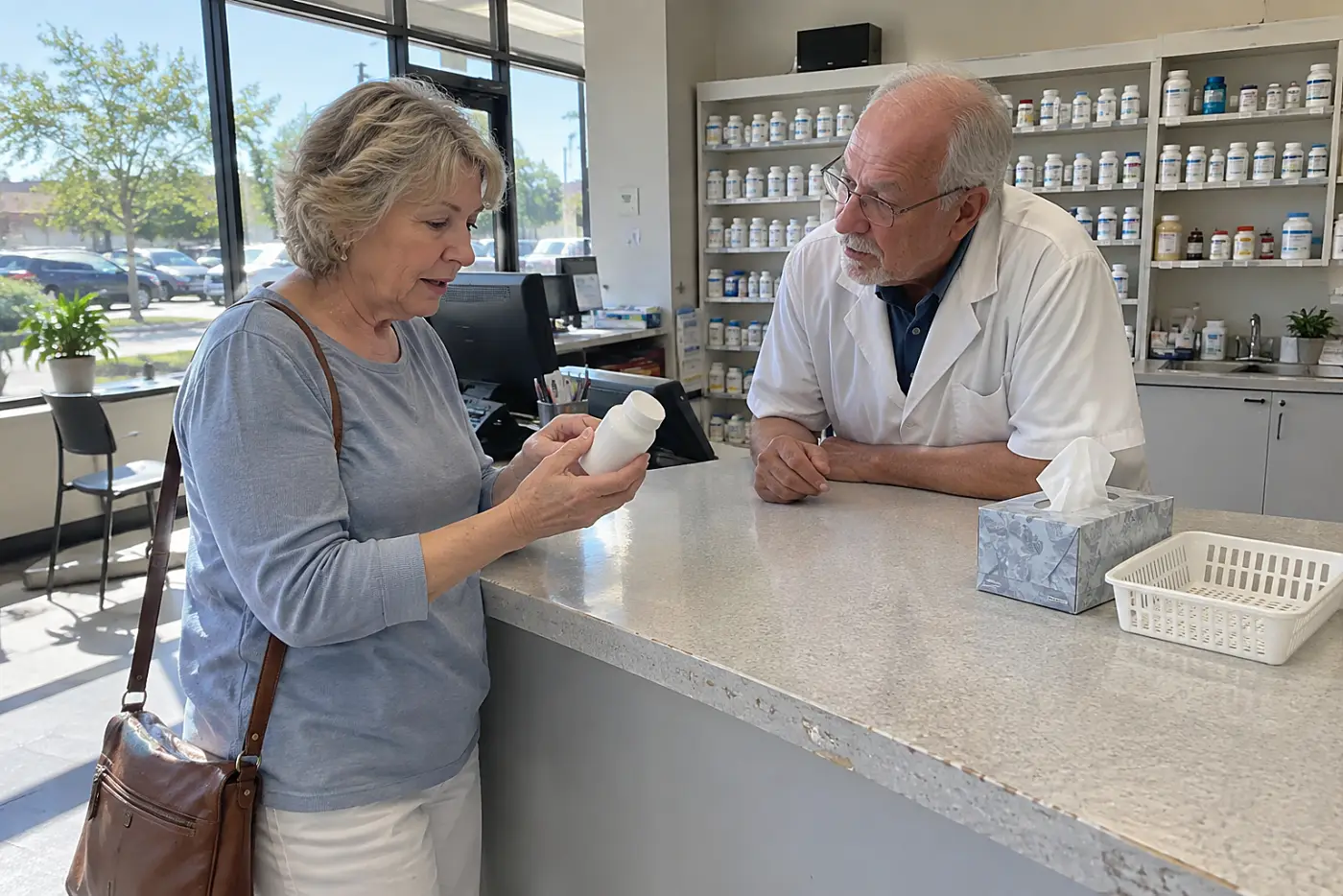
You nod while a medicine name goes by.
A pharmacy counter has drawers, phones, and people waiting behind you. The pharmacist says a drug name or instruction, and you recognize enough of the exchange to keep it moving. Recognition of the situation hides a missed word.
For medicine instructions, guessing is a poor substitute for hearing. The FDA’s medication safety guidance tells patients to understand how and when to take a drug.
This week, keep the printed label in view while the pharmacist speaks. Say, “I missed the instruction. Please point to it on the label and say it again.”
A familiar voice presents its own trap.
15Your spouse starts speaking from another room

A voice through a doorway loses its edges.
Someone calls from the kitchen while water runs. You hear that a sentence was said, but the walls and noise leave you with fragments. A reply of “What?” brings the same sentence back at greater volume.
Soon, both of you remember the irritation better than the missing words.
This week, answer from where you are: “I hear you talking. Please wait until we’re in the same room.” Then notice whether the sentence becomes clear.
A face helps, but it doesn’t solve every exchange.
14Your friend’s punch line needs a second telling

You catch the story but miss its turn.
Stories provide clues: who was there, where they went, what happened first. A punch line or an unexpected detail defeats those clues. You smile at the right time, and your friend assumes you heard it.
Missing an unpredictable word matters because context cannot supply it for you. The National Institute on Deafness and Other Communication Disorders has information on hearing and communication that goes beyond whether a voice sounds loud enough.
This week, ask for the exact phrase you missed instead of the whole story. Say, “I followed you until the last bit. What was the word after ‘train’?”
Now listen for the sounds at the ends of words.
13Similar names become one name at work

A name sounds right until someone corrects you.
Names give your brain fewer clues than familiar sentences. When two colleagues have similar names, a missed consonant changes which person you think was mentioned. Everyone else heard the distinction.
Using the wrong name in a meeting is embarrassing; recording the wrong name in a message creates extra work. A name in an email gives you another way to check what you heard before the message goes out.
This week, confirm a name before passing it along. Say, “Was that Dana or Anna? I want to get the name right.”
Your own voice provides another clue.
12You speak louder during an ordinary chat

Someone asks why you’re shouting across the table.
You hear your voice while speaking, but you also judge its level against the sounds around you. When conversation feels faint, you raise your voice to make the exchange feel balanced. Another person hears the change first.
A loud voice alone proves nothing about hearing. Paired with repeated requests for others to repeat themselves, it’s a detail worth writing down. Ask whether this happens across the table or only when noise fills the room.
This week, notice whether you’re raising your voice in a quiet room. Say, “Am I speaking louder than usual? Tell me plainly.”
That question matters even when you’re the only speaker.
11Your voice assistant needs repeated commands
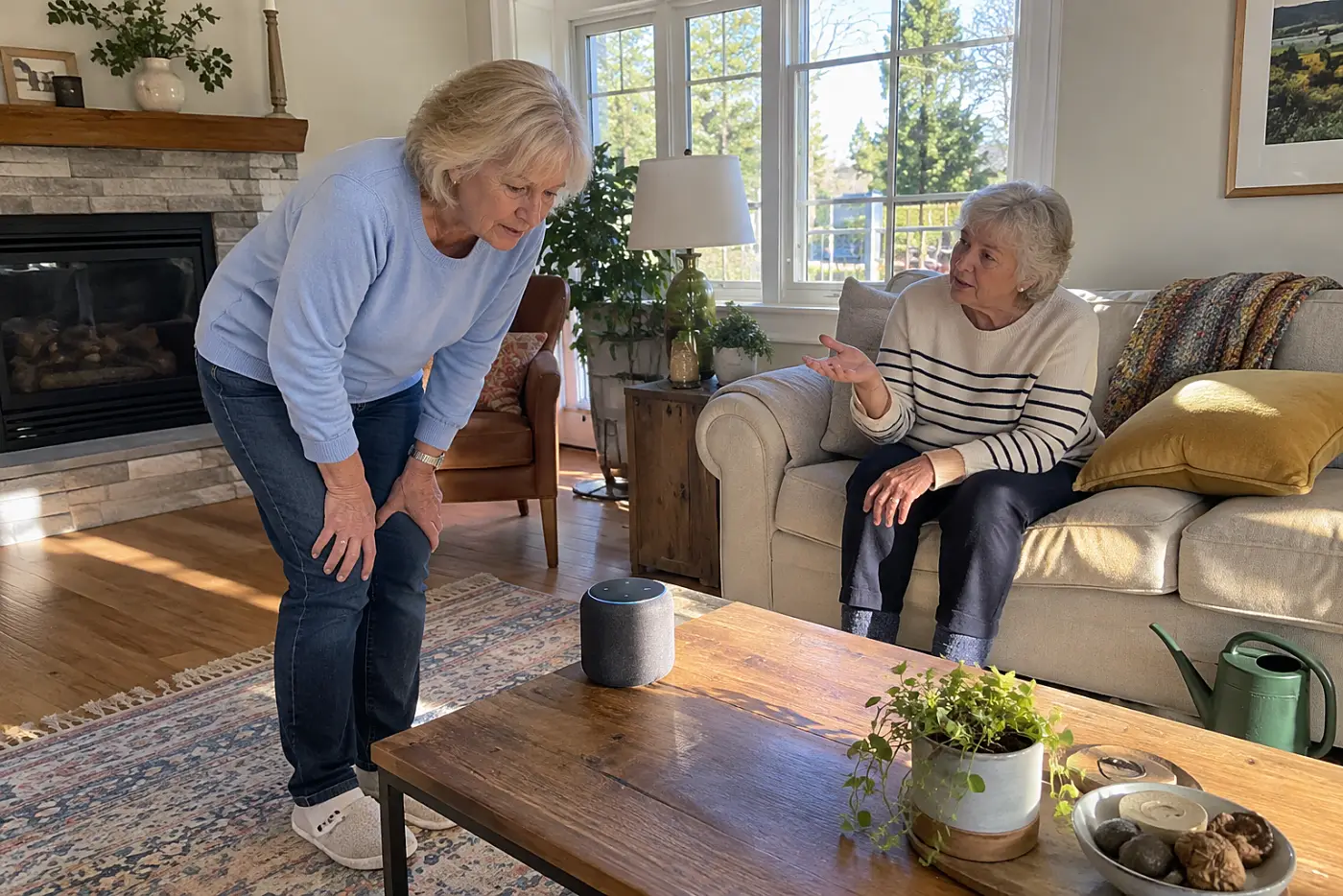
The speaker answers the question you never asked.
A voice assistant makes errors without any help from your ears. The clue comes afterward: you hear its reply, realize it misunderstood, and still cannot tell which word went wrong. Another person repeats the response and spots it.
That’s not a home hearing test. It’s an example of what happens when a sentence contains an unexpected word.
This week, read the device’s displayed response before changing your command. Say to someone nearby, “What did it answer? I heard something different.”
Outside, sounds give you fewer chances to check.
10The crosswalk signal sounds farther away

Traffic makes a familiar signal harder to place.
A beeping crossing signal competes with engines and voices. If you rely on that beep alone, you lose information when traffic covers it. Visual signals, traffic movement, and your position at the curb matter too.
Do not use a crossing as a hearing experiment. The Federal Highway Administration’s pedestrian safety materials cover the visual and audible cues around crossings.
This week, pause at a familiar crossing and notice which cues you actually use. Say to a walking companion, “I didn’t catch the signal. Let’s wait for the next cycle.”
Back indoors, a softer household sound gets missed.
9The microwave finishes before you notice

The food is ready; the beep never registered.
A microwave’s signal is brief. If another appliance runs, or you’ve turned away, you miss it and discover the food later. The same thing happens to people with good hearing, so look for a pattern.
Missed appliance sounds are worth noting alongside missed speech. They are less useful alone, especially when the kitchen fan was running.
This week, listen from your usual spot as the microwave finishes. Say, “Did you hear that from here? I didn’t catch it.”
Some sounds vanish because you’ve stopped expecting them.
8The birds outside stop entering breakfast

The window is open, but mornings sound different.
Bird calls contain higher-pitched sounds. Some forms of hearing loss affect higher pitches first, while lower sounds remain easier to hear. You still hear a passing truck, so the absence of smaller sounds escapes notice.
A change in birdsong is a clue, not a diagnosis. The NIDCD’s age-related hearing loss page describes trouble with high-pitched sounds and speech among its signs.
This week, sit by the same open window with someone else for a minute. Ask, “What do you hear outside right now?” Compare the answer without treating one morning as proof.
Then check a sound much closer to your ear.
7Your phone alert flashes without a chime
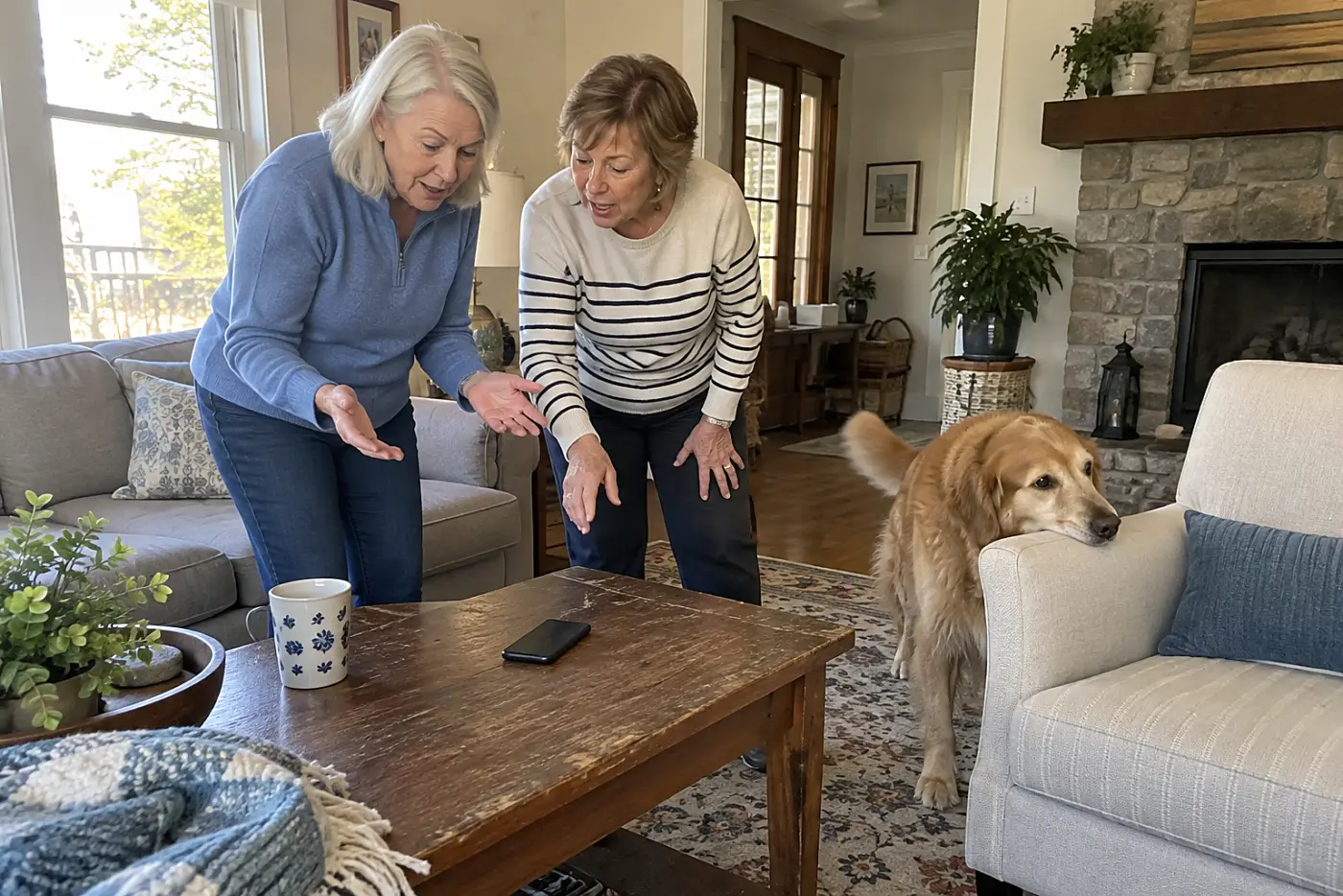
The screen lights up before you hear anything.
A phone alert can be silent because of its settings, its position, or the noise around you. Check those first. If the chime plays and someone else hears it nearby, write that down.
Missing a notification is annoying. Repeatedly missing a sound you’ve verified tells more than “my phone is acting up.”
This week, play your usual alert at its usual setting with a friend present. Say, “Can you hear that from this chair?”
Another everyday sound depends on which way you turn.
6One ear catches less of a conversation

You keep changing seats without knowing why.
At a table, you turn one side toward the speaker. You choose a particular chair because words arrive more clearly there. Those adjustments become habit long before you notice the difference between ears.
A clear difference is worth recording. If hearing in one or both ears drops suddenly, the NIDCD’s sudden deafness guidance calls it a medical emergency. Don’t wait to see whether a different chair helps.
This week, note which side you favor in conversation. If the change was sudden, seek prompt medical care.
The next clue has nothing to do with where you sit.
5A ringing sound fills a quiet room

Silence has a sound nobody else hears.
Ringing, buzzing, or hissing without an outside source is tinnitus. It occurs alongside hearing loss in some people, but the sound alone does not tell you its cause. In a quiet room, it also competes for your attention.
A friend won’t hear the ringing and might miss how much of the conversation it covers. The NIDCD’s tinnitus page describes the sounds and the details worth tracking.
This week, write down which ear hears it and when it began. Say, “I’m hearing ringing, and I want to talk about when it started.”
First, check what has entered those ears.
4A cotton swab comes out nearly clean
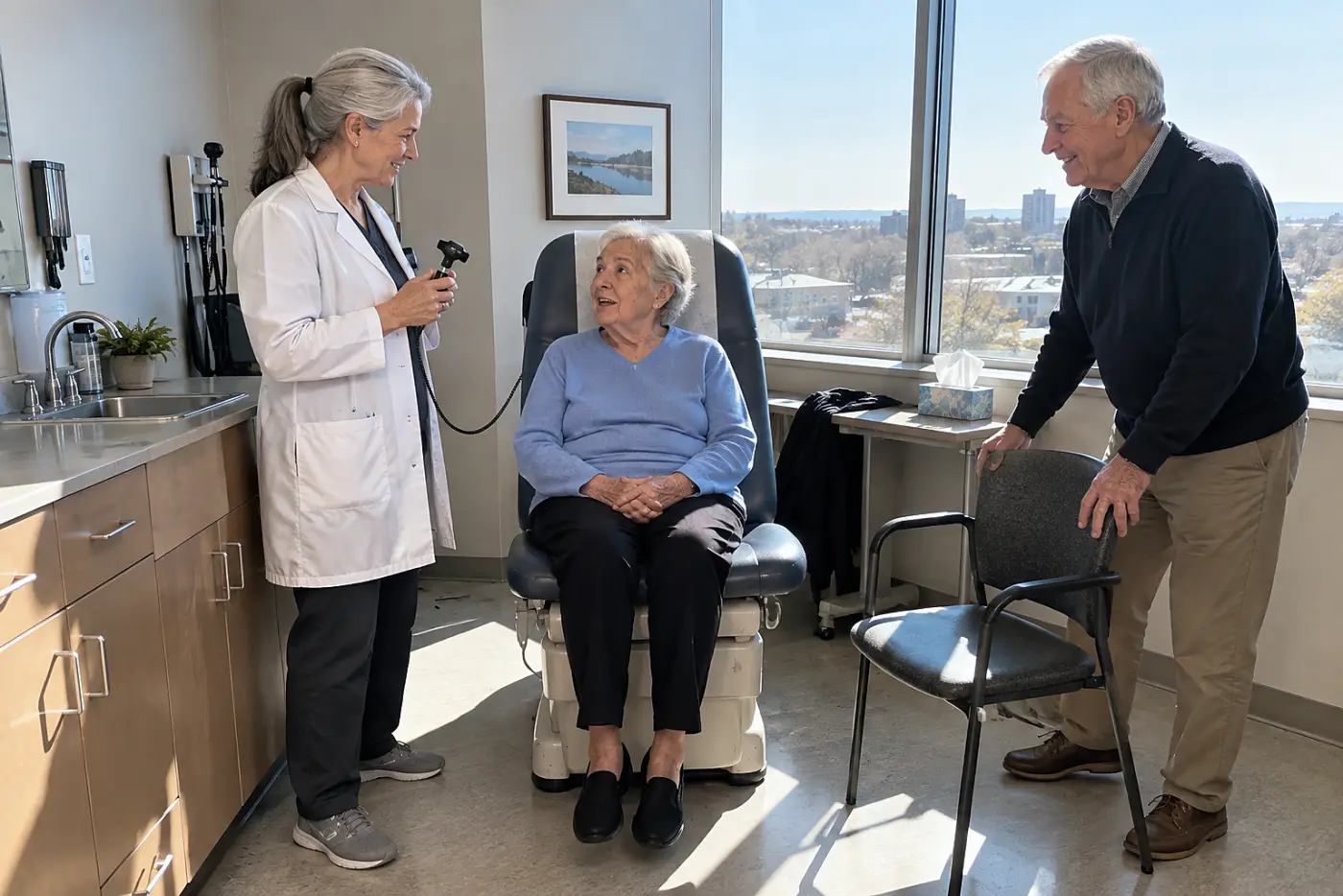
A clean swab tells you little about the canal.
Earwax sits beyond what you see at the entrance. Pushing a swab inside packs wax deeper, and wax buildup blocks sound. Until someone looks inside, you cannot tell whether blockage played a part in a muffled conversation.
The American Academy of Otolaryngology advises against putting cotton swabs into the ear canal. Pain or drainage calls for a clinician’s exam, not a home cleanout.
This week, leave the canal alone and note whether an ear feels blocked. Say, “My ear feels plugged. Please look inside before I try to clean it.”
If the canal is clear, look at what changed around the same time.
3A new prescription joins the medicine drawer
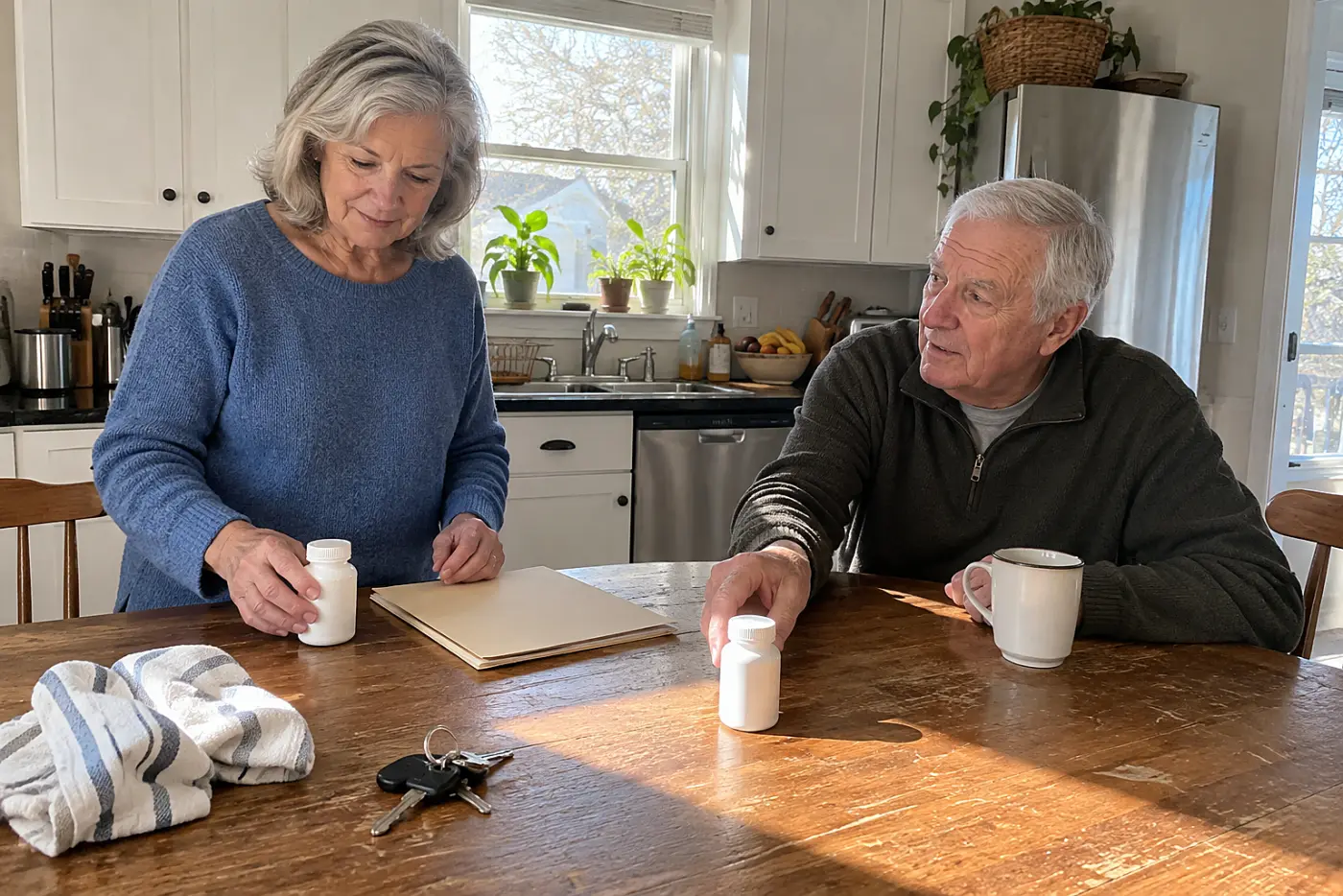
Your hearing changed after the bottle arrived.
Some medicines are linked to hearing problems or tinnitus. A clinician needs the medicine name, dose, and start date to check for a connection. Stopping a prescription on your own creates a separate risk.
The FDA’s drug information pages provide official labeling, including warnings. Your medication list gives the prescriber the details needed to review it.
This week, write down every prescription and over-the-counter medicine you take. Say, “My hearing changed after this started. Please review the list with me.”
The timeline needs one more kind of entry.
2Your calendar holds the missing conversations
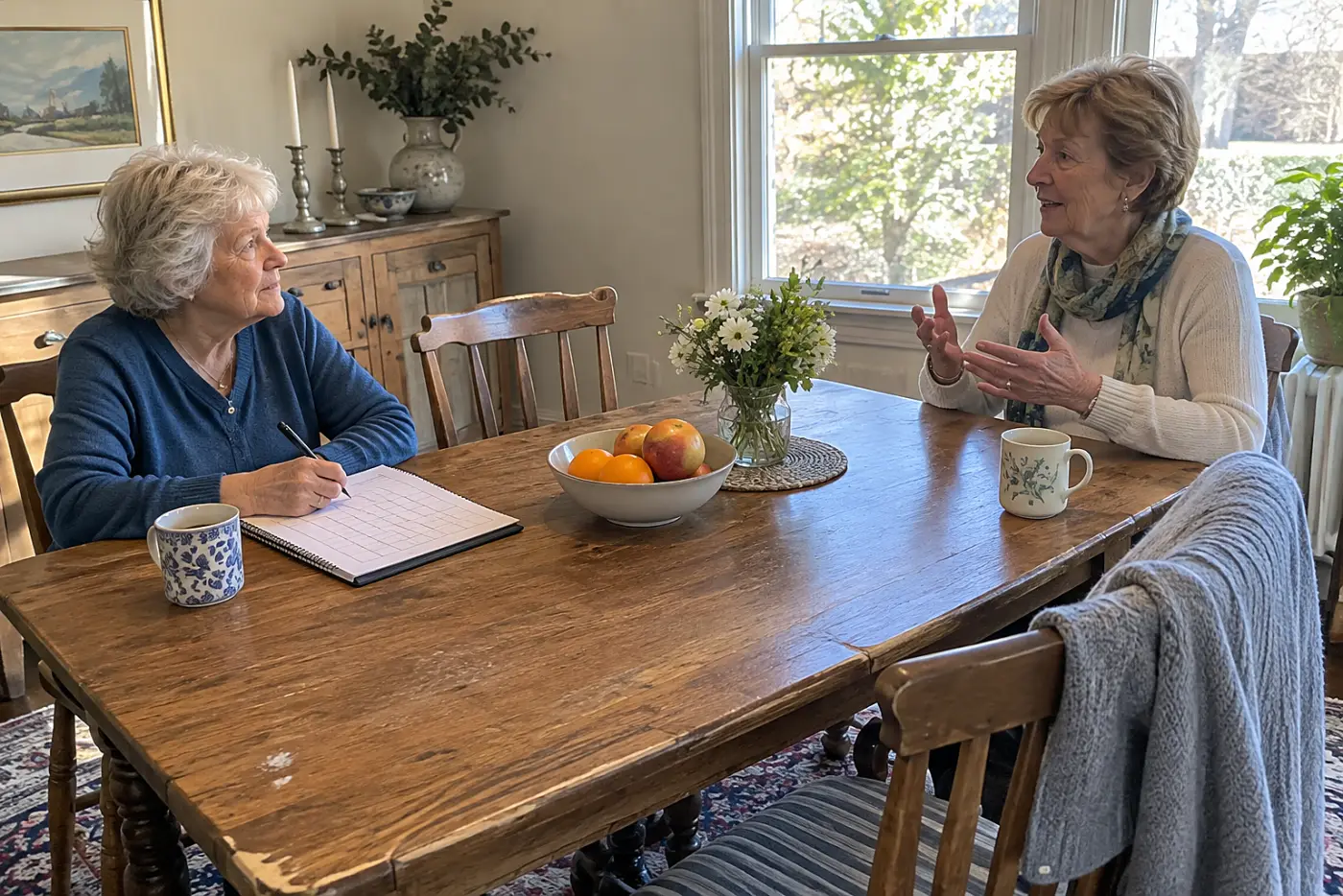
“Everyone mumbles” leaves out the useful details.
Speech breaks down in particular places: the car, a crowded table, the phone, or one side of a room. Your calendar helps place those moments beside illness, noise exposure, and medicine changes. A date also separates a problem that crept up from one that appeared all at once.
The American Speech-Language-Hearing Association describes tests for sounds and speech. Real examples give you questions to bring along, instead of a verdict you reached at home.
This week, list three recent conversations you missed, with the place and the exact trouble. Say, “I hear people talking, but I lose words when there’s other noise.”
Keep that list within reach for the next step.
1A hearing test goes on your calendar

You cannot settle this by asking people to speak up.
An audiologist checks the softest sounds you hear at different pitches and tests how you understand speech. The results separate trouble hearing a sound from trouble making out words, which explains why turning up a voice hasn’t settled the argument at home. Testing each ear also shows whether the results match on both sides.
A test gives you something more useful than another debate about who mumbled. The NIDCD’s hearing tests guide describes what happens during testing; sudden hearing loss needs prompt medical care instead of this routine appointment.
This week, call an audiologist or your primary care office to arrange a hearing evaluation. Say, “People keep repeating themselves, especially around background noise. I want speech testing, pitch testing, and an ear exam.”
Before you call, put your examples where you can find them.
The bottom line
Across these 23 signs, the pattern is missed detail that a louder voice doesn’t always restore.
The best-prepared version of you has checked the easy explanations. She’s written down three real moments and booked a hearing evaluation.
Which of these has already happened in your family?
Bonus: The appointment request that gets speech and pitch measured
- Write down three missed conversations, including where you were and what noise was present.
- Note whether one ear seems different and whether the change was sudden.
- Call an audiologist or your primary care office and say, “I want speech testing, pitch testing, and an ear exam.”
- Bring your medicine list and ask, “What did the speech and pitch tests show in each ear?”
Dr. Alan Pierce, PT, DPT
Health Reviewer
Alan is a physical therapist who specializes in helping adults over 50 stay strong and mobile.
You might also like