23 Things Doctors Say to Patients Over 65 That They'd Never Say to a 40-Year-Old
When a new symptom gets blamed on age, a dated note and one direct question bring the conversation back to evidence.
By Dr. Alan Pierce, PT, DPT, Health Reviewer
Updated · 16 min read
- Written by our health reviewer
- How we review

Read to the end: #1 is the appointment tool that challenges “at your age,” and the Bonus gives you a checkout question.
The paper gown sticks to the back of your legs. You describe an ache that began Tuesday, and the doctor says, “Well, at your age.” The visit moves on before anyone asks where the pain started or what makes it worse.
Age changes which diagnoses deserve attention. It doesn't tell a doctor whether this ache came from a joint, a nerve, a medicine, or something else. You deserve an answer tied to what happened and what the exam found, not a phrase that closes the subject. That distinction changes what you write down and what you ask before leaving.
Here are 23 remarks worth stopping, one question at a time.
23The birthday explanation for a new symptom

A birthday cannot tell you why a symptom began Tuesday.
When a new symptom gets filed under age, the visit loses its starting point. Timing, location, and triggers help a clinician decide what to examine and whether testing belongs in the plan. Those details also separate a steady ache from a sudden change.
Without them, “come back if it gets worse” leaves you guessing what worse means. A dated note on your phone gives the next visit something firmer than memory. It also gives you a way to correct the record if the start date gets lost.
This week, write down when the symptom began and what you were doing. Say, “What makes age the explanation here, and what else did you consider?”
That answer matters even more when pain enters the room.
22The knee pain called ordinary wear

Pain deserves an exam before it gets a nickname.
Osteoarthritis causes knee pain, but injury and inflammation belong in the conversation too. Where it hurts, whether it swells, and what movement brings it on shape the next step.
Calling every painful knee “wear and tear” leaves a new change unexplained. Your ability to climb the porch steps matters as much as a label. If the knee suddenly gives way, that detail belongs in the history rather than a passing comment at checkout.
This week, note whether the knee locks, gives way, or swells. Ask, “What did you find on the exam, and what should make me call back?”
The same shortcut can land on a backache.
21The backache dismissed without nerve questions

New back pain deserves more than a glance at your birth year.
A clinician should ask where pain travels and whether strength or sensation changed. Trouble walking, new bladder or bowel problems, and numbness around the groin change the urgency of an assessment. These are questions worth answering plainly, even if they feel awkward.
New loss of bladder or bowel control with back pain needs urgent medical attention. Waiting for a routine follow-up is the wrong plan when those symptoms appear. A vague instruction to rest won't tell you when to act.
This week, note where the pain starts, where it travels, and any weakness. Say, “Please check my leg strength and tell me which symptoms mean I need help today.”
Pain is easy to dismiss; dizziness is easy to misname.
20The dizzy spell blamed on getting older

“Dizzy” covers several problems that need different questions.
Spinning, faintness, and feeling unsteady don't point to the same cause. A clinician needs to hear which feeling you mean and what happened just before it began. Whether you were standing, turning your head, or rising from a chair matters.
Fainting, chest pain, or new trouble speaking needs emergency assessment. A vague label hides the event that changes the plan. “I'm dizzy” doesn't capture the moment you nearly passed out at the sink.
This week, note whether the room spins or you feel close to passing out. Ask, “Which kind of dizziness does this sound like, and what are you checking?”
Sometimes the next clue sits in a shoe.
19The fall dismissed as plain clumsiness

A fall has a sequence, even when nobody saw it.
Did you trip, feel faint, or find yourself on the floor without knowing why? Those answers point toward different checks, including a walk test, a blood pressure check, or a review of medicines. Look back at the moments before the fall, not only where you landed.
The CDC's STEADI initiative gives clinicians tools to assess fall risk. Treating a fall as a personality trait skips the reason it happened. A missing stretch of memory makes that question more pressing.
This week, write down the place, time, shoes, and moments before any fall. Say, “I want to know what caused it, especially if I felt faint first.”
One step earlier in the day deserves attention, too.
18The slow walk waved away at checkout

A changed walk deserves more than “slow down.”
Pain, weakness, breathlessness, and fear of falling produce different walking patterns. Watching you cross a room gives a clinician information a seated conversation misses. The point is to see what changed from your usual stride, not to judge your speed against anyone else's.
If walking to the mailbox has changed, daily life has changed. “Slow down” doesn't tell you what to work on or whether the problem needs another look. A pause halfway there is useful information, especially if you never needed one before.
This week, pick a familiar route and note what makes you stop. Ask, “Will you watch me walk and tell me what you notice?”
Movement leads to another phrase worth challenging.
17The exercise plan reduced to taking it easy

Rest has a purpose, but it needs an end point.
After an injury or illness, “take it easy” leaves you without a way back. A useful plan names what activity is safe, what to avoid, and when to reassess. It should make sense for the stairs, groceries, or garden beds waiting at home.
The Physical Activity Guidelines for Americans include strength and balance activity for older adults. A blanket instruction to stop moving leaves you without a route back to those activities. The question is which movement fits your condition now.
This week, list the activities you've stopped since the symptom began. Ask, “What can I keep doing, and when should we change this plan?”
Activity isn't the only subject that deserves specifics.
16The tiredness explained by another birthday

Fatigue is a symptom, not a calendar entry.
Sleep, mood, medicines, and medical conditions all belong in the conversation. The first question is what changed from your usual energy and when. “I'm tired” tells the clinician less than “I now sit down halfway through making dinner.”
Without that baseline, the clinician cannot tell whether fatigue is new. You leave with the same problem and no follow-up point. That matters when a task you handled last month now takes the whole afternoon.
This week, note when your energy drops and what you stop doing. Say, “This is new for me; what are we checking first?”
A sleepless night has its own set of clues.
15The sleep complaint met with acceptance

Poor sleep shouldn't be waved off as an age milestone.
Pain, nighttime urination, snoring, and medicine timing each change what happens after lights-out. A sleep history starts with bedtime, wake time, and what wakes you. The clock on the bedside table is more useful than a guess about total sleep.
The National Institute on Aging has guidance on sleep changes and problems worth discussing. If you only hear “that's aging,” no one has asked what interrupts your night. Waking because of pain calls for a different discussion than waking and struggling to breathe.
This week, keep a short sleep log, including naps and overnight waking. Ask, “What in this pattern deserves a closer look?”
Then there's the medicine offered to get you through tomorrow.
14The new pill added without a medicine review

Another prescription changes the list you already carry.
A clinician needs to know your prescriptions, over-the-counter drugs, and supplements before adding one more. The National Institute on Aging advises keeping an up-to-date medicine list. A list from last spring misses anything started since then.
An old bottle or forgotten sleep aid changes the discussion. “You'll be fine” isn't a review. If two clinicians prescribe for different conditions, neither sees the full picture without an accurate list from you.
This week, put every bottle and supplement on the kitchen table. Ask, “Will you check this whole list before I start the new pill?”
The next question concerns what happened after the last prescription.
13The side effect mistaken for aging

A symptom that starts after a dose change deserves a timeline.
Some medicines cause dizziness, constipation, or sleepiness. The connection becomes easier to assess when you record the start date, dose, and first day you noticed trouble. Include a change in how you take the medicine, not only a new prescription.
Don't stop a prescribed medicine on your own without checking how to do it safely. Missing that conversation leaves you choosing between an unwanted effect and an abrupt change. The pharmacy label gives you the drug name and dose to report.
This week, match new symptoms to your pharmacy labels and call the prescriber's office. Say, “This began after the dose changed; what should I do before my next dose?”
A small printout can make the next conversation easier.
12The test result called fine without numbers

“Fine” tells you less than the result itself.
A test report has a value, a reference range, and a reason the test was ordered. The clinician's interpretation should connect those pieces to your symptoms. Ask which line on the report supports the answer you heard.
Without the report, you cannot see which result the reassurance refers to. Keep the number and the explanation together. If more than one test was ordered, “fine” leaves you unsure whether all the results are back.
This week, open your patient portal or request a copy of the report. Ask, “Which result answers the question we were testing, and what happens next?”
One reassuring result shouldn't end every conversation.
11The normal result used to end the visit

A normal test answers the question that test was designed to answer.
If the symptom continues, the next conversation concerns what was ruled out and what remains unexplained. A plan needs a point for reassessment, not an indefinite shrug. Tell the clinician whether the symptom is unchanged, improving, or getting in the way of something new.
You don't need to demand another scan. You do need to know what to watch and when to return. A normal result is useful, but it doesn't describe how you felt while carrying laundry upstairs yesterday.
This week, write down the symptom that persists despite the result. Ask, “What did this test rule out, and when should we revisit what it didn't?”
That question becomes harder when an intimate symptom gets brushed aside.
10The bladder leak called inevitable now

Bladder leakage has details worth asking about.
Leakage with a cough differs from a sudden urge you cannot hold. Medicines, infection, and other conditions also belong in the assessment. The timing and trigger tell a clinician far more than your age.
Calling it inevitable keeps you from describing the pattern. That pattern guides which options to discuss. If you've stopped going out because you worry about finding a bathroom, say that too.
This week, note when leaks happen and whether you felt an urge first. Ask, “What type of leakage does this sound like, and what should we check?”
The same dismissal reaches the bedroom.
9The intimacy question brushed off as irrelevant
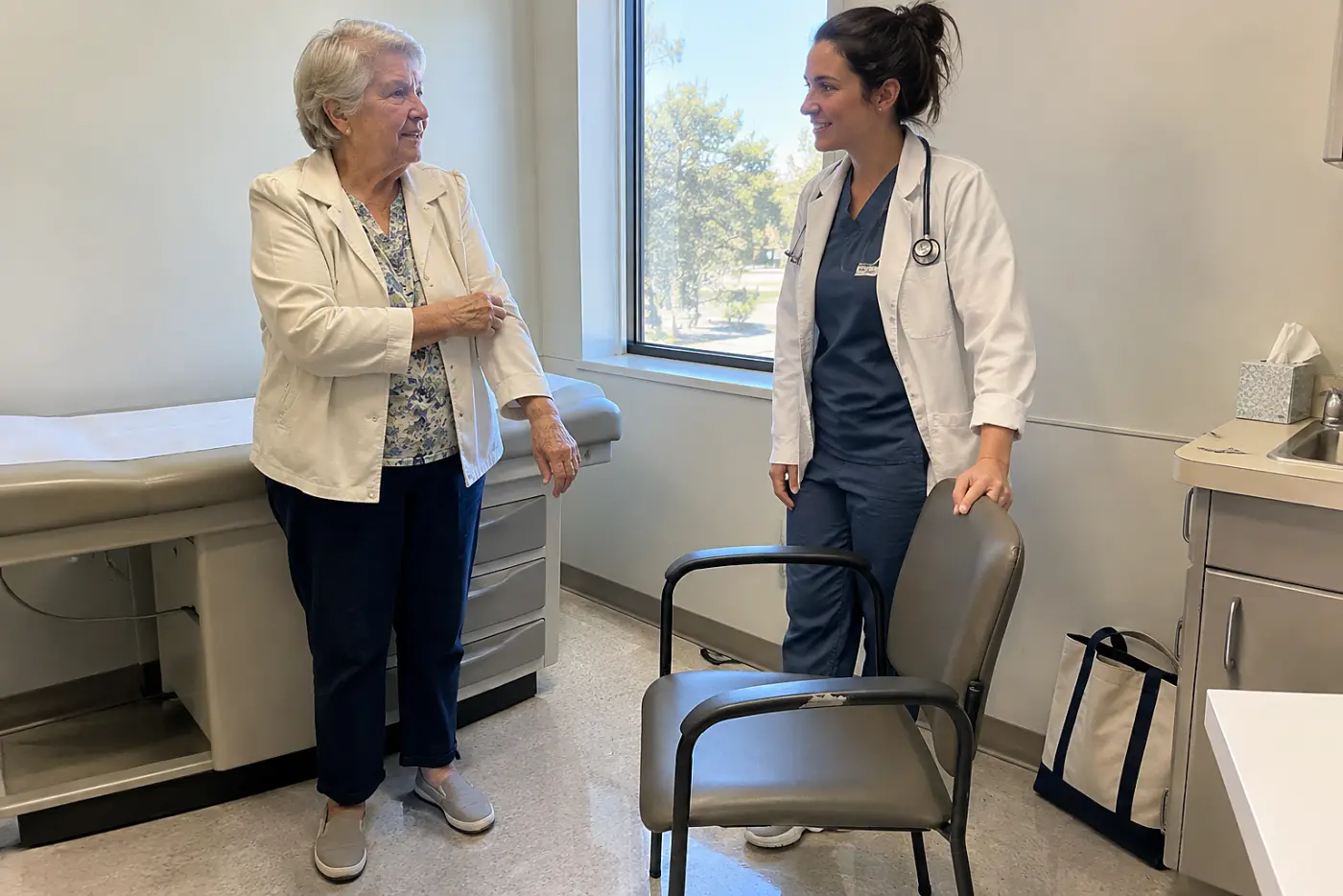
Your sex life doesn't expire in the exam room.
Pain, dryness, changes in desire, and concerns about infection deserve direct questions and answers. The National Institute on Aging treats sexuality and intimacy as health topics in later life. You shouldn't have to hint at a symptom to find out whether the clinician will discuss it.
Silence means a symptom stays hidden because someone assumed you wouldn't care. You decide whether intimacy matters to you. The answer should follow the concern you raised, not a guess about your birth year.
This week, put the concern on your visit list in plain words. Say, “I want to talk about pain during sex and what could be causing it.”
The next assumption concerns a different private part of life.
8The low mood called part of life

Sadness deserves questions, not an age-based explanation.
A clinician should ask how long your mood has changed and what daily tasks feel different. The National Institute of Mental Health describes depression as a condition that deserves assessment and treatment. Loss, illness, and isolation belong in the conversation without serving as automatic explanations.
Calling it “normal now” leaves those questions unasked. Thoughts of self-harm need immediate help through 988 or emergency services. You don't need to wait for a routine appointment to say you're in danger.
This week, name one thing you've stopped enjoying and tell your clinician. Ask, “Can we talk about whether this is depression?”
Memory is another subject where one label does too much work.
7The forgotten name called dementia

Forgetting a name doesn't establish a diagnosis.
A memory assessment starts with what changed, when it changed, and whether daily tasks are affected. Hearing, sleep, mood, and medicines belong in that history. One missed name tells a different story from getting lost on a familiar drive.
A sudden change in confusion needs prompt medical attention. A slow change still deserves a proper conversation, not a frightening word dropped without an assessment. Write down events rather than trying to summarize your memory as “good” or “bad.”
This week, record two concrete examples, including dates if you know them. Ask, “What are you using to assess this change, and what else are you considering?”
Sometimes the missing piece is whether you heard the question.
6The missed question treated as confusion

A muffled question can look like a wrong answer.
Hearing loss changes what reaches you before you ever respond. The National Institute on Deafness and Other Communication Disorders has information on hearing tests and hearing loss. A mask, a turned head, or noise in the hall also changes what you hear.
If no one checks what you heard, the conversation starts from a false impression. That matters when the next step is a memory assessment. Repeating the question face-to-face gives you a fair chance to answer it.
This week, tell the office if you miss words during visits. Say, “Please face me and repeat that question before I answer.”
That respect should extend to who receives the answer.
5The question sent to your adult child
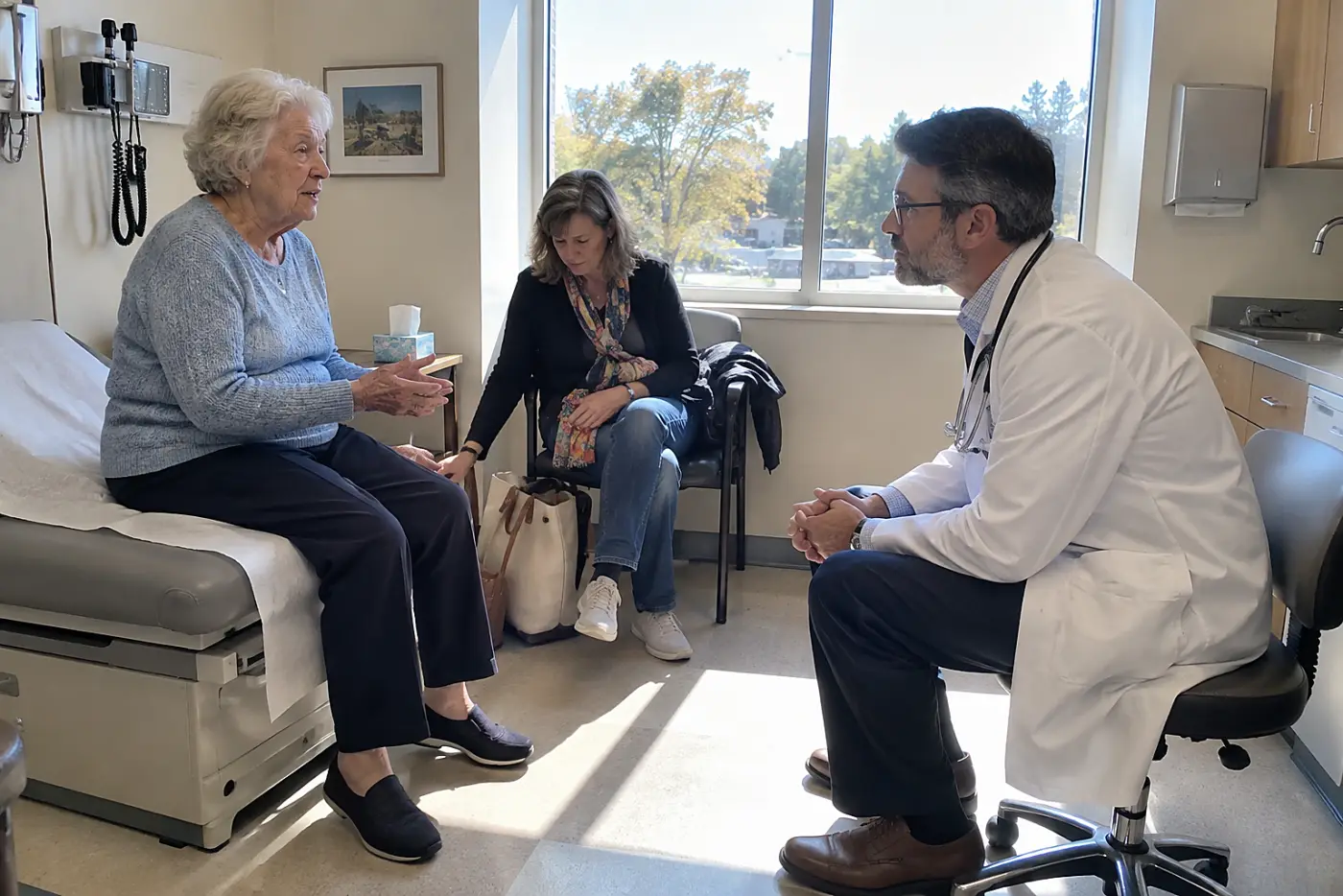
Your companion isn't the patient unless you say so.
An adult child can add details, take notes, and help you remember a plan. But a clinician should address the person receiving care and ask what help she wants. You get to choose whether your companion answers, listens, or steps out for part of the visit.
If the conversation happens over your head, your preferences and symptoms get filtered through someone else. A helpful companion can become the only voice in the room. That leaves the clinician with their account of a symptom you experienced.
This week, decide what you want your companion to do before the visit. Say, “Please ask me first; then my daughter can add anything I missed.”
The same choice applies when the discussion turns serious.
4The procedure ruled out by age alone

A birth year shouldn't settle a treatment decision by itself.
The reason for treatment, your health, and your goals all belong in the discussion. The National Institute on Aging's guidance on talking with doctors encourages patients to ask questions about treatment choices. Ask what finding led to the recommendation and what other options remain.
Without the reasoning, you cannot weigh the tradeoffs. You deserve to hear why an option was dismissed. “Too old” doesn't tell you which risk the clinician has in mind or how it compares with doing nothing.
This week, write down what you hope treatment would let you do. Ask, “Which part of my health changes your recommendation?”
A decision also needs an account of what happens if you wait.
3The watchful waiting plan without a date
Waiting is a plan only when someone says what to watch.
A clear plan names the symptom, the change that triggers a call, and the time for review. Otherwise, “let's watch it” puts the whole decision on your shoulders. You need to know whether to track pain, swelling, function, or something else.
The Agency for Healthcare Research and Quality encourages patients to ask questions during care. You need an answer specific enough to use at home. Without a trigger or review point, age becomes the explanation again every time you call.
This week, check the visit summary for a follow-up date or trigger. Ask, “What change means I should call, and when will we check again?”
Before that summary exists, there's one more moment to catch.
2The rushed visit summary at checkout

A printed summary doesn't repair an unclear conversation.
Check whether it names the diagnosis being considered, any new medicine, and the next step. If something sounds unfamiliar, the time to ask is before you leave. The checkout counter is a hard place to recall every detail from an exam room discussion.
A missed instruction is harder to untangle later. Your copy should match what you heard in the room. A line about a new dose deserves a question if you remember hearing no change at all.
This week, open the latest summary and circle anything you don't understand. Say, “This line is new to me; what does it mean?”
The strongest question belongs earlier, while the clinician is still listening.
1The one-page symptom timeline you bring

“At your age” has less room to hide beside a dated timeline.
Put the symptom's start date at the top. Add what changed, what stayed the same, and what you could do before that you cannot do now. Include any new medicine or dose change close to the start.
The National Institute on Aging advises preparing questions for medical visits. Your page keeps the visit anchored to a change the clinician can examine, rather than an impression about age. It helps you return to the question if the conversation wanders.
This week, make the page before your next appointment and bring a copy. Say, “This started on this date, and this is what changed; what's your working explanation and the next step?”
If the answer still circles back to age, keep the page in front of you.
The bottom line
Across all 23 remarks, age becomes a shortcut when a specific change needs a specific question.
You've written down what changed, brought the list, and asked what happens next.
Which of these has already happened in your family?
Bonus: The checkout question that gives you a clear call trigger
- Before leaving, ask, “What change should make me call you before the next visit?”
- Write the answer on your visit summary, in your own words.
- If the answer is vague, ask for a specific symptom or a review date.
- Read back what you wrote: “Is this the right time to call?”
Dr. Alan Pierce, PT, DPT
Health Reviewer
Alan is a physical therapist who specializes in helping adults over 50 stay strong and mobile.
You might also like