23 Things to Say in the First Two Minutes of a Doctor's Visit
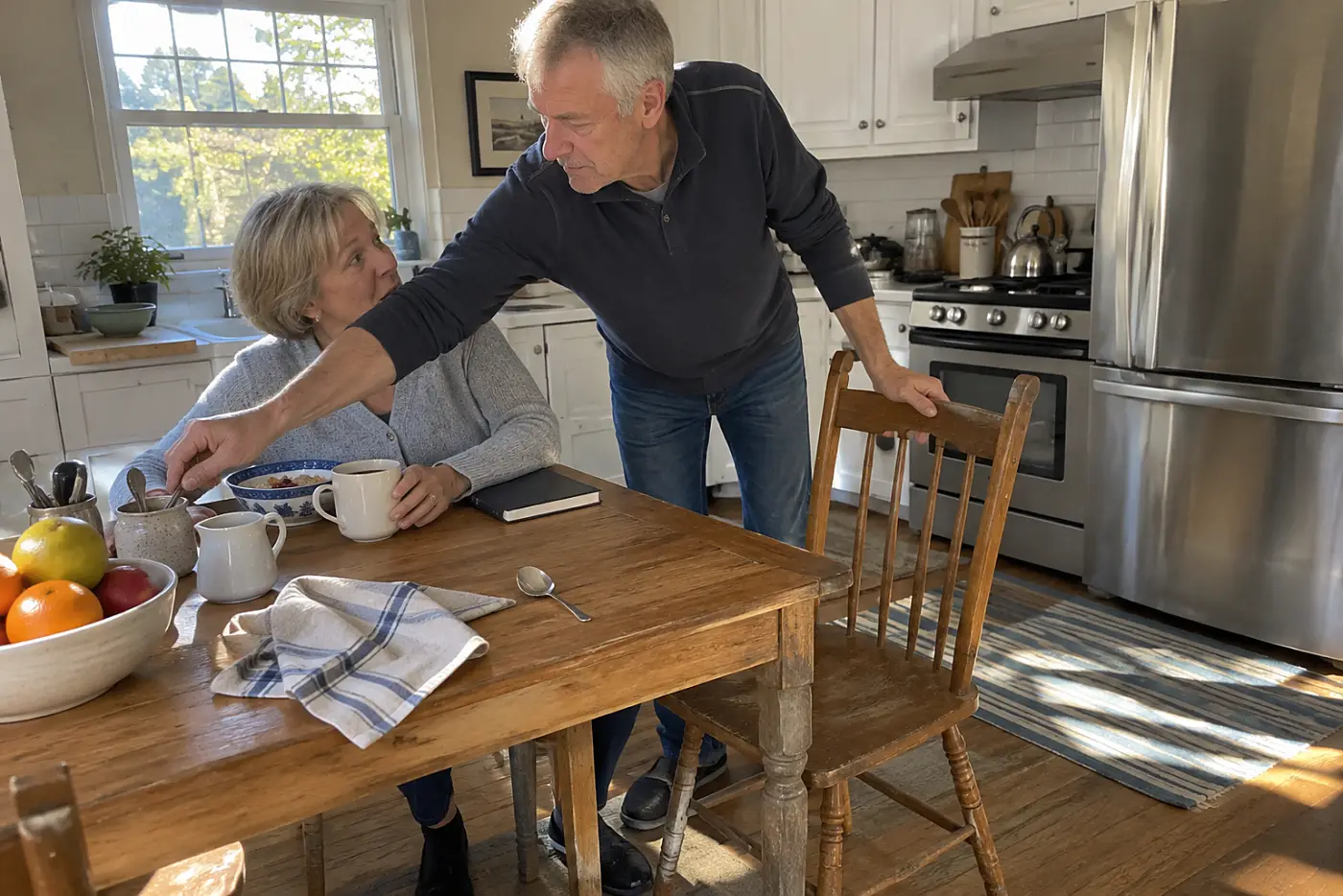
A short note beside your phone gives the doctor a starting point before the conversation takes its first detour.
By Dr. Alan Pierce, PT, DPT, Health Reviewer
Updated · 15 min read
- Written by our health reviewer
- How we review

Read to the end: #1 gives you an opening script that gets your main question heard, and almost nobody rehearses it.
The exam table paper crackles while you search your purse for the note you wrote at breakfast. The doctor asks how you’ve been. You remember your knee, mention a prescription refill, and suddenly the visit is moving somewhere you never meant it to go.
The trouble isn’t that you forgot everything. It’s that an open-ended question gave every concern the same chance to come out first, while the one you came to ask stayed folded in your purse.
These 23 opening lines give that question a place to land.
23Say you brought a written list

The question on your note stays hidden until you unfold it.
A written list works best when it reaches the conversation early. Once the doctor starts asking about the first issue you mention, a second question has to compete for space.
Leaving the note in your bag risks leaving with the same unanswered question. A list is easier to use when it's already in your hand as the visit begins.
This week, put it beside your keys, then hold it when you sit down. Say, “I wrote down what I need to cover, and I'd like to use this.”
Then make sure the writing points to a real event.
22Give the date your symptom began

A missing start date makes the first question harder.
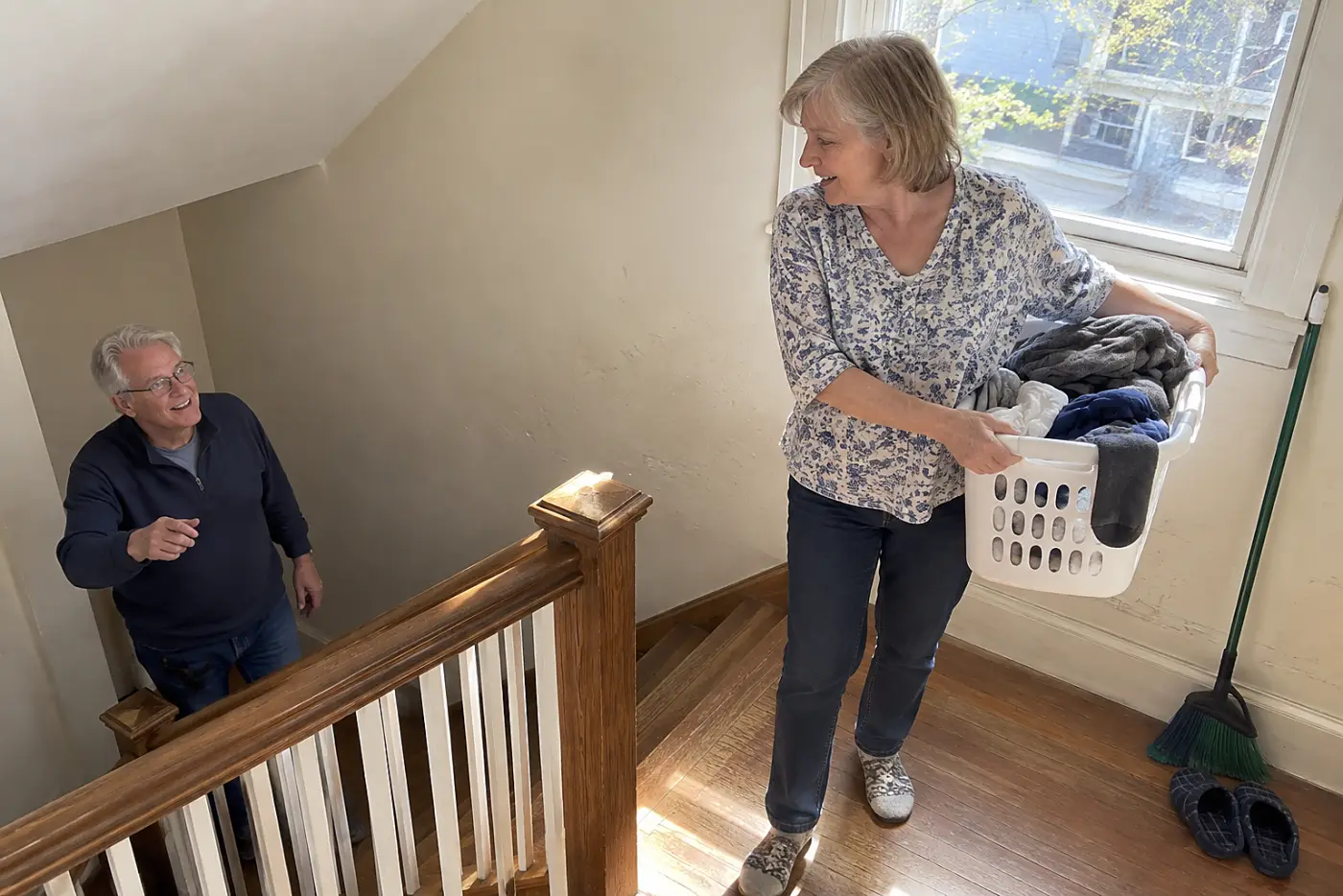
A start date helps separate a new problem from one that has changed over time. An event helps too: carrying boxes upstairs gives the doctor something to ask about next.
Without that anchor, a visit spends its first minutes rebuilding a timeline you already know. If the date escapes you, use a birthday, trip, or appointment as a marker.
This week, check your calendar and write the best date you have. For example, say, “This started the week after my birthday, and it has happened every morning since.” The next detail is whether those mornings look alike.
21Name the task you stopped doing

A symptom gets clearer when you name what it interrupts.
Pain in your hand means more when the doctor hears that turning a key has become difficult. The task gives you both a way to describe today and something to check at a later visit.
If you only describe the pain, its effect on your day stays invisible. Think of the task you now avoid, shorten, or hand to someone else. That detail matters even when the pain itself is hard to put into words.
This week, write down one task and what happens when you try it. Say, “I can't turn my front-door key without using both hands.”
The next piece is how frequently that happens.
20Count the days it actually happens

A vague frequency hides a dependable pattern.
A doctor hearing “three mornings this week” has a different picture than one hearing “once last month.” Frequency also helps you notice whether a treatment changes anything, instead of relying on how a whole week felt.
Guessing during the appointment is hard, especially when the last episode was frightening. A few marks on a calendar give you a count without asking you to remember every Tuesday.
This week, mark each day the symptom appears and note the time if it matters. Say, “It happened four days this week, always before breakfast.” Once the pattern is clear, describe what an episode does.
19Describe one episode from start to finish

A single episode is easier to explain than a blur.
Tell the doctor what you were doing, what happened first, and what made you stop. That sequence gives the doctor questions to follow. It also keeps you from searching for a label while the visit moves ahead.
Skipping the sequence leaves out whether you stood up, sat down, ate, or changed what you were doing. Those details are easier to write soon after the episode than to retrieve in the exam room.
This week, write three short lines: before, during, after. Say, “I stood up, felt lightheaded, sat down, and felt steady again.”
Then name anything that makes the episode more concerning.
18Mention a fall or near fall first

A fall deserves more than a passing mention.
Where you landed, whether you hit your head, and whether you lost consciousness matter to the next question. A near fall also tells the doctor that balance or strength needs attention.
If the fall happened between appointments, it's easy to file it under “I'm fine now.” That misses the chance to discuss what caused it and what would make another fall less likely.
This week, write down when and where it happened, plus any injury. Say, “I fell in the kitchen last Thursday and hit my head on the cabinet.” If you have new confusion, a severe headache, or other urgent symptoms after a head injury, seek prompt medical care rather than waiting for a routine visit.
Once safety is on the table, bring up the change that feels harder to describe.
17Say what changed about your memory

A missed name and a missed turn are different stories.
Give one example of the change that brought you in. The doctor has a starting point for questions about timing, sleep, medicines, and what else changed around the same time.
Calling it “just my age” ends the story before you've told it. If the example embarrassed you, write it down anyway. You don't need to decide what caused it before the appointment.
This week, record what happened and when, without trying to sum up your memory as a whole. Say, “I drove past my usual turn twice this month, and that's new for me.”
Another change deserves the same plain language.
16Describe what happens when you walk

Walking trouble has more than one starting point.
It has parts: starting, keeping balance, lifting a foot, or going a certain distance. When you name the part, the doctor has a clearer place to begin an exam and ask follow-up questions.
Mention the setting too. A hallway at home isn't the same as a parking lot with curbs, and a problem on stairs differs from one on level ground.
This week, notice the first point where you change your pace or reach for support. Say, “After I cross the grocery store, my left leg starts dragging.” Bring the shoes or walking aid you use if the appointment allows.
The doctor also needs to hear what your body does while you're still.
15Say where your breathlessness starts

Breathlessness deserves a clear starting sentence.
Say whether it happens sitting still, walking across a room, or lying down. Those situations give the doctor different clues to follow. Saying where it starts saves you from trying to explain every episode at once.
Don't save new, severe breathlessness for a routine appointment; seek urgent medical attention. For an ongoing concern, notice the activity and whether you need to stop. A route through your own home is easier to recall than a guess about distance.
This week, write down when it occurs and what you're doing. Say, “I get short of breath walking from my bedroom to the kitchen.”
If it began after a change at home, bring that change into the room.
14Name the new medicine and your dose

The bottle tells a fuller story than its name alone.
It shows the drug, strength, and instructions you were given. The doctor still needs to hear what you actually take, including doses you've skipped or changed.
The FDA advises keeping a list of your medicines. That list is useful in the exam room when a bottle stays at home or its label has worn thin.
This week, put your bottles together or photograph their labels. Include prescriptions, over-the-counter drugs, vitamins, and supplements. Say, “I started this last month, and I take one tablet at night.”
After the list comes the part that changed how you felt.
13Link a symptom to a dose change

Timing gives a possible side effect a fair hearing.
If a symptom started after a medicine changed, say which change came first. The doctor has a date to compare with your symptoms and the dose written on your label.
Timing alone doesn't prove the medicine caused it. Don't stop a prescribed medicine on your own because the order of events looks convincing. Bring the label so you don't have to reconstruct the change from memory.
This week, mark the date your dose changed and when the symptom began. Say, “The dizziness began after my dose went up, and I wrote down when it started.”
Then mention what you've taken outside that prescription list.
12Name the pain reliever in your cupboard

The drugstore bottle counts as part of the story.
Over-the-counter medicines matter alongside prescriptions. Aspirin and ibuprofen, for example, are different medicines, and the doctor needs the exact name and how you take it.
A familiar bottle is easy to leave off a medication list. The same goes for a sleep aid, allergy pill, or supplement you bought yourself.
This week, look through the cupboard and add each product you take to your list. Say, “I take this pain reliever on days my back hurts, about three days a week.” Bring the bottle if its name or strength is hard to read.
With the medicines accounted for, say what treatment has already failed.
11Tell them what you already tried

The doctor shouldn't have to guess your first steps.
Name the treatment, how long you used it, and what changed. That includes home measures as well as medicines. If you stopped, say whether the problem improved, stayed put, or returned.
Without that detail, you risk leaving with advice you've already followed. Your account gives the doctor a result to work with, even when that result is “nothing changed.” It also saves you from trying to remember the sequence while you sit on the exam table.
This week, jot down the action, how long you tried it, and the result. Say, “I used ice after walking for two weeks, but the swelling stayed.”
The result also helps explain what you want from this visit.
10Say which choice needs an answer

A treatment choice gets lost when nobody names it.
Perhaps you've been offered physical therapy and want to know what it would involve. The doctor needs to hear which choice is waiting, along with the reason you haven't made it yet.
The Agency for Healthcare Research and Quality encourages patients to ask questions about their care. Without a named choice, you risk leaving with more information but no way to weigh the options in front of you.
This week, write down the two paths you're weighing. Say, “I was offered physical therapy. What would tell us it's the right next step?”
One practical obstacle belongs in that decision too.
9Say why the test is still unscheduled

A plan on paper isn't a completed test.
If a test was ordered but you couldn't book it, say where the process stopped. Was the order missing, the phone unanswered, or the offered appointment one you couldn't take? Each answer points the office toward a different next step.
Silence leaves the doctor thinking the test is underway. The date you first called gives the staff a starting point without forcing you to guess how long you've waited.
This week, note the test name, the number you called, and when you called it. Say, “I called radiology twice and still don't have an appointment. Which number should I try?”
If the issue is getting to the appointment, say that next.
8Explain the ride you do not have

A referral is useless if you can't get there.
Transportation affects whether the next step happens at all. Telling the doctor early gives the office a chance to discuss a closer location or a different scheduling plan.
Be specific about the barrier. “I don't drive after dark” says more than “transportation is hard,” and “I need a morning appointment” gives staff something they can work with.
This week, check how you would reach the test or specialist the doctor has mentioned. Say, “I can get there on Tuesdays, but I need an appointment before noon.” Don't agree to a plan you already know you cannot carry out.
Another barrier is what the visit itself will cost you.
7Say when the price stops you

A prescription you won't fill needs to be discussed.
If cost kept you from picking up a drug or booking a visit, tell the doctor which step stopped. That opens a conversation about alternatives before the plan is written again.
Medicare has plan information, but your pharmacy and insurer have the prices you face. Ask the pharmacy for your current price, or ask the insurer what you'd owe for the planned visit. Bring the answer rather than guessing at the counter.
This week, make that call and write down the amount you were quoted. Say, “I didn't fill it because of the cost. What else should we consider?”
Price isn't the only reason a plan stays on paper.
6Admit which instructions you could not follow

The best plan is one you can actually do.
Perhaps the exercise hurts, the pill schedule clashes with work, or the device is too hard to use. Naming the snag lets the doctor change the plan or explain which part matters most.
A vague “I tried” hides the point where things broke down. You don't need to defend yourself or promise to do better before you've said what happened.
This week, write the instruction and the exact step that stopped you. Say, “I took the morning dose, but I kept missing the one at lunch.” Ask what to do next rather than guessing how to catch up.
If instructions themselves were unclear, put that on the table too.
5Ask what the result means today

A result without a next step leaves you guessing.
If you've seen a lab or imaging report in your patient portal, bring the result that concerns you. The doctor has the report, your symptoms, and the reason you stopped at that particular line.
A flagged number alone doesn't tell you what decision it calls for. Reading the entire report aloud takes time you need for the answer. Keep the test name and date handy so you both look at the same result.
This week, save the report or write down the test name and date. Say, “I saw this result in my portal. Does it change our plan?”
Before the plan settles, name the person who helps carry it out.
4Introduce the person taking notes

Your companion needs a role in the room.
A friend or family member helps remember instructions, but the doctor needs to hear what you want that person to do. You remain the one speaking for yourself.
The HHS Office for Civil Rights explains when clinicians may discuss care with a family member or friend involved in your care. You decide whether that fits this visit.
This week, tell your companion which question matters most. At the appointment, say, “I'd like my sister to take notes while we talk.” If you'd rather discuss one topic alone, say that as well.
Those notes will matter most when you leave with a clear next step.
3Ask when the office will contact you
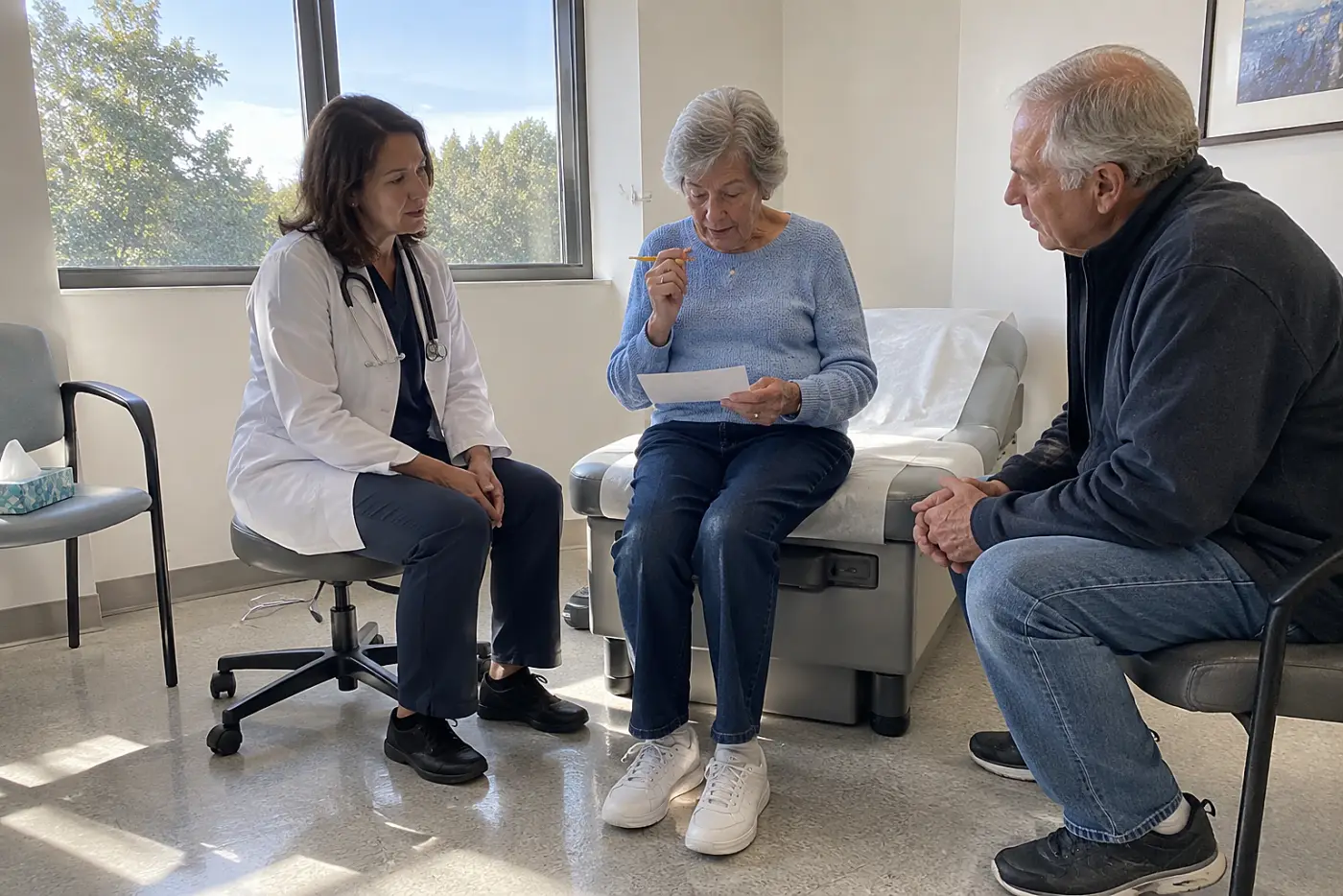
An unanswered result disappears into a busy week.
Before leaving, find out who will contact you and how. Ask when to expect the message, so you have a point for following up if nothing arrives.
The National Institutes of Health advises preparing questions for medical appointments. The MedlinePlus medical appointment guidance gives you another place to prepare what you'll ask. Neither replaces the answer from your own office about its process.
This week, add a line for results to your note. Say, “When should I expect the result, and whom do I call if I don't hear?” Write down the answer before you leave.
There is still one check that belongs at the end of the conversation.
2Repeat the plan in your own words

A nod doesn't show what you'll do at home.
At the end, say the steps back as you understand them. The doctor can correct a missed dose, a wrong date, or a misunderstanding while you're still together.
The AHRQ calls this teach-back. It checks whether the explanation worked; it isn't a test of your memory.
This week, leave a blank line on your note headed “Next steps.” Before the visit ends, say, “Let me check that I've got this: I'll call to schedule the test, then start the exercises.” Write down any correction.
But the ending works better when you've protected the beginning.
1Open with your one must-answer question

The first answer starts with what you ask first.
Before the doctor enters, choose the question you would regret forgetting. Put it at the top of your note, above symptoms, refills, and updates. Then say it before the conversation finds another route.
This doesn't mean the rest of your concerns don't matter. It means the doctor hears your priority while there's still room to decide what fits today and what needs another appointment.
The National Institute on Aging suggests making a list of concerns before a medical visit and putting the most important ones first. That's especially useful when an open-ended greeting makes your mind go blank.
This week, write one question in words you would use at the kitchen table. Practice saying it once out loud. At the visit, begin: “Before we get into anything else, I need to ask about this.”
Then pause, and listen for whether the answer reaches your question.
The bottom line
All 23 lines move a detail from your memory into the conversation before it gets lost.
The best-prepared version of you has already written one question and checked the dates and bottles. She's left room to record what happens next.
Which of these has already happened in your family?
Bonus: The opening script that gets your main question heard
- Write the one question you'd regret forgetting at the top of a note.
- When the doctor enters, say, “Before we start, I need to ask this.”
- Read your question exactly as you wrote it.
- Pause for the answer. Then ask, “What's my next step?”
Dr. Alan Pierce, PT, DPT
Health Reviewer
Alan is a physical therapist who specializes in helping adults over 50 stay strong and mobile.
You might also like