23 Reasons You Feel Invisible in a Doctor's Office, and the Sentences That Fix It
A companion's chair, a portal setting, and a rushed medication review can each shift an appointment away from your voice.
By Dr. Alan Pierce, PT, DPT, Health Reviewer
Updated · 16 min read
- Written by our health reviewer
- How we review

Read to the end: #1 is the room-setting sentence that returns the questions to you before your daughter answers.
The nurse opens the exam room door. You sit beside the paper-covered table; your daughter takes the chair. Before anyone asks why you came, the nurse looks at her and asks, “What’s going on with Mom?” You’re holding the bottle you brought to discuss.
It’s tempting to treat that glance as proof the whole visit is lost. But the next question, the chart on the screen, and the way your companion responds each give you a place to step back in.
Here are 23 moments to catch before someone else answers for you.
23The chair your companion chooses

The seating arrangement can turn your daughter into the spokesperson.
When she takes the chair closest to the clinician’s screen, conversation starts across that corner. You end up watching two profiles instead of joining the talk. The position doesn’t decide the visit, but it sets an awkward opening.
You lose the first chance to describe what brought you in.
Before the clinician arrives, ask your daughter to leave the chair beside the exam table open. Say, “I want to sit where the doctor can see me when I speak.” If the room makes that impossible, stay in the spot where you’re comfortable.
Then watch who gets the first question.
22The intake question answered across you

The intake desk can make your daughter the source.
A staff member asks her to confirm your address and insurance card while you’re standing there. She answers correctly, then keeps answering when the questions turn to allergies and medicines. The switch is easy to miss because everyone is trying to get you checked in.
An allergy answer deserves a check from the person whose body is at stake. Otherwise, the error reaches the exam room before your account does.
This week, decide which paperwork your daughter is helping with and which health questions you’ll answer. Say, “I’ll confirm my allergies and medicines myself; she has the insurance card.” Ask staff to read back anything you want to correct.
The clinician still needs the story behind today’s visit.
21The symptom timeline in your own words

Someone else remembers when you complained; you remember what happened.
The clinician needs a sequence: when the problem started, what changed, and what happened next. A companion’s account starts with what she saw. Those accounts can differ without either person being dishonest.
The sequence matters when the clinician decides what to examine or ask next.
This week, put three dated events in your phone: the first symptom, a change, and the most recent episode. Say, “I want to give you my timeline before we compare notes.” Let your daughter add anything she witnessed after you finish.
Once the dates are clear, describe the symptom itself.
20The pain scale someone else fills in
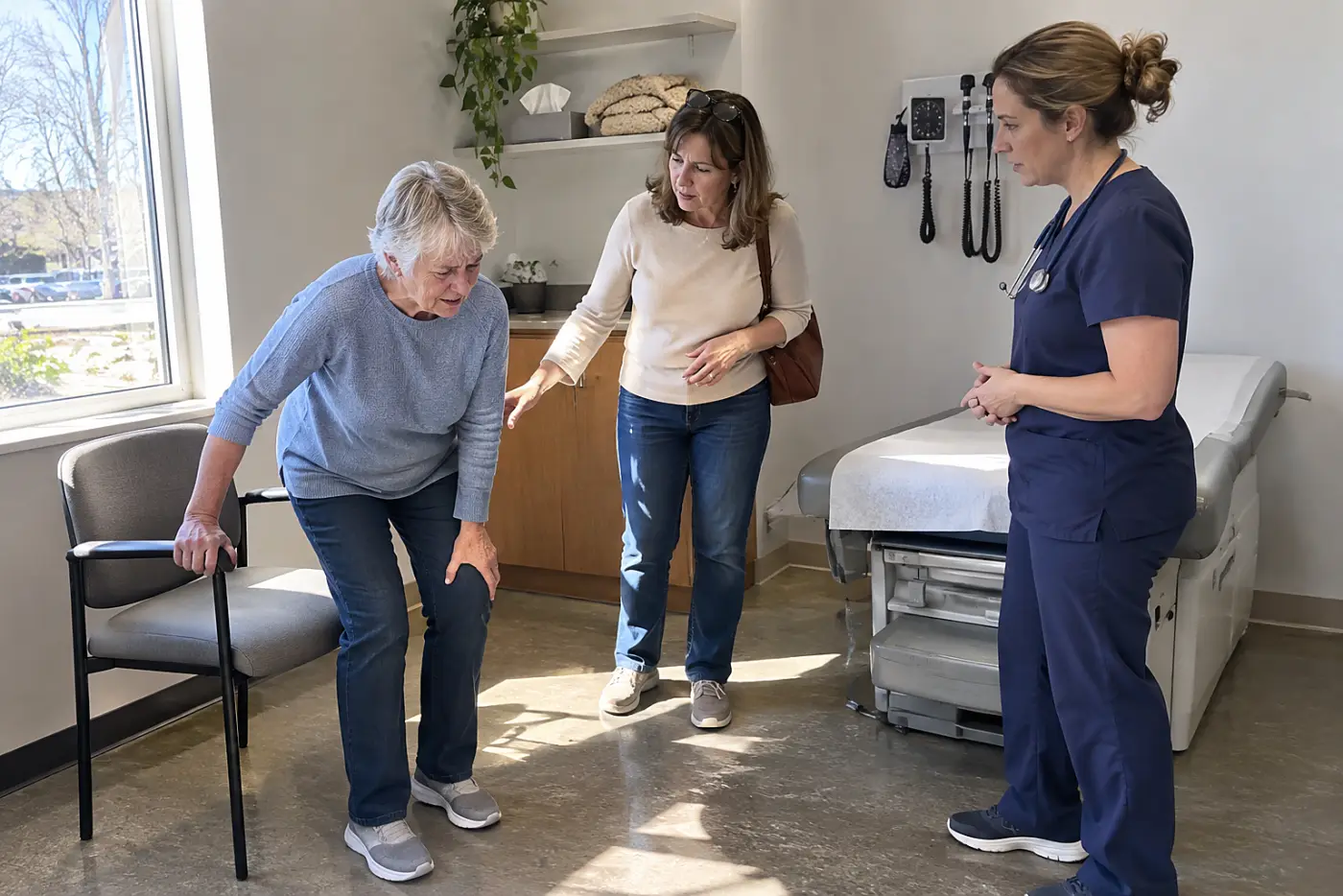
No one beside you gets to assign your pain number.
A staff member asks for a rating, and your daughter answers because she watched you wince. The number enters the chart as part of the visit record. Yet she sees your behavior, while you feel the pain and know what it stops you doing.
A number without that context leaves out the walk you abandoned or the sleep you lost. It also makes a later comparison harder.
This week, choose a plain example of what pain interrupted, such as washing dishes or climbing stairs. If the question goes to your daughter, say, “I’ll give my pain rating. She can tell you what she saw.” Describe the activity before the conversation moves to treatment.
Next, make sure the clinician hears where the symptom sits.
19The body part you point to

A label like “hip pain” can send the exam elsewhere.
You point to the sore spot; your daughter calls it your hip. The clinician hears the label and starts asking hip questions. Your finger marks a more precise place than anyone else’s description.
The location shapes what gets examined during this visit. “Hip” alone leaves out whether the worst spot is in your groin, buttock, or outer thigh.
This week, practice showing the exact spot without trying to name a diagnosis. Say, “The pain is here,” and point. Then add whether it spreads anywhere.
Where it hurts is only part of what changed.
18The daily task missing from the chart

A symptom sounds smaller when its effect stays unspoken.
Your daughter says you’re “slowing down,” and the clinician asks about fatigue. Meanwhile, you stopped carrying laundry down the basement stairs because your knee buckled there. The specific task tells the clinician what changed in daily life. It also gives both of you something concrete to revisit later.
Without it, a note saying “doing fine” sits beside a life that has narrowed. You shouldn’t have to wait for a fall to explain why this matters.
Before your visit this week, write down one task you did before and one part you cannot do now. Use the exact task, not “less active.” Say, “I stopped carrying the laundry downstairs because my knee gives way.” Then ask the clinician to repeat back what change they heard.
The same precision matters when someone else lists your medicines.
17The medication bottle in your bag

A chart list doesn’t show what you actually take.
The clinician reads the medication list on the screen. Your daughter remembers a pill you stopped, while the old entry remains in the chart. Neither account settles what is in your pillbox today.
An outdated list interferes with a useful medication review.
Bring the bottles or a current list to the visit this week, including nonprescription drugs and supplements. Say, “This is what I’m taking now. Please compare it with the list on the screen.” The National Institute on Aging has guidance on keeping a medicine list for appointments.
Once the list matches, ask who will explain any change.
16The prescription change explained to your daughter

A new dose is useless if only your companion hears it.
The clinician changes a prescription and starts explaining the schedule while your daughter nods. She plans to remind you later, but she isn’t the person who will open the bottle each morning. You need to hear which drug changed, the dose, and when the new instructions begin.
The pharmacy label gives you another chance to check. It shouldn’t be your first explanation. A mix-up between an old bottle and a new one can follow you home. Written instructions leave less to reconstruct from memory.
At your visit this week, keep the bottle in front of you while the change is discussed. Say, “Please tell me the new dose directly, and write down when I start it.” Repeat the schedule in your own words before you leave.
The next question is what happens if that plan causes trouble.
15The side effect you kept to yourself

Your daughter’s reassurance cannot replace your account of a reaction.
You notice dizziness after starting a medicine. At the visit, she says you seem better because the original symptom eased. The clinician needs to hear both pieces before deciding what to do.
If dizziness stays out of the conversation, the medication plan rests on an incomplete account.
This week, note when the symptom began and its timing after each dose. Say, “The first problem improved, but I’ve been dizzy since starting this medicine.” Don’t stop a prescribed drug on your own without speaking with the prescribing clinician, unless you’ve been told to stop it for that reaction.
Another person’s presence can also keep a different question unasked.
14The private question you save for later

Some questions will never come out with family in the room.
You want to discuss bleeding, sex, alcohol, or something at home. Your daughter stays because she drove you, and the clinician moves through the visit. You keep waiting for a natural pause that never arrives.
The cost is a concern the clinician never hears. An exam room isn’t a family meeting; you choose what to discuss in front of your companion. The U.S. Department of Health and Human Services’ HIPAA guidance for individuals covers sharing health information.
This week, write “private question” on a note and hand it to the clinician. Say, “I’d like a few minutes alone to ask something.” You needn’t describe the question in front of your daughter.
Privacy in the room is different from access to records afterward.
13The portal account someone else controls

A shared login makes it hard to know who wrote the message.
Your daughter sends a question through your patient portal using your password. The reply lands in the same account, so staff see one message thread rather than two distinct voices. You lose the chance to put your own question in your own words.
That matters when an answer about a test or medicine needs your follow-up.
This week, ask the practice how its portal handles caregiver or proxy access. Say, “I want my own login, and I want to know what access my daughter has.” Don’t share a password as a substitute for setting up separate access.
The messages themselves deserve a closer look.
12The test result read by your daughter

Seeing a result first does not make her its interpreter.
A portal alert reaches your daughter while you’re at work or away from your phone. She searches a flagged term and calls with her conclusion. Meanwhile, the clinician’s interpretation and next step have not reached either of you. A result is one piece of the picture, not the full visit.
If her explanation becomes the family version, you enter the follow-up already answering her fears. You also risk missing the clinician’s actual instructions.
This week, check where portal alerts go and how the practice sends follow-up instructions. Say, “Please explain this result to me and tell me what happens next.” Write down who orders the next step and when you should expect contact. MedlinePlus describes lab tests, but your clinician must put your result in context.
A result still needs a question about choices.
11The treatment choice framed for everyone else

A family preference can crowd out the trade-off you care about.
The clinician describes two paths, and your daughter asks which one gets you home fastest. You want to know which leaves you able to drive. Both questions matter, but only one comes from the person living with the outcome.
Without your priority, the plan can sound settled before you’ve weighed it.
This week, name the daily activity you most want to protect. Say, “Before we decide, tell me how each choice affects my ability to drive.” Ask for the trade-offs in ordinary words.
Those words matter most when the plan includes a procedure.
10The consent form passed to your daughter

The pen can reach the wrong hand before the explanation reaches you.
Staff bring a form into the room, and your daughter offers to handle it. She’s helped with paperwork before, so the handoff feels routine. For an adult who is making her own decisions, informed consent calls for a conversation with the patient.
Signing without understanding leaves your question unasked, even if the procedure itself goes well. Your daughter’s presence alone does not make her the person signing for you. The American Medical Association’s informed consent guidance describes the conversation behind the signature.
At your next appointment, keep the form in front of you until the clinician explains it. Say, “I’d like you to explain the procedure, the risks, and my other choices before I sign.” If staff direct the form elsewhere, ask the clinician to explain the reason to you.
Paperwork about sharing information is a separate issue.
9The release form at the front desk

A ride to the office is not blanket permission to share records.
Your daughter checks you in, and the desk asks whether staff should speak with her about your care. You want her to hear scheduling details, but not a private test result. Ask how the practice records those preferences before you sign anything.
Otherwise, a request meant to make rides easier leaves staff guessing what you intended.
This week, review the contacts and sharing forms in your patient file. Say, “I’d like to review what I’ve signed about sharing information with my daughter.” The HHS privacy guidance on family and friends describes how providers share information with people involved in your care.
Another document deals with decisions rather than conversation.
8The health care proxy filed as permission

Naming someone for a future crisis does not silence you now.
Your daughter brings a health care proxy or medical power of attorney to the visit. Everyone sees her name, then starts looking toward her for ordinary answers. She says you’re the one with the symptoms, but the questions still drift back.
If staff bypass you today, details disappear from the visit. Your daughter gets pushed into a role she does not need to fill. Rules and form names vary by state, so check when your document gives someone authority to make decisions.
This week, find your document and read its instructions. Ask the practice where it is stored in your record. Say, “She’s named in this document. Please ask me about today’s symptoms.” The National Institute on Aging’s advance care planning guide describes health care proxies and related documents.
Even without a proxy question, the chart can carry a misleading label.
7The chart note that gets your story wrong

One mistaken sentence can greet the next clinician before you do.
A visit note says your daughter reported symptoms you described yourself. At the next appointment, someone reads it aloud as the history. The note has become a shortcut, though its wording missed who said what.
You shouldn’t have to spend every visit correcting the same account.
This week, read the latest visit note in your portal or request a copy from the practice. Say, “This sentence gets my history wrong. How do I request an amendment?” HHS explains the right to request a record amendment.
The note also records the plan you’re meant to follow.
6The after-visit summary handed to her
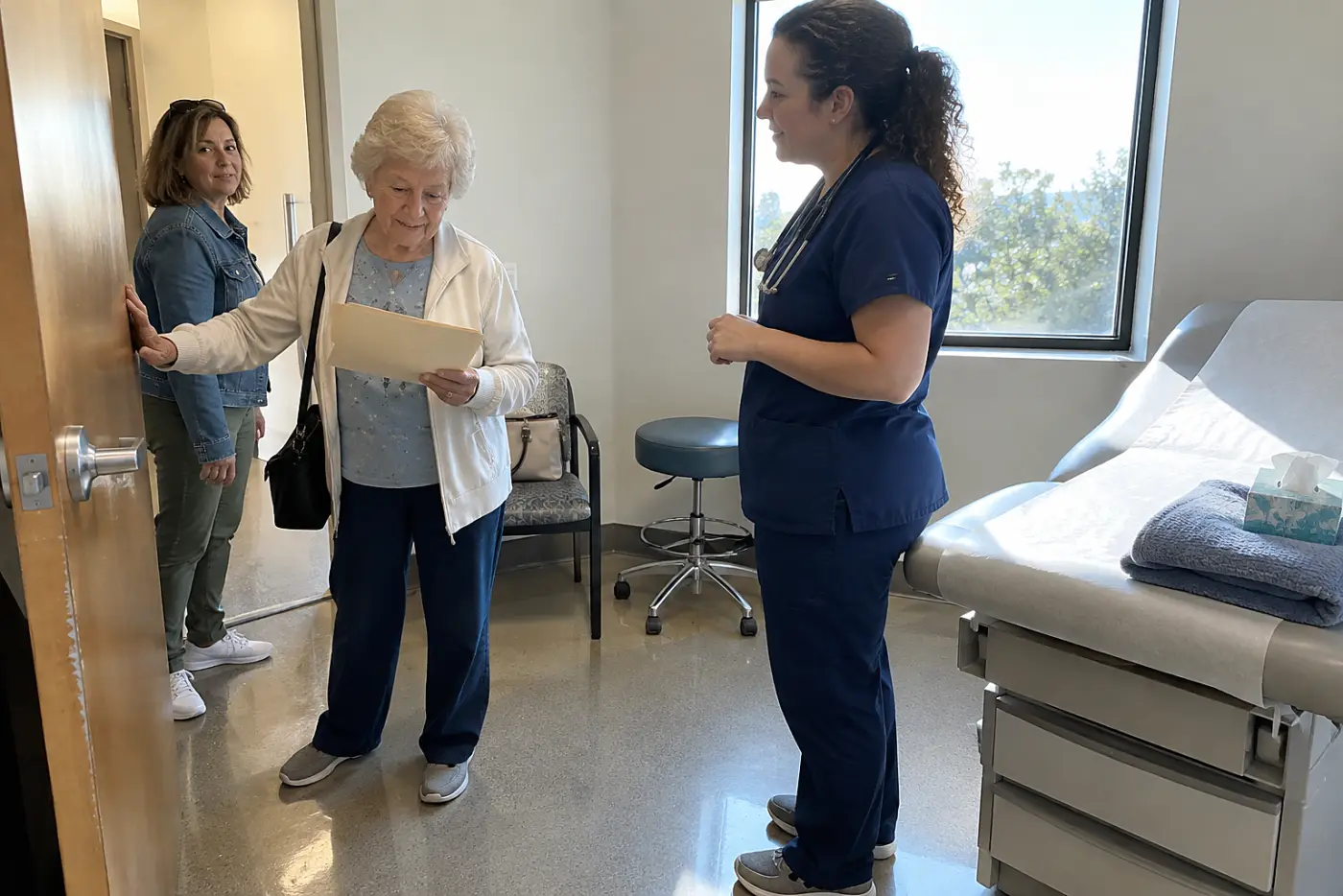
The visit can end with instructions you never see.
Staff print an after-visit summary and give it to your daughter because she’s standing nearest the door. She folds it into her purse, planning to tell you later. The page holds the medication changes, tests, referrals, and follow-up discussed in the room. You need to check it while questions are still fresh.
A missing referral or wrong dose is easier to catch before you leave than after dinner. The summary is worth reading even when your daughter takes notes.
This week, ask for the summary yourself before walking out. Say, “Please hand me the instructions so I can check the medicine and follow-up plan.” Look at each new task and ask who is responsible for arranging it. If the page differs from what you heard, ask staff to resolve the difference before you go.
Then look at the one task that still has no appointment.
5The referral call nobody assigned

“I thought she’d call” is how a plan goes still.
The clinician recommends a specialist, and your daughter says she’ll help. Nobody asks whether the practice sends the referral, the specialist calls, or you must make the appointment. Those are different jobs.
Without a named caller, the next visit remains a suggestion on paper.
This week, look at the referral section of your after-visit summary. Say, “Who sends this referral, and who calls to book the appointment?” Write down the specialist’s name and the number you’re given.
A booked visit still needs your reason for going.
4The question list written by your daughter

Her list deserves space, but it cannot replace yours.
Your daughter arrives with careful notes about falls, appetite, and sleep. She has noticed things you missed. Yet her page starts the conversation, and the question you carried in gets squeezed out by the clock. A shared visit works better when the clinician knows whose question is whose.
Leaving with answers to her list alone still leaves you without yours. A written question is easier to keep in sight than one you plan to remember.
This week, put your top two questions on your own card or phone, above any shared list. Say, “I have two questions I need answered before we finish.” Let your daughter add her observations after you’ve raised them. If time runs short, ask how to get an answer to what remains.
One question in particular deserves a direct answer.
3The follow-up date you never heard

“We’ll see how it goes” leaves no clear return point.
Your daughter hears “follow up,” and you hear no date or trigger. At home, neither of you knows whether to call about a symptom that stays the same. The plan needs a time frame and a reason to contact the office sooner.
Otherwise, your next move depends on two different memories.
This week, check the after-visit summary for a follow-up instruction. Say, “When should I contact you if this hasn’t improved, and what change means I should call sooner?” Write the answer where you keep appointments.
Even a clear plan fails when its explanation never reaches you.
2The explanation given while you dress
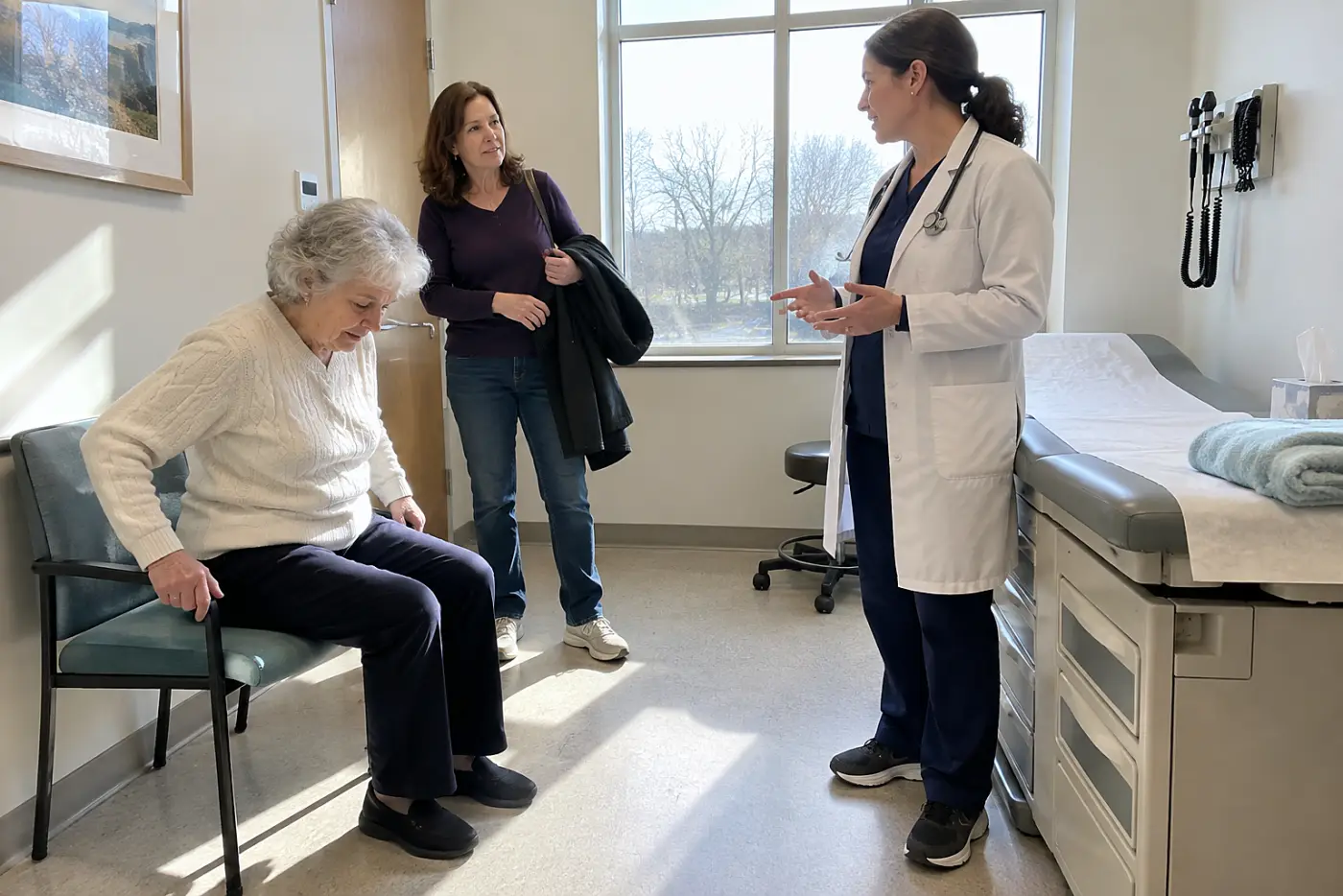
The last instructions arrive just when your attention is elsewhere.
You’re pulling on a shoe, your daughter has her coat on, and the clinician recaps from the doorway. She answers because she’s ready to leave. You’re still sorting out a word from the exam and have missed what happens next. A rushed ending turns her memory into your instruction sheet.
That gap matters when the plan has several parts. The Agency for Healthcare Research and Quality’s teach-back materials describe a check: say the plan back in your own words so misunderstandings surface.
This week, pause the exit before anyone starts the final recap. Say, “Please give me the plan while I’m sitting down, then I’ll tell you what I heard.” Name the next action, who does it, and when. Let your daughter add a detail if you missed one.
Before any recap, though, you need to set the room’s direction.
1The opening sentence before anyone else answers
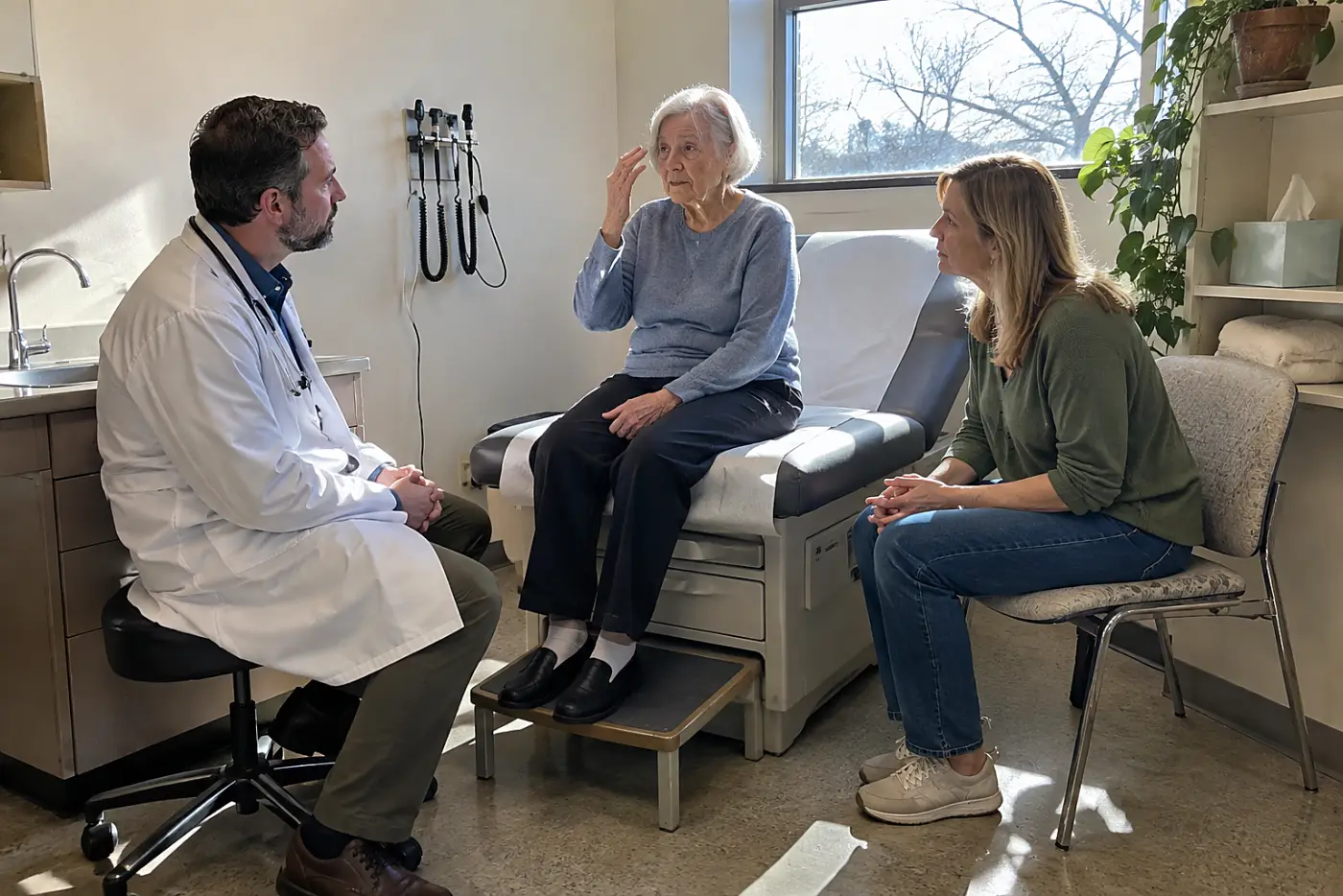
The first exchange can put your daughter in charge by accident.
A clinician walks in and asks who brought you. Your daughter replies, explains the trip, and keeps talking. Soon, questions about symptoms land on her side of the room. You can interrupt later, but doing it at the start takes less effort than pulling the conversation back halfway through.
This is the moment to be direct, without scolding your daughter or asking her to disappear. She still has a useful role: dates you missed, changes she witnessed, and questions you agreed she would raise. Your voice needs to lead because this is your appointment.
At the next visit, decide together before entering that you’ll answer first. As the clinician comes in, look up and say, “Please ask me the questions first. My daughter can add anything I miss.” If a question still goes to her, repeat the request and give your answer. No speech about respect is required; the next question is the test.
Keep that sentence ready for the first minute.
The bottom line
Across all 23 moments, the pattern is the same: whoever answers first starts to shape the record and the plan.
You’ve prepared when your daughter knows you’ll lead. Your questions are in your hand, and you know what you want to hear before leaving.
Which of these has already happened in your family?
Bonus: The room-setting sentence that puts the questions back to you
- Before you go in, tell your daughter, “Let me answer first; then add what you’ve noticed.”
- When the clinician enters, say, “Please ask me the questions first. My daughter can add anything I miss.”
- If the next question goes to her, say, “I’ll take that one,” and answer it.
- Before leaving, say the plan back in your own words and ask your daughter what you missed.
Dr. Alan Pierce, PT, DPT
Health Reviewer
Alan is a physical therapist who specializes in helping adults over 50 stay strong and mobile.
You might also like