26 Things Widows Wish Their Friends Understood in the First Year
After the funeral, unanswered invitations turn into silence when friends assume someone else will make the next call.
By Margaret Hale, Travel & Lifestyle Editor
Updated · 18 min read
- Written by our travel & lifestyle editor
- How we review

Read to the end: #1 is the phone handoff that keeps friends calling without making you organize every call.
The casserole dish sits washed on the counter, with a square of masking tape bearing someone else’s name. For days, the doorbell rang. Now the house is still, and returning a dish feels harder than it should.
Your friends saw the funeral as a moment to gather. You’re living the part after everyone has gone home.
Here are 26 things worth telling them.
26The casserole dish still on your counter

A washed dish becomes one more unanswered obligation.
Dinner arrived when the kitchen was full. Now the dishes need returning, and each one seems to require a separate call. Nobody thought to make the return trip another visit.
The stack on the counter keeps growing while you eat alone. Even a small errand feels larger when you have to arrange it from scratch.
Put the dishes in one bag this week and text their owners. “Your dish is ready. Will you bring coffee when you pick it up?” Tell them a doorstep exchange is fine if company feels like too much. Nobody needs to inspect your kitchen.
A return trip brings someone to the door, but it doesn't put another meeting on the calendar.
25A coffee date with a time attached

“Let’s get coffee sometime” leaves you holding the calendar.
After the funeral, that invitation asks you to pick a day, start a text, and risk hearing your friend is busy. Three tasks hide inside one kind sentence. A place with easy parking and a short visit makes saying yes less demanding.
Without a time, the invitation turns into another afternoon spent wondering whether your friend meant it. Neither of you has agreed to show up.
Send one friend two choices for this week. “Will you meet me Tuesday at ten, or Thursday at two?” If neither works, ask for one alternative and put it in your phone before the exchange ends. You don't have to decide what you'll talk about.
If leaving the house still asks too much, the next invitation needs a smaller destination.
24Two chairs on your front porch

A visitor shouldn't require you to host.
A knock at the door brings old habits with it: offering food, clearing a table, and apologizing for the house. A porch visit keeps the meeting outside those expectations. Two chairs and a stopping time are enough.
Otherwise, the work of preparing for company becomes a reason to turn it down. You miss the person you wanted to see.
Text a friend who respects a short visit this week. “Will you sit with me on the porch for fifteen minutes? Please don't bring anything.” If the weather changes, postpone rather than moving the visit into a room you're not ready to open.
Even a welcome visitor leaves, and the next hour has its own weight.
23The evening after visitors go home
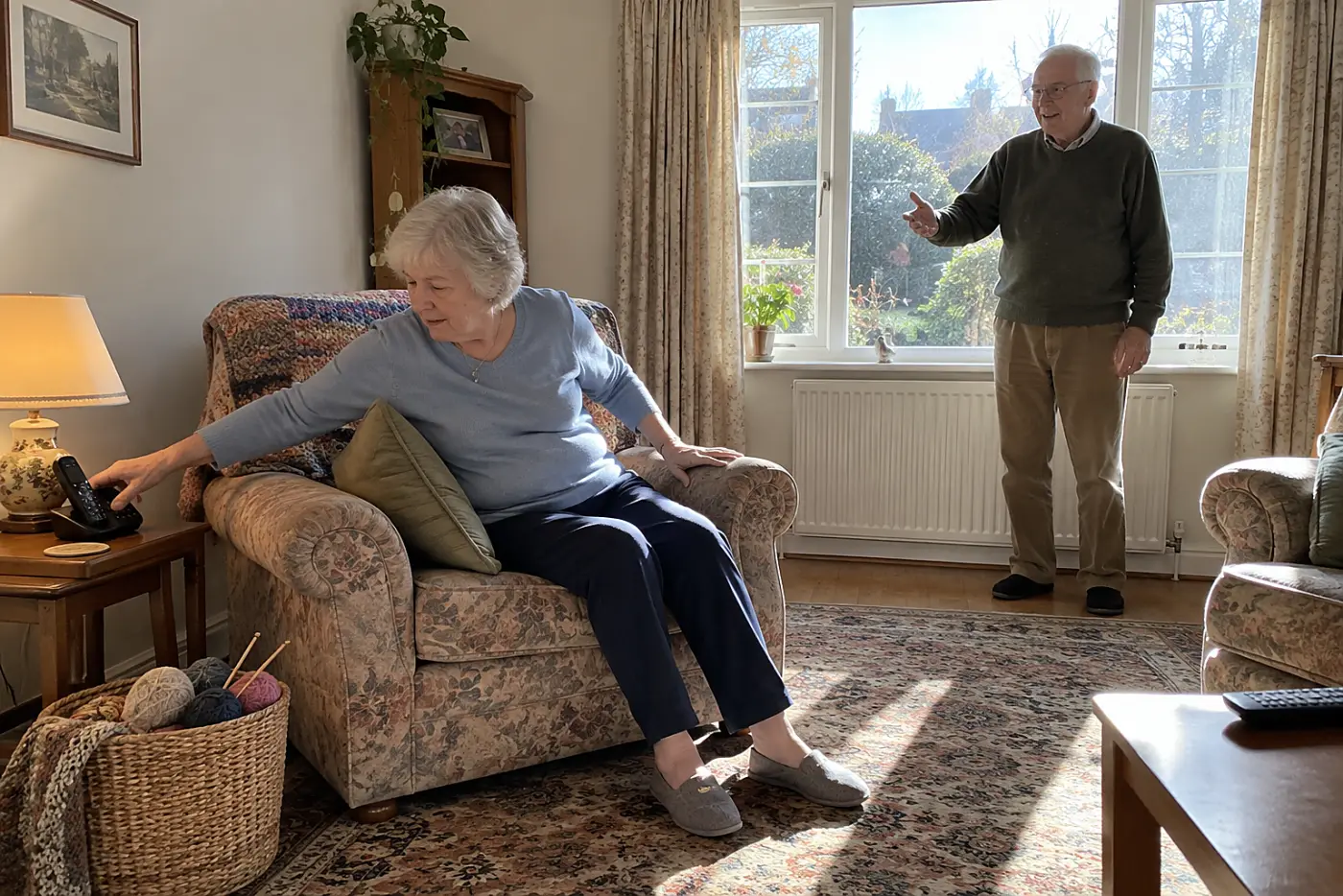
The refrigerator sounds louder after everyone leaves.
Guests depart, the dishes go into the sink, and the busy afternoon stops all at once. A friend who saw you surrounded by people at four doesn't see the house at seven. Tell them about the difference.
Without that explanation, the hardest ordinary hour stays invisible. Nobody knows when a brief conversation would mean the most.
Name the hour to one friend this week and ask for company that doesn't require going out. “Will you stay on the phone while I make dinner Wednesday?” Say whether you'd rather talk about him or hear about their day. That gives your friend a job they understand.
For an immediate emotional crisis, call or text the 988 Suicide & Crisis Lifeline in the United States. A familiar voice during dinner serves another purpose.
An ordinary evening is hard enough; one particular date brings its own plans.
22His birthday on your phone calendar

His birthday doesn't disappear from the calendar.
Friends remember the funeral because they attended it. They don't have the same reminder for the birthday you shared with him. The date arrives whether or not anyone else recognizes it.
A forgotten birthday leaves you deciding whether to explain the hurt afterward. That is a burden on a day you already know will be hard.
Mark the birthday on your calendar this week and choose one thing you want to do. “His birthday is coming up. Will you have lunch with me that day?” Tell your friend if you'd rather skip calls until evening. You aren't asking for a perfect response, only for someone to know the date.
Another date belongs to the two of you and has never appeared on anyone else's calendar.
21The anniversary marked in your notebook

Your anniversary stays private unless you tell someone.
There is no announcement telling friends which day you once set aside together. They remember the service, then make ordinary plans over the date you have circled. You still get to decide what that day holds.
If nobody knows, their absence feels personal even when it wasn't deliberate. Waiting until the morning itself leaves less room to make a plan.
Look ahead in your notebook this week and mark the anniversary. “Our anniversary is next month. Will you drive with me to the place where we used to walk?” Choose someone who won't change the subject or insist on a larger outing.
A private date is one thing; a holiday brings other people's plans into the room.
20A holiday invitation with a way home

A holiday invitation needs an ending you control.
The table holds familiar food and a missing person. Saying yes to dinner doesn't commit you to dessert, photographs, or every question that follows. A ride you control gives you a way to leave.
Without one, kindness turns into an afternoon you feel obliged to endure. The trip home belongs in the plan before you sit down.
Ask your host this week when the meal starts, then choose your leaving time. “I'd love to come for dinner. I'll head home after we eat.” Drive yourself, book a ride, or arrange for one friend to take you home when you ask.
Someone else's table offers company, though it doesn't answer what happens at your regular one.
19Your seat at the regular table

Someone moves a chair, and nobody asks you.
At the diner or card game, friends notice his absence and rush to make the table look normal. They change the subject or choose your seat for you. Their haste leaves you managing a decision they made.
A changed routine makes returning harder than anyone intended. You came to see friends, not to explain why a particular chair matters.
Contact the person who organizes the gathering this week. “I'd like to choose my seat when I get there. Please save me a place.” If the group skipped his name in old stories, tell them whether you want to hear it. You get to make that choice each time.
First, though, the invitation has to arrive even after you've missed a gathering.
18Another invitation after you decline one

One no shouldn't remove you from the list.
Friends worry about pressuring you, so a declined dinner becomes the last invitation. They stop asking without checking whether you meant no to that night or to every night. You lose a place in plans you still wanted to hear about.
Silence then looks like a decision you never made. You retain the right to answer each invitation separately.
Choose one friend this week and tell them which outings still appeal to you. “I can't make Friday, but please invite me next time.” Suggest a walk or matinee if dinner feels too long. You don't owe a reason for declining this one.
Some invitations need more than another date; the room itself needs a little thought.
17A seat beside someone you know

A room full of couples changes dinner.
The seating chart appears after you've accepted, and familiar pairs settle into old habits across the table. A host who knows where you'd like to sit takes one uncertainty off your shoulders. You still choose whether to go.
Without that small conversation, you spend the meal finding your footing while everyone else catches up. An invitation alone doesn't tell you what the evening will feel like.
Ask the host this week who is coming and whether you'll know anyone. “I'd like to come. Will you seat me near Anne?” Set a leaving time before you go. If the host suggests a date, tell them you aren't there to meet anyone new.
That boundary matters even more when an introduction follows you outside the party.
16Your number kept out of introductions

A friend gives your number to a stranger.
They think a new relationship would make you happier, then leave you to answer someone you didn't agree to meet. The stranger has expectations; you have an unwanted conversation. Friendship doesn't give anyone control of your contact details.
If you stay silent, the next introduction starts before you've had a say. Your future relationships are yours to arrange.
Tell that friend this week what stays private. “Please don't give anyone my number or set up a date for me.” Ask them to tell the person they contacted that the introduction was their mistake, not yours.
Friends also make plans for the things in your house when they mistake action for help.
15His jacket left on its hook

A visitor reaches for the jacket without asking.
Someone says it should go to a person who needs it. Suddenly, you're expected to decide in front of them what stays in your home. Their urge to clear a space isn't a deadline for you.
Once an item leaves, you lose the chance to choose its destination yourself. Watching every bag a helper fills is work, too.
Tell anyone offering housework this week which spaces are off limits. “Please leave his clothes where they are. Will you wash the towels instead?” Give the friend a job with a clear finish, like carrying groceries or changing a bulb. If you start sorting later, you decide when to stop.
There is other work outside the closet, and some of it grows while nobody calls.
14The mower waiting in the garage
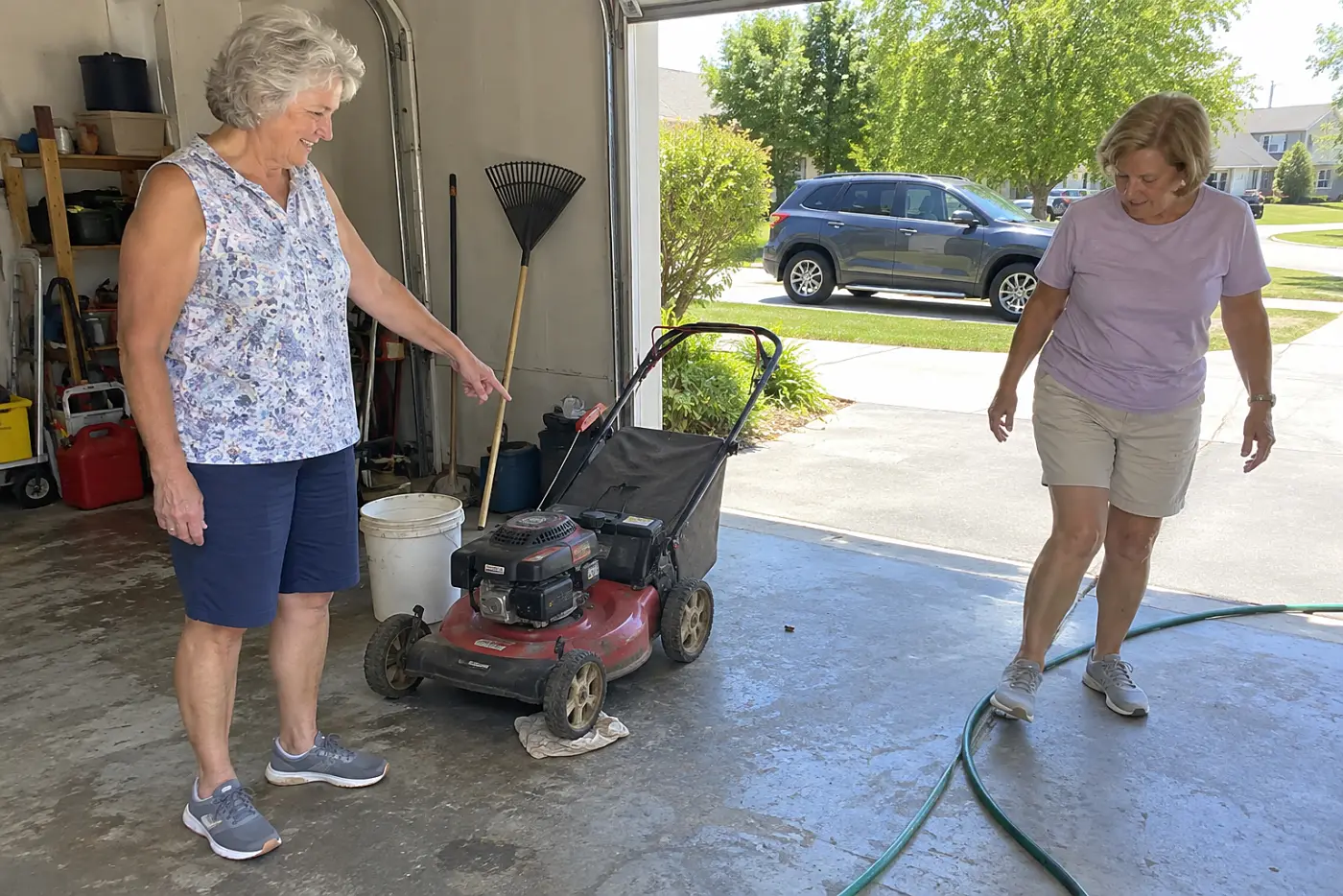
Grass grows whether friends call or not.
“Call me if you need anything” leaves you to notice the job, find the number, and make the request. A named task gives your friend a clear answer to give. It also keeps an offer from hanging in the air.
An overgrown yard is visible to everyone; the effort of arranging help isn't. Each unanswered offer adds another decision to your week.
Pick one outside job this week and ask one person directly. “Will you mow the lawn Saturday? The mower and gas are in the garage.” If they aren't free, ask for the name of someone to hire. Agree on Saturday before either of you moves on.
A one-time job helps, but the next household chore returns on a schedule.
13The trash cans beside the house
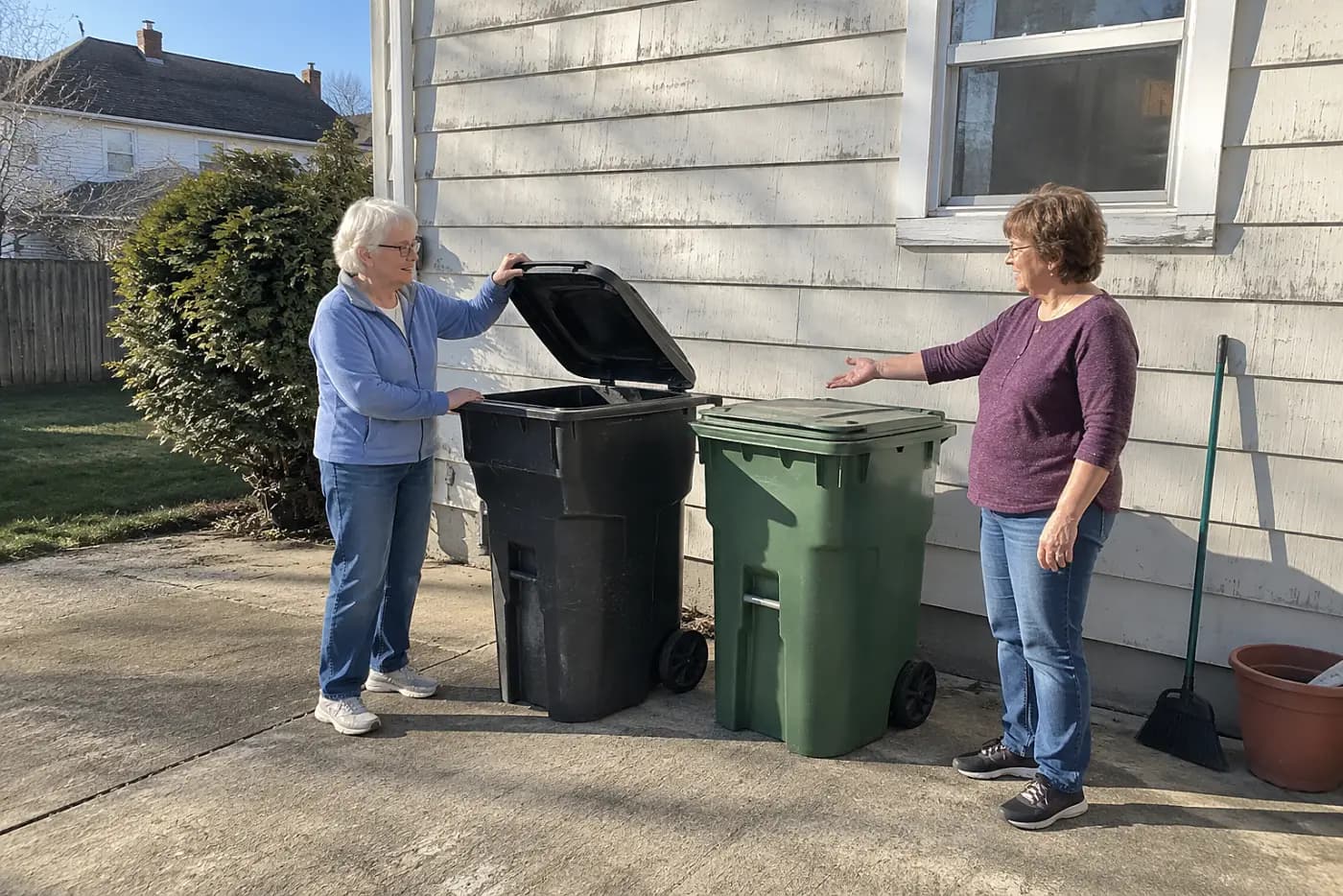
The trash cans still need to reach the curb.
A friend offers housework, then waits for directions each time. You still have to remember the pickup day, point out the bin, and ask again next week. A repeating chore only helps when the agreement repeats, too.
If a friend agrees once, don't plan your month around it. Put the task back on your calendar when their visits end.
Choose one person this week and show them the bin and its spot at the curb. “Will you put the cans out on Thursday evenings this month?” Ask them to tell you ahead of time if they need to stop. That gives you a chance to make another plan.
Mail brings a different repeating chore. USPS Informed Delivery lets you preview images of eligible incoming mail, though you still choose what to open and when.
Daylight chores wait for a plan; something broken after dark presents another problem.
12The porch light that needs a ladder

A burned-out bulb sends you looking for a ladder.
Finding the right bulb is one task. Climbing up to replace it is another, and an offer of help is easier to accept when you name the job. A friend doesn't need to wait for a larger problem.
Climbing alone risks a fall. Leaving the light out doesn't fix the steps you use every evening.
Write down the jobs that need another pair of hands this week. “Will you bring your ladder and change the porch bulb Saturday while I'm home?” If the fixture is broken rather than the bulb, call an electrician. Keep that job off a friend's list.
The light gets you out the door, but some destinations still feel harder to reach alone.
11A ride with a waiting room plan

An appointment starts before you see the doctor.
Parking, forms, and the drive home all happen around the visit. A friend who offers a ride doesn't know whether you want company in the waiting room or privacy during the exam. Tell them where their help ends.
Skipping an appointment because the trip feels too hard leaves your questions unanswered. An unspoken expectation about the exam room strains the ride, too.
Look at next week's appointments and choose one for which you'd welcome a driver. “Will you drive me Tuesday and wait in the lobby? I'd rather go into the exam room alone.” Bring questions you've written down. The National Institute on Aging's doctor visit pages recommend preparing questions and taking notes.
The trip home has its own boundary when your friend asks what the doctor said.
10The doctor's news on the drive home
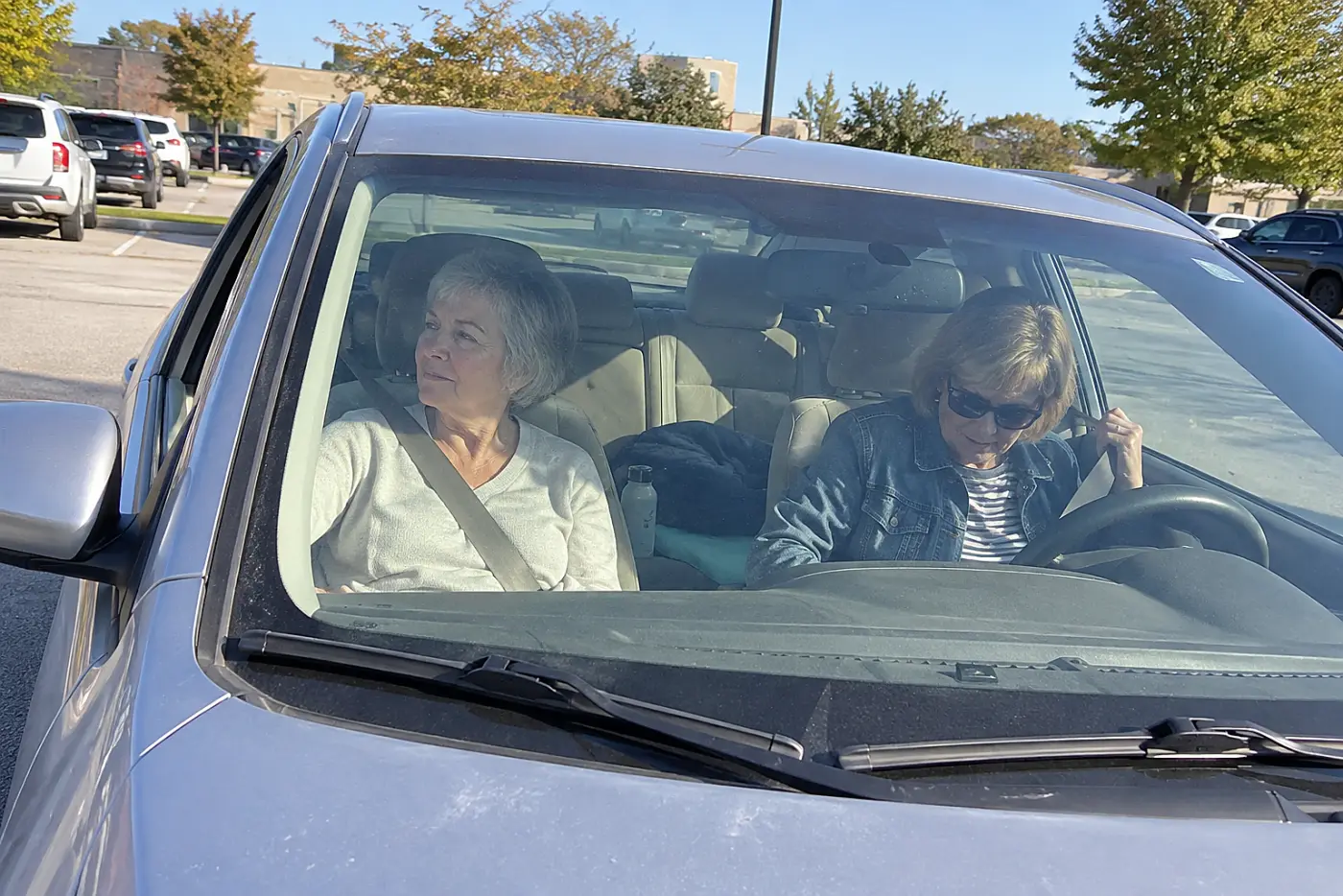
A ride doesn't buy your medical story.
The person who drove you asks how it went, perhaps before you've made sense of the visit yourself. Gratitude and privacy belong in the same car. You don't have to choose one.
Without a prepared answer, you feel pushed to share details you haven't sorted through. The friend also needs to know whether you want conversation or a silent ride.
Decide this week what you'll say after your next appointment. “Thanks for driving. I need time before I talk about what the doctor said.” Ask for music or a stop for coffee if that makes the trip easier. You decide what to share later.
Other friends will want news, and answering each of them creates a separate job.
9One person handling the group text
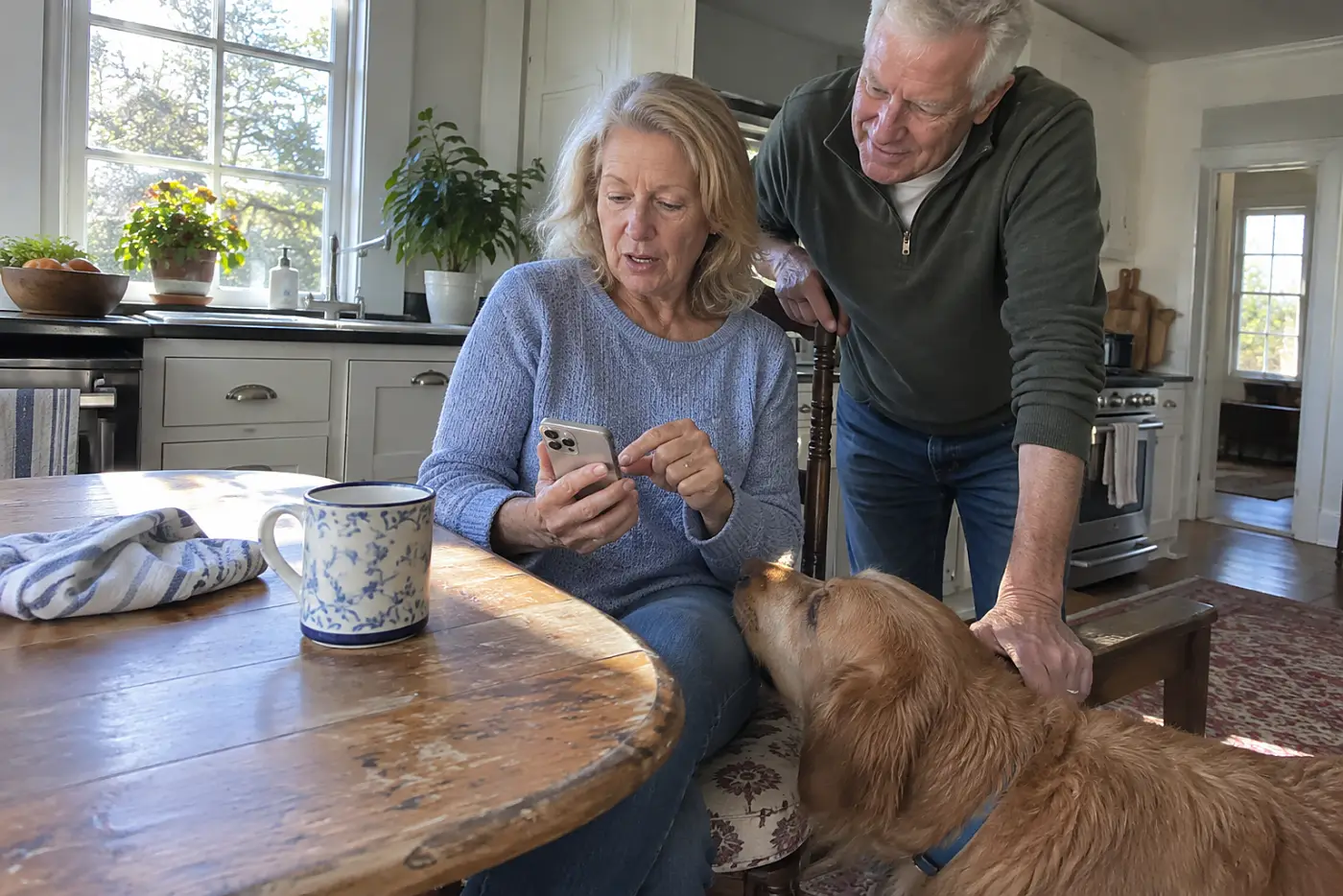
Five caring messages still demand five answers.
A group text asks how you're doing, then individual replies arrive. Each one invites you to describe the same hard day again. A single approved update gives friends news without turning you into a daily reporter.
Without limits, information travels farther than you meant it to. Silence, meanwhile, gets mistaken for a request that nobody write at all.
Choose one person this week to pass along basic news. “Please tell the group I'm glad they checked in, but I don't want to answer messages today.” Tell that person exactly what to share. CaringBridge is another place to post an update for invited readers if you'd rather write it once.
A message stays within a circle you chose; a public post has a different reach.
8A photo tag waiting for approval

A photo brings an audience into your phone.
A friend shares a memory of him and tags you. Replies arrive from people you haven't spoken to, all attached to a moment you didn't choose to post. Your friend meant to remember him, not hand you a roomful of messages.
Without a boundary, you face each notification as it arrives. You should decide when to look at photos and when to put the screen down.
Tell close friends this week what you want before they post. “Please ask me before you tag me in a photo of him.” Check your account's tag-review settings if you use them. A friend still gets to keep a memory without placing it on your profile.
Some memories arrive in conversation, where you need a different kind of choice.
7His name in a friend's story

His name vanishes from ordinary stories.
Friends switch to “your husband” or skip memories that include him, afraid they'll upset you. That removes parts of his life you didn't witness: a work joke, a favorite song, or a drive with friends.
When the stories stop, those details are harder to reach. You also lose the chance to add the part your friend forgot.
Tell one friend this week how you'd like him mentioned. “I'd like to hear that story about his terrible barbecue again.” If today's a day for other subjects, say so without making it a permanent rule. Your friend doesn't need to guess correctly every time.
A name opens the conversation, while a clumsy attempt at comfort closes it.
6The sentence beginning with “at least”

“At least” asks you to be grateful on command.
A friend reaches for comfort and tells you to look on the bright side. Now you're holding their discomfort along with your own. They need a better way to stay in the conversation.
If every call becomes a lesson in gratitude, you stop making calls you wanted to make. One direct request gives a trusted friend another way in.
Tell that person this week what helps instead. “Please skip the bright side. Ask me what I miss about him.” You don't have to correct every remark from everyone. Start with the friend you want to keep talking to.
They also need to understand that a good moment doesn't cancel a hard one.
5A laugh over lunch with friends

You laugh, and everyone studies your face.
An afternoon out feels good until someone treats the laugh as proof that you're “back to normal.” Later, you cry in the car. Neither moment gives friends a complete report on how you're doing.
When a good hour becomes a verdict, the next difficult morning feels lonelier. You shouldn't have to protect other people's hopes by hiding a laugh.
Invite one friend to do something ordinary this week. “Will you have lunch with me and talk about other things for a while?” If your husband comes up, that's fine. If someone declares you recovered, answer, “It was good to laugh today. Tomorrow is still tomorrow.”
Lunch gives you company for an hour, but the trip back home remains.
4A walk around your own block

“A walk” sounds too small to request.
Yet it has a clear route, a starting time, and a finish. A friend knows what to agree to without taking charge of your day. Walking side by side also takes the pressure off a long face-to-face talk.
Without a plan, you stay inside waiting to feel ready to go out. A small outing asks less of both of you.
Pick a familiar route this week and leave your shoes by the door. “Will you walk around the block with me after dinner? We don't have to talk.” Name a time so neither of you has to restart the plan tomorrow.
Coming home from company is another moment a friend won't see unless you explain it.
3A text when you unlock the door
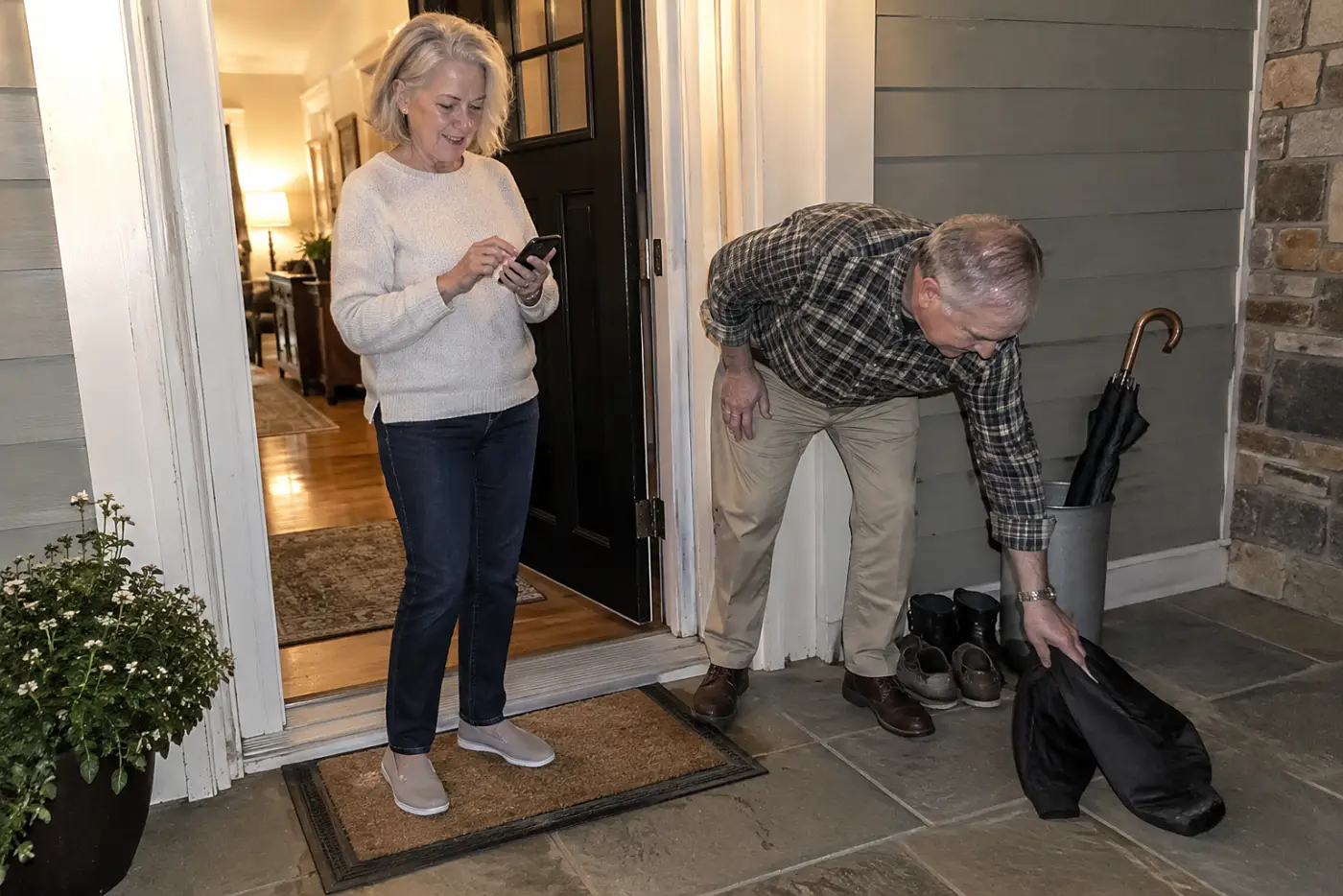
The hardest part arrives after a good visit.
You make it through dinner, then carry leftovers into rooms where nobody asks how the evening went. The host saw you leave smiling. They didn't see you turn the key at home.
Without a check-in, that sharp turn belongs to you alone. A brief message doesn't fix the night, but it gives the return trip a witness.
Before your next visit, tell one person about the trip home. “Will you text me when I get back? The return is the hard part.” Tell them a one-word reply from you is enough. If you'd rather speak with people beyond your circle, GriefShare lists local and online groups.
A check-in follows one visit; friendship has to make room for you in a less planned way, too.
2The errand nobody thinks to share

Friends wait for a need that sounds important.
You still go to the grocery store, pharmacy, and post office. Asking someone along on an ordinary errand feels harder than asking for help in a crisis, yet that's where an empty passenger seat shows up.
If friends only visit for emergencies, everyday life stays lonely. You lose the easy conversations that used to happen between destinations.
Pick one errand already on your calendar this week. “I'm going to the grocery store Saturday. Will you come along and get your shopping done too?” Agree on a meeting time and keep the trip short. Neither of you needs to turn it into an occasion.
One outing fills one afternoon; the unanswered question is who takes responsibility for the next call.
1The phone handoff that keeps friends calling
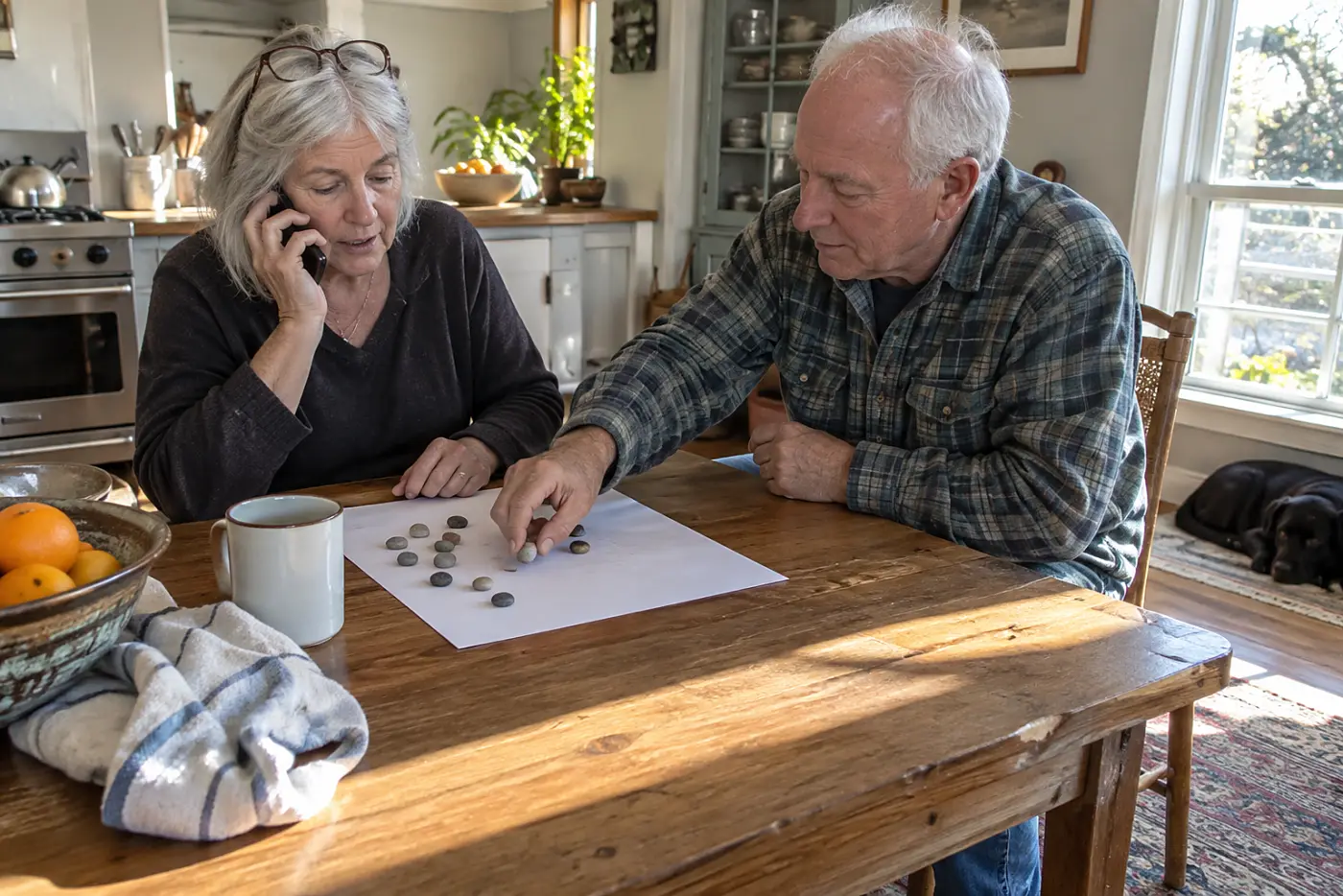
You shouldn't have to run your own call list.
After the funeral, friends wait for a sign that you want company. Each waits for someone else to call first. The person with the least energy ends up organizing everyone, and the phone stays silent.
A single scheduled call helps once. The handoff changes who remembers to reach out next, without making you send another round of invitations. It also gives each friend permission to offer a time that works.
Call one dependable friend this week and ask them to speak to two others. “Will you ask Helen and Jo to each call me once this month and work out their own times?” Tell your friend whether you'd like a conversation, a voicemail, or an invitation. Ask them to check back with you before contacting anyone beyond those names.
For urgent danger or thoughts of harming yourself, call or text 988. A circle of friends isn't an emergency service. It is a way for ordinary calls to continue after the funeral crowd has gone home.
Before you hang up, make sure your friend knows the one part you're asking them to carry.
The bottom line
Across all 26 things, the pattern is this: good intentions go silent when nobody knows what to do next.
You've named what you want, told someone what stays private, and let a friend carry the next invitation.
Which of these has already happened in your family?
Bonus: The phone handoff that keeps friends calling
- Choose one friend who follows through and name two others you'd welcome hearing from.
- Say, “Will you ask each of them to call me once this month? Please let them choose a time with me.”
- Tell your friend what to pass along: whether you want a call, a voicemail, or an invitation out.
- Ask them to check back before adding anyone else. You decide who has your number and what they hear.
Margaret Hale
Travel & Lifestyle Editor
Margaret has covered travel for 25 years and has ridden every long-distance train route in the U.S. at least once.
You might also like