23 Ways a Marriage Changes After the Kids Leave
The school calendar stops organizing dinner, leaving two people across the table with no permission slip to discuss and no familiar script to follow.
By Margaret Hale, Travel & Lifestyle Editor
Updated · 17 min read
- Written by our travel & lifestyle editor
- How we review

Read to the end: #1 is the one recurring kitchen-table appointment that gives an unfinished conversation another chance, and almost nobody schedules it.
There are two plates on the table and a third chair pushed against the wall. The dishwasher holds a few mugs. Nobody needs a ride, and nobody is coming downstairs to ask what’s for dinner. You pick up your fork and realize you’ve spent the whole meal talking about the mail.
The obvious answer is to book a trip or find a shared hobby. But a marriage built around keeping a household moving needs more than an empty weekend to reveal what each person wants now, especially after years of postponing that question.
Here are 23 changes worth noticing.
23The extra chair at dinner

The table suddenly has room for an awkward silence.
For years, meals had built-in subjects: rides, homework, work shifts, who needed clean socks. Remove those prompts and you hear the rhythm between the two of you. It sounds startlingly thin when the mail becomes the evening’s longest subject.
If every dinner becomes a report on errands, you lose a daily chance to hear what’s on each other’s mind. That loss is easy to miss because the dishes still get done and nobody has raised their voice.
This week, leave one meal free of schedules and household business. Instead of preparing a question, notice the first subject either of you brings up and whether there’s room to stay with it.
Then listen for what happens when the plates are cleared.
22The kitchen jobs nobody assigned

A full house gave the two of you familiar jobs.
One parent handled permission slips; the other fixed the car. Those tasks didn’t vanish evenly when the children left, and the person still keeping track of groceries, birthdays, and appointments knows it. Her spouse, meanwhile, has no idea why a calm Saturday starts with resentment over an empty carton of milk.
Unequal chores are hard to discuss when neither of you has named the work. The U.S. Department of Labor’s American Time Use Survey measures time spent on activities, including household work. It’s one way to see that planning belongs in the count.
This week, each write down every household task you notice for three days, including planning and reminders. Ask, “Which of these do you want to own from start to finish?”
A fairer list won’t settle who gets the free hours.
21The Saturday morning with no referee
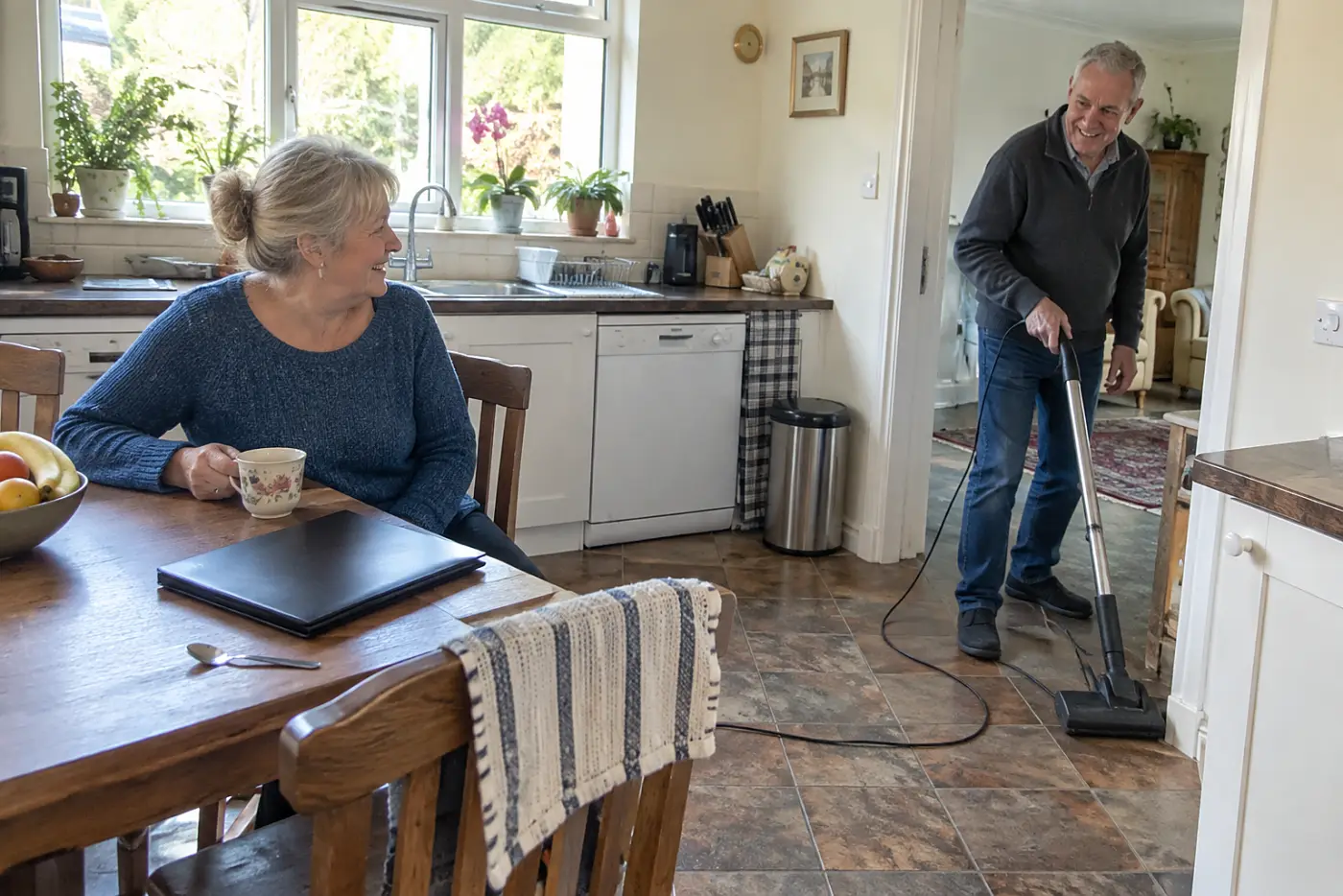
Saturday loses its script when nobody needs a ride.
One of you wants to sleep. The other starts the vacuum at eight. Without games, lessons, or family errands to settle the question, different ideas of rest become impossible to miss. Neither person has agreed that a free morning means the same thing.
That friction turns every weekend into a small contest. It matters because a day intended for rest starts with one person defending it and the other wondering why chores remain undone.
This week, each choose one block of Saturday time that belongs to you, then compare what remains. Say, “I want a slow morning. When would you rather clean?”
After that, the two of you still have to decide what counts as time together.
20The invitation for two instead of five

Invitations start arriving with just your names on them.
At a child’s concert, you had people to greet and something to watch. At a dinner with another couple, you have to talk as yourselves. One spouse enjoys the shift; the other keeps asking about everyone’s children because it’s familiar ground.
You don’t have to accept every invitation to prove the marriage is fine. But declining them all leaves the two of you with fewer chances to discover how you behave together outside your kitchen.
Choose one invitation this week, or invite two friends for coffee yourselves. Beforehand, ask, “What would make this evening enjoyable for you?” Afterward, compare notes without deciding whose version was right. You might learn that one of you likes a lively table while the other wants to go home after dessert.
The next question is who still has a life when neither of you is in the room.
19The friendship outside your front door

A spouse cannot replace every person your child brought home.
Some friendships formed at school events and on sidelines. When those meetings stop, the friendships need an invitation to survive. Without one, you begin asking your partner to supply every conversation you miss.
That’s a heavy assignment for two people who already feel short of things to say. An old friend remembers parts of your life that your spouse didn’t witness, including the person you were before the house filled up.
This week, text one friend directly instead of waiting for a group occasion. Write, “Want to walk Thursday? I miss talking with you.”
A little more room outside the marriage changes what happens inside it.
18The bedroom door that stays closed

The bedroom changes when nobody is listening down the hall.
Privacy arrives, but so does a new kind of pressure. If sex has been postponed for years, an empty house does not erase fatigue, pain, medication effects, or a history of missed signals. Reaching for each other without talking first leaves both people guessing what the touch means.
You don’t need to settle the whole subject in bed. For persistent pain or dryness, ACOG’s patient guidance on painful sex gives you language to bring to a medical appointment. A symptom deserves its own conversation, apart from whether either of you feels wanted.
This week, talk during a walk, fully clothed. Try, “I miss feeling close to you. What feels comfortable lately, and what doesn’t?” Leave space for an answer that neither of you expected.
Even when the door closes, the day’s interruptions follow you in.
17The phone beside the dinner plate

A screen fills silence faster than either of you can.
After years of being reachable for your children, checking a phone feels automatic. One person scrolls while the other finishes a story. Soon both stop starting one. The unfinished story disappears beneath a weather check or a message that didn’t need an immediate answer.
The cost is harder to spot than an argument: you miss the small disclosures that make a spouse familiar. A remark about a difficult coworker or an oddly good afternoon has nowhere to land.
This week, charge both phones away from the table for one meal. Say, “Can we finish dinner before we check them?”
Then notice whether you’ve been talking or merely trading updates.
16The budget line for grown children
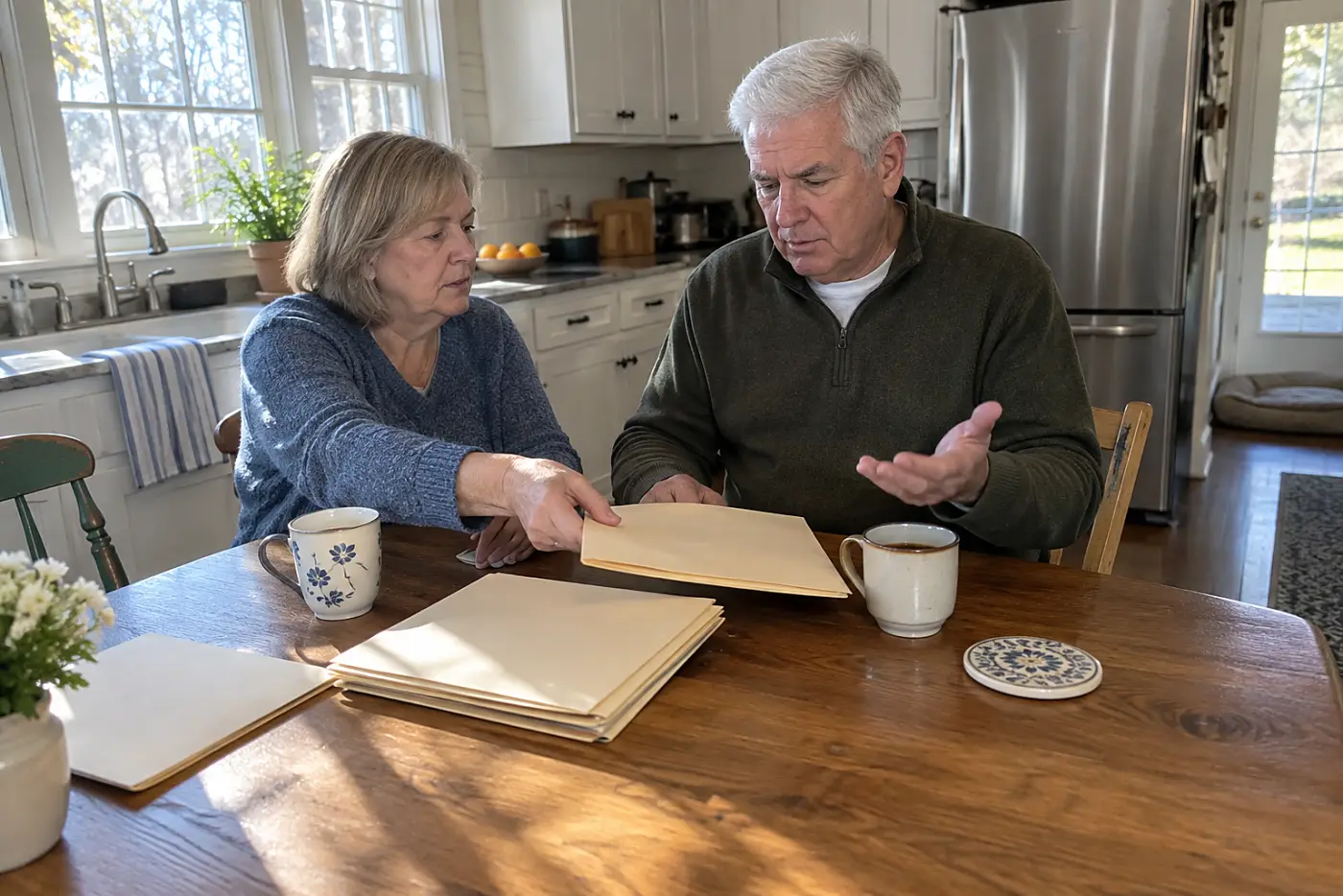
A child’s departure does not end the parent tab.
Rent help, phone bills, groceries, and emergency transfers can stay on the household budget without a clear agreement between spouses. One person sees a temporary bridge. The other sees money leaving an account they both rely on. If the payment happens before the discussion, the argument starts with a done deal.
Write down every recurring payment you make for an adult child. The Consumer Financial Protection Bureau has budgeting tools if you need a way to put household obligations on paper. Include whose name is on each account, since a promise to pay and a bill in your name are different problems.
This week, set a date to review the list before sending another nonemergency payment. Ask, “What help are we both willing to give, and when will we review it?”
That decision gets tougher when a child calls with a problem instead of a bill.
15The call that interrupts your evening

An adult child still knows which parent answers first.
If one of you always takes the call, that person becomes the family dispatcher again. The other hears the news later, stripped of the conversation that came with it. Even good news starts traveling through one spouse.
That pattern keeps an old division of labor alive. It also leaves one of you carrying a child’s worry through dinner while the other wonders why the mood changed.
This week, ask your child which conversations need both parents and which belong between the two of you. Tell your spouse, “I don’t want to be the only one passing messages.”
A ringing phone also tests what the two of you call an emergency.
14The emergency you define differently

Two parents hear the same request and make different promises.
Your child says the car broke down. One spouse offers money before learning whether the repair shop has given an estimate. The other asks about a ride to work. Neither response is automatically kinder, but the first promise now belongs to both of you if it uses shared money.
Under pressure, your old parenting roles return quickly. For questions about loans and gifts, the CFPB’s Money as You Grow materials give families prompts for talking about money.
This week, agree on which decisions need a pause before either of you answers. Keep the rule short enough to remember during a call. Say, “I want to hear what happened, and we’ll talk before promising money.”
Then comes the harder part: allowing your child to dislike the answer.
13The advice your child did not request

Giving advice together once felt like a parenting job.
Now an adult child tells you about a boss, a partner, or an apartment without asking you to fix it. One spouse starts solving. The other tries to stop them. By the time the call ends, you’re arguing about each other’s tone.
The argument takes the place of talking about your own lives. Your child’s problem has become another task you’re trying to manage together, even when no one asked you to take it on.
This week, agree on one question to ask before giving advice. Try, “Do you want ideas, or do you want us to listen?”
Notice who finds it hardest to wait for the answer.
12The holiday table with fewer place settings

Holiday plans become negotiations instead of family routines.
Adult children have jobs, partners, travel budgets, and other households. Their availability no longer settles where you and your spouse spend the day. One of you wants the old meal at the old hour; the other is tired of preparing it for guests who arrive late or stay briefly.
A missing place setting can turn into a complaint about your marriage if you never discuss what each person wants from the day. Ask the children for their plans before you build yours around an imagined visit. Then talk with your spouse about the parts worth keeping, even if nobody else comes.
This week, choose one holiday tradition that takes more work than pleasure and discuss changing it. Say, “If we made the meal smaller, what would you want to keep?”
Once the meal changes, the rooms around it start looking different.
11The bedroom nobody sleeps in

An empty bedroom can become a silent disagreement.
One spouse sees a guest room. The other still sees the child who used to sleep there. Moving a desk or donating a bed then feels bigger than moving furniture. Even changing the sheets raises the question of whether the room still belongs to someone who has left.
Avoiding the room postpones a choice you share. It also leaves one person treating an unused bed as a promise while the other has no place to work or welcome a guest.
This week, stand in it together for ten minutes and name what each of you wants to keep. Ask, “What would feel too soon to change?”
The objects outside that room bring a different kind of deadline.
10The garage shelf full of promises
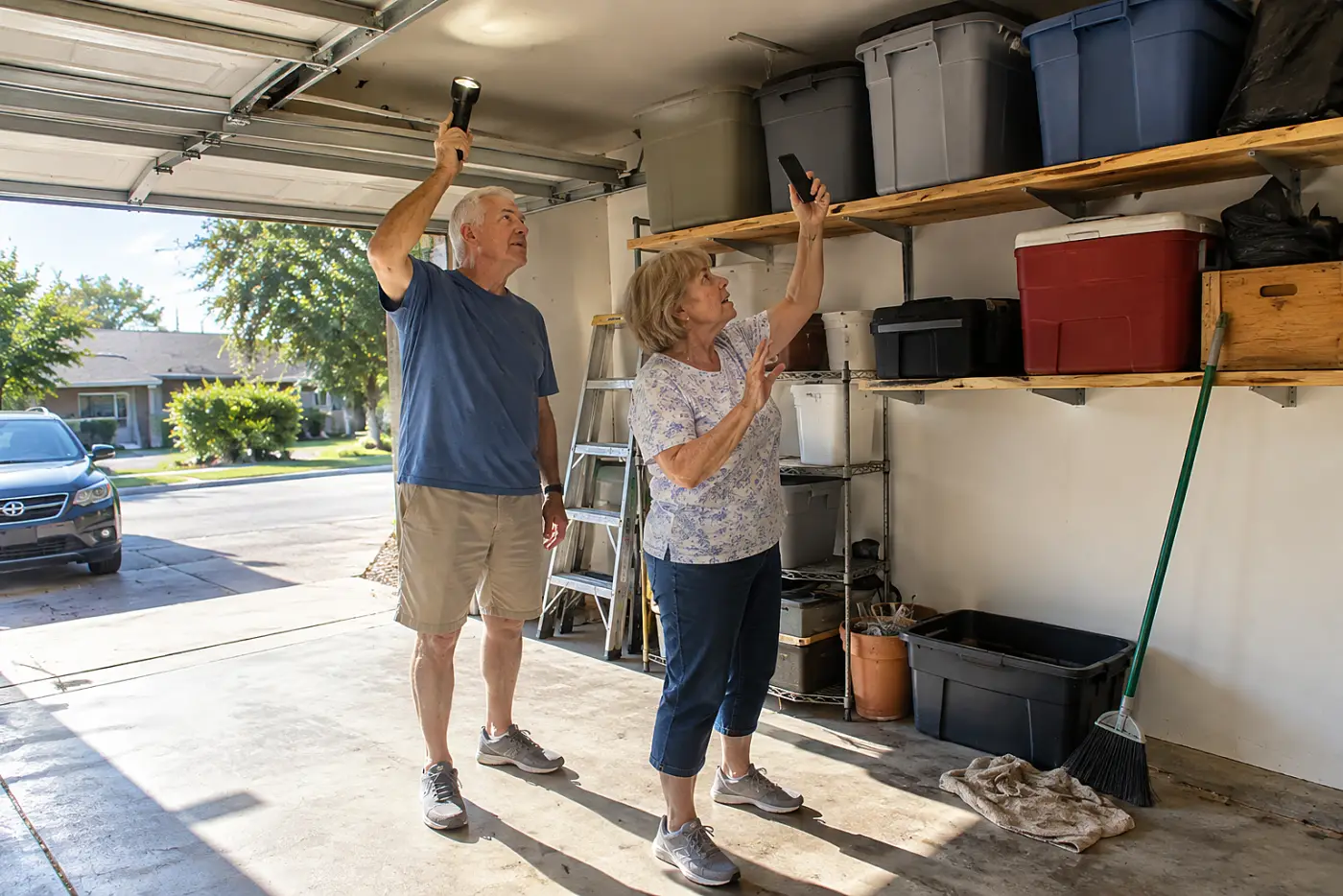
Stored belongings keep an adult child in the household accounts.
A bicycle, dorm boxes, and a mattress take space, but space is only part of the dispute. One spouse hears “just until next month” as a promise. The other sees a shelf that has held the same boxes through several visits. Neither wants to look as though they’re pushing their child away.
A storage decision is easier when you separate the objects from the relationship. Ask your child which items they want and when they’ll collect them. If there’s no pickup plan, you and your spouse still need to agree on what the garage can hold.
This week, take photos of one shelf and ask your child what they plan to collect. Tell your spouse, “Let’s decide what space we’re willing to give before we offer it.”
Once the boxes have a plan, you still have to face the bills for the house holding them.
9The mortgage statement in a quieter house

The house bills still arrive for a full family.
Insurance, utilities, repairs, and property taxes remain on the household list after the bedrooms empty. One spouse points to those bills and wants to move. The other hears that suggestion as a request to leave a kitchen full of family memories.
Without the actual costs, you argue about whether the house is worth keeping without agreeing on what “worth” means. The AARP HomeFit Guide also helps you inspect whether the house works for daily life.
This week, put the latest bills and repair receipts beside a list of rooms you use. Ask, “Which costs would we accept to stay here?”
The answer leads straight to whose plans shape the years ahead.
8The retirement date on one calendar
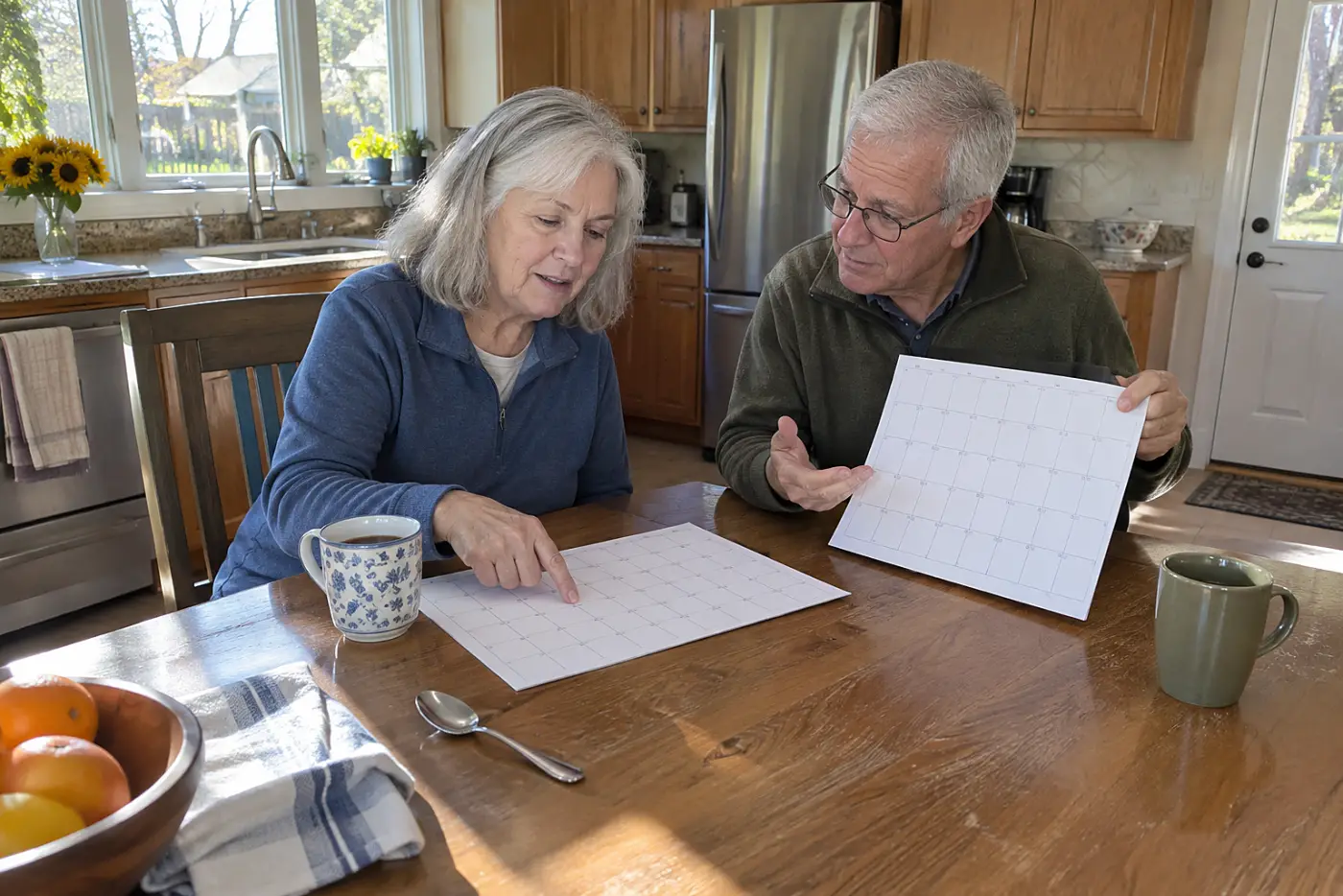
Retirement is rarely a single shared finish line.
One spouse counts the days until work ends. The other likes the job, needs its income, or dreads losing time alone at home. A date on one calendar changes both people’s mornings, even when only one person leaves a workplace.
Before calling it your plan, check the income and health insurance pieces. The Social Security Administration lets you review your benefit estimates in your own account. Medicare explains enrollment periods, which matter if job-based coverage is ending. Write down the questions you still need answered rather than treating a desired date as a settled one.
This week, each describe an ordinary Tuesday after retirement, hour by hour. Ask, “Where am I in your picture of that day?”
The answer could reveal that you’re making plans for two people with different clocks.
7The afternoon alone you still need
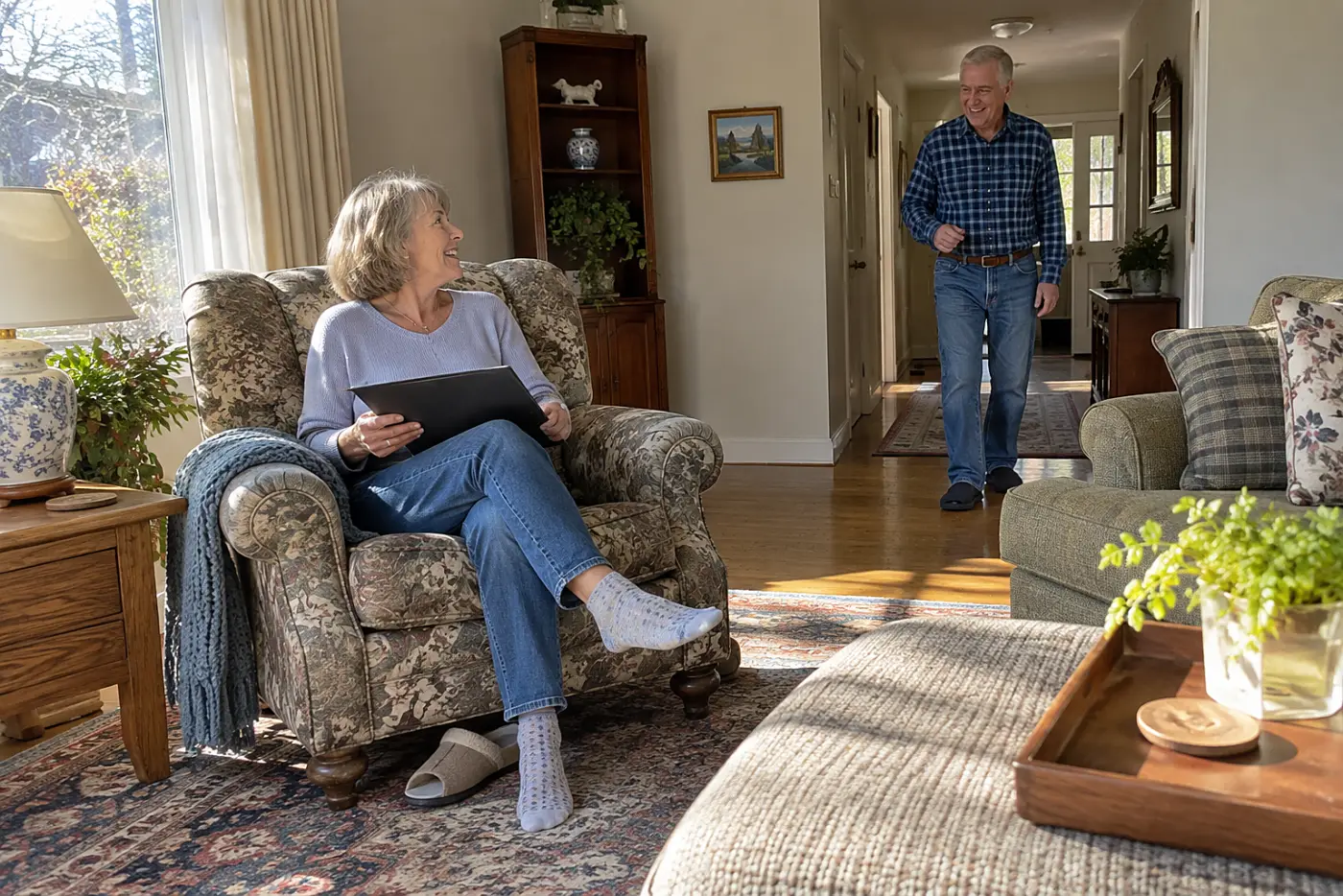
Being home together does not make every hour shared.
A spouse who used to leave for work now walks into the room whenever you’re reading. The interruption seems small to the person doing it. To the person interrupted, the whole day begins to feel occupied.
Resentment grows when solitude has no place on the calendar. Even a welcome conversation feels different when you never get to choose when it begins.
This week, each claim a regular stretch of time without conversation or errands. Say, “I want an hour alone after lunch, and then I’d like to see you.”
That boundary leaves another question: what do you choose to do together?
6The hobby you never shared

An empty schedule exposes different kinds of curiosity.
You want to take a class. Your spouse wants to restore an old table. When children were home, those interests fitted around family duties. Now an invitation to join sounds like a request to give up the thing you finally have time to do.
Shared activity helps only if both of you choose it. Separate interests give you something to bring back to the table, but they also require trust when one person is out enjoying a new circle of people.
This week, put one activity you want to do alone and one you’d like to try together on the calendar. Keep the joint plan small enough to abandon without a fight. Say, “I’d like you to come once, and you can tell me honestly afterward.”
When your worlds widen, you’ll hear new versions of each other’s stories.
5The story you tell at parties

Old family stories can freeze a spouse in an old role.
You describe him as the strict parent. He tells friends you were the one who handled everything. The stories earn a laugh, but they also tell the room that neither of you has changed. A familiar joke is hard to challenge when everyone else is smiling.
That version follows you home. It leaves less room to notice the patience he’s learned or the risks you’ve started taking since the children left.
This week, notice one story you repeat about your spouse and ask whether they still recognize themselves in it. Say, “Do you hate when I tell that one?”
Their answer might change more than the story.
4The argument that keeps changing subjects
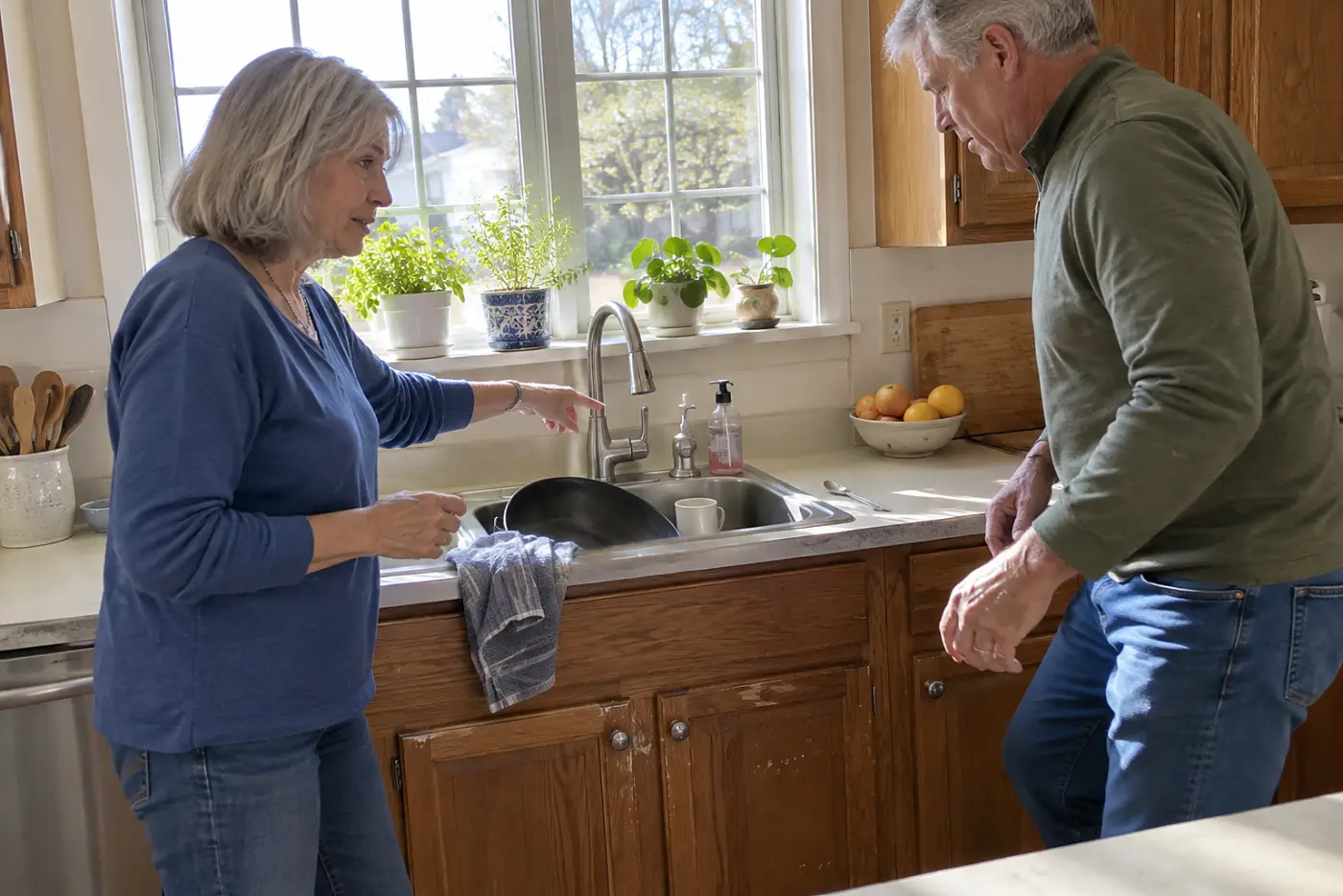
An argument about dishes can end up somewhere else.
The pan sits in the sink. Within minutes, you’re talking about missed vacations, who called the children, and a remark made years ago. The pan was visible; the rest has been waiting for an opening. If you keep returning to the pan, neither person learns what the argument is carrying.
This week, stop once when a disagreement changes subjects. Write down the new subject before debating it. Try, “We started with the dishes. Is this about feeling left to handle things alone?” Don’t demand an answer on the spot.
If the same argument returns without progress, a therapist is an option. The American Association for Marriage and Family Therapy has a therapist directory. Finding help takes agreement about the problem, which is its own conversation.
There’s also a difference between an argument and a room where you cannot speak freely.
3The sentence you swallow to keep peace
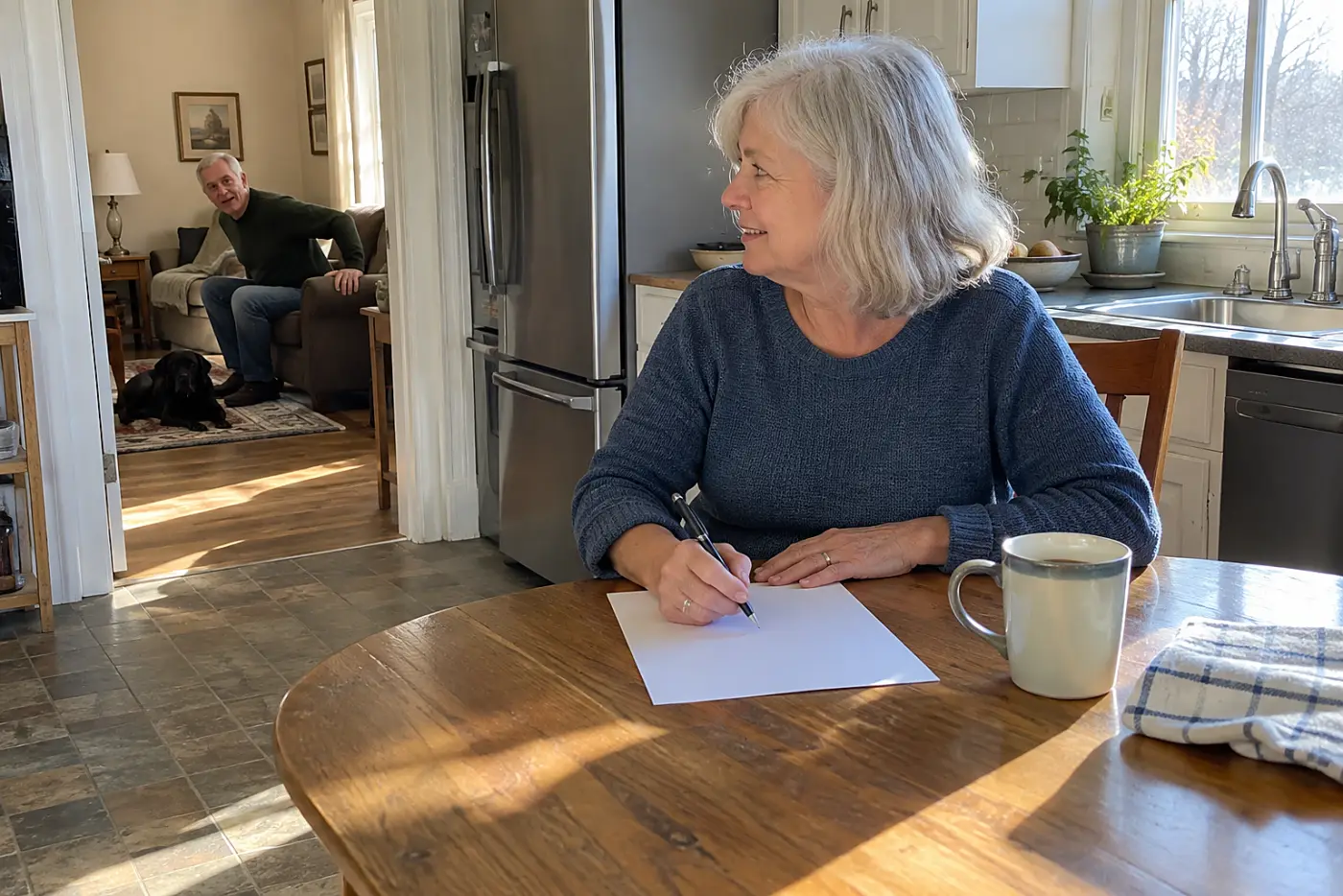
Peace is expensive when one person stops speaking.
You know which remark will start a fight, so you save it for later. Later never comes. Your spouse sees fewer arguments while you feel less known.
If you fear your partner’s reaction, take that fear seriously. The National Domestic Violence Hotline has confidential ways to talk through what’s happening. For a conversation that feels safe, this week write down one small truth you’ve been withholding. Say, “I need you to read this before we discuss it.”
What happens next tells you whether both people are willing to listen.
2The old labels on the family calendar
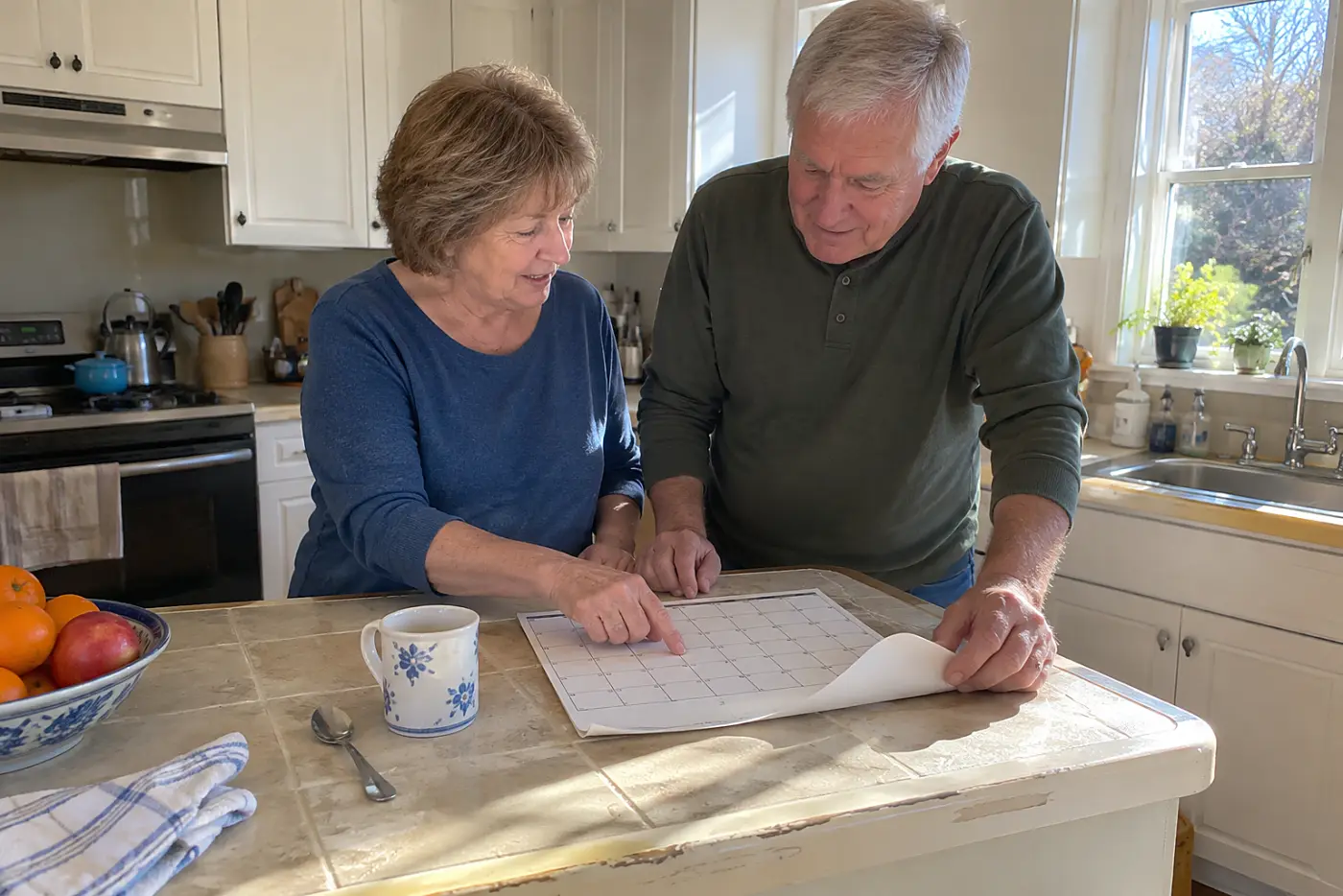
Your old descriptions no longer tell the whole story.
For years, “the practical one” and “the fun one” helped divide family work. Those names grew around real tasks. They’re poor guides to what either of you wants next. A spouse who planned every school morning might want a year without planning anyone else’s day.
Keep using the old label and you risk overlooking a change happening in front of you. The Gottman Institute writes about staying curious about a partner in a long relationship.
This week, each cross out one label you’ve used for the other on a sheet of paper. Say, “I’ve kept calling you the planner. Does that still fit?”
The answer deserves more space than a passing moment gives it.
1The recurring appointment at your kitchen table
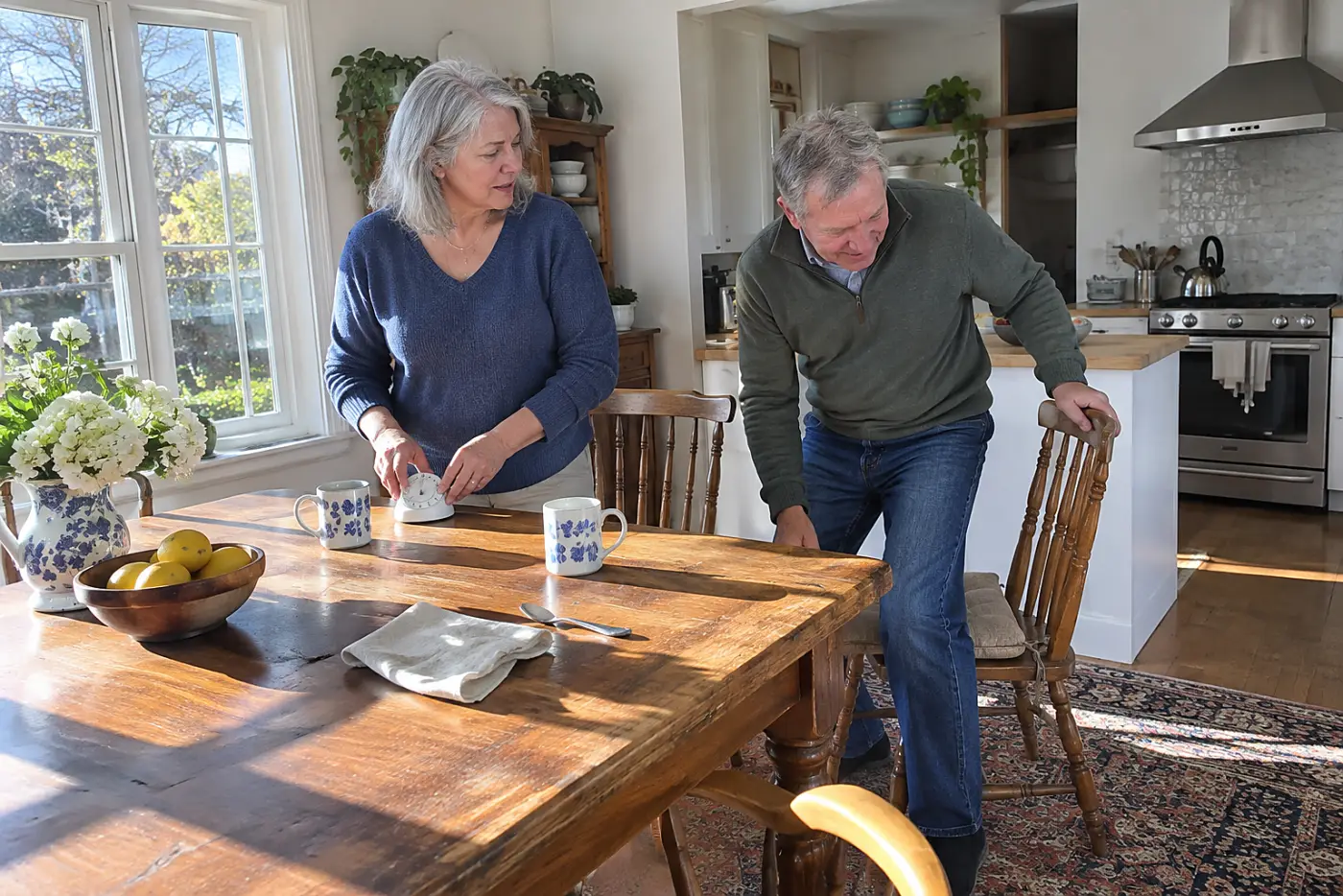
Waiting for the right moment has become the routine.
After dinner, one of you is tired; on Sunday, someone calls. A serious talk keeps losing to smaller tasks because it has no start time and no clear end. When you finally raise it mid-argument, you’re both defending yourselves instead of learning anything.
The crucial change is putting the next conversation on the calendar before this one ends. Without that second appointment, a hard answer hangs in the air, and both of you face the same question of when to bring it up again.
This week, set aside 20 minutes at the kitchen table, away from phones and bills. Ask, “What feels different between us since the kids left?”
Each person gets time to answer. The listener repeats what they heard before responding, without correcting it or trying to settle the next ten years.
Before you stand up, choose a date to return to anything left unfinished. If your spouse refuses to sit down, write down what you asked and consider what support you want for yourself.
The next appointment is where you learn whether the first one mattered.
The bottom line
The 23 changes share one pattern: the children’s departure removes the routines that once carried your conversations.
The best-prepared version of you has noticed which routines went missing. She’s named what she wants now and made time to hear an answer.
Which of these has already happened in your family?
Bonus: The recurring kitchen-table appointment that gives an unfinished conversation another chance
- Set 20 minutes this week. Put both phones in another room.
- Ask, “What feels different between us since the kids left?”
- Let each person answer. Repeat what you heard before giving your own answer.
- Name one thing still unfinished. Put the next 20-minute appointment on the calendar before you leave the table.
Margaret Hale
Travel & Lifestyle Editor
Margaret has covered travel for 25 years and has ridden every long-distance train route in the U.S. at least once.
You might also like