23 Things Estranged Parents Learn in the First Year of Silence
An unanswered text tells you less than you think; a two-sentence invitation leaves room for your child to answer without defending the past.
By Margaret Hale, Travel & Lifestyle Editor
Updated · 17 min read
- Written by our travel & lifestyle editor
- How we review
Read to the end: #1 is the two-sentence invitation that leaves room for an answer, and almost nobody keeps it this short.
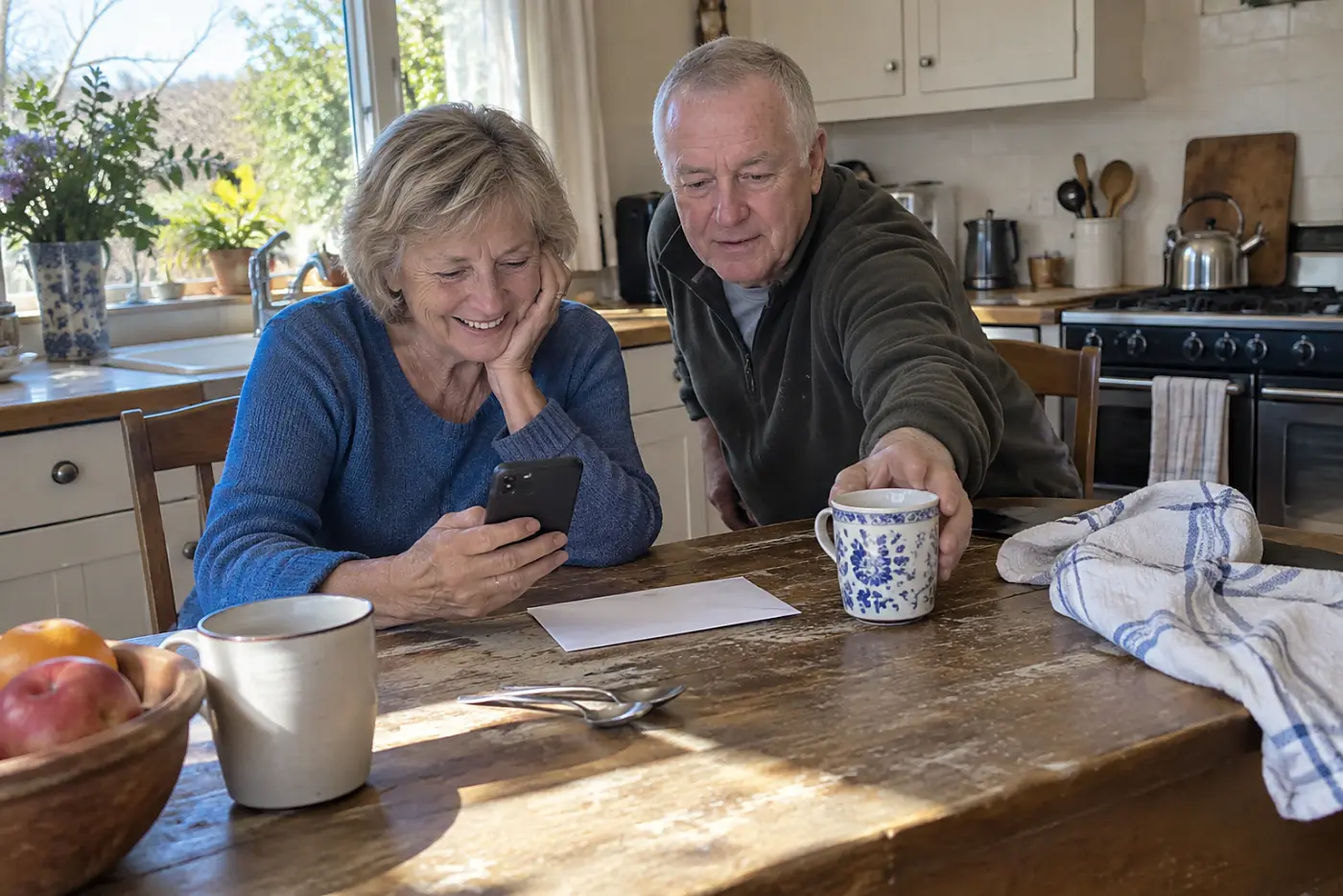
The birthday card is still on the kitchen counter. You wrote the address, but the stamp sits beside it because you don't know whether a card will feel loving or intrusive. Your child hasn't answered the last three messages. Nobody has told you what changed.
The obvious response is to work harder for an explanation. Yet another call asks the other person to manage your confusion before they've agreed to speak.
These 23 things start with what you can do while you wait.
23The birthday card on the counter

The card asks for a decision your child hasn't made.
A birthday gives you a familiar reason to reach out. But when contact has stopped, the old family calendar no longer tells you whether a greeting is welcome. A card also arrives without a chance to ask first. Even a loving line can carry a request to answer.
Sending it for reassurance puts another piece of mail between you and the question you want answered. Leaving it unsent hurts, too, but gives you time to decide what you intend.
This week, write the card and leave the envelope unsealed. Ask yourself, “Am I wishing them well, or asking them to end the silence today?”
The next question is what else is already waiting on their phone.
22The last three unanswered texts

Three unanswered texts contain less information than you want.
You know when you sent them and what you said. You don't know whether your child read them, felt overwhelmed by them, or chose not to reply. Reading the messages again won't supply the missing half of the exchange. It can show you something else: whether each text added a new question, explanation, or deadline.
That pattern matters because several separate messages ask for several separate decisions. “Are you okay?” asks for one kind of answer. “What did I do?” asks for another. A photograph from last Christmas adds a memory your child didn't request. Together, they create a conversation that requires their participation, even though they've stepped away.
Before sending anything this week, look at the thread without judging yourself. Write down the date and purpose of each message on paper. If you've asked the same question more than once, stop asking it for now.
The unanswered thread is also a poor place to settle what happened.
21The notebook beside your phone

Your memory starts filling gaps the conversation never filled.
A notebook gives those gaps a place to go without sending them to your child. Write what happened on a page dated today, then separate what you know from what you've guessed. “She didn't answer on Sunday” belongs in the first column. “She hates me” doesn't.
Without that line, a guess starts sounding like a fact each time you repeat it. Your next message then responds to a verdict nobody gave you.
This week, make two columns headed “What happened” and “What I think it means.” Keep both, but don't let one stand in for the other.
A written record still won't tell you whose version of the past you haven't heard.
20The story you tell your sister

Your first account becomes the version other people remember.
When your sister asks about your child, you need words. If you say, “I have no idea what happened,” you describe your confusion. If you add, “She cut me off over nothing,” you've offered an explanation without hearing hers. Your sister's sympathy feels good, but she now holds a version that leaves little room for another account.
Later, if your child names a hurt, you face two tasks. You'll need to hear it and reckon with what you've already told the family. That extra audience raises the cost of changing your mind. It can leave your sister caught between loyalties she never wanted to choose.
This week, tell one trusted person what you know and where the account stops. Say, “We aren't speaking, and I don't know her full reasons. I need company, not a verdict.”
Your sister deserves a boundary before she becomes a messenger.
19The relative who offers to call

A helpful relative can turn into an unwanted go-between.
Your brother offers to phone your child because he can't bear seeing you hurt. He has his own relationship with them, and your questions will travel inside it. Your child then has to decide whether answering him means answering you. Refusing him brings another painful conversation.
If the call goes badly, you've lost more than a route to information. You've put pressure on a relationship that wasn't yours to use.
This week, thank your brother and ask him not to carry messages. Tell him, “Please keep seeing her as you always have. I don't want you to ask her to explain herself for me.”
Keeping him out of the middle leaves the next family gathering unresolved.
18The empty chair at Sunday dinner

An empty chair invites everyone to explain its absence.
Dinner still happens, and someone notices the place where your child sat. You don't owe the table a full account. You also don't need to pretend everything is fine. A brief answer protects the gathering from becoming a group discussion of someone who isn't there to speak.
Listen to what the others are asking. “Have you heard from him?” is a question. “You should drive over there” is advice. They need different answers. Treating every remark as a request for the whole story leaves you exhausted before dessert.
This week, decide on one sentence before you host or visit. Try, “We aren't in touch right now, and I don't want to discuss his reasons without him here.” Then ask someone to pass the potatoes.
That sentence protects the table, but another table is coming.
17The holiday invitation addressed to everyone

A group invitation doesn't erase a broken conversation.
Including your child on the family email looks fair. A message about dinner plans, though, also asks them to enter a room where everyone knows there's silence. If you ask for a reply in the group thread, they must answer in front of the group or remain visibly absent.
Leaving them out has a cost as well. They lose the choice to attend.
This week, decide whether the invitation is about a real event or a test of contact. If it's an invitation, send the details directly, without asking for an explanation. “You're invited if you'd like to come. You don't need to answer the larger questions to tell me.”
An invitation is different from appearing at their door.
16The drive past your child's house

A familiar route can become an uninvited visit.
You've driven to that house for years. Now a knock changes the terms of contact without the other person's agreement. They must answer, hide, or watch you leave through a window. None gives you a clear account of what happened. The scene itself becomes something else to explain.
An emergency is different from a wish to know. If you have a concrete reason to believe someone faces immediate danger, call local emergency services. Silence alone doesn't tell you that danger is present. Treating it as proof puts your fear in charge of someone else's front door.
This week, change the route you take past the house. If the urge to stop hits, pull into a public parking lot and call someone who knows your plan not to visit.
You still have a way to look in without leaving home.
15The social media photo you enlarge

A photograph shows an afternoon, not a family history.
Your child appears at a picnic, smiling beside people you don't recognize. You see the picture after weeks without an answer, so every face seems important. But the image doesn't tell you what was said before it or how anyone felt afterward.
Checking again costs you a fresh round of guesses. It also gives strangers in the picture roles in a story they haven't told you.
This week, stop opening their profile for seven days. Tell a friend, “I saw a picture and started making up answers. Please ask me about something else tonight.”
The hardest images aren't always on a screen.
14The framed school photo in the hallway

A familiar face holds memories from different years.
The child in the school photo needed you to choose shoes and sign forms. The adult who stopped answering makes their own choices now. Looking at the photograph brings back your care, your work, and your love. All of that happened. None of it tells you how your child remembers the years between then and now.
It's painful to consider that two people lived in the same house and kept different accounts. You don't have to discard your memories to hear another one. You do have to leave space beside them.
This week, choose one memory you love and write it down without using it as evidence. Then write, “I don't know what this day felt like to my child.” Keep both sentences.
Old pictures lead to old boxes, and boxes contain more than memories.
13The childhood keepsakes in the closet

A box of belongings isn't a summons to come home.
You find drawings, a team shirt, and the small things you saved. Sending the whole box asks your child to receive your version of childhood all at once. Throwing it away while you're hurt makes a permanent choice during a painful stretch.
Neither choice gives you an answer. Both leave an object to explain later.
This week, put the box somewhere dry and leave it closed. Say to yourself, “I can keep these safe without deciding today what they mean to anyone else.”
The practical things your child still keeps at your house need a separate decision.
12The spare key on the hook

A spare key holds a question nobody has asked.
Your child gave you a key years ago, perhaps when you fed the cat or waited for a repair person. That history doesn't make the key an invitation to enter now. It does leave you holding access to a home whose owner isn't speaking to you. Returning it without warning can look like a declaration. Keeping it in your pocket can tempt you to use it.
The key is an object, not a measure of whether you're still family. If there are belongings to return, don't add them to an unexpected visit. You need an agreed way to hand things over, not a moment on the doorstep.
This week, take the key off your everyday ring and put it in a labeled envelope. Don't copy it or give it to another relative. If contact opens for practical matters, ask, “Would you like the key mailed back, or held until you tell me otherwise?”
There is another kind of access you hold in your head.
11The password you still remember

Knowing a password doesn't make an account yours to open.
Perhaps your child once asked you to log in for them. The login still works, and the urge to check feels smaller than a phone call. But opening an account crosses a boundary without providing the answer you need. It turns private information into something you saw without permission.
If you find a message, you'll face a second choice: admit how you got it or carry the secret. Neither repairs the silence.
This week, delete saved logins for accounts that belong to your child. Tell yourself, “If they want me to know, they can choose to tell me.”
The need to know also shows up in questions to other people.
10The question you ask their friends

A friend of your child has a separate loyalty.
You run into someone who knows your child and ask how they're doing. That's an ordinary question until it becomes a request for reasons, whereabouts, or messages. The friend now has to decide whether to protect your feelings or your child's trust. Whatever they say reaches you without the context your child would give it.
Even a small answer can send you searching. “She's busy” turns into a theory about work. “He's fine” turns into a theory about you. Neither tells you why contact stopped, and the friend has been asked to do work that belongs to neither of you.
This week, prepare a greeting before the next chance meeting. Say, “I hope they're well. You don't need to give me an update.” Then ask the friend about their own life.
You still deserve a place to speak freely, without putting someone between you.
9The therapist appointment on your calendar

A private appointment gives your questions somewhere to land.
You need room to say what you fear you did. A therapist won't know your child's reasons unless your child says them. The work is to examine your account, your reactions, and what you want to do next.
Without another place for those questions, each unsent thought waits for your child's inbox. An appointment gives you a person whose job is to hear your side without asking your child to take that job.
This week, book an appointment or tell your current therapist what has happened. Ask, “Will you help me sort what I know from what I'm assuming?”
That work becomes harder when the day itself keeps waking you.
8The clock beside your bed

Night turns an unanswered question into tomorrow's exhaustion.
You wake at two and replay the last conversation. In the dark, a sentence you barely noticed begins to sound decisive. By morning, you've rehearsed an apology, a defense, and a confrontation. You still have no new information, but you have less sleep with which to handle the day.
A phone beside the pillow makes sending one of those drafts easy. Once sent, it lands in your child's morning whether or not they invited it. You don't need to solve the relationship before breakfast. You need a way to keep a sleepless hour from choosing your words.
This week, leave the phone outside the bedroom and put paper by the bed. Write down the thought, then read it in daylight before deciding whether it needs any action.
Daylight also brings the ordinary errands that expose the silence.
7The grocery aisle with their favorite cereal

A cereal box can stop you mid-errand.
You reach for the brand your child ate for years, then remember you no longer know what they buy. The small loss feels absurd beside the larger one. It still belongs to you. Familiar habits don't disappear on the day someone stops answering.
Putting the box in your cart won't tell you what changed. Leaving it there won't erase the years you bought it.
This week, let the errand be an errand. If the memory stays, tell someone you trust, “The grocery store was hard today. I don't need you to fix it.”
Sooner or later, someone else will notice what isn't being said.
6The answer you give a neighbor

A casual question can demand a full family explanation.
Your neighbor asks how your child is doing while you're carrying groceries inside. They expect a brief exchange, not a hearing. You have a right to keep the answer brief, even when you ache to tell someone. The neighbor doesn't know your child has gone silent, and you don't have to decide on the doorstep who should know.
Privacy isn't a claim that nothing happened. It gives you time to choose whom you trust with the story. Once told, it leaves your hands. A neighbor who loves gossip won't become careful merely because the subject is painful.
This week, choose a truthful sentence you can say while holding a bag. Try, “I haven't heard much lately, so I don't have an update.” If the neighbor presses, say, “I'd rather leave it there.”
Some questions press harder because the person asking belongs to your family.
5The grandchild's birthday on the calendar
A grandchild shouldn't carry an adult's question.
The date arrives, and you want to send a gift. Before choosing one, look at the contact boundary your child's parent has set. A package addressed to a child still reaches the household where your adult child lives. A note asking the grandchild to call puts them in the middle.
Missing the day hurts. Using it to seek an answer from your child asks a child to help settle adult silence.
This week, write the birthday in your calendar and set aside the gift decision. Tell a trusted adult, “I miss them, but I won't ask a child to carry a message.”
The next date on the calendar has its own pressure.
4The anniversary of your last conversation

An anniversary feels like a deadline the other person never set.
A year without a call deserves notice in your own life. It doesn't require your child to answer on that date. If you send “It's been a year” as the main point, the date becomes another demand for an explanation. They already know whether they've spoken to you.
Use the date to examine what has changed on your side. Look at the messages you've sent, the people you've involved, and any limits your child stated.
Then ask what you would do differently if they answered tomorrow. “I don't know what I did” is an honest account of what you don't know. It isn't yet a question they can answer without taking care of your pain first.
This week, mark the date privately and write down one change you've made. Share it with someone you trust, without asking them to pass it on.
What if your child has already put a reason in words?
3The reason written in their last message

A reason you dispute is still a reason you received.
Read the last message as written, without adding your reply in the margins. Your child might have named an event, a pattern, or a boundary. You don't have to agree with every word to know which words they used. If they asked you not to contact them, respect that request.
Arguing with the wording first can keep you from hearing what they tried to tell you. Silence after that message carries a boundary, even if it leaves your questions open.
This week, copy their stated reason onto paper without correcting it. Ask yourself, “Can I repeat what they said before I explain my side?”
If no reason arrived, your next words need even more care.
2The apology draft in your notes app

A long apology can ask for more than it gives.
You start with “I'm sorry,” then explain your intentions. Soon the draft includes your sleepless nights, every good thing you did, and a plea to know what went wrong. Your child would have to read your defense and comfort you before deciding whether to speak. If they've named a specific hurt, the draft needs to address that hurt rather than a list of other possibilities.
An apology you can't yet make honestly doesn't improve when you make it longer. “I'm sorry for whatever I did” sounds broad, but it asks your child to identify the harm for you. You can acknowledge that something is wrong without claiming to understand what you don't.
This week, save the draft instead of sending it. Underline each sentence that asks for reassurance, then read what's left. Ask someone you trust, “Does this say what I know, or does it ask them to make me feel better?”
After you remove those requests, you still need to decide whether to write at all.
1The two-sentence invitation to talk

Your next message should leave room for no answer.
First, check whether your child asked for no contact. If they did, don't send the message. If they didn't, one brief invitation lets you acknowledge what you don't know without asking them to teach you on demand.
Try this: “I know we aren't speaking, and I want to understand your experience when you're ready to tell me. I won't keep asking; if you want to talk, I'll listen.” Don't attach the apology draft or add a deadline.
This week, write those two sentences, then wait a day before deciding to send them. Ask yourself, “Could I stand by every word if they never reply?”
Their answer, including silence, remains theirs to give.
The bottom line
The first year asks you to live with an incomplete account. Don't turn everyone around you into a source of answers.
You've done the careful work when you can separate what happened from what you're guessing. Add the boundaries your child has stated.
Which of these has already happened in your family?
Bonus: The two-sentence invitation to talk
- Check the last message for a request not to contact them. If it's there, stop.
- If no such request is there, write: “I know we aren't speaking, and I want to understand your experience when you're ready to tell me.”
- Add: “I won't keep asking; if you want to talk, I'll listen.”
- Wait a day. Remove explanations, deadlines, and questions before you decide whether to send it.
Margaret Hale
Travel & Lifestyle Editor
Margaret has covered travel for 25 years and has ridden every long-distance train route in the U.S. at least once.
You might also like