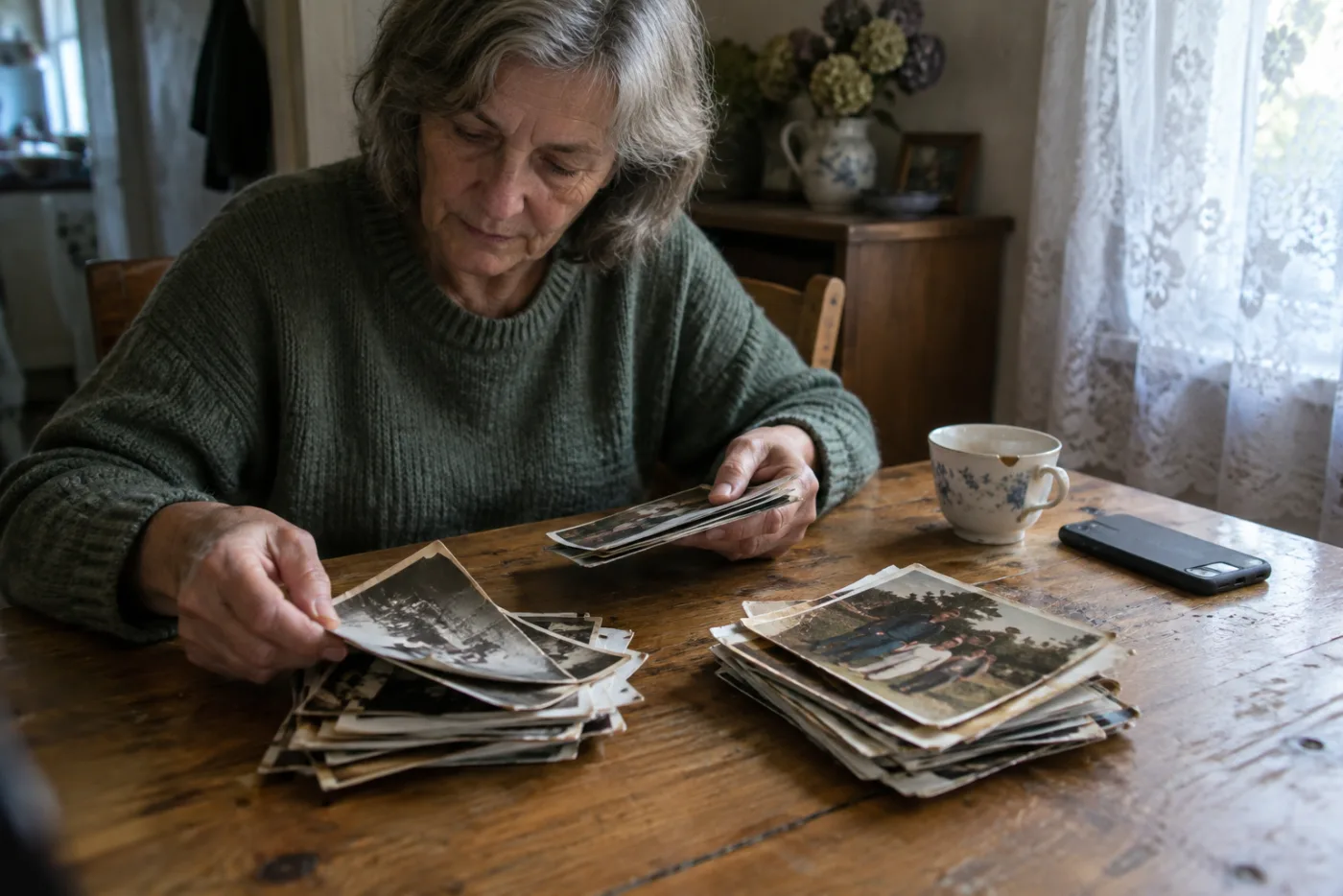
Signs Your Parent May Be Hiding How Much They're Struggling Alone
You hung up the phone feeling like something was off, and couldn't name it, so here are the small tells that quietly explain that unshakable feeling.
By Margaret Hale, Travel & Lifestyle Editor
Updated · 17 min read
- Written by our travel & lifestyle editor
- How we review

She said "I'm fine, honey" too fast, before you'd even finished asking. Then she changed the subject to your kids, your job, anything but herself. That quick pivot is worth noticing, because parents who are struggling rarely announce it. They signal it in tiny, deniable ways instead.
Voice opener B, scene-setting.
This list is not about catching your parent in a lie. It's about learning their particular dialect of "I'm managing," so you can hear what sits underneath it. The habits below are the ones adult children miss most, right up until a fall or a scare forces the truth into the open.
1They Answer Fine Before You Finish the Question

You ask how they are doing and the word "fine" arrives before you have even finished the sentence. There is no pause, no consideration, no sound of someone actually checking in with themselves. It comes out smooth, like a line rehearsed in the mirror before the phone even rang.
A real answer usually has some texture to it, a beat of thought, maybe a small complaint mixed with the good news. This version skips all of that and lands flat, the same way every time you call. It answers the question you asked, not the one underneath it.
Try asking something that can't be answered with one word. Ask what they had for dinner last night, or what they did between breakfast and now. The specific question is harder to dodge, and the pause before they answer will tell you more than the word "fine" ever could.
2They Time Their Calls for When You're Busy

They call right as you're merging onto the highway, or exactly when dinner hits the table and everyone is talking at once. It happens often enough that it stops looking like coincidence. A short call fits neatly into a busy moment, and busy moments are exactly when you can't ask a real question.
This isn't necessarily calculated in the way it sounds. It might be a habit they've fallen into without naming it, a way to check the box marked "called my kid" without risking a conversation that goes anywhere deep. Either way, the timing serves the same purpose.
Notice the pattern before you get frustrated by it. Suggest a specific window, a Sunday morning or a weeknight after the dishes are done, when neither of you is rushing anywhere. A call with room in it tends to go further than a call squeezed into a gap.
3The House Looks Perfect Only on Visit Days

Every surface gleams, the trash is out, the mail is stacked in a neat little tower on the counter. It looks like a home that runs itself. The trouble is that it only looks that way on the days you show up, which means it isn't a snapshot of daily life at all.
A house kept in a constant state of readiness for inspection is telling you something about effort, not about ease. Someone is working hard right before you arrive, which means the in-between days probably look nothing like what you're seeing. That gap is the actual information.
Try showing up once without warning, not to catch them out, but to see the ordinary version of the place. Look at what's in the sink, not what's on the counter. The unstaged version of the house will tell you more than a dozen tidy visits ever could.
4They've Stopped Asking You for Tech Help
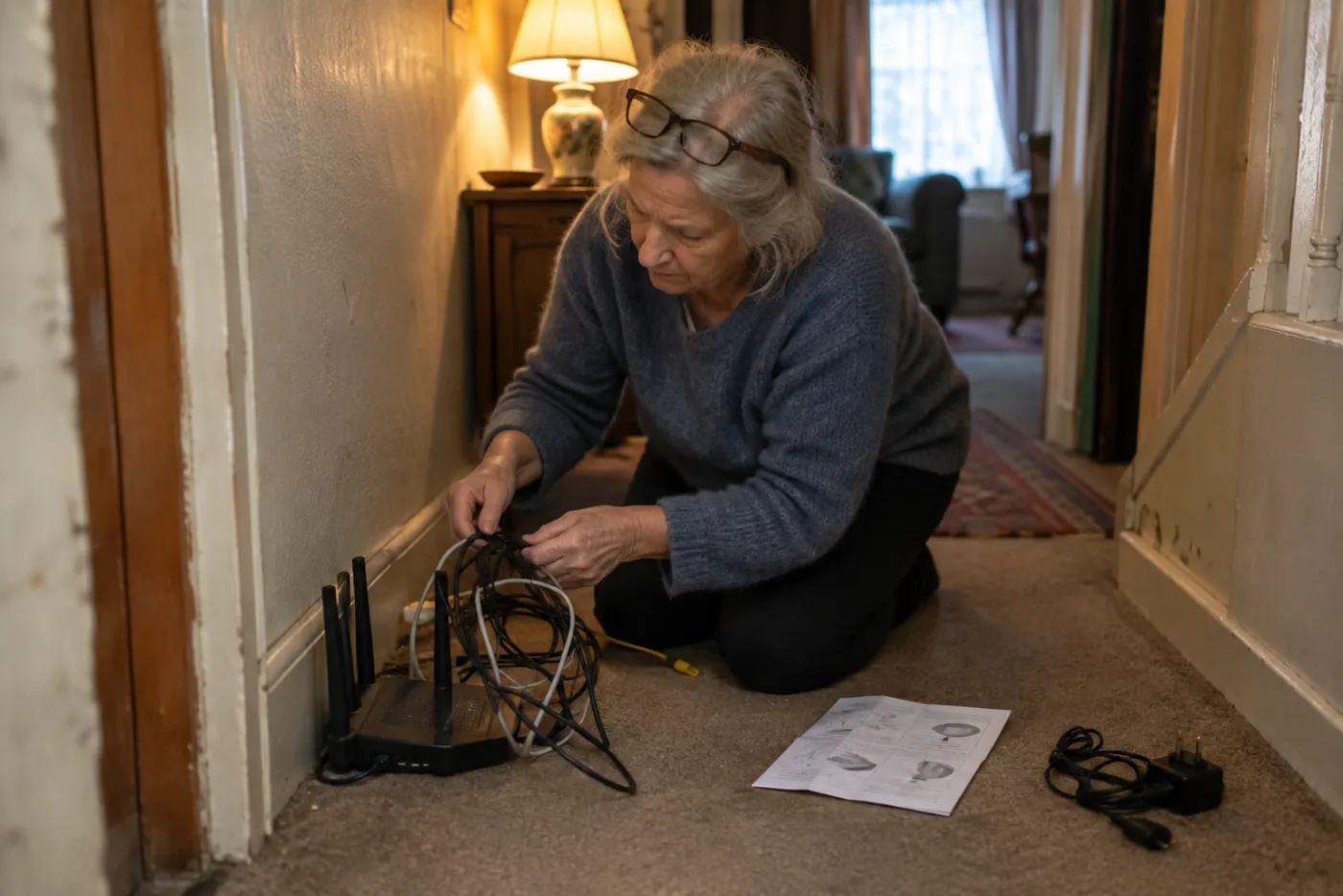
There was a stretch of years where every visit came with a small tech emergency: the printer, the remote, some app that wouldn't open. Lately none of that comes up anymore. On the surface it looks like progress, like they finally figured it out on their own.
Ask a follow-up question and you might find the opposite is true. The struggling device just got abandoned, unplugged, or shoved in a drawer rather than solved. Silence about a problem is not the same thing as the problem going away, and giving up rarely announces itself.
Bring it up directly and specifically. Ask about one device by name, the tablet or the thermostat, rather than a general "how's everything going with your phone." A pointed question about one thing is far more likely to get you a true answer than a broad one.
5Their Stories Get More Detailed as the Truth Gets Smaller

You ask about their week and get a long, winding account of a trip to the pharmacy, complete with who was ahead of them in line and what the cashier said. It's a lot of detail for an event that, by any normal measure, barely qualifies as news.
That kind of over-explaining often works as camouflage. A story stuffed with harmless specifics fills the space where a harder subject might otherwise come up, and it keeps the conversation moving forward instead of circling back. You leave the call feeling informed but somehow no wiser.
When a story runs unusually long for how small the event is, ask what happened before or after it. Widen the frame instead of following the detail they've offered. The thing they've left out of the story is often standing just outside the edges of it.
6They Praise Their Helper More Than Usual

Every mention of the person who helps with cleaning, driving, or errands comes wrapped in glowing language, more glowing than the situation seems to call for. "Wonderful," "a godsend," "couldn't manage without her" show up in casual conversation about someone who, as far as you know, just runs errands.
Excessive praise for a caregiver can function as a shield. It answers questions you haven't asked yet about whether the arrangement is actually working, and it does so before you get the chance to ask them. Real satisfaction rarely needs to defend itself so quickly or so often.
Ask a specific question about the arrangement rather than accepting the general glow. What does a normal Tuesday with this person actually look like? A parent confident in the help will answer easily; one covering for a shaky setup will circle back to the same warm adjectives.
7Bruises Come With Ready-Made Explanations

You notice a mark on their arm and before you can even ask, the explanation is already there, offered freely and a little too fast. A cabinet door, a garden hose, a chair that got moved. The story arrives fully formed, like it was written in advance of the question.
An explanation you didn't have to ask for is a different animal than one you did. People usually wait to be asked about something minor. Rushing to explain a small injury before anyone raises an eyebrow suggests they've already rehearsed how the conversation might go.
Let the explanation sit rather than accepting it and moving on. Ask a simple follow-up, like how it happened exactly or when. A story that holds up under a second, gentle question is probably true, and one that shifts slightly is worth paying closer attention to.
8They Won't Let You Talk to Their Doctor

You offer to come along to an appointment, or just to call the office with a quick question, and the answer is a firm no, dressed up as independence. "I can handle my own doctor" sounds reasonable on its face. Repeated often enough, it starts to sound like a wall.
Privacy is a real and fair reason to want boundaries, and plenty of parents mean exactly that. But a flat refusal to let you in on even the basics, medication changes, upcoming tests, can also be a way of controlling exactly what information reaches you and when.
Ask for something small rather than everything at once, like being listed as an emergency contact or getting a summary after appointments. A parent with nothing to hide usually finds room for that request. One who keeps refusing even the smallest access is telling you something too.
9Old Friends Have Quietly Disappeared From the Conversation

There used to be names that came up all the time. The neighbor who dropped by for coffee, the friend from the old job, the person they walked with most mornings. Lately those names just aren't in the conversation anymore, and nobody has said why.
People rarely announce the end of a friendship, especially not to their own kids. A falling-out, a slow drift, or simply not having the energy to keep something up can all end a relationship quietly, leaving a gap that's easy to miss if you're not listening for it.
Ask directly about a name you haven't heard in a while. A simple "how's Carol doing these days" can surface more than you'd expect. If the answer is vague or clipped, there's likely a story there that hasn't been offered up on its own.
10Mail and Bills Are Always Already Handled

Ask about a bill or a piece of mail and the answer comes back instantly: already paid, already dealt with, already taken care of. It's said with enough confidence that you drop the subject, which is probably exactly the point. Nobody wants to be doubted about something so basic.
The trouble is that "already handled" is a claim, not proof, and it's an easy thing to say when you're overwhelmed and don't want to admit it. Bills can pile up quietly in a drawer or under a stack of magazines for longer than you'd think possible.
Ask to see one specific piece of mail rather than accepting the general reassurance. A recent utility bill or a bank statement will show you the truth in a way that words can't. If they resist showing you even one, that resistance is itself worth noticing.
11They Cancel Plans With a Reason That Changes Each Time
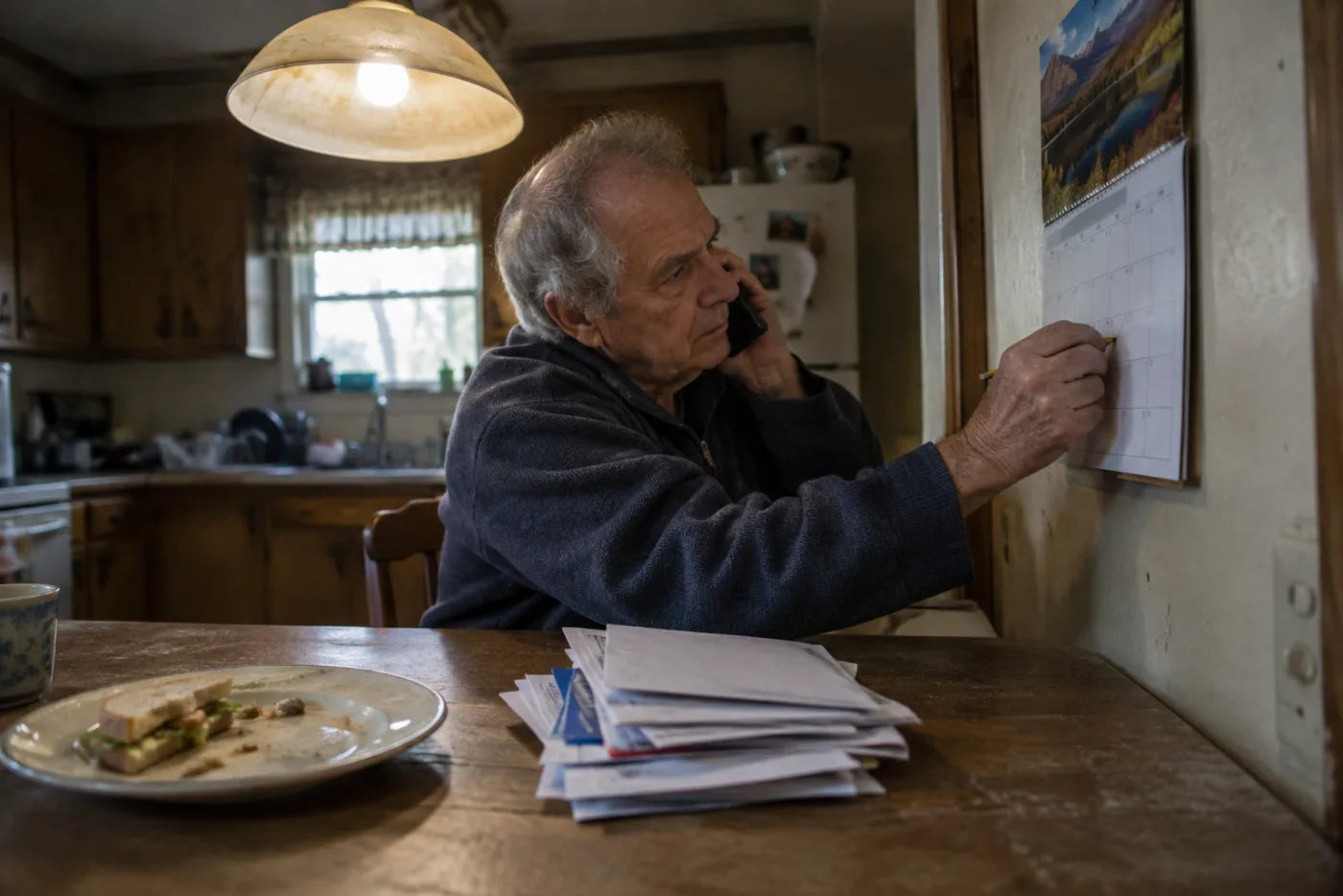
The lunch gets canceled because of a headache, then the reschedule falls through because the car wouldn't start, then the next attempt gets called off for a reason that sounds a little thinner than the last one. Each excuse on its own seems fine. Stacked together, they wobble.
A person avoiding something specific, whether it's an activity that's gotten harder or a subject they don't want to face, often produces a rotating cast of reasons rather than one honest one. Consistency is what a true excuse usually has. Variety is what a cover story has.
Instead of accepting the newest reason, ask what would make a plan actually work for them right now. Offer a low-effort option, like a short visit at home instead of an outing. Watch whether the excuses keep shifting even after you've removed the obstacle they named.
12Grocery Trips Have Gotten Shorter, Not Longer

The cart used to have some variety in it, different meals, different textures, a few small treats. Lately it's the same few items every time, and the trip itself takes half the time it used to. That's a change worth noticing rather than filing away as simplifying with age.
A shorter list can point to several different things at once: less appetite, tighter money, or trouble carrying and reaching for items the way they used to. None of those explanations is pleasant to bring up directly, which is exactly why they tend to go unspoken.
Offer to go along on a trip, not to take over, just to be present. Notice what's skipped, what's avoided, what gets left in the cart at the last second. The pattern in what's missing will usually tell you more than any direct question about money or appetite.
13They Deflect With Humor When You Ask How They're Really Doing

You ask a real question, something like how they're actually holding up, and the answer comes back as a joke. It's often a good joke, timed well, landing exactly where it needs to in order to get a laugh and close the subject at the same time.
Humor used this way isn't dishonesty exactly. It's a redirect, a practiced way of acknowledging the question without answering it, and it works because you laugh, the tension breaks, and the conversation moves cheerfully onward without ever circling back to what you actually asked.
When you notice the joke land and the subject shift, go back to it once the laugh fades. Say something like, "okay, but really, how are you doing." Naming the dodge gently, without accusation, sometimes gets further than the original question ever did.
14The Fridge Tells a Different Story Than They Do
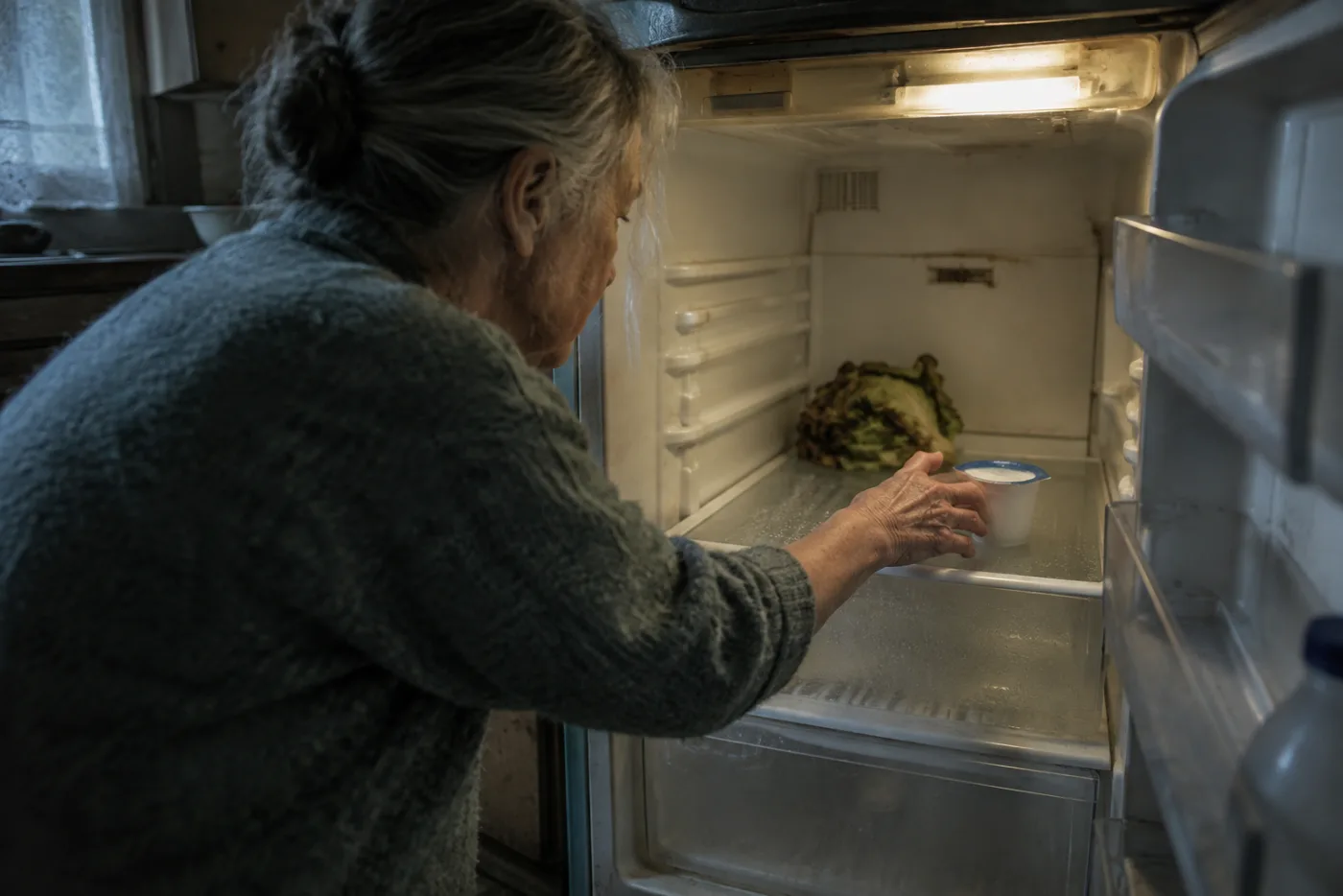
They describe a week of home-cooked meals, roasts and vegetables and soup made from scratch. Then you open the fridge looking for something to snack on and find it mostly empty, or full of things that have clearly been there a while. The two accounts don't match.
What's actually in the kitchen is harder to dress up than a description of it. A fridge with real, fresh food in various stages of use tells a story about ongoing effort. A fridge that's sparse or full of the same untouched containers tells a different one entirely.
Look before you ask, rather than after. Open the fridge naturally, as if reaching for water, and take in what's actually there. If the gap between the story and the shelf feels wide, that gap is worth a direct, kind conversation rather than a passing thought.
15They Avoid Video Calls More Than They Used To

Calls that used to happen over video now happen over the phone instead, with a reason attached: the app is being glitchy, the lighting is bad, they just prefer talking without a screen. Individually these excuses are believable. Together, over time, they start to look like a pattern.
Voice-only calls hide things that video would reveal, from how tired someone looks to what condition the room behind them is in. A parent who has quietly slipped in either area might, without ever deciding to do it deliberately, start steering every call away from the camera.
Suggest video for something low-stakes, like showing you a plant they're proud of or a project around the house. If they still resist even a casual, low-pressure video moment, that resistance itself is the information, more than whatever excuse comes with it.
16Clothes and Grooming Slip Only When They Don't Expect Company

For your visits, they're put together: hair done, clothes pressed, everything in its place. Then you catch a glimpse through a window before they know you're there, or arrive a few minutes early, and the person you see looks noticeably less pulled together than the one who greets you at the door.
The effort for visits is real and it's not nothing, but it's also not the full picture. What someone looks like when they're not expecting anyone is closer to their daily baseline than what they look like for you. That gap between the two versions is the real signal.
Pay attention to the moments before they know you've arrived, the ones through the window or in the driveway. If the gap between those glimpses and the greeting at the door feels large, it's worth a gentle, specific question rather than a comment on their appearance.
17They Downplay a Fall as Just a Stumble

They mention it almost in passing, folded into a story about something else entirely: "oh, I just stumbled a little getting the mail." The word choice does a lot of quiet work here, making something that might have been serious sound like nothing worth a second thought.
Words like "stumble," "slip," or "nothing" are often chosen carefully, not because the person is lying, but because they don't want you to worry, or because admitting the real weight of it means admitting something is changing. Softer language keeps the conversation shorter and calmer.
Ask a few specific follow-up questions rather than accepting the soft version outright. Where exactly did it happen, how did they get back up, did anything hurt afterward. The answers to those specifics will tell you far more than the word they chose to describe it with.
18Sudden Generosity Toward You Masks Their Own Shortfall

Out of nowhere, they insist on paying for dinner, or they mail you a gift for no occasion at all, or they push cash into your hand every time you visit. It feels sweet on the surface, generous and unprompted, exactly the kind of thing a proud parent does.
Sometimes, though, this kind of giving is less about generosity and more about proof. Paying for things, being the one who provides, can be a way of demonstrating that everything is fine financially and otherwise, especially when the truth underneath might be the opposite of that.
Accept the gesture without making a big deal of it, but pay attention to whether it's new or unusually frequent. If the giving feels like it's working overtime to make a point, ask a gentle, direct question about how things are actually going rather than reading it as simple kindness.
19They Won't Discuss What Happens If Things Get Harder

Bring up the future in even the gentlest way, like asking what they'd want if getting around the house became harder, and the subject gets closed almost instantly. "Let's not talk about that" or "we'll figure it out when we get there" ends the conversation before it starts.
Refusing to plan isn't the same as not caring, and it often isn't about avoiding you specifically. Sometimes shutting the door on a hypothetical means the person already has a sense of where things are heading and would rather not say it out loud, even to themselves.
Rather than pushing the big question, try a smaller and more concrete one, like what they'd want for a single specific scenario. A narrow question is easier to answer than a sweeping one, and it might get you further than the broad version ever could.
20Complaints Shift From Specific to Vague

There was a time when a complaint came with detail: which knee, what kind of pain, whether it was worse in the morning or after standing too long. Lately the same complaint has flattened into something vaguer, just "I don't feel right" or "I'm just off today."
Specific complaints usually mean someone is still tracking their own body closely, noticing patterns and reporting them. A shift toward vague, generalized language can mean that tracking has stopped, either because it's become overwhelming or because the details themselves have started to blur together.
Ask a question that invites specifics back in, like where exactly something hurts or when it started. If they genuinely can't answer with any detail anymore, that inability is worth paying attention to, separate entirely from whatever the original complaint was about.
21They Insist on Doing Things That Used to Exhaust Them

Tasks that used to wear them out, like mowing the lawn or hauling groceries up the stairs, are suddenly things they insist on doing alone, waving off any offer to help with something close to irritation. It reads as stubbornness, or maybe pride, and often it's both.
Underneath that insistence can be a fear that accepting help once means being seen as someone who now needs it permanently. Doing the hard task anyway, at whatever cost, becomes a way of proving that nothing has actually changed, even when the effort involved clearly has.
Offer help in a way that doesn't frame it as taking over. Ask to do the task together rather than for them, splitting the load without naming why. Shared effort tends to get accepted far more easily than an offer that sounds like a rescue.
22Visits Are Scheduled, Spontaneous Drop-Ins Are Discouraged

A casual "I'll swing by after work" gets met with something that sounds like scheduling but functions like a gate: "let me know a day ahead" or "next week works better." It's framed as simple planning, the kind any busy household might ask for from a visitor.
But a parent who once welcomed drop-ins without a second thought and now consistently needs notice may be managing something in that gap between your knock and the moment they open the door. Advance warning gives time to tidy, to prepare, to present a chosen version of things.
Try a drop-in anyway, framed lightly, like leaving something off rather than announcing a visit. Notice the reaction as much as the excuse. A parent who's simply busy will roll with it; one who's managing appearances will resist it more than the moment calls for.
23They Talk About the Past More Than the Present

Every conversation seems to drift backward, into stories from decades ago, people from old jobs, houses they lived in long before you were born. The stories are good, often funny, and you enjoy them. But you notice you haven't heard much about last week in a while.
The past is safe territory. It's already resolved, already shaped into a good story, and it asks nothing of the person telling it beyond memory. The present, by contrast, requires reporting on how things actually are right now, which is a much harder thing to narrate honestly.
Enjoy the old stories, but steer the conversation back afterward with a direct, current question. Ask what they did yesterday, specifically. If the present keeps getting swapped out for the past every time you ask, that swap itself is worth noticing.
24Pets Show Signs of Neglect Before They Do
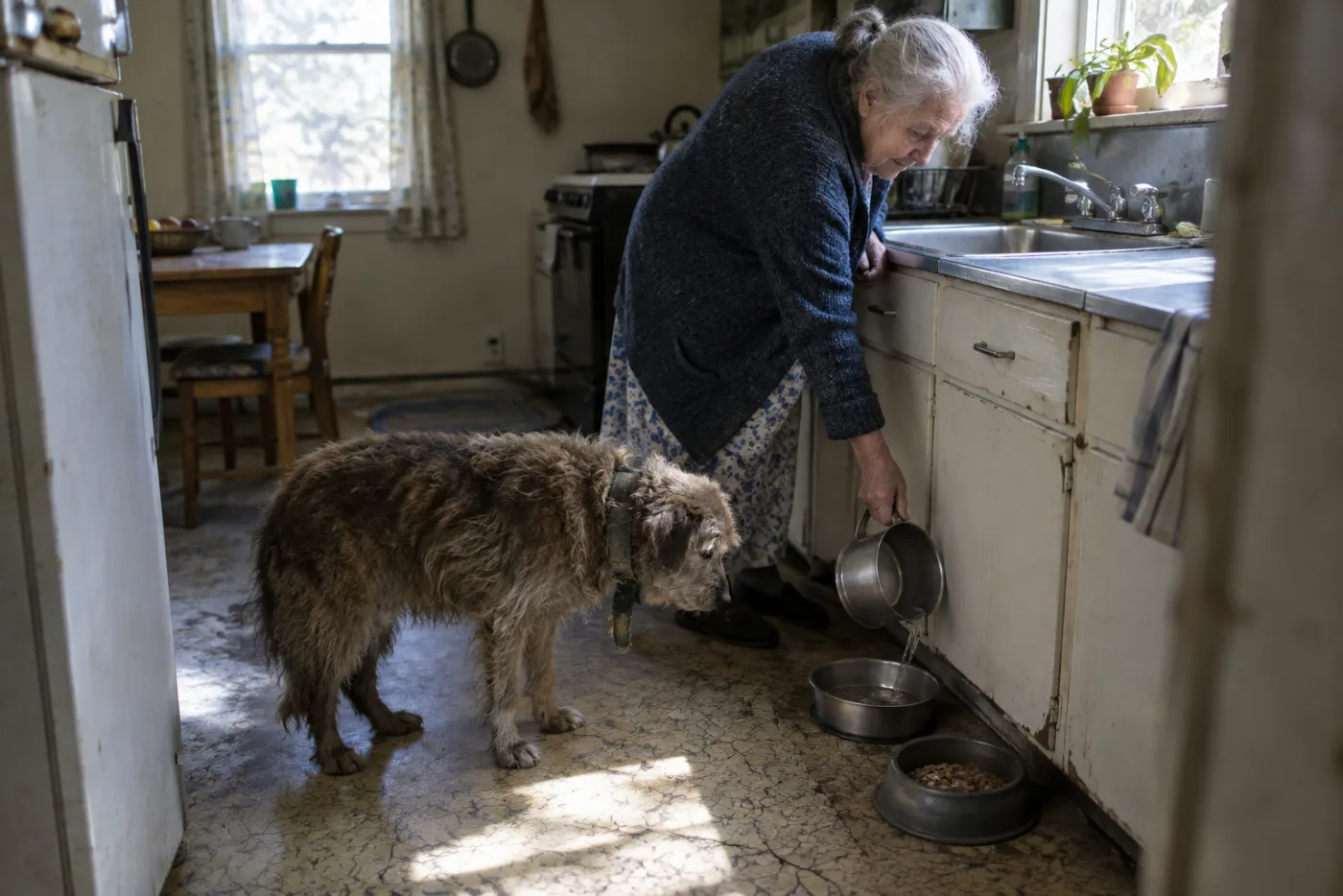
The dog's coat looks duller than it used to, or the cat seems heavier, or the litter box hasn't been changed as often as it should be. Nobody's neglecting the pet on purpose. It's more that caring for another creature takes energy that's quietly running short elsewhere.
Pets are honest in a way people aren't, because they can't explain themselves or cover for a bad week. A dog that's stopped getting walked, or a cat that's stopped getting its nails trimmed, is a small, visible sign of a caregiving capacity that's slipping somewhere upstream.
Pay attention to the pet the same way you'd pay attention to the person. Offer to take over a task, like a walk or a vet visit, framed as wanting time with the animal rather than as concern. The opening it gives you is often easier than a direct question.
25They Change the Subject When Siblings Compare Notes

You mention something your parent told you, and your sibling looks confused, because they heard a slightly different version of the same story. Different reasons for the same missed call, different explanations for the same doctor's visit, told separately and never quite lining up when compared.
This kind of inconsistency isn't always deliberate deception. Sometimes it's simply easier to tell each person a version tailored to what they'll worry about least. But the effect is the same either way: no single child has the full picture, and comparing notes is what reveals the gap.
Talk to your siblings directly and specifically, rather than assuming everyone has heard the same story you did. Lay the versions side by side. The differences between them will often point you toward exactly the question that needs asking next.
26Their Voice Sounds Different at Certain Times of Day

Call in the morning and they sound tired, a little flat, taking a beat before answering questions. Call at the time you usually call, and suddenly the voice on the other end is brighter, quicker, more like the person you remember from years ago.
A voice that's naturally low-key sometimes and lively other times isn't unusual on its own. What's worth noticing is when the lively version shows up specifically and reliably at the moment they expect to hear from you, rather than varying with how the day is actually going.
Try calling at an unexpected time once in a while, outside the usual rhythm you've both settled into. Compare what you hear then to what you hear during the scheduled call. A performance timed to expectation sounds different from a mood that simply moves on its own.
The bottom line
None of these signs mean crisis. They mean it's time to ask a better question than "how are you," one that doesn't give them an easy exit. Your parent may not tell you the truth outright. But if you watch closely, they're probably already showing you.
Margaret Hale
Travel & Lifestyle Editor
Margaret has covered travel for 25 years and has ridden every long-distance train route in the U.S. at least once.
Most read
You might also like