Rediscovering Your Energy After 70
That afternoon slump you keep blaming on age might actually be a schedule, a relationship, or a routine quietly asking to be rebuilt.
By Dr. Alan Pierce, PT, DPT, Health Reviewer
Updated · 14 min read
- Written by our health reviewer
- How we review

Your afternoon slump is not a verdict on your body. It is a message, and most people over seventy never stop to read it. They just call it age and reach for another cup of coffee.
The truth is messier and better. Some of that heaviness comes from routines built for a life you no longer live, from naps timed wrong, from relationships that drain instead of fill, from silence that has gone on too long. None of that is fixed. Here is where real energy tends to hide, and how to go find it.
1Tell tiredness apart from low energy

Not all fatigue is the same animal. One kind comes from genuine depletion, the sort that follows a poor night or a physically demanding day. The other kind arrives when nothing has actually asked much of you at all.
That second kind is often mistaken for exhaustion when it is closer to boredom in disguise. Your body feels heavy, your thoughts feel slow, and rest does not seem to help. What is missing is not sleep but something to actually engage with.
Try naming which one you are feeling before you reach for the couch. If a nap does not lift it, the culprit may be understimulation. A phone call, a task with a real purpose, or a walk somewhere new can do what rest cannot.
2Find your real peak hours

Everyone assumes energy should look the same as it did decades ago, arriving on command whenever a schedule demands it. It rarely does anymore, and fighting that fact wastes the very energy you are trying to protect. The body now has its own preferences about timing.
Pay attention for a stretch of ordinary days without judging what you notice. Some people find their sharpest hours are the early morning, before the house gets busy. Others discover mid-morning or late afternoon suits them better than it ever used to.
Once you find the pattern, move your hardest tasks into it deliberately. Save paperwork, phone calls, or errands for that window instead of the hour convention says is normal. Working with your actual rhythm, not an inherited one, is what makes the day feel lighter.
3Question routines you inherited

Plenty of daily habits were never chosen. They were built around a job, a commute, or children who needed feeding at a certain hour, and they simply kept running long after the reason vanished. You may still be obeying a schedule nobody asked you to keep.
Look at your weekday from waking to sleeping and ask which parts still serve you. The early alarm that once got you to an office. The big cooked breakfast made for a household that has since gotten smaller. Some of it is habit wearing the costume of necessity.
Pick one inherited routine this week and change it on purpose. Sleep later, eat lighter, or skip the task that only ever existed for someone else's benefit. The energy it frees up is often more noticeable than any other single change.
4Break movement into small pieces

A single long walk or workout can feel like an obligation, and obligations are easy to postpone until they never happen. The body, meanwhile, does not actually care whether movement comes in one block or several scattered through the day.
Short bursts, stairs climbed, a stretch between chores, a lap around the garden, tend to wake you up faster than one big session ever does. Each burst nudges circulation and alertness without draining the reserve you need for the rest of your day.
Stop thinking of movement as a single appointment to dread. Scatter it instead: a few minutes here, a short walk there, standing while you make a call. The cumulative effect on your energy usually beats the one long workout you kept avoiding.
5Rethink your naps

A nap can either rescue an afternoon or quietly ruin the following night, and the difference usually comes down to timing and length rather than whether you napped at all. Most people never question the habit itself.
A short rest taken earlier in the afternoon tends to refresh without leaving you groggy. Left too late in the day, or stretched out too long, the same nap can steal the deep sleep your body needs once night actually arrives.
Set a rough boundary for yourself: nap earlier rather than later, and keep it brief. If you wake up groggier than before you lay down, you likely slept past the point that was actually helping you.
6Adjust your sleep expectations

Sleep at this stage of life rarely looks like it did at thirty, and that difference gets mistaken for a problem more often than it should. Lighter sleep, more awakenings, and an earlier natural waking time are simply how the pattern shifts.
Chasing the deep, unbroken sleep of decades ago can create its own anxiety, and anxiety itself disrupts rest further. The goal is not to force your body backward but to work with the pattern it actually has now.
Instead of panicking at 3 a.m., treat a brief waking as ordinary rather than alarming. Keep the room cool and dark, and resist checking the clock. Judge your rest by how you feel the next day, not by how unbroken the night was.
7Get outside earlier
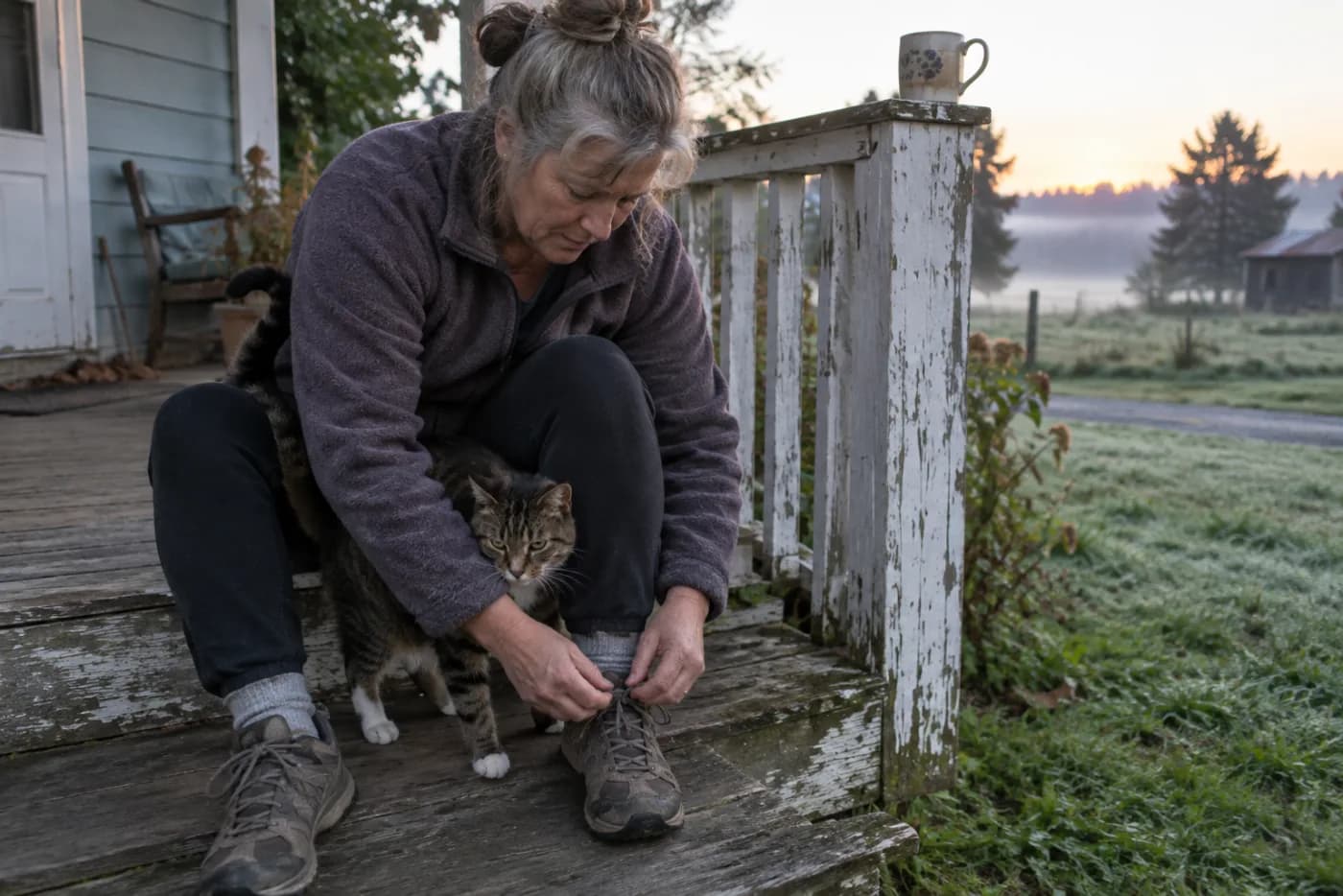
Morning light does something artificial light cannot fully replicate. It sets an internal signal that tells your body the day has begun, and that signal ripples forward into mood and alertness for hours afterward.
Skipping it, staying indoors until midday under lamps and screens, leaves that internal clock guessing. The result often feels like sluggishness with no obvious cause, when the real issue is simply a missed cue earlier in the day.
Step outside not long after waking, even for a few minutes, even in gray weather. Let your eyes take in real daylight rather than a bulb overhead. The habit costs nothing and tends to pay off by early afternoon.
8Audit your commitments

Not every item on your calendar earns its place there. Some commitments genuinely matter to you, and others have simply survived out of habit, guilt, or a sense that saying no would be rude.
The two feel identical on the page but cost very differently in energy. One kind leaves you tired but satisfied afterward. The other leaves you tired and slightly resentful, which is usually the tell that it should not have made the list.
Go through your regular commitments and sort them honestly into those two piles. Keep the ones that genuinely give something back. Start quietly stepping away from the others, one at a time, without needing a dramatic explanation for any of them.
9Pick up an old curiosity

Somewhere in your past is an interest you set down, not because you stopped caring but because life got crowded. A language half learned, an instrument abandoned, a subject you once read about for pleasure. It is still there, waiting.
Returning to it does something a treadmill cannot. Curiosity engages the mind in a way that produces real alertness, not the forced kind that comes from caffeine or willpower. Interest itself seems to generate its own fuel.
Pick one dormant curiosity and give it a small, low-pressure reentry. Buy the beginner book again, or find the box with the old materials. You are not restarting a project. You are restarting a source of energy you already know works.
10Notice who lifts you and who drains you

Not all company costs the same. Some visits leave you brighter than before, and others leave you strangely tired in a way that has nothing to do with how the afternoon was spent physically.
That drained feeling is real information, not rudeness on your part. Certain relationships require a kind of constant management, bracing for criticism or steering around old arguments, and that vigilance quietly burns energy the whole time you are together.
Start tracking how you feel for an hour after seeing different people. Where you notice the drain, shorten the visit or add space afterward to recover. Where you notice the lift, make room for more of it.
11Let rest be part of the work

Rest gets treated as the thing you do once the real work is finished, which means it never quite feels earned. That framing turns every quiet afternoon into something to feel guilty about instead of something useful.
Deliberate rest is not the opposite of productivity. It is closer to maintenance, the same way a car needs more than fuel to keep running. Skipping it does not make you more capable. It just moves the cost further down the road.
Try scheduling rest the way you would schedule an errand, on purpose and without apology. Put it on the calendar if that helps make it feel legitimate. Treating it as a task rather than a failure changes how it feels afterward.
12Pay attention to your breathing
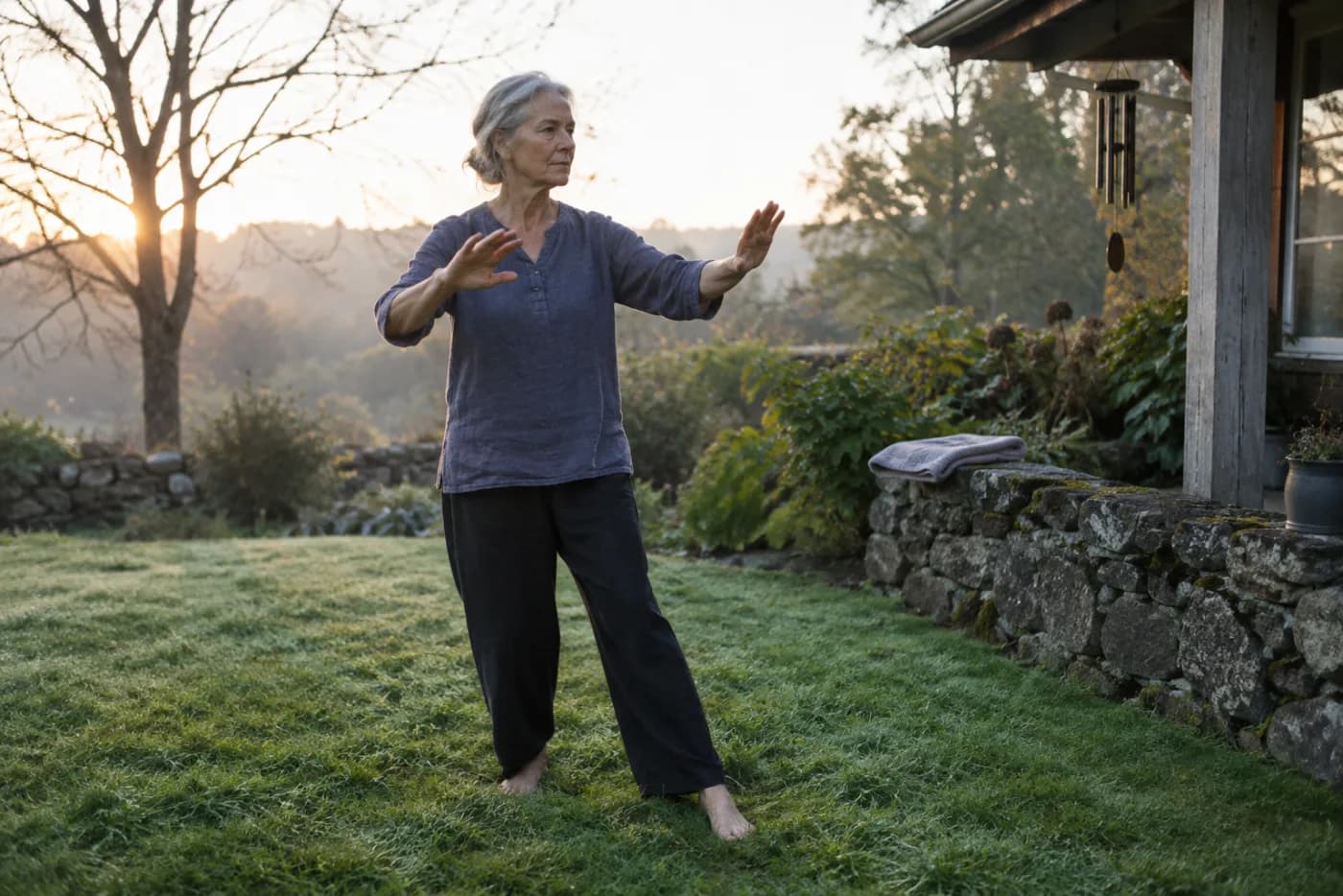
Shallow, tense breathing is easy to miss because it becomes background noise, something you have been doing for years without registering it. It also happens to be a quiet drain on the energy you are trying to protect.
Stress, concentration, and even posture at a screen tend to shorten the breath without you noticing. Shallow breathing limits oxygen exchange, and the body compensates by working slightly harder just to keep you feeling normal.
A few times a day, stop and check. Are your shoulders up, your breath shallow and fast? Slow it down deliberately for a minute, breathing lower into your belly. The fix is nearly free and takes almost no time.
13Check your posture during ordinary hours

Slumping gets blamed on age when it is really just mechanics. A curved spine and dropped shoulders while reading or watching television compress the chest, and that compression makes breathing shallower without you registering the cause.
The tiredness that follows a long stretch in a bad chair often gets filed under general fatigue, when the actual source is the position you sat in. It is a mechanical problem wearing the disguise of a biological one.
Notice your posture during the hours you consider restful, not just when you are active. Adjust the chair, add a cushion, sit upright for part of the show. Comfort and collapse are not the same thing, and only one of them helps you.
14Simplify small decisions

Every choice, however minor, draws on the same limited attention. What to wear, what to eat, which errand to run first. None of these feel significant alone, but stacked across a day they add up to real mental fatigue.
By afternoon, that accumulated effort often shows up as tiredness with no clear cause. It is not that nothing happened. It is that dozens of small decisions happened, each one quietly withdrawing from the same account.
Reduce the number of minor choices you make by routine. Keep a short rotation of meals, lay out clothes the night before, decide errands in a fixed order. Freeing that attention leaves more of it for the decisions that actually deserve it.
15Sort overstimulation from understimulation

Two very different problems produce the same tired feeling, and confusing them leads to the wrong fix. One is too much noise and demand crowding your day. The other is too little happening to hold your attention at all.
Overstimulation tiredness comes with irritability and a craving for quiet, often after a crowded event or a day full of errands. Understimulation tiredness comes with restlessness and a strange heaviness, usually after a day with nothing much asked of you.
Notice which one you are actually feeling before choosing a remedy. If it is too much noise, seek quiet and solitude. If it is too little stimulation, seek out a task, a conversation, or an outing instead of more rest.
16Reconnect with a sense of purpose

A felt sense of purpose is tied more closely to alertness than most people expect. Having a reason to get up, something specific rather than vague, seems to switch the body into a slightly more awake state on its own.
Retirement can quietly remove that reason without replacing it, and the resulting fatigue often gets blamed on age instead of on the actual missing ingredient. The days become open, and open days can feel oddly heavier than busy ones.
Give yourself one concrete reason to be upright each day, even something modest. A person to check on, a small project with a visible end, a task that needs you specifically. Purpose does not need to be grand to work.
17Recognize the weight of unspoken grief

Loss accumulates differently after seventy. Friends, siblings, sometimes a spouse, and the losses often arrive close enough together that there is little space to fully process one before the next begins. That backlog does not disappear just because life continues.
Unacknowledged grief has a way of surfacing as plain tiredness rather than sadness, since sadness that has nowhere to go tends to flatten into fatigue instead. You may feel drained without connecting it to anyone or anything specific.
If tiredness persists without an obvious physical cause, consider whether there is a loss you have not fully let yourself feel. Talking about a specific person by name, out loud, to someone who remembers them, often loosens something rest alone cannot touch.
18Review your medications with fresh eyes

Medication lists tend to grow one prescription at a time, each addition reasonable on its own, until the combined list has never been looked at as a whole. Some of those additions may now be working against each other.
Certain common medications carry fatigue as a side effect, and that effect can compound quietly when several are taken together. The tiredness gets attributed to age long before anyone considers the pharmacy bag sitting on the counter.
Bring your full list, including anything over the counter, to be reviewed together rather than one at a time. Ask specifically whether any combination could be contributing to how tired you feel. This is a different question than simply asking if you are healthy.
19Know when fatigue needs a doctor

Most tiredness responds to the small adjustments already covered here: better timing, less noise, a walk, a nap taken earlier. Some tiredness does not respond to any of it, and that resistance itself is a useful piece of information.
Persistent fatigue that does not lift with rest, that arrives alongside unexplained weight change, breathlessness on mild exertion, or a mood that has genuinely flattened, deserves a direct conversation rather than another week of waiting it out.
Go in with specifics instead of a general complaint. Describe exactly when the tiredness is worst, what makes it better or worse, and what else has changed recently. A precise description gets a far more useful response than "I've just been tired."
20Rethink the rhythm of your meals

The midafternoon slump gets blamed on age, but the timing and spacing of meals often explains more of it than anything on the plate. A large gap between lunch and dinner, or a heavy lunch eaten too fast, both invite a crash.
Blood sugar swings tied to meal timing produce a fatigue that feels a lot like general tiredness but has a fairly specific, fixable cause. The body is not failing. It is simply reacting to an uneven fuel schedule.
Try spacing meals more evenly across the day rather than loading most of the food into one or two sittings. A small, steady snack between lunch and dinner can smooth out the dip that currently sends you toward the couch.
21Watch for quiet dehydration

Thirst becomes a less reliable signal with age, which means you can be meaningfully low on fluids well before you feel any urge to drink. The result is a low-grade fogginess that rarely announces itself as thirst at all.
That fog gets misread constantly. It looks like tiredness, sometimes like distraction or a memory lapse, and it is easy to blame on getting older rather than on something as simple as not having had enough water since breakfast.
Keep water visible and within reach rather than waiting for thirst to prompt you. Notice whether the afternoon fog lifts after a full glass. If it does, you have found a cause that has nothing to do with age at all.
22Build one small morning anchor

Mornings without any fixed sequence tend to drift, and drifting mornings often set a sluggish tone for the entire day that is hard to shake later. The brain likes a cue that says the day has properly started.
A repeated sequence, however small, gives it that cue. It does not need to be elaborate. The same drink, the same few minutes by a window, the same short stretch, done in the same order most mornings.
Pick one simple sequence and repeat it daily until it becomes automatic. Let it be the signal that tells your body the day is beginning. Consistency matters more here than any particular activity you choose.
23Practice saying no on purpose

Every accepted invitation is also a decision to spend energy somewhere specific, whether or not it feels like a decision in the moment. Saying yes automatically, out of habit or politeness, often leaves nothing left for what you actually wanted to do.
Declining strategically is not withdrawal. It is closer to budgeting, protecting a limited resource for the things that genuinely matter to you rather than spending it on obligation after obligation until none is left.
Before agreeing to the next invitation, pause and ask what saying yes will cost you elsewhere. If the honest answer is more than it is worth, decline without over explaining. A short, warm no protects far more than a reluctant yes ever does.
24Separate solitude from loneliness

Time alone and loneliness get treated as the same thing, but they behave very differently in the body. One restores you. The other, even when it looks identical from the outside, slowly wears you down.
Solitude you have chosen, an afternoon reading, a quiet walk, tends to leave you calm and steady afterward. Isolation you have not chosen tends to leave a low hum of restlessness or sadness that no amount of quiet actually resolves.
Notice which one you are in. If solitude feels peaceful, protect it without guilt. If it feels more like isolation, treat that as a signal to reach out, even briefly, rather than assuming more alone time will fix it.
25Expect your energy to shift with the seasons

Darker months bring less daylight, colder air, and fewer casual reasons to leave the house, and all of that adds up to a real dip in energy that has nothing to do with getting older. It is seasonal, not personal decline.
Treating a winter slump as evidence something is wrong tends to make it worse, since worry itself is tiring. The pattern is closer to weather than to illness, predictable and temporary rather than a permanent new normal.
Plan around it instead of fighting it. Add more light where you can, keep one outdoor commitment even in cold months, and expect a lift as the days lengthen again. Naming the pattern in advance makes it easier to ride out.
26Track your energy instead of your habits

Generic advice assumes everyone runs on the same fuel, but what actually restores you is personal, and it rarely matches what restores your neighbor or your sibling. The only way to find your own pattern is to watch it directly.
For a stretch of days, jot down roughly how you feel at a few points, morning, midafternoon, evening, along with what you were doing beforehand. Patterns tend to surface fast once they are written down instead of just felt.
Use what you find instead of what you were told. If company lifts you more than rest does, seek company. If quiet mornings outperform busy ones, protect them. Your own record beats any general rule written for someone else.
The bottom line
You are not fighting your body when you feel dragged down at seventy. You are fighting a routine that stopped fitting you years ago. Change the rhythm, not your expectations, and the energy you thought was gone has a way of turning back up on its own.
Dr. Alan Pierce, PT, DPT
Health Reviewer
Alan is a physical therapist who specializes in helping adults over 50 stay strong and mobile.
Get our Sunday email
Our best finds of the week. Free.
Most read
You might also like